💥Join UPSC 2027,2028 Mentorship (July Batch) + XFactor Notes & Microthemes PDF

Subject: Ethics

  • What is meant by ‘crisis of conscience’? How does it manifest itself in the public domain? (150 words, 10m)

    Manifestation in the Public Domain

    Whistleblowing against Corruption- conflict between “loyalty to the organization” and “duty to the public” triggers a crisis.

    Implementation of Unjust Policies- Eg- implementing order for eviction of slum dwellers during a harsh winter without a rehabilitation plan.

    Conflict between Rule of Law and Compassion- Eg- Denying a starving, elderly woman her rations because her biometrics failed to authenticate.

    Political Pressure on Neutrality- Eg- An officer being asked to manipulate environmental impact data to favor an industrial project.

    Medical Ethics in Public Healthcare- Eg- Medical triage decisions

    Journalists reporting on sensitive issues like human rights violations face a clash between “patriotism” and “truth.”

    Environmental Protection vs. Development- Eg- Aarey Forest case in Mumbai

    Institutional loyalty vs public interest- When statisticians are pressured to “under-report” inflation or unemployment figures to suit a government’s narrative.

    Confidentiality vs. Public Safety- When an official knows a “state secret” that involves a threat to public health but is ordered to remain silent.

    Efficiency vs justice or Speedy action vs due process. Eg- Bulldozer demolitions.

    Security vs rights – Eg- Internet shutdowns in J&K

    Career risk vs ethical stand – Eg- Sanjiv Chaturvedi (IFS) facing transfers for exposing corruption in AIIMS and HRD Ministry.

    Majoritarian demand vs minority rights – Public pressure conflicting with constitutional morality. Eg- Sabrimala case

    Ethical Framework to Address Crisis of Conscience

    Constitutional Morality

    The Public Interest Test

    Gandhian Talisman

    Principle of Non-Maleficence

    Objectivity and Neutrality

    Transparency and Accountability

    Courage of Conviction

    Categorical Imperative (Kant)

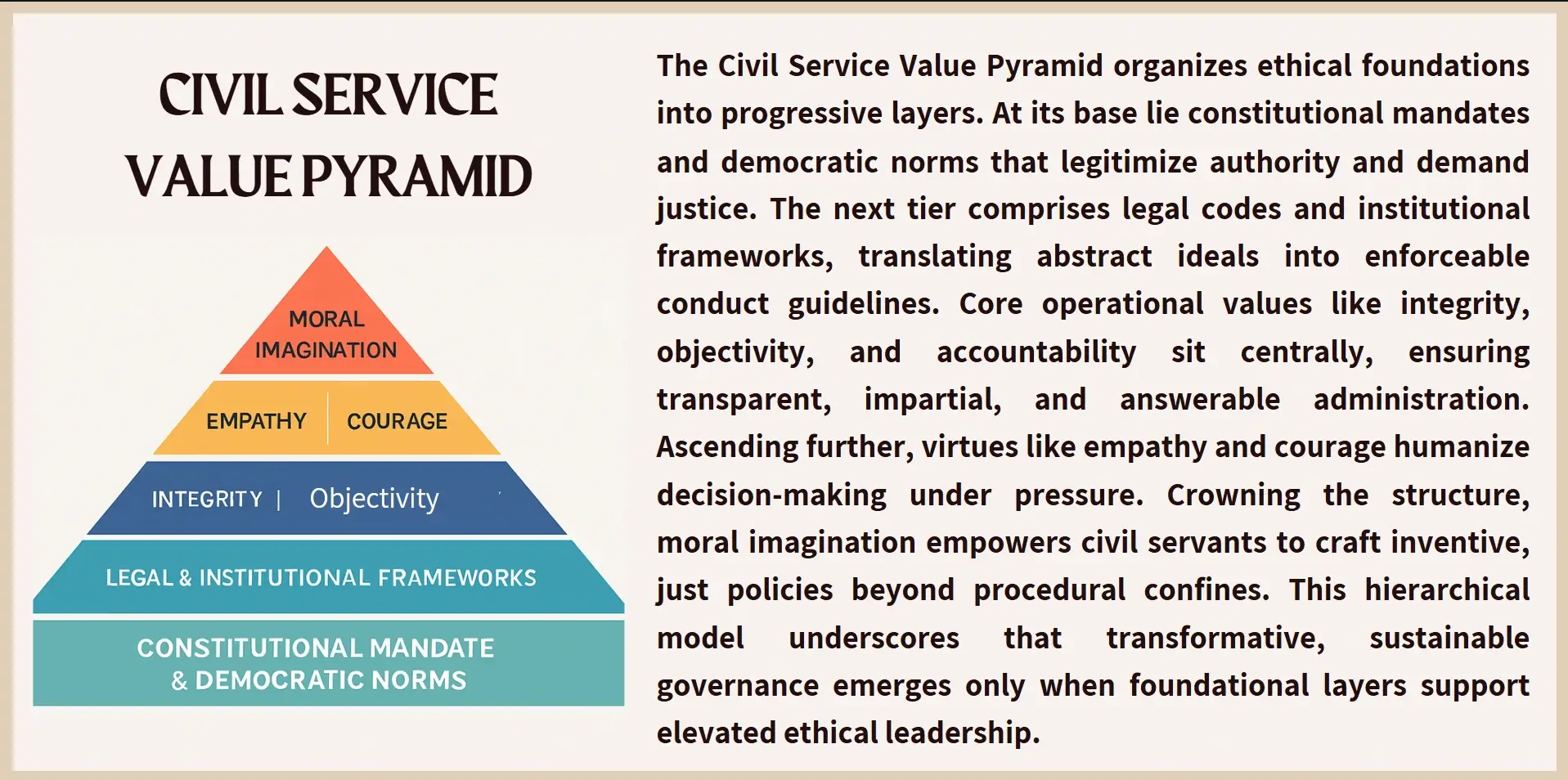
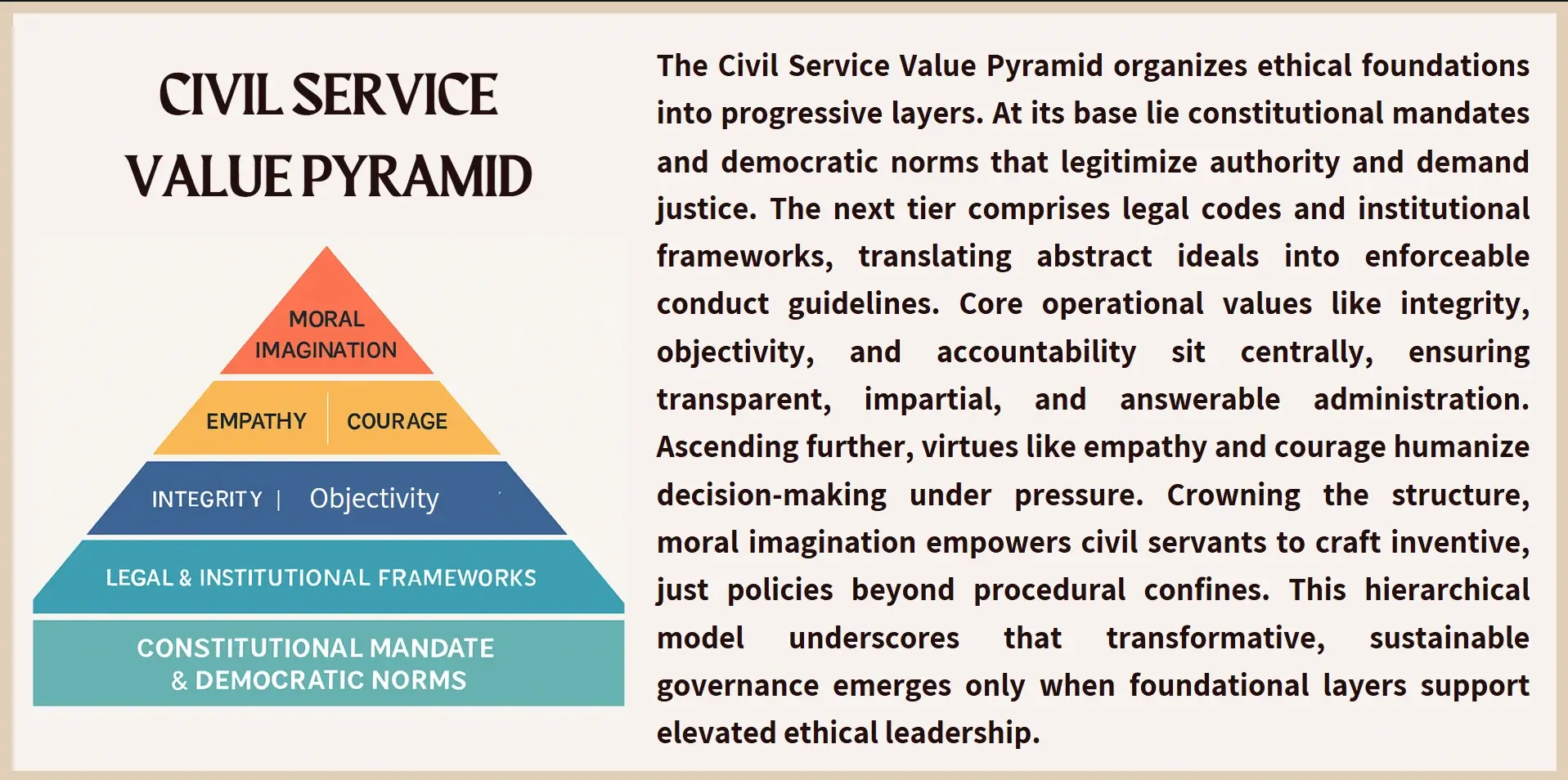
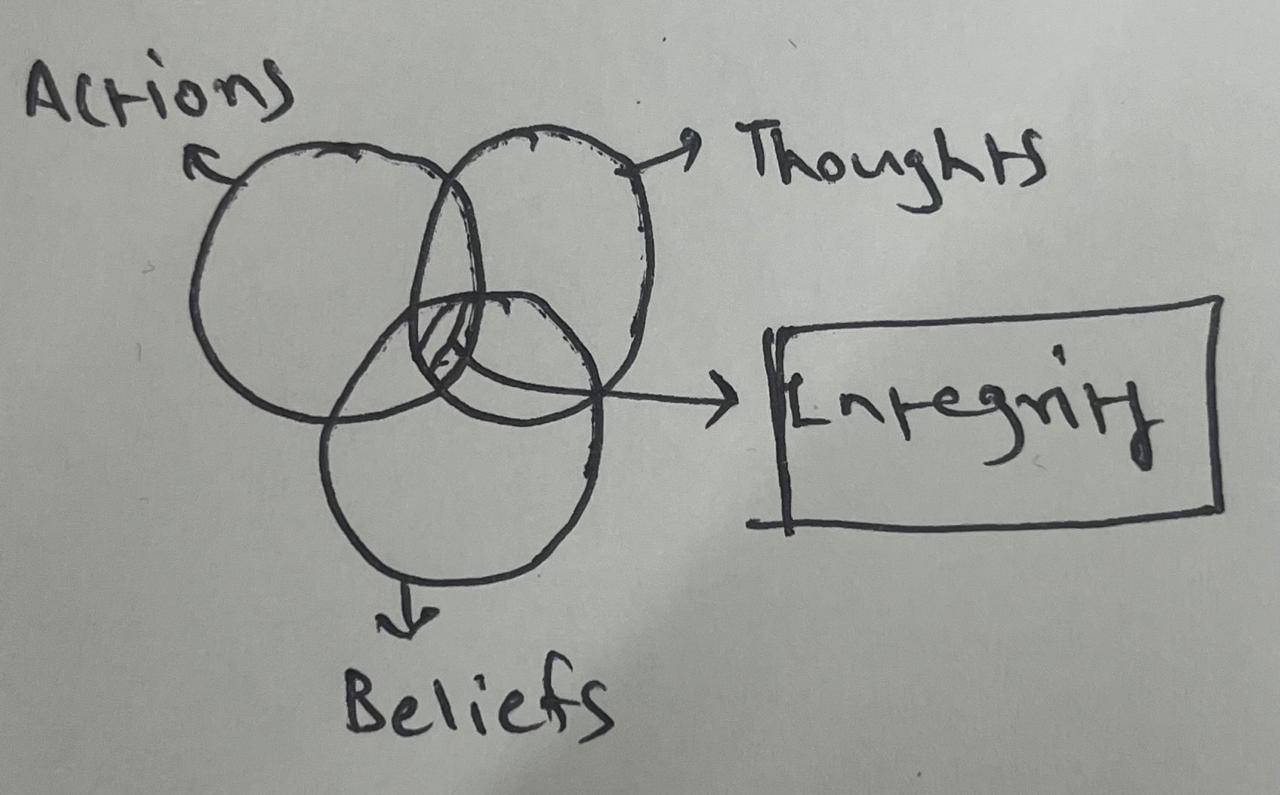
    Integrity (Wholeness)

    Seeking Guidance through “Phronesis”

    “There is a higher court than courts of justice and that is the court of conscience. It supersedes all other courts.” – Mahatma Gandhi

    By aligning actions with the “higher court of conscience,” a public official can ensure human-centric, just, and truly democratic governance.

  • What are the basic principles of public life? Illustrate any three of these with suitable examples.(150 words, 10m)

    “Public office is a public trust.” – Grover Cleveland

    Public life refers to the activities and roles individuals undertake in the service of the community, whether as elected representatives, civil servants, or members of public bodies.

    Basic principles of public life

    Nolan Principles

    Selflessness

    Integrity

    Objectivity

    Openness

    Leadership

    Accountability

    Honesty

    Leadership

    Indian constitutional ethos

    Transparency

    Impartiality

    Responsiveness

    Commitment to public interest

    Three basic values and their importance

    Integrity (Honesty and probity in conduct) – Acting truthfully, transparently and consistently with moral and legal standards.

    Importance-

    Prevents corruption and misuse of public office.

    Builds citizens’ trust in institutions.

    Protects fairness in decision-making.

    Strengthens legitimacy of the state.

    Illustration- Sanjiv Chaturvedi (IFS) exposed corruption in AIIMS despite facing harassment.

    Impartiality (Fairness and non-discrimination) – Treating all individuals and groups equally, without bias based on identity, status or political affiliation.

    Importance-

    Upholds equality before law.

    Prevents favouritism and discrimination.

    Stability during Political Transitions

    Impartial officer acts as a trusted mediator in conflict resolution

    Illustration- T.N. Seshan, as CEC, enforcing MCC in fair manner.

    Accountability – Being answerable for decisions and taking responsibility for consequences.

    Importance-

    Feedback Loop- facilitates a two-way communication between state and citizens

    Improves transparency and performance.

    Enables democratic control over bureaucracy.

    Promotes ethical and careful decision-making.

    Illustration – Ashwini Vaishnaw took moral responsibility after the Odisha train accident by personally overseeing relief and restoration.

    These values ensure that “Steel Frame” does not rust or bend under the weight of corruption and bias.

  • “Non-performance of duty by a public servant is a form of corruption” Do you agree with this view? Justify your answer (150 words, 10m)

    “The greatest corruption is the corruption of duty.” – Edmund Burke

    Conventionally, corruption is viewed as the “misuse of public office for private gain,” however, in a broader ethical sense, omission (failing to act) is as damaging as commission (acting wrongly).

    Non-performance of duty as form of corruption

    Theft of Public Salary- Taking a salary while deliberately avoiding work is “financial fraud” against the taxpayer. Eg- “Ghost employees” in various municipal bodies

    Creation of “Induced” Corruption- Deliberate delays (Red Tapism) are often used to force citizens to pay “speed money.”

    Violation of the Right to Life- Eg- delay in safety audits leading to Mundra building tragedy.

    Delays in project clearance lead to Policy Paralysis- High economic “opportunity cost.” Eg- delays in environmental clearances in PPP projects

    Inaction is a betrayal of the “fiduciary duty” owed to the citizens. Eg- Police officers failing to register an FIR in SC, ST atrocity cases.

    Wastage of Resources- Eg- food grains roting in FCI godowns while tribal populations suffer from malnutrition.

    When officials don’t work, citizens lose faith in democracy and turn to extra-constitutional means for justice. Eg- rise of “vigilante justice”

    Moral hazard – Inaction normalises irresponsibility.

    Facilitates exploitation. Eg- Labour inspectors not enforcing minimum wage laws.

    Ways to Curb Corruption and Non-Performance

    Code of Ethics & Code of Conduct. (2nd ARC)

    Implementation of Citizens’ Charters- Eg- SAKALA (Karnataka Guarantee of Services Act)

    Giving legal backing to Social Audits

    Leveraging Technology. Eg- Faceless Income Tax Assessment

    Strengthening the Lokpal and Lokayuktas to investigate “maladministration” and “neglect”

    Independent Commission Against Corruption – “Hong Kong Model”

    Performance-linked accountability. Eg- 360 degree feedback

    A culture of active responsibility, diligence and accountability is needed to deal with the menace of corruption.

  • “A man is but the product of his thoughts. What he thinks, he becomes.” – M.K.Gandhi (150 words, 10m)

    Gandhi highlights that human character, behaviour and destiny are shaped fundamentally by one’s thoughts. The external success and failure are reflections of internal belief systems.

    At the Individual Level, a person who harbors thoughts of inadequacy or “helplessness” will live a life of stagnation and fear. On the other hand, someone who maintains a Growth Mindset views failures as lessons. Eg- J.K. Rowling faced multiple rejections for Harry Potter but remained untroubled.

    At the Professional Level, those who their work as a means to earn money, become a mediocre employee. However, those who think of their work as a form of “Karma Yoga”, become a leader who inspires others. Eg- Gandhiji thought of himself not as a politician, but as a seeker of truth.

    At the Social Level, if a society thinks in terms of “us vs. them”, it becomes a fragmented and violent space. Conversely, if the prevailing thought is “Vasudhaiva Kutumbakam” , the society becomes inclusive and peaceful.

    In civil services, civil servant who thinks in terms of service and responsibility will act ethically even under pressure, while one who thinks in terms of personal gain will drift towards corruption. Eg- Ashok Khemka served with integrity despite over 50 transfers.

    In the technological domain, those who adhere to values of honesty, compassion, respect, truth use it in ethical manner while those who view it as a tool to vent out anger do harm to others. Eg- cyberbullying.

    “The mind is the workshop where destiny is made.” Thus, inculcating “GOOD” thoughts is key for developing “beautiful minds.” This can be achieved through

    Ethical parenting

    Value education

    Ethics training for civil servants

    Code of Ethics for organisations

    Inculcating constitutional ideals

  • “An unexamined life is not worth living.” – Socrates (150 words, 10m)

    The above statement made by Socrates during his trial for “corrupting the youth,” suggests that the essence of being human lies in our capacity for self-reflection and the quest for purpose.

    Values involved

    Truth-seeking

    Rationality

    Moral autonomy

    Integrity and courage

    Wisdom of humility

    Freedom of thought

    According to him, examination allows us to identify the difference between opinion (Doxa) and knowledge (Episteme). Socrates used a process of “Elenchus” (logical interrogation) to refine our understanding of the word. In his words,

    “wisdom starts with the realization that I know nothing.”

    For individuals, an examined life helps prevent mindless conformity and harmful habits, thereby protecting personal autonomy, mental health and ethical character. Eg- young person who critically examines online content is less likely to fall for fake news or extremist propaganda.

    For society, collective examination enables reform and moral progress. The anti-caste movement led by thinkers like B.R. Ambedkar emerged from questioning inherited social hierarchies.

    For civil servants, self-examination prevents mechanical obedience and promotes ethical judgement. Officers like Ashok Khemka exemplify how reflective officials act as guardians of legality and justice rather than mere executors of orders.

    For leaders, an examined life restrains the misuse of power and promotes responsible leadership with with foresight, empathy and moral restraint. Eg- Gandhi’s differentiation between evil and evil doer, Nelson Mandela’s efforts for reconciliation.

    For a nation, an examined citizenry prevents turning democracy into “mobocracy”. An unexmined citizens turn into superfluous masses as happened in Germany under Nazi party.

    Without reflection, life becomes passive, society becomes stagnant, power becomes dangerous and democracy becomes hollow. Examination is the foundation of wisdom, justice and freedom.

  • “Where there is righteousness in the heart, there is beauty in the character. When there is beauty in the character, there is harmony in the home. When there is harmony in the home, there is order in the nation. When there is order in the nation, there is peace in the world.” – A.P.J. Abdul Kalam (150 words, 10m)

    “Righteousness is the foundation upon which the edifice of a peaceful world is built.”

    According to A.P.J. Abdul Kalam, personal ethics is the foundation of social order and global harmony. It outlines a concentric theory of peace.

    Philosophical Basis

    Reflects virtue ethics – character determines moral action.

    Emphasises moral causality – small ethical choices accumulate into large social outcomes.

    Aligns with Gandhian philosophy – be the change you wish to see.

    Supports holistic ethics – micro-level morality influences macro-level peace.

    The Ethical Chain Reaction

    Righteousness in the Heart- implies integrity, empathy, and alignment of thoughts with ethical principles. Eg- Mahatma Gandhi’s insistance on Ahimsa.

    Beauty in the Character- When the heart is upright, it manifests in the form of honesty, humility, and courage. Eg- In the age of “social media filters,” true “beauty” is lies in consistency of our values.

    Harmony in the Home- A person of character treats their family with respect and love. It becomes the first laboratory of democracy and peace.

    Order in the Nation- Stable families raise responsible citizens, reducing crime and social unrest. Eg- civic culture in Japan due to focus on “character building” in schools

    A “Righteous Heart” ensures that a bureaucrat uses their power for the Antyodaya – builds social capital and comprehensive national power

    Peace in the World- When nations operate with internal order and external respect, global conflict diminishes, leading to sustainable peace. Eg- Montreal Protocol – nations (acting with a sense of “Global Righteousness”) decided to ban CFCs to save the Ozone layer.

    Thus, “Righteousness in the Heart” is the key to global peace, prosperity and justice.

  • What do you understand by the term ‘public servant’? Reflect on the expected role of a public servant.(150 words, 10m)

    A public servant is an individual entrusted by the state to exercise authority and perform functions on behalf of society in order to implement laws, deliver public services and protect citizens’ rights and welfare.

    “A public official is a fiduciary of the public’s interest.” – Paul H. Douglas

    The Expected Role of a Public Servant

    Policy Advisor- Providing “objective and honest” advice to the government.

    Guardian of the Constitution- Ensuring that every administrative action aligns with constitutional values.

    Bridge between State and Citizen by ensuring fair and effective implementation of policies.

    Agent of Social Change- Actively working to dismantle regressive social norms. Eg- S. Shankaran in implementing the Bonded Labour Abolition Act

    Custodian of Public Funds- Practicing “Financial Probity.” Eg- E. Sreedharan – objectivity in the awarding of contracts for the Delhi Metro.

    Upholder of Integrity- Resisting bribes and external pressures to maintain professional standards. Eg- U. Sagayam (IAS) declaring his assets publicly.

    Leader by Example- Inspiring subordinates to work with the same level of dedication and ethics. Eg- Kiran Bedi (IPS) reforming Tihar jail

    Impartial Arbitrator- Resolving disputes between different social or economic groups without bias. Eg- R.N. Ravi, played a pivotal role in the Naga peace talks

    Empathetic Listener- Being accessible to the grievances of the poorest citizens.

    Innovator in Governance- Finding low-cost, high-impact solutions to local problems. Eg- IAS Prashant Nair used crowdfunding for community kitchens

    Protector of the Marginalized- Ensuring that the “last person” (Antyodaya) receives the benefits of the state. Eg- Dr Nidhi Patel pioneering space lab for rural students in Bilaspur.

    Crisis Manager- Providing leadership during natural disasters or civil unrest. Eg- Dr. Rajendra Bharud (IAS) setting up an oxygen plant in tribal Nandurbar before the second COVID wave

    Regulatory Watchdog- Ensuring that private entities follow safety and ethical standards. Eg- Vinod Rai as CAG exposed “presumptive losses” in the 2G Spectrum and Coal block allocations.

    Environmental Steward- Eg- Dr. Hari Chandana building pavements from recycled plastic in Hyderabad.

    “The civil service is not a service of status, but a service of responsibility. It is a commitment to the conscience of the nation.” – Sardar Vallabhbhai Patel

  • “Emotional Intelligence is the ability to make your emotions work for you instead of against you.” Do you agree with this view? Discuss.

    Emotional Intelligence is the capacity to recognise, understand, manage and use emotions constructively in oneself and in others.

    “When awareness is brought to emotion, power is brought to your life.” – Daniel Goleman

    EI making emotions work for you

    Recognising emotions before they control behaviour helps manage anger and frustration

    Understanding emotional triggers helps in better preparation. Eg- Awareness of anxiety before public speaking.

    Realistic self-assessment helps in knowing one’s strengths and weaknesses.

    Self-regulation

    Impulse control – Prevents emotional outbursts and rash decisions. Eg- Not shouting at subordinates during stress.

    Ensures emotional balance – Eg- Calm leadership during disasters.

    Builds adaptability to changing situations. Eg- Accepting e-governance by civil servants

    Motivation

    Positive drive helps turn frustration into determination. Eg- Officers working overtime during elections to ensure fairness.

    Optimism despite setbacks. Eg- ISRO successfully launching Chandrayan 3 after failure of Chandrayan 2

    Empathy

    Understanding others’ feelings and viewpoints helps developing broader outlook and leadership

    Sensitivity to diversity helps civil servants in handling community tensions sensitively.

    Social skills

    Effective communication by expressing emotions constructively. Eg- PM addressing the nation during a pandemic.

    Relationship building – Eg- Operation Sadbhavana of Army in J&K for trust and cooperation with locals

    Counter-arguments- How Emotional Intelligence can make emotions work against you

    Emotional manipulation – Eg- caste politics by leaders

    Emotion-reading skills can enable fake empathy and dishonesty.

    Rationalising wrongdoing. Eg- justifying corruption as “systemic necessity.”

    Emotional burnout due to constant emotional regulation

    High empathy may lead to compromise on objectivity and firmness

    Conflict avoidance instead of necessary confrontation.

    Emotional intelligence without moral compass becomes a tool of self interest

    Thus, EI + Integrity is needed to develop virtues of wisdom and compassion.

  • “The best way to find yourself is to lose yourself in the service of others.” Mahatma Gandhi (150 words)

    Gandhi suggests that true self-realisation does not come from selfish pursuit of pleasure, power or status, but from selfless service to others.

    Importance of selfless service for self-realisation

    Reduces ego (self-centeredness)- Serving others shifts focus from self to society. Eg- Volunteers during disasters working anonymously.

    Builds empathy – Understanding others’ suffering deepens compassion. Eg- Doctors without Borders (MSF) professionals working in conflict zones

    Gives purpose (Ikigai)– Life gains meaning beyond material success. Eg- Narayan Krishnan, a high-profile chef, gave up his career to feed the homeless

    Emotional Intelligence- Constant interaction with diverse people in service settings refines our ability to manage emotions and understand human nature.

    Overcoming Fear- Eg- Freedom fighters like Bhagat Singh lost their fear of imprisonment because their “self” was entirely merged with the service of their nation’s freedom.

    Develops character – Service nurtures humility and sense of responsibility. Eg- Mother Teresa’s lifelong care for the destitute.

    Creates inner peace – Altruism reduces anxiety and emptiness. Eg- Baba Amte, by serving leprosy patients

    Promotes ethical clarity – Service aligns actions with values. Eg- Honest civil servants resisting corruption.

    Enhances leadership – Servant leaders earn trust. Eg- Mahatma Gandhi’s work for Harijan.

    Building Resilience- Handling the challenges of others builds a mental “callus” that helps us face our own life’s adversities with equanimity.

    Universal Connection- Service leads to the realization of Vasudhaiva Kutumbakam (The World is One Family), where the “Self” is no longer an island but part of the whole.

    Ethical framework for selfless service

    Karma Yoga – Action without attachment to reward.

    Virtue ethics – Cultivation of compassion, humility, generosity.

    Ethics of care – Moral priority to relationships and vulnerability.

    Utilitarianism – Maximising well-being of others.

    Gandhian Sarvodaya (welfare of all).

    Purity of Motive (Intention)

    We discover our true selves not through possession, but through contribution. Service refines the soul, strengthens society and gives life enduring meaning.

    “Service to mankind is service to god” – Swami Vivekanand

  • ”A system of morality which is based on relative emotional values is a mere illusion, a thoroughly vulgar conception which has nothing sound in it and nothing true.” – Socrates. (150 words).

    Socrates in his criticism of “ethical relativism” argues that morality cannot be grounded merely in emotions, personal feelings, social moods or subjective preferences.

    He criticised Sophists who held that “Man is the measure of all things,” and justice as “interest of the stronger.” If morality changed based on power or emotions, society would descend into chaos. He advocated for absolute, objective virtues that remain constant regardless of human opinion.

    Morality based on emotional values is an illusion as it changes with mood, crowd sentiment or fear. Eg- Ashok Mochi, who participated in Gurajat riots leter regretted.

    Moral relativism is vulgar as it is shallow and appeals to the lowest, unrefined parts of human nature (Appetite and Passion) rather than the intellect. Eg- online abuse is justified as “righteous anger.”

    It is also unsound, logically inconsistent and contradictory. It fails to resolve conflicts between opposing feelings. Eg- “NIMBY” (Not In My Backyard) Syndrome.

    Morality based on emotional values lacks universality and objective truth. Eg- Honour killings justified as “family honour” by some cultures but universally unjust. Similarly, in 18th century slavery was justified though it undermined human dignity.

    Socrates provided the alternative in the form of Ethical Intellectualism.

    “Virtue is Knowledge” – if a person truly understands what is “Good,” they will naturally act accordingly. Evil, therefore, is a result of ignorance, not a choice.

    Dialectic- through constant questioning and logical analysis, humans can strip away emotional biases to find the universal definitions of Justice, Courage, and Temperance.

    Supremacy of Reason (Logos)- The rational part of the soul must be the “charioteer,” controlling the horses of emotion and desire. A moral life is one governed by the intellect.

    The application of Ethical Intellecualism can be seen in

    Sabrimala Verdict – prioritizing gender equality over patriarchy

    Decriminalising homosexuality – upholding constitutional morality (right to choice) over social morality

    Social reformers like Raja Ram Mohan Roy used “Knowledge” (analyzing ancient texts) and “Reason” (Right to Life) to abolish sati

    Ambedkar proposed “Education, Agitation, and Organization” (the pursuit of knowledge) for Annihilation of Caste.

    Thus, ethical decision making requires knowledge and reason as foundation.