💥Join UPSC 2027,2028 Mentorship (August Batch) + XFactor Notes & Microthemes PDF

Subject: Federal System

  • Assam Accord 

    Why in the news?

    The Supreme Court recently questioned whether a new order enabling entry of persecuted minorities into India violates the Assam Accord’s cut-off date of 24 March 1971 for detecting illegal immigrants.

    Background

    • Signed on 15 August 1985
    • Parties: Union of India, Government of Assam, All Assam Students’ Union (AASU), All Assam Gana Sangram Parishad
    • Ended the Assam Movement (1979 to 1985) against illegal immigration
    • Aim: Detect and expel persons entering Assam illegally after 24 March 1971 (midnight)

    Cut-off Dates and Citizenship Provisions

    • 1 January 1966 fixed as the base cut-off for detection and deletion of foreigners
    • Persons entering Assam from the “Specified Territory” before 1 January 1966 deemed Indian citizens
    • Migrants entering from 1 January 1966 to 24 March 1971:
    To be detected as per Foreigners Act 1946 and Foreigners Tribunals Order 1939
    Names deleted from electoral rolls
      Must register under the Registration of Foreigners Act 1939
    Voting rights only after 10 years from date of detection
    • Migrants entering on or after 25 March 1971: To be detected, deleted from rolls, and expelled as per law

    Clause 6

    • Mandates safeguards to protect the cultural, social, and linguistic identity and heritage of the Assamese people
    • Constitutional, legislative, and administrative measures envisaged

    Significance

    • Central to demographic and cultural protection concerns in Assam
    • Continues to influence citizenship policies including NRC and related legal debates

    With reference to India, consider the following statements: (2021)

    1. There is only one citizenship and one domicile. 

    2. A citizen by birth only can become the Head of State. 

    3. A foreigner, once granted citizenship, cannot be deprived of it under any circumstances. Which of the statements given above is/are correct? 

    (a) 1 only (b) 2 only (c) 1 and 3 (d) 2 and 3

  • [29th November 2025] The Hindu OpED: The impartiality of a nominated Governor

    PYQ Relevance

    [UPSC 2022] Discuss the essential conditions for exercise of the legislative powers by the Governor. Discuss the legality of re-promulgation of ordinances by the Governor without placing them before the Legislature.

    Linkage: The question is directly linked to ongoing concerns of Governors delaying assent and re-promulgating ordinances, reflecting fears of an overstepping “interfering authority.” It tests whether the Governor today adheres to the Constitution’s vision of a neutral head bound by ministerial advice.

    Mentor’s Comment

    This article examines the debate on the ‘impartiality of a nominated Governor’, revived after the recent Supreme Court judgment on the powers of Governors. The discussion draws heavily from the Constituent Assembly debates, views of B.R. Ambedkar, and the political context surrounding gubernatorial discretion. For UPSC aspirants, this topic is crucial for understanding Centre-State relations, federal tensions, constitutional morality, and ongoing administrative bottlenecks.

    Introduction

    The Supreme Court’s recent judgment on the role of Governors, along with its advisory opinion on the 16th Presidential reference, has reopened a foundational debate: What was the intended role of a Governor in an independent India? The Constituent Assembly deliberated deeply on the Governor’s impartiality, limited discretion, and non-interfering nature. Contemporary frictions between Governors and elected State governments have made these debates sharply relevant again. The article traces the evolution, constitutional position, and recurring controversies around the Governor’s office.

    Why in the News 

    The Supreme Court’s latest judgment on gubernatorial powers has revived a long-standing constitutional controversy over whether Governors have exceeded their intended role. The ruling sharply contrasts past practice, where Governors often withheld assent or delayed Bills, exercising broad and ambiguous discretion. This is significant because Constituent Assembly debates categorically rejected any idea of a powerful, interfering Governor and saw him as a neutral constitutional head bound by ministerial advice. The issue has resurfaced as a major federal friction point, affecting State governance and raising concerns about constitutional morality.

    What was the Constituent Assembly’s vision of a Governor?

    1. Limited discretion: Members clarified that the Governor’s discretion should be minimal and specifically enumerated; not a general discretionary authority.
    2. Non-interfering role: Dr. Ambedkar emphasised that the Governor must not act as an agent of the Centre nor interfere with the elected State government.
    3. Neutral constitutional head: The Governor was designed to be above suspicion and must not be “remote-controlled,” especially in a parliamentary system.
    4. No overriding authority: Ambedkar rejected giving Governors overriding powers (e.g., veto over Bills or control over ministries).

    Why were doubts raised about the impartiality of a nominated Governor?

    1. Remote-control concerns: Members felt a nominated Governor could be influenced by the central government, undermining State autonomy.
    2. Fear of political bias: The Governor’s lack of electoral accountability created apprehensions regarding neutrality.
    3. Past colonial experience: Residual memories of Governors under the Government of India Act, 1935, who wielded significant discretionary powers, fuelled suspicion.

    How did the framers restrict discretionary powers?

    1. Specific limitation: Discretion only for narrow, enumerated matters such as selecting a Chief Minister when no clear majority exists.
    2. Bound by Cabinet advice: Governor must act on ministerial advice in all matters except those explicitly labelled as discretionary.
    3. No independent executive authority: Ambedkar insisted the Governor is not a parallel power centre.
    4. Rejection of 1935 model: The Assembly refused to revive the 1935 system that gave Governors sweeping independent powers.

    Why is the Bill-assent controversy central to this debate?

    1. Revival of 1935 practice: Members feared that powers like reserving Bills or withholding assent could allow Governors to obstruct State legislatures.
    2. Ambedkar’s key statement: “If you give him this power, he becomes exactly that”, a reminder that excessive discretion recreates colonial-style interference.
    3. Judicial scrutiny: Recent court rulings criticised Governors for delaying Bills, stating this undermines democratic functioning.
    4. Legislative consequences: When Governors withhold or delay assent, elected governments face administrative paralysis.

    What makes the present dispute constitutionally serious?

    1. Misinterpretation risk: Courts observed that vague phrases like “as soon as possible” allow Governors to delay decisions indefinitely.
    2. Threat to federal balance: Unchecked gubernatorial discretion shifts power from elected representatives to a nominated authority.
    3. Growing political tensions: Several States report prolonged delays in Bill assent, appointments, and emergency decisions.
    4. Return of the ‘interfering authority’: The trend contradicts the original constitutional vision and Ambedkar’s categorical warnings.

    Conclusion

    The ongoing friction between State governments and Governors signals a deeper constitutional challenge involving federalism, democratic accountability, and the limits of nominated authority. The Constituent Assembly clearly intended the Governor to be a neutral head bound by Cabinet advice, not an autonomous decision-maker. Reviving this original spirit is essential to restore the balance between the Centre and the States and uphold constitutional morality.

  • Mekedatu Balancing Reservoir Project

    Why in the news?

    • Karnataka has decided to submit a revised Detailed Project Report (DPR) for the Mekedatu balancing reservoir across the Cauvery River.
    • The Supreme Court termed Tamil Nadu’s challenge as “premature”, enabling the CWMA and CWC to examine the project.

    Location & River

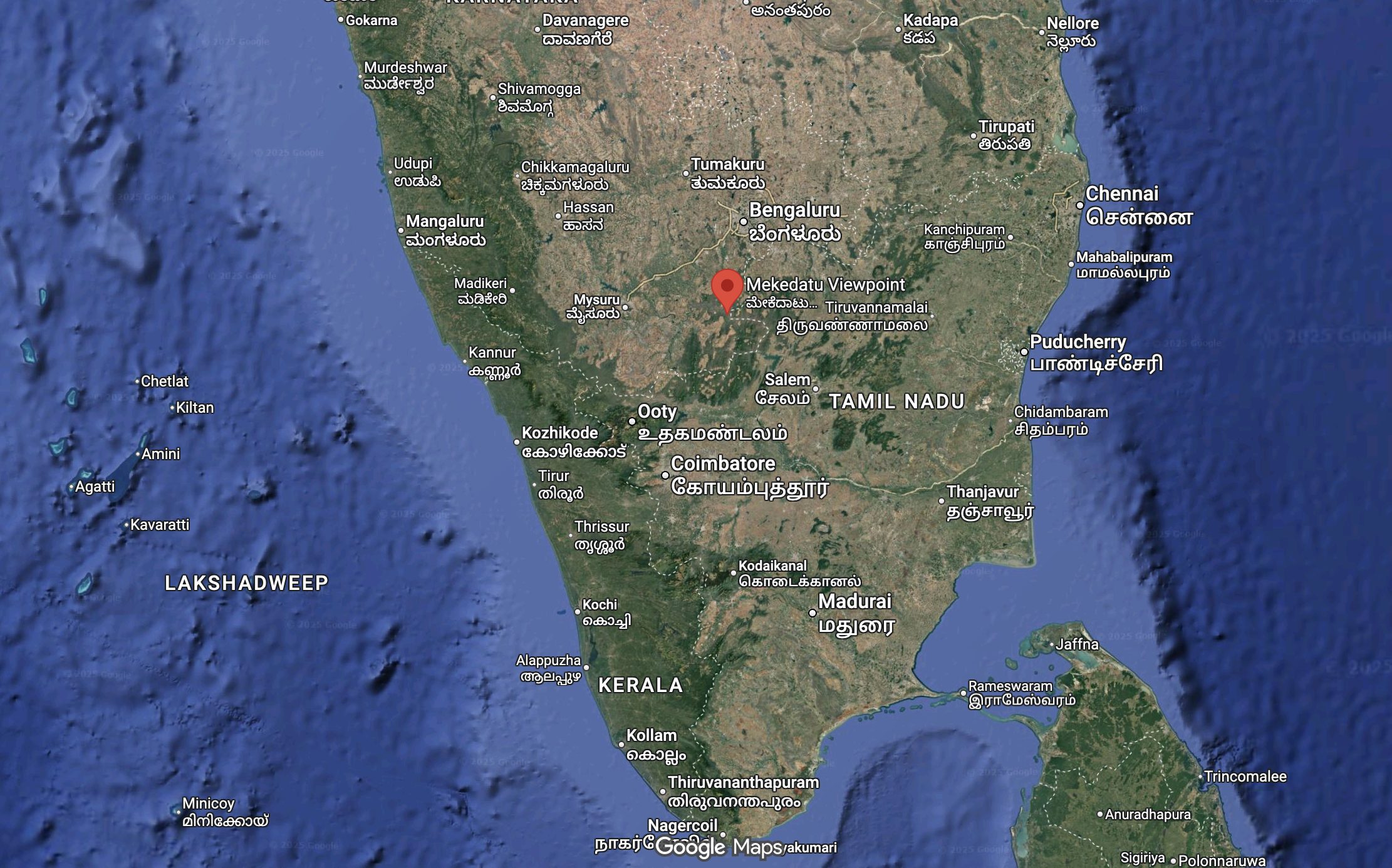
    • Mekedatu is located in Ramanagara district, ~100 km from Bengaluru.
    • The project is proposed on the inter-State Cauvery river.
    • Karnataka = upper riparian; Tamil Nadu = lower riparian.

    Why Does Karnataka Want It?

    • Bengaluru water demand:
      • Present: 2,600 MLD
      • Supply: 2,100 MLD → shortage of 500 MLD
    • Population to reach 20 million in 6 years → demand may rise to 4,000 MLD.
    • Shivakumar argues Mekedatu will ensure regulated release to Tamil Nadu, even in poor rainfall years.

    Why Is Tamil Nadu Opposed?

    • Trust deficit due to the history of Cauvery disputes.
    • Concern: Karnataka may store more water and release it selectively.
    • TN argues the project violates the 2018 SC judgment and Cauvery Tribunal’s final award.

    Centre’s Position

    • 2019: Karnataka submitted DPR → CWC → CWMA.
    • MoEFCC (2019): Sought an “amicable solution” due to inter-State dispute.
    • 2024 (Feb): CWMA referred DPR back to CWC after deliberations.
    • Now: DPR to be examined afresh; CWMA/CWC can facilitate dialogue.

    Constitutional & Legal Angle

    • Inter-State Rivers: Union List Entry 56 – regulation and development of inter-State rivers.
    • River Boards Act, 1956 (not effectively implemented).
    • Cauvery Water Disputes Tribunal (CWDT): Award notified in February 2013.
    • Supreme Court Judgment (2018):
      • Reallocated shares;
      • Gave 4.75 TMC drinking water allocation to Bengaluru.


    Recently, linking of which of the following rivers was undertaken? (2016)

    (a) Cauvery and Tungabhadra 

    (b) Godavari and Krishna 

    (c) Mahanadi and Son 

    (d) Narmada and Tapti

  • What will mean for Chandigarh if it is brought under Article 240

    Introduction
    Chandigarh is a Union Territory that also serves as the shared capital of Punjab and Haryana. The Governor of Punjab currently holds additional charge as the Administrator of Chandigarh. The proposal to place Chandigarh under Article 240 of the Constitution may allow the Centre to appoint an independent Administrator and frame regulations for Chandigarh without relying on state mechanisms. The move carries political, administrative, and federal ramifications, especially for Punjab and Haryana.
    Why in the news? 
    Bringing Chandigarh under Article 240 could give the Centre sweeping legislative and administrative powers over the Union Territory, including the ability to repeal or amend laws applicable to Chandigarh through Parliament or Presidential regulations. This marks a sharp departure from the existing model, where Punjab’s Governor also administers Chandigarh. The move could influence bureaucratic control, fiscal provisions, and power distribution among Punjab, Haryana, and the Centre, making the stakes exceptionally high.
    What is Article 240?
    • Empowers the President to make regulations for the peace, progress and good government of certain Union Territories.
    • Regulations issued under Article 240 have the force of Parliamentary law, making them equivalent to an Act of Parliament.
    • Allows amendment or repeal of existing laws in a UT, giving the Union direct legislative authority.
    • Applies to UTs without a legislative assembly: Andaman & Nicobar Islands, Lakshadweep, Dadra & Nagar Haveli and Daman & Diu.
    • Applies to Puducherry only when its Assembly is dissolved or suspended, enabling temporary Central control.
    • Enables the Centre to bypass State governments in UT governance, creating a more unitary administrative model.
    Chandigarh’s current administrative arrangement
    1. Shared capital system: Chandigarh serves as the capital of both Punjab and Haryana.
    2. Additional charge: The Governor of Punjab functions as the Administrator of Chandigarh.
    3. UT governance limitations: Chandigarh lacks its own Legislative Assembly.
    What Article 240 enables
    1. Sweeping Central authority: The President can make regulations for peace, progress, and good government for UTs.
    2. Regulatory override: Any law applicable to Chandigarh can be repealed or amended via Parliamentary legislation.
    3. Direct central rule template: Similar model followed in Andaman & Nicobar Islands, Lakshadweep, Dadra & Nagar Haveli, Daman & Diu, Puducherry (when its Assembly is dissolved/suspended).
    Implications if Chandigarh is brought under Article 240
    1. Independent Administrator: No additional charge by Punjab Governor; Centre appoints directly.
    2. Bureaucratic restructuring: Large administrative staff of Punjab and Haryana currently posted in Chandigarh may face institutional and coordination changes.
    3. Legislative possibilities: May enable eventual Legislative Assembly for Chandigarh in the future.
    4. Greater Central oversight: Budgetary and policy matters would fall more firmly under Union control.
    5. Concerns raised: Critics fear this would give excessive control to the Centre.
    Arguments that the move benefits Chandigarh
    1. Clear autonomy: Reduced administrative overlap from two states.
    2. Institutional accountability: A dedicated Administrator creates faster decision-making.
    3. Long-term governance clarity: Removes ambiguity caused by shared capital model.
    Previous administrative attempts
    1. 1984 attempt: Proposal to appoint an independent Administrator linked to counter-terror coordination; Punjab was under President’s Rule.
    2. 2016 attempt: Opposition arose due to the practice of Punjab Governor holding Administrator’s charge.
    Conclusion
    Placing Chandigarh under Article 240 reflects a significant recalibration of Centre-State dynamics. While the move promises administrative clarity and efficiency, it raises questions of federal balance and the political stakes of Punjab and Haryana. The issue remains a critical case-study in Indian federalism, constitutional design, and UT governance.
    PYQ Relevance
    [UPSC 2024] What changes has the Union Government recently introduced in the domain of Centre-State relations? Suggest measures to be adopted to build the trust between the Centre and the States and for strengthening federalism.
    Linkage: The question reflects the recent shift in Centre-State power balance through greater Union control in administrative, fiscal and institutional domains. It links directly with debates like Chandigarh under Article 240, Governor-State tensions, GST Council dynamics and UT re-organisation, core themes of Indian federalism in GS-II.
  • What does the SC’s advisory opinion imply?

    INTRODUCTION

    The advisory opinion of the Supreme Court was sought to address concerns raised by delays in assent to Bills passed by State Assemblies and the earlier judicial attempt to impose fixed timelines on Governors. The reference involved 14 constitutional questions focused on the interpretation of Articles 200 and 201 and the Court’s jurisdiction to intervene. The new opinion aims to clarify the contours of discretionary powers while protecting legislative authority under the Constitution.

    WHY IN THE NEWS

    The Supreme Court has issued a landmark advisory opinion on a Presidential reference under Article 143, reversing the April 2025 ruling that introduced the concept of “deemed assent” and mandated a three-month timeline for Governors and the President to act on Bills. The Court has clarified that while Governors ordinarily act on the aid and advice of the Council of Ministers, their powers under Articles 200 and 201 are discretionary, without any judicially enforceable time limits. This ruling has reshaped the dynamics between constitutional heads and elected State governments, impacting legislative functioning and federal balance.

    What triggered the Supreme Court’s advisory opinion

    1. Presidential reference origin: Resulted from the two-judge bench judgment in State of Tamil Nadu vs Governor of Tamil Nadu (April 2025).
    2. Three-month timeline mandate: The earlier ruling specified that Governors and the President must act on Bills within three months.
    3. Deemed assent invocation: The bench used Article 142 to grant deemed assent for Tamil Nadu Bills pending with the Governor.
    4. Government concern: The Union Government sought clarity on whether Bills become justiciable before enactment and whether courts can prescribe time limits.
    5. Magnitude of reference: A total of 14 constitutional questions were raised relating to Articles 200 and 201 and the Supreme Court’s jurisdiction.

    What were the key takeaways from the Supreme Court’s opinion?

    1. Three constitutional choices under Article 200: The Governor may assent, return the Bill for reconsideration, or reserve it for the President’s consideration.
    2. Discretion of Governor: The Governor exercises discretion in choosing among the three options and is not necessarily bound by the advice of the Council of Ministers.
    3. Non-justiciability before enactment: Courts cannot compel Governors to act before a Bill becomes law due to absence of constitutionally prescribed timelines.
    4. Autonomy of President under Article 201: The President’s powers operate independently and cannot be substituted by judicial directives.
    5. Absence of deemed assent: The Constitution does not provide for deemed assent; judicial power under Article 142 cannot be used to invent such a mechanism.

    Does this opinion contradict earlier judicial interpretations?

    1. Earlier judicial logic: Decisions in Shamsher Singh (1974) and Nabam Rebia (2016) held that Governors act on the aid and advice of the Council of Ministers.
    2. Present reinterpretation: The Court has held that Article 200 functions fall within discretionary power despite the general rule of acting on ministerial advice.
    3. Shift in constitutional balance: The new interpretation expands discretionary authority when dealing with State legislation.
    What about time limits for Governors and the President?
    1. Punchhi Commission recommendation (2010): Suggested that the Governor should decide on assent within six months.
    2. Precedent in K.M. Singh case (2020): The Court had earlier prescribed a three-month limit for the Speaker to decide disqualification petitions; however, no such limit exists for Governors.
    3. Current ruling: The Supreme Court held that no enforceable time limit applies because the Constitution does not prescribe one.
    4. Implication: The possibility of prolonged delays in assent continues to exist, which may contribute to legislative gridlock.
    What concerns emerge from the current interpretation
    1. Democratic risk: Legislative functioning may be hindered when Bills remain pending without a time frame for disposal.
    2. Centre-State tension: Expanded discretion may tilt the institutional balance toward appointed constitutional heads over elected State governments.
    3. Potential politicisation: Use of gubernatorial office could intensify where State and Union Governments are politically opposed.
    Way Forward
    1. Introduce timelines: Fix a statutory/constitutional time limit for assent to Bills.
    2. Record reasons: Make reservation of Bills and delays explainable in writing.
    3. Structured coordination: Establish periodic Raj Bhavan-State Government consultation mechanism.
    4. Federal ethics: Encourage Governors to follow constitutional neutrality over political alignment.
    5. Legislative reporting: Present pendency reports of Bills before the State Legislature annually.
    6. Capacity building: Train Raj Bhavan staff on constitutional conventions and cooperative federalism.
    CONCLUSION
    The Supreme Court’s advisory opinion carefully aligns with constitutional text by overturning “deemed assent” and reaffirming discretion under Articles 200 and 201. However, it leaves unresolved the core challenge of prolonged delays in gubernatorial action on Bills passed by elected Assemblies. While the opinion respects constitutional separation of powers and prevents judicial overreach, it simultaneously highlights the need for clearer institutional safeguards to protect democratic accountability and cooperative federalism.
    PYQ Relevance
    [UPSC 2022] Discuss the essential conditions for exercise of the legislative powers by the Governor. Discuss the legality of re-promulgation of ordinances by the Governor without placing them before the Legislature.
    Linkage: This PYQ connects directly to current debates on Governors’ discretionary powers, assent to Bills, and constitutional limits on ordinance-making. It is highly relevant after the Supreme Court’s recent advisory opinion on Articles 200 and 201, which redefines executive-legislature balance and safeguards federalism.
  • Presidential Reference on Governors & State Bills (2025)

     Why in the news?
    Chief Justice of India B.R. Gavai, on November 23, 2025, clarified the Supreme Court’s advisory opinion in the 2025 Presidential Reference regarding timelines for Governors and the President in granting assent to State Bills.

    What is a Presidential Reference?

    • Made under Article 143 of the Constitution.
    • The President can seek the advisory opinion of the Supreme Court on questions of law or matters of public importance.
    • Not binding, but carries high persuasive value.
    • Cannot overrule an existing judgment, but can clarify the law.

    CJI Gavai emphasised that the advisory opinion is not a judicial review judgment.

    Background: 

    Tamil Nadu Governor Case (April 8 Judgment) The April 8, 2025 Supreme Court judgment held:
    • Governors/President must act on pending Bills within 3 months,
    • Or else the Bill would be “deemed to have received assent”.

    This introduced a judicially created timeline not explicitly present in the Constitution. This triggered the Presidential Reference seeking clarity.

    Supreme Court’s Advisory Opinion (November 20, 2025)

    A five-judge Bench led by CJI Gavai issued the following clarifications:

    a) No Mandatory Timeline: The Constitution does not prescribe specific timelines for Governors or the President. Judiciary cannot read timelines into the Constitution.

    b) “Reasonable Period” Standard: Governors and President must act within a “reasonable period”. However, the Court did not define what constitutes “reasonable”.

    c) No Endless Delay: Governors cannot sit indefinitely on Bills. Courts may exercise limited judicial review in extreme delay cases.

    d) Context Matters: Routine Bills → 1 month may be reasonable. Bills related to internal/external emergency → may require more time.

    Key Constitutional Provisions Involved

    Article 200 – Governor’s options on State Bills
    1. Give assent
    2. Withhold assent
    3. Return the Bill (if not a Money Bill)
    4. Reserve the Bill for President’s consideration
    Article 201 – President’s powers over reserved Bills
    • Grant or withhold assent
    • No fixed timeline prescribed
    Article 143 – Presidential Reference
    • Supreme Court gives advisory opinion

    Why is this Important for UPSC Prelims?

    This case clarifies the separation of powers, federalism, and the role of constitutional authorities.

    Prelims often tests:

    • Powers of Governor
    • Assent procedures for Bills
    • Nature of advisory jurisdiction
    • Limits of judicial interpretation

    Other Key Statements by CJI Gavai (Factual Highlights)

    a) Advisory Opinion vs Judgment: Advisory opinion cannot overturn a judgment.

    b) Judiciary–Executive Relations: CJI rejected the idea that “friction” is necessary between judiciary and government.

    c) Judicial Independence: A judge’s independence is not measured by ruling against the government.

    d) High Court Judge Transfers: Transfers made for administrative reasons and sometimes due to complaints after verification.

    e) Personal Note: CJI forgave a lawyer who threw an object at him: “It’s how I was brought up.”

    Which of the following are the discretionary powers given to the Governor of a State? (PYQ 2014)

    1. Sending a report to the President of India for imposing the President’s rule 

    2. Appointing the Ministers 

    3. Reserving certain bills passed by the State Legislature for consideration of the President of India 

    4. Making the rules to conduct the business of the State Government 

    Select the correct answer using the code given below: 

    (a) 1 and 2 only 

    (b) 1 and 3 only 

    (c) 2, 3 and 4 only 

    (d) 1, 2, 3 and 4

  • SC clarifies Governor’s powers: How SC answered 14 questions President posed

    Introduction

    The Supreme Court’s opinion on the President’s 14 queries recalibrates the balance between Raj Bhavan and elected state governments. It ends the uncertainty around “pocket veto”, clarifies that gubernatorial discretion is narrow, and rejects any judicial power to impose timelines on constitutional authorities. The ruling is significant because it formalises procedural discipline without enabling judicial overreach, and reveals continued ambiguity that may trigger future litigation.

    Why in the news?

    The Supreme Court delivered a rare and highly consequential opinion under Article 143, addressing 14 constitutional doubts raised by the President regarding the Governor’s powers on Bills, aid and advice, delay, and discretion. It is a big development because the Court categorically ruled out the Governor’s “pocket veto”, reaffirmed that discretion is exceptional, not routine, and clarified that the judiciary cannot impose procedural timelines on constitutional posts. This marks a striking departure from previous ambiguities in Centre-State relations and reopens debate on federal accountability.

    What constitutional options are available to a Governor when a Bill is presented?

    1. Four Constitutional Options: Return the Bill, reserve it for the President, assent, or withhold assent; these options arise strictly from Article 200.
    2. Bar on Pocket Veto: The ruling prohibits an indefinite delay, emphasising that constitutional silence cannot be exploited to stall legislation.
    3. Return of Bill Allowed Only Once: The Governor cannot repeatedly send the same Bill back once the House re-passes it.
    4. No Withhold After Re-passage: Once the legislature re-adopts a Bill, the Governor must assent, ensuring legislative primacy.

    Is the Governor bound by aid and advice of the Council of Ministers?

    1. Binding Advice Rule: Aid and advice are mandatory except in constitutionally specified discretionary functions.
    2. No Unfettered Discretion: The Governor’s disagreement with political outcomes does not justify refusing advice.
    3. Improper Refusal: The Court held that a Governor cannot withhold assent simply because a new government would not prefer the Bill.

    Are the Governor’s discretionary powers unlimited?

    1. Narrow Discretion: Discretion is “exceptional”, not a general supervisory authority over the legislature.
    2. Subjective Satisfaction Allowed Only for President’s Reservation: Under Article 200, the Governor may reserve a Bill if doubts on constitutionality exist.
    3. Judicial Review Retained: Reserving a Bill on irrelevant grounds is open to legal challenge.
    4. Discretion Must Meet Constitutional Purpose: Decisions must align with constitutional morality, not political preference.

    Can timelines be imposed on Governors or the President?

    1. No Judicially Enforceable Deadlines: The Court cannot prescribe rigid timelines because the Constitution does not contain them.
    2. Institutional Respect Principle: Judiciary recognises the separation of powers and avoids issuing operational directives to constitutional authorities.
    3. Practical Concern Highlighted: While Governors should act “reasonably expeditiously”, this remains non-justiciable.

    Are actions under Article 200 justiciable?

    1. Yes, on Limited Grounds: Courts may intervene if the Governor acts on irrelevant considerations or violates constitutional limits.
    2. Reasonableness Standard Applies: Judicial review ensures the Governor does not misuse constitutional silence to stall governance.
    3. Invalid Withholding Possible: A Governor withholding assent after re-passage would be unconstitutional and challengeable.

    Can a Governor substitute his decision with the President’s under Article 201?

    1. Permissible Only for Constitutionality Doubts: The Governor may reserve Bills only when genuine constitutional issues arise.
    2. No Arbitrary Referral: Relying on the President for policy disagreements is unconstitutional.

    Can courts adjudicate contents of Bills?

    1. Judicial Review Limited: Courts cannot examine legislative content before enactment except for exceptional situations.
    2. No Pre-Enactment Censorship: Validity can be tested only after the Bill becomes law.
    3. Reiterates Separation of Powers: Judiciary cannot intrude into legislative functioning.

    Can the President exercise constitutional powers in place of the Governor under Article 142?

    1. Court Rejects the Assumption: No constitutional fiction allows the President to step into the Governor’s role.
    2. Limits to Article 142: It cannot rewrite constitutional architecture.

    Conclusion

    The opinion reaffirms constitutional restraint, narrows gubernatorial discretion, disallows “pocket vetoes”, strengthens legislative sovereignty, and emphasises judicial non-interference in executive timelines. Yet the Court’s hesitation to set procedural limits leaves space for future litigation, signalling continuing tensions in Indian federalism.

    PYQ Relevance

    [UPSC 2022] Discuss the essential conditions for exercise of the legislative powers by the Governor. Discuss the legality of re-promulgation of ordinances by the Governor without placing them before the Legislature.

    Linkage: This PYQ is directly relevant as the latest SC Article 143 opinion clarifies the Governor’s narrow legislative powers and rejects misuse like delay or withholding assent. It links to the issue of constitutional propriety, making re-promulgation without placing ordinances before the legislature clearly unconstitutional.

  • Is federalism in retreat under single party hegemony?

    INTRODUCTION

    The rationalisation of GST ushered in a new era of indirect taxation but triggered concerns among several States regarding declining revenue autonomy. Disputes around compensation, centrally-sponsored schemes, disaster relief funding, and Finance Commission recommendations have reached the Supreme Court, raising a fundamental question: Is Indian federalism being structurally reshaped under a single-party political hegemony?

    The conversation in the article traces how fiscal and political federalism has shifted from cooperative frameworks in the 1990s to competitive and increasingly centralised dynamics post-2014.

    WHY IN THE NEWS

    The article is significant because it captures the unprecedented stress on fiscal federalism under GST, the decline of traditional accommodation politics, and the growing disconnect between richer southern States and the Union’s redistributive design. For the first time since liberalisation, States across the political spectrum are questioning the vertical imbalance and the shrinking autonomy embedded in taxation, grants, and centrally sponsored schemes. The issue is compelling because these structural tensions coincide with the rise of a dominant national party, altering how bargaining, negotiation, and regional representation historically shaped Indian federalism.

    Shifts in Federalism: From Accommodation to Assertion

    1. Federal Coalition Politics: Provided space for regional parties to influence national policy in the 1990s; reforms had federal character, and Centre-State interaction increased.
    2. Decline of Accommodation: Rise of single-party majority reduced negotiation; regional anxieties and political identities feel less represented.
    3. BJP’s Unitary Political Vision: Emphasises uniformity over accommodation, reducing incentives for coalition-based bargaining.

    How Has GST Altered the Fiscal Architecture?

    1. Loss of Tax Autonomy: States surrendered sovereign taxation power; they now depend on shared revenues and compensation.
    2. Compensation Tensions: Delays triggered mistrust; design issues, particularly Finance Commission-linked vertical imbalance, create sustained stress.
    3. Redistributive Principle: Southern States argue that redistributive transfers have become structurally rigid without acknowledging their economic efficiency.

    What Is Driving Regional Inequality and Fiscal Stress?

    1. Unequal Growth Patterns: Southern States showed high economic growth but lack employment-intensive outcomes; inequality persists.
    2. Structural Vertical Imbalance: Centre retains key taxation powers while States bear expenditure responsibilities; this misalignment fuels fiscal dissatisfaction.
    3. Urbanisation and Labour Migration: Remittances from poorer northern States sustain the growth of southern economies, deepening interdependence yet also friction.

    How Has Single-Party Dominance Reshaped Political Federalism?

    1. Reduced Federal Bargains: With weaker regional representation at the Centre, the cooperative ethos has weakened.
    2. Rise of Central Schemes: States perceive centralisation in scheme design, financing patterns, and conditionalities.
    3. Executive Federalism: More meetings, consultations, and vertical controls replacing political negotiation platforms like the Planning Commission.

    Why Are Delimitation and Census Triggering Concerns?

    1. Southern States’ Anxiety: Fear losing political weight due to lower population growth relative to northern States.
    2. Economic Contribution vs Representation: High-growth States feel the political architecture does not reward efficient governance.
    3. One Nation, One Election Debate: Seen as another centralising push, weakening federal political competition.

    CONCLUSION

    The article concludes that the crisis in Indian federalism is not merely episodic but structural, rooted in post-GST fiscal architecture, weakened accommodation politics, regional disparities, and the rise of a dominant national party. The challenge is to redesign mechanisms of trust, negotiation, and fiscal balance so that India’s federal compact remains resilient to political shocks and centred on cooperative problem-solving.

    PYQ Relevance

    [UPSC 2024] What changes has the Union Government recently introduced in the domain of Centre-State relations? Suggest measures to be adopted to build the trust between the Centre and the States and for strengthening federalism.

    Linkage: This PYQ directly aligns with the article’s core themes of growing centralisation, GST-driven fiscal stress, and weakening accommodation politics between the Centre and States. It links perfectly with the discussion on fiscal imbalance, GST Council tensions, Finance Commission changes, and the impact of single-party dominance on federal bargaining.

  • SC advisory on Presidential Reference on Governors’ timelines

    Why In The News?

    The Supreme Court will issue an advisory opinion on a Presidential Reference questioning its authority to impose timelines and prescribe procedures for Governors and the President when handling State Bills sent for assent or consideration.

    1) About the Judgement:

    • Scheduled Advisory Opinion: The Supreme Court is set to deliver its advisory opinion on a Presidential Reference questioning whether the Court can impose timelines and procedures for Governors and the President when dealing with State Bills.
    • Bench’s Position: The five-judge Bench led by CJI B.R. Gavai held that the Court cannot remain inactive if a constitutional authority fails to perform its duties.
    • Political–Federal Context: The matter arises amid friction between Opposition-ruled States and Governors, with delays in assenting to key State legislation.
    • April 8 Judgment Trigger: The reference stems from the Supreme Court’s April 8 judgment that imposed a three-month deadline on Governors and the President to act on Bills.
    • Impact on Governance: The Court ruled that Governors cannot impede governance by indefinitely withholding action on welfare legislation.
    • Union Government’s Objection: The Centre argued that the April 8 ruling creates a “one-size-fits-all” approach that may be inappropriate given the varied nature of Bills.
    • Argument on Judicial Overreach: Solicitor General Tushar Mehta contended that the Court cannot assume legislative functions by compelling Governors to grant assent through mandamus.

    2) Presidential Reference Under Article 143:

    • Meaning and Scope: Article 143 allows the President to seek the Supreme Court’s advisory opinion on questions of law or fact of public importance.
    • Article 143(1) – Optional Opinion: The Supreme Court may accept or decline to answer references under this clause. Example: refusal in the 1993 Ram Janmabhoomi reference.
    • Article 143(2) – Mandatory Opinion: For disputes involving pre-Constitution treaties or agreements, the Court must render its opinion.
    • Nature of Advice: The advisory opinion is not binding on the President but carries significant legal authority.
    • Bench Requirement: Article 145(3) mandates that a minimum five-judge Bench must hear Presidential References.
    • Historical Origins: The power originates from the Government of India Act, 1935. Comparative jurisdictions: Canada accepts advisory opinions; the U.S. does not.
    • Past References: About 15 previous references include the Delhi Laws Act (1951), Kerala Education Bill (1958), Berubari (1960), Keshav Singh (1965), Presidential Poll case (1974), Third Judges Case (1998).
    • Key Question in Present Reference: Whether courts can impose timelines on Governors/President that are not expressly provided in Articles 200 and 201, and whether Article 142 enables the Court to frame such directions.
    • Limit on Overturning Judgments: As held in the 1991 Cauvery decision, Article 143 cannot be used to review or overturn settled Supreme Court judgments.
    • Constitutional Significance: The reference may clarify the constitutional roles of the President/Governors, promote federal balance, and remove procedural ambiguities.
    • Challenges of the Advisory Process: Advice is nonbinding, references may become politicized, “public importance” is undefined, and there is no timeline for the Court to respond.

    3) Relevant Constitutional Provisions & Case Law on Governors’ Powers to reserve state bills:

    • Article 200 – Governor’s Options: The Governor may assent, withhold assent with reasons, return a non-Money Bill once, or reserve the Bill for the President. Upon reconsideration and re-passage, the Governor must assent.
    • Article 201 – President’s Options: The President may assent, withhold assent, or return a non-Money Bill; unlike the Governor, the President is not bound even if the Bill is re-passed.
    • No Absolute or Pocket Veto: The Supreme Court held in the 2023 Tamil Nadu case that Governors cannot exercise a pocket veto; “as soon as possible” implies reasonable promptness.
    • Restriction on Reserving Bills: After a Bill is re-passed without amendments, the Governor must assent; it cannot be reserved again unless the content has changed.
    • Aid and Advice Principle: The Governor must act on the aid and advice of the Council of Ministers except in limited situations concerning High Court or Supreme Court powers.
    • Judicial Timelines and Reviewability: The Supreme Court imposed definitive timelines for Governor’s action under Article 200 and held that inaction is subject to judicial review.
    [UPSC 2012] Question: Which of the following are the discretionary powers given to the Governor of a State?

    1. Sending a report to the President of India for imposing the President’s rule

    2. Appointing the Ministers

    3. Reserving certain bills passed by the State Legislature for consideration of the President of India

    4. Making the rules to conduct the business of the State Government

    Select the correct answer using the code given below: Options: (a) 1 and 2 only (b) 1 and 3 only* (c) 2, 3 and 4 only (d) 1, 2, 3 and 4


  • Independence of Election Commission Of India(ECI)

    Why in the news?

    Amidst SIR exercise, the Opposition raised questions on the independence of ECI.

    About Election Commission of India(ECI)

    The Election Commission of India (ECI), established under Article 324, is responsible for ensuring free, fair, and impartial elections. Its independence is essential for democratic legitimacy.

    Constitutional Safeguards Ensuring Independence

    1.Security of Tenure – CEC-The Chief Election Commissioner (CEC) can be removed only through a process similar to that of a Supreme Court judge- by a special majority of Parliament on grounds of proved misbehaviour or incapacity.

    2.Protection for Election Commissioners (ECs)-ECs can be removed only on the recommendation of the CEC, preventing arbitrary dismissal by the executive.

    3. Financial Independence-ECI’s expenses are charged on the Consolidated Fund of India, insulating it from executive control through budget cuts.

    4. Plenary Powers under Article 324-ECI can act when existing laws are inadequate, allowing it functional autonomy during elections

    Independence After the 2023 Act

    Chief Election Commissioner and Other Election Commissioners (Appointment, Conditions of Service and Term of Office) Act, 2023. This Act overrides the 2023 Supreme Court directive that required a three-member committee :PM + Leader of Opposition + CJI.

    Key Provisions and Their Impact

    1.New Appointment Committee-Appointments to CEC and ECs now made by a three-member panel:

    • Prime Minister (Chairperson)
    • Leader of Opposition in Lok Sabha
    • Union Cabinet Minister nominated by the PM

    Impact: Replaces the CJI with a Cabinet minister, increasing executive dominance over appointments, raising concerns about ECI independence.

    2. Service Conditions-CEC and ECs will have the same salary and perks as Cabinet Secretary.

    Impact: This equates their status with high-ranking executive officers, which critics argue may reduce institutional insulation from the government.

    3.Term of Office-Fixed tenure of 6 years or until age 65, whichever earlier.

    Impact: Fixed tenure supports stability, but early retirement age could shorten term length.

    4. Removal & Suspension-No change: CEC retains constitutional protection; ECs removable only on CEC’s recommendation.

    Challenges to Independence (Post-2023 Act)

    • Executive-Dominated Appointments: A selection panel with a government majority may undermine the Commission’s neutrality.
    • Exclusion of CJI: Removing the Chief Justice from the panel weakens institutional checks and balances.
    • Status Dilution: Equating the CEC/ECs with a bureaucratic rank risks undermining their constitutional stature.
    • Post-Retirement Incentives: Possibility of government-appointed positions may affect independent decision-making.
    • Administrative Dependence: Continued reliance on government machinery for staffing and logistics limits functional autonomy.

    The Election Commission of India, protected by the Constitution, ensures free elections; the 2023 Act clarifies appointments, and strengthening autonomy and capacity can further reinforce its credibility and democratic role.

    [UPSC 2012] Consider the following statements:

    1. Union Territories are not represented in the Rajya Sabha.
    2. It is within the purview of the Chief Election Commissioner to adjudicate election disputes.
    3. According to the Constitution of India, the Parliament consists of the Lok Sabha and the Rajya Sabha only.

    Options: (a) 1 only (b) 2 and 3 (c) 1 and 3 (d) None*