💥Join UPSC 2027,2028 Mentorship (July Batch) + XFactor Notes & Microthemes PDF

Subject: Governance

Important aspects of Society

  • Organ transplant rules In India: A Significant Step

    transplant

    Central Idea

    • The changes to the organ transplant rules announced by the Union health ministry last week, are small, but significant, steps towards giving a new lease of life to many people with failing organs. Despite of performing the third-the greatest number of transplants in the world, only about 0.01 percent of Indians donate their organs after death, according to the World Health Organization.

    Crack Prelims 2023! Talk to our Rankers

    What are the changes introduced?

    • No age ceiling for organ receivers: With the new changes, patients who are 65 years and older can now register for receiving organs from a deceased donor. Now an individual of any age can register for organ transplant.
    • Previously: Previously, the upper age limit for registering patients requiring organs from deceased donors was 65 years, but this ceiling has now been removed.
    • No domicile criteria for receivers: Eliminate the domicile criterion for registering to receive organs, so that patients in need can register in any state.
    • Previously: Currently, certain states restrict registration for deceased organ donors to only those who are domiciled in the state or give them preference. Organs harvested in one state are first shared with other hospitals within the same state, then in the region and then share nationally on the occasion that no match was found.
    • No registration fees: The ministry has also requested that states not impose any fees on patients seeking registration for organ transplantation, as it violates the 2014 Transplantation of Human Organs and Tissues Rules.
    • Previously: States such as Maharashtra, Kerala, Gujarat, and Telangana charge between Rs 5,000 and Rs 10,000 to register patients who need an organ replacement. The health ministry has rightly directed these states to stop charging this fee.

    Where does India stand?

    • Third Highest number of transplants in the world: India conducts the third highest number of transplants in the world every year. Yet barely four per cent of the patients who require a liver, heart or kidney transplant manage to get one.
    • Organ transplants has significantly increased over the past decade: According to latest available official data, the number of organ transplants has significantly increased over the past decade. In 2013, there were 4,990 organ transplants, whereas in 2022, there were 15,561 a jump of 211 percent.
    • Kidney transplants: Specifically, the number of kidney transplants from living donors increased by approximately 181 percent from 3,495 in 2013 to 9,834 in 2022. The number of kidney transplants from deceased donors increased by approximately 193 percent from 542 in 2013 to 1,589 in 2022.
    • Liver transplants: The total number of liver transplants from living donors increased by approximately 350 percent from 658 in 2013 to 2,957 in 2022, and from deceased donors, it increased by approximately 217 percent from 240 in 2013 to 761 in 2022. Deceased donors account for nearly 17 percent of all transplants in India.
    • Heart and Lung transplants: The total number of heart transplants increased by approximately 733 percent from 30 in 2013 to 250 in 2022, while lung transplants increased by approximately 500 percent from 23 to 138.
    • Government hospitals fall behind: Furthermore, private hospitals lead in organ transplants while numbers in government hospitals remain relatively low, sources said.

    transplant

    Challenges to Organ Donation in India

    • Lack of awareness: There is a lack of awareness among the general public about the importance of organ donation, the legal framework governing it, and the procedures involved. This can limit the number of potential donors.
    • Cultural beliefs and superstitions: In India, there are several cultural beliefs and superstitions that discourage organ donation. Some people believe that organ donation is against religious beliefs, or that it can impact the soul or afterlife.
    • Lack of infrastructure: India faces a shortage of hospitals and medical facilities that are equipped to handle organ transplantation. This can limit the availability of organs for transplantation.
    • Regulatory bottlenecks: While the legal framework exists, there is a lack of implementation and enforcement of the law. This can lead to issues such as organ trafficking and black-market activities.

    Did you know?

    • NOTTO Scientific Dialogue 2023 was organized to bring all the stakeholders under one roof to brainstorm ideas about interventions and best practices in the organ and tissue transplant field that can be taken up for saving lives.

    What is National Organ and Tissue Transplant Organization (NOTTO)?

    • NOTTO is a national level organization set up under Directorate General of Health Services, Ministry of Health and Family Welfare, Government of India.
    • It has following two divisions:
    • National Human Organ and Tissue Removal and Storage Network: It functions as apex Centre for All India activities of coordination and networking for procurement and distribution of Organs and Tissues and registry of Organs and Tissues Donation and Transplantation in the country
    • National Biomaterial Centre: The main thrust & objective of establishing the centre is to fill up the gap between ‘Demand’ and ‘Supply’ as well as ‘Quality Assurance’ in the availability of various tissues. The centre will take care of the Tissue allografts such as Bone and bone products, Skin graft, Cornea and Heart valves and vessel.

    Conclusion

    • The percentages are very likely to go up once the changes in the rules announced last week take effect. The organ shortage problem is, however, a complex one, that continues to confound planners, even in nations whose healthcare systems are far better equipped than that of India’s. There is a need to expand the number of institutions where surgeries and transplants are undertaken. A uniform policy, will help patients in seeking transplant from deceased donors at any hospital in the country, giving them a lot of flexibility.

    Mains Question

    Q. Despite of performing the third-the greatest number of transplants in the world, only about 0.01 percent of Indians donate their organs after death. Discuss the recent changes in the rules of transplantation suggested by Union Health Ministry.

    (Click) FREE 1-to-1 on-call Mentorship by IAS-IPS officers | Discuss doubts, strategy, sources, and more

  • GST Appellate Tribunal gets nod

    The GST Council reached a broad consensus on setting up GST Appellate Tribunal; likely to be included in Finance Bill 2023.

    What is GST Appellate Tribunal?

    • The GST Appellate Tribunal is a quasi-judicial body proposed to be established to resolve disputes related to the Goods and Services Tax (GST) in India.
    • It will function as an independent body to hear appeals against orders passed by the GST authorities or the Appellate Authority.
    • The tribunal will be composed of a national bench and various regional benches, headed by a chairperson appointed by the central government.
    • The proposed tribunal is expected to help expedite the resolution of disputes related to GST and reduce the burden on the judiciary.

    Under GST, if a person is not satisfied with the decision passed by any lower court, an appeal can be raised to a higher court, the hierarchy for the same is as follows (from low to high):

    1. Adjudicating Authority
    2. Appellate Authority
    3. Appellate Tribunal
    4. High Court
    5. Supreme Court

    Why need such Tribunal?

    • Unburden judiciary: GST Appellate Tribunal will help resolve the rising number of disputes under the 68-month old indirect tax regime that are now clogging High Courts and other judicial fora.
    • Improve efficiency of GST System: Overall, the establishment of the GST Appellate Tribunal is expected to improve the efficiency and effectiveness of the GST system in India.
    • Independent mechanism: The proposed Tribunal will provide an independent and efficient mechanism for resolving disputes related to GST.
    • Avoid tax evasion: It will help to expedite the resolution of disputes, reduce the burden on the judiciary, and promote greater certainty and predictability in the GST system.

    Issues with present litigation

    • Compliance issues: The GST system is relatively new in India, having been implemented in 2017, and there have been several issues with compliance and interpretation of rules and regulations.
    • Complex adjudication hierarchy: The current dispute resolution mechanism involves multiple layers of adjudication, starting with the GST officer and as mentioned above.
    • Time consuming process: This process can be time-consuming, costly, and burdensome for taxpayers, especially small and medium-sized enterprises.

    How is it being established?

    • The proposed GST Appellate Tribunal is expected to be included in the Finance Bill 2023.
    • This means that it will become a part of the central government’s budget, and will have legal standing.

    Do you know?

    Income Tax Appellate Tribunal (ITAT) was the first Tribunal in India to be created on 25th January, 1941 and is also known as ‘Mother Tribunal’! And it functions under the Ministry of Law and Justice and not the obvious looking Ministry of Finance.


    Back2Basics: What is a Finance Bill?

    • A Finance Bill is a proposed legislation that is introduced by the government to implement the financial proposals of the Union Budget for the upcoming financial year in India.
    • It is a comprehensive document that outlines the government’s revenue and expenditure for the year, including changes in tax laws, tariffs, customs duties, and other fiscal measures.
    • Since the Union Budget deals with these things, it is passed as a Finance Bill.

    Types of Finance Bills

    • There are different kinds of Finance Bills — the most important of them is the Money Bill. The Money Bill is concretely defined in Article 110.
    • In India, there are three types of Finance Bills that can be introduced in the Parliament:
    1. Annual Finance Bill: This is the most common type of Finance Bill and is introduced by the government every year to give effect to the tax proposals announced in the Union Budget. It contains provisions related to taxation, expenditure, and revenue collection for the upcoming financial year.
    2. Finance Bill (Money Bill): A Money Bill is a type of Finance Bill that contains only provisions related to taxation and expenditure, but does not include any other matter. Money Bills are deemed to be passed by the Lok Sabha, the lower house of Parliament, and do not require approval from the Rajya Sabha, the upper house of Parliament.
    3. Finance Bill (Non-Money Bill): This type of Finance Bill contains provisions related to taxation and other matters, such as changes in the structure of regulatory bodies or the introduction of new policies. Unlike Money Bills, Non-Money Bills must be passed by both the Lok Sabha and the Rajya Sabha to become law.

    How is money bill different from Finance Bill?

    • A Money Bill is certified by the Speaker as such — in other words, only those Financial Bills that carry the Speaker’s certification are Money Bills.
    • Article 110 states that a Bill shall be deemed to be a Money Bill if it contains only provisions dealing with all or any of the following matters:

    (a) the imposition, abolition, remission, alteration or regulation of any tax;

    (b) the regulation of the borrowing of money or any financial obligations undertaken

    (c) the custody of the consolidated Fund or the Contingency Fund of India, the payment of moneys into or the withdrawal of moneys from any such Fund;

    (d) the appropriation of moneys out of the consolidated Fund of India;

    (e) the declaring of any expenditure to be expenditure charged on the Consolidated Fund of India or the increasing of the amount of any such expenditure;

    (f) the receipt of money on account of the Consolidated Fund of India or the public account of India or the custody or issue of such money or the audit of the accounts of the Union or of a State; or

    (g) any matter incidental to any of the matters specified in sub clause (a) to (f)


    Crack Prelims 2023! Talk to our Rankers

    (Click) FREE 1-to-1 on-call Mentorship by IAS-IPS officers | Discuss doubts, strategy, sources, and more

  • Parliamentary Constituencies (PCs) and The Data Gap

    Central Idea

    • India’s parliamentary constituencies (PCs) serve a dual role as geographical and administrative policy units headed by democratically elected Members of Parliament (MPs), The PCs require timely and available data on critical issues related to population health and socioeconomic well-being. The lack of such data at the PC level hinders MPs from effectively engaging with their constituents to fulfil their needs and aspirations.

    Crack Prelims 2023! Talk to our Rankers

    Parliamentary constituencies (PCs)

    • PCs are geographic areas or districts. Each parliamentary constituency is represented by a Member of Parliament (MP), who is elected by the people of that constituency in a general election.
    • The number of seats allocated to each state is based on its population
    • The MP is responsible for representing the interests and concerns of their constituents in the Parliament, and for taking up issues related to their development and well-being.

    Who generates data on parliamentary constituencies?

    • Election commission is the primary authority: In India, the Election Commission is responsible for providing timely data on PCs. The ECI works in collaboration with various government departments and agencies, as well as local authorities, to collect and verify data on demographics, geography, and other factors that are relevant to the delimitation of constituencies.
    • Periodic delimitation: The process of delimitation, which involves the division of each state into a certain number of constituencies based on population and other criteria, is carried out periodically by the ECI to ensure that representation in the Lok Sabha is fair and equitable.
    • Census and NFHS: In addition to the Election Commission, various government agencies and departments may also be involved in generating data related to PCs, such as the Census of India, NFHS and the Ministry of Home Affairs.

    Issue with timely and accessible data of the PCs

    • Lack of Data Availability at the PC Level: India’s 543 PCs require timely and readily available data on population health and socioeconomic well-being. At present, such data is lacking at the PC level.
    • Limitations of National Data Sharing and Accessibility Policy (NDAP): With the launch of the NDAP in 2012, the Government of India made an effort to make data related to population health and well-being more accessible. However, district-level data, which has emerged as a key input for policy deliberations, does not help the PC have the same data.
    • Inadequate Representation or overlap of PC Boundaries: The district and PC boundaries do not correspond straightforwardly with each other. The districts and PCs overlap, and a district can have parts of or an entirety of multiple PCs intersecting it.
    • For instance: Approximately, only 28 PCs have the same geometry as the districts, and in the remaining PCs, there are various ways in which districts intersect PCs.
    • Misrepresentation hinders MPs in fulfilling responsibilities in their respective PCs: This misrepresents the constituents’ size and composition and hinders MPs from fulfilling their responsibilities towards their constituents effectively.

    Importance of timely and updated district level data

    • Planning and resource allocation: Updated data on districts helps in better planning and allocation of resources, including financial and human resources.
    • For instance: if data shows that a particular district is facing a shortage of doctors, policymakers can allocate more resources to address the issue.
    • Effective implementation of policies: Timely and accurate data helps policymakers to design and implement policies that are better suited to the needs of specific districts.
    • For example: if data shows that a particular district has high levels of malnutrition, policymakers can design and implement a nutrition program that is tailored to that specific district.
    • Monitoring progress: Regularly updated data on districts helps in monitoring progress and assessing the effectiveness of policies and programs implemented in specific districts. If data shows that a particular policy is not producing the desired results, policymakers can make necessary changes or adjustments to the policy.
    • Identifying emerging issues: Timely data on districts can help in identifying emerging issues or challenges. Covid pandemic was good example of district level management of the crisis. This information can help policymakers to take prompt and appropriate action to mitigate the problem.

    What needs to be done?

    • Empowering MPs with Accurate Data:
    1. MPs must be empowered with accurate data that relates to the populations they have been elected to serve.
    2. MPs need to liaise with multiple district administrations effectively to function efficiently and independently.
    • District Coordination and Monitoring Committee:
    1. To improve the synergy between district administration and elected representatives, the Ministry of Rural Development issued an order in 2016 to all states and Union Territories to constitute a District Coordination and Monitoring Committee (DDMC), chaired by district MPs.
    2. The DDMC charged with making the implementation and monitoring of central schemes more efficient. However, the data still pertains to districts and not PCs.
    • Addressing the PC Data Gap with an Interactive PC Data Tracker:
    1. A new interactive PC data tracker developed by the Geographic Insights Lab at Harvard University has for the first time provided data on crucial population, health, and well-being estimates for each of the 543 PCs, including a fact sheet for each PC.
    2. The data underlying the PC dashboard comes from the NFHS-4 and NFHS-5 (2019-2021).
    3. The methodology powering the PC tracker provides a solution to the existing PC data gap.
    4. The tracker uses GPS coordinates to map existing NFHS survey clusters onto PC boundary maps, from which indicator prevalence estimates for each PC are estimated.

    Way Ahead

    • It is necessary to bridge the data gap at the PC level to enable MPs to serve their constituents efficiently and independently.
    • The new interactive PC data tracker is a useful tool for MPs to understand and prioritize the issues most impacting their communities.
    • A more durable solution would entail that all datasets related to population health and socioeconomic well-being be available at the PC level.

    Conclusion

    • In recent years, India’s elected officials have been engaged more extensively in articulating and shaping the policy agenda. Bringing timely and frequent data on issues that matter for population health and well-being to PCs can bring much symmetry and synergy between districts.

    (Click) FREE 1-to-1 on-call Mentorship by IAS-IPS officers | Discuss doubts, strategy, sources, and more

  • Amendments to Organ Transplant Rules

    organ

    In a major tweak to the organ donation policy, the Union Ministry of Health and Family Welfare said that the clause that people beyond 65 years could not receive cadaver organ transplants had been removed.

    What are the changes introduced?

    (1) No Age Bar

    • Now an individual of any age can register for organ transplant.
    • People beyond 65 years in need of an organ donation will also be eligible to get one.
    • The government has decided to do away with a clause in the National Organ and Tissue Transplant Organisation (NOTTO) guidelines as the clause violates the Right to Life.

    (2) Doing away with domicile compulsion

    • Earlier an organ recipient could register for a prospective transplant in domicile State.
    • States like Gujarat had made it mandatory for registered patients to furnish a domicile certificate to be eligible for a transplant.
    • In November last year, the Gujarat High Court quashed the discriminatory policy of the State government.

    Organ transplant in India: Key statistics

    • According to data accessed from the Health Ministry, the number of organ transplants have increased by over three times from 4,990 in 2013 to 15,561 in 2022.
    • Of the 15,561 transplants, a majority — 12,791 (82%) — are from live donors and 2,765 (18%) are from cadavers (the dead).
    • Up to 11,423 of the 15,561 organ transplants are for the kidney, followed by liver (766), heart (250), lung (138), pancreas (24) and small bowel transplants (3).
    • Most of these transplants occur in private hospitals, the numbers in government hospitals are relatively lower.

    Challenges to Organ Donation in India

    • Lack of awareness: There is a lack of awareness among the general public about the importance of organ donation, the legal framework governing it, and the procedures involved. This can limit the number of potential donors.
    • Cultural beliefs and superstitions: In India, there are several cultural beliefs and superstitions that discourage organ donation. Some people believe that organ donation is against religious beliefs, or that it can impact the soul or afterlife.
    • Lack of infrastructure: India faces a shortage of hospitals and medical facilities that are equipped to handle organ transplantation. This can limit the availability of organs for transplantation.
    • Regulatory bottlenecks: While the legal framework exists, there is a lack of implementation and enforcement of the law. This can lead to issues such as organ trafficking and black market activities.

    Way ahead

    • To address these challenges, the government and other stakeholders are working to raise awareness, improve infrastructure, and strengthen the legal framework governing organ donation.
    • Campaigns and initiatives are being undertaken to educate the public and healthcare professionals about the importance of organ donation, and to dispel myths and misconceptions.
    • Efforts are also being made to improve the infrastructure and facilities for organ transplantation, and to enhance the regulatory framework to prevent illegal activities.
    • These steps are aimed at promoting organ donation and increasing the availability of organs for transplantation, which can save lives and improve the quality of life for many people in India.

    About National Organ Transplant Programme (NOTP)

    • In 2019, the GoI implemented the NOTP for promoting deceased organ donation.
    • Organ donation in India is regulated by the Transplantation of Human Organs and Tissues Act, 1994.

    Types of Organ Donations

    • The law allows both deceased and living donors to donate their organs.
    • It also identifies brain death as a form of death.
    • Living donors must be over 18 years of age and are limited to donating only to their immediate blood relatives or, in some special cases, out of affection and attachment towards the recipient.

    (1) Deceased donors:

    • They may donate six life-saving organs: kidneys, liver, heart, lungs, pancreas, and intestine.
    • Uterus transplant is also performed, but it is not regarded as a life-saving organ.
    • Organs and tissues from a person declared legally dead can be donated after consent from the family has been obtained.
    • Brainstem death is also recognized as a form of death in India, as in many other countries.
    • After a natural cardiac death, organs that can be donated are cornea, bone, skin, and blood vessels, whereas after brainstem death about 37 different organs and tissues can be donated, including the above six life-saving organs

    (2) Living donors:

    They are permitted to donate the following:

    • one of their kidneys
    • portion of pancreas
    • part of the liver

    Features of the NOTP

    • Under the NOTP a National Level Tissue Bank (Biomaterial Centre) for storing tissues has been established at National Organ and Tissue Transplant Organization (NOTTO), New Delhi.
    • Further, under the NOTP, a provision has also been made for providing financial support to the States for setting up of Bio- material centre.
    • As of now a Regional Bio-material centre has been established at Regional Organ and Tissue Transplant Organization (ROTTO), Chennai, Tamil Nadu.


    Back2Basics: National Organ and Tissue Transplant Organization (NOTTO)

    NOTTO is a national-level organization set up under the Directorate General of Health Services, Ministry of Health and Family Welfare.

    1.  National Human Organ and Tissue Removal and Storage Network

    2.  National Biomaterial Centre (National Tissue Bank)

    [I] National Human Organ and Tissue Removal and Storage Network

    • This has been mandated as per the Transplantation of Human Organs (Amendment) Act 2011.
    • The network will be established initially for Delhi and gradually expanded to include other States and Regions of the country.
    • Thus, this division of the NOTTO is the nodal networking agency for Delhi and shall network for the Procurement Allocation and Distribution of Organs and Tissues in Delhi.
    • It functions as apex centre for All India activities of coordination and networking for procurement and distribution of Organs and Tissues and registry of Organs and Tissues Donation and Transplantation in the country.

    [II] National Biomaterial Centre (National Tissue Bank)

    • The Transplantation of Human Organs (Amendment) Act 2011 has included the component of tissue donation and registration of tissue Banks.
    • It becomes imperative under the changed circumstances to establish National level Tissue Bank to fulfil the demands of tissue transplantation including activities for procurement, storage and fulfil distribution of biomaterials.
    • The main thrust & objective of establishing the centre is to fill up the gap between ‘Demand’ and ‘Supply’ as well as ‘Quality Assurance’ in the availability of various tissues.

    The centre will take care of the following Tissue allografts:

    1.  Bone and bone products

    2.  Skin graft

    3.  Cornea

    4.  Heart valves and vessels


    Crack Prelims 2023! Talk to our Rankers

    (Click) FREE 1-to-1 on-call Mentorship by IAS-IPS officers | Discuss doubts, strategy, sources, and more

  • Understanding India’s Mental Healthcare Act, 2017

    mental

    Central idea: The article discusses the challenges faced in implementing India’s Mental Healthcare Act, 2017 and the need for better mental healthcare services in the country.

    Mental Healthcare Act, 2017

    The Mental Healthcare Act, 2017 is a comprehensive legislation that provides for the protection and promotion of the rights of people with mental illness.  Some of the key features of the Act are:

    • Decriminalization of suicide: The Act decriminalizes suicide and prohibits the use of inhuman and degrading treatment towards those who attempt suicide.
    • Advance directives: The Act allows individuals to make advance directives, specifying the type of treatment they would like to receive in the event of a mental health issue.
    • Informed consent: The Act mandates that patients have the right to give or refuse consent to treatment, and to be informed about the benefits, side effects, and alternatives of the treatment.
    • Mental health review boards: The Act establishes Mental Health Review Boards at the national and state levels to oversee the implementation of the Act and protect the rights of people with mental illness.
    • Prohibition of inhuman treatment: The Act prohibits the use of inhuman treatment methods, including chaining, electroconvulsive therapy (ECT) without anaesthesia, and solitary confinement.
    • Right to access mental healthcare: The Act guarantees the right to access mental healthcare services, and mandates the establishment of mental health services in every district.
    • Protection of rights and dignity: The Act aims to protect the rights and dignity of people with mental illness, and prohibits discrimination and stigmatization on the basis of mental illness.
    • Establishment of a Central Mental Health Authority: The Act establishes a Central Mental Health Authority to regulate mental health services in the country.

    NHRC flags alert

    • Pity over healthcare institution: The National Human Rights Commission (NHRC) in a report flagged the “inhuman and deplorable” condition of all 46 government-run mental healthcare institutions across the country.
    • Prolonged hospitalization: The report notes that the facilities are “illegally” keeping patients long after their recovery, in what is an “infringement of the human rights of mentally ill patients”.
    • Need for Assessment: These observations were made after visits to all operational government facilities, to assess the implementation of the Mental Healthcare Act, 2017 (MHA).

    Major issue: Lack of implementation

    • Despite the act’s provisions, mental health institutions in India have been plagued by a lack of adequate infrastructure, staff, and training.
    • Patients have reported human rights violations, including abuse, neglect, and violence.

    Need for effective implementation

    • The Mental Healthcare Act needs effective implementation and oversight to ensure that patients receive the care and treatment they need with dignity and respect.
    • This requires increased investment in mental health infrastructure, including facilities, staff, and training.

    Way forward

    • Ensuring proper implementation of the Act: There is a need for proper implementation of this act across the country, with a focus on ensuring the rights and dignity of patients in mental healthcare institutions.
    • Increasing awareness: Awareness needs to be raised about the Act, and the rights of mental healthcare patients among the general public, healthcare professionals, and law enforcement agencies.
    • Providing training and capacity building: Healthcare professionals, including doctors, nurses, and caregivers, need to be trained and equipped with the skills and knowledge to provide quality care and support to mental healthcare patients.
    • Strengthening mental healthcare infrastructure: There is a need to strengthen the infrastructure and facilities in mental healthcare institutions, including better staffing, improved physical facilities, and access to quality medication.
    • Encouraging community-based care: Community-based care for mental health patients can help reduce the burden on mental healthcare institutions and provide a more supportive environment for patients.
    • Promoting human rights: There is a need for greater emphasis on the human rights of mental healthcare patients, including the right to dignity, privacy, and freedom from discrimination and abuse.


    Crack Prelims 2023! Talk to our Rankers

    (Click) FREE 1-to-1 on-call Mentorship by IAS-IPS officers | Discuss doubts, strategy, sources, and more

  • Divyang friendly digital infrastructure in India

    digital

    Central Idea

    • The estimation in Census 2011, that 2.21% of India’s population is disabled is a gross underestimation. According to the World Health Organization, about 16% of the global population is disabled. While technology has enormous potential to level the playing field for the disabled, it can, at the same time, reinforce the barriers that the disabled otherwise face if it is not designed with their needs in mind.

    Crack Prelims 2023! Talk to our Rankers

    Smartphone users with disabilities in India

    • It is difficult to determine the exact number of smartphone users with disabilities in India, as there is no specific data available on this.
    • However, according to the 2011 Census of India, there are approximately 2.68 crore (26.8 million) people with disabilities in the country.
    • India, it is reported, had 750 million Internet/smartphone users in 2020.
    • Applying the 16% figure here, this works out to be roughly 120 million (12 crore) Internet/smartphone users with disabilities.

    A Report on Accessibility of Apps

    • Evaluation of the most widely used apps: A report that evaluates the accessibility of 10 of the most widely used apps in India, across five sectors. The apps were Zomato, Swiggy, PayTM, PhonePe, Amazon, Flipkart, Uber, Ola, WhatsApp and Telegram.
    • Goal for launching this report is to start discussion on digital accessibility: 1. Objective assessment of the digital accessibility of the apps. 2. To work with these service providers and help them design practices and processes that will not only improve app accessibility but also educate their stakeholders about accessibility and people with disabilities.
    • Findings of the report: Based on the number of violations, categories developed on the level of accessibility of the apps as high, medium and low. Report found that four out of the 10 apps ranked low, while five were in the medium category.

    digital

    key efforts for Divyanga friendly digital infrastructure

    • Guidelines for Indian Government Websites: The Department of Administrative Reforms and Public Grievances (DARPG) has developed guidelines for making government websites accessible to people with disabilities. The guidelines cover various aspects of website design and development, such as colour contrast, keyboard accessibility, and assistive technology compatibility.
    • Accessible India Campaign/ Sugamya Bharat Abhiyan: The Campaign was launched by the government in 2015 to make public spaces, including government buildings, transportation, and information and communication technologies (ICT), more accessible to people with disabilities.
    • Bharat Interconnectivity Limited (BIL): BIL is a subsidiary of Bharat Sanchar Nigam Limited (BSNL) that provides accessible internet and telecom services to people with disabilities. It offers services such as audiobooks, sign language interpretation, and accessible websites and mobile applications.
    • National Institute of Speech and Hearing (NISH): NISH is an autonomous institute under the Department of Empowerment of Persons with Disabilities, Ministry of Social Justice and Empowerment. It provides training and research in the field of speech and hearing disabilities and also offers services like audiobooks and accessible software.
    • Making assistive technology more affordable and accessible: The government has also taken steps to make assistive technology more affordable and accessible to people with disabilities.
    • For example: The Department of Empowerment of Persons with Disabilities provides financial assistance to purchase assistive devices and the Assistive Technology Industry Association (ATIA) has been established to promote research and development of assistive technology.

    digital

    Measures to improve the accessibility of digital services

    • Promoting education and awareness: Steps must be taken to raise awareness about the needs and capabilities of people with disabilities. This could include providing training to developers and designers on how to create accessible digital products and services.
    • Enforcing web accessibility standards: The government should ensure that all websites and mobile applications comply with web accessibility standards such as the Web Content Accessibility Guidelines (WCAG). This will make it easier for people with disabilities to access digital services.
    • Encouraging inclusive design: Designing products and services that are accessible to all users, including those with disabilities, should be an essential part of the design process. Companies and developers should be encouraged to incorporate inclusive design principles into their products from the beginning.
    • Conducting regular accessibility audits: Regular accessibility audits should be conducted to ensure that digital products and services are accessible to people with disabilities. This can help identify barriers and areas of improvement.

    Conclusion

    • Core to the project of securing a more disabled friendly digital ecosystem must be the conviction that, everything digital must be accessible to everyone. This starts with incorporating the principles of accessibility and inclusive design into every digital offering, right from inception. India needs to be truly accessible for all people with disabilities. Organisations, companies, civil society, the government and the courts must make this happen.

    Mains question

    Q. Discuss the efforts of the Indian government towards creating a Divyanga-friendly digital infrastructure and suggest measures to improve the accessibility of digital services.

    (Click) FREE 1-to-1 on-call Mentorship by IAS-IPS officers | Discuss doubts, strategy, sources, and mor

  • AI to improve maternal and child health in India

    maternal

    Context

    • With the emergence of Artificial Intelligence (AI) and other digital technologies, there is potential for these tools to support maternal and neonatal healthcare in low-resource settings, although their development in this field is still in its early stages. AI has the capability of transforming maternal and child health in low and middle-income countries by supplementing conventional practices with advanced technology, thus improving the accuracy of diagnoses, increasing access to care, and ultimately saving lives.

    Crack Prelims 2023! Talk to our Rankers

    The Sustainable Development Goals (SDGs) target

    • The SDGs have set a target to eliminate preventable deaths of newborns and children under five years of age by 2030, with a specific aim to lower neonatal mortality (NMR) to a minimum of 12 deaths per 1,000 live births and under-five mortality (U5MR) to a minimum of 25 deaths per 1,000 live births across all nations.

    maternal

    Challenges and the current state of maternal and child health in India

    • One of the main challenges is the high maternal and infant mortality rates: According to the latest SRS Bulletin, India’s maternal mortality rate (MMR) was 97 deaths per 100,000 live births in 2018-2020, and the infant mortality rate (IMR) was 35.2 deaths per 1,000 live births in 2019-21.
    • Rates are higher than the SDG targets: According to the latest National Family Health Survey (NFHS) data, the NMR and U5MR in India are 24.9 and 41.9 respectively. These rates are higher than the SDG targets and are a cause for concern.
    • Lack of access to healthcare for many women and children in India: Many rural and remote areas lack basic healthcare facilities, and even when facilities are available, they may not be staffed with qualified healthcare providers. Additionally, cultural and societal barriers can prevent women and children from accessing healthcare.
    • Malnutrition: Malnutrition is a major contributor to high maternal, neonatal, and infant mortality rates in India, with about 68 percent of child deaths being linked to malnutrition.
    • Low birth weight: In low- and middle-income countries like India, low birth weight is a leading cause of death in the first month of life. Prematurity and low birth weight account for 45.5 percent of deaths during the first 29 days of a newborn in India. Presently, around 18.2 percent of children reported having low birth weight.

    Some positive developments in maternal and child health in India in recent years

    • Programs and policies aimed at reducing maternal and infant mortality: The government has implemented several programs and policies aimed at reducing maternal and infant mortality, such as the Janani Suraksha Yojana (JSY) and the Pradhan Mantri Surakshit Matritva Abhiyan (PMSMA) which provides cash incentives for pregnant women to deliver in health facilities and free health check-up respectively.
    • Efforts to increase access and quality health facilities: There have also been efforts to increase the number of healthcare facilities in rural and remote areas and to improve the quality of care provided at these facilities.
    • Using technology in Healthcare: In addition, India has also been working on using technology to improve maternal and child health.
    • For example: Telemedicine has been implemented in remote areas, and the government has also launched an application, RCH ANMOL, for tracking pregnant women, infants and children for their health, vaccination, and nutrition status. Other digital initiatives include the Draft Health Data Management Policy, Health Data Retention Policy, Unified Health Interface, and Health Facility Registry.

    maternal

    Potential applications of AI

    • Predictive modelling of risk factors: By analysing large amounts of medical data, AI algorithms can identify risk factors for maternal and fetal complications and predict the likelihood of certain outcomes. This can help healthcare providers to identify high-risk pregnancies early on and take steps to mitigate the risks.
    • Predicting birth weights for effective nutrition programme: Malnutrition is responsible for lowering newborn immunity to infections and diseases. Predicting birth weight for newborns can aid doctors and parents to adopt putative measures such as effective utilisation of Nutrition Rehabilitation Centres (NRCs) pre-emptively.
    • AI can make a big impact is in the detection of fetal abnormalities: In LMICs, access to ultrasound technology is often limited, and the quality of images may be poor. By using AI to analyse ultrasound images, healthcare providers can improve the accuracy of diagnoses and detect abnormalities that may otherwise be missed.
    • AI can also be used to improve access to care: Virtual care technologies, such as AI-powered chatbots and virtual assistants, can provide expectant mothers in LMICs with information and support. It has been demonstrated that sending personalised, timed voice messages about pregnancy via mobile phone can positively impact maternal healthcare practices and improve maternal health outcomes.
    • Manage and analyse large amounts of medical records: By identifying trends and patterns in this data, healthcare providers can make more informed decisions and improve outcomes for mothers and children.

    Challenges to using AI to improve maternal and child health in India

    • One of the biggest challenges is data availability and quality: AI relies on large amounts of data to train models, however, in India, there is a lack of data on maternal and child health, and the data that is available may be of poor quality. This can make it difficult to develop accurate and reliable AI-based solutions.
    • Limited infrastructure: In many parts of India, there is a lack of basic infrastructure such as electricity and internet connectivity, which makes it difficult to implement AI-based solutions. This can be a particular problem in rural areas where access to healthcare is already limited.
    • Ethical concerns: AI-based solutions raise a number of ethical concerns, including issues around privacy, bias, and accountability. It is important to address these concerns to ensure that AI-based solutions are used in a responsible and ethical manner.
    • Language and dialects: India has a wide variety of languages and dialects, which can make it difficult to develop AI-based solutions that are accessible to everyone. The lack of data in certain languages or dialects can make it difficult to develop accurate and reliable AI-based solutions that are tailored to the specific needs of different linguistic communities.
    • Socio-Economic status: As people living in poverty may not have access to the technology and services provided by AI-based solutions.

    maternal

    Conclusion

    • AI has the capability of bringing about a substantial difference in maternal and child health in India. Nevertheless, it is crucial to keep in mind that these innovative technologies should not be utilised as a substitute for conventional healthcare practices, but rather as an additional tool. The integration of AI with the already existing healthcare systems would bring about the best results. It is also essential to involve healthcare providers and local communities in the development and implementation process of AI-based solutions. This way, the solutions can be made more relevant, accessible, and in line with the local context, thereby, maximising their positive impact.
  • Geo-heritage Sites and Geo-relics Bill, 2022

    The draft Geo-heritage Sites and Geo-relics (Preservation and Maintenance) Bill, 2022, aimed at protecting India’s geological heritage that includes fossils, sedimentary rocks, natural structures, has raised alarm in India’s geo-sciences and palaeontology community.

    Geo-heritage Sites and Geo-relics Bill, 2022

    Objectives

    • Protect and preserve the geo-heritage sites and geo-relics of national importance in India.
    • Empower the central government to identify, declare, acquire, preserve, and maintain geo-heritage sites and geo-relics.
    • Ensure that the valuable geological specimens and formations are not damaged or destroyed by human activity or natural disasters.
    • Promote research, education, and awareness about the significance and value of geo-heritage sites and geo-relics.
    • Provide a legal framework for the protection and management of geo-heritage sites and geo-relics, to ensure their long-term preservation and maintenance.

    Key Features

    • Declaration of geoheritage sites: The central government may declare a site as a geoheritage site of national importance. Geoheritage sites must contain features of geological significance, such as geo-relics or natural rock sculptures. Geo-relics are movable relics such as fossils or meteorites.
    • Protection of geoheritage sites: The draft Bill empowers the central government to acquire, preserve, and maintain geoheritage sites. The Director General of the Geological Survey of India will be given powers for this purpose, such as surveying and excavation. Construction on these sites will be prohibited. However, it may be authorised by the Director General to preserve the site or to repair a structure that predates the declaration of the site.
    • Protection of geo-relics: The central government may declare that a geo-relic cannot be moved from its site, by notification, unless permitted by the Director General. The Director General may direct the acquisition of a geo-relic to protect it.
    • Offences and penalties: Offences under the Bill include (i) destruction or misuse of a geoheritage site, (ii) illegal construction, and (iii) damaging or illegally moving a geo-relic. These offences are punishable with a fine of up to five lakh rupees or imprisonment of up to six months, or both.

    Issues raised with this legislation

    • Narrow definition of “geo-relics”: The bill defines “geo-relics” as movable geological specimens, but does not include other important geological features, such as geological formations or landscapes.
    • No academic participation: The bill gives exclusive powers to the Geological Survey of India (GSI) for identifying, declaring, acquiring, preserving, and maintaining geo-heritage sites and geo-relics, without any role for state geological departments or universities.
    • Excessive powers vested to GSI: Experts have criticized the draft bill for vesting exclusive powers in the GSI, without any role for state geological departments or universities. The GSI will be responsible for identifying, declaring, acquiring, preserving, and maintaining geo-heritage sites and geo-relics.
    • Lack of public participation: The bill has been criticized for lacking any legal framework for the involvement of local communities or civil society organizations in the protection and management of geo-heritage sites.
    • Lacks transparency: The bill has been criticized for lacking transparency and public consultation, with some experts suggesting that it should be redrafted to ensure a more participatory and inclusive approach to the protection and management of geo-heritage sites.

    Way forward

    • Inclusion of state geological departments and universities: The bill should include the participation of state geological departments and universities in the identification, declaration, acquisition, preservation, and maintenance of geo-heritage sites and geo-relics.
    • Public participation: The bill should be amended to include a legal framework for the participation of local communities and civil society organizations in the protection and management of geo-heritage sites.
    • Accountability and oversight: The bill should be revised to include provisions for greater accountability and oversight of the GSI, to ensure that its powers are not misused or abused.
    • Expanded definition of “geo-relics”: The bill should be amended to include a broader definition of “geo-relics” that encompasses a wider range of important geological features.
    • Wider consultation: The drafting and implementation of the bill should be made more transparent and inclusive, with greater consultation with all stakeholders to ensure that their interests are adequately represented.


    Crack Prelims 2023! Talk to our Rankers

    (Click) FREE 1-to-1 on-call Mentorship by IAS-IPS officers | Discuss doubts, strategy, sources, and more

  • Budget and the Digital Governance

    Budget

    Context

    • 2023 promises to be a landmark year for technology and digitisation in India. The Union Budget indicates growing prioritisation of these areas. For instance, the Digital India programme has been allotted Rs 4,795.24 crore, the allocation to the Ministry of Electronics and IT has nearly doubled, and there is a 1,000 per cent increase in the funding for the Artificial Intelligence and Digital Intelligence Unit. But something crucial is amiss.

    Crack Prelims 2023! Talk to our Rankers

    What is the issue?

    • Budget has deep discord between pace of the digitisation and legal policy: Many of the initiatives announced with the budget reinforce the deep discord between the pace of digitisation efforts, and the implementation of effective legal frameworks to strengthen privacy and cybersecurity.

    Budget

    What is Anonymised data?

    • Anonymised data includes data that does not contain Personally Identifiable Information (PII) like name, age, phone number, address, etc., or data from which PII has been removed.

    Analysis: Privacy deficit in India

    • New National Data Governance Policy: A new National Data Governance Policy is going to be introduced to enable access to anonymised data. However, several studies have demonstrated the ease with which anonymised data can be reverse-engineered to identify individuals. Current anonymisation techniques are inadequate and do not guarantee privacy protection.
    • For instance: A study in 2019 was able to accurately reidentify 99.98 per cent of Americans in an anonymised dataset, including information held by the US government on more than 11 million people.
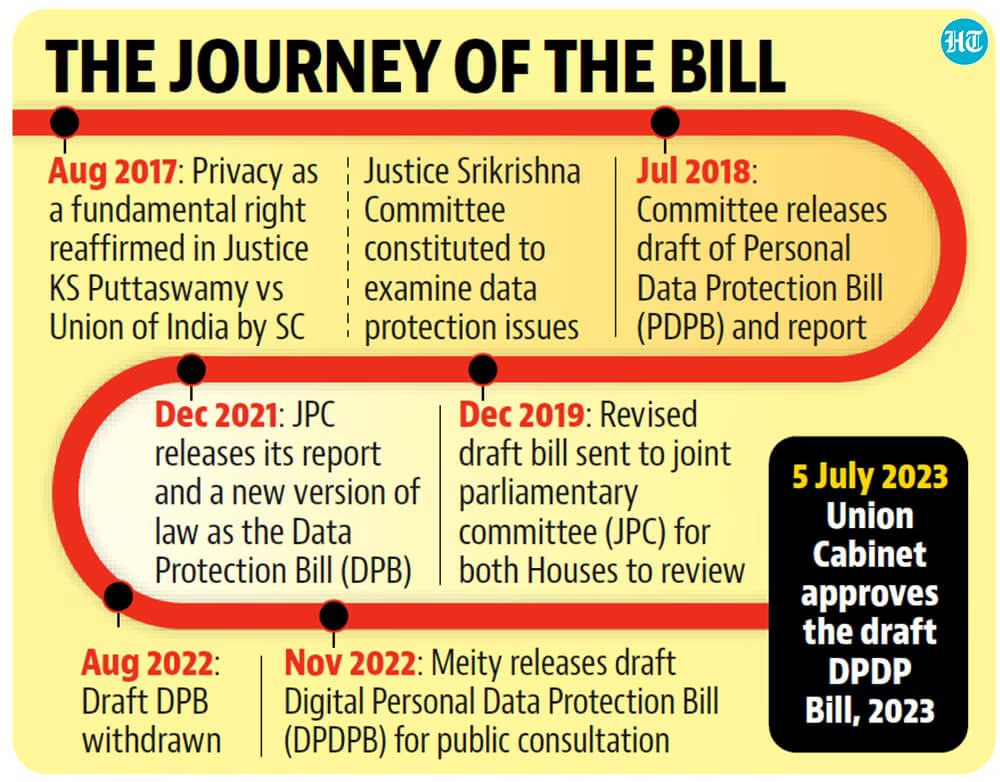
    • Shortfall in Draft Digital Data Protection Bill, 2022: The current Draft Digital Data Protection Bill, 2022, falls short and fails to incorporate safeguards from previous rounds of consultations and even earlier iterations of the Bill.
    • For instance: The 2021 draft imposed a penalty for the intentional reidentification of an individual’s anonymized personal information. This provision has been done away with, amplifying concerns around insufficient limitations and safeguards for privacy.
    • No effective legislative safeguards to prevent access to personal information: The budget also proposes privacy-invasive changes to the Income Tax search and seizure provisions in view of the increased use of technology and digitization. IT officials could seek the assistance of experts to access digital devices and encrypted data. Such broad authorizations are bound to increase the scope for arbitrariness and misuse.

    Budget

    What issues need to be addressed for expanding the scope of DigiLocker?

    • The budget proposes expanding the scope of DigiLocker. For this measure to truly serve the objective of “Trust Based Governance”, two issues need to be addressed:
    • Strengthening of the cybersecurity infrastructure: Strengthening of the cybersecurity infrastructure, including implementation of the long-awaited National Cyber Security Strategy, to inspire people’s trust, and potentially avert situations like the one in 2020 where 3.8 crore DigiLocker accounts were compromised.
    • Preventing scope creep of Aadhaar: Prevent the continuing scope creep of Aadhaar, which is increasingly being made mandatory not only to avail services and benefits but also to exercise fundamental rights such as voting. The negative human rights impact of the forced, widespread use of Aadhaar has been well-documented.

    Did you know?

    • DigiLocker, a government-run cloud-based platform for storing, sharing, and verifying documents and certificates, to make it a one-stop solution of reconciliation and updating of identity and addresses with Aadhaar as foundational identity.

    Budget

    Conclusion

    • The World Economic Forum’s Global Cybersecurity Outlook 2023 finds that data privacy and cybersecurity regulations are effective for reducing cyber risks. Many new laws have been assured this year on data protection, telecom, internet governance and cybersecurity. As the country kickstarts its G20 presidency and prepares to be a leader in this space, we would do well to prioritise the development of exemplary, rights-respecting privacy and cybersecurity regimes.

    Mains question

    Q. For the potential of anonymised data to be unleashed without jeopardising people’s privacy, India first needs a robust data protection law. Discuss.

    (Click) FREE 1-to-1 on-call Mentorship by IAS-IPS officers | Discuss doubts, strategy, sources, and more

  • What is Bhashini Initiative?

    bhashini

    Bhashini, a small team at the Ministry of Electronics and IT (MeitY), is currently building a WhatsApp-based chatbot that relies on information generated by ChatGPT to return appropriate responses to queries.

    What is Bhashini Initiative?

    • ‘Bhashini,’ one of these initiatives, is a local language translation mission that aims to break the barrier between various Indian tongues by using available technology.
    • This government platform aims to make Artificial Intelligence (AI) and Natural Language Processing (NLP) resources available in the public domain to be used by – Indian MSMEs, startups and individual innovators.
    • This will help developers to offer all Indians easy access to the internet and digital services in their native languages.

    How does it work?

    • The project is available on this website: https://www.bhashini.gov.in/en/.
    • It is aimed to build and develop an ecosystem where various stakeholders can unite to maintain an ‘ever-evolving repository of data, training and benchmark datasets, open models, tools and technologies.’
    • This online platform also has a separate ‘Bhashadaan section which allows individuals to contribute to multiple crowdsourcing initiatives and it is also accessible via respective Android and iOS apps.
    • The contribution can be done in four ways — Suno India, Likho India, Bolo India and Dekho India – where users have to type what they hear or have to validate texts transcribed by others.

    Importance of Bhashini

    • Bhashini hopes of breaking the massive Indian language barrier and wants developers to offer Indians digital services in their local languages.
    • The project not only has a massive size and magnitude but also has several benefits.
    • India has a chance to create a roadmap to allow internet access for local languages.
    • Moreover, this is important considering the increased availability of smartphones and cheaper data rates are allowing the internet to penetrate the remote and rural areas of the country.

    Key initiatives in this regard

    • The National Language Translation Mission (NLTM) was announced in the 2021-22 budget by finance minister Nirmala Sitharaman.
    • The reason behind introducing this mission was a survey that concluded that 53% of Indians who don’t access the internet have said that they would start using the web if it had content available in their native languages.
    • This is where Bhashini comes in with the sole purpose of developing a national digital public platform for languages to provide universal access to content.
    • This is expected to improve the delivery of digital content in all Indian languages.
    • Finally, it will help in creating a knowledge-based society where information is freely and readily available which will make the ecosystem and citizens “Atmanirbhar.”


    Crack Prelims 2023! Talk to our Rankers

    (Click) FREE 1-to-1 on-call Mentorship by IAS-IPS officers | Discuss doubts, strategy, sources, and more