đŸ’„Join UPSC 2027,2028 Mentorship (July Batch) + XFactor Notes & Microthemes PDF

Subject: Governance

Important aspects of Society

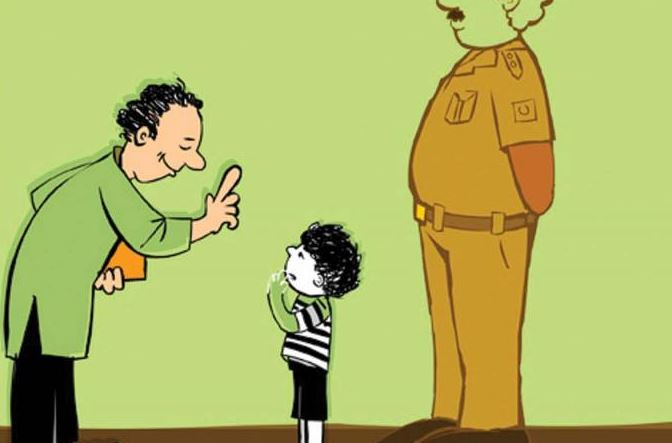
  • [pib] Children in Street Situations (CiSS) Application

    The National Commission for the Protection of Child Rights (NCPCR) has launched a “CiSS application” under the Baal Swaraj portal to help in the rehabilitation process of Children in Street Situations (CiSS).

    CiSS Application

    • The CiSS application is used for receiving data of children in street situations from all the states and union territories, tracking their rescue and rehabilitation process.
    • The initiative is taken under the direction of the Supreme Court of India.
    • The program embodies Article 51 (A) of the Constitution of India, as it provides a platform to the public and organizations catering to the welfare of the children to report any child in need of assistance.
    • The platform serves to collect data and report to the District Child Protection Officer (DCPO) for them to take necessary action.
    • It also provides a platform for professionals and organizations to provide any help that they can to children in need.
    • Help can be provided in the form of open shelters, counselling services, medical services, sponsorships, de-addiction services, education services, legal/paralegal services, volunteering etc.

    Its working framework

    • It categorizes any child under ‘Children in Street Situation’ if the child is living on the streets alone, living on the streets during the day, or living on the streets with the family.
    • The root cause of this phenomenon is the migration of families from rural to urban areas in search of a better standard of living.

    How does it work?

    It follows six stages framework for the rehabilitation of children.

    1. Collection of the child’s details, which is accomplished through the portal.
    2. Social Investigating Report (SIR)e. investigating the child’s background. This is done under the supervision of the District Child Protection Unit (DCPU) by the District Child Protection Officer (DCPO) by conversing and counselling the child.
    3. Formulating an Individual Care Plan (ICP) for the child.
    4. Child Welfare Committee (CWC) based on the SIR submitted to the CWC.
    5. Allocating the schemes and benefits that the beneficiary can avail of.
    6. A checklist is made for the evaluation of the progress i.e. (Follow Ups).


    UPSC 2023 countdown has begun! Get your personal guidance plan now! (Click here)

  • Healthcare in India is ailing. Here is how to fix it

    Context

    The lesson emerging from the pandemic experience is that if India does not want a repeat of the immeasurable suffering and the social and economic loss, we need to make public health a central focus.

    Need for institutional reforms in the health sector

    • The importance of public health has been known for decades with every expert committee underscoring it.
    • Ideas ranged from instituting a central public health management cadre like the IAS to adopting an institutionalised approach to diverse public health concerns — from healthy cities, enforcing road safety to immunising newborns, treating infectious diseases and promoting wellness.
    • Covid has shifted the policy dialogue from health budgets and medical colleges towards much-needed institutional reform.

    About National Health Mission (NHM)

    • The National Health Mission (NHM) seeks to provide universal access to equitable, affordable and quality health care which is accountable, at the same time responsive, to the needs of the people, reduction of child and maternal deaths as well as population stabilization, gender and demographic balance.
    • The Framework for Implementation of NUHM has been approved by the Cabinet on May 1, 2013.
    • NHM encompasses two Sub-Missions, National Rural Health Mission (NRHM) and National Urban Health Mission (NUHM).
    • The National Rural Health Mission (NRHM) was launched in 2005 with a view to bringing about dramatic improvement in the health system and the health status of the people, especially those who live in the rural areas of the country.

    Learning from the failure of National Health Mission (NHM)

    • The National Health Mission (NHM) has been in existence for about 15 years now and the health budget has trebled— though not as a proportion of the GDP.
    • Despite this less than 10 per cent of the health facilities below the district level can attain the grossly minimal Indian public health standards.
    • Clearly, the three-tier model of subcentres with paramedics, primary health centres with MBBS doctors and community health centres (CHC) with four to six specialists has failed.
    • Lack of accountability framework: The model’s weakness is the absence of an accountability framework.
    • The facilities are designed to be passive — treating those seeking care.

    Suggestions

    • 1] FHT: Instead of passive design of NHM, we need Family Health Teams (FHT) like in Brazil, accountable for the health and wellbeing of a dedicated population, say 2,000 families.
    • The FHTs must consist of a doctor with a diploma in family medicine and a dozen trained personnel to reflect the skill base required for the 12 guaranteed services under the Ayushman Bharat scheme.
    • A baseline survey of these families will provide information about those needing attention.
    • Family as a unit: The team ensures a continuum of care by taking the family as a unit and ensuring its well-being over a period.
    •  Nudging these families to adopt lifestyle changes, following up on referrals for medical interventions and post-operative care through home visits for nursing and physiotherapy services would be their mandate.
    • 2] Health cadre: The implication of and central to the success of such a reset lies in creating appropriate cadres.
    • 3] Clarity to nomenclatures: There is also a need to declutter policy dialogue and provide clarity to the nomenclatures.
    • Currently, public health, family medicine and public health management are used interchangeably.
    • While the family doctor cures one who is sick, the public health expert prevents one from falling sick.
    • The public health management specialist holds specialisation in health economics, procurement systems, inventory control, electronic data analysis and monitoring, motivational skills and team-building capabilities, public communication and time management, besides, coordinating with the various stakeholders in the field.
    • 4] Move beyond doctor-led systems: India needs to move beyond the doctor-led system and paramedicalise several functions.
    • Instead of wasting gynaecologists in CHCs midwives (nurses with a BSc degree and two years of training in midwifery) can provide equally good services except surgical, and can be positioned in all CHCs and PHCs.
    • This will help reduce C Sections, maternal and infant mortality and out of pocket expenses.
    • 5] Counsellors and physiotherapists at PHC: Lay counsellors for mental health, physiotherapists and public health nurses are critically required for addressing the multiple needs of primary health care at the family and community levels.
    • 6] Review of existing system: Bringing such a transformative health system will require a comprehensive review of the existing training institutions, standardising curricula and the qualifying criteria.
    • Increase spending on training: Spending on pre-service and in-service training needs to increase from the current level of about 1 per cent.
    • 7] Redefining of functions: A comprehensive redefinition of functions of all personnel is required to weed out redundancies and redeploy the rewired ones.

    Conclusion

    Resetting the system to current day realities requires strong political leadership to go beyond the inertia of the techno-administrative status quoist structures. We can.

    UPSC 2023 countdown has begun! Get your personal guidance plan now! (Click here)

  • The problem with putting the civil services on a pedestal

    Context

    Recently, two IAS officers were the subject of widespread public derision for misuse of power. A week later, the media and the public feted those who had successfully cracked the UPSC examination in order to become bureaucrats of the future.

    About Indian Administrative Service

    • Civil Services refer to the career civil servants who are the permanent executive branch of the Republic of India.
    • The modern Indian Administrative Service was created under Article 312(2) in part XIV of the Constitution of India, and the All-India Services Act, 1951.
    • It is the backbone of the administrative machinery of the country.
    • As India is a parliamentary democracy, the ultimate responsibility for running the administration rests with the people’s elected representatives.
    • The elected executive decides the policy and it is civil servants, who serve at the pleasure of the President of India, implement it.
    • Article 311 of the Constitution protects Civil Servants from politically motivated vindictive action.

    What makes civil services favourable in India

    • Most countries in the world have a cadre of professional civil servants but nowhere are new entrants to the system of government celebrated like in India.
    • Colonial legacy: The fact is that, 75 years after independence and 30 years after liberalisation, there is still an overhang of the all-powerful, all-pervasive state.
    • There are good reasons for a favourable view of the civil services.
    • Merit based selection: For one, candidates are selected on merit based on an open examination and interview.
    • Job security: Then there is the job security that comes with gaining entry.
    • Unless a civil servant does an extraordinary wrong, she has a job for life, and steady, time-bound promotions which ensure that everyone retires at the top irrespective of performance.

    Issues with public perception

    • However, in the perceived strengths of the civil services lie its weaknesses.
    • Single exam: The single UPSC examination is treated as gospel. 
    • But merit and competence cannot be judged by a single exam.
    • Permanence is a problem: The permanence of the job is a problem too.
    • Punishment for over-reach or misuse of power is a transfer, either from a weightier ministry to a lighter one or from high-profile capitals to geographically remote ones.
    • A system of limited accountability: The result is that all civil servants, never mind their ability or competence, operate in a system of limited accountability with few incentives to perform and plenty of opportunities to use and abuse their powers.

    Way forward

    • Placing civil servant at par with other professions: The civil services system needs to be brought down from its pedestal and placed at par with every other profession like elsewhere in the world.
    • This will not happen via political diktat. It requires the weight of public opinion.
    • Broaden the selection criteria: The system must be manned by capable, competent individuals. This cannot be decided on the basis of one exam.
    • Remove the job permanency: The underperforming officers need to be separated which cannot happen when the job is for life.
    • It may sound radical for India’s civil services but that is the way the rest of India and the world function, including the UK from where we inherited the structure.

    Conclusion

    If we can make these changes in the civil services, India will get the government it needs for the 21st century.

    UPSC 2023 countdown has begun! Get your personal guidance plan now! (Click here)

  • ASHA Program

    Context

    India’s one million Accredited Social Health Activists (ASHA) volunteers have received World Health Organization’s Global Health Leaders Awards 2022.

    Background of the ASHA program

    • In 1975, a WHO monograph titled ‘Health by the people’ and then in 1978, an international conference on primary health care in Alma Ata (in the then USSR and now in Kazakhstan), gave emphasis for countries recruiting community health workers to strengthen primary health-care services that were participatory and people centric.
    • Soon after, many countries launched community health worker programmes under different names.
    • India launched the ASHA programme in 2005-06 as part of the National Rural Health Mission.
    • The biggest inspiration for designing the ASHA programme came from the Mitanin (meaning ‘a female friend’ in Chhattisgarhi) initiative of Chhattisgarh, which had started in May 2002.
    • The core of the ASHA programme has been an intention to build the capacity of community members in taking care of their own health and being partners in health services.
    • Each of these women-only volunteers work with a population of nearly 1,000 people in rural and 2,000 people in urban areas, with flexibility for local adjustments.

    A well thought through and deliberated program

    • The ASHA programme was well thought through and deliberated with public health specialists and community-based organisations from the beginning.
    • 1] Key village stakeholders selected: The ASHA selection involved key village stakeholders to ensure community ownership for the initiatives and forge a partnership.
    • 2] Ensure familiarity: ASHAs coming from the same village where they worked had an aim to ensure familiarity, better community connect and acceptance.
    • 3] Community’s representative: The idea of having activists in their name was to reflect that they were/are the community’s representative in the health system, and not the lowest-rung government functionary in the community.
    • 4] Avoiding the slow process of government recruitment: Calling them volunteers was partly to avoid a painfully slow process for government recruitment and to allow an opportunity to implement performance-based incentives in the hope that this approach would bring about some accountability.

    Contribution of ASHA

    • It is important to note that even before the COVID-19 pandemic, ASHAs have made extraordinary contributions towards enabling increased access to primary health-care services; i.e. maternal and child health including immunisation and treatment for hypertension, diabetes and tuberculosis, etc., for both rural and urban populations, with special focus on difficult-to-reach habitations.
    • Over the years, ASHAs have played an outstanding role in making India polio free, increasing routine immunisation coverage; reducing maternal mortality; improving new-born survival and in greater access to treatment for common illnesses.

    Challenges

    • Linkages with AWW and ANM: When newly-appointed ASHAs struggled to find their way and coordinate things within villages and with the health system, their linkage with two existing health and nutrition system functionaries — Anganwadi workers (AWW) and Auxiliary Nurse Midwife (ANM) as well as with panchayat representatives and influential community members at the village level — was facilitated.
    •  This resulted in an all-women partnership, or A-A-A: ASHA, AWW and ANM, of three frontline functionaries at the village level, that worked together to facilitate health and nutrition service delivery to the community.
    • No fixed salary to ASHAs: Among the A-A-A, ASHAs are the only ones who do not have a fixed salary; they do not have opportunity for career progression.
    • These issues have resulted in dissatisfaction, regular agitations and protests by ASHAs in many States of India.

    Way forward

    • The global recognition for ASHAs should be used as an opportunity to review the programme afresh, from a solution perspective.
    • 1] Higher remuneration: Indian States need to develop mechanisms for higher remuneration for ASHAs.
    • 2] Avenues for career progression: It is time that in-built institutional mechanisms are created for capacity-building and avenues for career progression for ASHAs to move to other cadres such as ANM, public health nurse and community health officers are opened.
    • 3] Extend the benefits of social sector services: Extending the benefits of social sector services including health insurance (for ASHAs and their families) should be considered.
    • 4] Independent and external review: While the ASHA programme has benefitted from many internal and regular reviews by the Government, an independent and external review of the programme needs to be given urgent and priority consideration.
    • 5] Regularisation of temporary posts: There are arguments for the regularisation of many temporary posts in the National Health Mission and making ASHAs permanent government employees.

    Conclusion

    The WHO award for ASHA volunteers is a proud moment and also a recognition of every health functionary working for the poor and the underserved in India.  It is a reminder and an opportunity to further strengthen the ASHA programme for a stronger and community-oriented primary health-care system.

    UPSC 2023 countdown has begun! Get your personal guidance plan now! (Click here)

  • Malnutrition in India is a worry in a modern scenario

    Context

    The country’s response to its burden of malnutrition and growing anaemia has to be practical and innovative.

    What is malnutrition?

    • Malnutrition refers to deficiencies, excesses or imbalances in a person’s intake of energy and/or nutrients.
    • The term malnutrition covers 2 broad groups of conditions.
    • One is ‘undernutrition’—which includes stunting (low height for age), wasting (low weight for height), underweight (low weight for age) and micronutrient deficiencies or insufficiencies (a lack of important vitamins and minerals).
    • The other is overweight, obesity and diet-related non-communicable diseases (such as heart disease, stroke, diabetes, and cancer).

    What are the root causes of malnutrition in India?

    The following three deficits are the root cause of malnutrition in India.

    1) Dietary deficit

    • There is a large dietary deficit among at least 40 per cent of our population of all age groups, shown in— the National Nutrition Monitoring Bureau’s Third Repeat Survey (2012), NFHS 4, 2015-16, the NNMB Technical Report Number 27, 2017.
    • Our current interventions are not being able to bridge this protein-calorie-micronutrient deficit.
    • The NHHS-4 and NFHS-5 surveys reveal an acute dietary deficit among infants below two years, and considerable stunting and wasting of infants below six months.
    • Unless this maternal/infant dietary deficit is addressed, we will not see rapid improvement in our nutritional indicators.

    2) Information deficit at household level

    • We do not have a national IEC (information, education and communication) programme that reaches targeted households to bring about the required behavioural change regarding some basic but critical facts.
    • For example, IEC tells about the importance of balanced diets in low-income household budgets, proper maternal, child and adolescent nutrition and healthcare.

    3) Inequitable market conditions

    • The largest deficit, which is a major cause of dietary deficiency and India’s chronic malnutrition, pertains to inequitable market conditions.
    • Such market conditions deny affordable and energy-fortified food to children, adolescents and adults in lower-income families.
    • The market has stacks of expensive fortified energy food and beverages for higher income groups, but nothing affordable for low-income groups.

    The vicious cycle of malnutrition

    • Link with mother: A child’s nutritional status is directly linked to their mother.
    • Poor nutrition among pregnant women affects the nutritional status of the child and has a greater chance to affect future generations.
    • Impact on studies: Undernourished children are at risk of under-performing in studies and have limited job prospects.
    • Impact on development of the country: This vicious cycle restrains the development of the country, whose workforce, affected mentally and physically, has reduced work capacity.

    Marginal improvement on Stunting and Wasting

    • The National Family Health Survey (NFHS-5) has shown marginal improvement in different nutrition indicators, indicating that the pace of progress is slow.
    • This is despite declining rates of poverty, increased self-sufficiency in food production, and the implementation of a range of government programmes.
    • Children in several States are more undernourished now than they were five years ago.
    • Increased stunting in some states: Stunting is defined as low height-for-age.
    • While there was some reduction in stunting rates (35.5% from 38.4% in NFHS-4) 13 States or Union Territories have seen an increase in stunted children since NFHS-4.
    • This includes Gujarat, Maharashtra, West Bengal and Kerala.
    • Wasting remains stagnant: Wasting is defined as low weight-for-height.
    • Malnutrition trends across NFHS surveys show that wasting, the most visible and life-threatening form of malnutrition, has either risen or has remained stagnant over the years.

    Prevalence of anaemia in India

    • What is it? Anaemia is defined as the condition in which the number of red blood cells or the haemoglobin concentration within them is lower than normal.
    • Consequences: Anaemia has major consequences in terms of human health and development.
    • It reduces the work capacity of individuals, in turn impacting the economy and overall national growth.
    • Developing countries lose up to 4.05% in GDP per annum due to iron deficiency anaemia; India loses up to 1.18% of GDP annually.
    • The NFHS-5 survey indicates that more than 57% of women (15-49 years) and over 67% children (six-59 months) suffer from anaemia.

    Way forward

    1] Increase investment:

    • There is a greater need now to increase investment in women and children’s health and nutrition to ensure their sustainable development and improved quality of life.
    • Saksham Anganwadi and the Prime Minister’s Overarching Scheme for Holistic Nourishment (POSHAN) 2.0 programme have seen only a marginal increase in budgetary allocation this year (â‚č20,263 crore from â‚č20,105 crore in 2021-22).
    • Additionally, 32% of funds released under POSHAN Abhiyaan to States and Union Territories have not been utilised.

    2] Adopt outcome oriented approach on the nutrition programme

    • India must adopt an outcome-oriented approach on nutrition programmes.
    • It is crucial that parliamentarians begin monitoring needs and interventions in their constituencies and raise awareness on the issues, impact, and solutions to address the challenges at the local level.
    • Direct engagement: There has to be direct engagement with nutritionally vulnerable groups and ensuring last-mile delivery of key nutrition services and interventions.
    • This will ensure greater awareness and proper planning and implementation of programmes.
    • This can then be replicated at the district and national levels.

    3] Increase awareness and mother’s education

    • With basic education and general awareness, every individual is informed, takes initiatives at the personal level and can become an agent of change.
    •  Various studies highlight a strong link between mothers’ education and improved access and compliance with nutrition interventions among children.

    4] Monitoring

    • There should be a process to monitor and evaluate programmes and address systemic and on the ground challenges.
    • A new or existing committee or the relevant standing committees meet and deliberate over effective policy decisions, monitor the implementation of schemes, and review nutritional status across States.

    Conclusion

    We must ensure our young population has a competitive advantage; nutrition and health are foundational to that outcome.

    UPSC 2023 countdown has begun! Get your personal guidance plan now! (Click here)

  • Accessible India Campaign

    With its deadline of June 2022 almost up, the status of targets under the Accessible India Campaign (AIC) is likely to be discussed during a meeting of the Central Advisory Board on Disability.

    What is Accessible India Campaign?

    • Accessible India Campaign or Sugamya Bharat Abhiyan is a program that is launched to serve the differently-able community of the country.
    • The flagship program has been launched on 3 December 2015, the International Day of People with Disabilities.
    • The program comes with an index to measure the design of disabled-friendly buildings and human resource policies.
    • The initiative also in line with Article 9 of the (UN Convention on the Rights of Persons with Disabilities) which India is a signatory since 2007.
    • The scheme also comes under the Persons with Disabilities Act, 1995 for equal Opportunities and protection of rights which provides non-discrimination in Transport to Persons with Disabilities.

    Recent developments

    • The Central Public Works Department (CPWD) released the Harmonised Guidelines and Standards for Universal Accessibility in India 2021.
    • Drafted by a team of the IIT-Roorkee and the National Institute of Urban Affairs of the MoHUA, the revised guidelines aim to give a holistic approach.
    • Earlier, the guidelines were for creating a barrier-free environment, but now they are focusing on universal accessibility.

    Key highlights

    • Ramps: The guidelines provide the gradient and length of ramps — for example, for a length of six metres, the gradient should be 1:12. The minimum clear width of a ramp should be 1,200 mm.
    • Beyond PwDs: While making public buildings and transport fully accessible for wheelchair users is covered in the guidelines, other users who may experience temporary problems have also been considered. For instance, a parent pushing a child’s pram while carrying groceries or other bags, and women wearing saris.
    • Women friendly: Built environment needs for accessibility for women should consider diverse age groups, diverse cultural contexts and diverse life situations in which women operate. Diverse forms of clothing (saris, salwar-kameez, etc.) and footwear (heels, kolhapuri chappals, etc.) require a certain orientations.
    • Accessibility symbols: The guidelines call for accessibility symbols for PwD, family-friendly facilities and transgender to be inclusively incorporated among the symbols for other user groups.
    • Targeted authorities: The guidelines are meant for State governments, government departments and the private sector, as well as for reference by architecture and planning institutes.

    Policy measures for PwDs

    • India is a signatory to the UN Convention the Right of Persons with Disabilities, which came into force in 2007.
    • The Union Minister for Social justice and Empowerment has also launched the “Sugamya Bharat App” to complain for ease accessibility for PwDs.
    • India has its dedicated the Rights of Persons with Disabilities Act, 2016, which is the principal and comprehensive legislation concerning persons with disabilities.


    UPSC 2023 countdown has begun! Get your personal guidance plan now! (Click here)

  • What are PM Shri Schools?

    Union Education Ministry is planning to set up “PM Shri Schools”.

    PM Shri Schools

    • PM Shri Schools will be the laboratory of National Education Policy (NEP) 2020.
    • They will be fully equipped to prepare students for the future.

    Likely features of these schools

    • It could imbibe 5+3+3+4 (to replace the 10+2 schooling system) approach of NEP covering pre-school to secondary, emphasis on ECCE, teacher training & adult education.
    • There will be an integration of skill development with school education and prioritising learning in mother tongue which are steps for preparing global citizens of the 21st century.
    • Since the NEP 2020 also increases the span of the Right to Education Act, it will now cover ages 3 to 18.

    Explained: 5+3+3+4 Schooling System

    • As per the new school education system of 5+3+3+4 outlined in NEP 2020, children will spend 5 years in the Foundational stage, 3 years in the Preparatory stage, 3 years in the Middle stage, and 4 years in the Secondary stage.
    • The division of stages has been made in line with the kind of cognitive development stages that a child goes through early childhood, school years, and secondary stage.
    • Here is the age-wise breakdown of the different levels of the new school education system:

    (1) 5 years of Foundational stage:

    For ages: 3 to 8, For classes: Anganwadi/pre-school, class 1, class 2

    • The foundational stage of education as per the national education policy will comprise 3 years or preschool or anganwadi education followed by two years of primary classes (classes 1 and 2).
    • This stage will focus on teaching in play-based or activity-based methods and on the development of language skills.

    (2) 3 years of Preparatory stage:

    For ages: 8 to 11, For classes: 3 to 5

    • The focus in the preparatory stage will remain on language development and numeracy skills.
    • Here, the method of teaching and learning would be play and activity-based, and also include classroom interactions and the element of discovery.

    (3) 3 years of Middle stage:

    For ages: 11 to 14, For classes: 6 to 8

    • As per NEP 2020, this stage of school education will focus on critical learning objectives, which is a big shift from the rote learning methods used in our education system for years.
    • This stage will work on experiential learning in the sciences, mathematics, arts, social sciences and humanities.

    (4) 4 years of Secondary stage:

    For ages: 14 to 18, For classes: 9 to 12

    • This stage will cover two phases classes 9 and 10, and classes 11 and 12.
    • The main change in these classes is the shift to a multidisciplinary system where students will have access to a variety of subject combinations that they can choose as per their skills and interest areas instead of being strictly divided into Arts, Science and Commerce categories.
    • This stage will again push for greater critical thinking and flexibility in the thought process.


    UPSC 2023 countdown has begun! Get your personal guidance plan now! (Click here)

  • The Digital India transformation

    Context

    Recently, Prime Minister Narendra Modi made a telling observation about his idea of India: “
 every Indian must have a smartphone in his hand and every field must be covered by a drone”.

    Digital India program and its impact

    • Digital India solved some of the most difficult problems the country had been facing for decades.
    • The Jan-Dhan-Aadhaar-Mobile (JAM) trinity has ensured that the poorest receive every penny of their entitled benefits.
    • Financial benefits worth nearly Rs 23 lakh crore have been transferred using DBT technology in the last eight years.
    • This has led to savings of Rs 2.22 lakh crore of public money.
    • Leveraging the power of drones and GIS technologies, SVAMITVA Yojana is providing digital land records to the rightful owners
    • Digital inclusion: The inclusive character of Digital India not only makes it a unique initiative but also reflects our core philosophy of “Sabka Saath, Sabka Vishwas”.

    Digital transformation in India

    • India today is home to more than 75 crore smartphones, 133 crore Aadhaar cards, more than 80 crore internet users, has 4G and is now accelerating towards 5G.
    • It has among the lowest data tariffs in the world.
    • Digital technology must be low-cost, developmental, inclusive, and substantially home-grown and it should bridge the digital divide and usher in digital inclusion.
    • The digital ecosystem was also useful in tackling the challenge of the pandemic.
    • To provide high-speed broadband to all the villages, optical fibre has been laid in 1.83 lakh gram panchayats under Bharat Net.
    • CSCs: There were only 80,000 Common Service Centers (CSCs) in 2014, which is an entity under the Ministry of Electronics and IT headed by Secretary IT, for providing assisted delivery of digital services to common citizens offering only a few services. Today, there are nearly four lakh CSCs.
    • Fintech innovation ecosystem: India has emerged as the fastest-growing ecosystem for fintech innovations. 
    • This was made possible due to innovative digital payment products like UPI and Aadhaar-Enabled Payment Systems (AEPS).
    • Startup ecosystem: India has more than 61,400 startups as of March 2022, making it the third-largest startup ecosystem after the US and China.
    • With nearly 14,000 startups getting recognized during 2021-22, 555 districts of India had at least one new startup as per the Economic Survey 2022.

    Atmanirbharta in electronic manufacturing

    • With initiatives like Modified Special Incentive Scheme (MSIPS), Electronics Manufacturing Cluster, National Policy on Electronics 2019, Electronics Development Fund, Production Linked Incentive (PLI) and Scheme for Promotion of Electronics Components and Semiconductors (SPECS), India is moving towards self-reliance in the field of electronics manufacturing.
    • The value of electronics manufacturing in India has touched $75 billion in 2020-21 from $29 billion in 2014.
    • Indian companies have developed their own 4G and 5G technologies.

    Conclusion

    Digital India’s motto – “Power to Empower” — is truly living up to its goals and expectations. The success of Digital India only confirms that it has a robust future in India’s development.

    UPSC 2023 countdown has begun! Get your personal guidance plan now! (Click here)

  • Back in news: Non-Resident Indians (NRIs)

    A national helpline for women deserted in Non-Resident Indian (NRI) marriages and the need for a dedicated fund to provide assistance to them are among the recommendations made at a consultation organized by the National Commission for Women (NCW).

    What are the issues faced by NRI wives?

    • Abandon after marriage
    • Inconclusive divorces filed abroad
    • Child custody disputes

    Classification of Overseas Indians

    Overseas Indians, officially known as Non-resident Indians (NRIs) or Persons of Indian Origin (PIOs), are people of Indian birth, descent or origin who live outside the Republic of India:

    (A) Non-Resident Indian (NRI)

    • Strictly asserting non-resident refers only to the tax status of a person who, as per section 6 of the Income-tax Act of 1961, has not resided in India for a specified period for the purposes of the Act.
    • The rates of income tax are different for persons who are “resident in India” and for NRIs.

    (B) Person of Indian Origin (PIO)

    Person of Indian Origin (PIO) means a foreign citizen (except a national of Pakistan, Afghanistan, Bangladesh, China, Iran, Bhutan, Sri Lanka and/or Nepal), who:

    • at any time held an Indian passport OR
    • either of their parents/grandparents/great-grandparents were born and permanently resident in India as defined in GoI Act, 1935 and other territories that became part of India thereafter provided neither was at any time a citizen of any of the aforesaid countries OR
    • is a spouse of a citizen of India or a PIO.

    (C) Overseas Citizenship of India (OCI)

    • After multiple efforts by leaders across the Indian political spectrum, a pseudo-citizenship scheme was established, the “Overseas Citizenship of India”, commonly referred to as the OCI card.
    • The Constitution of India does not permit full dual citizenship.
    • The OCI card is effectively a long-term visa, with restrictions on voting rights and government jobs.


    UPSC 2023 countdown has begun! Get your personal guidance plan now! (Click here)

  • Questioning the Safety of Aadhaar

    Two days after issuing an advisory asking people to refrain from sharing photocopies of their Aadhaar Card, the Unique Identification Development Authority of India (UIDAI) opted to withdraw the notification.

    UIDAI Advisory

    • The withdrawn notice had suggested holders use a masked Aadhaar card instead of the conventional photocopy.
    • It added that the document must not be downloaded from a cybercafe or public computer and if done for some reason, must be permanently deleted from the system.
    • Private entities like hotels or film halls cannot collect or keep copies of the identification document.

    What is Masked Aadhaar?

    • ‘Masked Aadhaar’ veils the first eight digits of the twelve-digit ID with ‘XXXX’ characters.
    • The notice informed that only entities possessing a ‘User Licence’ are permitted to seek Aadhaar for authentication purposes.

    Why in news now?

    • In July 2018, Telecom Regulatory of India’s Chairman tweeted his Aadhaar number challenging users to “cause him any harm”.
    • In response, users dug up his mobile number, PAN number, photographs, residential address and date of birth.
    • UIDAI dismissed assertions of any data leak, arguing that most of the data was publicly available.
    • It did however caution users from publicly sharing their Aadhaar numbers.

    Security of Aadhaar: What does the law say?

    • The Aadhaar (Targeted Delivery of Financial and Other Subsidies Benefits and Services) Act, 2016 makes it clear.
    • Aadhaar authentication is necessary for availing subsidies, benefits and services that are financed from the Consolidated Fund of India.
    • In the absence of Aadhaar, the individual is to be offered an alternate and viable means of identification to ensure she/he is not deprived of the same.
    • Separately, Aadhaar has been described as a preferred KYC (Know Your Customer) document but not mandatory for opening bank accounts, acquiring a new SIM or school admissions.
    • The requesting entity would have to obtain the consent of the individual before collecting his/her identity.
    • The entity must ensure that the information is only used for authentication purposes on the Central Identities Data Repository (CIDR).

    What is CIDR?

    • This centralised database contains all Aadhaar numbers and holder’s corresponding demographic and biometric information.
    • UIDAI responds to authentication queries with a ‘Yes’ or ‘No’.
    • In some cases, basic KYC details (as name, address, photograph etc.) accompany the verification answer ‘Yes’.
    • The regulator does not receive or collect the holder’s bank, investment or insurance details.

    Protection of confidentiality

    • The Act makes it clear that confidentiality needs to be maintained and the authenticated information cannot be used for anything other than the specified purpose.
    • More importantly, no Aadhaar number (or enclosed personal information) collected from the holder can be published, displayed or posted publicly.
    • Identity information or authentication records would only be liable to be produced pursuant to an order of the High Court or Supreme Court, or by someone of the Secretary rank or above in the interest of national security.

    Is identity theft via Aadhaar possible?

    • As per the National Payment Corporation of India’s (NCPI) data, â‚č6.48 crore worth of financial frauds through 8,739 transactions involving 2,391 unique users took place in FY 2021-22.
    • Since the inception of the UID project, institutions and organisations have endowed greater focus on linking their databases with Aadhaar numbers.
    • This include bank accounts especially in light of the compulsory linkage for direct benefit transfer schemes.

    Structural problems with UIDAI

    • The Aadhaar Data Vault is where all numbers collected by authentication agencies are centrally stored.
    • Comptroller and Auditor General of India’s (CAG) latest report stipulated that UIDAI has not specified any encryption algorithm (as of October 2020) to secure the same.
    • There is no mechanism to illustrate that the entities were adhering to appropriate procedures.
    • Further, UIDAI’s unstable record with biometric authentication has not helped it with de-duplication efforts, the process that ensures that each Aadhaar Number generated is unique.
    • The CAG’s reported stated that apart from the issue of multiple Aadhaars to the same resident, there have been instances of the same biometric data being accorded to multiple residents.

    Conclusion

    • The CAG concluded it was “not effective enough” in detecting the leakages and plugging them.
    • Biometric authentications can be a cause of worry, especially for disabled and senior citizens with both the iris and fingerprints dilapidating.
    • Though the UIDAI has assured that no one would be deprived of any benefits due to biometric authentication failures.
    • The absence of an efficient technology could serve as poignant premise for frauds to make use of their ‘databases’.

    Try this PYQ:

    Q.Consider the following statements:

    1. Aadhaar metadata cannot be stored for more than three months.
    2. State cannot enter into any contract with private corporations for sharing of Aadhaar data.
    3. Aadhaar is mandatory for obtaining insurance products.
    4. Aadhaar is mandatory for getting benefits funded out of the Consolidated Fund of India.

    Which of the statements given above is/are correct?

    (a) 1 and 4 only

    (b) 2 and 4 only

    (c) 3 only

    (d) 1, 2 and 3 only


    [wpdiscuz-feedback id=”m9l8xajnd2″ question=”Please leave a feedback on this” opened=”1″]Post your answers here.[/wpdiscuz-feedback]


    UPSC 2023 countdown has begun! Get your personal guidance plan now! (Click here)