💥Join UPSC 2027,2028 Mentorship (July Batch) + XFactor Notes & Microthemes PDF

Subject: Governance

Important aspects of Society

  • E-governance

    Context

    There are several reforms and governance initiatives that have successfully steered India to its current strength.

    Contribution of Digital India program

    • A report carding of Digital India’s performance shows impressive progress.
    • Thus far, the government has transferred more than Rs 17 lakh crore through DBT while saving Rs 2.2 lakh crore.
    • Today, India has the world’s fastest-growing and most vibrant startup ecosystem with close to 70,000 registered startups and around 100 unicorns, with a unicorn coming up every week.
    • GST regime: Thanks to the most significant reform in indirect taxation through the GST and tax compliance, India has registered its highest ever collections.
    • Revenue increased from Rs 22 lakh crore in FY 21 to Rs 27 lakh crore in FY 22 — a whopping 22 per cent growth.
    • Role in India’s response to pandemic: Digital India played a significant role in India’s response to the pandemic.
    • It ensured that the government could reach people in remote parts of the country.
    • Health, education and other essential services migrated swiftly to the online mode.

    Use of technology for governance amid pandemic

    • Digital India played a significant role in India’s response to the pandemic.
    • It ensured that the government could reach people in remote parts of the country.
    • Health, education and other essential services migrated swiftly to the online mode.
    • It would not be an aberration to say that post-Covid, India emerged as a preeminent nation in the use of technology for governance.

    Conclusion

    The rapid digitalisation of the world along with a new focus on trust in the global supply chains for digital products and services presents tremendous opportunities for India and its youth.  It is now up to all of us to engage in a collective “sabka prayas” to realise New India’s economic potential.

    UPSC 2023 countdown has begun! Get your personal guidance plan now! (Click here)

  • Allow Surrogacy For Single Men, Mothers: Delhi HC

    The Delhi High Court issued a notice to the Union government on a petition challenging some provisions of the Surrogacy (Regulation) Act and the Assisted Reproductive Technology (Regulation) Act.

    Issues raised by the petition

    • Currently, the laws does not allow single men to have child through surrogacy.
    • Married women can only avail surrogacy services if they are unable to produce a child due to medical conditions.
    • Otherwise, for women to avail of surrogacy services, they must be aged between 35 and 45 and widowed or divorced.
    • Women can only offer surrogacy if they are aged between 25 and 35 and married with at least one biological child.
    • The laws also require a surrogate to be genetically related to the couple who intend to have a child through this method, their petition said.

    Basis of the Petition

    • The personal decision of a single person about the birth of a baby through surrogacy, i.e., the right of reproductive autonomy is a facet of the right to privacy guaranteed under Article 21 of the Constitution.
    • Thus, the right to privacy of every citizen or person affecting a decision to bear or beget a child through surrogacy cannot be taken away.

    Distinct features of the Surrogacy (Regulation) Act, 2021

    • Definition of surrogacy: It defines surrogacy as a practice where a woman gives birth to a child for an intending couple with the intention to hand over the child after the birth to the intending couple.
    • Regulation of surrogacy: It prohibits commercial surrogacy, but allows altruistic surrogacy which involves no monetary compensation to the surrogate mother other than the medical expenses and insurance.
    • Purposes for which surrogacy is permitted: Surrogacy is permitted when it is: (i) for intending couples who suffer from proven infertility; (ii) altruistic; (iii) not for commercial purposes; (iv) not for producing children for sale, prostitution or other forms of exploitation; and (v) for any condition or disease specified through regulations.
    • Eligibility criteria: The intending couple should have a ‘certificate of essentiality’ and a ‘certificate of eligibility’ issued by the appropriate authority ex. District Medical Board.

    Eligibility criteria for surrogate mother:

    • To obtain a certificate of eligibility from the appropriate authority, the surrogate mother has to be:
    1. A close relative of the intending couple;
    2. A married woman having a child of her own;
    3. 25 to 35 years old;
    4. A surrogate only once in her lifetime; and
    5. Possess a certificate of medical and psychological fitness for surrogacy.
    • Further, the surrogate mother cannot provide her own gametes for surrogacy.

    Also read

    [Burning Issue] Surrogacy in India

    UPSC 2023 countdown has begun! Get your personal guidance plan now! (Click here)

  • AKRUTI Program to start in Kudankulam

    The Nuclear Power Corporation of India Limited is all set to launch AKRUTI programme in the villages surrounding Kudankulam Nuclear Power Project (KKNPP).

    AKRUTI Program

    • The Nuclear Power Corporation of India Limited is assisting unemployed youth living near the Tarapur Atomic Power Station (TAPS) through AKRUTI.
    • AKRUTI stands for Advanced Knowledge and Rural Technology Implementation (AKRUTI) program.
    • Areas of water, food processing, agriculture and waste management in rural areas are covered under the AKRUTI program.
    • The scheme aims at empowering villages through implementing different technologies for usage.
    • This scheme will lead to sustainable growth of the rural sector across the country.

    What is the objective?

    • To provide information and mechanism for implementation of BARC technologies in rural areas thereby aiming at overall rural development.


    UPSC 2023 countdown has begun! Get your personal guidance plan now! (Click here)

  • Branch campuses in India, prospects and challenges

    Context

    India, after half a century of keeping its higher education doors closed to foreigners, is on the cusp of opening itself to the world.

    Higher education reforms

    • Currently, India does not allow the entry and the operation of foreign university branch campuses.
    • The NEP 2020 was a turning point for the entry of foreign universities as it recommended allowing foreign universities ranked in the “top 100” category to operate in India — under somewhat unrealistic conditions.
    • Internationalism: The wide-ranging National Education Policy (NEP) 2020 promises higher education reforms in many areas, and internationalisation is prominent among them.
    • Strengthening India’s soft power: Among the underlying ideas is to strengthen India’s “soft power” through higher education collaboration, bringing new ideas and institutions from abroad to stimulate reform and show “best practice”, and in general to ensure that Indian higher education, for the first time, is a global player.
    • In February 2022, Finance Minister Nirmala Sitharaman, in her Budget speech, announced that “world-class foreign universities and institutions would be allowed in the planned business district in Gujarat’s GIFT City”
    •  It was reported that in April 2022, the University Grants Commission (UGC) formed a committee to draft regulations to allow foreign institutions in the “top 500” category to establish campuses in India — realising that more flexibility was needed
    • Bringing global experience to India: Establishing branch campuses of top foreign universities is a good idea as this will bring much-needed global experience to India.

    Challenges

    • Globally, branch campuses, of which there are around 300 now, provide a mixed picture.
    • Many are aimed at making money for the sponsoring university — and this is not what India wants.
    • It will not be easy to attract foreign universities to India and even more difficult to create the conditions for them to flourish.
    • Many of those top universities are already fully engaged overseas and would likely require incentives to set up in India.
    • Further, there are smaller but highly regarded universities outside the ‘top 500’ category that might be more interested.
    • Universities around the world that have academic specialisations focusing on India, that already have research or faculty ties in the country, or that have Non-Resident Indians (NRI) in senior management positions may be easier to attract.
    • What is most important is to prevent profit-seekers from entering the Indian market and to encourage foreign institutions with innovative educational ideas and a long-term commitment.
    • Many host countries have provided significant incentives, including building facilities and providing necessary infrastructure.
    • Foreign universities are highly unlikely to invest significant funds up front.
    • A big challenge will be India’s “well-known” bureaucracy, especially the multiple regulators.

    Opportunities

    • India is seen around the world as an important country and an emerging higher education power.
    • It is the world’s second largest “exporter” of students, with 4,61,792 students studying abroad (according to the UNESCO Institute for Statistics).
    • And India has the world’s second largest higher education system.
    • Foreign countries and universities will be eager to establish a “beachhead” in India and interested in providing opportunities for home campus students to learn about Indian business, society, and culture to participate in growing trade and other relations.
    • Benefits of branch campuses: International branch campuses, if allowed, could function as a structurally different variant of India’s private university sector.
    • Branch campuses, if effectively managed, could bring much needed new ideas about curriculum, pedagogy, and governance to Indian higher education — they could be a kind of educational laboratory.

    Current initiatives

    • There has been modest growth of various forms of partnerships between Indian and foreign institutions.
    • The joint PhD programmes offered by the Indian Institute of Technology Bombay-Monash Research Academy and the University of Queensland-Indian Institute of Technology Delhi Academy of Research (UQIDAR), both with Australian partners, are some examples.
    • Another example is the Melbourne-India Postgraduate Academy (MIPA). It is a joint initiative of the Indian Institute of Science Bangalore, the Indian Institute of Technology Madras, the Indian Institute of Technology Kanpur and the Indian Institute of Technology Kharagpur with the University of Melbourne.
    • MIPA provides students with an opportunity to earn a joint degree accredited both in India and Australia: from the University of Melbourne and one of the partnering Indian institutions.
    • These partnerships suggest that India could offer opportunities for international branch campuses as well.

    Challenges

    • Globally, branch campuses, of which there are around 300 now, provide a mixed picture.
    • Many are aimed at making money for the sponsoring university — and this is not what India wants.
    • It will not be easy to attract foreign universities to India and even more difficult to create the conditions for them to flourish.
    • Many of those top universities are already fully engaged overseas and would likely require incentives to set up in India.
    • Further, there are smaller but highly regarded universities outside the ‘top 500’ category that might be more interested.
    • Universities around the world that have academic specialisations focusing on India, that already have research or faculty ties in the country, or that have Non-Resident Indians (NRI) in senior management positions may be easier to attract.
    • What is most important is to prevent profit-seekers from entering the Indian market and to encourage foreign institutions with innovative educational ideas and a long-term commitment.
    • Many host countries have provided significant incentives, including building facilities and providing necessary infrastructure.
    • Foreign universities are highly unlikely to invest significant funds up front.
    • A big challenge will be India’s “well-known” bureaucracy, especially the multiple regulators.

    Conclusion

    After examining national experiences elsewhere, clear policies can be implemented that may be attractive to foreign universities. Once policies are in place, the key to success will be relationships among universities.

    UPSC 2023 countdown has begun! Get your personal guidance plan now! (Click here)

  • ASHA workers earn WHO’s global plaudits

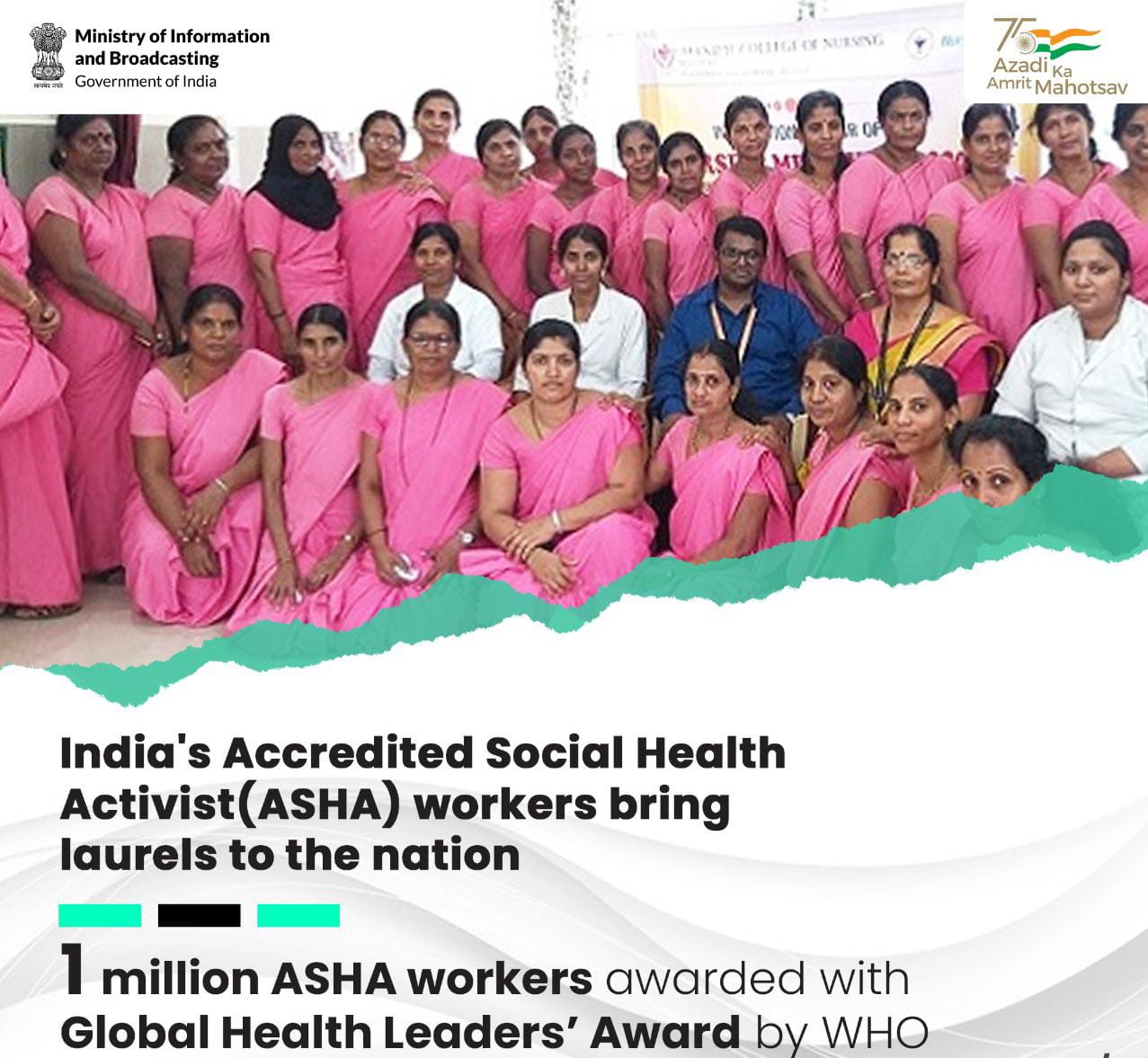
    The country’s frontline health workers or ASHAs (accredited social health activists) were one of the six recipients of the WHO’s Global Health Leaders Award 2022 which recognises leadership, contribution to the advance of global health and commitment to regional health issues.

    Who are ASHA workers?

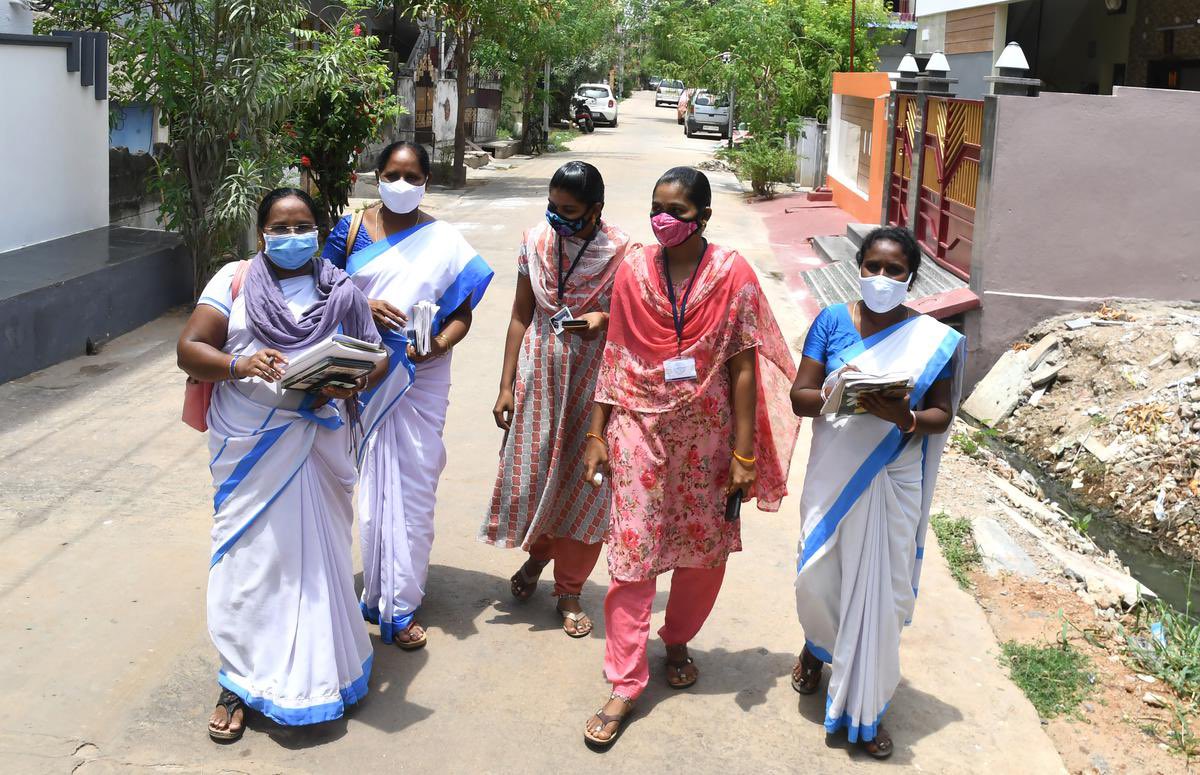
    • ASHA workers are volunteers from within the community who are trained to provide information and aid people in accessing benefits of various healthcare schemes of the government.
    • The role of these community health volunteers under the National Rural Health Mission (NRHM) was first established in 2005.
    • They act as a bridge connecting marginalised communities with facilities such as primary health centres, sub-centres and district hospitals.

    Genesis & evolution

    • The ASHA programme was based on Chhattisgarh’s successful Mitanin programme, in which a Community Worker looks after 50 households.
    • The ASHA was to be a local resident, looking after 200 households.
    • The programme had a very robust thrust on the stage-wise development of capacity in selected areas of public health.
    • Many states tried to incrementally develop the ASHA from a Community Worker to a Community Health Worker, and even to an Auxiliary Nurse Midwife (ANM)/ General Nurse and Midwife (GNM), or a Public Health Nurse.

    Qualifications for ASHA Workers

    • ASHAs are primarily married, widowed, or divorced women between the ages of 25 and 45 years from within the community.
    • They must have good communication and leadership skills; should be literate with formal education up to Class 8, as per the programme guidelines.

    How many ASHAs are there across the country?

    • The aim is to have one ASHA for every 1,000 persons or per habitation in hilly, tribal or other sparsely populated areas.
    • There are around 10.4 lakh ASHA workers across the country, with the largest workforces in states with high populations – Uttar Pradesh (1.63 lakh), Bihar (89,437), and Madhya Pradesh (77,531).
    • Goa is the only state with no such workers, as per the latest National Health Mission data available from September 2019.

    What do ASHA workers do?

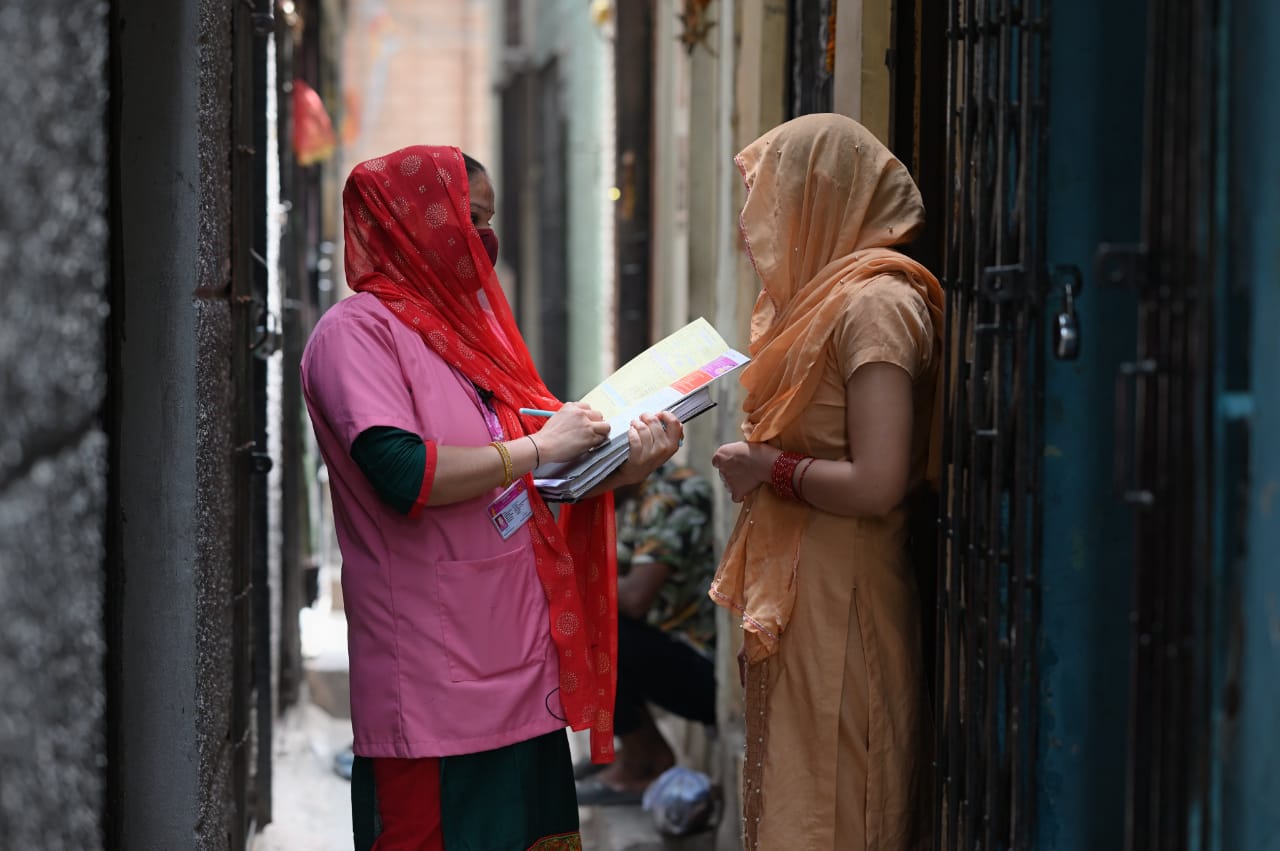
    • They go door-to-door in their designated areas creating awareness about basic nutrition, hygiene practices, and the health services available.
    • They focus primarily on ensuring that pregnant women undergo ante-natal check-up, maintain nutrition during pregnancy, deliver at a healthcare facility, and provide post-birth training on breast-feeding and complementary nutrition of children.
    • They also counsel women about contraceptives and sexually transmitted infections.
    • ASHA workers are also tasked with ensuring and motivating children to get immunised.
    • Other than mother and child care, ASHA workers also provide medicines daily to TB patients under directly observed treatment of the national programme.
    • They are also tasked with screening for infections like malaria during the season.
    • They also provide basic medicines and therapies to people under their jurisdiction such as oral rehydration solution, chloroquine for malaria, iron folic acid tablets to prevent anaemia etc.
    • Now, they also get people tested and get their reports for non-communicable diseases.
    • The health volunteers are also tasked with informing their respective primary health centre about any births or deaths in their designated areas.

    How much are ASHA workers paid?

    • Since they are considered “volunteers/activists”, governments are not obligated to pay them a salary. And, most states don’t.
    • Their income depends on incentives under various schemes that are provided when they, for example, ensure an institutional delivery or when they get a child immunised.
    • All this adds up to only between Rs 6,000 to Rs 8,000 a month.
    • Her work is so tailored that it does not interfere with her normal livelihood.

    Success of the ASHAs

    • It is a programme that has done well across the country.
    • In a way, it became a programme that allowed a local woman to develop into a skilled health worker.
    • Overall, it created a new cadre of incrementally skilled local health workers who were paid based on performance.
    • The ASHAs are widely respected as they brought basic health services to the doorstep of households.
    • Since then ASHA continues to enjoy the confidence of the community.

    Challenges to ASHAs

    • The ASHAs faced a range of challenges: Where to stay in a hospital? How to manage mobility? How to tackle safety issues?
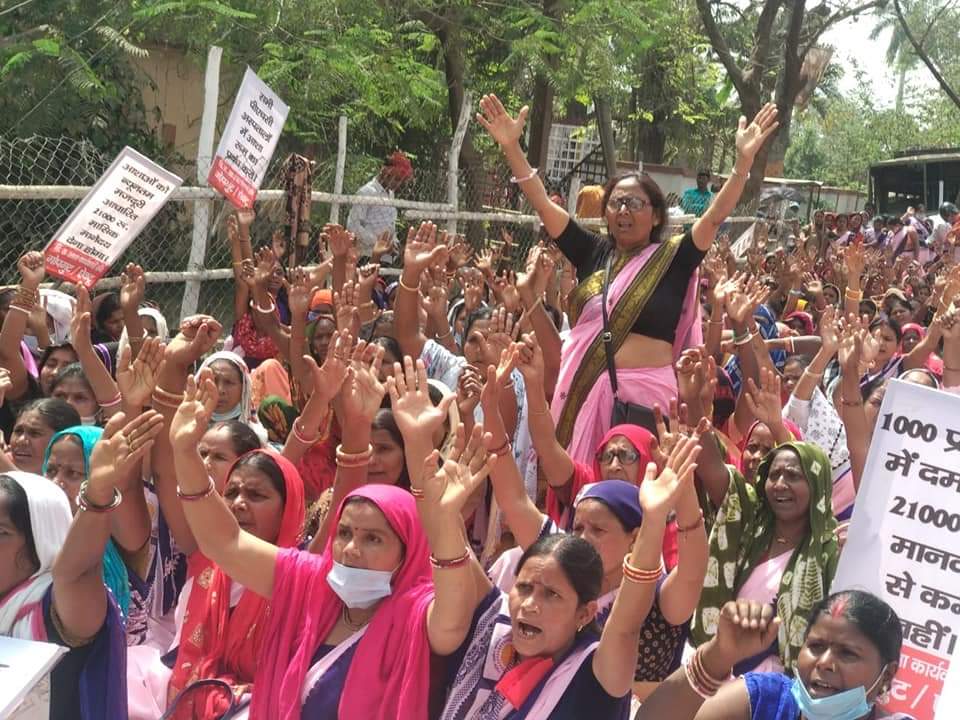
    • There have been challenges with regard to the performance-based compensation. In many states, the payout is low, and often delayed.
    • It has a problem of responsibility and accountability without fair compensation.
    • There is a strong argument to grant permanence to some of these positions with a reasonable compensation as sustaining motivation.
    • Ideally, an ASHA should be able to make more than the salary of a government employee, with opportunities for moving up the skill ladder in the formal primary health care system as an ANM/ GNM or a Public Health Nurse.

    Way forward

    • The incremental development of a local resident woman is an important factor in human resource engagement in community-linked sectors.
    • It is equally important to ensure that compensation for performance is timely and adequate.
    • Upgrading skill sets and providing easy access to credit and finance will ensure a sustainable opportunity to earn a respectable living while serving the community.
    • Strengthening access to health insurance, credit for consumption and livelihood needs at reasonable rates, and coverage under pro-poor public welfare programmes will contribute to ASHAs emerging as even stronger agents of change.


    UPSC 2023 countdown has begun! Get your personal guidance plan now! (Click here)

  • What are Look Out Circulars (LOCs)?

    The Punjab and Haryana High Court has held that a Look Out Circular (LOC), which prevents one from travelling abroad, must be supplied to the person at the time of being stopped at the airport and that the reasons should be communicated to the affected party.

    What is a Look Out Circular?

    • It is a notice to stop any individual wanted by the police, investigating agency or even a bank from leaving or entering the country through designated land, air and sea ports.
    • Immigration is tasked to stop any such individual against whom such a notice exists from leaving or entering the country.
    • There are 86 immigration check posts across the country.

    Who can issue LOCs?

    • A large number of agencies which includes the Central Bureau of Investigation (CBI), Enforcement Directorate, Directorate of Revenue Intelligence (DRI), Income Tax, State police and intelligence agencies are authorised to generate LOCs.
    • The officer should not be below the rank of a district magistrate or superintendent of police or a deputy secretary in the Union Government.

    What are the details required to generate an LOC and who issues it?

    • According to a 2010 official memorandum of the Ministry, details such as First Information Report (FIR) number, court case number are to be mandatorily provided with name, passport number and other details.
    • The BOI under the MHA is only the executing agency.
    • They generate LOCs based on requests by different agencies.
    • Since immigration posts are manned by the BOI officials they are the first responders to execute LOCs by stopping or detaining or informing about an individual to the issuing agency.
    • The LOCs can be modified; deleted or withdrawn only at the request of the originator.
    • Further, the legal liability of the action taken by immigration authorities in pursuance of LOC rests with the originating agency.

    How are banks authorized?

    • After several businessmen including liquor baron Vijay Mallya, businessmen Nirav Modi and Mehul Choksi fled the country after defaulting on loans, the MHA in 2018 brought changes to the 2010 guidelines.
    • It authorised the chairman, managing director and chief executives of all public sector banks to generate LOCs against persons who could be detrimental to economic interests of the country.

    Is there any other clause under which any individual can be stopped?

    • The 2010 Ministry guidelines give sweeping powers to police and intelligence agencies to generate LOCs in “exceptional cases” without keying in complete parameters or case details.
    • This was against suspects, terrorists, anti-national elements, etc. in larger national interest.
    • After the special status of J&K under Article 370 was abrogated in 2019, LOCs were opened against several politicians, human rights activists, journalists and social activists to bar them from flying out of the country.
    • The number of persons and the crime for which they have been placed under the list is unknown.

    Are individuals entitled to any remedial measures?

    • Many citizens have moved courts to get the LOC quashed.
    • As per norms, an LOC will stay valid for a maximum period of 12 months and if there is no fresh request from the agency then it will not be automatically revived.
    • The MHA has asserted that LOCs cannot be shown to the subject at the time of detention nor can any prior intimation be provided.
    • The Ministry recently informed the Punjab and Haryana HC that the LOC guidelines are a secret document and the same cannot be shared with the ‘accused’ or any unauthorised stakeholder.
    • It cannot be provided or shown to the subject at the time of detention by the BOI since it defeats the purpose of LOC and no accused or subject of LOC can be provided any opportunity of hearing before the issuance of the LOC.

    Precedence set by the Judiciary

    • In January this year, Delhi HC quashed an LOC against a Delhi businessman generated at the instance of the Income Tax department.
    • The court said no proceedings under any penal law had been initiated against the petitioner” and the LOC was “wholly unsustainable.”
    • It said that there cannot be any unfettered control or restriction on the right to travel and that it was part of the fundamental rights.
    • Delhi HC has also asked the Director of the CBI to tender a written apology.


    UPSC 2023 countdown has begun! Get your personal guidance plan now! (Click here)

  • India Hypertension Control Initiative (IHCI)

    The IHCI project has demonstrated that blood pressure treatment and control are feasible in primary care settings in diverse health systems across various States in India.

    India Hypertension Control Initiative (IHCI)

    • It is a multi-partner initiative involving the Indian Council of Medical Research, WHO-India, Ministry of Health and Family Welfare, and State governments.
    • It aims to improve blood pressure control for people with hypertension.
    • The project initiated in 26 districts in 2018 has expanded to more than 100 districts by 2022.
    • More than two million patients were started on treatment and tracked to see whether they achieved BP control.

    The project was built on five scalable strategies:

    1. Simple treatment protocol with three drugs was selected in consultation with the experts and non-communicable disease programme managers.
    2. Supply chain was strengthened to ensure the availability of adequate antihypertensive drugs.
    3. Patient-centric approaches were followed, such as refills for at least 30 days and assigning the patients to the closest primary health centre or health wellness centre to make follow-up easier.
    4. The focus was on building capacity of all health staff and sharing tasks such as BP measurement, documentation, and follow-up.
    5. There was minimal documentation using either paper-based or digital tools to track follow-up and BP control.

    Prevalence of hypertension in India

    • Cardiovascular diseases (CVD) are the leading cause of death among adults in India.
    • One of the major drivers of heart attack and stroke is untreated high blood pressure or hypertension.
    • Hypertension is a silent killer as most patients do not have any symptoms.
    • India has more than 200 million people with hypertension, and only 14.5% of individuals with hypertension are on treatment.

    Success of IHCI

    • Blood pressure treatment and control were feasibly controlled in primary care settings in diverse health systems across various States in India.
    • Before IHCI, many patients travelled to higher-level facilities such as community health centres (block level) or district hospitals in the public sector for hypertension treatment.
    • Over three years, all levels of health staff at the primary health centres and health wellness centres were trained to provide treatment and follow-up services for hypertension.
    • Nearly half (47%) of the patients under care achieved blood pressure control.
    • The BP control among people enrolled in treatment was 48% at primary health centres and 55% at the health wellness centres.

    Contributing to its success: A data-driven approach

    • One of the unique contributions of the project was a data-driven approach to improving care and overall programme management.
    • The list of people who did not return for treatment was generated through a digital system or on paper by the nurse/health workers.
    • Patients were reminded either over the phone or by home visit (if feasible).
    • This strategy motivated a large number of patients to continue treatment.
    • In addition, programme managers reviewed aggregate data at the district and State levels to assess the performance of facilities in terms of follow-up and BP control.
    • Patients were provided generic antihypertensive drugs costing only ₹200 per year.
    • In addition, E-Sanjeevani, a telemedicine initiative, facilitated teleconsultations.

    Back2Basics: Hypertension

    • Hypertension also known as high blood pressure (HBP), is a long-term medical condition in which the blood pressure in the arteries is persistently elevated.
    • High blood pressure usually does not cause symptoms.
    • Long-term high blood pressure, however, is a major risk factor for stroke, coronary artery disease, heart failure, atrial fibrillation, peripheral arterial disease, vision loss, chronic kidney disease, and dementia.
    • High blood pressure is classified as primary (essential) hypertension or secondary hypertension.
    • For most adults, high blood pressure is present if the resting blood pressure is persistently at or above 130/80 or 140/90 mmHg.


    UPSC 2023 countdown has begun! Get your personal guidance plan now! (Click here)

  • Structural interventions by state governments that can create higher-wage jobs

    Context

    The recent decision to deduct off-budget borrowings from state borrowing limits reminds chief ministers to be good policy ancestors.

    Financing welfare state

    • In A Brief History of Equality, economist Thomas Piketty suggests that “the world of the early 2020s, no matter how unjust it may seem, is more egalitarian than that of 1950 or 1900, which were… more egalitarian than those of 1850 or 1780”.
    • But how the welfare state is financed matters.
    • Changes in state borrowing limits: Adjusting state borrowing limits for their off-budget borrowings leads to transparency because they are routinely breached through vehicles for schemes whose bill comes due far in the future.
    • The confiscation of future spending — interest payments crowd out expenditure and revenue expenditure crowd out capex — matters because our prosperity problem is productivity, wages, not jobs.

    5 Structural interventions that can create high wage jobs

    1] Reduce regulatory hurdles

    • States control 80 per cent of India’s employers’ compliance ecosystem of 67,000+ compliances, 6,500+ filings and 26,000+ criminal provisions.
    • State governments that rationalise, decriminalise, and digitise their compliance ecosystem will reap lower corruption and higher formality.

    2] Fix government schools

    • The most powerful tool for social mobility and employability is free and quality school education.
    • State governments that undertake a significant overhaul of school performance management (the fear of falling and hope of rising for teachers) and governance (the allocation of decision rights around resources and hiring) will create an unfair advantage in human capital.

    3] Converge education and employability

    • States should set up skill universities that create qualification modularity (between certificates, diplomas, advanced diplomas, and degrees), delivery flexibility (equate online, apprenticeships, on-site and on-campus classrooms), and pray to the one god of employers.
    • Degree apprentices innovate at the intersection of employment, employability and education.
    • State governments that remove barriers in their path will see their population of employed learners exceed full-time learners.

    4] Devolution of money and power

    • Cities drive productive job creation — New York City’s GDP is higher than Russia’s.
    •  It took 70 years after 1947 for the budget of 28 states to cross the central government’s budget.
    • The combined budget of state governments now exceeds Rs 45 lakh crore, but 2.5 lakh municipalities and panchayats have a budget of only Rs 3.7 lakh crore.
    • Governments that devolve money and power from state capitals to their towns will avoid the curse of megacities and create the competition that drove China’s growth (they have 375 cities with more than a million people versus our 52).

    5] Civil service reforms

    • State governments must sell their 1,500+ loss-making public sector units, cut civil service compensation to less than 40 per cent of budget spending, and replace expenditure with capex.
    • Moving from outlays to outcomes needs a new human capital regime for civil servants via seven interventions; structure, staffing, training, performance management, compensation, culture, and HR capabilities.

    Shifting resources to protective and productive  version of states

    • Nobel Laureate James Buchanan said any state had three versions — the protective state (police, rule of law, defence, courts), the productive state (common goods like roads, power, health, education, etc.), and the redistributive state.
    • Too many state governments accept the status quo in the first two and “innovate” in the third version.
    • It’s time to shift resources to the first two.

    Conclusion

    Chief Ministers ought to create high wage jobs, and not borrow money future generations will have to repay.

    UPSC 2023 countdown has begun! Get your personal guidance plan now! (Click here)

  • Bridging the health policy to execution chasm

    Context

    In April this year, the Union government released a guidance document on the setting up of a ‘public health and management cadre’ (PHMC) as well as revised editions of the Indian Public Health Standards (IPHS) — for ensuring quality health care in government facilities.

    Background

    • The need for a public health cadre and services in India rarely got any policy attention.
    • Limited understanding: The reason was that even among policymakers, there was limited understanding on the roles and the functions of public health specialists and the relevance of such cadres, especially at the district and sub-district levels.
    • However, the last decade and a half was eventful.
    • The initial threat of avian flu in 2005-06, the Swine flu pandemic of 2009-10; five more public health emergencies of international concern between years 2009-19; the increasing risks and regular emergence and re-emergence of of new viruses and diseases (Zika, Ebola, Crimean-Congo Hemorrhagic fever, Nipah viruses, etc.) in animals and humans, resulted in increased attention on public health.
    • National Public health Act: In 2017, India’s National Health Policy 2017 proposed the formation of a public health cadre and enacting a National Public Health Act.
    • The COVID-19 pandemic changed the status quo.
    • In the absence of trained public health professionals at the policy and decision making levels, India’s pandemic response ended up becoming bureaucrat steered and clinician led.

    Different cadres and its implications

    • Lack of career progression opportunities: At present, most Indian States (with exceptions such as Tamil Nadu and Odisha) have a teaching cadre (of medical college faculty members) and a specialist cadre of doctors involved in clinical services.
    • This structure does not provide similar career progression opportunities for professionals trained in public health.
    • Limited interest: It is one of the reasons for limited interest by health-care professionals to opt for public health as a career choice.
    • The outcome has been costly for society: a perennial shortage of trained public health workforce.

    Public health cadre

    • The proposed public health cadre and the health management cadre have the potential to address some of these challenges.
    • With the release of guidance documents, the States have been advised to formulate an action plan, identify the cadre strengths, and fill up the vacant posts in the next six months to a year.
    • A public health workforce has a role even beyond epidemics and pandemics.
    • A trained public health workforce ensures that people receive holistic health care, of preventive and promotive services (largely in the domain of public health) as well as curative and diagnostic services (as part of medical care).

    Revised version of IPHS and significance

    • This is the second revision in the IPHS, which were first released in 2007 and then revised in 2012.
    • The regular need for a revision in the IPHS is a recognition of the fact that to be meaningful, quality improvement has to be an ongoing process.
    • The development of the IPHS itself was a major step.
    • The revised IPHS is an important development but not an end itself.
    • In the 15 years since the first release of the IPHS, only a small proportion — around 15% to 20% — of government health-care facilities meets these standards. .
    • If the pace of achieving IPHS is any criteria, there is a need for more accelerated interventions.
    • Opportunities such as a revision of the IPHS should also be used for an independent assessment on how the IPHS has improved the quality of health services.

    Implementation challenges

    • The effective part of implementation is interplay: policy formulation, financial allocation, and the availability of a trained workforce.
    • In this case, policy has been formulated.
    • Financial allocations: Then, though the Government’s spending on health in India is low and has increased only marginally in the last two decades; however, in the last two years, there have been a few additional — small but assured — sources of funding for public health services have become available.
    • The Fifteenth Finance Commission grant for the five-year period of 2021- 26 and the Pradhan Mantri Ayushman Bharat Health Infrastructure Mission (PM-ABHIM) allocations are available for strengthening public health services and could be used  as States embark upon implementing the PHMC and a revised IPHS.
    • Availability of trained workforce: The third aspect of effective implementation, the availability of trained workforce, is the most critical.
    • As States develop plans for setting up the PHMC, all potential challenges in securing a trained workforce should be identified and actions initiated.

    Conclusion

    The public health and management cadres and the revised IPHS can help India to make progress towards the NHP goal. To ensure that, State governments need to act urgently and immediately.

    UPSC 2023 countdown has begun! Get your personal guidance plan now! (Click here)


    Back2Basics: Indian Public Health Standards (IPHS)

    • IPHS are a set of uniform standards envisaged to improve the quality of health care delivery in the country.
    • The IPHS documents have been revised keeping in view the changing protocols of the existing programmes and introduction of new programmes especially for Non-Communicable Diseases.
    • Flexibility is allowed to suit the diverse needs of the States and regions.
    • These IPHS guidelines will act as the main driver for continuous improvement in quality and serve as the bench mark for assessing the functional status of health facilities.
  • On marital rape, regressive notions undermine autonomy of women

    Context

    On 11 May, two judges of the Delhi High Court handed down separate judgments in RIT Foundation v Union of India.

    Background

    • Section 375 of the IPC defines “rape” as when a man has sex with a woman without her consent.
    • Exception to Section 375 of IPC:  An exception to Section 375 provides that it is not rape for a husband to have sex with his wife, regardless of consent.

    The two judgements

    1] Violation of rights:

    • In his judgment, Justice Rajiv Shakdher concluded that the marital rape exception violated the rights to life, equality, non-discrimination, and freedom of speech and expression under the Constitution.
    • There is no reasonable basis to distinguish between married and unmarried women.
    • Marriage is a relationship of equals, and women do not forfeit their agency and sexual autonomy upon marriage.

    2] Issues with Constitutional validity of exception

    • Justice C Hari Shankar took a different view, concluding that the marital rape exception is constitutionally valid.
    • First, the judge held that it is the wrong starting point to assume that a husband who has sex with his wife without her consent “commits rape”.
    • 1] Exclusion from definition argument: The judge noted that the effect of the exception to Section 375 of the IPC is that any sex between a husband and wife, whether or not consensual, is excluded from the definition of rape.
    • That analysis does not bear scrutiny.
    • It makes little difference whether the starting point is that non-consensual sex within marriage should be characterised as rape or, for example, sexual assault.
    • The critical question is whether it is unconstitutional to exclude non-consensual sex from the definition of rape.
    • 2] Preservation of marital institution argument: The judge held that the marital rape exception was “aimed at preservation of the marital institution, on which the entire bedrock of society rests”.
    • The difficulty with that proposition is obvious — is it the policy of the law that marriage is to be preserved at all costs?
    • If so, does that withstand constitutional scrutiny?
    • 3] Impact argument: the judge rejected the challenge to the martial rape exception based on the right to equality on the spurious assumption that the impact on a woman who is raped by her husband cannot “be equated with the impact of a woman who is raped by a stranger”.
    •  No evidence is cited in support of those claims.
    • They also defy logic. Being raped by someone in whom you have reposed trust is likely to have an indelible emotional impact.
    • 4] Reluctance to file complaint: The judge concluded that, as a practical matter, a “majority of Indian women” would be reluctant to file a complaint of rape against their husbands in any event.
    • Even if that were true, it is no reason to disempower, by the operation of the law, women who do have the resolve to make a rape complaint against their husbands from doing so.
    • 5] Creation of new offence: Justice Shankar held that it is not within the court’s power to create a new offence, and striking down the marital rape exception would have that effect.
    • There is no question of creating a new offence — the court would simply be striking down an exception carved out of an existing offence.
    • The only principled basis for the judge’s objection is that it may be unfair to punish someone for rape for conduct that was excluded from the definition of rape when it was undertaken.
    • But that is not a reason to avoid striking down the marital rape exception.
    • The easy solution is for the court to declare that its judgment will apply only to conduct after the date of the judgment.

    Conclusion

    Whether the marital rape exception violates fundamental rights under the Constitution is a question that falls within the Court’s core competency. There is only one reasonable answer to that question.

    UPSC 2023 countdown has begun! Get your personal guidance plan now! (Click here)