💥Join UPSC 2027,2028 Mentorship (July Batch) + XFactor Notes & Microthemes PDF

Subject: Governance

Important aspects of Society

  • State lethargy amidst cough syrup poisoning

    Context

    A few days ago, 12 children died in Udhampur district of Jammu due to poisoned cough syrup (Coldbest-PC).

    Fourth mass glycol poisoning

    • What was the cause of the poisoning? A team of doctors at the Post Graduate Institute of Medical Education & Research, Chandigarh, attributed the deaths to the presence of diethylene glycol in the cough syrup.
    • What is Diethylene glycol? It is an anti-freezing agent that causes acute renal failure in the human body followed by paralysis, breathing difficulties and ultimately death.
    • This is the fourth mass glycol poisoning event in India that has been caused due to a pharmaceutical drug.

    Measures required and example from the US

    • Preventing further deaths: The immediate concern for doctors, pharmacists and the drug regulators should be to prevent any more deaths.
      • The only way to do so is to account for each and every bottle of the poisoned syrup that has ever been sold in the Indian market and stop patients from consuming this drug any further.
    • The US example in such case: United States Food and Drug Administration (USFDA), in 1937, when the United States faced a similar situation with glycol poisoning.
      • Tracking down every bottle: Entire field force of inspectors and chemists were assigned to the task of tracking down every single bottle of the drug.
      • Even if a patient claimed to have thrown out the bottle, the investigators scoured the street until they found the discarded bottle.
      • This effort was accompanied by a publicity blitz over radio and television.
    • What is being done in India? We do not see such public health measures being undertaken here.
      • Seriousness not communicated to the pubic: Authorities are simply not communicating the seriousness of the issue to the general public.
      • A general statement: At most, the authorities in Himachal Pradesh (H.P.), who are responsible for oversight of the manufacturer of this syrup, have made general statements that they have ordered the withdrawal of the drug from all the other States where it was marketed.
      • Lack of transparency: There is no transparency in the recall process and information about recalls and batch numbers is not being communicated through authoritative channels.
      • No public announcement by the DCGI: There is no public announcement by the Drug Controller General of India (DCGI), which is responsible for overall regulation of the entire Indian market.
      • The suspect product, although manufactured in H.P., has been sold across the country.
      • The website of the DCGI, which is supposed to communicate drug alerts and product recalls, has no mention of Coldbest-PC as being dangerous as of this writing.

    Need for the recall policy

    • No rules or binding guidelines on recall: One of the key reasons why the DCGI and state drug authorities have been so sloppy is because unlike other countries, India has not notified any binding guidelines or rules on recalling dangerous drugs from the market.
    • Warnings to the DGCI on lack of framework: The 59th report of the Parliamentary Standing Committee on Health as well as the World Health Organization (in its national regulatory assessment) had warned the DCGI on the lack of a national recall framework in India.
      • A set of recall guidelines was drafted in 2012 but never notified into law.

    Conclusion

    The drug regulator needs to take the urgent steps to avoid the repeat of such tragedies in the future and formulate a policy on the drug recall at the earliest.

  • One country, two viruses

    Context

    China’s handling of coronavirus, in contrast to SARS, has been effective, should be a template for others.

    Why lockdown of Wuhan is a big deal?

    • A move without precedent: China’s lockdown of roughly 60 million people in Wuhan and other cities in Hubei province for more than a month now is without precedent in the history of public health.
    • Best way to stop the virus from spreading: The best way to stop a virus from spreading from person to person, is to give it no place to spread to.
      • This is achieved by isolating those who are infected and quarantining those who might be infected.
    • Cordon sanitaire: In China, though, the control has moved beyond traditional quarantine to a cordon sanitaire-an exclusion zone people cannot travel into or get out of.
      • In most countries, this simply would not work for a period this long and a population that large.
    • Inconceivable move in other places: Wuhan is a city of 11 million people, slightly larger than Chennai or Bengaluru. It would be inconceivable to think of cutting off transportation in and out of these cities or asking people to stay at home for even a day, let alone a month.
      • No political control nor administrative mechanism: Like India, most countries in the world have neither the political control to impose their will on people this way nor the administrative mechanism to enforce this degree of control.

    Human cost and ethic of the lockdown

    • The human cost: The human cost of such a strategy is immense.
      • Feeling of being unable to escape: The fear induced by being unable to escape from a place where a new virus is circulating is immense.
      • The worries and stresses of everyday life multiply one hundred-fold when everything from shopping for food to occupying children stuck at home becomes a challenge.
      • The slightest cough, cold or fever can trigger panic.
    • Ethics involved in the move: The ethics of the cordon sanitaire in Wuhan, as well as the quarantining by Japanese authorities of the cruise ship Diamond Princess, will be debated for years after this particular outbreak is over.
    • Slowing the spread: But whatever its human and financial cost, China’s actions in the first month of the outbreak helped to slow the spread of the virus within the country as well as internationally.

    How China’s response this time is different from the SARS

    • On December 31, the Chinese government informed the WHO, and the world, of the existence of a form of pneumonia of unknown cause
      • It also told the people of Wuhan to wear masks if they had symptoms and seek medical attention.
    • Virus identification: For the world, the big breakthrough from China came on January 7, when researchers in Wuhan identified the virus as a new coronavirus.
    • Sharing of the genetic sequence of the virus: Two days later, China shared its genetic sequence with the world.
      • How genetic sequence helped? The sharing of the genetic sequence allowed labs all over the world to develop testing kits to detect the disease.
      • It also put countries on the alert for travellers with the disease, without which the new coronavirus would have spread much quicker and farther than it has so far.
    • China’s response to SARS: The Chinese response to SARS in 2003, in contrast to this, was a cover-up.
      • The disease circulated for nearly three months, enabled by government secrecy and censorship.
      • Spread of disease without warning: When travellers from China brought the disease first to Hong Kong and from there to other cities across the globe, there was no warning.
      • It was only after the disease spread in Hong Kong, that scientists and public health experts began to decipher this new virus.
      • Lessons learned: China, fortunately, learned the lessons for SARS and put together systems to identify and respond to this new disease quickly.

    What India can learn from China

    • Infrastructure with speed: Public health officials all over the world, including in India, should study the speed with which China put together an infrastructure to deal with this new disease.
      • Modern, well-equipped hospitals dedicated to coronavirus patients were constructed in weeks.
    • Centralised information and logistic system: Centralised information and logistics systems and systems to ensure coordination between multiple levels of government -from the central government to provincial and municipal governments, were put into place.
      • All the systems seem to have worked reasonably smoothly, given the chaotic and complex atmosphere of a disease outbreak.
    • Unique approach: The way China has tackled this disease has been an “all of government, all of the society approach”, in the words of Bruce Aylward, the leader of the WHO team that recently spent two weeks in the country.
      • It was, as he described it, “a very old-fashioned approach”, but one that had “prevented at least tens of thousands, but probably hundreds of thousands of cases.”

    Conclusion

    • In all probability, it is only a matter of time before India sees new cases. The Indian health system, as in China, is multi-layered. Some states like Kerala have strong public health infrastructure and a strong response capability. Many other states like Uttar Pradesh and Bihar do not have strong public health systems. They will find it difficult to respond and will learn that diseases, like the revolution, can be brutal.
  • Aadhaar, no standout performer in welfare delivery

    Context

    Aadhaar-based biometric authentication did not reduce PDS leakages, finds Jharkhand-based empirical study

    What was the rationale behind Aadhaar?

    • What did the UIDAI’s report say? Aadhaar has curtailed leakages of government subsidies. Through Aadhaar, savings worth ₹90,000 crores have accrued to the government– UIDAI’s2017-18 annual report.
    • Plugging the leakages in the schemes: When Aadhaar was conceived a decade ago, the rationale postulated was: India spends nearly three trillion rupees a year across several core welfare programmes such as Public Distribution System (PDS), LPG, Mahatma Gandhi National Rural Employment Guarantee Act etc.
      • Huge leakage due to duplications: Roughly 30-40% of this three trillion is lost in leakages.
      • Leakages are largely due to ‘ghost’ and ‘duplicate’ beneficiaries using fake identities to avail these benefits; a unique identity biometric scheme can eliminate these leakages and vastly improve efficiency in welfare delivery.
    • Improve welfare delivery efficiency: In fact, the former Union Minister, Arun Jaitley, even renamed the Aadhaar Bill to ‘Targeted Delivery of Financial and other Subsidies, Benefits and Services’ Bill, making it amply clear that Aadhaar’s primary, if not sole purpose, was to improve welfare delivery efficiency.

    What are the findings of study?

    • How was the study carried out?
      • Use of RCT and sample of 15 million people: They conducted a scientifically designed study of the PDS system in Jharkhand covering 15 million beneficiaries using the technique of randomised control trials (RCT).
      • In the study, one set of beneficiaries went through the Aadhaar-based biometric authentication while the other group used the old system of procuring their ration.
    • The results were then compared to see if Aadhaar-based biometric authentication had any impact in reducing leakages.
    • What were the findings of the study?
    • No measurable benefit: The study concluded that Aadhaar-based biometric authentication had no measurable benefit.
      • No reduction in leakages: Aadhaar-based biometric authentication did not reduce leakages due to elimination of ghosts and duplicates, as widely perceived.
    • Increase in transaction costs for beneficiary: On the other hand, they found that Aadhaar-based biometric authentication increased transaction costs for beneficiaries.
      • 17% extra cost: That is, to claim ration worth ₹40, beneficiaries in the Aadhaar system incurred an additional ₹7 of costs than those in the old system, because of multiple trips to authenticate themselves and the opportunity cost of time spent.
      • This is a whopping 17% extra cost burden of the value of the benefit they were entitled to receive.
    • Type 1 error of exclusion: To make matters worse, Aadhaar-based biometric authentication also introduced what empirical scientists call Type I error of exclusion.
      • Aadhaar authentication falsely rejected genuine PDS beneficiaries who were then denied their ration supplies.
      • The study finds that nearly 10% of legitimate beneficiaries were denied their ration either because they did not have their Aadhaar linked to their ration card or due to an exclusion error.
    • Summary of the finding: In summary, the study states that there was-
      • No direct impact of Aadhaar in reducing leakages.
      • 2. It denied ration to 10% of genuine beneficiaries and increased costs by 17% to those that were forced to get their ration using Aadhaar.
      • Pain with no gain: They conclude that Aadhaar authentication for PDS in Jharkhand caused “some pain with no gain”.

    What premises were wrong about Addhaar?

    • No testing of empirical belief: There was a widespread belief among the policy elite that ghosts and duplicates were the scourge of India’s welfare delivery and that Aadhaar would eliminate this.
      • But this belief was never empirically tested.
      • Based on this belief, an entire story was concocted about improving welfare efficiency by eliminating ghosts and duplicates with Aadhaar and a whole new law was enacted to this effect.
    • The pilot project not carried out: Many studies now establish that ghosts and duplicates are not the significant cause of leakages.
      • It would have been better to have undertaken a robust pilot project of scale to test the belief about ghosts and duplicates, before embarking on it nationwide.

    Conclusion

    In a sociologist’s world and in a liberal society, a policy that could run the risk of denying welfare to just a few people, putting their lives at risk, is not worth implementing regardless of how many millions it benefits.


  • Explained: Central Consumer Protection Authority (CCPA)


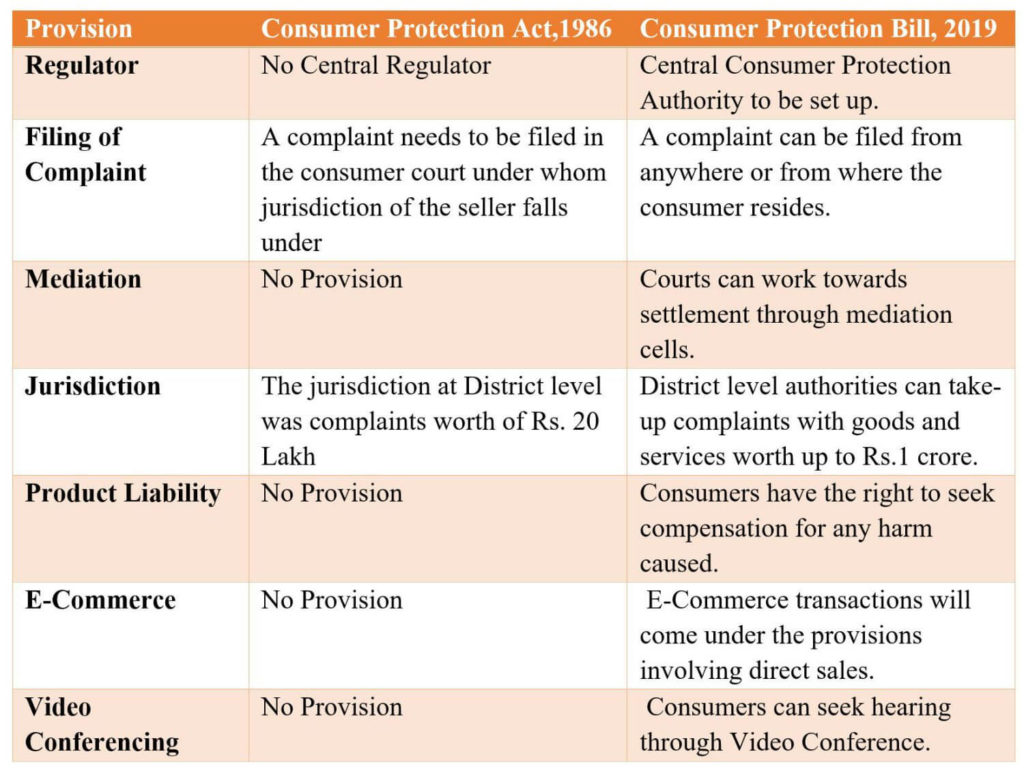
    Recently the Union Ministry of Consumer Affairs has announced that a Central Consumer Protection Authority (CCPA) will be established by the first week of April.

    What is the Central Consumer Protection Authority?

    • The authority is being constituted under Section 10(1) of The Consumer Protection Act, 2019.
    • The Act replaced The Consumer Protection Act, 1986, and seeks to widen its scope in addressing consumer concerns.
    • The CCPA, introduced in the new Act, aims to protect the rights of the consumer by cracking down on unfair trade practices, and false and misleading advertisements that are detrimental to the interests of the public and consumers.

    Why need CCPA?

    • The new Act recognizes offences such as providing false information regarding the quality or quantity of a good or service, and misleading advertisements.
    • It also specifies action to be taken if goods and services are found “dangerous, hazardous or unsafe”.
    • The CCPA will have the powers to inquire or investigate into matters relating to violations of consumer rights or unfair trade practices suo motu, or on a complaint received, or on a direction from the central government.

    What can the possible structure of CCPA be?

    • The proposed authority will be a lean body with a Chief Commissioner as head, and only two other commissioners as members — one of whom will deal with matters relating to goods while the other will look into cases relating to services.
    • It will be headquartered in the NCR of Delhi but the central government may set up regional offices in other parts of the country.
    • The CCPA will have an Investigation Wing that will be headed by a Director General.
    • District Collectors too, will have the power to investigate complaints of violations of consumer rights, unfair trade practices, and false or misleading advertisements.

    What kind of goods and food items in particular, can be classified as “dangerous, hazardous or unsafe”?

    • This is not specified in the notification of the Act.
    • Regarding food, an official said the CCPA will ensure that all standards on packaged food items set by regulators such as the FSSAI are being followed.

    What will the CCPA do if any goods or services are found not meeting these standards?

    Under Section 20 of The Consumer Protection Act, the proposed authority will have powers to:

    1. recall goods or withdrawal of services that are “dangerous, hazardous or unsafe;
    2. pass an order for refund the prices of goods or services so recalled to purchasers of such goods or services and
    3. discontinuation of practices which are unfair and prejudicial to consumer’s interest

    Penalties:

    For manufacture, selling, storage, distribution, or import of adulterated products, the penalties are:

    1. If injury is not caused to a consumer, fine up to Rs 1 lakh with imprisonment up to six months;
    2. If injury is caused, fine up to Rs 3 lakh with imprisonment up to one year;
    3. If grievous hurt is caused, fine up to Rs 5 lakh with imprisonment up to 7 years;
    4. In case of death, fine of Rs 10 lakh or more with a minimum imprisonment of 7 years, extendable to imprisonment for life.

    How will it deal with false or misleading advertisements?

    • Section 21 of the new Act defines the powers given to the CCPA to crack down on false or misleading advertisements.
    • The CCPA may order investigation that any advertisement is false or misleading and is harmful to the interest of any consumer, or is in contravention of consumer rights.
    • If dissatisfied, the CCPA may issue directions to the trader, manufacturer, endorser, advertiser, or publisher to discontinue such an advertisement, or modify it in a manner specified by the authority, within a given time.

    Penalties:

    1. The authority may also impose a penalty up to Rs 10 lakh, with imprisonment up to two years, on the manufacturer or endorser of false and misleading advertisements.
    2. The penalty may go up to Rs 50 lakh, with imprisonment up to five years, for every subsequent offence committed by the same manufacturer or endorser.
    3. CCPA may ban the endorser of a false or misleading advertisement from making endorsement of any products or services in the future, for a period that may extend to one year.
    4. The ban may extend up to three years in every subsequent violation of the Act.

    What other powers will the CCPA have?

    • While conducting an investigation after preliminary inquiry, officers of the CCPA’s Investigation Wing will have the powers to enter any premise and search for any document or article, and to seize these.
    • For search and seizure, the CCPA will have similar powers given under the provisions of The Code of Criminal Procedure, 1973.
    • The CCPA can file complaints of violation of consumer rights or unfair trade practices before the District, State, and the National Consumer Disputes Redressal Commission.
    • It will issue safety notices to alert consumers against dangerous or hazardous or unsafe goods or services.

    Also read:

    https://www.civilsdaily.com/news/five-new-rights-you-get-as-a-consumer/

  • Debating water quality

    Context

    The competitive politics of Delhi election has brought the issue of drinking water to centre stage.

    Controversy over BIS water status report

    • Politicising of the report: The controversy started with the release of the BIS report for 21 major Indian cities, in keeping with the objectives of the ‘Jal Jeevan Mission’.
      • The mission aims to provide safe piped water to all households by 2024.
      • The fact that drinking water in Delhi was ranked the most unsafe, as the samples failed in 19 out of 28 parameters, was challenged by the Government of Delhi and the Delhi Jal Board (DJB).
    • Compilation of information on the existing status: The study is scheduled to cover all districts in the country within a year. Supply of potable water obviously requires first compilation of information on the existing status
    • Water as an urgent concern: The fact that water should be treated as an urgent concern for public health and the ecosystem of the country cannot be denied.
    • Imperceptible threat: The threats to human health due to poor water quality, except when they appear as an epidemic, are largely imperceptible.
      • This generally subjects the population to subtle health problems without its knowledge or consent.

    Pollution and water crisis in India

    • Pollution contributing to water crisis: India is on the throes of a severe water crisis, not only because of a gradual reduction in per capita availability of water due to a rising population but also because of rising and unchecked pollution in the country’s rivers and water bodies.
      • It is a fact which is mostly overlooked in the deliberations on water resources management.
    • Only 30% sewage treatment capacity in major cities: As per published estimates of the Central Pollution Control Board, the country has a treatment capacity of only about 30% of sewage generated in the major cities.
      • Not to talk of other urban and rural areas where the sewage finds its way to local water bodies or rivers without treatment.

    Impending water stress in the country

    • NITI Aayog report: A 2018 Report of the NITI Aayog has observed that currently, 600 million Indians face high to extreme water stress.
      • The report also states that about two lakh people die every year due to inadequate access to safe water.
    • Demand twice the supply by 2030: The crisis is only going to get worse.
      • By 2030, the country’s water demand is projected to be twice the available supply, implying severe water scarcity for hundreds of millions of people.
    • High methane in Yamuna water in Delhi: For the water coming from the Yamuna released from Haryana, the DJB has to often stop the supply for a few days if the concentration of methane goes up beyond a certain level.
      • This is because the tri-chloromethane that may be produced during the disinfection process is highly carcinogenic.
      • The effect may surface on human health not immediately but over a period of time.

    The capital’s high pollutant load and need for improvement in governance

    • Contributing 50% pollutant: Delhi, which constitutes less than 1% of the total catchment of the Yamuna, contributes more than 50% of total pollutant load in the river.
      • Delhi has 7,000 km of sewer line as on date, against a requirement of 24,000 km.
      • The 17 sewage treatment plants being operated by the DJB are able to take care of not more than 30% of sewage treatment.
    • There is no sewerage system at all for over 45% of the population in unauthorised and even regularised colonies and rural areas.
    • As of now, there are 18 major drains carrying sewage, garbage and industrial effluents into the Yamuna.
    • Solid waste dumping in Yamuna: It is not only the untreated sewage water and industrial effluents, but also the solid wastes and construction material discharged by individuals, companies and municipal bodies that have caused the suffocation of the Yamuna.
      • Also, floodplains have been encroached upon by settlements.
    • Challenge of supplying quality water: Ensuring the supply of quality drinking water is not only expensive, but it also needs improvement in governance.
      • It needs technical knowledge on measurement and regulation of water quality.
      • It is not the fault of the DJB or the Delhi government alone that they have not been able to ensure a 100% supply of quality water to the citizens of Delhi.
      • Given the constraints they face, especially those concerning the water resources management and laws in the country.

    Conclusion

    The Jal Jeevan Mission, even if it has not been so far structured, conceptualised and funded adequately, has begun the important work of gathering information on the scale and scope of the problem and making it available in an open and transparent manner. The best outcome is that the competitive politics of the Delhi election has ensured a political debate on water quality.


  • Cop out in Delhi

    Context

    Political parties across the spectrum escape the blame for continuing to use the police as an instrument to further their political agenda.

    The backdrop of violence in protest against CAA in Delhi

    • The culmination of dithering by police: It was the culmination of weeks of dithering and selective action on the part of the Delhi Police in dealing with those agitating against the Citizenship Amendment Act (CAA).
    • No preventive action is taken: No preventive action appears to have been taken, and when the national capital was rocked by agitators in different areas the police appeared to have been caught by surprise.
    • Hesitation in acting against the rioters: There appeared to be hesitation on the part of the police in taking firm action against the rioters who continued to be on the rampage, destroying public and private property.
      • There was a disturbing scene of a rioter openly brandishing his firearm at a policeman.

    Disturbing patterns in the Police actions

    • Delhi Police- The extremes of action and inaction: The Delhi Police is the best-resourced police in the country.
      • It is looked upon as a model by state police forces across the country. Its response, in fact, shows a disturbing pattern.
      • There have been extremes of action and inaction.
      • Forcible entry: In Jamia Millia Islamia, the police is alleged to have entered the campus forcibly and roughed up students after their march against the CAA turned violent.
      • Inexplicable delay: In JNU, there was an inexplicable delay in responding to violence by a group of outsiders within the campus.
    • Bengal Police-Turning blind eye to rioters’vandalism: In West Bengal, with Mamata Banerjee leading the charge against the CAA, the message to the police was clear.
      • They turned Nelson’s eye to rioters’ vandalising government and private property; the Eastern Railways alone suffered a loss of Rs 72.19 crore.
    • Uttar Pradesh Police- Excesses committed during protests.
      • In UP, where over 20 people were killed, the Allahabad High Court has called for a detailed report on the alleged police excesses.
    • Karnataka Police- Over-zealousness.
      • In Karnataka, the High Court has blamed the Mangaluru police of “over-zealousness” in dealing with the anti-CAA protests.
    • Party bias in the Police actions: Police response invariably reflects the bias of the ruling party.
      • The partisan police response to situations, which were strikingly similar, has caused dismay and consternation among the people.
      • One must get to the root of the problem.

    Observations and the Supreme Court guidelines

    • National Police Commission observation: The National Police Commission recorded as far back as 1979 that “the present culture of the police system appears a continuation of what obtained under the British regime when the police functioned ruthlessly as an agent for sustaining the government in power”.
      • In such a situation, the Commission went on to say, “police find it difficult to play their lawful role and make their performance acceptable to the people at large”.
    • The Supreme Court directions: The Supreme Court issued a set of six directions in 2006 to state governments with a view to transforming the ethos and working philosophy of the police.
      • Setting up the State Security Commission: The SC’s most important direction was about setting up of a State Security Commission with a view to insulate the police from external pressures.
      • It is true that several states have enacted laws purportedly in compliance with the Supreme Court’s orders.
      • Recommendation not supported in letter and spirit: But these acts, as their critical examination reveals, violate the letter and spirit of the judicial directions. The old order continues for all practical purposes.
    • The Justice Dhingra Committee report on anti-Sikh riots: In its recently released report on the 1984 anti-Sikh riots, the report slammed the Union government and the Delhi Police.
      • It observed that a large number of crimes remained unpunished for the simple reason that there was “lack of interest shown by the police and by the authorities in handling these cases as per law or to proceed with the intention of punishing the culprits”.
      • The effort of the police and the administration “seems to have been to hush up the criminal cases concerning riots”.

    Way forward

    • Implement the recommendations of NPC: It is unfortunate that the NPC recommendations have not been acted upon even after the Supreme Court’s directions. No wonder, in the recent agitation in different states, the police have acted in the manner they did.
    • Interference of the political parties need to be reduced: The police are, no doubt, to blame for not being able to function in an objective and impartial manner. There is definitely a failure of leadership also. The political leadership need to ensure the autonomy of the police.
    • Role of media: The media cannot escape its responsibility for treating the police as a convenient punching bag from time to time and not taking up the cause of police reforms as aggressively as it should be doing.
    • Introspection by the Supreme Court: The Supreme Court would also need to introspect as to why the implementation of its directions has been so ineffective.
  • Poverty and its measurement

    US President recently praised India for having lifted “over 270 million people out of poverty” in “a single decade”, and said that “12 Indian citizens are lifted out of extreme poverty every single minute of every single day”.

    What is poverty?

    • Poverty can be defined as a condition in which an individual or household lacks the financial resources to afford a basic minimum standard of living.
    • Economists and policymakers estimate “absolute” poverty as the shortfall in consumption expenditure from a threshold called the “poverty line”.
    • The “depth” of poverty indicates how far the poor are below the poverty line.

    Defining the poverty line

    • The official poverty line is the expenditure incurred to obtain the goods in a “poverty line basket” (PLB).
    • Poverty can be measured in terms of the number of people living below this line (with the incidence of poverty expressed as the head count ratio).

    Committees for poverty estimates

    • Six official committees have so far estimated the number of people living in poverty in India — the working group of 1962; V N Dandekar and N Rath in 1971; Y K Alagh in 1979; D T Lakdawala in 1993; Suresh Tendulkar in 2009; and C Rangarajan in 2014.
    • The government did not take a call on the report of the Rangarajan Committee; therefore, poverty is measured using the Tendulkar poverty line.
    • As per this, 21.9% of people in India live below the poverty line.

    Poverty Line Basket (PLB)

    • The PLB comprises goods and services considered essential to a basic minimum standard of living — food, clothing, rent, conveyance, and entertainment.
    • The price of the food component can be estimated using calorie norms or nutrition targets.
    • Until the 1990s, the calorie norms method was used — it was based on the minimum number of calories recommended by the Indian Council of Medical Research (ICMR) for a household of five members.
    • However, this method does not consider the different food groups that are essential for health — this is why the Tendulkar Committee targeted nutritional outcomes.
    • The Lakdawala Committee assumed that health and education is provided by the state — therefore, expenditure on these items was excluded from the consumption basket it proposed.
    • Since expenditure on health and education rose significantly in the 1990s, the Tendulkar Committee included them in the basket.
    • As a result of revisions to the basket and other changes in the method of estimation, the percentage of people living below the poverty line in 1993-94 rose from 35.97% to 45.3%.

    Issues with PLB

    • The PLB has been the subject of much debate. The 1962 group did not consider age and gender-specific calorie requirements.
    • Expenditure on health and education were not considered until the Tendulkar Committee — which was criticized for setting the poverty line at just Rs 32 per capita per day in urban India (and at Rs 27 in rural India).
    • And the Rangarajan Commission was criticized for selecting the food component arbitrarily — the emphasis on food as a source of nutrition overlooks the contribution of sanitation, healthcare, access to clean water, and prevalence of pollutants.

    Why are poverty numbers important?

    • Poverty numbers matter because central welfare schemes like Antyodaya Anna and Rashtriya Swasthya Bima Yojana use the definition of poverty given by the NITI Aayog or the erstwhile Planning Commission.
    • The Centre allocates funds for these schemes to states based on the numbers of their poor.
    • Errors of exclusion can deprive eligible households of benefits.

    Alternate measures of poverty: The MPI

    • In 2011, Oxford University researchers Sabina Alkire and James Foster devised the multidimensional poverty index (MPI) to capture poverty using 10 indicators.
    • These indicators include nutrition, child mortality, years of schooling, school attendance, ownership of assets, and access to proper house, electricity, drinking water, sanitation, and clean cooking fuel.
    • Poverty is measured in terms of deprivation in at least a third of these indicators.
    • The MPI is a more comprehensive measure of poverty because it includes components that capture the standard of living more effectively.
    • However, uses “outcomes” rather than expenditure — the presence of an undernourished person in the household will result in it being classified as “poor”, regardless of the expenditure on nutritious food.

    MPI measures of India

    • In 2015-16, 369.546 million (nearly 37 crore) Indians were estimated to meet the deprivation cut-off for three or more of the 10 indicators.
    • While the overall headcount multidimensional poverty ratio in 2015-16 was 27.9%, the number was 36.8% for rural and 9.2% for urban India.
    • There were wide variations across states — poverty was the highest for Bihar (52.5%), followed by Jharkhand (46.5%), Madhya Pradesh (41.1%), and Uttar Pradesh (40.8%).
    • It was the lowest for Kerala (1.1%), Delhi (4.2%), Punjab (6.1%), Tamil Nadu (7.3%) and Himachal Pradesh (8.1%).

    So what is the current “level” of poverty in India?

    • The National Statistical Office (NSO) Report on Household Consumer Expenditure for 2017-18 was junked in 2019 — so there are no data to update India’s poverty figures.
    • Even the MPI report published by Oxford Poverty and Human Development Initiative used data from the fourth round of the National Family Health Survey, figures for which are available only until 2015-16.
    • Social scientists used data from a leaked version of the consumer expenditure data to conclude that the incidence of poverty in India increased from 31.15% to 35.1% between 2011-12 and 2017-18.
    • The absolute number of poor people also increased from 270 million to 322.22 million over the same period, which translates to 52 million more poor people in six years.
  • The issues around data localisation

    Context

    The contentious clauses on local data storage in the revised Personal Data Protection Bill need re-examination.

    What Personal Data Protection Bill contains?

    • Greater control to an individual: The draft law is a comprehensive piece of legislation that seeks to give individuals greater control over how their personal data is collected, stored and used.
    • The promise of improvement over the current privacy law: Once passed, the law promises a huge improvement on current Indian privacy law, which is both inadequate and improperly enforced.
    • Criticism of the bill: The proposed bill has attracted criticism on various grounds such as-
      • The exceptions created for the state.
      • The limited checks imposed on state surveillance, and-
      • Regarding various deficiencies in the structures and processes of the proposed Data Protection Authority.

    The issue over the “data localisation”

    • Data within the country: The phrase, which can refer to any restrictions on cross-border transfer of data, has largely come to refer to the need to physically locate data within the country.
    • Provisions for the transfer of personal data outside India: The PDP Bill enables the transfer of personal data outside India, with the sub-category of sensitive personal data have to be mirrored in the country (e. a copy will have to be kept in the country).
      • Ban on transfer of critical data outside the country: Data processing/collecting entities will, however, be barred from transferring critical personal data (a category that the government can notify at a subsequent stage) outside the country.
      • Different from Justice Srikrishna committee report: These above provisions have been changed from the earlier version of the draft Bill, released by the Justice Srikrishna Committee in 2018. 
      • The 2018 draft imposed more stringent measures that required both personal and sensitive personal data to be mirrored in the country (subject to different conditions).
      • Welcome move: The move to liberalise the provisions in the 2019 version of the Bill is undoubtedly welcome, particularly for businesses and users.

    How removing the restriction matters?

    • Reduction in cost to business: Liberalised requirements will limit costs to business and ensure users have greater flexibility in choosing where to store their data.
    • More proportionate approach: The changes in the 2019 draft reflect a more proportionate approach to the issue as they implement a tiered system for cross-border data transfer, ostensibly based on the sensitivity/vulnerability of the data.
    • Move-in accordance with the right to privacy: This seems in accord with the Supreme Court’s dicta in the 2017 Puttaswamy case.
    • Conditions for interference in privacy: The Court had made it clear that interference in the fundamental right to privacy would only be permissible if inter alia deemed necessary and proportionate.

    Test of proportionality in the bill

    • On closer examination, it appears that even the revised law may not actually stand the test of proportionality.
    • The three-argument for imposing norms: There are broadly three sets of arguments advanced in favour of imposing stringent data localisation norms:
      • Sovereignty and government functions. Referring to the need to recognise Indian data as a resource to be used to further national interest (economically and strategically), and-
      • To enable enforcement of Indian law and state functions.
      • Accruing benefits to the local industry: The second claim is that economic benefits will accrue to local industry in terms of creating local infrastructure, employment and contributions to the AI ecosystem.
      • Protection of civil liberties: Regarding the protection of civil liberties, the argument is that local hosting of data will enhance its privacy and security by ensuring Indian law applies to the data and users can access local remedies.
    • Contradiction in the claim of protection? If data protection was required for the above purposes, it would make sense to ensure that local copies were retained of all the categories of personal data provided for in the Bill (as was the case with the previous draft of the law).
      • Sectoral obligations: In the alternative, sectoral obligations would also suffice as is currently the case with sectors such as digital payments data, certain types of telecom data, government data, etc.
    • Will data localisation lead to privacy protection? We note that the security of data is determined more by the technical measures, skills, cybersecurity protocols, etc. put in place rather than its mere location.
      • Localisation may make it easier for domestic surveillance over citizens.
      • Enabler of better exercise of privacy by citizens: It may also enable the better exercise of privacy rights by Indian citizens against any form of unauthorised access to data, including by foreign intelligence.
      • Effectiveness matters: The degree of protection afforded to data will depend on the effectiveness of the applicable data protection regime.
    • Protecting privacy through less intrusive measures: Insofar as privacy is concerned, this could be equally protected through less intrusive, suitable and equally effective measures such as requirements for contractual conditions and using adequacy tests for the jurisdiction of the transfer.
      • Such conditions are already provided for in the PDP Bill as a set of secondary conditions.
      • The European Union’s General Data Protection Regulation too uses a similar framework.
      • Extra-territorial operation: The extraterritorial application of the PDP Bill also ensures that the data protection obligations under the law continue to exist even if the data is transferred outside the country.
    • Giving an individual a choice: If privacy protection is the real consideration, individuals ought to be able to choose to store their data in any location which afford them the strongest privacy protections.
      • It is arguable that data of Indians will continue to be more secure if stored and processed in the European Union or California.
      • These two jurisdictions have strong data protection laws and advanced technical ecosystems.

    Way forward

    • Identification of the issues: The joint parliamentary committee ought to, ideally, identify the need, purpose and practicality of putting in place even the (relatively liberal) measures contained in the PDP Bill.
    • Broader thinking at policy level: Further, in order for localisation-related norms to bear fruit, either in terms of protecting citizen rights, enabling law enforcement access to data or enabling the development of the local economy, there has to be broader thinking at the policy level.
      • This may include for instance-
      • Reforming surveillance-related laws.
      • Entering into more detailed and up-to-date mutual legal assistance treaties.
      • Enabling the development of sufficient digital infrastructure, and
      • Creating appropriate data-sharing policies that preserve privacy and other third party rights, while enabling data to be used for socially useful purposes.


  • Youth can be a clear advantage for India

    Context

    The demographic dividend is close to five-decade-long demographic opportunities that can be leveraged only with suitable policies and programmes

     The youngest population in the world

    • Median age at 28 years: By 2022, the median age in India will be 28 years.
      • In comparison, it will be 37 in China and the United States.
      • 45 in western Europe, and 49 in Japan.
    • The demographic dividend
      • The working-age population more than non-working: India’s working-age population has numerically outstripped its non-working age population.
      • An extraordinary opportunity: A demographic dividend, said to have commenced around 2004-05, is available for close to five decades.

    The two caveats

    • The demographic dividend is an extraordinary opportunity. There are, however, two caveats.
    • First: Dividend available in different states at different times.
      • India’s population heterogeneity ensures that the window of demographic dividend becomes available at different times in different States.
      • Example of Kerala vs. Bihar: While Kerala’s population is already ageing, in Bihar the working-age cohort is predicted to continue increasing till 2051.
      • Decline in 11 major states by 2031: By 2031, the overall size of our vast working-age population would have declined in 11 of the 22 major States.
    • Second: Many factors that matter for harnessing the dividend
      • Factors that matter: Harnessing the demographic dividend will depend upon the-
      • Employability of the working-age population.
      • Health.
      • Education.
      • Vocational training and skill.
      • Besides appropriate land and labour policies, as well as good governance.
      • Demography is not destiny: India will gain from its demographic opportunity only if policies and programmes are aligned to this demographic shift. Demography is not destiny.

    Need for skills

    • Need for the additional jobs: The Economic Survey 2019 calls for additional jobs to keep pace with the projected annual increases in the working-age population.
    • Lack of education and skills: UNICEF 2019 reports that at least 47% of Indian youth are not on track to have the education and skills necessary for employment in 2030.
      • Possibility of demographic disaster: The projected demographic dividend would turn into a demographic disaster if an unskilled, under-utilised, and frustrated young population undermines social harmony and economic growth.
    • Poor learning outcomes: While over 95% of India’s children attend primary school, the National Family Health Surveys (completed up to 2015-16) confirm that poor infrastructure in government schools, malnutrition, and scarcity of trained teachers have ensured poor learning outcomes.

    What needs to be done?

    • Adopt a uniform school system: A coordinated incentive structure prompting States to adopt a broadly uniform public school system focusing on equity and quality will yield a knowledge society faster than privatising school education can accomplish.
    • Ensure training in line with the market demand: Most districts now have excellent broadband connectivity-
      • Let geography not trump demography: Irrespective of a rural or urban setting, the public school system must ensure that every child completes high school education, and is pushed into appropriate skilling, training and vocational education in line with market demand.
    • Invest and modernise: Modernise school curricula, systematically invest in teacher training so that they grow in their jobs to assume leadership roles while moving beyond the tyranny of the syllabus.
    • Use of technology: Deploy new technology to accelerate the pace of building human capital by putting in place virtual classrooms together with massive open online courses (MOOCS) to help prepare this huge workforce for next-generation jobs.
      • Investing in open digital universities would further help yield a higher educated workforce.

    Focus on women

    • Translating literacy into skill: Growing female literacy is not translating into relevant and marketable skills.
      • A comprehensive approach is needed to improve their prospects vis-à-vis gainful employment.
      • Need of the flexible policies: Flexible entry and exit policies for women into virtual classrooms, and into modules for open digital training, and vocational education would help them access contemporary vocations.
    • The need for equal pay: Equal pay for women will make it worth their while to stay longer in the workforce.
    • The deferred bonus: Economist Yogendra Alagh has written that the significance of this “deferred bonus” (women entering the workforce), could be higher than the immediate benefits of the dividend from shifts in population age structure.

    Health care

    • In India, population health is caught between the rising demand for health services and competition for scarce resources.
    • Impact of economy on rural health: The National Sample Survey Office data on health (75th round, 2018), shows that a deep-rooted downturn in the rural economy is making quality health-care unaffordable.
      • People are availing of private hospitals less than they used to, and are moving towards public health systems.
      • Diverting public investment from However, central budget 2020-21 lays emphasis on private provisioning of health care which will necessarily divert public investment away from public health infrastructure.
    • The Ayushman Bharat Yojana: It links demand to tertiary in-patient care.
      • This promotes earnings of under-utilised private hospitals, instead of modernising and up-grading public health systems in each district.
    • We need to assign 70% of health sector budgets to integrate and strengthen primary and integrated public health-care services and systems up to district hospital levels.
      • Include out-patient department and diagnostic services in every health insurance model adopted, and-
      • Implement in ‘mission mode’ the Report of the High-Level Group, 2019, submitted to the XV Finance Commission.
    • The elderly population in India is projected to double from 8.6% in 2011 to 16% in 2040.
      • This will sharply reduce the per capita availability of hospital beds in India across all major States unless investments in health systems address these infirmities.

    Conclusion

    The policies that we adopt and their effective implementation will ensure that our demographic dividend, a time-limited opportunity, becomes a boon for India.


  • Delhi’s ‘Happiness Class’


    On the upcoming visit to India, US President Trump will visit a Delhi government school, where they will attend a happiness curriculum class.

    What is Delhi’s ‘happiness curriculum’?

    • The curriculum calls for schools in India to promote development in cognition, language, literacy, numeracy and the arts along with addressing the well-being and happiness of students.
    • It further says that future citizens need to be “mindful, aware, awakened, empathetic, firmly rooted in their identity…” based on the premise that education has a larger purpose, which cannot be in isolation from the “dire needs” of today’s society.
    • For the evaluation, no examinations are conducted, neither will marks be awarded.
    • The assessment under this curriculum is qualitative, focusing on the “process rather than the outcome” and noting that each student’s journey is unique and different.

    Objectives of the curriculum

    The objectives of this curriculum include:

    • developing self-awareness and mindfulness,
    • inculcating skills of critical thinking and inquiry,
    • enabling learners to communicate effectively and
    • helping learners to apply life skills to deal with stressful and conflicting situations around them

    Learning outcomes of this curriculum

    The learning outcomes of this curriculum are spread across four categories:

    • becoming mindful and attentive (developing increased levels of self-awareness, developing active listening, remaining in the present);
    • developing critical thinking and reflection (developing strong abilities to reflect on one’s own thoughts and behaviours, thinking beyond stereotypes and assumptions);
    • developing social-emotional skills (demonstrating empathy, coping with anxiety and stress, developing better communication skills) and
    • developing a confident and pleasant personality (developing a balanced outlook on daily life reflecting self-confidence, becoming responsible and reflecting awareness towards cleanliness, health and hygiene).

    How is the curriculum implemented?

    • The curriculum is designed for students of classes nursery through the eighth standard.
    • Group 1 consists of students in nursery and KG, who have bi-weekly classes (45 minutes each for one session, which is supervised by a teacher) involving mindfulness activities and exercise.
    • Children between classes 1-2 attend classes on weekdays, which involves mindfulness activities and exercises along with taking up reflective questions.
    • The second group comprises students from classes 3-5 and the third group is comprised of students from classes 6-8 who apart from the aforementioned activities, take part in self-expression and reflect on their behavioural changes.