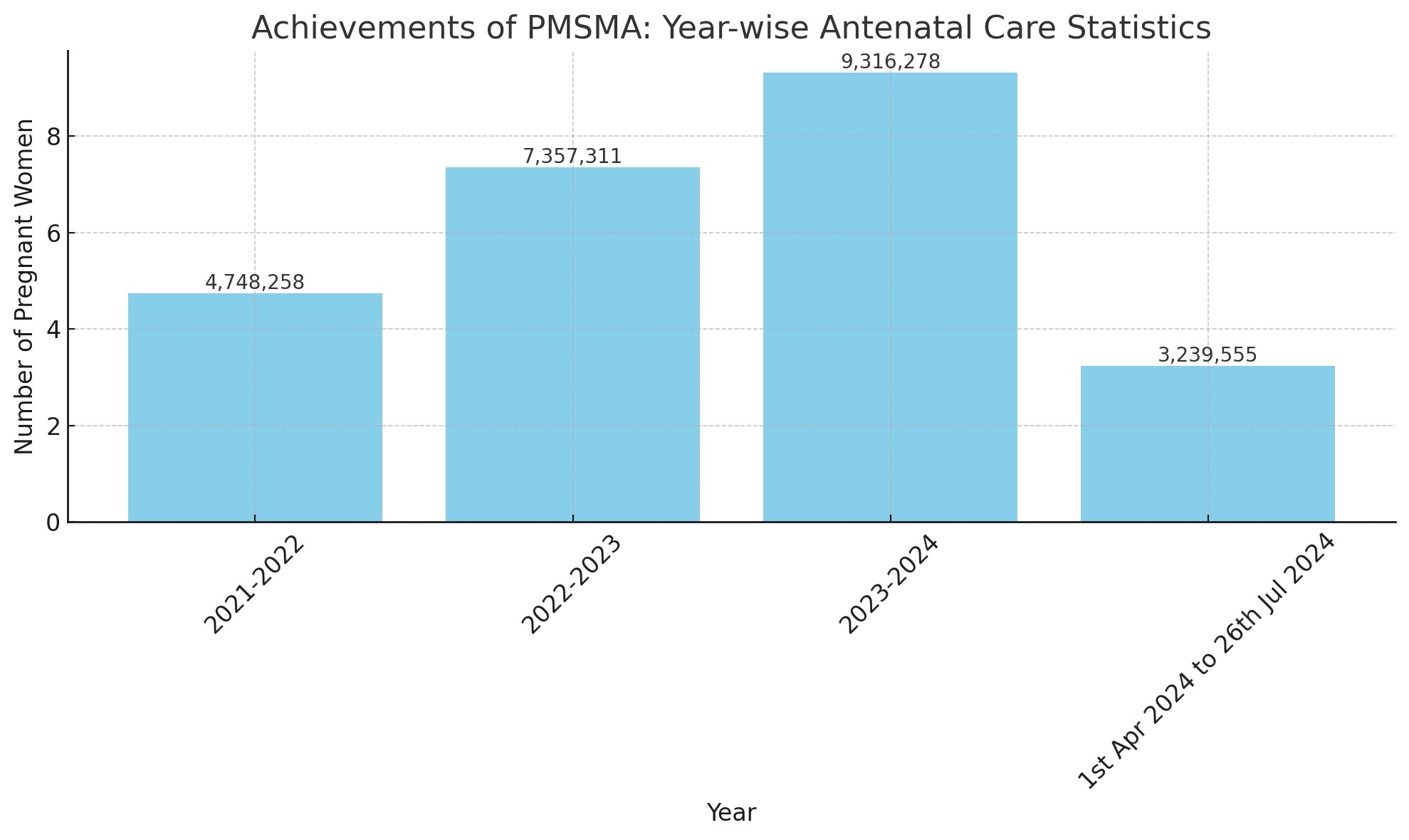
An Extended Pradhan Mantri Surakshit Matritva Abhiyan (E-PMSMA) strategy was launched to ensure quality Antenatal Care (ANC) for pregnant women.
The strategy focuses on individual tracking of high-risk pregnancies (HRP) and provision of additionalPMSMA sessions beyond the 9th of every month.
AboutHigh-Risk Pregnancy:
A high-risk pregnancy involves greater risk of health complications for the mother, the foetus, or both, due to pre-existing medical conditions, conditions that develop during pregnancy, or foetal issues.
Common Factors:
Maternal Health Conditions: Pre-existing diabetes, hypertension, HIV, kidney disease, or conditions arising during pregnancy like gestational diabetes and preeclampsia.
Obstetric Factors: Previous caesarean section, history of preterm labor, multiple pregnancies, and congenital malformations.
About Pradhan Mantri Surakshit Matritva Abhiyan (PMSMA)
Details
About
An initiative to provide quality antenatal care (ANC) to all pregnant women.
Launch
October 2016
Target Group
All pregnant women, especially those in their second and third trimesters.
Frequency
Services provided on the 9th of every month at government health facilities.
Objective
Ensure safe motherhood by providing comprehensive and quality antenatal care universally.
Key Functions
General Check-Up: Physical and clinical examinations by medical professionals.
Laboratory Investigations: Routine blood tests, urine tests, and other necessary laboratory investigations.
Ultrasound: Ultrasound examination to monitor foetal growth and development.
Counseling: Nutritional and lifestyle counseling to ensure a healthy pregnancy.
High-Risk Identification: Screening and identification of high-risk pregnancies and appropriate referrals for specialized care.
Key Features
Free of Cost: All services under PMSMA are provided free of cost.
Fixed Day ANC Services: Antenatal care services are provided on a fixed day every month.
Lab Investigations: Basic investigations like Hb, urine albumin, RBS, malaria test, VDRL test, blood grouping, CBC, ESR, and USG.
Public-Private Partnership: Encourages participation of private sector healthcare providers in providing ANC services.
Incentives: Incentives for healthcare providers who participate in the program.
Categorization of Pregnant Women
Green Sticker – for women with no risk factor detected
Red Sticker – for women with high risk pregnancy
BlueSticker – for women with Pregnancy Induced Hypertension
YellowSticker – pregnancy with co-morbid conditions such as diabetes, hypothyroidism, STIs
Benefits
Improved Maternal Health: Regular and comprehensive ANC helps in early detection and management of complications, improving maternal health outcomes.
Reduced Mortality Rates: Timely and quality care reduces maternal and infant mortality rates.
Health Education: Provides health education and counseling to pregnant women, promoting better health practices.
High-Risk Management: Identifies and manages high-risk pregnancies effectively, ensuring specialized care for those who need it.
PYQ:
[2024] With reference to the ‘Pradhan Mantri Surakshit Matritva Abhiyan’, consider the following statements:
1. This scheme guarantees a minimum package of antenatal care services to women in their second and third trimesters of pregnancy and six months post-delivery health care service in any government health facility.
2. Under this scheme, private sector health care providers of certain specialities can volunteer to provide services at nearby government health facilities.
Which of the statements given above is/are correct?
Q1 COVID-19 pandemic has caused unprecedented devastation worldwide. However, technological advancements are being availed readily to win over the crisis. Give an account of how technology was sought to aid the management of the pandemic. (UPSC IAS/2020)
Q2 Critically examine the role of WHO in providing global health security during the Covid-19 pandemic. (UPSC IAS/2020)
Note4Students:
Mains: Reasons behind the disagreement on the Pandemic Treaty;
Mentor comments: Despite extensive negotiations, 194 WHO member states failed to finalize a historic Pandemic Agreement to bolster global pandemic preparedness and reduce inequities highlighted by COVID-19. At the 77th World Health Assembly (May 27-June 1, 2024), two significant developments occurred. First, amendments to the International Health Regulations (IHR) 2005 were agreed upon, drawn from 300 global reform proposals. These amendments aim to improve response to Public Health Emergencies of International Concern (PHEIC) and introduce a Pandemic Emergency (PE) category, ensuring equitable access to health products and financial support for developing countries, emphasizing solidarity and equity, and mandating a National IHR Authority.
Let’s learn!
__
Why in the News?
The 77th World Health Assembly in May 2024 failed to finalize the treaty due to disagreements on key articles, particularly PABS, technology transfer, and the One Health approach.
Background:
The COVID-19 pandemic exposed severe limitations in the International Health Regulations (IHR) and the WHO’s institutional capacities to effectively prevent, prepare for and respond to global health emergencies.
In light of the pandemic’s devastating global impact, many countries called for a stronger international framework to deal with future pandemics.
Responding to these calls, a special session of the World Health Assembly (WHA) in November 2021 agreed to establish an intergovernmental negotiating body (INB) to draft and negotiate a WHO convention, agreement or other international instrument on pandemic prevention, preparedness and response
What is the Pandemic Treaty?
The Pandemic Treaty, also known as the International Treaty on Pandemic Prevention, Preparedness and Response, is a proposed international agreement currently being negotiated by the 194 member states of the World Health Organization (WHO).
Key Provisions
Pathogen Access and Benefit Sharing (PABS): The treaty aims to establish a PABS system to ensure that genetic resources and pathogen samples shared from developing countries are reciprocated with corresponding benefits, such as vaccines and diagnostics.
Technology Transfer and Intellectual Property: The treaty seeks to address issues related to technology transfer, local production, and intellectual property rights to enhance the manufacturing capacities of low- and middle-income countries.
One Health Approach: The treaty emphasizes a holistic approach that recognizes the interconnections between human, animal, and environmental health, promoting coordinated public health measures across these domains.
Reasons behind the disagreement
Pathogen Access and Benefit Sharing (PABS): The PABS mechanism under Article 12 is a central point of contention, with low- and middle-income countries (LMICs) advocating for guaranteed access to at least 20% of shared pandemic products.
In contrast, many high-income countries argue that this percentage should be the maximum limit, with some refusing to agree to any fixed percentage.
Technology Transfer and Intellectual Property: Disagreements over technology transfer provisions are significant, with LMICs pushing for mandatory technology transfer and intellectual property waivers to enable local production of vaccines and treatments.
High-income countries prefer voluntary agreements, fearing that mandatory requirements could undermine their intellectual property rights.
One Health Approach: The One Health approach, which emphasizes the interconnectedness of human, animal, and environmental health, has faced resistance from LMICs. They view it as an additional burden without adequate funding, while high-income countries strongly support it.
Geopolitical Discord: Geopolitical tensions and competing interests between higher- and lower-income countries have hindered progress in negotiations.
Misinformation and Distrust: The negotiations have been affected by misinformation, skepticism, and distrust among member states. Some countries are concerned about the implications of the agreement on their national sovereignty and public health policies.
Urgency vs. Comprehensive Solutions: There is a tension between the urgency to finalize an agreement and the desire to address complex issues comprehensively. Some countries are pushing for quick resolutions, while others emphasize the need for thorough discussions to ensure long-term effectiveness.
Way forward:
Promote Inclusive Dialogue and Mutual Compromise: Need to facilitate continuous, transparent dialogue among all member states to address concerns and build trust. Encourage mutual compromise by balancing the interests of both high- and low-income countries, ensuring that all parties feel their needs and perspectives are being considered.
Strengthen Financial and Technical Support for LMICs: Need to enhance financial and technical assistance for low- and middle-income countries to implement the proposed treaty provisions effectively.
PYQ Relevance: Mains: Q1 Public health system has limitation in providing universal health coverage. Do you think that private sector can help in bridging the gap? What other viable alternatives do you suggest?(UPSC IAS/2015) Q2 What do you understand by nanotechnology and how is it helping in health sector? (UPSC IAS/2020)
Prelims: Q Doctors Without Borders (Medecins Sans Frontieres)’, often in the news, is: (a) a division of World Health Organization (b) a non-governmental international organization (c) an inter-governmental agency sponsored by European Union (d) a specialized agency of the United Nations
Note4Students:
Mains:Challenges related to Homeless individuals;
Mentor comments: Socio-normative representations of homeless persons living with mental illness (HPMI) often depict them as refuge seekers, leading to interventions focused on transferring them to mental hospitals or shelters. This perspective assumes that displacement from the streets is necessary due to associated risks, which, while valid, oversimplifies their complex realities. Such representations result in coercive measures that fail to recognise the agency of HPMI, perpetuating a cycle of institutionalization rather than fostering genuine community reintegration and support. Addressing these representations is crucial for developing more effective and respectful care strategies.
Let’s learn!
__
Why in the News?
Homeless individuals with mental illness are often viewed as needing rescue, leading to their forced relocation to hospitals or shelters, despite the debatable risks of street living.
Efforts at Integration
Collaborative Initiatives in India: The collaboration among various organizations, including the National Health Mission and local civil society groups, has facilitated access to emergency care and recovery centers (ECRCs) in district hospitals, improving support for homeless persons with mental illness (HPMI).
Breaking Down Asylum Models: The integration of services aims to dismantle the traditional asylum model, which often perpetuates negative stereotypes about mental illness, by providing more immediate and localized care.
Last-Mile Proximal Care: The establishment of ECRCs ensures that care reaches individuals in scattered geographies, addressing the immediate needs of those experiencing crises.
Transformative Care Models: Thefocus on smaller care units that are adequately staffed emphasizes personal attention and the management of comorbidities, which is essential for those facing prolonged adversities.
Problems with institutional spaces:
Long-Term Custodial Care: Approximately 37% of individuals in state psychiatric facilities have long-term needs, with many having histories of homelessness. The median duration of stay is six years, indicating a reliance on institutional care rather than effective community reintegration.
According to the World Health Organization, mental disorders account for 10.6% of total disability among older adults.
Rigid Discharge Criteria: Discharge criteria for individuals in psychiatric facilities are often overly simplistic, leading to inadequate support for those transitioning back to community life.
Isolation from Social Resources: Institutional settings create barriers to accessing social resources and community participation, leading to social isolation and a lower quality of life.
Mental Health America reports that over half (54.7%) of adults with mental illness do not receive treatment, often due to such barriers.
Ineffective Rehabilitation Models: Current rehabilitation models often default to custodial care, failing to promote innovative, community-based solutions.
Initiatives like Housing First and the ‘Home Again’ collaborative in India demonstrate the feasibility of comprehensive social and clinical care, yet traditional models continue to limit the potential for improved outcomes for individuals with mental health challenges.
Way forward:
Shift from Paternalistic to Liberatory Strategies: The need to take social protection measures for homeless people with mental illness (HPMI) must transition from paternalistic interventions to liberatory-focused strategies that honour individual agency.
This includes implementing a modest monthly disability allowance of ₹1,500 to provide financial support while addressing bureaucratic barriers to accessing essential documentation like Aadhar and banking services.
Holistic and Imaginative Approaches: Supportive measures must be complemented by imaginative and holistic strategies that address structural issues such as discrimination, violence, and social segregation.
With the worst of the COVID-19 pandemic behind us (though the World Health Organization warns the virus still lingers), the Union Budget shifted focus to economic growth levers like infrastructure and employment.
It was also hoped that recognizing population health as crucial for economic growth would lead to continued investment in strengthening health systems.
A budget estimate refers to the initial allocation of funds designated for various programs, departments, or projects within a fiscal year. It represents the government’s expectations regarding how much money will be required to meet planned expenditures.
In contrast, revised estimates come into play later in the fiscal year. After assessing the actual expenditures and needs after the first six months, the government may adjust the initial budget estimates based on how much of the allocated funds have been utilised and what additional resources may be necessary.
Comparisons with Previous Years
Budgetary Estimates: The comparison of the Budget Estimates (BE) for health between 2023-24 and 2025-25, reveals minimal increases:
Overall Health Ministry Budget: 1.98% increase
National Health Mission (NHM): 1.16% increase
PMJAY: 1.4% increase
Overall Health Ministry budget: The present allocation made in the current Budget is deemed to be inadequate for expanding health coverage services and enhancing the impact of flagship health programs, particularly in light of rising non-communicable diseases and the goal of universal health coverage by 2030.
Misleading Comparisons: When we compare the Budget estimates with the previous Revised estimates (RE) the budgetary increase of nearly 12% is misleading, as the RE reflects actual spending rather than the program’s needs.
Missed Opportunities
Health Workforce Development: While the budget mentioned an increase in new medical colleges, it failed to address the critical need for a multi-layered, multi-skilled health workforce.
Drug Pricing Mechanisms: Although customs duties were waived on three anti-cancer drugs. However, the budget missed the chance to implement price controls and pooled procurement strategies that could have lowered drug costs across both public and private healthcare sectors. Establishing such mechanisms could enhance the affordability and accessibility of essential medications.
Climate-Resilient Agriculture: While the budget committed to climate-resilient agriculture, which is crucial for food security, it did not sufficiently link these efforts to health outcomes, such as nutrition and public health, which are critical in the context of rising health challenges.
Limited Coverage of Middle Class: PMJAY primarily targets the bottom 40% of the population based on economic status, leaving the middle class without coverage.
Focus on Secondary and Tertiary Care: The program emphasizes secondary and tertiary healthcare, often neglecting primary care services. This approach limits comprehensive health coverage and fails to address preventive healthcare needs, which are crucial for achieving UHC.
Awareness and Accessibility Issues: There is a significant disparity in awareness and accessibility of PMJAY across states.
For example, awareness is notably higher in Tamil Nadu (80%) compared to Bihar (20%).
Way forward:
Targeted Funding for Flagship Programs: Need to allocate a more substantial increase in the budget for the National Health Mission (NHM) and Pradhan Mantri Jan Arogya Yojana (PMJAY) to the eradication of non-communicable diseases, tuberculosis elimination by 2025.
Strengthen Primary Healthcare: Govt. should ensure adequate funding for primary healthcare services, which form the foundation for preventive and community health initiatives.
Mains PYQ:
Q The public health system has limitations in providing universal health coverage. Do you think that the private sector can help in bridging the gap? What other viable alternatives do you suggest? (2015)
Budget 2024 maintains the same approach as previous years regarding social sector allocations.
Decreasing allocations in the Budget for social sector schemes
Education Sector: The allocations for school education increased by ₹5,000 crore and for higher education by ₹3,000 crore. The increased recoveries from fees and self-financing schemes suggest a shift towards cost recovery in educational institutions.
Health Sector: The allocation for the Department of Health and Family Welfare rose by only ₹1,500 crore.
Food Subsidy: There is a limited increase in food subsidies despite rising economic costs and the need to update coverage based on the latest population figures.
Shift in Approach: The government giving greater emphasis on cost-effectiveness and privatization in education and health, shifting focus towards contributory schemes like the Atal Pension Yojana.
Social Sector Schemes in Budget 2024-25
Social Protection Schemes:
POSHAN Scheme: There is a slight increase from ₹11,600 crore to ₹12,467 crore, but still less than the actual expenditure in 2022-23.
Saksham Anganwadi Scheme: The allocation increased to ₹21,200 crore from ₹20,554 crore, but no increase in salaries for Anganwadi workers or honorarium for mid-day meal cooks.
Maternity and Social Assistance:
Samarthya Scheme: The budget reduced to ₹2,517 crore from ₹2,582 crore. The PMMVY scheme’s maternity benefits have remained unchanged since 2017.
NSAP: Allocation for social security pensions remains unchanged at ₹9,652 crore, reducing real coverage and value.
Schemes for the Unemployed
The ‘Prime Minister’s Package for Employment and Skilling’ includes government-sponsored internships, formalization of jobs through incentives for EPFO enrolments, and skill-development programmes
An allocation of ₹2 lakh crore over five years for the employment package, linked to industry response
Schemes for Street Vendors
The PM SVANidhi Scheme (PM Street Vendor’s AtmaNirbhar Nidhi) aims to benefit over 50 Lakh street vendors across India
All lending institutions, including NBFCs, are participating in the scheme to provide affordable loans to street vendors
Employment Challenges
Stagnant Wages and Dampened Demand: The Indian economy faces significant challenges with stagnant wages, which affect consumer demand. This stagnation can hinder overall economic growth and employment generation.
Reliance on the Private Sector for Job Creation: The government is increasingly looking to the private sector to address employment challenges.
Initiatives like the ‘Prime Minister’s Package for Employment and Skilling’ aim to incentivize private sector job creation through government-sponsored internships and skill development programs.
Limited Budgetary Allocations: The budgetary allocations for employment-related schemes are limited, with the entire employment package amounting to ₹2 lakh crore over five years.
Focus on Supply-Side Solutions: The current approach emphasizes supply-side measures to incentivize the private sector rather than addressing the underlying demand-side issues, such as low consumer spending and economic uncertainty.
Way forward:
Enhance Social Sector Investments: The government should significantly increase budget allocations for critical social sector schemes, particularly in education, health, and social protection.
Comprehensive Employment Strategy: Need to develop a holistic approach to employment that addresses both supply and demand-side issues.
Q1 Though women in post-independent India have excelled in various fields, the social attitude towards women and the feminist movement has been patriarchal.” Apart from women’s education and women empowerment schemes, what interventions can help change this milieu? (UPSC IAS/2021) Q2 Women empowerment in India needs gender budgeting. What are the requirements and status of gender budgeting in the Indian context? (UPSC IAS/2016)
Prelims:
Which of the following gives ‘Global Gender Gap Index’ ranking to the countries of the world? (UPSC IAS/2017) a) World Economic Forum b) UN Human Rights Council c) UN Women d) World Health Organization
Note4Students:
Prelims: Employment and Unemployment Trends;
Mains:Women issues; Gender gap; Inequality;
Mentor comments: The gender gap refers to the disparities between men and women in various aspects of society, including economic, social, political, and cultural dimensions. It encompasses differences in outcomes, opportunities, and treatment based on gender.
As per the Periodic Labour Force Survey (PLFS) by the Ministry of Statistics and Programme Implementation (MoSPI) offers detailed data on employment, unemployment, and labour force participation. The latest PLFS report for 2022-23 shows a 3.3% unemployment rate for males and 2.9% for females. The Centre for Monitoring the Indian Economy (CMIE) noted a rise in the unemployment rate to 8.1% in April 2024. The PLFS also recorded a labour force participation rate (LFPR) increase to 41.4% in June 2024, with improvements for both genders.
Let’s learn —
Why in the News?
The Lokniti-CSDS survey cites job difficulty and inflation as key factors in the Lok Sabha Elections 2024 results. The India Employment Report (IER) 2024 notes unemployment rose to 5.8% by 2019.
Present Employment and Unemployment Trends:
Unemployment Rates: Unemployment in India rose from just above 2% in 2000 and 2012 to 5.8% in 2019, but improved to 4.1% in 2022. Time-related underemployment remains high at 7.5%.
Labour Force Participation Rate (LFPR): LFPR fell from 61.6% in 2000 to 49.8% in 2018 but partially recovered to 55.2% in 2022. Female LFPR, however, saw significant improvement, especially in rural areas, rising from 24.6% in 2018 to 36.6% in 2022.
Gender Disparities and Trends:
Female LFPR vs. Male LFPR: Female LFPR in India remains low compared to the global average of 53.4% (2019) and decreased from 38.9% in 2000 to 23.3% in 2018. However, there was a 12% increase in rural areas from 2018-22, contrasting with the modest rise in male LFPR.
Unpaid Family Labour: Females are more engaged in unpaid family labour (36.5% in 2022) compared to males (9.3%). The gender gap in unpaid family labour is significant, particularly in rural areas (31.4% difference) compared to urban areas (8.1% difference).
Gendered Employment Preferences and Opportunities:
Traditional Occupations: Many women, especially in urban slums, prefer traditional home-based occupations (like bandhani and embroidery) due to their flexibility, despite the lower income.
Barriers to Enterprise Development: Women face challenges in developing their own enterprises due to limited access to capital and restrictive social norms.
Collectivising through self-help groups (SHGs) and federations can offer new skills and market access, as demonstrated by the Kutch Mahila Vikas Sangathan (KMVS).
The importance of market access:
Empowerment through Market Interaction: Access to markets enhances women’s empowerment by enabling them to navigate and circumvent traditional gender norms, increasing their economic independence and decision-making capabilities.
Reduction of Gender Norm Constraints: Market access allows women to bypass restrictive gender norms, such as prohibitions against certain types of labour, by facilitating the use of hired services and technology.
Economic and Family Benefits: Women’s increased participation in income-generating activities contributes to family income and welfare, improving their position within the family and reducing economic vulnerability.
Reduced Migration: Opportunities for women to engage in economic activities close to home reduce migration and dependency on male family members, leading to enhanced family welfare and stability.
Vibrant Water Markets and Agency: In regions with vibrant water markets, women’s ability to influence agricultural input purchases increases, contributing to greater agency and empowerment in decision-making.
Way Forward:
Focus on External Work Participation: Need to Prioritize creating opportunities for women to work outside the home to directly impact their empowerment.
Long-Term Strategy Required: The government shouldImplement long-term strategies to improve the work environment for women, including safety and basic facilities.
Mandate Workplace Facilities: By ensuring public policy mandates the availability of essential facilities (e.g., toilets and crèches) in small- and medium-sized manufacturing or business units.
Improve Female Labor Force Participation (LFPR): Enhancing female LFPR can lead to better overall employment rates and increased family income.
The 2024 World Economic Forum (WEF) report on global gender gaps has ranked India at 129 out of 146 economies, marking a decline of two positions from the previous year.
Key Highlights by WEF Report:
Gender Parity Regression: India’s gender parity levels in educational attainment dipped in the 18th edition of the report, with a score of 0.964, down from a perfect 1.000 in the 17th edition.
This decline is attributed to a 17.2 percentage point gap between men’s and women’s literacy rates, causing India to rank 124th on this indicator.
Data Update and Period Variation: WEF’s Insight and Data Lead, Ricky Li, explained that the regression is due to updated data from UNESCO for the 2022 and 2023 periods, contrasting with the data from 2018, 2021, and 2022 used in the previous edition.
This emphasizes the impact of periodic updates and corresponding periods on the gender parity score.
What do figures from the Unified District Information System for Education and the All India Survey on Higher Education indicate?
Overall Enrolment and Gender Ratio: UDISE+ (2021-22) shows that girls constitute 48% of the school population, with enrolment increasing from 46.8% in preschool/kindergarten to 48.3% in higher secondary education.
Gross Enrolment Ratio (GER) in Higher Education: AISHE (2021-22) reports that the GER for women in higher education is 28.5%, slightly higher than the male GER of 28.3%, indicating a positive trend in female participation in higher education.
Trends in Female Enrolment: Female enrolment has seen a 32% increase since 2014-15, demonstrating significant progress in higher education, despite challenges such as lower enrolment in STEM fields and regional disparities in secondary education access.
Are girls more likely to complete secondary education when they have access to it?
Yes, girls are more likely to complete secondary education when they have access to it. The data from UDISE+ (2021-22) shows that while there is a slight drop in the percentage of girls enrolled in secondary education (47.9%), those who do have access to secondary education are more likely to continue to higher secondary education, where the gender gap narrows again to 48.3%.
This trend indicates that providing access to secondary education facilities helps girls stay in school and complete their education.
What needs to be done to ensure girls and boys, don’t drop out? (Way forward)
Addressing Socio-Cultural Barriers: Raising awareness about social issues such as early marriage, which disproportionately affects girls, is essential. Collaborating with local authorities and community leaders to advocate for girls’ education can help mitigate these challenges
Community Involvement: Engaging parents and the community in the educational process can foster a supportive environment for students. This can include parent workshops, support groups, and regular communication about student progress.
Flexible Learning Options: Offering flexible learning arrangements, such as part-time schooling or distance education, can accommodate students facing economic or personal challenges. This flexibility can help students balance their responsibilities while continuing their education.
Vocational Training and Skill Development: Incorporating vocational training programs into the school curriculum can equip students with practical skills that increase their employability. This can motivate students to stay in school as they see a direct link between education and future job opportunities
Mains PYQ:
Q Can the vicious cycle of gender inequality, poverty and malnutrition be broken through microfinancing of women SHGs? Explain with examples. (2021)
A large number of people from the Bhil tribe recently gathered at a rally in Rajasthan’s Mangarh Dham to raise the demand for an independent ‘Bhil state’.
Background of the Bhil Pradesh Demand
The idea of a tribal state, comprising parts of Rajasthan, Madhya Pradesh, Gujarat, and Maharashtra, has been discussed previously.
The demand for a separate tribal state in western India was put forward by the Bharatiya Tribal Party (BTP) formed in2017.
The Bhil community has been demanding that 49 districts be carved out of the four states to establish Bhil Pradesh.
The demand for Bhil Pradesh has been raised repeatedly since Independence.
Historical Context
Bhil social reformer and spiritual leader Govind Gurufirst raised the demand for a separate state for tribals in 1913.
The demand followed the Mangarh massacre, where hundreds of Bhil tribals were killed by British forces.
The massacre took place six years before the Jallianwala Baghmassacre and is sometimes referred to as the “Adivasi Jallianwala”.
Reasons for the Demand
Earlier, the tribal-majorityregions were a single entity but were divided post-Independence.
According to the 2011 census, tribals comprise almost 14% of Rajasthan’s population.
Several Union governments have brought various laws and schemes for tribals but have been slow in implementation.
Example of Implementation Issues
The Provisions of the Panchayats (Extension to Scheduled Areas) Act, 1996, aimed to decentralize governance and empower gram sabhas in tribal areas.
The Rajasthan government adopted the law in 1999, but its rules were only formulated in 2011.
Many people, including local leaders, are still unaware of the law.
In the recently concluded general elections in the U.K., a record 263 women MPs, making up 40% of the total, have been elected to the House of Commons.
Political representation of Women in the world:
Have women been fairly represented in Parliament in independent India?
Women were granted the right to vote from the First General Elections in 1952, yet their representation in the Lok Sabha has been low.
Statistics about women’s representation: The women’s representation in Lok sabha in between of 1952 and 2004 was about ranged from 5% to 10%.
The percentage women’s representation had increased to 12% in 2014 and stands at 13.6% in the 18th Lok Sabha while in the Rajya Sabha (upper house), the figure is 13%.
Constitutional Amendments: The 73rd and 74th amendments in 1992/1993 provided one-third reservation for women in panchayats and municipalities, but similar reservations for the Lok Sabha and State assemblies have not been successful until recently.
Note: The global average of 26.9% of women in National parliaments.
Women’s Representation in State Legislatures:
No state has more than 20% women representation in its legislative assembly.
Chhattisgarh has the highest representation with 18% women MLAs.
Himachal Pradesh has just one woman MLA and Mizoram has none.
Should political parties provide internal reservations to increase women’s political participation?
Globally, higher representation for women is achieved through voluntary or legislated compulsory quotas for candidates within political parties or reserved seats in parliament.
So, quotas within political parties offer more democratic choices to voters and flexibility in candidate selection. It means quota in Political parties could be the most important step to increase women’s representation in Parliament.
Some parties, like Naam Tamilar Katchi in Tamil Nadu, have adopted voluntary quotas (50% for women candidates), but such measures alone have not significantly improved overall representation.
When will the 106th constitutional amendment be implemented?
The 106th Amendment Act provides for 33% reservation for women in the Lok Sabha and state legislative assemblies, including the Delhi Legislative Assembly.
The reservation will come into effect after an exercise of delimitation is undertaken following the first census conducted after the commencement of the 106th Amendment Act.
The women’s reservation will be in operation for a period of 15 years from its commencement.
Way Forward:
Public Awareness and Advocacy: Need to conduct widespread awareness campaigns to highlight the importance of gender equality in political representation.
Capacity Building and Support Mechanisms: Need to implement comprehensive capacity-building programs aimed at empowering women politically. For example,provide training in leadership skills, campaign management, and legislative processes.
Mains PYQ:
Q The reservation of seats for women in the institutions of local self-government has had a limited impact on the patriarchal character of the Indian Political Process.” Comment. (UPSC IAS/2019)
The Census Act, 1948 ought to be revised to mandate the inclusion of caste enumeration as a regular part of the Census process, incorporating specific questions in the questionnaire to gather this data systematically, rather than leaving it subject to discretionary decisions by the Union executive.
Why a Caste Census?
Social Relevance: Caste remains a significant social determinant in India, influencing access to opportunities, resources, and representation. A caste census is essential to understand and address caste-based inequalities and social stratification accurately.
Policy Formulation: Constitutionally mandated policies such as reservations in education, employment, and legislative bodies rely on caste-based data to ensure effective implementation. Detailed enumeration helps in identifying beneficiaries, preventing misclassification, and ensuring equitable distribution of benefits.
Administrative Precision: Detailed caste-wise data is crucial for administrative purposes, including planning and allocation of resources. It helps in targeting development programs and policies for specific caste groups based on their socio-economic status and needs.
Historical Context: India has a history of caste-based discrimination and marginalization. A caste census provides empirical evidence of existing disparities, enabling the government and civil society to design interventions aimed at promoting social justice and equality.
The arguments against caste Census
Social Divisiveness: Critics argue that emphasizing caste through a census could perpetuate social divisions and caste identities. They fear that highlighting caste differences could exacerbate tensions and hinder national unity.
Administrative Complexity: Conducting a caste census is seen as administratively challenging due to the sheer number of caste groups in India, estimated to be thousands, many of which are region-specific. Critics argue that accurately enumerating and categorizing these castes could pose logistical difficulties and lead to inaccuracies.
Political Implications: There are concerns that caste-based data could be misused for electoral gains and political manoeuvring. Critics argue that caste enumeration might lead to demands for increased reservations and create further divisions along caste lines in political representation and decision-making processes.
How an attempt at caste Census failed
Constitutional Mandate: The Constitution of India provides for reservations in education (Article 15(4)) and public employment (Article 16(4)) for OBCs. Enumerating OBCs in the Census is essential to effectively implement these constitutional provisions and ensure accurate representation.
Policy Implementation: Detailed caste-wise data is necessary for effective policy formulation and implementation related to reservations, social justice, and welfare schemes targeting OBC communities. It helps in identifying deserving beneficiaries and avoiding wrongful inclusions or exclusions.
Judicial Imperative: The Supreme Court of India, in various rulings like Indra Sawhney case (1992), has underscored the importance of accurate caste data for upholding reservation policies and ensuring social justice. The court has emphasized the need for periodically revising the OBC list based on updated census data.
Local Governance and Representation: Post the 73rd and 74th Amendments to the Constitution, which introduced reservations for OBCs in local bodies (panchayats and municipalities), accurate caste data at the local level is crucial for fair representation and effective governance.
How an attempt at caste Census failed
Poor Design and Execution: The Socio-Economic and Caste Census (SECC)-2011, conducted through Union Ministries of Rural Development and Urban Development, lacked the expertise and experience needed for sociological surveys
Legal and Administrative Challenges: The SECC-2011 was not conducted under the Census Act, 1948, which meant it lacked the legal framework and procedural clarity required for a comprehensive census.
Way forward:
Amendment of Census Act: Amend the Census Act, 1948, to explicitly include caste as a parameter for enumeration. This legal revision will provide a clear mandate and framework for conducting a comprehensive caste Census, ensuring adherence to standardised procedures and data collection methodologies.
Expert Involvement and Public Consultation: Engage sociological and anthropological experts to develop a detailed list of caste categories specific to each state. Publish the draft list online for public review and feedback, facilitating transparency and accuracy in caste enumeration.
Mains PYQ:
Q Caste system is assuming new identities and associational forms. Hence, the caste system cannot be eradicated in India.” Comment. (UPSC IAS/2018)
![[29th July 2024] The Hindu Op-ed: Recasting care models for mental illness, homelessness](https://www.civilsdaily.com/wp-content/uploads/2024/07/29-july-1568x882.jpg)
![[22nd July 2024] The Hindu Op-ed: Focus on female employment to counter unemployment](https://www.civilsdaily.com/wp-content/uploads/2024/07/22-july1-1568x882.jpg)