💥Join UPSC 2027,2028 Mentorship (August Batch) + XFactor Notes & Microthemes PDF

Subject: International Relations

  • Critically analyse India’s evolving diplomatic, economic and strategic relations with the Central Asian Republics (CARs) highlighting their increasing significance in regional and global geopolitics.

    The region of Central Asia is located in the heart of Eurasia and denoted as Heartland by Helford Mackinder. It connects Europe, West Asia, South Asia, and Russia.

    Significance of CARs in Regional and Global Geopolitics-

    Energy Hub- CARs hold 4% of global gas and 3% of oil reserves. Turkmenistan (gas), Kazakhstan (uranium, oil).

    Strategic Location- Land bridge between Europe, Russia, South Asia, and China, vital for Eurasian connectivity (BRI, INSTC, Ashgabat).

    Security Buffer- Acts as a buffer against terrorism and extremism from Afghanistan.

    Great Power Competition- Arena for China-Russia-US rivalry; China’s BRI investments exceed USD 60 billion.

    India’s Engagement-

    Diplomatic-

    Connect Central Asia Policy – based on 4 Cs-Commerce , Connectivity , Consular and Community.

    Institutionalized through India-Central Asia Summit (2022) and SCO membership (2017).

    Economic-

    Trade at USD 3 billion (2023);

    Focus on energy, IT, and pharma

    US$1 billion line of credit for development projects in infrastructure, IT, energy and agriculture in 2020.

    Joined Ashgabat Agreement (2018) and INSTC.

    Strategic-

    Cooperation on counterterrorism (SCO RATS)

    India operates Ayni Air Base (Tajikistan)

    Invests via ONGC Videsh in Kazakhstan.

    Challenges-

    Connectivity gaps due to lack of direct access (Pakistan barrier).

    China’s dominance under BRI and Russia’s influence in security.

    Instability in Afghanistan affecting corridors.

    Low trade volumes and implementation delays in projects like TAPI.

    US sanctions on Iran hinder Chabahar-INSTC route.

    Early finalization of FTA between India and the Eurasian Economic Union (EAEU) and air corridors can help to realise India’s energy security, connectivity, and strategic depth.

  • “Energy security constitutes the dominant kingpin of India’s foreign policy, and is linked with India’s overarching influence in Middle Eastern countries.” How would you integrate energy security with India’s foreign policy trajectories in the coming years?

    India is the world’s 3rd largest energy consumer, importing over 85% of its crude oil and 55% of natural gas. The Middle East accounts for nearly 60% of India’s crude imports.

    Energy Security is dominant kingpin of India’s foreign policy due to

    India’s energy demand is projected to double by 2040 (IEA). Energy diplomacy is central to India’s economic growth and geopolitical outreach.

    Geopolitical Risks – Instability in West Asia (Iran-Israel tensions, Strait of Hormuz) threatens supply chains.

    Price Volatility – Fluctuating global oil prices widen India’s current account deficit.

    US sanctions on Iran, Venezuela, Russia limit India’s diversification options

    China’s aggressive investments in overseas oilfields and LNG projects crowd out India. Eg- in Africa

    Infrastructure Gaps – Limited strategic petroleum reserves, LNG terminals, and pipelines.

    Integrating Energy Security with India’s Foreign Policy

    A. Short-Term Measures (2025-2030)

    Diversification of Suppliers- Expand sourcing from US, Russia, Africa, and Latin America.

    Expand Strategic Petroleum Reserves capacity from 5.3 MMT to 10 MMT.

    Chabahar & INSTC Connectivity- Use Iran-Central Asia corridor to secure overland energy routes and bypass chokepoints.

    Maritime and Energy Diplomacy- Strengthen cooperation with UAE, Saudi Arabia, and Oman for logistics bases and secure sea lines of communication.

    Financial Resilience- Develop Rupee-based oil trade and local currency settlements to cushion against dollar volatility and sanctions.

    B. Long-Term Measures (2030-2050)

    “Nearshoring” energy supplies and greening the Indian grid under Neighbourhood First policy. Eg- hydropower projects in Nepal

    Review of Civil Liability for Nuclear Damage Act and Atomic Energy Act for FDI in civil nuclear power.

    Green Energy Partnerships-

    Collaborate with Gulf nations on green hydrogen, solar parks, and carbon capture (India-UAE Green Energy Corridor).

    Promote India as a global hub for renewable technology and green financing.

    Energy Investments Abroad-

    Scale ONGC Videsh and IOCL investments in upstream oil and gas fields in Iraq, UAE, Mozambique, and Russia.

    Establish a Sovereign Energy Investment Fund for strategic acquisitions.

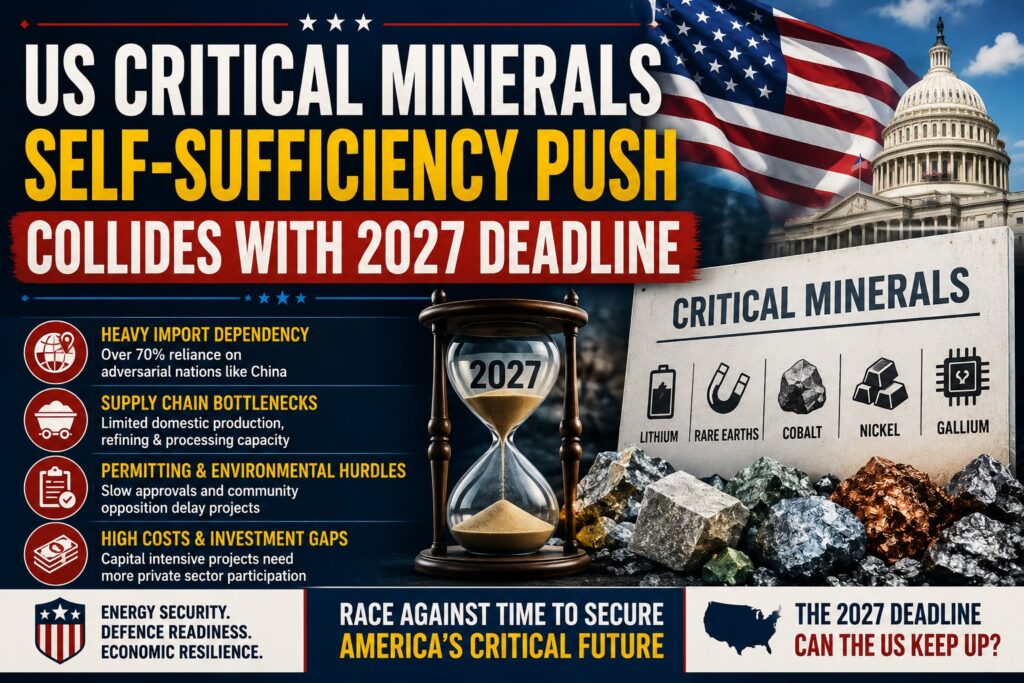
    Critical Minerals Diplomacy- Partner with CAR and African nations for lithium, nickel, and cobalt supply chains.

    Institutional Integration- Create an Energy Diplomacy Wing within MEA for coherent foreign policy alignment.

    “Energy security is not just about fuel, it is about strategic autonomy, and India’s foreign policy must secure both.” – M.K.Narayanan

  • “The reform process in the United Nations remains unresolved, because of the delicate imbalance of East and West and entanglement of the USA vs. Russo-Chinese alliance.” Examine and critically evaluate the East-West policy confrontations in this regard.

    “The UN was not created to take mankind to heaven, but to save humanity from hell.” – 2nd Secretary-General Dag Hammarskjöld. However, in the 21st century, the reform process-particularly of the Security Council-remains stalled, leading to a crisis of confidence in the UN.

    Major reforms needed in the UN

    Security Council expansion to reflect 21st-century realities

    Veto-restraint or limitation – Eg- code of conduct.

    Greater regional representation – Eg- African Union and Latin America.

    Strengthening General Assembly role with clear mandate and resources.

    Peacekeeping reform – mandates, rules of engagement, training and rapid deployment.

    Financial autonomy for agencies like UNDP

    Secretariat reform – streamline bureaucracy and merit-based senior appointments.

    Transparency & accountability – stronger oversight and audit for agencies and peace operations.

    Reasons the reform process remains unresolved

    A. Delicate East-West imbalance

    Historic institutional lock-in – UNSC P5 structure reflects 1945 power distribution.

    The West (US, UK, France) advocates “value-based liberal multilateralism,” emphasizing democracy, human rights, and rule-based order.

    The East (Russia, China) emphasizes “sovereign equality, non-interference, and multipolarity.” Eg- criticism of “Responsibility to Protect (R2P)” as neo-interventionism

    Regional rivalries – rival claims (Japan vs. China, India vs. Pakistan) block consensus on new permanent seats.

    B. Entanglement: USA vs. Russo-Chinese alignment

    P3 vs P2 divide over veto and reforms. Eg- Syria, Ukraine.

    P5 members resist reforms that could reduce their leverage.

    Security dilemmas and Great-power rivalry turns UN reform into a question of strategic advantage rather than institutional efficiency.

    C. Other decisive factors

    Charter rigidity – amendments need 2/3 members + P5 ratification.

    Bloc fragmentation G4, African Union (Ezulwini), Uniting for Consensus dilute consensus

    Resource dependence – Eg- UN budget has been slashed by 15% in 2026 (from USD 3.7 billion to USD 3.2 billion) as the US, China, Russia failed to complete their payments.

    Proliferation of parallel forums like BRICS, G20, SCO provide alternative platforms, reducing political pressure for UN reform.

    Way Forward

    Reforming the UN Security Council by increasing permanent membership and addressing the under-representation of Asia, Africa, and Latin America.

    Adopt a “two-tier” membership model (permanent without veto) as an interim compromise (Kofi Annan’s proposal, 2005).

    Empower the UNGA to act when the Security Council is paralyzed – via the Uniting for Peace Resolution (1950).

    Rationalization of the Veto System

    France-Mexico Initiative (2015): Voluntary veto restraint during mass atrocities.

    Accountability Proposal by ACT Group (27 countries): P5 must justify veto use before the General Assembly.

    Financial and Bureaucratic Reforms

    Diversify funding base to reduce donor dominance.

    Introduce independent audit mechanisms for UN agencies for transparency.

    Rationalize overlapping agencies (UNDP, UNEP, WHO) to ensure resource efficiency.

    Establish a UN Accountability Commission to monitor performance and corruption within UN bodies.

    As UN Secretary General Antonio Guterres put it, we can’t create a future fit for our grandchildren with systems built for our grandparents. Thus, “reformed multilateralism” with the UN at its core is essential.

  • India–Africa digital partnership is achieving mutual respect, co-development and long-term institutional partnerships. Elaborate.

    In the words of PM Modi, “Africa will remain at the center of our attention. Our partnership is not just about sharing resources but about sharing dreams and a vision for a brighter future.”

    India-Africa Digital Partnership

    Foundation of Mutual Respect-

    South-South Cooperation– based on equality, non-conditionality, and mutual benefit.

    Unlike the Chinese “Digital Silk Road”, India provides low-cost and interoperable solutions.

    Africa views India as a partner in capacity building, not a neo-colonial actor. (Shashi Tharoor)

    Co-development through Technology and Capacity Building-

    Pan-African e-Network (2009)- Connects 48 African countries with India for tele-education and telemedicine.

    India’s Aadhaar, UPI, CoWIN, and DigiLocker systems serve as models for Africa’s Digital Transformation Strategy (2020-2030). Eg- Namibia – NPCI Pact for a UPI-like instant payment system

    ITEC Program- Trains African professionals in e-governance, AI, fintech, and cybersecurity, promoting shared digital growth.

    Long-term Institutional Partnerships-

    India-Africa Forum Summit (IAFS) & Voice of Global South Summit (2023)- Institutionalize digital cooperation as a core agenda.

    EXIM Bank LoCs & Tech Parks- Fund ICT hubs and innovation centers (e.g., Ethiopia, Rwanda, Tanzania).

    Start-up collaboration under Digital India-Digital Africa initiative, in agri-tech, e-health, fintech, and education.

    Triangular cooperation with Japan under Asia-Africa Growth Corridor (AAGC) supports digital infrastructure.

    Education and Skilling – Eg- IIT Madras campus in Zanzibar (first overseas IIT)

    The digital partnership reflects a new model of South-South cooperation for inclusive digital transformation

  • With the waning of globalization, post-Cold War world is becoming a site of sovereign nationalism. Elucidate.

    Thomas Friedman, (The Lexus and the Olive Tree), defines globalization as the inexorable integration of markets, nation-states, and technologies, making it farther, faster, deeper, and cheaper. However, at present, the world is witnessing ‘Deglobalisation’.

    Waning of Globalization

    Global trade as % of GDP peaked at 61% in 2008, declining to ~52% by 2024 (World Bank).

    Reversal of Liberalization- Trade wars, tariffs (US-China), and reshoring policies mark a retreat from free markets.

    The splinternet, 5G bans, and AI regulation indicate the politicisation of technology.

    Weakening of Global Institutions- paralysis of WTO, and unilateral sanctions. Eg- USA’s CAATSA

    Regionalism replacing globalization – RCEP, IPEF, BRICS+, EU strategic autonomy.

    Rise of Sovereign Nationalism

    Economic Nationalism – US “America First”, India’s Atmanirbhar Bharat, EU’s strategic autonomy.

    Resource Nationalism- Nations asserting control over rare earths, energy, and food exports. Eg- Indonesia’s nickel ban.

    Political Sovereignty – Brexit (2016) justified as “taking back control”.

    Identity Politics- Nationalist rhetoric linked to cultural, ethnic, or religious identity. Eg- rise of Neo Fascist powers in Europe.

    Strategic Assertion – Russia’s rejection of Western dominance through the Ukraine war.

    Digital Sovereignty – EU’s GDPR and DSA for data protection; China’s Great Firewall.

    Security Nationalism – Eg- Iran’s nuclear program

    Vaccine & Resource Nationalism during COVID-19

    Backlash Against Migration- Eg- Immigration controls in UK, EU, USA

    Public Opinion Shift- Global surveys (Pew, 2023) show declining trust in globalization and preference for domestic self-reliance.

    The retreat of globalization signals a transition from hyper-interdependence to guarded sovereignty and realist state-centric politics

  • Match List-I with List-II and select the correct answer using the codes given below the lists

    Match List-I with List-II and select the correct answer using the codes given below the lists:
    List-I (Organization) – List-II (Associated Convention/Person/Place/Headquarters).
    List-I (Organization) List-II (Associated Convention/Person/Place/Headquarters)

    A. Amnesty International 1.Visculi
    B. Common wealth of Independent States (CIS) 2.Paris
    C. Danube Commission 3.Peter Beneson
    D. Europian Space Agency 4.Belgrade Convention

    A B C D A B C D
    (a) 3 1 4 2 (a) 4 2 3 1
    (b) 3 2 4 1 (b) 4 1 3 2

  • Consider the following statements

    Consider the following statements:
    1. The Nuclear Suppliers Group has 24 countries as the members.
    2. India is a member of the Nuclear Suppliers Group.

  • Consider the following pairs

    Consider the following pairs:
    1. Asian Development Bank: Tokyo
    2. Asia-Pacific Economic Cooperation :Singapore
    3. Association of South East Asian Nations :Bangkok
    Which of the above pairs is/are correct matchd?

  • Consider the following countries

    Consider the following countries :
    1. Switzerland
    2. Malta
    3. Bulgaria
    Which of the above are members of European Union?

  • Consider the following countries

    Consider the following countries :
    1. Brunei Darussalam
    2. East Timor
    3. Laos
    Which of the above is/are member/members of ASEAN ?