💥Mains Ready By December. Smash Mains & Smash PYQ Admissions Open

Subject: International Stories of Key Importance

  • The changing patterns of India’s student migration

    Introduction

    India’s latest wave of student migration marks a decisive departure from earlier patterns of elite academic mobility. What was once limited to fully funded university programmes is now dominated by self-financed migration through commercialised education channels. With over 13.35 lakh Indian students enrolled abroad in 2024, student mobility has emerged as a major demographic, economic, and policy issue with implications for employment, remittances, and human capital formation.

    Why in the News

    Student migration from India has expanded rapidly in scale and altered sharply in composition. The Ministry of External Affairs reported over 13.2 lakh Indian students abroad in 2023, rising further in 2024 and projected to reach 13.8 lakh in 2025. Unlike earlier trends, Canada, the U.S., and the U.K. together host nearly 70% of Indian students, with a growing share enrolled in lower-tier institutions and vocational programmes

    Changing Geography and Scale of Student Migration

    1. Rapid expansion: Overseas enrolment increased from 12.29 lakh (2018) to 13.35 lakh (2024), indicating sustained outflows.
    2. Destination concentration: Canada and the U.S. (40%), followed by the U.K., Australia, and Germany, dominate student inflows.
    3. Diaspora reclassification: Students are now formally recognised as a major category within India’s diaspora framework.

    Commercialisation of Overseas Education Pathways

    1. Private recruitment dominance: Migration channels increasingly operate through education agents and recruitment firms, often in regulatory grey zones.
    2. Institutional downgrading: Students are channelled into lower-tier universities and vocational colleges, particularly in the U.K. and Canada.
    3. Profit orientation: Expansion reflects the foreign education industry’s revenue model, not academic demand alignment.

    Labour Market Outcomes and Skill Mismatch

    1. Limited skilled absorption: Only 1 in 4 Indian postgraduates in the U.K. secures sponsored skilled employment.
    2. Unskilled employment drift: Many graduates work in low-wage, unskilled jobs, often juggling multiple part-time roles.
    3. Visa tightening effects: Recent restrictions in the U.K. and Canada have reduced post-study work options, worsening job insecurity.

    Reverse Remittances and Household Financial Stress

    1. Debt-financed migration: Education loans, property mortgages, and family savings underpin overseas education.
    2. Reverse remittances: Indian households increasingly subsidise students abroad, reversing traditional remittance flows.
    3. Cost escalation: Annual expenses range between ₹47-87 billion for tuition, housing, and living costs for Indian students in the U.S. alone.

    Domestic Push Factors Driving Migration

    1. Employment saturation: Weak domestic job creation intensifies reliance on foreign labour markets.
    2. Institutional capacity gaps: Limited access to quality higher education within India.
    3. Aspirational mobility: Overseas degrees function as symbols of social mobility, even when economic returns decline.

    OECD Labour Market Dependence and Policy Contradictions

    1. Labour supply substitution: Student migration acts as a cheap labour pipeline for OECD economies.
    2. Policy inconsistency: Destination countries encourage enrolment while restricting long-term settlement pathways.
    3. Brain waste risk: Skill underutilisation replaces earlier concerns of brain drain.

    Conclusion

    India’s evolving student migration pattern reflects a deeper structural contradiction between expanding educational aspirations and limited domestic employment absorption. What is increasingly presented as academic mobility is, in practice, functioning as a market-driven labour pipeline marked by debt, skill underutilisation, and reverse remittances. Without stronger regulation of education agents, better alignment between higher education and labour markets, and credible domestic opportunities, student migration risks shifting from a pathway of human capital advancement to a mechanism of economic vulnerability and brain waste.

    Brain Waste

    Brain waste refers to the systematic underutilisation of formally educated and skilled individuals in low-productivity, low-wage, or informal employment, resulting in loss of individual capability, household resources, and national human capital efficiency.

    Key Dimensions

    1. Skill-Job Mismatch: Graduates employed in sectors unrelated to their qualifications, such as retail, caregiving, or gig services.
    2. Credential Devaluation: Overseas degrees from lower-tier institutions failing to translate into skilled job access.
    3. Labour Market Segmentation: Migrants concentrated in secondary labour markets with limited mobility.
    4. Economic Inefficiency: High private investment in education yields low productivity returns.
    5. Psychosocial Costs: Prolonged underemployment leading to debt stress, mental health strain, and social disillusionment.

    Policy Significance for India

    1. Reduces returns on domestic human capital formation.
    2. Weakens long-term productivity gains from migration.
    3. Shifts the migration debate from brain drain to brain wastage.

    Education-Migration Complex

    The education-migration complex denotes an interlinked system where domestic deficits in quality education and employment interact with foreign demand for fee-paying students and flexible labour, producing large-scale, market-driven student mobility.

    Structural Components

    1. Domestic Push Factors: Limited quality higher education seats, graduate unemployment, and credential inflation.
    2. Foreign Pull Factors: Revenue dependence of OECD universities and labour demand in low-wage service sectors.
    3. Intermediary Ecosystem: Education agents, recruiters, and private colleges operating in weakly regulated spaces.
    4. Policy Asymmetry: Liberal student visas combined with restrictive post-study work and settlement regimes.
    5. Financialisation of Education: Education loans and household savings financing migration rather than productive investment.

    Systemic Outcomes

    1. Massification of student migration beyond elite academic mobility.
    2. Growth of reverse remittances and household indebtedness.
    3. Normalisation of migration as an employment substitute.

    PYQ relevance

    [UPSC 2024] Why do large cities tend to attract more migrants than smaller towns? Discuss in the light of conditions in developing countries.

    Linkage: Student migration reflects aspirational migration driven by opportunity concentration, now extending from domestic cities to global education hubs.
  • [17th December 2025] The Hindu OpED: The three revolutions shaping American power: 2025 U.S. National Security Stratergy

    PYQ Relevance

    [UPSC 2019] “What introduces friction into the ties between India and the United States is that Washington is still unable to find for India a position in its global strategy, Which would satisfy India’s National self- esteem and ambitions” Explain with suitable examples.

    Linkage: The question addresses power asymmetries and strategic hierarchy in India-U.S. relations, a recurring theme in GS II (International Relations). The article shows how the new U.S. National Security Strategy’s conditional and transactional approach prevents India from securing an equal strategic position, sustaining friction in bilateral ties.

    Introduction

    The 2025 U.S. National Security Strategy represents a decisive departure from the post-1945 American approach to global leadership. Rather than reforming existing multilateral institutions, the strategy reframes governance, alliances, and economic interdependence as instruments of leverage. The NSS reveals a deeper transformation in American statecraft, one that normalises harm, conditionality, and coercion as legitimate tools of power. These changes are best understood through three interlinked revolutions reshaping American power.

    Project 2025

    Meaning: Project 2025 is a conservative policy blueprint prepared by the Heritage Foundation and allied think tanks to restructure the U.S. federal state if Republicans return to power.

    Core Features:

    1. Executive Centralisation: Concentrates power in the President by weakening independent agencies and bureaucratic autonomy.
    2. Ideological Governance: Aligns administration, law enforcement, and regulatory bodies with conservative social and political values.
    3. Administrative Overhaul: Replaces career civil servants with politically aligned appointees to ensure policy compliance.
    4. Domestic Security Framing: Treats migration, culture, and social cohesion as national security issues.

    Significance: Project 2025 provides the domestic ideological foundation for the new U.S. National Security Strategy by redefining governance as an instrument of power rather than restraint.

    New U.S. National Security Strategy (2025)

    Meaning: The 2025 U.S. National Security Strategy outlines Washington’s approach to global power, prioritising great-power competition, economic leverage, and conditional alliances.

    Key Shifts:

    1. From Multilateralism to Conditionality: Replaces rule-based cooperation with transactional partnerships.
    2. China-Centric Strategy: Frames China as the primary systemic challenger across economic, military, and technological domains.
    3. Economic Statecraft: Uses trade, sanctions, supply chains, and finance as strategic tools.
    4. Alliance Recalibration: Reduces automatic commitments; demands burden-sharing and ideological alignment.
    5. Indo-Pacific Priority: Elevates the region while relatively downgrading Europe.

    Significance: The NSS signals a structural shift from liberal internationalism to hierarchical global governance, with direct implications for India, the Global South, and multilateral institutions.

    Political Revolution: Shrinking Civic Space as Statecraft

    Core Transformation

    1. Political Morality: Replaces institutional restraint with instrumental governance, where harm is treated as a policy design feature rather than an unintended consequence.
    2. Civic Norms: Weakens norms of accountability, public reason, and institutional deference.
    3. Cultural Governance: Treats internal cohesion, ideological alignment, and demographic stability as national security assets.

    Institutional Outcomes

    1. Executive Centralisation: Consolidates authority by reducing the autonomy of independent institutions.
    2. Administrative Hardship: Integrates regulatory punishment, purges, and compliance costs into routine governance.
    3. Ideological Statecraft: Reframes pluralism and dissent as vulnerabilities rather than democratic strengths.

    Foreign Policy Revolution: Conditionality Replacing Predictability

    Strategic Reorientation

    1. Alliance Retrenchment: Replaces automatic security guarantees with conditional, transactional commitments.
    2. Geographic Reprioritisation: Downgrades Europe while re-centering the Indo-Pacific as the primary theatre.
    3. Migration Securitisation: Elevates migration from a social issue to a core national security threat.

    Operational Consequences

    1. Multilateral Erosion: Treats international institutions as constraints on sovereignty.
    2. Partner Selection: Prioritises ideological conformity and burden-sharing over shared norms.
    3. Strategic Fragmentation: Produces unstable alliances and reduces crisis predictability.

    Economic Revolution: From Integration to Leverage

    Structural Shift

    1. Globalisation Reframing: Treats economic interdependence as exposure rather than mutual benefit.
    2. Debt and Finance: Formalises the withdrawal from development-oriented global finance.
    3. Trade Instrumentalisation: Uses tariffs, sanctions, and supply chain controls as coercive tools.

    Systemic Effects

    1. Unequal Distribution: Concentrates economic disruption on weaker states and peripheral economies.
    2. Supply Chain Reconfiguration: Promotes diversification aligned with geopolitical loyalty.
    3. Domestic Shielding: Absorbs inflationary and export shocks internally while externalising costs.

    The Return of Imperial Logic in Global Governance

    Underlying Continuity

    1. Hierarchical Order: Restores a world system based on power asymmetry rather than rule-based equality.
    2. Entitlement Framework: Normalises the strong imposing costs while the weak absorb disruption.
    3. Territorial Minimalism: Exercises influence without formal empire through economic and institutional control.

    Conceptual Innovation

    1. Architecture of Cruelty: Integrates suffering into governance logic, rendering harm politically invisible and administratively routine.
    2. Bureaucratic Normalisation: Converts coercion into technical procedure rather than overt domination.

    Conclusion

    The 2025 U.S. National Security Strategy marks a structural redefinition of American power. Through political centralisation, alliance conditionality, and economic coercion, the strategy abandons the stabilising logic of liberal internationalism. The three revolutions together signal a return to hierarchical global governance, where power is exercised through managed disruption rather than shared rules. The consequences are global, systemic, and enduring.

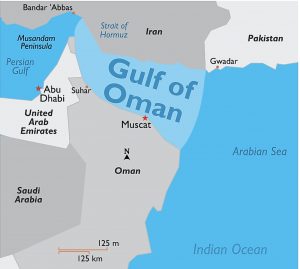
  • Iran Seizes Oil Tanker in Gulf of Oman

    Why in the News?

    Iran has seized an oil tanker in the Gulf of Oman, with 18 crew members from India, Sri Lanka and Bangladesh on board, citing illegal fuel smuggling.

    Key Details of the Incident

    • Seizure carried out by Iranian forces off the Sea of Oman coast
    • Reported by Fars News Agency
    • Vessel was allegedly carrying six million litres of contraband diesel fuel
    • The tanker had disabled its navigation systems
    • Action linked to enforcement against fuel smuggling operations

    Iran and Fuel Smuggling

    Retail fuel prices in Iran are among the lowest globally
    • Creates strong incentives for cross border fuel smuggling
    • Iranian authorities frequently intercept vessels accused of illegal fuel transport in the Gulf region

    Regional and International Context

    • Iran seized another tanker last month for unauthorised cargo
    • Iran denied that the seizure was retaliatory
    • The incident follows a recent US seizure of an oil tanker near Venezuela
    • The US alleged that the ship was transporting oil linked to Iran and Venezuela

    US Sanctions Angle

    US Treasury imposed sanctions on Venezuela in 2022
    • Sanctions linked to alleged ties with Iran’s Islamic Revolutionary Guard Corps IRGC and Hezbollah

    Prelims Pointers

    Gulf of Oman connects the Arabian Sea with the Strait of Hormuz
    • Region is strategically vital for global energy trade
    Fuel smuggling is common in regions with subsidised energy prices
    • Maritime seizures often have geopolitical and security implications
    • Crew nationality issues raise consular and diplomatic concerns

    Consider the following statements: (2024)

    Statement-I: Sumed pipeline is a strategic route for Persian Gulf oil and natural gas shipments to Europe. 

    Statement-II: Sumed pipeline connects the Red Sea with the Mediterranean Sea. 

    Which one of the following is correct in respect of the above statements? 

    (a) Both Statement-I and Statement-II are correct and Statement-II explains Statement-I 

    (b) Both Statement-I and Statement-II are correct, but Statement-II does not explain Statement-I 

    (c) Statement-I is correct, but Statement-II is incorrect 

    (d) Statement-I is incorrect, but Statement-II is correct

  • FTAs for a start: On India and trade pacts

    Introduction

    India has entered into 20 regional or free trade agreements, excluding the recently concluded pacts with the United Kingdom and European Free Trade Association (EFTA). Negotiations are ongoing with major economies including the United States, European Union, Canada, and the Southern African Customs Union. This renewed urgency is driven by U.S. tariffs of up to 50% on key Indian exports, underscoring the strategic importance of trade diversification. However, evidence from earlier FTAs reveals that market access without domestic preparedness has widened trade deficits rather than strengthened exports.

    Why in the News?

    India’s FTA strategy is at a critical inflection point. While the country is rapidly expanding its trade pact network and reconsidering engagement channels even with blocs like RCEP, outcomes from earlier agreements expose structural weaknesses. Trade deficits with ASEAN widened from $10 billion (2017) to nearly $44 billion (2023), and similar trends are visible with Japan and South Korea, despite rising exports. 

    India’s Expanding FTA Landscape

    1. FTA Coverage: Enters 20 FTAs; recent additions include the UK and EFTA agreements.
    2. Negotiation Momentum: Accelerates talks with the U.S., EU, Canada, and SACU.
    3. Strategic Trigger: Responds to steep U.S. tariff escalation on Indian exports.
    4. RCEP Positioning: Maintains non-accession while exploring consultative channels.

    Trade Imbalances from Earlier FTAs

    1. ASEAN Trade Deficit: Expands from ~$10 billion (2017) to ~$44 billion (2023).
    2. Japan and Korea Pattern: Imports of high-value, capital-intensive goods outpace export growth.
    3. Structural Asymmetry: Export basket remains less competitive against partner economies.

    Negotiation and Design Deficiencies

    1. Standards Alignment Gaps: Weak mutual recognition on quality standards and certifications.
    2. Rules of Origin Weakness: Allows import surge without commensurate domestic value addition.
    3. Non-Tariff Barriers: Insufficiently addressed despite tariff liberalisation.
    4. Sectoral Misalignment: FTAs not tailored to India’s comparative sectoral strengths.
    5. Industry Consultation Deficit: Limited engagement with exporters during negotiations.

    Implementation and Domestic Uptake Failures

    1. Low Utilisation Rates: Indian exporters fail to exploit preferential margins.
    2. Domestic Awareness Gaps: Government does not adequately popularise FTAs among industry.
    3. Partner Advantage: Counterpart economies utilise preferences more effectively.

    Course Correction through Recent Agreements

    1. Review Mechanism: Reassessment of ASEAN, Japan, and Korea FTAs initiates correction.
    2. India-UAE CEPA Outcome: Achieves balanced trade expansion; non-oil trade touches ~$100 billion in FY25.
    3. Learning Curve: Demonstrates value of calibrated concessions and sector-specific focus.

    Strategic Priorities in Ongoing Negotiations

    1. United States Engagement: Requires structured consultations with services, seafood, engineering goods, and textile exporters.
    2. European Union Talks: Demands focus on carbon-intensive sectors like iron, steel, and cement.
    3. CBAM Challenge: Trade terms must factor the Carbon Border Adjustment Mechanism.

    Beyond Agreements: The Export Support Imperative

    1. Standards Infrastructure: Strengthens quality, certification, and testing ecosystems.
    2. Trade Infrastructure: Improves logistics and supply-chain efficiency.
    3. Technology Upgradation: Enables competitiveness in global value chains.
    4. Market Intelligence: Supports exporters with real-time demand and compliance data.

    Conclusion

    Free trade agreements can only serve as an entry point, not a substitute, for export competitiveness. India’s experience with earlier FTAs shows that tariff liberalisation without adequate attention to standards, rules of origin, sectoral strengths and domestic capacity leads to widening trade deficits rather than sustained gains. The relatively balanced outcomes under recent agreements underline the importance of better-designed negotiations and continuous review. As India advances talks with major economies, the real test will lie beyond signing pacts; in systematically supporting exporters through quality infrastructure, technology upgradation and market intelligence so that market access translates into durable trade outcomes.

    PYQ Relevance

    [UPSC 2017] Account for the failure of the manufacturing sector in achieving the goal of labor-intensive exports. Suggest measures for more labor-intensive rather than capital – intensive exports.

    Linkage: This PYQ directly aligns with the article’s core argument that FTAs without domestic productive capacity and sectoral competitiveness lead to import surges rather than export expansion.

  • China’s $1-trillion trade surplus: What’s behind it, what it means for India, world

    Introduction

    China has crossed a historic milestone by recording a trade surplus exceeding $1 trillion in the first 11 months of 2025. This achievement reflects China’s export dominance, cost efficiencies, and deep manufacturing networks. Yet, behind the success lie persistent weaknesses, stagnant consumption, weak imports, currency effects, and overcapacity in key sectors. These trends shape not just China’s trajectory but also global industrial dynamics, including India’s trade and manufacturing future.

    Why in the news?

    China’s trade surplus has exceeded $1 trillion for the first time in history, despite years of U.S. tariffs and geopolitical frictions. The resilience reflects China’s ability to expand exports to South and Southeast Asia, Africa, and Latin America, even as domestic demand weakens.

    What does the $1-trillion surplus reveal about China’s growth trajectory?

    1. Export-led resilience: Manufacturing depth and supply-chain clusters allowed China to sustain expansion despite tariffs.
    2. Structural internal weakness: Low consumption and investment constrain domestic absorption.
    3. Sectoral overcapacity: EVs, batteries, industrial goods, and electronics output exceeds internal demand.
    4. Policy cushioning: Government intervention continues to support firms under price pressure.

    How do components of trade explain the imbalance?

    1. Lower-value export surge: Expanded sharply, reflecting weak internal markets pushing firms outward.
    2. Import contraction: Decline in commodities and inputs indicates sluggish domestic activity.
    3. Currency-linked advantage: A weaker yuan reinforces export competitiveness.
    4. Manufacturing glut: Large surpluses in EVs, solar equipment, electronics depress global prices.

    How does the surplus intensify global ‘dumping’ concerns?

    1. Persistent oversupply: Weak domestic demand forces producers to export inventory at low prices.
    2. Pressure on partner economies: U.S., EU, and developing economies report domestic industries losing competitiveness.
    3. Tariff limitations: U.S. tariffs did not significantly reduce Chinese exports.
    4. Supply chain entrenchment: China’s dominance across EVs, tech components, and industrial goods remains unchallenged.

    How sustainable is China’s export-led model?

    1. Renewed “China Shock” risk: Manufacturing displacement and job losses could mirror early 2000s patterns.
    2. Dependence on external demand: Growth remains tied to global absorption rather than domestic stability.
    3. Competitive squeeze on emerging markets: Low-cost Chinese exports undermine local industries.
    4. Structural bottlenecks: Ageing workforce, real-estate slowdown constrain internal economic balancing.

    How do manufacturing dynamics shape the surplus?

    1. Scale-driven efficiency: China sustains low costs across both labour-intensive and advanced sectors.
    2. Policy-backed expansion: Subsidies and industrial support keep output rising.
    3. Global market share gains: EVs, solar panels, electronics, and industrial machinery continue expanding.
    4. Domestic slowdown: Weak property and consumption push firms outward to global markets.

    Impact on India and Indian Trade

    1. Cheaper import influx risk: Price-suppressed Chinese exports may flood Indian markets, impacting electronics, machinery, solar equipment, and auto components.
    2. Pressure on India’s manufacturing ambitions: China’s entrenched manufacturing scale raises India’s cost of competing globally under ‘Make in India’.
    3. Possible trade diversion: As the U.S. and EU tighten controls, India could face redirected Chinese goods.
    4. Market displacement abroad: Indian exports in Africa, Southeast Asia, and Latin America face increased competition from cheaper Chinese alternatives.
    5. Strategic policy dilemma: Balancing industry protection with consumer prices and trade stability becomes increasingly complex.

    Lessons for India

    1. Need for competitive scale: China demonstrates the value of large, integrated industrial clusters. India must deepen logistics, supply chains, and factor-market efficiencies.
    2. Balanced growth strategy: China’s heavy export-reliance exposes vulnerabilities; India must cultivate both domestic consumption and export capacity.
    3. Avoiding overcapacity traps: China’s challenges underline the importance of calibrating production capacity with market signals.
    4. Building resilience to global shocks: India needs robust monitoring of trade flows and flexible tariff tools.
    5. Technology depth imperative: China’s advantage is rooted in technological upgrading; India must accelerate R&D, innovation incentives, and high-tech manufacturing.

    Comparative Analysis with Other Countries

    1. United States: Tariffs failed to curb China’s exports, showing the limitations of defensive measures without productive capacity building, an important lesson for India.
    2. Southeast Asia: Countries like Vietnam and Indonesia witness intensified competition and job risks just as India does, but India’s larger domestic market offers relative insulation.
    3. Mexico: Direct competition in the U.S.-linked value chains mirrors India’s exposure; both face risks of Chinese undercutting.
    4. Africa: China’s aggressive pricing challenges traditional Indian strongholds in machinery, pharma, and services.
    5. European Union: EU’s regulatory pushback on Chinese EVs illustrates structured responses India could consider; sector-specific anti-dumping, surveillance mechanisms.

    Conclusion

    China’s record surplus highlights a powerful yet imbalanced economic structure. While global markets absorb China’s excess capacity, emerging economies, including India, face intensified competition and strategic risks. The situation offers critical lessons: strengthen domestic manufacturing, build competitive scale, avoid overcapacity, and enhance technological self-reliance. How China manages its internal imbalances will shape global industrial dynamics for years, and how India positions itself will determine its share of future growth.

    PYQ Relevance

    [UPSC 2017] Account for the failure of the manufacturing sector in achieving the goal of labor-intensive exports. Suggest measures for more labor-intensive rather than capital – intensive exports.

    Linkage: This question is highly relevant as India seeks to shift from capital-heavy growth to labour-absorbing manufacturing. It links directly to GS-III themes of industrial growth, labour reforms, MSME scaling, global value chain integration, and India’s need to counter low-cost competition from China, Bangladesh, and Vietnam.

  • UNICEF

    Why in the News?

    UNICEF, created on December 11, 1946, originally provided emergency relief to children and mothers in war-affected regions after World War II. A recent quiz on UNICEF’s history highlights several facts important for UPSC Prelims.

    UNICEF’s First Greeting Card (1949)

    • A thank-you drawing from a young girl became UNICEF’s first fundraising greeting card.
    • The artwork depicted children dancing around a maypole.
    • This started UNICEF’s global tradition of greeting cards used to fund child-focused programs.

    Transformation in 1953: Change of Name

    • UNICEF became a permanent part of the UN system in 1953.
    • Its original name: United Nations International Children’s Emergency Fund.
    • Words International and Emergency were removed.
    • New name: United Nations Children’s Fund, but acronym UNICEF retained for familiarity.
    • India is the member.

    Nobel Peace Prize

    • UNICEF was awarded the Nobel Peace Prize in 1965.
    • Recognised for advancing “brotherhood among nations” through children’s welfare, development, and global health programs.

    World’s Most Widely Used Hand Pump

    • Severe droughts in rural India in the 1970s led to a major collaboration between the Government of India, WHO and UNICEF.
    • Result: India Mark II hand pump, now among the most widely deployed rural water pumps in the world.
    • Known for reliability, low maintenance and suitability for community use.

    U.S. Withdrawal Controversy (Early 1980s)

    • UNICEF faced indirect criticism when the US government announced withdrawal from UNESCO.
    With reference to the United Nations Convention on the Rights of the Child, consider the following: (2010)

    1. The Right to Development 

    2. The Right to Expression 

    3. The Right to Recreation 

    Which of the above is/ are the Rights of the child? 

    (a) 1 only (b) 1 and 3 only (c) 2 and 3 only (d) 1, 2 and 3

  • India Hosts 3rd Global IALA Council Session in Mumbai

    Why in the News?

    The Union Minister for Ports, Shipping and Waterways, Sarbananda Sonowal, inaugurated the 3rd Global IALA Council Session in Mumbai and launched a Digital Ticketing Portal for Lighthouse Tourism. Over 30 countries are participating in the high-level global event, held from 8–12 December 2025.

    About IALA (International Association of Marine Aids to Navigation and Lighthouse Authorities)

    • A non-profit international body that sets global standards for marine aids to navigation.
    • Works in areas such as:
      • AtoN systems
      • VTS standards
      • e-Navigation frameworks
    • Promotes harmonisation of navigation technologies across member states.
    • India is a long-standing member and host of the 3rd Council session.
    India is one of the founding members of the International North-South Transport Corridor (INSTC), a multimodal transportation corridor, which will connect (2025)

    (a) India to Central Asia to Europe via Iran 

    (b) India to Central Asia via China 

    (c) India to South-East Asia through Bangladesh and Myanmar 

    (d) India to Europe through Azerbaijan

  • Interpol Issues Blue Corner Notice in Goa Fire Case

    Why in the News?

    Interpol has issued a Blue Corner Notice to trace the missing owners of a Goa nightclub where a major fire incident occurred. The notice enables global police cooperation to gather information on their whereabouts and identity.

    About Blue Corner Notice

    • Part of Interpol’s colour-coded alert system.
    • Also called an enquiry notice.
    • Purpose:
      • To collect additional information about a person of interest.
      • To verify identity, location, or criminal background.
    • Typically issued before criminal charges are formally filed.
    • Helps member countries share information rapidly during investigations.

    What is INTERPOL?

    • Full name: International Criminal Police Organization.
    • Facilitates international police cooperation against crimes such as terrorism, drug trafficking, cybercrime, human trafficking and organized crime.
    • Members: 196 countries.
    • India joined in 1949.
    • Not a UN agency; it is an independent international body.
    • Holds Permanent Observer status at the UN since 1996.
    • Headquarters: Lyon, France.

    India’s Role: 

    • India became a member of INTERPOL in 1949.
    • As a member country, India participates through its National Central Bureau (NCB) located in New Delhi, under the CBI.
    • India can request or respond to Interpol Notices, including Red, Blue, Yellow and others.
    • India contributes to global policing cooperation on terrorism, cybercrime, trafficking, money laundering, and organized crime.
    In India, it is legally mandatory for which of the following to report on cyber security incidents? (2017)

    1. Service providers 

    2. Data Centres 

    3. Body corporate 

    Select the correct answer using the code given below: 

    (a) 1 only (b) 1 and 2 only (c) 3 only (d) 1, 2 and 3

  • Benin

    Why in the news?

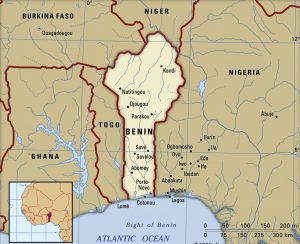
    Benin President Patrice Talon said the security forces stopped a coup attempt by some soldiers in Cotonou on December 7.

    Key Facts

    • Country in West Africa
      Total area about 112622 sq km
      Borders: Niger to the northeast and east, Togo to the west, Burkina Faso to the northwest and the Southern coastline on the Bight of Benin (Gulf of Guinea, Atlantic Ocean)
    • Major rivers:
      • Niger and its tributaries Mékrou, Alibori, Sota (northeast)
      • Mono, Couffo, Ouémé
    • Official capital: Porto Novo
      • Largest city and de facto capital: Cotonou
    • Approx population: 10.87 million (2016)
    • Official language: French
      Widely spoken local languages: Fon, Yoruba
    • Currency: West African CFA franc (XOF)
    • Former French colony; independence in 1960
    • Type of government: Presidential Republic
      • Multi-party democratic system
    In the recent years Chad, Guinea, Mali and Sudan caught the international attention for which one of the following reasons common to all of them? (2023)

    (a) Discovery of rich deposits of rare earth elements 

    (b) Establishement of Chinese military bases 

    (c) Southward expansion of Sahara Desert 

    (d) Successful coups

  • ICGS Vigraha Visit to Indonesia 

    Why in the news?

    Indian Coast Guard Ship (ICGS) Vigraha is on an overseas deployment to ASEAN countries. It is making an operational visit to Jakarta, Indonesia from 2 to 5 December 2025.

    Purpose of Visit

    • Strengthen Coast Guard cooperation between India and Indonesia
    • Enhance interoperability in maritime safety and security
    • Joint professional interactions, shipboard drills, tabletop exercises, PASSEX (Passage Exercise)

    Diplomatic and Operational Significance

    • Reinforces cooperation for Rules-Based International Order (RBIO) in the Indo-Pacific
    • Supports coordinated surveillance of sea lanes and marine domain awareness
    • Includes cultural and people-to-people engagements

    India is a member of which among the following? (2015)

    (1) Asia-Pacific Economic Cooperation 

    (2) Association of South-East Asian Nations 

    (3) East Asia Summit Select the correct answer using the code given below. 

    (a) 1 and 2 only (b) 3 only (c) 1, 2 and 3 (d) India is a member of none of them