💥Mains Ready By December. Smash Mains & Smash PYQ Admissions Open

Subject: International Stories of Key Importance

  • [14th November 2025] The Hindu Op-ed: Donald Trump shakes up the global nuclear order

    PYQ Relevance

    [UPSC 2021] The USA is facing an existential threat in the form of China, that is much more challenging than the erstwhile Soviet Union.  Explain.

    Linkage: China’s denial of nuclear testing and its call for the U.S. to uphold the moratorium illustrate the sharper, more complex strategic rivalry between the two powers. This directly aligns with the PYQ’s theme that China poses a subtler and more challenging strategic threat to the U.S. than the Soviet Union.

    Mentor’s Comment

    This editorial examines how recent U.S. actions under Donald Trump have disrupted long-standing global nuclear norms, especially the Comprehensive Nuclear-Test-Ban Treaty (CTBT) framework. The article evaluates implications for global nuclear stability, India’s strategic environment, and emerging arms-race dynamics. It has been rewritten to suit UPSC Mains standards, with structured analysis, value addition, and exam-oriented elements.

    INTRODUCTION

    The global nuclear order, built since 1945 through treaties, moratoria, and non-proliferation norms, is undergoing significant strain. The U.S. announcement of resuming nuclear testing and redefining CTBT obligations marks a decisive departure from three decades of restraint. This shift impacts nuclear doctrines, arms control regimes, and the behaviour of declared and undeclared nuclear weapon states.

    WHY IN THE NEWS 

    The CTBT framework faces its sharpest crisis in 27 years after Donald Trump declared that the U.S. may resume nuclear explosive testing, reversing the long-standing global moratorium. This marks the first major deviation from post-Cold War consensus and directly challenges existing verification norms. With Russia abandoning CTBT ratification and China refusing explosive testing, the U.S. move risks triggering a new technological arms race, raising concerns for India’s regional security environment.

    How the Nuclear Order Evolved

    1. Post-1945 restructuring: Nuclear stockpiles reduced from ~65,000 warheads in the 1970s to ~12,500 today; nine states now possess nuclear weapons.
    2. NPT framework: NPT created a hierarchy between five permanent nuclear powers and later entrants such as India, Pakistan, and North Korea.
    3. Moratorium period: CTBT negotiations from 1993-96 led to a global halt on explosive tests despite the treaty never entering into force.

    Why the U.S. Nuclear Test Resumption Matters

    1. Resumption of explosive testing: President Trump instructed the U.S. DoE and DoD to prepare for renewed testing, reversing a voluntary halt maintained since 1992.
    2. Shift in doctrine: U.S. pursuit of low-yield warheads and submarine-launched cruise missiles signals a move to battlefield-oriented nuclear systems.
    3. Erosion of restraint: The U.S. argues Russia and China conduct “non-explosive yield tests,” challenging Washington’s previous compliance stance.

    Why the CTBT Is Facing Breakdown

    1. Treaty not in force: CTBT requires ratification by 187 signatory states; key holdouts include the U.S., China, India, Pakistan, and North Korea.
    2. Russia’s reversal: Russia withdrew CTBT ratification in 2023, citing U.S. non-ratification.
    3. Competing interpretations: China and Russia continue “zero-yield” testing; the CTBT Organization’s monitoring system detects global activity through 300+ stations.

    How New Technology Is Altering the Arms Race

    1. Low-yield weapons: U.S. development of W76-2 warheads creates escalation risks due to tactical usability.
    2. Unmanned and hypersonic systems: Renewed R&D on missile defence, high-tech cruise systems, and autonomous platforms challenges existing deterrence logic.
    3. Doctrinal changes: Nuclear powers pursue counterforce-oriented designs to survive adversary first strikes.

    Implications for India

    1. Regional chain reaction: Testing by the U.S., Russia, or China is likely to push Pakistan to follow, widening the deterrence gap with India.
    2. China-Pakistan axis: Deepening technological cooperation complicates India’s security environment.
    3. NPT/CTBT dilemma: India may face pressure on whether to revisit explosive testing if others abandon restraint.

    CONCLUSION

    The breakdown of CTBT norms marks the most significant shift in the nuclear order since the 1990s. Renewed explosive testing by major powers could trigger competitive modernization cycles and weaken global arms control regimes. For India, the challenge lies in balancing credible deterrence with adherence to restraint-based global norms.

    Value Addition

    What is CTBT?

    • A multilateral arms-control treaty that bans all nuclear explosions, for both civilian and military purposes.
    • Aims to freeze qualitative nuclear arms race by preventing the development of new warhead designs.

    When was it negotiated?

    • Negotiated at the Conference on Disarmament (CD) between 1993-1996.
    • Adopted by the UNGA on 10 September 1996.
    • Opened for signature on 24 September 1996.

    Why is it not in force?

    • CTBT will enter into force only when all 44 Annex-II states (states with nuclear capabilities at the time) ratify it.
    • As of today, 8 Annex-II states have not ratified/signed:
      U.S., China, India, Pakistan, DPRK, Israel, Iran, Egypt.
    • Because of this, the treaty remains legally incomplete, though politically influential.

    Key Provisions

    1. Total Prohibition
      • Bans all nuclear explosions, including:
        • High-yield tests
        • Low-yield tests
        • Subcritical tests (disputed)
      • Applies to all environments: underground, underwater, atmospheric, outer space.
    2. Verification Regime
      • International Monitoring System (IMS) with 300+ stations, using:
        • Seismic sensors
        • Hydroacoustic monitors
        • Infrasound detectors
        • Radionuclide sampling
      • International Data Centre (IDC) analyses global test signals.
      • On-site inspections permitted after treaty enters into force.
    3. Confidence-Building Measures
      • Exchange of information, calibration explosions, technical cooperation.

    Institutional Mechanism

    • CTBTO Preparatory Commission (CTBTO-PrepCom) established in 1997.
    • Manages:
      • IMS network construction
      • Data analysis
      • Training and inspection readiness
    • Works despite treaty not being in force.

    Significance

    • Creates the strongest global norm against nuclear testing since 1998.
    • Slows modernization of nuclear arsenals.
    • Provides scientific verification for early detection of clandestine tests.
    • Complements Non-Proliferation Treaty (NPT) and FMCT debates.


  • Civil War in Sudan

    Why in the News?

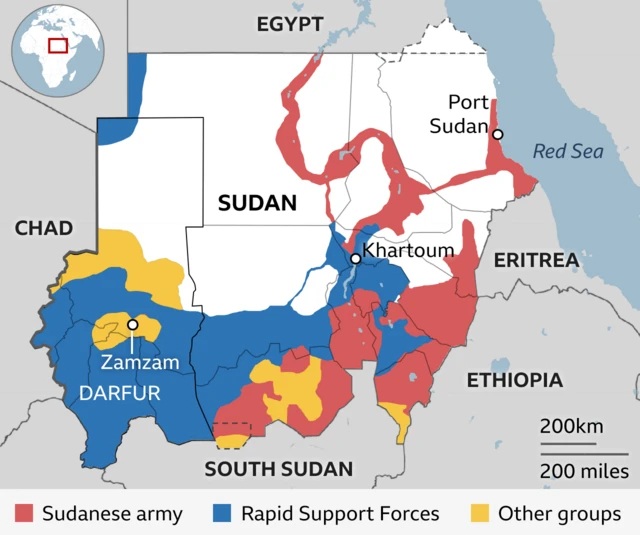
    The United Nations Secretary-General has warned that the civil war in Sudan is “spiralling out of control” after the Rapid Support Forces (RSF) seized the strategic Darfur city of El-Fasher.

    Civil War in Sudan

    About the Civil War in Sudan:

    • Outbreak: Began in April 2023 between the Sudanese Armed Forces (SAF) led by Gen. Abdel Fattah al-Burhan and the Rapid Support Forces (RSF) led by Gen. Mohamed Hamdan Dagalo (Hemedti).
    • Causes: Rooted in Sudan’s failed democratic transition after the 2019 overthrow of Omar al-Bashir and the October 2021 military coup.
    • Immediate Trigger: Power struggle over RSF integration into the national army under the proposed political framework agreement.
    • Conflict Spread: Fighting engulfed Khartoum, Omdurman, and Darfur, causing massive civilian casualties and infrastructure collapse.
    • Humanitarian Toll: Over 8.5 million displaced, famine conditions emerging, and public health systems near total breakdown.
    • Atrocities: Both sides accused of war crimes, ethnic killings, and looting, particularly in Darfur.
    • Territorial Shift: RSF’s capture of El-Fasher (2025) consolidated its control over western Sudan.
    • Foreign Actors: Egypt supports SAF; UAE and Russia’s Wagner Group back RSF, fuelling proxy dynamics.

    What Lies Ahead?

    • Risk of Partition: Sudan may split RSF holding the west, SAF dominating the northeast, leading to de-facto fragmentation.
    • Regional Destabilisation: Prolonged conflict could spill into the Horn of Africa and Red Sea corridor, worsening insecurity.
    • Political Outlook: Civilian transition appears remote; both factions remain focused on military dominance.
    • Economic Collapse: Inflation above 250%, agricultural failure deepening food insecurity.
    • Regional Impact: Refugee influx threatens Chad, South Sudan, and Ethiopia with cross-border instability.
    [UPSC 2024] Consider the following pairs: Country Reason for being in the news
    1. Argentina Worst economic crisis
    2. Sudan War between the country’s regular army and paramilitary forces
    3. Turkey Rescinded its membership of NATO
    How many of the pairs given above are correctly matched?
    Options: (a) Only one pair (b) Only two pairs* (c) All three pairs (d) None of the pairs


  • UN to cut 25% of its global Peacekeeping Force   

    Why in the News?

    The UN will cut peacekeeping personnel by 25% across nine missions after U.S. funding dropped from $1 billion to $680 million under President Trump’s “America First” policy.

    US and Peacekeeping Funding Dynamics:

    • The US and China together contribute nearly 50% of the UN’s peacekeeping budget.
    • The U.S. outlined its new commitment of $680 million, marking a 32% decrease from last year’s payment.
    • A senior UN official confirmed that China has pledged to pay its full contribution by the end of 2025, offsetting some of the financial shortfall.

    Implications of Funding Cut:

    • The withdrawal of peacekeepers will leave several fragile regions exposed to renewed instability, especially in Africa and the Middle East.
    • The cuts signal a shift toward selective, donor-driven peacekeeping, prioritising geopolitical interests over collective international responsibility.
    • For the UN, the challenge lies in maintaining operational credibility and protecting civilian populations amid reduced resources.

    About the United Nations Peacekeeping Mission:

    • Overview: UN Peacekeeping is a collective international mechanism established to maintain peace and security in conflict-affected regions under the leadership of the United Nations.
    • Personnel: Peacekeepers, known as Blue Berets or Blue Helmets, include military, police, and civilian members from contributing nations.
    • Origin: The idea arose after World War II with the formation of the UN in 1945, marking a new era in global conflict resolution.
    • First Mission (1948): The United Nations Truce Supervision Organisation (UNTSO) was deployed after the Arab–Israeli War to monitor ceasefires, setting the template for future operations.
    • Evolution: Over time, missions expanded to cover civil wars, humanitarian crises, and post-conflict reconstruction across Africa, Asia, Europe, and the Middle East.
    • Core Principles:
      1. Consent of the Parties
      2. Impartiality
      3. Non-use of Force (except in self-defence or mandate defence)
    • Deployment: Missions require the consent of key conflict parties and are authorised by the UN Security Council.
    • Functions: Include monitoring ceasefires, disarmament, protection of civilians, humanitarian assistance, promotion of human rights, and support for democratic governance.
    • Finance: United States (26.95%)> China (18.69%)> Japan (8.03%) > Germany (6.11%) > United Kingdom (5.36%) > France (5.29%).
    • India’s Contribution:
      • Major Contributor: India ranks among the largest troop contributors since the inception of UN peacekeeping.
      • Participation Record: Contributed over 1.95 lakh troops, served in 49 missions, and made 168 supreme sacrifices in service.
    [UPSC 2024] Consider the following pairs:
    Country Reason for being in the news
    1. Argentina: Worst economic crisis
    2. Sudan: War between the country’s regular army and
    paramilitary forces
    3. Turkey: Rescinded its membership of NATO
    How many of the pairs given above are correctly matched?
    (a) Only one pair (b) Only two pairs* (c) All three pairs (d) None of the pairs


  • US-Russia to extend the New START Treaty

    Why in the News?

    U.S. President Donald Trump has indicated a willingness to extend the New START Treaty with Russia by one year, until February 2027, as the treaty is due to expire next February.

    About the New START Treaty:

    • About: New Strategic Arms Reduction Treaty (New START); Bilateral nuclear arms control pact between the United States and Russia.
    • Signed: April 8, 2010, in Prague by U.S. President Barack Obama and Russian President Dmitry Medvedev; Came into Force: February 5, 2011.
    • Initial Duration: 10 years, set to  be expired in February 2021; extended by 5 years to February 2026.
    • Proposed Further Extension: To February 2027, as hinted by U.S. President Donald Trump.
    • Objective: Limit and verify the number of deployed strategic nuclear weapons to ensure predictability and strategic stability between the two nuclear superpowers.
    • Ceilings:
      • 1,550 deployed strategic nuclear warheads.
      • 700 deployed intercontinental ballistic missiles (ICBMs), submarine-launched ballistic missiles (SLBMs), and heavy bombers.
      • 800 deployed and non-deployed launchers and bombers combined.
    • Verification Regime:
      • Regular on-site inspections.
      • Biannual data exchanges.
      • Notifications of movement or deployment of nuclear assets.
      • Telemetry sharing for missile tests.
    • Administering Authority: U.S. Department of State and Russian Ministry of Foreign Affairs under a joint commission.
    • Scope: Applies only to strategic (long-range) nuclear forces, not tactical nuclear weapons.
    • Historical Context:
      • Successor to START I (1991) and START II (1993).
      • Last remaining arms control treaty after the collapse of the INF Treaty (2019) and U.S. withdrawal from the ABM Treaty (2001).
    • Significance: Serves as the final legal constraint on the two largest nuclear arsenals, reducing risk of an unconstrained arms race.

    Implications of Extending the New START

    • Maintains Strategic Stability: Retains verifiable limits on the world’s two largest nuclear stockpiles, reducing risk of escalation or miscalculation.
    • Prevents Arms Race: Avoids a strategic vacuum that could lead to rapid weapon modernization and expansion by both nations.
    • Diplomatic Leverage: Provides a diplomatic window for future multilateral disarmament talks, possibly involving China and other nuclear powers.
    • Global Signalling: Reinforces commitment to nuclear restraint and non-proliferation under the spirit of the Nuclear Non-Proliferation Treaty (NPT).
    • Risks of Non-Extension:
      • Collapse of all bilateral arms control between the U.S. and Russia.
      • Accelerated nuclear modernization programs.
      • Weakened global disarmament norms and potential CTBT irrelevance.
  • Why Trump’s proposed stabilization force in Gaza will not find things easy

    Introduction

    With the Gaza conflict entering its third year, US President Donald Trump’s “Comprehensive Plan to End the Gaza Conflict” , a 20-point roadmap, has reignited global discussion on Palestine’s future. While both Israel and Hamas have agreed to an immediate ceasefire and prisoner exchange, the second, more ambitious part, a long-term peace framework and deployment of an International Stabilisation Force (ISF), faces deep geopolitical and operational challenges. The ISF, envisioned as a temporary yet long-term internal security mechanism under a “Board of Peace” chaired by Trump, is supposed to oversee “terror-free areas” handed over from Israel’s Defence Forces (IDF). But historical evidence from Afghanistan, Lebanon, and Iraq shows why such an effort may fail before it even begins.

    What is the International Stabilisation Force (ISF)?

    1. Temporary but long-term mechanism: The ISF is designed to act as a “temporary” yet enduring internal security arrangement, forming part of a larger apolitical Palestinian committee.
    2. Trump’s oversight: It would be supervised by a “Board of Peace” chaired by Trump, tasked with ensuring security transition in Gaza.
    3. Mandate confusion: The ISF’s deployment is proposed “immediately” after Israeli Defence Forces withdraw from designated “terror-free zones.”
    4. Not UN-mandated: Unlike traditional UN peacekeeping forces, the ISF would lack international legitimacy and neutrality, as it is not under the UN Security Council’s (UNSC) authorisation.

    Why is the ISF Not Comparable to UN Peacekeeping?

    1. Absence of neutrality: International peacekeeping has always required UN-mandated neutrality; the ISF, dominated by US and allied interests, lacks this legitimacy.
    2. Hostility in the region: Due to Arab hostility towards the US and Israel’s disregard for UN mandates, any non-UN force would face rejection from regional actors.
    3. UN precedent: Since 2004, UNSC resolutions have repeatedly called for peacekeeping only under UN authority, especially within occupied Palestinian territories until a two-state solution is achieved.
    4. Contradiction with global norms: Past experiences, from NATO’s ISAF in Afghanistan to multinational forces in Lebanon, show that non-UN interventions invite political opposition and legitimacy crises.

    Why is Implementation Difficult in Palestine?

    1. Israel’s selective compliance: Israel has historically undermined UN peacekeeping mandates (e.g., UNIFIL in Lebanon) and is unlikely to cooperate fully with an externally led force.
    2. Hamas’ rejection of disarmament: Hamas has refused to disarm without Israel’s full withdrawal, a non-negotiable precondition.
    3. Political vacuum: There are no strong Palestinian institutions capable of ensuring political control and governance in post-conflict Gaza.
    4. UNSC resolutions ignored: While resolutions call for a two-state solution and prohibit occupation, Israel’s actions, including settlements and security zones, contravene these commitments.
    5. Lack of Arab consensus: Arab states remain divided on participation in any force seen as legitimising Israeli occupation.

    What Lessons Do Historical Precedents Offer?

    1. Afghanistan (2001–2021): The NATO-led ISAF mission initially succeeded in stabilising Kabul but failed to create self-sustaining security institutions; the Taliban returned to power in 2021.
    2. Lebanon (1982–2000): The Multinational Force (MNF), dominated by the US and UK, withdrew amid heavy local opposition and attacks, transferring responsibility to the UN’s UNIFIL.
    3. Iraq (post-2003): The absence of a UN framework led to severe legitimacy deficits, insurgency, and long-term instability.
    4. These precedents underscore that external interventions without inclusive local ownership often end in strategic failure.

    What Are the Broader Challenges in Trump’s Plan?

    1. Contradictory goals: Trump’s plan envisions Israel’s partial withdrawal but simultaneously retains security control, an inherent contradiction.
    2. Palestinian exclusion: The proposal does not recognise any Palestinian political institutions or grant them meaningful authority.
    3. Legal limitations: Without UNSC authorisation, the ISF would lack the legal basis to operate or enforce peace.
    4. Regional optics: Arab and Islamic states would perceive this as another Western attempt to militarise peace under the guise of “stabilisation.”

    Conclusion

    Trump’s proposed International Stabilisation Force may appear bold on paper, but it suffers from a crisis of legitimacy, political trust, and historical amnesia. Without a UN mandate, regional consensus, or Palestinian participation, the plan risks deepening divisions rather than healing them. As history shows, no external force can impose peace where sovereignty and justice remain unresolved.

    PYQ Relevance

    [UPSC 2024] ‘Terrorism has become a significant threat to global peace and security.’ Evaluate the effectiveness of the United Nations Security Council’s Counter Terrorism Committee (CTC) and its associated bodies in addressing and mitigating this threat at the international level.

    Linkage: Trump’s proposed International Stabilisation Force (ISF), lacking a UN mandate, underscores the limits of ad-hoc coalitions in tackling terrorism, contrasting with the UNSC-CTC’s institutional approach to coordinated, legitimate counter-terrorism efforts. It highlights the need for UN-backed, multilateral mechanisms over unilateral interventions for sustainable global peace.

  • With US withdrawing from multilateralism, India has both risks and opportunities

    Introduction

    The United Nations (UN) was envisioned in 1945 as the cornerstone of a rules-based global order. Yet, 80 years later, it faces one of its gravest challenges. US President Donald Trump’s second term has unleashed a sweeping retreat from multilateralism, leaving the UN structurally weakened and financially strained. His push for sovereignty-driven unilateralism, withdrawal from critical agreements and institutions, and deep funding cuts have left a vacuum increasingly filled by China. For India, this turbulence is both a threat and an opportunity to shape a new multilateralism.

    Trump’s Shift from Multilateralism to Unilateralism

    1. America First Doctrine: Trump has framed sovereignty as the fundamental principle of international relations, rejecting supra-nationalism.
    2. UN Critique: He claims to have done “a better job than the UN Security Council” in maintaining peace, boasting of “ending seven wars” within eight months of his second term.
    3. First-term precedent: Withdrawals from the Paris Agreement, UNESCO, Human Rights Council, Iran Nuclear Deal signalled this trend.
    4. Second-term escalation: Guided by Project 2025 (Heritage Foundation manifesto), Trump has cut >80% of US contributions to UN operations, including peacekeeping and global health.

    How is the UN Being Undermined?

    1. Massive Funding Cuts: US contributions slashed from 22% to a fraction, crippling UN’s financial base.
    2. Institutional Withdrawals: Exit from WHO, UNESCO, Human Rights Council and halting support for the Paris Agreement & Climate Loss and Damage Fund.
    3. Policy Rejection: No support for sustainable development or climate mitigation under Trump’s agenda.
    4. Domestic Politics Spillover: Appeals to his populist base that frames liberals as “war party” and paints the UN as an obstruction.

    China’s Expanding Role in Global Governance

    1. Strategic Positioning: Beijing systematically places its nationals in influential leadership, technical, and administrative posts.
    2. New Initiatives: Promotes “Global Development, Global Security, Global Civilisation, Global Governance” — aligned with the Belt and Road Initiative (BRI).
    3. Funding Power: Contributes around $680 million (~20% of UN budget), second only to the US.
    4. Outcome: While not yet supplanting US dominance, Chinese activism is making Beijing an indispensable player.

    Decline of Multilateralism: A Structural Problem

    1. Historical High Point: Around 2000 with WTO launch & Millennium Development Goals.
    2. Erosion Factors: Populist nationalism, US-China rivalry, US-Russia vetoes paralyzing UNSC, and transatlantic divisions.
    3. Current Paralysis: Even humanitarian crises are stalled by veto politics.
    4. Reform Blockage: Calls for UNSC expansion remain frozen, while agencies face financial crisis and inefficiencies.

    India’s Opportunities and Responsibilities

    1. Financial Contribution Gap: India contributes $38 million (<1%), far below its stature as the world’s 4th largest economy.
    2. Comparative Figures: US: $820 million (22%), China: $680 million (20%).
    3. Strategic Priorities: Instead of old demands (like UNSC expansion), India should focus on:
      1. AI governance
      2. North-South coalitions
      3. UN reforms for efficiency
    4. Moral Leadership: As a long-standing Global South champion, India must pay more and lead more to shape new rules.

    Conclusion

    The UN at 80 stands fragile, buffeted by American retreat and Chinese ambition. Trump’s second-term disruption has turned long-standing weaknesses into systemic crises. Yet, neither the US nor China enjoys universal legitimacy. For India, the moment is decisive: it can no longer lament but must shoulder the responsibility of building a multilateralism that works in an age of rivalry and rapid change.

    PYQ Relevance

    [UPSC 2019] Too little cash, too much politics, leaves UNESCO fighting for life. Discuss the statement in the light of US’ withdrawal and its accusation of the cultural body as being ‘anti-Israel bias’.

    Linkage: It highlights how US funding withdrawal and political accusations cripple UN agencies like UNESCO, leaving them under-resourced and delegitimised. Similarly, Trump’s second-term cuts — over 80% reduction in US contributions and exits from WHO, UNESCO, HRC — show how financial muscle and politics erode multilateral institutions.

  • U.K, Australia and Canada recognise Palestine state in seismic shift

    Introduction

    On September 22, 2025, Britain, Australia, and Canada formally recognised Palestine as a sovereign state, a step that Portugal and potentially France are expected to follow at the UN General Assembly. This unprecedented shift, especially by G-7 members like the U.K. and Canada, alters decades of Western foreign policy and signals mounting pressure on Israel after nearly two years of the Gaza war that began with Hamas’s October 7, 2023 attack. While hailed as historic by Palestinians, Israel’s Prime Minister Benjamin Netanyahu condemned the move as an “absurd reward for terrorism.”

    Why is this development historic?

    1. First G-7 recognition: U.K. and Canada became the first G-7 nations to officially recognise Palestine, breaking with the long-standing Western alignment with Israel.
    2. Sharp contrast with past policy: For decades, Western countries had deferred recognition pending a negotiated two-state solution; this marks a direct policy shift.
    3. Conflict backdrop: The recognition comes amid international outrage over prolonged violence in Gaza since 2023, highlighting the urgency for peace.
    4. Special burden: The U.K.’s Deputy PM admitted Britain carries a “special responsibility” due to the 1917 Balfour Declaration, which paved the way for Israel’s creation.

    Why did the U.K., Australia, and Canada take this step?

    1. Reviving peace hopes: Leaders like Keir Starmer emphasised the recognition as a way to keep the two-state solution alive.
    2. International pressure: Growing calls for humanitarian accountability in Gaza pushed these governments to act.
    3. Alignment with Europe: Portugal announced recognition the same day, and France is expected to follow, indicating a coordinated Western European push.

    What has been Israel’s reaction?

    1. Harsh opposition: PM Netanyahu warned that calls for Palestinian statehood “endanger Israel’s existence.”
    2. Terrorism narrative: Israel frames recognition as a “reward for terrorism” in reference to Hamas’s October 7, 2023 attack.
    3. UN strategy: Netanyahu vowed to fight this recognition diplomatically at the ongoing UN General Assembly.

    What role does history play in this debate?

    1. Balfour Declaration, 1917: U.K.’s role in facilitating Israel’s creation still casts a shadow over West Asia’s conflict.
    2. Decades of stalemate: Palestinian statehood has been promised but deferred since the Oslo Accords of the 1990s.
    3. Burden of colonial legacy: Britain’s recognition is seen as part-redressal for its historical role.

    How does this reshape global geopolitics?

    1. U.S.–Western divide: Recognition creates divergence between U.S. policy (still opposed) and its closest allies like the U.K. and Canada, weakening the coherence of the Western bloc.
    2. Global South solidarity: Developing nations, many of whom already recognise Palestine, view this as overdue Western alignment, strengthening South–North convergence on justice and decolonisation.
    3. UN spotlight: With the General Assembly opening, Palestine’s legitimacy is expected to dominate the global agenda, elevating the conflict as a test case for multilateralism.
    4. Regional fault lines: Arab states may gain renewed diplomatic leverage, while Israel risks isolation beyond its traditional U.S. support base, potentially altering Middle East power balances.
    5. Strategic recalibration for India and Asia: Asian powers like India and China will have to navigate between historical solidarity with Palestine and strong bilateral partnerships with Israel, testing their strategic autonomy.
    6. Narrative of international law and legitimacy: Recognition by major Western democracies strengthens the normative argument for Palestinian statehood, challenging Israel’s framing of the issue as a security-only concern.

    Conclusion

    The recognition of Palestine by the U.K., Australia, and Canada is more than symbolic; it could catalyse a chain reaction of Western nations acknowledging Palestinian sovereignty. While it reignites hope for a two-state solution, it also risks deepening fault lines with Israel and the U.S.

    PYQ Relevance

    [UPSC 2018] India’s relations with Israel have, of late, acquired a depth and diversity, which cannot be rolled back.” Discuss

    Linkage: The recognition of Palestine by U.K., Australia, and Canada highlights how global powers are recalibrating their West Asia policies, creating new pressures on countries like India. While India recognised Palestine in 1988, it has simultaneously built deep and diverse ties with Israel in defence, agriculture, and technology. This mirrors the PYQ’s core theme—India’s Israel relationship is now structurally entrenched, even as balancing Palestine’s cause remains a diplomatic necessity.

  • [20th September 2025] The Hindu Op-ed: The Saudi-Pakistan pact is a dodgy insurance policy

    PYQ Relevance:

    [UPSC 2018] In what ways would the ongoing US–Iran Nuclear Pact controversy affect the national interest of India? How should India respond to this situation?

    Linkage: The Saudi–Pakistan SMDA, like the earlier US–Iran Nuclear Pact controversy, reshapes West Asian alignments and directly impacts India’s energy security, diaspora safety, and regional stability. Just as India had to balance between Iran, the U.S., and Gulf partners in 2018, it must now carefully hedge between Riyadh and Islamabad while safeguarding its own strategic interests.

    Mentor’s Comment

    The Strategic Mutual Defence Agreement (SMDA) signed between Saudi Arabia and Pakistan in September 2025 has been described as a pact of optics rather than substance. Its timing, context, and asymmetrical calculations raise questions on whether it strengthens West Asian security or merely signals short-term adjustments. For UPSC aspirants, this episode provides insights into the shifting geopolitics of South West Asia, Pakistan’s strategic opportunism, Saudi Arabia’s security dilemmas, and India’s balancing role.

    Introduction

    On 17 September 2025, Saudi Crown Prince Mohammed bin Salman and Pakistani Premier Shahbaz Sharif signed the Strategic Mutual Defence Agreement (SMDA) in Riyadh, with Field Marshal Asim Munir in attendance. While presented as a landmark pact, its real significance lies in the optics of security reassurance amid the shifting sands of Middle Eastern politics. Both nations have a chequered past of military cooperation, rooted in shared faith but divided by divergent threat perceptions. The agreement’s asymmetrical benefits, U.S. undertones, and implications for India make it geopolitically consequential.

    Why is the SMDA in the news and why is it significant?

    1. First major pact in decades: The last high-point of Saudi–Pakistan defence ties was in the 1979–89 period, when 20,000 Pakistani troops protected Saudi Arabia and the Holy Harams.
    2. Optical reassurance: The SMDA is viewed more as a symbolic gesture than a substantive alliance, designed to show unity amidst rising threats from Iran, Yemen, and Israel.
    3. Geopolitical urgency: Triggered by the September 9 Israeli air strike in Doha (Qatar), the pact signals waning U.S. credibility as a security guarantor for the Gulf.
    4. Big deal: Pakistan is now a declared nuclear state, raising speculation of nuclear cooperation with Riyadh, though practical transfer remains improbable.

    What has been the history of Saudi-Pakistan defence cooperation?

    1. Golden phase (1979–89): 20,000 Pakistani soldiers stationed in Saudi Arabia to protect the monarchy and act against Iran and Yemen.
    2. Saudi view: Treated Pakistani forces as paid Praetorian Guards, limiting their autonomy.
    3. Pakistani view: Resented lack of command; exclusion of Shia troops created tensions.
    4. 1990 onwards: Pakistan refused Saudi requests during major crises (Iraq’s Kuwait invasion, Yemeni war), limiting its role to protecting the Holy Harams.

    How has the United States influenced the SMDA?

    1. Pentagon as the guarantor: U.S. historically underpinned Saudi–Pak defence ties “over-the-horizon.”
    2. Trump’s role: In June 2025, Field Marshal Munir’s “private lunch” with Trump in Washington signalled Washington’s blessing.
    3. Israeli factor: Saudi Arabia wanted a U.S. defence pact and nuclear technology in exchange for recognising Israel. The Hamas attack on Israel in Oct 2023 derailed the plan, leaving the SMDA as a consolation prize.
    4. Credibility gap: The U.S. failure to defend Qatar against Israeli strikes exposed fragility in Gulf security guarantees.

    What are Riyadh’s calculations from the SMDA?

    1. Avoid Arab troops: Past experience with Arab/Turkish troops created risks of “political pollination.
    2. Massive arms imports: Saudi Arabia has ordered $100 billion worth of U.S. weapons in 2025.
    3. Nuclear hedge: Pakistan’s nuclear capability could deter Iran if it goes nuclear.
    4. Chinese factor: Pakistan’s ties with China may complicate Riyadh’s trust.
    5. Realistic expectation: Riyadh foresees smaller Pakistani footprints than before, given past frictions.

    What are Islamabad’s calculations from the SMDA?

    1. Asymmetrical gains: No intention to fight Saudi wars against Iran, Yemen, or Israel.
    2. Strategic opportunism: Exploit Saudi insecurity to gain funds, oil, defence hardware, and training.
    3. Personal aggrandisement:Pakistan’s military elite aim to monetise “IOUs” from Riyadh and Washington.
    4. Regional calculus: Hopes trilateral axis will offset its strategic disadvantage against India.

    What does the SMDA mean for India?

    1. Energy linkages: India is the third-largest oil importer and among Saudi’s top trade partners.
    2. Diaspora factor: Largest expatriate community in Saudi Arabia, valued for skills and neutrality.
    3. Diplomatic capital: Post-2014 outreach has created defence and intelligence-sharing frameworks.
    4. Saudi balancing act: Riyadh assured Reuters that ties with India remain “robust,” acknowledging India’s nuclear status and geoeconomic heft.
    5. Implication: India must remain vigilant, building greater Arabian Sea synergies to counterbalance tactical moves by Pakistan.

    Conclusion

    The Saudi–Pakistan pact is less a robust security alliance and more a political insurance policy, crafted in haste amid shifting regional dynamics. While it temporarily reassures Riyadh and monetarily benefits Islamabad, its sustainability remains doubtful due to divergent threat perceptions, nuclear sensitivities, and overlapping U.S.–China rivalries. For India, the SMDA underscores the need to strengthen its energy diplomacy, diaspora leverage, and strategic partnerships with Riyadh, while maintaining watchfulness over Pakistan’s manoeuvres.

  • Turmoil, tragedy, and tenacity in Nepal

    Introduction

    In early September 2025, Nepal was rocked by its most intense youth uprising since the end of monarchy in 2008. Peaceful demonstrations against corruption and inequality, largely organised online, escalated into violent clashes, leaving 73 dead and vital government institutions in flames. The resignation of Oli and the appointment of Sushila Karki as interim Prime Minister has opened a critical transition. The protests underscore the growing role of Gen Z digital activism in reshaping political landscapes.

    Timeline of the protests

    1. 4 Sept 2025: Government orders registration/ban of 26 social media platforms (trigger).
    2. Early Sept (pre-8): Weeks of online organising; #NepoBabies and related trends circulate.
    3. 8 Sept 2025 (Day 1): Large peaceful gatherings at Maitighar Mandala; clashes erupt; official reports of first deaths (≈19 reported that night).
    4. 9 Sept 2025 (Day 2): Violence spreads; Parliament, Supreme Court, Singha Durbar attacked and some set on fire; casualty and injury figures climb.
    5. 10–12 Sept 2025: Army deployed to secure cities; Home Minister and Oli resign; negotiations with youth representatives begin.
    6. 12–14 Sept 2025: Sushila Karki sworn in as interim prime minister; Parliament dissolved; elections scheduled for March (caretaker mandate announced).

    How did legal restraints on digital space ignite a national revolt?

    1. Trigger — Social Media Ban: On 4 September 2025, the government ordered the blocking/registration of 26 social media platforms, including X, Facebook, and Instagram.
    2. Impact: This cut off Gen-Z’s primary space for organisation, expression, and economic activity, seen as a direct assault on civic freedom.
    3. Outcome: Scattered anger was transformed into coordinated protests.
    4. Example: Youth groups used Discord and TikTok to plan assemblies at Maitighar Mandala and coordinate marches towards Parliament.

    What were the structural grievances behind the uprising?

    1. Corruption & Elitism: Perceptions of elite capture, misuse of resources, and impunity fuelled resentment.
    2. Symbol of Rage: The #NepoKids / #NepoBabies campaign exposed politicians’ children flaunting luxury while ordinary youth faced precarity.
    3. Example: Viral clips contrasting lavish lifestyles with student unemployment intensified outrage.
    4. Data: Transparency International (2025): Nepal ranked 107/180 on the Corruption Perceptions Index (CPI score: 34).

    Why did peaceful protests become deadly and destructive?

    1. Escalation: Initially peaceful gatherings on 8 September were dispersed using tear gas and reportedly live ammunition.
    2. Violence: Retaliatory riots followed; demonstrators targeted symbols of state power.
    3. Example: On 9 September, Parliament, Supreme Court, and Singha Durbar were set ablaze; crucial judicial records were damaged.
    4. Data: 72–73 deaths reported, with hundreds injured, mostly between ages 19–24.

    What immediate political fallout followed the unrest?

    1. Leadership Change: Home Minister resigned on 8 Sept; PM K.P. Sharma Oli stepped down on 9 Sept.
    2. Caretaker Transition: The Army mediated negotiations; Parliament was dissolved.
    3. Interim PM: Sushila Karki, former Chief Justice, sworn in on 12 Sept 2025, mandated to hold elections within six months.
      • Karki visited hospitals, assured investigations, and pledged accountability and timely polls.

    How did digital tools shape both mobilisation and misinformation?

    1. Mobilisation: Platforms like Discord, TikTok, and hashtags enabled rapid outreach, meme-culture, and youth identity in protests.
    2. Creativity: Anime/manga flags and viral videos energised Gen-Z demonstrations.
    3. Misinformation: False reports and AI-generated images (e.g., Pashupati Temple “burning”) created panic and confusion.
    4. Example: Fake claims about a senior politician’s family being killed circulated widely before being disproved.

    What are the main challenges facing Nepal’s interim rulers?

    1. Legitimacy Concerns: Traditional political parties, deposed MPs, and royalist factions question the constitutional mandate of the interim set-up.
    2. Balancing Act: The government must address youth expectations of anti-corruption and inclusivity while ensuring political buy-in from entrenched elites.
    3. Stability: Conducting free and fair elections by March 2026 without undermining the democratic spirit of Gen-Z protests remains the foremost task.
    4. Example: Political parties and royalists have already raised doubts over Karki’s legitimacy despite broad youth support.

    Implications for Nepal (domestic)

    • Political Legitimacy and Party Renewal
      • The protests revealed a deep erosion of trust in established parties.
      • Unless political parties reform and integrate youth aspirations into institutional politics, cycles of protest could continue.
      • Revamping youth wings and embracing inclusivity may be crucial for long-term stability.
      • (Echoes analysts’ calls for parties to redefine themselves in light of 1990 and 2006 lessons.)
    • Rule of Law and Accountability
      • Strong demands exist for independent investigations into the use of excessive force and arson during protests.
      • The credibility of Nepal’s democracy depends on whether security forces and political elites are held accountable.
      • Sushila Karki’s pledge to investigate abuses and compensate victims sets both a legal and moral benchmark.
    • Economic and Social Policy Pressure
      • With youth unemployment at 20%, migration pressures, and widening inequality, socio-economic grievances remain central.
      • The interim government faces urgent pressure to deliver short-term relief (jobs, anti-corruption crackdowns) while laying the groundwork for structural reforms in education, employment, and inclusivity.
      • Failure to deliver may reignite unrest and deepen distrust in democratic institutions.

    Implications for South Asia (regional)

    • Contagion Risk and Inspiration:
      • The Nepali uprising reflects a wider Gen-Z dissent pattern in Asia.
      • Similar youth-led movements in Sri Lanka (2022), Bangladesh, Indonesia, Philippines have challenged entrenched elites.
      • Nepal’s protests may inspire emulation across borders, intensifying regional instability.
    • Cross-Border Diplomacy & Stability:
      • Political turbulence in Kathmandu could strain bilateral relations with neighbours.
      • Instability may disrupt migration flows, remittances, and border trade.
      • Governments in South Asia may reassess youth policy, unemployment measures, and digital freedoms to preempt unrest.
    • Policy Lessons on Digital Platforms:
      • Nepal’s ban highlights the risks of hard regulation of social media.
      • Neighbouring states will closely observe whether bans quell dissent or provoke backlash.
      • The episode may shape future regional digital governance frameworks balancing free expression with misinformation control.

    Conclusion

    Nepal’s Gen Z uprising is both tragic and transformative. It highlights the power of digital natives to hold governments accountable, but also the dangers of violence and misinformation. The coming months will test whether Nepal can channel this energy into transparent, inclusive governance or relapse into instability.

    PYQ Linkage:

    [UPSC 2012] Discuss the contentious issues that have caused the prolonged

    constitutional logjam in Nepal.

    Linkage: The 2025 Gen Z protests in Nepal show that unresolved constitutional questions of inclusiveness, accountability, and representation remain central even after the 2015 Constitution. The uprising exposed youth anger at elite capture and exclusion of caste, ethnic, and gender groups — echoing the very fault lines that prolonged Nepal’s constitutional logjam post-2008 monarchy abolition. Thus, the recent turmoil is a continuation of the older struggle for a truly inclusive and accountable Nepali state.

  • US revokes sanctions waiver on Chabahar Port

    Why in the News?

    The U.S. has ended the 2018 waiver that let India use Iran’s Chabahar Port for Afghanistan’s reconstruction, revoking it within 10 days.

    US revokes sanctions waiver on Chabahar Port

    About Chabahar Port:

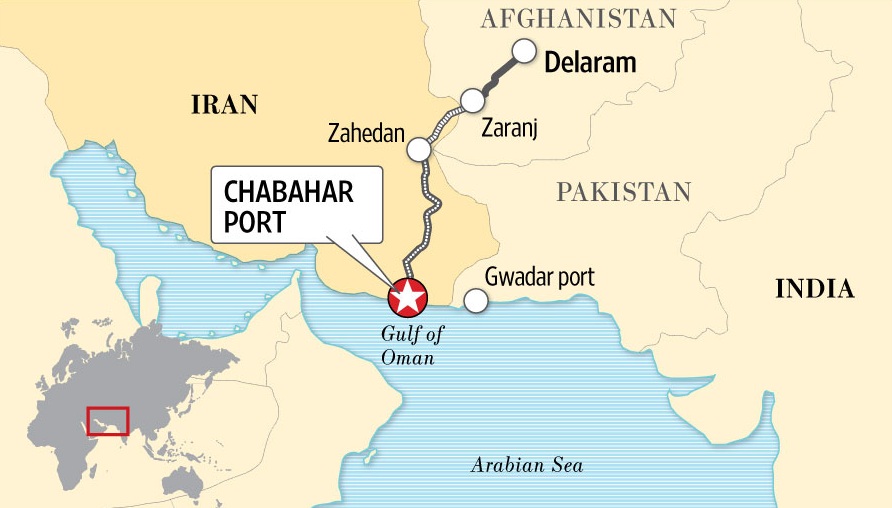
    • Location: Deep-water port in Sistan-Baluchistan province of Iran, on the Gulf of Oman at the mouth of the Strait of Hormuz.
    • Unique Feature: The only Iranian port with direct access to the Indian Ocean.
    • Distances: Kandla Port, Gujarat – 550 nautical miles, Mumbai – 786 nautical miles from Chabahar.
    • Structure: Comprises Shahid Beheshti and Shahid Kalantari terminals.
    • Connectivity Potential: Its proximity to Afghanistan, Pakistan, and India and position on the International North-South Transport Corridor (INSTC) gives it the ability to become a major commercial hub.
    • INSTC: A multi-modal route linking the Indian Ocean and Persian Gulf to the Caspian Sea via Iran, and onward to northern Europe via Russia.

    India’s Engagements for Chabahar Port:

    • Tripartite Agreement (2016): India, Iran, and Afghanistan agreed to develop the Shahid Beheshti terminal, marking India’s first foreign port project.
    • Infrastructure Goals: Develop the port and build a rail line to Zahedan, bypassing Pakistan to reach Afghanistan and Central Asia.
    • Recent Developments: In May 2024, India Ports Global Ltd (IPGL) signed a 10-year lease to operate Shahid Beheshti.
    • Commitments: India pledged $120 million in equipment and a $250 million credit line.
    • Operations: India supplied 6 harbour cranes; facilitated shipments of 2.5 million tonnes of wheat and 2,000 tonnes of pulses to Afghanistan.

    Implications of US Sanctions for India:

    • Economic Setback: Jeopardises India’s ₹200 crore investment and future projects.
    • Connectivity Loss: Cuts India’s only direct maritime gateway to Afghanistan, Central Asia, and INSTC.
    • Strategic Impact: Weakens India’s counter to China’s Gwadar Port in Pakistan under CPEC.
    • Diplomatic Strain: Risks tensions with Iran (strategic partner) and the United States (major trade partner).
    • Operational Challenges: Sanctions may deter shippers, insurers, and suppliers, slowing port activity.
    [UPSC 2017] What is the importance of developing Chabahar Port by India?

    Options: (a) India’s trade with African countries will enormously increase.

    (b) India’s relations with oil-producing Arab countries will be strengthened.

    (c) India will not depend on Pakistan for access to Afghanistan and Central Asia *

    (d) Pakistan will facilitate and protect the installation of a gas pipeline between Iraq and India