💥Mains Ready By December. Smash Mains & Smash PYQ Admissions Open

Subject: International Stories of Key Importance

  • In news: International Criminal Court (ICC) 

    Why in the News?

    The Trump administration sanctioned judges and prosecutors of the International Criminal Court (ICC) over arrest cases involving Israeli leaders and past probes into U.S. officials.

    About the International Criminal Court (ICC):

    • Established: 2002 under the Rome Statute (1998); headquartered at The Hague, Netherlands.
    • Nature: First permanent international court to try individuals for grave crimes.
    • Jurisdiction over 4 core crimes:
      1. Genocide
      2. Crimes against humanity
      3. War crimes
      4. Crime of aggression
    • Members: 124 States Parties
      • NON-members: India, China, USA, Russia, Israel, Ukraine
    • Structure:
      • Office of the Prosecutor – investigates and prosecutes cases.
      • 18 Judges – elected for 9 years.
      • Assembly of States Parties – governs ICC administration.
      • Trust Fund for Victims, Detention Centre
    • Languages: English, French, Arabic, Chinese, Russian, Spanish
    • Funding: Annual budget (2025) ~ €195 million (mostly from member states)

    Jurisdiction and Reach of an ICC Warrant:

    • Applicability:
      • Crimes by nationals of member states
      • Crimes committed on member state territory
      • UNSC referrals can extend jurisdiction to non-member states (e.g., Libya, Darfur)
    • Obligations on States:
      • Member states must execute arrest warrants and cooperate fully.
      • Non-compliance can be reported to Assembly of States Parties or UN Security Council (for UNSC referrals)
    • Challenges:
      • ICC lacks an independent enforcement mechanism
      • Non-members (e.g., US, Russia) are not bound to cooperate
      • Political and diplomatic constraints hinder the execution of warrants
    • Special Mechanisms: ICC established an Arrest Working Group (2016) to enhance warrant enforcement through better intelligence-sharing.
    [UPSC 2022] Which one of the following statements best reflects the issue with Senkaku Islands, sometimes mentioned in the news ?

    Options:

    (a) It is generally believed that they are artificial islands made by a country around South China Sea.

    (b) China and Japan engage in maritime disputes over these islands in East China Sea. *

    (c) A permanent American military base has been set up there to help Taiwan to increase its defence capabilities.

    (d) Though International Court of Justice declared them as no man’s land, some South-East Asian countries claim them.


  • Russia’s Sale of Alaska to US

    Why in the News?

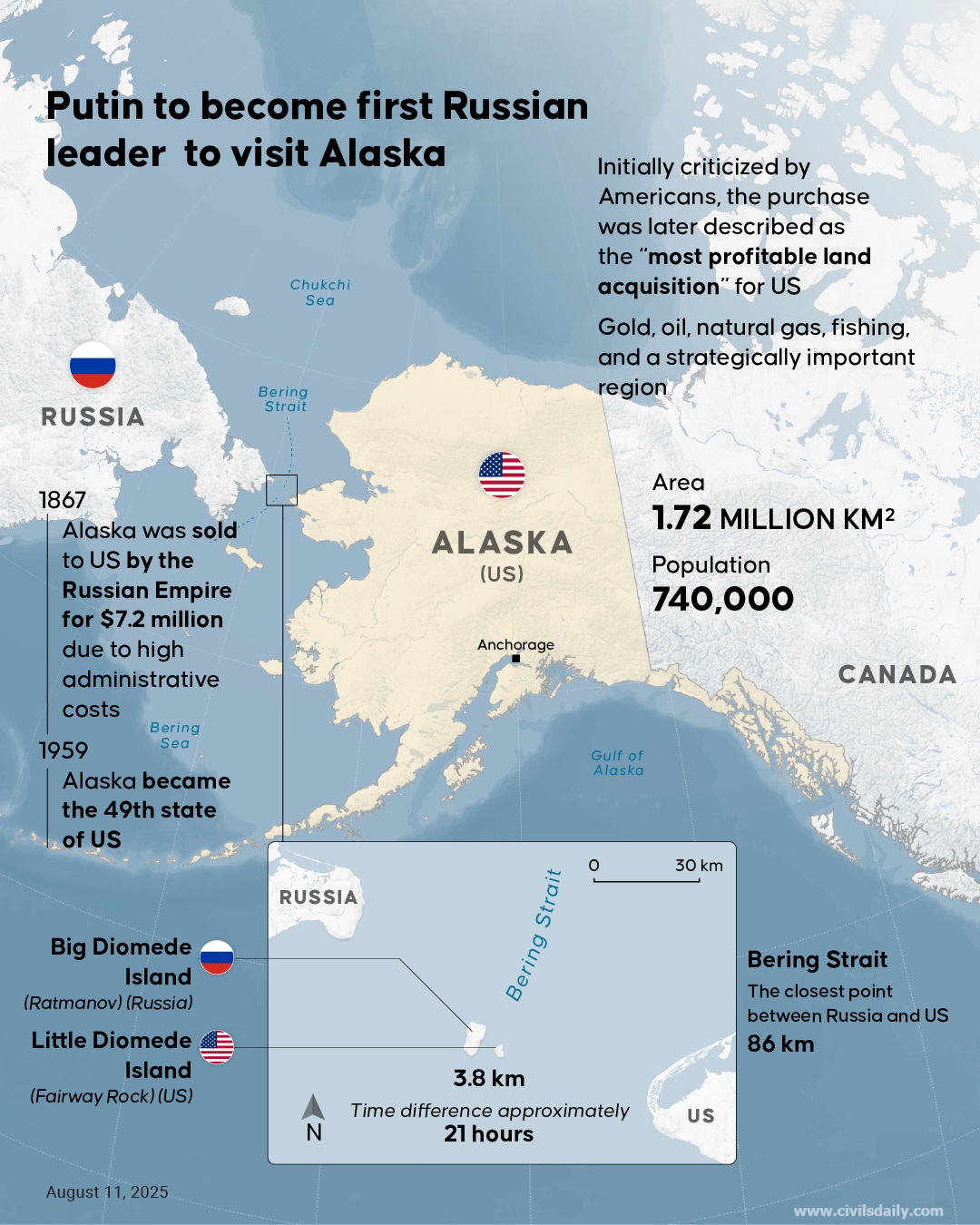
    United States President Donald Trump and his Russian counterpart Vladimir Putin are set to meet in Anchorage, Alaska to discuss how to end the war in Ukraine.

    Russia's Sale of Alaska to US

    About Alaska:

    • Acquisition: Largest U.S. state; Purchased from Russia in 1867 for $7.2 million.
    • Mountains: Includes Alaska Range with Mount Denali (20,310 ft), the highest peak in North America.
    • Geography: Brooks Range separates central Alaska from the Arctic far north.
    • Tundra: Northern regions feature vast tundra, permafrost, and Arctic coastal plains.
    • Glaciers: Hosts 100,000+ glaciers, including Bering Glacier, the largest in North America.
    • Forests: About 5% glacier ice, with extensive boreal and temperate rainforests in the south.
    • Volcanoes: More than 70 active volcanoes in Aleutians and Alaska Peninsula.
    • Seismic Activity: Located on the circum-Pacific seismic belt, prone to powerful quakes (e.g., 1964 Alaska earthquake).
    • Water Resources: Contains 3 million+ lakes and 3,000+ rivers, among the most water-rich regions globally.
    • Peninsulas: Includes Alaska Peninsula, Kenai Peninsula, and Seward Peninsula (linked to ancient Bering land bridge).

    Why did Russia sell Alaska to the US?

    • After the Crimean War (1853–56), Russia was financially strained and needed funds.
    • Alaska was seen as a remote, unprofitable liability with declining fur trade.
    • Russia feared Britain might seize Alaska easily from nearby Canada in a future war.
    • Selling it to the United States ensured goodwill and balanced British power.
    • The $7.2 million sale (1867) turned a weakly defended outpost into cash for reforms.

    Geopolitical Significance of Alaska:

    • Natural Resources: Rich in oil, gas (e.g., Prudhoe Bay discovery, 1968), fisheries, and minerals vital for U.S. energy security.
    • Shipping Routes: Offers access to Arctic Sea routes, increasingly navigable due to climate change.
    • Strategic Gateway: Provides access to the Arctic and Pacific, enhancing U.S. naval and air capabilities.
    • Defense Value: Proximity to Russia made it critical in the Cold War and remains vital in Arctic competition.
    • Military Presence: Hosts major U.S. bases and radar systems for missile defense and surveillance.
    • Arctic Council Role: Strengthens U.S. claims in polar governance and Arctic Council negotiations.
    • Scientific Hub: Serves as a center for climate, seismic, and polar ecosystem research.
    [UPSC 2025] Consider the following statements:

    I. Anadyr in Siberia and Nome in Alaska are a few kilometers from each other, but when people are waking up and getting set for breakfast in these cities, it would be different days.

    II. When it is Monday in Anadyr, it is Tuesday in Nome.

    Which of the statements given above is/are correct?

    (a) I only * (b) II only (c) Both I and II (d) Neither I nor II


  • Africa is challenging China’s mining hegemony

    For two decades, China has led Africa’s mining sector, securing vast stakes in cobalt, lithium, copper, and iron ore. Now, African governments and civil society are challenging opaque contracts, environmental damage, and lack of value addition. The old “raw resources for infrastructure” model is giving way to demands for local processing, transparency, and economic sovereignty.

    Significance

    For the first time in decades, China’s unchallenged hold on African mining is weakening. Nations like the DRC, Namibia, and Zimbabwe are renegotiating deals, banning raw mineral exports, and holding Chinese firms accountable for environmental and labour violations. The scale is significant, in 2024 alone, DRC lost $132 million due to tax exemptions for Chinese companies. These actions could reshape global cobalt and lithium supply chains essential for the green economy.

    China’s Long-standing Dominance in Africa’s Mining

    1. Control over critical minerals: DRC produces 80% of the world’s cobalt; China controls ~80% of that output via deals like Sicomines.
    2. Infrastructure-for-resources model: Chinese firms exchanged infrastructure for mining rights, but local benefits have been minimal.

    Drivers of the Pushback Against Chinese Projects

    1. Civil society pressure: Groups like Congo Is Not for Sale exposed $132 million revenue loss in 2024.
    2. Market-linked risks: Contracts tied to commodity prices risk leaving nations with no investment in downturns.
    3. Government renegotiations: DRC raising stake in joint venture with Sinohydro & China Railway Group from 32% to 70%.

    African Nations Taking Assertive Measures

    1. DRC: Cancelled Chemaf Resources’ sale to China’s Norin Mining after state miner Gecamines’ opposition.
    2. Namibia: Alleged $50 million bribe by Xinfeng Investments; failure to build promised processing facilities.
    3. Zimbabwe: $300 million Huayou Cobalt lithium plant; benefits may flow back to China without safeguards.

    Environmental and Social Concerns from Chinese Mining

    1. Pollution incidents: Acid spill in Zambia contaminated the Kafue River.
    2. Biodiversity protection: Hwange National Park coal permit blocked for ecological reasons.
    3. Community and heritage impacts: Cameroon’s Lobé-Kribi Iron Ore Project opposed by NGOs over health and cultural threats.

    Policy Shifts for Economic Sovereignty

    1. Export bans: Zimbabwe (2022) and Namibia (2023) banned unprocessed lithium exports to promote local beneficiation.
    2. Retention of value: Policy aims to strengthen domestic processing, but risk of elite capture remains without broader reforms.

    Conclusion

    China remains Africa’s largest mining partner, but African nations are increasingly asserting control through renegotiations, environmental enforcement, and value addition. If sustained, these actions could reposition Africa from a raw material supplier to an active player in global green economy supply chains.

    Value Addition

    China’s Role in Mining in Africa (2000–2024)

    Scale of Presence

    1. Largest external mining partner: Operates in over 15 African countries.
    2. Dominance in cobalt & lithium: Controls ~80% of DRC’s cobalt output; major stakes in lithium mines in Zimbabwe, Namibia.

    Investment Model

    1. Infrastructure-for-resources deals: e.g., Sicomines agreement in DRC (mining rights in exchange for roads, hospitals, railways).
    2. High-value acquisitions: Purchase of mining stakes from global and local firms to secure long-term supply chains.

    Strategic Objectives

    1. Securing supply for EV & battery industries: Critical minerals channelled to Chinese manufacturing hubs.
    2. Vertical integration: Ownership from extraction to processing facilities (mostly located in China).

    Criticism & Concerns

    1. Limited local benefits: Minimal skills transfer, inadequate job creation.
    2. Environmental damage: Incidents like Zambia’s Kafue River acid spill.
    3. Opaque contracts: Alleged bribery (Namibia) and lack of transparency in revenue flows.

    Shifts & Resistance

    1. Renegotiations and policy pushback: DRC increasing state stake in ventures; export bans in Zimbabwe and Namibia.
    2. Civil society pressure: Activist coalitions exposing revenue losses and demanding fairer contracts.

    Critical Minerals Geopolitics

    1. Strategic importance: Minerals like cobalt, lithium, and copper are essential for EV batteries, renewable energy storage, and electronics manufacturing.
    2. Global competition: Control over their supply chains influences technological dominance in the clean energy transition.
    3. China’s leverage: By securing ~80% of DRC’s cobalt and significant lithium reserves, China holds a strategic advantage over rivals such as the US, EU, and Japan.
    4. UPSC linkage – Relevant for GS II (International Relations) and GS III (Economy, Technology), particularly in questions on energy security and global trade politics.

    Resource Nationalism

    1. Definition: A policy stance where nations assert control over natural resources to maximise domestic benefit and reduce foreign dependency.
    2. African examples: Zimbabwe and Namibia banning export of unprocessed lithium; DRC renegotiating mining contracts to increase state ownership.
    3. Implications: Can boost domestic processing industries but may deter foreign investment if not paired with stable policy frameworks.

    Mapping Micro Themes

    GS Paper Theme/Topic Micro Theme Example
    GS Paper II International Relations South-South cooperation & friction China-Africa mining ties
    GS Paper II Governance Resource nationalism DRC renegotiation of Sicomines
    GS Paper III Environment Ecological threats from mining Hwange NP permit denial, Kafue River spill

    PYQ Relevance

    [UPSC 2021] “The USA is facing an existential threat in the form of China, that is much more challenging than the erstwhile Soviet Union.” Explain

    Linkage: While the question is US–China centric, Africa’s mining sector is a key arena of US–China competition. China’s dominance over Africa’s critical minerals gives it strategic leverage in global supply chains, posing long-term geopolitical and economic challenges to the US, a dimension comparable to Cold War-era resource and influence battles.

    Practice Mains Question

    Examine how Africa’s policy shift in mineral governance could alter global supply chains for critical minerals.
  • Gaza War Impact on IMEC

    Why in the News?

    India’s National Security Council Secretariat recently hosted envoys from the US, UAE, Saudi Arabia, France, Italy, Germany, Israel, Jordan, and the EU to review progress on the India–Middle East–Europe Economic Corridor (IMEC).

    Gaza War Impact on IMEC

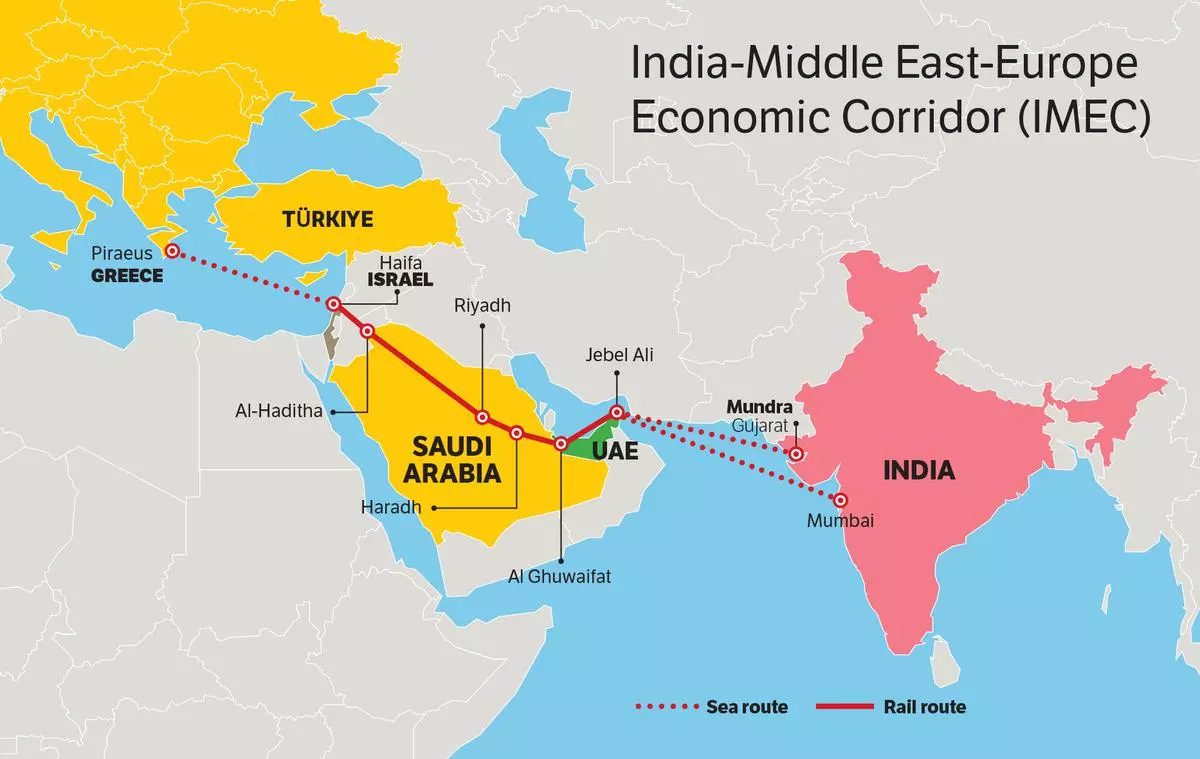
    About IMEC Project:

    • Part of the Partnership for Global Infrastructure and Investment (PGII) for developing connectivity in emerging regions.
    • MoU signed on 10 September 2023 at the G20 New Delhi Summit.
    • Members: India, US, UAE, Saudi Arabia, France, Germany, Italy, European Union.
    • Aim: Integrate Asia, Middle East, and Europe to boost transport efficiency, reduce costs, create jobs, cut greenhouse gas emissions, and strengthen economic unity.
    • Structure:
      • East Corridor: India to Arabian Gulf.
      • Northern Corridor: Gulf region to Europe.
    • Key Ports:
      • India – Mundra, Kandla, Jawaharlal Nehru Port (Mumbai).
      • Middle East – Fujairah, Jebel Ali, Abu Dhabi, Dammam, Ras Al Khair.
      • Israel – Haifa.
      • Europe – Piraeus, Messina, Marseille.
    • Infrastructure includes: Railway links, ship-to-rail hubs, roads, electricity cables, hydrogen pipelines, and high-speed data cables.

    Impact of Gaza War:

    • Derailed work: Conflict from late 2023 halted stakeholder meetings and derailed western leg (Middle East–Europe) progress.
    • Jordan–Israel relations at historic low; Saudi–Israel normalisation stalled.
    • Regional rivalries (e.g., Saudi–UAE trade competition) hinder unified operational planning.

    Significance:

    • Economic: EU is India’s largest trading partner; corridor promises faster, cheaper trade with reduced emissions.
    • Strategic: Strengthens India’s role in West Asia and positions it as a connector between Europe and the Middle East.
    • Energy & Technology: Potential for clean hydrogen pipelines, electricity and data cable links.
    • Resilience: Provides alternative to Red Sea shipping routes vulnerable to disruptions.
    [UPSC 2025] India is one of the founding members of the International North-South Transport Corridor (INSTC), a multimodal transportation corridor, which will connect:

    Options: (a) India to Central Asia to Europe via Iran* (b) India to Central Asia via China (c) India to South-East Asia through Bangladesh and Myanmar (d) India to Europe through Azerbaijan


  • Intermediate-Range Nuclear Forces (INF) Treaty

    Why in the News?

    Russia officially announced its exit from the 1987 Intermediate-Range Nuclear Forces (INF) Treaty, marking a pivotal moment in the dismantling of Cold War-era nuclear arms control architecture.

    What is the INF Treaty?

    • Signed In: 1987 by United States President Ronald Reagan and Soviet leader Mikhail Gorbachev.
    • Purpose: Banned ground-launched ballistic and cruise missiles with ranges between 500 and 5,500 kilometers.
    • Impact: Led to the elimination of 2,692 missiles by June 1, 1991.
    • Verification: Allowed on-site inspections, setting a benchmark for arms control agreements.
    • Scope: Covered both nuclear and conventional missile systems.
    • Significance: Became a key pillar of post-Cold War strategic stability.

    Why did Russia exit the Treaty?

    Implications:

    • Collapse of Arms Control: Removes a pillar of nuclear restraint.
    • Resurgence of Arms Race: Possible missile deployments in Europe & Asia-Pacific.
    • Regional Threats: NATO countries & East Asia more vulnerable.
    • Proliferation Risk: May embolden China, India, and others.
    [UPSC 2011] The “New START” treaty was in the news. What is this treaty?

    (a) It is a bilateral strategic nuclear arms reduction treaty between the USA and the Russian Federation.*

    (b) It is a multilateral energy security cooperation treaty among the members of the East Asia Summit.

    (c) It is a treaty between the Russian Federation and the European Union for energy security cooperation.

    (d) It is a multilateral cooperation treaty among the BRICS countries for the promotion of trade.


  • How does the World Bank classify countries by income?

    Why in the News?

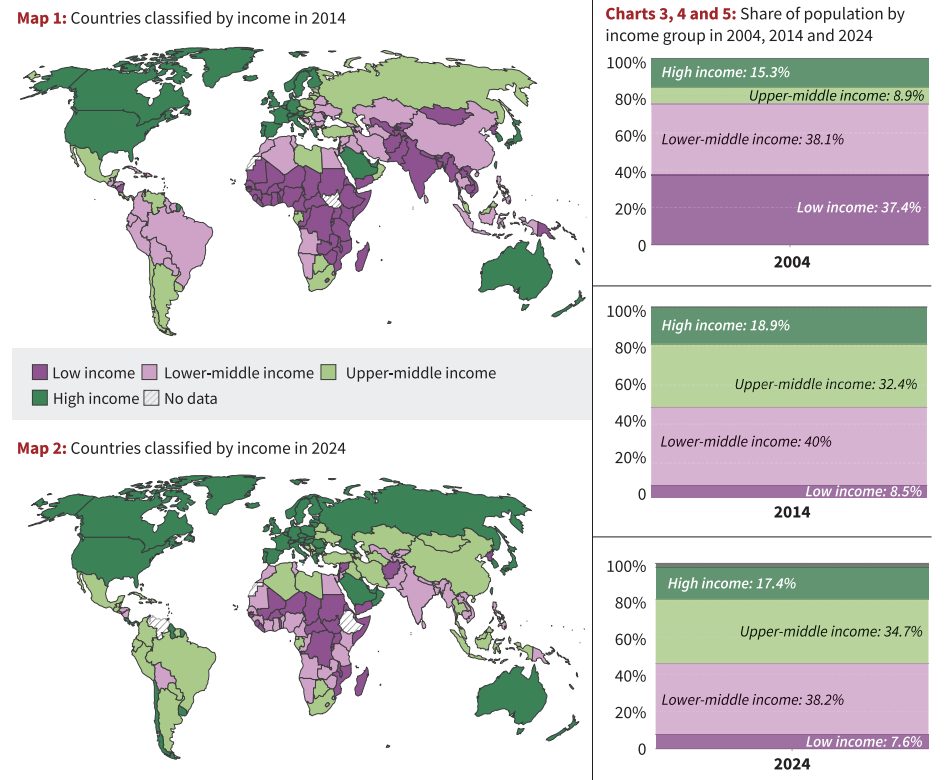
    Recently, the World Bank’s 2024 update to its income classification system revealed major shifts, with a sharp decline in low-income populations and a rise in upper-middle-income countries.

    Global Income Classification Trends (2004–2024): Key Shifts in Population Distribution: 

    • Global Shift Upwards: The share of the world population in low-income countries dropped from 37.4% in 2004 to 7.6% in 2024, showing significant poverty reduction.
    • Rise of Upper-Middle Group: The population in upper-middle-income countries rose from 8.9% in 2004 to 34.7% in 2024, indicating broad economic progress in many developing nations.
    • Lower-Middle Income Stability: The lower-middle-income group has remained relatively stable, around 38–40% of global population from 2004 to 2024.
    • High-Income Countries’ Share Fluctuated: The global population in high-income nations peaked at 18.9% in 2014, then slightly declined to 17.4% in 2024.
    • Country Reclassifications: Countries like India and Indonesia moved to higher income groups, while some African countries remained or slipped into low-income status.

    What is the World Bank’s income classification?

    • Four Income Groups: Countries are classified into low, lower-middle, upper-middle, and high-income based on their Gross National Income (GNI) per capita.
    • Annual Update: Classifications are updated yearly, adjusting for global inflation and changes in income.
    • Absolute Thresholds: Groupings are based on fixed income thresholds, not relative comparisons with other countries.
      • Low income: GNI per capita ≤ $1,135
      • Lower-middle income: $1,136 – $4,465
      • Upper-middle income: $4,466 – $13,845
      • High income: ≥ $13,846

    How is GNI per capita used in this system?

    • It measures the average income per person, including income from abroad.
    • GNI figures (reported in local currency) are converted to USD using exchange rates.
    • Countries are placed into groups using predetermined income thresholds.

    Why do countries shift between income groups?

    • Economic Growth or Decline: Strong GDP growth raises GNI per capita, moving countries to higher groups. Eg: India’s GNI per capita rose from $2,250 (2022) to $2,610 (2023), nearing upper-middle-income status.
    • Currency Exchange Fluctuations: A weaker local currency reduces GNI in USD terms. Eg: Egypt’s currency depreciation led its GNI per capita to fall from $3,890 (2022) to $3,240 (2023), reclassifying it from upper-middle to lower-middle-income.
    • Population Growth Rates: Fast population growth reduces GNI per capita even if total income rises. Eg: Nigeria’s large population growth kept its GNI per capita at $2,110 (2023), maintaining its lower-middle-income status.

    What are the challenges for India as a Lower-Middle-Income Country?

    • Limited Fiscal Space: India struggles to allocate sufficient funds for healthcare, education, and infrastructure. Eg: Public health spending remains around 2% of GDP, below the global average of 5–6%.
    • High Income Inequality: Rapid growth hasn’t translated into equitable wealth distribution. Eg: The top 10% in India hold nearly 77% of total national wealth (Oxfam, 2023).
    • Jobless Growth: Economic expansion hasn’t created enough formal sector jobs. Eg: Despite over 6% GDP growth, unemployment among youth remains high at around 45% (CMIE, 2023).

    What are the steps taken by the Indian government?

    • PM Gati Shakti Mission: Enhances infrastructure development for seamless connectivity and job creation.
    • National Education Policy (NEP) 2020: Aims to improve access, equity, and quality in education, especially in rural areas.
    • Ayushman Bharat Scheme: Provides free healthcare to over 50 crore people, addressing public health gaps.
    • Make in India & PLI Schemes: Promote domestic manufacturing and boost employment across key sectors.
    • Digital India & Skill India: Focuses on digital inclusion and vocational training to equip youth with employable skills.

    Way forward: 

    • Accelerate Inclusive Economic Growth: Focus on MSMEs, rural entrepreneurship, and labour-intensive sectors to boost incomes and job creation.
    • Invest in Human Capital: Enhance education quality, healthcare access, and nutritional outcomes, especially for the poor.
    • Strengthen Social Safety Nets: Expand direct benefit transfers (DBTs) and targeted subsidies to reduce vulnerability and inequality.
    • Promote Technological Innovation: Support startups, R&D, and digital infrastructure to drive productivity and global competitiveness.

    Mains PYQ:

    [UPSC 2013] The World Bank and the IMF, collectively known as the Bretton Woods Institutions, are the two inter-governmental pillars supporting the structure of the world’s economic and financial order. Superficially, the World Bank and the IMF exhibit many common characteristics, yet their role, functions and mandate are distinctly different. Elucidate.

    Linkage: This question directly asks about the World Bank’s role, functions, and mandate. A fundamental aspect of the World Bank’s function is its income classification system, which was initially designed to determine eligibility for loans, particularly concessional ones, based on a country’s average income.

  • Understanding Russia’s Taliban gauntlet

    Why in the News?

    On July 3, 2025, Russia officially recognised the Islamic Emirate of Afghanistan (IEA), becoming one of the first major powers to do so since the Taliban’s return to power in 2021. This move follows the accreditation of the Taliban’s ambassador to Moscow, and marks a major shift in Russia’s Afghanistan policy, which had previously labelled the Taliban as a terrorist organisation.

    Why did Russia recognise the Taliban regime now?

    • Acknowledging Ground Reality: Russia views the Taliban as the de facto rulers of Afghanistan with control over territory and administration. Eg: Since 2021, the Taliban have exercised uninterrupted control over Kabul and provinces, making them the sole authority maintaining internal order.
    • Counterterrorism Cooperation: Russia sees the Taliban as a potential partner in counterterrorism, especially against Islamic State-Khorasan (IS-K), which threatens regional and Russian security. Eg: After the Moscow concert hall attack (March 2024) attributed to IS-K, Russia enhanced backchannel security coordination with the Taliban.
    • Maintaining Strategic Influence in the Region: By recognising the Taliban, Russia aims to safeguard its geopolitical influence in Central and South Asia, countering Western absence and Chinese rise. Eg: Russia’s engagement through the Moscow Format strengthens its regional leadership in Afghan dialogue.
    • Preceding Legal and Diplomatic Softening: In April 2025, Russia’s Supreme Court suspended the 2003 ban on Taliban activity, allowing legal recognition without full delisting. Eg: The suspension of the terrorist tag created a diplomatic opening for formal recognition.

    What are the regional implications of Russia’s move?

    • Shift in Regional Power Dynamics: Russia’s recognition challenges the Western-led isolation of the Taliban and may encourage other regional powers to formalise ties. Eg: Countries like Iran and China, already engaged economically with the Taliban, may now consider official recognition, altering the diplomatic status quo.
    • Boost to Taliban’s Legitimacy and Regional Acceptance: Recognition provides the Taliban diplomatic credibility, enabling greater participation in regional forums and access to aid or investment. Eg: The Taliban may now join regional security formats like the Shanghai Cooperation Organisation (SCO) observer sessions more freely.
    • Enhanced Security Cooperation Against Terrorism: Russia may now collaborate more openly with the Taliban to counter threats like IS-K, stabilising parts of Central Asia. Eg: Joint discussions on border security with Tajikistan and Uzbekistan may increase, helping curb militant infiltration.

    How has Russia’s Taliban policy evolved since 1996?

    • Rejection and Hostility (1996–2001): Russia declared the Taliban a terrorist organisation, opposing its rise in Afghanistan due to fears of Islamist extremism spreading to Chechnya and Central Asia.
    • Cautious Engagement (2001–2021): While still labelling the Taliban a terrorist group, Russia began unofficial contacts to safeguard regional interests and hosted intra-Afghan peace talks in Moscow.
    • Strategic Recognition (Post-2021): Following the U.S. withdrawal and Taliban takeover, Russia shifted to a realpolitik approach, officially recognising the Taliban in 2024 to secure influence, counter the West, and stabilise its southern flank.

    What does this recognition mean for India and China?

    • India – Strategic Marginalisation: Russia’s recognition may reduce India’s diplomatic influence in Afghanistan, where it has supported a democratic and inclusive political setup. Eg: India’s $3 billion investments in Afghan infrastructure (like the Afghan Parliament building) may lose strategic value amid a Taliban-dominated regime backed by regional powers.
    • China – Regional Leverage: It boosts China’s ability to engage the Taliban diplomatically and economically, securing interests in security (Xinjiang) and resource extraction. Eg: China has initiated talks on expanding the Belt and Road Initiative (BRI) into Afghanistan and invested in Mes Aynak copper mines, which may progress with Russian support.

    How should India engage with the Taliban post-recognition? (Way forward) 

    • Pragmatic Diplomatic Channels: India should maintain non-recognition-based engagement through back-channel talks and functional diplomacy to protect its strategic and security interests, especially in areas like counter-terrorism and regional connectivity.
    • Conditional Development Cooperation: India can offer developmental aid and economic projects in health, education, and infrastructure, conditioned on Taliban commitments to human rights and non-support for cross-border terrorism.

    Mains PYQ:

    [UPSC 2024] Critically analyse India’s evolving diplomatic, economic and strategic relations with the Central Asian Republics (CARs) highlighting their increasing significance in regional and global geopolitics.

    Linkage: The article explicitly states that Russia’s decision to officially recognize the Islamic Emirate of Afghanistan (IEA) government sets a “precedent” and that “some Central Asian states and even China may well follow suit”. This direct link indicates that Russia’s strategic shift regarding the Taliban significantly impacts the diplomatic, economic, and strategic relations of CARs, making understanding this “gauntlet” crucial for analyzing regional and global geopolitics.

  • India ranks 77th in Henley Passport Index, 2025

    Why in the News?

    India has improved its global mobility ranking, moving up eight places to 77th in the Henley Passport Index 2025, up from 85th in 2024.

    About Henley Passport Index, 2025

    • Overview: A global ranking of passports based on the number of destinations accessible without a prior visa.
    • Compiled by: Published by Henley & Partners using data from the International Air Transport Association (IATA).
    • Coverage: Includes 227 travel destinations and is updated quarterly.
    • Purpose: Reflects changes in global mobility, international relations, and travel freedoms.

    Global Scenario (2025 Rankings):

    • 1st Rank: Singapore – Visa-free access to 193 destinations.
    • 2nd Rank: Japan and South Korea – Access to 190 destinations.
    • 3rd Rank (tie): Germany, France, Italy, Spain, Finland, Denmark, Ireland – Access to 189 destinations.
    • United States: Fell to 10th rank – Access to 182 destinations.
    • Overall Trend:
      • Asian and European passports dominate top positions.
      • Countries with restrictive or unstable foreign policies rank lower.

    India’s Achievements:

    • 2025 Rank: 77th, up from 85th in 2024 – an 8-place improvement.
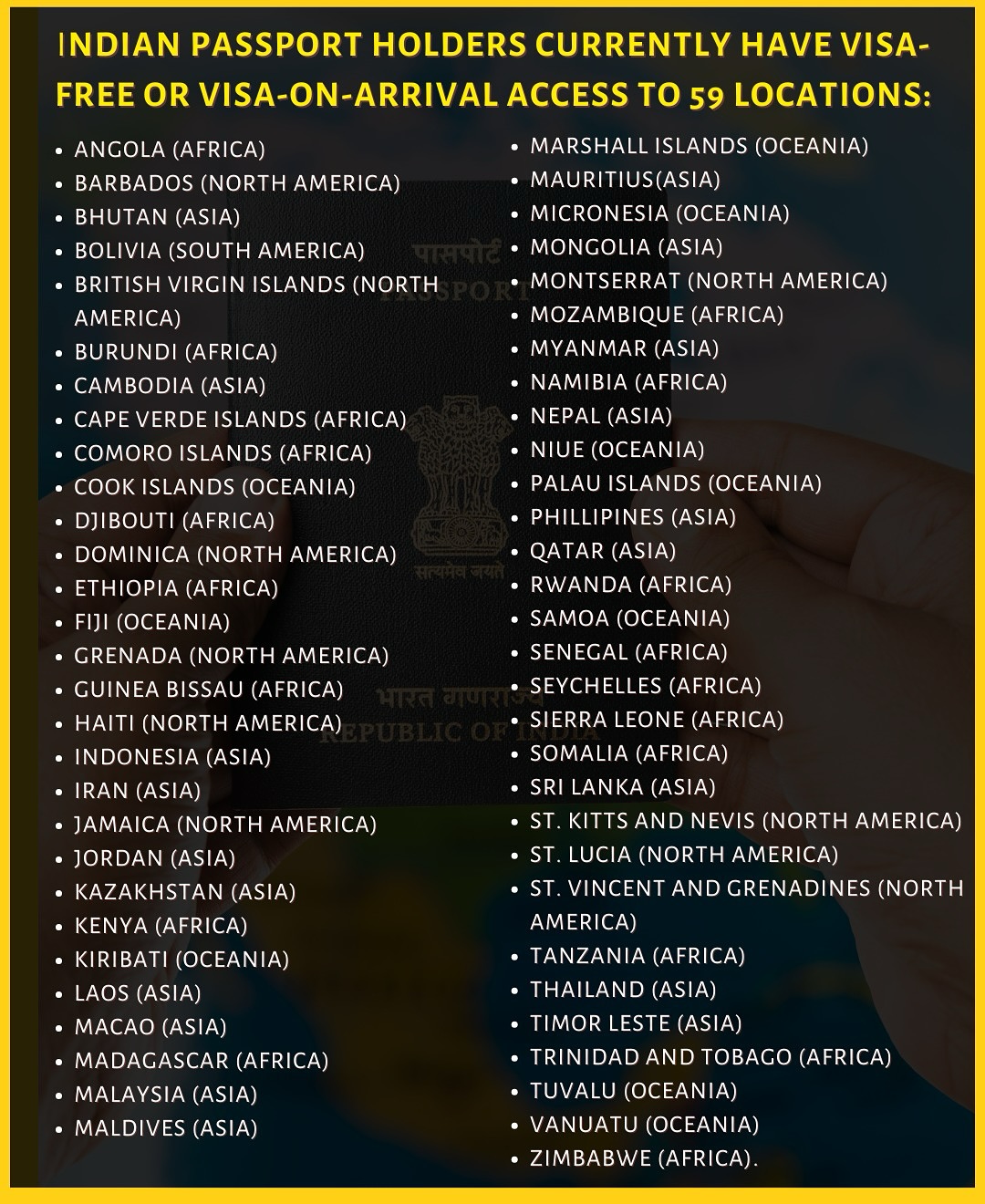
    • Access Level: Indian passport holders have visa-free or visa-on-arrival access to 59 countries.
    • New Additions: Philippines, Sri Lanka.
    • Context:
      • Despite gaining access to only two new countries, India’s rank rose significantly due to global reshuffling.
      • This marks a recovery from a 5-place drop in 2024, indicating improved travel diplomacy.

    India ranks 77th in Henley Passport Index, 2025

    [UPSC 2011] In terms of economy, the visit by foreign nationals to witness the XIX Commonwealth Games in India amounted to-

    Options: (a) Export (b) Import (c) Production (d) Consumption


  • US withdraws from UNESCO

    Why in the News?

    The United States has withdrawn from the UNESCO (United Nations Educational, Scientific and Cultural Organization) for the third time citing its “anti-Israel bias”.

    About UNESCO:

    • Established: 1945, after World War II
    • Headquarters: Paris, France
    • Parent Body: United Nations Economic and Social Council (ECOSOC)
    • Membership: 194 member states and 12 associate members; India is a member since 1946.
    • Mission: Promotes peace, poverty eradication, sustainable development, and cultural diversity through global cooperation

    Key Functions:

    • Core Areas of Work:
      • Education: Ensures inclusive and quality learning for all
      • Natural Sciences: Fosters international scientific collaboration
      • Social and Human Sciences: Promotes ethics, social justice, and human rights
      • Culture: Preserves heritage and promotes creative diversity
      • Communication & Information: Defends freedom of expression and universal access to knowledge
    • Functions:
      • Serves as a platform for idea-sharing and research
      • Facilitates cooperation among governments, academia, and civil society
      • Offers technical support and policy guidance
      • Maintains World Heritage Site listings
      • Frames global conventions and recommendations

    Key Initiatives and Contributions:

    • World Heritage Program: Protects sites of cultural and natural value
    • Major Conventions:
      • Convention on Cultural and Natural Heritage
      • Convention on Intangible Cultural Heritage
      • Convention on Cultural Diversity
      • Convention against Discrimination in Education
    • Flagship Reports:
      • Global Education Monitoring Report
      • United Nations World Water Development Report
      • World Trends in Freedom of Expression and Media Development
    • UNESCO and Sustainable Development Goals: Supports SDGs with focus on education, gender equality, environment, and peace
    [UPSC 2023] Consider the following properties included in the World Heritage List released by UNESCO:

    1. Shantiniketan 2. Rani-ki-Vav 3. Sacred Ensembles of the Hoysalas 4. Mahabodhi Temple Complex at Bodhgaya

    How many of the above properties were included in 2023?

    Options: (a) Only one (b) Only two* (c) Only three (d) All four


  • In news: International Seabed Authority (ISA) 

    Why in the News?

    Despite growing global pressure, the International Seabed Authority (ISA) has yet to finalize regulations for deep sea mining.

    Deadlock Over Deep Sea Mining Rules:

    • ISA’s 36-member executive council concluded a line-by-line reading of the draft “mining code” containing 107 regulations.
    • These regulations govern mining for cobalt, nickel, and manganese in international waters.
    • Key concerns remain unresolved, especially around environmental protection mechanisms.
    • Chile and 36 other countries demand a moratorium until scientific assessments confirm minimal harm to marine ecosystems.
    • Also, the US is not a member of the ISA or party to UNCLOS.

    About International Seabed Authority (ISA):

    • Establishment: Formed under the United Nations Convention on the Law of the Sea (1982) and the 1994 Agreement relating to Part XI of the Convention.
    • Headquarters: Located in Kingston, Jamaica.
    • Membership: Comprises 168 member states including India and the European Union.
    • Jurisdiction: Governs “The Area” — the seabed and ocean floor beyond national boundaries, covering around 54% of global oceans.
    • Guiding Principle: Operates on the principle that deep-sea resources are the common heritage of humankind.

    Key Functions:

    • Regulation of Mineral Activities
      • Licensing: Grants licenses for exploration of seabed mineral resources.
      • Transition Oversight: Manages the shift from exploration to commercial exploitation.
    • Mining Code Development: Maintains the Mining Code—rules for environmental impact, royalties, benefit sharing, and technology transfer.
    • Environmental Protection
      • Standards: Sets and enforces environmental norms for seabed activities.
      • Risk Management: Applies precautionary principles to minimize ecological harm.
    • Oversight and Compliance
      • Monitoring: Oversees contractors and states for legal and environmental adherence.
      • Enforcement: Investigates violations and recommends corrective action.

    India’s Engagement with the International Seabed Authority:

    • Active Participation: India contributes to rule-making and sustainable seabed governance.
    • Existing Contracts:
      • Polymetallic nodules in the Central Indian Ocean Basin.
      • Polymetallic sulphides in the Central Indian Ridge.
    • New Applications (2024):
      • Polymetallic sulphides in the Carlsberg Ridge.
      • Cobalt-rich crusts in the Afanasy-Nikitin Seamount.
    • Mining Code Engagement: Participates in drafting and negotiating legal standards.
    • Equity and Protection: Supports fair benefit-sharing and strong environmental safeguards.
    [UPSC 2021] Consider the following statements:
    1. The Global Ocean Commission grants licences for seabed exploration and mining in international waters.
    2. India has received licences for seabed mineral exploration in international waters
    3. ‘Rare earth minerals’ are present on the seafloor in international waters.
    Which of the statements given above are correct?
    (a) 1 and 2 only (b) 2 and 3 only* (c) 1 and 3 only (d) 1, 2 and 3