UNGA committee approved a resolution to initiate negotiations for the first-ever treaty to prevent and punish crimes against humanity after Russia withdrew potentially obstructive amendments.
What are the present laws governing the conflict?
The 1949 Geneva Conventions provide the foundational legal framework for humanitarian protection during armed conflicts. These treaties outline the responsibilities of states to protect civilians and ensure humane treatment for non-combatants.
While the International Criminal Court (ICC) addresses war crimes and genocide, there is currently no specific treaty that comprehensively covers crimes against humanity. The ICC recognizes crimes against humanity as acts committed as part of a widespread or systematic attack against civilians, which include offenses such as murder, torture, and sexual violence.
The ICC operates as a court of last resort, intervening only when national courts are unable or unwilling to prosecute these crimes
Why there is a need for a treaty dealing with the Crimes Against Humanity Treaty?
Legal Gaps: Existing international treaties cover war crimes and genocide but do not specifically address crimes against humanity. This lack creates a legal void that allows perpetrators to evade accountability for serious offenses committed against civilian populations.
Increasing Incidence of Crimes: There has been a notable rise in crimes against humanity globally, with reports of such offenses in countries like Ethiopia, Sudan, Ukraine, and Myanmar. A dedicated treaty would facilitate international cooperation in prosecuting these crimes and provide a framework for justice.
Strengthening International Law: A new treaty would reinforce the international justice framework by imposing obligations on states to prevent and punish these crimes, thereby enhancing global standards for human rights protection.
What would be the step towards a Crimes Against Humanity Treaty?
Preparatory Sessions: Scheduled for 2026 and 2027, these sessions will prepare the groundwork for formal discussions on the treaty.
Formal Negotiating Sessions: Three-week sessions are planned for 2028 and 2029 to finalize the treaty’s text.
Broad International Support: The initiative is backed by Mexico, Gambia, and 96 other countries, indicating a strong international commitment to addressing these serious human rights violations
Way forward:
Adopt a Survivor-Centric and Inclusive Approach: Ensure the treaty prioritizes the rights of victims, incorporates survivor input, and mandates comprehensive support mechanisms while maintaining a robust, enforceable legal framework.
Strengthen Global Collaboration: Mobilize international cooperation, with developed nations providing financial and technical assistance, to build national capacities for prosecuting crimes against humanity and preventing impunity.
Mains PYQ:
Q At the international level, the bilateral relations between most nations are governed on the policy of promoting one’s own national interest without any regard for the interest of other nations. This leads to conflicts and tensions between the nations. How can ethical consideration help resolve such tensions? Discuss with specific examples. (UPSC IAS/2015)
The Chancay Port was inaugurated in Peru by Chinese President Xi Jinping.
About Chancay Port Project:
The Chancay Port Project was inaugurated in Peru as part of a new land-sea corridor linking China with Latin America.
It is funded underBelt and Road Initiative (BRI), with a total cost of $3.6 billion.
The port can accommodate vessels up to 18,000 TEUs (twenty-foot equivalent unit), the largest shipping vessels in the world.
Ownership: 60% of the port is owned by China Ocean Shipping (Group) Company (COSCO), with the remaining stake held by a local company.
It is expected to generate $4.5 billion annually for Peru, equivalent to 1.8% of the country’s GDP.
Key Exports: The port will handle exports like copper, blueberries, soybeans, and lithium from the lithium triangle (Bolivia, Chile, and Argentina).
Geo-strategic Location:
Proximity to Lima: Located 78 km north of Lima, Peru’s capital, in the small fishing town of Chancay.
Natural Deep-Water Port: Chancay is a natural deep-water port, ideal for accommodating large vessels.
Trade Gateway: Positioned strategically to facilitate trade between South America and Asia, reducing transit time for goods between the two continents.
Alternative to North America: It eliminates the need for Latin American exports to transit through ports in North America, offering a more direct route to Asia.
Why it is a concern for USA?
Chinese Influence in Latin America: The US has traditionally viewed Latin America as its sphere of influence. The Chancay Port increases China’s economic and geopolitical presence in the region.
Strategic Gateway for China: The port strengthens China’s access to critical resources in South America, including lithium and copper, raising concerns about China’s growing dominance in the region.
US Trade Routes Disruption: The port reduces transportation time between Latin America and Asia, which could disrupt existing US trade routes and diminish its role as a trade facilitator.
PYQ:
[2017] What is the importance of developing Chabahar Port by India?
(a) India’s trade with African countries will enormously increase.
(b) India’s relations with oil-producing Arab countries will be strengthened.
(c) India will not depend on Pakistan for access to Afghanistan and Central Asia.
(d) Pakistan will facilitate and protect the installation of a gas pipeline between Iraq and India.
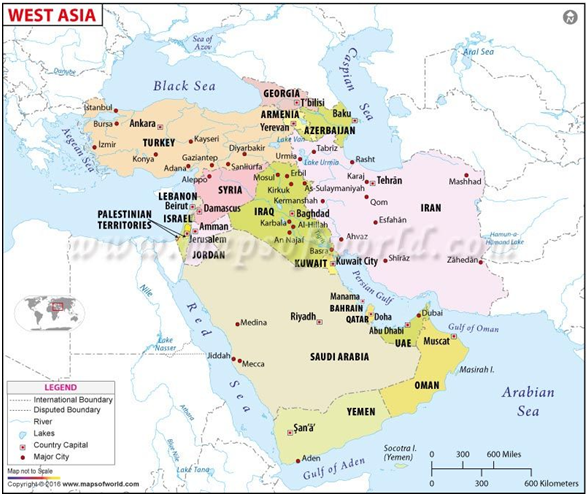
Saudi Arabia recently hosted a summit of Arab and Islamic leaders, urging an immediate halt to Israel’s military actions in Gaza and Lebanon while addressing the broader Palestine issue.
What were the key outcomes of the Riyadh summit on the Gaza conflict?
Condemnation of Israeli Actions: The leaders from Arab and Islamic countries condemned the Israeli military’s actions in Gaza, describing them as “shocking and horrific crimes,” including accusations of genocide and ethnic cleansing.
Call for Investigation: They demanded the establishment of an “independent, credible” international committee to investigate these alleged crimes committed by Israel.
Support for Palestinian Statehood: The summit urged for measures to end the Israeli occupation and called for the establishment of an independent Palestinian state based on the borders prior to June 4, 1967, with East Jerusalem (Al-Quds) as its capital, aligning with the two-state solution and the Arab Peace Initiative of 2002.
How does the summit reflect changing dynamics in regional politics?
Shift from Normalization: The summit reflects a significant shift in regional politics where Arab nations, which had previously moved towards normalising relations with Israel (as seen in the Abraham Accords), are now re-emphasizing the importance of addressing the Palestinian issue as a prerequisite for peace.
Collective Arab Stance: The gathering showcased a united front among Arab leaders in response to Israel’s actions, indicating a collective anger and a strategic pivot back towards supporting Palestinian rights rather than sidelining them for diplomatic ties with Israel.
Impact on Saudi-Israel Relations: Saudi Crown Prince Mohammed bin Salman’s strong condemnation of Israel’s actions signals a deterioration in potential normalization talks with Israel, as any future agreements are now explicitly linked to resolving the Palestinian question.
What is the possibility of the Arab World Joining the war?
Unlikelihood of Military Action: Despite heightened tensions and strong rhetoric, it is highly unlikely that any Arab nation will engage militarily against Israel. Historical precedents show that while Arab states have condemned Israeli actions, they have refrained from direct military confrontation since 1973.
Focus on Diplomatic Solutions: The current sentiment among Arab nations leans towards seeking diplomatic resolutions rather than military involvement, especially given their previous moves towards normalizing relations with Israel.
Strategic Realignment: The recent developments suggest a subtle realignment in West Asia’s strategic landscape, where Arab states may prioritize internal stability and regional cooperation over direct military engagement, even as they express solidarity with Palestine.
What can India do to resolve the Gaza conflict?
Mediation and Dialogue Facilitation: India can leverage its strong relationships with both Arab countries and Israel to act as a neutral mediator, facilitating dialogue and promoting peaceful negotiations between the conflicting parties.
Support for International Initiatives: India can advocate for a renewed focus on the two-state solution within international forums like the UN, aligning with global efforts to establish a sustainable, independent Palestinian state alongside Israel.
Way forward:
Strengthen Diplomatic Efforts: Arab nations should focus on reinforcing diplomatic pressure on Israel and the international community to address the Palestinian issue, promoting dialogue and supporting peaceful resolutions.
Support Palestinian Unity: Arab countries should work towards fostering unity within Palestinian leadership to present a coherent political front and advance their cause for statehood in international forums.
Mains PYQ:
Q How will the I2U2 (India, Israel, UAE and USA) grouping transform India’s position in global politics? (UPSC IAS/2022)
PYQ Relevance: Q) Indian and USA are two large democracies. Examine the basic tenets on which the two political systems are based. (UPSC CSE 2018)
Mentor’s Comment: UPSC has always focused on major countries like the USA (2018), Russia, and China (2024) as well as minor regions like ‘the Malay Peninsula’ (2017) whenever there are major political or economical shifts at the regional/global level.
India ranks 108th on the Electoral Democracy Index2023, a decline from its previous position of 100th in 2022. Similarly, the USA ranks 36th and is also facing significant challenges concerningDemocratic integrity.
What is the cause of declining Democracy? And how does it affect Worldwide?
Today’s editorial focuses on observations from the 2024 elections that reflect broader trends in global politics — both in the West and the East. This editorial can be used as an example whenever we need to give our analysis on ‘Democratic institutions/strategies and their global impacts’.
_
Let’s learn!
Why in the News?
The 2024 election results, particularly in the United States and India, signify a shift in political dynamics that have left political analysts and voters worldwide alike in a state of astonishment.
How does Donald Trump’s rise to prominence highlight a ‘Democratic Flaw’?
Erosion of Democratic Norms: There is some evidence of systematically undermining trust in electoral processes, and promoting conspiracy theories about voter fraud.
His potential return to power raises concerns about authoritarianism and the erosion of checks and balances, threatening democratic governance.
Populism and Nationalism: Trump’s appeal to populism capitalizes on economic discontent and cultural anxieties, often at the expense of inclusivity.
His messaging resonates with voters feeling marginalized by globalization, reinforcing societal divisions.
Demographic Shifts: For the first time in decades, the proportion of white voters increased significantly, favoring Trump. His campaign resonated particularly well with white voters without a college degree, who overwhelmingly identified with the Republican Party.
Voter Turnout: Trump’s support surged among male voters, while Kamala Harris struggled to replicate Joe Biden’s previous performance among women voters, particularly non-college-educated white women.
What are the challenges faced by the world democracies due to the Authoritarian rise?
Erosion of Democratic Norms: Democratic institutions are increasingly being undermined by leaders who exploit their power to consolidate control.
For example, Hungary has transformed from a democratic success story into a state with diminishing civil liberties and media freedoms, becoming a model for authoritarian governance within the EU.
Political Polarization: The political landscape in countries like the United States has become highly polarized, with populist leaders like Donald Trump questioning the legitimacy of elections and undermining trust in democratic processes.
This polarization makes it easier for authoritarian figures to gain support by appealing to nationalist sentiments.
Disillusionment with Political Institutions: Many citizens are losing faith in traditional political parties and institutions, leading to increased support for authoritarian leaders who promise quick solutions.
For example, this trend is evident in India too, where Political Parties have faced accusations of using anti-terrorism laws to suppress dissent and silence opposition.
Manipulation of Electoral Processes: Authoritarian regimes often manipulate electoral systems to maintain power. In the U.S., numerous bills aimed at voter suppression have emerged since the 2020 election, reflecting a broader trend of undermining electoral integrity.
External Influences: Countries like China and Russia actively promote authoritarian values globally, influencing political dynamics like cyber attacks and disinformation campaigns aimed at destabilizing democratic institutions in other nations.
How to address these challenges?
Strengthening Democratic Institutions: Ensure Free and Fair elections by reinforcing electoral commissions and implementing transparent voting processes. Organizations like the UNDP can help enhance electoral systems and promote inclusive participation
Invest in the development of Parliaments to ensure they represent diverse interests and maintain checks and balances on executive power.
Strengthening Media Literacy: Implement comprehensive media literacy programs in schools and communities to equip citizens with critical thinking skills. This empowers individuals to identify and resist disinformation.
Supporting Independent Journalism: Governments can provide financial support or incentives for independent media outlets to ensure diverse and reliable information.
Enhancing Transparency and Accountability: Regulate Social Media Platforms: Governments should establish clear platforms to disclose their policies on disinformation and hold them accountable for their role in spreading false information. Self-regulation alone has proven insufficient.
China reasserted its claim over Flashpoint Reef (the Scarborough Shoal) in the South China Sea following Philippines’ establishment of defined sea boundaries.
Do you know?
Fiery Cross Reef is a rock located in the Spratly Islands. China first took possession of the feature in 1988.
Mischief Reef is a Low-Tide Elevation (LTE) within the Philippines’ EEZ. It is part of the submerged continental shelf of the adjacent coastal state, which is the Philippines.
About the Flashpoint Reef
It generally refers to Scarborough Shoal, a contested reef in the South China Sea.
Known as Huangyan Dao in China, this reef has become a focal point of territorial disputes between China and the Philippines.
It lies close to the Philippines’ Exclusive Economic Zone (EEZ) but is also claimed by China, which asserts control over nearly the entire South China Sea under its nine-dash line claim.
China took control of the shoal in 2012 after a standoff with the Philippines, despite an international tribunal ruling in 2016 that invalidated China’s claims.
Its significance in the South China Sea
It is strategically located near key shipping lanes that are essential for global trade, with about one-third of global shipping passing through the South China Sea.
Its proximity to the Philippines, Vietnam, and China makes it an ideal location for military outposts, providing control over surrounding waters and a base for monitoring activities in the region.
Control over Scarborough Shoal could allow China to extend its air and naval reach, reinforcing its influence and deterrence capabilities over other Southeast Asian nations.
The South China Sea, including Scarborough Shoal, is believed to hold vast reserves of oil and natural gas—up to 11 billion barrels of oil and 190 trillion cubic feet of natural gas.
This reef is strategically important due to its proximity to rich fishing grounds and potential undersea mineral resources.
PYQ:
[2011] Southeast Asia has captivated the attention of global community over space and time as a geostrategically significant region. Which among the following is the most convincing explanation for this global perspective?
(a) It was the hot theatre during the Second World War
(b) Its location between the Asian powers of China and India
(c) It was the arena of superpower confrontation during the Cold War period
(d) Its location between the Pacific and Indian oceans and its preeminent maritime character
Philippine forces conducted combat exercises in the South China Sea to practice retaking the Loaita Island in the disputed waters.
About Loaita Island:
Loaita Island, also known as Kota Island, has an area of 6.45 hectares and is the 10th largest of the naturally-occurring Spratly Islands.
The island is administered by the Philippines as part of Kalayaan, Palawan, and is also claimed by China, Taiwan, and Vietnam.
Loaita Island fringes the Loaita Bank, which includes shoals and reefs, and its western side features calcarenite outcrops visible at low tide.
The island is covered with mangrove bushes, coconut palms, and other small trees.
On May 22, 1963, a sovereignty stele was rebuilt on Loaita Island by South Vietnam, marking its claim.
The Philippines has stationed soldiers on the island since 1968, and the island contains minimal structures serving as shelters for the soldiers.
China also reasserted its claim over Flashpoint Reef (the Scarborough Shoal) in the South China Sea following Philippines’ establishment of defined sea boundaries.
About the Flashpoint Reef
Flashpoint Reef generally refers to Scarborough Shoal (part of the
Spratly Islands), a contested reef in the South China Sea.
Known as Huangyan Dao in China, this reef has become a focal point of territorial disputes between China and the Philippines.
Flashpoint Reef lies close to the Philippines’ Exclusive Economic Zone (EEZ); which asserts control over the entire South China Sea under its nine-dash line claim.
China took control of the shoal in 2012 after a standoff with the Philippines, despite an international tribunal ruling in 2016 that invalidated China’s claims.
Do you know?
Fiery Cross Reef is a rock located in the Spratly Islands. China first took possession of the feature in 1988.
Mischief Reef is a Low-Tide Elevation (LTE) within the Philippines’ EEZ. It is part of the submerged continental shelf of the adjacent coastal state, which is the Philippines.
PYQ:
[2018] Consider the following pairs:
Regions sometimes Country mentioned in news
Catalonia — Spain
Crimea — Hungary
Mindanao — Philippines
Oromia — Nigeria
Which of the pairs given above are correctly matched?
According to a joint report by the UN and the Intergovernmental Authority on Development (IGAD), at least 65 million people are food insecure in the Horn of Africa.
Food Insecurity in Horn of Africa Region:
Of the 65 million affected, 36 million reside in IGAD member states: Djibouti, Eritrea, Ethiopia, Kenya, Somalia, South Sudan, Sudan, and Uganda.
Main Causes:
Extreme weather and climate change are primary drivers of food insecurity, leading to severe conditions.
Conflict has also destroyed infrastructure and sources of food and income, worsening the situation.
About theHorn of Africa:
Details
Location
A peninsula in northeastern Africa, extending into the Arabian Sea.
Geographical Composition
Comprises the countries of Djibouti, Eritrea, Ethiopia, and Somalia.
Population
Approximately 115 million people.
Area
Covers about 2 million square kilometers.
Geographical Features
Includes mountains, plateaus, deserts, and coastlines. Significant areas include the Ethiopian Plateau, Ogaden Desert, and Eritrean and Somalian coasts.
Historical Name
Known as Bilad al Barbar or Berber Land in ancient times.
Significance
Known for diverse landscapes and unique biodiversity.
Strategic importance due to proximity to oil-producing regions in the Middle East.
Key Bodies of Water
Lies to the south of the Gulf of Aden and along the southern boundary of the Red Sea.
Grand Renaissance Dam: Under construction by Ethiopia on the Nile River, impacting regional water dynamics.
Shipping Routes
Major shipping routes pass through the Red Sea, with Djibouti serving as a critical maritime hub for international trade.
Climate
Characterized by a mix of arid, semi-arid, and temperate climates, influencing agriculture and livelihoods in the region.
Geopolitical and strategic importance for India:
The Horn of Africa is located near the Middle East, a region vital for global oil production.
Around 40% of Middle Eastern oil flows through the Red Sea shipping lanes adjacent to the Horn, making it a critical point for energy security.
Djibouti and the surrounding areas control access to the Bab el Mandeb Strait, which links the Red Sea to the Gulf of Aden and is one of the world’s busiest maritime chokepoints.
Several countries, including the US, France, and China, have established military bases in Djibouti to secure their interests in this strategic region.
China’s presence in Djibouti and other Horn of Africa nations aligns with its “string of pearls” strategy, which aims to secure military and economic footholds around India.
The Horn region serves as a gateway to Africa for Indian investments in infrastructure, energy, and mining sectors.
The region, particularly Somalia, poses threats from Pirates and terrorist groups like Al-Shabaab.
PYQ:
[2016] Consider the following statements:
The India-Africa Summit
held in 2015 was the third such Summit
was actually initiated by Jawaharlal Nehru in 1951
Which of the statements given above is/are correct?
(a) 1 only
(b) 2 only
(c) Both 1 and 2
(d) Neither 1 nor 2
New Delhi’s enthusiastic reception of Trump 2.0 will be moderated by apprehensions about his social media posts and harsh stance on trade and tariffs.
Trump 2.0 Impact on India-U.S. Trade Relations:
Trade Negotiations and Free Trade Agreement (FTA): Trump is likely to pick up negotiations for an India-U.S. Free Trade Agreement (FTA), a process that began during his first term but was shelved after his loss in 2020. This could provide opportunities for greater market access and trade partnerships.
Focus on Tariffs: Trump’s administration has been vocal about reducing trade tariffs. This could lead to pressure on India to lower its tariffs, as it did during Trump 1.0 when counter-tariffs were imposed, and India lost its Generalized System of Preferences (GSP) status.
U.S. Military and Technology Access: India is likely to benefit from increased access to U.S. military hardware and technology. Trump’s administration has historically supported closer defense ties with India, which could be further solidified in his second term, benefiting India’s defense capabilities.
Energy Deals and Trade: Trump could encourage India to increase purchases of U.S. oil and liquefied natural gas (LNG), as seen with previous deals like the Driftwood LNG plant. This could bolster trade, while also positioning the U.S. as a key energy partner for India.
Note: The Generalized System of Preferences (GSP) is a U.S. trade program that grants duty-free access to certain goods from developing countries to promote economic growth.
Implications for India’s Foreign Policy (Russia and Iran):
Relations with Russia: Trump’s pro-Russia stance suggests that India will face less pressure to distance itself from Moscow.
While previous U.S. administrations have criticized India’s defense ties with Russia, Trump may adopt a more pragmatic approach, focusing on other strategic aspects like defense cooperation without pressing India on Russian relations.
Iran Policy: Trump’s previous sanctions against Iran caused India to reduce its oil imports from Iran. Under Trump 2.0, India is likely to face fewer sanctions-related pressures, as Trump has historically shown a less critical stance on countries like Iran compared to other U.S. leaders.
India could therefore maintain or revive its ties with Iran without facing significant U.S. backlash.
Challenges from Trump’s Domestic Policies (Immigration and Technology Transfer):
Immigration and H-1B Visa Policy: Trump’s tough stance on immigration and H-1B visas could pose challenges for India, especially in terms of its highly skilled workforce.
India’s tech sector relies heavily on H-1B visas, and stricter immigration policies under Trump 2.0 could limit opportunities for Indian professionals to work in the U.S., affecting India’s IT and services sector.
Technology Transfer: Trump has shown a preference for protectionist policies, which may slow down the transfer of advanced technologies to India.
This could impact India’s aspirations to become a global hub for high-tech industries, particularly in sectors like artificial intelligence, cybersecurity, and defence technology.
Increased Focus on U.S. Jobs: Trump’s focus on bringing jobs back to the U.S. may result in policies that prioritize domestic industries over foreign collaborations, limiting the scope for Indian companies in certain sectors and creating trade tensions.
Way forward:
Strengthen Bilateral Trade Negotiations: India should actively engage in FTA negotiations with the U.S., seeking mutually beneficial terms that address tariff concerns, market access, and defense collaboration, while also ensuring safeguards for sensitive sectors like technology and agriculture.
Diversify Technology and Energy Partnerships: India can focus on diversifying its sources of technology transfer and energy imports, strengthening ties with other global players in these sectors to mitigate potential risks from Trump’s protectionist policies and ensuring sustainable growth in high-tech industries and energy security.
Mains PYQ:
Q What is the significance of Indo-US defence deals over Indo-Russian defence deals? Discuss with reference to stability in the Indo-Pacific region. (UPSC IAS/2020)
PYQ Relevance: Q) The question of India’s Energy Security constitutes the most important part of India’s economic progress. Analyze India’s energy policy cooperation with West Asian Countries. (UPSC CSE 2017) Q) In what ways would the ongoing US-Iran Nuclear Pact Controversy affect the national interest of India? How should India respond to its situation? (UPSC CSE 2018) Q) “What introduces friction into the ties between India and the United States is that Washington is still unable to find for India a position in its global strategy, which would satisfy India’s National self-esteem (UPSC CSE 2019)
Mentor’s Comment:The United States is a dominant global power with the largest economy and military. Its foreign policy decisions significantly shape international relations, impacting everything from trade agreements to military alliances and conflict resolutions.
The U.S. has been instrumental in establishing and maintaining key international organizations like the United Nations, NATO, and the World Bank, which play crucial roles in global governance and stability.
Donald Trump’s second term as President of the United States following his recent electoral victory refers to the anticipated policies and implications on global geopolitics especially in present West Asian crises.
Today’s editorial discusses the implications of Donald Trump’s return to the U.S. presidency for the Middle East, particularly in light of recent conflicts and his previous foreign policy actions.
_
Let’s learn!
Why in the News?
Donald Trump’s return to the presidency is making headlines for several reasons, reflecting both the implications of his policies and the broader impact on U.S. society and global geopolitics.
Trump’s Past Foreign Policy Record in West Asia:
Pro-Israel Stance: Trump’s first term was characterized by strong support for Israel, including: Moving the U.S. embassy to Jerusalem; Recognizing Israel’s annexation of the Golan Heights; Withdrawing from the Iran nuclear deal.
Abraham Accords: Initiated normalization between Israel and several Arab nations, aimed at countering Iran.
What changes can be expected in U.S. foreign policy towards Israel and Palestine under Trump?
Strong Support for Israel: Trump is likely to continue robust Military and Diplomatic support for Israel. For example, he may endorse Israeli military actions in Gaza, similar to his previous encouragement for Israel to “finish the job” against Hamas during conflicts.
Trump may recognize sovereignty by reaffirming policies like recognizing Jerusalem as Israel’s capital and supporting Israeli claims over territories such as the Golan Heights.
Limited Engagement with Palestinians: The USA is expected for a continuation of the previous administration’s approach, which involved cutting funding to the Palestinian Authority and sidelining Palestinian voices in peace negotiations.
For example, a New Peace initiative (one-sided) is likely to favor Israeli interests, similar to the “Peace to Prosperity” plan released in 2020, which was criticized for not adequately addressing Palestinian rights.
Regional Relations and Normalization: Trump may push for more Arab nations to normalize relations with Israel, building on agreements with countries like the UAE and Bahrain by expanding Abraham Records. This could further isolate the Palestinian cause.
Secondly, we can expect an aggressive policy towards Iran, including sanctions and military support for Israel against Iranian influence, like Trump’s previous withdrawal from the Iran nuclear deal.
Domestic Politics and UN Considerations: While maintaining strong ties with Israel, we must remember that Trump may prioritize domestic concerns over international engagement, reflecting a growing isolationist sentiment within the USA’s Republican Party (particularly among Arab and Muslim communities).
How will Trump’s policies affect U.S.-Iran relations and Regional stability?
Resuming Aggressive Policies: Trump is likely to reintroduce stringent economic sanctions on Iran, which previously led to a significant drop in Iranian oil exports.
Expect increased military readiness and potential strikes against Iranian nuclear facilities, similar to the targeted killing of General Qasem Soleimani in 2020.
Nuclear Program Implications: U.S. support for Israeli military actions against Iran could provoke retaliatory measures from Tehran.
For example, Iran may respond to renewed sanctions by further advancing its nuclear program, moving closer to weapons capability.
Shifts in Regional Alliances: Increased backing for Israel may lead to more aggressive actions and proxy conflicts against Iranian interests, heightening conflicts in Gaza and Lebanon.
Economic Consequences for Iran: Renewed sanctions could lead to further currency depreciation in Iran and increased public discontent due to economic instability. Iran may boost military spending, straining its economy further.
Did you Know? Trump’s plans under “Project 2025” include significant rollbacks on climate change initiatives, stricter immigration enforcement, and potential restrictions on abortion and LGBTQ+ rights.
What implications does Trump’s “America First” policy have for India-U.S. engagement?
Economic and Trade Policies: Trump’s protectionist “America First” agenda may lead to higher tariffs on Indian goods, particularly in textiles, pharmaceuticals, and automobiles. This could strain trade relations, as India relies heavily on exports to the U.S.
Stricter Immigration policy changes to H-1B visa regulations could significantly impact India’s IT sector, raising costs for Indian firms that depend on access to the American labor market.
Strengthened Defense Ties: Trump is expected to maintain strong defense cooperation with India through frameworks like the Quad (with Japan and Australia), and with India’s security needs against China. India may benefit from increased U.S. support in countering Chinese actions in the Indo-Pacific region.
Hence, Trump’s policies may create opportunities, but they also pose challenges due to potential economic friction from protectionist measures and immigration restrictions.
Relations with Russia: Trump’s pro-Russia stance suggests that India will face less pressure to distance itself from Moscow.
While previous U.S. administrations have criticized India’s defense ties with Russia, Trump may adopt a more pragmatic approach, focusing on other strategic aspects like defense cooperation without pressing India on Russian relations.
Way Forward: India might need to navigate a complex landscape as it balances its longstanding ties with Russia against growing relations with the U.S., especially if Trump adopts a less confrontational stance towards Russia compared to previous administrations.
Israel’s Knesset has banned the United Nations Relief and Works Agency (UNRWA) from operating within its borders, citing alleged ties between UNRWA staff and Hamas.
What is Israel’s Knesset?
The Knesset is Israel’s unicameral parliament, established in 1949.
It consists of 120 members, elected every four years through proportional representation, and is responsible for legislation, government oversight, and electing the president.
About UNRWA:
Details
Full Name
United Nations Relief and Works Agency for Palestine Refugees in the Near East (UNRWA)
Establishment
Established by the UN General Assembly in 1949.
Primary Purpose
To provide relief, healthcare, and education for Palestinian refugees displaced after the 1948 Arab-Israeli war.
Headquarters
Originally in Beirut, moved to Vienna in 1978, and relocated to Gaza in 1996.
Mandate Renewal
The mandate has been renewed repeatedly, currently extended until June 30, 2026.
Fields of Operation
Operates in Jordan, Lebanon, Syria, Gaza, and the West Bank, including East Jerusalem.
Beneficiaries
Supports over five million Palestinian refugees and their descendants displaced in 1948 and 1967.