British Foreign Minister announced that the deal with Mauritius has settledthe long-standing dispute over the sovereignty of the Chagos Islands, the UK’s last overseas territory in Africa.
The agreement also ensures the long-term future of the Diego Garcia military base, which is jointly operated by the UK and US.
About Chagos Islands (Archipelago)
The Chagos Archipelago is a group of 58 islands located in the Indian Ocean, approximately 500 km south of the Maldives.
It is a strategically significant area, with one of its islands, Diego Garcia, serving as a key military base jointly operated by the UK and US.
The archipelago has been at the centre of a decades-long sovereignty dispute between the UK and Mauritius.
Key Deals and Agreements Related to the Chagos Archipelago
1. British Indian Ocean Territory (BIOT) Formation (1965)
The UK established the BIOT, incorporating the Chagos Archipelago.
The islands were detached from Mauritius before its independence.
Mauritius received a grant of 3 million pounds from the UK as compensation for the detachment.
2. UK-US Agreement on Diego Garcia (1966)
Britain and the US signed a defense agreement, making the BIOT available for joint military purposes.
Diego Garcia became a key military outpost due to its strategic location in the Indian Ocean.
The land for the military base was acquired in 1967, and in 1971, the plantation on Diego Garcia was shut down.
The BIOT administration passed an Immigration Ordinance, which prohibited residents from remaining on the island without a permit. This led to the forced expulsion of around 2,000 Chagossians, many of whom were resettled in Mauritius and the UK.
3. United Nations and International Court of Justice (ICJ) Involvement
2017: The UN General Assembly requested the ICJ to issue an advisory opinion on the legal status of the Chagos Islands.
2019: The ICJ ruled that the UK’s continued administration of the islands was illegal, and the detachment of the islands from Mauritius in 1965 was not done with the free consent of the Chagossians. The UNGA adopted a resolution calling on the UK to withdraw from the Chagos Archipelago within six months.
4. UK-Mauritius Agreement (2023)
After years of dispute, Mauritius and the UK reached an agreement over the sovereignty of the Chagos Islands.
Under this agreement:
The UK has ceded its claims over the islands.
Mauritius is allowed to implement a resettlement program on the islands, excluding Diego Garcia.
The UK retains sovereignty over Diego Garcia, allowing the military base to remain operational for an initial period of 99 years.
A new trust fund is being created for the benefit of Chagossians.
Why did the UK keep Diego Garcia Base?
US-UK Defense Agreement: The base is vital for joint military operations, allowing rapid deployment in critical areas.
Global Operations Hub: Key for US air and naval missions during conflicts like the Gulf War and War in Afghanistan.
Geopolitical Control: Ensures a strong US-UK presence in the Indian Ocean to counteract other powers, especially China.
Strategic Location: Diego Garcia monitors the Malacca Strait and other essential global trade routes, especially energy supplies.
PYQ:
[2013] Discuss the political developments in Maldives in the last two years. Should they be of any cause of concern to India?
In recent years, maritime East Asia has witnessed escalating power struggles, with China claiming Japan-controlled Senkaku/Diaoyu Islands in the East China Sea, sparking repeated tensions.
What are the current geopolitical tensions in the East and South China Seas?
East China Sea: The main issue revolves around the Senkaku/Diaoyu Islands, claimed by both China and Japan.
Tensions have escalated through incidents like the arrest of a Chinese fishing boat captain and Japan’s nationalization of the islands in 2012. The area also witnesses Chinese Coast Guard incursions.
South China Sea: China’s claims over most of the region, backed by aggressive actions such as the creation of artificial islands and naval exercises, have escalated tensions with Vietnam, the Philippines, Malaysia, Brunei, and Taiwan.
China’s “Nine-Dash Line” claims have been rejected by international tribunals, but Beijing continues to push these claims.
USA Context: The U.S. maintains security alliances with Japan, South Korea, and the Philippines, providing military backing. Joint exercises and increased cooperation between these allies.
The formation of the “Squad” (US, Japan, Australia, and the Philippines) highlights the coordination to counterbalance China’s influence.
How do climate change and environmental factors impact storm patterns in these regions?
Storm Patterns and Rising Seas: The region is highly vulnerable to extreme weather events, including typhoons, which are becoming more intense and frequent due to climate change.
Rising sea levels and changing storm patterns threaten coastal communities, military installations, and infrastructure.
Erosion of Islands: The creation of artificial islands by China is accelerating coastal erosion and destroying coral reefs, which are critical to local marine ecosystems.
What are the implications of military activities by regional powers in the East and South China Seas?
Growing Militarization: China has rapidly expanded its military presence, including the construction of airstrips, ports, and other defense infrastructure.
The Chinese Coast Guard and maritime militias have been active in harassing the vessels of other claimant states, particularly in the South China Sea.
Challenge the US Navy: China’s military activities are seen as part of its broader strategy to challenge U.S. naval supremacy in the Indo-Pacific. This strategy also includes controlling vital sea lanes, undersea cables, and energy reserves.
How are local communities and economies affected?
Economic Disruption: China’s actions in the South China Sea, particularly around disputed fishing areas, have impacted local economies dependent on fishing.
Maritime Trade: The region is home to critical sea lanes through which a significant portion of global trade, including energy supplies, passes. Any conflict or blockade in these waters would have severe global economic ramifications.
Impact on Tourism: The increasing militarization and tension also negatively impact tourism in coastal areas.
Way forward:
Strengthening Maritime Partnerships: India should enhance its strategic maritime partnerships in the Indo-Pacific through forums like the Quad (India, U.S., Japan, and Australia) and ASEAN to ensure a free and open Indo-Pacific.
Economic and Infrastructure Diplomacy: India can leverage initiatives like SAGAR (Security and Growth for All in the Region) and enhance its economic presence by investing in infrastructure, connectivity, and capacity-building projects in Southeast Asian countries.
Mains PYQ:
Q South China Sea has assumed great geopolitical significance in the present context. Comment. (UPSC IAS/2016)
Q). ‘China is using its economic relations and positive trade surplus as tools to develop potential military power status in Asia’, In the light of this statement, discuss its impact on India as her neighbor. (UPSC CSE 2017) Q). With respect to the South China Sea, maritime territorial disputes and rising tension affaire the need for safeguarding maritime security to ensure freedom of navigation and every flight throughout the region. In this context, discuss the bilateral issues between India and China. (UPSC CSE 2014) Q). The time has come for India and Japan to build a strong contemporary relationship, one involving global and strategic partnership that will have a great significance for Asia and the world as a whole. Comment. (UPSC CSE 2019) Q). Critically examine the aims and objectives of SCO. What importance does it hold for India? (UPSC CSE 2021)
Mentor’s Comment: China views its strength and diplomacy in critical minerals strategically, emphasizing its dominance and leveraging its resources as a political tool. China controls approximately 60% of global rare earth production and 80% of processing, positioning itself as a critical player in the mineral supply chain. This dominance allows China to exert significant influence over global markets. China perceives U.S.-led initiatives to diversify critical mineral supply chains as a containment strategy.
On August 15, 2024, China announced restrictions on antimony exports effective September 15, citing national security concerns. In today’s editorial, we will observe how China aims to remind the West of its dependency on Chinese minerals, particularly for high-tech applications.
_
Let’s learn!
Why in the News?
On August 15, 2024, China announced it would restrict the export of antimony, a key mineral used in military equipment like missiles and ammunition.
The Chinese government cited national security as the reason for this decision. This follows earlier curbs on gallium and germanium.
China’s Dominance in Critical Minerals
• China is a key player in the critical minerals market, controlling 60% of rare earth production and 80% of processing globally. • China dominates all supply chain segments, including mining, extraction, refining, and processing.
How do these export controls reflect China’s response to geopolitical tensions?
Response to U.S. Actions: China’s recent export controls are seen as retaliatory measures against U.S. restrictions on Chinese technology and trade practices. This reflects a broader geopolitical struggle between the two nations.
Strategic Leverage: By controlling the supply, China is asserting its influence and demonstrating its willingness to use economic tools as leverage in geopolitical conflicts.
Japan Precedent: The 2010 halt of rare earth exports to Japan following a maritime incident illustrates China’s readiness to employ export controls as a means of exerting pressure during diplomatic disputes.
Regional Security Dynamics: China’s export restrictions highlight the vulnerabilities of countries like the U.S., EU, India, and Japan, which rely heavily on Chinese minerals for their defense and technology sectors, prompting these nations to reconsider their supply chain dependencies.
What was the objective behind this move?
Military Assertiveness: Alongside economic measures, China has increased military drills and assertive posturing in the Asia-Pacific region, particularly concerning Taiwan.
This dual approach of economic control and military readiness signals a comprehensive strategy to counter perceived threats from the U.S. and its allies.
Multipolarity Advocacy: China’s actions are part of a broader narrative promoting a multipolar world order that challenges U.S. hegemony.
By using export controls strategically, China aims to reinforce its position as a dominant power in global affairs while advocating for regional cooperation free from external interference.
How China is turning its Foreign Policy Posture?
Future Ambitions: According to China’s Natural Resource Minister Wang Guanghua, China plans to enhance its mineral exploration and capacity over the next five years, signaling ongoing ambitions to consolidate its resource dominance.
Strategic Dependency Reminder: Restricting access to strategic resources is a traditional tactic in statecraft, similar to the U.S. oil embargo against Japan in 1940.
Weaponization of Resources: China has transitioned from politicizing critical minerals to weaponizing them, using export controls as a political tool against the West.
Targeting Dual-Use Applications: Critical minerals used in military applications, such as those needed for submarines and fighter jets, are prioritized in China’s export controls.
Shift from Cooperation to Coercion: The approach has shifted from cooperative strategies to aggressive and coercive tactics, indicating that export restrictions will likely increase as relations with the West deteriorate.
India’s Vulnerability due to dependence on China
Strategic Dependence: India relies heavily on imports of critical minerals like lithium, nickel, cobalt, and copper from China, resulting in high costs.
The U.S. is actively seeking to reduce its dependence on Chinese minerals and is exploring domestic production options.
Call to Action: The situation serves as a wake-up call for Indian policymakers to take proactive measures, such as forming partnerships with allied countries and investing in alternative supply chains to reduce dependency on China.
Conclusion: The ongoing geopolitical tensions suggest that China may continue to leverage its control over critical minerals as a tool for both economic gain and political influence, potentially escalating conflicts with Western powers if tensions persist.
September 26 is recognized on the United Nations calendar as the International Day for the Total Elimination of Nuclear Weapons.
What is the current state of global nuclear disarmament efforts?
Treaty on the Prohibition of Nuclear Weapons (TPNW): The TPNW, in force since 2021, is the first legally binding international agreement that comprehensively bans nuclear weapons. As of July 2024, it has 70 states parties and 27 signatories yet to ratify, covering nearly 50% of the world’s states.
Non-Proliferation Treaty (NPT): The NPT, in effect since 1970, remains the foundational treaty aimed at preventing the spread of nuclear weapons and promoting eventual disarmament. However, it has been criticized for its limited focus on actual disarmament.
Persistent Objectors: Nuclear-armed states (such as the U.S., Russia, China, India, and Pakistan) and their allies have consistently opposed the TPNW, refusing to be bound by its provisions.
What are the key obstacles hindering further nuclear disarmament?
Nuclear Deterrence Doctrine: The belief in nuclear deterrence — the idea that possessing nuclear weapons prevents attacks — is a central justification for continued nuclear armament.
Nuclear-Weapon States’ Resistance: The nuclear-armed states, including the U.S., Russia, China, India, and others, continue to view nuclear weapons as essential to their security strategies, despite claims of disarmament commitments under the NPT.
Geopolitical Conflicts: Ongoing geopolitical tensions, such as Russia’s invasion of Ukraine, China’s rising military power, North Korea’s nuclear tests, and Iran’s uranium enrichment, have exacerbated the global nuclear threat, further impeding disarmament efforts.
Lack of Enforcement Mechanisms: The TPNW, while normatively important, lacks robust enforcement mechanisms. It depends on the voluntary commitment of states, and nuclear possessors do not face direct penalties for non-compliance.
What steps can be taken to reinvigorate the nuclear disarmament agenda? (Way forward)
Strengthening International Advocacy: Civil society, former political leaders (including NATO officials), and international organizations should continue advocating for disarmament and urging nuclear-armed states and their allies to reconsider their stance. Public pressure could create the political will for further disarmament steps.
Engagement of Non-Nuclear States: States that are non-nuclear but support the TPNW should work to expand the treaty’s footprint, encouraging more countries to ratify and actively participate in its framework. This could help isolate nuclear possessors diplomatically and morally.
Building Confidence through Arms Control Treaties: Reviving arms control agreements, such as the Comprehensive Test Ban Treaty (CTBT) and the New START treaty, would be important milestones in reducing nuclear risks.
About CTBT:
Complete Ban on Nuclear Testing: The CTBT prohibits all forms of nuclear explosions—whether for military or civilian purposes—across all environments, including underground, atmospheric, and underwater.
Robust Verification Mechanism: The treaty includes an International Monitoring System (IMS) of over 300 monitoring stations worldwide, capable of detecting nuclear tests, as well as provisions for on-site inspections to ensure compliance with the treaty’s terms.
India is not a signatory to the Comprehensive Nuclear-Test-Ban Treaty (CTBT).
Diplomatic Pressure and Dialogue: Encouraging diplomatic dialogue, especially among the major nuclear powers, could help mitigate tensions and create pathways to gradual disarmament. Leaders must explore confidence-building measures, transparency, and mutual reductions in nuclear arsenals.
Due to sanctions put by the USA, affected Russia’s usual supply and pressured its domestic production eventually led to China’s share of Russia’s imports surged from 32% in 2021 to 89% in 2023.
What is the issue over the dual hegemony of the dollar and the SWIFT messaging system?
Effect of Ukraine War: Following Russia’s invasion of Ukraine in 2022, the U.S. and its allies froze $300 billion of Russia’s foreign exchange reserves and imposed a SWIFT ban on Russian banks involved in dual-use goods. This showed the weaponization of the U.S.-led financial system.
China’s Fears: China, with about $770 billion of its reserves held in U.S. treasuries, fears similar financial penalties if tensions with the West escalate.
Dual Hegemony: Both Russia and China share concerns over the dominance of the U.S. dollar in global transactions and the influence of the SWIFT (Society for Worldwide Interbank Financial Telecommunication) system, which is integral to cross-border payments.
Both countries have tried to de-dollarize their economies and promote alternative payment systems like China’s Cross-Border Interbank Payment System (CIPS).
However, CIPS is still far from challenging the dominance of SWIFT, and their efforts to create alternative financial frameworks have not seen significant global success.
About SWIFT system:
Founded in Belgium (1973), SWIFT is overseen by the G-10 central banks.
The SWIFT system is a globalfinancial messaging system used by banks and financial institutions to send and receive information about financial transactions securely.
Russia and China have both developed alternative systems to SWIFT.
What is the issue over the dual hegemony of the dollar and the SWIFT messaging system?
Trade Dependence: Russia has a minor trade surplus with China, but the trade relationship is imbalanced: China represents 30.4% of Russia’s exports and 36% of its imports, while Russia is only 3% of China’s exports.
Energy Dominance: Over 70% of Russia’s exports to China are fossil fuels, making it vulnerable to changes in China’s energy needs.
High-priority goods: In 2023, 89% of Russia’s high-priority goods were imported from China, compared to 32% in 2021.
What does it mean for India?
Strategic Implications: The deepening partnership between China and Russia has raised concerns in India. Russia, traditionally a close partner to India, now shares a strong relationship with China, India’s primary geopolitical adversary.
Trade Disparity: India’s trade with Russia remains relatively small compared to the rapidly growing China-Russia trade. This economic disparity limits Moscow’s autonomy in maintaining a balanced relationship between India and China.
Russia’s Diminishing Autonomy: Given the economic asymmetry and Russia’s increasing reliance on China, especially for critical goods and financial support, it has less leverage to act independently in its relations with India.
Way forward:
Diversify Strategic Partnerships: India should strengthen its ties with other global powers, including the U.S., the EU, and emerging economies, to reduce over-reliance on Russia for defense and energy.
Expand Domestic Capabilities: India must invest in boosting its indigenous defence and energy sectors to minimize dependence on foreign partners. Strengthening self-reliance will help India maintain strategic autonomy amid shifting global alliances.
Mains PYQ:
Q The USA is facing an existential threat in the form of China, that is much more challenging than the erstwhile Soviet Union.” Explain. (UPSC IAS/2021)
The fight between the Sudan Armed Forces (SAF), led by General Abdel Fattah al-Burhan, and the Rapid Support Forces (RSF), led by General Mohamed Hamdan Dagalo, also known as Hemayti (“My Protector”), has caused severe destruction in Sudan.
Historical Background of Sudan
Civil Strife and Governance: Sudan has a history of civil strife, marked by 15 military coups and two civil wars since its independence in 1956, resulting in 1.5 million deaths and the secession of South Sudan in 2011. The conflict in Darfur has been particularly notable, involving the Janjaweed militia and leading to over 200,000 deaths and millions displaced.
Current Crisis Genesis: The ongoing conflict is rooted in the 30 years of autocratic rule by Omar Hassan al-Bashir, who was overthrown in 2019. The subsequent attempts to establish a civilian government failed, culminating in a military coup in October 2021, which led to the current armed conflict between the Sudan Armed Forces (SAF) and the Rapid Support Forces (RSF) starting on April 15, 2023.
Global Power Competition and Regional Powers Influence
Foreign Involvement: Sudan’s conflict has drawn significant foreign interest due to its strategic location and natural resources. Egypt supports the SAF, while Iran backs the SAF despite its rivalry with Egypt. The UAE has emerged as the primary supporter of the RSF, providing weapons and resources. Russia’s Wagner Group has also supported the RSF, while the Kremlin seeks a naval base in Port Sudan.
Geopolitical Dynamics: The conflict has created complex alliances, with countries like Chad and Libya also involved. Mercenaries from various regions, including South Sudan and Ukraine, have joined the fray, complicating the conflict further.
Sudan and Syria Issue:
Humanitarian Crisis: Sudan’s crisis is particularly acute due to its strategic location and resource wealth, leading to a massive displacement crisis, with over 10 million people displaced since April 2023
Parallel Conflicts: Both Sudan and Syria have experienced severe internal conflicts driven by authoritarian regimes, regional power plays, and foreign interventions, leading to widespread human suffering and instability.
India’s Strategic Considerations:
Economic Interests: India’s trade with Sudan reached $2,034 million in 2022-23, with a significant trade surplus. India has also invested heavily in Sudan’s oil sector, with cumulative investments worth $2.3 billion.
Historical Ties: India has maintained strong people-to-people ties with Sudan, including educational exchanges and medical tourism. President A.P.J. Abdul Kalam’s visit in 2003 reinforced these relations.
Humanitarian and Diplomatic Engagement: India evacuated its nationals early in the conflict, but the ongoing crisis may require continued diplomatic and humanitarian engagement to protect its broader interests in the region.
Way forward:
Strengthen Multilateral Diplomacy: India should collaborate with international bodies like the UN and the African Union to promote peace initiatives in Sudan, leveraging its neutral position to mediate and support conflict resolution efforts that safeguard regional stability and its strategic interests.
Expand Humanitarian and Development Aid: India can bolster its humanitarian assistance, focusing on essential services like healthcare and education, while also exploring opportunities for post-conflict reconstruction projects, ensuring long-term economic engagement and goodwill in Sudan.
Australia’s Education Minister announced a plan to establish a National Planning Level (NPL) that will cap the number of new international students at 2.7 lakh for the 2025 calendar year, subject to parliamentary approval.
What does the 2025 Cap entail?
Australia plans to introduce a cap on new international students at 2.7 lakh for the calendar year 2025.
Distribution of Seats:
Publicly funded universities: 1.45 lakh students (maintaining 2023 levels).
Vocational education and training (VET) sector: 95,000 new students.
Other universities and non-university providers: 30,000 students.
Certain categories, such as school students, research degree pursuers, students in standalone English language courses, government-sponsored scholars, and students from specific regions (e.g., Asia Pacific), are exempt from the cap.
Trends in Indian Student Enrollment in Australia:
In 2023, Australia admitted 5.61 lakh international students, in 2022, it saw 3.88 lakhs, in 2021, it had 2.82 lakhs, in 2020, it had 3.96 lakhs, and in 2019, it saw 5.19 lakh students.
2024 Projections: Between January and May 2024, the total student commencements reached 2.89 lakh, with additional intakes expected later in the year, possibly surpassing 2023 levels.
Five-Year Trend: The 2025 cap will result in the lowest intake in the past five years, considering the effects of the COVID-19 pandemic on previous years’ admissions.
Possible Impacts on Indians Since Last Year:
Enrollment Numbers: The number of Indian students in Australia saw a decline from 126,487 in 2023 to 118,109 in 2024.
This comes on the back of moves by the Australian government to curb migration over the past six months, including higher IELTS band score requirements and the Genuine Student Test for applicants.
Universities, especially the Group of Eight (Go8) research-intensive universities, have criticized the capping as a “bad policy” that will adversely impact them.
Rising Costs: The Australian government increased the visa processing fee from AUD 710 to AUD 1,600 (approximately Rs 40,524 to Rs 91,321) as of July 1, 2024. This could deter prospective applicants due to financial constraints.
Way Forward:
Increase Scholarships and Financial Aid: The Australian government and universities should offer more scholarships and financial aid packages to offset the higher costs and attract international students, particularly from India.
Strengthen Bilateral Education Ties: Enhance collaboration between Australian and Indian educational institutions to create joint programs and exchange opportunities, ensuring a steady flow of students despite the cap.
PYQ Relevance: Q (a): Russia and Ukraine war has been going on for the last seven months. Different countries have taken independent stands and actions keeping in view their own national interests. We are all aware that war has its own impact on the different aspects of society, including human tragedy. What are those ethical issues that are crucial to be considered while launching the war and its continuation so far? lllustrate with justification the ethical issues involved in the given state of affair. (b): Write short notes on the following in 30 words each: (i) Constitutional morality (ii) Conflict of interest (iii) Probity in public life (iv) Challanges of digitalization (v) Devotion to duty (UPSC IAS/2022)
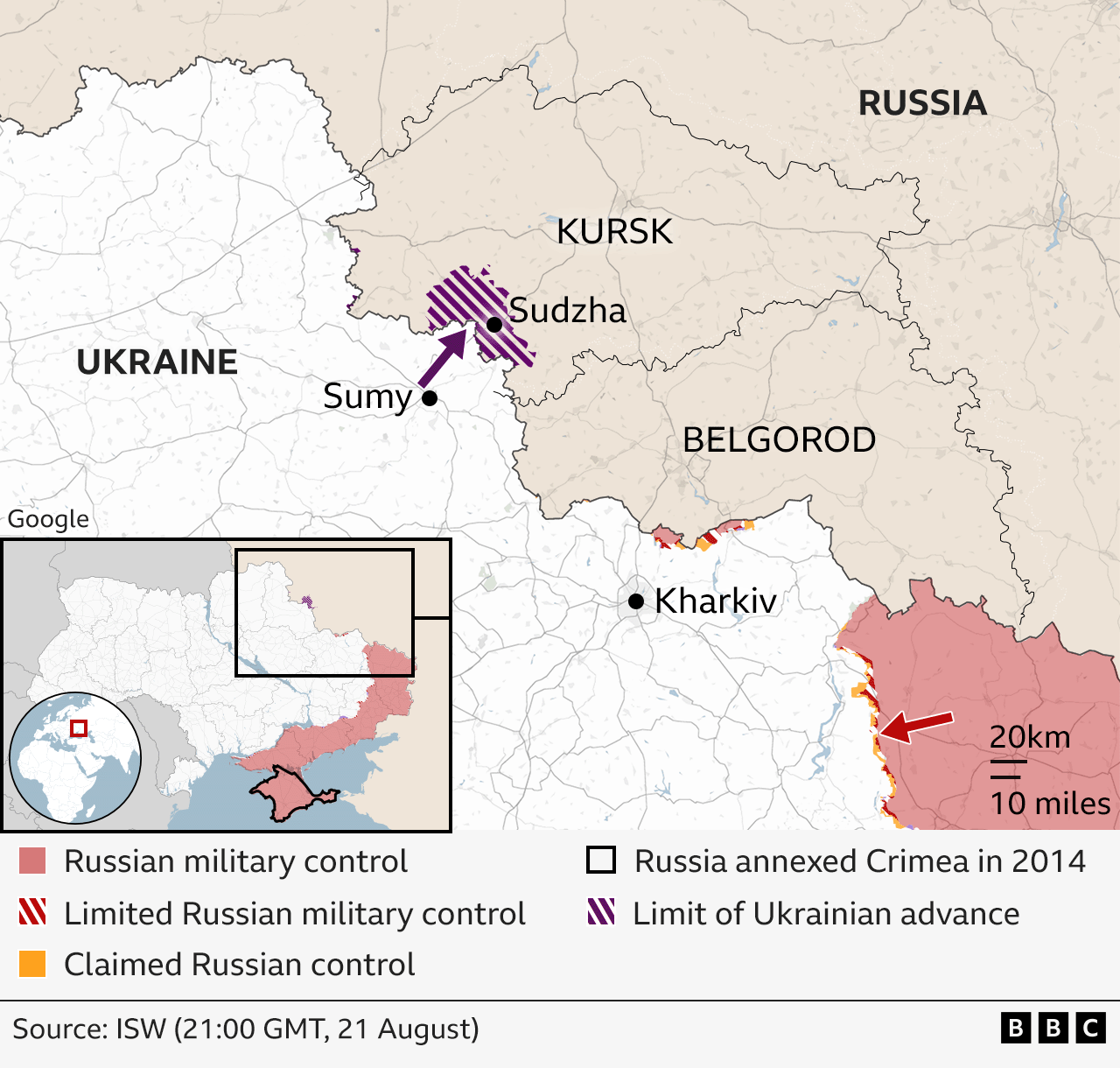
Mentor comment: Ukraine had recently launched a surprising military offensive into the Kursk region of Russia, capturing several hundred Russian soldiers and gaining control over approximately 1,000 square kilometers of territory. This move is seen as a bold tactic to shift the war dynamics and boost morale among Ukrainian forces and civilians. While Ukraine made gains in Kursk, Russian forces are advancing towards the Ukrainian city of Pokrovsk, a crucial logistics hub. The capture of Pokrovsk could again escalate the political tensions reflecting Russia’s position in the ongoing conflict
Let’s learn!
__
Why in the News?
Ukraine’s recent military incursion into the Kursk region of Russia outlines its tactical and political implications in the ongoing conflict.
Ukrainian Incursion:
Surprise Attack: Ukraine launched an unexpected offensive into the Kursk region, capturing several hundred Russian soldiers and seizing approximately 1,150 square kilometers of territory.
Strategic Goals: The operation aims to divert Russian forces from their offensive in Ukraine, particularly around the critical city of Pokrovsk, which is under siege and vital for Ukrainian logistics.
What are the long-term implications of Ukraine’s capture of Kursk for future negotiations?
•Territorial Gains as Leverage: By occupying Kursk, Ukraine has secured valuable territory that can serve as a bargaining chip in future negotiations. This strategic advantage is crucial, especially if Ukraine faces reduced military support from the West, particularly in the event of a change in U.S. leadership.
•Pressure on Russia: The need for Russia to defend its territory in Kursk diverts resources from ongoing offensives in Eastern Ukraine, particularly in Donbas. This could weaken Russia’s overall military effectiveness and complicate its strategy, potentially leading to a more favorable environment for negotiations for Ukraine.
Significance of Pokrovsk: It is formerly known as Krasnoarmiisk and Grishino, is a city and the administrative center of Pokrovsk Raion in Donetsk Oblast, Ukraine.
Key Logistics Hub: Pokrovsk’s capture by Russian forces would significantly enhance their operational capabilities in Eastern Ukraine, potentially leading to further territorial gains.
Ukrainian Withdrawal: Ukrainian troops are being ordered to withdraw from Pokrovsk, indicating the pressure they face from advancing Russian forces.
Tactical and Political Analysis:
Operational Secrecy: Ukraine’s successful execution of the incursion was attributed to exceptional operational security, which prevented leaks and allowed for a covert buildup of forces.
Russian Response: Russia’s military has reacted slowly, focusing on containing the incursion rather than reversing it, revealing weaknesses in their intelligence and troop readiness.
Increase in Bargaining Power: The incursion enhances Ukraine’s negotiating position for potential future discussions, especially with looming uncertainties regarding Western military support.
Risks for Ukraine: While the offensive has been a tactical success, it poses risks of overstretching Ukrainian forces and facing significant losses in the overall region if Russia mounts a concentrated counterattack.
Can India make Putin stop Russia’s War in Ukraine?
India has been warming to the West in recent years, especially given rising border tensions with China, but, at the same time, India cannot disallow its relationship with Russia considering United States. India’s visit (in July 2024) comes as Ukraine pushes its initiative in Russia’s southwestern region of Kursk.
•Humanitarian Concern: India during the recent talks with Putin in July, secured several concessions and seemingly chided the Russian leader over the war, calling the deaths of children killed in a Russian strike on a hospital “unbearable.” •Economic interests of India: Bilateral trade with Russia soared last year on the back of its energy purchases, with India in July topping China as the largest importer of Russian oil. PM Modi and Zelensky are expected to discuss issues of bilateral and multilateral cooperation” and sign multiple documents.
Conclusion: The Kursk operation marks a significant shift in the conflict, with Ukraine demonstrating its capability to operate within Russian territory. Ukrainian offensive stands out and deserves and merits closer scrutiny because no country since Hitler’s Germany has ever invaded any part of Russia.
However, the long-term viability of this strategy remains uncertain as both sides prepare for ongoing military engagements.
Israel has announced that it would retaliate strongly against Hezbollah, accusing the group of being responsible for a rocket attack that killed 12 children and teenagers at a football field in the Israeli-occupied Golan Heights.
Background of Golan Heights:
The Golan Heights was captured by Israel during the Six-Day War in 1967 from Syria and has since been a point of contention between the two nations. In 1981, Israel effectively annexed the territory, a move not recognized by the international community.
Strategic Importance: The Golan Heights offers a commanding view of northern Israel and southern Syria, making it a critical military and strategic area. Its elevation allows for surveillance and control over surrounding regions, including the ability to monitor movements from Syria.
Causes of the conflict:
Support for Palestinians: Hezbollah’s attacks on Israel are framed as support for Palestinians facing Israeli bombardment in Gaza, particularly following the Hamas attacks on October 7, 2023. Hezbollah, as a member of the Iran-backed Axis of Resistance, has aligned itself with Hamas and other militant groups in the region.
Historical Hostilities: The conflict is rooted in a long history of hostility between Israel and Hezbollah, which was founded in 1982 to combat Israeli forces in Lebanon. Hezbollah views Israel as an illegitimate state and seeks its removal, which fuels ongoing tensions and military engagements.
Escalating Military Capabilities: Hezbollah has significantly enhanced its military capabilities since the 2006 war, possessing a large arsenal of rockets and advanced weaponry. This includes the ability to strike deep into Israeli territory, increasing the stakes for both sides in any conflict.
Implications of the Conflict
Humanitarian Impact: The ongoing hostilities have resulted in significant civilian casualties and displacement on both sides of the border. Israeli airstrikes in Lebanon have killed Hezbollah fighters and civilians, while Hezbollah’s attacks have resulted in Israeli casualties. The humanitarian toll is exacerbated by the broader context of the Gaza war.
Regional Stability: The conflict poses a risk of broader regional destabilization, potentially drawing in other actors and escalating into a full-scale war.
Political Ramifications: The conflict has significant political implications for both Israel and Lebanon. In Israel, the displacement of civilians has become a pressing political issue, while Hezbollah’s actions may influence its standing within Lebanon and the broader Shiite community.
How escalation can be avoided on the Global Stage?
Diplomatic Engagement: The United States and other international actors must continue to engage in diplomatic efforts aimed at de-escalating tensions. This includes facilitating dialogue between Israel and Hezbollah, as well as addressing the underlying issues related to the Gaza conflict. A ceasefire in Gaza could help reduce hostilities in Lebanon.
Regional Agreements: Need to make efforts to establish regional agreements that address territorial disputes and security concerns that can mitigate the risk of conflict.
Monitoring and Mediation: International bodies, including the United Nations, should increase their monitoring of the situation and mediate discussions between the conflicting parties. This can help prevent misunderstandings and miscalculations that could lead to escalated military responses.
Role of India in this situation: (Way forward)
Engaging with Arab Nations: India should also maintain and strengthen its relationships with Arab nations, including Lebanon, to ensure a balanced approach. This engagement can help India navigate the complexities of the situation and position itself as a neutral party that seeks to promote peace and stability in the region.
Facilitating Dialogue: By promoting dialogue between the conflicting parties, India can help de-escalate tensions and work towards a peaceful resolution.
Mains PYQ:
Q India’s relations with Israel have, of late, acquired a depth and diversity, which cannot be rolled back.” Discuss. (2018)
In 2023, the US surpassed the UAE to become India’s second-largest supplier of liquefied natural gas (LNG), providing 3.09 million tonnes (MT).
World LNG Report 2024 by International Gas Union (IGU)
US as a Major Supplier: The report highlights that the United States has displaced the UAE to become India’s second-largest supplier of liquefied natural gas (LNG) in 2023, with shipments reaching 3.09 million tonnes (MT).
Trade Growth: The US supplied India with 1.8 MT of LNG in 2019, which increased to 3.86 MT in 2021, indicating a significant rise in trade volume despite a decrease in 2022 due to rising prices.
Qatar’s Dominance: Qatar remained India’s largest LNG supplier from 2019 to 2023, with shipments peaking at 10.92 MT in 2023, reflecting its consistent role in India’s energy supply.
The decline of African Suppliers: The report notes a significant decline in LNG shipments from African nations, particularly Nigeria and Angola, which saw their exports to India drop from pre-pandemic levels of around 2.7 MT and 2.9 MT, respectively, to just 0.73 MT each in 2023.
Present trade dynamics
Price Sensitivity: Indian companies remain price-sensitive, with LNG imports being contingent on competitive pricing. Analysts suggest that if LNG prices stay below $12 per mBtu, there could be significant growth in imports.
Geographical Advantage: The proximity of US LNG cargoes to India via the Cape of Good Hope makes it more cost-effective for sellers to export to India compared to North Asia.
Long-term Contracts: Ongoing long-term contracts signed by Indian entities with US suppliers continue to underpin LNG consumption, despite fluctuations in global prices.
Use of LNG in India:
Fertilizer Sector: The fertilizer sector remains the largest consumer of LNG in India, contributing to 32% of the total natural gas consumption.
Power Sector: The power sector accounted for 12% of the total natural gas consumption in India.
City Gas Distribution (CGD) Sector: CGD entities accounted for 19% of the total natural gas consumption in India
What can be done?
Strengthening Domestic Policies: India could benefit from reforms in domestic gas policies, including greater transparency over LNG inventory levels and improvements in gas pipeline capacity, to enhance the efficiency of LNG imports and distribution.
Creating Price Stability: The need to establish a stronger index link between LNG import prices and domestic gas prices could mitigate price risks for LNG importers, ensuring that long-term contracts remain aligned with market conditions.
Enhancing Infrastructure: Govt. should invest in LNG infrastructure, including regasification terminals and transportation networks, which can facilitate increased imports and improve supply chain efficiency.
Diversifying Supply Sources: To reduce dependency on specific regions, India should explore diversifying its LNG supply sources, including potential agreements with emerging suppliers in different regions.

![[23rd August 2024] The Hindu Op-ed: The Kursk gambit, Ukrainian tactics, and battle realities](https://www.civilsdaily.com/wp-content/uploads/2024/08/23-Aug-1568x882.jpg)