💥Mains Ready By December. Smash Mains & Smash PYQ Admissions Open

Subject: Emerging Technologies

  • Successful trial of Akash Prime Air Defence System

    Why in the News?

    India successfully tested the Akash Prime Missile System in Ladakh, neutralizing two high-speed aerial targets at high altitude.

    About Akash Prime:

    • What It Is: Akash Prime is an upgraded version of the Akash Surface-to-Air Missile (SAM) system.
    • High-Altitude Capability: Designed to operate effectively above 4,500 metres.
    • Development: Developed by DRDO with BDL, BEL, and Army Air Defence.
    • Operational Use: Proven in Operation Sindoor against aerial threats.
    • Production Trials: Validated through First of Production Model (FoPM) firing trials.
    • Deployment: Already in use at IAF bases and forward posts along the LAC in Ladakh.

    Key Features:

    • Seeker Upgrade: Equipped with an indigenous active Radio Frequency (RF) seeker for better accuracy.
    • Altitude Adaptability: Engineered for high-altitude, cold-climate operations.
    • Multi-Target Engagement: Capable of engaging multiple aerial threats at once.
    • Speed & Accuracy: Travels at Mach 2.5 with up to 90% kill probability.
    • Electronic Warfare: Equipped with ECCM features to resist electronic jamming.
    • Radar Integration: Uses Rajendra radar for detection, targeting, and tracking.
    • Operational Range: Effective engagement range of 25–30 km.

    Other Variants of Akash:

    • Akash Mark-I (1990–2005): First version under IGMDP; achieved successful dual-target intercepts by 2005.
    • Akash-1S (2019): Enhanced version with 30 km range and 60 kg warhead; effective against aircraft and drones; tested successfully in May 2019.
    • Akash Prime (2021 onwards): Added active RF seeker and altitude/weather resistance; tested on September 27, 2021.
    • Akash-NG (Next Generation): Approved in 2016 with ₹470 crore funding; offers faster response and improved aerial threat protection.


    [UPSC 2009] In the context of Indian defence, consider the following statements:

    1. The Shourya missile flies with a speed of more than 8 Mach. 2. The range of Shourya missile is more than 1600 km. Which of the statements given above is/are correct ?

    Options: (a) 1 only (b) 2 only (c) Both 1 and 2 (d) Neither 1 nor 2*


  • Mysterious Antimatter Physics discovered at CERN Large Hadron Collider

    Why in the News?

    CERN scientists have detected a tiny but significant difference in how matter and antimatter versions of baryons behave — offering clues to why matter dominates the universe, despite both being created equally after the Big Bang.

    What is CERN’s LHCb Experiment?

    • Location: At the Large Hadron Collider near Geneva, on the France–Switzerland border.
    • Name: LHCb = Large Hadron Collider beauty; focuses on beauty (bottom) quarks.
    • Started: Built in early 2000s; began collecting data in 2009.
    • Purpose: Studies particle decay, especially of beauty quark-containing particles, to test the Standard Model and search for small anomalies.

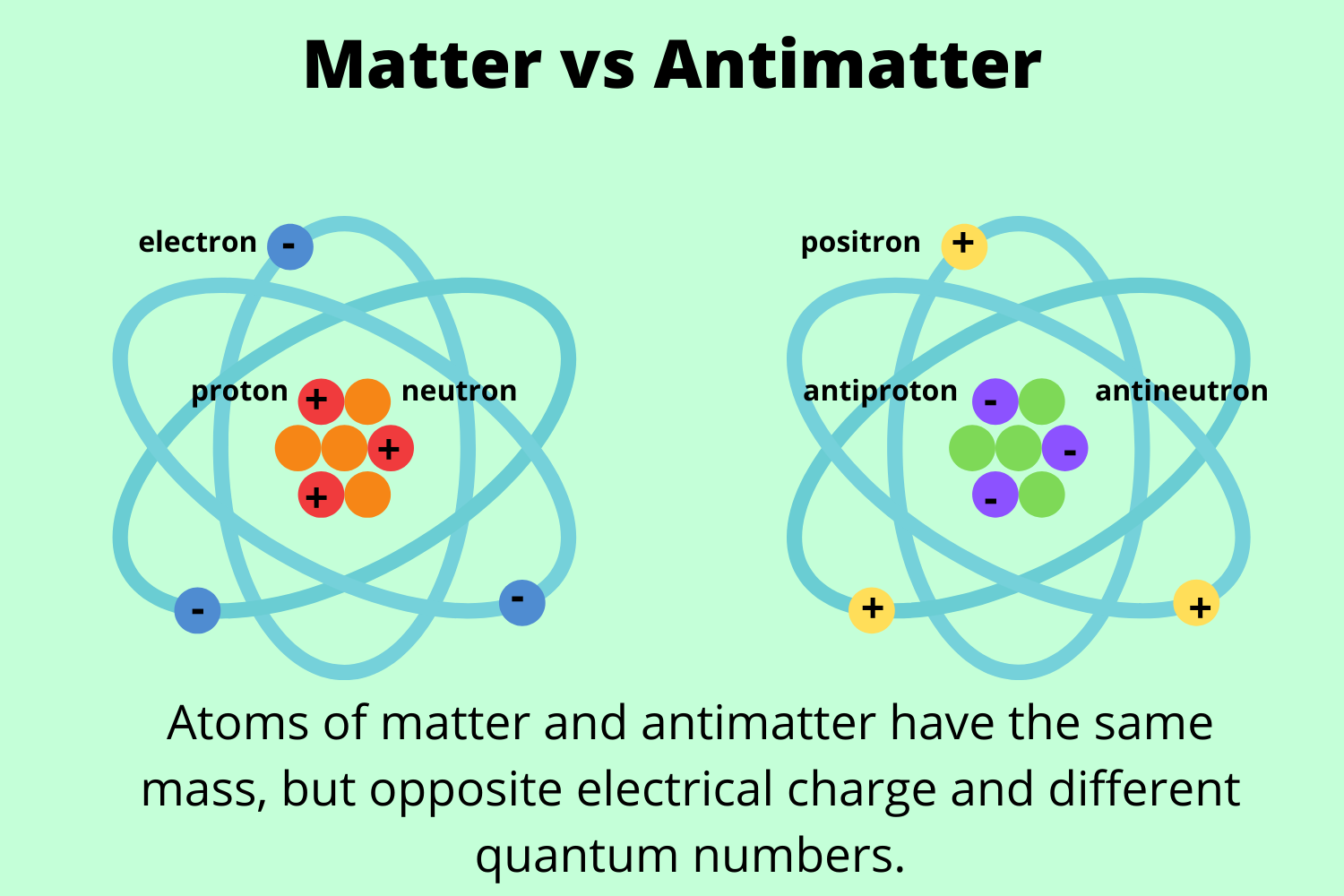
    Matter vs Antimatter – The Big Puzzle:

    • Matter: Everything around us is made of it.
    • Antimatter: Mirror image of matter, with opposite charges.
    • Big Bang Theory: Both should have been produced equally — and destroyed each other.
    • But…: Only matter remains — a mystery science is still trying to solve.
    • CP Symmetry: Physics expects matter and antimatter to behave identically (Charge-Parity symmetry).
    • CP Violation: When this symmetry breaks — possibly explaining why matter survived.

    What did Scientists Discover?

    • Focus: Lambda-b baryons and their antimatter versions.
    • Finding: A small but clear CP violation — they decayed differently.
    • Significance: First such discovery in baryons (previously seen only in mesons).
    • Certainty: Highly reliable — only 1 in 3.5 million chance it’s random.

    Why is this Important?

    • Helps explain why the universe is made of matter.
    • Expands discovery of CP violation to heavier particles.
    • Could hint at physics beyond the Standard Model.
    • Moves us closer to solving one of the universe’s biggest mysteries.
    [UPSC 2013] The efforts to detect the existence of Higgs boson particle have become frequent news in the recent past. What is/are the importance/importances of discovering this particle?

    1. It will enable us to under-stand as to why elementary particles have mass. 2. It will enable us in the near future to develop the technology of transferring matter from one point to another without traversing the physical space between them. 3. It will enable us to create better fuels for nuclear fission.

    Select the correct answer using the codes given below.

    Options: (a) 1 only* (b) 2 and 3 only (c) 1 and 3 only (d) 1, 2 and 3


  • [pib] Breakthrough in Quantum Noise Research

    Why in the News?

    Researchers at the Raman Research Institute (RRI) found that quantum noise—usually seen as a problem—can sometimes help connect particles in a special way called entanglement, which is important for future quantum technologies.

    What is Quantum Noise?

    • Overview: Quantum noise refers to random disturbances that affect quantum systems, often causing loss of coherence or decoherence.
    • Traditional View: It is typically seen as harmful, especially for quantum entanglement, which is crucial for quantum computing and communication.
    • Entanglement Concept: It is a phenomenon where particles are so correlated that the state of one instantly affects the state of another, even at a distance.
    • Effect of Decoherence: Noise-induced decoherence breaks this entanglement, thereby reducing the efficiency of quantum technologies.

    Key Findings:

    • Observation: Found that quantum noise can generate or revive entanglement, contrary to its typical reputation as destructive.
    • Focus Area: Studied intraparticle entanglement, which involves internal properties (like spin and path) of a single particle.
    • Contrast with Interparticle Entanglement: Unlike interparticle entanglement (between separate particles), intraparticle entanglement showed resilience under noise.
    • Types of Noise Studied:
      • Amplitude Damping: Energy loss
      • Phase Damping: Loss of phase information
      • Depolarizing Noise: Random changes in quantum state
    • Major Observation: Under amplitude damping, intraparticle entanglement showed delayed decay, revival, and even creation from unentangled states.
    • Interparticle Comparison: In contrast, interparticle entanglement exhibited steady decay with no revival or generation.

    Scientific Implications:

    • New Perspective: Challenges the assumption that quantum noise is purely harmful, showing it can be a resource in certain contexts.
    • Technological Potential: Intraparticle entanglement is more noise-resilient, making it valuable for stable quantum devices.
    • Application Areas: Findings are relevant to quantum communication, QKD (quantum key distribution), quantum computing, and quantum sensing.
    • Predictive Advantage: The new formula allows precise prediction of entanglement behavior, aiding the design of robust systems.
    • Platform Independence: Results are platform-agnostic, applicable to photons, neutrons, trapped ions, etc.
    [UPSC 2025] Consider the following statements:

    I. It is expected that Majorana 1 chip will enable quantum computing. II. Majorana 1 chip has been introduced by Amazon Web Services (AWS). III. Deep learning is a subset of machine learning.

    Which of the statements given above are correct?

    (a) I and only I (b) II and III only (c) I and III only * (d) I, II and III


  • What are Optical Atomic Clocks?

    Why in the News?

    Researchers conducted the most precise global comparison of 10 Optical Atomic Clocks to pave the way for redefining the second by 2030, replacing Caesium Clocks with more accurate Optical ones.

    Definition of a Second:

    • The current SI unit of time is based on caesium-133 (Cs) atomic clocks.
    • In 1967, one second was defined as the duration of 9,192,631,770 cycles of radiation corresponding to the transition between two hyperfine levels of the ground state of a Cs-133 atom.
    • In these clocks, a microwave signal is tuned until Cs atoms react maximally, ensuring the frequency is precisely 9,192,631,770 Hz.
    • Frequency dividers count this microwave frequency, providing one tick per second, thus realizing the SI second.

    About Caesium Atomic Clocks:

    • Overview: Caesium atomic clocks are devices that define the current SI unit of time (second) using the oscillation frequency of caesium-133 atoms.
    • SI Second Standard: One second is defined as the duration of 9,192,631,770 cycles of microwave radiation corresponding to the transition between two energy levels of the caesium-133 atom.
    • Working Principle: These clocks work by tuning microwave signals to resonate with caesium atoms and then counting the resulting waves to measure time precisely.
    • Stability and Usage: They are highly stable and have been used since 1967 to set international time standards.
    • Applications: They are used in GPS systems, telecommunications, scientific research, and by national metrology institutions like India’s National Physical Laboratory (NPL).
    • Accuracy: A typical caesium atomic clock loses about one second every 300 million years.

    What are Optical Atomic Clocks?

    • Overview: They are advanced timekeeping devices that use optical (visible light) frequency transitions in atoms like Strontium (Sr) or Ytterbium (Yb).
    • Measurement Basis: These clocks measure time based on the oscillation of light emitted when atoms transition between energy levels at hundreds of trillions of Hz.
    • Example Frequencies:
      • Strontium: ~429 trillion Hz
      • Ytterbium ions: over 642 trillion Hz
    • Precision Tools: They require lasers and optical frequency combs to count these rapid oscillations accurately.
    • Future Standard: They are being tested worldwide and are expected to replace caesium clocks by 2030 for redefining the SI second.

    How Optical Atomic Clocks are Better than Caesium ones?

    • Higher Frequency Operation: Optical clocks operate at much higher frequencies, allowing division of time into finer intervals.
    • Improved Precision: By counting 10,000 times more oscillations per second, optical clocks achieve significantly higher precision and stability.
    • Unmatched Accuracy: An optical atomic clock using strontium reportedly drifts by less than one second in 15 billion years, compared to 300 million years for caesium clocks.
    • Advanced Applications: Their precision is critical for: Next-gen GPS systems, Gravitational wave detection, Climate monitoring and research etc.
    • Ultra-High Synchronization: Optical clocks enable cross-continental synchronization at 18 decimal place accuracy, essential for global time coordination.
    • Noise Resilience: They offer greater resistance to environmental noise and external disturbances, improving long-term reliability.
    [UPSC 2023] Which one of the following countries has its own Satellite Navigation System?

    Options: (a) Australia (b) Canada (c) Israel (d) Japan*


  • Quick fix: On India’s Research Development and Innovation scheme

    Why in the News?

    The Union Cabinet has recently approved a ₹1-lakh crore Research Development and Innovation (RDI) scheme to encourage private companies to invest more in basic scientific research.

    What are the aims and design of the ₹1-lakh crore RDI scheme?

    • Promote Private Investment in Basic Research: The scheme aims to shift the R&D funding balance by incentivising the private sector to invest in foundational scientific research, reversing the current trend where the government contributes around 70% of total R&D spending.
    • Special Purpose Fund under ANRF: A dedicated fund will be set up within the Anusandhan National Research Foundation (ANRF), which will act as a custodian of ₹1-lakh crore and offer low-interest loans to eligible research projects.
    • Single-Window Clearance Mechanism: ANRF is designed as an independent institutional body with oversight from the Ministry of Science, providing a streamlined funding mechanism for universities and research institutions.
    • Targeting Mid-Stage Innovations (TRL-4 and Above): The scheme prioritises projects at Technology Readiness Level 4 or above, focusing on research that has demonstrated lab-scale feasibility and market potential, rather than early-stage, high-risk science.

    Why is ANRF’s role in research funding considered innovative?

    • Single-Window Clearance for R&D Funding: The Anusandhan National Research Foundation (ANRF) offers a unified platform to fund research across academic and industrial institutions, reducing bureaucratic delays. Eg: Instead of applying to multiple agencies like DST, DBT, and CSIR, universities can now approach ANRF for consolidated support.
    • Private Sector Integration in Basic Research: ANRF aims to source 70% of its budget from private players, incentivising corporate investment in long-term, foundational science rather than only market-ready products. Eg: Tech companies can fund AI or clean energy research at IITs through ANRF, blending commercial interest with academic innovation.
    • Bridging Academic-Industry Gaps: By acting as a funding bridge between universities, startups, and industries, ANRF fosters collaboration that accelerates the conversion of research into scalable solutions. Eg: A university developing a green hydrogen prototype can partner with a renewable energy firm under ANRFguidance and funding.

    How does the TRL-4 condition affect R&D inclusivity?

    • Excludes Early-Stage Fundamental Research: The requirement of Technology Readiness Level-4 (TRL-4) support means only projects with demonstrated application potential are eligible. This excludes TRL-1 to TRL-3 projects, which involve basic, foundational research. Eg: A university lab studying the quantum behaviour of materials may be denied funding despite its long-term potential.
    • Narrows Innovation Pipeline: Focusing only on mid-to-late stage research limits the scope for high-risk, high-reward innovation, which often begins at lower TRLs. This curbs diverse and disruptive innovations from entering the ecosystem. Eg: Internet and GPS started as risky low-TRL military projects—India might miss such breakthroughs by ignoring early research.

    What global lessons can India adopt to boost core innovation?

    • Invest in Early-Stage Research through Public Funding: Countries like the United States and Germany fund basic science heavily through institutions like the NSF and Max Planck Society, recognising that core innovation often starts at low Technology Readiness Levels (TRLs). Eg: The U.S. government’s early funding of ARPANET (precursor to the Internet) shows how foundational research can lead to transformative technologies.
    • Link Academia, Industry, and Government: Nations such as South Korea and Israel foster strong collaboration between universities, industries, and the state to accelerate innovation from lab to market. Eg: South Korea’s “Innovation Clusters” connect academic research with industrial application, leading to global tech giants like Samsung.

    Why does brain drain persist despite new research schemes?

    • Limited Research Infrastructure and Bureaucracy: Many Indian institutions lack state-of-the-art labs, smooth funding access, and administrative efficiency, discouraging cutting-edge work. Eg: A 2023 study by IISc found that over 40% of PhD graduates in STEM preferred postdoctoral positions abroad due to better facilities and research environments.
    • Lack of Competitive Salaries and Academic Freedom: Indian researchers often face lower salaries, rigid hierarchies, and limited autonomy compared to global peers. Eg: According to a DST report, Indian scientists earn 3–4 times less than those in OECD nations, prompting talent to settle in countries like the US and Germany.
    • Weak Industry-Academia Collaboration: Private sector investment in R&D is low, leading to few applied research opportunities or innovation ecosystems. Eg: In South Korea, over 75% of R&D is industry-funded, whereas India’s share is just around 37%, limiting prospects for applied researchers.

    Way forward: 

    • Strengthen Research Ecosystems and Autonomy: Invest in world-class infrastructure, streamline funding mechanisms, and provide greater academic freedom to scientists and institutions to pursue innovative research without bureaucratic hurdles.
    • Enhance Industry Collaboration and Incentives: Foster stronger industry-academia linkages by offering tax benefits, matching grants, and innovation clusters to attract private R&D investment and create lucrative opportunities for researchers in India.

    Mains PYQ:

    [UPSC 2024] What are the intellectual property rights with respect to life materials? Although, India is second in the world to file patents, still only a few have been commercialized. Explain the reasons behind this less commercialization.

    Linkage:  The article discusses the Union Cabinet’s approval of a ₹1-lakh crore Research Development and Innovation (RDI) scheme aimed at incentivizing the private sector to invest in basic research. This PYQ directly addresses the challenge of commercialization of patents in India, a critical bottleneck in the country’s innovation ecosystem that the implicitly highlights by article.
  • [pib] SAKSHAM-3000  

    Why in the News?

    The Ministry of Communications has launched SAKSHAM-3000, a 25.6 Tbps indigenous switch-cum-router, to boost India’s data, cloud, and telecom infrastructure, marking a major leap in advanced networking technology.

    What is SAKSHAM-3000?

    • Overview: It is a high-speed switch-cum-router developed by the Centre for Development of Telematics (C-DOT) to strengthen India’s digital infrastructure.
    • Indigenous Operating System: The device runs on CROS (C-DOT Router Operating System), enabling modular, scalable, and secure network operations.
    • Next-Gen Capability: It is designed for ultra-fast data transmission, offering up to 25.6 Terabits per second (Tbps) throughput.
    • Use Cases: It is suitable for data centres, 5G/6G networks, AI systems, and hyperscale computing clusters.
    • Cloud and Telecom Ready: It supports cloud-native deployments, legacy protocols, and future network architectures simultaneously.

    Technical Highlights and Capabilities:

    • Massive Throughput: It supports 32 ports of 400G Ethernet and multiple speeds from 1G to 400G, delivering full 25.6 Tbps capacity.
    • Wire-Speed Performance: Data packets are processed at line rate, ensuring real-time transmission with no bottlenecks.
    • Time-Sensitive Applications: It includes support for Precision Time Protocol (PTP) and Synchronous Ethernet (Sync-E) to ensure accurate timing in industrial and telecom networks.
    • Full Protocol Support: It is compatible with Layer-2 switching, IP routing, and Multi-Protocol Label Switching (MPLS) for broad network configurations.
    • Traffic Management: Features like Weighted Round Robin (WRR) and Weighted Random Early Detection (WRED) improve traffic handling and reduce congestion.
    • Energy Efficiency: It uses a power-optimized architecture, balancing high performance with low power consumption for sustainable data centre use.
    • Flexible Licensing: Enterprises and telecom providers can customize licensing models for cost-effective scalability based on specific deployment needs.
    [UPSC 2016] With reference to ‘LiFi’, recently in the news, which of the following statements is/are correct?

    1. It uses light as the medium for high-speed data transmission. 2. It is a wireless technology and is several times faster than ‘WiFi’.

    Select the correct answer using the code given below.

    Options: (a) 1 only (b) 2 only (c) Both 1 and 2* (d) Neither 1 nor 2


  • [pib] Indian Scientists created high-performance Supercapacitor Material

    Why in the News?

    Scientists from Bengaluru, in collaboration with Aligarh Muslim University, have developed an advanced material that significantly improves supercapacitor performance.

    What are Supercapacitors?

    • Fast-Charging Energy Devices: Supercapacitors are special tools that store and release energy very quickly, much faster than regular batteries.
    • Used in Modern Technology: They are found in phones, electric vehicles, and solar systems where fast energy delivery is needed.
    • Trade-Off in Storage: While they charge faster, they generally hold less energy than traditional batteries.
    • Ongoing Scientific Efforts: Researchers are trying to increase energy capacity without sacrificing their quick-charging abilities.

    About Lanthanum-Doped Silver Niobate:

    • New Material from Indian Scientists: A research team from Bengaluru and Aligarh Muslim University created a better material for supercapacitors.
    • Silver Niobate as Base: They used silver niobate, which is non-toxic and eco-friendly, as the base material.
    • Improved by Lanthanum Doping: They added lanthanum, a rare metal, to help enhance electrical performance — a method called doping.
    • Smaller Particles, Bigger Surface: The particles became smaller, increasing the surface area for energy storage.

    What makes this material special?

    • Better with Use: The material retained 118% of its capacity after repeated use, showing it improved over time.
    • 100% Energy Efficiency: It wasted no energy during charge or discharge, making it highly efficient.
    • Quick and Smooth Performance: It delivered energy faster and more steadily than previous materials.
    • Proven in Real-World Test: A test device using this material could power an LCD screen, proving practical use.
    • Eco-Friendly Choice: It is lead-free and safe for the environment.
    • Future Potential: Scientists hope to apply this method to other materials and scale up for commercial use in electronics, EVs, and solar tech.
    [UPSC 2022] With reference to India, consider the following statements:

    1. Monazite is a source of rare

    earths. 2. Monazite contains thorium. 3. Monazite occurs naturally in the entire Indian coastal sands in India. 4. In India, Government bodies only can process or export monazite.

    Which of the statements given above are correct ?

    Options: (a) 1, 2 and 3 only (b) 1, 2 and 4 only* (c) 3 and 4 only (d) 1, 2, 3 and 4


  • Electronic Private Automatic Branch Exchange (EPABX) in Modern Communication

    Why in the News?

    In most modern office environments, internal and external communication is managed through a technology known as EPABX — Electronic Private Automatic Branch Exchange.

    About EPABX:

    • What is it: It is a system used by offices to manage internal and external phone calls efficiently.
    • Internal and External Communication: It enables intercom communication within the organisation and provides access to external telephone lines through a unified network.
    • Call Handling Features: EPABX can route, transfer, forward, or hold calls, reducing the need for multiple phone lines and improving overall communication.
    • Modern Features: Advanced EPABX systems offer voicemail, call recording, automated attendants, and digital tool integration for business productivity.

    How EPABX Works?

    • Starting a Call: When the phone is picked up, an off-hook signal goes to the EPABX, which responds with a dial tone.
    • Making Internal Calls: Users dial an extension number (like 104), and the EPABX connects them through its internal switching system.
    • Making External Calls: To reach outside numbers, users dial an access code (usually 0) followed by the number; EPABX connects via the Public Switched Telephone Network (PSTN).
    • Handling Incoming Calls: Calls from outside are routed to the right extension using either a receptionist or an automated system (IVR) in newer setups.
    • Switching Logic: The EPABX system works like a railway yard, directing signals along the correct path between the caller and the recipient.

    Advancements in EPABX Technology:

    • Early Systems: Older EPABX systems used electromechanical switches like crossbars for call routing.
    • Digital Transition: Since the 1980s, systems adopted Pulse Code Modulation (PCM) and Time Division Multiplexing (TDM) to digitise and share voice signals over fewer lines.
    • VoIP Technology: Modern EPABX uses Voice over IP (VoIP) to transmit calls over the internet, similar to email routing using IP addresses.
    [UPSC 2019] With reference to communication technologies, what is/are the difference / differences between LTE (Long-Term Evolution) and VoLTE (Voice over Long-Term Evolution)?

    1. LTE ‘is commonly marketed as 3G and VoLTE is commonly marketed as advanced 3G.

    2. LTE is data-only technology and VoLTE is voice-only technology.

    Select the correct answer using the code given below.

    Options: (a) 1 only  (b) 2 only (c) Both 1 and 2 (d) Neither 1 nor 2*


  • Sam Altman’s World ID Project

    Why in the News?

    World ID is Sam Altman’s ambitious project to create a secure, biometric-based digital identity for everyone in the age of AI.

    What is World ID?

    • World ID is a digital identity system launched by Sam Altman’s company Tools for Humanity as part of the Worldcoin project in July 2023.
    • It aims to verify that a person is a real, unique human being—especially in an age of AI-generated bots—using biometric iris scans.
    • How Does It Work?
      • The identity is created using a device called the Orb, which captures the iris pattern and generates a unique cryptographic code (not storing the image itself).
      • This ID is then linked to the World App, and the user can access various services while proving they are human—without revealing their actual identity.
      • The system is decentralized and uses blockchain technology to store identity proofs securely.

    Key Features of World ID:

    • Biometric Verification: Uses iris scanning through the Orb to establish a unique identity.
    • Global Access: Users from over 160 countries have access to Worldcoin and World ID features.
    • Decentralized Protocol: Built on open-source, privacy-preserving cryptography, such as zero-knowledge proofs.
    • World App Integration: Enables users to locate Orbs, receive Worldcoins, and use the digital ID across apps.
    • World Chain: A blockchain linked to World ID that supports apps and services tied to identity.
    • Crypto Incentive: Users may receive Worldcoin (WLD) tokens for enrolling.
    • Privacy Controls: Promises anonymity, non-surveillance use, and code transparency.
    • Hardware Dependency: Requires a physical Orb or the new Orb Mini to generate IDs.

    How it differs from Aadhaar?

    World ID Aadhaar
    Ownership Private project by Tools for Humanity Government of India
    Launch Year 2023 2009
    Technology Used Iris scan via Orb; Blockchain-based ID Biometric + Demographic data via central database
    Legal Framework No national law backing it yet Aadhaar Act, 2016
    Purpose Global ID to prove human uniqueness National ID for accessing services & welfare
    Data Privacy Claims privacy via zero-knowledge cryptography Data regulated by UIDAI under Indian law
    Adoption Level 12 million users globally Over 1.3 billion users in India
    Hardware Needed Orb device Fingerprint/iris scanners at enrollment centers
    Verification Use AI-bot detection, global ID use Government subsidies, banking, KYC, etc.