💥Join UPSC 2027,2028 Mentorship (August Batch) + XFactor Notes & Microthemes PDF

Subject: Modern History

  • What did Harappan people eat?

    The National Museum in New Delhi has hosted “The Indus dining experience” a food event based on the food pattern of Indus valley civilization.

    Food of Harappans

    • Archaeological evidence from Indus Valley sites (c. 3300 BC to 1300 BC) in present-day India and Pakistan suggests that a purely vegetarian meal will not provide a complete picture of what the Harappan people ate.
    • To judge from the quantity of bones left behind, animal foods were consumed in abundance: beef, buffalo, mutton, turtles, tortoises, gharials, and river and sea fish.
    • Apart from meat, the people of the Indus Valley Civilisation grew and ate a variety of cereals and pulses.
    • There is archaeological evidence for cultivation of pea (matar), chickpea (chana), pigeon pea (tur/arhar), horse gram (chana dal) and green gram (moong).
    • Several varieties of wheat have been found at Harappan sites, as well as barley of the two-rowed and six-rowed kinds.
    • There is evidence that the Harappans cultivated Italian millet, ragi and amaranth, as well as sorghum and rice.
    • Oilseeds such as sesame, linseed, and mustard were also grown.
  • In news: 1946 Royal Indian Navy Mutiny


    Seventy-four years ago on February 18, 1946, some 1,100 Indian sailors or “ratings” of the HMIS Talwar and the Royal Indian Navy (RIN) Signal School in Bombay declared a hunger strike, triggered by the conditions and treatment of Indians in the Navy.

    RIN Mutiny

    • A “slow down” the strike was also called, which meant that the ratings would carry out their duties slowly.
    • The morning after February 18, somewhere between 10,000-20,000 sailors joined the strike, as did shore establishments in Karachi, Madras, Calcutta, Mandapam, Visakhapatnam, and the Andaman Islands.
    • One of the triggers for the RIN strike was the arrest of a rating, BC Dutt, who had scrawled “Quit India” on the HMIS Talwar.
    • The day after the strike began, the ratings went around Bombay in lorries, waving the Congress flag, and getting into scraps with Europeans and policemen who tried to confront them.

    Their demands

    While the immediate trigger was the demand for better food and working conditions, the agitation soon turned into a wider demand for independence from British rule. The protesting sailors demanded:

    • release of all political prisoners including those from Netaji Subhas Chandra Bose’s Indian National Army (INA),
    • action against the commander for ill-treatment and using insulting language,
    • revision of pay and allowances to put RIN employees on a par with their counterparts in the Royal Navy,
    • demobilisation of RIN personnel with provisions for peacetime employment,
    • release of Indian forces stationed in Indonesia, and better treatment of subordinates by their officers

    Upsurge of nationalism

    • The RIN strike came at a time when the Indian nationalist sentiment had reached fever pitch across the country.
    • The winter of 1945-46 saw three violent upsurges: in Calcutta in November 1945 over the INA trials; in February 1946, also in Calcutta, over the sentencing of INA officer Rashid Ali; and, in that same month, the ratings’ uprise in Bombay.
    • This chain of events led to the “mounting fever of excitement affecting the whole political climate”.
    • Soon, ordinary people joined the ratings, and life came to a virtual standstill in both Bombay and Calcutta. There were meetings, processions, strikes, and hartals.
    • In Bombay, labourers participated in a general strike called by the Communist Party of India and the Bombay Students’ Union. In many cities across India, students boycotted classes in solidarity.
    • The response of the state was brutal. It is estimated that over 220 people died in police firing, while roughly 1,000 were injured.

    Significance of the events

    • The RIN revolt remains a legend today. It was an event that strengthened further the determination among all sections of the Indian people to see the end of British rule.
    • Deep solidarity and amity among religious groups was in evidence, which appeared to run counter to the rapidly spreading atmosphere of commuanal hatred and animosity.
    • However, communal unity was more in the nature of organisational unity than a unity among the two major communities.
    • Within months, India was to be devoured by a terrible communal conflagration.

    Final nail in the coffin

    • This revolt was different from the other revolts in the sense that, after 1857 it was the first time that the British realized that the Royal Indian forces were no more obedient to the British commands and were in concurrence with the overall defiant nationalist sentiments prevailing in the entire country.
    • Mutinies are usually confined to a particular station, establishment or ship. However, this was the first instance when the entire service joined the revolt.
    • Most striking feature was that it was directed against the British government and not against superior officers – not a single officer, British or Indian, was harmed.
    • Fearless action by the masses was an expression of militancy in the popular mind. Revolt in the armed forces had a great liberating effect on the minds of people.
    • It displayed that the armed forces no longer obeyed the British authority rather it was the nationalist leaders who held sway over them. The RIN revolt was seen as an event marking the end of British rule.

    Aftermath

    • The leaders realized that any mass uprising would inevitably carry the risk of not being amenable to centralized direction and control. Besides, now that independence and power were in sight, they were eager not to encourage indiscipline in the armed forces.
    • It was immediately after this revolt that PM Atlee dispatched the Cabinet Mission to India, so it is also inferred that the mutiny hastened the process of transfer of power to India.
    • It is also important to mention that the revolt came to an end after the nationalist leaders, Sardar Patel and Mohammad Ali Jinnah on receiving a request to intervene by the British, issued a statement calling upon the mutineers to surrender.
  • Battle of Çanakkale/Gallipoli

    India issued a strong demarche to Turkey over its outspoken President Erdogan’s comments in Pakistan. Erdogan has criticised India’s policy in Jammu and Kashmir and compared it with that of Turkey during World War I.

    Gallipoli campaign

    • The Battle of Çanakkale, also known as the Gallipoli campaign or the Dardanelles campaign, is considered to be one of the bloodiest of World War I, during which the Ottoman army faced off against the Allied forces, leading to the slaughter of tens of thousands of soldiers on both sides.
    • In March 1915, with the war in Europe stalemated in the trenches, Winston Churchill, then Britain’s First Lord of the Admiralty, devised a plan to take control of the Dardanelles.
    • The plan was to capture strategic strait connecting the Sea of Marmara to the Aegean Sea and the Mediterranean Sea, and thus reach Constantinople (today’s Istanbul) at the mouth of the Bosporus.
    • By taking Constantinople, the Allies hoped to break the Turks, who had recently entered the war on the side of Germany.

    The massacre

    • The Allies carried out a heavy naval bombardment of Turkish forts along the shores of the Dardanelles, and when that failed, followed up with what was the biggest amphibious landing in military history at the time.
    • However, what the British and their allies had hoped would be the turning point in the war ended up as a catastrophe.
    • In the nine months upto January 1916, when the Allies called off the campaign and evacuated, more than 40,000 British soldiers had been killed, along with 8,000 Australians. On the Turkish side, some 60,000 had perished.

    Legacy of the battle

    • The battle resulted in a demotion for Churchill and the emergence on the Turkish side of the young military hero, Mustafa Kemal Ataturk.
    • But the legacy of Gallipoli goes far beyond its military aspects — the event is today one of the central pillars of the modern Turkish identity.
    • The campaign is also seen to have seeded Australian and New Zealand national consciousness — April 25, the anniversary of the Gallipoli landings, is observed as ANZAC Day, the day of national remembrance for the war dead.
  • Erstwhile State of Rampur

    Erstwhile royals of the state of Rampur in Uttar Pradesh are fighting over the assets and legacy of Nawab Raza Ali Khan, who acceded to the Indian Union at the time of Independence.  The Supreme Court ended India’s longest-running civil dispute last year, and the process of evaluating the inheritance is currently ongoing.

    The state of Rampur

    • The state of Rampur was founded by Nawab Ali Muhammad Khan, the adopted son of Sardar Daud Khan, the chief of the Rohillas in Northern India.
    • The Rohillas were Afghans who entered India in the 18th century as the Mughal Empire was in decline, and took control of Rohilkhand, at the time known as Katehr.
    • In 1737, Nawab Muhammad Khan received the territory of Katehr from Emperor Muhammad Shah, only to lose everything to Nawab Wazir of Oudh in 1746.
    • Two years later, he assisted Ahmad Shah Durrani in his conquest of India, recovering all his former possessions.
    • Over the next two centuries the Rampur royals, earlier a warring clan, struck deep roots, and with the blessings of the British, began to build one of the richest principalities in the country.

    Patrons of the arts, culture

    • The Rampur royals have played an important role in the socio-cultural history of the Ganga-Yamuna belt.
    • They run the Amir Raza library in Rampur, once known as the official darbar of the Nawab, which is home to some 15,000 manuscripts in Arabic, Urdu, Persian and Turkish, as well as a seventh-century Quran.
    • The library also houses 2,500 specimens of Islamic calligraphy, 5,000 miniature paintings, and 60,000 printed books, besides the extremely rare Persian translation of Valmiki’s Ramayana, which is believed to have been Emperor Aurangzeb’s personal copy.
    • In the 19th century, the royals established courts of law and a standing army, and built irrigation works. In the 20th century, they set up sugar and textile mills.
    • Many Hindus were employed in senior administrative positions in the state. Nawab Raza Ali Khan was known to have written poetry in Bhojpuri for Holi.
    • The Rampur court was also a great patron of the arts, and is known to have patronised Ghalib and Begum Akhtar, as well as the tabla player Ahmad Jan Thirakwa, sarangi player Bundu Khan, sarod player Fida Hussein Khan, been player Wazir Khan, and the kathak dancers Acchan Maharaj and Kalka Prasad.

    After Independence

    • Rampur, under Nawab Raza Ali, was the first kingdom to accede to India in 1949, becoming the only Muslim-majority district in Uttar Pradesh.
    • Soon after accession, the Nawab handed over the official royal residence, the Rampur Qila or Fort, built in 1775, to the Indian government, along with several other properties.
    • In return, the Indian government bestowed two key rights to the Nawab — he was granted full ownership of the properties, and guaranteed succession to the gaddi or rulership of the state based on customary law, which gave exclusive property rights to the eldest son.
    • When Raza Ali Khan died in 1966, he had three wives, three sons, and six daughters.
    • His eldest son Murtaza Ali Khan succeeded him as head of the state, as per custom.
    • The government recognised him as the sole inheritor of all his father’s private properties and issued a certificate to this effect. But his brother challenged this in the civil court.
  • Person in news: Dara Shikoh


    The Ministry of Culture recently set up a panel of the Archaeological Survey of India (ASI) to locate the grave of the Mughal prince Dara Shikoh (1615-59) nearby Humayun’s Tomb complex in Delhi.

    Dara Shikoh’s legacy

    • The eldest son of Shah Jahan, Dara Shikoh was killed after losing the war of succession against his brother Aurangzeb.
    • Dara Shikoh is described as a “liberal Muslim” who tried to find commonalities between Hindu and Islamic traditions.
    • He translated into Persian the Bhagavad Gita as well as 52 Upanishads.

    Antithesis to Aurangzeb

    • Some historians argue that if Dara Shikoh had ascended the Mughal throne instead of Aurangzeb, it could have saved thousands of lives lost in religious clashes.
    • Dara Shukoh was the total antithesis of Aurangzeb, in that he was deeply syncretic, warm-hearted and generous — but at the same time, he was also an indifferent administrator and ineffectual in the field of battle.

    The remains of Dara Shikoh

    • According to the Shahjahannama, after Aurangzeb defeated Dara Shikoh, he brought the latter to Delhi in chains.
    • His head was cut off and sent to Agra Fort, while his torso was buried in the Humayun’s Tomb complex.
    • Italian traveller Niccolao Manucci gave a graphic description of the day in Travels of Manucci, as he was there as a witness to the whole thing. That is the basis of the thesis.
  • Kumbhabishegam at Brahadeeswarar Temple, Thanjavur


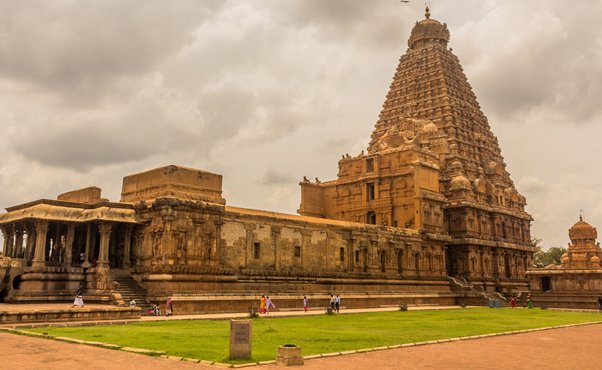
    • Tens of thousands of pilgrims thronged Thanjavur in Tamil Nadu’s Cauvery delta to witness the Kumbhabishegam (consecration) ceremony at the Sri Brahadeeswarar Temple.
    • This enormously significant event was held after 23 years — and after the Madras High Court had settled an old argument over the ritual purification process only five days previously.
    • The judgment delivered by the Madurai Bench of the court addressed the struggle for supremacy between the Sanskrit and Tamil traditions.

    Sri Brahadeeswarar Temple and Kumbhabishegam ceremony

    • The Sri Brahadeeswarar Temple (also spelt Brihadisvara, and called Peruvudaiyar Koyil, which translates simply to ‘Big Temple’) is the most famous of the many temples in Thanjavur.
    • The temple, one of the world’s largest and grandest, was built between 1003 AD and 1010 AD by the great Chola emperor Raja Raja I (c. 985-1014 AD).

    Before the High Court

    • The court, in a dispute over which language should be used in the slokas at the kumbhabishegam, agreed with the state government’s affidavit that the ceremony should be in both Sanskrit and Tamil.
    • The Temple committee had demanded that the Kumbhabishegam should be held only in Tamil.
    • The court ruled the choice to be vested with the devotees to seek for their archanas to be performed at their wishes by chanting the manthras either in Tamil or in Sanskrit.
  • Indian Institute of Heritage and Conservation

    The Union Govt. has proposed to set up an Indian Institute of Heritage and Conservation under the Ministry of Culture, and develop five archaeological sites as “iconic sites” with onsite museums in Rakhigarhi (Haryana), Hastinapur (Uttar Pradesh), Sivsagar (Assam), Dholavira (Gujarat) and Adichanallur (Tamil Nadu).

    Rakhigarhi

    • Rakhigarhi in Haryana’s Hissar district is one of the most prominent and largest sites of the Harappan civilization.
    • It is one among the five known townships of the Harappan civilization in the Indian subcontinent.
    • In one of the excavations, the skeletal remains of a couple were discovered.
    • Interestingly, of the 62 graves discovered in Rakhigarhi, only this particular grave consisted of more than one skeletal remains and of individuals of the opposite sex together.

    Hastinapur

    • Excavations at Hastinapur, in Meerut district of Uttar Pradesh, were led by Dr B B Lal, who was at the time Superintendent of the Excavations Branch of the ASI.
    • Hastinapur finds mention in the Mahabharata and the Puranas.
    • One of the most significant discoveries made at this site was of the “new ceramic industry”, which was named the Painted Grey Ware, which as per the report represented the relics of the early Indo-Aryans.
    • The sites of Hastinapur, Mathura, Kurukshetra, Barnawa, etc., are identifiable with those of the same name mentioned in the Mahabharata.
    • If that be so, the Painted Grey Ware would be associated with the early settlers on these sites, viz. The Pauravas, Panchalas, etc., who formed a part of the early Aryan stock in India.
    • Such an association may also explain the synchronism between the appearance of the Painted Grey Ware in the Ghaggar-Sutlej valleys and the probable date of the arrival of the Aryans in that area.”

    Sivasagar

    • In Sivasagar, excavations at the Karenghar (Talatalghar) complex between 2000 and 2003 led to the discovery of buried structures in the north-western and north-eastern side of the complex.
    • Among the structural remains found at the site were ceramic assemblages including vases, vessels, dishes, and bowls, etc. Terracotta smoking pipes were also found.
    • Another excavation site in Sivasagar district is the Garhgaon Raja’s palace. Excavation at this site was conducted during 2007-2008.
    • A burnt-brick wall running in north-south orientation was found, along with the remains of two huge circular wooden posts.

    Dholavira

    • Dholavira in Gujarat is located in the Khadir island of the Rann of Kutch, and like Rakhigarhi is one of the sites where the remains of the Harappan civilization have been found.
    • Dholavira is unique because remains of a complete water system have been found here.
    • The people who lived there for an estimated 1,200 years during the Harappan civilization are noted for their water conservation system using rainwater harvesting techniques in an otherwise parched landscape.

    Adichnallur

    • Adichnallur lies in the Thoothukudi district of Tamil Nadu.
    • The urn-burial site was first brought to light during a “haphazard excavation” by a German archaeologist in 1876. Following this, an Englishman Alexander Rae excavated the site between 1889 and 1905.
    • Over the years, the site has gained attention because of three important findings: the discovery of an ancient Tamil-Brahmi script on the inside of an urn containing a full human skeleton, a fragment of a broken earthenware, and the remains of living quarters.
  • Liberation of Auschwitz


    • Yesterday on January 27th survivors of the Holocaust and international heads of state marked the 75th anniversary of the liberation of Auschwitz.
    • During the Second World War, the government of Nazi Germany killed approximately 17 million people across Europe in half a dozen camps specifically designated for killings.
    • Of these seven killing centers, the camp at Auschwitz, perhaps the most well known, was the largest in size.

    Why is January 27 an important date in Holocaust history?

    • During the final stages of the Second World War, months before the fall of Nazi Germany, Nazi officials began forcibly moving prisoners between the camps spread across Europe.
    • Called ‘Death Marches’, this forcible displacement on foot over long distances in the bitter cold, with little to no food resulted in many deaths.
    • Some researchers believe that prisoners were moved from camps to prevent the liberation of prisoners held inside these camps and to also remove evidence of crimes against humanity perpetrated by Nazi officials.
    • Prisoners who were very ill and disabled were left to die in the abandoned camps.

    Rescue of Auschwitz

    • Allied forces advanced from the West while soldiers belonging to the Red Army of the Soviet Union began entering concentration camps and killing centers across Europe, liberating survivors.
    • The first camp that the Red Army soldiers liberated was the Majdanek camp in Poland in July 1944.
    • The Army entered Auschwitz on January 27, 1945, finding hundreds of sick, starving and exhausted prisoners, who had somehow survived.
    • In 2005, the UN-designated January 27 as the International Holocaust Remembrance Day.

    What occurred during the liberation of Auschwitz?

    • Along with surviving prisoners, the Red Army also found hordes of items belonging to the prisoners that had been stripped from them by Nazi officials when they first arrived at Auschwitz.
    • The prisoners were so weak after having been starved for prolonged periods of time, that despite medical intervention, many died days after their rescue.
    • Several soldiers in the Red Army and in the Allied troops later gave testimonies concerning the sights that awaited them when they first entered the camps in Auschwitz and elsewhere.
    • Although Nazi officials had destroyed many warehouses and crematoria where property looted from prisoners had been stored and where bodies had been disposed, liberating troops still found evidence of the crimes and brutality perpetrated against the prisoners.

    What made Auschwitz unique?

    • Historical records show that despite attempts by Nazi officials to obliterate prisoners, particularly those at Auschwitz, there were survivors who lived to provide testimony against Nazi officials.
    • Several factors set Auschwitz apart from other camps across Europe.
    • The camp at Auschwitz had originally been built to hold Polish political prisoners but by March 1942, it became one of the main centres for the Nazi’s Final Solution to the Jewish Question.

    Aftermath of the Holocaust

    • Trials were held against Nazi officers and people who worked inside the camps in various capacities and perpetrated crimes against humanity in the camps of Auschwitz and elsewhere in Europe.
    • These individuals included both men and women, many who escaped accountability for their crimes after the fall of Nazi Germany.
    • To evade justice, many SS officers changed their identities and escaped to other parts of Europe, the US and to other parts of the world.
    • The camps at Auschwitz have become an important reminder of the horrors of the Holocaust and in 1947 the government of Poland made the site a state memorial.
    • In 1979, UNESCO added the Auschwitz memorial to its list of UNESCO World Heritage Sites.
  • Nagardhan Excavations


    • Recent archaeological excavations at Nagardhan near Nagpur have provided concrete evidence on the life, religious affiliations and trade practices of the Vakataka dynasty that ruled parts of Central and South India between the third and fifth centuries.
    • After a 1,500 year-old sealing was excavated for the first time, a new study in Numismatic Digest has tried to understand the Vakataka rule under Queen Prabhavatigupta.

    Nagardhan

    • Nagardhan is a large village in Nagpur district, about 6 km south of Ramtek taluka headquarters.
    • Archaeological remains were found on a surface spread over a 1 km × 1.5 km area. The researchers excavated the site during 2015-2018.
    • The existing village sits on top of the ancient habitation. The Nagardhan Fort stands south of present-day Nagardhan village.
    • This was constructed during the Gond Raja period and later renovated and re-used by the Bhosales of Nagpur during the late 18th and 19th centuries.

    Importance of the excavation

    • Very little was known about the Vakatakas, the Shaivite rulers of Central India between the third and fifth centuries.
    • All that was known about the dynasty, believed to hail from the Vidarbha region, was largely through some literature and copperplates.
    • There were assumptions that the excavated site of Nagardhan is the same as Nandhivardhan, the capital city of the eastern branch of the Vakatakas.
    • It was after archaeological evidence from here that Nagardhan was understood to have served as a capital of the Vakataka kingdom.

    The seals so found

    • It is the first time clay sealings have been excavated from Nagardhan.
    • The oval-shaped sealing belongs to the period when Prabhavatigupta was the queen of the Vakataka dynasty.
    • It bears her name in the Brahmi script along with the depiction of a conch.
    • The presence of the conch, scholars say, is a sign of the Vaishnava affiliation that the Guptas held.
    • The sealing was traced on top of a mega wall that researchers now think could have been part of a royal structure at the capital city of the kingdom.

    Who was Queen Prabhavatigupta?

    • The copperplate issued by Queen Prabhavatigupta starts with a genealogy of the Guptas, mentioning the Queen’s grandfather Samudragupta and her father Chandragupta II.
    • These are strong indicators of Vaishnava signatures on the royal seals of the Vakatakas reiterate that Queen Prabhavatigupta was indeed a powerful woman ruler.
    • Since the Vakataka people traded with Iran and beyond through the Mediterranean Sea, scholars suggest that these sealings could have been used as official royal permission issued from the capital city.
    • Besides, these were used on documents that sought mandatory royal permissions.

    Why are the findings on Queen Prabhavatigupta significant?

    • Scholars say Queen Prabhavatigupta was among a handful of women rulers in India to have reigned over any kingdom during ancient times.
    • The Vakataka rulers were known to have forged several matrimonial alliances with other dynasties of their times.
    • One of the key alliances was with Prabhavatigupta of the mighty Gupta dynasty, which was then ruling north India. The Guptas were way more powerful than the Vakatakas.
    • After marrying Vakataka king Rudrasena II, Prabhavatigupta enjoyed the position of Chief Queen.
    • When she took over the Vakataka kingdom, after the sudden demise of Rudrasena II, her stature as a woman Vakataka ruler rose significantly.
    • This is evident from the fact that the sealings were introduced and issued during her period as a ruler, that too from the capital city of Nagardhan.

    Why is the sign of Vaishnava affiliation important?

    • The Vakataka rulers followed the Shaiva sect of Hinduism while the Guptas were staunch Vaishnavites.
    • Excavators say that many religious structures indicating affinity to the Vaishnava sect, and found in Ramtek, were built during the reign of Queen Prabhavatigupta.
    • While she was married into a family that belonged to the Shaiva sect, the queen’s powers allowed her to choose a deity of worship, that is, Lord Vishnu.

    What else has been excavated from Nagardhan so far?

    • Earlier results from the excavations here had traced evidence in the form of ceramics, ear studs of glass, antiquities, bowls and pots, a votive shrine and tank, an iron chisel, a stone depicting a deer, and terracotta bangles.
    • Some terracotta objects even depicted images of gods, animals and humans, along with amulets, scotches, wheels, skin rubbers and spindle whorls.
    • An intact idol of Lord Ganesha, which had no ornaments adorned, too was found from the site.
    • This confirmed that the elephant god was a commonly worshipped deity in those times.
    • On the means of living of the Vakataka people, researchers found animal rearing to be one of the main occupations.
    • Remains of seven species of domestic animals — cattle, goat, sheep, pig, cat, horse and fowl — were traced in an earlier study by the team.
  • Operation Alberich

    The recently released ‘1917’ movie tells the story of two British soldiers during the WWI in Operation Alberich, the strategic retreat in which their troops were taken back to the Hindenburg Line in 1917.

    What was Operation Alberich?

    • Operation Alberich is considered among Germany’s most important operations on the Western Front in 1917, as well as one of its most extreme due to the ‘scorched earth’ policy employed.
    • In World War I (1914-18), the Allied Powers — principally France, the British Empire, Russia, Italy, Japan, and the US (after 1917) — fought and defeated the Central Powers — mainly Germany, Austria-Hungary, and Turkey.
    • The war caused destruction and suffering on unprecedented levels, and only led to a bigger conflict, World War II, two decades later in 1939.
    • The war manoeuvre involved the systematic destruction of 1,500 square kilometres of French territory by the German army after it decided to retreat to a newly constructed defence line.
    • The German army leadership had decided that the war must shift temporarily to the shorter and more easily defensible Hindenburg Line. The Operation took place in February and March 1917.

    Course of action

    • The shortening of the war front was drastic, and is considered the war’s biggest military construction project.
    • The planning for the approximately 130-km Hindenburg Line began in September 1916, and much of it was completed in four months from October — using 5,00,000 tonnes of rocks and gravel, over 1,00,000 tonnes of cement, and 12,500 tonnes of barbed wire.
    • The scorched earth policy, which laid to waste entire villages, roads, and bridges, was meant to destroy anything that the Allies could find useful.
    • The Operation saw the complete evacuation of the area’s civilian population.

    Aftermath

    • The move is regarded as a tactical success for the Germans, as it took the Allies by surprise and delayed their advance, but is criticised for the disproportionate destruction that it caused.
    • It is considered a propaganda disaster for Germany, and was presented by the Allies as an example of “Hun barbarism”.
    • At the Treaty of Versailles, which was signed after the war, the Allies used Alberich to legitimize their claims for punitive reparations from Germany.