đŸ’„Join UPSC 2027,2028 Mentorship (July Batch) + XFactor Notes & Microthemes PDF

Subject: Polity

  • Election Freebies and Related Issues

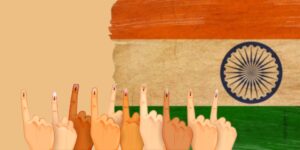
    India could end up facing a Sri Lanka-type economic crisis if it doesn’t stop the “culture of freebies” and subsidies in sectors like agriculture, NITI Aayog member Ramesh Chand has warned.

    What is a Freebie?

    • The term Freebies is not new; rather it is a prevalent culture in Indian politics (in the name of socialism).
    • The political parties are always trying to outdo each other in luring the Indian voters with assorted freebies.
    • From free water to free smartphones the Indian politicians promise everything to attract prospective voters in favour.
    • This trend has gained more momentum in the recent times with the political parties being innovative in their offerings as the ‘traditional free water and electricity’ is no longer sufficient as election goodies.

    Examples of freebies

    1. Promise of Rs 15 lakh in our bank accounts
    2. Free TV, Laptops
    3. Free electricity
    4. Loan waivers
    5. Offering free public transport ride to all women in Delhi

    Why are such policies popular among the public?

    • Failure of economic policies: The answer lies in the utter failure of our economic policies to create decent livelihood for a vast majority of Indians.
    • Quest for decent livelihood: The already low income had to be reoriented towards spending a disproportionately higher amount on education and health, from which, the state increasingly withdrew.
    • Prevailing unemployment:  Employment surveys have shown that employment growth initially slowed down from the 1990s, and then has turned negative over the past few years.
    • Increased cost of living: Real income growth of the marginal sections has actually slowed down since 1991 reforms.
    • Increased consumerism: The poor today also spend on things which appear to be luxuries; cellphones and data-packs are two such examples which are shown as signs of India’s increased affluence.
    • Necessity: For migrant workers, the mobile phone helps them keep in touch with their families back home, or do a quick video-call to see how their infant is learning to sit up or crawl.

    Can Freebies be compared with Welfare Politics?

    • These freebies are not bad. It is a part of social welfare.
    • Using freebies to lure voters is not good.
    • Voter’s greediness may lead to a problem in choosing a good leader.
    • When we don’t have a good leader then democracy will be a mockery.

    Impact of such policies

    • Never ending trail: The continuity of freebies is another major disadvantage as parties keep on coming up with lucrative offers to lure more number of votes to minimize the risk of losing in the elections.
    • Burden on exchequer: People forget that such benefits are been given at the cost of exchequer and from the tax paid.
    • Ultimate loss of poors: The politicians and middlemen wipe away the benefits and the poor have to suffer as they are deprived from their share of benefits which was to be achieved out of the money.
    • Inflationary practice: Such distribution freebie commodity largely disrupts demand-supply dynamics.
    • Lethargy in population: Freebies actually have the tendency to turn the nation’s population into: Lethargy and devoid of entrepreneurship.
    • Money becomes only remedy: Everyone at the slightest sign of distress starts demanding some kind of freebies from the Govt.
    • Popular politics: This is psychology driving sections of the population expecting and the government promptly responds with immediate monetary relief or compensation.

    What cannot be accounted to a freebie?

    • MGNREGA scheme (rural employment guarantee scheme)
    • Right to Education (RTE)
    • Food Security through fair price shops ( under National Food Security Act)
    • Prime Minister Kisan Samman Yojana (PM-KISAN)

    Arguments in favour

    • Social investment: Aid to the poor is seen as a wasteful expenditure. But low interest rates for corporates to get cheap loans or the ‘sop’ of cutting corporate taxes are never criticized.
    • Socialistic policy: This attitude comes from decades of operating within the dominant discourse of market capitalism.
    • Election manifesto: Proponents of such policies would argue that poll promises are essential for voters to know what the party would do if it comes to power and have the chance to weigh options.
    • Welfare: Economists opine that as long as any State has the capacity and ability to finance freebies then its fine; if not then freebies are the burden on economy.
    • Other wasteful expenditure: When the Centre gives incentives like free land to big companies and announce multi-year tax holidays, questions are not asked as to where the money will come from.

    A rational analysis of freebies

    • Winning election and good governance are two different things. The role of freebies to avail good governance is definitely questionable.
    • The social, political and economic consequences of freebies are very short-lived in nature.
    • There are many freebies and subsidies schemes available in many States but we still find starvation deaths, lack of electricity, poor education and health service.
    • Hence the sorrow of the masses of India cannot be solved by freebies or by incentives.

    So are not freebies meant only to attract voters and swing voters by concentrating on a preferential group or community?

    Way forward

    • It can be agreed that a democracy requires popular support for its rule to continue. The sops and freebies to the poor buy it the requisite votes.
    • But the democratic process of election and election promises should be clear. It should not control voters thought.
    • What some people term as ‘populism’ actually constitutes what real economics should be.
    • If you deprive people of what they really need, you will have to throw allurements at them.
    • This can only be stopped if political masters try to follow what economist EA Schumacher had conveyed through his seminal work Small is beautiful – “Treat economics as if people matter.”

    Conclusion

    • There is nothing wrong in having a policy-led elaborate social security programme that seeks to help the poor get out of poverty.
    • But such a programme needs well thought out preparation and cannot be conjured up just before an election.


    UPSC 2022 countdown has begun! Get your personal guidance plan now! (Click here)

  • What is Collegium System?

    What is Collegium System?

    • The Collegium of judges is the Indian Supreme Court’s invention.
    • It does not figure in the Constitution, which says judges of the Supreme Court and High Courts are appointed by the President and speaks of a process of consultation.
    • In effect, it is a system under which judges are appointed by an institution comprising judges.
    • After some judges were superseded in the appointment of the CJI in the 1970s, and attempts made subsequently to effect a mass transfer of High Court judges across the country.
    • Hence there was a perception that the independence of the judiciary was under threat. This resulted in a series of cases over the years.

    Evolution: The Judges Cases

    • First Judges Case (1981) ruled that the “consultation” with the CJI in the matter of appointments must be full and effective.
    • However, it rejected the idea that the CJI’s opinion, albeit carrying great weight, should have primacy.
    • Second Judges Case (1993) introduced the Collegium system, holding that “consultation” really meant “concurrence”.
    • It added that it was not the CJI’s individual opinion, but an institutional opinion formed in consultation with the two senior-most judges in the Supreme Court.
    • Third Judges Case (1998): On a Presidential Reference for its opinion, the Supreme Court, in the Third Judges Case (1998) expanded the Collegium to a five-member body, comprising the CJI and four of his senior-most colleagues.

    The procedure followed by the Collegium

    Appointment of CJI

    • The President of India appoints the CJI and the other SC judges.
    • As far as the CJI is concerned, the outgoing CJI recommends his successor.
    • In practice, it has been strictly by seniority ever since the supersession controversy of the 1970s.
    • The Union Law Minister forwards the recommendation to the PM who, in turn, advises the President.

    Other SC Judges

    • For other judges of the top court, the proposal is initiated by the CJI.
    • The CJI consults the rest of the Collegium members, as well as the senior-most judge of the court hailing from the High Court to which the recommended person belongs.
    • The consultees must record their opinions in writing and it should form part of the file.
    • The Collegium sends the recommendation to the Law Minister, who forwards it to the Prime Minister to advise the President.

    For High Courts

    • The CJs of High Courts are appointed as per the policy of having Chief Justices from outside the respective States. The Collegium takes the call on the elevation.
    • High Court judges are recommended by a Collegium comprising the CJI and two senior-most judges.
    • The proposal, however, is initiated by the Chief Justice of the High Court concerned in consultation with two senior-most colleagues.
    • The recommendation is sent to the Chief Minister, who advises the Governor to send the proposal to the Union Law Minister.

    Does the Collegium recommend transfers too?

    • Yes, the Collegium also recommends the transfer of Chief Justices and other judges.
    • Article 222 of the Constitution provides for the transfer of a judge from one High Court to another.
    • When a CJ is transferred, a replacement must also be simultaneously found for the High Court concerned. There can be an acting CJ in a High Court for not more than a month.
    • In matters of transfers, the opinion of the CJI “is determinative”, and the consent of the judge concerned is not required.
    • However, the CJI should take into account the views of the CJ of the High Court concerned and the views of one or more SC judges who are in a position to do so.
    • All transfers must be made in the public interest, that is, “for the betterment of the administration of justice”.

    Loopholes in the Collegium system

    • Lack of Transparency: Opaqueness and a lack of transparency, and the scope for nepotism are cited often.
    • Judges appointing Judge: The attempt made to replace it with a ‘National Judicial Appointments Commission’ was struck down by the court in 2015 on the ground that it posed a threat to the independence of the judiciary.
    • Criteria: Some do not believe in full disclosure of reasons for transfers, as it may make lawyers in the destination court chary of the transferred judge.

    Way ahead

    • In respect of appointments, there has been an acknowledgment that the “zone of consideration” must be expanded to avoid criticism that many appointees hail from families of retired judges.
    • The status of a proposed new memorandum of procedure, to infuse greater accountability, is also unclear.
    • Even the majority of opinions admitted the need for transparency, now Collegiums’ resolutions are now posted online, but reasons are not given.


    UPSC 2022 countdown has begun! Get your personal guidance plan now! (Click here)

  • Retirement spree in SC may affect efforts to scale down pendency

    The retirements in the topmost rung of the judiciary in 2022 will encompass changes in the powerful Supreme Court Collegium and see two new Chief Justices in a span of months.

    Why in news?

    • The retirements come at a time when the court is in the process of steadying itself after particularly brutal waves of the pandemic.

    Pendency in Supreme Court

    • The Supreme Court’s statistics show that 70,362 cases are pending with it as on April 1, 2022.
    • Over 19% of them are not ready to be placed before a Bench for judicial hearing as they have not completed the required preliminaries.
    • While 52,110 are admission matters, 18,522 are regular hearing cases.
    • The number of Constitution Bench cases (both main and connected matters) totals 422.

    General scenario: Pendency of Cases

    • India’s legal system has the largest backlog of pending cases in the world – as many as 30 million pending cases.
    • This number is continuously increasing and this itself shows the inadequacy of the legal system.
    • And also due to this backlog, most of the prisoners in India’s prisons are detainees awaiting trial.

    Factors leading to under-performance of Indian Judiciary

    • The issue of heavy arrears pending in the various courts of the country has been a matter of concern since the time of independence.
    • The primary factors contributing to docket explosion and arrears as highlighted by Justice Malimath Committee report are as follows:
    1. Population explosion
    2. Litigation explosion
    3. Hasty and imperfect drafting of legislation
    4. Plurality and accumulation of appeals (Multiple appeals for the same issue)
    5. Inadequacy of judge strength
    6. Failure to provide adequate forums of appeal against quasi-judicial orders
    7. Lack of priority for disposal of old cases (due to the improper constitution of benches)
    8. Issue of appointment in Quasi-Judicial Bodies

    Way ahead

    • For pendency, time limits should be prescribed for all cases based on priorities.
    • So setting time standards is essential and it will vary for different cases, and also for different courts depending on their disposal capacity.
    • Alternative disputes resolution (ADR) mechanisms should be promoted for out-of-court settlements.


    UPSC 2022 countdown has begun! Get your personal guidance plan now! (Click here)

  • Language sensitivity and provisions in Constitution

    Context

    Language sensitivity has been a feature of selfhood in the case of every Indian language.

     Sensitivity to language

    • From ancient times, a sensitivity to language difference has almost been the core of Dravidic self-hood.
    • A similar sensitivity existed among the speakers of Prakrits in ancient times.
    • It was in one of the Prakrits that Mahavir had presented his teachings in the sixth century BCE.
    • Eighteen centuries later, Acharya Hemachandra, a major Jain scholar, poet, mathematician and philosopher, produced his Desinamamala, a treatise on the importance of Prakrit words used in Gujarat of his times as against those from Sanskrit.
    • Mahatma Gandhi, who defined the idea of selfhood for India in Hind Swaraj (1909), chose to write this iconic book in Gujarati.

    Constitutional provision

    • The official language used for communication between the States shall be the language that has been in use at the time of adoption of the Constitution.
    • The move from English to Hindi can take place only if, ‘two or more states agree’ for the shift.
    • Article 344 (4) provides for a ‘Committee consisting of thirty members’, ‘twenty’ from the Parliament and ‘ten’ from State assemblies, for safeguarding language-related provisions.

    The distribution between two ministries

    • The functions and the scope of the committee, as laid down by the Constitution, are further clarified by the practice of distribution of language as a subject between two Ministries, the Human Resource Development (HRD) Ministry and the Home Ministry.
    • The scope of the HRD Ministry extends to education and the promotion of cultural expression.
    • The Home Ministry’s scope extends to safeguarding relations of the States with the ‘union’, protecting the linguistic rights of language minorities and the promotion of Hindi.
    • The last of these, the Constitution states, has to be ‘without interference with other languages.

    Data on language decline

    • In 2011, Hindi speakers accounted for 43.63% of the total population, with a total of 52.83 crore speakers.
    • In 1971, the number was 20.27 crore, accounting for 36.99% of the total population.
    • Between 2001 and 2011, the growth in proportion of the population was 2.6%.
    • The next most spoken language, Bangla, had negative growth.
    • It was spoken by 8.30% of Indians in 1991, 8.11% in 2001 and by 8.03% in 2011.
    • Telugu, which slid from 7.87% in 1991, to 7.19% in 2001 and 6.70% in 2011, has a similar story to tell.
    • Tamil recorded 6.32% of the total population in 1991, 5.91% in 2001 and 5.70% in 2011.
    • The only major language to show decadal growth (though small) was Gujarati.
    • And the only small yet scheduled language to show good growth was Sanskrit.

    Reasons for Hindi’s growth

    • The 52.83 crore speakers of Hindi (as recorded in 2011) included not just the speaker of ‘Hindi’ but also those of more than 50 other languages.
    • Bhojpuri and most languages of Himachal Pradesh, Uttarakhand, Chhattisgarh, Rajasthan and Jharkhand have also been pushed into the Hindi package.
    • Had the Census not included these other languages under Hindi, the strength of Hindi speakers would have gone down to about 39 crore, — just a little under 32% of the total population in 2011 — and would have looked not too different from those of other scheduled languages.
    • The data for English speakers is far more truthful. Census 2011 reports a total of 3,88,793 Indians as English speakers (2,59,678 men and 1,29,115 women).

    Hindi in comparison to other languages in the Eighth schedule

    • Among the languages included in the Eighth Schedule, Hindi falls within the younger lot of languages.
    • On the other hand, Tamil, Kannada, Kashmiri, Marathi, Oriya, Sindhi, Nepali and Assamiya have a much longer/older history.
    •  As a language of knowledge too, Tamil, Kannada, Bangla and Marathi (with their abundance of encyclopaedias and historical literature), quite easily outshine Hindi.

    Conclusion

    A language evolves slowly and cannot be forced to grow by issuing ordinances.

    UPSC 2022 countdown has begun! Get your personal guidance plan now! (Click here)

  • Idea that judges appoint judges is wrong: CJI

    The impression that “judges appoint judges” in India is wrong. It is the government which “finally appoints the judges in the name of the President of India, the head of our state”, Chief Justice of India N.V. Ramana said in conversation with US Supreme Court judge.

    What did the CJI say??

    • There is an impression that in India judges appoint judges. It is a wrong impression.
    • The appointment is done through a lengthy consultative process known as collegium system. Many stakeholders are consulted.

    What is Collegium System?

    • The Collegium of judges is the Indian Supreme Court’s invention.
    • It does not figure in the Constitution, which says judges of the Supreme Court and High Courts are appointed by the President and speaks of a process of consultation.
    • In effect, it is a system under which judges are appointed by an institution comprising judges.
    • After some judges were superseded in the appointment of the CJI in the 1970s, and attempts made subsequently to effect a mass transfer of High Court judges across the country.
    • Hence there was a perception that the independence of the judiciary was under threat. This resulted in a series of cases over the years.

    Evolution: The Judges Cases

    • First Judges Case (1981) ruled that the “consultation” with the CJI in the matter of appointments must be full and effective.
    • However, it rejected the idea that the CJI’s opinion, albeit carrying great weight, should have primacy.
    • Second Judges Case (1993) introduced the Collegium system, holding that “consultation” really meant “concurrence”.
    • It added that it was not the CJI’s individual opinion, but an institutional opinion formed in consultation with the two senior-most judges in the Supreme Court.
    • Third Judges Case (1998): On a Presidential Reference for its opinion, the Supreme Court, in the Third Judges Case (1998) expanded the Collegium to a five-member body, comprising the CJI and four of his senior-most colleagues.

    The procedure followed by the Collegium

    Appointment of CJI

    • The President of India appoints the CJI and the other SC judges.
    • As far as the CJI is concerned, the outgoing CJI recommends his successor.
    • In practice, it has been strictly by seniority ever since the supersession controversy of the 1970s.
    • The Union Law Minister forwards the recommendation to the PM who, in turn, advises the President.

    Other SC Judges

    • For other judges of the top court, the proposal is initiated by the CJI.
    • The CJI consults the rest of the Collegium members, as well as the senior-most judge of the court hailing from the High Court to which the recommended person belongs.
    • The consultees must record their opinions in writing and it should form part of the file.
    • The Collegium sends the recommendation to the Law Minister, who forwards it to the Prime Minister to advise the President.

    For High Courts

    • The CJs of High Courts are appointed as per the policy of having Chief Justices from outside the respective States. The Collegium takes the call on the elevation.
    • High Court judges are recommended by a Collegium comprising the CJI and two senior-most judges.
    • The proposal, however, is initiated by the Chief Justice of the High Court concerned in consultation with two senior-most colleagues.
    • The recommendation is sent to the Chief Minister, who advises the Governor to send the proposal to the Union Law Minister.

    Does the Collegium recommend transfers too?

    • Yes, the Collegium also recommends the transfer of Chief Justices and other judges.
    • Article 222 of the Constitution provides for the transfer of a judge from one High Court to another.
    • When a CJ is transferred, a replacement must also be simultaneously found for the High Court concerned. There can be an acting CJ in a High Court for not more than a month.
    • In matters of transfers, the opinion of the CJI “is determinative”, and the consent of the judge concerned is not required.
    • However, the CJI should take into account the views of the CJ of the High Court concerned and the views of one or more SC judges who are in a position to do so.
    • All transfers must be made in the public interest, that is, “for the betterment of the administration of justice”.

    Loopholes in the Collegium system

    • Lack of Transparency: Opaqueness and a lack of transparency, and the scope for nepotism are cited often.
    • Judges appointing Judge: The attempt made to replace it with a ‘National Judicial Appointments Commission’ was struck down by the court in 2015 on the ground that it posed a threat to the independence of the judiciary.
    • Criteria: Some do not believe in full disclosure of reasons for transfers, as it may make lawyers in the destination court chary of the transferred judge.

    Way ahead

    • In respect of appointments, there has been an acknowledgment that the “zone of consideration” must be expanded to avoid criticism that many appointees hail from families of retired judges.
    • The status of a proposed new memorandum of procedure, to infuse greater accountability, is also unclear.
    • Even the majority opinions admitted the need for transparency, now Collegiums’ resolutions are now posted online, but reasons are not given.


    UPSC 2022 countdown has begun! Get your personal guidance plan now! (Click here)

  • Need for one common language

    Last week, Home Minister Amit Shah suggested that states should communicate with each other in Hindi rather than English, while stressing that Hindi should not be an alternative to local languages.

    This again sparked the debate of “Hindi imposition”.

    How widely is Hindi spoken in India?

    • The 2011 linguistic census accounts for 121 mother tongues, including 22 languages listed in the 8th Schedule of the Constitution.
    • Hindi is the most widely spoken, with 52.8 crore individuals, or 43.6% of the population, declaring it as their mother tongue.
    • The next highest is Bengali, mother tongue for 97 lakh (8%) — less than one-fifth of Hindi’s count (Chart 2).
    • In terms of the number of people who know Hindi, the count crosses more than half the country.
    • Nearly 13.9 crore (over 11%) reported Hindi as their second language, which makes it either the mother tongue or second language for nearly 55% of the population.

    Has it always been this widespread?

    • Hindi has been India’s predominant mother tongue over the decades, its share in the population rising in every succeeding census.
    • In 1971, 37% Indians had reported Hindi as their mother tongue, a share that has grown over the next four censuses to 38.7%, 39.2%, 41% and 43.6% at last count (Chart 1).
    • This begs the question as to which mother tongues have declined as Hindi’s share has risen.
    • A number of mother tongues other than Hindi have faced a decline in terms of share, although the dip has been marginal in many cases.
    • For example, Bengali’s share in the population declined by just 0.14 percentage points from 1971 (8.17%) to 2011 (8.03%).
    • In comparison, Malayalam (1.12 percentage points) and Urdu (1.03 points) had higher declines among the mother tongues with at least 1 crore speakers in 2011.
    • Punjabi’s share, on the other hand, rose from 2.57% to 2.74%.
    • At the other end of the scale (among the 22 languages listed in the 8th Schedule of the Constitution) were Malayalam, whose numbers rose by under 59% in four decades, and Assamese, rising just over 71% (Chart 3).

    What explains Hindi’s high numbers?

    • One obvious explanation is that Hindi is the predominant language in some of India’s most populous states, including Uttar Pradesh, Madhya Pradesh and Bihar.
    • Another reason is that a number of languages are bracketed under Hindi by census enumerators.
    • In 2011, there were 1,383 mother tongues reported by people, and hundreds were knocked out.
    • These mother tongues were then grouped into languages.
    • You will find that under Hindi, they have listed nearly 65 mother tongues.
    • Among them is Bhojpuri, and 5 crore people have reported Bhojpuri as their mother tongue, but the census has decided that Bhojpuri is Hindi.
    • If one were to knock out the other languages merged with Hindi, the total figure goes down to 38 crore.

    And how widely is English spoken?

    • Although English, alongside Hindi, is one of the two official languages of the central government, it is not among the 22 languages in the 8th Schedule; it is one of the 99 non-scheduled languages.
    • In terms of mother tongue, India had just 2.6 lakh English speakers in 2011 — a tiny fraction of the 121 crore people counted in that census.
    • That does not reflect the extent to which English is spoken.
    • It was the second language of 8.3 crore respondents in 2011, second only to Hindi’s 13.9 crore.
    • If third language is added, then English was spoken — as mother tongue, second language or third language — by over 10% of the population in 2011, behind only Hindi’s 57%.
    • It is still not a scheduled language in India, when it should be.

    Where is English most prevalent?

    • As mother tongue, Maharashtra accounted for over 1 lakh of the 2.6 lakh English speakers.
    • As second language, English is preferred over Hindi in parts of the Northeast.
    • Among the 17.6 lakh with Manipuri (an 8th Schedule language) as their mother tongue in 2011, 4.8 lakh declared their second language as English, compared to 1.8 lakh for Hindi.
    • Among the non-scheduled languages spoken in the Northeast, Khasi, predominant in Meghalaya, was the mother tongue of 14.3 lakh, of whom 2.4 lakh declared their second language as English, and 54,000 as Hindi.
    • The trends were similar for Mizo, and for various languages spoken in Nagaland, including Ao, Angami and Rengma.
    • Beyond the Northeastern languages, among 68 lakh with Kashmiri as their mother tongue, 2.8 lakh declared their second language as English, compared to 2.2 lakh who declared Hindi.

    Back2Basics: Eighth Schedule to the Indian Constitution

    • The Eighth Schedule lists the official languages of the Republic of India.
    • At the time when the Constitution was enacted, inclusion in this list meant that the language was entitled to representation on the Official Languages Commission.
    • This language would be one of the bases that would be drawn upon to enrich Hindi and English, the official languages of the Union.
    • The list has since, however, acquired further significance.
    • In addition, a candidate appearing in an examination conducted for public service is entitled to use any of these languages as the medium in which he or she answers the paper.
    • As per Articles 344(1) and 351 of the Indian Constitution, the eighth schedule includes the recognition of the 22 languages.

    ‘Classical’ languages in India

    Currently, six languages enjoy the ‘Classical’ status: Tamil (declared in 2004), Sanskrit (2005), Kannada (2008), Telugu (2008), Malayalam (2013), and Odia (2014).

    How are they classified?

    According to information provided by the Ministry of Culture in the Rajya Sabha in February 2014, the guidelines for declaring a language as ‘Classical’ are:

    • High antiquity of its early texts/recorded history over a period of 1500-2000 years;
    • A body of ancient literature/texts, which is considered a valuable heritage by generations of speakers;
    • The literary tradition be original and not borrowed from another speech community;
    • The classical language and literature being distinct from modern, there may also be a discontinuity between the classical language and its later forms o

    UPSC 2022 countdown has begun! Get your personal guidance plan now! (Click here)

  • Strengthen secularism

    Context

    The High Court of Karnataka has not been able to settle the hijab issue. The petition has been filed in the apex court by a Muslim student against the high court judgement.

    Political and Constitutional dimensions of the issue

    • The issue of the hijab is political as well as constitutional.
    • The top court will examine the constitutional aspect and its judgment will hopefully settle the issue.
    • But the political dimension of the hijab issue will continue to trouble Indian society for a long time.
    • The Indian Constitution provides for freedom of religion and conscience on the one hand and secularism for the governance of the country on the other.

    Understanding the freedom of religion under Indian Constitution

    • Under the Indian Constitution, there is a separation of religion from the state as in Europe.
    • The essence of India’s secularism is that the state has no religion.
    • This is clear from Articles 27 and 28 of the Constitution.
    • Article 27 says that no tax can be levied for promoting any particular religion.
    • In other words, no public revenue is permitted to be spent in favour of any particular religion. 
    • Article 28 says that no religious instruction shall be given in any educational institutions wholly maintained out of state funds.
    • The same Article says that no educational institution recognised or aided by the state shall compel any person to attend religious classes or worship therein.
    • Article 25(2)(a) empowers the state to regulate secular activities associated with religious practice.
    • Article 15 prohibits any kind of discrimination on the ground of religion.
    • Freedom of religion is subject to other fundamental rights: Above all, freedom of religion is made subject to other fundamental rights, apart from the reasonable restrictions on the grounds of public order, morality and health.
    • Thus, the freedom of religion under the Constitution does not enjoy the same status as other secular rights such as equality before law, non-discrimination, right to life and liberty, etc.

    Why India needs to be secular

    • Theocracy will ensure the disintegration of the country.
    • 1] India is a multi-religious country where the largest minority is around 200 million.
    • The Government of India had notified as many as six minority religions in the country.
    • So, a theocratic state with the majority religion as the state religion is an unworkable proposition.
    • 2] Complex structure: Another crucial factor which makes a theocratic state impossible in India is the complex, inegalitarian, hierarchical and oppressive social structure of the majority religion.
    • 3] There would be no equality: Since a theocratic state based on the religious texts, in the Indian context, would mean a state which would deny equality before law and equal protection of law to the subaltern class and discriminate against them on the basis of caste, it will be inherently unstable.
    • This may lead to perennial conflicts and the eventual disintegration of society.
    • Therefore, we reach the inevitable conclusion that India, as a nation, can survive only as a secular state where the state has no religion and does not promote any religion.

    Conclusion

    Secularism was chosen as the foundational principle of the republic to keep the nation united. Enlightened citizens should realise that if secularism is jettisoned, the hard-won national unity will be in peril. It is the patriotic duty of every citizen to strengthen secularism and thus save the republic.

    UPSC 2022 countdown has begun! Get your personal guidance plan now! (Click here)

  • Who are Denotified Tribes (DNTs)?

    A standing committee of Parliament, tabled last week, has criticised the functioning of the development programme for de-notified, nomadic and semi-nomadic tribes.

    Who are de-notified, nomadic and semi-nomadic tribes?

    • These are communities who are the most vulnerable and deprived.
    • Denotified tribes (DNTs) are communities that were ‘notified’ as being ‘born criminal’ during the British regime under a series of laws starting with the Criminal Tribes Act of 1871.
    • They mostly belong to the medieval period Banjaras.
    • Nomadic and semi-nomadic communities are defined as those who move from one place to another rather than living at one place all the time.

    What is the history of deprivation faced by these communities?

    • This has a long history, first during colonial rule, and then in independent India.
    • These communities are largely politically ‘quiet’ — they do not place their demands concretely before the government for they lack vocal leadership and also lack the patronage of a national leader.
    • Many commissions and committees constituted since Independence have referred to the problems of these communities. These include the:
    1. Criminal Tribes Inquiry Committee, 1947 constituted in the United Provinces (now Uttar Pradesh)
    2. Ananthasayanam Ayyangar Committee in 1949 (it was based on the report of this committee the Criminal Tribes Act was repealed)
    3. Kaka Kalelkar Commission (also called first OBC Commission) constituted in 1953
    4. In 1965, an Advisory Committee constituted for revision of the SC and ST list under the chairmanship of B N Lokur referred to denotified tribes
    5. The B P Mandal Commission constituted in 1980 also made some recommendations on the issue

    Policy measures for DNTs

    • A National Commission for De-notified, Nomadic and Semi-Nomadic Tribes (NCDNT) was constituted in 2006 by the then government.
    • It was headed by Balkrishna Sidram Renke and submitted its report in June 2008.
    • It said that it is an irony that these tribes somehow escaped the attention of our Constitution makers and thus got deprived of the Constitutional support unlike SCs and STs.
    • The Renke commission estimated their population at around 10.74 crore based on Census 2001.
    • A new Commission constituted in February 2014 to prepare a state-wise list, which submitted its report on January 8, 2018, identified 1,262 communities as de-notified, nomadic and semi-nomadic.
    • Much recently, the Minister of Social Justice and Empowerment launched the Scheme for Economic Empowerment of De-notified, Nomadic, and Semi Nomadic Communities (SEED).

    Why in news now?

    • While a number of these tribes are categorised under SC, ST and OBC, many are not.
    • The standing committee report in Parliament has cited a statement by the Secretary, Department of Social Justice and Empowerment, that 269 DNT communities are not covered under any reserved categories.
    • These communities are frequently left out because they are less visible and difficult to reach.

    What is DWBDNC, and what is its role?

    • The DWBDNC stands for the Scheme for welfare of Denotified, Nomadic and Semi Nomadic communities (DWBDNC).
    • The commission report submitted in 2018 had recommended the setting of up a permanent commission for these communities.
    • But since most DNTs are covered under SC, ST or OBC, the government felt setting up a permanent commission, which would deal with redress of grievances.
    • The government therefore set up the DWBDNCs under the Societies Registration Act, 1860 under the aegis of Ministry of Social Justice and Empowerment.

    The Idate Commission

    • The DWBDNC was constituted on February 21, 2019 under the chairmanship of Bhiku Ramji Idate.
    • Also, a committee has been set up by the NITI Aayog to complete the process of identification of the de-notified, nomadic and semi-nomadic communities (DNCs).
    • Ethnographic studies of DNCs are being conducted by the Anthropological Survey of India, with a budget of Rs 2.26 crore sanctioned.
    • On March 30, 2022 the DoPT issued an advertisement for the recruitment of consultants in the DWBDNC.


    UPSC 2022 countdown has begun! Get your personal guidance plan now! (Click here)

  • SC to hear plea against Electoral Bonds Scheme

    The CJI N will soon take up a long-pending challenge against the government’s electoral bonds scheme.

    What are Electoral Bonds?

    • Electoral bonds are banking instruments that can be purchased by any citizen or company to make donations to political parties, without the donor’s identity being disclosed.
    • It is like a promissory note that can be bought by any Indian citizen or company incorporated in India from select branches of State Bank of India.
    • The citizen or corporate can then donate the same to any eligible political party of his/her choice.
    • An individual or party will be allowed to purchase these bonds digitally or through cheque.

    About the scheme

    • A citizen of India or a body incorporated in India will be eligible to purchase the bond
    • Such bonds can be purchased for any value in multiples of â‚č1,000, â‚č10,000, â‚č10 lakh, and â‚č1 crore from any of the specified branches of the State Bank of India
    • The purchaser will be allowed to buy electoral bonds only on due fulfillment of all the extant KYC norms and by making payment from a bank account
    • The bonds will have a life of 15 days (15 days time has been prescribed for the bonds to ensure that they do not become a parallel currency).
    • Donors who contribute less than â‚č20,000 to political parties through purchase of electoral bonds need not provide their identity details, such as Permanent Account Number (PAN).

    Objective of the scheme

    • Transparency in political funding: To ensure that the funds being collected by the political parties is accounted money or clean money.

    Who can redeem such bonds?

    • The Electoral Bonds shall be encashed by an eligible Political Party only through a Bank account with the Authorized Bank.
    • Only the Political Parties registered under Section 29A of the Representation of the People Act, 1951 (43 of 1951) and which secured not less than one per cent of the votes polled in the last General Election to the Lok Sabha or the State Legislative Assembly, shall be eligible to receive the Electoral Bonds.

    Restrictions that are done away

    • Earlier, no foreign company could donate to any political party under the Companies Act
    • A firm could donate a maximum of 7.5 per cent of its average three year net profit as political donations according to Section 182 of the Companies Act.
    • As per the same section of the Act, companies had to disclose details of their political donations in their annual statement of accounts.
    • The government moved an amendment in the Finance Bill to ensure that this proviso would not be applicable to companies in case of electoral bonds.
    • Thus, Indian, foreign and even shell companies can now donate to political parties without having to inform anyone of the contribution.

    Issues with the Scheme

    • Opaque funding: While the identity of the donor is captured, it is not revealed to the party or public. So transparency is not enhanced for the voter.
    • No IT break: Also income tax breaks may not be available for donations through electoral bonds. This pushes the donor to choose between remaining anonymous and saving on taxes.
    • No anonymity for donors: The privacy of the donor is compromised as the bank will know their identity.
    • Differential benefits: These bonds will help any party that is in power because the government can know who donated what money and to whom.
    • Unlimited donations: The electoral bonds scheme and amendments in the Finance Act of 2017 allows for “unlimited donations from individuals and foreign companies to political parties without any record of the sources of funding”.

    Way ahead

    • The worries over the electoral bond scheme, however, go beyond its patent unconstitutionality.
    • The concern about the possibility of misuse of funds is very pertinent.
    • The EC has been demanding that a law be passed to make political parties liable to get their accounts audited by an auditor from a panel suggested by the CAG or EC. This should get prominence.
    • Another feasible option is to establish a National Election Fund to which all donations could be directed.
    • This would take care of the imaginary fear of political reprisal of the donors.


    UPSC 2022 countdown has begun! Get your personal guidance plan now! (Click here)

  • No need for laws to enforce duties on citizens: AG

    Attorney-General K.K. Venugopal said that there was no need to enact specific laws to “enforce” fundamental duties on citizens.

    What is the case?

    • The Supreme Court is entertaining a public interest litigation (PIL) petition to enforce the fundamental duties of citizens, including patriotism and unity of nation, through “comprehensive, well-defined laws”.

    Precursor to AG’s remark

    • The Supreme Court has directed in the Ranganath Mishra judgment of 2003 regarding the implementation of the Justice J.S. Verma Committee’s report on the “operationalization of fundamental duties”.
    • The committee’s work was a part of a report of the National Commission to Review the Working of the Constitution.
    • The report had urged the government to sensitise people to, and create general awareness of, their duties and the protection of minorities and freedom of religion.

    What are Fundamental Duties?

    • The fundamental duties of citizens were added to the constitution by the 42nd Amendment in 1976, upon the recommendations of the Swaran Singh Committee.
    • It basically imply the moral obligations of all citizens of a country and today, there are 11 fundamental duties in India, which are written in Part IV-A of the Constitution, to promote patriotism and strengthen the unity of India.
    • The FDs obligate all citizens to respect the national symbols of India, including the constitution, to cherish its heritage, preserve its composite culture and assist in its defence.
    • They also obligate all Indians to promote the spirit of common brotherhood, protect the environment and public property, develop scientific temper, abjure violence, and strive towards excellence in all spheres of life.

    Judicial interpretation of FDs

    • The Supreme Court has held that FDs are not enforceable in any Court of Law.
    • It ruled that these fundamental duties can also help the court to decide the constitutionality of a law passed by the legislature.
    • There is a reference to such duties in international instruments such as the Universal Declaration of Human Rights and International Covenant on Civil and Political Rights, and Article 51A brings the Indian constitution into conformity with these treaties.

    Total FDs

    • Originally ten in number, the fundamental duties were increased to eleven by the 86th Amendment in 2002.

    The 10 fundamental duties are as follows:

    1. To oblige with the Indian Constitution and respect the National Anthem and Flag
    2. To cherish and follow the noble ideas that inspired the national struggle for freedom
    3. To protect the integrity, sovereignty, and unity of India
    4. To defend the country and perform national services if and when the country requires
    5. To promote the spirit of harmony and brotherhood amongst all the people of India and renounce any practices that are derogatory to women
    6. To cherish and preserve the rich national heritage of our composite culture
    7. To protect and improve the natural environment including lakes, wildlife, rivers, forests, etc.
    8. To develop scientific temper, humanism, and spirit of inquiry
    9. To safeguard all public property
    10. To strive towards excellence in all genres of individual and collective activities

    The 11th fundamental duty which was added to this list is:

    1. To provide opportunities for education to children between 6-14 years of age, and duty as parents to ensure that such opportunities are being awarded to their child. (86th Amendment, 2002)

    Try this PYQ from CSP 2017:

    Q. Which of the following is/are among the Fundamental Duties of citizens laid down in the Indian Constitution?

    1. To preserve the rich heritage of our composite culture
    2. To protect the weaker sections from social injustice
    3. To develop the scientific temper and spirit of inquiry
    4. To strive towards excellence in all spheres of individual and collective activity.

    Select the correct answer using the codes given below:

    (a) 1 and 2 only

    (b) Only 2

    (c) 1, 3 and 4 only

    (d) 1, 2, 3 and 4


    [wpdiscuz-feedback id=”vi1m5s5vrg” question=”Please leave a feedback on this” opened=”1″]Post your answers here.[/wpdiscuz-feedback]


    UPSC 2022 countdown has begun! Get your personal guidance plan now! (Click here)