💥Join UPSC 2027,2028 Mentorship (July Batch) + XFactor Notes & Microthemes PDF

Author: Access Account

  • Analyse the role of local bodies in providing good governance at local level and bring out the pros and cons merging the rural local bodies with the urban local bodies.

    The 73rd and 74th Constitutional Amendments established the framework for Panchayati Raj and urban local bodies, promoting inclusive development and addressing local issues effectively.

    Role of local bodies in providing good governance at local level 

    1. Decentralisation and Self-Governance: bringing governance closer to citizens and enhancing democratic participation in decision-making affecting daily lives. Eg-  Gram Sabhas 
    2. Rule of Law: Local bodies enforce regulations such as building codes, sanitation rules, and land use policies. Eg- municipalities taking action against illegal encroachments.
    3. Responsiveness: Local bodies respond quickly to local issues such as waste management. Eg-  the Indore Municipal Corporation swiftly implemented waste segregation policies, earning Indore the title of the cleanest city in India.
    4.  Consensus-Oriented: Eg- Village Development Plans (VDPs) involve consultations with local communities to align projects with their needs, promoting consensus.
    5. Equity and Inclusiveness: Programs like Pradhan Mantri Awas Yojana (PMAY), implemented by local bodies, aim to provide affordable housing to the economically weaker sections, ensuring social equity.
    6. Effectiveness and Efficiency: Eg- as per World Bank, decentralisation and local governance through PRIs reduced corruption and leakages in public welfare schemes by about 15-20%.
    7. Accountability: Eg- social audits of MGNREGA (Mahatma Gandhi National Rural Employment Guarantee Act).

    Challenges

    1. Financial – Panchayats in India generate only 1% of their revenue through local taxes. The majority of their income, approximately 95%, comes from grants by the central and state governments.
    2. Parastatal Agencies: State-run bodies like urban development authorities and public corporations often take over key functions, limiting the autonomy of local bodies. Eg- Delhi Jal Board
    3. Improper Devolution of Functions: Many states have not fully devolved powers to local governments, leaving them with restricted control over important governance functions.
    4. Proxy Representation – Corporator pati/Mayor Pati syndrome/ Sarpanch Pati syndrome
    5. Lack of Staff:  local bodies face a severe shortage of skilled personnel, hindering their ability to perform assigned functions. As of 2022, about 35% of municipal corporation posts remain unfilled, affecting service delivery and governance.

    Pros And Cons Of Merging Rural Local Bodies With Urban Local Bodies 

    ProsCons
    Rural areas will benefit from improved infrastructure from urban areas like roads, water, education, etc., aligning them with urban development standards

    Integrated Development Strategy: Eg. transportation networks can be designed to seamlessly connect urban centers with surrounding rural areas, improving accessibility.

    Administrative Cost Reduction: By consolidating services, merging can lead to a decrease in administrative overhead and  streamlining of operations.

    Unified development and governance: the merger will bring rural areas under governance frameworks of urban local bodies, enabling implementation of master plans, development control regulations and economic growth strategies, fostering better planning and sustainable development.

    Already ongoing policies and frameworks like District planning committee, Rurban mission have their essence in merger of rural and urban policy and developmental needs.
    Increased taxation: rural areas fears enhanced taxation, as urban bodies levy higher charges than village adding financial burdens on residents.

    Strain on municipal resources: ULBs already struggling with limited funds and manpower resources, making it difficult to provide efficient and timely services to merged areas.

    Political resistance from both side: village leadership will be wary of losing their influence, while existing councilors in urban areas might resist diverting funds or staff at expense of their constituencies.

    Local Needs Overlook: The unique needs and priorities of rural communities may be overshadowed by urban concerns, leading to inadequate attention to rural development issues.

    Skewed Resource Distribution: There’s a risk that resources may still be unevenly distributed, favoring urban areas due to their larger populations and political influence, thereby perpetuating existing inequalities.

    Identity and Heritage Erosion: Rural communities may fear losing their unique identities and cultural heritage in a merged governance system, as urban priorities may overshadow traditional practices.

    Way forward

    1. Instead of directly merging rural bodies with urban ones, create independent municipal councils in peri-urban areas, improve infrastructure and governance, then merge with larger municipalities.
    2. Revitalize gram sabhas and ward committees through inclusive discussions and use of social media to facilitate member communication.

    Drawing from Gandhian Swarajya, any merger must ensure local self-governance and empowerment, where both rural and urban needs are addressed without compromising the essence of decentralization.

  • “The duty of the Comptroller and Auditor General is not merely to ensure the legality of expenditure but also its propriety.” Comment.

    CAG is a constitutional body under article 148 that ensures Executive accountability in India. It audit the receipts and expenditures of the Central Government, State Governments, and other bodies that receive funding from the Government. B.R Ambedkar called CAG as most important office in Constitution of India.

    Role of CAG ensuring legality of expenditure 

    1. Article 149: CAG audits all receipts and expenditures of the Union and States to ensure legality. Eg: In the 2G Spectrum Case (2010), CAG found illegal allocation of licenses without proper procedures.
    2. Article 266: Funds from the Consolidated Fund can only be withdrawn with legislative approval. Eg: CAG’s audit of Assam’s finances revealed unauthorized withdrawals from the Consolidated Fund.
    3. Article 150: The accounts must be kept in a form prescribed by the President on CAG’s advice. Eg: CAG’s audit of Railway finances found non-compliance with the prescribed format.
    4. Section 13 of CAG Act, 1971: Authorizes CAG to audit expenditures to ensure they are legally available for the purpose. Eg: CAG’s audit of MGNREGA funds revealed misuse on non-permitted projects.
    5. Article 151: CAG submits audit reports to the President/Governor for presentation in Parliament/State Legislature. Eg: CAG’s report on Commonwealth Games highlighted legal breaches in procurement.

    CAG ensuring propriety of expenditure 

    1. Section 17 of CAG Act, 1971: Allows CAG to audit the efficiency and propriety of transactions.
      Eg: In the Coal Block Allocation audit, CAG questioned the lack of competitive bidding.
    2. Regulation 41: CAG can conduct propriety audits to ensure spending is wise and economical. Eg: CAG’s audit of Mid-Day Meal Scheme found excessive infrastructure spending with little impact.
    3. Propriety Audit: CAG examines the fairness and wisdom of expenditures. Eg: In the Debt Waiver Scheme audit, CAG found ineligible beneficiaries receiving waivers.
    4. Subsidy/Grant Audits: CAG audits the effective use of government subsidies. Eg: In Ujjwala Yojana, CAG found that many beneficiaries could not afford LPG refills.
    5. Transparency in Spending: Eg. audits of projects like the Delhi Metro Rail Corporation are published online, allowing citizens to scrutinize how public funds are utilized. 
    6. Safeguarding Public Interest by scrutinizing financial management practices within government entities. Eg. CAG’s audits revealed inefficiencies and mismanagement in Air India.

    Issues with CAG

    1. Though legal and regulatory audits are compulsory, but proprietary audits are discretionary.                         
    2. Paul Appleby criticized role of CAG as auditor by saying it has negative and paralyzing effect on administration.
    3. Accounts are audited after actual expenditure is made, a mere post-facto audit.

    Adopting a British System where CAG is both Comptroller as well as Auditor General can strengthen role of CAG as  one of the bulwarks of the democratic system of government in India.

  • “The growth of cabinet system has practically resulted in the marginalisation of the parliamentary supremacy.” Elucidate.

    The cabinet system is a government in which the real executive power rests with a cabinet of ministers who are collectively responsible to the legislature (Article 75). Parliamentary sovereignty refers to the supremacy of the Parliament in the legislative process.

    Marginalization Of Parliamentary Supremacy Due To Cabinet System

    • No proper separation of power –  results in abuse of power that leads to arbitrariness.
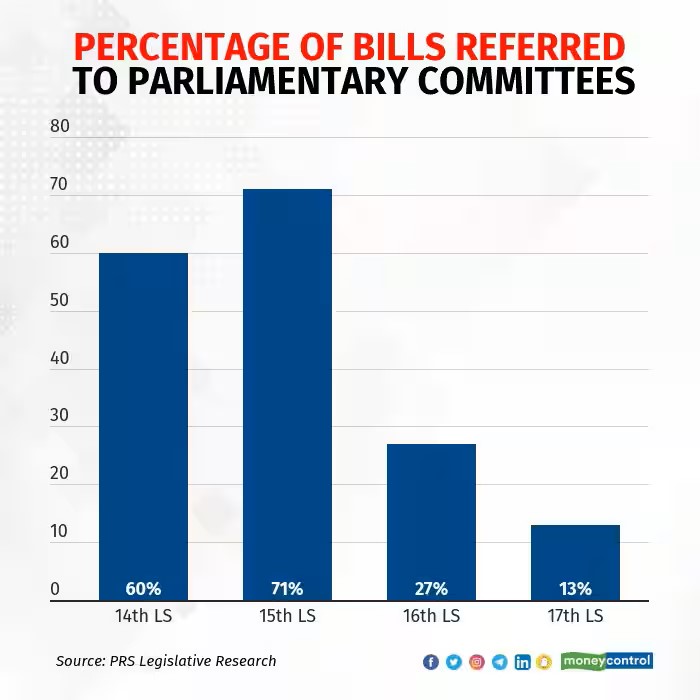
    • Decline of Parliamentary Committees –  The percentage of Bills having been referred to the DRSCs is reduced from 60% during 14th LS to 71% and 27%.
    • Lesser time spent on scrutiny- Eg- about 69 percent of the Bills introduced in Parliament were passed in the same session during the 17th Lok Sabha. 
    • Delegated Legislation: In V.K.Kunjlengam Case, supreme court noted Increasing reliance on delegated legislation means Parliament, reducing its supremacy in law-making.
    • Party Discipline: Parliamentary members are often expected to follow party lines, limiting independent legislative debate. Eg- use of Whip
    • Frequent ordinances, now 11 per year as compared to 6 per year prior to 2010, bypasses parliament’s role of law making and accountability over executive.In D.C. Wadhwa vs. State of Bihar, the Supreme Court criticized the repetitive use of ordinances. 
    • Government Control over Parliamentary Agenda: The legislative agenda is predominantly set by the cabinet with minimal input from minority parties or independent members restricting diverse viewpoints from being represented in legislative processes.

    Role of parliament remains significant

    1. Ultimate Legislative Authority: All major laws and budgets require approval from Parliament after due deliberation. 
    2. Private Member’s Bills and Debates: Eg-  Transgender Persons (Protection of Rights) Bill
    3. Role of Committees: Eg-  Public Accounts Committee (PAC), chaired by the opposition, scrutinized the 2G spectrum case
    4. Opposition’s Role in Parliament: Intense debates on policies such as GST illustrate how opposition parties can mobilize public sentiment and challenge government actions effectively.
    5. Judicial Oversight: Eg- SC striking down of Section 66A of the IT Act in 2015 (Shreya Singhal case)

    Strengthening parliamentary processes is vital for a vibrant Indian democracy. Thus restoring the balance of power between the executive and legislature is essential for effective governance.

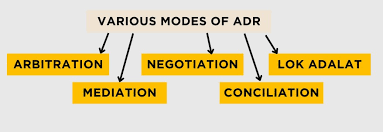
  • Explain and distinguish between Lok Adalats and Arbitration Tribunals. Whether they entertain civil as well as criminal cases?

    Lok Adalats and Arbitration Tribunals are Statutory instruments for alternative dispute resolution that aim to provide speedy and cost-effective resolution of disputes outside of the traditional court system.


    Difference Between Lok Adalat And Arbitration Tribunals

    AspectLokadalatArbitration Tribunal
    DefinitionA forum for resolving disputes through conciliation under the Legal Services Authorities Act, 1987.A quasi-judicial body established to resolve disputes outside the court system based on an arbitration agreement.
    NatureConciliatory and informal.Adversarial and formal, similar to court proceedings.
    AuthorityNon-judicial, presided over by a judge or a legal expert.Judicial authority to make binding decisions.
    Legal FrameworkGoverned by the Legal Services Authorities Act, 1987.Governed by the Arbitration and Conciliation Act, 1996.
    ProcessDispute resolution through negotiation, conciliation, and compromise.Resolution based on the arbitration agreement and arbitral award, with arbitrator(s) acting as a judge.
    Types of CasesPrimarily civil cases, including family disputes, land disputes, and some minor criminal cases (compoundable offenses).Primarily civil matters, especially commercial disputes; no jurisdiction over criminal cases.
    Binding NatureThe decisions (settlements) reached are binding and final if both parties agree.The arbitral award is binding on the parties and enforceable like a court decree.
    Cost of ProceedingsNo court feeParties bear the cost, which can be high due to arbitration fees.
    Powers and nature of cases and settlementThey can settle disputes based on compromise, and their decisions are considered as decrees of civil courts.Commercial disputes, business contracts, and international disputes.Not applicable for criminal or matrimonial disputes.
    Appeal MechanismGenerally, no appeal is allowed if the award is mutually agreed.Appeals can be filed in courts against arbitral awards under certain circumstances.

    Powers In Civil And Criminal Cases 

    1. Lok Adalats:
      1. Can entertain civil cases like property disputes, family disputes, land disputes.
      2. Can also take up criminal cases but only compoundable offenses (minor offenses where parties can settle).
    2. Arbitration Tribunals:
      1. Only civil cases, typically commercial disputes, can be addressed.
      2. No jurisdiction over criminal matters.
    IssueWay Forward
    Lack of AwarenessSri Krishna Committee suggests including ADR in legal literacy programs.
    Judicial InterventionUNCITRAL Model Law limits judicial interference.Law Commission (246th Report) calls for amending the Arbitration Act to reduce court involvement.
    High Costs of ArbitrationNITI Aayog advises promoting institutional arbitration with cost caps.

    As ‘Justice delayed is justice denied’. Both Lok Adalats and Arbitration Tribunals need to be strengthened to increase accessibility, affordability and quality of Justice in the spirit of Article 39.

  • Examine the need for electoral reforms as suggested by various committees with particular reference to “one nation – one election” principle.

    One nation-one election principle, which seeks to synchronize Lok Sabha and state assembly elections, aims to decrease the frequency of elections and streamline the electoral process, thereby improving efficiency and reducing costs.

    Electoral reforms as suggested by various committees 

    1. On  “one nation – one election”
    1. Ram Nath Covind Panel –  suggested 15 amendments including insertion of a new Article 82A and Amendment of Article 327.
    2. It was supported by Election Commission in 1983 itself. In 1999, the LCI headed by Justice B. P. Jeevan Reddy also advocated for simultaneous elections.
    3. In 2018, the Law Commission of India (LCI)– In 2018, it released a draft report on simultaneous elections and recommended three alternatives to synchronise elections in India.
    4. Other Reforms
    1. Dinesh Goswami Committee (1990): Recommended limits on election expenses, voter IDs, and transparent political funding.
    2. Tarkunde Committee (1975): Suggested proportional representation and state funding of elections.
    3. Indrajit Gupta Committee (1998): Advocated for state funding of elections.
    4. Vohra Committee (1993): Explored criminalization in politics.

    Need for electoral reforms and one nation – one election

    1. Reduced financial burden: The 2014 Lok Sabha elections cost ₹3,870 crore, while a single state election like Bihar (2015) cost ₹300 crore. ONOE can reduce costs to ₹4,500 crore overall. (ECI).
    2. Reduced use of Money Power – as per report by the Centre for Media Studies, the 2024 election is expected to cost approximately Rs 1,00,000 crore (increased from 6 paise per elector in 1951 to Rs 46 in 2014). Simultaneous elections will lower these costs.
    3. Less disruption from MCC: Frequent MCC impositions stall development work for months. Fewer elections will limit MCC duration and expedite governance.
    4. Improved administrative efficiency: Eg- over 11 million personnel were deployed in the 2019 elections. Simultaneous elections streamline this effort.
    5. Fewer populist measures: Governments announce short-term policies like farm loan waivers (e.g., ₹70,000 crore in 2008-09) during elections. Simultaneous polls would encourage long-term policy-making.
    6. Improved social harmony: Simultaneous elections reduce the polarization caused by repetitive campaigns. Eg- communal riots before Delhi Elections
    7. Increased voter participation – according to the Law Commission, ONOE will increase voter turnout because it will be more easy for people to cast many ballots at once

    Challenges Associated With One Nation One Election:

    1. Reduced Accountability: As Per Yogendra Yadav ONOE limits voters’ ability to hold governments accountable regularly, as they get fewer opportunities to express discontent with the ruling party’s performance.
    2. By-Elections due to the untimely resignation or death of an elected representative will still be necessary, thus continuing some level of electoral process throughout the year.
    3. Dilution of Local Issues: According to research by IDFC Institute, if elections are held simultaneously, there’s a 77% likelihood of voters favoring the same political party or alliance for both state assemblies and the Lok Sabha, national issues could overshadow local concerns.
    4. Imbalance of Power: A national party dominating the Lok Sabha elections could also sweep the state assembly elections, resulting in a lack of checks and balances on the ruling regime’s powers.
    5. Undermining Federalism by concentrating power at the center. States may lose autonomy and face reduced regional representation.
    6. Political Instability: In the era of coalition governments, there could be increased instances of horse-trading and disqualifications of MPs or MLAs, leading to political instability.
    7. Constitutional and Legal Hurdles: Eg- Ram Nath Covind panel suggested 15 amendments. There may be issues in generating consensus, potentially delaying its implementation
    8. Logistical Challenges such as the availability of electronic voting machines, personnel, and other resources.

    Way Forward

    1. Cluster State Elections: As suggested by Law Commission – two elections in five years or all elections falling due in a calendar year should be conducted together.
    2. Coupling the ‘no-confidence motion’ along with the ‘vote of confidence’ in an alternative government. Eg- Constructive vote of no confidence in Germany
    3. Building consensus among political parties and states through open dialogues, consultations, and deliberations

    However, since the issue is concerned with the federal structure which is part of Basic Structure of the Constitution (S. R. Bommai Judgment), further scrutiny and analysis of one nation one election is the need of the hour.

  • UPSC 2024 Mains GS1 Model Solutions

    The UPSC General Studies Paper 1 (GS1) is a crucial part of the Civil Services Mains Examination. Covering a diverse range of topics such as Indian heritage and culture, world history, geography, and social issues, it requires candidates to demonstrate in-depth knowledge and analytical skills. This page provides well-structured model answers for GS1 questions, designed to aid aspirants in understanding key themes and answering effectively in the exam.

    Below is a table of 20 questions from the GS1 2024 paper along with direct links to detailed model answers. You can also download the full set of model answers as a PDF. 

    UPSC Mains GS1 2024 Paper Questions and Answers

    S.No.QuestionsView Answer Link
    1Underline the changes in the field of society and economy from the Rig Vedic to the later Vedic period.View Answer
    2Estimate the contribution of Pallavas of Kanchi for the development of art and literature of South India.View Answer
    3What were the events that led to the Quit India Movement? Point out its results.View Answer
    4What is sea surface temperature rise? How does it affect the formation of tropical cyclones?View Answer
    5Why do large cities attract more migrants than smaller towns? Discuss in light of conditions in developing countries.View Answer
    6What is the phenomenon of cloudbursts? Explain.View Answer
    7What is the concept of demographic winter? Is the world moving towards such a situation? Elaborate.View Answer
    8Distinguish between gender equality, gender equity, and women empowerment. Why is it important to take gender concerns into account in program design and implementation?View Answer
    9Intercaste marriages between castes which have socio-economic parity have increased, but this is less true of interreligious marriages. Discuss.View Answer
    10What type of cooperation between government, NGOs, and private sectors be most effective in tackling socio-economic issues of development?View Answer
    11The great Cholas are remembered with great pride because of their achievements in art and architecture. Comment.View Answer
    12How far is it correct to say that the First World War was fought for the preservation of balance of power?View Answer
    13How far was the Industrial Revolution in England responsible for the decline of handicrafts and cottage industries in India?View Answer
    14The groundwater potential of the Gangetic valley is on serious decline. How does it affect the food security of India?View Answer
    15What are aurora australis and aurora borealis? How are these triggered?View Answer
    16What is a twister? Why are the majority of twisters observed in areas around the Gulf of Mexico?View Answer
    17What is regional disparity? How does it differ from diversity? How serious is the issue of regional disparity in India?View Answer
    18Despite comprehensive policies for equity and social justice, underprivileged sections are not yet getting full benefits of affirmative action envisaged by the Constitution. Comment.View Answer
    19Globalization has increased urban migration by skilled young unmarried women from various classes. How has this trend impacted personal freedom and relationships with family?View Answer
    20Critically analyse the proposition that there is a high correlation between India’s cultural diversities and socio-economic marginalities.View Answer

    Download UPSC GS1 2024 Full Model Answers PDF

    For a complete set of detailed model answers for the UPSC GS1 Paper, download the PDF below:

    Download Model Answers PDF

    Frequently Asked Questions (FAQs)

    1. What is the UPSC GS1 Paper about?
    The GS1 Paper of the UPSC Civil Services Mains Examination covers Indian Heritage and Culture, History, Geography of the World and Society. The aim is to test candidates’ ability to connect these subjects with contemporary issues.

    2. Why is GS1 important for UPSC aspirants?
    GS1 is a significant part of the UPSC Mains Examination as it helps assess candidates’ knowledge of key subjects like history, culture, and geography. High scores in GS1 can greatly boost overall Mains performance.

    3. What is the best way to prepare for GS1?
    A good preparation strategy for GS1 includes reading NCERT books, referring to standard reference books on history and geography, staying updated with current affairs, and practicing answer writing.

    4. Can I directly use these model answers in the exam?
    These model answers are designed to provide guidance and structure. It’s important to personalize them with your own understanding and connect them with current affairs and specific case studies.

    5. How do I download the full set of answers?
    You can download the complete PDF of model answers by clicking on the download link provided above.

    6. Are these model answers based on real UPSC questions?
    Yes, these answers are crafted based on real and closely related UPSC GS1 questions to give aspirants an authentic practice experience.

  • Critically analyse the proposition that there is a high correlation between India’s cultural diversities and socio-economic marginalities(GS1 2024 Question)

    “India is, the cradle of the human race, birthplace of human speech, mother of history, the grandmother of legend, & great grandmother of tradition.” – Mark Twain. However, this richness often intersects with socio-economic marginalities, disproportionately impacting certain communities.

    Cultural Diversity Intersect With Socio-Economic Marginalities Reinforcing Inequality

    1. Caste and Socio-Economic Marginality: Lower castes like SCs and STs face systemic discrimination, limiting access to education, jobs, and land. Eg- 79% of rural SC households rely on manual labour, reflecting their economic disadvantage (SECC 2011).
    2. Sociologist M.N.Srinivas in his concept of ‘dominant caste’ noted economic status of various cultural groups reflects historical privileges and disadvantages. Eg. Dominant castes like Brahmins, Jats, Marathas, Reddy, Yadavs, etc historically benefited from better access to education and employment.
    3. Tribal Identity and Economic Exclusion: suffer from high poverty and displacement due to development projects. 50% of STs live in multidimensional poverty (MPI 2019). Eg- Bhils in Narmada valley displaced due to Sardar sarovar dam.
    4. Religious Diversity and Economic Inequality: The Sachar Committee (2006) reported that Muslims lag behind in most socio-economic indicators.
    5. Linguistic Diversity and Regional Inequality: Eg. ASER report noted only 14% of tribal children in grade 3 have comprehension skills.
    6. Gender and Intersectionality: Women from marginalised cultural groups (SCs, STs, Muslims) experience double marginalisation due to both gender and socio-cultural identity. Only 11% of ST women complete higher education (NFHS-4), highlighting intersectional disadvantages.
    7. Geographic and ethnic factors especially in context of north-eastern states, which are rich cultural diverse region, but experiencing lower socio-economic development. Eg. Ongoing conflict of kuki vs meitei in Manipur.
    8. Policy and Governance Challenges: Affirmative action has helped, but elite capture within groups like OBCs leaves the most vulnerable excluded. Eg- Denotified Tribes (DNTs) and other subgroups often do not fully benefit from welfare schemes.

    Challenging the Proposition

    1. Political Representation: 15% of Parliament seats are reserved for SCs, and 7.5% for STs, enhancing political participation.
    2. Religious and Linguistic Minorities Thriving: Eg: Sikhs are one of the wealthiest agricultural communities, and Jains have the highest literacy and income levels in India (Census 2011).
    3. Affirmative Action Success: Reservations in education and employment for SCs, STs, and OBCs. SC/ST enrolment in higher education has risen to 21% due to reservation policies (AISHE 2020-21).
    4. Economic Liberalisation: Economic reforms have benefited certain sections of marginalised groups, particularly OBCs, in accessing jobs in sectors like IT and services.
    5. Development Programs: Government welfare schemes like MGNREGA and PM-KISAN have provided direct support to marginalised communities. Eg- MGNREGA created 309 crore person-days of work in 2022-23.
    6. Cultural enrichment: diversity has promoted different avenues such as art,food,tourism and handicrafts. Eg. Red ant chutney of odisha got GI tag.

    Way Forward

    1. Strengthen Implementation of Affirmative Action –  Sub-categorization of SC and ST as mandated by SC in State of Punjab & Ors. vs Davinder Singh & Ors.
    2. Promotion of Local Languages and culture: New Education Policy 2020 has supported the three-language policy.
    3. Cultural Integration and Economic Empowerment: Supporting tribal handicrafts in regions like the Northeast and Odisha can create sustainable livelihoods while preserving cultural heritage. 
    4. Improving Social Justice Systems: Strengthening the implementation of the Forest Rights Act of 2006 and PESA
    5. Fostering Community-Based Development: Eg- Kudumbshree Model of Kerala
    6. Enhancing Political Representation: Early implementation of 106th Constitutional Amendment Act.

    A a multi-pronged approach with stakeholder participation is need to realise the Trinity of Social, Political and Economic empowerment of Marginalised communities. As PM Modi stated, “The nation is not just land for us, but an inspirational unit,” emphasizing the importance of unity in addressing these disparities.

  • Globalization has increased urban migration by skilled, young, unmarried women from various classes. How has this trend impacted upon their personal freedom and relationship with family?(GS1 2024 Question)

    Globalization describes the growing interdependence of the world’s economies, cultures, and populations, brought about by cross-border trade in goods and services, technology, and flows of investment, people, and information, often led to changes in lifestyle, beliefs, ideologies and economies.

    Increased Urban Migration  By Skilled, Young, Unmarried Women From Various Classes Due To Globalization 

    1. Economic Opportunities in Urban Areas: According to a NASSCOM report (2021), the Indian IT sector is projected to create over 1.5 million new jobs by 2025, with women constituting about 34% of the workforce in these cities, highlighting the demand for skilled labor.
    2. Access to Education and Skill Development: As per All India Survey on Higher Education (AISHE) 2021-2022 which said that female enrolment in Higher Education increased to 2.07 crore in 2021-22 from 1.57 crore in 2014-15 
    3. Financial Independence and Personal Freedom: Working in urban tech sectors enables women to achieve financial autonomy. 
    4. Social Mobility: Migration provides young women with opportunities for upward social mobility, allowing them to improve their socio-economic status.
    5. Breaking Traditional Family Norms: A study by UN Women (2021) found that 60% of urban women prioritize their careers over traditional family expectations.
    6. Access to Better Living Standards: According to the National Sample Survey Office (NSSO, 2020), urban areas have seen a 20% increase in access to basic services, contributing to a higher quality of life that attracts young women.

    Globalization’s Impact on personal freedoms

    Positive Negative
    1. Economic Independence: reducing the pressure of early marriage and childbirth.

    2. Breaking Traditional Norms and to explore their personal identities, choose their attire, and build social networks. 

    3. Freedom in Lifestyle Choices about relationships, career paths, and social activities.

    4. Enjoying Fundamental rights like Right to bodily autonomy under Article 21.

    5. Professional Growth – Access to better career opportunities and skill development.

    6. Changing Attitudes: Eg:The MeToo movement in India has raised awareness and changed workplace policies on harassment.

    7. Increase in Live-In Relationships: A 2023 report by the India Today Group found that 18% of urban youth are open to live-in relationships, a significant increase from 5% in 2010. 
    1. Persistent Glass Ceiling: Women still face significant barriers in employment opportunities. Eg: In 2022, women held only 15% of senior management positions in India.

    2. Social Media Challenges: According to NCRB data, crimes against women increased by 15% in 2021.

    3. Socio-Cultural Expectations: often relegated to “pink-collar” jobs such as nursing and caregiving. India ranks 135th out of 156 countries in the Gender Gap Index (2022).

    4. Mental Health Issues: Among those aged 15-39, suicide has become a leading cause of death, with women accounting for 71% of these cases in this age group.

    Globalization’s Impact on familial relationship

    Positive Negative
    1. Secularization of Customs: The rising preference for court marriages over traditional big fat Indian weddings.

    2. Shift in Familial Expectations – Changing family roles as daughters become breadwinners or key contributors.

    3. Assertiveness in Nuclear Families: Women find it easier to assert their rights in nuclear families which has seen a rise due to globalization. 

    4. Financial support of family increases respect and status.

    5. Emotional Maturity: more self-aware and emotionally resilient, enabling them to handle family dynamics with patience and understanding. 
    1. Diminished Sacredness of Marriage: The divorce rate in India, though still low, has risen, with urban areas like Bangalore reporting a 4.5% divorce rate as per a 2022 study by the Indian Journal of Psychological Medicine.

    2. Emotional Distance: Urban migration often leads to less frequent interactions with family members, creating emotional distance. 

    3. Conflicts Over Independence: Migrant women may face disapproval from family regarding their lifestyle choices, such as working late hours or living independently. 

    4. Cultural and Generational Gaps: Migrant women may adopt new values and lifestyles that differ from their family’s traditions, leading to misunderstandings and tensions.

    As per american philosopher Nancy Fraser, “Globalization has the potential to both liberate and oppress women, depending on the context and the policies that are put in place.”

  • Despite comprehensive policies for equity and social justice, underprivileged sections are not yet getting the full benefits of affirmative action envisaged by the Constitution. Comment.(GS1 2024 Question)

    India’s constitutional vision of equity and social justice, embodied in preamble, Articles 15, 16, and 46, has led to extensive affirmative action policies. However, the gap between policy formulation and ground-level impact remains significant, revealing systemic issues in implementation and societal structures.

    Comprehensive Policies For Equity And Social Justice

    1. Constitutional Provisions guarantees Fundamental Rights(article 14,15,16,19) and Directive Principles of State Policy(art 46). 
    2. Welfare Schemes like the MGNREGA and the National Social Assistance Programme (NSAP). 
    3. Social Justice Institutions such as the NCSC, NCST, and the NHRC monitor violations, recommend policy changes, and ensure accountability in protecting human rights.
    4. Laws for Protection like Rights Of Persons With Disability Act, Prevention of Atrocities Act, Domestic Violence Act,etc.
    5. Educational and Health Reform: The Right to Education (RTE) Act and Ayushman Bharat.
    6. Judicial Contributions: Public Interest Litigations (PILs). Eg. Indira Sawhney Case 

    Achievements of Equity and Social Justice Policies 

    1. Poverty Reduction: As per Multidimensional Poverty Index (2023), India lifted 415 million people out of poverty between 2005-06 and 2019-21.
    2. Financial Inclusion: As of 2023, over 500 million Jan Dhan accounts have been opened,and 56% of these accounts belong to women, promoting gender-inclusive growth.
    3. Agricultural Growth and Rural Development:
    1. Mahatma Gandhi National Rural Employment Guarantee Act (MGNREGA): In 2022-23, 309 crore person-days of employment were generated.
    2. Pradhan Mantri Kisan Samman Nidhi (PM-KISAN): Under this scheme, farmers receive ₹6,000 annually in three instalments, benefiting 11 crore farmers as of 2023.
    3. Ayushman Bharat – Pradhan Mantri Jan Arogya Yojana (PM-JAY): Over 20 crore beneficiaries have been registered, providing free treatment for over 4 crore hospital admissions.
    1. Education – The Gross Enrolment Ratio (GER) at the elementary level reached 99.2% in 2022, reflecting near-universal enrolment.
    2. Pradhan Mantri Awas Yojana (PMAY): Over 3 crore houses have been constructed under the rural and urban versions of the scheme.
    3. Swachh Bharat Mission: Nearly 10 crore toilets were built, significantly improving sanitation access and contributing to the elimination of open defecation.

    Why are Underprivileged sections not getting the full benefits of affirmative action

    Political Factors

    1. Implementation Gaps: Programs like MGNREGA face delays in wage payments, with only 54% of households getting full work in 2022-23.
    2. Inconsistent Representation: 14% women representation in Parliament, Pati Panchayat in PRI’s
    3. Creamy Layer Effect: Mandal Commission Reported, affluent within disadvantaged groups, like the top 10% of SC/ST beneficiaries, dominate reservation benefits, leaving the most marginalized behind .
    4. Intersectionality Neglect: Policies often ignore intersections like Dalit women, who face dual discrimination.
    5. Economic Factors
    1. Poverty and Resource Access: 30% of SCs and 45% of STs live below the poverty line, limiting access to education and healthcare despite affirmative action.
    2. Quality vs. Quantity Debate: Kothari Commission noted Quantitative improvements in education (35% increase in SC/ST enrollment) lack qualitative support, such as skill development.
    3. Social Factors:
    1. Caste-Based Discrimination: as per NCRB, 50,900 cases of crimes against SCs in 2022 highlight ongoing caste bias.
    2. Lack of Awareness: 45% of rural SC/ST beneficiaries are unaware of affirmative action schemes, as per PRS Legislative Research (2021).
    3. Technological Factors:
    1. Data Deficiency: Absence of caste census data hampers effective policymaking, as highlighted by the Rangarajan Committee Report (2014).
    2. Digital Divide: Only 15% of rural households have internet access, limiting SC/ST students’ ability to benefit from online education.
    3. Poor Technology Integration: 60% of tribal villages lack banking infrastructure, causing delays in DBT schemes like PM-KISAN, as per NITI Aayog (2022).
    1. Weak Law Enforcement: Only 25% of cases under the SC/ST (Prevention of Atrocities) Act result in conviction, per NCRB (2022).
    2. Environmental Factors:
    1. Geographical Disparities: 60% of tribal villages in the Northeast lack access to secondary education, limiting benefits from affirmative action, per NITI Aayog (2020).
    2. Urban Marginalisation: 70% of urban migrant workers lack access to PDS and health benefits, per Aajeevika Bureau (2022).

    Way Forward

    1. Addressing Creamy Layer and Elite Capture: Introduce income criteria to ensure reservations benefit the economically disadvantaged within categories
    2. Promoting Social Inclusion and Awareness through initiatives like “Beti Bachao, Beti Padhao”.
    3. Implement a socio-educational index that considers educational and socio-economic factors along with caste. The Sachar Committee Report recommended data-driven approaches to better serve marginalized groups.
    4. Sub-categorization of SC and ST to advance affirmative action as mandated by SC in State of Punjab & Ors. vs Davinder Singh & Ors.

    “The spirit of inclusion pervades every aspect of our social life. Affirmative action must be strengthened as an instrument of inclusion.” – President Droupadi Murmu

  • What is regional disparity? How does it differ from diversity? How serious is the issue of regional disparity in India?(GS1 2024 Question)

    Regional disparity refers to the unequal distribution of economic resources, development, and opportunities across different regions within a country. It results in significant differences in income, living standards, infrastructure, and employment levels across areas.

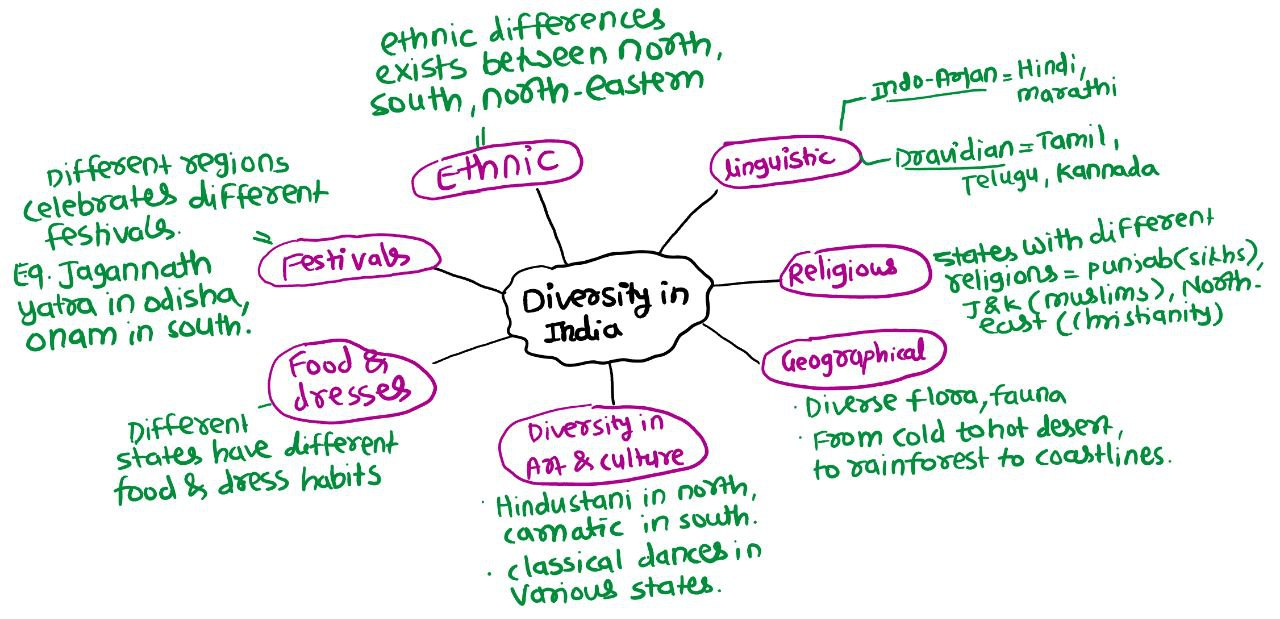
    Difference between regional disparity and diversity

    AspectRegional DisparityDiversity
    Definitionunequal distribution of resources, wealth, and opportunities across different regions of a country. (negative)existence of varied cultural, linguistic, economic, and social differences within a society or region. (positive)
    BasisEconomic: Primarily economic and developmental, focusing on gaps in growth between regions.Cultural: Rooted in cultural, ethnic, linguistic, and social differences.
    Examples in IndiaThe per capita income of the five richest states in India was 338% higher than that of the bottom states in 2017-18. India has 122 officially recognized languages, but there are more than 19,500 languages and dialects spoken as a mother tongue. 
    Nature of IssueExclusive: Leads to grievances and demands for equitable development and resources, like special category status.Inclusive: Celebrates coexistence of different identities and is not necessarily viewed as problematic.
    EffectsCreates political instability, demand for autonomy, and social unrest in underdeveloped regions.Enhances cultural richness and plurality, but can also lead to identity-based conflicts if not managed properly.
    SolutionsBalanced regional development through schemes like NITI Aayog’s Aspirational Districts Program, and increasing focus on backward regions to reduce disparities.Promoting inter-cultural understanding, protection of minority languages, and celebrating diversity through national initiatives.

    Seriousness of issue of regional disparity in India 

    A report titled ‘Relative Economic Performance of Indian States: 1960-61 to 2023-24’ by Economic Advisory Council to the Prime Minister (EAC-PM) has highlighted a significant disparity in the economic performance of Indian states

    • The economic divide between northern and southern states – 5 Southern states have emerged as major contributors to India’s GDP, accounting for 30% by March 2024. On the other hand, Uttar Pradesh contributes only 9.5% of GDP and Bihar just 4.3%
    • Industrial and connectivity Disparity: The Western and Southern regions have strong transport and logistics networks while northeastern states have poor connectivity.  
    • Agrarian Crisis in regions like Vidarbha due to inadequate irrigation, lack of access to credit, and market fluctuations, where high rates of farmer suicides are reported, is a stark contrast to the agricultural prosperity found in Western Maharashtra.
    • Educational and Health Facilities: Kerala boasts a literacy rate of 96.2% and a Human Development Index (HDI) of 0.79, one of the highest in India. Bihar, on the other hand, has a literacy rate of just 70.9% (Census 2011) and a high infant mortality rate (IMR) of 35 per 1,000 live births (SRS 2020), compared to Kerala’s IMR of 6.
    • Insurgencies,demands for autonomy and regional unrest, particularly in states like Nagaland and Manipur, often stem from feelings of neglect and underdevelopment. 
    • Migration Issues: The heavy influx of migrants from states like Bihar and Uttar Pradesh to metropolitan cities such as Mumbai reflects economic desperation. Migrants often face precarious living conditions, limited access to services, and employment challenges, which can strain urban resources and infrastructure.

    Impact of Regional Disparity

    Human Geographist Sucheta Yadav in her article “The Problem of Regional Disparities: An Overview in Indian Context” noted- Regional imbalances lead to various consequences, including agitations for statehood, such as the movements for separate Vidarbha and Bodoland. Migration from backward to developed areas occurs in search of better livelihoods, while social unrest arises from disparities, exemplified by Naxalism. Urbanization causes housing shortages and pollution in metropolitan cities, while rural youth face frustration due to limited job opportunities. Accumulating wealth in developed regions further exacerbates these imbalances, leaving less developed areas behind.

    Way forward 

    1. Enhance Agricultural Investment, particularly in lagging regions, focusing on water harvesting, soil conservation, rural infrastructure, and high-value crops to stimulate economic growth and reduce disparities. Eg. need for evergreen revolution especially in backward states.
    2. Prioritize Service Sector Growth: Promote the banking, insurance, and infrastructure sectors in backward regions, as they are vital for economic acceleration and can create job opportunities.
    3. Upgrade Basic Infrastructure such as power, transport, telecommunications, and irrigation in underdeveloped states to enhance the quality of life and attract private investment. Eg. Bharatmala, promotion of renewable energy.
    4. Revise Financial Resource Allocation: Shift the allocation formula for centrally collected resources to prioritize population size and backwardness indices, ensuring funds are directed toward the most disadvantaged districts rather than evenly distributed.
    5. Focus on Governance Quality: Strengthen governance in backward states to improve revenue generation and project execution, thereby creating a conducive environment for attracting both domestic and foreign investments.

    India’s regional diversity reveals significant disparities in development, emphasizing the need for inclusive growth strategies that honor its rich cultural tapestry while addressing economic inequalities across various regions.