💥Join UPSC 2027,2028 Mentorship (July Batch) + XFactor Notes & Microthemes PDF

Author: Explains

  • 05 October 2018 | High Relevance vs Low Relevance News

    Reading News for UPSC is utmost important and rising number of questions year on year in UPSC Prelims is a testimony of this

    We are starting a daily series where we will analyze news covered in The Hindu, Indian Express and other newspapers which are important from exam perspective and which are not

    Important news would have been covered in our daily news coverage in form of newscards.

    Unimportant ones will be mentioned here and a short description regarding why it is not relevant for the exam

    Click on news headlines to read the full news

    High Relevance News

    No trial in sewer death cases

    https://www.civilsdaily.com/news/no-trial-in-sewer-death-cases/

    Read about Rashtriya Garima Abhiyan. Can be asked in Prelims. Continuation of manual scavenging can be a topic for Mains.

    India launches ‘Operation Samudra Maitri’ to help tsunami-hit Indonesia

    https://www.civilsdaily.com/news/india-launches-operation-samudra-maitri-to-help-tsunami-hit-indonesia/

    Read about the rescue operation and cause of tsunami covered in B2B. Important for Prelims.

    [pib] 21 IORA Countries adopt the Delhi Declaration on Renewable Energy

    https://www.civilsdaily.com/news/pib-21-iora-countries-adopt-the-delhi-declaration-on-renewable-energy/

    Read about IORA & Global Renewable Energy Atlas. Can be asked in Prelims.

    Low Relevance News

    Johnson and Johnson ‘faulty’ hip implants: SC seeks Centre’s response to plea seeking action officials

    The Supreme Court has sought the Central government’s response to a petition seeking action against government officials who cleared the sale of the “faulty” DePuy ASR hip implants of Johnson and Johnson “without proper clinical trial”

    No important points in the news from the exam point of view.

  • [Burning Issue] India-Iran Relations

    WHY INDIA NEEDS IRAN?

    • Conventionally, for energy security
    1. Iran is amongst India’s top oil suppliers
    • But since the 1990s, Iran’s importance has become ‘strategic’
    1. Iran’s cooperation is critical for India’s security given that
    2. Pak supports terrorism in India
    3. India’s influence in Afghanistan is marginal
    • India needs Iran to moderate Pak’s influence in West Asia
    1. Iran is a leader in the Muslim world
    2. Pak is anti-India
    • Access to Afghanistan and Central Asia
      1. Till 1947 (undivided India), India shared a border with Iran

    WHY IRAN NEEDS INDIA

    1. India is Iran’s second largest oil buyer after China.
    2. While Iran is of strategic importance to India, the reverse is not true. India is, at best, a trade partner for Iran

    IRRITANTS IN INDO-IRAN TIES

    • Growing Saudi-India-US-Israel relations have irked Iran.
      1. in retaliation, Iran, for the first time, has linked the plight of Muslims in Gaza, Yemen, and Bahrain, with those in Kashmir
    • Warming Iran-Pak-China ties have annoyed India.
    • Slow Chahbahar port development has annoyed Iran
      1. Iran has indicated that the port will not be used exclusively by India and that China and Pak may be invited

    JOINT COMPREHENSIVE PLAN OF ACTION (JCPOA)

    • About the deal
      1. Signed between Iran and P5+1 (the five permanent members of the U.N. Security Council and Germany) in 2015.
      2. Iran agreed to a joint comprehensive plan of action (JCPOA) in return for removal of the economic sanctions against it.
      3. The JCPOA drastically reduced Iran’s uranium enriching capacity & levels, enriched stockpiles and centrifuges. Besides, it provided for stringent inspection and monitoring by international agencies.
    • Has Iran complied?
      1. Yes. All other signatories as well as the UN (The IAEA) have confirmed Iran’s compliance of the deal (latest report, Aug 2017)
    • Benefits for Iran
      1. Removal of sanctions boosted her economy. GDP grew at 9.2% in the latest quarter (jul-sep 2017).
    • Why USA/Trump wants to trash the deal?
    1. The present deal doesn’t address (US ally) Israel’s concerns adequately.
    2. Moreover, Trump administration has never explicitly stated why it considers the JCPOA “the worst agreement in American diplomatic history”.
    • Trump has been hawkish towards Iran since he took over as President.
    1. Imposing new sanctions on its missile programmes and joining hands with its regional rivals in West Asia have been part of Trump’s Iran policy.

    Possible ramifications of cancellation of the JCPOA

    1. Hardliners in Iran will make a political comeback which will lead to uncertainty and instabilty in West Asian geopolitics
    2. Threat of nuclear proliferation as Iran may resume its nuclear weapons programme.
    3. Since EU supports Iran, the withdrawal will hurt US-EU relations. The Trans-Atlantic Security Partnership will lead to secondary US sanctions against EU companies dealing with Iran.
    4. USA’s unilateral decision to withdraw will hurt its stature as a global leader.

    Impact on India

    • Indian Diaspora
    1. Political instability in West Asia will undermine their security and remittances.
    • Crude Oil
    1. Iran accepts payment in Indian currency for its oil.
    2. India will have to depend more on Saudi Arabia and Iraq for oil supplies.
    3. Reduction of supplier diversity will make India more vulnerable to oil price shocks
    • Chabahar
    1. India could lose access to Chahbahar port of Iran which is a strategic necessity for India’s access to Central Asia.
    • Iran-Pak-China
    1. This axis could get strengthened.

    Way ahead for India

    1. India will have to maintain a fine balance between US, Israel and Saudi on the one hand and Iran on the other.
    2. India should make greater use of Euro-denominated transactions for its oil trade to minimise the adverse impacts.
    3. Also, efforts should be made to revitalise mechanisms like the Asian Clearing Union.
  • 04 October 2018 | High Relevance vs Low Relevance News

    Reading News for UPSC is utmost important and rising number of questions year on year in UPSC Prelims is a testimony of this

    We are starting a daily series where we will analyze news covered in The Hindu, Indian Express and other newspapers which are important from exam perspective and which are not

    Important news would have been covered in our daily news coverage in form of newscards.

    Unimportant ones will be mentioned here and a short description regarding why it is not relevant for the exam

    Click on news headlines to read the full news

    High Relevance News

    ‘1,200 km/hour’: World’s first Hyperloop passenger capsule unveiled

    https://www.civilsdaily.com/news/1200-km-hour-worlds-first-hyperloop-passenger-capsule-unveiled/

    Read and make notes about Hyperloop technology. Important for Prelims.

    Gujarat acts to save its pride

    https://www.civilsdaily.com/news/gujarat-acts-to-save-its-pride/

    Note unique features of Gir lions and the geographical features of Gir forests. Can be asked in Prelims.

    Lagoon villas to come to Lakshadweep’s emeralds

    https://www.civilsdaily.com/news/lagoon-villas-to-come-to-lakshadweeps-emeralds/

    India’s coastline has huge trade and tourism potential. Note all such points. Can be used in mains answers.

    Low Relevance News

    Russian President Vladimir Putin arrives in India

    Russian President Vladimir Putin landed in New Delhi on October 4 for the annual India-Russia summit which could see the signing of military deals totalling close to $10 billion

    No important points in the news from the exam perspective

  • 3 October 2018 | Prelims Daily with Previous Year Questions

    Q.1) With reference to RE-INVESTMENT, consider the following statements:

    1. It is an initiative of NITI Aayog.
    2. RE-Invest is a global platform to explore strategies for development and deployment of renewables.

    Which of the given statements is/are correct?

    a) Both 1 and 2

    b) Only 1

    c) Only 2

    d) None of the above

    Inspired by: [pib] PM inaugurates first assembly of the International Solar Alliance

    https://www.civilsdaily.com/news/pib-pm-inaugurates-first-assembly-of-the-international-solar-alliance/

    Q.2) With reference to the Karnataka Good Samaritan and Medical Professional (Protection and Regulation during Emergency Situations) Bill 201, consider the following statements:

    1. The legislation aims to give protection to good Samaritans and ensure immediate medical assistance for road accident victims within the ‘golden hour’.
    2. It also makes it mandatory for all government and private hospitals to give first aid to accident victims
    3. It covers the costs of “running around to courts and police stations” and grants the “Samaritans” exemption from repeated attendance in courts.

    Which of the given statements is/are incorrect?

    a) 2 and 3

    b) Only 2

    c) Only 3

    d) None of the these

    Inspired by: President gives assent to India’s first good Samaritan Bill

    https://www.civilsdaily.com/news/president-gives-assent-to-indias-first-good-samaritan-bill/

    Q.3) Global Geoparks Network (GGN) is an initiative of:

    a) WWF

    b) IUCN

    c) UNESCO

    d) UNEP

    Inspired by: Geological Survey chooses heritage locations in Maharashtra and Karnataka for UNESCO site status

    https://www.civilsdaily.com/news/geological-survey-chooses-heritage-locations-in-maharashtra-and-karnataka-for-unesco-site-status/

    Q.4) With reference to the “Experimental Forecasts Land Surface Product”, a hydrological model for Moisture Mapping of India, consider the following statements:

    1. The model has been prepared by ISRO.
    2. This for the first time will provide a country-wide soil moisture forecast at seven and 30-day lead times.
    3. The forecast is crucial for the Kharif Season.

    Which of the given statements is/are correct?

    a) All of the above

    b) 1 and 2

    c) Only 2

    d) Only 3

    Inspired by: For the first time, India gets its soil moisture map

    https://www.civilsdaily.com/news/for-the-first-time-india-gets-its-soil-moisture-map/

    Q.5) The Economic Freedom Index is released by:

    a) IMF

    b) World Bank

    c) WEF

    d) None of the above

    Inspired by: India is placed 96th among 162 countries on Economic Freedom Index

    Business Standard


    For Solutions – Click Here

    Prelims Daily Archive – Click here

  • Samachar Manthan Week 16: Ayushman Bharat Scheme

    To know more about our Samachar Manthan course which deals with enhancing your Mains answer writing skills along with Current Affairs preparation, read & Subscribe here: https://www.civilsdaily.com/samachar-manthan/

  • [Burning Issue] India’s membership of Australia Group and Wassenaar Group

    Why in News?

    In last 1-year India has become the member of Australia group and the Wassenaar group

    https://s3.amazonaws.com/examsprint-api-prod/production/articles/thumb_9b9d255fe9e8aa5328369bad9da0d4d8.png


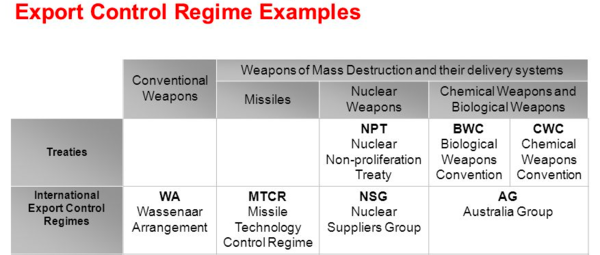
    India Joins the Australia Group

    • India has admitted as the 43rd member of the Australia Group
    • The group is an informal bloc of countries that keep a tight control over exports of substances used in the making of chemical weapons

    The Australian Group

    • The Australia Group is a multilateral export control regime (MECR) and an informal group of countries (now joined by the European Commission) established in 1985 (after the use of chemical weapons by Iraq in 1984) to help member countries to identify those exports which need to be controlled so as not to contribute to the spread of chemical and biological weapons
    • The group, initially consisting of 15 members, held its first meeting in Brussels, Belgium, in September 1989.
    • With the incorporation of India on January 19, 2018, it now has 43 members, including Australia, the European Commission, all 28 member states of the European Union, Ukraine, and Argentina
    • The name comes from Australia’s initiative to create the group. Australia manages the secretariat
    • The initial members of the group had different assessments of which chemical precursors should be subject to export control
    • Later adherents initially had no such controls
    • Today, members of the group maintain export controls on a uniform list of 54 compounds, including several that are not prohibited for export under the Chemical Weapons Convention but can be used in the manufacture of chemical weapons
    • In 2002, the group took two important steps to strengthen export control
    • The first was the “no-undercut” requirement, which stated that any member of the group considering making an export to another state that had already been denied an export by any other member of the group must first consult with that member state before approving the export
    • The second was the “catch-all” provision, which requires member states to halt all exports that could be used by importers in chemical or biological weapons programs, regardless of whether the export is on the group’s control lists
    • Delegations representing the members meet every year in Paris, France

    Significance for India

    • With its admission into the Australia Group, India is now part of three of the four key export control groups in the world
    • This includes the Missile Technology Control Regime, the Wassenaar Arrangement. The only export control group that India is not a part of is the elite Nuclear Suppliers Group (NSG)
    • Series of multilateral export control groups that India has joined “helps in establishing our credentials” for joining the NSG.
    • Joining the Australia Group would also help in “strengthening supply chain security in the dynamic industry fields of biotechnology and chemicals”, along with meeting non-proliferation objectives.

    India joins the Wassenaar arrangement

    • Elite export control regime Wassenaar Arrangement (WA) has decided to admit India as its new member

    About Wassenaar Agreement

    • The Wassenaar Arrangement was founded in 1996
    • Its stated aim is “to contribute to regional and international security and stability, by promoting transparency and greater responsibility in transfers of conventional arms and dual-use goods and technologies, thus preventing destabilizing accumulations.”
    • Its (WA) member countries are required to ensure that transfers of these items do not contribute to the development or enhancement of military capabilities which undermine these goals. The aim is also to prevent the acquisition of these items by terrorists.
    • New members are accepted based on specific criteria, including countries which produce/export arms or associated dual-use goods and technologies; establish national policies that restrict sale of arms and sensitive technologies to countries of concern; and adhere to non-proliferation regimes.
    • It is clubbed with mechanisms such as the Nuclear Suppliers Group (NSG), the Missile Technology Control Regime (MTCR) and the Australia Group
    • It comes on the heels of membership last year of the MTCR.

    Why did India get membership of Wassenaar Arrangement?

    • Even though India is not a signatory to the Non-Proliferation Treaty, it has managed to make its entry into the Wassenaar group.
    • India has managed to do that by updating its export control lists earlier this year, to bring it in line with international standards, including those required by the Wassenaar Arrangement.
    • To be precise, India approved SCOMET (Special Chemicals, Organisms, Materials, Equipment, and Technologies) items, mandatory under the Wassenaar Arrangement. Through the revised list of items, India also seeks to send a message about its larger commitment to non-proliferation.

    Significance for India

    https://currentaffairs.gktoday.in/wp-content/uploads/2017/12/WA-22.png

    • Boost international image: India’s formal entry into this group would further boost its image in the international arena.
    • Enhance its credentials in the field of non-proliferation: Even though India is not a signatory to the Non-Proliferation Treaty, it has managed to make its entry into the Wassenaar group, which would enhance its credentials in the field of non-proliferation.
    • India has built strong for NSG: With this development, India’s has built a strong case for its entry into the Nuclear Suppliers Group (NSG), which was opposed by China last year
    • Facilitate high technology tie-up: It will also facilitate high technology tie-ups with Indian industry and ease access to high-tech items for our defence and space programmes. It will also create grounds for realignment of India in export control policy framework of other WA members, including eligibility for certain licensing exceptions.
    • Enhances India’s chance to be member of UNSC: Being a responsible state in the international system, India is eyeing to play a more proactive role globally. Being a part of major groups like WA enhances India’s chances to get a permanent seat in United Nations Security Council in future.
  • 2 October 2018 | Prelims Daily with Previous Year Questions

    Q.1) Which of the following countries is/are the members of Gulf Cooperation Council?

    1. Bahrain
    2. Kuwait
    3. Oman
    4. Qatar

    Select the correct codes:

    a) 2, 3, 4

    b) 1 and 3

    c) 2 and 4

    d) All of the above.

    Inspired by: [op-ed snap] Raja Mandala: The Gulf in foreign policy

    https://www.civilsdaily.com/news/op-ed-snap-raja-mandala-the-gulf-in-foreign-policy/

    Q.2) The RUN-LLP (Reserve Unique Name – Limited Liability Partnership) is an initiative of-

    a) Ministry of Micro, Small and Medium Enterprises

    b) Ministry of Corporate Affairs

    c) Ministry of Commerce and Industry

    d) Ministry of Electronics and Information Technology

    Inspired by: [pib] Incorporation of Limited Liability Partnership (LLP) through a complete online system

    https://www.civilsdaily.com/news/pib-pib-incorporation-of-limited-liability-partnership-llp-through-a-complete-online-system/


    Q.3) Consider the following statements about Purchasing Managers’ Index (PMI):

    1. It is an indicator of business activity both in the manufacturing and services sectors.
    2. It is calculated separately for the manufacturing and services sectors.

    Which of the given statements is/are correct?

    a) Both 1 and 2

    b) Only 1

    c) Only 2

    d) None of the above

    Inspired by: Growth of Indian manufacturing sector picks up: Nikkei India Manufacturing PMI

    Business Standard

    Q.4) Vayoshreshtha Samman is a Scheme of National Awards instituted by –

    a) Ministry of Social Justice & Empowerment

    b) Ministry of HRD

    c) Ministry of Health and Family Welfare

    d) Ministry of Personnel, Public Grievances and Pensions

    Inspired by: Vice President Confers “Vayoshreshtha Samman – 2018”

    Press Information Bureau


    Q.5) The Wardha Resolution of the Working Committee of the INC is popularly known as:

    a) Swadeshi Resolution

    b) Quit India Resolution

    c) Civil Disobedience Resolution

    d) Resolution for Complete Independence

    Inspired by: CWC to meet in Wardha on Oct. 2

    The Hindu


    For Solutions – Click Here

    Prelims Daily Archive – Click here

  • [Burning Issue] Increasing Influence Of China In Indian Ocean And Its Impact In India

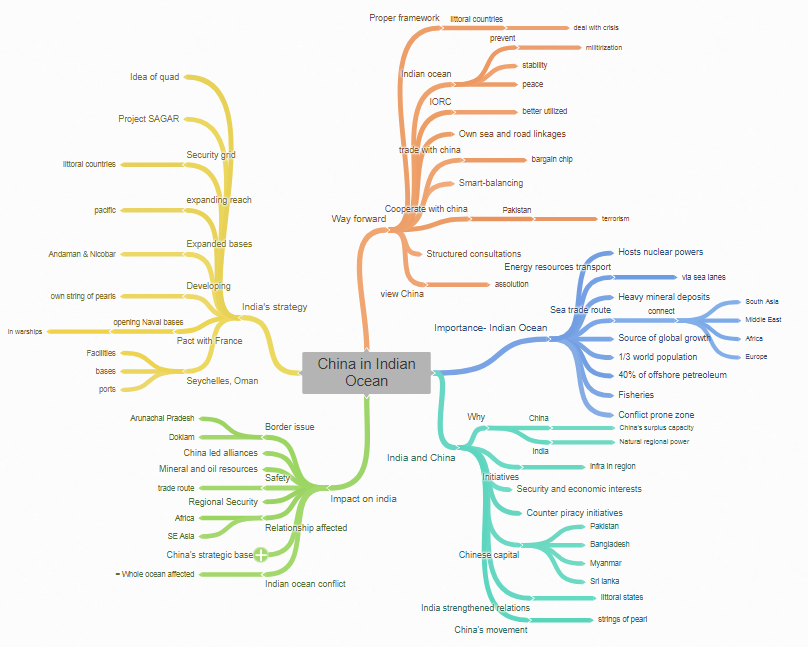
    The Indian Ocean is the world’s third largest body of water and has become a growing area of competition between China and India. Escalated activities such as port development and military exercises and rhetoric could endanger stability in a critical region for global trade flows.

    India has treated the Indian Ocean as an ocean of peace and stability. Now that China has decided that it is going to become one of the major player in the region, India has reasons to worry because China will come to India’s immediate neighbourhood.

    Importance of the Indian Ocean

    • The Indian Ocean littoral has the potential to become the leading source of new global growth over the next 20 years.
    • One-third of the world population lives in the region, including one-quarter of the UN members.
    • It provides critical sea trade routes that connect the Middle East, Africa, and South Asia with the broader Asian continent to the east and Europe to the west.
    • A number of the world’s most important strategic choke points are found in the Indian Ocean.
    • Indian Ocean channels carry 2/3rd of the world’s oil shipments, 1/3rd of the bulk cargo and half of all container traffic.
    • Nearly 40 per cent of the world’s offshore petroleum is produced in the Indian Ocean.
    • The Indian Ocean hosts heavy mineral deposits, and fisheries are increasingly important for both exports and domestic consumption.
    • China and India are dependent on energy resources transported via the secure sealanes in the Indian Ocean to fuel their economies.
    • India imports nearly 80 percent of its energy, mostly oil from the Middle East.
    • For New Delhi’s press to maintain economic growth, its dependency on the safe transport of resources will likely intensify.
    • The region is home to some of the most intense conflict-prone areas and hosts various nuclear powers of the world.

    India and China In Indian Ocean

    • China’s growing global influence and India’s rapid economic rise have heightened the ocean’s strategic value.
    • Both countries have developed initiatives to bolster infrastructure and other connections in the region.
    • Each country is seeking to strengthen ties with smaller regional states to secure their respective security and economic interests.
    • Since launching counter-piracy operations in 2009, Beijing has become increasingly active in the region.
    • Beijing’s regional vision outlines its One Belt, One Road plan.
    • China’s ties with regional states have deepened, including the influx of Chinese capital into construction projects in Bangladesh, Myanmar, Pakistan, and Sri Lanka.
    • Beijing’s forays into the Indian Ocean are driven by China’s excess capacity challenges, incentivizing Chinese firms to compete in and open new markets abroad.
    • India sees itself as the natural preeminent regional power.
    • India has doubled-down on maintaining stronger diplomatic, economic, and security ties with IOR maritime states.
    • It is meant to strengthen India’s economy, establish its role a driver of regional growth, and simultaneously diminish China’s growing appeal.
    • It is India’s neighbourhood that holds the key to its emergence as a regional and global power.
    • China’s movements in the region have been described by the “string of pearls” metaphor, which holds that China is taking on economic and investment projects with Indian Ocean states to secure ports or places for its military stations.

    Impact of Chinese Influence on India

    • The Indian Ocean is the only ocean which has been named after one of the countries. So, this indicates the important presence of India in this zone.
    • About 7000 km of India’s coastal land borders around the Indian Ocean. Most of its trade through sea-route occurs through this Ocean and some of the islands belonging to the Indian territory lie in this Ocean, whose safety is also a primary responsibility of India.
    • China’s increased presence can mean a great harm to this position.
    • Chinese are increasing their trading posts all around the Indian Ocean and also exploring mineral and oil resources in these areas.
    • India has a competitive and cooperative relationship in many countries of Africa and Southeast Asia which might get affected due to Chinese presence.
    • China has become the first or second major trading country with all these countries in the Indian Ocean region and Australia as well.
    • There could possibly be China-led alliances, Chinese client states and the establishment of Chinese spheres of influence, affecting India’s clout in the region.
    • With China, stepping up its political and economic footprint in the region, revisionist claims in the land and oceanic space could be brought up again like the issue of Doklam and Arunachal Pradesh.
    • With the presence of Chinese strategic bases, there will be constriction of the Indian strategic manoeuvre space within its own geographical area.
    • India has legitimate strategic concerns because any conflict in the Indian Ocean will have ramification in the whole region.
    • It may hamper regional security situation and in such case, India’s relationship with IOR countries may get disrupted.
    • There is global maritime security interest involved in the region and many nations want India to balance the assertive and rising China and like it to get involved in the dispute to maintain peace and security in the region.

    India’s current strategy in the Indian Ocean

    • India is moving to shore up its position against a more assertive Chinese presence by developing its own ‘string of pearls’.
    • New Delhi recently signed a strategic pact with France, with each opening their naval bases to the other’s warships across the Indian Ocean.
    • That gives the Indian navy access to strategically important French ports including one in Djibouti that offers easy access to key oil supply and trade routes.
    • Prime Minister Modi finalised an agreement for a new base in Seychelles and negotiated military access to facilities at Oman’s port and airfields.
    • India signed an agreement with Singapore and Indonesia for naval cooperation.
    • India has expanded its bases on Andaman and Nicobar Islands.
    • India has realised that it needs to match China’s assertiveness, and that includes expanding its reach into the Pacific.
    • India is creating a security grid with the littoral countries so that militarization of the Indian Ocean can be prevented.
    • For Delhi, having a counter power-projection capability in the South China Sea is now seen as critical to its strategic deterrence against Beijing.
    • India has also stepped up aid to littorals through its Project SAGAR (Security and Growth for All in the Region), which is designed to revive India’s ancient trade routes and cultural linkages around the Indian Ocean. It is a counter-move to China’s maritime silk road.
    • India is seemingly increasing its alliance with the US to deal with Beijing; most recently the Quad.

    What More India Should Do

    • The idea of selling the illusion of China as a villain in Asia may not work beyond a point.
    • Instead, view China as part of the solution to the region’s challenges.
    • A mutual ‘complex interdependence’ in economic, security and other domains should be strengthened by initiating structured consultations. E.g. the current India-China joint anti-piracy missions in the Gulf of Aden.
    • India should certainly focus on the Indo-Pacific and consider cooperating with China, even while being part of the Quad.
    • India also needs to strategize a plan to nudge China towards playing a role so as to ensure a stable regional security order.
    • This is particularly in the context of its role in Pakistan, where China has to balance trade and terrorism.
    • Despite this strategy of mutual trust, the role of military strength in guaranteeing national security cannot be underestimated.
    • Thus, India would be better served by adopting a more nuanced strategy of ‘smart-balancing’ China.
    • It is suggested that India should use its $70 billion-strong trading relationship with China as a bargaining chip to check Chinese behaviour.
    • India needs to plan its own sea and road linkages with its neighbouring countries.
    • Indian Ocean RIM Association should be a force multiplier for India’s interests and for this, bilateral relations with all countries in this region has to be revived.
    • Maintaining peace and stability of the Indian ocean is very important.
    • The militarization of Indian ocean must be prevented.
    • A proper framework must be developed by the littoral countries to deal with any type of crisis be it natural or any other.
  • 1 October 2018 | Prelims Daily with Previous Year Questions

    Q.1) With reference to the Model Code of Conduct during elections, consider the following statements:

    1. MCC is a set of guidelines issued by the Election Commission of India for conduct of political parties and candidates during elections.
    2. It is mainly regulated with respect to speeches, polling day, polling booths, election manifestos, processions and general conduct.

    Which of the given statements is/are correct?

    a) All of the above

    b) Only 1

    c) Only 2

    d) None of the above

    Inspired by: MCC to kick in right after premature dissolution of Assembly: EC

    https://www.civilsdaily.com/news/mcc-to-kick-in-right-after-premature-dissolution-of-assembly-ec/

    Q.2) Gandhi Trail was recently in news is a –

    a) Circuit of Places associated with M. Gandhi’s Satyagraha

    b) Villages in transit of Dandi March

    c) Gandhi’s ashram in Transvaal

    d) Ashrams associated Swachh Bharat in Gujarat

    Inspired by: [pib] Mahatma Gandhi International Sanitation Convention

    https://www.civilsdaily.com/news/pib-mahatma-gandhi-international-sanitation-convention/

    Q.3) With reference to the Corporate Social Responsibility Framework of India, consider the following statements:

    1. It is applicable to all Indian and foreign companies registered in India only.
    2. All the CSR activities are not necessarily to be carried out in India.

    Which of the given statements is/are correct?

    a) 1 only

    b) 2 only

    c) Both 1 and 2

    d) All are incorrect.

    Inspired by: Govt forms committee on Corporate Social Responsibility

    https://www.civilsdaily.com/news/govt-forms-committee-on-corporate-social-responsibility/

    Q.4) Recently the United States and Morocco launched the Global Counter-Terrorism Forum’s (GCTF) Terrorist Travel Initiative. Which of the following statements about GCTF is/are correct?

    1. The Global Counter-terrorism Forum is a body under the United Nations Security Council.
    2. Both India and Pakistan are founding members of this forum.

    Select the correct code:

    a) Both 1 and 2

    b) Only 1

    c) Only 2

    d) All are incorrect.

    Inspired by: Initiative to stop terrorist travel launched on UNGA sidelines

    https://www.civilsdaily.com/news/initiative-to-stop-terrorist-travel-launched-on-unga-sidelines/

    Q.5) The report “Reinvigorating Trade and Inclusive Growth” is released by-

    a) IMF

    b) WTO

    c) World Bank

    d) All of these.

    Inspired by: WTO, IMF, World Bank seek ‘urgent’ international trade reforms

    https://www.civilsdaily.com/news/wto-imf-world-bank-seek-urgent-international-trade-reforms/

    For Solutions – Click Here

    Prelims Daily Archive – Click here

  • 02 October 2018 | High Relevance vs Low Relevance News

    Reading News for UPSC is utmost important and rising number of questions year on year in UPSC Prelims is a testimony of this

    We are starting a daily series where we will analyze news covered in The Hindu, Indian Express and other newspapers which are important from exam perspective and which are not

    Important news would have been covered in our daily news coverage in form of newscards.

    Unimportant ones will be mentioned here and a short description regarding why it is not relevant for the exam

    Click on news headlines to read the full news

    High Relevance News

    Odisha to launch State Food Security Scheme

    https://www.civilsdaily.com/news/odisha-to-launch-state-food-security-scheme/

    Read about provisions of NFSA. Can be asked in Prelims.

    59 plant species in IUCN threat categories

    https://www.civilsdaily.com/news/59-plant-species-in-iucn-threat-categories/

    Read about categorisation criteria for IUCN red list. Important for Prelims.

    [op-ed snap] Up in the air — on stubble burning

    https://www.civilsdaily.com/news/op-ed-snap-up-in-the-air-on-stubble-burning/

    The editorial discusses reasons behind Delhi’s air pollution and how it can be controlled. Important for Mains.

    Low Relevance News

    India dispatches relief material to tsunami-hit Indonesia

    After India’s offer of assistance to tsunami-hit Indonesia, Indian Air Force (IAF) and Navy launched Humanitarian Assistance and Disaster Relief (HADR) efforts on Tuesday to deliver relief material to the South East Asian country

    No important points in the news from the exam perspective