💥Join UPSC 2027,2028 Mentorship (July Batch) + XFactor Notes & Microthemes PDF

Author: CD Staff

  • Gender-Responsive Budgeting: How Well Does This Year’s Budget Address Women’s Needs

    The Union Budget 2025-26 focuses on inclusive development, prioritizing the needs of the poor, youth, farmers, and women.

    Big Boost for Women’s Welfare

    • The gender budget has been increased to 8.8% of the total Budget, up from 6.8% last year—the highest allocation in 20 years.
    • A total of ₹4.49 lakh crore has been set aside across 49 Union Ministries and departments to support women-centric programs.
    • 12 new Ministries, including railways, ports, land resources, and food processing, have introduced gender budgeting, making it a government-wide initiative.
    • This move ensures that gender equality is not just the responsibility of the Ministry of Women and Child Development but a collective effort across all government departments.

    Why Gender Budgeting is Crucial to Tackle Today’s Challenges

    Gender budgeting is essential to ensure that government spending actively supports women’s economic participation and empowerment. Here’s why:

    1. More Women Are Joining the Workforce, But Challenges Remain

    • Women’s participation in India’s workforce has grown from 33% in 2021-22 to 42% in 2023-24—a big step forward.
    • We’re getting closer to the global average of 47%, but there’s still a huge gap compared to men’s 79% participation rate.
    • To achieve the goal of 70% women’s participation by 2047, significant investments are needed in skilling, employment, entrepreneurship, and social security.

    2. Government Schemes Are Helping, But Need More Support

    The Budget has increased funding for key programs that empower women, including:

    • Skill India Programme & Entrepreneurship Development – Helping women upskill and start businesses.
    • National Rural Livelihoods Mission & MGNREGS – Providing job opportunities, especially in rural areas.
    • PM Vishwakarma & Krishonnati Yojana – Encouraging women’s participation in traditional crafts and agriculture.
    • New Schemes like Dhan-Dhaanya Krishi Yojana and first-time entrepreneurs’ schemes further boost opportunities.

    3. Addressing Job Security for Women in the Informal Sector

    • 90% of working women in India are in the informal sector, lacking job security and benefits.
    • The Budget aims to formalize gig workers through identity cards and registration on the e-Shram portal, giving them access to social security and financial benefits.

    4. Using AI and Technology for Women’s Empowerment

    • The government has allocated ₹600 crore under the India AI Mission to invest in AI-driven education and skill training for women.
    • This ensures women are ready for new-age digital jobs and can thrive in a technology-driven world.

    5. Supporting Women in Business and Agriculture

    • Women own 20.5% of MSMEs in India, employing 27 million people.
    • Expanding women-owned businesses could create up to 170 million jobs, a huge boost to India’s economy.
    • Financial institutions need to recognize and support women entrepreneurs and farmers, as they play crucial roles in driving economic growth.

    Bottom Line: Gender budgeting ensures that women get the right skills, jobs, security, and business opportunities—making India’s economic growth truly inclusive and sustainable.

    Way Forward

    • For Women Farmers: The government is making it easier for women in agriculture to get loans by removing complex paperwork. For example, Kisan Credit Cards will no longer be tied to land ownership, so women farmers can access credit more easily to boost their crop yields, productivity, and farm expansion.
    • For Women Entrepreneurs: More women-led businesses can thrive with easier access to finance through collateral-free loans, alternative credit checks, and financial literacy programs. This will help them grow their businesses and contribute to the economy.
    • Tracking Progress: To ensure these schemes are actually benefiting women, the government will track how many women are using them through gender-specific data. This will help improve policies and ensure better financial and social security support for women.

    #BACK2BASICS: Gender Budgeting: Definition, Evolution in India, and Components

    What is Gender Budgeting?

    Gender budgeting is a strategy to ensure that government budgets address gender equality by allocating funds to programs that benefit women and bridge gender gaps. It is not a separate budget but a way to analyze and restructure financial planning to promote gender-sensitive policies.


    Evolution of Gender Budgeting in India

    YearMilestoneKey Developments
    2000-01Introduction of Gender BudgetingThe National Institute of Public Finance and Policy (NIPFP) first conducted a study on gender budgeting in India.
    2004-05Gender Budget Statement (GBS) IntroducedThe Union Budget introduced a Gender Budget Statement (GBS) to track government spending on women-specific programs.
    2005Formation of Gender Budgeting Cells (GBCs)The Ministry of Finance directed all ministries to establish Gender Budgeting Cells (GBCs) to monitor gender-based allocations.
    2010-11Expansion to More Ministries56 Union Ministries and Departments started reporting their gender allocations in the GBS.
    2020-21Focus on Women’s Economic EmpowermentIncreased focus on women in the workforce, skilling programs, and financial inclusion in line with the Atmanirbhar Bharat initiative.
    2025-26Highest Gender Budget AllocationGender budget increased to 8.8% of total budget, covering 49 ministries and 12 new sectors like railways, ports, and land resources.

    Components of Gender Budgeting with Examples

    ComponentDescriptionExamples from India
    Women-Specific ProgramsSchemes designed exclusively for women to improve their social, economic, and political participation.– Beti Bachao Beti Padhao (girls’ education)
    – Mahila Samman Savings Certificate (financial security for women)
    Pro-Women Components in General ProgramsLarge-scale government schemes with a specific portion allocated for women.– MGNREGS (ensuring one-third participation of women in rural jobs)
    – PM Awas Yojana (home ownership priority for women)
    Capacity Building & Skill DevelopmentPrograms focusing on education, employment, and leadership training for women.– Skill India Programme (vocational training for women)
    – DAY-NRLM (self-help groups for rural women)
    Financial Inclusion & Credit SupportMaking finance accessible for women entrepreneurs and farmers through loans and subsidies.– Mudra Yojana (collateral-free loans for women-led businesses)
    – Kisan Credit Card (KCC) for Women Farmers (simplified loan access)
    Gender Data & MonitoringTracking how government programs impact women using gender-disaggregated data.– Gender Budget Statement (GBS)
    – E-Shram Portal (tracking informal women workers)
  • Lokpal vs. Judicial Independence: Oversight Mechanism or Constitutional Overreach?

    PYQs Anchoring:

    • GS 2: ‘A national Lokpal, however strong it may be, cannot resolve the problems of immorality in public affairs’. Discuss. 2013

    Microthemes: Jurisdiction of Lokpal

    Supreme Court Stays Lokpal’s Order

    On February 20, 2025, a Special Bench of the Supreme Court comprising Justices B.R. Gavai, Surya Kant, and A.S. Oka addressed a crucial constitutional question: Can the Lokpal of India investigate sitting High Court judges? The issue emerged after the Lokpal, led by former Supreme Court judge A.M. Khanwilkar, ruled that High Court judges appointed under Acts of Parliament fall under its jurisdiction.

    This ruling prompted the Supreme Court to intervene suo moto (on its own), with Justice Gavai calling it “very, very disturbing.” The case raises pressing concerns about judicial independence, separation of powers, and the scope of Lokpal’s authority.

     The Complaint before Lokpal:

    The case before the Lokpal revolved around allegations against an Additional Judge of a High Court (whose identity remains undisclosed). The complaint alleged:

    • The judge influenced two other judges to rule in favor of a private company that was previously their client.
    • The decision allegedly compromised judicial neutrality and favored a corporate interest.
    • The complaint raised serious ethical concerns, prompting the Lokpal to initiate an inquiry.
    • The Lokpal justified its jurisdiction under Section 14 of the Lokpal and Lokayuktas Act, 2013.
    • The order referred to a January 3, 2025, precedent where the Lokpal dismissed a complaint against former CJI D.Y. Chandrachud, ruling that Supreme Court judges were not covered as the SC was established under Article 124 of the Constitution, rather than an Act of Parliament.
    • Based on this distinction, the Lokpal asserted that judges of High Courts established under Acts of Parliament, like the Delhi or Gauhati High Courts, were subject to its jurisdiction.

    However, this interpretation was swiftly challenged by the Supreme Court.

    Supreme Court’s Concerns: 

    The Supreme Court questioned the validity of the Lokpal’s assertion, emphasizing key constitutional principles:

    1. Judges Are Constitutional Authorities – Justice Oka noted that all judges, whether of the High Court or Supreme Court, derive their authority from the Constitution, not statutory law.
    2. A Statutory Body Cannot Override the Constitution – The Lokpal Act is a parliamentary statute, whereas judicial independence is a constitutional mandate.
    3. Legal Precedent on Judicial Investigations – The 1991 Supreme Court ruling in K. Veeraswamy v. Union of India clarifies that High Court and Supreme Court judges are public servants under the Prevention of Corruption Act, 1988, but with key restrictions.
    4. Mandatory Consultation with the CJI – The Veeraswamy judgment mandates that before filing a complaint or FIR against a High Court or Supreme Court judge, the President must consult the Chief Justice of India (CJI).
    5. Solicitor General Tushar Mehta’s Argument – Mehta argued that judges are not answerable to the Lokpal, as judicial accountability should be managed within the judiciary itself.
    6. Immediate Stay on Lokpal’s Order – The Supreme Court halted any further action by the Lokpal and issued notices to the Union Government, the Lokpal Registrar, and the complainant.

    This intervention underscores the delicate balance between judicial accountability and judicial independence.

    Key developments:

    The Supreme Court’s stay order sets the stage for a landmark decision on the jurisdictional limits of the Lokpal. 

    • The Union Government’s response will clarify its stance on the judicial accountability framework.
    • The Supreme Court may establish clearer guidelines on handling misconduct allegations against judges.
    • If the Lokpal’s jurisdiction is upheld, it could create significant friction between the executive and judiciary.
    • The case may prompt parliamentary discussions on judicial oversight mechanisms.
    • Chief Justice of India’s (CJI) input will be crucial in shaping the final verdict.
    • The ruling will set a constitutional precedent for future cases involving judicial accountability and Lokpal powers.

    Until then, judicial independence remains a critical constitutional pillar under scrutiny.

    Seven Elements of Judicial Independence

    Judicial independence is fundamental to democracy. Here’s how the Lokpal’s order challenges the seven pillars of judicial independence:

    ElementExplanationImpact of Lokpal’s Order
    Separation from Executive & LegislatureJudiciary must remain free from government control.Allowing Lokpal (a statutory body) to investigate judges risks executive interference.
    Security of TenureJudges can only be removed through impeachment under Articles 124(4) and 217(1)(b).If Lokpal probes judges, it could lead to undue pressure, undermining judicial impartiality.
    Financial IndependenceJudicial salaries and pensions are secured under Article 125 & 221.While Lokpal doesn’t impact funding, external oversight could lead to coercive tactics.
    Power of Judicial ReviewCourts must independently review executive actions.If judges fear Lokpal scrutiny, their ability to check executive overreach could be compromised.
    Contempt of Court PowersCourts have authority to penalize attempts to undermine their dignity.If Lokpal intervenes, courts could lose internal disciplinary autonomy.
    Collegium System for AppointmentsJudges appoint judges to avoid political interference.Judicial appointments could be indirectly influenced if Lokpal gains oversight.
    Freedom from Public & Media PressureJudges should rule based on law, not public sentiment.Lokpal investigations could lead to media trials, affecting judicial neutrality.

    Final Analysis: Lokpal vs. Judicial Independence

    The Supreme Court’s intervention aligns with the core principles of judicial independence. While judicial accountability is essential, it must be regulated within the judiciary to prevent political or executive influence. Key takeaways:

    1. Separation of powers must be upheld – Judges must remain independent of executive oversight.
    2. Existing legal safeguards are sufficient – The Veeraswamy ruling already provides a framework for judicial accountability.
    3. Expanding Lokpal’s jurisdiction could weaken the judiciary – Subjecting judges to external scrutiny risks undermining their independence.
    4. A balanced reform approach is needed – Judicial accountability can be strengthened internally without compromising separation of powers.
    5. The Supreme Court’s final verdict will set a precedent – The ruling could reshape how India handles allegations against sitting judges.
    6. The rule of law depends on an independent judiciary – Ensuring judicial autonomy is key to democratic stability.

    Conclusion

    The Supreme Court’s decision to stay the Lokpal’s order reinforces a constitutional commitment to judicial independence. While judges must be held accountable, allowing an external statutory body like Lokpal to investigate them could disrupt the delicate balance of power. The ongoing case will determine the limits of Lokpal’s authority and redefine judicial accountability in India.

    Back to Basics: Understanding Judicial Independence

    What is Judicial Independence?

    Judicial independence means that the judiciary must be free from executive and legislative influence, ensuring fair and impartial justice. It prevents undue pressure on judges, safeguarding their ability to interpret laws and uphold constitutional values.

    Key Principles of Judicial Independence:

    1. Separation of Powers – The judiciary must remain distinct from the executive and legislature to prevent conflicts of interest.
    2. Security of Tenure – Judges cannot be removed arbitrarily; they serve fixed terms and can only be impeached through constitutional processes.
    3. Financial Independence – Judges’ salaries and pensions are secured under constitutional provisions to prevent economic coercion.
    4. Power of Judicial Review – The judiciary must have the authority to review laws and executive actions for constitutional validity.
    5. Collegium System for Appointments – Ensures judges are appointed based on merit, free from political influence.
    6. Contempt of Court Powers – Allows courts to penalize any attempts to undermine judicial authority.
    7. Freedom from Media & Public Pressure – Judges should decide cases based on law, not public sentiment or political influence.

    Why Does Judicial Independence Matter?

    • Ensures Fair Trials – Prevents external forces from influencing judicial decisions.
    • Maintains Constitutional Supremacy – Judges act as guardians of constitutional rights.
    • Prevents Political Interference – Protects democracy by ensuring an impartial judiciary.
    • Upholds Citizens’ Rights – A strong judiciary safeguards fundamental rights from being undermined by the state.
  • Natural Farming in India: Revolution or Just a Trend?

    Note4Students:

    For UPSC aspirants, Integrated Farming Systems (IFS) and Natural Farming are not just buzzwords but critical tools for sustainable agricultural development. Many candidates focus narrowly on the definition and benefits of IFS or Natural Farming but miss the systemic challenges—like scalability, scientific validation, and policy gaps.  This article delves into the ground realities of implementing Natural Farming, such as the Karnataka and Andhra Pradesh models, and highlights systemic bottlenecks like funding and inclusivity. The distinction between Natural and Organic Farming offers a conceptual clarity that can sharpen answer writing.

    PYQ Anchoring and Microthemes:

    1. GS 3: How far is the Integrated Farming System (IFS) helpful in sustaining agricultural production? [2019]
    2. GS 3: What is Integrated Farming System ? How is it helpful to small and marginal farmers in India ? [2022]
    3. GS 3: Sikkim is the first ‘Organic State’ in India. What are the ecological and economical benefits of Organic State? [2018]

    Microthemes: Organic Farming, Integrated Farming System

    The government has introduced the National Mission on Natural Farming (NMNF) to promote eco-friendly, chemical-free agriculture. It’s a nationwide initiative under the Ministry of Agriculture aimed at encouraging farmers to adopt natural methods of cultivation. The mission focuses on reducing the use of chemical fertilizers and pesticides, lowering farming costs, improving soil health, and boosting sustainable farming practices. This shift is expected to benefit both farmers and the environment by promoting healthier produce and long-term agricultural sustainability.

    What is Natural Farming?

    Natural Farming is a farming approach where farmers use only natural and locally sourced inputs, avoiding chemical fertilizers and pesticides entirely. 

    Why Natural Farming is Gaining Attention Now ?

    India’s Green Revolution in the 1960s helped boost food production using chemical fertilizers, pesticides, and hybrid seeds. While effective initially, it has led to several long-term issues:

    • Productivity stagnation due to overuse of chemicals.
    • High input costs forcing farmers into debt.
    • Groundwater depletion from excessive water use.
    • Loss of biodiversity as traditional crops were replaced.

    The high costs of seeds and chemicals have left many farmers in financial distress, contributing to increased farmer suicides. For example, over 12,000 farmer suicides were reported in Maharashtra from 2015 to 2018.

    Natural Farming offers a solution by drastically cutting costs through natural methods, promoting sustainable farming. Subash Palekar, a pioneer of NATURAL FARMING, popularized this practice in India.

    Natural Farming vs. Organic Farming
    While organic farming also avoids chemicals, it often requires expensive inputs like organic fertilizers and vermicompost. NATURAL FARMING, on the other hand, relies solely on local resources, making it more affordable for farmers.

    FOUR PILLARS OF NATURAL FARMING :

    1JeevamruthaIt is a fermented microbial culture. It is made from cow dung, urine, jaggery, pulse flour and soil.It promotes microbial activities to generate nutrients and protects against pathogens.
    2Beejamrita(Seed Treatment)It is microbial coating for seeds. The coating is made from cow dung, urine, lime and soil.It protects young plant roots from fungus and seed-borne or soil-borne diseases.
    3Acchadana(Mulching)It refers to covering the top soil with dead matters of any living organism (plants, animals, etc). It produces humus, conserves top-soil, increases water retention, encourages soil fauna and prevents the growth of weeds.
    4Waaphasa(Soil aeration)Waaphasa means the mixture of 50 % air and 50 % water vapour in the cavities between two soil particles.It helps in reducing the amount of water that needs to be provided through irrigation.

    THE PROS & CONS

    Pros of natural farming are as follows :

    ECONOMIC
    1Improve farmer’s incomeNatural Farming encourages the use of locally available inputs and  eliminates the need for buying pesticides. Thus, it reduces the input costs which leads to an increase in disposable income of the farmer.
    2Energy securityNatural Farming eliminates the use of chemical fertilizers and pesticides. It reduces the demand for fertilizers.  Thus, it helps in reducing the energy demand utilised in fertilizer production.Natural Farming ensures improved water efficiency. Thus, it reduces the energy used in pump-sets used for groundwater extraction. This would also help the government reduce outlay on subsidies for electricity in agriculture.  
    3Rural employmentNatural Farming provides the scope of employment opportunities across the agricultural value chain(for example – production of natural fertilizers, maintenance of local water bodies etc.)
    4Food and nutritional securitySmall farmers can earn more due to the improvements in yield. It also ensures increasing the amount of food available for their families. Thus, it provides them with food & nutritional security.
    5Reducing reliance on loansNatural Farming helps in improving the  farmers income and reduce input costs. This would help in reducing the reliance of farmers on loans. Thus,  it breaks their debt cycle and reduces dependence on informal moneylenders.
    ECOLOGICAL
    1Water securityNatural Farming can help prevent over extraction of groundwater, enable aquifer recharge and eventually contribute to increasing water table levels.Natural Farming eliminates the use of inorganic chemical inputs and thus improve the quality of groundwater.The use of natural fertilizers in Natural Farming will help to reduce the contamination of rivers and oceans. It would help reduce ocean acidification and marine pollution from land based activities.
    2Decreased C02 emissionsNatural Farming eliminates use of chemical fertilizers and pesticides. It thus reduces CO2 emissions during manufacturing of fertilizers and pesticides.
    3Makes Agriculture Climate ResilientNatural Farming ensures water use efficiency. It thus helps vulnerable farming communities in drought prone areas.It will enable farmers to tackle the problem of climate change.
    4Environment FriendlyNatural Farming reduces the need for irrigation and eliminates external use of chemical fertilizer. It thus help reduce the release of harmful chemicals to air, water and soil.Natural Farming encourages farmers to make use of agricultural waste instead of discarding or burning it. Crop residues are reused for mulching. It may help in reducing air pollution.
    5Restores ecosystem health of farmNatural Farming help restore degraded soil and improves fertility of drought prone land. It plays a pivotal role in landscape restoration and prevention of biodiversity loss.
    SOCIAL
    1Gender empowermentThe International Food Policy Research Institute cites gender gap in access to inputs as a major constraint for women in agriculture.Natural Farming advocates natural inputs. Thus, it reduces the gender gap that exists in access to agricultural inputs(chemical  fertilizers, pesticides etc).
    2Impact farmer suicidesImproved incomes due to higher yields might help farmers cope better with crop loans and the stress due to it. This would help to bring down the number of farmer suicides.
    3Improve human healthNatural Farming would help to reduce the incidence of non-communicable diseases (such as respiratory diseases and even cancer), which are associated with the use and application of inorganic chemicals in agriculture. Pesticides contain endocrine disrupting chemicals (EDCs). EDCs enter humans through food and can have negative health impacts(such as breast cancer, reproductive disorders, etc). Thus, Natural Farming helps in preventing the intake of EDCs.
    4Preserve traditional knowledgeNatural Farming educates farmers regarding conventional farming practices. It depends upon the materials available locally. Thus, it would help in preserving the traditional knowledge of farming practices in a particular region.

    The cons of NATURAL FARMING include the following :

    1Scientific ValidationNITI Aayog experts have warned that multi-location studies are needed to scientifically validate its viability. Further, no independent, detailed economic assessment of this farming model are available in the public domain.
    2Non-inclusive in nature As per a case study conducted in 2016 by the La Via Campesina(LVC) mentioned that most of the farmers involved in Natural Farming are from the middle peasantry. This has raised concerns regarding the exclusion of small and marginal farmers.
    3ScalabilityThe Natural Farming model is yet to be tried out as a large-scale food production model.
    4ProfitabilityThe sustainability of the model will depend upon the profits it is able to generate for the farmers. However, it is noticed that the yields start to drop after a few years. There have been several instances where the Natural Farming farmers have returned to input-intensive farming practices due to low profits.
    5Systemic challenges unresolved Natural Farming doesn’t resolve issues associated with agricultural marketing, land ownership, value addition etc.
    6Not really zero input In reality, Natural Farming is not really zero input as it assumes that the farmer has a cow and availability of water. It is not a low-cost farming system as it is claimed to be. For instance, Andhra Pradesh has provided a fund of Rs. 17,000 crore for its Climate Resilient Zero Budget Natural Farming programme.
    7Lack of a coherent policyAbsence of a comprehensive national policy to boost Natural Farming has prevented its adoption on a large scale.  

    #BACK2BASICS: Basics of Natural Farming

    Definition:

    Natural farming is an agricultural practice that relies on working in harmony with nature rather than imposing control over it. It seeks to create a self-sustaining ecosystem for plants without relying on chemical inputs like fertilizers or pesticides.

    How Natural Farming Works?

    1. Leave the Soil Undisturbed: No tilling; soil structure is maintained, supporting beneficial organisms like earthworms and fungi.
    2. Use of Mulch and Cover Crops: Mulch with organic material and cover crops helps retain moisture, improve soil health, and control weeds.
    3. Natural Nutrient Cycle: Enrich soil with crop residues and green manure, relying on natural decomposition.
    4. Pest Control Through Biodiversity: Use companion planting and crop diversity to control pests naturally.
    5. Seed Balls: Seeds are coated with clay and compost to protect them until germination.

    Key Principles of Natural Farming

    1. No Tillage: Avoid plowing to maintain soil health.
    2. No Fertilizers: Rely on natural mulches and crop residues instead of chemical inputs.
    3. No Weeding: Manage weeds naturally, often using them as mulch.
    4. No Chemical Pesticides: Use natural pest control methods like companion planting.
    5. Polyculture and Crop Rotation: Grow multiple crops together or rotate to maintain soil balance and reduce pests.

    Benefits:

    • Soil Health: Natural farming helps in maintaining and improving soil fertility, making it rich in microorganisms and nutrients.
    • Environment-Friendly: Reduces pollution by avoiding synthetic chemicals.
    • Cost-Effective: Lower input costs for fertilizers, pesticides, and heavy machinery.

    Challenges:

    • Yield Uncertainty: Initially, yields might be lower compared to conventional farming methods.
    • Labor-Intensive: It often requires more manual effort, especially in managing weeds without chemicals.
  • India’s Fertilizer Challenges

    Note4Students:

    Due to global conflicts, India faces critical challenges in securing its fertilizer supply, bringing the fertilizer sector back into focus. PYQs have highlighted various agricultural supply chain issues, including irrigation and crop diversification. But this war hits global supply chains in more ways than one. As an aspirant, you can include fertilizer and agri problems in a globalization/ supply chain-related question. The Back2basics section gives you 5 perennial challenges in the Indian Fertilizer sector that are not available in standard recourses. Make notes!

    Microthemes and PYQs:

    1. What is the present challenges before crop diversification? How do emerging technologies provide an opportunity for crop diversification? (2021)
    2. What are the major challenges faced by Indian irrigation system in recent times? State the measures taken by the government for efficient irrigation management. (2024)

    Microthemes: GS Paper 3:  Tech in Agri Production and Marketing; Cropping pattern

    India’s Current Fertilizer Scenario

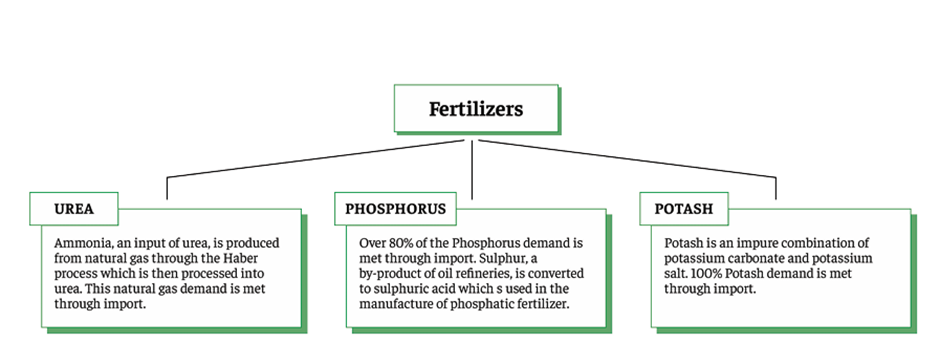
    1. Dependency on Imports:
      • India’s domestic fertilizer production does not meet demand, leading to high import dependency.
        • Urea: 20% imported
        • Diammonium Phosphate (DAP): 50-60% imported
        • Muriate of Potash (MOP): 100% imported
      • 2023 Standing Committee Recommendation: Increase domestic production to reduce import dependence
    2. Production vs. Consumption:
      • In 2021-22, India produced 435.95 LMT but consumed 579.67 LMT of chemical fertilizers
    3. Impact of Global Crises:
      • Conflicts in Ukraine and Gaza lead to oil price hikes, affecting petroleum-based fertilizers. Supply disruptions from countries like Russia strain India’s import channels.
    4. High Fertilizer Demand:
      • High demand for fertilizers during India’s rabi season, especially in states with wheat cultivation.
      • Some states, like Uttar Pradesh, report only 10 days’ worth of fertilizer stock, raising concerns about availability.

    Impact of Global Conflicts on the Fertilizer Market

    Worldwide impacts:

    1. Market Instability: Conflicts in Ukraine and Gaza disrupt global fertilizer market stability, particularly impacting oil-based fertilizer prices
    2. Supply Chain Disruptions: Ongoing conflicts hinder supply chains, notably affecting fertilizer imports from Russia, a key supplier for India
    3. Price Volatility: Geopolitical tensions lead to higher oil prices, which in turn raise fertilizer costs as they are often by-products of petroleum

    Its effects on India:

    1. Rising Import Costs: Increased global fertilizer prices elevate India’s import costs, straining the subsidy budget.
    2. Potential Supply Constraints: India’s reliance on imports from conflict-affected regions like Russia and West Asia (including the Middle East) poses risks of reduced fertilizer availability.
    3. Budget Strain: India’s fertilizer subsidy allocation for 2023-24 was ₹1.79 lakh crore, with substantial amounts dedicated to both indigenous and imported fertilizers.
    4. Need for Self-Reliance: The conflicts highlight the necessity for India to boost domestic production, promote alternatives like nano urea, and adopt sustainable practices such as natural farming

    Steps Taken by India to Ensure Fertiliser Security

    CategoryMeasureDetails
    Domestic MeasuresOne Nation One Fertiliser SchemeUnified branding under “Bharat” reduces competition and transportation costs.
    PM-Kisan Samruddhi Kendras (PM-KSK)600+ centers offering seeds, fertilisers, soil testing, and agricultural tools nationwide.
    Subsidy Programs₹2.56 lakh crore (2022-23) doubled subsidies under Urea and Nutrient-Based Subsidy (NBS) schemes.
    Boosting Domestic ProductionRevival of urea plants in Gorakhpur, Talcher, Barauni, etc., with an expected output of 6.5 million tonnes/year.
    Nano-Urea ProductionTarget of 5 million tonnes by 2025 to reduce reliance on traditional urea imports.
    Enforcement MeasuresFertiliser Flying Squad seized 70,000+ counterfeit urea bags to curb illegal trade and black marketing.
    International EffortsImport DiversificationFertiliser imports from Russia increased by 323.8% in 2022-23, reducing dependence on China.
    Long-Term AgreementsDeals with Morocco (TSP and DAP), Saudi Arabia (phosphatic fertilisers), Jordan, Israel, and Canada (MOP).
    Investments in Mineral-Rich NationsIndian firms acquired stakes in Senegal’s rock phosphate reserves.
    Favorable Pricing from RussiaBenefited from Russian discounts and quotas, securing cost-effective imports.
    Subsidies and FinancingTargeted SubsidiesUrea and NBS subsidies ensure stable domestic prices despite international disruptions.
    PM PRANAM SchemePromotes organic fertilizers and alternative nutrients with state-level incentives.
    Infrastructure DevelopmentExpanded Testing and DistributionDevelopment of nationwide testing centers and improved logistics for timely availability.

    Way Forward

    1. Reduce Import Dependency: Strengthen domestic fertilizer production through technological advancements, nano-urea expansion, and reviving idle plants.
    2. Promote Sustainable Practices: Encourage balanced nutrient management and organic fertilizers to reduce over-reliance on chemical fertilizers.
    3. Diversify Supplier Base: Continue exploring long-term collaborations with mineral-rich nations to ensure supply stability.
    4. Rationalize Subsidies: Implement targeted subsidies to manage fiscal burdens effectively.
    5. Climate-Resilient Agriculture: Invest in sustainable farming practices to address the twin challenges of fertilizer demand and climate change.
    6. Infrastructure Development: Expand testing and distribution networks, especially in underserved regions.

    BACK2BASICS :  Types of Fertilizers

    Fertilizers can be categorized based on the nutrients they provide:

    CategoryDescriptionExamples
    Primary FertilizersSupply essential nutrients like nitrogen, phosphorous, potassiumUrea (Nitrogen), DAP (Phosphorus), MOP (Potassium)
    Secondary FertilizersProvide other macronutrients, excluding N, P, KSulphur
    Micronutrient FertilizersProvide essential micronutrientsIron, Zinc

    CHALLENGES OF THE FERTILIZER SECTOR IN INDIA

    ChallengeDescriptionExample
    Dependency on ImportsIndia heavily depends on importing raw materials, making the country vulnerable to fluctuations in prices and supply.India imports about 90% of its phosphatic and potassic fertilizers. During the 2022 Ukraine-Russia conflict, there were sharp price hikes due to supply disruptions.
    Imbalanced Fertilizer UseExcessive use of urea leads to soil health issues by depleting essential nutrients like phosphorus and potassium.From 2010 to 2020, urea use rose by 24%. States like Punjab reported reduced soil fertility and crop yields due to overuse of urea.
    Subsidy BurdenFertilizer subsidies put a heavy strain on government finances and often do not reach the intended farmers effectively.In 2022-23, fertilizer subsidies reached ₹2.25 lakh crore, with inefficiencies causing high leakage and wastage in distribution.
    Environmental ImpactOveruse of fertilizers causes soil degradation, water pollution, and contributes to greenhouse gas emissions.Excess nitrogen from urea runoff pollutes rivers and groundwater. India is one of the largest emitters of nitrous oxide due to fertilizer overuse.
    Slow Adoption of AlternativesBio-fertilizers and nano-fertilizers are underused due to low awareness and limited incentives for farmers to switch.Despite government support, bio-fertilizers account for only about 2% of total fertilizer use. The adoption of nano-urea has been slow due to limited awareness and distribution.
  • India’s Fight Against Tuberculosis (TB)

    Note4Students:

    The MoHFW has released the India TB Report 2024. You should know the basics of TB. From the Mains perspective, 3 key points in this article are the issue of drug resistance (we have had PYQs in 2014), the challenges in eliminating TB (PYQs on Covid challenges in 2020), and our target to eradicate it by 2025 (this makes it an important theme for UPSC). 

    The treatment course for TB mentioned in Back2Basics will help you prepare for any difficult questions that may come out of the woods! 

    UPSC Microthemes & Mains PYQ:

    Q1.) GS3 Can overuse and free availability of antibiotics without Doctor’s prescription, be contributors to the emergence of drug-resistant diseases in India? What are the available mechanisms for monitoring and control? Critically discuss the various issues involved. (2014)

    Q2.) GS3: COVID-19 pandemic has caused unprecedented devastation worldwide. However, technological advancements are being availed readily to win over the crisis. Give an account of how technology was sought to aid management to the pandemic. (2020)

    Microthemes:  Medical and Health Technologies; Achievements of Indians in S&T

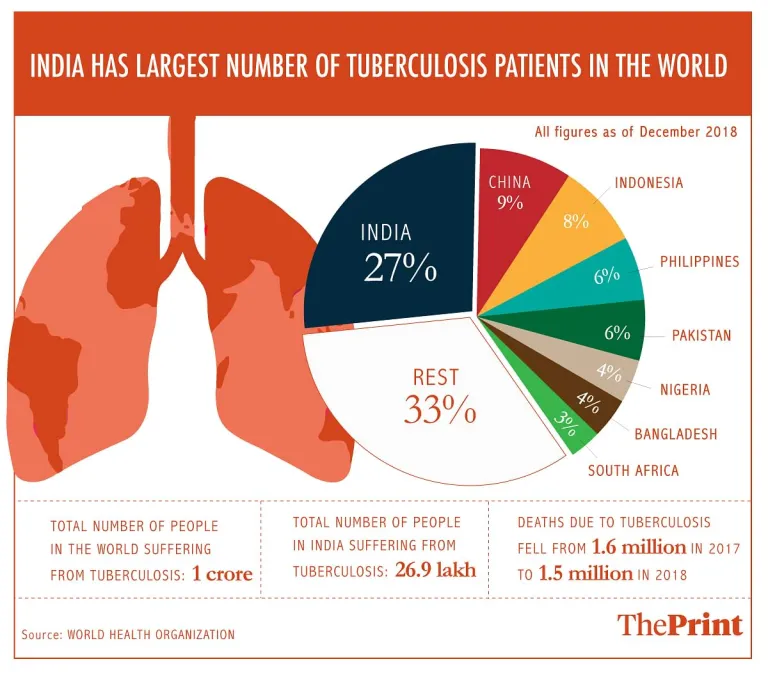
    Tuberculosis (TB) remains a major health issue for India, which accounts for 26% of the world’s TB cases. The 2024 India TB Report by the Ministry of Health and Family Welfare highlights significant achievements, challenges, and areas of concern as the country strives toward its ambitious target of TB elimination by 2025. Here’s a concise look at the findings, challenges, and government initiatives to tackle TB.

    Key Highlights: India TB Report 2024

    YearTotal TB Cases (lakh)Mortality Rate (per lakh)Private Sector TB Cases (lakh)
    201519.1281.9
    202325.5238.4
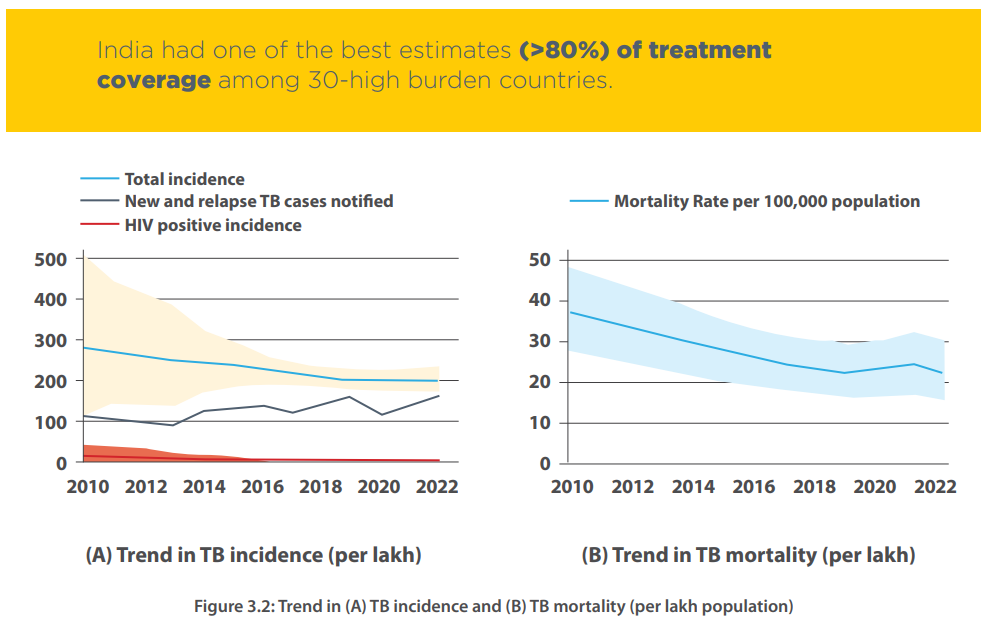
    1. Decline in Mortality Rate: TB mortality dropped from 28 per lakh in 2015 to 23 in 2022.
    2. Increase in Private Sector Involvement: Private sector notifications rose from 1.9 lakh in 2015 to 8.4 lakh in 2023, showing improved engagement in TB detection.
    3. Case and Mortality Trends: While estimated TB incidence slightly increased to 27.8 lakh in 2023, TB mortality held steady at 3.2 lakh.

    Challenges to Eliminate TB by 2025

    ChallengeExplanation
    High burden of TB casesIndia accounts for 28% of all global TB cases (Global TB Report 2022). This makes it difficult to identify and treat cases on time.
    Drug-resistant TBDrug-resistant TB is widespread in India, making treatment more expensive and complicated. This is due to improper antibiotic use and poor adherence to treatment.
    Limited access to healthcareMany people, especially in rural areas, lack access to quality healthcare, leading to delayed diagnosis, treatment, and increased TB spread.
    Stigma and discriminationThe stigma surrounding TB prevents people from seeking treatment or disclosing their illness due to fear of discrimination or isolation.
    Poor living conditionsOvercrowded homes, poor sanitation, and lack of clean water increase the risk of TB transmission.
    Limited awarenessMany people don’t know the symptoms of TB or the importance of completing treatment, leading to delays and further spread.
    Insufficient fundingDespite the severity of TB in India, it receives inadequate funding and attention from policymakers and healthcare providers.

    Government Initiatives Against TB

    InitiativeDescription
    Pradhan Mantri TB Mukt Bharat AbhiyanCommunity-based program offering nutritional support through Ni-kshay Mitras
    National Strategic Plan (NSP)Aims to eliminate TB by 2025, targeting no more than 44 new TB cases per lakh
    Digital Tracking (Nikshay Portal)Digital platform for monitoring patient progress and ensuring treatment adherence
    Free Treatment and Drug AccessFree supply of essential drugs like Bedaquiline and Delamanid
    Expanded Testing AccessIncreased use of molecular diagnostics (CB-NAAT, TureNat) across districts

    Innovative Approaches Adopted by States:

    • Chhattisgarh: By involving Village Health Committees in TPT efforts, Chhattisgarh improved grassroots-level awareness, screening, and treatment adherence for TB prevention, leveraging local networks effectively.
    • Tamil Nadu: Tamil Nadu adopted local procurement of the 3HP TPT regimen, ensuring a shorter, accessible TB prevention therapy, which enhanced patient compliance and streamlined medication availability.
    • Maharashtra and Rajasthan: These states introduced TPT in high-risk groups like prison inmates, integrating preventive therapy into Active Case-Finding (ACF) efforts, reducing TB prevalence in vulnerable populations.

    WHO Recommendations for TB Control

    1. Molecular Diagnostics: Faster, more accurate diagnostics similar to COVID-19 testing.
    2. MDR-TB Management: Better prescription practices, drug quality, and treatment completion.
    3. Patient-Centered Care: Improved support for managing treatment side effects, enhancing treatment completion.

    Moving Forward: Key Recommendations

    • Strengthen Multi-Sectoral Collaboration: Engage healthcare, social services, and education to address TB’s root causes.
    • Enhance Rural Access: Boost local healthcare infrastructure, deploy mobile health units, and train community health workers.
    • Stigma Reduction and Awareness: Implement public campaigns to reduce stigma and educate on TB prevention, symptoms, and treatment.

    India’s path to TB elimination by 2025 requires a holistic, coordinated approach, addressing healthcare gaps and social determinants to ensure accessible and effective TB care. By fostering cross-sector collaboration, enhancing diagnostics, and addressing the social factors influencing TB, India can accelerate its progress toward a TB-free nation.

    #BACK2BASICS

    Understanding Tuberculosis

    ParameterDetails
    CauseBacterial infection caused by Mycobacterium tuberculosis
    TransmissionAirborne, particularly in dense, poorly ventilated areas
    Common SymptomsCough, chest pain, weakness, weight loss, fever, night sweats
    Global ImpactTB infects 10 million and causes 1.5 million deaths annually, affecting HIV patients
    TreatmentStandard 6-month, four-drug course with supervised support

    Drug-Resistant TB:

    • MDR-TB: Resistant to isoniazid and rifampicin, requiring second-line drugs like bedaquiline.
    • XDR-TB: Highly resistant, responding poorly to standard and even second-line treatments.

    TREATMENT FOR TB

    Standard 6-Month Treatment Course

    PhaseDetails
    Intensive Phase (2 months)For new TB cases, the intensive phase includes four drugs: Isoniazid (INH), Rifampicin, Pyrazinamide, and Ethambutol.
    Continuous Phase (4 months)After completing the intensive phase, the continuous phase follows for 4 months.
    For Previously Treated CasesThe intensive phase lasts 12 weeks, with an injection of streptomycin given for 8 weeks along with four drugs.
    Regimen DurationA strictly followed 6-month drug regimen cures most people with TB.

    BPaLM Regimen

    FeatureDetails
    Drugs UsedBedaquiline, Pretomanid, Linezolid, and Moxifloxacin.
    Advantages– Faster, safer, and more effective compared to traditional treatments.
    – Cures MDR-TB in 6 months (compared to 20 months with traditional treatment).
    – Higher success rate for drug-resistant TB treatment.
    – Fewer and milder side effects.
    – Shorter treatment duration and reduced side effects lead to lower overall costs.

    Multidrug-Resistant TB (MDR-TB)

    FeatureDetails
    DiagnosisCBNAAT (Cartridge Based Nucleic Acid Amplification Test) is used for early diagnosis.
    ResistanceMDR-TB is resistant to at least Isoniazid and Rifampicin, the two most powerful anti-TB drugs.
    Treatment ChallengesTreatment options for MDR-TB are limited and expensive.

    Causes of MDR-TB

    CauseDetails
    Mismanagement of TreatmentInappropriate or incorrect drug use, ineffective drug formulations, or premature treatment interruption.
    TransmissionPerson-to-person transmission of the disease.

    Extensively Drug-Resistant TB (XDR-TB)

    FeatureDetails
    Resistance ProfileXDR-TB is a form of MDR-TB with additional resistance to fluoroquinolones and at least one second-line injectable drug (amikacin, kanamycin, capreomycin).

    Treatment for Drug-Resistant TB

    Treatment TypeDetails
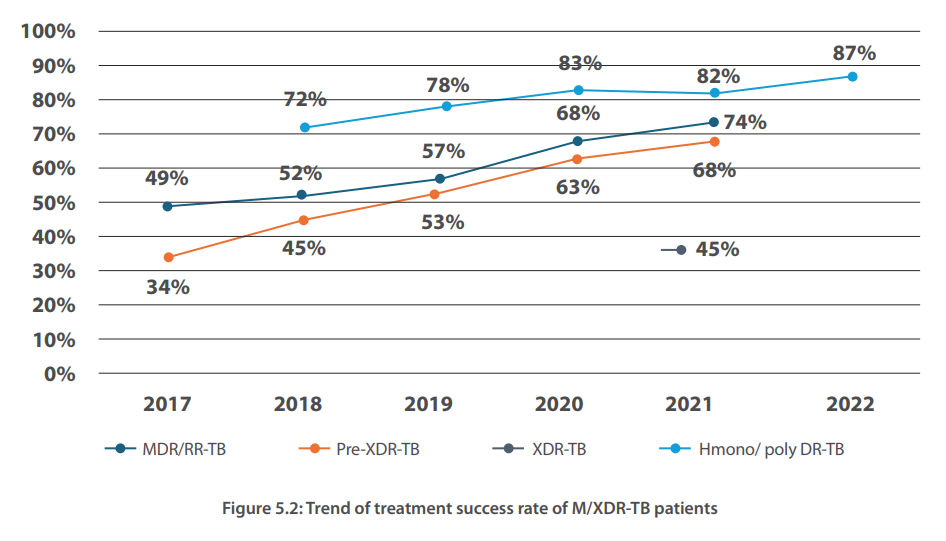
    MDR-TB Treatment SuccessTreatment success for MDR-TB is about 54%.
    XDR-TB Treatment SuccessTreatment success for XDR-TB is about 30%.
    Treatment DurationXDR-TB requires a combination of eight drugs for over a year.
    Success FactorsTreatment success depends on the extent of resistance, disease severity, immune system strength, and adherence to treatment.
    Side EffectsDrugs used for treating MDR-TB and XDR-TB can cause serious adverse effects, including deafness.
  • Securing the Foundations: Why Food and Energy Security Matter for a Resilient Future?

    PYQs Anchoring:

    • GS 3: Elucidate the importance of buffer stocks for stabilizing agricultural prices in India. What are the challenges associated with the storage of buffer stock? Discuss. 2024 
    • GS 3: Food security bill is expected to eliminate hunger and malnutrition in India. Critically discuss various apprehensions in its effective implementation along with the concerns it has generated in WTO. 2013

    Microthemes: Buffer stock & food security

    In a virtual address at the 5th Energy Finance Conference, it was emphasized that energy-reliant agricultural systems struggle to adapt to climate-induced changes in food production, underscoring their interlinked challenges.

    Interconnections between Energy Security and Food Security

    What is the Impact of Energy Price Fluctuations on Food Production and Security?

    • Dependency on Fossil Fuels: Agriculture relies heavily on fossil fuels for mechanization, irrigation, fertilizer production, and transportation. This dependence creates a cycle where rising energy prices lead to increased costs for food production, directly impacting food security.
    • Volatility in Natural Gas Prices: Natural gas is crucial for fertilizer production so fluctuations in its prices can significantly affect fertilizer costs and, consequently, global food prices. For instance, geopolitical actions such as export bans can disrupt supply chains, exacerbating food insecurity in countries reliant on imports.
    • Climate Change Effects: Erratic weather patterns due to climate change further strain agricultural output, putting the livelihoods of billions at risk.
      • Nearly 11.8% of the global population faced severe food insecurity between 2020 and 2023, a figure expected to rise significantly.

    How can Sustainable Energy help in enhancing Food Security?

    • Renewable Energy Investments: The transition to renewable energy presents opportunities for enhancing food security. Investments in renewable technologies can help reduce reliance on fossil fuels and lower operational costs for agricultural practices.
    • Innovative Solutions: Solar-powered irrigation and biomass energy solutions could transform agricultural productivity. However, high costs and inadequate infrastructure limit their adoption in low-income countries where they are needed most.
    • Reducing Vulnerability: Clean energy solutions can help mitigate the vulnerability of food systems to energy price shocks. By integrating renewable energy into agricultural practices, countries can improve resilience against climate-induced disruptions.

    Way Forward

    • Integrated Policy Approaches: A holistic approach that integrates water management with energy and food policies is essential. This includes promoting water-efficient agricultural practices and investing in infrastructure that supports sustainable resource management.
    • Investment in Renewable Technologies: Increasing investments in renewable energy infrastructure can support agricultural productivity while reducing carbon emissions. This includes expanding access to clean energy solutions for rural areas to enhance agricultural efficiency.
    • Financial Support for Vulnerable Communities: Providing financial resources and technical support to low-income nations is crucial for enabling them to transition towards sustainable practices without exacerbating poverty. Targeted investments can help build resilience against climate impacts while ensuring food security.

    Back2Basics: Energy and food security

    1. Food Security

    • Definition: Food security refers to the state in which all people, at all times, have physical, social, and economic access to sufficient, safe, and nutritious food that meets their dietary needs and preferences for an active and healthy life (FAO).
    • Key Elements:
      1. Availability: Ensuring an adequate supply of food through domestic production, imports, or food aid.
      2. Access: Guaranteeing individuals’ ability to obtain food economically and physically.
      3. Utilization: Safe and nutritious food that is properly consumed, maintaining health.
      4. Stability: Consistency in access to food despite economic, environmental, or social disruptions.

    Significance of Food Security

    1. Eradication of Hunger and Malnutrition: Ensures access to sufficient, nutritious food, reducing malnutrition and improving health outcomes, especially among vulnerable populations.
    2. Social Stability: Prevents food-related conflicts and social unrest by maintaining equitable access to resources.
    3. Economic Growth: A healthy workforce boosts productivity and economic development. The agriculture sector, a backbone in many economies, thrives on secure food systems.
    4. Global Goals Alignment: Critical for achieving SDG 2 (Zero Hunger) and SDG 1 (No Poverty).
    5. Disaster Resilience: Ensures stability during global crises, including pandemics, climate change effects, and supply chain disruptions.

    2. Energy Security

    • Definition: Energy security means having reliable access to affordable, sustainable, and modern energy services to meet national needs (IEA).
    • Key Elements:
      1. Supply Reliability: Ensuring a steady supply of energy from diverse sources.
      2. Affordability: Energy prices should be manageable for individuals and businesses.
      3. Sustainability: Using renewable energy and minimizing environmental damage.
      4. Infrastructure Resilience: Developing robust infrastructure to handle demand spikes and supply shocks.

    Significance of Energy Security

    1. Economic Development: Supports industrial activities, fosters innovation, and enables modern infrastructure.
    2. Poverty Reduction: Affordable energy improves living standards, powering homes, schools, and businesses.
    3. National Security: Reduces dependency on energy imports, strengthening geopolitical standing.
    4. Environmental Protection: Drives the transition to sustainable and renewable energy sources, mitigating climate change.
    5. Infrastructure Resilience: Ensures uninterrupted energy supplies during natural disasters or global crises.

    Interconnected Impact

    Food and energy security are interlinked:

    • Energy is vital for agricultural production, storage, and distribution.
    • Food systems depend on energy for processing, transportation, and preparation.
  • Sailing Towards Self-Reliance: Is India Ready for Atmanirbharta in the Maritime Sector?

    NOTE4STUDENTS:

    This article covers India’s journey toward maritime self-reliance, focusing on indigenous naval production and strategic initiatives. UPSC tends to ask questions that connect current affairs with static knowledge. Many struggle with connecting current events to static concepts. It’s not just about knowing the facts but understanding their broader implications in the context of India’s defense strategy. Another common mistake is not giving enough attention to details of indigenous systems or the technical aspects involved in defense production, which are key to understanding India’s maritime self-reliance. This article breaks down complex topics into simple, digestible pieces. It covers both current news and static knowledge, making it easy to understand how one ties into the other. It also connects real-world events (like the commissioning of warships) with defense policy and technological advancements, helping to bridge gaps in understanding.

    PYQ ANCHORING & MICROTHEMES

    1. GS 2: Sea is an important Component of the Cosmos’. Discuss in the light of the above statement the role of the IMO(International Maritime Organisation) in protecting environment and enhancing maritime safety and security.  [2023]
    2. GS 3 : What are the maritime security challenges in India ? Discuss the organisational, technical and procedural initiatives taken to improve the maritime security. [2022]

    Microthemes: Maritime Security chal lenges

    On January 15, 2024, Prime Minister Narendra Modi presided over the commissioning of three naval platforms—INS Surat (destroyer), INS Nilgiri (frigate), and INS Vagsheer (submarine)—built at Mazagon Docks, marking a historic milestone in India’s quest for maritime self-reliance (Atmanirbharta). 

    The Indian Navy’s Swavlamban initiative reflects a commitment to Atmanirbhar Bharat (self-reliance), emphasizing innovation and indigenization in defense manufacturing. This aligns with India’s broader aspirations of reducing dependency on imports while leveraging domestic capabilities to add value and boost exports. 

    PRESENT STATUS OF MARINE ATMANIRBHARTA

    AspectDetails
    Present Force LevelApproximately 150 ships and submarines, with 60 large Navy ships valued at Rs 1.5 trillion currently under construction.
    Indigenous Warship and Submarine ProductionWarships: 60 warships/vessels under construction at MDL, GRSE, and GSL, including:
    – INS Vikrant (India’s first indigenous aircraft carrier, commissioned 2022)
    – Project 15B (Visakhapatnam-class destroyers, advanced stealth destroyers)
    – Project 17A (Nilgiri-class frigates, guided missile frigates)
    Submarines:
    – Advanced Technology Vessel (ATV) Project, including Arihant-class nuclear submarines.
    – INS Arihant and Arighat (indigenous nuclear-powered submarines).
    – Kalvari-class submarines (Scorpene, six inducted/planned under Project 75 at MDL).
    Indigenous Weapons Systems– BrahMos Missiles (jointly with Russia, domestically produced)
    – Varunastra Torpedo (indigenous heavyweight torpedo for anti-submarine warfare).
    – DRDO Missiles & Systems (Barak-8, underwater surveillance systems).
    Indigenous Sensors and Electronics– Development of Combat Management Systems (CMS), radar systems (Rohini and Revathi), and Sonars (HUMSA-NG for ships and submarines).
    Aircraft and UAVs– Naval Tejas (Indigenous Light Combat Aircraft for carrier-based operations under development).
    – Dornier 228 Aircraft (locally produced multi-role aircraft for maritime patrol).
    – Rustom UAV (Indigenous unmanned aerial vehicle for surveillance).

    The Indian Navy’s present force level comprises about 150 ships and submarines with 60 large Navy ships, valued around Rs 1.5 trillion, are under construction. India’s naval force has made significant strides in domestic production, showcasing a growing reliance on indigenous capabilities.

    KEY STEPS TOWARDS MARITIME ATMNIRBHARTA

    1. Strategic Vision and Initiatives: SAGAR (Security and Growth for All in the Region) framework emphasizes an open, secure, and inclusive Indo-Pacific, with India as a first responder in the Indian Ocean.

    2. Evolution of Self-Reliance:

    • Make-in-India (2014) aimed at attracting foreign manufacturers to set up operations in India for job creation, skill development, and technology transfer.
    • Atmanirbhar Bharat expands this vision to foster domestic manufacturing (indigenization) and ensure India’s capacity to add value to necessary imports.

    3. Navy’s Success in Indigenization:

    Since the 1960s, the Navy has indigenously designed 19 warship models and built 121 ships and submarines.

    It has developed advanced systems like propulsion mechanisms, sonar, electronic warfare suites, fire control systems, and more, many of which are exported as “world-class” products.

    4. Focus on Technology & MSMEs:

    The Navy’s 15-year Science and Technology Roadmap emphasizes cutting-edge areas like AI, robotics, hypersonic missiles, and bio-technical weapons. E.g. DPSUs and MSMEs Collaboration.

    MSMEs and start-ups play a crucial role in creating disruptive technologies and supporting special operations. E.g. Green Channel Policy.

    5. Collaborations & Innovation Structures:

    The Navy has established the Naval Indigenisation and Innovation Organisation (NIIO), the Naval Technology Acceleration Council (N-TAC), and vendor-development programs to facilitate partnerships with academia, industry, and global players.

    Initiatives like IN STEP engage students to work on naval problem statements.

    NEEDS OF MARITIME ATMNIRBHARTA

    AreaBenefitExample
    National Security and Strategic AutonomyReduces dependence on foreign suppliers, ensuring independence during conflicts.Development of the INS Arihant.
    Economic Growth and Cost-EffectivenessReduces reliance on imports, strengthens local industries, creates jobs, fosters innovation.Construction of INS Kamorta (anti-submarine warfare corvette) in Kolkata.
    Maritime Domain AwarenessEnhances ability to monitor coastlines, EEZ, and IOR with tailored surveillance systems.PierSight’s Varuna.
    Global Influence and Soft PowerBuilds credibility and strengthens international partnerships via defense exports.Export of Offshore Patrol Vessels (OPVs).
    Aligning with Atmanirbhar Bharat VisionSupports India’s goal of self-reliance, reduces import dependency in defense.Construction of the INS Vikrant under Make in India and Defence Acquisition Procedure (DAP) 2020.
    Preparedness for Non-Traditional ThreatsFacilitates quick, tailored responses to maritime threats like piracy and terrorism.Information Fusion Centre-Indian Ocean Region (IFC-IOR).
    Technology and Innovation AdvancementPromotes local technological development benefiting both defense and civilian sectors.Varunastra torpedo.

    CHALLENGES WITH INDIA’S MARITIME ATMNIRBHARTA

    1. Global and Regional Context:
    • The Indian Navy is well-regarded, but still behind major powers like the US and China.
    • True Value Rating (TrV): India ranks 7th globally with 103 major naval units and a TrV of 100.5, while the US and China have much larger fleets with TrVs of 323.9 and 319.8, respectively.
    • Defense Spending: India’s defense budget for 2023 was $84 billion, while the US spent $916 billion and China spent $330 billion.
    1. Challenges in Indigenisation:
    • Shipbuilding Delays: India’s shipbuilding is slow. For example, the INS Surat took 31 months to build, while China built a similar ship in just 4.5 months.
    • Dependence on Imports: A lot of the equipment needed for warships is still bought from other countries. There are few local successes, like the BrahMos missile.
    • R&D Challenges: Progress in developing military technology has been slow, affecting India’s ability to become truly self-reliant in defense.
    1. Technological and Innovation Gaps: India still relies on foreign technology for important systems, like advanced turbines, nuclear propulsion, and anti-submarine weapons. The slow adaptation to new technology makes it harder to keep up with global competition.
    2. Infrastructure and Skilled Workforce Deficits: Shipyards in India, like MDL and GRSE, are overloaded, causing delays in production. There is also a shortage of skilled professionals in areas like submarine design and weapon development.
    3. Bureaucratic and Budgetary Challenges: The process of buying new defense technology is slow and complicated, often leading to delays and cost overruns. This is seen in projects like the Arihant-class nuclear submarines.
    4. Security Vulnerabilities: The increasing use of digital systems, such as those on INS Vikramaditya, exposes the navy to cyber threats. Stronger security measures are needed to protect sensitive technology.
    5. Global Competition and Limited Export: Indian defense products face tough competition from countries like the US and China in the global market. Challenges in scaling up production and selling technology like the INS Kalvari limit India’s export opportunities.

    WAY FORWARD

    1. Defense R&D: Prioritize local development of naval technologies like the INS Vikrant, India’s first indigenous aircraft carrier.
    2. Empowerment: Support local industries like Mazagon Dock Shipbuilders Limited (MDL) in manufacturing naval assets through public-private partnerships.
    3. Strategic Partnerships: Strengthen ties with countries like France for the Scorpene submarine project, which was a joint venture for building nuclear-capable submarines.
    4. Infrastructure Development: Modernize Goa Shipyard to ramp up the construction speed of ships, reducing delays in building vital naval vessels.
    5. Naval Doctrine: Develop strategies for countering hybrid warfare, like India’s policy on anti-submarine warfare and cyber defense strategies to prevent naval vulnerabilities.
    6. Acquisition Reforms: Streamline naval procurement processes as seen with the quick induction of the INS Kalvari, a Scorpene-class submarine.
    7. Visionary Leadership: Provide political direction like in the Make in India campaign, driving India’s commitment to indigenous defense production, such as the BrahMos missile program.
    8. Youth Engagement: Encourage youth in STEM through programs like the Indian Navy’s National level internship scheme, where students work directly on naval technologies.

    #BACK2BASICS: DOMESTIC PRODUCTION FOR INDIA’S NAVY 

    1. Indigenous Warship and Submarine Production:

    a. Warships: 60 warships and vessels are currently under construction in Indian shipyards, including the Mazagon Dock Shipbuilders Limited (MDL), Garden Reach Shipbuilders and Engineers (GRSE), and Goa Shipyard Limited (GSL). Notable projects are:

    INS Vikrant: India’s first indigenous aircraft carrier, commissioned in 2022.

    Project 15B (Visakhapatnam-class destroyers): Advanced stealth destroyers being built domestically.

    Project 17A (Nilgiri-class frigates): Guided missile frigates equipped with state-of-the-art systems.

    b. Submarines:

    Advanced Technology Vessel (ATV) Project: Launched in the 1980s and marked India’s place in designing and building nuclear-powered submarines, leading to the creation of the Arihant-class submarines.

    INS Arihant and Arighat: India’s indigenous nuclear-powered submarine.

    Kalvari-class submarines (Scorpene): Built under Project 75 at MDL in collaboration with France, with six submarines inducted/planned.

    2. Indigenous Weapons Systems:

    BrahMos Missiles: Jointly developed with Russia and domestically produced; equipped on many Indian Navy ships.

    Varunastra Torpedo: Indigenously developed heavyweight torpedo used in anti-submarine warfare.

    DRDO-developed missiles and systems: Advanced missile systems like Barak-8 and underwater surveillance systems.

    3. Indigenous Sensors and Electronics:

    Development of Combat Management Systems (CMS) and radar systems such as the Rohini radar and Revathi radar, enhancing the Navy’s self-reliance.

    Sonars: Indigenous sonars like HUMSA-NG are deployed on Indian Navy ships and submarines.

    4. Aircraft and UAVs:

    Naval Tejas: Efforts are ongoing to operationalize an indigenous Light Combat Aircraft (LCA) for carrier-based operations.

    Dornier 228 Aircraft: Locally produced multi-role aircraft for maritime patrol.

    Rustom UAV: Indigenous unmanned aerial vehicles are under development for surveillance purposes.

  • Harnessing the Flow: What Does the Yarlung Tsangpo Project Mean for Regional Power Dynamics?

    NOTE4STUDENTS:

    China’s Tsangpo Dam threatens India’s water security, environment, and geopolitical stability. The UPSC often frames questions on such topics by linking them to geopolitics, environmental concerns, and India’s national security. A common mistake students make is focusing only on surface-level news. They memorize facts but miss the bigger picture—how it connects to past trends, and what solutions India can explore. This article bridges that gap by breaking down the dam’s impact in a structured way, making it easier to develop a well-rounded answer. One standout feature of this article is its Back2Basics section, which simplifies complex water-sharing issues between India and China. It ensures you not only understand current affairs but also master the static concepts that UPSC loves to test.

    PYQ ANCHORING & MICROTHEMES:

    1. GS 2:  With respect to the South China sea, maritime territorial disputes and rising tension affirm the need for safeguarding maritime security to ensure freedom of navigation and over flight throughout the region. In this context, discuss the bilateral issues between India and China. [2014]
    2. GS 2: Discuss the geopolitical and geostrategic importance of Maldives for India with a focus on global trade and energy flows. Further also discuss how this relation ship affects India’s maritime security and regional stability amidst international competition? [2024]

    Microthemes:  Bilateral Relations

    On December 25, China approved the construction of the Tsangpo Dam, set to become the world’s largest hydropower project. It will be built on the Yarlung Tsangpo River (which becomes the Brahmaputra in India) in Tibet and is expected to generate a massive 60,000 MW of electricity—three times more than the current record-holder, the Three Gorges Dam on the Yangtze River.

    While China promotes the dam as a clean energy project, it has raised serious concerns, particularly for downstream countries like India. The sheer scale of the project brings up major issues around water sharing, environmental impact, and regional stability, making it a highly sensitive geopolitical matter.

    ABOUT YARLUNG-TSANGPO PROJECT

    • Location: The dam will be built on the Yarlung Tsangpo River in Tibet, near the border with India. This river is known as the Brahmaputra once it flows into India and later into Bangladesh.
    • Scale: The dam is set to become the world’s largest hydropower project, with an estimated capacity of 60,000 megawatts (MW). This is three times the capacity of the Three Gorges Dam in China, which currently holds the record for the largest hydropower project.
    • Purpose: China describes the project as a clean energy initiative aimed at reducing its reliance on fossil fuels and meeting its climate goals. Hydropower is a renewable energy source, and the dam is expected to significantly contribute to China’s energy needs.

    WHY DOES CHINA WANT THE YARLUNG TSANGPO MEGA PROJECT?

    1. Energy Security & Sustainability:
      • The river’s steep drop and strong flow make it ideal for generating hydroelectric power.
      • Helps China reduce its reliance on fossil fuels and move toward its goal of net-zero emissions by 2060.
    2. Solving Northern China’s Water Crisis:
      • Northern China faces severe water shortages due to overuse, industrialization, and climate change.
      • Controlling the river’s flow could help redirect water northward under China’s South-North Water Diversion Project, easing water stress in dry regions like Beijing, Hebei, and Tianjin.
    3. Geopolitical Strategy:
      • The project gives China control over the river, impacting India and Bangladesh, which rely on it for agriculture and daily life.
      • It could be used as a bargaining tool in India-China relations since changes in water flow would directly affect Northeast India.
    4. Boosting Tibet’s Economy:
      • Aims to develop Tibet by bringing in investment and infrastructure.
      • Expected to generate ¥20 billion ($3 billion) annually, creating jobs and economic growth in the underdeveloped region.

    POSSIBLE IMPACTS ON INDIA

    1. Threat to Agriculture: The Brahmaputra enriches soil with silt in Arunachal Pradesh and Assam, making the land fertile. A dam could block silt flow, reducing soil quality and harming farming.
    2. Water Disruptions: China says it’s a run-of-the-river project (which doesn’t store water), but experts warn it could still alter river flow. This could cause water shortages in dry seasons and floods during monsoons, putting Assam and nearby regions at risk.
    3. China’s Control Over Water as a Weapon: Being upstream, China has significant control over the Brahmaputra. It has withheld crucial water data before, such as during the 2017 Doklam standoff, raising fears of water being used as a geopolitical tool.
    4. Earthquake Risks: The Himalayas are a highly active earthquake zone. A massive dam here increases the risk of catastrophic flooding if an earthquake damages the structure.
    5. Environmental Impact: The dam threatens the fragile Himalayan ecosystem, home to endangered species.When combined with deforestation, climate change, and soil erosion, it could permanently harm biodiversity.

    WAY FORWARD

    1. Diplomatic Pressure:
      • Push for transparency and cooperation through diplomatic channels.
      • Publicly challenge China’s claims that the project won’t harm downstream countries.
    2. India’s Own Hydropower Projects:
      • Fast-track India’s 10 GW Dibang Valley hydropower project in Arunachal Pradesh to counterbalance China’s dam.
    3. Global Advocacy:
      • Work with international forums to push for stricter global rules on transboundary water governance.
    4. Better Water Data Sharing:
      • Strengthen and extend hydrological data-sharing agreements with China for better flood forecasting and disaster management.
    5. Alliances with Other Affected Countries:
      • Collaborate with Bangladesh and other lower riparian nations to oppose China’s unilateral water control.
    6. Disaster Preparedness:
      • Invest in resilient infrastructure and early warning systems to reduce risks from upstream activities.

    Conclusion

    China’s Yarlung Tsangpo dam is a double-edged sword—it highlights the urgency of managing shared water resources but also challenges India’s security and ecology. A balanced approach, focusing on diplomacy, strategic projects, and environmental safeguards, is crucial for India to navigate this complex issue.

    #BACK2BASICS: INDIA-CHINA WATER RELATIONS

    The Trans-border rivers flowing from China to India fall into two main groups i.e. The Brahmaputra river system on the Eastern side, which consist of river Siang (main stream of river Brahmaputra) and its tributaries, namely Subansiri and Lohit and the Indus river system on the Western side consists of river Indus and the river Sutlej. 

    INDIA-CHINA COORDINATION ON TRANSBOUNDARY RIVERS

    1. Existing Agreements:
      • A 2013 Memorandum of Understanding (MoU) covers cooperation but lacks real engagement.
      • Separate MoUs exist for the Brahmaputra and Sutlej rivers, but their effectiveness is inconsistent.
    2. Brahmaputra MoU:
      • Focuses on hydrological data sharing during monsoons.
      • Last renewed in 2018, but it lapsed in 2023, and discussions are ongoing.
    3. Sutlej MoU:
      • Created after the 2004 Parechu Lake incident, it monitors glacial lake outbursts.
      • However, it doesn’t ensure year-round data sharing.
    4. Expert-Level Mechanism (ELM):
      • Established during President Hu Jintao’s visit to India in 2006.
      • Meets yearly to discuss flood data, emergencies, and river issues.
    5. International Water Law:
      • Neither India nor China has signed the 1997 UN Convention on Watercourses, but both follow key principles like fair use of shared water.

    Issues in Water cooperation in India China Relations

    IssueDescription
    Suboptimal CooperationChina shares hydrological data on the Brahmaputra (Yarlung Tsangpo) and Sutlej only during the monsoon season, limiting year-round cooperation.
    Differential ApproachChina has stronger water cooperation with Bangladesh, collaborating on flood forecasting, water technologies, and water management, while engagement with India remains limited.
    Border Dispute Overshadowing Water TalksThe India-China border dispute often dominates discussions, preventing progress on key water-sharing issues like water rights, dam impacts, and river diversions.
    Multilateral vs. Bilateral ApproachChina prefers multilateral water-sharing frameworks, while India favors bilateral agreements (as seen with Pakistan, Nepal, Bhutan, and Bangladesh).
    – In 2015, China signed the Lancang-Mekong Cooperation (LMC) with five other countries, bypassing the ADB-led Mekong River Commission, which it never joined.
    – The LMC aligns with China’s Belt and Road Initiative (BRI) and focuses on land, water connectivity, and river management.
    Lack of Transparency in Chinese ProjectsChina undertakes dam and water diversion projects in Tibet without sharing information or impact assessments, raising concerns for downstream countries like India.

    Need for greater cooperation

    IssueDescription
    Environmental DegradationChina’s infrastructure projects in Tibet ignore environmental concerns, causing severe ecological damage and transboundary impacts. Example: The Siang River (Brahmaputra’s main artery) turned blackish-grey as it entered India, likely due to Chinese activities upstream.
    Weakening of Indian MonsoonClimate systems are globally interconnected, and geoengineering experiments in Tibet could alter moisture patterns, potentially weakening the Indian monsoon and affecting rainfall across Asia.
    Threat to BiodiversityBoth Tibet (China) and the Indian Himalayan ecosystem are among the world’s most biodiverse regions. Unregulated mineral and water resource exploitation threatens fragile ecosystems.
    Warming of the Tibetan PlateauKnown as the “Third Pole”, Tibet has the largest ice mass outside the Arctic and Antarctica. However, it is now warming nearly three times the global average, impacting its role as Asia’s freshwater source, main water supplier, and key rainmaker.
    Loss of Water FlowClimate models predict that Himalayan rivers will first see increased flows due to glacial melting, followed by a 10-20% reduction by 2050. This will impact hydropower generation and intensify regional water conflicts.
    Humanitarian RisksEnvironmental instability increases the risk of flash floods, landslides, and dam bursts, leading to widespread loss of lives, wildlife, livelihoods, and infrastructure in India’s Northeast and Bangladesh.
  • Justice for All: Is the Right to Access Justice Truly Accessible in India?

    NOTE4STUDENTS:

    This article discusses the fundamental right to access justice and the barriers many face in exercising it. It highlights various challenges such as social, economic, and legal obstacles, while also addressing the steps taken by the government to ensure this right is upheld. UPSC often explores such topics in GS-II or GS-I, focusing on legal rights, reforms, and the government’s role in ensuring equitable justice. A common mistake during preparation is focusing only on legal terms without considering real-world implications. Many overlook the social, economic, and cultural barriers that hinder people’s access to justice. This article bridges that gap by highlighting these barriers and the efforts to address them. It provides a clear understanding of how laws and policies function to ensure justice for all citizens, particularly the underprivileged. A standout feature of this article is the comprehensive “Back2Basics” section, which ties fundamental rights with real-life examples. It simplifies complex legal concepts and offers clarity on how justice can be accessed in practice.

    PYQ ANCHORING & MICROTHEMES:

    1. GS 2: Right to privacy is intrinsic to life and personal liberty and is inherently protect ed under Article 21 of the Constitution. Explain. In this reference discuss the law relating to D.N.A. testing of a child in the womb to establish its paternity. [2024]
    2. GS 2: Does the right to clean environment entail legal regulations on burning crackers during Diwali? Discuss in the light of Article 21 of the Indian Constitution and Judgement(s) of the Apex Court in this regard. [2015]

    Microthemes: Fundamental Rights

    The Supreme Court fined Rs. 1 Lakh on a dishonest person who kept filing unnecessary and baseless cases. The Court said that while everyone has the right to go to court, it should be used responsibly.

    ‘Right to Access to Justice’

    • The Right to Access to Justice refers to the fundamental principle that individuals should have the ability to seek and obtain remedies through formal or informal institutions of justice for grievances.
    • This right is rooted in the rule of law and ensures that all citizens, regardless of their background, can effectively resolve their legal issues and hold decision-makers accountable.
    • Without access to justice, individuals may be unable to exercise their rights, challenge discrimination, or seek redress for wrongs they have suffered.

    BARRIERS TO ACCESS TO JUSTICE

    Barrier TypePointExample
    Social BarriersCaste DiscriminationDalits historically barred from drawing water from common wells in rural India.
    Lack of AwarenessVillagers unaware of the Legal Services Authority Act, 1987, which provides free legal aid.
    Lack of EducationIlliterate farmers failing to understand the rights under land acquisition laws.
    Gender DiscriminationRural women being discouraged from filing domestic violence cases due to stigma.
    Economic BarriersCost of Legal RepresentationUndertrials unable to hire competent lawyers and depending on overburdened legal aid lawyers.
    Court ExpensesWorkers unable to afford transportation to distant courts to resolve wage disputes.
    CorruptionPaying police officials for FIR registration in cases of theft.
    Undertrial DelaysOver 75% of undertrials belong to economically weaker sections, as per NCRB reports.
    Legal BarriersProcedural DelaysDelayed issuance of summons in civil disputes under Order V of the Code of Civil Procedure.
    Inefficiency of the PoliceForensic delays where samples are sent to distant state laboratories for basic testing.
    Corruption within Legal InstitutionsBribes sought for simple tasks such as retrieving certified copies of judgments.
    Lack of Skilled Legal AidPoor representation of bonded laborers leading to the denial of justice in the Bandhua Mukti Morcha case.

    STEPS TAKEN BY THE GOVERNMENT TO ENSURE THE RIGHT 

    CategoryInitiativeDescription
    Legislative MeasuresLegal Services Authorities Act, 1987Establishes Legal Services Authorities to provide free legal aid to the poor and marginalized.
    Gram Nyayalayas Act, 2008Sets up village-level courts to ensure accessible, affordable, and quick justice for rural populations.
    Prohibition of Untouchability Act, 1955Criminalizes untouchability and discrimination, enabling equitable justice for marginalized groups.
    SC/ST Prevention of Atrocities Act, 1989Provides protection and expedited legal remedies for Scheduled Castes and Tribes against discrimination.
    Judicial MeasuresLok AdalatsFacilitates informal dispute resolution for pending and pre-litigation cases, saving time and costs.
    Mobile CourtsEnables justice delivery in remote and underserved areas through traveling judicial services.
    Free Legal Aid in CourtsProvides state-appointed lawyers to indigents who cannot afford legal representation.
    Technological Effortse-Courts Mission Mode ProjectDigitizes court processes, allowing online case status tracking, e-filing, and virtual hearings.
    Electronic FIR RegistrationSimplifies filing of First Information Reports to reduce delays and improve transparency.
    Awareness CampaignsStreet Plays and Public Education ProgramsRaises awareness on rights, alternative dispute resolution mechanisms, and access to legal aid.
    Digital and Media OutreachUses TV, radio, and digital platforms to inform citizens of legal rights and available government schemes.

    WAY FORWARD

    The right to access to justice is an integral component of the rule of law and a key aspect of ensuring social equity and accountability. Enhancing these elements through targeted policies and judicial reforms can significantly improve justice delivery systems, especially for vulnerable and disadvantaged communities.

    1. Strengthening Legal Aid Mechanisms
    • Expand the outreach and efficiency of existing legal aid services, including the National Legal Services Authority (NALSA).
    • Introduce village-level paralegal volunteers to bridge the gap between marginalized groups and formal judicial systems.
    1. Digitization of Justice Systems
    • Implement comprehensive e-Court initiatives for faster case processing and accessibility to case updates.
    • Ensure widespread availability of online filing, virtual hearings, and digital grievance redressal mechanisms.
    1. Capacity Building for Legal Professionals
    • Provide regular training and skill enhancement programs for judges, lawyers, and legal aid counsels to ensure efficient delivery of justice.
    • Introduce mandatory courses on social justice and case management for legal practitioners.
    1. Awareness and Education Campaigns
    • Conduct widespread campaigns to educate citizens about their constitutional rights and access to justice avenues, especially for rural and underprivileged communities.
    • Utilize schools, community centers, and social media to inform individuals about legal aid, Lok Adalats, and grievance redressal forums.
    1. Reducing Procedural Delays
    • Introduce stricter timelines for case resolution, with provisions for penalty in cases of undue delay.
    • Increase judicial infrastructure by appointing more judges, improving case management systems, and deploying AI tools for data-driven decisions.

    #BACK2BASICS: ELEMENTS OF THE RIGHT TO ACCESS TO JUSTICE

    ElementDefinitionSubstantiation (Data/Examples)
    Availability of Legal RemediesIndividuals must have access to effective legal mechanisms to address grievances and seek redress.Vishaka vs. State of Rajasthan (1997): Guidelines for workplace sexual harassment.
    Habeas Corpus: Ensures individuals can contest wrongful detentions.
    AffordabilityLegal services should be economically accessible, with free legal aid for marginalized groups.– Article 39A of the Constitution mandates free legal aid to ensure justice for all.
    Data: Over 21 lakh beneficiaries received free legal assistance via NALSA in 2021-2022.
    Awareness and InformationCitizens must be informed about their rights and available legal processes.Know Your Rights campaigns by NALSA educate citizens on legal remedies.
    Example: Awareness campaigns by the National Commission for Women educate women on domestic violence and harassment laws.
    Fair ProceduresJudicial processes should be transparent and equitable, ensuring equal opportunities for all.Maneka Gandhi vs. Union of India (1978): Emphasized the right to a fair hearing as part of Article 21.
    – Implementation of live-streaming proceedings ensures transparency.
    Physical and Legal AccessIncludes physical ability to approach courts and adequate legal representation.– Gram Nyayalayas provide access to justice for rural populations; over 400 operational Gram Nyayalayas have settled 25,000+ cases (2023 data).
    – Legal aid clinics in law colleges offer representation to those in need.

    CONSTITUTIONAL PROVISIONS

    CategoryArticleKey Features
    Fundamental RightsArticle 14 – Right to EqualityGuarantees equality before the law and prevents discrimination in access to justice.
    Article 21 – Right to Life and Personal LibertyDeclares access to justice a fundamental right, including fair trials, legal aid, and speedy justice.
    Article 22 – Protection in Cases of Arrest and DetentionEnsures legal safeguards for detained individuals, like the right to legal representation.
    Directive Principles of State Policy (DPSP)Article 39A – Equal Justice and Free Legal AidMandates the state to provide free legal aid and equal opportunities to access justice.
    Article 41 – Right to Public Assistance in Certain CasesDirects the state to support marginalized individuals in accessing legal remedies.
    Article 39 – Justice in Socio-Economic MattersPromotes equal opportunity in the operation of the legal system.
    Other Constitutional ProvisionsArticle 32 – Right to Constitutional RemediesAllows individuals to approach the Supreme Court directly to enforce fundamental rights.
    Article 226 – Writ Jurisdiction of High CourtsEmpowers High Courts to issue writs for the protection of rights and access to justice.
    Article 136 – Special Leave Petition (SLP)Enables the Supreme Court to hear appeals in cases of justice denial.
    Article 300A – Right to PropertyProtects against deprivation of property without legal process.
  • Celebrating Innovation: How Far Has Startup India Come in 9 Years?

    NOTE4STUDENTS:

    This article takes a deep dive into India’s startup ecosystem, looking at what drives its growth, the challenges it faces, and the government’s efforts to support it. UPSC often asks questions that explore how government policies and economic reforms affect sectors like startups. However, many miss the point by focusing only on the theoretical aspects of these policies, without understanding the practical challenges like funding issues or the fact that investments are often concentrated in a few cities. They also struggle to grasp the bigger picture of how startups contribute to innovation, job creation, and tech progress. This article bridges that gap by bringing theory to life with real-world examples, showing how initiatives like Startup India and the Fund of Funds for Startups actually impact India’s startup scene. It strikes a balance between showcasing the success of startups and acknowledging the difficulties they face, like funding shortages and regional disparities. This approach makes it easier to tackle UPSC questions with a well-rounded, insightful answer.

    PYQ ANCHORING & MICROTHEMES:

    1. GS-3: The Gati-Shakti Yojana needs meticulous coordination between the government and the private sector to achieve the goal of connectivity. Discuss. [2022]
    2. GS 2: The need for cooperation among various service sector has been an inherent component of development discourse. Partnership bridges bring the gap among the sectors. It also sets in motion a culture of ‘Collaboration’ and ‘team spirit’. In the light of statements above examine India’s Development process. [2019]

    Microthemes:  Government Schemes and Policies,Structural reforms and Actions

    India’s startup ecosystem has experienced phenomenal growth, becoming the world’s third-largest hub for innovation with over 1,30,000 startups today compared to 400 in 2015-16. As per India Startup Ecosystem Report 2024, India is the 3rd largest startup ecosystem in the world with 117 Indian unicorns, only behind the United States & China.

    INDIAN STARTUP

    Drivers of the startup ecosystem in India

    India’s thriving startup ecosystem is driven by a combination of policy support, technological advancements, market dynamics, and entrepreneurial culture. These drivers enable startups to innovate, scale, and address challenges across various sectors.

    FactorExplanationExample
    Economic Liberalization and Policy SupportLiberalized policies like Make in India, Digital India, and PLI, along with Startup India, create a favorable startup environment.Startup India Action Plan offers tax exemptions, seed funding, and easier compliance norms, fostering EODB.
    Rising FDIIndia’s stable business climate, favorable policies, and growing consumer market attract foreign investors.In the last financial year, India received more FDI than China.
    Advancements in TechnologyEmerging technologies like AI, IoT, blockchain, and cloud computing enable innovative solutions.CRED uses AI for credit card payment management and customer loyalty.
    Power Law in Consumer InternetA small percentage of users (Power Shoppers) drive a significant portion of e-commerce transactions.Power shoppers, 2% of India’s internet users, place 50+ orders per year.
    Digital Revolution and Internet AccessibilityAffordable internet and smartphone penetration expand digital service markets.Jio Effect enabled startups like Meesho to tap into rural markets.
    Demographic AdvantageA young, tech-savvy population drives demand for innovative startups.Unacademy leverages youth aspirations for competitive exams.
    Market Potential and Consumer DemandA large, growing middle class fuels sectoral innovation and business expansion.OYO Rooms capitalized on rising demand for affordable travel stays.
    Corporate and Academic CollaborationIndustry-academia partnerships accelerate R&D and technological advancements.Google’s Startup Accelerator India supports AI and sustainability-focused startups.

    Significance of startups in India 

    Startups are vital to India’s economic and social transformation, driving innovation, employment, and technological progress across multiple sectors.

    FactorExplanationExample
    Economic Growth and Job CreationStartups contribute to GDP through innovation and support ancillary industries, creating employment.Investment of USD 140 billion (~4% of GDP in FY23); DPIIT-registered startups created 12.4 lakh direct jobs.
    Technology and Digital TransformationStartups drive emerging tech adoption, enhancing global business solutions.Zoho Corporation, an Indian SaaS company, empowers global businesses with innovative software.
    Financial Inclusion and FinTech RevolutionStartups improve financial accessibility and digital payments, especially in rural areas.Paytm revolutionized digital payments, while Razorpay simplified transactions for small businesses.
    Healthcare InnovationStartups enhance healthcare accessibility and efficiency via telemedicine and AI-driven tools.Practo offers online doctor consultations; Cure.fit focuses on preventive healthcare and fitness.
    Agriculture and Rural DevelopmentAgritech startups improve productivity and sustainability with AI, IoT, and data analytics.DeHaat connects farmers to markets; Ninjacart optimizes the agri-supply chain.
    Education and SkillingEdTech startups provide accessible and quality learning solutions for various needs.Byju’s delivers online learning content; Unacademy democratizes exam preparation.

    CHALLENGES FOR STARTUPS IN INDIA

    1. Bootstrapping Challenges and Seed Capital Scarcity

    • Limited Early-Stage Funding – Startups, especially in Tier-2 and Tier-3 cities, struggle to secure seed funding.
      • Example: Local Banya, despite its innovative approach, shut down due to lack of funds.
    • Angel Drought – Heavy reliance on VC and PE often leads to loss of autonomy, while angel investors remain scarce.
      • Example: KisanHub struggles to secure seed funding despite addressing critical rural issues.
    • Startup Winter – In 2023, the Indian startup ecosystem witnessed a 67% drop in funding compared to the previous year.
    • Disproportionality – A large portion of funding is concentrated in a few sectors.
      • Example: Since 2014, e-commerce alone accounted for 25% of the funding raised by Indian startups, with fintech and enterprise tech contributing to 52% of total investments.

    2. Regional Concentration

    • Startup funding remains heavily concentrated in a few urban hubs.
      • Example: Bengaluru alone accounts for ~50% of total Indian startup funding since 2014, while Bengaluru, Delhi-NCR, and Mumbai collectively receive ~89% of investments.

    3. Regulatory and Compliance Burdens

    • Complex Tax Structures – Frequent changes in GST regulations create compliance challenges.
      • Example: Unclear GST implications on delivery charges impact business operations.
    • Regulatory Misalignment – Despite improvements, startups still face bureaucratic red tape, policy bottlenecks, and uncertainty.
      • Example: Fintech startups like PayU face hurdles related to data localization and KYC compliance.

    4. Talent Acquisition and Retention

    • Brain Drain – A shortage of highly skilled professionals in niche tech fields like AI, blockchain, and data science.
      • Example: Bengaluru faces a shortage of advanced AI professionals despite being a tech hub.
    • Attrition Rates – Intense competition leads to frequent job-hopping, affecting team stability.

    5. Innovation & Technology Barriers

    • Innovation Inertia – Resistance to adopting new technologies.
    • Tech Talent Tussle – High demand and competition for skilled developers.
    • Data Desert – Limited access to quality market data hampers informed decision-making.
    • Scale Scarcity – Difficulty in scaling technological infrastructure efficiently.

    6. Market Competition and Saturation

    • Overcrowding – Highly competitive sectors lead to price wars and unsustainable growth.
      • Example: Zeppery and Dunzo struggled against dominant players Swiggy and Zomato.
    • Competitive Impropriety – International giants with deep pockets create an unfair competitive edge.
    • Corporate Governance Issues – Poor management and lack of transparency in startups.
      • Example: Byju’s and Dunzo have faced corporate governance challenges.

    7. Infrastructure and Technological Barriers

    • Deep Tech Innovation Crunch – India lags in cutting-edge tech R&D.
      • Example: India’s R&D spending was just 0.7% of GDP in 2023, compared to 3.5% in the US.
    • Rural Digital Divide – Poor internet penetration affects rural startups.
      • Example: Agri-tech startups struggle to scale due to low rural digital adoption.
    • Tech Adoption Resistance – Small businesses and rural consumers remain hesitant to adopt new technologies.

    8. Customer Acquisition and Retention

    • High CAC (Customer Acquisition Cost) – Heavy spending on marketing leads to unsustainable growth.
      • Example: Indian consumers frequently switch platforms, causing high churn rates.
    • Consumer Trust Issues – Startups struggle to gain credibility in new markets.

    9. Scaling and Sustainability

    • Profitability Paradox & Unsustainable Growth Models – Startups prioritize rapid expansion over financial stability.
      • Example: Housing.com faced financial instability due to unsustainable growth.
    • Operational Inefficiencies – Adapting to varied consumer behaviors across regions is complex.
    • Copycat Competition – Rapid imitation of successful business models dilutes innovation.

    10. Cultural and Societal Barriers

    • Risk Aversion – Traditional job security preferences deter entrepreneurial ventures.
    • Diverse Consumer Base – Customizing offerings to India’s varied cultures, languages, and income groups is challenging.
    • Distribution Desert – Reaching Tier-2 and Tier-3 cities requires overcoming logistical hurdles.

    WAY FORWARD

    1.  Simplify Regulations & Compliance
    • Make tax and labor rules easier for startups to follow, reducing bureaucratic headaches.
    • Expand regulatory sandboxes beyond fintech to include edtech, healthtech, and cleantech, allowing startups to test innovations safely.
    1.  Boost Access to Funding
    • Strengthen domestic VC funds and offer better incentives for private investors to support startups.
    • Provide special funding for startups in Tier-2 & Tier-3 cities and promote investment in women-led ventures.
    1. Stronger Industry-Academia Partnerships
    • Encourage collaborative R&D projects between startups and universities to drive innovation.
    • Set up sector-specific research hubs focused on deep-tech areas like AI, biotech, and clean energy.
    1. Improve Digital & Physical Infrastructure
    • Close the urban-rural digital gap so agritech and rural startups can thrive.
    • Develop startup-friendly hubs in emerging cities with incubators, coworking spaces, and mentorship programs.
    1. Skill Development & Entrepreneurial Training
    • Make entrepreneurship a core part of higher education under the National Education Policy (NEP).
    • Launch specialized training programs in AI, IoT, blockchain, and green tech to build future-ready skills.

    #BACK2BASICS : GOVT. INITIATIVES TO PROMOTE STARUPS

    Here’s your information structured in a table format:

    Government InitiativeKey DetailsImpact & Scope
    Startup India ProgrammeLaunched by DPIIT on 16th January 2016 to build a strong startup ecosystem and encourage job creation.Transformed India into a startup hub with multiple support programs.
    Startup India Seed Fund Scheme (SISFS) (2021)Provides financial assistance to early-stage startups.Boosts innovation and product development in initial phases.
    Credit Guarantee Scheme for Startups (CGSS) (2022)Provides collateral-free funding through credit guarantees for loans by banks, NBFCs, and AIFs.Enables startups to access easier funding without the need for collateral.
    Fund of Funds for Startups (FFS) (2016)₹10,000 crore corpus for funding support through venture capital.₹7,980 crore committed to 99 AIFs as of 2024, fostering startup growth.
    BHASKAR (Bharat Startup Knowledge Access Registry) (2024)Centralized platform for startup ecosystem interaction and growth.Encourages innovation, collaboration, and easier access to resources.
    Prime Minister’s Employment Generation Programme (PMEGP)Launched by the MSME Ministry to promote micro-enterprises.Assisted 9.69 lakh micro-enterprises, generating ~79 lakh jobs. Second loan scheme: ₹1 crore (manufacturing), ₹25 lakh (services).
    Startup Village Entrepreneurship Program (SVEP)Part of DAY-NRLM (MoRD) to support rural entrepreneurs.3,02,825 enterprises supported, creating 6,26,848 jobs.
    TIDE 2.0 (Technology Incubation and Development of Entrepreneurs) (MeitY)Focuses on AI, IoT, Blockchain, and emerging tech incubation.51 incubators established, 1,235 startups supported.
    GENESIS (Gen-Next Support for Innovative Startups) (MeitY)₹490 crore budget over 5 years to support startups in Tier-II & Tier-III cities.Aims to assist 1,500+ startups in smaller cities.
    Atal Innovation Mission (AIM) (NITI Aayog)Establishes Atal Incubation Centers (AICs) for physical infrastructure and startup support.Strengthens innovation culture and startup incubation across India.