💥Join UPSC 2027,2028 Mentorship (July Batch) + XFactor Notes & Microthemes PDF

Category: Ranker Webinars

  • [Sansad TV] Mudda Aapka: Sports as a Fundamental Right

    UPSC 2023 countdown has begun! Get your personal guidance plan now! (Click here)

    Context

    • The Supreme Court has sought the opinion of the Centre and state governments on a suggestion that physical literacy or sports be recognised as a fundamental right.
    • It goes on to say that all education boards be asked to ensure at least 90 minutes of every school day to be dedicated to “free play and games”.

    Sports as a FR: A Backgrounder

    • India is a vibrant country that has always carried a fevered pitch and fervent excitement for sports.
    • The Supreme Court decision in the Bombay Dyeing case (2006) is emblematic of our vision for sport.
    • The Court, in August 2018, had asked for responses of the Centre and state governments in a public interest litigation filed by Kanishka Pandey, a sports researcher.
    • Subsequently, the court had appointed Sankarnarayanan as an amicus in April 2019 to assist it and suggest measures to deal with the issue.

    Key recommendations in recent plea

    • Sports as FR under Article 21A: As part of a plea before the Supreme Court seeking to declare playing sports as a fundamental right, a report has been submitted by amicus curiae. It suggested that the broad term “physical literacy” be adopted instead of sports.
    • 90 minutes of physical activity: Also, all education boards must be asked to ensure at least 90 minutes of every school day be dedicated to “free play and games”.
    • Sports be transferred to concurrent list: The petition also seeks to transfer sports to the concurrent list and to form an independent Ministry of Education, Sports and Youth Empowerment at union and state levels.
    • Sports as a part of education policy: The plea also asks for directions to governments to amend education policies to promote sports and make facilities available to enhance the opportunities to play sports.
    • National Physical Literacy Mission: The report makes a number of suggestions in this regard – from asking the government to establish a National Physical Literacy Mission.

    Another striking feature: National Physical Literacy Mission

    • The report also proposed for all registered and unregistered private and public education institutions to have, publish and disseminate to all parents/guardians a Physical Literacy Policy.
    • The Policy would acknowledge the institution’s legal commitment to integrate physical literacy in all aspects of its curriculum.
    • This is to ensure that physical literacy is a part of the overall curriculum and syllabus for national and state school boards, in particular the National Curricular Framework for School Education 2020-21.

    Why must we consider the fundamental right to physical literacy?

    • Physical activity is fundamental to human beings:  The report states that having a fundamental right to literacy would mean identifying the intrinsic value of physical activity to human living.
    • Part of elementary education: It would mean not seeing physical activity as an end in itself, and the establishment of physical activity/ physical education as a core component of the education curriculum.
    • Supportive to other FRs: A fundamental right to physical literacy would actualise and enhance the enjoyment of other fundamental rights. It would go a long way in enhancing the opportunities and freedom to express oneself.
    • Enhancing life quality: A physically literate individual would have a more fulfilling life of higher quality than one who is not.  Physical literacy, as a building block, would go a long way in the promotion and realisation of the right to health and the right to education.
    • Religion as a barriers: Some sports like swimming and athletics require attire that does not fully cover a woman’s body and are against the laws of some religions. They are often debated in light of modesty of the sportspersons beings violated.
    • Associated social reforms: Many women perceive sports as an opportunity to escape the confines of a highly regulated life. They use it as a tool to show their potential and tackle the patriarchal mindset. Further success of sportspersons like Mary Kom, Saina Nehwal, etc. have played a pivotal role in curbing the problems of child marriage and son meta preference.

    Why need such a policy?

    • Poor performance in competitions: India has the worst population to medals ratio at the Olympics. We find our medal tally at the Olympics to be hopelessly out of sync with our 1.3 billion population.
    • Regressive attitude towards sports: Our attitude towards sport and physical well-being is another debilitating factor. Traditionally, India has not been a sports nation where many deserving candidates are discouraged right at the starting level.
    • Economic divide: It hard reality which we consistently refuse to acknowledge. Athletes are not generated from the comfortable classes, they invariably come often from the middle and lower economic strata.
    • Incentivization: There is more focus on post-success incentivization rather than pre-success support in India. For instance, the Haryana Government announced a 6 crore reward after Neeraj Chopra won the gold medal in Tokyo Olympics 2020.

    Significance of physical education and sports

    • Physical development: Fitness, Health
    • Mental development: It improves decision making and collective action. It also acts as stress buster.
    • Character/ personality development: It instils confidence, team spirit, team coordination, group work)

    Benefits of augmenting sports career

    • Alternative career development: For those for whom opportunities are few, and jobs are scarce, sport becomes a powerful mobility device. A strong sports sector encourages an average/ poor academic student to make a career in sports.   
    • Reaping demographic dividend: India is having a very young population and is soon going to become the world’s youngest country. In such a scenario, a robust sports sector can help in reaping the potential demographic dividend. 
    • Revenue generation: Developing robust sports infrastructure in the country will allow India to host a greater number of international events. Such hosting boosts tourism in the country and results in enhancing the revenue and employment in the region. Ex. IPL
    • Promotes the spirit of Unity in Diversity: People cheer for the Indian athletes and Indian teams at international events. An improvement in sports automatically fosters the spirit of brotherhood amongst the people of diverse nations. For instance, the Pan India support enjoyed by Indian cricket team enhances belongingness between India’s north and south. 

    Reasons for India’s poor performance

    India’s below-par performance in sports can be attributed to the combination of all the factors discussed below:

    • Lack of facilities: We have thousands of education centres all over the country, but there are very few schools and colleges which have adequate facilities for any sport.
    • Regional discrepancies: The spending of money is concentrated in major cities where facilities do exist, but the broad-based structure to tap and develop talent is missing. The facilities wherever they are created are confined to a few popular games like cricket, hockey, football, tennis, etc.
    • Burden of ill-health: Mother and child health is an all-time contested issue in India. This may well be attributed to weather conditions, poor economic condition generally-due to which nutrition is not available to most of our children.
    • Narrow perception: The parents are keen that their kids should do well studies to get a degree and ultimately fetch a good job. Playing for long hours regularly is considered a waste of time.
    • Lesser academia for physical education: There are few Sports Colleges which are genuinely making efforts to produce national-level sportsmen, but their number is so small that no perceptible impact is seen due to their existence.
    • Lack of training: Another reason for our poor performance in sports is the lack of required number of trainers, coaches and psychotherapists. There is also a dearth of quality coaching or the qualified coaches.
    • Non-interest: The west often accuse that Indians lack the killer’s instinct. The zest and enthusiasm necessary to win over the opponent is naturally absent in the Indian psyche.
    • Obsession for few sports: There is no doubt that cricket and hockey plays a major unifying role in India. However, other sports and sportsperson are often discouraged due to such obsessions.
    • Performance anxiety: A high degree of pressure is inflicted upon a sportsperson to perform or else be prepared to live a vulnerable life. This sometimes creates excessive mental stress in them or induces them to resort to unethical means like doping.

    Various initiatives for sports promotion

    The Ministry of Youth Affairs & Sports has formulated the following schemes to promote sports in the country, including in rural, tribal and backward areas:

    1. Khelo India Scheme
    2. Assistance to National Sports Federations
    3. Special Awards to Winners in International sports events and their Coaches
    4. National Sports Awards, Pension to Meritorious Sports Persons
    5. Pandit Deendayal Upadhyay National Sports Welfare Fund
    6. National Sports Development Fund; and
    7. Running Sports Training Centres through Sports Authority of India

    Way forward

    • Sports is a state subject and therefore uniformity in sports specific activities of various states in India is extremely important for providing equal sporting opportunities to all the citizens of the country.
    • We have to take collective action to create a system and a proper environment whereby the young talent is spotted and developed in right earnest.
    • Integration of sports with education to introduce sports culture in India is the need of the hour.
    • The allocation of funds to sport, as a percentage of budget, can be increased for broad-basing sports in this country.
    • There is also a need to develop a culture in whole country by spreading awareness in society by telling benefit of sports in life.
  • UPSC Mock Interview 2021: Paneled by former EC, Dy CAG, CEC, and Secretary level bureaucrats | On-demand session: book your slot

    UPSC Mock Interview 2021: Paneled by former EC, Dy CAG, CEC, and Secretary level bureaucrats | On-demand session: book your slot

    Book your slot for UPSC Mock interviews (paneled by ex UPSC members) and get a dedicated mentor, on-call DAF analysis, DAF-based personalized questionnaire, and Situational questionnaire (FREE)

    To give you a real feel of the panel that you will be facing in your real UPSC interview 2021, CD has brought together a mix of the most experienced and valued panelists for your mock interview.

    Panelists for Mock Interviews: 

    1. Shri Shankar Aggarwal, IAS (retd.), former Secretary
    2. Dr. Noor Mohammad, IAS (retd.), former EC
    3. Dr. P.K. Agrawal, IAS (Retd.), former Ch. Secy
    4. Shri T. N. Thakur, IAAS (retd.), former Dy CAG
    5. Shri V. P. Singh, IRPS
    6. Mrs.Aditi Gupta, Corporate Leadership Specialist
    7. Prof. U.M. Amin, Jamia Milia University
    8. Mr. S. D. Singh, IFoS (Retd.)
    9. Mr. Kunal Aggarwal, IRS
    10. Mr. Debraj Das, IPS

    Tentative: Shri S. Y. Quraishi (former CEC), Shri Harsh V. Pant (Observer Research Foundation), Shri SN Tripathi, IAS (Director IIPA), Shri Yogesh Narain (Retd. Defence Secretary), Shri Dipankar Gupta (Indian Sociologist), and others.

    Upcoming Mock interview and session

    This week’s mock interview dates have been fixed.

    • Mock interview this week 2nd May onwards – (Book your slot)   
    • Time: 10 a.m. – 7 p.m.  
    • Mode: Online/Offline 

    Do You Know That Civilsdaily Has a 75% Success Rate In UPSC Interview?

    Interview slots will be allocated on a first-come, first-served basis.

    This image has an empty alt attribute; its file name is WhatsApp-Image-2022-03-15-at-4.15.52-PM.jpeg

    Transcend Interview Guidance 2021: Program inclusion

    1. 2 Mock interviews, detailed analysis + feedback
    2. Most important issues coverage – current and structural
    3. Personalized mentorship
    4. DAF analysis and one-on-one sessions with in-service officers and panelists
    5. DAF based personalized questionnaire
    6. Situational and Roleplay questionnaire

    Do You Know That Civilsdaily Has a 75% Success Rate In UPSC Interviews?

    As a part of Transcend Interview Guidance Program for UPSC 2021 we’ve prepared and compiled a high-quality comprehensive questionnaire.

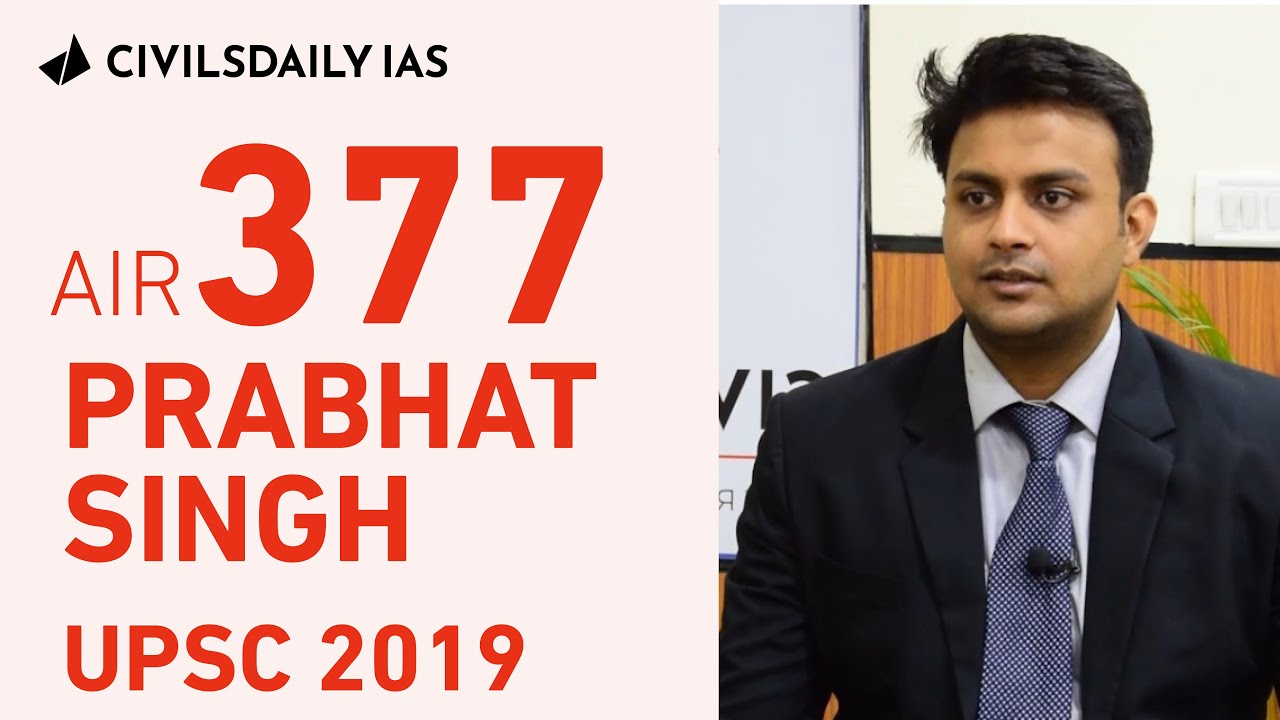
  • Why it took 5 attempts for me and the mistakes you should avoid | WEBINAR by Prabhat Gyanendra Singh, AIR 377, 2020 (JOINING LINK inside)

    Why it took 5 attempts for me and the mistakes you should avoid | WEBINAR by Prabhat Gyanendra Singh, AIR 377, 2020 (JOINING LINK inside)

    Prabhat Singh secured an AIR 377 in his 5th attempt. He’ll be available for a discussion and Ask Me Anything session for UPSC CSE. He will be focussing on choosing Optionals as well.

    Join Zoom Meeting

    https://us06web.zoom.us/j/84167109252?pwd=MWtaVXgxdWJkUk9DNWU2TG8zWTJEZz09

    Webinar Details

    A busy IRPS Officer like PRABHAT GYANENDRA SINGH  is free only on a Sunday. But he loves to dedicate his Sundays to mentoring upcoming civil servants. So join him and give your UPSC preparation a new Edge and direction! This webinar is absolutely free. All aspirants are heartily welcome to attend.

    Date: 1st May 2022 (Sunday)

    Time: 3 to 4 PM

    Join Zoom Meeting

    https://us06web.zoom.us/j/84167109252?pwd=MWtaVXgxdWJkUk9DNWU2TG8zWTJEZz09

    Infallible Tips to Learn in This Free Live Webinar by IRPS PRABHAT GYANENDRA SINGH

    • How can an aspirant’s academic and personal interests guide in choosing one’s optional?
    • How can an aspirant’s academic and personal interests guide in choosing one’s optional?
    • What is the Optional subject’s contribution to the General Studies curriculum?
    • In the recent past, Discussion on performance of various optional subject (past 5 years)
    • Effective Time Management for optional.
    • Various Benefits and Drawbacks of Humanity Optional
    • Why I will not follow the crowd. What are the difficulties it faces?
    • Discussion on Literature (optional) and its ramifications
    • Why should you be cautious before enrolling in Public Administration and Law?
    • Implications of selecting the incorrect optional on your preparation and result.
    UPSC Topper - Singh Prabhat Gyanendra, UPSC 2019, AIR 377 - Mock Interview  with Civilsdaily - YouTube

    About PRABHAT GYANENDRA SINGH 

    PRABHAT GYANENDRA SINGH was a B.sc Statistics from Gujarat University, M.G. Science college.  He completed his LL.B from Campus Law Centre, Delhi University LL.M. – I.P.S. Roorkee, UTU. On a personal level, he pursued further education, especially in public policy. In his attempt of CSE 2019 with Law as an optional secured All India Rank 377.

    Join Zoom Meeting

    https://us06web.zoom.us/j/84167109252?pwd=MWtaVXgxdWJkUk9DNWU2TG8zWTJEZz09

  • (Join webinar using this link)  How to choose an Optional for UPSC-CSE 2023| Webinar by PRABHAT GYANENDRA SINGH, IRPS

    (Join webinar using this link) How to choose an Optional for UPSC-CSE 2023| Webinar by PRABHAT GYANENDRA SINGH, IRPS

    Link: https://us06web.zoom.us/j/84167109252?pwd=MWtaVXgxdWJkUk9DNWU2TG8zWTJEZz09


    There is no dearth of advice floating around on the internet about ‘How to choose an optional subject for UPSC!’. Are those enough for an aspirant to make the right decision and score 350+ out of 500? 

    Some websites suggest ‘Hindi Literature’ for Hindi medium students and ‘Sociology’ for English medium. It’s extremely important to justify what are the exact principles that must be taken under scrutiny while selecting your optional subject. Because you have to choose 1 optional, not randomly and it will decide your rank for IAS.

    Is it only subjective interest that will work for you or should it be helpful to GS & essay papers too or highly scoring itself? 

    Attend the free live webinar conducted by Civilsdaily’s topper PRABHAT GYANENDRA SINGH to understand how to select the optional subject for UPSC to have an edge over the competition.

    Webinar Details

    A busy IRPS Officer like PRABHAT GYANENDRA SINGH  is free only on a Sunday. But he loves to dedicate his Sundays to mentoring upcoming civil servants. So join him and give your UPSC preparation a new Edge and direction! This webinar is absolutely free. All aspirants are heartily welcome to attend.

    Date: 1st May 2022 (Sunday)

    Time: 3 to 4 PM

    Link: https://us06web.zoom.us/j/84167109252?pwd=MWtaVXgxdWJkUk9DNWU2TG8zWTJEZz09

    Infallible Tips to Learn in This Free Live Webinar by IRPS PRABHAT GYANENDRA SINGH

    • How can aspirant’s academic and personal interests guide in choosing one’s optional?
    • What is the Optional subject’s contribution to the General Studies curriculum?
    • In the recent past, Discussion on performance of various optional subject (past 5 years)
    • Effective Time Management for optional.
    • Various Benefits and Drawbacks of Humanity Optional
    • Why I will not follow the crowd. What are the difficulties it faces?
    • Discussion on Literature (optional) and its ramifications
    • Why should you be cautious before enrolling in Public Administration and Law?
    • Implications of selecting the incorrect optional on your preparation and result.
    UPSC Topper - Singh Prabhat Gyanendra, UPSC 2019, AIR 377 - Mock Interview  with Civilsdaily - YouTube

    About PRABHAT GYANENDRA SINGH 

    PRABHAT GYANENDRA SINGH was a B.sc Statistics from Gujarat University, M.G. Science college.  He completed his LL.B from Campus Law Centre, Delhi University LL.M. – I.P.S. Roorkee, UTU. On a personal level, he pursued further education, especially in public policy. In his attempt of CSE 2019 with Law as an optional secured All India Rank 377.

    Link: https://us06web.zoom.us/j/84167109252?pwd=MWtaVXgxdWJkUk9DNWU2TG8zWTJEZz09

  • [Prelims Spotlight] Important Financial Institutions in News

    Dear Aspirants,

    This Spotlight is a part of our Mission Nikaalo Prelims-2022

    Download Habitat app from the Playstore Join our Official Civilsdaily Space for GS and CSAT Here

    ENROLL FOR PRELIMS MAHASANGRAM 2022 || 40 Days Prelims Revision Plan with TIKDAM lectures. Click HERE

    Important Financial Institutions


    28 Apr 2022

    Development Finance Institutions

    The Need of DFIs

    Classification of DFIs

    All India DFIs Special DFIs Investment Institutions Refinance Institutions State Level DFIs
    Industrial Finance Corporation of India

    Industrial Development Bank of India

    Small Industries Development Bank of India (SIDBI)

    ICICI

    ICICI ceased to be a DFI and converted into a Bank on 30 March 2002.

    IDBI was converted into a Bank on 11 October 2004.

    EXIM Bank

    IFCI Venture Capitalist Fund

    Tourism Finance Corporation of India.

    IDFC.

    LIC

    Union Trust of India.

    General Insurance Corporation.

    National Housing Board.

    NABARD.

    State Financial Corporation.

    State Industrial Development Corporations.

    All India Development Finance Institutions

    IFCI ICICI IDBI SIDBI
    IFCI was the first DFI to be setup in 1948. It was setup in January 1995. The IDBI was initially set up as a Subsidiary of the RBI. In February 1976, IDBI was made fully autonomous. SIDBI was setup as a subsidiary of IDBI in 1989.
    With Effect from 1 July 1993, IFCI has been converted into Public Limited Company. With effect from April 2002, ICICI has been converted into a Bank. The IDBI was designated as apex organisation in the field of Development Financing. However, it was converted in a bank wef Oct 2004. The SIDBI was designated as apex organisation in the field of Small Scale Finance.The Union Budget of 1998-99 proposed the delinking of SIDBI from IDBI.
    The key function of IFCI was; granting long-term loans(25 years and above); Guaranteeing rupee loans floated in open markets by industries; Underwriting of shares and debentures; Providing guarantees for industries. The key functions of ICICI were; to provide long term or medium term loans or equity participation; Guaranteeing loans from other private sources; providing consultancy services to industry. The key functions of IDBI were; it provides refinance against loans granted to industries; it subscribed to the share capital and bond issues of other DFIs; it also acted as the coordinator of DFIs at all India level. The key function of SIDBI was; to provide assistance to small scale units; initiating steps for technological up gradation and modernization of SSIs; expanding the marketing channel for the Small Scale Industries product; promotion of employment creating SSIs.
    IFCI was a public sector DFI. The ICICI differed from IFCI and IDBI with respect to ownership, management and lending operation. ICICI was a Private sector DFI. It was a Public sector DFI.

    Investment Institutions

    Union Trust of India Life Insurance Company General Insurance Corporation
    The UTI was setup on Nov 1963 after Parliament passed the UTI Act. LIC was set up in 1956 after the insurance business was nationalised. The GIC was formed by the central government in 1971.
    The objective of UTI was to channel the savings of people into equities and corporate debts. The flagship scheme of the UTI was called Unit Scheme 64. The objective of LIC is to provide assistance in the form of term loans; subscription of shares and debentures;resource support to financial institutions and Life insurance coverages. The GIC had four subsidiaries; National Insurance Co; New India Assurance; Oriental Insurance; and United India Insurance.
    In 2002, the Union Cabinet had decided to split UTI into UTI 1 and UTI 2 as a result of the prolonged crisis in UTI. The General Insurance Nationalisation Amendment Act, 2002, has delinked the GIC from its four subsidiaries.

    Commercial Banks

    • Organised under the Banking Companies Act, 1956
    • They operate on a commercial basis and its main objective is profit.
    • They have a unified structure and are owned by the government, state, or any private entity.
    • They tend to all sectors ranging from rural to urban
    • These banks do not charge concessional interest rates unless instructed by the RBI
    • Public deposits are the main source of funds for these banks

    What are cooperative banks?

    • Cooperative banks are financial entities set up on a co-operative basis and belonging to their members.
    • This means that the customers of a cooperative bank are also its ownersThey are registered under the States Cooperative Societies Act and they come under the RBI regulation under two laws:
    • Banking Regulations Act, 1949
    • Banking Laws (Cooperative Societies) Act, 1955
    • They aim to promote savings and investment habits among people, especially in rural areas.
    • These banks are broadly classified under two categories – Rural and Urban.
    • The rural cooperative credit institutions can be further classified into:
    • Short-term cooperative credit institutions
    • Long-credit institutions

    The short-term credit institutions can further be sub-divided into:

    • State cooperative banks
    • District Central Cooperative banks
    • Primary Agricultural Credit Societies

    Long-term institutions can either be:

    • State Cooperative Agricultural and Rural Development Banks (SCARDBs), or
    • Primary Cooperative Agriculture and Rural Development Banks (PCARDBs)
    • Urban Cooperative Banks (UCBs) can be further classified into scheduled and non-scheduled.
    • The scheduled and unscheduled can either be operating in a single state or multi-state

    Regional Rural Banks (RRBs)

    • RRBs have Scheduled Commercial Banks operating at the regional level in different states of India. They are recognized under the Regional Rural Banks Act, 1976 Act.
    • They have been created with a view of serving primarily the rural areas of India with basic banking and financial services.
    • However, RRBs may have branches set up for urban operations and their area of operation may include urban areas too.
    • The area of operation of RRBs is limited to the area covering one or more districts in the State.

    Their functions

    RRBs also perform a variety of different functions. RRBs perform various functions in the following heads:

    • Providing banking facilities to rural and semi-urban areas
    • Carrying out government operations like disbursement of wages of MGNREGA workers, distribution of pensions etc.
    • Providing Para-Banking facilities like locker facilities, debit and credit cards, mobile banking, internet banking, UPI etc.
    • Small financial banks etc.

    About NABARD

    • NABARD is an apex development financial institution in India, headquartered at Mumbai with regional offices all over India.
    • It is India’s specialised bank in providing credit for Agriculture and Rural Development in India.
    • The Bank has been entrusted with “matters concerning policy, planning and operations in the field of credit for agriculture and other economic activities in rural areas in India”.
    • It was established on the recommendations of B.Sivaraman Committee on 12 July 1982 to implement the NABARD Act 1981.
    • NABARD supervises State Cooperative Banks (StCBs), District Cooperative Central Banks (DCCBs), and Regional Rural Banks (RRBs) and conducts statutory inspections of these banks.

    About National Housing Bank

    • NHB is an All India Financial Institution (AIFl), set up in 1988, under the National Housing Bank Act, 1987.
    • The National Housing Policy, 1988 has envisaged the setting up of NHB as the Apex level institution for housing.
    • It is an apex agency established to operate as a principal agency to promote housing finance institutions both at local and regional levels.
    • It aims to provide financial and other support incidental to such institutions and for matters connected therewith.

    EXIM Bank

    • EXIM stands for Export-Import
    • Export-Import Bank of India is a wholly-owned Govt. of India entity
    • Established in 1982
    • HQ : New Delhi
    • Aim : financing, facilitating and promoting foreign trade of India.
    • The EXIM bank extends Line of Credit (loC) to overseas financial institutions, regional development banks, sovereign governments and other entities abroad.
    • Thus the EXIM Banks enables buyers in those countries to import developmental and infrastructure, equipment’s, goods and services from India on deferred credit terms.
    • The bank also facilitates investment by Indian companies abroad for setting up joint ventures, subsidiaries or overseas acquisitions.

    International Financial Services Centres

    • IFSCs are intended to provide Indian corporates with easier access to global financial markets, and to complement and promote further development of financial markets in India.
    • An IFSC enables bringing back the financial services and transactions that are currently carried out in offshore financial centres by Indian corporate entities and overseas branches/subsidiaries of financial institutions (FIs) to India.
    • This is done by offering business and regulatory environment that is comparable to other leading international financial centres in the world like London and Singapore.
    • The first IFSC in India has been set up at the Gujarat International Finance Tec-City (GIFT City) in Gandhinagar.

    Banks Board Bureau

    • Banks Board Bureau is an autonomous body of Union Government of India
      It is tasked to improve the governance of Public Sector Banks, recommend the selection of chiefs of government-owned banks and financial institutions and to help banks in developing strategies and capital raising plans
    • It will have three ex-officio members and three expert members in addition to Chairman
    • Financial services secretary, deputy governor of the Reserve Bank of India and secretary- public enterprises are BBB’s ex-officio members

    Non-Banking Financial Companies

    • A Non-Banking Financial Company (NBFC) is a company registered under the Companies Act, 1956 engaged in the business of loans and advances, acquisition of shares/stocks/bonds/debentures/securities issued by Government or local authority or other marketable securities of a like nature, leasing, hire-purchase, insurance business, chit business but does not include any institution whose principal business is that of agriculture activity, industrial activity, purchase or sale of any goods (other than securities) or providing any services and sale/purchase/construction of immovable property.
    • A non-banking institution which is a company and has a principal business of receiving deposits under any scheme or arrangement in one lump sum or in instalments by way of contributions or in any other manner is also a non-banking financial company (Residuary non-banking company).

    NBFCs are doing functions similar to banks. What is the difference between banks & NBFCs?

    NBFCs lend and make investments, and hence their activities are akin to that of banks; however, there are a few differences as given below:

    1. NBFC cannot accept demand deposits;
    2. NBFCs do not form part of the payment and settlement system and cannot issue cheques drawn on itself.
    3. Deposit insurance facility of Deposit Insurance and Credit Guarantee Corporation is not available to depositors of NBFCs, unlike in case of banks.
    4. Unlike Banks which are regulated by the RBI, the NBFCs are regulated by multiple regulators; Insurance Companies- IRDA, Merchant Banks- SEBI, Micro Finance Institutions- State Government, RBI and NABARD.
    5. The norm of Public Sector Lending does not apply to NBFCs.
    6. The Cash Reserve Requirement also does not apply to NBFCs.

    Classification and Categorization of NBFCs

    Asset Finance Company AN AFC is a company which is a financial institution whose principle business is the financing of physical assets such as automobiles, tractors, machines etc.
    Investment Company AN IC is any company which is a financial institution carrying on its principle business of acquisitions of securities.
    Loan Company LC is a financial institution whose primary business is of providing finance by making loans and advances.
    Infrastructure Finance Company IFC is an NBFC which deploys 75% of its total assets in infrastructure loans and has a minimum net owned fund of Re 300 Crore.
    Systematically Important Core Investment Company CIC is an NBFC carrying on the business of acquisition of shares and securities. CIC must satisfy the following conditions:It holds not less than 90% of its Total Assets in the form of investment in equity shares, preference shares, debt or loans in group companies;

    Its investments in the equity shares (including instruments compulsorily convertible into equity shares within a period not exceeding 10 years from the date of issue) in group companies constitutes not less than 60% of its Total Assets;

    (c) it does not trade in its investments in shares, debt or loans in group companies except through block sale for the purpose of dilution or disinvestment;

    (d) it does not carry on any other financial activity referred to in Section 45I(c) and 45I(f) of the RBI Act, 1934 except investment in bank deposits, money market instruments, government securities, loans to and investments in debt issuances of group companies or guarantees issued on behalf of group companies.

    (e) Its asset size is ₹ 100 crore or above and

    (f) It accepts public funds

    Infrastructure Debt Fund NBFC IDF NBFC primary role is to facilitate long term flow of debt into infrastructure projects. Only Infrastructure Finance Companies can sponsor IDF.
    Micro Finance NBFC MFI NBFC is a non-deposit taking NBFC having not less than 85% of its assets in the nature of qualifying assets which satisfy the following criteria:a) loan disbursed by a NBFC-MFI to a borrower with a rural household annual income not exceeding ₹ 1,00,000 or urban and semi-urban household income not exceeding ₹ 1,60,000;

    b. loan amount does not exceed 50,000 in the first cycle and 1,00,000 in subsequent cycles;

    c. total indebtedness of the borrower does not exceed 1,00,000;

    d. tenure of the loan not to be less than 24 months for the loan amount in excess of 15,000 with prepayment without penalty;

    e. loan to be extended without collateral;

    f. aggregate amount of loans, given for income generation, is not less than 50 per cent of the total loans given by the MFIs;

    g. loan is repayable on weekly, fortnightly or monthly instalments at the choice of the borrower

  • Free Live Webinar on How to utilize last 30 Days prudently for UPSC Prelims 2022 By Senior IAS Mentor Amoghavarsha Sir | Last chance to register  | Hurry Register Now

    Free Live Webinar on How to utilize last 30 Days prudently for UPSC Prelims 2022 By Senior IAS Mentor Amoghavarsha Sir | Last chance to register | Hurry Register Now

    ‘It always seems impossible until it’s done’–Anonymous.

    CSE Prelims is the first phase of the Civil Services Exam but not necessarily the simplest. There is a significant difference between the syllabi of the Preliminary and Main Exams, as well as the nature of the questions, so the preparation strategy must be well thought out. However,  there is no fixed, deterministic path to success in this highly subjective, uncertain exam.

    When many aspirants around are feeling anxious, nervous, or panic stricken, our step-by-step hourly basic 30 days’ revision strategy won’t let you get bored even for a minute. It enabled you to enjoy every second of your revision & ultimately secure 125+ in UPSC-CSE prelims 2022. Design your entire study like a game with the unique Gamification method. 

    Attend the free live webinar conducted by Civilsdaily’s Senior IAS & Prelims Mahasangram mentor to get value-added insights on how to utilize time & revision spontaneously.

    Webinar Details

    Grab the chance to get power-packed guidance on how to utilize even a single second for intensive revision in a planned and organized manner. This webinar is absolutely free. All aspirants are warmly welcome to attend.

    Date: 27th April, 2022 (Wednesday)

    Time: 7PM to 8PM

    Tips & Techniques to Learn in This Free Live Webinar by Amoghavarsha Sir!

    1. How to face UPSC Prelims with full confidence using Gamification Method. What should you focus on each day? What is ‘Gamification methodology’ toppers applied to?
    1.  How toppers use the 20%-80% rule in time-management. The salient features of this rule in every aspect of last time preparation.
    1. The unique power of ‘Pareto Principle’. Why it is extremely important on the eve of Prelims will also be discussed.
    1. How to level up your overall multiple revisions and retention power of GS topics for UPSC-CSE prelims 2022.
    1. How to bring Ancient History on your fingertips by creative ‘Zura has to complete this Quest within 7 hours study rules will be discussed too.

    About Amoghavarsha R

    Amoghavarsha R sir comes from an IT-Engineering background. He has been a seasoned senior IAS mentor in Civilsdaily since 2020. He is the introducer of modern ‘Gamification Teaching Methodology’. He likes to teach GS subjects.

  • [Prelims Spotlight] Important UN Organizations

    Dear Aspirants,

    This Spotlight is a part of our Mission Nikaalo Prelims-2022

    Download Habitat app from the Playstore Join our Official Civilsdaily Space for GS and CSAT Here

    ENROLL FOR PRELIMS MAHASANGRAM 2022 || 40 Days Prelims Revision Plan with TIKDAM lectures. Click HERE

    Important UN Organizations in News


    27 Apr 2022

    United Nation Overview:

    • The United Nations is an international organization founded in 1945.  It is currently made up of 193 Member States.  The mission and work of the United Nations are guided by the purposes and principles contained in its founding Charter.
    • Due to the powers vested in its Charter and its unique international character, the United Nations can take action on the issues confronting humanity in the 21st century, such as peace and security, climate change, sustainable development, human rights, disarmament, terrorism, humanitarian and health emergencies, gender equality, governance, food production, and more.
    • The UN also provides a forum for its members to express their views in the General Assembly, the Security Council, the Economic and Social Council, and other bodies and committees. By enabling dialogue between its members, and by hosting negotiations, the Organization has become a mechanism for governments to find areas of agreement and solve problems together.
    • The main organs of the UN are the General Assembly, the Security Council, the Economic and Social Council, the Trusteeship Council, the International Court of Justice, and the UN Secretariat.  All were established in 1945 when the UN was founded.

    General Assembly

    • The General Assembly is the main deliberative, policymaking and representative organ of the UN. All 193 Member States of the UN are represented in the General Assembly, making it the only UN body with universal representation.
    • Each year, in September, the full UN membership meets in the General Assembly Hall in New York for the annual General Assembly session, and general debate, which many heads of state attend and address. Decisions on important questions, such as those on peace and security, admission of new members and budgetary matters, require a two-thirds majority of the General Assembly.
    • Decisions on other questions are by a simple majority.  The General Assembly, each year, elects a GA President to serve a one-year term of office.

    Security Council

    The Security Council has primary responsibility, under the UN Charter, for the maintenance of international peace and security.  It has 15 Members (5 permanent and 10 non-permanent members). Each Member has one vote. Under the Charter, all Member States are obligated to comply with Council decisions. The Security Council takes the lead in determining the existence of a threat to the peace or act of aggression. It calls upon the parties to a dispute to settle it by peaceful means and recommends methods of adjustment or terms of the settlement. In some cases, the Security Council can resort to imposing sanctions or even authorize the use of force to maintain or restore international peace and security.  The Security Council has a Presidency, which rotates, and changes, every month.

    Economic and Social Council

    The Economic and Social Council is the principal body for coordination, policy review, policy dialogue and recommendations on economic, social and environmental issues, as well as the implementation of internationally agreed development goals. It serves as the central mechanism for activities of the UN system and its specialized agencies in the economic, social and environmental fields, supervising subsidiary and expert bodies.  It has 54 Members, elected by the General Assembly for overlapping three-year terms. It is the United Nations’ central platform for reflection, debate, and innovative thinking on sustainable development.

    Trusteeship Council

    The Trusteeship Council was established in 1945 by the UN Charter, under Chapter XIII, to provide international supervision for 11 Trust Territories that had been placed under the administration of seven Member States, and ensure that adequate steps were taken to prepare the Territories for self-government and independence. By 1994, all Trust Territories had attained self-government or independence.  The Trusteeship Council suspended operation on 1 November 1994. By a resolution adopted on 25 May 1994, the Council amended its rules of procedure to drop the obligation to meet annually and agreed to meet as occasion required — by its decision or the decision of its President, or at the request of a majority of its members or the General Assembly or the Security Council.

    International Court of Justice

    The International Court of Justice is the principal judicial organ of the United Nations. Its seat is at the Peace Palace in the Hague (Netherlands). It is the only one of the six principal organs of the United Nations not located in New York (United States of America). The Court’s role is to settle, in accordance with international law, legal disputes submitted to it by States and to give advisory opinions on legal questions referred to it by authorized United Nations organs and specialized agencies.

    Secretariat

    The Secretariat comprises the Secretary-General and tens of thousands of international UN staff members who carry out the day-to-day work of the UN as mandated by the General Assembly and the Organization’s other principal organs.  The Secretary-General is the chief administrative officer of the Organization, appointed by the General Assembly on the recommendation of the Security Council for a five-year, renewable term. UN staff members are recruited internationally and locally, and work in duty stations and on peacekeeping missions all around the world.  But serving the cause of peace in a violent world is a dangerous occupation. Since the founding of the United Nations, hundreds of brave men and women have given their lives in its service.

  • [Sansad TV] Perspective: Dollar Dominance: Under threat?

    UPSC 2023 countdown has begun! Get your personal guidance plan now! (Click here)

    Context

    As per IMF’s first deputy managing director Gita Gopinath, financial sanctions imposed on Russia threaten to gradually dilute the dominance of the U.S. dollar and could result in a more fragmented international monetary system.

    To understand more on this and related risks to the dominance of the dollar in view of the prevailing global situation and what it means for the international financial market.

    Russia- Ukraine War and USD

    • The Russia-Ukraine conflict conveys no signal of coming to an end or any tendency towards a peaceful settlement.
    • This has disrupted the global supply chain and has caused a major blow to the global economy.
    • The World Bank has reduced its annual global growth forecast for 2022 by nearly a full percentage point, from 4.1% down to 3.2%.
    • The financial sanctions imposed on Russia by the major Western powers have prompted changes in the international financial order driven by USD.
    • The United States has to some extent weaponized the dollar against Russia.
    • Countries are concerned that the money it holds in dollars would be worthless if dollar inflation set in.

    How US Dollar became the global currency?

    • The U.S. dollar has been the world’s dominant currency since the end of World War II.
    • Roughly half of international trade, international loans, and global debt securities are denominated in USD.
    • The USD became the official reserve currency of the world in 1944. The decision was made by a delegation from 44 Allied countries called the Bretton Woods Agreement.
    • Despite the challenges faced by the US economy due to fiscal and external deficits of the 1980s, the dollar’s share of global reserves remained steady and reserves even grew as time progressed.
    • The dominance of the dollar is backed by strong and highly credible institutions, deep markets and the fact that it is freely convertible.
    • Almost 40% of the world’s debt is issued in dollars. As a result, foreign banks need a lot of dollars to conduct business. This became evident during the 2008 financial crisis.

    Implications of USD led inflation

    • The dollar’s role as the world’s “reserve currency” is a cornerstone of the global economy and global finance as well as geopolitics.
    • Most of the transactions are dollar-dominated, currency depreciation is rather unlikely to increase exports.
    • A depreciation in the currency relative to the dollar leads to an increase in the price of imported goods which means high pressures on inflation.

    Challenges to USD

    • In the 1990s the dollar’s role started diminishing and the US became a net debtor to the world.
    • With the emerging global value chains, China’s integration into the world economy has been an impediment to the economic growth of the US.
    • A considerable decline in the dollar’s share can be attributed to the greater use of the Chinese renminbi.
    • It was notified by the IMF official that the dollar’s share of international reserves had fallen from 70% to 60% over a period of time with the growing trading currencies led by the Australian dollar.

    Calls for a one world currency

    • In March 2009, China and Russia called for a new global currency.
    • China is a huge player in world trade, which you might think would make people want to hold a lot of yuan assets.
    • They wanted the world to create a reserve currency that is disconnected from individual nations and is able to remain stable in the long run.
    • They thus want to remove the inherent deficiencies caused by using credit-based national currencies.
    • In the fourth quarter of 2016, the Chinese renminbi became another one of the world’s reserve currencies.
    • China wants its currency to be fully traded on the global foreign exchange markets. It would like the Yuan to replace the dollar as the global currency.

    What lies ahead?

    • For many years, undermining the dollar’s dominance has been the dream of governments that have looked uneasily at US global primacy, and formed coalitions.
    • Some experts also advocate that either China’s or Russia’s threat to the dollar hegemony will remain a fantasy.
    • It is predicted that the sanctions against Russia will not foreshadow the decline of the dollar as the reserve currency.
    • The Russia-Ukraine Conflict will definitely slow down the global economy but will not cause a global recession.

  • Prelims Spotlight: Important Traditional Crafts, Music and Dance schools in India

    Dear Aspirants,

    This Spotlight is a part of our Mission Nikaalo Prelims-2022

    JOIN THE SPECIAL SESSIONS ON OUR OFFICIAL SPACE

    Morning 12:00 PM  – Prelims Spotlight Session

    Evening 06:30  PM  – MCQs Session

    Evening 08:00 PM  – Tests on Alternate Days

    Download Habitat app from the Playstore Join our Official Civilsdaily Space for GS and CSAT Here

    26th Apr 2022

    Preparing for 2023 and not able to plan your preparation?
    No worries, Talk to our senior mentors directly.

    Fill up this form to schedule a free on-call discussion with senior mentor from Civilsdaily. Once submitted we will call you within 24 hours. Click Here

  • PRELIMS MAHASANGRAM 2022 || 40 Days Prelims Revision Plan  with TIKDAM lectures

    PRELIMS MAHASANGRAM 2022 || 40 Days Prelims Revision Plan with TIKDAM lectures

    Play Along with Your Favourite WAR COMMANDERS

    As the Prelims is getting closer, many tasks line up like static revisions, attempting mocks and wrapping up your current affairs. Quick revisions can help you remember the factual information on the final day.

    To take care of your quick revision plan, Civilsdaily is introducing Prelims Mahasangram 2022.

    The program will focus on targeted coverage of syllabus; Daily Discussion with Q&A; TIKDAM Lectures, weekly zoom calls.

    Program Starts on Monday 18th April, 2022.

    Your War Commanders are Core mentors from Civilsdaily. They mentored around 50 Aspirants in 2021 and more than 22 Aspirants cleared prelims following their Strategy.

    Now that the battleground is ready, Are you ready for the Mahasangram?

    • Complete the most important books like Laxmikant, Spectrum, NCERTs etc with  Prelims Battle: Gamified. 
    • Understand the Magic of Elimination through Lectures.
    • Win daily, weekly and eventually final War with your favourite War Commanders.
    • Be the top on the weekly Leaderboard and arrange a strategy session on Google Meet with your War Commanders.

    Major Components of The Program

    • Detailed Plan: You War commanders will provide you with a broader, Weekly and daily plan. They will also set Daily Accountability to ensure Consistency. Every morning you will be given a target to complete, which will be eventually taken up for discussion in the evening.
    • A Roadmap to secure 105 marks in Prelims 2022: You are not supposed to score 200 but just 100+ to secure a seat for mains 2022. Reading Everything in detail right now will create confusion and panic. Your War Lords will give you their smart strategy which helped their older spartans to clear prelims with flying colors. They will tell you the perfect plan to reach this milestone.
    • Daily Sessions: Evaluation is necessary after you complete your targets. Your War commanders will conduct daily sessions and ensure you do not miss any relevant topic. These session will be based on Q&A method on our Official Civilsdaily Space, Habitat.
    • Strategy: Strategy will definitely help you to plan your study for the next 45 days in a more efficient manner.You War commanders will provide you subject wise strategy specifically for prelims.
    • Daily and Weekly Leaderboard: Follow the daily schedule and earn reward points. 
    • Weekly Rewards: Those who get the top 5 spots on the weekly leaderboard will get a personal session with the mentors over google meet.
    • TIKDAM Lectures: Learn the Art of Elimination and Be the warrior who will win the war. Ravi Sir is one of the pioneers of Tikdam and he will help you in developing logics. These logics will definitely help you clear the exam. There will be 10 Tikdam sessions.

    You can get the joining and payment details for the program on the link given below:

    See How Tikdam Works even with the toughest questions:

    Q. Consider the following statements: 

    1. 21st February is declared to be the International Mother Language Day by UNICEF.

    2. The demand that Bangla has to be one of the national languages was raised in the Constituent Assembly of Pakistan. 

    Which of the above statements is/are correct? 

    (a) 1 only 

    (b) 2 only 

    (c) Both 1 and 2 

    (d) Neither 1 nor 2

    Statement-1:  It is a part of culture therefore it should be UNESCO not UNICEF. Also by TIKDAM Rule-1, Above statement should be incorrect.

    Statement 2: Present Bangladesh was a part of the then Pakistan. The statement does not say for the first time or only in the Assembly but a general statement that the demand was raised which sounds logical because East Bengal was a part of it as well. Therefore this statement should be correct.

    Q Consider the following statements: 

    1. Moringa (drumstick tree) is a leguminous evergreen tree. 

    2. The Tamarind tree is endemic to South Asia.

    3. In India, most of the tamarind is collected as minor forest produce. 

    4. India exports tamarind and seeds of moringa. 

    5. Seeds of moringa and tamarind can be used in the production of biofuels. 

    Which of the statements given above are correct? 

    (a) 1, 2, 4 and 5 

    (b) 3, 4 and 5 

    (c) 1, 3 and 4 

    (d) 1, 2, 3 and 5

    Almost every Indian has seen the Moringa Trees(Mungna, Saijan in hindi). They drop their leaves as we have seen. This means they are not evergreen. By eliminating we can get B as an answer.

    Q What is blue carbon? 

    (a) Carbon captured by oceans and coastal ecosystems 

    (b) Carbon sequestered in forest biomass and agricultural soils 

    (c) Carbon contained in petroleum and natural gas 

    (d) Carbon present in atmosphere

    We all know blue is used for Water/Oceans. Now option A has Ocean. 

    Q. With reference to the book “Desher Kather” written by Sakharam Ganesh Deuskar during the freedom struggle, consider the following statements : 

    1. It warned against the Colonial States hypnotic conquest of the mind. 

    2. It inspired the performance of swadeshi street plays and folk songs. 

    3. The use of desh‘ by Deuskar was in the specific context of the region of Bengal

    Which of the statements given above are curt? 

    (a) 1 and 2 only 

    (b) 2 and 3 only 

    (c) 1 and 3 only 

    (d) 1, 2 and 3 

    Anything in the context of Bengal used to start as ‘Bang.’ For example Bang Bhasha Prakashak Sabha, Bang Bhang, Bangladesh etc. Therefore Desh should not be in the context of Bengal. Now by simply eliminating S3 we can get the answer.