It’s a moment of immense pride for us. We will not just share the names and numbers. We will walk you through each student’s journey: how their days, months looked like. the number of calls made, the milestones achieved, and the challenges they overcame.
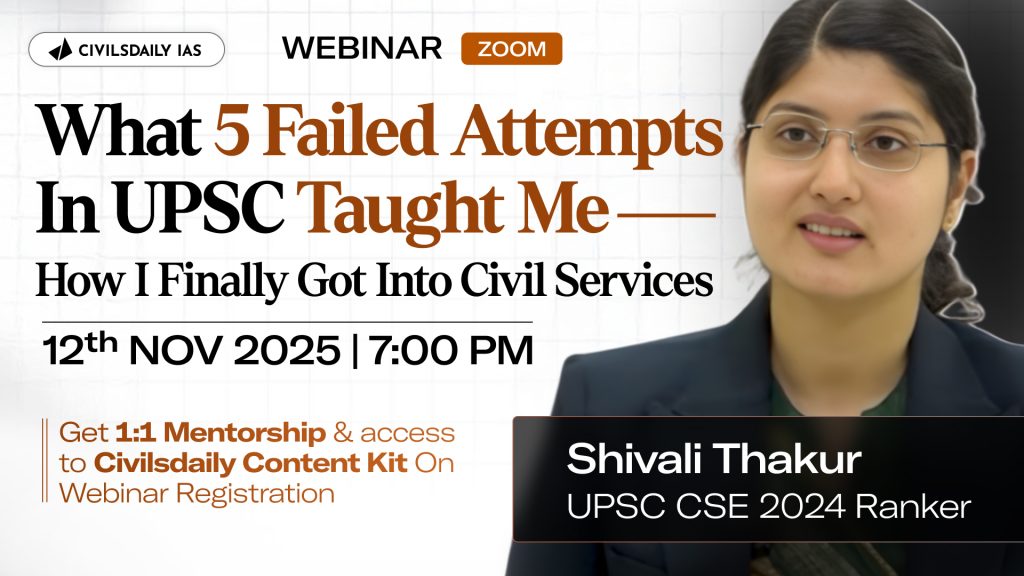
I failed UPSC five times before I found what actually works. In my final attempt, I changed how I studied, how I wrote, and how I reviewed myself, and that made all the difference. If you are preparing for 2026 and feel stuck, this session is for you.
Shivali Thakur, UPSC CSE 2024 Ranker
What I will cover (practical, no fluff):
What went wrong in my first five attempts: over reading, scattered notes, late answer writing, weak revision, and poor test analysis.
What finally worked in the last attempt: a realistic timetable, PYQ led notes, directive focused answer writing, and a strict review loop.
Current affairs the right way: theme folders, limited sources, weekly consolidation, and how I used them in answers.
Answer writing for marks: handling directives (discuss/analyse/evaluate), structuring 10/15/20 markers, and adding value without fluff.
Mock tests to real marks: how I analysed GS, Essay, and Optional tests, what I changed week to week.
Mindset & routine: study like a professional, habits, energy management, and how I recovered from bad days.
Optional & Essay: building depth, two good essays reliably, and linking static + current with examples.
Why attend this session:
• To stop repeating the same mistakes every attempt.
• To learn a prep method you can sustain for months.
• To see exactly how to convert reading into marks.
• To get a simple, executable plan for the upcoming days.
It will be a 45 minute session, post which we will open up the floor for all kinds of queries which a beginner must have. No questions are taboo and Shivali Ma’am is known to be patiently solving all your doubts.
Join us for a Zoom session on 12th Nov at 7 PM. This session is a must attend for you If you are attempting UPSC for the first time or have attempted earlier and now preparing for 2026/2027, then it is going to be a valuable session for you too.
See you in the session”
Register for the session for a complete in-depth UPSC Prep
(Don’t wait—the next webinar/session won’t be until End Nov’25)
These masterclasses are packed with value. They are conducted in private with a closed community. We rarely open these webinars for everyone for free. This time we are keeping it for 300 seats only.
Why Civilsdaily’s UPSC Mentorship Program Is Unique? UAP is NOT your regular course. This isn’t just a program, it’s an ecosystem built to deliver ranks. The core of UAP is – Fault Finding & Course Correction. While other mentorships feel like blackboxes-random calls, vague advice, zero accountability & mere doubt solving-ours is a precision system built to spot your faults and fix them fast. No fluff, no guesswork. Real mentorship means real corrections.
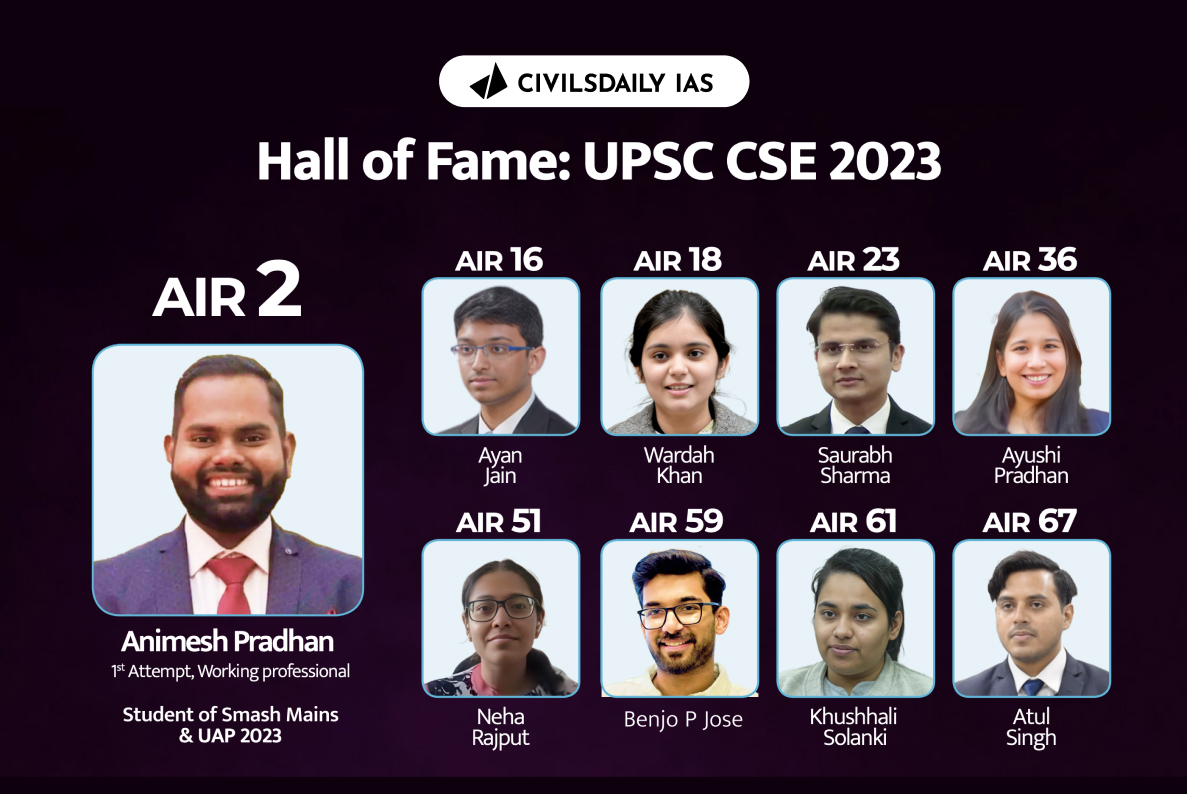
We follow 5 steps: The Approach → Weekly Targets → Note-Building → Testing → Test Discussions. Every step sharpens you. Every step pulls you closer to the list. From crafting your strategy to squeezing out every last mark in Mains, UAP goes all in. In 2023, AIR 2 came from UAP. Many cleared in their first attempt. Others cracked it in their final shot.
What’s common? Grind, Focus, Clarity, and UAP. This alone is a strong enough reason why UAP is a unique program.
The heart of the Civilsdaily is the Ultimate Assessment Program (UAP). For years, aspirants have enrolled here because they couldn’t find such depth and passion towards quality content and Mentorship anywhere. Their search for Mentorship inevitably ends at Civilsdaily.
What You Need to Crack UPSC-CSE in One Attempt
To succeed in UPSC-CSE in a single attempt, it’s essential to have a well-structured, strategic approach. Here’s a breakdown of the key program inclusions that will help you achieve that:
Goal Setting: The Foundation of Preparation Every month, you’ll have a clear timeline of what needs to be covered and by when. This ensures consistent progress, avoids burnout, and keeps you on the right track throughout your preparation.
Assessment-Based Approach A comprehensive strategy that focuses on covering the entire syllabus in the shortest time possible, while still allowing room for multiple revisions. This approach ensures you stay on top of every subject while reinforcing your understanding.
Concise & Comprehensive Notes Access to crisp, ranker-recommended notes on relevant micro themes, based on trends from previous years’ questions (PYQs). These notes will help you focus on high-priority topics without getting overwhelmed.
Practical & Effective Revision Strategy A tailored revision plan focused on one goal: qualifying both Prelims and Mains. This strategy ensures you’re not just learning but retaining information effectively for the exams.
Mastering the Theme & Demand of Mains Questions Understand how to approach Mains questions with the right “Theme-Demand” analysis. Build a ready reference of “Intro-Body-Conclusion” structures for repeated themes, helping you develop muscle memory for answering questions efficiently.
Sharp Feedback from Mentors Consistent, detailed feedback on every mock test you attempt for Prelims and Mains. The goal is to make all your mistakes during the mocks, so you go into the final exam fully prepared and confident.
By mastering these elements, you’ll build the skills, mindset, and preparation necessary to clear UPSC-CSE in one attempt.
Schedule a 1-1 call with Civilsdaily’s Mentorfor focused UPSC Prep
Secondly, Let’s Understand Why Traditional Methods Fall Short
Relying solely on traditional methods attending 1:many classes, reading model answers, and taking a few mock tests-often creates the illusion that this is the core of Prelims and Mains preparation. In reality, these approaches make up only about 10% of a comprehensive strategy. When your goal is to secure a rank in the least number of attempts, the stakes are even higher. Here’s how UAP Mentorship elevates your preparation to the next level:
Personalized Study Plan: Sit down with a mentor to craft a detailed, fortnightly study schedule that covers the syllabus systematically. After each cycle, attempt a mock test to evaluate your progress and identify areas for improvement.
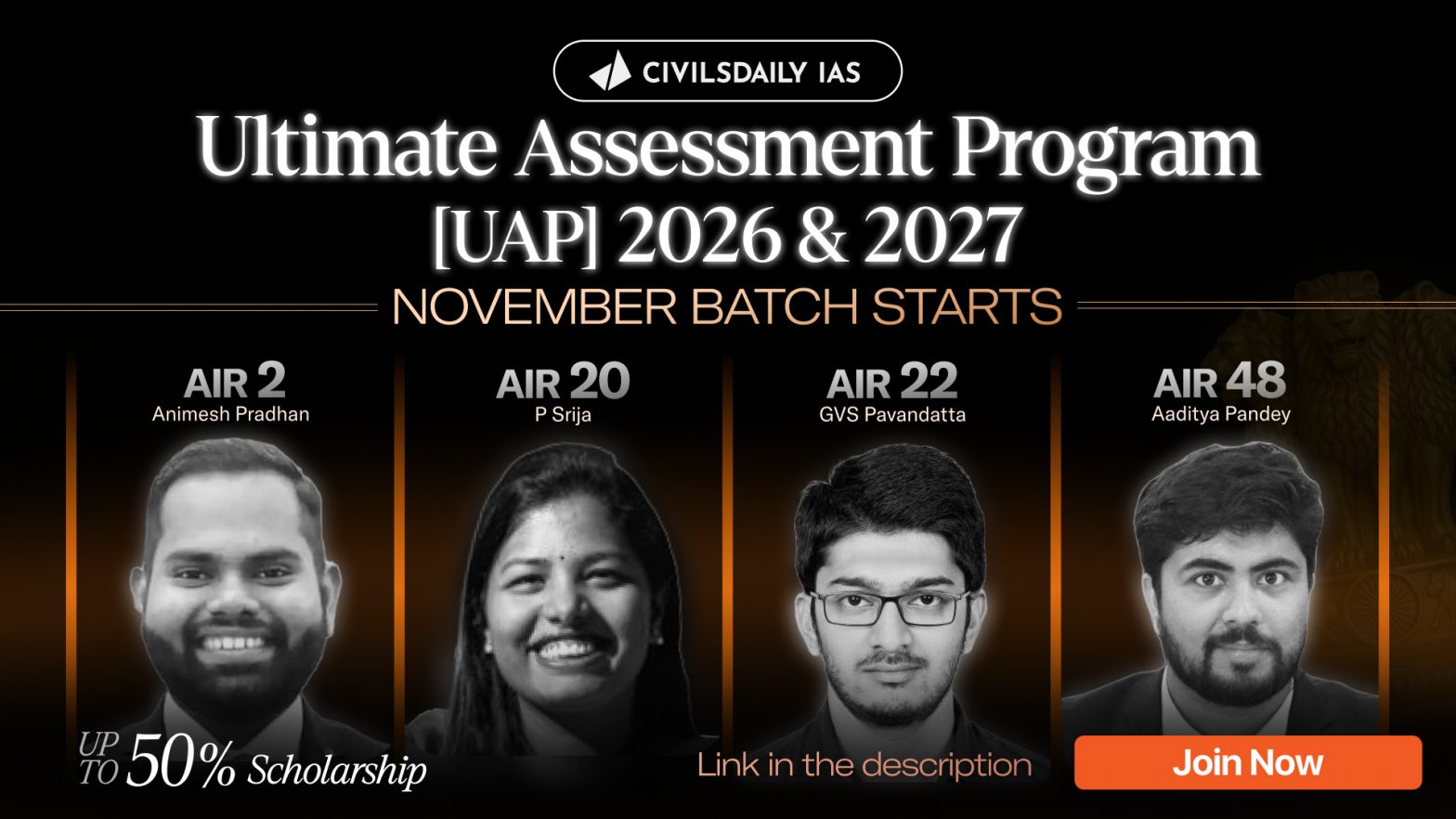
Expert Feedback: Practicing mocks is great, but imagine receiving sharp, actionable feedback from a mentor who has guided toppers like AIR 2, 22, 48, and others. Learn how to gain those crucial extra marks for each question and unlock the X-factor in your preparation.
Mapping Mains Themes: Solving Prelims and Mains PYQs is just the beginning. With UAP, you’ll work with mentors to map the UPSC syllabus onto key Mains themes, using PYQs to prioritize your revision efforts efficiently.
Crafting Concise Notes: Already created your Mains revision notes? Let’s take it further by refining them into concise one-pagers for each theme, complete with updated examples and multiple dimensions for deeper understanding.
Actionable Evaluation: Receiving an evaluated mock test copy is crucial-but what’s next? With UAP, we provide clear, actionable points to work on before you attempt your next mock, ensuring continuous improvement.
If you’re relying on outdated methods, UAP Mentorship might not be for you. But if you’ve tried those approaches and seen their limitations, now’s the time to level up. Apply for UAP Mentorship and experience the difference in your UPSC preparation journey.
What is the Ultimate Assessment Program (UAP)?
UAP is far from your typical course-it’s a complete ecosystem designed to handle every aspect of your UPSC preparation, from refining your strategy to significantly boosting your rank. In 2023, AIR 2 was one of the top ranks produced by UAP, alongside several other rankers. Many of these aspirants cleared the exam in their first attempt, while others succeeded in their final or second-to-last attempts.
These aspirants not only cleared Prelims with ease but also scored 400+ marks in their GS Mains papers. If your goal is to secure a top rank-be it IAS, IPS, or IFS-scoring 400+ in Mains is essential. To make your rank “interview-proof,” you should aim for nothing less than 450+. This is where UAP truly stands out.
UAP cuts through the overwhelming chaos of conventional preparation, bringing intense focus and clarity to your journey. With UAP, you’re not just preparing for an exam-you’re setting yourself up for success. The result? Your name on the final list next year.
Our program goes beyond generic study plans and superficial guidance. We believe that every aspirant is unique, and so are the challenges they face. Our mentorship is focused on providing personalized support that ensures you remain focused, disciplined, and efficient in your preparation.
Three Pillars of UAP
1. Mentorship:
Each student will be assigned a dedicated mentor who will track your progress, understand your strengths and weaknesses, and design a roadmap specific to your needs. Your mentor will provide continuous monitoring, regular check-ins, and feedback, helping you stay on track with your goals. Whether it’s time management, overcoming distractions, or mastering specific subjects, our mentors will be there to guide you.
Year-long Mentorship that’s all encompassing
Ensure you hit your next milestone
Subject strategy, target setting – providing base schedule.
Post test discussion
Phases of Mentorship
One-on-one mentor calls every week to provide the target and planner for the first 2 months. Mentor calls will thereafter be held every 10 days after that.
Weekly Report Card
Macro-strategy & macro targets for every three months
Test-related 1-on-1 detail disucssion.
Philosophy: Every Student Is A Batch
2. Core Programs:
Five Core Programs that are industry standards in themselves:
Samachar Manthan
Prelims Test Series
Mains Test Series
Essay Test Series
Dominate Prelims Crash Course
3. Pre-Acceleration Phase
We combine the knowledge and best practices from all rankers and present the learning in the prep acceleration sessions. This includes
ܳDedicated Monthly CA Test: Focus on Risk-Taking, Logical Problem Solving
Monthly CA Magazines (News, Op-Ed,PIB, Govt. Reports)
ܳDetailed Explainations
ܳAll India Rankings
2. Samachar Manthan:
Civilsdaily is renowned for its Samachar Manthan Program, an intensive current affairs initiative that will ensure you are fully prepared to tackle the dynamic aspects of the UPSC syllabus. With expert analysis, structured explanations, and discussions on major national and international issues, you’ll be equipped to handle both Prelims and Mains questions related to current affairs with confidence.
ܳ Weekly News Analysis (Video + Notes)
ܳ Mains Level Q&A Evaluation To Compliment The Lectures
ܳ Checked Copy Discussion On Phone/In-Person
3. Mains TS
Mock tests are crucial for success, and our test series is designed to simulate the actual exam environment. From day one, you’ll have access to a structured test series, including:
With detailed feedback on every answer you write, ensuring you develop a strong, exam-oriented answer writing style.
Custom Test Plans tailored to your progress, providing just the right amount of challenge to improve performance steadily.
Civilsdaily’s 1.5-Year Mentorship Program for UPSC CSE 2026 is your ticket to success in this prestigious exam. Limited seats are available, ensuring each student gets personalized attention and mentorship. Enroll today to kickstart your journey toward becoming a future civil servant.
Schedule a 1-1 call with Civilsdaily’s Mentorfor focused UPSC Prep
When I started preparing for UPSC, I thought good content was enough.
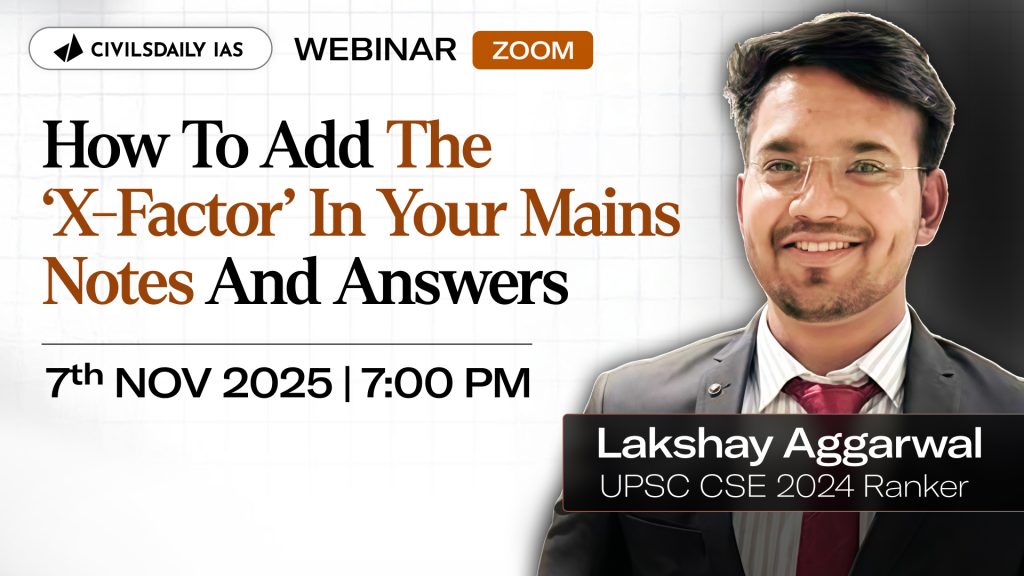
It took me three attempts to realise, everyone has the same content. What separates a 380 scorer in Mains from a 480 scorer is something invisible on the surface but deeply felt by the examiner, the ‘X-Factor.’
This session is about that missing layer, what rankers do differently when they make notes, structure answers, and express ideas.
Lakshay Aggarwal, UPSC CSE 2024 Ranker
What I will cover (practical, no fluff):
1. What the ‘X-Factor’ really means in UPSC Mains It’s not decoration, fancy language, or adding random quotes. It’s how you think, structure, and express your understanding of the issue in UPSC’s own analytical tone.
2. How to build ‘X-Factor’ in your notes
Turning static content into dynamic insights
Integrating microthemes, PYQs, and current affairs
Making one pager notes that capture cause, consequence, and way forward
How I built my Mains ready notes, with examples from my GS2 and GS3 notebooks
3. How to show ‘X-Factor’ in answers
Crafting introductions that anchor context instantly
Using transitions to maintain flow between sub parts
Writing conclusions that summarise, not repeat
Smart value addition, examples, data, and schemes used with precision, not overload
4. Answer structure that appeals to examiners How to convert an ordinary paragraph answer into one that reads like it belongs to a future officer.
5. Mistakes that kill your ‘X-Factor’
Over dependence on notes
Copy pasting topper formats without understanding
Lack of continuity between GS papers and Essay
Ignoring tone, balance, and originality
6. My approach that worked in the final attempt
How I reduced my study material but increased retention
How I structured weekly answer writing
The review feedback that changed my score trajectory
Why attend this session:
• To understand what actually gets rewarded in Mains evaluation • To learn a practical way to elevate your notes and answers in 30–45 days • To stop writing generic, one dimensional answers • To build a personal style in your answers, the X-Factor that makes your paper stand out
It will be a 45 minute session, post which we will open up the floor for all kinds of queries which a beginner must have. No questions are taboo and Lakshay sir is known to be patiently solving all your doubts.
Join us for a Zoom session on 07th Nov at 7 PM. This session is a must attend for you If you are attempting UPSC for the first time or have attempted earlier and now preparing for 2026/2027, then it is going to be a valuable session for you too.
See you in the session”
Register for the session for a complete in-depth UPSC Prep
(Don’t wait—the next webinar/session won’t be until Mid Nov’25)
These masterclasses are packed with value. They are conducted in private with a closed community. We rarely open these webinars for everyone for free. This time we are keeping it for 300 seats only.
When aspirants hear microtheme preparation, they often imagine an ideal world, perfect notes, complete coverage, every theme mapped, PYQs integrated, tests aligned, and revisions on time.
But UPSC prep doesn’t happen in an ideal world.
There are time constraints, overlapping subjects, current affairs piling up, fatigue, unexpected weaknesses, and the constant pressure of tests and evaluation.
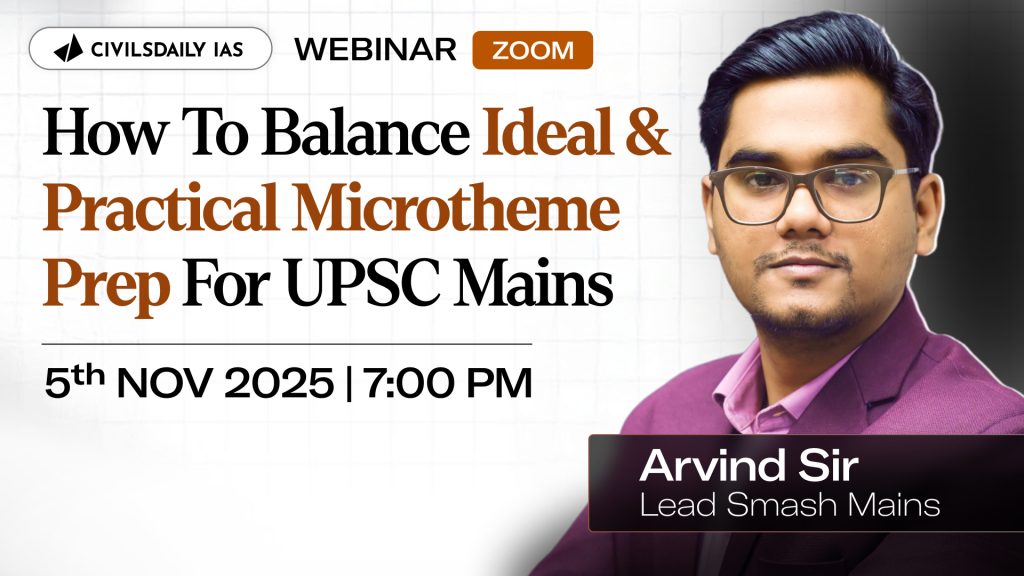
This session is about bridging the ideal approach to microthemes with the practical execution required to actually score in UPSC Mains.
I will show you how to turn microthemes from a theory into a system you can follow every single week.
Arvind sir, Civilsdaily IAS
What I will cover (practical, no fluff):
1. What microthemes really mean Not just small topics, but core recurring ideas that UPSC keeps testing across GS, Essay, and even Ethics.
2. The ideal approach vs real life execution Where aspirants get stuck while trying to follow microtheme prep and how toppers adjust their approach without losing structure.
3. Weekly and monthly microtheme cycles How to maintain consistency without burnout.
4. How to align microthemes with:
PYQs
Current affairs
Essay themes
Ethics case studies
Mock schedules
5. Mistakes aspirants make Over collecting notes, ignoring revision, chasing perfection, and losing momentum.
6. My actionable method for you A structure you can start using thesame night, realistic, efficient, result focused.
Why attend this session:
To stop being overwhelmed by the idea of microthemes.
To learn how toppers execute this in real life.
To integrate microthemes into daily and weekly prep.
To build discipline and structure without rigidity
To get a sustainable plan till Mains 2026/2027
This session will make microtheme prep clear, doable, and high yield and not intimidating.
It will be a 45 minute session, post which we will open up the floor for all kinds of queries which a beginner must have. No questions are taboo and Arvind sir is known to be patiently solving all your doubts.
Join us for a Zoom session on 05th Nov at 7 PM. This session is a must attend for you If you are attempting UPSC for the first time or have attempted earlier and now preparing for 2027, then it is going to be a valuable session for you too.
See you in the session”
Register for the session for a complete in-depth UPSC Prep
(Don’t wait—the next webinar/session won’t be until Mid Nov’25)
These masterclasses are packed with value. They are conducted in private with a closed community. We rarely open these webinars for everyone for free. This time we are keeping it for 300 seats only.
If you have ever wondered how toppers read Current Affairs, here is the truth, they don’t chase every headline.
They study issues the PYQ way, identifying patterns, linking them to past questions, and building arguments that fit UPSC’s thinking process.
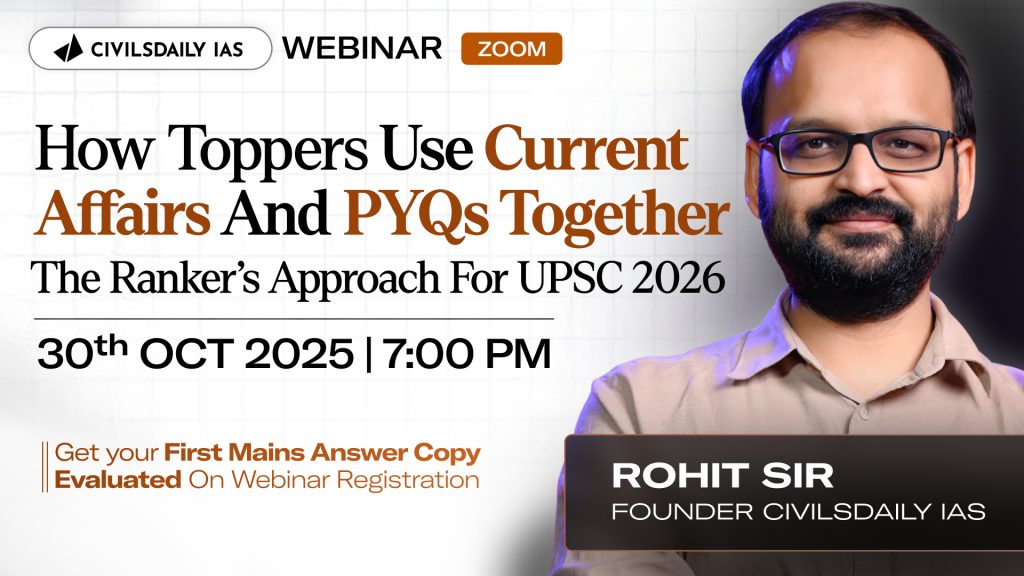
In this session, I will show you how to prepare Current Affairs in a way that makes your notes, opinions, and answers ranker level.
We will take the most relevant ongoing issues and connect them to the ideas and frameworks UPSC repeatedly tests, so you know exactly what to focus on and how to write about it.
Rohit Sir, Founder, Civilsdaily IAS
What I will cover live:
How Toppers Read Current Affairs Differently Why they don’t collect information, but build themes, identifying what lies behind the news and where it fits in the syllabus.
I will show you how to move from “What happened?” to “Why it matters for UPSC.”
The PYQ Linkage Method How to trace any issue, from fiscal federalism to AI governance back to PYQs that reveal its conceptual roots.
You will learn to recognise recurring question types and how new developments fit into older pattern.
Building Analytical Depth with Real Issues Using recent themes like environmental regulation, Centre State coordination, digital economy, and administrative reform, I will explain how to write nuanced, layered answers instead of generic summaries.
Making Notes the Ranker Way How to make short, revision friendly notes that capture facts, examples, and analytical angles together, so that one issue can power multiple papers (GS2, GS3, Essay).
Opinion Building Beyond Binary Thinking How to discuss sensitive or complex issues, growth vs environment, autonomy vs accountability, technology vs ethics, with balance and precision, the way UPSC expects.
Why attend this session:
• To stop preparing Current Affairs in isolation and start connecting them to UPSC’s real question patterns.
• To learn a structured way to analyse issues and turn them into answers.
• To bring coherence, depth, and originality to your writing, traits every topper shares.
• To prepare in a way that strengthens both Prelims and Mains together.
It will be a 45 minute session, post which we will open up the floor for all kinds of queries which a beginner must have. No questions are taboo and Rohit Sir is known to be patiently solving all your doubts.
Join us for a Zoom session on 30th Oct at 7 PM. This session is a must attend for you If you are attempting UPSC for the first time or have attempted earlier and now preparing for 2026/2027, then it is going to be a valuable session for you too.
See you in the session”
Register for the session for a complete in-depth UPSC Prep
(Don’t wait—the next webinar/session won’t be until Mid Nov’25)
These masterclasses are packed with value. They are conducted in private with a closed community. We rarely open these webinars for everyone for free. This time we are keeping it for 300 seats only.
When I started preparing for UPSC, I made the same mistake most aspirants do, I read everything, but I didn’t study what UPSC actually asks.
It took me two attempts to realise that toppers don’t study more, they study smarter, and that begins with PYQs.
Every UPSC question is a continuation of an older question, the language changes, the context evolves, but the core idea stays the same.
If you can decode that pattern and make your notes around it, you automatically become Mains ready.
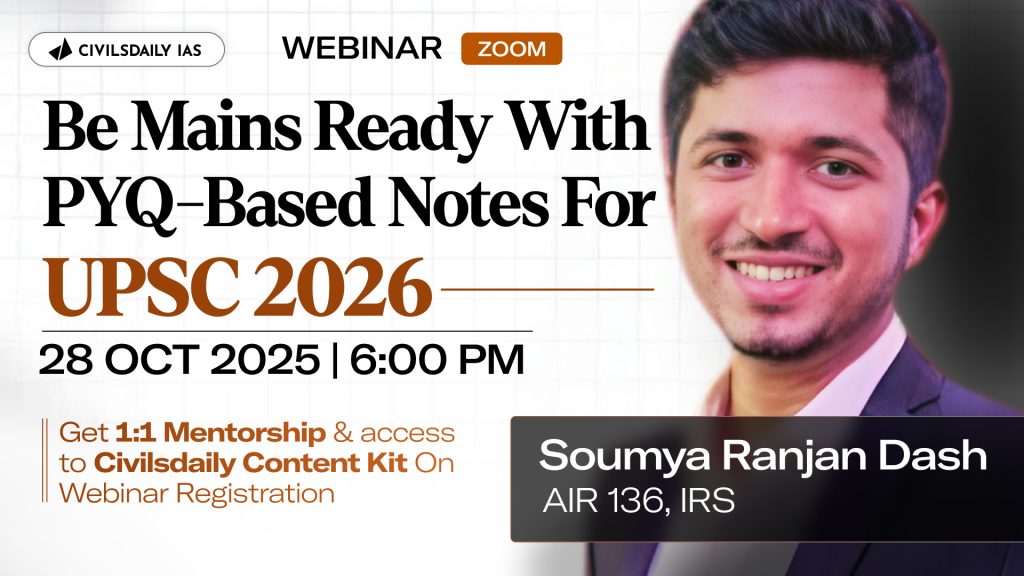
In this session, I will show you how to turn ten years of PYQs into actionable, crisp notes that form the base of your Mains preparation for 2026.
Soumya Ranjan Dash, IRS, AIR 136, UPSC CSE 2022
What I will cover live:
How to decode UPSC’s question trends We will break down years of PYQs across GS Papers and see how recurring themes shape UPSC’s framing style.
Turning PYQs into Notes I will explain a simple process to convert PYQs into structured notes, linking each question to its conceptual theme, related reports, and current affairs.
Creating Thematic Notes that Cut Across Papers How to connect topics like governance, ethics, and environment across GS papers so that your notes reflect integration, not isolation.
Avoiding the Common Pitfalls in Note Making Why summarising PDFs or compiling toppers’ notes won’t help, and what a genuine, exam focused note actually looks like.
Building a PYQ based Revision Framework How to revise smartly, using the 70-20-10 method: 70% recurring themes, 20% evolving issues, 10% surprises.
Examples from My Own Prep Journey How I built my GS notes from PYQs and how that helped me write precise, analytical answers that fetched me AIR 136.
Why attend this session:
You will stop reading everything and start reading what matters. You will learn how to think like UPSC, not just study for it. You will get a replicable system to turn content into Mains ready notes. You will walk away with a 3 month PYQ note making plan designed for UPSC 2026.
Join me on 28th Oct at 6:00 PM, live for a Zoom session. In one session, I will help you rebuild your preparation and move forward with confidence.
It will be a 45 minute session, post which we will open up the floor for all kinds of queries which a beginner must have. No questions are taboo and Soumya Sir is known to be patiently solving all your doubts.
Join us for a Zoom session on 28th Oct at 6 PM. This session is a must attend for you If you are attempting UPSC for the first time or have attempted earlier and now preparing for 2026/2027, then it is going to be a valuable session for you too.
See you in the session”
Register for the session for a complete in-depth UPSC Prep
(Don’t wait—the next webinar/session won’t be until Mid Nov’25)
These masterclasses are packed with value. They are conducted in private with a closed community. We rarely open these webinars for everyone for free. This time we are keeping it for 300 seats only.
Every year, aspirants ask the same question, How do I cover the vast UPSC syllabus without missing anything important?
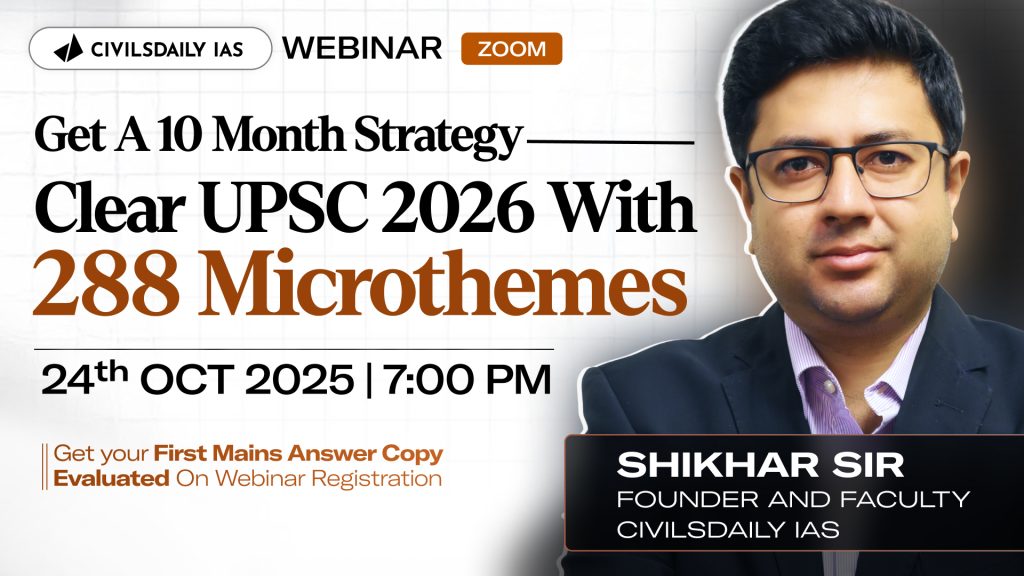
The truth is, you can’t , unless you study smartly, not endlessly. And that’s where the 288 Microthemes Framework comes in, a structured, precise way to prepare for UPSC that ensures you are covering exactly what the exam asks, nothing less, nothing more.
Over the last few years, we have decoded every UPSC paper, from GS to Essay, and discovered that around 288 recurring microthemes form the backbone of UPSC’s question design. Once you master these, your coverage automatically becomes complete, current, and connected.
Shikhar Sir, Faculty and Founder, Civilsdaily IAS
What I will cover live:
What are Microthemes and why they matter How every UPSC question, be it from Polity, Economy, Ethics, or Essay, comes from a core microtheme. Example: Federalism evolves into Fiscal Federalism, Cooperative Federalism, Competitive Federalism, Asymmetric Federalism. Once you map these, your preparation becomes predictive rather than reactive.
How 288 Microthemes cover the entire GS syllabus I will show you the exact breakdown, all tagged with PYQs, reports, and current events.
10 Month Strategy to Complete the Framework A month by month plan to cover, revise, and internalize all microthemes while balancing Prelims, Mains, and Optional preparation.
How to integrate microthemes with test series and notes How to convert every theme into a One pager notes, linked to PYQs, examples, and case studies. How toppers use microtheme based preparation to enrich answers and essays.
Why this strategy works better than syllabus based reading Because UPSC doesn’t ask topics, it asks themes that evolve every year. Studying through microthemes aligns your preparation with how UPSC actually thinks.
Why attend this session:
• To stop studying in silos and start connecting subjects through ideas. • To understand how toppers consistently hit 450+ in GS and Ethics. • To get a ready to follow 10 month roadmap till Mains 2026. • To learn how to convert content into exam ready insights using the TAS and PYQ frameworks.
Join me on 24th Oct at 7:00 PM, live for a Zoom session. In one session, I will help you rebuild your preparation and move forward with confidence.
It will be a 45 minute session, post which we will open up the floor for all kinds of queries which a beginner must have. No questions are taboo and Shikhar Sir is known to be patiently solving all your doubts.
Join us for a Zoom session on 24th Oct at 7 PM. This session is a must attend for you If you are attempting UPSC for the first time or have attempted earlier and now preparing for 2026/2027, then it is going to be a valuable session for you too.
See you in the session”
Register for the session for a complete in-depth UPSC Prep
(Don’t wait—the next webinar/session won’t be until end Oct’25)
These masterclasses are packed with value. They are conducted in private with a closed community. We rarely open these webinars for everyone for free. This time we are keeping it for 300 seats only.
When you read current affairs every day, you are exposed to hundreds of facts, reports, and editorials. But in the Mains exam, UPSC doesn’t ask you to reproduce facts, it tests whether you can use conceptual keywords and analytical terms to explain those facts in context.
This is where most aspirants lose marks. Your content may be correct, but your language doesn’t reflect the examiner’s expectations.
In this session, I will show you how to use current affairs smartly and strategically to make your Mains answers stand out.
What I will cover live: 1. The difference between knowing current affairs and using them effectively in Mains. 2.How to pick 5–6 key terms from every major theme that become your scoring anchors, examples include: “energy transition”, “climate justice”, “data federalism”, “ethical governance”, “gender budgeting”, “multilateral resilience”. 3. How toppers frame answers using these terms to show conceptual clarity and awareness. 4. The process to extract Mains ready terms from Samachar Manthan notes and daily news. 5. How to connect these terms with static syllabus areas, linking economy with ethics, governance with environment, and polity with international relations. 6. A breakdown of how the right keywords can help you score 1–1.5 marks extra per question, adding up to 20–30 marks overall. 7. How to create your personal glossary of 150–200 high utility UPSC terms by February 2026.
Why this matters: UPSC Mains is no longer about long paragraphs or decorative language. It is about precision, saying more with fewer words. Using the right current affairs terms shows the examiner that you understand issues in their administrative, ethical, and policy dimensions.
This is exactly how top scorers double their Mains marks. They don’t study more, they express better.
In this webinar, I will help you learn that skill through practical examples, topic mapping, and real paper analysis.
Join me on 17th Oct at 7:00 PM, live for a Zoom session. In one session, I will help you rebuild your preparation and move forward with confidence.
It will be a 45 minute session, post which we will open up the floor for all kinds of queries which a beginner must have. No questions are taboo and Purnima Ma’am is known to be patiently solving all your doubts.
Join us for a Zoom session on 17th Oct at 7 PM. This session is a must attend for you If you are attempting UPSC for the first time or have attempted earlier and now preparing for 2026/2027, then it is going to be a valuable session for you too.
See you in the session”
Register for the session for a complete in-depth UPSC Prep
(Don’t wait—the next webinar/session won’t be until end Oct’25)
These masterclasses are packed with value. They are conducted in private with a closed community. We rarely open these webinars for everyone for free. This time we are keeping it for 300 seats only.
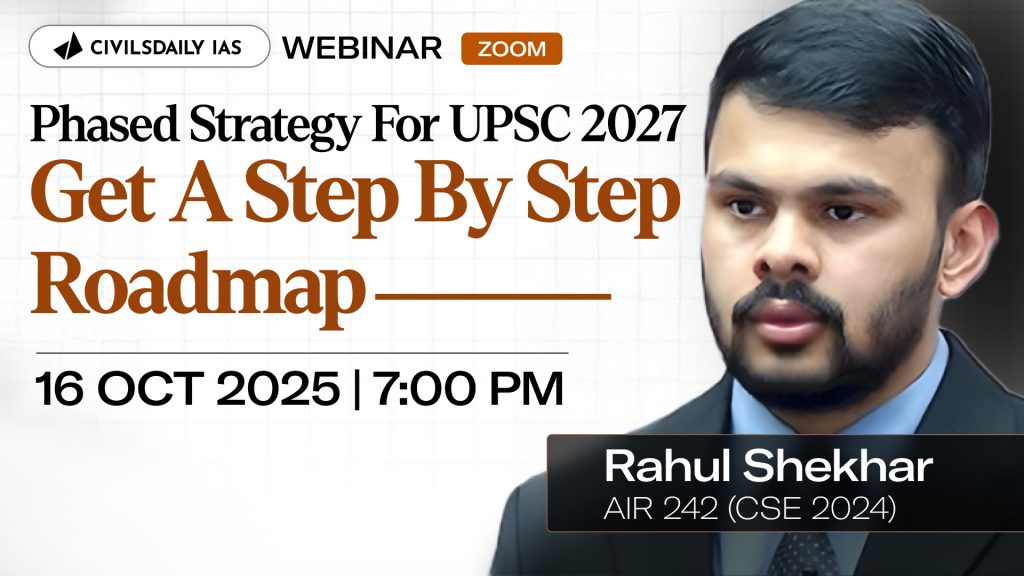
“When I was preparing for the UPSC exam, I made the same mistake most aspirants make, I tried to study everything, all at once. It took me two attempts to realise that success in this exam is not about how much you study, but about when and how you study what matters most.
That’s exactly what this webinar is about, helping you prepare for UPSC 2027 with a clear, structured, and time bound strategy, so that every stage of your journey builds naturally into the next.”
Rahul sir, AIR 242, UPSC CSE 24
What I will cover live: 1. How to start your UPSC journey with clarity If you are starting now for 2027, the first six months are crucial. I will walk you through how to begin with NCERTs, standard books, and micro notes that become your revision base later. We will discuss how to make sense of the syllabus and decode how each paper connects to the other. 2. How to build conceptual depth and interlinkages UPSC no longer rewards superficial coverage. I will show how to move from ‘topic reading’ to ‘theme based learning’, connecting GS papers, Optional, and Current Affairs through recurring ideas. You will also learn how PYQs reflect these patterns. 3. The right time to start answer writing Most aspirants either delay it too long or start too early. I will share how I began structured answer writing with limited content, how I refined it using directive based questions, and how you can synchronise it with your content development. 4. Handling Prelims and Mains together You can’t afford to prepare in silos. I will explain how to integrate both without losing focus, how to transition from conceptual reading (GS) to elimination based testing (Prelims), and from static notes to value enriched answers (Mains). 5. Managing burnout and time consistency UPSC preparation is a marathon. I will share my own system for setting realistic goals, breaking long schedules into achievable weeks, and tracking progress using monthly audits, a method that helped me stay consistent even after failure.
Why this matters: UPSC 2027 aspirants still have time, but time without direction quickly becomes noise. This webinar is about turning your 20 month window into a focused, phased plan that keeps you grounded and moving forward. Whether you are a college student or working professional, you will leave this session with clarity, motivation, and a personalised plan you can start right after the session.
Join me on 16th Oct at 7:00 PM, live for a Zoom session. In one session, I will help you rebuild your preparation and move forward with confidence.
It will be a 45 minute session, post which we will open up the floor for all kinds of queries which a beginner must have. No questions are taboo and Rahul Sir is known to be patiently solving all your doubts.
Join us for a Zoom session on 16th Oct at 7 PM. This session is a must attend for you If you are attempting UPSC for the first time or have attempted earlier and now preparing for 2026/2027, then it is going to be a valuable session for you too.
See you in the session”
Register for the session for a complete in-depth UPSC Prep
(Don’t wait—the next webinar/session won’t be until end Oct’25)
These masterclasses are packed with value. They are conducted in private with a closed community. We rarely open these webinars for everyone for free. This time we are keeping it for 300 seats only.
![🔴[UPSC Webinar for 2026] By Shivali Thakur, UPSC CSE 2024 Ranker | What 5 failed Attempts in UPSC taught me | How I Finally Got Into Civil Services | Join on 12th November at 7PM](https://d18x2uyjeekruj.cloudfront.net/wp-content/uploads/2025/10/SHIVALI-thumb-1-1568x882.jpg)


![🔴[UPSC Webinar for 2027] By Lakshay Aggarwal, UPSC CSE 2024 Ranker | How to Add the ‘X-Factor’ in Your Mains Notes and Answers | Join on 7th November at 7PM](https://d18x2uyjeekruj.cloudfront.net/wp-content/uploads/2025/11/Lakshay-Aggarwalthumb-1568x882.jpg)
![🔴[UPSC Webinar for 2027] By Arvind Sir, lead Smash Mains, Civilsdaily IAS | How to Balance Ideal and Practical Microtheme Prep for UPSC Mains | Join on 5th November at 7PM](https://d18x2uyjeekruj.cloudfront.net/wp-content/uploads/2025/11/Arvind-thumb-1568x882.jpg)
![🔴[UPSC Webinar for 2026] By Rohit Sir, Founder, Civilsdaily IAS | How Toppers Use Current Affairs and PYQs Together | The Ranker’s Approach for UPSC 2026 | Join on 30th October at 7PM](https://d18x2uyjeekruj.cloudfront.net/wp-content/uploads/2025/10/Rohit-sir-thumb-1568x882.jpg)
![🔴[UPSC Webinar for 2026] By Soumya Ranjan Dash, AIR 136 (CSE 2022), IRS | Be Mains Ready with PYQ Based Notes for UPSC 2026 | Join on 28th October at 6PM](https://d18x2uyjeekruj.cloudfront.net/wp-content/uploads/2025/10/SOUMYA-thumb-2-1568x882.jpg)
![🔴[UPSC Webinar for 2026] By Shikhar Sir, Founder & Faculty, Civilsdaily IAS | Clear UPSC 2026 with 288 Microthemes | Get a 10 Month Strategy | Join on 24th October at 7PM](https://d18x2uyjeekruj.cloudfront.net/wp-content/uploads/2025/10/Shikhar-sir-thumb-2-1568x882.jpg)
![🔴[UPSC Webinar for 2026] By Purnima Ma’am, Faculty Samachar Manthan, Civilsdaily IAS | Current Affairs Keywords to Double Your Mains Score in UPSC 2026 | Join on 17th October at 7PM](https://d18x2uyjeekruj.cloudfront.net/wp-content/uploads/2025/10/Purnima-thumb-1568x882.jpg)

![🔴[UPSC Webinar for 2027] By Rahul Shekhar AIR 242, UPSC CSE, 2024 | Phased Strategy for UPSC 2027 | Get a Step by Step Roadmap | Join on 16th October at 7PM](https://d18x2uyjeekruj.cloudfront.net/wp-content/uploads/2025/10/Rahul-Shekhar-THUMB-1568x882.jpg)