💥Join UPSC 2027,2028 Mentorship (August Batch) + XFactor Notes & Microthemes PDF

Distribution: weekly

  • Species in news: Dugong

    The dugong, commonly known as the sea cow, is fighting for its survival in Indian waters experts have said on the eve of ‘World Dugong Day’ on May 28, 2020.

    Try this question from CSP 2015:

    Q) With reference to ‘dugong’, a mammal found in India, which of the following statements is/are correct?

    1) It is a herbivorous marine animal.

    2) It is found along the entire coast of India

    3) It is given legal protection under Schedule 1 of the Wildlife (Protection) Act, 1972.

    Select the correct answer using the code given below.
    (a) 1 and 2
    (b) 2 only
    (c) 1 and 3
    (d) 3 only

    Dugong

    • Dugongs are mammals, which means they give birth to live young and then produce milk and nurse them.
    • It is the flagship animal of Gulf of Mannar Marine National Park.
    • Once the female is pregnant, she will carry the unborn baby, called a foetus for 12-14 months before giving birth.
    • Female dugongs give birth underwater to a single calf at three to seven-year intervals.
    • Dugongs graze on seagrass, especially young shoots and roots in shallow coastal waters. They can consume up to 40 kilograms of seagrass in a day.
    • Dugongs are an IUCN Endangered marine species like sea turtles, seahorses, sea cucumbers and others.
    • They are protected in India under Schedule I of the Wild (Life) Protection Act, 1972.

    Threats to dugongs

    • Human activities such as the destruction and modification of habitat, pollution, rampant illegal fishing activities, vessel strikes, unsustainable hunting or poaching and unplanned tourism are the main threats to dugongs.
    • The loss of seagrass beds due to ocean floor trawling was the most important factor behind dwindling dugong populations in many parts of the world.

    Why needs urgent attention?

    • There were just 250 dugongs in the Gulf of Mannar in Tamil Nadu, the Andaman and Nicobar Islands and the Gulf of Kutch in Gujarat according to the 2013 survey report of the Zoological Survey of India (ZSI).
    • Hundreds of dugongs inhabited waters off the Odisha, West Bengal and Andhra Pradesh coasts two centuries back. But they are extinct in these areas now, he added.
    • Seagrass in Odisha’s Chilika Lake is a proper habitat for dugongs. However, there is not an extant population in Chilika.

    Other facts:

    • The 13th CoP of the Convention on the Conservation of Migratory Species of Wild Animals (CMS), an environmental treaty under the aegis of the UNEP, was hosted by India this year at Gandhinagar in Gujarat.
    • India is a signatory to the CMS since 1983.
    • India has signed non-legally binding Memorandums of Understanding with CMS on the conservation and management of Siberian Cranes (1998), Marine Turtles (2007), Dugongs (2008) and Raptors (2016).
    • Proper conservation is the only way to save dugongs from extinction. Conservation in other places like Australia has seen their population crossing 85,000.
  • R&D: Path to self-reliant India

    What does it take to be self-reliant? (Hint: R&D!) This is the question this article tries to answer.  After independence, we had a good start in R&D. But what went wrong? What was the role played by globalisation? Did the globalisation deliver on its promise of technology transfer? And finally, what lies on the way forward for India? This article answers all such question.

    What went wrong: historical perspective

    • India chose the path of self-reliance in state-run heavy industries and strategic sectors after independence.
    • In the decades following independence, this choice of self-reliance had placed India ahead of most developing countries.
    • In the 1970s and 80s, however, India did not modernise these industries to climb higher up the technological ladder.
    • The private sector, which had backed the state-run core sector approach in its Bombay Plan, stayed content with near-monopoly conditions in non-core sectors in a protected market.
    • Little effort was made to modernise light industries or develop contemporary consumer products.
    • India’s industrial ecosystem was thus characterised by low productivity, poor quality and low technology, and was globally uncompetitive.

    What did India lose in the ‘lost decades’?

    • India completely missed out on the ‘third industrial revolution’.
    • Third industrial revolution comprised electronic goods, microprocessors, personal computers, mobile phones and decentralised manufacturing and global value chains during the so-called lost decade(s).
    • Today, India is the world’s second-largest smartphone market.
    • However, it does not make any of these phones itself.
    • India manufactures only a small fraction of solar photovoltaic cells and modules currently used, with ambitious future targets.

    What happened to ‘self-reliance’ after India embraced globalisation?

    • At the turn of the millennium, when India embarked on liberalisation, privatisation and globalisation.
    • So, the very concept of self-reliance was rubbished.
    • This happened in the belief that it was like reinventing the things already invented and wasting money on it.
    • And when advanced technologies could simply be bought from anywhere at lower costs. 
    • Two related ideas have prevailed since then, and neither delivered the desired results.

    So, what are these two basic ideas?

    1. Unsuitability of PSUs in the globalised world

    • The first idea was that public sector undertakings (PSUs) are, by definition, inefficient and sluggish for the competitive globalised scenario.
    • No effort was made to engender either real autonomy or a transition to new technological directions.
    • Instead, PSUs with capability and scale were undermined or abandoned, along with many nascent research and development (R&D) efforts, for instance, in photovoltaics, semiconductors and advanced materials.

    So, what was the result of this attitude towards PSUs?

    • The private sector displayed little interest in these heavy industries and showed no appetite for technology upgradation.
    • With entry of foreign corporations, most Indian private companies retreated into technology imports or collaborations.
    • Even today, most R&D in India is conducted by PSUs.
    • And much of the smaller but rising proportion of private sector R&D is by foreign corporations in information technology and biotechnology/pharma.
    • Conclusion: Given the disinclination of most of the private sector towards R&D and high-tech manufacturing, significant government reinvestment in PSUs and R&D is essential for self-reliance.

    2. Foreign companies were expected to bring new technologies in India

    • The second idea was that inviting foreign direct investment and manufacturing by foreign majors would bring new technologies into India’s industrial ecosystem.
    • This was thought to obviate the need for indigenous efforts towards self-reliance.

    So, what happened on the ground?

    • But mere setting up of manufacturing facilities in India is no guarantee of absorption of technologies.
    • There is no evidence from any sector that this has taken place or has even been attempted.
    • The fact is, foreign majors jealously guard commercially significant or strategic technologies in off-shore manufacturing bases.
    • Conclusion: The key problem of self-reliance is therefore neither external finance nor domestic off-shore manufacturing, but resolute indigenous endeavour including R&D.

    Let’s look at experience of other Asian countries towards self-reliance

    Three models emerge from Asian countries.

    1. Focus on technology and industries

    •  Japan’s post-war success, was seen as a template by some countries to follow.
    • These include countries like South Korea, Taiwan, Singapore and Hong Kong
    • These countries took huge technological and industrial strides in the 1970s and 80s.
    • South Korea emerged as a global powerhouse in manufacturing, but also in indigenously developed technologies.
    • Taiwan developed technologies and manufacturing capacities in robotics and micro-processors.
    • While Singapore and Hong Kong adapted advanced technologies in niche areas.
    • These self-reliant capabilities were enabled, among other factors, by planned state investments in R&D including basic research (3-5% of GDP), technology and policy support to private corporations, infrastructure and, importantly, education and skill development (4-6% of GDP).

    2. Focus on off-shore manufacturing and not on self-reliance

    • Countries like Thailand, Malaysia, Indonesia and Vietnam have focused on off-shore manufacturing lower down the value chain and without the thrust on self-reliance.
    • This is useful for job creation but is an unsuitable model for a country of India’s size and aspirations.

    3. China: Transition from low-end manufacturing to dominant role in supply chains

    • China is, of course, unique in scale and in its determination to become a superpower not just geopolitically but also in self-reliant S&T and industrial capability.
    • China advanced purposefully from low-end mass manufacturing to a dominant role in global supply chains.
    • It has now decided on shifting to advanced manufacturing.
    • It has set itself a target of becoming a world leader by 2035 in 5G, supercomputing, Internet of Things (IoT), artificial intelligence (AI), autonomous vehicles, biotech/pharma and other technologies of the ‘fourth industrial revolution’.

    Way forward for India

    • India may well have missed the bus in many of technologies in which the U.S., Europe and China have established perhaps insurmountable leads.
    • Yet, self-reliant capabilities in electric and fuel cell vehicles, electricity storage systems, solar cells and modules, aircraft including UAVs, AI, robotics and automation, biotech/pharma and others are well within reach.
    • Large-scale concerted endeavours would, however, be required, since self-reliance will not happen by itself.
    • State-funded R&D, including in basic research, by PSUs and research institutions and universities needs to be scaled-up significantly, well above the dismal 1% of GDP currently.
    • Upgraded and reoriented PSUs would also be crucial given their distinctive place in the ecosystem.
    • Private sector delivery-oriented R&D could also be supported, linked to meaningful participation in manufacturing at appropriate levels of the supply chain.
    • India’s meagre public expenditure on education needs to be substantially ramped up including in skill development.

    Consider the question “The path to the self-reliance of any country goes through robust capabilities in the R&D. Comment”

    Conclusion

    Self-reliance would need a paradigm shift in our approach toward many things. First and foremost is the R&D. Potential of the PSUs has to be tapped to their fullest in the realms of R&D. The second area of focus should be education. These two areas are the key to achieve self-reliance and should be the focus of policymakers.


    Back2Basics: Bombay Plan

    • The Bombay plan was a set of proposal of a small group of influential business leaders in Bombay for the development of the post-independence economy of India.
    • This plan was published in two parts or volume- first in 1944 and second in 1945.
    • The prime objectives of the plan were to achieve a balanced economy and to raise the standard of living of the masses of the population rapidly by doubling the present per capita income within a period of 15 years from the time the plan goes into operation.


  • What is South Atlantic Anomaly?

    New data obtained by the European Space Agency (ESA) Swarm satellites has revealed the existence of a mysterious anomaly weakening the Earth’s magnetic field. Termed as ‘South Atlantic Anomaly’, it extends all the way from South America to southwest Africa.

    The term ‘South Atlantic Anomaly’ at its first sight looks similar to any climate/oceanic current related phenomena. But it’s not! This is where you can end up losing 2.66 marks in the prelims!

    What is South Atlantic Anomaly (SAA)?

    • The SAA is referred to the behaviour of Earth’s Geo-Magnetic field in an area between Africa and South America.
    • The SAA is an area where the Earth’s inner Van Allen radiation belt comes closest to the Earth’s surface, dipping down to an altitude of 200 kilometres.
    • This leads to an increased flux of energetic particles in this region and exposes orbiting satellites to higher-than-usual levels of radiation.
    • The effect is caused by the non-concentricity of the Earth and its magnetic dipole.
    • The SAA is the near-Earth region where the Earth’s magnetic field is weakest relative to an idealized Earth-centered dipole field.

    Weakening of the magnetic field

    • Over the last 200 years, the magnetic field has lost around 9% of its strength on a global average.
    • A large and rapid shrink has been observed in the SAA region over the past 50 years just as the area itself has grown and moved westward.
    • The weakening of the magnetic field is also causing technical difficulties for the satellites and spacecraft orbiting the planet.
    • The study conducted between 1970 and 2020, said that the magnetic field weakened considerably in a large region stretching from Africa to South America, known as the ‘SAA’.
    • This area has grown and moved westward at a rate of around 20 km per year.

    Its impact

    • The magnetic shield has an important role to play in keeping unwanted radiation away as well as helping determine the location of magnetic poles.
    • Even though unlike global warming or any weather change, this anomaly doesn’t directly impact human lives, it could actually bring on a change in the way we access technology.
    • The reversal and apparent shift, which could keep extending could actually impact satellite and telecommunication system, which means that some of the internet and mobile phone functioning which depend on satellite signals can possibly get disrupted.
    • It could also affect the mapping and navigation systems in smartphones.
    • The weakening of earth’s magnetic field could also impact migratory movement.
    • Birds, animals- all those who migrate with the change in season depend on the earth’s mapping to move about can find it a little difficult.
    • This is only a possibility, but we don’t know the extent of the damage till now.

    About the Van Allen Radiation Belt

    • A Van Allen radiation belt is a zone of energetic charged particles, most of which originate from the solar wind, that are captured by and held around a planet by that planet’s magnetic field.
    • The belts are located in the inner region of Earth’s magnetosphere. The belts trap energetic electrons and protons.
    • Earth has two such belts and sometimes others may be temporarily created.
    • Most of the particles that form the belts are thought to come from solar wind and other particles by cosmic rays.
    • By trapping the solar wind, the magnetic field deflects those energetic particles and protects the atmosphere from destruction.

    Also read:

    https://www.civilsdaily.com/news/shifting-north-magnetic-pole-forces-urgent-navigation-fix/


    Back2Basics: Swarm  Constellation

    • Swarm is a European Space Agency (ESA) mission to study the Earth’s magnetic field.
    • It is ESA’s first constellation of satellites for Earth observation.
    • The Swarm constellation consists of three satellites (Alpha, Bravo and Charlie) placed in two different polar orbits, two flying side by side at an altitude of 450 km and a third at an altitude of 530 km.
  • Aarogya Setu app is now open source

    Amid concerns over privacy of data being collected by its COVID-19 contact tracing app, the union government has open-sourced the Aarogya Setu app.

    Right to Privacy is an important topic for GS. The Aarogya Setu app which has a lot more to offer is under the radar due to the underlying vacuum of Privacy Law in India. To tackle this, the government has launched a bug bounty programme (a sort of hackathon).

    About  AarogyaSetu App

    • The App enables people to assess themselves the risk of their catching the Corona Virus infection.
    • It is designed to keep track of other AarogyaSetu users that a person came in contact with and alert him or her if any of the contacts tests positive for COVID-19.
    • It achieves this using the phone’s Bluetooth and GPS capabilities.
    • Once installed in a smartphone through an easy and user-friendly process, the app detects other devices with AarogyaSetu installed that come in the proximity of that phone.
    • The app can then calculate the risk of infection based on sophisticated parameters if any of these contacts have tested positive.
    • The personal data collected by the App is encrypted using state-of-the-art technology and stays secure on the phone until it is needed for facilitating medical intervention.

    Issues with the app

    • The AarogyaSetu app faces the same issue as every other contact tracing technology that has come up during the pandemic period — it is people dependent.
    • It needs widespread usage and self-reporting to be effective.
    • Given that any number of total users will be a subset of smartphone owners in India, and there are bound to be variations in the levels of self-reporting, the efficacy is not bulletproof.
    • The terms of use of the app also say as much, distancing the government from any failure on the part of the app incorrectly identifying COVID-19 patients.

    1) Privacy concerns

    • First of all, the app exists in the privacy law vacuum that is India.
    • With no legislation that spells out in detail how the online privacy of Indians is to be protected, AarogyaSetu users have little choice but to accept the privacy policy provided by the government.
    • The policy goes into some detail on where and how long the data will be retained, but it leaves the language around who will have access to it vague.
    • As per the policy persons carrying out medical and administrative interventions necessary in relation to COVID-19” will have access to the data.
    • This suggests interdepartmental exchanges of people’s personal information and is more excessive than countries like Singapore and even Israel.

    2) Technical issue

    • Beyond the legal loopholes, there are technical loopholes as well.
    • The unique digital identity in AarogyaSetu is a static number, which increases the probability of identity breaches.
    • The abundance of data collected is also potentially problematic.
    • AarogyaSetu uses both Bluetooth as well as GPS reference points, which could be seen as overkill whereas other apps such as TraceTogether make do with Bluetooth.

    3) Other issues

    • Experts emphasise that automated contact tracing is not a panacea.
    • They caution against an over-reliance on technology where a competent human-in-the-loop system with sufficient capacity exists.

    Back2Basics: What is Open Source?

    • The term open source refers to something people can modify and share because its design is publicly accessible.
    • The term originated in the context of software development to designate a specific approach to creating computer programs.
    • Today, however, “open source” designates a broader set of values—what we call “the open source way.”
    • Open source projects, products, or initiatives embrace and celebrate principles of open exchange, collaborative participation, rapid prototyping, transparency, meritocracy, and community-oriented development.

    The source code

    • “Source code” is the part of the software that most computer users don’t ever see; it’s the code computer programmers can manipulate to change how a piece of software—a “program” or “application”—works.
    • Programmers who have access to a computer program’s source code can improve that program by adding features to it or fixing parts that don’t always work correctly.

    What is Open Source Software?

    • At the simplest level, open-source programming is merely writing code that other people can freely use and modify.
    • Open source is a term that originally referred to open source software (OSS).
    • OSS is a code that is designed to be publicly accessible—anyone can see, modify, and distribute the code as they see fit.
    • An open-source development model is a process used by an open-source community project to develop open-source software.
    • The software is then released under an open-source license, so anyone can view or modify the source code.
  • The perils of the liquidity push

    Whether to focus on demand side or supply side is the dilemma policymakers dealing with the financial crises have always faced. If we look closely, the focus of the package announced by the government is on the supply side and pushing liquidity in the economy. This article examines the various measure announced in the package and elaborated why such measures are likely to fail.

    Focus on credit and liquidity in the package

    • The government has relied heavily on measures aimed at pushing credit to banks, non-banking financial companies (NBFCs) and businesses big and small.
    • These are expected to use borrowed funds to lend to others, make payments falling due, compensate employees even while under lockdown, and otherwise spend even while not earning.
    • The thrust is to get the Reserve Bank of India (RBI) and other public financial institutions to infuse liquidity and increase lending by the financial system.
    • RBI offered the financial institution capital for longer periods at a repo or policy interest rate that has been cut by more than a percentage point to 4%.

    Let’s understand liquidity and its role in crisis

    • The Prime Minister in his speech calling for a “self-reliant India” identified, besides land, labour and laws, “liquidity” as among the areas of focus of the package.
    • What is liquidity: In economic and business parlance, liquidity refers to ease of access to cash.
    • A liquid asset is one that can be easily sold for or replaced with cash.
    • And a liquid firm or agent is a holder of cash, a line providing access to cash, or assets that can be easily and quickly converted to cash without significant loss of value.
    • In periods of crisis, individuals, small businesses, firms, financial institutions and even governments tend to experience a liquidity crunch.
    • Relaxing that crunch is a focus of the government’s crisis-response package.
    • So, the government has given a much larger role to enhancing liquidity than it does either to direct transfers.

    So, let’s look at steps taken by the government to ensure liquidity

    1. LTRO and issues with it

    • Among the first steps taken by the RBI was the launch of special and ‘targeted’ long term repo operations (TLTROs).
    • LTROs allowed banks to access liquidity at the repo rate to lend to specified clients.
    • One round of such operations, which was relatively more successful, called for investment of the cheaper capital in higher quality investment grade corporate bonds, commercial paper, and non-convertible debentures.
    • What went wrong? That funding allowed big business, varying from Reliance and L&T to financial major HDFC, to access cheap capital to substitute for past high-cost debt or finance ongoing projects.
    • There is little evidence that this is triggering new investment decisions.

    2. Focus on saving NBFCs and why it failed to give the desired result?

    • The second round was geared to saving NBFCs, whose balance sheets were under severe stress even before the COVID-19 strike.
    • NBFCs were finding it difficult to roll over the short-term debt they had incurred to finance longer-term projects.
    • Banks were wary about lending to these NBFCs.
    • Banks feared that their clients could default in amounts that would bring the viability of these institutions into question.
    • Those fears were confirmed when Franklin Templeton announced that it was shutting down six of its funds.
    • Franklin Templeton set off redemption requests across the NBFC sector, as investors rushed to take back their money.
    • This happened at a  time when the ability of these institutions to mobilise funds to meet these demands had been impaired.
    • Not surprisingly, banks were unwilling to respond when liquidity was infused to target lending to the NBFCs.

    3. More intermediaries and credit guarantee by the government

    • Building on these initial liquidity infusion efforts, the COVID-19 package identified more intermediaries.
    • These intermediaries include the Small Industries Development Bank of India, the National Bank for Agriculture and Rural Development, and the National Housing Bank.
    • The intermediaries were expected to refinance lending by the banks to different sections.
    • To persuade the banks and other intermediaries to take up these offers when the clients they must lend to MSME, street vendors, marginal farmers, etc. are themselves stressed, in some instances the government offered them partial or full credit guarantees in case their clients defaulted.
    • The government also sought to persuade the RBI to lend directly to NBFCs against their paper.

    Why the above 3 measure won’t succeed?

    • These measures, which are only marginally effective even in the best of times, will not work during this crisis.
    • Consider a bank or NBFC lending to small business.
    • With economic activity either at a complete stop or at a fraction of the normal, those who can access credit would either not borrow or only do so to protect themselves and not use the funds either to pay their workers or buy and stock inputs.
    • Even after the lockdown is lifted, the compression of demand resulting from the loss of employment and incomes would be considerable.
    • It would be aggravated by the fact that spending by a fiscally conservative government would fall sharply because of a collapse in revenue collections.
    • Faced with sluggish demand, firms are unlikely to meet past and current payments commitments and help the revival effort, just because they have access to credit.
    • This would mean that credit flow would actually not revive.
    • This danger is even greater because the government has been measly with its guarantees.
    • The government doesn’t want to accumulate even contingent liabilities that do not immediately affect the fiscal deficit.

    Increasing the disposable income

    • Another component of the “liquidity” push is the measures that temporarily increase the disposable income of different sections.
    • Such measures include advance access to savings like provident fund contributions, lower tax deduction at source, reduced provident fund contributions and moratoriums on debt service payments for a few months.
    • These measures are expected to provide access to cash inflows and reduce cash outflows, to induce agents to meet overdue payments or just spend to enhance the incomes of others.
    • These are marginal in scope, if relevant at all.
    • They have been combined with non-measures like adding on pending payments such as income tax refunds to spike “liquidity provision”.

    Way forward

    • What is needed now is government support in the form of new and additional transfers to people in cash and kind, and measures such as wage subsidies, equity support and spending on employment programmes.
    • That, as many have acknowledged, would require debt financed spending by the government, with borrowing at low-interest rates from the central bank or a “monetisation” of the deficit.
    • Unfortunately, obsessed as it is with fiscal conservatism and tax forbearance, the government is unwilling to take that route.

    Consider the question “Every stimulus package provokes a debate for its emphasis on either supply-side or the demand side. Examine the provision in the stimulus package announced by the government which focuses on the supply side. What are the issues with supply-side focus in the package?”

    Conclusion

    Overall, the “transmission” of the supply side push from these monetary policy initiatives for relief and revival is bound to be weak. Given the circumstances, the liquidity push, even if partially successful, would only culminate in eventual default, as borrowers use the debt to just stay afloat in the absence of new revenues.

  • CoAST India (Collaboration/Covid Action Support Group) Platform

    India Observatory has come up with a GIS-enabled dashboard called CoAST India to monitor migrants in India.

    Here, UPSC may create an illusion on:

    India Observatory – open-source database (misleading name): It may be asked in relation to some ISRO project.

    CoAST India – COVID related info (again misleading): UPSC may ask it in context to Cyclone Warning Systems.

    CoAST India

    • The platform is a map reflecting the movement of migrants in real-time on their long journeys, often on foot, along with facilities and relief organisations on their routes.
    • It is a collaboration with Anand-based Forest Ecological Security (FES) as its main nodal point.
    • It draws information from 55 organisations on the ground, mostly in villages, and aims to make such data available so that it would enable governments and small local civil society groups to be of assistance.
    • The map matches time and spatial data, on administrative facilities in the area, transportation and healthcare facilities of an area and summaries, on the fly, in real-time of people passing by.

    Features of the portal

    Four elements are sought to be brought together in this portal:

    • Location of migrants and vulnerable people, their specific needs,
    • Location of key infrastructure on the way which can double up as a rest-centre, or
    • Quarantine space and location of relief and
    • Rehabilitation providing NGOs and civil society organisations

    About India Observatory

    • The Foundation for Ecological Security (FES), an NGO working on conserving natural resources at the grassroots, has brought together a unique ecosystem of tools – open data platform India Observatory – to help understand the status of local-level resources and facilitate the action plans for conserving them.
    • The data made available on India Observatory platform has been pooled from various sources and dates as far back as the 1960s.
    • India Observatory was set up in December 2019, with FES focused on ecological issues about forests, water bodies, conservation, etc. that needed “a bird’s eye view or a satellite’s vision”.
    • It is a research unit at the London School of Economics and Political Science (LSE).
  • Purandara Dasa and his legacy

    The Department of Archaeology, Karnataka has commenced field research work regarding the birthplace of Purandara Dasa who is held as the father figure of Carnatic music.

    Recently there was a news on Lord Basaveshwara. Now comes the other popular saint.

    Vaishnavism and Shaivism are the two most profound strands of Bhakti Movement in Indian history. Enlist all the Bhakti Saints and their theistic philosophy and teachings. Try to spot the minute differences between them.

    Purandara Dasa

    • Purandara Dasa (1484 –1565) was a Haridasa, a renowned composer of Carnatic music, a great devotee of the Supreme Lord Krishna, a Vaishnava poet, a saint and a social reformer.
    • He was a disciple of the Dvaita philosopher-saint Vyasatirtha, and a contemporary of yet another Haridasa, Kanakadasa.
    • He was a composer, singer and one of the chief founding-proponents of South Indian classical music (Carnatic music).
    • In honour of his significant contributions to Carnatic music, he is widely referred to as the Pitamaha (lit. “father” or “grandfather”) of Carnatic music.
    • He is respected as an Avatara (incarnation) of the great sage Narada (a celestial being who is also a singer).

    Confusions over his birthplace

    • As ‘Purandara Vithala’ was the pen name of his compositions, it was widely believed that the mystic poet was born in Purandar (near Pune), Maharashtra.
    • However, many in Malnad claimed that he hailed from this region.
    • According to historians, Araga in Malnad was a buzzing commercial centre during the Vijayanagar rule, the period to which the poet belonged to.
    • Prior to his initiation to Haridasa tradition, Purandara Dasa was a rich merchant and was called as Srinivasa Nayaka.

    Back2Basics: Bhakti Movement

    • The Bhakti movement refers to the theistic devotional trend that emerged in medieval Hinduism.
    • It originated in eighth-century south India and spread northwards.
    • It swept over east and north India from the 15th century onwards, reaching its zenith between the 15th and 17th century CE.
    • It has traditionally been considered as an influential social reformation in Hinduism and provided an individual-focused alternative path to spirituality regardless of one’s birth or gender
    • The salvation which was previously considered attainable only by men of Brahmin, Kshatriya and Vaishya castes, became available to everyone.
  • [Burning Issue] Rise of Economic Nationalism

    “Globalization presumes sustained economic growth. Otherwise, the process loses its economic benefits and political support.”

    Paul Samuelson

    Context

    Guess what Corona virus pandemic did that even Soviet union could not? It has shown the world decaying of the capitalist system. Spread of the virus has lead to various forms of lock downs across the globe. This caused multiple problems in economic globalisation to erupt, which made each country look to the protection of its “own” economy. Now this funda of “own” economy and local over global is what we will focus upon. So stay tuned.

    Is it the end of Globalization?
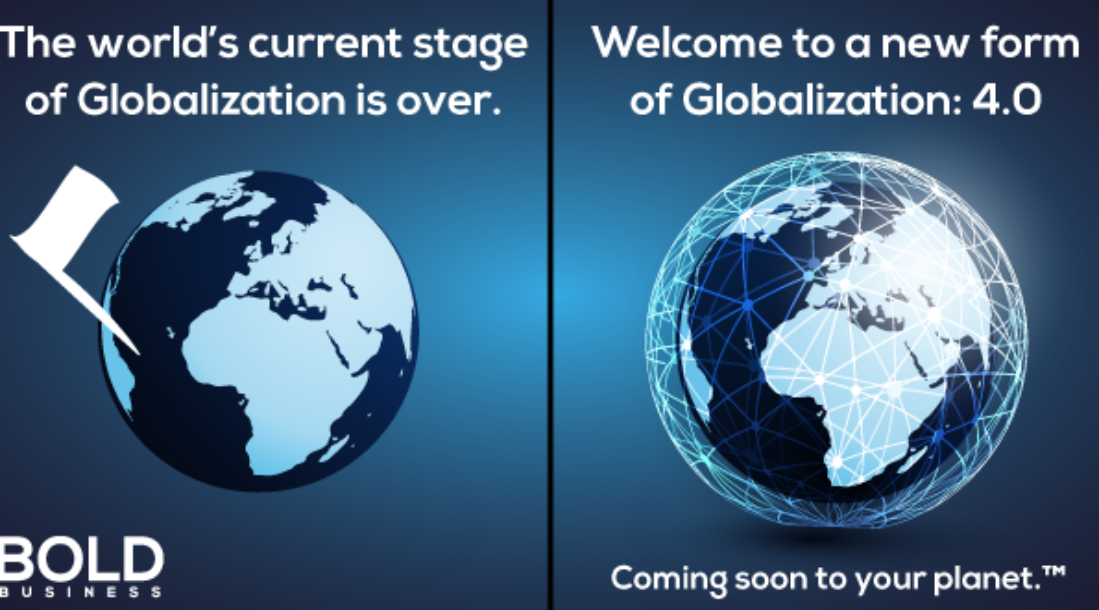
    Globalization As We Know It Is Dead - Bold Business

    One of the devastating impacts of Covid-19 will be that nations are going to look even more inwards. Rather than look beyond its borders, nations will focus on their narrowly-defined national interests.

    • Reflecting on the debate on globalization, one may wonder whether the world was entering a new, uncharted territory or if Covid-19 was simply accelerating a push-back against globalization that has been taking place for some time with the rise of economic nationalism across countries.
    • Here’s a hint: Globalization has undeniably been in retreat for some years now and the coronavirus pandemic is likely to exacerbate this process.

    Dawn of Economic Nationalism

    What is Economic Nationalism?

    • Economic nationalism, also called economic patriotism and economic populism, is an ideology that favours state interventionism over other market mechanisms.
    • It connotes not only controls of external relations, but also to mobilize internal resources.
    • It tends to see international trade as zero-sum, where the goal is to derive relative gains (as opposed to mutual gains).

    What happens in a nationalist economy?

    • Economic nationalism tends to emphasize industrialization (and often aids industries with state support), due to beliefs that industry has positive spillover effects on the rest of the economy, enhances the self-sufficiency and political autonomy of the country, and is a crucial aspect in building military power.
    • It imbibes policies such as domestic control of the economy, labour, and capital formation, even if this requires the imposition of tariffs and other restrictions on the movement of labour, goods and capital.

    Its evolution – A walk into the past

    • References to economic nationalism appeared initially in the years following World War I when the international economy was subjected to high stress arising out of the economic and political dislocation inherited from the war.
    • A similar explanation of the term followed after the Second World War.
    • In this period, economic protectionism was seen as an alternative to revive damaged economies after the world war.
    • The role and status of the ‘state’ emerged to be essentially important in managing economic affairs. The Soviet Union presented a model where state planning was central.
    • Under this model where the state has been the prime facilitator of, means of production and distribution, the public, as well as the private sector, growing at the same rate.
    • This model consolidated the idea of economic nationalism against that of western inherited capitalism.

    Facets of Economic Nationalism: “ME FIRST”

    Proof that economic Nationalism existed way before the COVID era.

    1) American Protectionism

    • America First: USA remains the main proponent of economic nationalism, under the “America First” doctrine of the Trump administration.
    • US-China Tussle: Trade war had been launched through the imposition of tariffs and China’s plan for economic and technological development had been declared an existential threat to US national security.
    • It has been accompanied by a series of bans on Chinese telecom companies and the launching of a global campaign by the US to have its allies exclude the Chinese company, Huawei, from the development of 5G networks.

    2) Chinese Expansionism

    • China’s strategy is, of course, no different than the one pursued by the US.
    • Backed by its great economic and military might, China seeks to achieve the same objectives using its economic prowess and its pole position in the global manufacturing chain to achieve the said objectives.
    • The ambitious ‘Belt and Road Initiative’ is the testimony of its economic nationalism.

    3) EU contractionist tendencies

    • Brexit: Classic example of economic nationalism.
    • Europe, too is taking a turn towards economic nationalism.
    • Many EU countries have been vocal as saying “in the long term we cannot depend on Asia, on China for goods that are strategic for us, whether in the aerospace or medical sectors or in other supply chains.”

    4) India’s ‘self-reliance’ Mantra of being ‘Vocal about Local’

    • When PM romped to a massive and decisive victory in 2014, neo liberal globalists believed that India would unflinchingly embrace globalisation and undertake economic reforms.
    • Indeed, at global forums, India often batted for economic globalisation, slammed rising trade protectionism.
    • The late Arun Jaitley, in his 2018 budget, admitted to this when he made a “calibrated departure” from the decades-long policy of cutting tariff rates.
    • But there has been a bit of economic nationalism here as well.
    • The resolve to augment domestic manufacturing in India – ‘Make in India’ campaign is a case for local over global.
    • Earlier, India chickened out at the last minute from joining the 16 members RCEP agreement to protect local industry.
    • Likewise, the central government has decided that it will not buy goods or services valued less than 200 crore rupees from global companies.
    • The recent amendment of the FDI rules by India so as to discourage Chinese investment in India – something that may not be consistent with India’s WTO obligations – also smacks of protectionism.

    Why there is a rise in the popularity of Economic Nationalism?

    • Not all countries benefited equally from the economic liberalism of the 1990s. It had its winners and losers.
    • National economic recoveries, i.e., nationalistic interests, have proved out to be paramount in the worldwide pandemic.
    • Economic nationalism to some extent can provide the framework within which economic development is possibly providing a way for savings to accumulate and investment to grow.
    • Goods when made locally help to protect local entrepreneurs, reduce imports and one can attract foreign investment.

    Issues with Economic Nationalism

    • Becoming too nationalistic at the expense of one’s trading partners can be counterproductive.
    • It is an approach that creates conflict. Being more nationalistic tends to be a zero-sum game in an increasingly interdependent world economy, where countries depend on other countries for their economic and political and national security well being.
    • When companies cooperate, they can become more competitive.
    • When they are more competitive, they hire more workers, pay higher salaries, and otherwise contribute to economic growth.
    • ‘Vocal about local’ epitomizes this trade protectionism and pushes a flawed and oversimplified economic logic that domestic manufacturing can be resurrected by actively encouraging (even forcing) customers to buy products ‘made in India’.
    • However, the policy measures adopted to achieve this goal are unsound as they mark a relapse to protectionism.
    • India’s economic experience of the first four decades after independence amply demonstrates that a protectionist and a highly controlled economic model do not yield a competitive and proficient manufacturing sector.

    Analysis from India’s perspective

    The government evidently wants to strengthen local businesses and make them globally competitive so that India can become the next manufacturing hub, like China. The prime minister has perhaps taken the disruption caused by the pandemic as an opportunity to push India towards developing its manufacturing prowess and emulate China’s export-driven rise.

    Economic Nationalism – chequered past in India

    • Era of license-permit raj, umbrella of protectionism and import substitution lead to lack of competition and inefficiency in domestic businesses.
    • The economy suffered a distortion that led to eventual bankruptcy and brought India to the brink of defaulting on international debt obligations in 1991.

    Is India ready to go down that path again?

    • If localisation is an increasingly popular global policy response to the lessons taught by the pandemic, it is not clear how India may suddenly become the next manufacturing powerhouse.
    • India doesn’t already dominate global supply chains, lacks the manufacturing prowess of China and is faced with a world where countries are busy ring-fencing risks and pulling up the drawbridge.
    • The danger is that in its push towards becoming more self-reliant and promotes domestic manufacturing; India may end up taking an even more unequivocally protectionist turn.

    Some problems to solve before we head to the nationalist road

    Problem I- India’s inherent- Investment problem

    • Today, globalisation is seen from the lens of the recipients of foreign investments.
    • The receivers of foreign inflows are at the centre of things, the nuclei around which capital revolves.
    • The power of FDI destinations will grow in the near future, as MNCs try to combat the twin pressures of protectionism and localisation.
    • To achieve its ambitions, nations will simultaneously try to woo foreign investment despite the growing nationalism.
    • In fact, economic xenophobia will become the means to do so in perverted and inverse globalisation.
    • As was the case with Make in India—and now Make in Thailand and Make in Vietnam—nations will want MNCs to invest capital and introduce technology in faraway destinations.

    Problem II- Structural Reforms And Labour Lessons needed

    • To cast a ‘nationalistic’ obligation on them to boost domestic industry instead of undertaking reforms that would improve the domestic industry’s competitiveness is fallacious.
    • Moreover, to expect the world to buy goods ‘made in India’ when we close our markets to foreign goods would be like living in a fool’s paradise!
    • The coming decade will be dominated by automation, robotics, AI, 3D printing and smart techniques that will aid economic nationalism, protectionism and localisation.
    • This marks the end of the ‘Age of Industrial Revolution’, and ushers in Industry 5.0.
    • Post-crisis, nations will seek opportunities to reform and change labour as well as laws that govern it. Some, like India, will hope to please businesses at the expense of labour.
    • Recently several states increased the work hours in factories and made it easier to sack workers and more difficult to form trade unions.

    Way Forward

    • India should work to strike a balance between making itself an integral part of the global supply chain (like China) while promoting local industries and empowering small businesses so that they can compete with the world’s best.
    • The focus must be making India a very competitive nation so that our local companies, products and services are purchased by the domestic consumers as well as enthusiastically by consumers around the world.
    • One aspect of being resilient is that our local companies are as competitive as possible.
    • India’s competitiveness will be unshackled not by clamping down on imports and asking consumers to go local, buy local and promote local.
    • Rather, small businesses and local producers will become more efficient and even globally recognised in a competitive environment aided by a government that makes doing business easier.
    • Until that transformation happens the argument that we can suddenly become world-beaters by turning self-sufficient is not convincing.

    For the World to do better,

    • The rhetoric of global power cannot suddenly change to the globe of power.
    • Squeezing the global economy through individual version of protectionism is lethal at the moment.
    • The world may not spend time deliberating the merits and demerits of globalization after the pandemic is contained. But, it should work together for a common and larger objective and approach for all.
    • Only structural reforms, not the dismantling of present architecture  can do best to resolve these issues.
    • India and other developing countries should  work together to reform the present WTO structure for everyone’s  benefit and particularly for the ones which are disadvantaged.
    • The need of the hour is to explore the relationship between comparative advantage and optimal trade policy where all countries are relatively benefited.

    Conclusion

    Nationalist moves are crucial because they will allow nations to reduce dependence on exports and foreign markets, curtail imports or foreign suppliers and enhance economic nationalism through local consumption of domestic goods and services.

    But obviously we do not want trade wars. Covid has also taught us the necessity of international collaboration and co-operation. Unlike US and China, India cannot afford to pursue such obscure economic approaches. We may end up making a terrible mistake if we consider international trade to be a zero-sum game.

    Instead of turning its back on globalisation, India should play a leadership role in strengthening the international economic architecture, which populists in the West want to demolish, premised on a win-win relationship that produces mutual prosperity and global peace.


    Try this:

    Q. Dadabhai Naoroji was the first to realize the significance of Economic Nationalism in the early phase of nationalists awakening. Elucidate.


    References

    https://www.firstpost.com/india/is-this-government-pushing-india-back-to-the-indira-era-idea-of-economic-nationalism-will-work-only-if-backed-by-structural-reform-8377681.html

    https://www.wsws.org/en/articles/2020/04/21/pers-a21.html

    https://thewire.in/political-economy/can-india-compete-with-china-in-the-post-covid-19-world https://thewire.in/economy/india-global-trade-vocal-about-local

    https://www.orfonline.org/research/post-covid-nations-will-look-inwards-india-should-look-at-neighbourhood-ex-nsa-66318/

    https://www.opindia.com/2020/05/china-australia-usa-netherlands-japan-kazakhstan-kyrgystan-economy-manufacturing-coronavirus/

    https://www.outlookindia.com/magazine/story/business-news-why-china-india-will-suffer-the-worst-economic-disaster-in-almost-a-100-years/303222

  • Examining role played by Civil Society and NGOs in fight against Covid-19

    Social capital is what civil societies are known as. The article highlights the valuable role played by the civil society, and NGO in the pandemic. They constitute the backbone of the collective expression of citizen  interest in a democracy. So, read about the ways in which they can contribute in dealing with destruction due to pandemic.

    Partnership with 3 key stakeholders: NGO, Private Sector, international development organisation

    • The nature and scale of the crisis which the COVID-19 pandemic has led to is unparalleled.
    • In such a scenario, solutions are unlikely to come from past experiences or best practices.
    • The biggest source of strength now is the partnerships we have built over the years.
    • The situation at hand calls for stakeholders to come together, work side by side and support each other.
    •  The fight against COVID-19 needed as many hands as were available.
    • The job was too big for the government to handle alone.
    • The strategy was to leverage vertical and horizontal partnerships: Vertical partnerships, which the stakeholders have built within their organisations and horizontal partnerships, which the government has institutionalised with stakeholders.
    • This is precisely what one of the Empowered Groups created by the government has been doing since it was formed.

    Significance of NGOs

    • The NGOs, given their deep connect with spatial and sectoral issues, were a natural partner in this endeavour.
    • There is nobody better placed than the NGOs to understand the pulse at the grassroots and engage closely with communities.
    • Around 92,000 organisations were urged to partner with district administrations and contribute to the response efforts.

    How the NGOs helped?

    • Chief Secretaries of all states were requested to engage NGOs in relief and response efforts and designate state and district nodal officers to coordinate with them.
    • The approach was to leverage the strength and reach of the local NGOs in identifying priority areas for action and avoid duplicity of efforts.
    • NGOs have been actively setting up community kitchens, creating awareness about prevention, and physical distancing, providing shelter to the homeless, the daily wage workers, supporting government efforts in setting up health camps and in deputing volunteers to deliver services to the elderly, persons with disabilities, children, and others.
    • An outstanding contribution of NGOs was in developing communication strategies in different vernaculars which went a long way in taking awareness measures to the community level.
    • Akshaya Patra, Rama Krishna Mission, Tata Trusts, Piramal Foundation, Bill and Melinda Gates Foundation, Action Aid, International Red Cross Society, Prayas, Help-age India, SEWA, Sulabh International, Charities Aid Foundation of India, Gaudia Math, Bachpan Bachao Andolan, the Salvation Army, and Catholic Bishops’ Conference of India are some partners who have embodied the whole-of-society approach in COVID-19 response management.

    Important role played by startups

    • The crisis has brought out the best in the start-up space.
    • Many of them have risen to the occasion and accelerated the development of low cost, scalable, and quick solutions.
    • The results have been promising.
    • AgVa accelerated the development of ventilators which are low-cost, mobile, low on power consumption and require minimal training for operators.
    • Biodesign has developed a robotic product called ResperAid, which enables mechanised use of manual ventilators.
    • Kaaenaat has developed highly portable ventilators which can be used to serve two patients simultaneously and has a built-in battery, oxygen concentrator, and steriliser cabinet.
    • The products of a few non-ventilator start-ups too came to the aid of the COVID-19 fighting machinery.
    • The AI-enabled analysis of chest X-Rays developed by Qure.ai enables large-scale screening to identify potential cases.
    • GIS and geo-fencing technologies by Dronamaps enabled information cluster strategies for hotspots.
    • AI-powered online doctor consultation and telemedicine platform by Mfine connects diagnostics labs and pharmacies with doctors and patients.
    • The AI-enabled thermal imaging camera developed by Staqu facilitated large-scale screening at low cost.
    • These developments strengthen the argument that low-cost and scalable solutions designed and developed domestically must drive our country’s transformation.

    How the stakeholders operated through partnership?

    • The manner in which stakeholders have responded to the pandemic reinforces the power of partnerships.
    • In fact, they have operated through partnerships.
    • The NGO leaderships created momentum throughout their networks and delivered the much needed response.
    • They also brought to the attention of the group the problems from the grassroots.
    • Multiple agencies of international development organisations designed and executed joint response initiatives, leveraging their presence across the country.
    • The coalitions which industry organisations such as CII, FICCI, and NASSCOM have built over the years brought people and resources together, identified problems at multiple levels, channelised ideas and solutions and facilitated innovations.
    • The role played by the government has been facilitative in nature.
    • This role was based on the institutional and informal partnerships built with the three groups of stakeholders over the years.

    Adaptiveness of Indian Industry

    • Until three months ago, not a single N95 mask or personal protective equipment (PPE) was manufactured in India.
    • Today, we have 104 domestic firms making PPEs and four manufacturing N95 masks.
    • Over 2.6 lakh PPEs and two lakh N95 masks are being manufactured in India, daily.
    • Domestic manufacturing of ventilators has strengthened manifold — orders for more than 59,000 units have been placed with nine manufacturers.
    • While this shows the adaptiveness of Indian industry, the shift to domestic production must happen on a larger scale for a wider set of sectors in the long run, as envisioned by Make in India.

    Consider the question-“As facilitators, mediators, and advocates of collective articulation of citizen interest in a democracy, Civil Society and NGOs have put people before everything else during this crisis. In light of this, examine the role played by them in unparalleled crisis brought in by Covid-19 pandemic.”

    Conclusion

    Civil society, and voluntary and non-government organisations constitute the backbone of the collective articulation of citizen interest in a democracy. Surely, they can prove to be an asset in our fight against corona pandemic.

    Back2Basics: NGO

    • The World Bank defines NGOs as private organizations that pursue activities to relieve suffering, promote the interests of the poor, protect the environment, provide basic social services, or undertake community development.
    • NGOs are legally constituted organizations which operate independently from Government and are generally considered to be nonstate, nonprofit oriented groups who pursue purposes of public interest.
  • What is a Parallel Universe?

    Twitter and other social media platforms are abuzz with the so-called ‘parallel universe’ that NASA has discovered. According to the claims, NASA has detected a parallel universe in Antarctica, where time runs backwards.


    ANITA experiment is significant for prelims. It can be asked in prelims in such match the pair questions-

    Q. Consider the following pairs :

    Terms sometimes seen in news                                Context / Topic

    1. Belle 2 experiment –                                        Artificial Intelligence

    2. Blockchain technology –                               Digital Cryptocurrency

    3. CRISPR – Cas9 –                                               Particle Physics

    Which of the pairs given above is/are correctly matched? (CSP 2018)

    (a) 1 and 3 only

    (b) 2 only

    (c) 2 and 3 only

    (d) 1, 2 and 3

    What is a Parallel Universe?

    • In quantum mechanics, a parallel universe is theorized as existing alongside our own, although undetectable.
    • The recent reports claiming that there is evidence of a parallel universe appear to be based on ANITA findings that are at least a couple of years old.
    • A science magazine had published a feature, discussing some anomalous results coming from neutrino detection experiments in Antarctica.
    • It discussed a speculative cosmological model that posits there’s an antimatter universe extending backwards from the BigBang.
    • This theorem was also proposed by famous scientist Stephens Hawking.

    What were the anomalous detections in Antarctica?

    The ANITA experiment

    • Four years ago an experiment had spotted a handful of instances of what seemed to be highly energetic neutrinos coming through the Earth.
    • It was named Antarctic Impulsive Transient Antenna (ANITA) experiment — a high-altitude helium balloon with an array of radio antennas, partially funded by NASA.
    • The telescope could spot these neutrinos coming from the space and hitting the ice sheet in Antarctica.
    • ANITA detected these particles, but instead of coming from the space, the neutrinos were found to be coming from the Earth’s surface without any source.
    • These detections happened in 2016, then again in 2018, but there was no credible explanation.
    • Physicists have been working to figure out if these results can be explained with our current models of physics or have something to do with the experimental set-up itself, or if something like the parallel universe does exist.

    Back2Basics: Neutrinos

    • A neutrino is a subatomic particle very similar to an electron.
    • But it has no electrical charge and a very small mass, which might even be zero.
    • Neutrinos are one of the most abundant particles in the universe.
    • Because they have very little interaction with matter, they are incredibly difficult to detect.