💥Join UPSC 2027,2028 Mentorship (August Batch) + XFactor Notes & Microthemes PDF

Distribution: weekly

  • Fastest growing cities in India

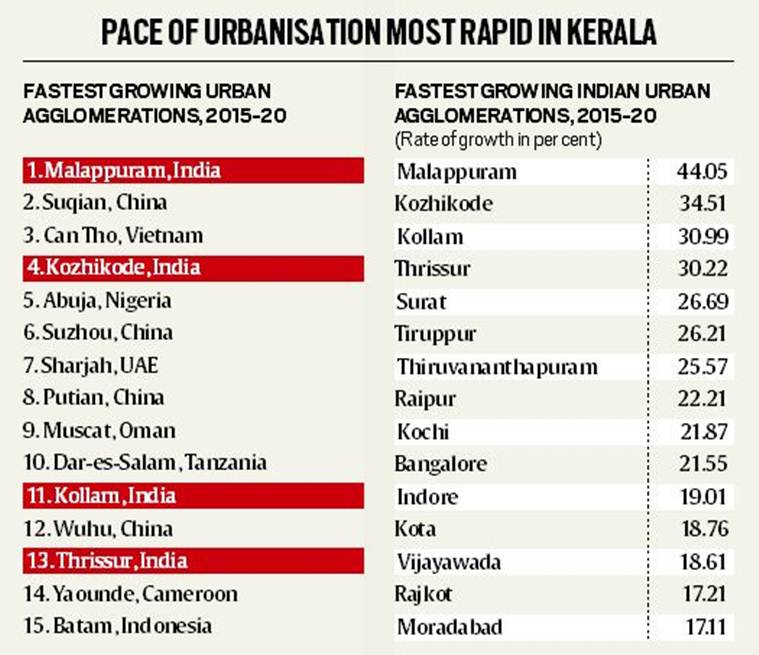
     The Economist has put Malappuram at the top of the “Top ten fastest-growing cities” in the world.

    Anomalies in the data

    • The total fertility rate (TFR, the number of children a woman is likely to have in the childbearing age of 15-49) in Kerala is 1.8 as per NITI Aayog data from 2016 — below the replacement rate of 2.1.
    • Another Kerala city, Thrissur, is No. 13, and the capital Thiruvananthapuram is No. 33 on the UN list.
    • Tiruppur in Tamil Nadu — which has an even lower TFR of 1.6 — is No. 30.
    • Surat in Gujarat (TFR of 2.2) is No. 27. There is no representation on the list from high population growth states like Bihar and UP.

    What does “fastest growing” refer to? How is a “city” defined?

    • The list based on data from the UN Population Division refers to “urban agglomerations” (UA), which are extended areas built around an existing town along with its outgrowths — typically villages or other residential areas or universities, ports, etc., on the outskirts of the town.
    • The Census defines a UA as “a continuous urban spread consisting of a town and its adjoining urban outgrowths or two or more physically contiguous towns together”.
    • The NCT of Delhi is a UA that includes the Municipal Corporation of Delhi (MCD) and New Delhi Municipal Council (NDMC) areas, as well as 107 “Census towns” — erstwhile surrounding villages where more than 75% of the population is now engaged in non-agricultural pursuits.

    A pace of urbanization

    • The Economist has listed the rate at which the populations of the UAs are expected to increase between 2015 and 2020.
    • Since data on India and many other countries were not available for 2015 (the last Census in India was in 2011), the UN report used projections of UAs’ populations — estimates based on past population growth data.
    • The rate of growth between 2015 and 2020 thus calculated provides a measure of the pace of urbanisation.

    How does urban population grow?

    • Urban populations can grow when the birth rate exceeds the death rate when workers migrate to the city in search of jobs; when more areas get included within the boundaries of the city; or when existing rural areas are reclassified as urban.
    • The low fertility rate in Kerala means the increase in the population of Malappuram and other cities is not because women are having more children; rather it is because more villages are being transformed into towns, and city borders are expanding.
    • According to the Census definition, an urban area is either a census town (CT) or a statutory town (ST). An ST is any place with a municipal corporation, municipal council, or cantonment board.
    • A CT can be a village with “urban characteristics” — a population more than 5,000, population density more than 400 people per sq km, and with more than 75% of the population not engaged in agriculture for their livelihood.
    • When a village becomes a CT, its population is included in the urban population of the district.

    Could migration have caused the increase?

    • Migration can either increase or decrease the population of a town.
    • Kerala sees both emigration — migration from the state to other places — and immigration — the migration of workers to the state.
    • Also the remittances that emigrants send allow the residents of villages to move away from agriculture, which changes the status of a village to census town.

    Why these cities are growing so fast?

    • These cities are seeing rapid urbanisation, and the main reason is the inclusion of new areas in the UA’s limits.
    • In 2001, there were two municipal corporations within the UA of Malappuram. In 2011, the number of municipal corporations had doubled to four, and an additional 37 CTs were included within Malappuram.
    • The population of the UA (excluding the residents of the outgrowths) increased almost 10 times in the same period — from 1,70,409 to 16,99,060 — obviously because of the inclusion of existing urban areas in the town.
    • Similarly, Kollam UA grew from one municipal corporation in 2001 to 23 CTs, one municipal corporation, and one municipal council in 2011.
    • Its population increased by 130%, even though the population of the original ST of Kollam actually decreased by 4%.

    Why is this not seen elsewhere in India?

    • In Kerala, urbanisation is driven by a move away from agriculture, which leads to a change in a village’s Census classification status.
    • This is evident from the large number of CTs that were included in the UAs of the state since the last Census. On the other hand, except Delhi, the more populous cities in the North had fewer CTs in 2011.
    • While the pace of urbanisation has been slower in the North, some unnaturally high increases in the population can be expected after the 2021 Census — because in some cases, villages on the peripheries were brought within the administrative boundaries of the cities.

    Is it good for the economy?

    • Urbanisation leads to the growth of cities, which are sites of infrastructure like universities, hospitals, and public transport facilities.
    • There are more opportunities for the youth, which is why they attract young people and entrepreneurs.
    • In India, people moving to cities leave behind (to some extent) caste and class divisions that dominate life in the villages, and can hope to climb up the social ladder.
    • However, unplanned urbanisation can be “exclusionary”, making it difficult for migrants to live there given the high cost.
    • Unregulated housing, lack of reliable public transport, and longer commutes within these towns puts a strain on the meagre resources of migrants.
  • Virtual human’ NEON

    NEONs are being called the world’s first artificial humans. They look and behave like real humans, and could develop memories and emotions — though from behind a 4K display.

    NEON

    • Star Labs is headed by India-born scientist Pranav Mistry who underlines that what was showcased at CES was the product of just four months’ work.
    • The company says NEONs are computationally created virtual humans — the word derives from NEO (new) + humaN.
    • For now, the virtual humans can show emotions when manually controlled by their creators.
    • But the idea is for NEONs to become intelligent enough to be fully autonomous, showing emotions, learning skills, creating memories, and being intelligent on their own.
    • Star Labs thinks they can be “friends, collaborators, and companions”, but all that is a few years away.

    How does it work?

    There are two core technologies behind his virtual humans.

    • First, there is the proprietary CORE R3 technology that drives the “reality, real time and responsiveness” behind NEONs.
    • It is the front-end reality engine that is able to give you that real expression.
    • The company claims CORE R3 “leapfrogs in the domains of Behavioral Neural Networks, Evolutionary Generative Intelligence and Computational Reality”, and is “extensively trained” on how humans look, behave and interact.
    • But in the end, it is like a rendition engine, converting the mathematical models to look like actual humans.
    • The next stage will be SPECTRA, which will complement CORE R3 with the “spectrum of intelligence, learning, emotions and memory”.
    • But SPECTRA is still in development, and is not expected before NEONWORLD 2020 later this year.

    How could NEONs be used?

    • NEONs are the interface for technologies and services.
    • They could answer queries at a bank, welcome you at a restaurant, or read out the breaking news on television at an unearthly hour.
    • This form of virtual assistance would be more effective, for example, while teaching languages, as NEONs will be capable of understanding and sympathizing.

    How are they different from Virtual Assistants?

    • Virtual Assistants now learn from all the data they are plugged into. NEONs will be limited to what they know and learn.
    • Their leaning could potentially be limited to the person they are catering to, and maybe her friends — but not the entire Internet.
    • They will not be an interface for you to request a song, rather they will be a friend to speak to and share experiences with.
    • Currently, its developer doesn’t want NEONs to have collective memory, or to share data among themselves.
  • Explained: Doctrine of ‘Presumption of Constitutionality’

    Recently the Supreme Court declined urgent hearing on a plea seeking to declare the CAA as constitutional and said that there was already a “presumption of constitutionality” to a law passed by Parliament.  CJI has said that the court’s role was to examine the validity, and not declare a law constitutional.

    Doctrine of Presumption of Constitutionality

    • The term ‘presumption of constitutionality’ is a legal principle that is used by courts during statutory interpretation — the process by which courts interpret and apply a law passed by the legislature, such as Parliament.
    • In the 1992 Supreme Court case ‘ML Kamra v New India Assurance’, Justice K Ramaswamy said: “The court ought not to interpret the statutory provisions, unless compelled by their language, in such a manner as would involve its unconstitutionality.
    • The legislature of the rule making authority is presumed to enact a law which does not contravene or violate the constitutional provisions.
    • Therefore, there is a presumption in favour of constitutionality of a legislation or statutory rule unless ex facie it violates the fundamental rights guaranteed under Part III of the Constitution.
    • If the provisions of a law or the rule is construed in such a way as would make it consistent with the Constitution and another interpretation would render the provision or the rule unconstitutional, the Court would lean in favour of the former construction. ” (“ex facie” meaning ‘on the face’)

    When does this apply?

    • It is a cardinal principle of construction that the Statute and the Rule or the Regulation must be held to be constitutionally valid unless and until it is established they violate any specific provision of the Constitution.
    • Further it is the duty of the Court to harmoniously construe different provisions of any Act or Rule or Regulation, if possible, and to sustain the same rather than striking down the provisions out right.
    • The presumption is not absolute, however, and does not stand when there is a gross violation of the Constitution.

    Limitations to the doctrine

    • A three-judge Bench in ‘NDMC v State of Punjab’ (1996) spoke of the limitations to the doctrine.
    • The Bench observed that the Doctrine is not one of infinite application; it has recognised limitations.
    • The Court has consistently followed a policy of not putting an unnatural and forced meaning on the words that have been used by the legislature in the search for an interpretation which would save the statutory provisions.
  • Private Property is a Human Right: Supreme Court

    The right to property is a human right, the Supreme Court has recently ruled.

    What did the court say?

    • A citizen’s right to own private property is a human right. The state cannot take possession of it without following due procedure and authority of law, the Supreme Court has held in a recent judgment.
    • The state cannot trespass into the private property of a citizen and then claim ownership of the land in the name of ‘adverse possession’.
    • Grabbing private land and then claiming it as its own makes the state an encroacher.
    • Article 300A required the state to follow due procedure and authority of law to deprive a person of his or her private property, the Supreme Court reminded the government.

    Adverse possession

    • A welfare state cannot be permitted to take the plea of adverse possession, which allows a trespasser i.e. a person guilty of a tort, or even a crime, to gain legal title over such property for over 12 years.
    • The State cannot be permitted to perfect its title over the land by invoking the doctrine of adverse possession to grab the property of its own citizens.

    Back2Basics

    Right to Property

    • The Constitution of India originally provided for the right to property under Articles 19 and 31.
    • Article 19 guaranteed to all citizens the right to acquire, hold and dispose of property.
    • Article 31 provided that “no person shall be deprived of his property save by authority of law.” It also provided that compensation would be paid to a person whose property has been taken for public purposes.
    • The 44th Amendment of 1978 removed the right to property from the list of fundamental rights.
    • A new provision, Article 300-A, was added to the constitution, which provided that “no person shall be deprived of his property save by authority of law”.

    What if one is deprived of his/her properties?

    • Thus, if a legislator makes a law depriving a person of his property, there would be no obligation on the part of the state to pay anything as compensation.
    • The aggrieved person shall have no right to move the court under Article 32.
    • Thus, the right to property is no longer a fundamental right, though it is still a constitutional right. If the government appears to have acted unfairly, the action can be challenged in a court of law by aggrieved citizens.
  • Artemis Mission

    NASA wants to send the first woman and the next man to the Moon by the year 2024, which it plans on doing through the Artemis lunar exploration program. An Indian American astronaut named Raja Chari is set to accompany the crew in this mission.

    Artemis Mission

    • In 2011, NASA began the ARTEMIS (Acceleration, Reconnection, Turbulence, and Electrodynamics of the Moon’s Interaction with the Sun) mission using a pair of repurposed spacecraft and in 2012 the Gravity Recovery and Interior Laboratory (GRAIL) spacecraft studied the Moon’s gravity.
    • For the program, NASA’s new rocket called the Space Launch System (SLS) will send astronauts aboard the Orion spacecraft a quarter of a million miles away from Earth to the lunar orbit.
    • The astronauts going for the Artemis program will wear newly designed spacesuits, called Exploration Extravehicular Mobility Unit, or xEMU.
    • These spacesuits feature advanced mobility and communications and interchangeable parts that can be configured for spacewalks in microgravity or on a planetary surface.
  • Kaziranga National Park

    Kaziranga, home of the world’s most one-horned rhinos, has 96 species of wetland birds — one of the highest for wildlife preserves in India.

    Kaziranga National Park

    • It is a protected area in the northeast state of Assam.
    • Spread across the floodplains of the Brahmaputra River, its forests, wetlands and grasslands are home to tigers, elephants and the world’s largest population of Indian one-horned rhinoceroses.
    • Much of the focus of conservation efforts in Kaziranga are focused on the ‘big four’ species— rhino, elephant, Royal Bengal tiger and Asiatic water buffalo.
    • The 2018 census had yielded 2,413 rhinos and approximately 1,100 elephants.
    • The tiger census of 2014 said Kaziranga had an estimated 103 tigers, the third highest population of the striped cat in India after Jim Corbett National Park (215) in Uttarakhand and Bandipur National Park (120) in Karnataka.
    • Kaziranga is also home to nine of the 14 species of primates found in the Indian subcontinent.
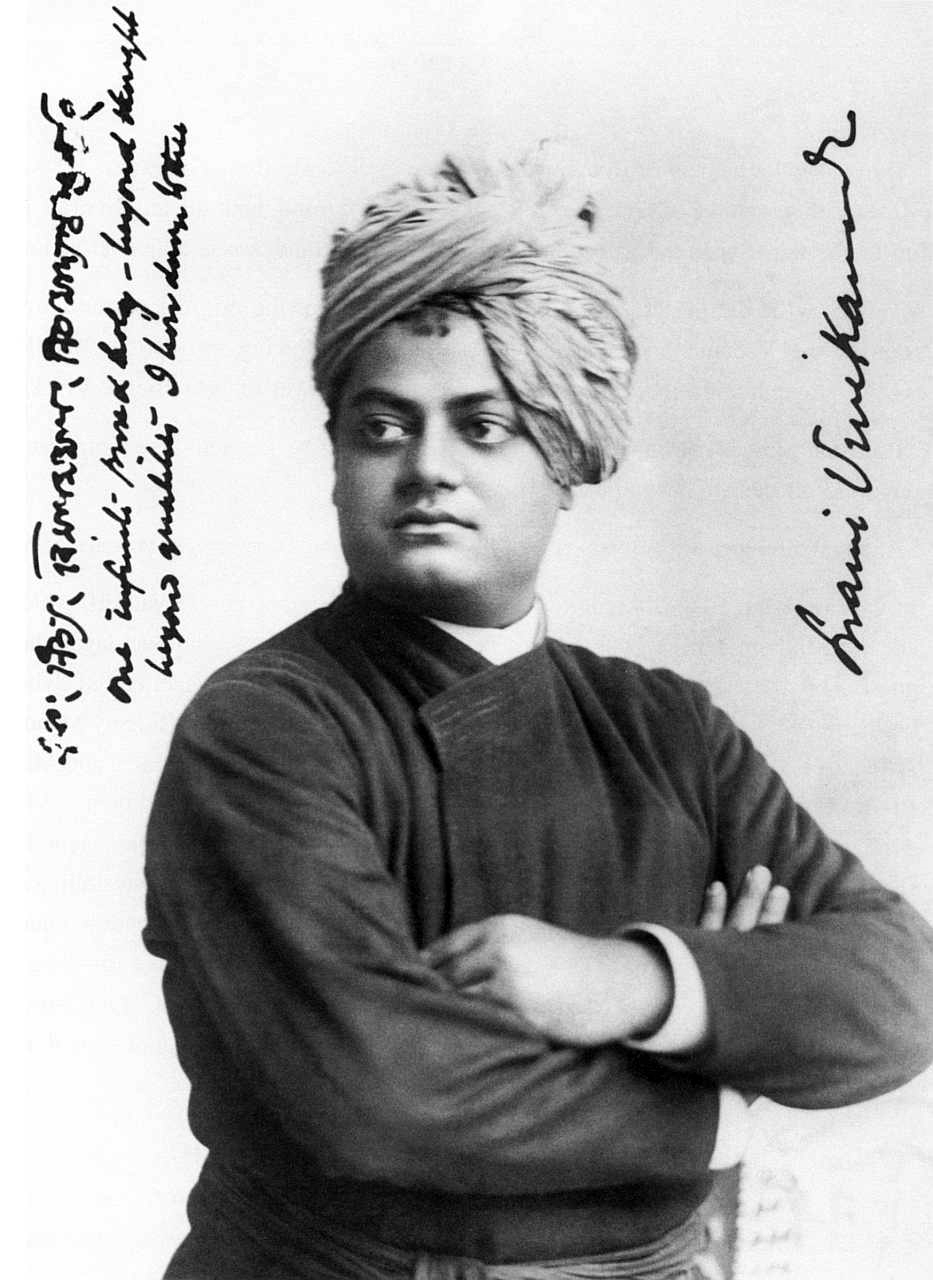
  • Person in news: Swami Vivekananda

    January 12 is the birth anniversary of Swami Vivekananda, the famous spiritual leader and intellectual from the late 19th century. In his honour, the government of India in 1984 declared his birthday as National Youth Day.

    Swami Vivekananda early life

    • Vivekananda was born in Kolkata on January 12, 1863, as Narendra Nath Datta.
    • From an early age, he nurtured an interest in Western philosophy, history, and theology, and went on to meet the religious leader Ramakrishna Paramhansa, who later became his Guru.
    • He remained devoted to Ramakrishna until the latter’s death in 1886.
    • In 1893, he took the name ‘Vivekananda’ after Maharaja Ajit Singh of the Khetri State requested him to do so, changing from ‘Sachidananda’ that he used before.
    • After Ramakrishna’s death, Vivekananda toured across India, and set after educating the masses about ways to improve their economic condition as well as imparting spiritual knowledge.

    The Chicago address

    • Vivekananda is especially remembered around the world for his speech at the Parliament of the World’s Religions in Chicago in 1893.
    • The speech covered topics including universal acceptance, tolerance and religion, and got him a standing ovation.
    • He began delivering lectures at various places in the US and UK, and became popular as the ‘messenger of Indian wisdom to the Western world’.

    Return to India

    • After coming back to India, he formed the Ramakrishna Mission in 1897 “to set in motion a machinery which will bring noblest ideas to the doorstep of even the poorest and the meanest.”
    • In 1899, he established the Belur Math, which became his permanent abode.

    His legacy

    • Through his speeches and lectures, Vivekananda worked to disseminate his religious thought.
    • He preached ‘neo-Vedanta’, an interpretation of Hinduism through a Western lens, and believed in combining spirituality with material progress.
    • ‘Raja Yoga’, ‘Jnana Yoga’, ‘Karma Yoga’ are some of the books he wrote.
    • An important religious reformer in India, Swami Vivekananda is known to have introduced the Hindu philosophies of Yoga and Vedanta to the West.
    • Subhas Chandra Bose had called Vivekananda the “maker of modern India.”
  • [op-ed of the day] Human rights are not solely an ‘internal matter’

    Context

    The human rights situation in Jammu and Kashmir following the dilution of Article 370 and the passage of the Citizenship (Amendment) Act (CAA) have brought renewed international focus on India’s human rights practice.

    Evolution of the modern Human Rights

    • Classical approach: Countries made agreements on the premise that a sovereign state had the exclusive right to take any action it thought fit to deal with its nationals.
      • No recognition of individuals’ rights:  Classic international law governed the conduct between states and did not recognise the rights of individuals.
    • The classical notion was challenged in the 19th century.
    • Modern Human Rights:  Slavery Convention adopted by the League of Nations prohibiting the slave trade heralded the first human rights treaty.
      • It was based on the principle of dignity of a human being.
    • The Universal Declaration of Human Rights: Adopted in 1948 by the United Nations, was the first comprehensive international human rights document.
    • The weakening of Unrestricted sovereignty: The evolution of international human rights law is also about the gradual weakening of the concept of unrestricted sovereignty.

    India and Human Rights

    • Unwarranted international scrutiny: The Indian government’s response to its human rights practice has always been that international scrutiny is unwarranted.
      • Why India claims so?: Since the country is the largest democracy in the world with an independent judiciary, free media, and an active civil society no international scrutiny is required.
      • Indian has always assured the international community that the judiciary (the SC) would provide adequate remedies to victims of human rights violations.
      • These claims sound less credible after the recent developments in J&K and the passage of the CAA.
    • Human rights and Discriminatory nature of CAA: Non–discrimination is a fundamental principle of human rights.
      • The Office of the High Commissioner for Human Rights (OHCHR) said that CAA is fundamentally discriminatory in nature”.

    Role of Civil Society and Media

    • Media’s questionable role: Responding to international concerns the Indian government also refers to the role of free media and civil society in protecting human rights.
      • However, the media’s role in J and K and after CAA is questionable.
    • Weakened Civil Society: The government has imposed various curbs on it since 2014.
      • It has become difficult for it to receive foreign contribution.
      • Use of FRCA: Since 2014, the government has canceled the registration of about 14,000 NGOs under the Foreign Contribution Regulation Act (FCRA).

    Conclusion

    • It is possible for the Indian government, due to its diplomatic clout, to avoid robust intervention by the UN Human Rights Council and other UN human rights mechanisms.
    • But it would be difficult to avoid scrutiny by the international community. So, the government must take steps to allay international concerns and avoid situations where it is seen as a violator of human rights.
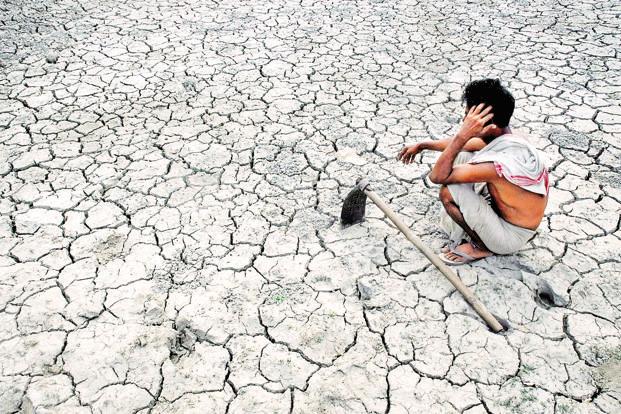
  • [Burning Issue] Farmers’ suicide in India


    Context

    • The national catastrophe of farmers committing suicide since the 1990s, often by drinking pesticides is attributed to their inability to repay loans mostly taken from landlords and banks.
    • The recent data released by NCRB show a very marginal decline in the suicide rate compared to last year signifying the sorry state of Indian agriculture.

    Farmers distress: Not a decadal phenomenon

    • Historical records relating to frustration, revolts and high mortality rates among farmers in India, particularly cash crop farmers, date back to the 19th century. However, suicides due to the same were rare.
    • The high land taxes of the 1870s, payable in cash regardless of the effects of frequent famines on farm output or productivity, combined with colonial protection of money lenders and landowner rights, contributed to widespread frustration among cotton and other farmers.
    • However, in those days, starvation related deaths far exceeded those by suicide, the latter being officially classified under “injuries”.

    NCRB Stats on Farmers Suicide

    • In 2017, 10,655 people involved in agriculture committed suicide in India, according to data released January 2, 2020, by the National Crime Record Bureau (NCRB).
    • NCRB had released the 2017 crime data last October 2019 but held back information on suicides.

    Highlights by NCRB

    • A total of 10,349 farmers and agricultural labourers committed suicide in 2018, a marginal dip from the 10,655 cases in the year before.
    • Out of 5,763 farmer/cultivator suicides, a total of 5,457 were male and 306 were female during 2018.
    • Among those who took their lives, 5,955 were farmers/cultivators and 4,700 agricultural labourers — both lower than in 2016.
    • The number of women farmers committing suicide, however, jumped to 480 in 2017 from 275 in ’16.
    • In 2016, 6270 farmers killed themselves, down from 8,007 in 2015, while 5,109 farmhands committed suicide, up from 4,595.

    Statewise data

    • In 2018, Maharashtra accounted for the highest share in farm-related suicides at 34.7%, followed by Karnataka at 23.2%, Telangana 8.8%, Andhra Pradesh 6.4% and Madhya Pradesh at 6.3%.
    • In 2017, the most number of farm suicides were reportedly in Maharashtra (34.7 per cent), followed by Karnataka (20.3 per cent), Madhya Pradesh (9 per cent), Telangana (8 per cent) and Andhra Pradesh (7.7 per cent).
    • The trend is quite similar to that of 2016.
    • In 2015 too Maharashtra tops in farmers suicides followed by Karnataka, Madhya Pradesh in 2016.
    • West Bengal, Odisha, Nagaland, Manipur, Mizoram, Uttarakhand, Chandigarh, Dadra and Nagar Haveli, Daman and Diu, Delhi, Lakshadweep and Puducherry reported zero suicides.

     Causes of Farmers Suicide

    • There is no consensus on what the main causes might be but studies show suicide victims are motivated by more than one cause however the primer reasons being the inability to repay loans.
    • Major causes reportedly are bankruptcy/indebtedness, problems in the families, crop failure, illness and alcohol/substance abuse.
    • Most of the suicides have occurred in areas of cash crops like cotton and sugarcane, which is high input, high output gambling, not based on the principle of sustained and resilient high yield.

    Case of Maharashtra

    • A 2012 study in rural Vidarbha (Maharashtra) was held to qualitatively rank the expressed causes among farming families who had lost someone to suicide.
    • The expressed reasons in order of importance behind farmer suicides were – debt, alcohol addiction, environment, low produce prices, stress and family responsibilities, apathy, poor irrigation, increased cost of cultivation, private money lenders, use of chemical fertilizers and crop failure.
    • In other words, debt to stress and family responsibilities as reasons were significantly higher than fertilizers and crop failure.
    • Other causes attributed are insufficient or risky credit systems, the difficulty of farming semi-arid regions, poor agricultural income, absence of alternative income opportunities, a downturn in the urban economy which forced non-farmers into farming, and the absence of suitable counselling services.

    Other causes

    • Disguised unemployment on farms remains high. Fragmentation of land holdings has left far too many farmers with farms that are too small to be remunerative.
    • Low access to credit, irrigation and technology worsens their ability to make a comfortable living. A tenth of our farmers are landless.
    • They use rented land, but the inadequacies of land-leasing mechanisms make it difficult for them to raise production.

    Latent causes of suicide

    • Since most discussions and parleys on suicides are overtaken by issues of crop failures, rising debts, new farming techniques, the psychological aspect is largely ignored.
    • One of the major causes behind suicidal intent is depression, found the researchers.
    • It needs to be understood that at times a farmer under a debt of Rs 2 lakh shows a tendency to end his life, while another under a debt of Rs 10 lakh does not.

    Flawed preventive measures

    • Irrigation reaches less than half of India’s overall farmland, a picture that has not changed much over the past decade, and more than 60% of our farmers are susceptible to rainfall anomalies.
    • Rain-fed farming yields are typically less than half those of irrigated farmland.
    • Though India has caught up with global levels of fertilizer use, this is neither efficient nor environmentally sustainable. Both add to the cost of cultivation.
    • Research on high-yielding crops has plateaued after an initial burst during the Green Revolution and farmers have to resort to patented seeds to draw more out of their scanty acres.
    • Initiatives like the eNAM are helping integrate the farmers’ produce directly with the market, however, cutting the role of intermediaries is still lagging behind.

    Enough with appeasement

    • Loan waivers instead of restructuring, re-investment measures are disguised pullbacks on govt. initiative to double farmer’s income by 2020.
    • The subsequent governments have focused only on credit and loan facilitation rather than income, productivity and farmers prosperity.
    • Our approach of handling farmer indebtedness and farmer suicides has been appeasement politics like the recent move by the Maharashtra, Punjab and UP government to waive off thousands of crore worth of loans.
    • Surprisingly this comes at a time when agricultural yield is expected to be better in the wake of a good monsoon.

    Need of the hour: Psychological assistance

    • The study suggested roping in psychologists and counsellors on various issues.
    • They included battling depressive ruminations, suicidal ideations, negative cognitions, hopelessness, helplessness.
    • It aimed at recognising and managing stressors like financial distress, relationship problems, and enhancing psychological resources through emotional well being, and mindfulness.

    Model of 7’s

    • The researchers developed a ‘7D’ model of triggering and confounding factors and a ‘7R’ model of preventive and protecting factors to deal with the problem of farmer suicides.

    ‘7D’ model

    It encapsulates:

    1. Drugs,
    2. Debt,
    3. Disease,
    4. Disputes,
    5. Depression,
    6. Disrepute and
    7. Death

     ‘7R’ model

    It looks at the prevention of suicides. It consists:

    1. Remunerative agriculture,
    2. Resilience building,
    3. Rational expenditure,
    4. Reassurance through connectivity,
    5. Righteous conduct,
    6. Religious support and
    7. Responsible reporting

    Way Forward

    • With years of policy failures, it can be concluded that there is no single sure-shot method to reduce the burden on our farmers.
    • Information technology promises to improve weather forecasting, crop identification as well as damage control, soil health monitoring, and mapping of available water resources.
    • Improvements in marketing and logistics can significantly raise the share that cultivators get of the money people pay for their food.
    • The govt. is using technology to connect farmers to a nationwide e-market, but the states need to amend their antiquated farm produce marketing laws that have squeezed farmers’ earnings.
    • An old problem of price signals failing to adjust demand and supply may also need fixing.
    • For agricultural incomes to rise, reforms, rather than cash transfers, loan waivers and the like, are the way ahead.

    Conclusion

    • The government, in consultation with various stakeholders, should come up with effective and long-term measures to reduce farmer indebtedness, improve crop yield, manage water resources efficiently and make alternate income sources to farmers.
    • Along with subsidies, increased farm profits, the focus should also be on resilience building and problem-solving skills of farming families.
    • In suicide-prone states, agricultural institutes and scientists should start distributing seeds of resilience, tolerance and contentment among farmers, suggested researchers.


    References

    https://www.civilsdaily.com/news/ncrb-report-on-farmers-suicide/

    https://www.civilsdaily.com/news/behavioural-aspect-of-farmer-suicides/

  • [op-ed snap] Taking a holistic approach to dengue

    Context

    The advent of a new tetravalent vaccine against the dengue virus has thrown new light into the evidence-based management of dengue.

    Why the holistic approach is needed

    • Apart from promoting the use of the vaccine, gaining control over dengue will also require a holistic approach that has to include within its ambit vector control and proper case management.
    • Tetravalent vaccine: The vaccine is tetravalent i.e. it provides protection against all the four types of dengue viruses.
      • The vaccine confers about 80% protection to children vaccinated between 4 and 16 years of age without any major side effects.
    • Climatic factors: It is essentially a tropical disease that occurs in the countries around the Equator; hot weather and intermittent rainfall favour the sustenance of Aedes aegypti.
      • Aedes eggs can remain dormant for more than a year and will hatch once they come in contact with water.
    • Risk factors: Urbanisation, poor town planning, and improper sanitation are the major risk factors for the multiplication of such mosquitoes.
      • Aedes eggs can remain dormant for more than a year and will hatch once they come in contact with water.
      • Aedes mosquitoes cannot fly beyond a hundred meters. Hence, keeping the ambiance clean can help prevent their breeding.
      • Further, these mosquitoes bite during the daytime, so keeping the windows shut in the day hours is also useful.

    What needs to be done?

    • Source reduction activities: Activities like preventing water stagnation and using chemical larvicides and adulticides.
      • These chemicals need to be applied in periodic cycles to kill the larvae that remain even after the first spray.
    • Dealing with the manpower shortage: The number of skilled workers available for such measures is low; many posts in government departments remain vacant despite there being a dire public health need.
      • Due to this deficiency of manpower, active surveillance is not being done in India, says the National Vector Borne Disease Control Program.
    • Ending the Under-reporting: Dengue cases are often under-reported due to political reasons and also to avoid spreading panic among the common people. Under-reporting needs to be dealt with.
    • Increasing coordination: There is a lack of coordination between the local bodies and health departments in the delivery of public health measures.
      • A comprehensive mechanism is required to address these issues.
    • Need for epidemiological measures: Any communicable disease needs the epidemiological approach. Singapore uses one successful model of mapping and analysing data on dengue, using Geographical Information System (GIS).
      • The use of GIS involves mapping the streets with dengue cases for vector densities.
    • Emphasis on the WHO guidelines: Fluid management in the body is the cornerstone in the management of severe diseases like dengue hemorrhagic fever and dengue shock syndrome.
      • According to the guidelines, coagulation abnormalities are not due to a reduction in the number of platelets alone.
      • This is why the WHO recommends fresh whole blood or packed cell transfusion in the event of bleeding.
    • Caution in using alternative medicine drugs: Modern medicine is not against any complementary medicine; when such a medicine is approved after rigorous testing.
      • However, in the absence of evidence, the efficacy of such medicines remains in the realm of belief instead of science.
      • So, medicines like Nilavembu kudineer and papaya leaf extract are only belief based.

    Conclusion

    The communicable nature of Dengue and its asymptomatic nature requires the holistic approach to successfully tackle the disease.