💥Join UPSC 2027,2028 Mentorship (August Batch) + XFactor Notes & Microthemes PDF

Distribution: weekly

  • G20: Setting the World Agenda Through Task Forces

    G20

    Click and get your FREE Copy of CURRENT AFFAIRS Micro Notes

    Context

    • India’s G20 presidency began on December 1. It will be driven by the underlying vision of “Vasudhaiva Kutumbakam”, best encapsulated by the motto “One Earth, One Family, One Future”. As the main “ideas bank” of the G20, the activities and deliberations of the Think20 (T20) engagement group of the G20 are spread over seven task forces.

    Task force on “Macroeconomics, trade, and livelihoods”

    • Create Coherence in monetary and fiscal policy: It has the mandate to make recommendations on coordination within the G20 to create coherence in monetary and fiscal policy, trade, investment, and supply chain resilience.
    • Recover together, recover stronger: The aim is to give further impetus to the initiatives taken by the Indonesian presidency to “Recover Together, Recover Stronger” in the post-pandemic period.
    • Consensus on international trade: With supply chain resilience emerging as a common concern against the backdrop of ineffective WTO mechanisms, the G20 has assumed the mantle as the most significant platform to forge consensus among the top 20 economies on international trade policy.

    G20

    Task force on “Digital Futures”

    • Digital infrastructure: It will endeavour to build an inclusive digital public infrastructure to ensure affordability and safe access by all.
    • Interoperability of Digital services: It will discuss the universal interoperability of digital services. It will also address issues of digital financial inclusion and skills, both integral to economic growth.

    Task force on “LiFE, Resilience, and Values for Wellbeing”

    • Lifestyle for Environment (LiFE): The LiFE initiative aims to put the individual at the centre of the discourse and to sensitise every human being, regardless of nationality and geography. If individuals become more conscious of their lifestyle choices and act more responsibly, it can make a huge difference.
    • Contribution of all: The focus on LiFE is a timely initiative given the fact that the deleterious effects of climate change on the economy and livelihood are felt the most by the vulnerable countries around the world.

    G20

    Task force on “Green transitions”

    • Refuelling growth: Growth will be the aim of the task force on green transitions as it recommends pathways for a smooth transition to clean energy without compromising on efforts for global economic revival in a post-pandemic world.

    Task force on the “Global financial order”

    • Restructuring the financial institution: It will examine the potential for realigning the global financial architecture. The challenge today is to restructure institutions in accordance with contemporary economic needs, including for infrastructure.
    • Finance and resource mobilization: Greater access to development finance and resource mobilisation through innovative methods is of key importance.

    Task force on “Accelerating SDGs”

    • Sustainable collaboration: It will explore new pathways to deliver on the 2030 agenda through strengthened and sustainable collaboration.
    • Focus on circular economy to reduce waste: Given the earth’s finite resources, a shift towards a circular economy and deliberate and mindful consumption is likely to reduce waste and help build a virtuous cycle for development.

    Task Force on “Reformed Multilateralism”

    • Road map for Multilateralism 2.0: It will seek to create a roadmap for “Multilateralism 2.0”. A targeted reform agenda for key multilateral institutions, whether the United Nations or its affiliated frameworks such as the WHO, WTO and the ILO, must be undertaken.
    • Representative world order: With sincere efforts, the global community can look forward to the birth of a more representative and egalitarian multipolar world order from the chrysalis of the G20.

    G20

    Conclusion

    • The year ahead is an opportunity for India to share its values to world. Vasudhaiva Kutumbakam, the guiding canon for India’s Neighbourhood First Policy and Vaccine Maitri, places higher human values above narrow nationalism. It is an approach that is expected to permeate all aspects of India’s G20 Presidency.

    Mains Question

    Q. What are the different task forces created under India’s G20 presidency? Briefly explain the role of different task forces.

    (Click) FREE1-to-1 on-call Mentorship by IAS-IPS officers | Discuss doubts, strategy, sources, and more


  • What are Personality Rights?

    The Delhi High Court recently passed an interim order to prevent the unlawful use of a megastar’s name, image and voice.

    What did the HC say?

    • The court, through its order, restrained persons at large from infringing the personality rights of the actor.

    Why are we discussing this?

    • Celebrities are protected from commercial misuse of their name and personality.
    • However, there have been instances where the consumers are misled owing to false advertisements or endorsements by such personalities.
    • Due to such cases, the Ministry of Consumer Affairs has made a notification in 2022 to keep a check on misleading adverts and endorsements of consumer products by imposing a penalty on the endorser.

    What are Personality Rights?

    • Personality rights refer to the right of a person to protect his/her personality under the right to privacy or property.
    • These rights are important to celebrities as their names, photographs or even voices can easily be misused in various advertisements by different companies to boost their sales.
    • Therefore, it is necessary for renowned personalities/celebrities to register their names to save their personality rights.
    • A large list of unique personal attributes contribute to the making of a celebrity.
    • All of these attributes need to be protected, such as name, nickname, stage name, picture, likeness, image and any identifiable personal property, such as a distinctive race car.

    Correlation with publicity rights

    • Personality rights are different from publicity rights.
    • Publicity rights are governed by statutes like the Trade marks Act 1999 and the Copyright Act 1957.

    Types of personality rights

    • Personality rights consist of two types of rights-
    1. Right of publicity: It is the right to keep one’s image and likeness from being commercially exploited without permission or contractual compensation, which is similar (but not identical) to the use of a trademark;
    2. Right to privacy: It is the right to not have one’s personality represented publicly without permission.
    • However, under common law jurisdictions, publicity rights fall into the realm of the ‘tort of passing off’.
    • Passing off takes place when someone intentionally or unintentionally passes off their goods or services as those belonging to another party.
    • Often, this type of misrepresentation damages the goodwill of a person or business, resulting in financial or reputational damage.

    Does the use of a name on the internet affect personality rights?

    • The Delhi High Court in 2011 made an observation in the case of Arun Jaitley vs Network Solutions Private Limited and Ors.
    • In this case, former finance minister filed a suit seeking permanent injunction against the defendants from misuse and immediate transfer of the domain name www.arunjaitley.com.
    • The Court stated that the popularity or fame of individual will be no different on the internet than in reality.


    Click and get your FREE Copy of CURRENT AFFAIRS Micro Notes

    (Click) FREE1-to-1 on-call Mentorship by IAS-IPS officers | Discuss doubts, strategy, sources, and more

  • Places in news: Great Barrier Reef

    A joint report by the International Union for Conservation of Nature (IUCN) and UNESCO’s World Heritage Centre (WHC) expressed concern about the status of the Great Barrier Reef (GBR) in Australia, recommending that it “be inscribed on the List of World Heritage in Danger.”

    About Great Barrier Reef

    • Australia’s Great Barrier Reef is the world’s largest reef system stretching across 2,300 km and having nearly 3,000 individual reefs.
    • It hosts 400 different types of coral, gives shelter to 1,500 species of fish and 4,000 types of mollusc.
    • Coral reefs support over 25% of marine biodiversity even as they take up only 1% of the seafloor.
    • The marine life supported by reefs further fuels global fishing industries.
    • Besides, coral reef systems generate $2.7 trillion in annual economic value through goods and service trade and tourism.
    • In Australia, the Barrier Reef, in pre-COVID times, generated $4.6 billion annually through tourism and employed over 60,000 people including divers and guides.

    What does the new report say?

    • The current report surveyed 87 reefs in the GBR between August 2021 and May 2022.
    • Coral cover is measured by determining the increase in the cover of hard corals.
    • The hard coral cover in northern GBR had reached 36% while that in the central region had reached 33%.
    • Meanwhile, coral cover levels declined in the southern region from 38% in 2021 to 34% in 2022.
    • The record levels of recovery, the report showed, were fuelled largely by increases in the fast-growing Acropora corals, which are a dominant type in the GBR.

    Threats found

    • Acropora corals are also the most susceptible to environmental pressures such as rising temperatures, cyclones, pollution, crown-of-thorn starfish (COTs) attacks which prey on hard corals and so on.

    Does this mean the reef is out of the woods?

    • Behind the recent recovery in parts of the reef, are the low levels of acute stressors in the past 12 months — no tropical cyclones, lesser heat stress in 2020 and 2022 as opposed to earlier.
    • Besides predatory attacks and tropical cyclones, scientists say that the biggest threat to the health of the reef is climate change-induced heat stress, resulting in coral bleaching.
    • The concern is that in the past decade, mass bleaching events have become more closely spaced in time.
    • The first mass bleaching event occurred in 1998 when the El Niño weather pattern caused sea surfaces to heat, causing 8% of the world’s coral to die.
    • The second event took place in 2002.
    • But the longest and most damaging bleaching event took place from 2014 to 2017. Mass bleaching then occurred again in 2020, followed by earlier this year.

    Back2Basics: Coral Reefs

    • Corals are marine invertebrates or animals which do not possess a spine.
    • They are the largest living structures on the planet.
    • Each coral is called a polyp and thousands of such polyps live together to form a colony, which grow when polyps multiply to make copies of themselves.
    • Corals are of two types — hard corals and soft corals.
    1. Hard corals extract calcium carbonate from seawater to build hard, white coral exoskeletons. Hard corals are in a way the engineers of reef ecosystems and measuring the extent of hard coral is a widely-accepted metric for measuring the condition of coral reefs.
    2. Soft corals attach themselves to such skeletons and older skeletons built by their ancestors. Soft corals also add their own skeletons to the hard structure over the years. These growing multiplying structures gradually form coral reefs.

    How do corals bleach?

    • Corals share a symbiotic relationship with single-celled algae called zooxanthellae.
    • The algae prepares food for corals through photosynthesis and also gives them their vibrant colouration.
    • When exposed to conditions like heat stress, pollution, or high levels of ocean acidity, the zooxanthellae start producing reactive oxygen species not beneficial to the corals.
    • So, the corals kick out the colour-giving algae from their polyps, exposing their pale white exoskeleton and leading to coral starvation as corals cannot produce their own food.
    • Bleached corals can survive depending on the levels of bleaching and the recovery of sea temperatures to normal levels.
    • Severe bleaching and prolonged stress in the external environment can lead to coral death.

    Try this PYQ:

    Consider the following statements:

    1. Most of the world’s coral reefs are in tropical waters.
    2. More than one third of the world’s coral reefs are located in the territories of Australia, Indonesia and Philippines.
    3. Coral reefs host far more number of animal phyla than those hosted by tropical rainforests.

    Which of the above statements is/are correct?

    (a) 1 and 2 only

    (b) 3 only

    (c) 1 and 3 only

    (d) 1 and 3 only


    [wpdiscuz-feedback id=”hqty7xqwlv” question=”Please leave a feedback on this” opened=”1″]Post your answers here.[/wpdiscuz-feedback]


    UPSC 2023 countdown has begun! Get your personal guidance plan now! (Click here)

  • Combating micronutrient malnutrition through food fortification

    malnutrition

    Click and get your FREE Copy of CURRENT AFFAIRS Micro Notes

    Context

    • When it comes to nutrition, or more specifically micronutrient malnutrition, there is an urgent need to address the maladies that poor nutrition can inflict on the masses, especially given the diverse populations in India.

    What is malnutrition?

    • Malnutrition refers to deficiencies, excesses or imbalances in a person’s intake of energy and/or nutrients.
    • The term malnutrition covers 2 broad groups of conditions.
    • One is ‘undernutrition’ which includes stunting (low height for age), wasting (low weight for height), underweight (low weight for age) and micronutrient deficiencies or insufficiencies (a lack of important vitamins and minerals).
    • The other is overweight, obesity and diet-related non-communicable diseases (such as heart disease, stroke, diabetes, and cancer).

    What are micronutrients and why they are so important?

    • Micronutrients are vitamins and minerals needed by the body in very small amounts.
    • They perform a range of functions, including enabling the body to produce enzymes, hormones and other substances needed for normal growth and development.
    • However, their impact on a body’s health is critical, and deficiency in any of them can cause severe and even life-threatening conditions. This can lead to reduced educational outcomes, reduced work productivity and increased risk from other diseases
    • Deficiencies in iron, vitamin A and iodine are the most common around the world, particularly in children and pregnant women.
    • Low- and middle-income counties bear the disproportionate burden of micronutrient deficiencies.
    • Many of these deficiencies are preventable through food fortification and supplementation, where needed.

    malnutrition

    The worrying status of malnutrition in India

    • According to National family Health survey (NFHS): As in NFHS-5 data, every second Indian woman is anaemic, every third child is stunted and malnourished, and every fifth child is wasted.
    • According to an FAO Food Security Report for 2021: India ranks 101 out of 116 countries in the Global Hunger Index 2021, with a 15.3% undernourished population, the highest proportion of stunted children (30%), and wasted children (17.3%).
    • Higher rate of stunting: The picture the Global Nutrition Report 2021 paints is cause for concern, noting that stunting among children in India is significantly higher than the Asian average of 21.8%.

    How the countries are tackling malnutrition?

    • Since the 1920s, developed countries and high-income countries have successfully tackled the issue of malnutrition through food fortification.
    • Of late, the low-and middle-income countries, such as India, have pursued food fortification as one of the strategies to tackle micronutrient malnutrition.
    • The health benefits accruing from food fortification have made 80 countries to frame laws for the fortification of cereal flour, and 130 countries with iodised salt, where 13 countries have mandated rice fortification.

    malnutrition

    What is food fortification?

    • Food fortification is the process of adding nutrients to food.
    • For instance, rice and wheat are fortified with iron, folic acid and vitamin B12, and salt fortified with iron and iodine. Iodised salt has been in use for the past few decades.

    malnutrition

    How India is tackling malnutrition and anemia?

    • Fortified rice though PDS: Pilot projects on the distribution of fortified rice have been taken up in select States, including Maharashtra (Gadchiroli district) as part of a targeted Public Distribution programme for the masses.
    • Scaling up the distribution through various food security schemes: The programme has been a success in terms of preventing cases of anaemia from 58.9% to 29.5%, within a span of two years, prompting the central government to declare the scaling up of the distribution of fortified rice, the major staple diet of 65% of the population, through the existing platform of social safety nets such as the PDS, ICDS and PM-POSHAN.
    • Cost-effective strategy: Experiences from the different States on the fortified rice project, so far tally with the results of global programmes that use fortified food as a cost-effective strategy.
    • Reduction in anaemia: The study found a promising reduction (29.5%) in the prevalence of anaemia among women, adolescent girls, and children put together in Gadchiroli district.

    Case study of Noon meal scheme in Gujarat

    • In Gujarat, an eight-month long study on multiple micronutrient fortified rice intervention for schoolchildren (six-12 years) in 2018-2019, as part of the Midday Meal Scheme, found increased haemoglobin concentration, 10% reduction in anaemia prevalence, and, more importantly, improved average cognitive scores (by 11.3%).

    The probable outcome according to NITI Aayog

    • Iron deficiency anaemia is a major public health concern, because it is responsible for 3.6% of disability-adjusted life years or DALYs (years of life lost due to premature mortality and years lived with disability) according to the World Health Organization (WHO) i.e., a loss of 47 million DALYs, or years of healthy life lost due to illness, disability, or premature death (2016).
    • According to NITI Aayog (based on WHO meta-analysis on the impact of rice fortification), a rice fortification budget of around ₹2,800 crore per year can save 35% of the total or 16.6 million DALYs per year with no known risk of toxicity.
    • In India, the cost of one DALY lost due to iron deficiency anaemia (IDA) is approximately ₹30,000, while the cost of averting an IDA-related DALY is only ₹1,545, resulting in a cost-benefit ratio of 1:18.
    • Rice fortification, which costs less than 1% of the food subsidy bill (2018-19), has the potential to prevent 94.1 million anemia cases, saving ₹8,098 crore over a five-year period.

    Concerns over the excess of per capita nutrients intake?

    • Despite the programme’s proven efficacy, activists have expressed concern that excess iron overload from fortified rice has been dangerous for Jharkhand’s tribal population suffering from sickle cell anaemia and thalassaemia.
    • Iron levels in fortified rice range from 28 mg to 42.5 mg, folic acid levels from 75 mcg-125 mcg, and vitamin B12 levels from 0.75 mcg to 1.2 mcg (FSSAI standards).
    • Considering the per capita intake, in a family of three members with a rice consumption of approximately 60 grams per person, the additional intake is 2.45 mg of iron. This in fact compensates our daily losses of iron from the body, which is 1 mg-2 mg per day.

    Conclusion

    • Given its proven efficacy and cost-effectiveness, food fortification can help us in reducing micronutrient deficiencies and address overall health benefits. The intervention, carried out with precautions is the key to address the issue of the malnutrition.

    Mains question

    Q. What is micronutrient malnutrition? Food fortification programmes have made great strides in India, reducing micronutrient deficiencies in recent decades but more efforts are needed. Discuss

    (Click) FREE1-to-1 on-call Mentorship by IAS-IPS officers | Discuss doubts, strategy, sources, and more


  • Taking care of Vulnerable Homeless People

    Homeless

    Context

    • In India, the northern states face extreme weather in peak winter and summer. Hundreds of homeless people die in winter due to harsh cold conditions and, in summer, due to intolerable heat.

    Click and get your FREE Copy of CURRENT AFFAIRS Micro Notes

    Why homelessness needs attention?

    • Lack of record: There is an absence of official records enumerating deaths due to homelessness. It undermines the scale of the crisis in the era of statistics and showcases states apathy.
    • Extreme poverty: Homelessness is one of the worst forms of marginalisation as most homeless individuals suffer from malnutrition and extreme poverty.
    • Poor health condition: Access to healthcare facilities and their affordability is also a hurdle. Exorbitant conditions affect mental health in many cases.
    • Vulnerability to violence: Moreover, these conditions also give rise to drug and alcohol consumption. It creates a conducive situation for substance abuse. Such circumstances increase an individual’s vulnerability to violence, especially in the case of women and children.
    • Social castigation: Stigmatisation and social marginalisation compound their precarious situation. In a nutshell, homelessness strips a person from all human rights.

    Reasons for homelessness

    • Extreme poverty,
    • Inadequate affordable housing,
    • High levels of inequality,
    • Discrimination,
    • Low wages,
    • High rents,
    • The soaring cost of living

    Homeless

    What are the estimates of homelessness in India?

    • The 2011 census estimate: Nearly 17.7 lakhs people as houseless, however, the census fails to capture the entire homeless population.
    • Commissioners of Supreme courts: since census are conducted in every 10 years, this data is decadal old. As per the Commissioners of the Supreme Court, 1 percent of the urban population is homeless, making it a population of ~37 lakhs.
    • The Ministry of Housing and Urban Affairs: Ministry conducted a third-party survey in 2019 to identify the urban homeless. It estimates that approximately 23.93 lakh people are homeless. Population increase and the COVID-19 pandemic have fueled the rise in the homeless population.

    Homeless

    What is the “Shelter for Urban Homeless (SUH)” Scheme about?

    • The scheme seeks to provide shelter to the urban poor. SUH is a sub-scheme under Deendayal Antyodaya Yojana-National Urban Livelihoods Mission (DAY-NULM). The scheme guidelines mention the following provisions:
    • All weather permanent shelters will be open for 24 hours.
    • Permanent community centre for at least 100 people for every 1 lakh population.
    • Each one should cater to 50-100 persons depending on local conditions.

    What are the problems in shelter homes?

    • Entry level barrier: Homeless people face entry-level barriers in accessing public shelters due to local issues such as shelter location, entry fees, and identification proof for verification.
    • Non-availability of IDs: Most of the homeless are in the informal economy, lacking necessary documentation like voter ids, Aadhar card, etc. It makes them ‘invisible’ in the eyes of the city administration, and their voice remains unheard.

    Homeless

    Addressing the issue of homelessness

    • Responsibility of ULBs: The responsibility of accessing the homeless population rests with the urban local bodies. Local authorities need to conduct surveys to assess the homeless population.
    • Decentralisation of funds: State governments must implement the 74th Constitutional Amendment in its true spirit. Its implementation will empower ULBs, which can then bring all the shelter homes under the ambit of SMCs and train them to manage local issues.
    • Ensuring the benefits through ULBs: It can help them to secure benefits and guarantee the convergence of various government schemes, thus also addressing deep-rooted issues like violence and exclusion.

    Conclusion

    • The aim of providing housing for all will remain a distant dream if the homeless are not covered. Sheltering the homeless is a crucial link in the overall housing continuum. The state governments need to empower municipal bodies to ensure the decentralisation of governance.

    Mains Question

    Q. Discuss the problem of Homelessness in India? What are the challenges in addressing the homelessness problems and suggest the solution for it.

    (Click) FREE1-to-1 on-call Mentorship by IAS-IPS officers | Discuss doubts, strategy, sources, and more


  • What is SHAKTI Policy?

    Ministry of Power has launched a scheme for procurement of aggregate power of 4500 MW for 5 years under SHAKTI Policy to help states that are facing power shortages and help generation plants to increase their capacities.

    SHAKTI Policy

    • SHAKTI is an acronym for Scheme for Harnessing and Allocating Koyala Transparently in India.
    • It was launched in 2018 to provide coal to stressed power units which lack coal supply.
    • It seeks to provide coal linkages to power plants which lack fuel supply agreements (FSAs) through coal auctions.

    Need for such policy

    • SHAKTI is a policy designated by the government for the allocation of coal among thermal power plants in a transparent and objective manner.
    • It aims to transfer the benefits of linkage coal to the end consumers.
    • The scheme is supposed to be beneficial not just for the infrastructure sector, but also for the public sector banks which have huge loans unpaid at the end of the power companies.
    • The companies, which did not have coal linkages before the introduction of the Shakti Scheme, would benefit when they would get domestic fuel supplies through auction at competitive rates.
    • The scheme also aims to reduce the dependence on imported coal and promote domestic industries.
    • With this policy, the government also aims to reduce dependence on imported coal.

    Coal linkage scenario in India

    • Coal linkage to the power sector is governed by provisions of the New Coal Distribution Policy (NCDP), 2007.
    • Under the NCDP, a system of issuance of Letter of Assurance (LoA) was introduced.
    • The requests for Linkage/LoA are forwarded to the Ministry of Power for its recommendations.
    • The coal availability scenario has, now, emerged from scarcity to adequacy.


    Click and get your FREE Copy of CURRENT AFFAIRS Micro Notes

    (Click) FREE1-to-1 on-call Mentorship by IAS-IPS officers | Discuss doubts, strategy, sources, and more

  • In news: Exercise Yudh Abhyas

    China expressed concern over the India-US joint military exercise Yudh Abhyas being held in Uttarakhand, about 100 km from the LAC.

    Exercise Yudh Abhyas

    • Exercise Yudh Abhyas is the largest running joint military training and defence cooperation endeavour between India and the US.
    • The exercise aims at enhancing understanding, cooperation and interoperability between the two armies.
    • Interestingly, this is the only India-US service exercise continuing in bilateral format.

    Why in news?

    • The disengagement of troops is still under process after several rounds of talks between India and China.
    • Since beginning in May 2020, Chinese and Indian forces faced off in clashes with rocks, batons, and clubs wrapped in barbed wire at multiple locations along the LAC.
    • Differing perceptions of border demarcations along the LAC is the reason behind.
    • Each country seeks the withdrawal of the other’s forces and a return to the pre-stand-off conditions, but neither China nor India agreed to the conditions.


    Click and get your FREE Copy of CURRENT AFFAIRS Micro Notes

    (Click) FREE1-to-1 on-call Mentorship by IAS-IPS officers | Discuss doubts, strategy, sources, and more

  • Jallikattu Case: What right do you want to protect, Supreme Court asks petitioners

    jallikattu

    The Supreme Court has asked activists what they found wrong in Tamil Nadu’s Jallikattu law when it protects animals from “unnecessary pain” and sought to preserve the “culture and traditions” of the people in the State.

    What is the news?

    • The Prevention of Cruelty to Animals (TN Amendment) Act of 2017 and the Prevention of Cruelty to Animals (Conduct of Jallikattu) Rules of 2017 has recognised the culture and traditions of the people as a fundamental right.
    • The petitioners, said that a mere activity does not give a fundamental right status because of an assertion.
    • It referred to how practices like Sati, dowry, widow re-marriage, child marriage, etc. were once recognised as fundamental to our culture and stopped through legislation.

    What is Jallikattu?

    • It is a bull-taming sport and a disputed traditional event in which a bull such is released into a crowd of people.
    • Multiple human participants attempt to grab the large hump on the bull’s back with both arms and hang on to it while the bull attempts to escape.
    • Participants hold the hump for as long as possible, attempting to bring the bull to a stop. In some cases, participants must ride long enough to remove flags on the bull’s horns.
    • It is typically practised in the state of Tamil Nadu as a part of Pongal (harvest) celebrations in January.

    Issue with the sport

    An investigation by the Animal Welfare Board of India concluded that “Jallikattu is inherently cruel to animals”.

    • Human deaths: The event has caused several human deaths and injuries and there are several instances of fatalities to the bulls.
    • Manhandling of animals: Animal welfare concerns are related to the handling of the bulls before they are released and also during the competitor’s attempts to subdue the bull.
    • Cruelty to animal: Practices, before the bull is released, include prodding the bull with sharp sticks or scythes, extreme bending of the tail which can fracture the vertebrae, and biting of the bull’s tail.
    • Animal intoxication:  There are also reports of the bulls being forced to drink alcohol to disorient them, or chilli peppers being rubbed in their eyes to aggravate the bull.

    Arguments in favour

    • Native breed conservation: According to its protagonists, it is not a leisure sport available but a way to promote and preserve the native livestock.
    • Cultural significance: Jallikattu has been known to be practiced during the Tamil classical period (400-100 BCE) and finds mention in Sangam texts.
    • Man-animal relationship: Some believe that the sport also symbolizes a cordial man-animal relationship.


    Click and get your FREE Copy of CURRENT AFFAIRS Micro Notes

    (Click) FREE1-to-1 on-call Mentorship by IAS-IPS officers | Discuss doubts, strategy, sources, and more

  • Mauna Loa: Hawaii’s biggest Volcano set to erupt

    mauna

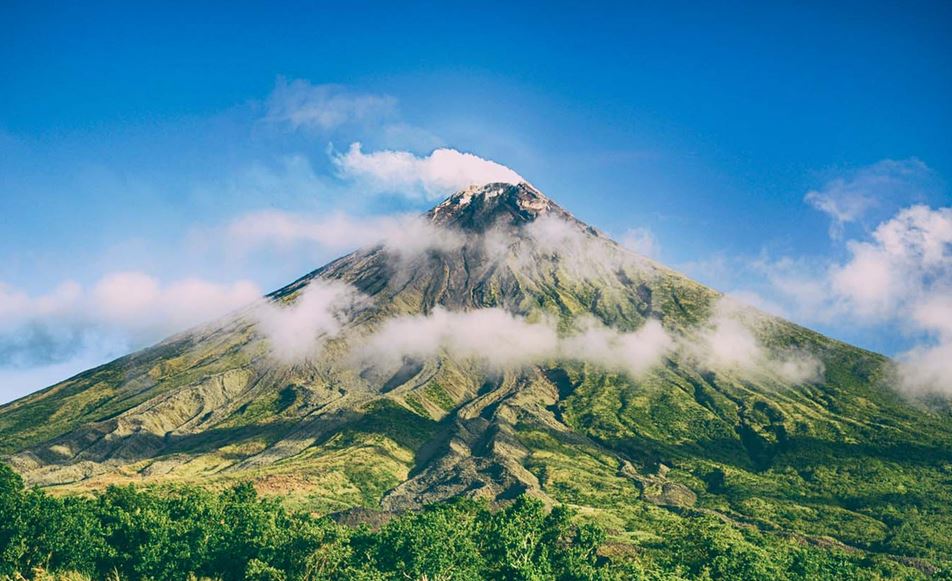
    Mauna Loa, the world’s largest active volcano has erupted after 38 years, spewing ash and debris, and covering the sky of Hawaii’s Big Island.

    Where is Mauna Loa?

    mauna

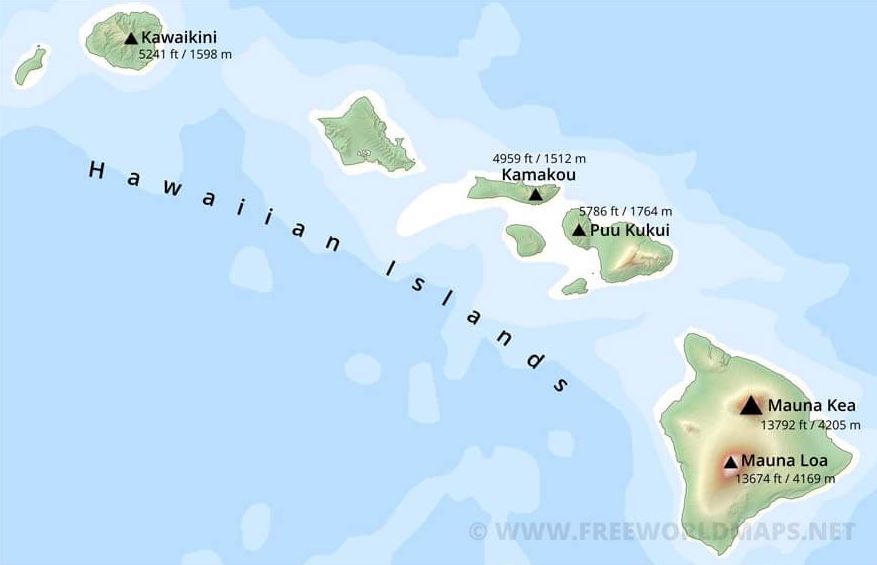
    • Mauna Loa is one of five volcanoes that together make up the Big Island of Hawaii (biggest being the Mauna Kea).
    • It is the southernmost island in the Hawaiian archipelago.
    • It’s not the tallest (that title goes to) but it’s the largest and makes up about half of the island’s land mass.
    • It sits immediately north of Kilauea volcano, which is currently erupting from its summit crater.

    Do you know?

    Any volcano that has erupted within the Holocene period (in the last 11,650 years) is considered to be “active” by scientists. “Dormant” volcanoes are those active volcanoes which are not in the process of erupting currently, but have the potential to do so in the future.

    Why do volcanoes erupt?

    • The deeper one goes under the surface of the Earth towards its core, the hotter it gets.
    • The geothermal gradient, the amount that the Earth’s temperature increases with depth, indicates heat flowing from the Earth’s warm interior to its surface.
    • At a certain depth, the heat is such that it melts rocks and creates what geologists call ‘magma’.
    • Magma is lighter than solid rock and hence it rises, collecting in magma chambers.
    • Chambers that have the potential to cause volcanic eruptions are found at a relatively shallow depth, between six to ten km under the surface.
    • As magma builds up in these chambers, it forces its way up through cracks and fissures in Earth’s crust. This is what we call a volcanic eruption.
    • The magma that surfaces on the Earth’s crust is referred to as lava.

    Why is the eruption of Mauna Loa so explosive?

    • Eruptions vary in intensity and explosiveness, depending on the composition of the magma.
    • In simple terms, runny magma makes for less explosive volcanic eruptions that typically are less dangerous.
    • Since the magma is runny, gasses are able to escape, leading to a steady but relatively gentle flow of lava out of the mouth of the volcano.
    • The eruption at Mauna Loa is of this kind. Since the lava flows out at a slow pace, people typically have enough time to move out of the way
    • . Geologists are also able to predict the flow of the lava depending on the incline and exact consistency it has.

    How is vulcanism measured?

    • The Volcanic Explosivity Index (VEI) is a scale used to measure the explosivity of a volcano.
    • It has a range of 1 to 8 with a higher VEI indicating more explosivity.
    • While the VEI of the current eruption at Mauna Loa is not known yet, the previous eruption in 1984 was deemed to have a VEI of 0.


    Also read about the Pacific Ring of Fire.


    Click and get your FREE Copy of CURRENT AFFAIRS Micro Notes

    (Click) FREE1-to-1 on-call Mentorship by IAS-IPS officers | Discuss doubts, strategy, sources, and more

  • Analyzing the approval of DMH-11

    DMH-11

    Context

    • Concerns regarding the recent recommendation for approval for the environmental release of genetically engineered (GE) mustard (“DMH-11 hybrid”) in India. The recommendation was made by the Genetic Engineering Appraisal Committee (GEAC).

    Click and get your FREE Copy of CURRENT AFFAIRS Micro Notes

    What is Dhara Mustard hybrid (DMH-11)?

    • DMH-11 is a hybrid variant of mustard developed by researchers at The Centre for Genetic Manipulation of Crop Plants, at the University of Delhi.
    • It is a hybrid variant that was developed without transgenic technology.
    • DMH-11 is a result of a cross between two varieties: Varuna and Early Heera-2. Such a cross wouldn’t have happened naturally and was done after introducing genes from two soil bacterium called barnase and barstar.
    • The result is DMH-11 (where 11 refers to the number of generations after which desirable traits manifest) that not only has better yield but is also fertile. DMH-11 is a transgenic crop because it uses foreign genes from a different species.

    DMH-11

    What are the concerns?

    • Not sufficient consideration: The potentially harmful long-term ecological and economic consequences of releasing DMH-11 have not received sufficient consideration.
    • Details of trials not made public: Details of the mandatory trials to ensure food and environmental safety which is a prerequisite before environmental release have not been made public.
    • A long-term assessment is yet to be done: a detailed long-term assessment of the potential social and economic benefits of using DMH-11, vis-à-vis its potential drawbacks, remains to be made. Without minimizing the importance of the last two aspects, the present note is restricted to highlighting the first aspect.

    DMH-11

    Examining the central Feature of DMH-11 

    • Gene for herbicide resistance (HT): A central feature of DMH-11 is that it carries a gene for herbicide resistance (also termed herbicide tolerance or HT). This fact has not received appropriate consideration.
    • Negatives outcomes: The deployment of herbicide-resistant or HT crops has been accompanied by deleterious outcomes in several places including the US, Australia, and Canada (so-called developed countries) as well as Argentina (a developing country).
    • Consequences of herbicide resistant weeds: The most well-established harmful consequence has been the spread of herbicide-resistant weeds across large tracts of agricultural land, which can spell disaster for the normal crop.

    Critical and technical analysis of DMH-11

    • On the use of Basta herbicide: The developers of DMH-11 have stated in their food and environmental safety assessment submission of 2016 that “Although GE mustard hybrid DMH-11 contains the bar gene conferring resistance to the herbicide Basta (phosphinothricin), Basta herbicide is required to be used only by seed producer for hybrid seed production (and) farmers are not required to spray Basta in the hybrid GE DMH-11 for weed control”.
    • Certain conditions placed by GEAC for environmental release of DMH-11:
    • The GEAC in its recommendation made on October 18 for environmental release of DMH-11 has accepted this position and also placed certain conditions for environmental release.
    1. Usage only under control: Usage of any formulation of herbicide is recommended only under controlled and specified conditions exclusively for hybrid seed production.
    2. Requires necessary permission: Usage of any formulation of herbicide is not permitted for cultivation in the farmer’s field under any situation and such use would require the necessary permission as per procedures and protocols of safety assessment of insecticides/herbicides by CIB&RC (Central Insecticide Board and Registration Committee).”
    • Knowing the facts GEAC ignoring the reports: In other words, GEAC assumes that farmers will use DMH-11 without adding herbicideeven though they know that it carries a gene for herbicide resistance. It ignores the known fact that there have been numerous recent reports in the Indian media of the illegal use of unapproved herbicide-resistant crops, which has been brought to the notice of the government.
    • Registers usage on a crop-wise basis is not enough: GEAC has considered the possible use of herbicide with DMH-11 merely as a matter of herbicide usage and referred its approval to the CIB&RC, which registers usage of herbicides on a crop-wise basis. It is not enough for GEAC to merely refer it for chemical registration since the CIB&RC is not the competent body for recommending approval of GM crops.
    • HT technology is different from conventional herbicides:
    1. On multiple counts, HT technology is qualitatively different from the conventional use of herbicides.
    2. They include the levels of herbicide used, which is much higher than in conventional use; its effect on the crop which is engineered to be resistant to the herbicide and thereby to tolerate much higher levels of herbicide and its agro-ecological impact including on agricultural biodiversity and insect populations.
    3. The scope of issues connected to use of herbicide with a herbicide-resistant crop places it squarely within the purview of GM regulation (that is, GEAC).

    Remarks: Developers Intent may not define how it is likely to be used

    • Notwithstanding the statement of the developers and its implicit acceptance by GEAC, DMH-11 does meet the definition of an HT crop.
    • The answers to two questions show this. Is DMH-11 herbicide tolerant? Yes. Is it a crop? Yes.
    • The intent of the developer on how it is meant to be used does not determine how it is actually likely to be used, especially if that usage appears to confer obvious advantages.
    • HT technology involves the use of a herbicide in far higher amounts than conventional herbicide treatments, high enough to kill all weeds in the field, leaving only the engineered crop to grow. Thereby, it replaces all other weed control measures.

    Conclusion

    • HT may be effective for a few years. But basic evolutionary considerations, as well as experience in other countries, shows that it imposes strong selective pressure for resistant weeds to emerge. They invariably do so in the course of time and spread rapidly. HT offers short-term benefits at the cost of long-term sustainability. Long term assessment is necessary before clearing its way.

    Mains Question

    Q. GM mustard is often in the news recently. Discuss the advantages and raised concerns over the usage of this new hybrid variety.

    (Click) FREE1-to-1 on-call Mentorship by IAS-IPS officers | Discuss doubts, strategy, sources, and more