💥Join UPSC 2027,2028 Mentorship (August Batch) + XFactor Notes & Microthemes PDF

Distribution: weekly

  • Panel bats for Equality in Child’s Guardianship

    A mother and father should have equal rights as guardians of their children and the Hindu Minority and Guardianship Act (HMGA), 1956 should be amended as it discriminates against women, a parliamentary panel has recommended in its report.

    Why in news now?

    • The said Act does NOT provide for joint guardianship.
    • NOR does it recognise the mother as the guardian of the minor legitimate child unless the father is deceased or is found unfit.
    • The Act gives preference to father over mother.
    • Thus it goes against the right to equality and right against discrimination envisaged under Articles 14 and 15 of the Constitution.

    What is Guardianship?

    • A guardian is a person appointed to look after another person or his property in India, as per the personal laws of the religion into which the minor was born.
    • He or she takes on the responsibility of caring for and protecting the person for whom he or she has been appointed guardian.
    • On behalf of the ward’s person and property, the guardian makes all legal decisions.

    Guardianship under the Hindu law

    • The Hindu Minority and Guardianship Act, 1956, regulates guardianship of minor children in Hindu law (covers Hindus, Sikhs, Jains and Buddhists in India).
    • A minor is described as anyone under the age of eighteen, according to Section 4(a) of the Act.
    • A guardian, according to Section 4(b) of the Act, is an individual who is responsible for the child’s care, property, or both.
    • The various forms of guardianship in India include:
    1. Natural guardian: Only three people are considered natural guardians, according to Section 6 of the 1956 Act: the mother, father, and husband.
    2. Testamentary guardian: A testamentary guardian is a guardian appointed in a will by the natural guardian. A father has the testamentary right to appoint a guardian for his legitimate children or property or both. If the mother is alive after the father’s death, she will be the guardian of the children, and the fathers will be restored only if the mother dies without appointing a guardian.
    3. Guardian appointed by the court: The court can appoint a guardian to a child under the Guardians and Wards Act, 1890 who would be called a certified guardian. The powers of the certified guardian are also stated in the Act. The Act confers power to district courts.
    4. De facto guardian: A de facto guardian is someone who has consistently shown an interest in caring for, handling, or managing the infant, his or her property, or both. A de facto guardian is not a legal guardian, and therefore, has no legal authority over the child or the child’s property, but he has assumed responsibility for the child and the property.
    5. Guardians by affinity: The guardianship of a minor widow by a relative within the degree of sapinda (generation of ancestors) is known as affinity guardianship.

    Guardianship under Muslim law

    The law of guardianship in Muslims came from certain verses in the religious texts.

    1. Natural guardian: The only father is considered the natural guardian of a child under Muslim law, and the mother is not considered a natural or other guardian even after the father’s death.
    2. Testamentary guardian: The term wali, guardian, amin, or kaim-mukam refers to a testamentary guardian.
    3. Guardian appointed by the court: When natural and testamentary guardians fail, the court has the right to appoint a guardian for the child. The Guardians and Wards Act of 1890 governs the appointment of a guardian for a child from any group.


    UPSC 2023 countdown has begun! Get your personal guidance plan now! (Click here)

  • What is PESA Act?

    A Political Party has declared a six-point “guarantee” for tribals in Gujarat’s Chhota Udepur district, including the “strict implementation” of The Panchayats (Extension to the Scheduled Areas) Act (PESA Act).

    What is PESA Act?

    • The PESA Act was enacted in 1996 to provide for the extension of the provisions of Part IX of the Constitution relating to the Panchayats to the Scheduled Areas.
    • Other than Panchayats, Part IX, comprising Articles 243-243ZT of the Constitution, contains provisions relating to Municipalities and Cooperative Societies.
    • Under the PESA Act, Scheduled Areas are those referred to in Article 244(1), which says that the provisions of the Fifth Schedule shall apply to the Scheduled Areas and Scheduled Tribes in states other than Assam, Meghalaya, Tripura, and Mizoram.
    • The Fifth Schedule provides for a range of special provisions for these areas.

    How is the PESA Act, 1996 supposed to work?

    • The PESA Act was enacted to ensure self-governance through Gram Sabhas (village assemblies) for people living in the Scheduled Areas.
    • It recognises the right of tribal communities to govern themselves through their own systems of self-government, and also acknowledges their traditional rights over natural resources.
    • In pursuance of this objective, the Act empowers Gram Sabhas to play a key role in approving development plans and controlling all social sectors.

    Special powers accorded by PESA Act includes the:

    1. Processes and personnel who implement policies
    2. Exercising control over minor (non-timber) forest resources
    3. Minor water bodies and minor minerals
    4. Managing local markets
    5. Preventing land alienation and
    6. Regulating intoxicants among other things

    States and PESA Act

    • State governments are expected to amend their respective Panchayati Raj Acts without making any law that would be inconsistent with the mandate of PESA.
    • Ten states — Andhra Pradesh, Chhattisgarh, Gujarat, Himachal Pradesh, Jharkhand, Madhya Pradesh, Maharashtra, Odisha, Rajasthan, and Telangana — have notified Fifth Schedule areas that cover partially or fully several districts in each of these states.
    • After the PESA Act was enacted, the central Ministry of Panchayati Raj circulated model PESA Rules.
    • So far, six states have notified these Rules, including Gujarat.

    What is the issue in Gujarat?

    • Gujarat notified the State PESA Rules in January 2017, and made them applicable in 4,503 gram sabhas under 2,584 village panchayats in 50 tribal talukas in eight districts of the state.
    • The provisions of the law deem the Gram Sabhas as “most competent”.
    • However, the Act has not been enforced in letter and spirit.
    • The Act lays down that the state must conduct elections in such a way that the tribal representation is to be dominant in the Gram Sabha Committees.
    • Yet again, there has been no attempt to proportionally increase the representation.

    Try this PYQ:

    Q.The Government enacted the Panchayat Extension to Scheduled Areas (PESA) Act in 1996. Which one of the following is not identified as its objective?

    (a) To provide self-governance

    (b) To recognize traditional rights

    (c) To create autonomous regions in tribal areas

    (d) To free tribal people from exploitation


    [wpdiscuz-feedback id=”x4jhcgg6m9″ question=”Please leave a feedback on this” opened=”1″]Post your answers here.[/wpdiscuz-feedback]


    UPSC 2023 countdown has begun! Get your personal guidance plan now! (Click here)
  • How to stop illegal mining of minor minerals

    Context

    While laws and monitoring have been made stringent for the mining of major minerals consequent to the unearthing of several related scams across the country, the fact is that rampant and illegal mining of minor minerals continues unabated.

    What are minor minerals?

    •  “Minor minerals” means building stones, gravel, ordinary clay, ordinary sand other than sand used for prescribed purposes, and any other mineral which the Central Government may, by notification in the Official Gazette, declare to be a minor mineral;
    • Regulation exclusively by States: Unlike major minerals, the regulatory and administrative powers to frame rules, prescribe rates of royalty, mineral concessions, enforcement, etc. are entrusted exclusively to the State governments.
    • The Environment Impact Assessment (EIA) Notifications of 1994 and 2006 made environmental clearance compulsory for mining in areas more than or equal to five hectares.
    • The EIA was amended in 2016 which made environmental clearance mandatory for mining in areas less than five hectares, including minor minerals.
    • The amendment also provided for the setting up of a District Environment Impact Assessment Authority (EIAA) and a District Expert Appraisal Committee (EAC).

    The problem of illegal mining of minor minerals

    • The United Nations Environment Programme, in 2019, ranked India and China as the top two countries where illegal sand mining has led to sweeping environmental degradation.
    • No comprehensive assessment: Despite this, there is no comprehensive assessment available to evaluate the scale of sand mining in India.
    • Damage to the environment: Regional studies such as those by the Centre for Science and Environment of the Yamuna riverbed in Uttar Pradesh have observed that increasing demand for soil has severely affected soil formation and the soil holding ability of the land, leading to a loss in marine life, an increase in flood frequency, droughts, and also degradation of water quality.
    • Loss to exchequer: It is not just damage to the environment. Illegal mining causes copious losses to the state exchequer.
    • A State-wide review of the reasons behind non-compliance suggests a malfunction of governance due to weak institutions, a scarcity of state resources to ensure enforcement, poorly drafted regulatory provisions, inadequate monitoring and evaluation mechanisms, and excessive litigation that dampens state administrative capacity.

    Way forward: Use of technology

    • Use of satellite imagery: Satellite imagery can be used to monitor the volume of extraction and also check the mining process.
    • Recently, the NGT directed some States to use satellite imagery to monitor the volume of sand extraction and transportation from the riverbeds.
    • Drones, IoT and blockchain: Additionally, drones, the internet of things (IoT) and blockchain technology can be leveraged to monitor mechanisms by using Global Positioning System, radar and Radio Frequency (RF) Locator.
    • State governments such as Gujarat and judicial directions such as the High Court of Madras have employed some of these technologies to check illegal sand mining.

    Conclusion

    Protecting minor minerals requires investment in production and consumption measurement and also monitoring and planning tools. To this end, technology has to be used to provide a sustainable solution.

    UPSC 2023 countdown has begun! Get your personal guidance plan now! (Click here)

  • Small Satellite Launch Vehicle (SSLV) launched into wrong Orbit

    The Indian Space Research Organisation (ISRO) has said that the satellite onboard its’ maiden Small Satellite Launch Vehicle “are no longer usable” after the SSLV-D1 placed them in an elliptical orbit instead of a circular one.

    What is SSLV?

    • The SSLV is a small-lift launch vehicle being developed by the ISRO with payload capacity to deliver:
    1. 600 kg to Low Earth Orbit (500 km) or
    2. 300 kg to Sun-synchronous Orbit (500 km)
    • It would help launching small satellites, with the capability to support multiple orbital drop-offs.
    • In future a dedicated launch pad in Sriharikota called Small Satellite Launch Complex (SSLC) will be set up.
    • A new spaceport, under development, near Kulasekharapatnam in Tamil Nadu will handle SSLV launches when complete.
    • After entering the operational phase, the vehicle’s production and launch operations will be done by a consortium of Indian firms along with NewSpace India Limited (NSIL).

    Vehicle details

    (A) Dimensions

    • Height: 34 meters
    • Diameter: 2 meters
    • Mass: 120 tonnes

    (B) Propulsion

    • It will be a four stage launching vehicle.
    • The first three stages will use Hydroxyl-terminated polybutadiene (HTPB) based solid propellant, with a fourth terminal stage being a Velocity-Trimming Module (VTM).

    SSLV vs. PSLV: A comparison

    • The SSLV was developed with the aim of launching small satellites commercially at drastically reduced price and higher launch rate as compared to Polar SLV (PSLV).
    • The projected high launch rate relies on largely autonomous launch operation and on overall simple logistics.
    • To compare, a PSLV launch involves 600 officials while SSLV launch operations would be managed by a small team of about six people.
    • The launch readiness period of the SSLV is expected to be less than a week instead of months.
    • The SSLV can carry satellites weighing up to 500 kg to a low earth orbit while the tried and tested PSLV can launch satellites weighing in the range of 1000 kg.
    • The entire job will be done in a very short time and the cost will be only around Rs 30 crore for SSLV.

    Significance of SSLV

    • SSLV is perfectly suited for launching multiple microsatellites at a time and supports multiple orbital drop-offs.
    • The development and manufacture of the SSLV are expected to create greater synergy between the space sector and private Indian industries – a key aim of the space ministry.

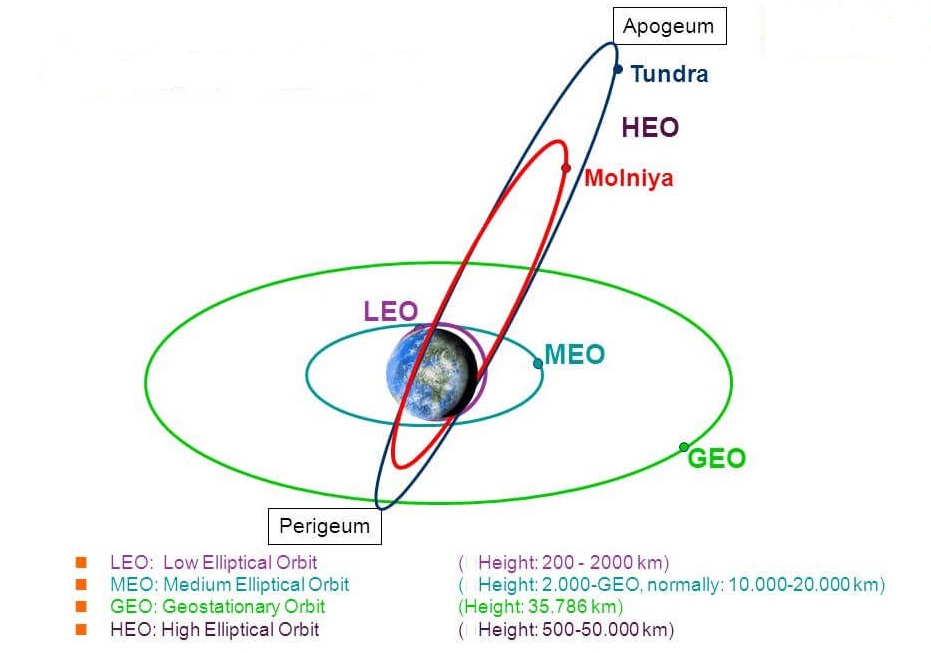
    Back2Basics: Various Orbits of Satellites

    [1] Geostationary orbit (GEO)

    • Satellites in geostationary orbit (GEO) circle Earth above the equator from west to east following Earth’s rotation – taking 23 hours 56 minutes and 4 seconds – by travelling at exactly the same rate as Earth.
    • This makes satellites in GEO appear to be ‘stationary’ over a fixed position.
    • In order to perfectly match Earth’s rotation, the speed of GEO satellites should be about 3 km per second at an altitude of 35 786 km.
    • This is much farther from Earth’s surface compared to many satellites.
    • GEO is used by satellites that need to stay constantly above one particular place over Earth, such as telecommunication satellites.
    • Satellites in GEO cover a large range of Earth so as few as three equally-spaced satellites can provide near-global coverage.

    [2] Low Earth orbit (LEO)

    • A low Earth orbit (LEO) is, as the name suggests, an orbit that is relatively close to Earth’s surface.
    • It is normally at an altitude of less than 1000 km but could be as low as 160 km above Earth – which is low compared to other orbits, but still very far above Earth’s surface.
    • Unlike satellites in GEO that must always orbit along Earth’s equator, LEO satellites do not always have to follow a particular path around Earth in the same way – their plane can be tilted.
    • This means there are more available routes for satellites in LEO, which is one of the reasons why LEO is a very commonly used orbit.
    • It is most commonly used for satellite imaging, as being near the surface allows it to take images of higher resolution.
    • Satellites in this orbit travel at a speed of around 7.8 km per second; at this speed, a satellite takes approximately 90 minutes to circle Earth.

    [3] Medium Earth orbit (MEO)

    • Medium Earth orbit comprises a wide range of orbits anywhere between LEO and GEO.
    • It is similar to LEO in that it also does not need to take specific paths around Earth, and it is used by a variety of satellites with many different applications.
    • It is very commonly used by navigation satellites, like the European Galileo system of Europe.
    • It uses a constellation of multiple satellites to provide coverage across large parts of the world all at once.

    [4] Polar Orbit

    • Satellites in polar orbits usually travel past Earth from north to south rather than from west to east, passing roughly over Earth’s poles.
    • Satellites in a polar orbit do not have to pass the North and South Pole precisely; even a deviation within 20 to 30 degrees is still classed as a polar orbit.
    • Polar orbits are a type of low Earth orbit, as they are at low altitudes between 200 to 1000 km.

    [5] Sun-synchronous orbit (SSO)

    • SSO is a particular kind of polar orbit. Satellites in SSO, travelling over the polar regions, are synchronous with the Sun.
    • This means they are synchronised to always be in the same ‘fixed’ position relative to the Sun.
    • This means that the satellite always visits the same spot at the same local time.
    • Often, satellites in SSO are synchronised so that they are in constant dawn or dusk – this is because by constantly riding a sunset or sunrise, they will never have the Sun at an angle where the Earth shadows them.
    • A satellite in a Sun-synchronous orbit would usually be at an altitude of between 600 to 800 km. At 800 km, it will be travelling at a speed of approximately 7.5 km per second.

    [6] Transfer orbits and geostationary transfer orbit (GTO)

    • Transfer orbits are a special kind of orbit used to get from one orbit to another.
    • Often, the satellites are instead placed on a transfer orbit: an orbit where, by using relatively little energy from built-in motors, the satellite or spacecraft can move from one orbit to another.
    • This allows a satellite to reach, for example, a high-altitude orbit like GEO without actually needing the launch vehicle.
    • Reaching GEO in this way is an example of one of the most common transfer orbits, called the geostationary transfer orbit (GTO).


    UPSC 2023 countdown has begun! Get your personal guidance plan now! (Click here)

  • What are Foreigners’ Tribunals?

    The Guwahati High Court has asked the Centre and the Assam government to collectively decide whether or not the ministerial staff for 200 additional Foreigners’ Tribunals (FT) would be appointed.

    Do you know?

    The Guwahati High Court has largest jurisdiction in terms of states, with its area covering the states of Assam, Arunachal Pradesh, Nagaland, and Mizoram.

    What is Foreigners Tribunal?

    • The foreigners tribunals are quasi-judicial bodies, unique to Assam, to determine if a person staying illegally is a “foreigner” or not.
    • With Assam’s NRC as the backdrop, the Ministry of Home Affairs (MHA) has laid out specific guidelines to detect, detain and deport foreign nationals staying illegally across the country.
    • The MHA has amended the Foreigners (Tribunals) Order, 1964, and has empowered district magistrates in all States and UTs to set up tribunals to decide whether a person staying illegally in India is a foreigner or not.
    • Earlier, such powers to constitute tribunals vested with the Centre only.

    Why need such tribunals?

    • In other parts, once a ‘foreigner’ has been apprehended by the police for staying illegally, he or she is produced before the local court under the Passport Act, 1920, or the Foreigners Act, 1946.
    • The punishment ranges from imprisonment of three months to eight years.
    • Once the accused have completed the sentence, the court orders their deportation, and they are moved to detention centres till the country of origin accepts them.

    What was the last amendment?

    • The 1964 order on Constitution of Tribunals said: “The Central Government may by order, refer the question as to whether a person is not a foreigner within meaning of the Foreigners Act, 1946 to a Tribunal to be constituted for the purpose.
    • The amended order issued says – “for words Central Government may,’ the words ‘the Central Government or the State Government or the UT administration or the District Collector or the District Magistrate may’ shall be substituted.”

    Impact of the Amendment

    • The amended Foreigners (Tribunal) Order, 2019 also empowers individuals to approach the Tribunals.
    • Earlier only the State administration could move the Tribunal against a suspect, but with the final NRC about to be published and to give adequate opportunity to those not included, this has been done.
    • If a person doesn’t find his or her name in the final list, they could move the Tribunal.
    • The amended order also allows District Magistrates to refer individuals who haven’t filed claims against their exclusion from NRC to the Tribunals to decide if they are foreigners or not.
    • Opportunity will also be given to those who haven’t filed claims by referring their cases to the Tribunals.
    • Fresh summons will be issued to them to prove their citizenship.


    UPSC 2023 countdown has begun! Get your personal guidance plan now! (Click here)
  • Working of the Supreme Court Collegium

    Why in news?

    • The Ramana Collegium has been particularly successful.
    • Meeting frequently and working quickly, they took the perennial problem of judicial vacancies by its horns and turned it around.

    Success of Ramana Collegium

    • The collegium was able to recommend numerous judicial appointments and scripted history by getting nine Supreme Court judges appointed in one go.
    • Of the nine, Justice B.V. Nagarathna, is in line to be the first woman CJI in 2027.

    What exactly is the Collegium System?

    • The collegium system was born out of years of friction between the judiciary and the executive.
    • The hostility was further accentuated by instances of court-packing (the practice of changing the composition of judges in a court), mass transfer of HC judges and two supersessions to the office of the CJI in the 1970s.
    • The Three Judges cases saw the evolution of the collegium system.

    Evolution: The Judges Cases

    • First Judges Case (1981) ruled that the “consultation” with the CJI in the matter of appointments must be full and effective.
    • However, it rejected the idea that the CJI’s opinion, albeit carrying great weight, should have primacy.
    • Second Judges Case (1993) introduced the Collegium system, holding that “consultation” really meant “concurrence”.
    • It added that it was not the CJI’s individual opinion, but an institutional opinion formed in consultation with the two senior-most judges in the Supreme Court.
    • Third Judges Case (1998): On a Presidential Reference for its opinion, the Supreme Court, in the Third Judges Case (1998) expanded the Collegium to a five-member body, comprising the CJI and four of his senior-most colleagues.

    How does the collegium system work?

    • The collegium of the CJI and four senior-most judges of the Supreme Court make recommendations for appointments to the apex court and High Courts.
    • The collegium can veto the government if the names are sent back by the latter for reconsideration.
    • The basic tenet behind the collegium system is that the judiciary should have primacy over the government in matters of appointments and transfers in order to remain independent.

    The procedure followed by the Collegium

    Appointment of CJI

    • The President of India appoints the CJI and the other SC judges.
    • As far as the CJI is concerned, the outgoing CJI recommends his successor.
    • In practice, it has been strictly by seniority ever since the supersession controversy of the 1970s.
    • The Union Law Minister forwards the recommendation to the PM who, in turn, advises the President.

    Other SC Judges

    • For other judges of the top court, the proposal is initiated by the CJI.
    • The CJI consults the rest of the Collegium members, as well as the senior-most judge of the court hailing from the High Court to which the recommended person belongs.
    • The consultees must record their opinions in writing and it should form part of the file.
    • The Collegium sends the recommendation to the Law Minister, who forwards it to the Prime Minister to advise the President.

    For High Courts

    • The CJs of High Courts are appointed as per the policy of having Chief Justices from outside the respective States. The Collegium takes the call on the elevation.
    • High Court judges are recommended by a Collegium comprising the CJI and two senior-most judges.
    • The proposal, however, is initiated by the Chief Justice of the High Court concerned in consultation with two senior-most colleagues.
    • The recommendation is sent to the Chief Minister, who advises the Governor to send the proposal to the Union Law Minister.

    Does the Collegium recommend transfers too?

    • Yes, the Collegium also recommends the transfer of Chief Justices and other judges.
    • Article 222 of the Constitution provides for the transfer of a judge from one High Court to another.
    • When a CJ is transferred, a replacement must also be simultaneously found for the High Court concerned. There can be an acting CJ in a High Court for not more than a month.
    • In matters of transfers, the opinion of the CJI “is determinative”, and the consent of the judge concerned is not required.
    • However, the CJI should take into account the views of the CJ of the High Court concerned and the views of one or more SC judges who are in a position to do so.
    • All transfers must be made in the public interest, that is, “for the betterment of the administration of justice”.

    Loopholes in the Collegium system

    • Lack of Transparency: Opaqueness and a lack of transparency, and the scope for nepotism are cited often.
    • Judges appointing Judge: The attempt made to replace it with a ‘National Judicial Appointments Commission’ was struck down by the court in 2015 on the ground that it posed a threat to the independence of the judiciary.
    • Criteria: Some do not believe in full disclosure of reasons for transfers, as it may make lawyers in the destination court chary of the transferred judge. It has even been accused of nepotism.

    Way ahead

    • In respect of appointments, there has been an acknowledgment that the “zone of consideration” must be expanded to avoid criticism that many appointees hail from families of retired judges.
    • The status of a proposed new memorandum of procedure, to infuse greater accountability, is also unclear.
    • Even the majority opinions admitted the need for transparency, now Collegiums’ resolutions are now posted online, but reasons are not given.

    Back2Basics:


    UPSC 2023 countdown has begun! Get your personal guidance plan now! (Click here)

  • Indian Virtual Herbarium, biggest database of country’s flora, is a global hit

    With details of about one lakh plant specimens, the Indian Virtual Herbarium, the biggest virtual database of flora in the country, is generating a lot of interest and turning out to be an eye-catching endeavour.

    Indian Virtual Herbarium

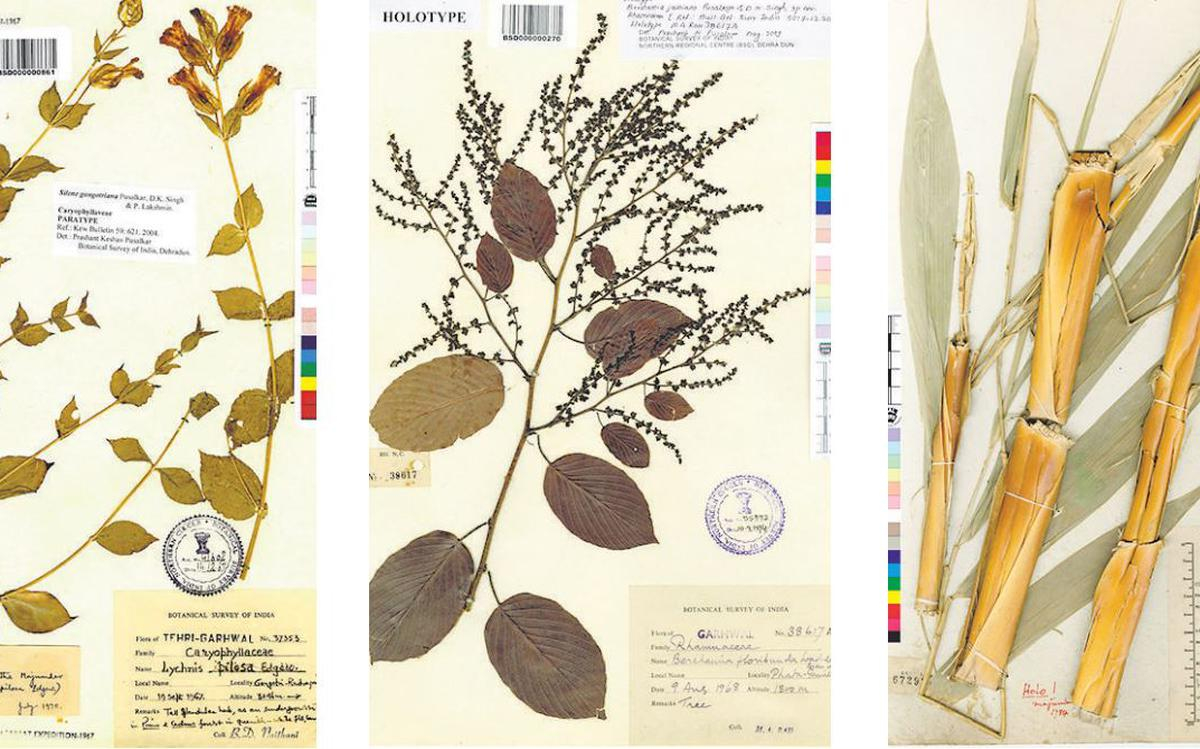
    • A herbarium specimen is consists of dried plant parts with labelled information on Scientific name and collection data.
    • It has immense use in plant identification, systematics studies and ecological studies.
    • The Botanical Survey of India has more than 30,00,000 herbarium specimens persevered in different herbaria located in different parts of the country.
    • Developed by scientists of the Botanical Survey of India (BSI), the herbarium was inaugurated by Union Minister of Environment Forest and Climate Change in Kolkata last month.

    Why in news?

    • Since launch, the portal ivh.bsi.gov.in has had nearly two lakh hits from 55 countries.
    • The portal includes about one lakh images of herbarium specimens.
    • Each record in the digital herbarium includes an image of the preserved plant specimen, scientific name, collection locality, and collection date, collector name, and barcode number.
    • The digital herbarium includes features to extract the data State-wise, and users can search plants of their own States, which will help them identify regional plants and in building regional checklists.

    Significance of the herbaria

    • Scientists say that there are approximately three million plant specimens in the country which are with different herbaria located at zonal centres of the BSI.
    • About 52% of our type specimens are from foreign nations and collected from 82 countries of the world during the British-era.
    • The herbarium is also deeply linked with the botanical history of the country.
    • The portal provides most valuable historical collections of botanists like William Roxburgh, Nathaniel Wallich and Joseph Dalton Hooker, considered the founding fathers of botany in India.
    • The digital herbarium has some of the oldest botanical specimens dating as early as 1696.


    UPSC 2023 countdown has begun! Get your personal guidance plan now! (Click here)

  • What is Genome Sequencing?

    Researchers from across the world have made available over 650 complete genome sequences of monkeypox isolates to date in public domain databases including GISAID and GenBank.

    What is Genome Sequencing?

    • Genome sequence is the unique code of genetic material of any organism, and determines the characteristic of any organism.
    • Whole genome sequencing is the process of determining the complete DNA sequence of an organism’s genome at a single time.
    • The gene composition of novel coronavirus, for instance, is different from that of the influenza virus. Every organism has a unique genome sequence.
    • Laboratories in various countries have been isolating and sharing the genome sequences of the virus on an international platform.

    Why are so many genome sequences being isolated?

    • When viruses multiply, or reproduce, there is a copying mechanism that transfers the gene information to the next generation.
    • However, no copying mechanism is perfect. When the virus multiplies, there will be small changes, which are called mutations.
    • These mutations accumulate over time, and after prolonged periods, are responsible for evolution into new organisms.
    • Within a single reproduction, the changes are extremely minor. More than 95 per cent of the gene structure remains the same.

    How does it help scientists?

    • However, the small changes that occur are crucial to understanding the nature and behaviour of the organism.
    • In this case, for example, the small changes could provide scientists with information about the origin, transmission, and impact of the virus on the patient.
    • It could also hold clues to the differing effects the virus could have on patients with different health parameters.

    Accelerated evolution of Monkeypox

    • The monkeypox virus has a DNA genome of around 2,00,000 base pairs, roughly six times larger than that of SARS-CoV-2.
    • Like other viruses, the monkeypox virus evolves by the accumulation of genetic errors, or mutations, in its genome when it replicates inside a host.
    • Being a DNA virus, the monkeypox virus like other poxviruses was believed to have a small rate of accumulating genetic changes compared to viruses with an RNA genome like SARS-CoV-2, which have a much larger rate of mutations.
    • For poxviruses, this rate is estimated to be as low as a couple of genetic changes every year.
    • A recent study, however, revealed that the observed rate of genetic changes in the virus was higher than expected — average of around 50 genetic changes.

    Key findings

    Ans. APOBEC3 protein

    • The study also suggests that several mutations that have been identified in the new sequences of the monkeypox virus.
    • This may have emerged due to interaction between the virus genome and an important family of proteins coded by the human genome known as the Apolipoprotein B Editing Complex (or APOBEC3).
    • These proteins offer protection against certain viral infections by editing the genome sequence of the virus while it replicates in the cell.
    • Some researchers suggest that many of the genetic mutations in the monkeypox genomes from the current outbreak are relics of the effect of APOBEC3.

    Conclusion

    • Genomic surveillance of pathogens provides interesting insights by following a molecular approach for contact tracing and understanding the transmission of the virus across the world.
    • As cases of monkeypox continue to rise, it is therefore important to strengthen the genomic surveillance for the monkeypox virus.
    • Since data from the present outbreak suggest a sustained human-to-human transmission, continuous genomic surveillance is important to understand the evolution and adaptation of the virus, apart from providing useful data to epidemiologists.
    • With COVID-19 continuing unabated and monkeypox around the corner, the time has never been better, and the need never more acute, to build a sustainable system for genomic surveillance in India.


    UPSC 2023 countdown has begun! Get your personal guidance plan now! (Click here)


  • States holding up results of Economic Census: Centre

    The Centre has blamed the States for a prolonged delay in releasing the findings of the Seventh Economic Census, a critical compendium of formal and informal non-farm enterprises operating across the country, in a submission to the Parliament.

    What is National Economic Census?

    • In 1976, GoI launched a planning scheme called Economic Census and Surveys.
    • It is the census of the Indian economy through counting all entrepreneurial units in the country which involved in any economic activities of either agricultural or non-agricultural sector which are engaged in production and/or distribution of goods and/or services not for the sole purpose of own consumption.
    • It provides detailed information on operational and other characteristics such as number of establishments, number of persons employed, source of finance, type of ownership etc.
    • This information used for micro level/ decentralized planning and to assess contribution of various sectors of the economy in the GDP.

    Censuses till date

    • Total Six Economic Censuses (EC) has been conducted till date.
    • In 1977 CSO conducted First economic census in collaboration with the Directorate of Economics & Statistics (DES) in the States/UTs.
    • The Second EC was carried out in 1980 followed by the Third EC in 1990. The fourth edition took place in 1998 while the fifth EC was held in 2005.
    • The Sixth edition of the Economic Census was conducted in 2013.


    UPSC 2023 countdown has begun! Get your personal guidance plan now! (Click here)

  • MEA lashes OIC for remark on Kashmir

    Context: India has said the statement by the Organisation for Islamic Cooperation on Jammu and Kashmir “reeked of bigotry”.

    What did the MEA say?

    • The Ministry of External Affairs said the Saudi Arabia -based OIC continued to issue statements on J&K at the behest of a serial violator of human rights and notorious promoter of terrorism, indicating Pakistan.

    What is OIC?

    • The OIC — formerly Organisation of the Islamic Conference — is the world’s second-largest inter-governmental organization after the UN, with a membership of 57 states.
    • The OIC’s stated objective is “to safeguard and protect the interests of the Muslim world in the spirit of promoting international peace and harmony among various people of the world”.
    • OIC has reserved membership for Muslim-majority countries. Russia, Thailand, and a couple of other small countries have Observer status.

    India and OIC

    • At the 45th session of the Foreign Ministers’ Summit in 2018, Bangladesh suggested that India, where more than 10% of the world’s Muslims live, should be given Observer status.
    • In 1969, India was dis-invited from the Conference of Islamic Countries in Rabat, Morocco at Pakistan’s behest.
    • Then Agriculture Minister Fakhruddin Ali Ahmed was dis-invited upon arrival in Morocco after Pakistan President Yahya Khan lobbied against Indian participation.

    Recent developments

    • In 2019, India made its maiden appearance at the OIC Foreign Ministers’ meeting in Abu Dhabi, as a “guest of honor”.
    • This first-time invitation was seen as a diplomatic victory for New Delhi, especially at a time of heightened tensions with Pakistan following the Pulwama attack.
    • Pakistan had opposed the invitation to Swaraj and it boycotted the plenary after the UAE turned down its demand to rescind the invitation.

    What is the OIC’s stand on Kashmir?

    • It has been generally supportive of Pakistan’s stand on Kashmir and has issued statements criticizing India.
    • Last year, after India revoked Article 370 in Kashmir, Pakistan lobbied with the OIC for their condemnation of the move.
    • To Pakistan’s surprise, Saudi Arabia and the UAE — both top leaders among the Muslim countries — issued nuanced statements, and were not as harshly critical of New Delhi as Islamabad had hoped.
    • Since then, Islamabad has tried to rouse sentiments among the Islamic countries, but only a handful of them — Turkey and Malaysia — publicly criticized India.

    How has India been responding?

    • India has consistently underlined that J&K is an integral part of India and is a matter strictly internal to India.
    • The strength with which India has made this assertion has varied slightly at times, but never the core message.
    • It has maintained its “consistent and well-known” stand that the OIC had no locus standi.
    • This time, India went a step ahead and said the grouping continues to allow itself to be used by a certain country “which has a record on religious tolerance, radicalism, and persecution of minorities”.

    OIC members and India

    • Individually, India has good relations with almost all member nations. Ties with the UAE and Saudi Arabia, especially, have looked up significantly in recent years.
    • The OIC includes two of India’s close neighbors, Bangladesh and Maldives.
    • Indian diplomats say both countries privately admit they do not want to complicate their bilateral ties with India on Kashmir but play along with OIC.

    Way ahead

    • India now sees the duality of the OIC as untenable, since many of these countries have good bilateral ties and convey to India to ignore OIC statements.
    • But these countries sign off on the joint statements which are largely drafted by Pakistan.
    • India feels it important to challenge the double-speak since Pakistan’s campaign and currency on the Kashmir issue has hardly any takers in the international community.


    UPSC 2023 countdown has begun! Get your personal guidance plan now! (Click here)