💥Join UPSC 2027,2028 Mentorship (July Batch) + XFactor Notes & Microthemes PDF

Distribution: weekly

  • Challenges facing cooperative sector in India

    Context

    The article delved into the past of the cooperative movement and give some suggestions to resolve the issues facing cooperatives in India.

    Background of cooperatives

    • Friedrich Raiffeisen, who along with compatriot Schulze-Delitzsch in Germany, and Luzzatti of Italy, pioneered cooperatives in Europe.
    • Cooperatives in India: The Governor of the Madras Presidency, Lord Wenlock, was the first to seriously attempt replicating European cooperatives in India.
    • Principles: Raiffeisen based them on the principles of self-help, self-governance, and self-responsibility.
    • Nicholson wrote that the ‘future of rural credit lies with those who being of the people, live among the people, and yet by their intelligence, prescience and energy, are above the people’.
    •  Plunkett, in his foreword to Eleanor Hough’s The Cooperative Movement in India (1932), commented that what India had was not a movement, but a policy.
    • It was ‘created by ‘resolutions of the Central Government’ unlike Europe.
    • Increasing government control: John Matthai wrote in 1925 that the challenge was to loosen government grip on cooperation over the years.
    • But, government control has only increased, violating a core cooperative principle of political neutrality.
    • This reflects a collective failure of the political class.

    Challenges facing cooperatives

    • After Independence, cooperative institutions became an instrument of planning and state action.
    • Not surprisingly, successful Indian cooperatives such as the Gujarat Cooperative Milk Marketing Federation Ltd (GCMMF)/Amul, Indian Farmers Fertiliser Cooperative Limited (IFFCO) and Krishak Bharati Cooperative Limited (KRIBHCO), are outside government control.
    • Globally, seven of the top 10 cooperatives by asset size are from the financial sector.
    • The Indian financial sector is nowhere in the picture going by asset size.
    •  Cooperatives have also become avenues for regulatory arbitrage, circumventing lending and anti-money laundering regulations.
    •  The committees which examined cooperative banking suffered from the top-down quality that Plunkett and others frowned upon.
    • Recent initiatives such as an umbrella organisation for urban cooperatives and a new Ministry of Cooperation at the Centre threaten to further this approach in the absence of safeguards.

    Suggestions

    • First, the powers of the RCS need to be scaled back.
    •  In almost all States, the RCS has become an instrument of inspection and domination, one which imposes uniform by-laws, and amends them when individual societies do not fall in line.
    •  There is a need to transfer work from the RCS to cooperative federations — as in Singapore.
    • Second, the rural-urban dichotomy in the regulatory treatment of cooperatives is specious and outdated.
    • Such differences are immaterial when regulation is to be based on the cooperative nature of organisations.
    • Third, the regulation and the supervision of cooperative banks should move to a new body from the Reserve Bank of India (RBI) for urban banks and the National Bank for Agriculture and Rural Development (NABARD) for rural banks.
    • Fourth, lessons from the Netherlands, where cooperative banks owe their success to a segmented market, are pertinent.
    • In India, adopting a multi-agency approach, especially after bank nationalisation, has affected the efficiency of both commercial and cooperative banks.
    • Commercial bank-cooperative sector linkages at various levels could alternatively provide better synergies.

    Conclusion

    The cooperative sector in India faces challenges on various fronts. There is a need for implementing the changes suggested above to play an important role expected from it in the economy.

    UPSC 2022 countdown has begun! Get your personal guidance plan now! (Click here)

  • Arms Race towards Hypersonic Weapons

    China recently tested a nuclear-capable hypersonic missile while Russia announced that it had successfully test-launched a Tsirkon hypersonic cruise missile in early October.

    What are Hypersonic Weapons?

    • The speed of sound is Mach 1, and speeds upto Mach 5 are supersonic and speeds above Mach 5 are hypersonic.
    • They are manoeuvrable weapons that can fly at speeds in excess of Mach 5, five times the speed of sound.
    • A number of other countries – including Australia, India, France, Germany, and Japan—are developing hypersonic weapons technology.

    Features of HSWs

    • Trajectory: Ballistic Missiles are long-range missile that leaves the earth’s atmosphere before re-entry, pursuing a parabolic trajectory towards its target
    • Maneuverability: HSW travel within the atmosphere and can manoeuvre midway which combined with their high speeds make their detection and interception extremely difficult.
    • Stealth: Radars and air defences cannot intercept them till they are very close. They can penetrate most missile defences and further compress the timelines for response by a nation under attack.

    Types of Hypersonic Weapons

    There are two classes of hypersonic weapons:

    1. Hypersonic glide vehicles (HGV): They are launched from a rocket before gliding to a target.
    2. Hypersonic cruise missiles (HCM): They are powered by high-speed, air-breathing engines, or scramjets, after acquiring their target.

    Where does the US stand?

    • The US has active hypersonic development programs.
    • It is said to be lagging behind China and Russia because most US hypersonic weapons are not being designed for use with a nuclear warhead.
    • It is in process of developing prototypes to assist in the evaluation of potential weapon system concepts and mission sets.

    Hypersonic program in India

    • HSTDV program: India is developing an indigenous, dual-capable hypersonic cruise missile as part of its Hypersonic Technology Demonstrator Vehicle (HSTDV) program.
    • Capacity: India operates approximately 12 hypersonic wind tunnels and is capable of testing speeds of up to Mach 13.
    • In-operation: The DRDO has successfully tested a Mach 6 scramjet in June 2019 and September 2020 using the demonstrated scramjet engine technology.

    DRDO has validated many associated crucial technologies such as:

    1. Aerodynamic configuration for hypersonic maneuvers
    2. Use of scramjet propulsion for ignition and sustained combustion at the hypersonic flow
    3. Thermo-structural characterization of high-temperature materials
    4. Separation mechanism at hypersonic velocities has been validated

    Conclusion

    • There are rising tensions between the US, China and Russia worsening the geopolitical situation worldwide.
    • The focus for hypersonic weapons is only set to accelerate more countries to invest significant resources in their design and development.

    Back2Basics:


    UPSC 2022 countdown has begun! Get your personal guidance plan now! (Click here)

  • When can an individual get Statutory Bail?

    The National Investigation Agency (NIA) has approached the Supreme Court against a Bombay High Court order granting bail to an advocate and activist.

    What is the case?

    • In its bail order, the court has asked the NIA Court to decide the conditions for her release.
    • The activist was given ‘default bail’.
    • The case highlights the nuances involved in a court determining the circumstances in which statutory bail is granted or denied, even though it is generally considered “an indefeasible right”.

    What is default bail?

    • This is enshrined in Section 167(2) of the Code of Criminal Procedure.
    • Also known as statutory bail, this is a Right to Bail that accrues when the police fail to complete investigation within a specified period in respect of a person in judicial custody.
    • When it is not possible for the police to complete an investigation in 24 hours, the police produce the suspect in court and seek orders for either police or judicial custody.

    When is the Bail granted?

    • For most offences, the police have 60 days to complete the investigation and file a final report before the court.
    • However, where the offence attracts death sentence or life imprisonment, or a jail term of not less than 10 years, the period available is 90 days.
    • In other words, a magistrate cannot authorise a person’s judicial remand beyond the 60-or 90-day limit.
    • At the end of this period, if the investigation is not complete, the court shall release the person “if he is prepared to and does furnish bail”.

    How does the provision vary for special laws?

    The extension of time is not automatic but requires a judicial order.

    • Ordinary law (IPC/CrPC): The 60- or 90-day limit is only for ordinary penal law.
    • Narcotic Drugs and Psychotropic Substances Act: In NDPS Act, the period is 180 days. However, in cases involving substances in commercial quantity, the period may be extended up to one year.
    • Unlawful Activities (Prevention) Act: In UAPA, the default limit is 90 days only. The court may grant an extension of another 90 days, if it is satisfied that the progress made in the investigation and giving reasons to keep the accused in further custody.

    What are the laid-down principles on this aspect?

    • A matter of Right: Default or statutory bail is an indefeasible right’, regardless of the nature of the crime liberty under Article 21 of the Constitution.
    • Stipulated period calculation: The stipulated period within which the charge sheet has to be filed begins from the day the accused is remanded for the first time. It includes days undergone in both police and judicial custody, but not days spent in house-arrest.
    • Voluntary: There is no automatic bail.

    Try this similar PYQ from CSP 2021:

    Q. With reference to India, consider the following statements:

    1. When a prisoner makes a sufficient case, parole cannot be out denied to such prisoner because it becomes a matter of his/her right.
    2. State Governments have their own Prisoners Release on Parole Rules.

    Which of the statements given above is/are correct?

    (a) 1 only

    (b) 2 only

    (c) Both 1 and 2

    (d) Neither 1 nor 2


    [wpdiscuz-feedback id=”r8o9gfqh8r” question=”Please leave a feedback on this” opened=”1″]Post your answers here.[/wpdiscuz-feedback]


    UPSC 2022 countdown has begun! Get your personal guidance plan now! (Click here)
  • Dhawan-1: India’s first privately developed Cryogenic Rocket

    Skyroot Aerospace successfully tested Dhawan-1 last month. It became the country’s first privately developed fully cryogenic rocket engine.

    Dhawan-1

    • The indigenous engine was developed using 3D printing with a superalloy.
    • It runs on two high-performance rocket propellants — liquid natural gas (LNG) and liquid oxygen (LoX).
    • This was after successfully designing and developing the solid propulsion rocket engine, the first private firm in the country to do so.

    Other projects by Skyroot

    • Skyroot is working simultaneously on different stages of both solid propulsion and liquid propulsion engines.
    • It is named after eminent scientists, like Kalam (Abdul Kalam) series for the former and Dhawan (Satish Dhawan).
    • The launch vehicles are named after Vikram Sarabhai.


    UPSC 2022 countdown has begun! Get your personal guidance plan now! (Click here)

  • Tribes in news: Konyak

    An angry mob allegedly vandalized an Assam Rifles camp and the office of the Konyak Union in Nagaland’s Mon district.

    Konyak Tribe

    • With a population of roughly 3 lakh, the area inhabited by the Konyaks extends into Arunachal Pradesh, with a sizeable population in Myanmar as well.
    • They are known to be one of the fiercest warrior tribes in Nagaland.
    • The Konyaks were the last to give up the practice of head-hunting – severing heads of enemies after attacking rival tribes – as late as the 1980s.

    Significance in Naga Peace Process

    • Mon is the only district in Nagaland where the separatist group has not been able to set up base camps, largely due to resistance from the Konyaks.
    • The Konyaks therefore, are imperative for a smooth resolution of the peace talks, as well as the post-talk peace process in the state.

    Also read:

    Naga Peace Accord


    UPSC 2022 countdown has begun! Get your personal guidance plan now! (Click here)

  • [pib] Project RE-HAB

    Buoyed by the success of its innovative Project RE-HAB (Reducing Elephant-Human Attacks using Bees) in Karnataka, Khadi and Village Industries Commission (KVIC) has now replicated the project in Assam.

    Project RE-HAB

    • Project RE-HAB is a sub-mission of KVIC’s National Honey Mission.
    • Under the project, “Bee-fences” are created by setting up bee boxes in the passageways of elephants to block their entrance to human territories.
    • The boxes are connected with a string so that when elephants attempt to pass through, a tug or pull causes the bees to swarm the elephant herds and dissuade them from progressing further.
    • It is a cost-effective way of reducing human-wild conflicts without causing any harm to the animals.

    How does it work?

    • It is scientifically recorded that elephants are annoyed by the honey bees.
    • Elephants also fear that the bee swarms can bite the sensitive inner side of the trunk and eyes.
    • The collective buzz of the bees is annoying to elephants that force them to return.


    UPSC 2022 countdown has begun! Get your personal guidance plan now! (Click here)

  • The NIRF’s ranking of education institutions on a common scale is problematic

    Context

    The ranking of State-run higher education institutions (HEIs) together with centrally funded institutions using the National Institutional Ranking Framework, or the NIRF, is akin to comparing apples and oranges.

    Institute data

    • According to an All India Survey on Higher Education (AISHE) 2019-20 report, there are 1,043 HEIs.
    • Of these, 48 are central universities.
    • 135 are institutions of national importance,
    • 1 is a central open university,
    • 386 are State public universities,
    • 5 are institutions under the State legislature act,
    • 14 are State open universities,
    • 327 are State private universities,
    • 1 is a State private open university,
    • 36 are government deemed universities,
    • 10 are government aided deemed universities.
    • 80 are private deemed universities.

    Comparison of financial health of State HEI with Central HEIs

    • A close study of the above data shows that 184 are centrally funded institutions (out of 1,043 HEIs in the country) to which the Government of India generously allocates its financial resources in contrast to inadequate financial support provided by State governments to their respective State public universities and colleges.
    • The Central government earmarked the sums, ₹7,686 crore and ₹7,643.26 crore to the IITs and central universities, respectively, in the Union Budget 2021.
    • Ironically, out of the total student enrolment, the number of undergraduate students is the largest (13,97,527) in State public universities followed by State open universities (9,22,944).

    How NIRF ranks the education institutions?

    • Parameters set by the core committee of experts: The NIRF outlines a methodology to rank HEIs across the country, which is based on a set of metrics for the ranking of HEIs as agreed upon by a core committee of experts set up by the then Ministry of Human Resources Development (now the Ministry of Education), Government of India
    • The NIRF ranks HEIs on five parameters: teaching, learning and resources; research and professional practice; graduation outcome; outreach and inclusivity, and perception.

    Where do State HEIs lag on NIRF parameters?

    • Teaching, learning and resources include metrics viz. student strength including doctoral students, the faculty-student ratio with an emphasis on permanent faculty, a combined metric for faculty with the qualification of PhD (or equivalent) and experience, and financial resources and their utilisation.
    • Low faculty strength in State HEIs: In the absence of adequate faculty strength, most State HEIs lag behind in this crucial NIRF parameter for ranking.
    • The depleting strength of teachers has further weakened the faculty-student ratio with an emphasis on permanent faculty in HEIs.
    • Research and professional practise encompasses a combined metric for publications, a combined metric for quality of publications, intellectual property rights/patents and the footprint of projects, professional practice and executive development programmes.
    • Need for modernisation of laboratories: As most laboratories need drastic modernisation in keeping pace with today’s market demand, it is no wonder that State HEIs fare miserably in this parameter as well while pitted against central institutions.

    Issues with comparing State HEIs with Central HEIs

    • The difference in financial allocations diregarded: The financial health of State-sponsored HEIs is an open secret with salary and pension liabilities barely being managed.
    • Hence, rating such institutions vis-à-vis centrally funded institutions does not make any sense.
    • No cost-benefit analysis carried out: No agency carries out a cost-benefit analysis of State versus centrally funded HEIs on economic indicators such as return on investment the Government made into them vis-à-vis the contribution of their students in nation building parameters such as the number of students who passed out serving in rural areas, and bringing relief to common man.
    • While students who pass out of elite institutions generally prefer to move abroad in search of higher studies and better career prospects, a majority of State HEIs contribute immensely in building the local economy.
    • Issues in embracing technologies: State HEIs are struggling to embrace emerging technologies involving artificial intelligence, machine learning, block chains, smart boards, handheld computing devices, adaptive computer testing for student development.

    Consider the question “What are the challenges in the ranking of Higher Education Institutions in India? What are the issues faced by State HEI?”

    Conclusion

    Ranking HEIs on a common scale purely based on strengths without taking note of the challenges and the weaknesses they face is not justified. It is time the NIRF plans an appropriate mechanism to rate the output and the performance of institutes in light of their constraints and the resources available to them.

    UPSC 2022 countdown has begun! Get your personal guidance plan now! (Click here)

  • Demand for Greater Tipraland in Tripura

    Several tribal outfits in Tripura have joined hands to push their demand for a separate state called Greater Tipraland for indigenous communities in the region.

    Demand for Greater Tipraland

    • The Protestants are demanding a separate state of ‘Greater Tipraland’ for the indigenous communities of the north-eastern state.
    • They want the Centre to carve out a separate state under Articles 2 and 3 of the Constitution.
    • Greater Tipraland envisages a situation in which the entire Tripura Tribal Areas Autonomous District Council (TTADC) area will be a separate state.
    • It also proposes dedicated bodies to secure the rights of the Tripuris and other aboriginal communities living outside Tripura.

    What does the Constitution say?

    • Article 2 of the Indian Constitution deals with the admission or establishment of new states.
    • Parliament may by law admit into the Union, or establish, new States on such terms and conditions, as it thinks fit,” it states.
    • Article 3 comes into play in the case of “formation of new States and alteration of areas, boundaries or names of existing States” by the Parliament.

    How did the demand originate?

    • Accessed state: Tripura was a kingdom ruled by the Manikya dynasty from the late 13th century until the signing of the Instrument of Accession with the Indian government on October 15, 1949.
    • Demographic changes: There is an anxiety among the indigenous communities in connection with the change in the demographics of the state due to the displacements from the erstwhile East Pakistan.
    • Existential threats: From 63.77 per cent in 1881, the population of the tribals in Tripura was down to 31.80 per cent by 2011.
    • Ethnic conflicts: In the intervening decades, ethnic conflict and insurgency gripped the state, which shares a nearly 860-km long boundary with Bangladesh.

    What has been done to address the grievances of indigenous communities?

    • The TTADC was formed under the sixth schedule to ensure development and secure the rights and cultural heritage of the tribal communities.
    • The TTADC, which has legislative and executive powers, covers nearly two-third of the state’s geographical area.

    Back2Basics: Autonomous District Council

    • The Sixth Schedule of the Constitution of India allows for the formation of autonomous administrative divisions which have been given autonomy within their respective states.
    • Most of these autonomous district councils are located in North East India but two are in Ladakh, a region administered by India as a union territory.
    • Presently, 10 Autonomous Councils in Assam, Meghalaya, Mizoram and Tripura are formed by virtue of the Sixth Schedule with the rest being formed as a result of other legislation.

    Powers and competencies

    Under the provisions of the Sixth Schedule, autonomous district councils can make laws, rules and regulations in the following areas:

    • Land management
    • Forest management
    • Water resources
    • Agriculture and cultivation
    • Formation of village councils
    • Public health
    • Sanitation
    • Village and town level policing
    • Appointment of traditional chiefs and headmen
    • Inheritance of property
    • Marriage and divorce
    • Social customs
    • Money lending and trading
    • Mining and minerals

    Judicial powers

    • Autonomous district councils have powers to form courts to hear cases where both parties are members of Scheduled Tribes and the maximum sentence is less than 5 years in prison.

    Taxation and revenue

    • Autonomous district councils have powers to levy taxes, fees and tolls on; building and land, animals, vehicles, boats, entry of goods into the area, roads, ferries, bridges, employment and income and general taxes for the maintenance of schools and roads.


    UPSC 2022 countdown has begun! Get your personal guidance plan now! (Click here)

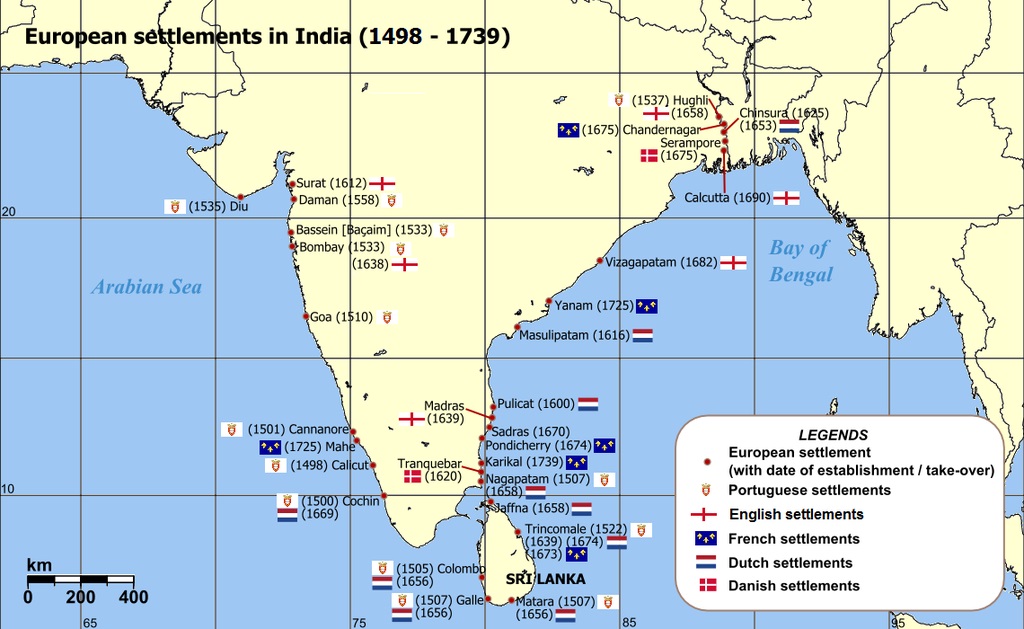
  • Who was St. Francis Xavier?

    The Prime Minister has greeted the people of Goa on the day of the Feast of St. Francis Xavier.

    St. Francis Xavier (1506-1552)

    • Francis Xavier venerated as Saint Francis Xavier, was a Catholic missionary and saint who was a co-founder of the Society of Jesus.
    • He was born in Javier, Kingdom of Navarre (in present-day Spain), he was a companion of Ignatius of Loyola and one of the first seven Jesuits.
    • He led an extensive mission into Asia, mainly in the Portuguese Empire of the time and was influential in evangelization work, most notably in India.

    His works

    • He has asked for a special minister to the king of Portugal whose sole office would be to further Christianity in Goa.
    • He also was the first Christian missionary to venture into Japan, Borneo, the Maluku Islands, and other areas.
    • In those areas, struggling to learn the local languages and in the face of opposition, he had less success than he had enjoyed in India.
    • Xavier was about to extend his missionary preaching to China when he died on Shangchuan Island.
    • Known as the “Apostle of the Indies” and “Apostle of Japan”, he is considered to be one of the greatest missionaries since Paul the Apostle.

    Try this question from CSP 2021

    Q. Consider the following statements:

    1. Francis Xavier was one of the founding members of the Jesuit Order.
    2. Francis Xavier died in Goa and a church is dedicated to him there.
    3. The Feast of St. Francis Xavier is celebrated in Goa each year.

    Which of the statements given above are correct?

    (a) 1 and 2 only

    (b) 2 and 3 only

    (c) 1 and 3 only

    (d) 1, 2 and 3


    [wpdiscuz-feedback id=”bxt6o52qk5″ question=”Please leave a feedback on this” opened=”1″]Post your answers here.[/wpdiscuz-feedback]


    UPSC 2022 countdown has begun! Get your personal guidance plan now! (Click here)

  • Species in news: Lesser Florican

    In a major discovery, the longest in-country migration route of lesser floricans, the endangered birds of the bustard group, has been tracked for the first time from Rajasthan to Maharashtra’s Ahmednagar district.

    Lesser Florican

    • The lesser florican (Sypheotides indicus), also known as the likh or kharmore, is the smallest in the bustard family.
    • It is endemic to the Indian Subcontinent where it is found in tall grasslands and is best known for the leaping breeding displays made by the males during the monsoon season.
    • The male has a contrasting black and white breeding plumage and distinctive elongated head feathers that extend behind the neck.
    • These bustards are found mainly in northwestern and central India during the summer but are found more widely distributed across India in winter.
    • The only similar species is the Bengal florican (Houbarobsis bengalensis) which is larger and lacks the white throat, collar and elongated plumes.

    Conservation status

    • The Lesser Florican is protected under Schedule 1 of the Wildlife (Protection) Act, 1972, Lesser Florican
    • The bird is listed as “Critically Endangered” on the International Union for Conservation of Nature’s Red List of Threatened Species.

    Threats

    • It is threatened both by hunting and habitat degradation.
    • The species is highly endangered and has been officially hunted to extinction in some parts of its range such as Pakistan.

    Try this PYQ:

    Which one of the following groups of animals belongs to the category of endangered species?

    (a) Great Indian Bustard, Musk Deer, Red Panda, Asiatic Wild Ass

    (b) Kashmir Stag, Cheetah, Blue Bull, Great Indian Bustard

    (c) Snow Leopard, Swamp Deer, Rhesus Monkey, Saras (Crane)

    (d) Lion Tailed Macaque, Blue Bull, Hanuman Langur, Cheetah


    [wpdiscuz-feedback id=”ken5zilctv” question=”Please leave a feedback on this” opened=”1″]Post your answers here.[/wpdiscuz-feedback]


    UPSC 2022 countdown has begun! Get your personal guidance plan now! (Click here)