Spacex’s newest fleet of satellites is tumbling out of orbit after being struck by a solar storm.
Solar Storm
A solar storm or a Coronal Mass Ejection as astronomers call it is an ejection of highly magnetized particles from the sun.
These particles can travel several million km per hour and can take about 13 hours to five days to reach Earth.
Earth’s atmosphere protects us, humans, from these particles.
But the particles can interact with our Earth’s magnetic field, induce strong electric currents on the surface and affect man-made structures.
How did they impact SpaceX satellites?
The issue came up due to increased drag created by the solar storm in the upper reaches of the Earth’s atmosphere.
These storms cause the atmosphere to warm and atmospheric density at our low deployment altitudes to increase.
In fact onboard GPS suggests the escalation speed and severity of the storm caused atmospheric drag to increase up to 50 percent higher than during previous launches.
History of solar storms
The first recorded solar storm occurred in 1859 and it reached Earth in about 17 hours.
It affected the telegraph network and many operators experienced electric shocks.
A solar storm that occurred in 1921 impacted New York telegraph and railroad systems and another small-scale storm collapsed the power grid in Quebec, Canada in 1989.
A 2013 report noted that if a solar storm similar to the 1859 one hit the US today, about 20-40 million people could be without power for 1-2 years, and the total economic cost will be $0.6-2.6 trillion.
Why are they a cause of concern?
The Sun goes through an 11-year cycle – cycles of high and low activity.
It also has a longer 100-year cycle.
During the last three decades, when the internet infrastructure was booming, it was a low period.
And very soon, either in this cycle or the next cycle, we are going towards the peaks of the 100-year cycle.
So it is highly likely that we might see one powerful solar storm during our lifetime.
Scientists in the United Kingdom have achieved a new milestone in producing nuclear fusion energy or imitating the way energy is produced in the Sun. The record and scientific data from these crucial experiments are a major boost for ITER.
ITER Project
ITER is international nuclear fusion research and engineering megaproject, which will be the world’s largest magnetic confinement plasma physics experiment.
The goal of ITER is to demonstrate the scientific and technological feasibility of fusion energy for peaceful use.
Project details
The project is funded and run by seven member entities—the European Union, India, Japan, China, Russia, South Korea and the United States.
The EU, as host party for the ITER complex, is contributing about 45 per cent of the cost, with the other six parties contributing approximately 9 per cent each.
Construction of the ITER Tokamak (doughnut-shaped apparatus) complex started in 2013 and the building costs were over US$14 billion by June 2015.
How does it work?
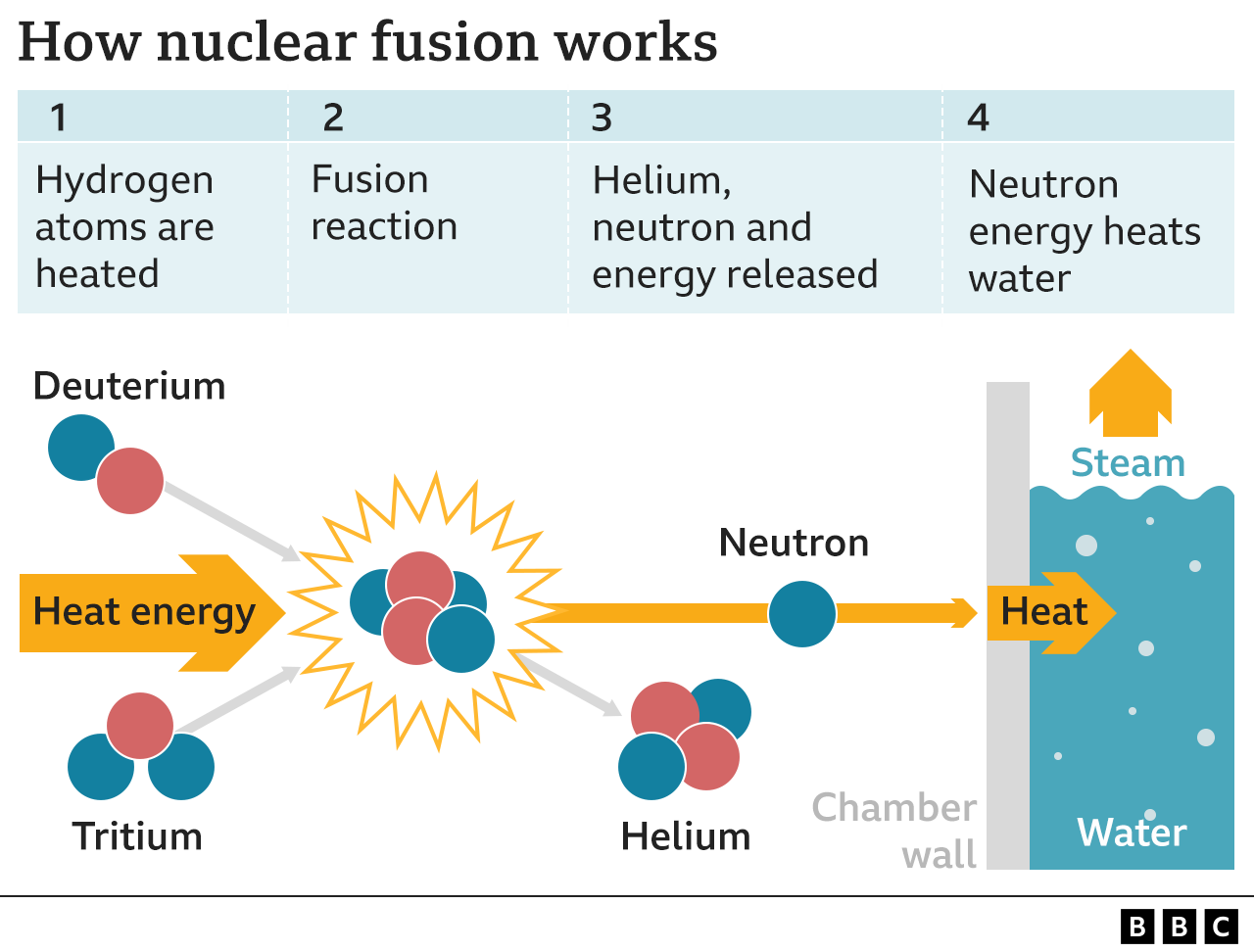
Hydrogen plasma will be heated to 150 million degrees Celsius, ten times hotter than the core of the Sun, to enable the fusion reaction.
The process happens in a doughnut-shaped reactor, called a tokamak, which is surrounded by giant magnets that confine and circulate the superheated, ionized plasma, away from the metal walls.
The superconducting magnets must be cooled to -269°C (-398°F), as cold as interstellar space.
Scientists have long sought to mimic the process of nuclear fusion that occurs inside the sun, arguing that it could provide an almost limitless source of cheap, safe and clean electricity.
Unlike in existing fission reactors, which split plutonium or uranium atoms, there’s no risk of an uncontrolled chain reaction with fusion and it doesn’t produce long-lived radioactive waste.
Back2Basics: Nuclear Fusion
Nuclear fusion is the process of making a single heavy nucleus (part of an atom) from two lighter nuclei. This process is called a nuclear reaction.
The nucleus made by fusion is heavier than either of the starting nuclei. It releases a large amount of energy.
Fusion is what powers the sun. Atoms of Tritium and Deuterium (isotopes of hydrogen, Hydrogen-3 and Hydrogen-2, respectively) unite under extreme pressure and temperature to produce a neutron and a helium isotope.
Along with this, an enormous amount of energy is released, which is several times the amount produced by fission.
Scientists continue to work on controlling nuclear fusion in an effort to make a fusion reactor to produce electricity.
How it is different from nuclear fission?
Simply put, fission is the division of one atom into two (by neutron bombardment), and fusion is the combination of two lighter atoms into a larger one (at a very high temperature).
Nuclear fission takes place when a large, somewhat unstable isotope (atoms with the same number of protons but a different number of neutrons) is bombarded by high-speed particles, usually neutrons.
There is a consensus that privatization is the panacea. Policymakers often cite the private sector’s ability to grow faster. This may not always be true.
Meaning of Privatisation
It means the transfer of ownership, management, and control of the public sector enterprises to the private sector. India adopted a mixed economy model, where the Public Sector Enterprises (PSEs) were established on a socialistic pattern of development. However, due to the poor performance of several PSEs and the consequent huge fiscal deficits, privatization was pursued.
Privatization can suggest several things-
Migration of something from the public sector to the private sector.
It is also used as a metonym for deregulation when a massively regulated private firm or industry becomes less organized.
Government services and operations may also be (denationalised) privatised. In these circumstances, private entities are tasked with the application of government plans or the execution of government assistance that had earlier been the vision of state-run companies. Some instances involve law enforcement, revenue collection, and prison management.
Privatization of the public sector companies by selling off parts of the equity of PSEs to the public is known as disinvestment.
Objectives of Privatisation
1. Providing strong momentum for the inflow of FDI
2. Improving the efficiency of public sector undertakings (PSUs)
The efficiency of PSUs is improved by giving them the autonomy to make decisions.
Some companies were given special categories of Navratna and Miniratna.
3.Reduce the fiscal burden on the government in maintaining PSEs.
Ways of Privatisation
Government companies are transformed into private companies in two ways.
Transfer of ownership
Government companies can be converted into private companies in the following two ways:
By the withdrawal of the government from the ownership and management of public sector companies
By the outright sale of public sector companies.
Disinvestment
Disinvestment, or divestment, refers to the act of a business or government selling or liquidating an asset or subsidiary or the process of dilution of a government’s stake in a PSU.
The rationale for disinvestment is that the government has no business to be in a business. Thus, the government continues to disinvest in sectors where private companies are already the dominant player.
However, there are six methods of privatization.
Public sale of shares
Public auction
Public tender
Direct negotiations
Transfer of control of enterprises that were controlled by the state or by municipalities
Lease with a right to purchase
Benefit of Disinvestment
Improves corporate governance: It would result in the introduction of corporate governance in the privatized companies by freeing the PSEs from Government control and giving more scope to innovation. Enhanced corporate and with the introduction of independent Directors.
Develops and deepens the capital market through the spread of equity culture: The disinvestment would benefit the small investors and employees as it would lead to a wider distribution of wealth in the form of public offerings of privatized companies.
Disinvestment funds can be utilized for long-term goals such as:
Financing large-scale infrastructure development.
Investing in the economy to encourage spending
Expansion and Diversification of the firm
Repayment of Government Debts: Almost 40-45% of the Centre’s revenue receipts go towards repaying public debt/interest
Investing in social programs like health and education
Fiscal space for the relocation of resources locked with CPSEs: Disinvestment also assumes significance due to the prevalence of an increasingly competitive environment, which makes it difficult for many PSUs to operate profitably. This leads to a rapid erosion of the value of the public assets making it critical to disinvest early to realize a high value.
Resources locked in sectors developed enough to raise money from the market are channelized into areas of the economy that are less likely to access resources for the market because of their stage of economic development. Letting go of these assets is best in the long-term interest of the taxpayers as the current yield on these investments is abysmally low.
Unlocking of shareholder value: It is done with the help of issuing IPO. IPO means Initial Public Offering. It is a process by which a privately held company becomes a publicly-traded company by offering its shares to the public for the first time. Offering an IPO is a money-making exercise. Every company needs money for expansion, to improve their business, to better the infrastructure, to repay loans, etc.
Employees: Employees of a firm are benefitted by disinvestment through:
Pay rises, which has been done in past disinvestments.
Greater opportunities and avenues for career growth and further employment generation through capacity expansion.
Is privatization a solution?
No significant difference in performance: Studies indicate that the gap in growth (and service) between public sector undertakings (PSUs) with autonomy and private firms is not significant.
Experience of the privatization in the UK: One study highlighted that the famed British privatization initiative of British Airways, British Gas, and the Railways led to no systemic difference in performance.
Evidence on performance after privatization is even more mixed in developing countries.
Multiple factors: Growth post-privatization is often due to multiple factors, for example, better funding under a private promoter versus a starved government budget, a better business cycle.
Failure of Privatisation
Privatization as a revenue source: As a state, we have sought to hock our generational wealth in PSUs for the past two decades, with limited success.
Failure to raise funds: Actual receipts from disinvestment have always fallen significantly short of targets.
In total, between FY11 and FY21, about ₹5 lakh crore was raised (that is, about 33% of just FY22’s projected fiscal deficit (PRS India, 2021) – some of this, notably through stake sale to other PSUs.
Considering social and institutional constraints, it is a slow process. For instance, BPCL’s long-awaited journey.
Challenges
Challenge of valuation: For instance, about 65% of about 300 national highway projects have been recording significant toll collection growth; any valuations of such assets will need to ensure they capture potential growth in toll revenue, as NHAI’s highway expansion bears fruit and the economy recovers.
Social consequences: There were about 348 CPSUs in existence in 2018, with a total investment of ₹16.4 trillion and about 10.3 lakh employees in Central Public Sector Enterprises (in 2019). Push for massive privatization resulting in mass layoffs in a period of low job creation.
Concentration of wealth: A greater concentration of public assets in select private hands is also a medium-term concern. About 70% of all profits generated in the corporate sector in FY20 were with just 20 firms.
Across sectors, a whiff of oligopoly is emerging – cigarettes continue to be dominated by a single player, paints have one entity with ~40% in FY21, airports now have a new operator with about six airports plus a 74% stake in Mumbai’s international airport, while telecom has just three players left.
Such concentration, mixed with the privatization of public assets, is likely to lead to higher usage fees (already being seen in telecom) and inflation, coupled with a loss of strategic control.
Way forward
Outright privatization is not a solution: Selective PSU Reform must be considered.
The Maruti model is instructive – the government had a joint venture with the Suzuki Corporation, but ceded control, despite Suzuki having only 26% shareholding, in return for a push by Suzuki for greater exports from India and manufacture of global models in India
Stake sale route: Empirical evidence highlights that stake sales are considered a preferred route (about 67% of all PSUs sales in about 108 countries between 1977 and 2000 were conducted via this route), as it gives time to ensure price discovery, allowing improved performance to raise valuations over time.
Global Experience: In China, for the past few decades, growth has been led by corporatized PSUs, all of them held under a holding company (SASAC), which promotes better governance, appoints leadership, and executes mergers and acquisitions.
In Singapore, the Ministry of Finance focuses on policymaking, while the holding firm is focused on corporatizing and expanding its PSUs on a global scale.
PSUs with greater autonomy, with the government retaining control via a holding firm, can also be subject to the right incentives.
Conclusion
The time has come to take a relook at privatization. Simply pursuing this path, while utilizing such proceeds for loan write-offs or populist giveaways in the election cycle will not do.
This January 15th, India celebrated its 74th Army Day, to offer remembrance to the enlightening journey of courage and sacrifice of the Indian Army.
In this article, we will look back at how the year gone by has been for the Indian Army, the security challenges they faced and continue to face in the year ahead, their preparedness in meeting these challenges and the opportunities in further enhancing our defence capabilities.
Why is this year special?
Ans. New Combat Uniform
The Indian Army will be provided with new combat uniform for its personnel aimed to provide more comfort and sustainability.
The new uniform will increase the comfort of women officers as well.
The new uniform is provided with a digital disruptive pattern and won’t be available in the open market.
The uniform has been designed by keeping 4Cs in mind: comfort, climate, camouflage and confidentiality.
They will be barcoded and QR coded to maintain the uniqueness and will be available only through the ordnance chain or military canteens.
Why do we need an Army?
India is not the member of any traditional military alliance and thus has to maintain an independent military capability.
The army is tasked to retain its strategic autonomy while protecting itself against possible threats to its unity and integrity.
The Indian Armed Forces are structured to deal with the possible threats from potential adversaries as part of its capability to carry out its mandated role and tasks.
Role played by Indian Army
The primary role of the Indian Army is to ensure the territorial integrity of the nation by deterrence or by waging war.
The secondary role of the Army is to provide assistance to civil authorities, when requisitioned, to respond to heightened law and order situations, for disaster management or for providing essential services.
A brief background of Indian Army
The Indian Army is the third largest army in the world in terms of size, based on the number of personnel.
But this description obfuscates the fact that it is not as powerful as what such a portrayal should signify.
This implies its capacity to undertake military operations optimally in the multi-domain, technology dominated battlefields of the future.
Challenges to Indian Army
The Indian Army essentially remains a force largely organised, equipped and trained to fight wars.
That is not to say that the Army cannot carry out its role and tasks successfully in the current context, more so, if it is provided the requisite means.
Nonetheless, it needs no emphasis that the Army needs to modernize expeditiously if it has to be prepared to take on the security challenges of the future.
[A] Future Security Scenarios
Disputed neighbours: India’s threats and challenges in the military realm primarily emanate from the historically inherited territorial disputes over which five wars have already been fought.
Nuke and the Military: All wars will be fought under a nuclear overhang, implying that escalation to the level of nuclear exchanges is possible, and must be planned for.
Unresolved territorial disputes going ugly: The fact that the existing territorial disputes are ‘land-centric’ highlights the pre-dominant role of the Army in the Indian security context.
Proxy-wars through radicalization: Pakistan, has been running a sub-conventional campaign against India since the early 1990s which essentially involves stoking militancy and pushing cross-border terror modules.
Nukes plus terror: Nuclear ‘sabre-rattling’ is used in conjunction with the cross-border terror strikes, to prevent India from ‘raising the ante’ and retaliating with a punitive conventional response.
[B] Changing Nature of Conflicts
Hybrid Warfare: In the aftermath of the Afghanistan and Iraq wars of the first decade of this century, the world has witnessed a reduction in full-fledged ‘state vs state’ wars.
It appear to be the new norm, involving a combination of two or more of the following:
Conventional / Regular warfare: – state vs state wars, primarily waged by conventional forces or regular troops on both/ all sides.
Irregular warfare: Conflict against a state by employing trained combatants who are not regular military. Pakistan has launched such ‘irregulars’ in all its wars against India.
Asymmetric warfare: War between sides whose military power differs greatly, waged by the weaker side using non-traditional means like terrorism. Ex. Jihadists vs Army
Unconventional warfare: War waged by a country using means other than established forms of armed conflict, to make the adversary capitulate even without a classical war (economic wars, water wars, legal wars etc.)
Technological/ Informational warfare: Combination of cyber, space, electronic, propaganda, psychological, media and social media wars.
There are perceptible threats that all above discourses might happen simultaneously if any war escalates.
Present perceptible threats
As most of our current threats pertain to conventional conflict over:
Disputed land borders
Insurgencies and cross-border terrorism
Natural calamities and their mitigation
Disaster management
Need of the hour:
[A] Capability Building
In keeping with its mandated roles, the Army has to ensure multi-dimensional capability to deal with the threats from our potential adversaries (external as well as internal).
Capability building of the Army is a continuing process, where budget, especially capital funds, are requested for annually, based on the projected needs for implementing a 15 year long term perspective plan.
[B] Modernisation Needs of the Army
Technological advancement: The Army of the future will have to be technologically oriented, with many more specialists, as compared to generalists.
Modern equipment: It will have to be equipped progressively with modern weapons and weapon systems, supported by technology based processes and automation to meet the needs and challenges of the future battlefield.
Arms and ammunitions: Accordingly, the Army will need to replace or upgrade its ageing inventory of weapons and equipment while also restructuring and right-sizing in a transformational way.
As far as weapons and equipment are concerned, the Army needs the following on priority to replace or rejuvenate vintage equipment as part of the capability development programme:
Infantry – The infantry, which is continuously being employed in counter-terrorist or counter-insurgency operations, needs to be empowered immediately by provision of new generation lightweight assault rifles, bullet proof jackets and helmets, hand held thermal imagers (HHTIs) etc.
Artillery–Adequate quantities of new artillery guns, including indigenously manufactured Dhanush systems, as well as more lethal, precision artillery systems like BrahMos cruise missiles, Smerch and Pinaka rocket systems, need to be inducted immediately.
UAVs – More quantities of Unmanned Aerial Vehicles (UAVs) of latest technology must be inducted in adequate numbers for surveillance and precision attack operations in both peace and war.
Mechanised Forces–Additional quantities of ‘current technology’, T-90 tanks and ICVs, night enabled and equipped with long range ant-tank guided missiles, need to be inducted on priority.
Army Aviation–Acquisition of three squadrons’ worth of new generation Apache attack helicopters into the Army Aviation has been reportedly sanctioned, as a follow up of the Air Force order.
Air Defence (AD) –The Army AD is undergoing a total revamp of equipment. The various army air defence weapon acquisition projects for acquisition of all types of surface to air missile systems as well as upgrading old generation systems.
Engineers- The combat engineers need to be provided new generation of bridging equipment,mine-laying equipment as well as mine clearance equipment. Where possible, old equipment must be upgraded indigenously.
Challenges in Capability Building
There are huge ongoing challenges in the process of capacity building of the Indian Army. The more important of these are discussed as follows:
Capital crunch: It has been the experience for many years now that adequate capital funds for modernisation are not allotted.
Budgetary constraints: Considering that the modernisation plans of the Army are lagging far behind already, budgetary constraints will play an important part in formulating and executing plans for the future.
Sizing constraints: The Indian Army must cap its overall numbers at the current level of 1.3 million, while making fresh efforts at making up the shortfall of officers.
Strategic constraints: Currently, military planning is hamstrung by lack of a clearly articulated and integrated military strategy. In such a situation, the three wings of the military are left to devise their own strategies and philosophies.
Lack of modernisation: An alarmingly large percentage of equipment is of old vintage, due to many proposals for acquisition and upgradation of new equipment having been inordinately delayed.
Quality issues: Arms and ammunition over the years undergo quality degradation.
Procurement issues: There is lack of sustained effort within the Army to develop expertise on defence procurement and financial issues. The Army remains rooted to the outdated policies of employing ‘generalists’ rather than ‘specialists’.
Way forward
India needs to progressively build capability of hard military power, soft power and demonstrated power in its quest to be recognised as a ‘regional power with global influence’.
Right-sizing: The Indian Army needs to undergo transformation and ‘right-sizing’ towards becoming an optimised modern force, with a more efficient ‘teeth to tail’ ratio.
Logistics optimization: Our logistics need to be integrated and optimised on priority.
Interoperability: Enhanced jointness and interoperability as promised under the integrated theatre command needs to be implemented at its earliest.
Re-orientation: The Indian Army must fully operationalize the concept of the Reorganised Army’s Multi-role Quick Reaction Force (RAMFOR).
Enhancing informational warfare capability: Special Operations, Cyber and Space Commands must be provided manpower from within the existing establishment.
Policy input for strategizing: And last but not the least, the government must provide guidance to the military through issue of national security strategy, defence policy and military strategy.
Conclusion
There can be no doubt that the Indian Army needs to be modernised on priority.
To achieve this objective, the Government and the Army will have to take a look at the entire issue afresh and come up with innovative solutions to address the various obstacles standing in the way.
On January 28, the Philippines signed a $374.96 million deal with BrahMos Aerospace Pvt. Ltd. for the supply of shore-based anti-ship variant of the BrahMos supersonic cruise missile.
Details of the contract
The Philippines contract includes delivery of three BrahMos missile batteries, training for operators and maintainers as well as the necessary Integrated Logistics Support (ILS) package.
The coastal defence regiment of the Philippine Marines, which is under the Navy, will be the primary employer of the missile system.
What makes the deal special?
This is the first export order for the missile which is a joint product between India and Russia and also the biggest defence export contract of the country.
This adds impetus to meet the ambitious target set by the Government to achieve a manufacturing turnover of $25 billion in aerospace and defence goods and services by 2025.
What is the BrahMos Missile System?
BrahMos is a joint venture between India’s Defence Research and Development Organisation (DRDO) and Russia’s NPO Mashinostroyeniya.
The missile derives its name from the Brahmaputra and Moskva rivers.
Beginning with an anti-ship missile, several variants have since been developed.
It is now capable of being launched from land, sea, sub-sea and air against surface and sea-based targets and has constantly been improved and upgraded.
Its range
The range of the BrahMos was originally limited to 290 kms as per obligations of the Missile Technology Control Regime (MTCR) of which Russia was a signatory.
Following India’s entry into the club in June 2016, plans were announced to extend the range initially to 450 kms and subsequently to 600 kms.
BrahMos with extended range upto 450 kms has been tested several times since.
Deployments in India
The missile has been long inducted by the Indian armed forces.
The Army has recently deployed the system along the Line of Actual Control (LAC) in Arunachal Pradesh.
Which other countries are in discussion for the BrahMos missiles?
While the first export order for BrahMos took a long time, the next order is likely to be concluded soon with negotiations with Indonesia and Thailand in advanced stages.
Philippines is also looking at several other military procurements from India and South East Asia as the region has emerged as a major focus area for India’s defence exports.
For instance, the HAL has received interest from Philippines Coast Guard for procurement of seven Dhruv Advanced Light Helicopters and eight Dornier Do-228 aircraft under the $100mn Line of Credit.
In addition, maritime domain and ship building is another potential area for Indian companies in the Philippines.
What is the status of defence exports?
India has put out a range of military hardware on sale which includes various missile systems, Light Combat Aircraft (LCA), helicopters, warship and patrol vessels, artillery guns, tanks, radars etc.
From 2016-17 to 2018-19, the country’s defence exports have increased from ₹1,521 crore to ₹10,745 crore, a staggering 700% growth.
Steps taken by the Centre to boost defence production
Licensing relaxation: Measures announced to boost exports since 2014 include simplified defence industrial licensing, relaxation of export controls and grant of no-objection certificates.
Lines of Credit: Specific incentives were introduced under the foreign trade policy and the Ministry of External Affairs has facilitated Lines of Credit for countries to import defence product.
Policy boost: The Defence Ministry has also issued a draft Defence Production & Export Promotion Policy 2020.
Indigenization lists: On the domestic front, to boost indigenous manufacturing, the Government had issued two “positive indigenization lists” consisting of 209 items that cannot be imported.
Budgetary allocation: In addition, a percentage of the capital outlay of the defence budget has been reserved for procurement from domestic industry.
Issues retarding defence exports
Excess reliance on Public Sector: India has four companies (Indian ordnance factories, Hindustan Aeronautics Limited (HAL), Bharat Electronics Limited (BEL) and Bharat Dynamics Limited (BDL)) among the top 100 biggest arms producers of the world.
Policy delays: In the past few years, the government has approved over 200 defence acquisition worth Rs 4 trillion, but most are still in relatively early stages of processing.
Lack of Critical Technologies: Poor design capability in critical technologies, inadequate investment in R&D and the inability to manufacture major subsystems and components hamper the indigenous manufacturing.
Long gestation: The creation of a manufacturing base is capital and technology-intensive and has a long gestation period. By that time newer technologies make products outdated.
‘Unease’ in doing business: An issue related to stringent labour laws, compliance burden and lack of skills, affects the development of indigenous manufacturing in defence.
Multiple jurisdictions: Overlapping jurisdiction of the Ministry of Defence and Ministry of Industrial Promotion impair India’s capability of defence manufacturing.
Lack of quality: The higher indigenization in few cases is largely attributed to the low-end technology.
FDI Policy: The earlier FDI limit of 49% was not enough to enthuse global manufacturing houses to set up bases in India.
R&D Lacunae: A lip service to technology funding by making token allocations is an adequate commentary on our lack of seriousness in the area of Research and Development.
Lack of skills: There is a lack of engineering and research capability in our institutions. It again leads us back to the need for a stronger industry-academia interface.
Way forward
Reducing import dependence: India was the world’s second-largest arms importer from 2014-18, ceding the long-held tag as the largest importer to Saudi Arabia, says 2019 SIPRI report.
Security Imperative: Indigenization in defence is critical to national security also. It keeps intact the technological expertise and encourages spin-off technologies and innovation that often stem from it.
Economic boost: Indigenization in defence can help create a large industry which also includes small manufacturers.
Employment generation: Defence manufacturing will lead to the generation of satellites industries that in turn will pave the way for a generation of employment opportunities.
Back2Basics: Missile Technology Control Regime (MTCR)
MTCR is an informal political understanding between countries to limit the spread of missiles and missile technology.
MTCR was started by like-minded countries to prevent nuclear proliferation.
In 1992, the original focus of the MTCR was to prevent the proliferation of missiles capable of carrying chemical, biological and nuclear warheads and as a threat to international peace and security.
Indian National Centre for Ocean Information Services (INCOIS) has carried out coastal vulnerability assessment for entire Indian coast at states level.
Coastal Vulnerability Index (CVI)
Under the CVI, INCOIS has brought out an Atlas comprising 156 maps on 1:1,00,000 scales to prepare a CVI.
These maps determine the coastal risks due to future sea-level rise based on the physical and geological parameters for the Indian coast.
The CVI uses the relative risk that physical changes will occur as sea-level rises are quantified based on parameters like:
Tidal range
Wave height
Coastal slope
Coastal elevation
Shoreline change rate
Geomorphology
Historical rate of relative sea-level change
Other components: MHVM
A coastal Multi-Hazard Vulnerability Mapping (MHVM) was also carried out using above mentioned parameters.
These parameters were synthesized to derive the composite hazard zones that can be inundated along the coastal low-lying areas due to extreme flooding events.
This MHVM mapping was carried for the entire mainland of India on a 1:25000 scale.
These maps depict the coastal low-lying areas exposed to the coastal inundation.
Significance of CVI
India has a coastline of 7516.6 Km i.e. 6100 km of mainland coastline plus coastline of 1197 Indian islands touching 13 States and Union Territories (UTs).
Coastal vulnerability assessments can be useful information for coastal disaster management and building resilient coastal communities.
What is Coastal Security?
Coastal Security is understood as a subset of maritime security. It
involves the security of the coastal water zone against any threat or challenge that originates from the sea. Coastal water zone refers to the water area seawards of the Indian coast up to the limit of India’s contiguous zone, or the International Maritime Boundary Line (IMBL) whichever is less.
Coastal security has a wide connotation encompassing maritime border management, island security, maintenance of peace, stability and good order in coastal areas and enforcement of laws therein, security of ports, coastal installations, and other structures
including Vital Areas and Vital Points (VAs/VPs) and vessels and personnel operating in coastal areas. An effective
organization for coastal security also facilitates coastal defense.
Why is coastal security considered indispensable for India?
National Security: The elaborate security arrangements on land forced the terrorists and illegal migrants to look towards the sea where security measures are comparatively lax, enabling them to ‘move, hide and strike’ with relative ease. Plugging this loophole is imperative to enable a holistic national security architecture.
Economic development: Coastal region plays an important part in India’s economic development. Security of the region will have a direct bearing on the following areas: a) Trade: India’s sea dependence on oil is about 93% which includes India’s offshore oil production and petroleum exports. Further, 95% of India’s trade by volume and 68% of trade by value comes via the Indian Ocean. b)Fish production: India is the second-largest fish producer in the world with a total production of 13.7 million metric tonnes in 2018-19 of which 35% was from the maritime sector. In the same period, India had exported Rs 46,589.37 crore worth of marine products. c) Strategic minerals: India hosts some of the largest and richest shoreline placers. The beach and dune sands in India contain heavy minerals (HMs) like ilmenite, rutile, garnet, zircon, monazite and sillimanite. d) Geostrategic interests: The Indian Ocean Region (IOR) has become a pivotal zone of global strategic competition. e) Dealing with climate-induced crises: Coastal zones are already under threat from environmental degradation. At the same time, the sinking of islands due to the rising sea levels in the Indian Ocean may result in the rise of climate refugees.
How India’s Coastal Security Architecture has evolved over the years?
Customs Marine Organisation (CMO), 1974: Created on the recommendation of Nag Chaudhari Committee, it was mandated to conduct anti-smuggling operations. However, since the CMO was temporary in nature, not much attention was paid to strengthening this organisation. In 1982, it was merged with the ICG to avoid the duplication of efforts.
Indian Coast Guard (ICG), 1977: With the enactment of the Indian Coast Guard Act, 1978, the organization formally
came into being as the fourth armed force of India. Its mandates include thwarting smuggling activities, safeguarding and protecting artificial islands, offshore terminals, installations, and other devices in the maritime zone, protecting and assisting fishermen in distress and preserving and protecting the marine environment, including
controlling marine pollution.
Coastal Security Scheme (CSS), 2005: Instituted originally in 2005 and implemented by the Department of Border
Management, Ministry of Home Affairs. The aim of the CSS was to strengthen infrastructure for patrolling and the surveillance of the coastal areas, particularly the shallow areas close to the coast.
Coastal Security Architecture Post ‘26/11’: Since then, the physical assets were built up and human resource capability was
also enhanced to strengthen the coastal security. These
efforts include: Strengthening the Multilayered Surveillance System: Before 2008, the existing multilayered surveillance system under the CSS was functioning only along the Gujarat and Maharashtra coasts. Indian Navy(IN): It was designated as the authority responsible for overall maritime security which includes coastal as well as offshore security. It was also made responsible for the coastal defense of the nation assisted by the ICG, the marine police, and
other central and state agencies. ICG: The Director-General Coast Guard has been designated as the Commander Coastal Command, and is responsible for the overall coordination between central and state agencies in all matters relating to coastal security. Border Security Force (BSF): The water wing of the BSF have been deployed along with eight floating border outposts (BOPs), for the security and surveillance of the creeks in Gujarat and the Sunderbans. Central Industrial Security Force (CISF): It was entrusted with the responsibility of the physical security of India’s major ports. Vessel Traffic Management Systems (VTMS) are also being installed in all the major and a few non-major ports to monitor and regulate maritime traffic as well as to detect potentially dangerous ships. Sagar Suraksha Dal: An informal layer of surveillance, comprising the fishermen community- created following the 1993 Mumbai serial bomb blasts – has also been formalized and activated in all coastal states.
National Maritime Domain Awareness (NMDA) Project: It includes an integrated intelligence grid to detect and tackle threats emanating from the sea in real-time. Post 26/11, it has been strengthened by establishing NC3I network and IMAC that generate a common operational picture of activities at sea
through an institutionalized mechanism.
Maritime Theatre Command (MTC): MTC structure is
proposed to integrate the assets of the Indian Navy, Army, IAF
and Coast Guard to achieve the goals detailed out in the Joint
Forces Doctrine (JFD), 2017. It will enable the security forces
to form a ‘Net-centric’ Warfare model so as to gain an
an advantage over the adversary using a flexible force structure
to match the varied geographic domains.
Inter-agency maritime exercises: Such exercises help
build inter-service synergy, interoperability, and
jointness. These include ‘Sagar Kavach’, ‘Sea Vigil’, TROPEX.
Increased cooperation with littoral countries: India
interacts more actively with littoral states of the Indian Ocean Region and employs maritime security engagement as a cornerstone of her regional foreign policy initiatives.
Gaps in existing architecture
Lackadaisical approach of the State governments resulting in the slow pace of construction of coastal infrastructure.
Multiplicity of agencies results in poor coordination.
Disproportionate focus on terrorism results in less emphasis on non-traditional threats.
Lack of professionalism and capacity constraints in marine police forces.
Technological backwardnessPort security remains neglected in most of the minor ports.
Ways to fill gaps in the existing architecture
Enacting the proposed Coastal Security Bill that will facilitate the creation of NMA.
Strengthening the surveillance system
Creation of Central Marine Police Force (CMPF)
Promulgate the National commercial maritime security policy document for efficient, coordinated, and effective actions.
Effective involvement of Coastal communities such as fishermen.
Reinforcing Coastal Regulation Zone (CRZ) regulations
Recalibrate the defense expenditure to increase capacity and resources.
Back2Basics: INCOIS
Indian National Centre for Ocean Information Services (INCOIS) is an autonomous body under Ministry of Earth Sciences (MoES).
It has been issuing alerts on Potential Fishing Zone, Ocean State Forecast, Tsunami Early Warning, Storm Surge Early Warning, High Wave Alerts, etc.
It works through a dedicated ocean modeling, observations, computation facilities and the marine data center.
The government’s recent announcement that the maternity benefits program which provides ₹5,000 for the first child will be extended to cover the second child only if it is a girl has met with sharp criticism from activists who have demanded that it be universalized.
What is PMMVY?
Launched in 2017, this scheme provides ₹5,000 for the birth of the first child to partially compensate a woman for the loss of wages.
It also aims to improve the nutritional well-being of the mother and the child.
The amount is given in three installments upon meeting certain conditions.
It is combined with another scheme, Janani Suraksha Yojana, under which nearly ₹1,000 is given for an institutional birth so that a woman gets a total of ₹6,000.
Eligibility Conditions
The first transfer (at pregnancy trimester) of ₹1,000 requires the mother to:
Register pregnancy at the Anganwadi Centre (AWC) whenever she comes to know about her conception
Attend at least one prenatal care session and take Iron-folic acid tablets and TT1 (tetanus toxoid injection)
Attend at least one counseling session at the AWC or healthcare centre.
The second transfer (six months of conception) of ₹2,000 requires the mother to:
Attend at least one prenatal care session and TT2
The third transfer (three and a half months after delivery) of ₹2,000 requires the mother to:
Register the birth
Immunize the child with OPV and BCG at birth, at six weeks, and at 10 weeks
Attend at least two growth monitoring sessions within three months of delivery
Additionally, the scheme requires the mother to:
Exclusively breastfeed for six months and introduce complementary feeding as certified by the mother
Immunize the child with OPV and DPT
Attend at least two counselling sessions on growth monitoring and infant and child nutrition and feeding between the third and sixth months after delivery
Why in news?
Under the revamped PMMVY under Mission Shakti, the maternity benefit amounting to ₹6000 is also to be provided for the second child.
However, this is only in case the second is a girl child, to discourage pre-birth sex selection and promote the girl child.
Issues with this provision
To provide maternity benefit only to the mother of the firstborn is illegal as the National Food Security Act, 2013 lays down that every pregnant woman and lactating mother are entitled to it.
For second child as a girl, it is to promote the birth of a girl child is nothing but posturing since it penalizes the mother for not giving birth to a girl child.
Subsequent adding of more conditions to the scheme will prove to be a bureaucratic nightmare, which can be overcome if the scheme is universalized.
Women will be able to access the scheme only after the delivery, which will not have any impact on their nutritional uptake during the course of their pregnancy.
Before judging this factual information, take this PYQ form 2019:
Q.Which of the following statements is/are correct regarding the Maternity Benefit (Amendment) Act, 2017?
Pregnant women are entitled to three months pre-delivery and three months post-delivery paid leave.
Enterprises with creches must allow the mother a minimum of six crèche visits daily.
Women with two children get reduced entitlements.
Select the correct answer using the code given below.
(a) 1 and 2 only
(b) 2 only
(c) 3 only
(d) 1, 2 and 3
[wpdiscuz-feedback id=”6pftvi12o6″ question=”Please leave a feedback on this” opened=”1″]Post your answers here.[/wpdiscuz-feedback]
The West Bengal government has launched ‘Paray Shikshalaya’ Initiative.
Paray Shikshalaya
It is an open-air classroom in the neighborhood programme – for students from class 1 to 7.
The aim of this initiative is to encourage students who dropped out of schools during the Covid-19 pandemic to continue their education.
Why was this initiative launched?
In view of the rising demand for physical classes, the state government reopened schools.
Classroom teaching could not be called on due to fear of spikes in covid cases.
Hence, students are being called in batches.
Where were these classes held?
Schools which do not have open-air spaces conducted the classes in neighbourhood parks and grounds.
Local councilors and MLAs helped set up infrastructure in such parks like putting up makeshift shades and chairs, besides making mid-day meal arrangements for the students.
Schools which have open-air spaces held the classes there.
Benches were set up for students and blackboards were placed to provide a real classroom experience.
The Railway Protection Force (RPF) has launched a nationwide ‘Operation AAHT’ to curb human trafficking.
We can site such examples in essays as well as mains as initiatives for curbing human trafficking in India
Operation AAHT
As part of this operation, special teams will be deployed on all long-distance trains/routes with focus on rescuing victims, particularly women and children, from the clutches of traffickers.
The RPF will act as a bridge cutting across States to assist the local police in the mission to curb the menace.
The infrastructure and intelligence network of the force could be utilized to collect, collate and analyse clues on victims, source, route, destination, popular trains used by suspects, identity of carriers/agents, kingpins etc and shared with other law-enforcing agencies.
Why need this mission?
The Railways, which operate about 21,000 trains across the country daily, is the most reliable mode of transportation for the traffickers who often move their victims on long-distance trains.
Thousands of Indians and persons from neighboring countries are trafficked every day to some destinations where they were forced to live like slaves.
They are also being trafficked for illegal adoptions, organ transplants, working in circus, begging and entertainment industry.




 Indian National Centre for Ocean Information Services (INCOIS) has carried out coastal vulnerability assessment for entire Indian coast at states level.