💥Join UPSC 2027,2028 Mentorship (July Batch) + XFactor Notes & Microthemes PDF

Distribution: weekly

  • [pib] MCA21 Version 3.0

    The Ministry of Corporate Affairs (MCA) will launch data analytics-driven MCA21 Version 3.0.

    What is MCA 21?

    • MCA21 is an e-Governance initiative of Ministry of Corporate Affairs (MCA) that enables easy and secure access of the MCA services to the corporate entities, professionals and citizens of India.
    • It is the first Mission Mode e-Governance project of GoI.

    Try this PYQ:

    Q.Which one of the following is not a feature of Limited Liability Partnership firm?

    (a) Partners should be less than 20

    (b) Partnership and management need not be separate

    (c) Internal governance may be decided by mutual agreement among partners

    (d) It is a corporate body with perpetual succession

    MCA21 3.0

    • MCA21 V3 is a technology-driven forward-looking project, envisioned to strengthen enforcement, promote Ease of Doing Business, enhance the user experience, and facilitate seamless integration and data exchange among Regulators.
    • The project will have Micro-services architecture with high scalability and capabilities for advanced analytics.
    • It will have additional modules for e-Adjudication, e-Consultation and Compliance Management.
    • Aligned with global best practices and aided by emerging technologies such as AI and ML, MCA21 V3 is envisioned to transform the corporate regulatory environment in India.

    Components of MCA21 V3

    • E-Scrutiny: MCA is in process of setting up a Central Scrutiny Cell which will scrutinise certain Straight Through Process (STP) Forms filed by the corporates on the MCA21 registry and flag the companies for more in-depth scrutiny.
    • E-adjudication: E-adjudication module will provide a platform for conducting online hearings with stakeholders and end to end adjudication electronically.
    • E-Consultation: To automate and enhance the current process of public consultation on proposed amendments and draft rules etc., e-consultation module of MCA21 v3 will provide an online platform.
    • Compliance Management System (CMS): CMS will assist MCA in identifying non-compliant companies/LLPs, issuing e-notices to the said defaulting companies/LLPs etc.
  • [pib] Startup India Seed Fund Scheme

    Startup India Seed Fund Scheme (SISFS) has been approved for the period of next four years starting from 2021-22.

    Seed Fund Scheme

    • The scheme aims to provide financial assistance to startups for proof of concept, prototype development, product trials, market entry and commercialization.
    • 945 Crore corpus will be divided over the next 4 years for providing seed funding to eligible startups through eligible incubators across India.
    • The scheme is expected to support about 3600 startups.

    Q.Discuss various inherent non-policy challenges to Start-ups in India.(150W)

    What is Seed Funding?

    • Seed funding or seed-stage funding is a very early investment which aims at helping a business grow and generating its own capital.
    • Also referred to as seed money or seed capital, investors often get an equity stake in exchange for the capital invested.
    • The investors can themselves be the founders and use their savings as seed money for their new company — also known as bootstrapping.

    Why Seed Funding matters?

    • It is a fact that starting a new business and lifting it up off the ground is a huge ask for most entrepreneurs and it only gets tougher with capital constraints.
    • Seed funding helps get things started before the business earns any revenue.
    • It is an effective solution for startups and growing businesses as it provides the much-needed early monetary support.
    • It can cover everything from infrastructure costs, marketing and development costs as well as the cost of initial hiring. Investment is the fuel of any business and seed funding is the first drop of this fuel.
    • As seed money becomes much-needed cash reserve or working capital, not having it is one of the main reasons for failure.

    Various options for Seed Funding

    • Crowdfunding
    • Corporate seed funds
    • Incubators Accelerators
    • Angel investors
    • Personal Savings
    • VC Funding
    • Angel Funds or Angel Networks
  • The reason that India cannot afford to go on a debt binge

    The article discusses the challenges associated with the Budget with a high fiscal deficit.

    Change in government’s stance

    • India’s economy has suffered more than most from the covid pandemic and so have its people.
    • Its economic contraction has put pressure on its government, like so many others, to respond.
    • Until this week, government’s response had been relatively restrained.
    • The government implied that any welfare-promoting and growth-enhancing measures had to stand on a solid macro-economic foundation.
    • The federal budget for the next financial year, 2021-22, with the fiscal deficit for the current fiscal at 9.5% of gross domestic product (GDP) has changed that optimistic narrative.
    • The government has effectively abandoned its long-term commitment to bring the deficit down to close to 3% of GDP, pitching instead for a gentle descent to 4.5%—six years from now.

    Implications of high fiscal deficit

    • Once the covid pandemic retreats, India might end up with a debt-to-GDP ratio of about 90%, compared to the low 70s at present.
    • It would be saddled with a permanently elevated fiscal deficit and a financial system bogged down by high levels of bad debt.
    • Consumer price inflation has topped the Reserve Bank of India’s target zone of 2%-6% since the covid lockdown began last year.
    • Unlike the US or China, countries in India’s position—which have neither a reserve currency nor strong growth momentum—cannot grow rapidly while exploding their debt.
    • They can’t afford to ignore rating agencies because of their supposed bias, or cock a snook at bond markets and just run the currency presses instead.
    • They need to grow in order to reduce their debt. That’s a very different dynamic.
    • India isn’t so attractive that it can expect vast sums of investment to arrive even if its macro-economic numbers look bad and its sovereign rating is junk.
    • We don’t have a history of deflation, we aren’t hitting the zero lower bound.
    • It’s quite the opposite; we have an economy prone to sustained high inflation.
    • India is not in a position in which it could build really productive assets using sustained deficit.
    • This is still a developing economy, which especially in bad times should tread carefully rather than throw caution to the winds.

    Rationale behind high spending

    • The government is hoping that increased spending will help India grow out of this predicament.
    • The only way India can pull itself out of this jam is if private investment pours into the country, financing projects that push up the country’s potential growth rate.
    • Yet the government, already monopolizing domestic financial savings, seems to want to go to war with global markets as well.

    Consider the question “Fiscal deficit figures for FY21 marks the end of India’s departure from the path of fiscal consolidation. Discuss the challenges posed by such high fiscal deficit to the Indian economy.

    Conclusion

    India’s greatest strength had been his commitment to fiscal responsibility. The path of fiscal adventurism could end up leaving India’s macroeconomy vulnerable.

  • The unmet health challenge

    The article analyses the allocation for the health sector in the Budget and highlights the need for more allocations.

    Need to increase spending on health

    • The Economic Survey argues for the need to increase public spending on healthcare to 2.5-3 per cent of the GDP — it’s about 1.5 per cent currently.
    • The Survey points out that there is not much difference in terms of outcomes and quality between healthcare services in the private sector and such services in public centres.
    • The Economic Survey, therefore, calls for strengthening the National Health Mission (NHM) along with Ayushman Bharat.
    • NHM was initiated in 2005-06 to strengthen public health services.
    • The Ayushman Bharat provide social insurance, thereby financing private sector services with public funds. 
    • The Economic Survey makes a strong pitch for greater regulation of health services in the private sector.

    Break-up of allocation in Budget on health (and well being)

    • The finance minister described “health and well-being” as one of the pillars of the budget in her budget speech and announcing a 137 per cent increase in allocations for it.
    • She placed healthcare, water and sanitation and nutrition as the key components of this pillar.
    • However, the figures in the budget documents reveal a different story.
    • There is an absolute increase of 9.6 per cent in allocations for the Department of Health and Family Welfare that includes NHM and Ayushman Bharat.
    • A 26.8 per cent increase for the Department of Health Research and 40 per cent increase for the AYUSH Ministry do not add up to much since each of them are only 3-4 per cent of the total health budget.
    • A Finance Commission grant of Rs 13,000-crore and Rs 35,000-crore for COVID-19 vaccination are one-time allocations and, therefore, do not strengthen the overall system.
    • The core health service and research ministries (H&FW and AYUSH) have together received only an 11 per cent increase.
    • Even in COVID times, the health services get only 2.21 per cent of the total central budget — down from 2.27 per cent in the 2020-21 budget.
    • Computing for inflation, the increase in allocation for health services alone disappears and actually becomes negative.
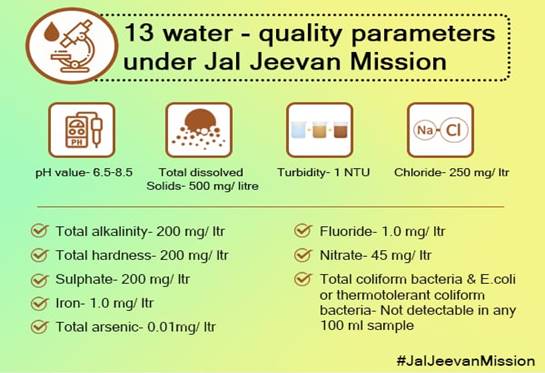
    • Water and sanitation received a 179 per cent increase from Rs 21,518 crore to Rs 60,030 crore already earmarked for the flagship schemes, Swachh Bharat and Jal Jeevan Mission.
    • But allocation for nutrition decreased by 27 per cent, with the “new” Poshan 2.0 merely combining the poorly performing Supplementary Nutrition Programme and Poshan project.
    • Added together, health, water and sanitation and nutrition make up the claimed 137 per cent increase in allocation to “health” services — with a real decline in healthcare and nutrition.

    Pradhan Mantri Atma Nirbhar Swasthya Yojana (PMANSY)

    • Finance Minister also announced a new scheme, the Pradhan Mantri Atma Nirbhar Swasthya Yojana, to support the almost 29,000 health and wellness centres in the country.
    • The scheme also envisages the creation of public health laboratories and critical care hospital blocks and virology institutes.

    Concerns with PMANSY

    • PMANSY has an announced allocation of Rs 64,180 crore over six years, but it does not find a place in the present budget documents.
    • But these additional activities could have been slotted in the NHM.
    • Since 2014, the allocation for NHM has been on the wane.
    • Therefore, even the marginal 1.33 per cent increase (from Rs 27,039 crore to Rs 30,100 crore) is a demonstration of the government’s realisation that public services do matter.
    • The allocations of about Rs 10,000-Rs 11,000 crore each year for the PMANSY is not enough for making the public services capable of “universal health coverage”.
    • The High-Level Expert Group on Universal Health Coverage had estimated that by 2020, we need a 114 per cent increase in sub-centres and primary health centres, 179 per cent increase in community health centres and a 230 per cent increase in sub-district and district hospitals.
    • Getting anywhere close to this requires doubling of real allocations every year over a five-year period to reach something like 10 per cent of the budget.
    • In the present budget, it declines to a mere 2.21 per cent.

    Way forward

    • If such public provisioning for universal health coverage can’t be done, then effective low-cost rationalised service system options have to be designed.
    • Insurance schemes only create the mirage of affordability of health services while adding to peoples’ expenses.
    • Community and public services are indisputably the most cost-effective for any society.

    Consider the question “Examine the benefits of the idea of health and well being under which health, water and sanitation and nutrition are clubbed together.”

    Conclusion

    Water and sanitation are meaningful for health, but not if it only inflates the allocation to “Health and Wellbeing”. What we need is the real increase in spending on health.

  • Pradhan Mantri Matru Vandana Yojana (PMMVY)

    The government’s maternity benefit scheme, or Pradhan Mantri Matru Vandana Yojana, has crossed 1.75 crores, eligible women, till the financial year 2020, the Centre informed Parliament.

    PMMVY

    • The PMMVY is a maternity benefit program introduced in 2017 and is implemented by the Ministry of Women and Child Development.
    • It is a conditional cash transfer scheme for pregnant and lactating women of 19 years of age or above for the first live birth.
    • It provides partial wage compensation to women for wage-loss during childbirth and childcare and to provide conditions for safe delivery and good nutrition and feeding practices.
    • Under the scheme, pregnant women and lactating mothers receive ₹5,000 on the birth of their first child in three instalments, after fulfilling certain conditionalities.
    • In 2013, the scheme was brought under the National Food Security Act, 2013 to implement the provision of cash maternity benefit stated in the Act.
    • The direct benefit cash transfer is to help expectant mothers meet enhanced nutritional requirements as well as to partially compensate them for wage loss during their pregnancy.

    Eligibility Conditions and Conditionalities

    The first transfer (at pregnancy trimester) of ₹1,000 requires the mother to:

    • Register pregnancy at the Anganwadi Centre (AWC) whenever she comes to know about her conception
    • Attend at least one prenatal care session and taking Iron-folic acid tablets and TT1 (tetanus toxoid injection), and
    • Attend at least one counselling session at the AWC or healthcare centre.

    The second transfer (six months of conception) of ₹2,000 requires the mother to:

    • Attend at least one prenatal care session and TT2

    The third transfer (three and a half months after delivery) of ₹2,000 requires the mother to:

    • Register the birth
    • Immunize the child with OPV and BCG at birth, at six weeks and at 10 weeks
    • Attend at least two growth monitoring sessions within three months of delivery

    Additionally, the scheme requires the mother to:

    • Exclusively breastfeed for six months and introduce complementary feeding as certified by the mother
    • Immunize the child with OPV and DPT
    • Attend at least two counselling sessions on growth monitoring and infant and child nutrition and feeding between the third and sixth months after delivery

    Before judging this factual information, take this PYQ form 2019:

    Q.Which of the following statements is/are correct regarding the Maternity Benefit (Amendment) Act, 2017?

    1. Pregnant women are entitled to three months pre-delivery and three months post-delivery paid leave.
    2. Enterprises with creches must allow the mother a minimum of six crèche visits daily.
    3. Women with two children get reduced entitlements.

    Select the correct answer using the code given below.

    (a) 1 and 2 only

    (b) 2 only

    (c) 3 only

    (d) 1, 2 and 3

  • [pib] KAPILA for patent awareness

    The Government has launched a campaign namely KAPILA for Intellectual Property Literacy and creating patent awareness, informed Union Ministry for Education to the Parliament.

    Remember one thing, ‘KAPILA’ Program is related to IP awareness. It sounds much like an animal husbandry related initiative.

    KAPILA Initiative

    • KAPILA is an acronym for Kalam Program for IP (Intellectual Property) Literacy and Awareness.
    • Under this campaign, students pursuing education in higher educational institutions will get information about the correct system of the application process for patenting their invention and they will be aware of their rights.
    • The program will facilitate the colleges and institutions to encourage more and more students to file patents.

    Why in news?

    • As many as 46,556 users have registered for the Union Government’s Intellectual Property Literary project.
    • This marks the success of the campaign.
  • Iran rules out changes to Nuclear Deal

    Iranian President Hassan Rouhani ruled out changes to Iran’s nuclear accord with world powers and dismissed calls to broaden the terms of the deal and include regional countries.

    Do you know how the enmity between Iran and the US came into reality?  We hope you have watched the Argo (2012) movie for sure!

    What is the news?

    • The election of Joe Biden, who supports a US return to the agreement, has spurred some expectations of renewed diplomacy.
    • But Rouhani’s refusal puts this possibility at the end.

    The United States since 1979 has applied various economic, trades, scientific and military sanctions against Iran. U.S. economic sanctions are administered by the Office of Foreign Assets Control.

    Iranian Nuclear Agreement

    • The Iran nuclear agreement, formally known as the Joint Comprehensive Plan of Action (JCPOA), is a landmark accord reached between Iran and several world powers, including the US, in July 2015.
    • Under its terms, Iran agreed to dismantle much of its nuclear program and open its facilities to more extensive international inspections in exchange for billions of dollars’ worth of sanctions relief.

    What were the goals of JCPOA?

    • The P5+1 wanted to unwind Iran’s nuclear program to the point that if Tehran decided to pursue a nuclear weapon, it would take at least one year, giving world powers time to respond.
    • Heading into the JCPOA negotiations, U.S. intelligence officials estimated that, in the absence of an agreement, Iran could produce enough nuclear material for a weapon in a few months.

    Who are the participants?

    • The JCPOA, which went into effect in January 2016, imposes restrictions on Iran’s civilian nuclear enrichment program.
    • At the heart of negotiations with Iran were the five permanent members of the UN Security Council (China, France, Russia, the UK, and the US) and Germany—collectively known as the P5+1.
    • The European Union also took part.
    • Prior to the JCPOA, the P5+1 had been negotiating with Iran for years, offering its government various incentives to halt uranium enrichment.

    Disruptions after trump

    • The deal has been in jeopardy since President Donald J. Trump withdrew the US from it in 2018.
    • In response to the U.S. departure, as well as to deadly attacks on prominent Iranians in 2020, including one by the United States, Iran has resumed some of its nuclear activities.

    Why isn’t the deal yet enforced?

    • In April 2020, the United States announced its intention to keep back sanctions.
    • The other P5 members objected to the move, saying the US could not unilaterally implement the mechanism because it left the nuclear deal in 2018.
    • Meanwhile, the wide range of U.S. sanctions unrelated to the nuclear program has added to the damage.

     Iran’s current nuclear activity

    • Iran since Trump’s decisions started exceeding agreed-upon limits to its stockpile of low-enriched uranium.
    • It began enriching uranium to higher concentrations (though still far short of the purity required for weapons).
    • It also began developing new centrifuges to accelerate uranium enrichment; resuming heavy water production at its Arak facility.

    Did you know?


    Mined uranium has less than 1 percent of the uranium-235 isotope used in fission reactions, and centrifuges increase that isotope’s concentration. Uranium enriched to 5 percent is used in nuclear power plants, and at 20 percent it can be used in research reactors or for medical purposes. High-enriched uranium, at some 90 percent, is used in nuclear weapons.

  • ‘Smart walls’ for Indian Borders

    The new US President has stopped the construction of the much-publicized “border wall” between the U.S. and Mexico.

    Q.Smart fencing along with physical fencing can protect major infiltration areas of Indian borders. Analyse its feasibility for India.

    What is the news?

    • The Mexico–US barrier also known as the border wall is a series of vertical barriers along the border intended to reduce illegal immigration to the US.
    • Biden’s decision was confirmed, however, that an alternative has been offered — a ‘smart’ wall that replaces the physical and armed patrolling with advanced surveillance tech is the proposed future of border security now.

    What is the Smart Wall?

    • The ‘smart wall’ technology could solve border security issues without the need for a physical barrier.
    • The wall would use sensors, radars, and surveillance technology to detect and track border break-ins, and technology capable of performing the most difficult tasks dedicated to border security.
    • The complete system of a virtual wall would consist of a radar satellite, computer-equipped border-control vehicles, control sensors and underground sensors.
    • Along with surveillance towers and cameras, thermal imaging would be used, which would help in the detection of objects.
    • The system would even be capable of distinguishing between animals, humans, and vehicles, and then sending updates to handheld mobile devices of the patrol agents.

    Not a new concept

    • The concept is not new and the novelty of it cannot be directly associated with Biden.
    • Interestingly, the U.S.-Mexico border wall proposed by Donald Trump envisaged this concept.
    • A technology firm was sought to be hired by the Trump administration, and it was indicated that artificial intelligence shall be used at a novel scale to complement the steel barrier (border wall).

    Feasibility for India

    • A question that now arises is whether such a project can be undertaken to secure Indian borders.
    • India has been struggling with the problem of terrorists and smugglers infiltrating into the country and efforts are ongoing to secure our borders and curb cross-border infiltration.
    • Therefore, it is proposed that it is high time we start envisaging the use of technology to help India secure its borders.

    Various challenges

    • A critical factor that must be considered to enable the usage of such a system along Indian borders is that the terrain in the region is rugged, and, furthermore, not even clearly defined.
    • Hence, erecting fences, walls or any physical structures is extremely difficult.
    • A “smart” wall, however, makes use of systems that would be designed in such a way that they can operate even in rugged areas.
    • Imperatively, in the US various other benefits, such as cost-effectiveness, less damage to the environment, fewer land seizures, and speedier deployment are being noted.
    • This gives the concept an edge over traditional borders.

    Benefits that Indian can reap

    • Notably, such a system, even if not feasible for our long boundaries, may still be deployed to enhance critical security establishments of the country and complement the already-existing physical fencing and walls.
    • This can no doubt secure the major infiltration areas.

    Way forward

    • The attack on the Pathankot Airbase highlighted that often, it may become difficult to secure establishments due to their vast size.
    • Further, it is imperative for Indian armed forces to be well-equipped and simultaneously have the latest technological advantage over its enemies.
    • Experts must explore this idea to effectively counter the problem of cross-border infiltration.
    • Is it unfathomable to deploy a security system that clubs technology with traditional set-ups due to terrain and other problematic factors? This is a question for Digital India to answer.
  • Maharashtra to introduce ballot papers along with EVMs

    Maharashtra Assembly Speaker has directed the State Law and Justice Department to prepare the draft of a Bill which provides an option to voters to exercise their franchise on ballot papers along with electronic voting machines (EVMs).

    Manner of holding elections

    • Article 328 of the Indian Constitution and number 37 of the State List of the seventh schedule of the Constitution provide rights to the State legislature to formulate a law on the manner of holding elections within the State.
    • The state cannot abolish the EVMs completely.
    • They are just demanding an additional provision of ballot paper as well for whoever wants to use that.
    • Directions have been given to check the constitutional validity of the argument and prepare the draft of a Bill.

    Background

    • The Election Commission has been conducting all elections through EVMs since 2001.
    • The Indian EVM is a direct recording device, which is a stand-alone machine.
    • The Election Commission has clarified several times that Indian EVMs don’t talk to any machine outside its own system – be it through a wired network, internet, satellite, and WiFi or Bluetooth.
    • The EVM is not connected to the server, so cyber hacking of Indian EVMs is not possible unless an authorised person acts with malafide intention.
    • In 2014, a whopping 55.38 crore people cast their votes in EVMs in the parliamentary elections.

    Considerations behind such a move

    • On EVMs, a voter can never be 100% sure about whom he or she has voted and whether that particular candidate has received the vote.
    • It is a right of every voter to be 100% sure about it and also essential for the democratic process.”
    • Over the past few years, serious concerns and doubts had been raised over the EVMs and whether those could be manipulated.
    • The option of ballot voting would boost people’s confidence in the electoral process which would ultimately lead to an increase in voting percentage.

    Q.The EC’s role in ensuring the people’s faith in democracy is paramount. The loss of public faith in democracy and its protector institutions spells nothing but disaster. Discuss.

  • Exercise Yudh Abhyas 2021

    The 16th edition of Indo-U.S. joint military exercise ‘Yudh Abhyas’ is set to be held in Rajasthan between February 8 and 21.

    Yudh Abhyas

    • The exercise near the India-Pakistan border aims at enhancing cooperation and interoperability between the two armies and will focus on counter-terrorism operations under the UN mandate.
    • The drill comes days after the air forces of India and France held a five-day joint exercise in Rajasthan in January.
    • Exercise with U.S. Army is significant in terms of security challenges faced by both the nations in the backdrop of global terrorism.
    • The joint military exercise will enhance the level of defence cooperation between both armies which will also foster the bilateral relations between both nations.
    • It reiterates India’s key role as a key partner in the Indo-Pacific region.