National Sports Day is celebrated on August 29 in India to honor the memory of “Major Dhyan Chand”, widely regarded as the first superstar of Indian hockey and arguably India’s first sporting superstar.
About MajorDhyan Chand:
Details
Birth
Born on August 29, 1905, in Allahabad, India
Olympic Achievements
Led India to three Olympic gold medals in 1928 (Amsterdam), 1932 (Los Angeles), and 1936 (Berlin).
Career Goals
Scored 33 goals in 12 Olympic matches, nearly averaging a hat-trick per game.
Signature Skill
Renowned for his exceptional dribbling and ball control.
Anecdotes
Famous for his stick work so effective that his hockey stick was checked for magnets;
Declined an offer from Adolf Hitler to change nationality after the 1936 Olympics.
National Recognition
In honour of his contributions, August 29 is celebrated as National Sports Day in India.
Rajiv Gandhi Khel Ratna Award was renamed the Major Dhyan Chand Khel RatnaAward in 2021.
It is the highest sporting award given by the Ministry of Youth Affairs and Sports for the spectacular and most outstanding performance in the field of sports by a sportsperson over four years.
The award comes with a cash prize of Rs 25 lakh.
The Khel Ratna Award was instituted in 1991-1992 and the first recipient was Chess legend Viswanathan Anand.
Winners: Leander Paes, Sachin Tendulkar, Dhanraj Pillay, Pullela Gopichand, Abhinav Bindra, Anju Bobby George, Mary Kom and Rani Rampal in 2020.
Legacy
Major Dhyan Chand National Stadium in New Delhi is named after him, underscoring his impact on Indian sports infrastructure.
Researchers at the Institute of Nano Science and Technology (INST) Mohali, have developed novel electrochemical and optical sensors using a new group of nano polymer materials.
About the Novel Nanopolymer:
Novel nanopolymers are innovative polymer materials that incorporate nanostructures or nanoparticles to impart unique properties.
They are prepared using various methods like vapor condensation, vacuum evaporation, electrospinning, and chemical synthesis to create nanofibers, core-shell structures, hollow fibers, and tubes with diameters down to a few nanometers.
Examples: Silicon nanospheres that are much harder than regular silicon, with hardness between sapphire and diamond, and bio-based N-heterocyclic poly(aryl ether ketone) with high biomass content and superior properties
Applications of Novel Nanopolymers:
Biosensors and optoelectronics utilizing the fluorescence and magnetic properties of nanoparticles.
Drug delivery, tissue engineering, and gene therapy using biodegradable nanoparticle systems.
Forensics for drug detection, fingerprinting, DNA analysis, and sensors.
High-temperature-resistant plastics with improved properties.
These are the Novel Nanopolymers developed by INST:
Metal-Organic Frameworks (MOFs)
2-dimensional (2D) Materials
Details
Crystalline materials with metal ions and organic ligands form porous structures.
Materials a few atomic layers thick with unique electrical, optical, and mechanical properties.
Surface Area
Extremely high (over 10,000 m²/g), ideal for adsorption.
High surface-to-volume ratio, enhancing interactions for sensing and energy storage.
Versatility
Customizable for gas storage, separation, catalysis, and sensing.
Functionalizable for bio-sensing and environmental monitoring.
Properties
High porosity and stability in harsh environments.
Excellent conductivity, flexibility, and strength, useful in electronics and optoelectronics.
Sensing Applications
Detects gases, toxins, and biomarkers with high sensitivity.
Detects gases, biomolecules, and pollutants quickly and efficiently.
Examples
Various MOFs designed for specific uses.
Includes graphene, MoS2, MXenes.
PYQ:
[2015] With reference to the use of nanotechnology in health sector, which of the following statements is/are correct?
1. Targeted drug delivery is made possible by nanotechnology.
2. Nanotechnology can largely contribute to gene therapy.
Select the correct answer using the codes given below:
The term of the 22nd Law Commission has ended, with its key report on the Uniform Civil Code still in progress.
About the Law Commission of India:
Details
Nature
Non-statutory body periodically constituted by the Government of India. It is an Executive Body.
Establishment
• First Commission During British India: Established in 1834 under the Charter Act of 1833, chaired by Lord Macaulay, Focused on the codification of laws like the Penal Code and Criminal Procedure Code.
• First Commission in Independent India: Established in 1955, chaired by M. C. Setalvad, then Attorney-General of India.
Primary Role
Advises the Ministry of Law and Justice on legal reform and reviews existing laws to suggest improvements and draft new legislation.
Recommendations are advisory and NOT binding on the government.
Composition
Headed by a Chairperson (usually a retired Supreme Court Judge or Chief Justice of a High Court),
4 full-time members (including a Member-Secretary), ex-officio members (Secretaries of the Departments of Legal Affairs and Legislative Department), and
Up to 5 part-time members.
Tenure
3 years, with provisions for reconstitution or extension as required by the government.
Key Functions
• Undertakes legal research.
• Review existing laws for reforms.
• Recommends repeal of obsolete laws.
• Suggest amendments and new legislations.
• Examines laws that affect the poor and marginalized.
Notable Recommendations by 22nd law Commission
• Uniform Civil Code.
• Amendments to the sedition law.
• Repeal of obsolete laws.
• Gender equality in personal laws.
• Improvements in judicial administration.
Reports Submitted
Over 277 reports on various legal issues including the implementation of international conventions, compulsory registration of marriages, etc.
Recent Activity
The 22nd Law Commission is focusing on issues like the Uniform Civil Code and amendments to the sedition law (Section 124A), among other legislative reforms.
PYQ:
[2014] The power to increase the number of judges in the Supreme Court of India is vested in:
Q Russia and Ukraine war has been going on for the last seven months. Different countries have taken independent stands and actions keeping in view their own national interests. We are all aware that war has its own impact on the different aspects of society, including human tragedy. What are those ethical issues that are crucial to be considered while launching the war and its continuation so far? Illustrate with justification the ethical issues involved in the given state of affairs. (2022)
Q “What introduces friction into the ties between India and the United States is that Washington is still unable to find for India a position in its global strategy, which would satisfy India’s National self-esteem. (2019)
Mentors’ Comment: PM Narendra Modi visited Kyiv (Ukraine) and met with President Volodymyr Zelenskyy on August 23, 2024. This was the first visit by an Indian PM to Ukraine since its independence in 1991. The visit garnered significant global attention, particularly regarding India’s potential role in mediating the Russia-Ukraine conflict.
Despite India’s cautious stance, PM Modi emphasized India’s commitment to supporting Ukraine’s sovereignty and territorial integrity. He advocated for a peaceful resolution through dialogue, stating “No problem can be resolved on a battlefield.” India has maintained a neutral stance, abstaining from UN resolutions critical of Russia while advocating for direct dialogue.
Let’s learn –
Why in the News?
There are strong reasons to believe that Prime Minister Modi’s visit to Ukraine may have included a peace initiative as part of its agenda.
India’s Consistent Foreign Policy Approach:
Non-Alignment and Strategic Autonomy: India’s foreign policy is historically rooted in non-alignment and strategic autonomy, focusing on balancing relationships with global powers and addressing territorial disputes peacefully.
Neutral Stance on Russia-Ukraine Conflict: Since the Russia-Ukraine war began in February 2022, India has maintained neutrality, avoiding condemnation of Russia, which has drawn criticism from Western nations.
Foreign Minister S. Jaishankar has indicated that India might be interested in mediating the conflict between Russia and Ukraine, if approached but would not initiate the mediation on its own.
Commitment to UN Principles: India advocates for respect for the United Nations charter and peaceful resolution of disputes through international institutions like the UN.
A Possible Broader Strategy
Peace Initiative: The Indian Prime Minister’s visit to Ukraine involved a peace initiative, though enhancing bilateral relations with Ukraine appears unlikely due to India’s lack of dependency on Ukraine for trade, defence, or technology.
Balancing Act: The visit could be a balancing act following the PM’s visit to Russia, positioning India as a neutral party and reinforcing its role as a responsible global actor committed to peace.
Active Mediation Role: The visit may align with a broader strategy for India to take a more active role as a mediator or “communicator,” leveraging its ties with both Moscow and Washington.
Global South Involvement: India, as a prominent member of the Global South, aims to contribute to peace efforts, reflecting its role in international negotiations.
Interests of Key Stakeholders
United States: The U.S. prefers negotiations from a position of strength. A temporary ceasefire or limited peace agreement facilitated by a neutral party like India could relieve conflict pressures and allow President Biden to focus on other foreign policy issues.
European Countries: Europe seeks a resolution to the conflict to address economic hardships and energy security concerns exacerbated by the war. A temporary peace could ease these challenges and provide breathing room.
What should India do further?
Leverage Diplomatic Neutrality to Facilitate Dialogue: India should continue to maintain its neutral stance and offer to facilitate dialogue between Russia and Ukraine. By positioning itself as a neutral mediator, India can help create channels for communication, potentially leading to a ceasefire or limited peace agreement.
Engage with Global South and Key Stakeholders: India should actively engage with other Global South countries and key stakeholders, including the U.S. and European nations, to build consensus on a peaceful resolution.
Balance Relations with Global Powers: India should carefully balance its relationships with both Russia and the West. By maintaining strong ties with both sides, India can ensure its strategic autonomy while contributing to a peaceful resolution.
Conclusion: Successfully mediating the conflict could elevate India’s global stature and align with hisvision of India as a “Vishwamitra,” actively contributing to global peace and security. However, achieving even temporary peace is challenging due to deeply entrenched positions and the involvement of numerous international actors in the conflict.
The Union Cabinet has approved the ‘BioE3 (Biotechnology for Economy, Environment, and Employment) Policy’ proposed by the Department of Biotechnology to promote advanced biomanufacturing.
What is the BioE3 Policy?
The BioE3 (Biotechnology for Economy, Environment and Employment) Policy is a strategic initiative approved by the Indian Cabinet to foster high-performance biomanufacturing.
Aims and Objectives of the Policy:
Innovation Support: The policy promotes research and development (R&D) and entrepreneurship in various thematic sectors, facilitating technological advancement and commercialization.
Biomanufacturing Hubs: It proposes the establishment of Biomanufacturing & Bio-AI hubs and Biofoundries to enhance India’s bioeconomy.
Focus Areas: The policy targets several strategic sectors, including high-value bio-based chemicals, biopolymers, smart proteins, precision biotherapeutics, climate-resilient agriculture, carbon capture, and marine and space research.
Significance of the Policy
Economic Growth: It is expected to catalyze a “bio revolution” similar to the IT revolution, generating substantial job opportunities in biotechnology and biosciences.
Sustainability Goals: The policy aligns with government initiatives for achieving a ‘Net Zero’ carbon economy and promotes sustainable lifestyles, thereby steering India towards accelerated green growth and a circular bio-economy.
Job Creation: By expanding the skilled workforce in biotechnology, the policy aims to create various kinds of employment opportunities, addressing critical societal issues such as climate change, food security, and human health.
Present Status of Indian Bio-economy
Growing Potential: The biotechnology sector is seen as a key player in addressing challenges in health, agriculture, environment, and energy. India has a large pool of young, skilled workers, with 47% of its population under the age of 25.
Investment in R&D: Despite its potential, India spends less than 1% of its GDP on research, compared to countries like Israel and South Korea, which invest over 4%.
Existing Infrastructure: The government has established 9 biotech parks and 60 bio-incubators, which support the growth of the biotechnology sector.
Challenges Ahead
Educational Gaps: The current educational curriculum does not adequately prepare students for industry demands, creating a skills mismatch.
Funding Issues: There is a lack of venture capital funding due to information asymmetry regarding the biotech industry, which hampers innovation and growth.
Clinical Trials: India conducts a low percentage of clinical trials compared to global standards, which is a concern for the development of biopharmaceuticals.
Research Investment: The government currently covers over 60% of total R&D spending, which is very different from countries where the private sector contributes a large portion.
Way forward:
Enhance Industry-Academia Collaboration: Encourage partnerships between educational institutions and biotech companies to align curricula with industry needs, thereby reducing the skills mismatch and preparing students for emerging job markets.
Increase Private Sector Investment: Implement policies and incentives to attract more private sector investment in R&D, such as tax benefits, public-private partnerships, and improved access to venture capital, to stimulate innovation and reduce reliance on government funding.
The Election Commission of India (ECI) has established itself as one of India’s most credible institutions, known for consistently conducting free, fair, and timely elections to Parliament and State legislatures. However, the 34 State Election Commissions (SECs) still require significant attention and strengthening.
Issue of Disempowerment of State Election Commissions (SECs)
The Constitution (73rd and 74th amendments) vested SECs with the responsibility of conducting elections to panchayats and urban local governments, but in reality, SECs are increasingly disempowered by state governments.
Legal and Administrative Challenges: SECs sometimes find themselves in litigation with state governments. For instance, the Karnataka SEC has had to file contempt petitions against the state government for failing to fulfill commitments related to the conduct of elections, highlighting a lack of cooperation from state authorities.
Inadequate Empowerment: Many SECs do not have the power to conduct delimitation of wards or manage the electoral rolls independently. This results in reliance on the Election Commission of India (ECI) and state governments, which can lead to arbitrary decisions that delay elections.
Only 11 out of 34 states and UTs have empowered SECs to conduct ward delimitation, accounting for just 35% of India’s population.
Lack of Resources: SECs are legally entitled to request funds and assistance from state governments, but they often do not receive adequate resources, which hampers their ability to conduct elections effectively.
Public Trust Erosion: The delays and challenges faced by SECs undermine public confidence in local governance and electoral processes, leading to a perception that local elections are not as credible as those conducted by the ECI for national and state elections
Election not on time: Performance audits by the CAG found that 70% of urban local governments in 18 states did not have elected councils at the time of the audit due to delays caused by disempowered SECs.
Electoral Reforms Needed to Strengthen the Third Tier
Parity with the Election Commission of India: SECs should be made as transparent and independent as the Election Commission of India.
This could be achieved by appointing a three-member SEC through a committee comprising the Chief Minister, Leader of Opposition, and Chief Justice of the High Court, rather than by the State government alone.
Fixed Intervals for Delimitation: The delimitation of ward boundaries and reservations should be conducted at fixed intervals, such as every 10 years, to prevent arbitrary actions by State governments that delay elections.
Transfer of Powers to SECs: The powers of delimitation and reservation of seats for local governments should be vested in the SECs. SECs should also handle reservations for positions like mayors and presidents to avoid delays caused by State governments.
Conclusion: Strengthening SECs through these reforms is essential to ensure timely, transparent, and credible local elections, thereby reinforcing grassroots democracy and public trust in local governance.
The Ministry of Youth Affairs & Sports launched the “RESET Programme” to empower retired sportspersons with career skills on National Sports Day.
What is RESET Programme?
Details
Launch Date
August 29, 2024 (National Sports Day)
Nodal Ministry
Ministry of Youth Affairs & Sports
Objective
To empower retired sportspersons with skills and knowledge for career development and employability
Eligibility
– Retired athletes aged 20-50 years
– Winners/participants in international events, national/state medallists
– Recognized by National Sports Federations/IOA/Ministry of Youth Affairs and Sports
Programme Levels
Two levels based on educational qualifications:
– Class 12th and above
– Class 11th and below
Implementation
Lead institute: Lakshmibai National Institute of Physical Education (LNIPE)
Learning Mode
Hybrid mode: Self-paced online learning and on-ground training
Additional Support
Placement assistance, guidance for entrepreneurial ventures
PYQ:
[2017] Consider the following in respect of ‘National Career Service’:
1. National Career Service is an initiative of the Department of Personnel and Training, Government of India.
2. National Career Service has been launched in a Mission Mode to improve the employment opportunities to uneducated youth of the country.
Gujarat and parts of Rajasthan are facing severe flooding caused by a land-based deep depression.
The unusual formation of this deep depression over land was intensified by moisture influx from soils or the Bay of Bengal and the Arabian Sea.
What is Land-Based Deep Depression?
A land-based deep depression is a type of cyclonic system characterized by a significant drop in atmospheric pressure leading to sustained wind and significant weather impact.
They form and intensify over land, which is relatively rare due to the limited availability of moisture.
Characteristics:
It forms over land or water.
Wind Speed ranges from 51 to 62 km/h, just below the threshold for a tropical cyclone (62-88 km/h).
Relies on moisture from soilandsurrounding environments rather than oceanic sources.
It often has an unpredictable path and can cause significant rainfall and localized flooding.
Implications of Land-Based Deep Depressions
These systems can bring prolonged and intense rainfall, leading to widespread flooding, especially in regions unaccustomed to high levels of precipitation.
Heavy rainfall can lead to significant soil erosion, affecting agricultural productivity and altering landscapes.
Prolonged flooding can cause waterlogging in agricultural fields, leading to soil salinization and reduced fertility.
PYQ:
[2012] Consider the following statements:
1. The duration of the monsoon decreases from southern India to northern India.
2. The amount of annual rainfall in the northern plains of India decreases from east to west.
Which of the statements given above is/are correct?
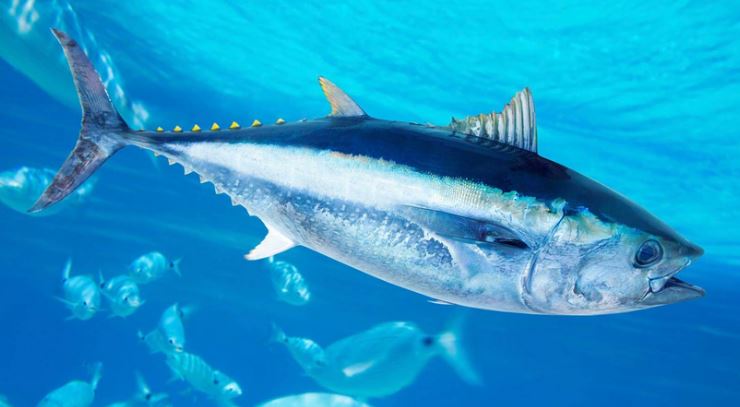
The Atlantic bluefin tuna, already heavily overfished, now faces a new threat from warming seas, causing it to migrate further north.
Atlantic Bluefin Tuna (Thunnus thynnus)
Details
Scientific Classification
Family: Scombridae; Species: Thunnus thynnus.
Common Names
Northern bluefin tuna, Giant bluefin tuna (for individuals over 150 kg), formerly known as “tunny”.
Habitat and Range
Western and Eastern Atlantic Ocean, Mediterranean Sea; extinct in the Black Sea.
Size
Can weigh up to 680 kg; one of the largest Perciformes.
Commercial Importance
Highly valued in the Japanese market for sushi and sashimi; foundation of a major global fishery.
Conservation Status
Overfished; dramatic stock declines (72% in Eastern Atlantic, 82% in Western Atlantic);
Moved to “Least Concern” by IUCN in 2021 due to some population recovery;
Proposed for CITES Appendix I.
PYQ:
[2015] With reference to the International Union for Conservation of Nature and Natural Resources (IUCN) and the Convention on International Trade in Endangered Species of Wild Fauna and Flora (CITES), which of the following statements is/are correct?
1. IUCN is an organ of the United Nations and CITES is an international agreement between governments
2. IUCN runs thousands of field projects around the world to better manage natural environments.
3. CITES is legally binding on the States that have joined it, but this Convention does not take the place of national laws.
Select the correct answer using the codes given below:
Q The proposed withdrawal of the International Security Assistance Force (ISAF) from Afghanistan in 2014 is fraught with major security implications for the region’s countries. Examine in light of the fact that India is faced with a plethora of challenges and needs to safeguard its own strategic interests. (UPSC IAS/2013)
Q ‘India is an age-old friend of Sri Lanka.’ Discuss India’s role in the recent political crisis in Sri Lanka in the light of the preceding statement. (UPSC IAS/2022)
Mentor comment: The political landscape in countries like India, Pakistan, and Bangladesh, where governments have faced criticism for undermining democratic institutions and processes. Elections in Bangladesh (January 7, 2024) resulted in PM Sheikh Hasina securing a fourth consecutive term. However, the elections were widely condemned by boycotting, demanding a caretaker government to oversee the electoral process. Similarly in Pakistan, the elections (February 8, 2024), were marred by allegations of irregularities and military influence. International observers and analysts have raised alarms about the military’s increasing control over political processes, which has led to Pakistan being classified as an authoritarian regime by the Economist Intelligence Unit.
This backlash may be attributed to various factors, including economic challenges, social unrest, and the manipulation of electoral systems, which have led to a deterioration of public trust in democratic norms and practices. Today’s editorial emphasizes the importance of recognizing these trends as they pose risks to the stability and future of democracy in South Asia, urging a reevaluation of the political dynamics at play in the region.
Let’s learn!
__
Why in the News?
South Asian region is experiencing a subtle yet significant backlash against democratic governance, characterized by increasing authoritarian tendencies and a decline in civil liberties.
On Emerging Democratic Backlash in India and Pakistan:
Middle-Class Attitudes: Historically, the middle classes in both countries have shown ambivalence towards democracy, sometimes favoring military rule, though a younger generation in Pakistan is becoming critical of military involvement in politics.
Presently, in India, there has been a democratic pushback against the BJP’s authoritarianism. People also fought against the dictatorship during the Emergency in 1975.
In Pakistan, the PTI emerged as a major political force, resonating with public sentiment against military influence, despite state machinery working against it.
Digital Backlash: Both countries are witnessing a silent democratic backlash, with citizens utilizing digital platforms and electoral participation to reclaim democratic spaces.
What are the main causes of the democratic backlash in South Asia?
Authoritarian Tendencies: The noticeable shift towards authoritarianism is often characterized by the erosion of civil liberties, media suppression, and the undermining of democratic institutions.
For example, in India, the Modi government has been accused of implementing divisive policies and attacking minority rights, leading to a downgrade in its democratic status.
Electoral Integrity Issues: In Bangladesh, the 2024 elections were described as a “sham” and Pakistan’s elections faced accusations of military interference and manipulation, particularly against the Pakistan Tehreek-e-Insaf (PTI) party.
Polarization and Social Unrest: Politically, there are rising tensions between various social and ethnic groups. This leads to social unrest and can create an environment where authoritarian measures are justified as necessary for maintaining order.
Political Culture: In India, the middle class has at times expressed a preference for authoritarian rule when faced with perceived chaos, reflecting a complex relationship with democracy.
Similarly in Pakistan, the military’s historical role in politics has fostered a culture where military intervention is sometimes seen as a stabilizing force.
Economic Challenges: Issues such as poverty and unemployment exacerbate political discontent and can lead citizens to support more authoritarian governance as a means of achieving stability and order.
Pakistan towards authoritarianism since its inception:
•1971 Events: Major protests led to significant political changes, including the first general election in 1970 and the eventual disintegration of East Pakistan in 1971, countering military intentions. •2008 Events: Since 2008, Pakistan has experienced a relative transition to democracy with four general elections, but this has been met with military pushback. •Present Dynamics: Recent elections (2018 and 2024) reveal a troubling trend of political elites forming alliances with the military, undermining democratic processes and targeting political opponents.
India’s Democratic Trajectory: •1975 Events: India was seen as a model democracy with a history of free elections and separation of powers, barring the Emergency period in 1975. •Since 2014: Indian Politics marked a shift towards an authoritarian model of governance characterized by executive overreach and a campaign for an “Opposition-free democracy”. •Judicial Activism and Overreach: Judicial activism has played a role in protecting rights and promoting social justice in India, filling legislative vacuums and enhancing administrative efficiency. However, judicial overreach can undermine parliamentary democracy by interfering with the functioning of the legislative and executive branches, damaging the balance between organs of government.
Implication for South Asia
Silent democratic backlash: Factors like authoritarian tendencies, electoral integrity issues, military influence, economic challenges, and social unrest have contributed to the erosion of democratic norms and public trust in the region.
The international community has expressed concerns about the deteriorating state of democracy in South Asia, particularly in Pakistan where the military’s influence has led to its classification as an authoritarian regime.
Conclusion: As citizens in both countries increasingly advocate for democratic governance, it is crucial to observe how these movements evolve, particularly in Pakistan, where the political landscape is more volatile.
![[30th August 2024] The Hindu Op-ed: Connecting the dots in the Kyiv visit](https://www.civilsdaily.com/wp-content/uploads/2024/08/30-Aug-1568x882.jpg)
![[29th August 2024] The Hindu Op-ed: A Silent democratic backlash in South Asia](https://www.civilsdaily.com/wp-content/uploads/2024/08/29-Aug-1568x882.jpg)