💥Join UPSC 2027,2028 Mentorship (July Batch) + XFactor Notes & Microthemes PDF

Distribution: yearly

  • Gorkhaland statehood, Government names ex-DY NSA as interlocutor

    Introduction

    India’s federal architecture is unique: it allows the creation of new states to accommodate cultural, linguistic, administrative, or developmental aspirations under Article 3 of the Constitution. Yet, every statehood movement also reflects deeper struggles over identity, representation, and development.

    The Gorkhaland issue, revived by the Centre’s recent move to appoint an interlocutor, is one of the oldest and most persistent among these. While it directly concerns the Darjeeling hills and adjoining areas of West Bengal, it mirrors similar aspirations voiced across India, from Vidarbha to Bodoland, Harit Pradesh, and Kukiland.

    The Gorkhaland Appointment: Why is this news significant?

    The Centre’s decision to name ex-Dy NSA Pankaj Kumar Singh as interlocutor for Gorkha talks is a politically charged step:

    1. First formal engagement in years: It revives official talks after a long hiatus, moving beyond ad hoc arrangements like the Gorkhaland Territorial Administration (GTA).
    2. High-level signalling: The appointment of a senior security expert signals that the government sees the issue as sensitive, with implications for internal security and electoral politics.
    3. Identity at stake: It concerns recognition of the Gorkha community’s distinct identity, and a permanent political solution to decades of protests and autonomy struggles.
    4. Pre-election dimension: With West Bengal Assembly elections approaching, the move is seen as an attempt to politically engage the hill electorate, which has historically swung between national and regional parties.
    5. Potential precedent: Success in structured dialogue may offer a model for addressing other regional aspirations through negotiation instead of agitation.

    Understanding the Gorkhaland Issue

    Historical Context

    1. Origins: The demand for Gorkhaland dates back to 1907, when the Hillmen’s Association first sought a separate administrative unit for the Nepali-speaking people of Darjeeling under British rule.
    2. Post-Independence Phase: With linguistic reorganisation (1950s), Nepali-speaking Gorkhas felt their identity was inadequately represented in Bengali-dominated West Bengal.
    3. 1980s Uprising: The movement, led by Subhash Ghising’s Gorkha National Liberation Front (GNLF), turned violent; it led to the creation of the Darjeeling Gorkha Hill Council (DGHC) in 1988 as a compromise.
    4. Second Wave: In 2007, Bimal Gurung formed the Gorkha Janmukti Morcha (GJM), renewing the demand; this led to the Gorkhaland Territorial Administration (GTA) in 2011, but unrest persisted.
    5. Present Phase: The latest talks under an interlocutor aim to find a “permanent political solution” and recognition of 11 sub-tribes as Scheduled Tribes.

    Key Demands

    1. Separate Gorkhaland State: Carved out of Darjeeling and parts of Kalimpong, to ensure administrative autonomy and cultural recognition.
    2. Scheduled Tribe Status: For 11 Gorkha sub-tribes to ensure constitutional protections and socio-economic inclusion.
    3. Constitutional Recognition: Safeguards for the political identity and rights of the Gorkha people under the Indian Constitution.

    Statehood Demands in India: The Bigger Picture

    India has witnessed over 30 major statehood demands since Independence. While the Constitution empowers Parliament to reorganize states under Article 3, these movements have tested the balance between administrative efficiency, cultural autonomy, and political representation.

    Why Do Statehood Demands Arise?

    • Cultural & Linguistic Identity:
        1. Key reason: Desire for recognition of unique language, ethnicity, or cultural practices.
        2. Examples: Gorkhaland (Nepali-speaking identity), Bodoland (Bodo tribes), Vidarbha (Marathi dialect and identity).
    • Developmental Disparities:
        1. Economic neglect and poor resource distribution often drive demands.
        2. Example: Telangana’s movement was anchored in perceived neglect by Andhra’s political elite.
    • Administrative Efficiency:
        1. Smaller states are believed to ensure better governance and resource management.
        2. Example: Creation of Chhattisgarh and Uttarakhand in 2000.
    • Political Representation & Power-sharing:
        1. Regional elites demand greater political space or autonomy to reflect local aspirations.
    • Ethnic Security and Integration:
      1. Fear of cultural assimilation or discrimination by dominant groups drives ethnic-based mobilisation (e.g., Bodoland, Kukiland, Karbi Anglong).
    Year Movement Outcome
    1953 Andhra State (Potti Sriramulu movement) First linguistic state formed
    1960 Maharashtra & Gujarat Bombay Reorganisation Act
    1972 Meghalaya, Manipur, Tripura New northeastern states created
    1987 Mizoram & Arunachal Pradesh Granted full statehood
    2000 Chhattisgarh, Jharkhand, Uttarakhand Created for administrative and developmental reasons
    2014 Telangana Result of sustained agitation
    Ongoing Gorkhaland, Bodoland, Vidarbha, Bundelkhand Unresolved, periodic agitations

    Constitutional Mechanism for Creating New States

    Article 3 empowers Parliament to form new states by altering the boundaries or names of existing ones.

    Procedure:

    1. Process: Bill introduced in Parliament → Referred to State Legislature for views (not consent) Passed by simple majority.
    2. Centre’s Discretion: State opinion is advisory, not binding — ensuring national flexibility but sometimes triggering discontent.
    3. Examples:
      • Telangana was created despite Andhra Pradesh’s legislature opposing it.
      • Jharkhand was carved out of Bihar through a parliamentary process.

    Challenges and Implications of Statehood Movements

    1. Political Fragmentation: Multiplying small states may weaken national coherence and increase Centre-State friction.
    2. Administrative Burden: Creating new bureaucratic structures increases fiscal costs.
    3. Resource Distribution Issues: Conflicts over rivers, minerals, and forest resources (e.g., Telangana-Andhra).
    4. Ethnic Competition: One community’s recognition can fuel new demands from others.
    5. Positive Outcomes: Improved local governance, targeted development, and better representation when well-implemented (e.g., Chhattisgarh’s success in rural health and PDS).

    Lessons from Gorkhaland and Other Movements

    1. Need for Institutional Dialogue: Interlocutors and commissions reduce the risk of violent agitation by creating formal channels for negotiation.
    2. Multi-stakeholder Approach: Engagement should include Centre, State, local bodies, and civil society, not just political parties.
    3. Development-Based Solutions: Autonomy and identity must align with socio-economic development for long-term peace.
    4. Model for Others: If successful, the Gorkhaland dialogue could serve as a precedent for resolving other autonomy demands peacefully.

    Conclusion

    The Gorkhaland issue is not merely a regional agitation; it is part of India’s broader story of balancing unity with diversity, integration with autonomy, and identity with development. The Centre’s interlocutor initiative provides a constitutional, consultative path forward, one that aligns with India’s ethos of resolving internal aspirations democratically.

    As India continues to evolve, the challenge will be to ensure that new demands for statehood or autonomy are addressed through dialogue, data, and development, not through division or delay.

    PYQ Relevance

    [UPSC 2013] Creation of a large number of smaller States would bring in effective governance at the State level. Discuss.

    Linkage: This PYQ links directly with Gorkhaland and other statehood demands, testing ideas of better governance and federal balance. The article helps students with examples, chronology, and constitutional context to write precise GS II answers.
  • Rising carbon dioxide levels

    Introduction

    The atmospheric concentration of carbon dioxide (CO₂), the most significant greenhouse gas responsible for climate change, has increased by a record amount between 2023 and 2024, according to the World Meteorological Organization (WMO). The global average CO₂ concentration reached 423.9 parts per million (ppm) in 2024, 3.5 ppm higher than in 2023, representing the steepest one-year increase since records began.

    This unprecedented rise coincides with 2024 being the hottest year on record, with average global temperatures 1.55°C higher than pre-industrial levels, breaching the 1.5°C limit scientists consider critical to prevent irreversible impacts.

    Why This Is a Big Deal

    This spike is unprecedented in modern climate history. Never before have CO₂ levels risen so sharply in a single year. It not only breaks the trend of relative stability observed over the last decade but also exposes the collapse of the global climate response despite the Paris Agreement. The rate of increase (3.5 ppm) is more than four times the average annual increase recorded between 2011 and 2020.

    What makes this even more concerning is that both human-induced emissions (from fossil fuels, deforestation, and industrial activity) and natural feedback loops (like reduced ocean absorption and forest diebacks) are now amplifying each other, creating a self-perpetuating climate crisis.

    What Is Driving the Surge in CO₂ Concentrations?

    1. Record-breaking increase: Global average CO₂ near Earth’s surface reached 423.9 ppm in 2024, marking a 3.5 ppm rise, the largest annual jump ever.
    2. Failure of climate frameworks: Despite international efforts under the Paris Agreement, emissions continue to climb, reflecting inadequate implementation and weak compliance.
    3. Global warming feedback: Higher temperatures reduce oceans’ capacity to absorb CO₂ and increase droughts and wildfires, releasing more carbon into the atmosphere.
    4. Burning of fossil fuels: Continued dependence on coal, oil, and gas remains the primary driver, responsible for more than 90% of anthropogenic CO₂ emissions.

    How Are Natural Sinks Losing Their Absorptive Power?

    1. Reduced ocean absorption: Warmer oceans have absorbed less CO₂ in 2024 due to decreased solubility of gases in higher temperatures.
    2. Forest fires and droughts: A spike in wildfires and prolonged dry spells reduced the CO₂-absorbing capacity of trees and grasslands.
    3. Feedback loops: The decline of natural sinks worsens CO₂ imbalance, which in turn leads to even greater heat trapping and further degradation of these ecosystems.

    How Do Other Greenhouse Gases (GHGs) Compare?

    1. Methane (CH₄): Second-most potent GHG, rose by 8 parts per billion in 2024 to reach 1,924 ppb, slightly below last decade’s average but still historically high.
    2. Nitrous oxide (N₂O): Increased by 1 ppb to 338 ppb in 2024, contributing to long-term warming effects due to its 270-year lifespan.
    3. Relative potency: While CH₄ and N₂O are more heat-trapping per molecule, CO₂ dominates because of its sheer volume and persistence in the atmosphere for thousands of years.

    Why Is This Rise Unprecedented?

    1. Historical contrast: From the 1960s to 2010, CO₂ levels rose by 0.8 ppm per year; between 2011–2020, it increased by 2.4 ppm annually, far below the 2023–24 jump of 3.5 ppm.
    2. Crossing planetary limits: This rise pushed Earth past the 1.5°C warming threshold, previously considered a safe boundary.
    3. Interlinked causes: WMO attributes this to a mix of human emissions and natural CO₂ variability, indicating global climate systems are destabilizing.

    Challenges for Global Climate Action

    1. WMO warning: The new data underscores the difficulty in curbing GHG accumulation in the atmosphere.
    2. Failure of control mechanisms: Despite decades of negotiations, anthropogenic activities continue unchecked.
    3. Feedback intensification: Natural processes, once climate stabilizers, are now acting as amplifiers of warming.
    4. Paris Agreement setback: The emission reduction targets for 2030 are unlikely to be met, while global temperatures already breached the 1.5°C mark.

    Conclusion

    The record-breaking surge in CO₂ levels between 2023 and 2024 is not just a statistical anomaly, it’s a planetary red alert. The intertwining of human actions and natural feedback loops signifies that climate change has entered a runaway phase unless drastic global mitigation is undertaken. The failure to meet emission targets and the collapse of natural carbon sinks highlight that the climate crisis is no longer a distant threat, it’s a present emergency demanding immediate collective action.

    PYQ Relevance

    [UPSC 2022] Discuss global warming and mention its effects on the global climate. Explain the control measures to bring down the level of greenhouse gases which cause global warming, in the light of the Kyoto Protocol, 1997.

    Linkage: The article is important as it highlights the sharpest-ever rise in global CO₂ levels, signalling a critical climate tipping point and the failure of existing global frameworks like the Kyoto and Paris Agreements to curb emissions. It links directly with the question by showing how unchecked greenhouse gases are intensifying global warming and threatening climate stability.

  • Tejas Light Combat Aircraft (LCA)-Mk1A

    Why in the News?

    Defence Minister inaugurated the third production line of Tejas Light Combat Aircraft (LCA) Mk1A at Hindustan Aeronautics Limited (HAL), Nashik.

    About Tejas Light Combat Aircraft (LCA)-Mk1A:

    • Overview: Single-engine, 4.5-generation, supersonic multirole fighter aircraft developed indigenously under India’s LCA programme.
    • Developers: Designed by the Aeronautical Development Agency (ADA) of DRDO and produced by Hindustan Aeronautics Limited (HAL).
    • Purpose: Conceived in the late 1980s to replace the ageing MiG-21 and Su-7 fleets of the Indian Air Force.
    • Operational Induction: Entered production for the Indian Air Force (IAF) in 2024 after extensive flight trials and certification.
    • Roles: Designed for air superiority, ground attack, close air support, and interception missions.
    • Manufacturing Hubs: Produced at HAL Bengaluru and HAL Nashik, with parallel assembly lines to meet IAF delivery targets.

    Key Features of Tejas LCA-Mk1A:

    • Design: Tailless compound delta-wing configuration ensuring high agility, aerodynamic efficiency, and reduced radar cross-section.
    • Engine: Powered by General Electric F404-GE-IN20 turbofan, enabling speeds up to Mach 1.8.
    • Avionics: Equipped with Active Electronically Scanned Array (AESA) radar, Electronic Warfare Suite, and Onboard Oxygen Generation System (OBOGS).
    • Flight Control: Features Digital Fly-by-Wire System for enhanced stability and pilot control.
    • Weapons Integration: Can carry air-to-air, air-to-ground, and precision-guided munitions, including Beyond Visual Range (BVR) missiles.
    • Cockpit: Modern glass cockpit with Helmet Mounted Display (HMD) and Hands-On-Throttle-And-Stick (HOTAS) controls.
    • Payload & Range: Payload capacity over 4,000 kg across eight external hardpoints; combat radius around 500 km, ferry range up to 1,700 km.
    • Network Capability: Integrated with secure data link systems for real-time communication and situational awareness.
    • Maintenance: Modular design allowing easy servicing, high turnaround rate, and improved mission readiness for sustained operations.
    [UPSC 2024] Consider the following aircraft:
    1. Rafael 2. MiG-29 3. Tejas MK-1
    How many of the above are considered fifth-generation fighter aircraft?
    Options: (a) Only one (b) Only two (c) All three (d) None*


  • RBI’s Gold Reserve exceeds $100 billion

    Why in the News?

    The Reserve Bank of India (RBI) reported that India’s gold reserves surpassed $100 billion for the first time in history, reaching $102.365 billion in the week ending October 10, 2025.

    India’s Gold Reserves and Composition (2025):

    • Total Holdings: As of March 31, 2025, the Reserve Bank of India (RBI) held approximately 879.58 metric tonnes of gold.
    • Valuation Milestone: In October 2025, the value of India’s gold reserves crossed USD 100 billion, reaching about USD 102.36 billion, the highest in history.
    • Forex Share: Gold’s share in India’s total foreign exchange reserves rose to 14.7 %, the highest since 1996–97, driven by valuation gains and steady accumulation.
    • Yearly Rise: Early in 2025, gold comprised 12.5 % of reserves, indicating a sharp increase through the year amid global market volatility.
    • Repatriation Move: During FY 2024–25, the RBI repatriated 100.32 tonnes of gold from overseas vaults to India, expanding domestic holdings.

    Distribution of Gold Holdings (March 2025):

    • Domestic Holdings: About 200 metric tonnes held within India.
    • Overseas Holdings: Around 367 metric tonnes stored abroad.
    • Deposits with Foreign Institutions: Approximately 19 metric tonnes.
    • Trend Evolution: Gold share in reserves rose from 5.9 % (2021) to 11.7 % (2025) due to strategic diversification and valuation gains.

    What are Gold Reserves?

    • A gold reserve is the gold held by a country’s central bank, acting as a backup for financial promises and a store of value.
    • India, like other nations, stores some of its gold reserves in foreign vaults to spread out risk and facilitate international trading.
    • India’s Gold Reserves:
      • As of the end of March 2024, the RBI held 822.10 tonnes of gold, with 408.31 tonnes stored domestically.
      • The share of gold in the total forex of India is around 7-8% as of 2023.

    Where does the RBI store its gold?

    • India’s gold reserves are primarily stored in the Bank of England, which is known for its stringent security protocols.
    • The RBI also stores a portion of its gold reserves at the:
      1. Bank for International Settlements (BIS) in Basel, Switzerland, and the
      2. Federal Reserve Bank of New York in the United States.
    During India’s foreign exchange crisis in 1990-91, the country pledged some of its gold reserves to the Bank of England to secure a $405 million loan, according to reports.

    Even though the loan was paid back by November 1991, India decided to keep the gold in the UK for convenience.

    Why does the RBI store its gold in foreign banks?

    • Convenience: Storing gold overseas makes it easier for India to trade, engage in swaps and earn returns.
    • Averting Risks: There are risks involved, especially during times of geopolitical tensions and war.
      • The recent freezing of Russian assets by Western nations has raised worries about the safety of assets kept abroad and the RBI decision to shift a portion of the gold reserve to India could be prompted by these concerns.
    • Stable Prices: Unlike fiat currencies, which can be subject to inflation or devaluation due to various economic factors, the value of gold tends to be relatively stable over time, which makes it an attractive asset for central banks to hold as a reserve.

    Benefits Offered by Gold Reserves

    • Control domestic gold prices: With its big stash of gold, the RBI can help control local gold prices by using some of it in India. Last financial year, the RBI added about 27.47 tonnes of gold to the total reserve, bringing it to 794.63 tonnes.
    • Security buffer: The increased gold reserve works as a hedge against any financial crisis and to take measures to control inflation as well as currency devaluation.
    [UPSC 2015] The problem of international liquidity is related to the non-availability of:

    (a) Goods and services

    (b) Gold and silver

    (c) Dollars and other hard currencies *

    (d) Exportable surplus


  • Taftan Volcano, Iran 

    Why in the News?

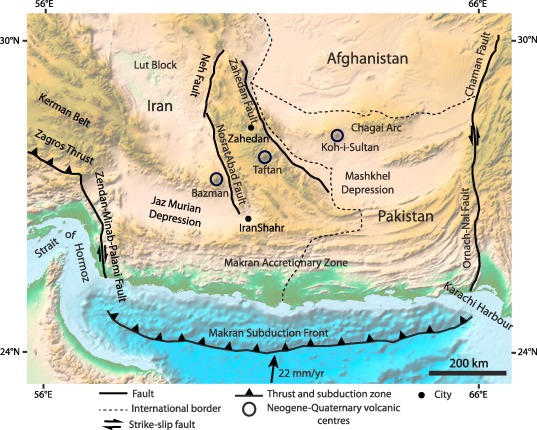
    New satellite data in Geophysical Research Letters (October 2025) shows Iran’s Taftan volcano, dormant for 710,000 years, is reactivating.

    Taftan Volcano, Iran 

    About Taftan Volcano:

    • Location: Situated in southeastern Iran, about 56 km from the Pakistan border, within the Makran continental volcanic arc.
    • Elevation: Rises to 3,940 metres (12,927 feet), Iran’s only active volcano in the Makran arc.
    • Tectonic Origin: Formed by subduction of the Arabian oceanic plate beneath the Eurasian continental plate.
    • Volcanic Type & Composition: A stratovolcano composed mainly of andesitic and dacitic lava, with pyroclastic flows and volcanic breccias.
    • Structure: Features two summits, Narkuh and Matherkuh, and extensive ignimbrite and lava fans stretching over 30 km.
    • Hydrothermal Activity: Hosts sulfur-emitting fumaroles, visible from up to 100 km, sustained by an active hydrothermal system.
    • Eruptive History: Major activity phases around 8 Ma, 6 Ma, and 0.7 Ma; last lava flow dated to about 6,950 years ago.
    • Recent Observations: 2023–24 satellite data detected 9 cm ground uplift, indicating subsurface pressure buildup and reclassification from extinct to dormant.

    Scientific Interpretation and Outlook:

    • Magma Dynamics: Uplift linked to gas accumulation or shallow magma intrusion at 490–630 m depth, possibly fed by deeper chambers (~3.5 km).
    • Current Status: No imminent eruption expected; likely pressure release via degassing or minor eruptions.
    • Monitoring Gap: Lack of ground-based GPS or seismic sensors; reliance on satellite InSAR data for deformation tracking.
    • Scientific Recommendations: Call for establishing a volcano observatory in southeastern Iran for real-time monitoring and gas analysis.
    • Regional Significance: Highlights Makran arc tectonic activity and underscores the need for international geophysical collaboration.
    • Research Importance: Taftan’s reawakening demonstrates the role of remote sensing in detecting hidden volcanic unrest and stresses continuous monitoring to assess eruption potential and regional hazard mitigation.
    [UPSC 2024] Consider the following:
    1. Pyroclastic debris 2. Ash and dust 3. Nitrogen compounds 4. Sulphur compoundsHow many of the above are products of volcanic eruptions?Options: (a) Only one (b) Only two (c) Only three (d) only four*


  • UN Global Geospatial Information Management for Asia and the Pacific (UN-GGIM-AP)

    Why in the News?

    India has been elected as Co-Chair of the Regional Committee of the United Nations Global Geospatial Information Management for Asia and the Pacific (UN-GGIM-AP) for a three-year term till 2028.

    About UN-GGIM-Asia and the Pacific (UN-GGIM-AP):

    • Objective: Maximises social, economic, and environmental benefits of geospatial data through regional collaboration, innovation, and policy harmonisation.
    • Overview: It is one of the five regional committees under the UN Committee of Experts on Global Geospatial Information Management (UN-GGIM).
    • Function: Serves as the highest inter-governmental platform in the region for joint decision-making on geospatial data generation, governance, and utilisation.
    • Mandate: Coordinates geospatial policy, promotes data standardisation, and supports applications in sustainable development, disaster management, and environmental monitoring.
    • Establishment: Formed in 1995 as the Permanent Committee on GIS Infrastructure for Asia and the Pacific (PCGIAP); rebranded in 2012 following UN-GGIM’s global launch in 2011.
    • Membership: Comprises 56 national geospatial agencies from across the Asia-Pacific region.
    • Secretariat: Hosted by the UN Economic and Social Commission for Asia and the Pacific (UN-ESCAP) since 2018, providing institutional and technical support.

    India’s Role and Significance:

    • Leadership Role: India elected Co-Chair (2025–2028), reflecting global recognition of its geospatial governance and digital mapping expertise.
    • Strategic Influence: Strengthens India’s position in regional policy formation, data ethics, and standardisation frameworks.
    • Policy Alignment: Complements India’s National Geospatial Policy 2022, Digital India, and PM GatiShakti National Master Plan initiatives.
    • Regional Contribution: India to lead capacity-building, data interoperability, and open-access frameworks for disaster management and climate resilience.
    • Institutional Integration: Links ISRO’s remote sensing and Survey of India’s ground mapping to regional development goals.
    • Global Impact: Positions India as a knowledge hub in geospatial innovation and ensures its active role in defining global spatial data standards for sustainable growth.
    [UPSC 2023]  Consider the following infrastructure sectors :

    1. Affordable housing 2. Mass rapid transport 3. Health care 4. Renewable energy

    On how many of the above does UNOPS Sustainable Investments in Infrastructure and Innovation (S3i) initiative focus for its investments?

    Options: (a) Only one (b) Only two (c) All three* (d) All four


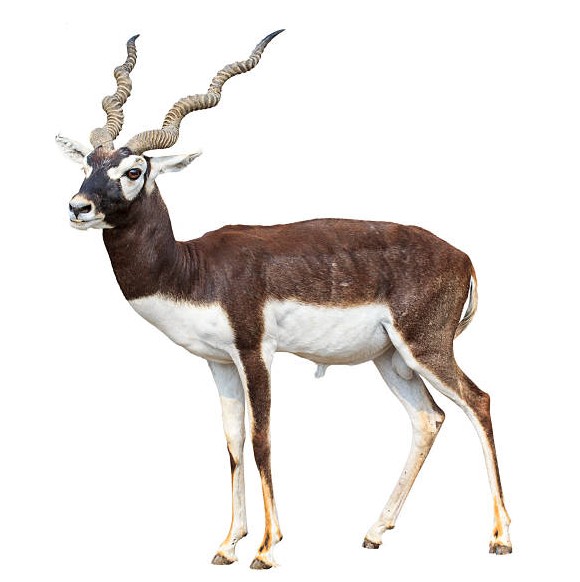
  • Blackbuck Re-Introduction in Chhattisgarh

    Why in the News?

    Chhattisgarh launched a five-year Blackbuck Reintroduction Plan (2021–2026) at Barnawapara Wildlife Sanctuary to revive the species after 50 years of local extinction.

    Blackbucks have vanished from Chhattisgarh by the 1970s, primarily due to poaching, habitat loss, and grassland encroachment.

    About the Blackbuck (Antilope cervicapra):

    • Habitat: Native to India and Nepal, commonly found in Rajasthan, Gujarat, Madhya Pradesh, Odisha, and Tamil Nadu.
    • Physical Traits: Medium-sized antelope with males having spiral horns and black coats; known as the fastest land mammal in India.
    • Behaviour: Diurnal grazer that thrives in open plains and grasslands.
    • Ecological Role: Serves as an indicator species for grassland ecosystem health.
    • State Animal: Designated as the State Animal of Punjab, Haryana, and Andhra Pradesh.
    • Cultural Symbolism: Represents purity in Hinduism and good fortune in Buddhism.
    • Legal Protection:
      • Wildlife (Protection) Act, 1972: Schedule I.
      • IUCN Red List: Least Concern.
      • CITES: Appendix III.
    [UPSC 2017] In India, if a species of tortoise is declared protected under Schedule I of the Wildlife (Protection) Act, 1972, what does it imply?

    Options: (a) It enjoys the same level of protection as the tiger. *

    (b) It no longer exists in the wild, a few individuals are under captive protection; and how it is impossible to prevent its extinction.

    (c) It is endemic to a particular region of India.

    (d) Both (b) and (c) stated above are correct in this context.


  • Restoring fiscal space for the states

    Introduction

    India’s fiscal federalism has long been guided by the principle of cooperative balance, where both the Centre and States share resources, responsibilities, and accountability. However, the post-GST era has altered this equilibrium. The recent merger of the GST compensation cess with regular tax marks a watershed moment, ending an era of fiscal cushioning for States and raising pressing questions about States’ financial independence.

    With rising public aspirations, widening service delivery gaps, and increased welfare commitments, States are grappling with constrained fiscal space. The centralisation of taxation powers, growing dependence on Central transfers, and the limited flexibility to raise revenue are redefining India’s fiscal federalism.

    Why in the News?

    The abolition of the GST compensation cess, after five years of implementation, marks a turning point in India’s fiscal framework. For the first time since GST’s rollout in 2017, the compensation mechanism, which assured States 14% annual revenue growth, has ended.

    This is significant because:

    • The cess previously cushioned States from revenue shortfalls during GST transition.
    • Its removal exposes the true fiscal capacity of States, revealing wide disparities in revenue generation.
    • The Centre’s growing use of cesses and surcharges, which are not shareable with States, has further squeezed State finances.
    • The resulting imbalance has rekindled the debate on “fiscal autonomy versus fiscal efficiency.”

    Evolving Fiscal Architecture

    How has GST altered India’s tax landscape?

    1. Shift from origin-based to destination-based taxation: GST replaced multiple State taxes with a unified structure, eroding the States’ control over indirect taxes.
    2. Shared tax base: Both Centre and States levy GST, but decision-making lies with the GST Council, where the Centre has a dominant role.
    3. Erosion of fiscal autonomy: States lost independent authority to adjust tax rates or design fiscal responses tailored to their economies.
    4. Cess and surcharge dominance: These have become a parallel fiscal instrument for the Centre, bypassing the divisible tax pool.

    Changing Centre–State Financial Relations

    How have constitutional mechanisms evolved over time?

    1. Articles 268–293 define the fiscal relationship between Centre and States.
    2. The Finance Commission (Article 280) determines devolution, but several States allege that the criteria penalise progressive, industrial States.
    3. With the abolition of the Planning Commission in 2014, only two main transfer channels remain, Finance Commission grants and Centrally Sponsored Schemes (CSS).
    4. Article 282 allows discretionary Central grants, often perceived as politically influenced, affecting opposition-ruled States disproportionately.

    Declining Devolution and Fiscal Dependence

    How serious is the resource imbalance between Centre and States?

    1. Despite recommendations of 42% devolution (14th Finance Commission), actual transfers as a share of gross tax revenue have declined.
    2. Cesses and surcharges, which are non-shareable, reached ₹3.86 lakh crore (RE 2024–25) and are projected at ₹4.23 lakh crore (BE 2025–26).
    3. Central transfers still account for 44% of States’ revenue receipts, ranging from 72% for Bihar to 20% for Haryana, highlighting the uneven dependency landscape.
    4. The Centre collects 67% of total tax revenue, while States handle over 52% of total expenditure, particularly in health, education, and agriculture.
    5. This structural mismatch constrains States’ fiscal flexibility and deepens intergovernmental friction.

    Emerging Demands for Fiscal Reforms

    What are States and experts proposing for fiscal autonomy?

    1. Restructuring tax-sharing principles: Revisiting Finance Commission formulas to reflect true expenditure needs and reward performance equitably.
    2. Personal Income Tax sharing: Proposal to share or allow States to “top up” the personal income tax base to reduce fiscal dependence.
    3. Learning from Canada: Canadian provinces collect 54% of taxes and spend 60%, offering a model of greater subnational flexibility.
    4. Transparent devolution: Merging cesses and surcharges into the divisible pool could enhance transparency and equity.
    5. Independent fiscal oversight: Establishing a permanent intergovernmental fiscal council for mediation and coordination.

    The Way Forward: Towards Cooperative Fiscal Federalism

    How can fiscal space be restored to States?

    1. Revisit GST architecture: Grant States limited powers to vary tax rates within a band for specific commodities or services.
    2. Rationalise CSS schemes: Allow greater flexibility for States to design locally suited welfare interventions.
    3. Enhance fiscal responsibility: Encourage States to improve tax compliance, widen base, and adopt technology-driven revenue administration.
    4. Periodic fiscal reviews: Institutionalise data-based monitoring to balance efficiency with equity.
    5. Political cooperation: Encourage a non-partisan GST Council model where fiscal debates remain guided by economic logic, not politics.

    Conclusion

    India’s growth story is fundamentally federal. The vitality of its States determines the resilience of its economy. As the GST compensation era ends and States’ expenditure responsibilities rise, restoring their fiscal autonomy is essential for sustainable growth. True cooperative federalism demands not just consultation but real power-sharing in fiscal decision-making. Empowering States fiscally is not a concession — it is a constitutional necessity for a balanced and vibrant India.

    PYQ Relevance

    [UPSC 2024] What changes has the Union Government recently introduced in the domain of Centre-State relations? Suggest measures to be adopted to build the trust between the Centre and the States and for strengthening federalism.

    Linkage: The phasing out of the GST compensation cess and rising use of non-shareable cesses and surcharges reflect the Centre’s growing fiscal dominance, compelling States to seek reforms in tax devolution to rebuild trust and uphold true cooperative federalism.

  • Carbon Di-oxide Levels in 2024 set new records: WMO

    Why in the News?

    The World Meteorological Organization (WMO) reported that carbon dioxide (CO₂) concentrations reached a record 423.9 ppm in 2024, marking the highest annual increase (3.5 ppm) since global measurements began in 1957.

    About WMO Report 2025:

    • Publisher: Issued by the World Meteorological Organization (WMO), the UN specialised agency for weather, climate, and water systems.
    • Document: The 2025 Greenhouse Gas Bulletin presents global atmospheric data for carbon dioxide (CO), methane (CH), and nitrous oxide (NO).
    • Global Record: Confirms 2024 as the warmest year ever, with average temperatures 1.55 °C above pre-industrial (1850–1900) levels.
    • Context & Timing: Released ahead of COP30 (Belém, Brazil) to guide mitigation policies and national climate commitments.
    • Key Warning: Notes a record surge in CO and the weakening of natural carbon sinks such as oceans and forests.

    Key Highlights about Greenhouse Gases:

    • Carbon Dioxide (CO): Global mean reached 423.9 ppm in 2024, up 3.5 ppm from 2023, the largest annual rise since 1957. Concentrations are 152 % above pre-industrial (278.3 ppm); land and ocean sinks are declining in efficiency.
    • Methane (CH): Climbed to 1,942 ppb, 166 % above pre-industrial levels; ~60 % of emissions stem from livestock, fossil fuels, and rice cultivation.
    • Nitrous Oxide (NO): Reached 338 ppb, 25 % higher than pre-industrial; emitted mainly from fertiliser use, biomass burning, and industry; the third major long-lived GHG.
    • Drivers of Increase: Human emissions, El Niño-linked droughts and wildfires, and reduced oceanic absorption, especially from the Amazon and southern Africa in 2024.

    Implications and Risks:

    • Warming Acceleration: CO₂ causes ~66 % of total warming and 79 % over the last decade; persistent buildup locks in long-term temperature rise.
    • Weakening Carbon Sinks: Warmer seas and drought-stricken lands absorb less CO₂, reinforcing a feedback loop of accumulation.
    • Extreme Events: Intensified heatwaves, floods, droughts, and wildfires signal proximity to irreversible tipping points like ice-sheet loss and coral die-off.
    [UPSC 2012] The increasing amount of carbon dioxide in the air is slowly raising the temperature of the atmosphere, because it absorbs

    Options: (a) the water vapour of the air and retains its heat.

    (b) the UV part of the solar radiation.

    (c) all the solar radiations.

    (d) the infrared part of the solar radiation. *


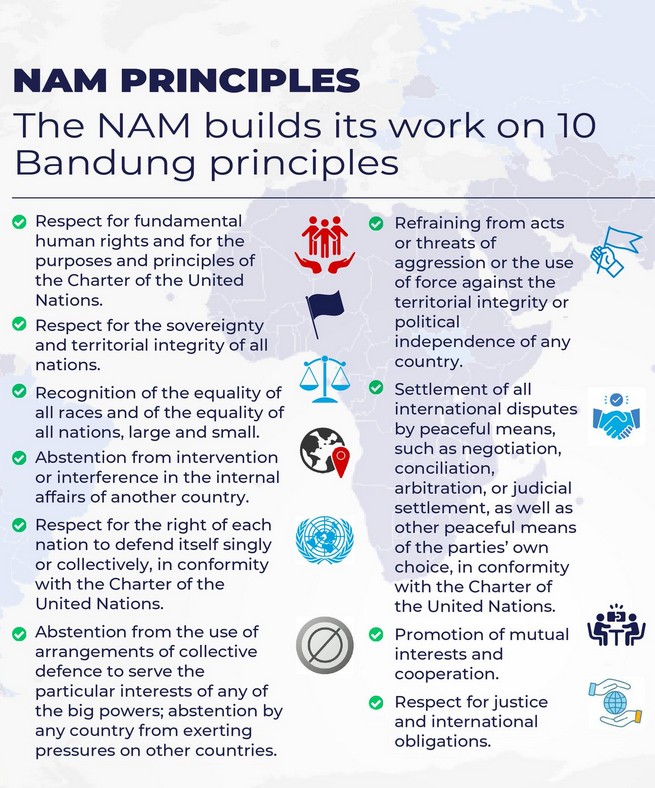
  • Non-Aligned Movement (NAM)

    Why in the News?

    The 19th Non-Aligned Movement (NAM) Mid-Term Ministerial Meeting was recently held in Kampala, Uganda.

    About the Non-Aligned Movement (NAM)

    • Overview: A grouping of states not formally aligned with or against any major power bloc, established to uphold sovereignty, independence, and neutrality during the Cold War.
    • Formation: Founded in 1961 at Belgrade, Yugoslavia, emerging from the 1955 Bandung Conference (Indonesia) which laid down the Ten Principles of Bandung as its ideological foundation.
    • Founding Leaders:
      1. Jawaharlal Nehru (India)
      2. Gamal Abdel Nasser (Egypt)
      3. Josip Broz Tito (Yugoslavia)
      4. Ahmed Sukarno (Indonesia)
      5. Kwame Nkrumah (Ghana)
    • Membership:
      • 120 countries: 53 from Africa, 39 from Asia, 26 from Latin America & the Caribbean, and 2 from Europe.
      • Includes Palestine as a member and 17 observer nations with 10 observer organisations.
      • Represents nearly 60% of UN membership, making it the second-largest intergovernmental bloc after the UN.
    • Structure: NAM functions without a permanent secretariat, charter, or budget, relying on rotational leadership and consensus-driven decision-making.

    Non-Aligned Movement (NAM)

    India’s Contemporary Role in NAM:

    • India advocates for reinvigorating NAM as a platform for South-South cooperation in technology, trade, and climate resilience.
    • It seeks to make NAM relevant in a multipolar world, focusing on digital equity, global governance reforms, and sustainable development.
    • India views NAM not as an anti-West bloc but as a forum of balanced autonomy, promoting strategic non-alignment and global partnership in the 21st century.
    [UPSC 2009] Among the following Presidents of India, who was also the Secretary General of Non-Aligned Movement for some period ?

    Options: (a) Dr. Sarvepalli Radhakrishnan (b) Varahairi Venkatagiri (c) Giani Zail Singh * (d) Dr. Shanker Dayal Sharma