💥Join UPSC 2027,2028 Mentorship (July Batch) + XFactor Notes & Microthemes PDF

Distribution: yearly

  • Tillari Conservation Reserve

    The Maharashtra state forest department on declared 29.53 sq. km area of Dodamarg forest range in Sindhudurg district as ‘Tillari Conservation Reserve’.

    Note the differences between Conservation Reserves and Community Reserves. Their shuffled meanings can be asked directly in statements based MCQs.

    Tillari Conservation Reserve

    • This area is known to serve as a corridor and even as a habitat for the population of tigers and elephants moving between the three states of Goa, Karnataka and Maharashtra.
    • The 38-km-long Dodamarg wildlife corridor that connects Radhanagari Wildlife Sanctuary in Maharashtra to Bhimgad Wildlife Sanctuary in Karnataka frequently witnesses elephant and tiger movement.
    • Tillari will be the seventh corridor in the state to be declared as a ‘conservation reserve’.

    What are Conservation Reserves?

    • They denote protected areas which typically act as buffer zones to or connectors and migration corridors between established national parks, wildlife sanctuaries and reserved and protected forests.
    • Such areas are designated if they are uninhabited and completely owned by the Government of India but used for subsistence by communities if part of the lands is privately owned.
    • Administration of such reserves would be through local people and local agencies like the gram panchayat, as in the case of communal forests.

    What are Community Reserves?

    • They are the first instances of private land being accorded protection under the legislature.
    • It opens up the possibility of communally owned for-profit wildlife resorts, and also causes privately held areas under non-profit organizations like land trusts to be given protection.
    • These protected area categories were first introduced in the Wildlife (Protection) Amendment Act of 2002 − the amendment to the Wildlife Protection Act of 1972.
    • These categories were added because of reduced protection in and around existing or proposed protected areas due to private ownership of land, and land use.
  • Timbuktu: The faraway land

    Timbuktu is a western African city whose name is a metaphor for a place too exotic and remote to even imagine, now is in the grasp of Covid-19.

    Try this question from CSP 2018:

    Q.Very recently, in which of the following countries have lakhs of people either suffered from severe famine/acute malnutrition or died due to starvation caused by war/ethnic conflicts?

    (a) Angola and Zambia

    (b) Morocco and Tunisia

    (c) Venezuela and Colombia

    (d) Yemen and South Sudan

    Timbuktu

    • Timbuktu is a city in Mali, situated 20 km north of the Niger River.
    • The mystique of Timbuktu owes a lot to its inaccessibility, which continues even today.
    • It is located on the southern tip of the Sahara desert where there is nothing but thousands of miles of barren desert to its north.
    • It was a regional trade centre in medieval times, where caravans met to exchange salt from the Sahara Desert for gold, ivory, and slaves from the Sahel, which could be reached via the nearby Niger River.
  • West Bank Annexation Plan

    Israeli PM Benjamin Netanyahu confirmed that the Israeli leader’s plan to annex parts of the occupied West Bank would not start on the original target date as the British PM made an extraordinary appeal to Israel to call off the plan.

    The strategic location of Gaza strip, West Bank, Dead Sea etc. creates a hotspot for a possible map based prelims question. 

    Consider this PYQ from 2015 CSP:

    Q. The area known as ‘Golan Heights’ sometimes appears in the news in the context of the events related to:

    a) Central Asia
    b) Middle East
    c) South-East Asia
    d) Central Africa

    Must read:

    [Burning Issue] West Asia Peace Plan

    Where is West Bank Located?

    • The West Bank is located to the west of the Jordan River.
    • It is a patch of land about one and a half times the size of Goa, was captured by Jordan after the 1948 Arab-Israeli War.
    • Israel snatched it back during the Six-Day War of 1967 and has occupied it ever since.
    • It is a landlocked territory, bordered by Jordan to the east and Israel to the south, west, and north.
    • Following the Oslo Accords between the Israeli government and the Palestine Liberation Organization (PLO) during the 1990s, part of the West Bank came under the control of the Palestinian Authority.
    • With varying levels of autonomy, the Palestinian Authority controls close to 40 per cent of West Bank today, while the rest is controlled by Israel.
  • United Nations Convention Against Torture (UNCAT)

    The alleged torture and custodial killing of TN father and son by police last week pointed towards a broken criminal justice system and highlighted the need for police reforms and the ratification of the United Nations Convention Against Torture (UNCAT).

    Practice question for mains:

    Q.There is an urgent need for reforming the criminal justice system in India in light of rising cases of custodial torture and killings. Comment.

    United Nations Convention Against Torture (UNCAT)

    • The UNCAT is an international human rights treaty, under the review of the UN and was adopted in 1984.
    • It aims to prevent torture and other acts of cruel, inhuman, or degrading treatment or punishment around the world.
    • The convention requires states to take effective measures to prevent torture in any territory under their jurisdiction and forbids states to transport people to any country where there is reason to believe they will be tortured.
    • Since the convention’s entry into force, the absolute prohibition against torture and other acts of cruel, inhuman, or degrading treatment or punishment has become accepted as a principle of customary international law.

    The Committee against Torture (CAT)

    • It is a body of human rights experts that monitors implementation of the Convention by State parties.
    • The Committee is one of eight UN-linked human rights treaty bodies.
    • All state parties are obliged under the Convention to submit regular reports to the CAT on how rights are being implemented.
    • Upon ratifying the Convention, states must submit a report within one year, after which they are obliged to report every four years.
    • The Committee examines each report and addresses its concerns and recommendations to the State party in the form of “concluding observations.”
    • Under certain circumstances, the CAT may consider complaints or communications from individuals claiming that their rights under the Convention have been violated.

    Optional Protocol to CAT

    • The Optional Protocol to the Convention against Torture and other Cruel, Inhuman or Degrading Treatment or Punishment (OPCAT) was adopted by the General Assembly on 18 December 2002.
    • It provides for the establishment of a system of regular visits undertaken by independent international and national bodies to places where people are deprived of their liberty, in order to prevent torture and other cruel, inhuman or degrading treatment or punishment.

    India needs to ratify UNCAT

    • India signed the convention in 1997 but it remains among a handful of countries including Pakistan and China which are yet to ratify the convention.
    • India is in the company of 25 other nations which have not ratified.
    • The National Human Rights Commission had said custodial violence and torture are already “rampant” in the country.
    • About 1,731 people had died in custody in 2019 a/c to NHRC report.
  • Central Zoo Authority (CZA)

    The Environment Ministry has reconstituted the Central Zoo Authority (CZA) to include an expert from the School of Planning and Architecture, Delhi, and a molecular biologist.

    Note following things about CZA:

    1)Its constitution under any Act

    2)Composition

    3)Roles and functions

    About CZA

    • The CZA is the body of the government responsible for oversight of zoos constituted under the section 38A of Wild Life (Protection) Act 1972.
    • The main objective of the authority is to complement the national effort in the conservation of wildlife.
    • Standards and norms for housing, upkeep, health care and overall management of animals in zoos have been laid down under the Recognition of Zoo Rules, 1992.

    Roles & Functions

    • The Authority’s role is more of a facilitator than a regulator.
    • It, therefore, provides technical and financial assistance to such zoos which have the potential to attain the desired standard in animal management.
    • Primary function– grant of recognition and release of financial assistance.
    • It also regulates the exchange of animals of endangered category Listed under Schedule-I and II of the Wildlife (Protection) Act among zoos.
    • Exchange of animals between Indian and foreign zoos is also approved by the Authority before the requisite clearances under EXIM Policy and the CITES permits are issued by the competent authority.
    • The Authority also coordinates and implements programmes on capacity building of zoo personnel, planned breeding programmes and ex-situ research including biotechnological intervention for the conservation of species for complementing in-situ conservation efforts in the country.

    Composition

    • Apart from the chairman, it consists of 10 members and a member-secretary.
    • Almost all of them are officials in the Environment Ministry and NGO experts are those who are wildlife conservationists or retired forest officers.
  • State of the World Population Report 2020

    The UNFPA has released the State of the World Population Report 2020.

    Highlights of the WPR

    I) Global prospects

    • According to estimates averaged over a five year period (2013-17), annually, there were 1.2 million missing female births, at a global level.
    • The same study shows that in Afghanistan, Bangladesh and Pakistan excess female mortality of girls below 5 years of age was under 3 per cent.
    • These skewed numbers translate into long-term shifts in the proportions of women and men in the population of some countries, the report points out.
    • In many countries, this results in a “marriage squeeze” as prospective grooms far outnumber prospective brides, which further results in human trafficking for marriage as well as child marriages.

    II) Data on India

    • India had about 4,60,000 girls ‘missing’ at birth each year.
    • The figure shows that the number of missing women has more than doubled over the past 50 years, who were at 61 million in 1970.
    • The report examines the issue of missing women by studying sex ratio imbalances at birth as a result of gender-biased sex selection as well as excess female mortality due to deliberate neglect of girls because of a culture of son preference.
    • Excess female mortality is the difference between observed and expected mortality of the girl child or avoidable death of girls during childhood.
    • The report cites a 2014 study to state that India has the highest rate of excess female deaths at 13.5 per 1,000 female births or one in nine deaths of females below the age of 5 due to postnatal sex selection.

    About UNFPA

    • The United Nations Population Fund (UNFPA), formerly the United Nations Fund for Population Activities, is a UN organization.
    • It is the lead UN agency for delivering a world where every pregnancy is wanted, every childbirth is safe and every young person’s potential is fulfilled.
    • Their work involves the improvement of reproductive health; including the creation of national strategies and protocols, and birth control by providing supplies and services.
    • The organization has recently been known for its worldwide campaign against child marriage, obstetric fistula and female genital mutilation.
  • In news: Santhal Rebellion

    Covid-19 pandemic has led to the cancellation of annual public observance of Hul in Jharkhand.

    Try this question from CSP 2018:

    Q.After the Santhal uprising subsided, what was/ were the measure/measures taken by the colonial government?

    1. The territories called ‘Santhal Paraganas’ were created.
    2. It became illegal for a Santhal to transfer land to a non Santhal.

    Select the correct answer using the code given below:

    (a) 1 only

    (b) 2 only

    (c) Both 1 and 2

    (d) Neither 1 nor 2

    Hul Divas

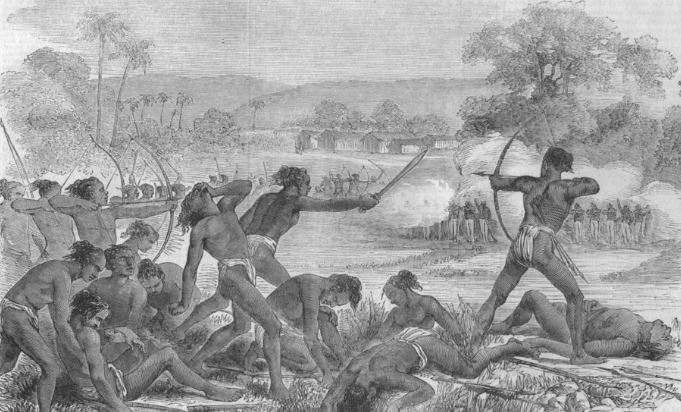
    • Hul Divas is observed annually on June 30 in memory of tribals — Sidho and Kanhu Murmu — who led the Santhal Hul (rebellion) on June 30, 1855, at Bhognadih in Sahebganj district.

    About Santhal Rebellion

    • The Santhals of Rajmahal Hills resented the oppression by revenue officials, police, money-lenders, and landlords—in general, by the “outsiders’ (whom they called diku).
    • The Santhals under Sido and Kanhu rose up against their oppressors, declared the end of the Company’s rule and asserted themselves independent in 1854.
    • It was only in 1856 after extensive military operations that the situation was brought under control. Sido died in 1855, while Kanhu was arrested in 1866.
    • A separate district of Santhal Parganas was created by the Government to pacify the Santhals.

    Must read:

    Tribal Issues | Part 2 | Pre Independence Tribal Revolts

  • G4 Flu virus and it’s pandemic potential

    In new research, scientists from China – which has the largest population of pigs in the world – have identified a “recently emerged” strain of influenza virus that is infecting Chinese pigs and that has the potential of triggering a pandemic.

    Practice question for mains:

    Q.What are zoonotic diseases? Why China has emerged as the epicentre of global outbreaks of zoonotic disease?

    G4 Flu

    • Named G4, the swine flu strain has genes similar to those in the virus that caused the 2009 flu pandemic.
    • The scientists identified the virus through surveillance of influenza viruses in pigs that they carried out from 2011 to 2018 in ten provinces of China.
    • They also found that the G4 strain has the capability of binding to human-type receptors (like, the SARS-CoV-2 virus binds to ACE2 receptors in humans).
    • The virus was able to copy itself in human airway epithelial cells, and it showed effective infectivity and aerosol transmission.

    Swine industry is the new hotspot for zoonoses

    • The scientists report that the new strain (G4) has descended from the H1N1 strain that was responsible for the 2009 flu pandemic.
    • Pigs are intermediate hosts for the generation of pandemic influenza virus.
    • Thus, systematic surveillance of influenza viruses in pigs is a key measure for pre-warning the emergence of the next pandemic influenza.

    Back2Basics: 2009 swine flu pandemic

    • The WHO declared the outbreak of type A H1N1 influenza virus a pandemic in 2009 when there were around 30,000 cases globally.
    • It was caused by a strain of the swine flu called the H1N1 virus, which was transmitted from human to human.
    • Influenza viruses that commonly circulate in swine are called “swine influenza viruses” or “swine flu viruses”.
    • Like human influenza viruses, there are different subtypes and strains of swine influenza viruses. Essentially, swine flu is a virus that pigs can get infected by.
    • The symptoms of swine flu include fever, cough, sore throat, body aches, headaches, chills and fatigue.
  • Species in news: Assam keelback snake

    More than a century after it was first seen, the Assam keelback — a snake species endemic to the region — was rediscovered in 2018 at the Poba Reserve Forest (RF) by a team from Wildlife Institute of India (WII).

    Try this question from CSP 2018:

    Q.In which one of the following State Pakhui Wildlife Sanctuary is located?

    (a) Arunachal Pradesh (b) Manipur (c) Meghalaya (d) Nagaland

    Assam Keelback Snake

    • The species is small — about 60 cm long, brownish, with a patterned belly.
    • This particular keelback does not belong to the generalized keelback snake of India but is rather a unique genus (Herpetoreas).
    • It was discovered 129 years ago by Samuel Edward Peel, a British tea planter based in Upper Assam.
    • The snake’s ‘lost’ status has a lot to do with the habitat it occupies — in this case, a lowland evergreen forest.
    • These forests have been selectively degraded during the last 100 years: tea plantations have been made, selective logging has taken place, and many other activities such as oil exploration and coal mining.

    Is the snake under threat?

    • Most snakes and other reptiles are categorised as ‘data deficient’ in the IUCN list.
    • There is practically no information available about it and it is difficult to determine its status.
  • What is the STARS Project?

    The World Bank has approved a $500 million Strengthening Teaching-Learning and Results for States Program (STARS) to improve the quality and governance of school education in six Indian states.

    Try this question:

    Q. The STARS Project recently seen in news is an initiative of:

    World Bank/ Bill and Melinda Gates Foundation / UNECOSOC/ UNICEF

    STARS Project

    • The STARS project will be implemented through the Samagra Shiksha Abhiyan, the flagship central scheme.
    • The six states include- Himachal Pradesh, Kerala, Madhya Pradesh, Maharashtra, Odisha and Rajasthan.
    • It will help improve learning assessment systems, strengthen classroom instruction and remediation, facilitate school-to-work transition, and strengthen governance and decentralized management,
    • Some 250 million students (between the age of 6 and 17) in 1.5 million schools and over 10 million teachers will benefit from the STARS program.
    • STARS will support India’s renewed focus on addressing the ‘learning outcome’ challenge and help students better prepare for the jobs of the future – through a series of reform initiatives.

    Reform initiatives under STARS

    • Focusing more directly on the delivery of education services at the state, district and sub-district levels by providing customized local-level solutions towards school improvement.
    • Addressing demands from stakeholders, especially parents, for greater accountability and inclusion by producing better data to assess the quality of learning.
    • Equipping teachers to manage this transformation by recognizing that teachers are central to achieving better learning outcomes. The program will support individualized, needs-based training for teachers that will give them an opportunity to have a say in shaping training programs and making them relevant to their teaching needs.
    • Investing more in developing India’s human capital needs by strengthening foundational learning for children in classes 1 to 3 and preparing them with the cognitive, socio-behavioural and language skills to meet future labour market needs.

    Issues with the project

    • First, it fails to address the basic capacity issues: major vacancies across the education system from District Institutes of Education and Training (DIETs), district and block education offices, to teachers in schools, remain unaddressed.
    • Without capable and motivated faculty, teacher education and training cannot be expected to improve.
    • Second, the Bank ignores that decentralizing decision-making requires the devolution of funds and real decision-making power.
    • Greater decentralisation can allow accountability to flow to the people rather than to supervising officers.
    • It requires not just investment in the capacity of the front-line bureaucracy but also in increasing their discretionary powers while fostering social accountability.