💥Join UPSC 2027,2028 Mentorship (July Batch) + XFactor Notes & Microthemes PDF

Distribution: yearly

  • SDR general allocation by IMF

    • Finance Minister has said that India could not support a general allocation of new Special Drawing Rights (SDR) by the IMF because it might not be effective in easing coronavirus-driven financial pressures.
    • FM Nirmala Sitharaman has stated that such a global liquidity boost by the IMF could produce potentially costly side-effects if countries used the funds for “extraneous” purposes.

    Details of SDR mechanism:

    What is SDR?

    • The SDR is an interest-bearing international reserve asset created by the IMF in 1969 to supplement other reserve assets of member countries.
    • To participate in this system, a country was required to have official reserves.
    • This consisted of a central bank or government reserves of gold and globally accepted foreign currencies that could be used to buy the local currency.
    • It is based on a basket of international currencies comprising the U.S. dollar, Japanese yen, euro, pound sterling and Chinese Renminbi.
    • It is not a currency, nor a claim on the IMF, but is potentially a claim on freely usable currencies of IMF members.
    • The value of the SDR is not directly determined by supply and demand in the market but is set daily by the IMF on the basis of market exchange rates between the currencies included in the SDR basket.

    Who can hold SDRs?

    • SDRs can be held and used by member countries, the IMF, and certain designated official entities called “prescribed holders”.
    • It cannot be held, for example, by private entities or individuals.
    • Its status as a reserve asset derives from the commitments of members to hold, accept, and honour obligations denominated in SDR.
    • The SDR also serves as the unit of account of the IMF and some other international organizations.

    General allocation of SDRs

    • An SDR allocation is a low-cost way of adding to members’ international reserves, allowing members to reduce their reliance on more expensive domestic or external debt for building reserves.
    • The IMF has the authority under its Articles of Agreement to create unconditional liquidity through “general allocations” of SDRs to participants in its SDR Department (currently, all members of the IMF) in proportion to their quotas in the IMF.

    The SDR Interest Rate

    • The interest rate on SDRs, or the SDRi, provides the basis for calculating the interest rate that is charged to member countries when they borrow from the IMF and paid to members for their remunerated creditor positions in the IMF.
    • It is also the interest paid to member countries on their own SDR holdings and charged on their SDR allocation.
    • The SDRi is determined weekly based on a weighted average of representative interest rates on short-term government debt instruments in the money markets of the SDR basket currencies, with a floor of five basis points.

    How many SDRs have been allocated so far?

    The general SDR allocation of August 28, 2009 is by far the biggest allocation to date:

    • SDR 9.3 billion was allocated in yearly installments in 1970–72.
    • SDR 12.1 billion was allocated in yearly installments in 1979–81.
    • SDR 161.2 billion was allocated on August 28, 2009.

    What happens to the SDRs once they are allocated?

    • The IMF’s SDR Department keeps records of members’ SDR allocations and holdings; the SDR Department is also the channel through which all transactions and operations involving SDRs are conducted.
    • Once allocated, members can hold their SDRs as part of their international reserves or sell part or all of their SDR allocations.
    • Members can exchange SDRs for freely usable currencies among themselves and with prescribed holders; such exchange can take place under a voluntary arrangement or under designation by the Fund.
    • IMF members can also use SDRs in operations and transactions involving the IMF, such as the payment of interest on and repayment of loans, or payment for future quota increases.

    Issues with new allocations

    • New reserves are allocated according to members’ quotas — or shares in the IMF.
    • A great deal of the benefit in 2009 went to advanced economies that didn’t need help in accessing markets or financing fiscal deficits.
    • If the same system is being used now, only 40 per cent of the total would be given to the emerging economies. That is not good enough.

    Other reasons

    • The possible extraneous purposes FM could be referring to maybe misuse of resources for terror funding or some such purpose by neighbours.
    • This may seem far-fetched to some, but is par for the course for the government.
    • The other possibility is that India is merely trying to prove its loyalty to the Trump administration.
    • India has already requested to access the US Fed’s currency swaps.
  • Matterhorn Mountain of the Swiss Alps

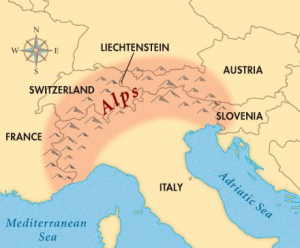
    Switzerland has expressed solidarity with India in its fight against the coronavirus pandemic by projecting the tricolour on the famous Matterhorn Mountain in the Swiss Alps.

    It has been long time since a question on global mountains/mountain ranges has not been asked in the prelims. Gear up for the uncertainty. Make a special sheet of geographical locations in news.

    Mt. Matterhorn

    • The Matterhorn is a mountain of the Alps, separating the main watershed and border between Switzerland and Italy.
    • It is a large, near-symmetric pyramidal peak in the extended Monte Rosa area of the Pennine Alps, whose summit is 4,478 metres.
    • It is one of the highest summits in the Alps and Europe (Mont Blanc being highest).
    • The four steep faces, rising above the surrounding glaciers, face the four compass points and are split by the Hörnli, Furggen, Leone/Lion, and Zmutt ridges.

    Its formation

    • The Matterhorn is mainly composed of gneisses originally fragments of the African Plate before the Alpine orogeny.
    • The mountain’s current shape is the result of cirque erosion due to multiple glaciers diverging from the peak, such as the Matterhorn Glacier at the base of the north face.

    Back2Basics: Alps mountain range

    • The Alps are the highest and most extensive mountain range system that lies entirely in Europe.
    • It stretches approximately 1,200 kilometres across eight Alpine countries (from west to east): France, Switzerland, Monaco, Italy, Liechtenstein, Austria, Germany, and Slovenia.
    • The mountains were formed over tens of millions of years as the African and Eurasian tectonic plates collided.
    • Extreme shortening caused by the event resulted in marine sedimentary rocks rising by thrusting and folding into high mountain peaks such as Mont Blanc and the Matterhorn.
    • Mont Blanc spans the French–Italian border, and at 4,809 m (15,778 ft) is the highest mountain in the Alps.
  • Time for govt, RBI to rethink bank architecture

    To deal with the damage inflicted by the corona crisis on the economy, both the RBI and the government are planning various monetary and fiscal measures. In its latest measures, the RBI has further reduced the reverse repo rate. This article discusses the impact of these measures and explains why the first round of measures failed in achieving the desired result.

    What was announced in the second round of policy measures by the RBI?

    • RBI reduces the interest on money banks keep in the central bank (reverse repo down by 25 basis points).
    • RBI gives ₹50,000 crores to banks through targeted long-term repo operations or TLTRO 2.
    • And another ₹50,000 crores to Small Industries Development Bank of India (Sidbi) and National Bank for Agriculture and Rural Development (Nabard) to lend to microfinance institutions (MFIs) and non-banking financial companies (NBFCs).

    Banks not transmitting the money

    • Banks globally have a problem.
    • They are not transmitting the money that central banks are providing to businesses that need the money.
    • Imagine that the world has been put into a business coma as we wait for the pandemic to recede.
    • Money to pay rents, interest and salaries is needed by the business to stay alive during this period and banks are showing reluctance to step in.
    • Firms and tiny entrepreneurs need to borrow to stay afloat.
    • Banks typically lend to the larger part of the market and NBFCs and MFIs to the rest—they provide the last mile that banks do not.

    Measures by the RBI to increase the money supply in the market

    • The US Fed buying bonds directly: The US Federal Reserve has taken to buying corporate bonds directly rather than through banks.
    • RBI has not gone that far, but is using its firepower to nudge banks to lend to those who are credit-worthy and who desperately need the money.
    • It has done two things to facilitate this.

    What reduction in Reverse Repo rate by the RBI means?

    • What is reverse repo rate? This is the rate at which banks lend to the central bank—they keep their surplus money with the RBI and get some interest on it.
    • Banks borrow from RBI at the repo rate, which is 4.4% right now.
    • A few weeks ago, the central bank had reduced the reverse repo by a larger percentage than the repo to decrease the incentive to banks to keep money with RBI.
    • But that had a limited impact as on 15 April, banks still had almost ₹7 trillion with the RBI under this window.
    • In the second round, RBI has cut the reverse repo by another 25 basis points to 3.75% to increase the difference between the borrowing rate and the lending rate.
    • What would be the impact of the second reduction in the reverse repo? The RBI is hoping that this would make banks lend to firms, rather than keeping their money safe with RBI.
    • The difference between the rate of borrowing and lending is now 65 basis points.

    An issue of monetary policy transmission is a recurring one. The RBI always try to ensure the transmission but there are several factor that prevent it. Make note of these factors.

    Risk aversion of the banks

    • Banks are displaying deep risk aversion—the desire to keep their capital safe rather than risk investing in investment-worthy bonds.
    • The first round of money put into the system through TLTRO 1.0, brought ₹1 trillion.
    • TLTRO is long-term (one-to-three years) funding to banks at the repo rate or a short-term rate.
    • TLTRO money didn’t reach small and medium firms: Banks took the cheap loan and lent to high-rated public sector units (PSUs) and AA-plus firms—essentially entities who had enough liquidity.
    • The money did not find its way to smaller and medium firms, NBFCs and MFIs—entities that actually reach the last mile.
    • RBI has put another ₹50,000 crores as part of TLTRO 2.0.
    • Banks can only get this money if they lend to NBFCs and MFIs.
    • For A and A-minus (these are still investment-worthy) bonds issued by firms in these sectors, banks stand to get a return of between 10-14%.
    • Banks are borrowing at 4.4% and have the option to lend at a multiplier.
    • That is the incentive given by the RBI to get money down the pipeline.
    • Banks stand to lose 65 basis points if they seek the safety of money with the RBI or stand to gain almost 6-10 percentage points in interest if they lend.
    • It remains to be seen if banks take this nudge and begin lending to lower than the highest safety bonds.

    Refinance to three institutions

    • Another ₹50,000 crores is being provided as a refinance to three institutions-Sidbi, Nabard and National Housing Bank.
    • These banks reach the small-scale firms, rural sector, housing finance firms, NBFCs and MFIs.
    • Again, this should help money reach the last mile.
    • Clearly, there is too much competition at the top end of the market—everybody wants the safe paper and deals.

    The UPSC could ask a direct question with reference to the issue of policy transmission and how it is a serious challenge in crisis such as Covid -19. So, following are some suggestions to deal with this issue.

    Way forward

    • Rethink the bank architecture: With transmission, or the liquidity given by the central bank not going down the line, maybe this is a good time for the government and the RBI to rethink its bank architecture.
    • Develop bond a corporate bond market: There is very little action at the middle and lower end of the market. The development of a robust corporate bond market will help.
    • Early alarm system: The setting up of an early alarm system as proposed by the Financial Resolution and Deposit Insurance (FRDI) Bill to prevent a financial firm failure that takes the whole system down would be a step in the right direction.

    Back2Basics: What is the transmission of monetary policy?

    • Monetary transmission refers to the process by which a central bank’s monetary policy signals (like repo rate) are passed on, through the financial system to influence the businesses and households.
    • There are many monetary policy signals by the RBI; the most powerful one is the repo rate.
    • When repo rate is changed, it brings changes in the overall interest rate in the economy as well.
    • As a result of a decrease in repo rate, the interest rate on loans by banks also changes and this encourages consumption and investment activities of businesses and households.
    • In an economy, both consumption and investment are often financed by borrowings from banks.
    • As the repo rate brings changes in market interest rate, the repo rate channel is often referred to as interest rate channel of monetary transmission.
  • A virus, social democracy, and dividends for Kerala

    This article is an analysis of Kerala’s success in dealing with the Covid-19. Factors that emerge are-strong emphasis on the social democracy, the participation of civil society and strong social compact between the government and citizenry. We have also covered the same subject in a previous article but focus there was more on the administrative level.

    Kerala’s success story

    • Kerala was the first State with a recorded case of coronavirus and once led the country in active cases.
    • It now ranks 10th of all States and the total number of active cases (in a State that has done the most aggressive testing in India) has been declining for over a week and is now below the number of recovered cases.
    • Given Kerala’s population density, deep connections to the global economy and the high international mobility of its citizens, it was primed to be a hotspot.
    • Yet not only has the State flattened the curve but it also rolled out a comprehensive ₹20,000 crore economic package before the Centre even declared the lockdown.

    Why does Kerala stand out in India and internationally?

    • Kerala’s much-heralded success in social development has invited endless theories of its cultural, historical or geographical exceptionalism.
    • But taming a pandemic and rapidly building out a massive and tailored safety net is fundamentally about the relation of the state to its citizens.
    • From its first Assembly election in 1957, through alternating coalitions of Communist and Congress-led governments, iterated cycles of social mobilisation and state responses have forged what is in effect a robust social democracy.
    • The current crisis underscores the comparative advantages of social democracy.

    Kerala’s success is built on social democracy in the state. Following are the factors that constitute the social democracy in the state which is helping it fight against the Covid-19 pandemic with considerable success. These factors are also important from the Mains point of view if the question is framed on Kerala’s success story.

    How social democracy is practised in Kerala?

    • Social democracies are built on an encompassing social pact with a political commitment to providing basic welfare and broad-based opportunity to all citizens.
    • In Kerala, the social pact itself emerged from recurrent episodes of popular mobilisation.
    • Popular mobilisations include the temple entry movement of the 1930s to the most recent various gender and environmental movements.
    • These movements nurtured a strong sense of social citizenship.
    • These movements also drove reforms that have incrementally strengthened the legal and institutional capacity for public action.
    • Second, the emphasis on rights-based welfare has been driven by and in turn has reinforced a vibrant, organised civil society.
    • This civil society demands continuous accountability from front-line state actors.
    • Third, this constant demand-side pressure of a highly mobilised civil society and a competitive party system has pressured all governments in Kerala.
    • The pressure made governments to deliver public services and to constantly expand the social safety net, in particular a public health system that is the best in India.
    • Fourth, that pressure has also fuelled Kerala’s push over the last two decades to empower local government.
    • Nowhere in India are local governments as resourced and as capable as in Kerala.
    • Finally, all of this ties into the greatest asset of any deep democracy, that is the generalised trust that comes from a State that has a wide and deep institutional surface area.
    • That on balance treats people not as subjects or clients, but as rights-bearing citizens.

    How the built-in social democracy is helping in dealing with the pandemic?

    • A government’s capacity to respond to a cascading crisis such as the COVID-19 pandemic relies on a very fragile chain of –(1)mobilising financial and societal resources, (2)getting state actors to fulfil directives, (3)coordinating across multiple authorities and jurisdictions and maybe, most importantly, (4)getting citizens to comply.
    • First, an effective response begins with programmatic decision-making.
    • From the moment of the first reported case in Kerala, Chief Minister convened a State response team that coordinated 18 different functional teams.
    • The CM held daily press conferences and communicated constantly with the public.
    • Kerala’s social compact demanded no less.
    • Second, the government was able to leverage a broad and dense health-care system.
    • The health-care system, despite the recent growth of private health services, has maintained a robust public presence.
    • Kerala’s public health-care workers are also of course highly unionised and organised, and from the outset the government lay emphasis on protecting the health of first responders.
    • Third, the government activated an already highly mobilised civil society.
    • As the cases multiplied, the government called on two lakh volunteers to go door to door, identifying those at risk and those in need.
    • A State embedded in civil society — the women’s empowerment Kudumbasree movement being a case in point.
    • Kudumbasree movement was in a good position to co-produce effective interventions, from organising contact tracing to delivering three lakh meals a day through Kudumbasree community kitchens.
    • Fourth, you can get the politics right and you can have a great public health-care system, but its effectiveness in a crisis like this will only be as good as the infamous last kilometre.
    • And this is where two decades of empowering local governments have clearly paid off.

    Conclusion

    At a time when India is dealing with this unprecedented crisis, it is important to be reminded that Kerala has managed the crisis with the most resolve, the most compassion and the best results of any large State in India. And that it has done so precisely by building on legacies of egalitarianism, social rights and public trust. Other states and the Central government must learn from Kerala’s experience.

  • Institutional fixes and the need for ethical politics

    The article discusses the recent event in Madhya Pradesh where a group of legislature resigned bringing down the government. A most important issue arising out such incidents is circumventing of the laws made to avoid such things from happening. Several such issues along with their solutions are described here.

    New method to bypass the anti-defection law

    • The political activities in Madhya Pradesh represent a new method of bypassing the anti-defection law and toppling elected governments.
    • The government in Karnataka was brought down in July last year in a similar manner with 17 MLAs of the ruling coalition resigning and joining the BJP.
    • What method was used? Under this novel method, a set of legislators of the party in power is made to resign from the Assembly to reduce the total strength of the House enough for the opposition party to cross the halfway mark to form the government.
    • In the ensuing by-elections, the members who resigned were then fielded as ruling party candidates (most of whom have been re-elected in the case of Karnataka).
    • The same practice is likely to be repeated in Madhya Pradesh soon.

    A question based on anti-defection law and its implication for healthy debate in the parliament was asked in 2013. And that issues still persist. So, take note of these issues.

    Exploiting the loophole in the Tenth Schedule

    • This method of mass defection circumvents the provisions of the Tenth Schedule of the Constitution (better known as the anti-defection law)
    • What is the Tenth Schedule? The tenth schedule prescribes the grounds for disqualification of legislators: voluntarily giving up party membership and voting or abstaining to vote against party directions.
    • Resignation is not mentioned as a ground for disqualification.
    • However, the Speaker in Karnataka disqualified them for the rest of the Assembly’s term, thereby barring them from contesting the by-polls.
    • While the Supreme Court upheld the disqualification.
    • It stuck down the bar from contesting by-polls.
    • In Madhya Pradesh, since the Speaker has accepted the resignation of the MLAs, the defectors can in any case contest the by-polls.

    Damaging the underpinnings of democracy

    • The recurrence of this model of defection signals the exploitation of the inherent weaknesses of the anti-defection law.
    • While solo legislators jumping ship might have reduced now, “horse-trading” seems to have gone from retail to wholesale.
    • This threatens the underpinnings of India’s electoral democracy since such surreptitious capture of power essentially betrays the people’s mandate in a general election.

    Kihoto case is an important case in relation to the anti-defection law.

    Time to reframe the anti-defection law

    • In this context, it is important to examine whether the anti-defection law fulfils any purpose.
    • This law raises fundamental concerns regarding the role of a legislator in a parliamentary democracy.
    • Issues with the law: It denies the legislator the right to take a principled position on a policy matter and reduces her to an involuntary supporter of the whims of party bosses.
    • Challenge to the constitutionality: The constitutionality of the Tenth Schedule was challenged for violating the Basic Structure of Constitution with regard to parliamentary democracy and free speech.
    • Judicial review of the Speaker’s decision: The Supreme Court in Kihoto Hollohan v. Zachillhu (1992) in a 3-2 verdict upheld the law while reserving the right of judicial review of the Speaker’s decision.

    What are the shortcomings in the anti-defection law?

    • Restriction on the freedom of legislator: The anti-defection law, on the one hand, severely restricts the freedom of a legislator and makes her a slave of party whips.
    • Failure in preventing the horse-trading: On the other hand, it has not been able to meet its primary objective of preventing horse-trading and continues to be circumvented to bring down elected governments.
    • This calls for reforms that address concerns at both ends of the spectrum.

    Following two are the solutions offered here. They are important from Mains point of view. As solutions are often asked for the pressing issues.

    Dinesh Goswami Committee and other suggestion

    • Restrict the scope of the binding whip: For addressing the first issue, as the Dinesh Goswami Committee also suggested, the scope of the binding whip should be restricted to a vote of confidence.
    • For addressing the second issue, it is best to institutionalise the Karnataka Speaker’s decision to bar the defected members from contesting in the ensuing by-poll, if not for a longer period.
    • This will disincentivise MLAs from jumping ship.
    • These reforms would require a constitutional amendment to the Tenth Schedule, an uphill task under the current circumstances.

    Conclusion

    We are facing a deeper challenge of the corrosion of India’s parliamentary system, for even in jurisdictions without such anti-defection laws, we do not see “horse-trading” and “resort politics”. Hence, beyond institutional fixes, we also need a popular articulation of an ethical politics that causes the public to shun such political manoeuvres.


    Back2Basic: What is the Tenth Schedule?

    • The Tenth Schedule was inserted in the Constitution in 1985.
    • It lays down the process by which legislators may be disqualified on grounds of defection by the Presiding Officer of a legislature based on a petition by any other member of the House.
    • A legislator is deemed to have defected if he either voluntarily gives up the membership of his party or disobeys the directives of the party leadership on a vote.
    • This implies that a legislator defying (abstaining or voting against) the party whip on any issue can lose his membership of the House.
    • The law applies to both Parliament and state assemblies.
    • Exceptions under the law: Legislators may change their party without the risk of disqualification in certain circumstances.
    • The law allows a party to merge with or into another party provided that at least two-thirds of its legislators are in favour of the merger.
    • In such a scenario, neither the members who decide to merge nor the ones who stay with the original party will face disqualification.
    • Is there any time limit to decide on the matter? The law does not specify a time period for the Presiding Officer to decide on a disqualification plea.
    • Given that courts can intervene only after the Presiding Officer has decided on the matter, the petitioner seeking disqualification has no option but to wait for this decision to be made.
  • Virus outbreak can potentially spur the next quantum leap for computing

    The article suggests that the corona crisis would speed up research in the field of quantum computing. The tremendous speed offered by quantum computers will help us find a cure for diseases like Covid-19 in a much shorter duration. This article explains the limitations of classical computers, working of quantum technology, and how quantum computer overcomes these limitations.

    Use of supercomputer to find the cure of Covid-19

    • The whole world is pressurized into quickly discovering a vaccine and a cure for covid-19.
    • IBM’s Summit, the world’s fastest supercomputer, was used for running numerous simulations and computations.
    • These simulations and computations help scientists find promising molecules to fight the pandemic.
    • The latest update says the Summit has been able to identify 77 candidate molecules that researchers can use in trials.
    • This was achieved in just two days, while, traditionally, it has taken months to make such progress.

    Computing capacity as a limit on molecular discoveries

    • Today, faster molecular discoveries are limited by computing capacity.
    • Molecular discoveries are also limited by the need for scientists to write codes for harnessing the computing power.
    • It is no secret that classical computing power is plateauing (e. it is not growing anymore)
    • And till we have scalable artificial intelligence (AI) and machine learning (ML), scientists will have to write code for not only different scenarios but also for different computing platforms.
    • So, what we need today is more computing power.

    The following points explain the limits of classical computers. Pay attention to the Moore’s law, and how it explains the development of semiconductor technologies and in turn computers as a whole.

    What is the solution to the limits of classical computers?

    • Given that we have already neared the peak of classical computing, the solution probably is quantum computing.
    • Not just vaccines, quantum computing can accelerate many innovations, such as hyper-individualized medicines, 3-D printed organs, search engines for the physical world etc.
    • All innovations currently constrained by the size of transistors used in classical computing chips can be unleashed through quantum computing.
    • Moore’s law: In 1965, Gordon Moore had said the number of transistors that can be packed into a given unit of space will double about every two years.
    • Subsequently, in an interview in 2005, he himself admitted that this law can’t continue forever.
    • He had said: “It is the nature of exponential functions, they eventually hit a wall.”
    • Over the last 60 years, we reaped the benefits of Moore’s law in many ways.
    • For instance, compared to initial days of the Intel 4004, the modern 14nm processors deliver way bigger impact—3,500 times better performance and 90,000 times improved efficiency, at 1/60,000th the cost!
    • Yet, we are also seeing his 2005 statement coming true. All the experts agree that the ‘wall’ is very near.
    • So, what next? The answer again is probably the same—quantum computing.

    Quantum technology is one of the emerging and revolutionary technologies, you should be aware of the terms and general principle which lies at the heart of such technology. So, terms like superposition, qubit, binary etc are important if you want to answer a questions related to this technology.

    Quantum computing and its applications

    • It is no more a concept, there are working models available on the cloud.
    • How it works: Quantum computing uses the ability of sub-atomic particles to exist in multiple states simultaneously, until it is observed.
    • The concept of qubits: Unlike classical computers that can store information in just two values, that is 1 or 0, quantum computing uses qubits that can exist in any superposition of these values,
    • This superposition enables quantum computers to solve in seconds problems which a classical computer would take thousands of years to crack.
    • Applications: The application of this technology is enormous, and just to cite a few, it can help with the discovery of new molecules, optimize financial portfolios for different risk scenarios.
    • It can also crack RSA encryption keys, detect stealth aircraft, search massive databases in a split second and truly enable AI.

    Investment in the development of technology

    • In the Union budget this year, the Indian government announced investments of ₹8,000 crores for developing quantum technologies and applications.
    • Globally, too, countries and organizations are rushing to develop this technology and have already invested enormous capital towards its research.

    Conclusion

    Historically, unprecedented crises have always created more innovations than routine challenges or systematic investments. Coincidentally, current times pose similar opportunities in disguise for the development of quantum technologies.


    Back2Basics: Difference between bit and qubit

    • A binary digit, characterized as 0 and 1, is used to represent information in classical computers.
    • A binary digit can represent up to one bit of information, where a bit is the basic unit of information.
    • In classical computer technologies, a processed bit is implemented by one of two levels of low DC voltage.
    • And whilst switching from one of these two levels to the other, a so-called forbidden zone must be passed as fast as possible, as electrical voltage cannot change from one level to another instantaneously.
    • There are two possible outcomes for the measurement of a qubit—usually taken to have the value “0” and “1”, like a bit or binary digit.
    • However, whereas the state of a bit can only be either 0 or 1, the general state of a qubit according to quantum mechanics can be a coherent superposition of both.
    • Moreover, whereas a measurement of a classical bit would not disturb its state, a measurement of a qubit would destroy its coherence and irrevocably disturb the superposition state.
    • It is possible to fully encode one bit in one qubit.
    • However, a qubit can hold more information, e.g. up to two bits using superdense coding.
    • For a system of n components, a complete description of its state in classical physics requires only n bits, whereas in quantum physics it requires 2n−1 complex numbers.
  • What nation can learn from Kerala in the fight against Covid-19?

    With figures emerging of Kerala’s success in dealing with the Covid-19, the rest of the nation has lessons to learn from it. This article describes the approach adopted by Kerala, and how various factors like robust health infrastructure, past experience etc. are helping it.

    Kerala stands out in India: some figures and facts

    • The COVID curve in Kerala is flattening.
    • Every day, for a week now, the number of recoveries has exceeded the number of new infections.
    • The recovery rate in Kerala is nearly 50 per cent while the all-India average is around 11.
    • While the mortality rate among the infected is 5 per cent in Kerala, the all-India average is 3.4 per cent.
    • The transmission rate of a primary carrier is 6 while in Kerala it is only 0.4.

    With Covid-19, we are in unknown territory in many ways. If Kerala emerges as the success model, the question can be framed from that perspective. So, note down the factors described below that are helping the state in tackling Covid-19 successfully.

    Preparing for the next challenge

    • Kerala is preparing for the next challenge, the outcome of which will determine the result of the war against COVID.
    • Lifting of the lockdown is going to result in an influx of returning migrants from foreign countries and other states.
    • Hundreds of thousands would have to be quarantined, tested and, if positive, treated, ensuring there is no secondary spread.
    • State authorities have already identified accommodation and other facilities for more than two lakh persons.
    • Use of big data analytics: The state is also exploring the possibility of big data analytics to plan a strategy and, if necessary, for reverse quarantining.
    • Authorities have access to WHO data covering nearly two-thirds of the state`s population.
    • Integrating this data with the information currently being generated, we will be able to map vulnerable sections of the population, simulate scenarios and plan ahead.
    • Exit strategy: An exit strategy from the lockdown is being prepared to protect livelihoods and stimulate the economy.

    Strength of the public health system of Kerala

    • The single most important factor that enabled Kerala to be prepared for the COVID is the strength of the public health system.
    • Kerala’s health system is a proud legacy of our past.
    • It has had a big push in infrastructure and equipment investment of around Rs 4,000 crore from the Kerala Infrastructure Investment Fund Board.
    • Five thousand seven hundred and seventy-five new posts have also been created.
    • The Aardram Health Mission was launched with a focus to transform the PHCs into family health centres.
    • Distinctive feature: There is also the distinctive flavour of Kerala — mass participation in preventive and palliative healthcare.
    • Training to health workers: The morale of health personnel has been exceptionally high.
    • Special training, protective gear, scientific duty rotation and, most importantly, societal empathy and solidarity, have all contributed.

    Learning from the past experience

    • Nipah outbreak experience: The recent experiences of successful containment of the Nipah outbreak and management of the two post-flood health situations have provided a kind of herd immunity to the health workers to crisis situations.
    • Covid-19 preparedness: Once news of the Wuhan pandemic came, the Kerala health system scrambled to readiness — the control room was set up, mock drills were organised and the first influx was contained.
    • Once migrants from the Gulf and Europe began to return, things began to get out of hand.
    • But now this battle has been successfully concluded.

    Testing and tracing in Kerala

    • A route map of each COVID positive case is prepared and given publicity, alerting everybody who might have been in contact.
    • The protocol of cycles of intense test, trace, isolate and treatment has been the norm.
    • Kerala has the highest test rate in the country.
    • Break the Chain Campaign to promote social distancing has been successful.
    • Lockdown by itself is not going to contain the COVID spread. It would continue to multiply within households and dormitories.
    • Testing has been woefully insufficient in the national response so far.

    Welfare payment in Kerala more than the rest of the country

    • In Kerala, 55 lakh elderly and disadvantaged have received Rs 8,500 as welfare payments.
    • An equal number of workers have been paid Rs 1,000-3,000 each from the welfare funds.
    • Every family has been provided with a food kit.
    • Interest-free consumption loan of Rs 2,000 crore has been distributed.
    • Besides, nearly 4 lakh meals are distributed every day to the needy from community kitchens set up by local governments.
    • Local governments are also duty-bound to monitor the camps of migrant workers, set up new ones and ensure medicine and food to them.

    Decentralisation paying off in Kerala

    • All the above was not made possible by the state government alone.
    • It is the synergy generated by integrating state government plans and programmes with the local governments, the co-operatives, women neighbourhood groups (Kudumbashree) and civil society organisations that make Kerala distinct.
    • The floods and the pandemic have given testimony for the potential of democratic decentralisation.
    • It is a case of multi-level planning with technical committees and groups working at the state level coordinated by the chief minister.

    Conclusion

    Though it is too early to declare Kerala as a success story, still there are many lessons to be learned by the rest of the country in its fight against Covid-19.

  • What is Post-intensive Care Syndrome (PICS)?

    • Various news reports in recent weeks have pointed out that for some COVID-19 patients who needed intensive care, the journey to recovery is a long one.
    • After leaving the ICU, they may suffer from what is known as post-intensive care syndrome (PICS), which can happen to any person who has been in the ICU.

    Infectious disease outbreaks, like the current Coronavirus (COVID-19), can be scary and can affect our mental health. This pandemic is going to leave a bigger trauma for those who had lost their dear ones as well those who recovered.

    What is PICS?

    • PICS comprise impairment in cognition, psychological health and physical function of a person who has been in the ICU.
    • Further, such patients may experience neuromuscular weakness, which can manifest itself in the form of poor mobility and recurrent falls.
    • The psychological disability may arise in a person in the form of depression, anxiety and post-traumatic stress disorder (PTSD).

    Its symptoms

    • The most common PICS symptoms are generalized weakness, fatigue, decreased mobility, anxious or depressed mood, sexual dysfunction, sleep disturbances and cognitive issues.
    • These symptoms may last for a few months or many years after recovery, the authors of the aforementioned article note.
    • Patients who develop this may take at least a year to fully recover, until which time they may have difficulty in carrying out everyday tasks such as grooming, dressing, feeding, bathing and walking.

    What causes PICS?

    • A combination of factors can affect aspects of an ICU survivor’s life.
    • PICS may be induced if a person was on prolonged mechanical ventilation, experienced sepsis, multiple organ failure and a prolonged duration of “bed-restore deep sedation”.

    Treatment

    • It is recommended that to avoid PICS, patients’ use of deep sedation is limited and early mobility is encouraged, along with giving them “aggressive” physical and occupational therapy.
    • Further, patients should be given the lowest dose of pain medications when possible and should be put on lung or cardiovascular rehabilitation treatments along with treatments for depression, anxiety and PTSD.
  • [pib] Amendment to the Environment Impact Assessment (EIA) Notification, 2006

    To address unprecedented situation arising from the global outbreak of COVID-19 and to ramp up availability or production of various drugs, the MoEFCC has made an amendment to EIA Notification 2006.

    EIA is a process of evaluating the likely environmental impacts of a proposed project or development, taking into account inter-related socio-economic, cultural and human-health impacts, both beneficial and adverse.  Its a hot topic for mains.

    What is the amendment about?

    • All projects or activities in respect of bulk drugs and intermediates, manufactured for addressing various ailments, have been re-categorized from the existing Category ‘A’ to ‘B2’ category.
    • Projects falling under Category B2 are exempted from the requirement of collection of Baseline data, EIA Studies and public consultation.
    • The re-categorization of such proposals has been done to facilitate decentralization of appraisal to State Level so as to fast track the process.

    Projects Categorization and Clearance under EIA

    • Environmental clearance is required in respect of all new projects or activities listed in the Schedule to the 2006 notification and their expansion and modernization, including any change in product –mix.
    • Since EIA 2006 the various developmental projects have been re-categorised into category ‘A’ and category ‘B’ depending on their threshold capacity and likely pollution potential.
    • They require prior EC respectively from MOEFCC or the concerned State Environmental Impact Assessment Authorities (SEIAAs).
    • Where state-level authorities have not been constituted, the clearance would be provided by the MOEFCC.

    Back2Basics: Environmental Impact Assessment (EIA) in India

    • EIA is a management tool to minimize adverse impacts of developmental projects on the environment and to achieve sustainable development through timely, adequate, corrective and protective mitigation measures.
    • The MoEFCC uses EIA Notification 2006 as a major tool for minimizing the adverse impact of rapid industrialization on the environment and for reversing those trends which may lead to climate change in the long run.
    • EIA has now been made mandatory under the Environmental (Protection Act, 1986 for 29 categories of developmental activities involving investments of Rs. 50 crores and above.

    EIA stages

    • Screening: This stage decides which projects a full or partial assessment need study.
    • Scoping: This stage decides which impacts are necessary to be assessed. This is done based on legal requirements, international conventions, expert knowledge and public engagement. This stage also finds out alternate solutions that avoid or at least reduce the adverse impacts of the project.
    • Assessment & evaluation of impacts and development of alternatives: This stage predicts and identifies the environmental impacts of the proposed project and also elaborates on the alternatives.
    • EIA Report: In this reporting stage, an environmental management plan (EMP) and also a non-technical summary of the project’s impact is prepared for the general public. This report is also called the Environmental Impact Statement (EIS).
    • Decision making: The decision on whether the project is to be given approval or not and if it is to be given, under what conditions.
    • Monitoring, compliance, enforcement and environmental auditing: This stage monitors whether the predicted impacts and the mitigation efforts happen as per the EMP.
  • Government must fix an upper limit for fiscal deficit

    D. Subbarao in this article discusses how the government is facing the hard choice of choosing between saving lives and saving the economy. On the government’s response on economic front he argues that the government, unlike the rich countries should keep an upper limit on its spending because of the dangers involved in unrestricted spending.

    Why the dilemma is sharpest for India?

    • This dilemma is arguably the sharpest for India.
    • Because of our high population density and poor medical infrastructure, any laxity in prevention can result in a huge health disaster.
    • On the other hand, an extended lockdown will force millions into the margins of subsistence, push small and large firms alike into bankruptcy, seriously impair financial stability and land us in a humanitarian and economic disaster.

    Why is the relief package criticised as too little?

    • After the lockdown, the government announced a relief package amounting to 0.8 per cent of GDP, that’s been criticised as being too little.
    • From a study of a sample of countries, the latest issue of The Economist reports that India’s lockdown has been the most stringent while its fiscal relief package is the smallest in proportion to GDP.

    What could be the reasons for a cautious approach in the relief package?

    • A possible explanation for the government’s timid fiscal response may be the fear of spooking the market.
    • For years, every economist and analyst has been warning the government of the dire consequences of fiscal irresponsibility.
    • And that warning message must have been so hardwired into the government’s collective mind that it was unable to get over the mental overhang.

    We should be aware of the reasons from the macroeconomic point of view that force the government to limit its fiscal deficit. In this case, India government is exercising the caution owing to the same constraints.

    Uncertainties in the crisis

    • Uncertainty is a defining feature of every crisis.
    • During the global financial crisis, a big uncertainty around the world was about how much risk there was in the system, where it lay and who was bearing it.
    • The uncertainty of the corona crisis is much deeper.
    • There are far too many known unknowns not to speak of unknown unknowns.
    • Uncertainties in corona crisis: We just don’t know enough about the effectiveness of the lockdowns, the age and gender profile of susceptibility to the virus.
    • We also don’t know about the process of recovery, the tipping point if any for mass immunity, whether the virus will attack in waves.
    • And most importantly, when we might have a vaccine and a cure.
    • Governments are, for the large part, having to fly blind.

    Issues over relief and stimulus package

    • There are many issues to be decided and planned on the way forward.
    • A big issue will be an expenditure plan for relief during the crisis and stimulus after some normalcy is restored.
    • Borrow more spend more: Even the most ardent fiscal hawks are now agreed that the government needs to abandon its fiscal reticence, and borrow more and spend more.
    • Even the most extreme monetary purists are agreed that the RBI should fund the government borrowing by printing money.
    • Even the staunchest advocates of financial stability are agreed that more regulatory forbearance is necessary.
    • And virtually everyone is agreed on where additional spending should be directed.

    Debate on how much additionally the government should borrow

    • There is disagreement on how much additionally the government should borrow.
    • There are two opposing views in this regard, which are discussed below.
    • 1. Fiscal risk without preset fiscal deficit: One view is that the government should err on the side of taking a fiscal risk without any preset fiscal deficit number.
    • It should simply determine what needs to be done and borrow to that extent, acting as if there were no fiscal constraint at all.
    • In other words, act as per the diktat of the now famous three words — “whatever it takes”.
    • 2. Set a limit: An opposing view is “whatever it takes” is not an option for India.
    • Many analysts have estimated that just the loss of revenue due to the economic shutdown will take the combined fiscal deficit of the Centre and states beyond 10 per cent of GDP.
    • The borrow and spend programme will be in addition to the above loss.
    • Unlike rich countries, we can’t afford to ignore the risks of fiscal excess of that magnitude, no matter the compelling circumstances.
    • What are the risks involved? There will be a heavy price to pay down the road by way of inflation and exchange rate volatility.

    From the UPSC point of view you must pay attention to the both the arguments made here, question can be asked in UPSC based on the suggestions and their pros and cons. Both the arguments cited above have their merits and demerits.

    Way forward

    • It’s important to keep in mind that we have resources and capability in the near future should there be another wave of the virus later in the year.
    • It will be advisable for the government to fix an upper bound for fiscal deficit and operate within that. For now, the borrow and spend programme should be restricted to 2 per cent of GDP.