💥Join UPSC 2027,2028 Mentorship (July Batch) + XFactor Notes & Microthemes PDF

Distribution: yearly

  • A long list: on the U.S., designation of The Resistance Front group

    Why in the News?

    The U.S. has designated The Resistance Front (TRF), which claimed responsibility for the Pahalgam terror attack (April 2025), as a Foreign Terrorist Organization (FTO) and Specially Designated Global Terrorist.

    What is the impact of the U.S. designating TRF as an FTO on global counterterrorism?

    • Legitimizes India’s concerns: The U.S. acknowledgment of TRF’s role in the Pahalgam terror attackstrengthens the global consensus on cross-border terror threats.
    • Links to Lashkar-e-Taiba (LeT): The U.S. designation of TRF as a front/proxy of LeT exposes the continued existence of banned groups under new names.
    • Strengthens international action: The move could help India push for sanctions against TRF at the UN’s 1267 Sanctions Committee, boosting transnational legal cooperation.

    Why is Pakistan’s claim about LeT being defunct questionable?

    • TRF’s Linkage with LeT: The U.S. designation of The Resistance Front (TRF) as a “front and proxy” for Lashkar-e-Taiba (LeT) proves that LeT continues to operate under new aliases, despite Pakistan’s claims of dismantling the group. Eg: TRF claimed responsibility for the 2025 Pahalgam attack, showing LeT’s continued operational role.
    • Continued Terror Activities: Despite LeT’s inclusion in the U.S. Foreign Terrorist Organization (FTO) list since 2001, it has repeatedly executed attacks in India, reflecting its persistent capabilities. Eg: The 2008 Mumbai attacks and later cross-border infiltrations have been linked to LeT-trained cadres.
    • International Endorsement Missing: Pakistan’s claim lacks credible global validation. Instead, it has been seen shielding TRF at the UN Security Council (UNSC), undermining its own narrative. Eg: TRF’s name was excluded from the UNSC resolution on the Pahalgam attack, reportedly due to Pakistani lobbying.

    How does the U.S. response post-Pahalgam reveal contradictions in its policy?

    • Mixed messaging: While designating TRF is a positive step, claims by the Trump administration about mediating a ceasefire and nuclear de-escalation dilute India’s counter-terror narrative.
    • Diplomatic inconsistency: Praise for Pakistan’s military chief shortly after India clarified its stance reflects a lack of consistent pressure on Pakistan to curb terrorism.
    • Missed opportunity at UNSC: The U.S. initially allowed TRF to be left out of the UNSC resolution, showing conflicting priorities between diplomacy and counterterrorism.

    What blocks India’s effort to sanction the TRF at the UNSC?

    • Veto Power Politics: The UN Security Council’s 1267 Committee requires unanimous consent among P-5 members for sanctions. Some permanent members, especially China and the U.S., have previously withheld support or yielded to Pakistan’s pressure, blocking India’s proposals. Eg: TRF’s name was omitted from the UNSC resolution on the 2025 Pahalgam attack.
    • Pakistan’s Diplomatic Shielding: Pakistan continues to lobby against designations of terror outfits like TRF, masking them as defunct or rebranded groups, and frames them as indigenous resistance, making it harder for India to gain international consensus.

    How should India strengthen its anti-terror diplomacy? (Way forward)

    • Build Strategic Alliances and International Pressure: India should deepen counter-terrorism cooperation with key countries like the U.S., France, and the UK, while mobilizing regional blocs (e.g., QUAD, BRICS) to collectively push for sanctioning terror groups at global forums like the UNSC 1267 Committee.
    • Pursue Legal and Diplomatic Action Proactively: India must file strong dossiers with evidence linking terror fronts like TRF to banned outfits like LeT and pursue timely extraditions of wanted terrorists through bilateral treaties and Interpol. Eg: The extradition request for Tahawwur Hussain Rana reflects India’s resolve to hold perpetrators accountable.

    Mains PYQ:

    [UPSC 2024] Terrorism has become a significant threat to global peace and security’. Evaluate the effectiveness of the United Nations Security Council’s Counter-Terrorism Committee (CTC) and its associated bodies in addressing and mitigating this threat at the international level.

    Linkage: The article explicitly mentions India’s hope that the U.S. designation of TRF will facilitate its designation at the UNSC under the 1267 Committee for sanctions, directly aligning with the question’s focus on international counter-terrorism mechanisms. This question directly pertains to the global challenge of terrorism and the role of international bodies like the UN Security Council.
  • Gujarat’s Tribal Genome Sequencing Project

    Why in the News?

    Gujarat has launched India’s first Tribal Genome Sequencing Project to map tribal genetic data, contributing to the national Genome India Project (GIP).

    About the Gujarat Tribal Genome Project:

    • Launch & Duration: Announced in Gujarat’s 2025–26 budget; spans 5 years under Gujarat Biotechnology Research Centre (GBRC).
    • Target Population: Focuses on genome sequencing of tribal communities forming ~15% of Gujarat’s population (~1 crore).
    • Objective: Addresses under-representation in Genome India Project (GIP), which had only ~100 tribal samples from Gujarat.
    • Sample Size: Involves 4,158 individuals, including 378 trio families, to create a 2,000-sample reference genome panel.
    • Data Collection: Includes blood, stool, genealogical, physiological, and lifestyle information.

    Key Features:

    • Precision Medicine Applications
      • Early Detection: Enables screening for sickle cell anaemia, G6PD deficiency, BRCA-linked cancers.
      • Gene-Trait Mapping: Explores genetic links to traits like agility and archery.
    • Genomic Sampling Protocol
      • Filtering: Uses SNP genotyping to remove closely related samples.
      • Sequencing: Conducts Whole Genome Sequencing (WGS) on 2,000 diverse samples via Illumina NovaSeq 6000.
      • Data Security: Employs double encryption for privacy and anonymity.

    About the Genome India Project (GIP):

    • Launch: Initiated in January 2020 by the Department of Biotechnology (DBT).
    • Structure: Multi-institutional consortium involving top Indian research bodies.
    • Objectives
      • Diversity Mapping: Decode genetic variation across Indian population.
      • Reference Panel: Build Single Nucleotide Polymorphism (SNP) -based haplotype database for Indian genomes.
      • Biobank Creation: Establish DNA reserves for research and therapy development.
    • Key Achievements
      • Sequencing Scale: 10,074 genomes sequenced from 99 ethnic groups.
      • Data Storage: Securely stored at Indian Biological Data Centre (IBDC), Faridabad.
      • Insights: Revealed rare traits aiding affordable diagnostics and predictive tools.
    • Significance
      • Global Impact: Offers India-specific insights to global genomics research.
      • Healthcare Value: Enables evidence-based, genetically informed policy and diagnosis.
    [UPSC 2017] With reference to agriculture in India, how can the technique of ‘genome sequencing’, often seen in the news, be used in the immediate future?

    1. Genome sequencing can be used to identify genetic markers for disease resistance and drought tolerance in various crop plants

    2. This technique helps in reducing the time required to develop new varieties of crop plants

    3. It can be used to decipher the host-pathogen relationships in crops

    Select the correct answer using the code given below:

    Options: (a) 1 only (b) 2 and 3 only (c) 1 and 3 only (d) 1, 2 and 3


  • BioEmu AI tool for Protein Flexibility Modelling

    Why in the News?

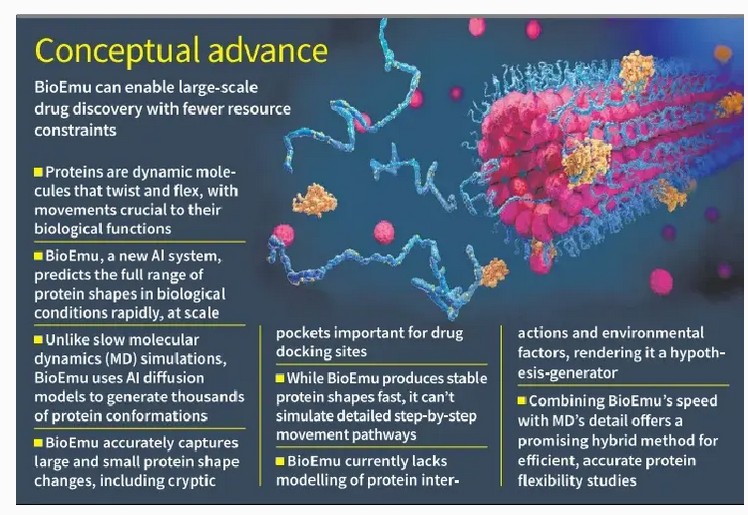
    In a breakthrough, scientists have developed BioEmu—an AI tool that predicts the full range of protein shapes, offering faster and scalable insights into protein dynamics.

    BioEmu AI tool for Protein Flexibility Modelling

    What is BioEmu?

    • Overview: It is a deep learning tool that predicts the equilibrium ensemble of a protein — meaning all the different shapes a protein can naturally take.
    • It works like diffusion models, starting with random/noisy inputs and learning to rebuild protein shapes.
    • Training: It was trained on-
      • AlphaFold structures (millions of predicted proteins)
      • Molecular dynamics (MD) simulation data (200 ms)
      • 500,000 mutant sequences from lab experiments
    • Speed: Once trained, BioEmu can quickly create thousands of 3D protein structures on a single GPU in just minutes to hours.

    Key Features of BioEmu:

    • Flexibility Capture: Shows how proteins change shape, fold/unfold, or form hidden binding pockets.
    • Accuracy:
      • Detects 83% of large and 70–81% of small shape changes.
      • Predicts open/closed forms of enzymes like adenylate kinase.
    • Mutation Analysis: Helps see how mutations affect protein structure and stability.
    • Fast & Scalable: Much faster than traditional MD simulations; works on thousands of proteins using less computing power.
    • Snapshots Only: Gives static 3D shapes, not full motion timelines.
    • Limitations: Can’t handle membrane proteins, drug molecules, or multi-chain complexes.

    Why is BioEmu Important?

    • Improves Protein Modelling: Adds to what AlphaFold does by showing how proteins move, not just what they look like.
    • Helps Drug Discovery: Finds hidden drug binding sites — speeding up the search for new medicines.
    • More Accessible: Works on basic hardware, making advanced protein modelling available to more researchers.
    • Combines with Other Tools: Can be used with molecular dynamics for deeper study.
    • Future of Research: Encourages students and scientists to learn a mix of AI, biology, and physics.
    [UPSC 2020] Which of the following statements are correct regarding the general difference between plant and animal cells?

    1. Plant cells have cellulose cell walls whilst animal cells do not.

    2. Plant cells do not have plasma membrane unlike animal cells which do.

    3. Mature plant cell has one large vacuole vacuoles.

    Select the correct answer using the code given below:

    Options: (a) 1 and 2 only, (b) 2 and 3 only, (c) 1 and 3 only * (d) 1, 2 and 3


  • [pib] India praised at Codex Executive Committee (CCEXEC88) for Millet Standards

    Why in the News?

    India recently participated in the 88th Codex Executive Committee (CCEXEC88) in Rome (14–18 July 2025), earning praise for leading global millet standards.

    About the Codex Alimentarius Commission (CAC):

    • Established: In 1963 by the Food and Agriculture Organization (FAO) and the World Health Organization (WHO).
    • Headquarters: Located in Rome, Italy.
    • Membership:
      • 189 members: 188 countries + the European Union.
      • Open to all FAO and WHO members state and associate members.
    • Objectives:
      • Protect consumer health by ensuring food safety.
      • Promote fair practices in international food trade.
      • Harmonize food standards to reduce trade disputes.
    • Key Functions:
      • Develops global standards on:
        • Food safety and hygiene
        • Food additives, contaminants
        • Residues of veterinary drugs and pesticides
        • Labelling and import/export rules
      • Sets Maximum Residue Limits (MRLs) and general/horizontal standards.
      • Supports developing countries in enhancing food safety systems.
    • Structure:
      • Executive Committee: Streamlines the Commission’s work.
      • Subsidiary Bodies:
        • General Subject Committees: Address additives, contaminants, hygiene, etc.
        • Commodity Committees: Develop product-specific standards.
        • Regional Coordinating Committees: Harmonize regional standards.
        • Task Forces: Address short-term, emerging issues.
    • Codex Alimentarius (Food Code):
      • A collection of international food standards, guidelines, and codes of practice.
      • Though voluntary, they are widely adopted, especially in international trade.
    • Relevance to WTO:
      • Codex standards are reference points under the WTO SPS Agreement for resolving trade-related food safety disputes.

    India and Codex Alimentarius Commission:

    • Member Since: 1964.
    • Active Participation:
      • India is an elected member of the Executive Committee (CCEXEC).
      • Participates in standard-setting across various food sectors.
    • Recent Contributions:
      • Chaired the development of whole millet grain standards, co-chaired with Mali, Nigeria, and Senegal.
      • Led new work on fresh dates (approved for CAC48).
      • Will co-chair future standards for fresh turmeric and broccoli.
    • Strategic Role at CCEXEC88 (Rome, July 2025):
      • Proposed SMART Key Performance Indicators for the Codex Strategic Plan 2026–2031.
      • Shared its capacity-building programs for neighbouring countries (Bhutan, Nepal, Bangladesh, Sri Lanka, Timor Leste), praised by FAO.
    • Capacity Building & Mentorship:
      • Promoted use of the Codex Trust Fund (CTF) by less active member countries.
      • Shared success stories of mentorship programmes with Bhutan and Nepal.
    • Special Role:
      • Chairs the Codex Committee on Spices and Culinary Herbs (CCSCH) since 2014.
      • Aligns domestic FSSAI standards with Codex to support export competitiveness.

    Millets and India’s Leadership in Millets Promotion:

    • Millets = Shree Anna: Renamed in the Union Budget 2023-24, emphasizing their nutritional, economic, and environmental value.
    • Types of Millets:
      • Major: Jowar (Sorghum), Bajra (Pearl Millet), Ragi (Finger Millet)
      • Minor: Foxtail, Little, Kodo, Barnyard, Proso millets
    • Key Traits:
      • Drought-resistant, short duration crops
      • Nutrient-rich: High in fiber, iron, calcium, gluten-free
      • Climate-smart and low-input, suitable for dryland farming
    • India’s Global Push:
    • Government Initiatives:
      • National Millet Mission (2007) to boost production and processing.
      • Shree Anna Abhiyan: Focus on millet-based product innovation and marketing.
      • Integration into Public Distribution System (PDS), midday meals, and armed forces’ diets.
    [UPSC 2010] As regards the use of international food safety standards as reference point for the dispute settlements, which one of the following does WTO collaborate with?

    Options: (a) Codex Alimentarius Commission * (b) International Federation of Standards Users (c) International Organization for Standardization (d) World Standards Cooperation

    https://www.pib.gov.in/PressReleasePage.aspx?PRID=2146080

  • International Moon Day

    Why in the News?

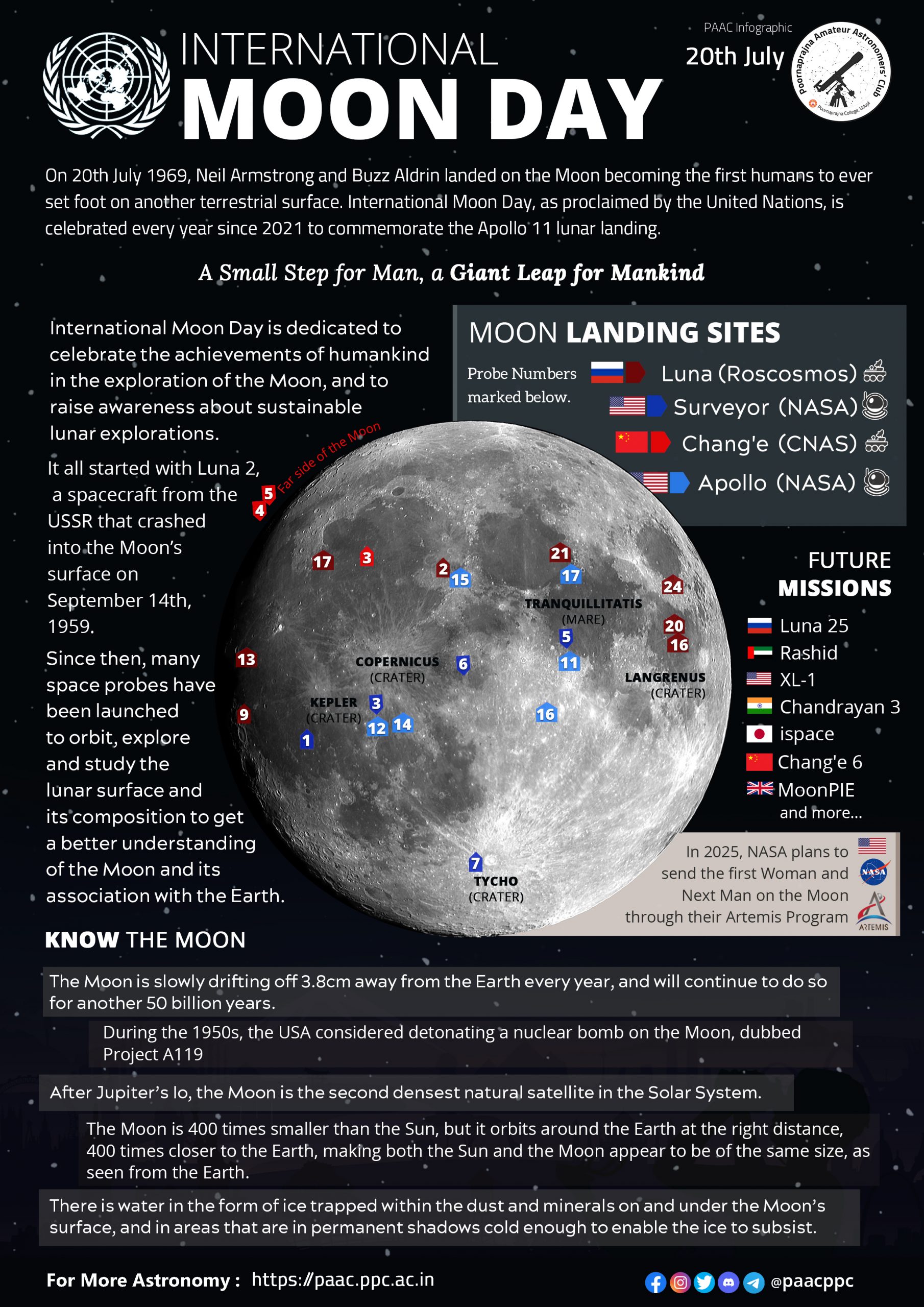
    Observed every year on July 20, the International Moon Day marks the historic first human landing on the Moon by the Apollo 11 mission in 1969.

    moon day

    About International Moon Day:

    • Date & Purpose: Observed annually on July 20 to mark the Apollo 11 Moon landing in 1969.
    • UN Recognition: Declared by the UN General Assembly in 2021 on the recommendation of COPUOS.
    • First Observance: Officially celebrated for the first time on July 20, 2022.
    • Activities: Includes sky-gazing, science outreach, and student competitions to promote space awareness.
    • Date Controversy: While the lunar module landed on July 20, Neil Armstrong stepped onto the Moon at 2:56 UTC on July 21—yet July 20 remains the official date.

    Significance:

    • Historic Milestone: Celebrates Apollo 11 and humanity’s first step on the Moon by Neil Armstrong and Buzz Aldrin.
    • Peaceful Space Use: Promotes the Moon as a shared heritage and fosters international cooperation in outer space.
    • Sustainability Focus: Encourages responsible and eco-friendly exploration of lunar resources.
    • Global Unity: Reflects the UN’s vision of peaceful space collaboration under themes like “One Moon, One Vision, One Future”.
    [UPSC 2009] India has recently landed its Moon Impact Probe on the Moon. Among the following countries, which one landed such probe on the Moon earlier?

    Options: (a) Australia (b) Canada (c) China* (d) Japan


  • Piezo- Photocatalytic Water Filter

    Why in the News?

    Indian scientists from INST Mohali, IIT-Dharwad, and IIT-Kharagpur have developed a low-cost, reusable water filter that removes toxic industrial dyes using a process called piezo-photocatalysis.

    About the Light-Induced Water Filter:

    • Material Used: Built using 3D-printed polylactic acid (PLA) sheets (a biodegradable plastic); Sheets coated with bismuth ferrite (BFO) nanoparticles.
    • Working: It works in two ways. Together, this is called piezo-photocatalysis.
      • Photocatalysis: Uses sunlight to break dye molecules.
      • Piezoelectric effect: Uses vibrations (ultrasound) to work even in the dark.
    • Reusable: Can be used 5 times with only 3% loss in performance.
    • Lab tests showed:
      • 99% Congo Red removal
      • 74% Methylene Blue removal (in 90 minutes)

    Significance:

    • Eco-Friendly Solution: Removes harmful dyes without harmful chemicals or electricity.
    • Cost-Effective: Cheaper and safer than ozone or chemical-intensive treatments.
    • Green Energy Use: Operates using sunlight and mechanical vibrations—no external power needed.
    • Policy Alignment: Supports Namami Gange, Jal Nigam, and Aatmanirbhar Bharat missions.
    • Scalability: Ideal for deployment near textile treatment plants as a sustainable technology.
    [UPSC 2023] With reference to the role of biofilters in the Recirculating Aquaculture System, consider the following statements:

    1. Biofilters provide waste treatment by removing uneaten fish feed

    2.Biofilters convert ammonia present in fish waste to nitrate

    3.Biofilters increase phosphorus as nutrient for fish in water

    How many of the statements given above are correct?

    Options: (a) Only one (b) Only two* (c) All three (d) None


  • All in one Agriculture needs more public spending, not just one umbrella scheme

    Why in the News?

    The Prime Minister Dhan-Dhaanya Krishi Yojana (PMDDKY) was recently approved by the Union Cabinet as a major reform initiative in the agriculture sector. It aims to converge 36 existing schemes across 11 departments to address regional disparities in agricultural productivity.

    What are the aims of PMDDKY (Prime Minister Dhan-Dhaanya Krishi Yojana)?

    • Address productivity disparities: The scheme aims to reduce inter-State and intra-State disparities in agricultural productivity.
    • Improve productivity & self-reliance: Focus on higher agricultural productivity, value addition, local livelihood creation, and increased domestic production to ensure self-sufficiency.
    • Holistic development: Enhance outcomes in agriculture and allied sectors through targeted intervention and convergence of schemes.
    • Private participation: Encourage local public-private partnerships for enhanced implementation and innovation.

    Why is scheme convergence under PMDDKY needed?

    • Eliminates Fragmentation of Efforts: Earlier, agricultural schemes like PM-KISAN, PMFBY, and Soil Health Card Scheme operated in silos. Eg: A farmer receiving income support under PM-KISAN might not be covered under insurance if PMFBY was poorly implemented in that region. Convergence ensures coordinated benefits.
    • Targets Low Productivity Districts: PMDDKY identifies 100 low-productivity districts using criteria like cropping intensity, credit flow, and yield gaps. Eg: A district with only 70% of national average yield can be provided tailored interventions by combining schemes like RKVY and Micro-Irrigation Fund.
    • Improves Resource Efficiency: Unified schemes allow for better fund utilisation, avoiding duplication of services or spending. Eg: Instead of running separate capacity-building programs under different departments, single training programs can be run using pooled funds from both Extension Services and Digital Agriculture Initiatives.
    • Ensures Uniform Implementation Standards: PMDDKY seeks national uniformity while allowing local customization. Eg: While standards for soil health management may be set centrally, implementation can be adapted to local conditions using district-specific plans.
    • Compensates for Declining Budget Share: Public investment in agriculture is falling (from 3.53% in 2021-22 to 2.51% in 2025-26 of the Central Plan outlay). Eg: Convergence helps make the most of limited resources by integrating multiple schemes under a single implementation umbrella.

    How do ‘District Plans’ aid agricultural reform?

    •  Localized Problem Solving: District Plans allow for the identification of region-specific challenges such as water scarcity, pest outbreaks, or poor seed quality. Eg: In Latur district (Maharashtra), which faces frequent droughts, the district plan prioritized micro-irrigation and watershed development, leading to improved water-use efficiency.
    • Customised Crop Diversification: District-level planning helps align cropping patterns with agro-climatic conditions and market demand, reducing monoculture dependency. Eg: In Koraput district (Odisha), known for tribal farming, the plan introduced millet promotion and value chain linkages, increasing income and nutritional security.
    • Efficient Use of Resources and Schemes: Integration of multiple schemes under district plans ensures better fund allocation, resource convergence, and monitoring. Eg: In Barabanki district (Uttar Pradesh), convergence of Soil Health Card, PM-KUSUM, and FPO promotion led to more sustainable and solar-powered farming practices.

    What challenges may hinder PMDDKY?

    • Administrative Coordination Across Departments: With 36 schemes under 11 departments converging, bureaucratic silos and lack of inter-departmental coordination can delay execution. Eg: In Jharkhand, similar convergence under NRLM and agriculture failed initially due to poor communication between the Rural Development and Agriculture departments.
    • Data Gaps and Poor Baseline Assessment: District-level planning requires granular, updated data on land use, cropping patterns, and farmer needs — often missing or outdated. Eg: In Dantewada (Chhattisgarh), poor digital records led to misallocation of subsidies under earlier agri-reform efforts.
    • Weak Local Institutions: PACS (Primary Agriculture Cooperative Societies) and local self-governments may lack the capacity to implement and monitor complex plans. Eg: In Banda district (U.P.), PACS struggled to handle seed distribution due to lack of trained staff and digital infrastructure.
    • Limited Private Sector Engagement in Remote Areas: Private partners may hesitate to invest in low-productivity districts due to poor infrastructure or lack of assured returns. Eg: In Kiphire (Nagaland), agri-businesses withdrew from a millet-processing initiative due to transport and power issues.
    • Farmer Awareness and Participation: Without sustained IEC (Information, Education, Communication) campaigns, farmers may not understand how to benefit from the converged schemes. Eg: In Barmer (Rajasthan), uptake of soil health and credit-linked schemes remained low due to lack of farmer outreach in vernacular languages.

    Way forward: 

    • Ensure Adequate and Sustained Funding: Increase the budgetary allocation for agriculture to reverse the current decline (only 2.51% of Central Plan outlay in 2023-24). Sufficient and stable funding will support better implementation of integrated District Plans.
    • Leverage Technology and Real-Time Monitoring: Implement digital dashboards for tracking the 117 indicators under PMDDKY and promote data-driven decision-making. This will help improve accountability, efficiency, and timely course corrections.

    Mains PYQ:

    [UPSC 2016] Considering the vulnerability of Indian agriculture to vagaries of nature, discuss the need for crop insurance and bring out the salient features of the Pradhan Mantri Fasal Bima Yojana (PMFBY).

    Linkage: The article explicitly states that the PMDDKY will subsume existing Central schemes like the Pradhan Mantri Fasal Bima Yojana (PMFBY). Therefore, a question about PMFBY is directly relevant to understanding a key component of this new “one umbrella scheme” approach.

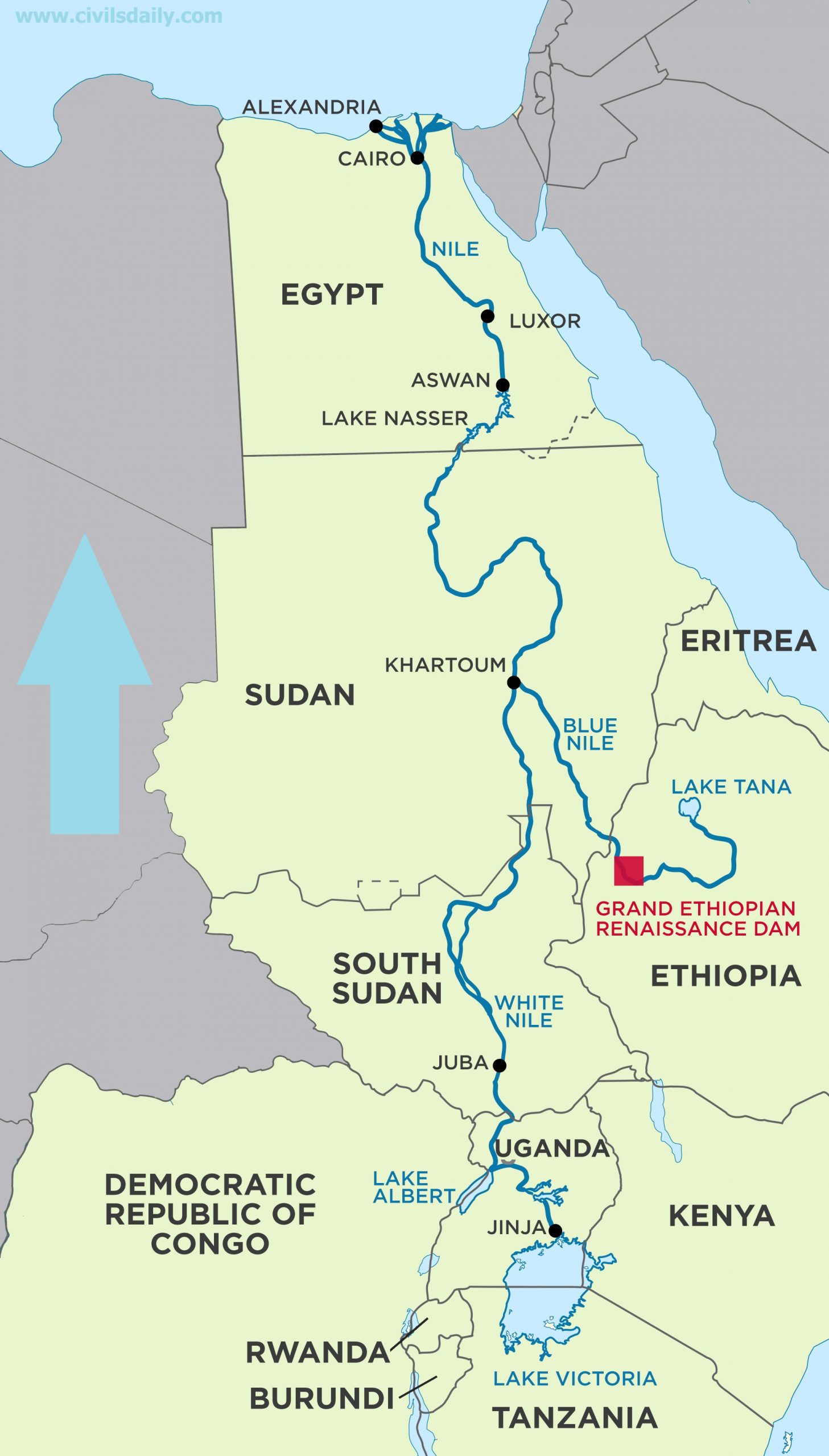
  • Disputes over Grand Ethiopian Renaissance Dam (GERD)

    Why in the News?

    The completion of Ethiopia’s Grand Ethiopian Renaissance Dam (GERD) has reignited tensions over Nile water rights, with Egypt and Sudan fearing reduced water flows.

    Disputes over Grand Ethiopian Renaissance Dam (GERD)

    About Grand Ethiopian Renaissance Dam (GERD):

    • Overview: Gravity dam on the Blue Nile near Ethiopia–Sudan border.
    • Construction Timeline: Under construction since 2011, led by Ethiopian Electric Power Corporation.
    • Capacity: Set to become Africa’s largest hydropower plant with 6.45 GW output.
    • Reservoir Size: Holds 74 billion cubic metres; filling may take 5–15 years.
    • Key Features: 145 m tall dam, 16 turbines, and a supporting saddle dam.
    • Purpose: Aims to power Ethiopia (65% population lacks electricity) and export surplus to neighbouring countries.
    • Disputes Around GERD:
      • Egypt’s Concern: Fears reduced water flow; Relies 90% on Nile; demands a binding filling agreement.
      • Sudan’s Worry: Concerns over flood risks and water regulation.
      • Ethiopia’s Stand: Asserts sovereign rights; began filling without consensus.
      • Stalled Talks: Tripartite negotiations have failed; Egypt warns of possible conflict.

    Back2Basics: Nile River

    • Overview: North-flowing, longest river in Africa at ~6,650 km.
    • Drainage Basin: Covers 11 countries—Tanzania, Uganda, Rwanda, Burundi, DRC, Kenya, Ethiopia, Eritrea, South Sudan, Sudan, and Egypt.
    • Main Tributaries:
      • White Nile: Recognized as the headstream, its most remote source is the Kagera River in Burundi, flowing through Rwanda into Lake Victoria. It officially begins at Jinja, Uganda, where it exits Lake Victoria.
      • Blue Nile: Originates from Lake Tana in Ethiopia and merges with the White Nile at Khartoum, Sudan.  Supplies over 80% of total Nile flow by the time it reaches Egypt.
    • Lifeline Status: Vital for Egypt and Sudan’s drinking water, irrigation, and energy needs.


    [UPSC 2008] Ogaden region has been a source of conflict between which countries?

    Options: (a) Morocco and Algeria (b) Nigeria and Cameroon (c) Angola and Zambia (d) Ethiopia and Somalia*


  • [pib] INS Nistar Diving Support Vessel

    Why in the News?

    Indian Navy commissioned INS Nistar, the country’s first indigenously designed and constructed Diving Support Vessel (DSV).

    [pib] INS Nistar Diving Support Vessel

    About INS Nistar:

    • Project Origin: First of two Diving Support Vessels (DSVs) ordered by the Navy in 2018.
    • Developer: Built by Hindustan Shipyard Ltd with input from 120 Indian MSMEs.
    • Commissioning: Inducted at Naval Dockyard, Visakhapatnam.
    • Legacy Name: Named after the Soviet-origin INS Nistar (1971–1989).
    • Indigenization: Over 80% indigenous content, in line with Aatmanirbhar Bharat.
    • Sister Ship: INS Nipun, launched in 2022, will join soon.

    Key Features:

    • Rescue Depth: Supports diving and submarine rescue operations up to 300 metres.
    • Rescue Equipment: Equipped with ROVs, Hyperbaric Lifeboats, and Diving Chambers.
    • DSRV Role: Functions as mothership for Deep Submergence Rescue Vehicles.
    • Size: 120 metres long with a displacement of ~10,500 tonnes.
    • Endurance: Can stay at sea for over 60 days.
    • Utility Gear: Fitted with a 15-tonne subsea crane and helipad facilities.
    • Medical Support: Includes OT, ICU, hospital beds, and hyperbaric treatment units.

    Significance for India:

    • Submarine Rescue: Provides independent submarine rescue capability.
    • Operational Autonomy: Ends reliance on leased rescue platforms.
    • Strategic Status: Places India among 12 countries with full submarine rescue capability.
    • Regional Role: Strengthens India’s position as Net Security Provider in the Indian Ocean.
    [UPSC 2016] Which one of the following is the best description of ‘INS Astradharini’, that was in the news recently?

    Options: (a) Amphibious warfare ship (b) Nuclear-powered submarine (c) Torpedo launch and recovery vessel* (d) Nuclear-powered aircraft carrier


  • In news: Reykjanes Peninsula

    Why in the News?

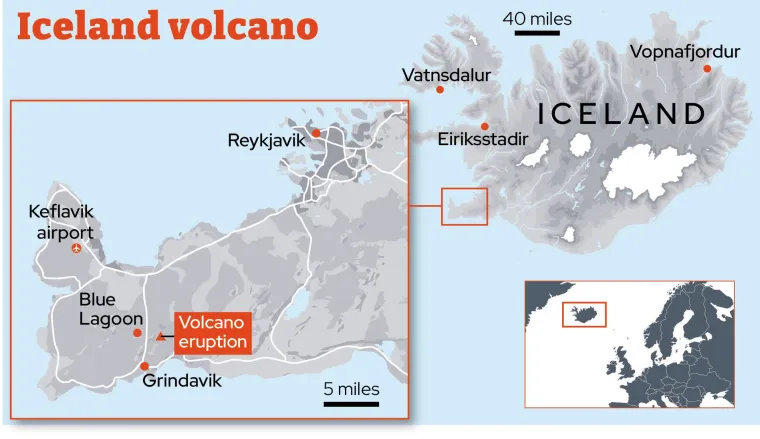
    Recently a volcano erupted in south-west Iceland, continuing a pattern of recurring geological activity on the Reykjanes Peninsula.

    In news: Reykjanes Peninsula

    About the Reykjanes Peninsula:

    • Location: Situated in southwest Iceland along the Mid-Atlantic Ridge where tectonic plates diverge.
    • Volcanic Reawakening: Dormant for centuries until 2021; now sees recurring eruptions.
    • Eruption Type: Known for fissure eruptions—lava flows from cracks, not a central crater.
    • Key Sites: Includes Grindavik (evacuated), Blue Lagoon spa, and Svartsengi power plant.
    • Volcanic Importance: Part of Iceland’s 30+ active volcanic zones.

    Key Features:

    • Eruption Style: Produces steady lava flows with minimal ash output.
    • Flight Safety: Air traffic remains unaffected due to lack of stratospheric ash.
    • Evacuation Impact: Grindavik largely abandoned after 2023 lava threat.
    • Long-Term Activity: Eruptions may persist for decades or longer.
    • Iceland Snapshot: Population ~400,000; similar in size to Kentucky.
    • Tourism Appeal: Attracts visitors like other volcanic hotspots—Mexico, Indonesia, Sicily, and New Zealand.
    [UPSC 2014] Consider the following geological phenomena:

    1. Development of a fault 2. Movement along a fault

    3. Impact produced by a volcanic eruption 4. Folding of rocks

    Which of the above cause earthquakes?

    Options: (a) 1, 2 and 3 (b) 2 and 4 (c) 1, 3 and 4 (d) 1, 2, 3 and 4*