💥Join UPSC 2027,2028 Mentorship (August Batch) + XFactor Notes & Microthemes PDF

GS Paper: GS1

  • Varanasi HC allows Hindu Prayers in Gyanvapi Premise

    Gyanvapi

    Introduction

    • The Varanasi District Court has issued an order permitting Hindu prayers to be conducted in the southern cellar of the Gyanvapi mosque complex, a decision met with both support and opposition.
    • This development comes amid ongoing legal disputes concerning the worship rights at the site.

    Allowing Prayers: Court’s Ruling

    • Prayers Allowed: The Varanasi District Court has directed the district administration to facilitate the resumption of puja (worship) within the disputed southern cellar of the Gyanvapi mosque complex within seven days.
    • Background: The order followed an application filed by Shailendra Kumar Pathak, the priest of the Acharya Ved Vyas Peeth temple, seeking worship rights for visible and invisible deities in the basement of the mosque.

    Reaction and Legal Challenges

    • Legal Challenge: The Anjuman Intezamia Committee of Gyanvapi Masjid, advised by the All India Muslim Personal Law Board (AIMPLB), intends to challenge the court’s decision in the Allahabad High Court.
    • AIMPLB’s Stance: AIMPLB criticized the court’s ruling as “totally unacceptable” and drew parallels to past disputes like the opening of locks at the Babri Masjid in 1986. They expressed concerns about the targeting of old mosques after the establishment of the Ram Mandir in Ayodhya.

    Historical Perspective

    • Prior Worship: The petitioner claimed that Hindu priests associated with the Vyas family used to perform daily rituals in the cellar before 1993 when it was discontinued by government orders.
    • Contested Claims: A member of the Anjuman Intezamia committee contested the assertion, stating that there had never been any puja conducted in the cellar.

    Ongoing Legal Proceedings

    • Next Hearing: The next hearing on this matter is scheduled for February 8, allowing the defendants, including the Anjuman Intejamia Masajid Committee that manages the Gyanvapi mosque, to file objections.
    • Parallel Legal Challenge: Another order by the Allahabad High Court concerns a revision application challenging the Varanasi district judge’s refusal to direct the Archaeological Survey of India (ASI) to conduct a scientific survey of the mosque’s wazukhana area.

    Concerns and Historical Parallels

    • Ethical Concerns: The decision to permit puja in the Gyanvapi mosque’s basement raises ethical questions and concerns about religious rights.
    • Parallels to History: AIMPLB sees parallels between recent developments and past disputes, raising concerns about historical patterns of targeting old mosques.

    Conclusion

    • The Varanasi District Court’s ruling allowing Hindu prayers in the Gyanvapi mosque’s southern cellar has ignited both legal challenges and discussions about religious rights and historical parallels.
    • The case continues to be a subject of significant debate and legal scrutiny.
  • India nominates 12 forts of Marathas for UNESCO World Heritage List

    maratha

    Introduction

    • India’s nomination for the UNESCO World Heritage List in 2024-25 is the “Maratha Military Landscapes of India.”
    • This nomination encompasses twelve distinct components, each holding a unique place in history and culture.
    • Together, they illuminate the strategic military prowess of the Maratha rulers during the 17th to 19th centuries.

    Maratha Military Landscapes

    • Selecting the Twelve: Maharashtra boasts more than 390 forts, with only twelve chosen for the Maratha Military Landscapes. Among them, eight are protected by the Archaeological Survey of India, including Shivneri, Lohgad, Raigad, Suvarnadurg, Panhala, Vijaydurg, Sindhudurg, and Gingee. Salher, Rajgad, Khanderi, and Pratapgarh are safeguarded by the Directorate of Archaeology and Museums, Government of Maharashtra.
    • Diverse Fort Types: These forts encompass hill forts, hill-forest forts, hill-plateau forts, coastal forts, and island forts, each with its distinct historical and geographical significance.
    • Historical Significance: These forts, scattered across varied geographical and physiographic regions, exemplify the Maratha rulers’ exceptional fortification and military strategies.

    Maratha Military Ideology

    • The origins of Maratha Military ideology can be traced back to the 17th century during the reign of Chhatrapati Shivaji Maharaj (circa 1670 CE).
    • This enduring legacy continued through subsequent rules, including the Peshwa rule until 1818 CE.

    Nomination and Criteria

    The Maratha Military Landscapes of India is nominated in the category of cultural criteria, specifically under:

      1. Criterion (iii): Bearing exceptional testimony to a cultural tradition or civilization.
      2. Criterion (iv): Exemplifying outstanding architectural or technological ensembles representing significant stages in human history.
      3. Criterion (vi): Tangibly associated with events, traditions, beliefs, and works of universal significance.

    India’s Rich UNESCO Heritage

    • Existing World Heritage Sites: India currently boasts 42 World Heritage Sites, comprising 34 cultural sites, seven natural sites, and one mixed site.
    • Maharashtra’s Contribution: Maharashtra contributes significantly to India’s heritage with six World Heritage Sites, including Ajanta Caves, Ellora Caves, Elephanta Caves, Chhatrapati Shivaji Maharaj Terminus, Victorian Gothic and Art Deco Ensembles of Mumbai, and the Western Ghats of Maharashtra, Karnataka, Tamil Nadu, and Kerala (in the natural category).
    • A Cultural Gem: The Maratha Military Landscapes of India, included in the Tentative List of World Heritage sites in 2021, stands as Maharashtra’s sixth cultural property nominated for inclusion in the prestigious World Heritage List.

    Back2Basics: UNESCO World Heritage Sites

    Description
    UNESCO World Heritage Sites Landmarks or areas selected by UNESCO for their cultural, historical, scientific, or other significant value, legally protected by international treaties.
    Importance World Heritage Sites represent collective and preservative interests of humanity, signifying remarkable accomplishments and intellectual history.
    Selection Criteria Sites must be already-classified landmarks, unique and significant culturally or physically, such as ancient ruins, historical structures, cities, monuments, etc.
    Conservation World Heritage Sites require practical conservation to protect them from risks like trespassing, uncontrolled access, or administrative negligence.
    World Heritage Committee Selects and monitors World Heritage Sites, manages the World Heritage Fund, and provides financial assistance. Composed of 21 states parties elected for a four-year term.
    Membership India is not a member of the World Heritage Committee.

    Note: “States parties” refer to the countries that have ratified the World Heritage Convention and participate in the decision-making process.

  • A blurred mapping of internal female migration

    Big strides on path for women migrant workers in eastern India - India News  | The Financial Express

    Central Idea:

    The article highlights the often overlooked and underreported aspects of female migration in India, particularly in the context of internal migration. It emphasizes the need for a more accurate understanding of the challenges faced by migrant women, their motivations, and employment status, ultimately advocating for better-informed policies to address their specific needs.

    Key Highlights:

    • Migrant women in India are a significant but marginalized group, with national surveys providing an inaccurate portrayal of their motivations and employment status.
    • Existing data underestimates the number of migrant women engaged in casual or informal employment due to definitional issues and societal beliefs.
    • The article argues that the entry of women into the formal labor force is hindered by factors such as low education levels, lack of social networks post-migration, and the need for more human and social capital.
    • Despite a 101% increase in female migration for labor/employment between 2001 and 2011, there is a lack of targeted policies and political attention for this demographic.
    • The article suggests that policy-making needs to be more informed about the specific needs, motivations, and conditions of female migrants.

    Key Challenges:

    • Inaccurate representation in national surveys leading to a lack of understanding of the secondary motivations for migration among women.
    • Underreporting of employment status due to definitional issues and societal beliefs about women’s roles.
    • Barriers to entry into the formal labor force, including low education levels, lack of social networks, and the need for more human and social capital.
    • Marginalization of female migrant issues in policy-making due to their limited influence as a vote bank.

    Key Terms:

    • Female Labour Force Participation Rate (FLFPR)
    • Periodic Labour Force Survey (PLFS)
    • Casual labor
    • Human and social capital
    • One Nation One ration card
    • e-Shram
    • Affordable rental housing complexes

    Key Phrases:

    • “Female migration for labor/employment increased by 101% between 2001 and 2011.”
    • “Migrant women are proportionally less employed than non-migrant women.”
    • “Entry to the formal labor force is challenging for migrant women due to the need for more human and social capital.”
    • “Dismal recovery of women’s labor activity after the pandemic.”
    • “Policy-making poorly informed about the needs, motivations, and conditions of female migrants.”

    Key Quotes:

    • “There is little dialogue surrounding female migrant issues.”
    • “Despite recent polls, political parties do not campaign to gain migrant women’s votes.”
    • “Women choose forms of employment that allow them to handle domestic duties while contributing to the household’s production or finances.”
    • “A change in narrative is required, starting with increased collection of female-specific data.”

    Anecdotes:

    • Anecdotal evidence suggests that migrant women often engage in casual employment, indicating underestimation of their involvement in various sectors.
    • Women may view unpaid family work or self-employment as an extension of domestic commitment, leading to misreporting of employment status.

    Key Statements:

    • “National surveys convey an inaccurate picture of female migration, especially regarding motivations and employment status.”
    • “Entry to the formal labor force is hindered by factors such as low education levels and lack of social networks.”
    • “Female migrants remain largely invisible, facing significant hurdles and marginalization.”
    • “Political parties do not address the needs of female migrants, resulting in poorly informed policy-making.”

    Way Forward:

    • Compile more information in national surveys regarding socio-economic conditions post-migration, including access to social security benefits.
    • Advocate for the collection of time-use data for migrants to better understand the employment patterns of female migrants.
    • Increase awareness about the challenges faced by female migrants to encourage progressive policymaking.
    • Address barriers to entry into the formal labor force by focusing on education, social networks, and human and social capital.
    • Encourage a change in narrative and prioritize the needs of female migrants in policy-making.
  • What is Humboldt’s Enigma and What does it mean for India?

    Humboldt’s Enigma

    Introduction

    • The question of where biodiversity is concentrated has intrigued explorers and naturalists for centuries. Humboldt has tried to answer this question.

    Humboldt’s Insights

    • Alexander von Humboldt: A polymath of the 18th century, Humboldt recorded diverse natural observations, proposing a relationship between temperature, altitude, humidity, and species distribution.
    • Mountain Exploration: During his exploration of South America, Humboldt studied plant distribution on mountains, noting variations with elevation.
    • Chimborazo Mountain: Humboldt used Chimborazo Mountain in Ecuador as an example, illustrating the concept of mountain diversity.

    What is Humboldt’s Enigma?

    • Sun’s Energy: Tropical areas receive more solar energy, fostering greater primary productivity and biodiversity due to the availability of ecological niches.
    • Mountain Exception: Mountains, despite being outside the tropics, have been an exception to the rule, posing Humboldt’s enigma.

    Biodiversity Drivers

    • Earth’s History, Geography, and Climate: These factors are the primary drivers of mountain diversity.
    • Geological Processes: Mountains serve as ‘cradles’ for new species due to geological processes like uplifts, creating new habitats.
    • Climatic Stability: Climatologically stable mountains act as ‘museums,’ preserving species over time.
    • Coastal Tropical Sky Islands: Examples like the Shola Sky Islands in the Western Ghats exhibit both cradle and museum characteristics.

    Eastern Himalaya: An Anomaly

    • Diversity Beyond Tropics: Eastern Himalaya boasts exceptional diversity, challenging the conventional tropical biodiversity paradigm.
    • Multiple Factors: Climate dissimilarity and geological heterogeneity contribute to high biodiversity.
    • Climate Variability: Different temperature and rainfall levels on the same mountain support diverse biomes.

    Unresolved Questions

    • Complexity of Biodiversity: Numerous factors drive diversification and Humboldt’s enigma in different regions, leading to over a hundred hypotheses.
    • Data Limitations: Fine-scale species occurrence data are lacking, hindering precise explanations.
    • Call for Research: India’s under-studied areas need more extensive research, including the use of genetics, to understand true biodiversity.
    • National Initiatives: Programs like the National Mission on Himalayan Studies and Biodiversity need strengthening to support basic research.

    Conclusion

    • Humboldt’s enigma represents one facet of mountain biodiversity, offering opportunities for study and insights into global climate and landscape change issues.
  • Early nutrition impacts cognitive development

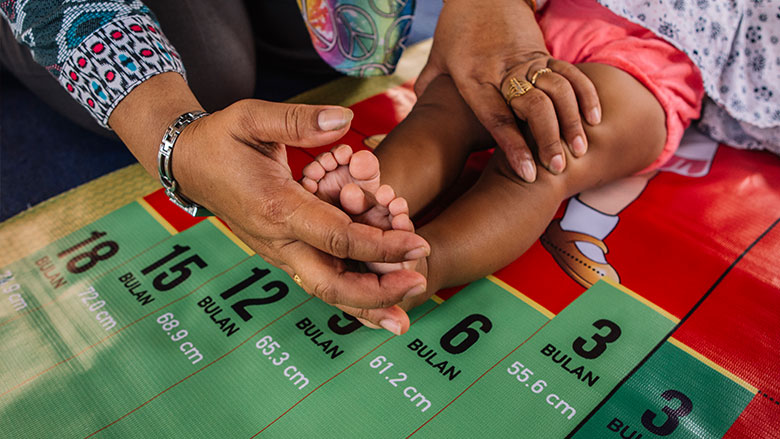
    Indonesia Accelerates Fight Against Childhood Stunting

    Central Idea:

    Early childhood stunting not only impacts a child’s height but also influences cognitive development, potentially leading to lower educational achievements. The article emphasizes the importance of understanding the underlying mechanisms of this impact, particularly in low- and middle-income countries like India. It discusses a recent study in Ethiopia and Peru, highlighting the negative correlation between stunting at age 5 and later cognitive skills, specifically executive functions. The findings underscore the critical role of early childhood nutrition in determining cognitive development and educational outcomes.

    Key Highlights:

    • Stunting at around age 5 is linked to lower executive functions, including working memory and inhibitory control, in later childhood.
    • Traditional cognitive-achievement tests may not fully capture inherent cognitive skills, and stunting’s impact may extend beyond cognitive deficits to include behavioral factors like delayed school enrollment.
    • The article highlights the need for a deeper understanding of the mechanisms through which stunting affects educational achievements, especially in the context of low- and middle-income countries.

    Key Challenges:

    • Existing research often focuses on specific cognitive-achievement test scores, making it challenging to fully understand the complex relationship between early human capital investments, such as nutrition, and cognitive development.
    • Achieving a comprehensive assessment of cognitive skills is complicated by the interplay of cognitive abilities, educational access, and other behavioral factors.
    • The article stresses the need to move beyond traditional cognitive-achievement tests and focus on a deeper understanding of the mechanisms linking early human capital investments to cognitive development.

    Key Terms and Phrases:

    • Early childhood stunting
    • Cognitive development
    • Executive functions
    • Behavioral factors
    • Household fixed effects
    • Poshan Abhiyaan
    • Integrated Child Development Services
    • Jal Jeevan Mission
    • Swachh Bharat Mission
    • Mother’s Absolute Affection Programme
    • Complementary feeding
    • Anganwadi worker

    Key Quotes:

    • “Stunting at approximately age 5 is negatively related to executive functions measured years later.”
    • “Empirical studies have shown that women’s height and educational attainment are strong predictors of child stunting in India.”
    • “Improvements in sanitation reduce the incidence of diarrhoea and stunting.”
    • “Promoting early breastfeeding, along with continued breastfeeding for two years, is essential for optimal child development.”

    Key Statements:

    • The study in Ethiopia and Peru establishes a negative correlation between stunting at age 5 and later cognitive skills, emphasizing the long-term impact of early childhood stunting.
    • The article stresses the need to move beyond traditional cognitive-achievement tests and focus on a deeper understanding of the mechanisms linking early human capital investments to cognitive development.

    Key Examples and References:

    • Sánchez et al.’s study in ‘World Development’ linking early under-nutrition to executive functions in Ethiopia and Peru.
    • The role of initiatives like Poshan Abhiyaan, Integrated Child Development Services, Jal Jeevan Mission, and Swachh Bharat Mission in addressing stunting in India.

    Key Facts and Data:

    • The study in Ethiopia and Peru provides evidence of the negative relationship between stunting at age 5 and executive functions.
    • Empirical studies highlight the predictive role of women’s height and educational attainment in child stunting in India.

    Critical Analysis:

    The article effectively highlights the limitations of traditional cognitive-achievement tests in assessing the impact of early human capital investments on cognitive development. It emphasizes the need for a more nuanced understanding of the complex factors contributing to lower educational achievements, particularly in low- and middle-income countries. The study’s focus on executive functions and the link between stunting and cognitive skills adds valuable insights to the existing literature.

    Way Forward:

    • Expand initiatives like the Mother’s Absolute Affection Programme to provide comprehensive lactation support and create breastfeeding-friendly environments.
    • Implement and scale up community-based complementary feeding programs to educate parents about the importance of a diverse diet for children.
    • Consider adding an extra Anganwadi worker to each center to enhance preschool instructional time, potentially improving developmental outcomes and creating employment opportunities.

    In summary, addressing child stunting in India requires a multifaceted approach, including comprehensive nutrition initiatives, sanitation improvements, and strategic investments in education and childcare services. The article underscores the need for evidence-based policies to enhance early childhood nutrition and cognitive development.

  • Why was January 26 chosen to be India’s Republic Day?

    republic day

    Since 1950, January 26, Republic Day has marked the day India’s Constitution came into effect.

    However, the Constitution was prepared the way before the chosen date, adopted officially by the Constituent Assembly on November 26, 1949.

    Why do we celebrate our Republic Day on January 26, then?

    • The answer lies in the history of the Indian freedom struggle during which the date held significance since 1930.
    • On January 26, 1930, the historic “Poorna Swaraj” declaration was officially promulgated, beginning the final phase of India’s freedom struggle where the goal would be complete independence from British rule.

    Republic Day: The context of the 1920s

    • The Non-Cooperation Movement ended unceremoniously in February 1922 after the Chauri Chaura incident.
    • Mahatma Gandhi, at the time, felt that the country was “not yet ready” for his non-violent methods of protest.
    • Thus, the 1920s did not see further mobilisation at the scale that was seen during the Non Cooperation Movement and the anti-Rowlatt Satyagraha.

    Precursor to the Poorna Swaraj Demand

    • 1920s saw the rise of revolutionaries like Bhagat Singh and Chandrashekhar Azad.
    • It witnessed the coming of age of a new generation of Congress leaders such as Nehru, Subhash Chandra Bose, Vallabhai Patel and C Rajagopalachari,
    • Hence the 1920s laid the ground for the future course of India’s freedom struggle.
    • Notably, in 1927, British Authorities appointed the Simon Commission – a seven-man, all European team under Sir John Simon – to deliberate on political reforms in India.
    • This sent a wave of outrage and discontentment across the country.

    Nehru Report and its protagonism for Dominion Status

    • For the first time since 1922, protests against the Simon Commission spread nationwide, with chants of “Simon Go Back” echoing across the country.
    • In response, the INC appointed its own commission under Motilal Nehru.
    • The Nehru Report demanded that India be granted dominion status within the Empire.
    • In the Balfour Declaration of 1926, dominions were defined as “autonomous communities within the British Empire, equal in status, in no way subordinate one to another in any aspect of their domestic or external affairs.
    • Dominions were to be united by a common allegiance to the Crown and freely associated as members of the British Commonwealth of Nations.

    Do you know?

    In 1926, countries like Canada, Australia and New Zealand were granted dominion status.

    Internal disagreement within the Congress over Dominion Status

    • Crucially, even within Congress, the (Motilal) Nehru Report did not enjoy universal support.
    • Young leaders such as Bose and Jawaharlal Nehru wanted India to break all ties with the British Empire.
    • They argued that under dominion status, while India would enjoy a certain level of autonomy, the British Parliament and Crown would still have the ability to meddle in Indian affairs.
    • Importantly, for both Bose and Nehru, attaining dominion status would make India party to colonial exploitation elsewhere in the British Empire, mainly Africa.
    • With a far more radical worldview than their predecessors, Bose and Nehru looked at anti-colonialism not only as a local political issue for India but in a more global lens.
    • However, Gandhi was still very much for dominion status, arguing that it would be a welcome step in India’s anti-colonial struggle. His views would soon change.

    Irwin’s retreat from the Dominion status promise

    • In 1929, Viceroy Irwin had vaguely announced that India would be granted dominion status in the future.
    • Known as the Irwin Declaration, it was warmly welcomed by Indians but faced massive backlash back in Britain.
    • The British population was still pro-Empire and India was seen as the Empire’s Crown Jewel.
    • Importantly, as the world economy went into a recession, India was arguably Britain’s most valuable colony with its vast land, resources, and population crucial for its economy.
    • Thus, under pressure from back home, Irwin went back on his word.

    Realizing the bluff

    • In a meeting with Gandhi, Muslim League’s Jinnah and a few other leaders, he said that he could not promise India dominion status any time soon.
    • This would be a turning point as the Congress grew increasingly united on the issue.
    • With the British unable to follow through on even reasonable reforms, Indians supported increasingly “radical” goals – a fully independent republic being one of the first.

    Declaration of Poorna Swaraj

    • The Lahore Session of the INC convened in December 1929.
    • On December 19, the historic “Poorna Swaraj” resolution was passed in the session.
    • This declaration of Independence was officially promulgated on January 26, 1930.
    • The Congress urged Indians to come out and celebrate “independence” on that day.
    • The Indian tricolour was hoisted across the country by Congress party workers and patriotic songs were sung as the country reconfigured its strategy for Independence.
    • It is with this declaration that India’s national movement “shifted from the language of charity to the language of justice.”

    Republic Day in post-Independence India

    • From 1930 till India finally won its independence in 1947, January 26 was celebrated as “Independence Day” or “Poorna Swaraj Day” with Indians reaffirming their commitment towards sovereignty on that day.
    • However, India won independence from the British on August 15, exactly two years after the Japanese surrendered to the Allies to end World War II.
    • When leaders had to decide on a day to promulgate India’s new constitution, January 26 was thought to be ideal.
    • Not only did this date already hold nationalist significance, the Constitution in many ways reflected the “Poorna Swaraj” declaration of two decades back.


  • Why was January 26 chosen to be India’s Republic Day?

    Introduction

    • On January 26, India celebrates Republic Day, marking the day when its Constitution came into effect in 1950.
    • However, the roots of this celebration trace back to January 26, 1930, when India made the historic “Poorna Swaraj” declaration, signifying its quest for complete independence from British rule.

    Context of the 1920s

    • Non-Cooperation Movement: The 1920s witnessed the aftermath of the Non Cooperation Movement and the Chauri Chaura incident, which prompted Mahatma Gandhi to temporarily halt non-violent protests.
    • Rise of Leaders: This period saw the emergence of notable leaders like Bhagat Singh, Chandrashekhar Azad, Jawaharlal Nehru, Subhash Chandra Bose, Vallabhai Patel, and C. Rajagopalachari, setting the stage for India’s future freedom struggle.

    Simon Commission and Nehru Report

    • Simon Commission: In 1927, British authorities appointed the Simon Commission to discuss political reforms in India, sparking nationwide protests with slogans like “Simon Go Back.”
    • Nehru Report: In response, the Indian National Congress (INC) established its own commission under Motilal Nehru, advocating dominion status for India within the British Empire.

    Internal Disagreements: Dominion or Republic?

    • Dominion Status Debate: While the Nehru Report called for dominion status, leaders like Subhash Chandra Bose and Jawaharlal Nehru favored complete independence, fearing that dominion status would align India with colonial exploitation in the British Empire.
    • Change in Gandhi’s Views: Initially supporting dominion status, Mahatma Gandhi’s stance evolved as he began advocating for complete independence.

    Irwin Declaration and Backtracking

    • Irwin Declaration: In 1929, Viceroy Irwin vaguely promised dominion status for India, which sparked hope among Indians but faced opposition in Britain.
    • Backtracking: Under pressure from Britain, Irwin retracted his promise during a meeting with Indian leaders, leading to growing unity within the INC for complete independence.

    Declaration of Poorna Swaraj

    • Lahore Session of INC: In December 1929, during the Lahore Session of the INC, the “Poorna Swaraj” resolution was passed, calling for complete independence from British rule.
    • Official Promulgation: On January 26, 1930, this declaration of independence was officially announced, marking a pivotal moment in India’s freedom struggle.
    • Nonviolent Protest: The resolution also affirmed the Gandhian principles of nonviolent protest, which became integral to the subsequent struggle for independence.

    Republic Day in Post-Independence India

    • Celebrating Independence: From 1930 until India’s independence in 1947, January 26 was celebrated as “Independence Day” or “Poorna Swaraj Day,” symbolizing India’s commitment to sovereignty.
    • Constitution Adoption: When India adopted its Constitution, leaders chose January 26 for Republic Day, as it held historical significance and aligned with the ideals of complete independence as articulated in the “Poorna Swaraj” declaration.
    • Symbolism: Today, Republic Day commemorates India’s journey to self-rule and reflects the principles enshrined in its Constitution.
  • 2024 Padma Awards Announced

    padma

    Central Idea

    • Former Vice-President M. Venkaiah Naidu, actors Chiranjeevi and Vyjayanthimala Bali, and Bharatanatyam dancer Padma Subrahmanyam will be conferred with Padma Vibhushan, the country’s second-highest civilian award, the Central government announced on the eve of Republic Day.
    • Bindeshwar Pathak, founder of Sulabh International, will be conferred with the award posthumously.

    About Padma Award

    • The Padma Awards are among India’s most prestigious civilian honors, announced annually on Republic Day’s eve, following the Bharat Ratna.
    • These awards are designed to recognize outstanding achievements across various fields and disciplines, particularly those involving public service.
    • The Government of India introduced the Bharat Ratna and Padma Vibhushan in 1954.
    • Initially, the Padma Vibhushan had three classes: Pahela Varg, Dusra Varg, and Tisra Varg, which were renamed in 1955 as Padma Vibhushan, Padma Bhushan, and Padma Shri, respectively.

    Award Categories

    There are three categories of Padma Awards:

    1. Padma Vibhushan: This is awarded for ‘exceptional and distinguished service.’
    2. Padma Bhushan: This is for ‘distinguished service of a high order.’
    3. Padma Shri: This is given for ‘distinguished service.’

    Eligibility Criteria

    • The awards are open to all individuals regardless of race, occupation, position, or gender.
    • Government employees, except doctors and scientists, are generally ineligible.
    • The awards are usually not given posthumously, but exceptions can be made in extraordinary cases.
    • A recipient can be considered for a higher category of Padma award only if at least five years have passed since their previous Padma honor. However, exceptions can be made for exceptionally deserving cases.

    Nomination Process

    • Nominations are reviewed by the Padma Awards Committee, formed annually by the Prime Minister.
    • The Committee, led by the Cabinet Secretary, includes the Home Secretary, Secretary to the President, and 4-6 distinguished members.
    • The Committee’s recommendations are forwarded to the Prime Minister and the President for final approval.

    Limitations

    • The awards are not titles and cannot be used as prefixes or suffixes to the awardees’ names.
    • The number of awards given annually (excluding posthumous awards and those to NRIs/foreigners/OCIs) is capped at 120.
  • Artistic Richness of the Indian Constitution: A Visual Journey

    Constitution

    Introduction

    • The Indian Constitution, renowned as the world’s lengthiest written Constitution, is not just a legal document but a treasure trove of artistic richness.
    • It features intricate hand-painted images and elaborate borders across all its 22 parts, making it the most visually appealing Constitution globally.

    Narrative Scheme of Paintings

    • Historical Representation: The paintings within the Constitution depict various periods in Indian history, from the Indus Valley civilization to the freedom struggle. Additionally, scenes from the epic tales of Ramayana and Mahabharata are featured.
    • Geographical Diversity: These illustrations also capture India’s diverse geography, from the desert with marching camels to the grandeur of the Himalayas.

    The Appointment of Artists

    • Selection of Nandalal Bose: Nandalal Bose, a renowned artist and close associate of Mahatma Gandhi, was entrusted with the task of illustrating the Constitution in October 1949, just before the final session of the Constituent Assembly.
    • Collaborative Effort: Bose collaborated with family members, students, and fellow artists, including Kripal Singh Shekhawat, A Perumal, and Direndrakrishna Deb Burman.
    • Calligraphy: While the Constitution itself was handwritten by calligrapher Prem Behari Narain Raizada in a flowing italic style, the Hindi version’s calligraphy was masterfully crafted by Vasant Krishan Vaidya.

    Notable Artistic Contributions

    • Preamble and National Emblem: The Preamble page features intricate patterns sketched by Beohar Rammanohar Sinha and bears his signature, while Dinanath Bhargava sketched the National Emblem, the Lion Capital of Ashoka.
    • Payment for Artists: Records suggest that the artists who painted the historical scenes were paid Rs 25 for each page.

    Ideation of Artwork

    • No Direct Correlation: Nandalal Bose’s artwork in the Constitution does not have a direct correlation with the text, as he did not illustrate the content of the Constitution itself. Instead, he crafted a visual narrative of India’s history as he envisioned it.
    • Changes and Adjustments: A preliminary plan was drawn up for the artwork, which underwent changes with additions and deletions. For instance, a scene featuring ‘portraits of Akbar and Shahjahan with Mughal architecture’ was replaced with an image of Akbar.

    Borrowing from History and Religion

    • Diverse Representations: The artwork includes depictions of the Bull Seal from the Indus Valley region, scenes from the lives of hermits and ascetics, Buddha in meditation, Mahavir, sculptures from Mahabalipuram, and the descent of the Ganga to Earth.
    • Incorporating Epics: Scenes from the Mahabharata and Ramayana are featured in the artwork, symbolizing India’s rich mythological heritage.
    • Homage to Tagore: Three landscapes within the Constitution pay tribute to Nobel Laureate Rabindranath Tagore and his composition of the National Anthem, celebrating India’s diverse geographical landscapes.

    Celebrating Monarchs and Freedom Fighters

    • Emperor Ashoka: Part VII features Emperor Ashoka seated on an elephant, propagating Buddhism.
    • King Vikramaditya and Tipu Sultan: Part IX showcases a scene from King Vikramaditya’s court, while Rani Lakshmibai of Jhansi shares the page with Tipu Sultan in Part XVI.
    • Gandhi and Freedom Fighters: Mahatma Gandhi appears twice, leading the Dandi March and visiting Noakhali in Bangladesh. Subhas Chandra Bose is depicted saluting the flag with members of the Azad Hind Fauj.
  • Delhi HC upholds Ban on Sapinda Marriages: Legal Insights

    Introduction

    • The Delhi High Court recently dismissed a challenge to the constitutionality of Section 5(v) of the Hindu Marriage Act, 1955 (HMA), which prohibits sapinda marriages among Hindus unless custom permits.
    • The court’s decision affirms the legal restrictions on such marriages and emphasizes the importance of regulating marital choices.

    For Aspirants with Sociology Optional, this article is of immense importance under: “Systems of Kinship- Family, household, marriage” in both Paper I and Paper II.

    Understanding Sapinda Marriages

    • Definition: Sapinda marriages involve individuals closely related within specified degrees, as per Section 3(f)(ii) of the HMA.
    • Prohibition: The HMA prohibits sapinda marriages within a certain range of lineal ascent, ensuring that marriages do not occur between individuals with a common lineal ascendant within the defined limits.

    Legal Framework

    • Void Marriages: Sapinda marriages that violate Section 5(v) and lack an established custom permitting them are declared void, meaning they are considered invalid from the outset.
    • Customary Exception: The sole exception to this prohibition arises when both parties’ customs permit sapinda marriages, as defined in Section 3(a) of the HMA.
    • Custom Criteria: To qualify as a custom, it must be continuously observed, uniform, reasonable, and not opposed to public policy, gaining legitimacy among Hindus in a particular area or community.

    Grounds for Challenging the Law

    • Constitutional Challenge: The petitioner contended that Section 5(v) violated the right to equality under Article 14 of the Constitution by requiring proof of custom for sapinda marriages.
    • Lack of Proof: The woman argued that sapinda marriages exist even without documented custom, and the consent of both families validated the marriage.

    High Court’s Decision

    • No Established Custom: The Delhi HC found no stringent proof of an established custom supporting sapinda marriages, which is crucial under the law.
    • Regulation of Marriages: The court upheld the idea that the choice of a marriage partner can be subject to regulation.
    • No Violation of Equality: The petitioner failed to provide compelling legal grounds to challenge the prohibition against sapinda marriages on grounds of violating the right to equality.

    International Perspectives

    • European Laws: In several European countries, laws related to incestuous relationships are less stringent compared to India, allowing marriages between consenting adults.
    • Examples: France, Belgium, Portugal, and Italy have different laws regarding incestuous relationships and marriages.
    • US Laws: In the United States, incestuous marriages are banned in all 50 states, but some states allow incestuous relationships between consenting adults.

    Conclusion

    • The Delhi HC decision reaffirms the legal framework regulating sapinda marriages in India and emphasizes the importance of established customs in permitting such unions.
    • It also highlights the differing legal approaches to incestuous relationships and marriages in various countries.