💥Join UPSC 2027,2028 Mentorship (August Batch) + XFactor Notes & Microthemes PDF

GS Paper: GS1

  • Historical Insights: Gyanvapi Structure Controversy

    Gyanvapi

    Introduction

    • The Gyanvapi Structure sin Varanasi has been the center of a longstanding controversy regarding its historical origin and the existence of a Hindu temple preceding its construction.
    • The Archaeological Survey of India (ASI) has recently concluded that a Hindu temple indeed existed at the site before the mosque’s construction, relying on scientific studies, textual evidence, and historical accounts.

    Gyanvapi: Historical Background

    • Temple’s Existence: The ASI’s findings suggest that a substantial Hindu temple once stood adjacent to the Kashi Vishwanath temple, which is believed to have been demolished during the reign of Mughal Emperor Aurangzeb.
    • Persian Chronicles: The primary source for this claim is Saqi Mustaid Khan’s Maasir-i-Alamgiri, a Persian chronicle written shortly after Aurangzeb died in 1707. It mentions Aurangzeb’s orders to destroy temples and schools of the “infidels.”
    • Aurangzeb’s Policy: Historians interpret this as part of Aurangzeb’s broader policy against Hinduism, marked by the destruction of temples and discriminatory measures, such as customs duties.

    Historical Interpretations

    • Selective Targeting: Some historians argue that the 1669 decree was not a blanket order to destroy all temples but targeted institutions where certain teachings took place, especially in Benares (now Varanasi).
    • Conflict with Shivaji: It is suggested that Aurangzeb ordered the destruction of the Kashi temple as retribution following Chhatrapati Shivaji’s escape from Mughal custody.
    • Religious Cloth: The Gyanvapi Mosque incorporates a part of the ruined temple’s wall, possibly serving as a religious statement of the consequences of opposing Mughal authority.

    Expert Opinions and Legal Implications

    • ASI Report: The ASI’s extensive report provides expert evidence but can be contested in court during the ongoing legal battle.
    • Witnesses and Cross-Examination: The civil suit involves witnesses from various fields, including historians, archaeologists, and religious experts, who will be cross-examined.
    • Court Determination: The courts will decide whether the ASI report can be conclusively relied upon and assess the significance of the existence of a Hindu temple in determining the mosque’s religious character.

    Legal and Constitutional Aspects

    • Maintainability Issue: The preliminary issue of whether the suit can be filed depends on the fate of the Places of Worship Act, 1991, which aims to maintain the religious character of places of worship as of August 15, 1947.
    • Relevance of ASI Report: The relevance of the ASI report could change significantly if the 1991 law is altered or struck down. Currently, the law is considered a fundamental feature of the Constitution, safeguarding secularism.
    • Secularism and Non-Retrogression: The Places of Worship Act is seen as essential in upholding the principles of secularism and non-retrogression, core elements of India’s Constitution.

    Conclusion

    • The controversy surrounding the Gyanvapi Mosque underscores the complexities of historical interpretation and legal implications.
    • The ASI’s findings, while significant, are part of an ongoing legal process, and the final determination will have far-reaching consequences on the historical narrative and religious character of the site.
  • With Bharat Ratna to Karpoori Thakur, the BJP is co-opting social justice agenda

    Our Father Karpoori Thakur - Rediff.com

    Central Idea:

    The article examines the political significance of the Bharat Ratna awarded to the late Karpoori Thakur, a legendary backward-caste leader, and its implications in the context of the BJP’s Hindutva agenda and the upcoming Lok Sabha elections. The author questions whether the Hindutva agenda can successfully co-opt the social justice agenda, particularly by winning the support of lower-caste Hindus. The juxtaposition of events like the temple inauguration at Ayodhya and the Bharat Ratna announcement raises the critical question of whether a homogenized Hindu identity can overcome the deep-rooted hierarchical divisions within Hindu society.

    Key Highlights:

    • The timing of the Bharat Ratna announcement for Karpoori Thakur, a backward-caste leader, and the Ayodhya temple inauguration raises questions about the BJP’s strategy leading up to the Lok Sabha elections.
    • The article explores the challenge of reconciling the Hindutva agenda with the social justice agenda, particularly in gaining support from lower-caste Hindus.
    • The BJP’s dependence on state power for the success of the Hindutva agenda is discussed, emphasizing the significance of electoral majorities in achieving political goals.
    • The author highlights the complexities of caste dynamics, including internal distinctions, rivalries, and the need for credible rhetoric of implicit equality in electoral politics.

    Key Challenges:

    • The challenge of reconciling the Hindutva agenda with the hierarchical divisions and inequalities within the Hindu caste system.
    • The difficulty in securing electoral majorities without support from lower-caste Hindus.
    • The tension between electoral politics requiring equality rhetoric and the caste system perpetuating explicit inequalities.

    Key Terms:

    • Hindutva
    • Lok Sabha elections
    • Bharat Ratna
    • Ayodhya
    • Caste dynamics
    • Electoral majorities

    Key Phrases:

    • “Homogenized Hindu identity”
    • “Hierarchical divisions within Hindu society”
    • “Caste dynamics in electoral politics”
    • “Credible rhetoric of implicit equality”

    Key Quotes:

    • “Will the almost-successful Hindutva agenda seal its victory by co-opting and engulfing the social justice agenda?”
    • “The juxtaposition of these two events invites attention to the central question facing our polity today.”
    • “The only tried and trusted constituency for Hindutva are the Hindu ‘upper’ castes.”

    Key Statements:

    • “Elections remain the only durable and legitimate route to state power.”
    • “The Bharat Ratna to Thakur is a shrewd move because it is costless and yet offers multiple gains.”
    • “The BJP is trying to recruit other castes or caste-clusters to an essentially upper-caste political programme.”

    Key Examples and References:

    • Reference to the Bharat Ratna announcement for Karpoori Thakur and the Ayodhya temple inauguration.
    • Comparison of Thakur’s political agenda in the 1970s with the BJP’s current agenda.

    Critical Analysis:

    • The article critically analyzes the BJP’s strategy, questioning its alignment with Thakur’s legacy and highlighting the disparities between Thakur’s popular-leftist caste agenda and the BJP’s rightist communal agenda.
    • The complexities of caste dynamics and electoral alliances are discussed, emphasizing the challenges in gaining support from different caste segments.
    • The contrast between Thakur’s policies, such as the sub-division of the backward caste quota, and the BJP’s current approach is examined.

    Way Forward:

    • The article suggests that the BJP’s attempts to co-opt lower-caste Hindus need to align with a genuine social justice agenda, acknowledging the complexities of caste dynamics.
    • There is an implicit call for a balanced approach that addresses the historical inequalities within the Hindu caste system while navigating the intricacies of electoral politics.

    This comprehensive analysis provides insights into the complex intersection of Hindutva, social justice, and electoral dynamics, emphasizing the need for a nuanced and inclusive approach in Indian politics.

  • Reclaiming the Republic, and the Constitution

    In India: secularism or multiculturalism? | openDemocracy

    Central Idea:

    The article emphasizes the threat to India’s secular fabric and cultural diversity posed by the current political agenda, particularly the push towards a theocratic state under the ruling Bharatiya Janata Party (BJP). It underscores the importance of reasserting the constitutional principles of a pluralistic and tolerant India, in contrast to the growing dominance of a unidimensional cultural and religious identity.

    Key Highlights:

    • The “Objective resolution” of the Indian Constitution adopted in 1947 forms the basis of the Preamble, but recent state-sponsored events challenge the constitutional commitment to secularism.
    • The BJP’s agenda is criticized for promoting a theocratic state and diminishing India’s rich cultural diversity by imposing a singular identity.
    • The article laments the erosion of the concept of “unity in diversity,” replacing it with a vision of one nation, one market, one language, and one official religion.
    • The Constitution’s recognition of and respect for diversities and differences, both politically and culturally, is highlighted as the foundation of India’s progress.

    Key Challenges:

    • The political effort to centralize and homogenize cultural and religious practices, particularly in favor of Hindutva, poses a challenge to India’s historical pluralism.
    • The erosion of tolerance and the imposition of a singular identity may lead to suspicion and animosity among different religious and cultural groups.
    • The celebration of a ‘Hindu Rashtra’ contradicts the constitutional principles of a secular state, potentially endangering India’s hard-fought independence.

    Key Terms:

    • Hindutva: The political ideology that seeks to establish the hegemony of Hindus and the Hindu way of life.
    • Theocratic: Relating to a system of government in which religious leaders control the state.
    • Pluralism: The coexistence of diverse cultural, religious, or ethnic groups within a society.
    • Constitution: The fundamental legal document outlining the structure and principles of a government.

    Key Phrases:

    • “Flattening of multidimensions”: Describes the attempt to impose a unidimensional cultural and religious identity, eroding India’s diverse cultural landscape.
    • “Unity in diversity”: Formerly celebrated, this concept is criticized for being replaced by a vision of singular identity.
    • “One nation, one market, one colour, one language, one election”: Illustrates the push towards homogenization in various aspects of Indian society.

    Key Quotes:

    • “Will Indians place the country above their creed or will they place creed above country?”
    • “Our independence will be put in jeopardy a second time and probably be lost forever.”
    • “When power outstrips ability, we will fall on evil days.”

    Key Statements:

    • The Indian Constitution recognizes and incorporates space for diversities and differences in both politics and culture.
    • The celebration of a ‘Hindu Rashtra’ is in direct contradiction to the Indian Constitution.
    • The Constitution is seen as a guarantee of the right to live with liberty, equality, and justice.

    Key Examples and References:

    • The consecration of the temple in Ayodhya and the state-sponsored events on January 22, 2024, are cited as instances where the secular principles of the Constitution were violated.
    • Mention of diverse celebrations of Dusshera, representing different cultural practices across India.

    Key Facts and Data:

    • The Indian Constitution was adopted 75 years ago, emphasizing tolerance and solidarity as foundational principles.
    • The celebration of the 75th year of the Republic coincides with concerns about the erosion of secular principles.

    Critical Analysis:

    The article critically examines the current political agenda’s impact on India’s cultural diversity and constitutional values. It highlights the dangers of sidelining pluralism and secularism in favor of a singular identity, emphasizing the need for citizens to assert the constitutional republic over a ‘Hindu Rashtra.’

    Way Forward:

    • The article calls for a reassertion of the constitutional principles of a pluralistic and tolerant India.
    • Citizens are urged to make choices that align with the values of the Constitution, ensuring a diverse and inclusive nation.
    • A collective duty is emphasized in retaining the values that have shaped India’s social democracy for 75 years.

    In summary, the article advocates for a return to the constitutional principles that have guided India for 75 years, safeguarding the nation’s pluralism and diversity against the current trend towards a unidimensional cultural and religious identity

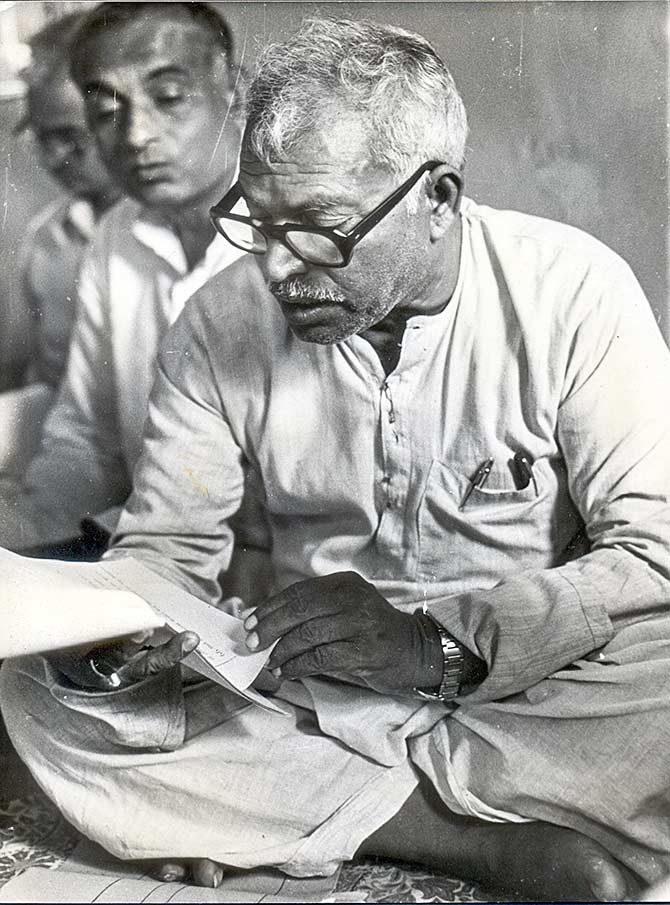
  • Socialist icon Karpoori Thakur awarded Bharat Ratna

    Karpoori Thakur

    Introduction

    • On January 23, the Indian government made a significant announcement, posthumously awarding the Bharat Ratna, India’s highest civilian honor, to Karpoori Thakur, the former chief minister of Bihar.
    • Thakur, affectionately known as ‘Jannayak’ or the leader of the people, leaves behind a legacy of enduring policy decisions that continue to shape Bihar and the nation.

    Karpoori Thakur: Life and Career

    • A Leader of Contrasts: Thakur, born on January 24, 1924, in Bihar, emerged as the foremost backward caste leader in the state, despite hailing from the minority nai (barber) caste.
    • Political Activism: He actively participated in the freedom struggle, enduring imprisonment for his convictions.
    • Decades of Public Service: Thakur served as an MLA from 1952 until his passing in 1988, except for a brief period when he became an MP in 1977.
    • Respected Clean Image: Despite holding public office for three decades, Thakur maintained a clean image and refrained from personal enrichment through government resources.

    Landmark Policy Decisions

    • Education Reform: Removed English as a compulsory subject for matriculation examinations, aiming to make education more accessible.
    • Prohibition of Alcohol: Enforced a ban on alcohol consumption to address societal issues stemming from alcohol abuse.
    • Job Opportunities for Engineers: Introduced preferential treatment for unemployed engineers in government contracts, leading to employment for approximately 8,000 engineers.
    • Layered Reservation System: Implemented the ‘Karpoori Thakur Formula’ in June 1970, providing 26% reservation, including 12% for OBCs, 8% for economically backward OBCs, 3% for women, and 3% for economically disadvantaged individuals from upper castes.

    Challenges and Consequences

    • Immediate Opposition: Thakur’s reservation policy faced significant opposition, especially from upper castes, and his government fell due to its implementation.
    • Polarization and Derogatory Remarks: His caste background led to derogatory slogans and polarization in society, despite his clean governance record.
    • Political Fallout: Thakur’s decision to prioritize the reservation policy was perceived by some as hasty, unlike leaders who consolidated their positions before introducing similar policies.

    Karpoori Thakur’s Enduring Legacy

    • Mandal-Kamandal Politics: Thakur’s legacy remains influential in the ongoing Mandal-Kamandal political landscape.
    • Recognition by Leaders: Bihar CM Nitish Kumar, himself from a numerically small EBC community, has closely associated himself with Thakur’s legacy.
    • Political Continuation: Thakur’s policies continue to shape the agendas of political parties in Bihar, highlighting the lasting impact of his commitment to social justice.
  • Batadrava Than: Understanding the Significance and Controversies

    Batadrava Than

    Introduction

    • A politician was recently denied entry to Assam’s Batadrava Than for his political campaigning.

    About Batadrava Than

    • Location: Situated in Nagaon district, Batadrava Than, also known as Bordowa Than, holds deep significance for Assamese Vaishnavites.
    • Birthplace of Srimanta Sankardeva: It stands at the birthplace of Srimanta Sankardeva (1449-1568), a revered Vaishnavite reformer-saint.
    • Founder of Kirtan Ghar: Sankardeva established the first-ever Kirtan Ghar at Bordowa in 1494 AD, where he practiced and preached the neo Vaishnavite faith.

    Sankardeva’s Philosophy

    • Ek Saran Naam Dharma: Sankardeva’s philosophy centered on worship through bhakti (devotion) to Lord Krishna, emphasizing the singing and congregational listening of His name and deeds.
    • Society Based on Equality: He advocated for a society free from caste distinctions, orthodox Brahmanical rituals, and sacrifices, promoting equality and fraternity.
    • Devotion over Idol Worship: Sankardeva’s teachings favored prayer and chanting (naam) over idol worship.
    • Four Components of Dharma: His dharma was founded on four components: deva (god), naam (prayers), bhakats (devotees), and guru (teacher).

    Legacy of Sankardeva’s Movement

    • Monastic Institutions: Sankardeva’s Neo-Vaishnavite reformist movement led to the establishment of monastic institutions known as Thans/Sattras across Assam.
    • Religious, Social, and Cultural Reforms: These Thans/Sattras became centers for religious, social, and cultural reforms in the 16th century.
    • “Worship Through Art” Approach: Today, the Sattras propagate Sankardeva’s unique approach of “worship through art” with music (borgeet), dance (xattriya), and theater (bhauna).
    • Nucleus of Naamghar: Each Sattra has a naamghar (worship hall) as its nucleus and is led by an influential “Sattradhikar.”

    Political Significance and Controversies

    • Assamese Identity: Thans/Sattras are integral to Assamese identity, and Batadrava Than is frequently visited by politicians.
    • Electoral Issue: The government has highlighted “land grabbing around Sattras by illegal settlers” as an electoral issue.
    • Proposed Land Law: The CM has announced plans for a law preventing “non-indigenous people” from buying land within an eight-kilometer radius of Batadrava Than.
    • Beautification Project: Home Minister Amit Shah launched a Rs 188 crore beautification project at Batadrava Than in 2021.

    Also read:

    Assam’s Sattras and their Political Significance

  • 1.5 degree Celsius Threshold: Is Climate Change real?

    climate change

    Introduction

    • The year 2023 witnessed alarming signs of climate change, from record-breaking summer temperatures to shrinking Antarctic sea ice and extreme weather events across the globe.
    • Despite the overwhelming scientific consensus on climate change, there remains confusion and misinformation on this critical issue.

    Is the Earth Becoming Warmer?

    • Temperature Measurement: Temperature measurements since the late 1880s show global warming trends. Satellite data confirms an increase of at least 1.1 degrees Celsius since 1880.
    • Indirect Verification: Analyzing natural indicators like tree rings and ice cores. Observing effects such as warming oceans, shrinking ice cover, and rising sea levels. Multiple monitoring systems enhance confidence in global-scale warming.
    • Acceleration of Warming: Recent decades witness unprecedented rapid warming. The majority of warming observed since 1975. 2022 marked the 46th consecutive year of temperatures above the 20th-century average.

    Role of Human Activities

    • Natural Factors: Throughout Earth’s history, natural factors like solar variations and volcanic activity influenced climate.
    • Current Acceleration: However, natural factors exert too little influence and operate too slowly to account for recent rapid warming, as acknowledged by NASA.
    • Greenhouse Gases: The primary driver of global warming is the increasing concentration of greenhouse gases, particularly carbon dioxide (CO2), methane (CH4), and water vapor.
    • Human Influence: Since the Industrial Revolution, human activities, especially the burning of fossil fuels, have released substantial greenhouse gases into the atmosphere.
    • Unprecedented Change: Changes that would typically occur over hundreds of thousands of years are now happening within decades.

    Overwhelming Evidence

    • Scientific Consensus: The Intergovernmental Panel on Climate Change (IPCC) has stated that “human influence on the climate system is clear and growing.”
    • Unprecedented Warmth: 2022 marked the 46th consecutive year with global temperatures exceeding the 20th-century average, with the last nine years ranking among the warmest.

    1.5 Degree Celsius Threshold

    • Paris Agreement: 195 countries pledge to limit warming to “well below 2 degrees Celsius” and aim to limit the increase to 1.5 degrees Celsius.
    • Baseline Year: Pre-industrial levels based on measurements from 1850 to 1900, providing a reliable historical reference.
    • Reason for 1.5 Degrees: Scientific consensus: 1.5 degrees is a defense line against severe climate impacts. It avoids extreme and irreversible consequences associated with 2 degrees warming.
    • Continuous Improvement: Lowering the target reduces climate risks further. Science supports aiming for the lowest possible temperature increase.

    Consequences of Breaching the Threshold

    • Increased Extreme Weather: More frequent and intense heavy precipitation. Elevated drought intensity and frequency in some regions.
    • Warmer Oceans: Higher number of strong hurricanes with rapid strengthening.
    • Intensified Wildfires: Longer-lasting and more intense wildfires.
    • Rapid Sea Ice Melt: Accelerated sea-level rise.
    • Emerging Consequences: Many of these impacts are already underway. Breaching the threshold exacerbates these effects.

    How Close Are We to Breaching the Threshold?

    • WMO Warning: World Meteorological Organisation (WMO) warns of a 66% chance of crossing the 1.5-degree limit between 2023 and 2027.
    • Hottest Year: 2023 declared the hottest year on record, 1.48 degrees Celsius warmer than pre-industrial levels.
    • Daily Fluctuations: Daily temperatures occasionally exceed 1.5 degrees Celsius, but long-term trends are the focus.

    Conclusion

    • The evidence of climate change and global warming is undeniable.
    • Human activities, primarily the release of greenhouse gases, are driving these changes at an unprecedented rate.
    • Understanding the science behind climate change is crucial in addressing this real global crisis.
  • Madhika: A Perishing Language with just 2 Speakers

    Introduction

    • In the remote colony of Kookanam, Kerala, the Chakaliya community faces a sobering reality—their unique language, Madhika, teeters on the brink of extinction.
    • With no script to preserve it, Madhika is struggling for survival, and the last two speakers.

    About Madhika Language

    • A Linguistic Blend: Madhika may sound reminiscent of Kannada, but its influences run deeper, encompassing Telugu, Tulu, Kannada, and Malayalam.
    • Endangered Heritage: The younger generation, drawn to mainstream languages like Malayalam, shows little interest in preserving Madhika, leading to its decline.

    Chakaliya Community’s History

    • Nomadic Origins: The Chakaliya community was once nomadic and worshippers of Thiruvenkatramana and Mariamma.
    • Migration to Kerala: Centuries ago, they migrated from the hilly regions of Karnataka to northern Malabar in Kerala.
    • Change in Status: Initially recognized as Scheduled Tribe, they were later included in the Scheduled Caste category in Kerala.
    • Historical References: References to the Chakaliya community can be found in the book “Caste and Tribes of Southern India.”

    Social Stigma and Its Impact

    • Untouchability and Dehumanization: The Chakaliya community faced social stigma, including untouchability and exclusion from important feasts and ceremonies.
    • Modern Disassociation: Many young and educated members of the community seek to disassociate themselves from the past, preferring to speak Malayalam over Madhika.

    Also read about:

    [pib] Scheme for Protection and Preservation of Endangered Languages of India (SPPEL)

  • How Ramayana became popular outside India?

    Ramayana

    Introduction

    • The epic narrative of the Ramayana, cherished in India for millennia, has transcended its geographical boundaries to become a cherished tale worldwide.
    • This enduring journey of the Ramayana highlights how the Indian diaspora, including traders, preachers, and indentured laborers, played a pivotal role in its global dissemination.

    Ramayana’s Path across Asia

    • The Ramayana embarked on its Asian voyage during the early centuries of the Common Era. It traversed three distinct routes:
    1. Northern Route: From the regions of Punjab and Kashmir, the epic story ventured into China, Tibet, and East Turkestan overland.
    2. Southern Route: Originating from Gujarat and South India, it sailed across seas to reach Java, Sumatra, and Malaya, making it a significant part of these cultures.
    3. Eastern Route: Through the eastern overland route, the Ramayana entered Burma, Thailand, and Laos, reaching Vietnam and Cambodia via Java.
    • This expansion was primarily attributed to Indian traders who embarked on their journeys for commerce, trading spices, gold, and aromatic wood.
    • Many of these travelers eventually settled in these regions, contributing to the dissemination of Indian religion, culture, and philosophy.

    Cultural Influence on Southeast Asia

    • The Indian diaspora brought with them a profound influence on the native cultures of Southeast Asia.
    • Brahmin priests, Buddhist monks, scholars, and adventurers played a crucial role in transmitting Indian traditions.
    • Over time, the Ramayana became an integral part of these countries’ cultural fabric.
    1. Thailand: The Ayutthaya kingdom drew inspiration from the Ramayana, with Ayutthaya itself resembling the mythical city of Ayodhya. The Ramayana remains Thailand’s national epic, profoundly influencing its culture and royalty.
    2. Cambodia: The Angkor Wat temple complex, originally dedicated to Vishnu, features captivating murals narrating episodes from the Ramayana.

    Contemporary Influence in Southeast Asia

    • Even today, the Ramayana continues to hold a significant place in the cultures of Southeast Asian countries.
    • Despite diverse dominant religions, ranging from Buddhism to Islam, the epic persists as a source of inspiration.
    1. Thailand: The Ramakien, a Thai version of the Ramayana, is Thailand’s national epic, with rulers of the Chakri dynasty adopting names from the Ramayana.
    2. Laos: The story of Phra Ram is considered the national epic, with unique interpretations reflecting Lao culture.
    • Variations in these narratives often mirror local cultures and traditions, emphasizing the enduring appeal of the Ramayana across Southeast Asia.

    Ramayana beyond Asia

    • The 19th century witnessed another phase in the global dissemination of the Ramayana, propelled by the movement of indentured laborers, known as girmitiyas, from India to regions such as Fiji, Mauritius, Trinidad and Tobago, Guyana, and Suriname.
    • These laborers carried with them the cultural heritage of India, prominently featuring Tulsidas’s Ramcharitmanas, an iconic religious text in North India.

    Preservation amidst Adversity

    • Girmitiya Migration: Indentured laborers, primarily from Uttar Pradesh and Bihar, were sent abroad to work on plantations after the abolition of slavery.
    • Preservation of Culture: Despite their modest means, the girmitiyas preserved their culture and religion. The Ramcharitmanas became a symbol of their homeland in an unfamiliar land.
    • Cultural Sustenance: The Ramayana offered solace and nostalgia, fostering a sense of belonging and connection to their roots.

    Conclusion

    • Remarkable journey of the Ramayana from India’s heartland to distant shores underscores the enduring power of storytelling, culture, and tradition.
    • Whether in the ancient temples of Southeast Asia or the hearts of indentured laborers in faraway lands, the Ramayana continues to inspire and resonate, bridging the geographical gaps of our diverse world.
  • What is the Nagara Style, in which Ayodhya’s Ram temple is being built?

    nagara

    Introduction

    • The upcoming inauguration of the Ram temple in Ayodhya designed by Chandrakant Sompura and his son Ashish in the Nagara style of temple architecture has piqued interest in the rich architectural heritage of India.

    Emergence of Nagara Architecture

    • Historical Context: Nagara architecture originated in northern India during the late Gupta period, around the 5th century CE.
    • Contrasting Styles: It stands in contrast to the Dravida style prevalent in southern India, both evolving around the same period.

    “Languages” of Architecture

    • Debating Terminology: While commonly referred to as “styles,” Nagara and Dravida are more accurately described as “languages” of temple architecture.
    • Architectural Vocabulary: Each language provides a unique vocabulary and a set of rules for assembling architectural elements.

    Distinctive Features of Nagara Temples

    • Raised Plinth: Nagara temples are built on elevated plinths, with the sanctum sanctorum (garbha griha) as the most sacred part.
    • Towering Shikhara: The shikhara, or tower, is the hallmark of Nagara temples and symbolizes the natural and cosmological order in Hindu tradition.
    • Circumambulatory Passage: A path encircles the garbha griha, allowing devotees to circumambulate the inner sanctum.
    • Mandapas and Ornamentation: Nagara temples often feature multiple halls (mandapas) and intricate murals and reliefs on their walls.

    Modes of Nagara Architecture

    • Five Modes: Nagara architecture has evolved over time, leading to five distinctive modes: Valabhi, Phamsana, Latina, Shekhari, and Bhumija.
    • Early Nagara Style: Valabhi and Phamsana are associated with the early Nagara style, resembling barrel-roofed structures and multi-eave towers.
    • Dominance of Latina: Latina, a single curved tower with equal sides, reigned supreme for three centuries starting in the 7th century.
    • Later Developments: Shekhari introduced attached sub-spires, while Bhumija featured miniature spires in horizontal and vertical rows, creating a grid-like effect.

    Diversity within Modes

    • Simplified Classifications: These modes are scholastic classifications, and actual temple architects didn’t consciously adhere to a particular mode.
    • Variation Abounds: Temples often exhibit variations within these modes, with multiple shikharas atop a single structure.

    Contrasting Dravida Architecture

    • Vimana vs. Gopuram: In Dravida style temples, the vimana (tower) is smaller than the prominent gopurams (gatehouses).
    • Boundary Walls: Dravida temples often feature boundary walls, a unique feature not commonly seen in Nagara style temple complexes.
    • Ayodhya’s Unique Blend: Ayodhya’s Ram temple combines elements of both styles, featuring a boundary wall but not elaborate gopurams.
  • Assam’s Sattras and their Political Significance

    Introduction

    • Ahead of a general elections rally, a politician has paid a visit to the Sri Sri Auniati Satra, a 350-year-old Vaishnavite monastery located in Assam’s Majuli district.
    • These Sattras, rooted in the Neo-Vaishnavite reformist movement, play a crucial role in Assamese culture, encompassing religious, social, and cultural aspects.

    Spread of Sattras

    • Founding: Srimanta Sankaradeva established the first Satra in 1494 in Bardowa, his native village in Nagaon district.
    • Expansion: As Sankaradeva preached, Satras were established across the Brahmaputra Valley, including Coochbehar in West Bengal.
    • Current Count: There are nearly 900 Satras today, with significant ones located in Majuli island, Barpeta, Nagaon, and Dhubri.

    Composition of a Sattra

    • Central Worship Hall: Each Sattra has a central worship hall known as “naamghar,” which serves as its nucleus.
    • Sattradhikar: A Sattra is headed by an influential leader known as the “Sattradhikar.”
    • Bhakats: Monks, referred to as bhakats, are initiated into Sattras at a young age, and their celibacy status varies depending on the Sattra they belong to.

    Diverse Sattra Denominations

    • Samhatis: Satras fall into four major Samhatis or denominations: Brahma-samhati, Kal-samhati, Nika-samhati, and Purush-samhati.
    • Brahma-samhati: Exclusively led by Satradhikars from Brahmin families.
    • Celibate Monks: Some Satras, like Dakhinpaat, Auni-ati, Bhogpur, Uttar Kamalabari, and Natun Kamalabari, practice celibacy.
    • Varied Succession: Smaller Satras, often family-run, pass leadership from father to son, with monks not necessarily observing celibacy.

    Legacy of Srimanta Sankaradeva

    • Neo-Vaishnavite Reform: Sattras are monastic institutions that trace their origins to the 16th-century Neo-Vaishnavite reformist movement initiated by Saint-Reformer Srimanta Sankaradeva.
    • Spreading Teachings: As Sankaradeva traveled across Assam, his teachings aimed at fostering an egalitarian society, and the establishment of Sattras or Thans played a pivotal role in realizing this vision.
    • Cultural and Religious Centers: These institutions are the heart of Assamese culture and serve as centers for religious, social, and cultural reforms.
    • Worship Through Art: Sattras propagate Sankardeva’s unique approach of “worship through art” through practices like music (borgeet), dance (sattriya), and theatre (bhauna).

    Sankardeva’s Philosphy: Eka-sharana-naam-dhrama

    • Bhakti Form: Sankardeva promoted a form of Bhakti known as “eka-sharana-naam-dhrama.”
    • Equality and Fraternity: His teachings aimed at establishing a society characterized by equality and fraternity, free from caste distinctions, orthodox rituals, and sacrifices.
    • Focus on Prayer and Chanting: Sankardeva’s dharma emphasized prayer and chanting (naam) instead of traditional idol worship.

    Sattras and Their Relationship with the State

    • Historical Patronage: During the Ahom reign, Sattras received significant donations in the form of land and money from the kings.
    • Self-Sufficiency: Unlike temples, Sattras were self-sufficient, producing their own food and sustaining themselves.
    • Contemporary Support: In contemporary times, Sattras receive annual grants from both state and central governments, often associated with political motives.

    Political Influence of Sattras

    • Influence in Elections: While Sattra votes may not be the sole determinant of election outcomes, Sattras and Sattradhikars wield substantial influence.
    • Sattra-Based Constituencies: Several constituencies in Assam, like Nagaon, Kaliabor, Majuli, Barpeta, Bartadadrva, have a significant Sattra presence.
    • Family Ties: Many Assamese families maintain close ties with one Sattra or another.
    • Political Visits: Politicians from various parties frequently visit Sattras, recognizing their importance in the political landscape.

    Conclusion

    • Sattras, deeply rooted in Assam’s cultural and religious heritage, represent the teachings of Srimanta Sankaradeva and his vision of an egalitarian society.
    • These institutions continue to exert political influence in Assam, particularly in Sattra-based constituencies, making them a significant force in the state’s political landscape.