💥Join UPSC 2027,2028 Mentorship (July Batch) + XFactor Notes & Microthemes PDF

GS Paper: GS3-19.Disaster and Disaster Management.

  • Discuss about the vulnerability of India to earthquake-related hazards. Give examples including the salient features of major disasters caused by earthquakes in different parts of India during the last three decades

    Vulnerability of India to Earthquake-Related Hazards

    Active Plate Tectonics – High seismicity in the Himalayan belt, North-East India, Kutch region, and Andaman-Nicobar Islands.

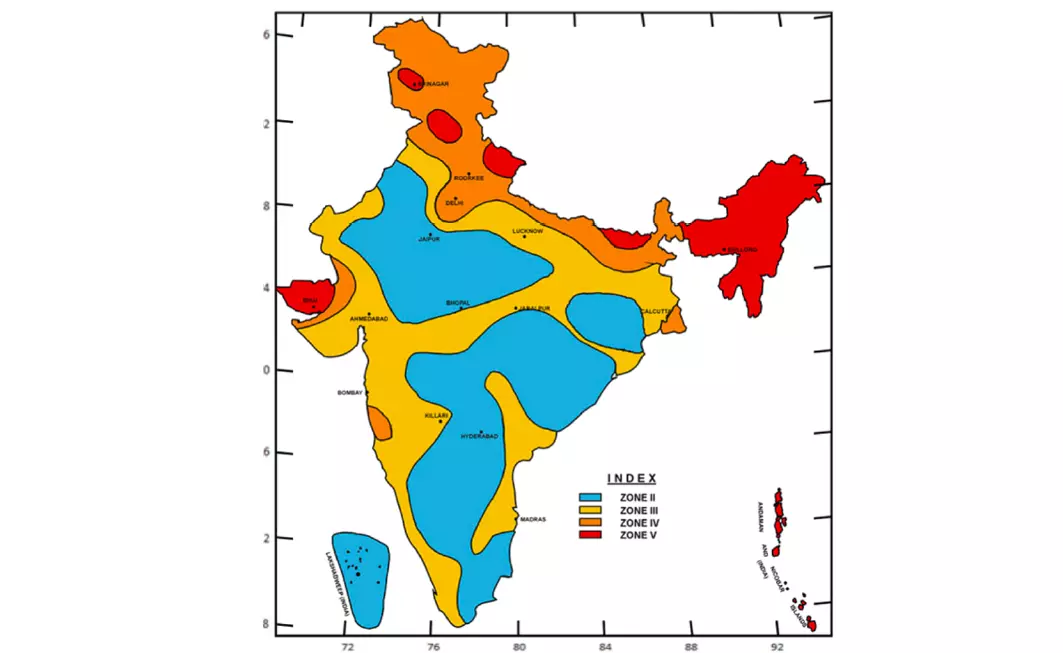
    Wide Seismic Zonation

    Zone V (Very High Risk) – Himalayan states, Kutch, Andaman & Nicobar.

    Zone IV – Delhi, Bihar, parts of J&K and NE India.

    Major cities such as Delhi, Guwahati, Srinagar, Imphal lie in high-risk zones.

    Weak enforcement of earthquake-resistant building codes (BIS).

    Rapid and Unplanned Urbanisation without seismic safety.

    Secondary and Cascading Hazards – Landslides, liquefaction, fires, dam failure, and infrastructure collapse.

    Vulnerability of critical infrastructure – Disruption of transport, power, water, and communication networks.

    Examples of Major Earthquake Disasters in India (Last Three Decades)

    Latur Earthquake, Maharashtra (1993)

    Magnitude – ~6.3

    Intraplate earthquake caused by reactivation of ancient fault lines in the Deccan Plateau

    Over 9,000 deaths.

    Bhuj Earthquake, Gujarat (2001)

    Magnitude – 7.7

    Intraplate fault movement due to stress transmitted from the Indian Plate-Eurasian Plate collision

    Around 13,800 deaths and massive infrastructure loss.

    Kashmir Earthquake (2005)

    Magnitude – 7.6

    Thrust faulting due to ongoing collision of the Indian Plate with the Eurasian Plate

    Extensive landslides and isolation of remote villages.

    Sikkim Earthquake (2011)

    Magnitude – 6.9

    Active tectonics of the Himalayan collision zone

    Triggered widespread landslides.

    Damage to roads, bridges, and hydropower projects.

    Hazard zonation mapping, disaster resilient infrastructure and institutional strengthening for quick response and recovery is essential to achieve Sendai targets on disaster risk reduction.

  • Describe the various causes and the effects of landslides. Mention the important components of the National Landslide Risk Management Strategy.

    Landslides are the downhill movement of rock, debris or earth due to slope failure, triggered by natural or anthropogenic factors.

    Causes of Landslides

    Natural Causes

    Intense or Prolonged Rainfall leads to liquefaction – Eg- 2018 Kerala floods triggered major landslides in Idukki and Wayanad.

    Hydrological Factors: Water seepage through porous materials raises pore pressure and weakens the slope.

    Earthquakes – Seismic shaking destabilises slopes.

    Weathering & Erosion

    Physical and chemical weathering reduce slope strength

    River undercutting erodes base material.

    Snowmelt – Eg- Landslides linked to glacial retreat in Chamoli (Uttarakhand).

    Volcanic Activity – Though rare in India, globally volcanic regions face debris flows and lahars.

    Anthropogenic Causes

    Unregulated Construction– Eg- Frequent landslides along Char Dham highway in Uttarakhand.

    Deforestation – Reduces root binding capacity and slope cohesion. Eg- Western Ghats tea and cardamom plantations.

    Mining & Quarrying Activities– Eg- Quarry-linked landslides in Kerala’s Idukki district.

    Poor Drainage –Blocked drains, leaking pipelines, and slope saturation trigger failures.

    Unplanned Urbanisation – Unscientific hill-cutting and unsustainable tourist influx. Eg- Joshimath Crisis in Uttarakhand

    Effects of Landslides

    Loss of Life and Injury – Eg- 2024 Wayanad landslide killed 250+ people and injured 400

    Damage to critical Infrastructure– Eg- Frequent closure of NH-44 in J&K and HP.

    Economic Losses – 1% to 2% of the Gross National Product (GSI)

    River Blockage due to debris creates temporary dams and flash floods. Eg- 2021 Rishiganga disaster.

    Environmental Degradation – Loss of forests, soil fertility, biodiversity, and increased erosion.

    Disaster induced displacement – as per Internal Displacement Monitoring Centre (IDMC), India recorded 5.4 million displacements in 2024 due to disasters Eg- Joshimath crisis (2023).

    Components of the National Landslide Risk Management Strategy (NLRMS)

    Landslide Hazard Zonation Mapping using GIS, remote sensing, LiDAR.

    At macro scale (1:50,000 / 25,000)

    At meso level (1:10,000)

    Developing landslide monitoring & early warning systems – Eg- use of Rainfall thresholds, automated sensors, Doppler radar support etc

    Awareness generation and capacity building of local communities in landslide safety and mitigation.

    Land use regulation – Eg- Restricting construction in high-risk slopes.

    Creation of Special Purpose Vehicle (SPV) for Landslide Management

    Mitigation Measures –

    Engineering solutions – Retaining walls, slope drainage, rock bolting, geo-textiles,

    Nature based solutions – Afforestation in himalaya

    Establishment of a National Landslide Inventory for modelling and planning.

    Response & Relief – SOPs for search and rescue, emergency shelters.

    Institutional Mechanism & Coordination – Defining roles of NDMA, GSI, MoRTH, state DMAs and local bodies.

    Research & Development – Geotechnical studies, rainfall-landslide correlations.

    To prevent a catastrophe like the Wayanad Landslide of 2024, engineering as well as nature-based solutions along with early warning systems, and effective land use practices are essential.

  • Explain the mechanism and occurrence of cloudburst in the context of the Indian subcontinent. Discuss two recent examples.

    IMD defines cloudburst as an extreme weather event involving very high-intensity rainfall (often >100 mm/hour) over a small geographical area (20-30 sq. km.) within a short duration.

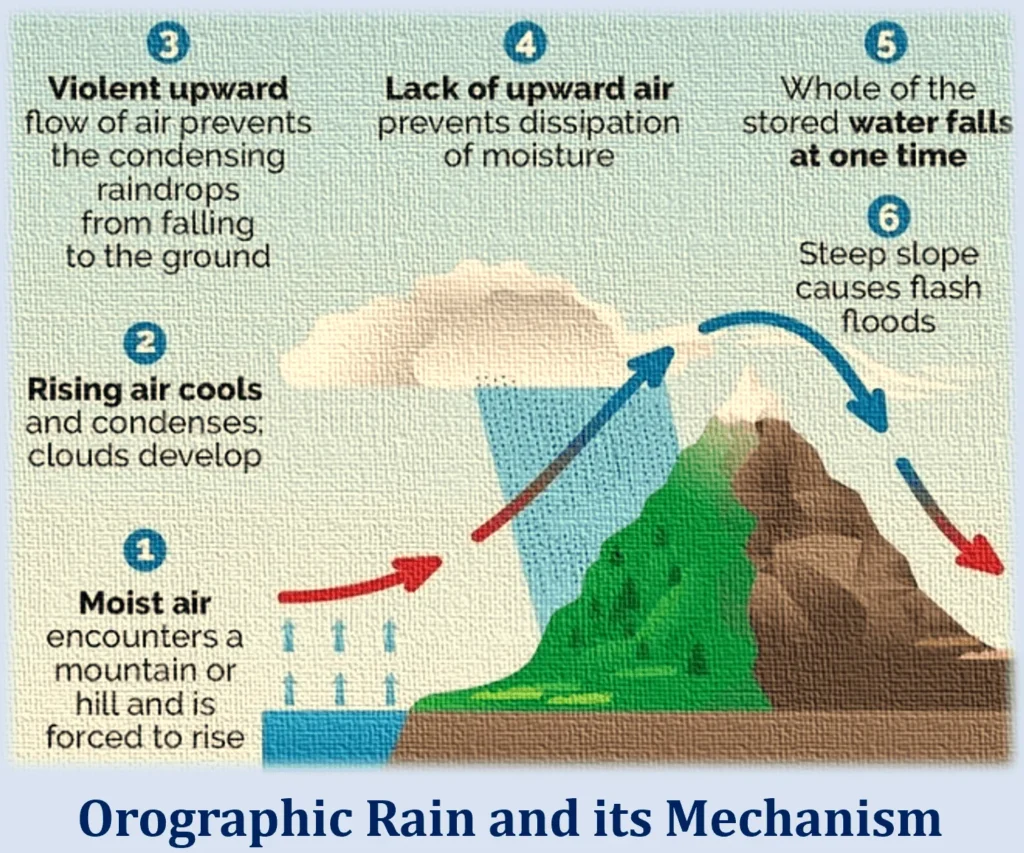
    Mechanism of Cloudburst

    Moist air masses are forced to rise abruptly when they encounter steep mountain slopes.

    Rapid ascent causes condensation and release of latent heat, intensifying convection.

    Strong Convective Clouds (Cumulonimbus) up to 12-15 km.

    Moisture Supply from Monsoon Systems enhances instability.

    When updrafts weaken, large volumes of accumulated rainwater are released at once, causing cloudburst-like rainfall.

    Occurrence of cloudburst in the Indian Subcontinent

    Himalayan and Western Ghat Topography – Steep slopes promote rapid vertical uplift.

    Monsoon Dynamics – High atmospheric moisture during June-September.

    Climate Change – Rising temperatures increase atmospheric moisture-holding capacity. Eg- every 1°C rise lets air hold ~7% more moisture.

    Land-Use Changes – Deforestation, slope cutting, and urbanisation increase runoff and disaster impact.

    2 recent examples

    Cloudburst in Uttarakhand in 2025 – Chamoli, Rudraprayag, Tehri, and Bageshwar districts affected

    Himachal Pradesh Cloudbursts in 2025 – affectedKullu, Mandi, Shimla districts. Triggered flash floods and massive landslides. Losses at about Rs 4,300 crore and nearly 380 deaths

    Mitigation measures

    Structural

    Engineering solutions – Retaining walls, slope drainage, rock bolting, geo-textiles,

    Nature based solutions – Afforestation in himalaya

    Non-Structural

    Expansion of multi-hazard insurance

    Disaster resilient urban planning (Mishra committee on Joshimath crisis)

    The Sendai Framework’s proactive approach is essential for making Bharat a ‘weather-ready and climate-smart’ nation.
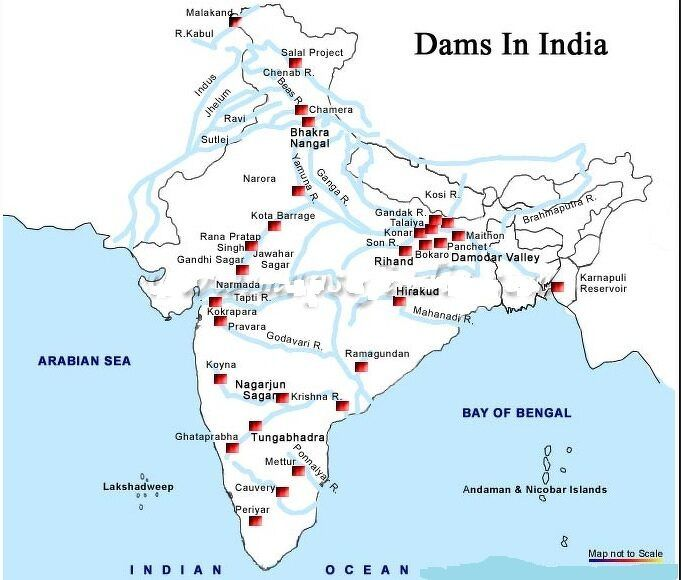
  • Dam failures are always catastrophic, especially on the downstream side, resulting in a colossal loss of life and property. Analyze the various causes of dam failures. Give two examples of large dam failures.

    Causes of Dam Failures

    Natural Factors

    Extreme Rainfall – Flooding causes 44% of dam failures in India (CWC). Eg- Tiware Dam breach in 2019

    Chungthang Dam in Sikkim was washed away in 2023 due to glacial lake outburst of South Lhonak Lake.

    Earthquakes cause cracks, foundation instability, or slope failure. Eg- liquefaction in the foundation of Chang Dam after Bhuj EQ (2001)

    Geological Weaknesses – Fault zones, weak rock strata, or unconsolidated foundations beneath dams.

    Climate Change – Increased frequency of high-intensity rainfall events beyond historical norms.

    Human Factors

    Faulty Design and Planning – Eg- Underestimation of Probable Maximum Flood (PMF).

    Aging – 1,065 large dams 50-100 years old, 224 are over a century old. Eg- safety concerns over ​​Mullaperiyar Dam (130 year old)

    Weak Regulatory Oversight – Eg- poor dam safety audits (CAG report).

    Poor maintenance and sedimentation – Eg- Around 3700 dams in India will lose 26% of the total storage by 2050 due to sedimentation (UN).

    Examples of dam failures

    Machhu dam disaster, 1979, in Morbi, Gujarat – 2,000 people died and 12,000 houses were destroyed.

    Banqiao Dam Failure, China (1975)

    Extreme rainfall from Typhoon Nina

    Cascade failure of multiple dams due to poor design

    Estimated 1,70,000 deaths (direct and indirect)

    Initiatives Taken for Dam Safety in India

    Dam Safety Act, 2021 – Statutory framework for surveillance, inspection, operation, and maintenance of dams.

    National Register of Large Dams (NRLD) complied and maintained by CWC.

    Dam Rehabilitation and Improvement Project (DRIP) for rehabilitation of 736 dams across 19 States.

    Dam Health and Rehabilitation Monitoring Application (DHARMA)- application of Artificial Intelligence (AI) in dam safety.

    Rigorous dam safety audits, climate-resilient design and real-time monitoring is essential to protect the ‘temples of modern India’

  • Flooding in urban areas is an emerging climate-induced disaster. Discuss the causes of this disaster. Mention the features of two such major floods in the last two decades in India. Describe the policies and frameworks in India that aim at tackling such floods.

    Recently, heavy pre-monsoon thundershowers in Bengaluru led to severe Floods. Unlike riverine floods, urban floods are highly localised, rapid-onset, and short-duration, but cause disproportionately high economic and infrastructural damage.

    Causes of urban flooding

    Natural causes

    Natural meteorological phenomena like cyclones, cloud bursts. Eg- Cyclone Tauktae in Mumbai.

    Climate Change – Increase in short-duration, high-intensity rainfall events. Eg- In 2005 Mumbai witnessed 37 inches of rainfall in only 24 hours.

    Sea level rise: by 2050, Mumbai will witness a 25% increase in the intensity of flash floods accompanied by a half-meter rise in the sea level (McKinsey India report)

    Topography: Many Indian cities are located in floodplains or low-lying coastal zones. Eg- Mumbai on the Konkan coast, Kolkata in the Ganga-Brahmaputra delta.

    Anthropogenic causes

    Inadequate Stormwater Drainage Infrastructure – Old, undersized, and poorly maintained drainage networks. Eg- Mumbai’s British-era drainage

    Poor urban planning and encroachment on wetlands

    Bengaluru has lost 80% of its lakes

    Chennai has lost 85% of its wetlands. (WWF)

    Concretisation – Expansion of concrete roads, pavements, and buildings reducing infiltration.

    Unregulated dumping of solid waste blocks drains, and stormwater systems

    Deforestation reduces the land’s ability to absorb water, causing rapid runoff into urban areas.

    Weak Enforcement – Lack of floodplain zoning and non-compliance with building regulations.

    Sudden release of water from dams and lakes – Eg- Pune Floods due to Opening of Khadakwasla dam.

    Illegal river sand mining reduces the water retention capacity of the waterbody, increasing the speed and scale of stormwater flow. Eg- Cauvery River bed, Tamil Nadu.

    Two major urban floods in the last two decades in India

    Mumbai Floods – 2005

    Trigger – Extremely heavy rainfall (~944 mm in 24 hours)

    Key Features

    Complete failure of stormwater drainage system.

    Severe flooding along the Mithi River floodplain due to encroachment.

    Massive disruption of transport, power supply, and economic activity.

    Exposed vulnerability of coastal megacities to extreme rainfall.

    Chennai Floods – 2015

    Trigger – Intense northeast monsoon rainfall

    Key Features

    Encroachment of wetlands like Pallikaranai marsh.

    Poor coordination in reservoir water release aggravated flooding.

    Prolonged waterlogging in residential and industrial zones.

    Policies and Frameworks in India to Tackle Urban Flooding

    NDMA Guidelines on Urban Flooding (2010) – Recommend city-specific urban flood management plans.

    National Disaster Management Plan (NDMP), 2016 – Integrates urban flood risk reduction within disaster preparedness and mitigation.

    Atal Mission for Rejuvenation and Urban Transformation (AMRUT) – Investment in stormwater drainage, sewerage, and water infrastructure.

    Smart Cities Mission – Use of GIS mapping, real-time sensors, and flood monitoring systems.

    Early Warning Systems – IMD and CWC providing impact-based rainfall forecasts.

    Protection of wetlands under Wetlands (Conservation and Management) Rules.

    Model Building Bye Laws by MoHUA – all buildings having a plot size of 100 sq.m. or, more shall mandatorily include the complete proposal of rainwater harvesting.

    MoHUA has issued Standard Operating Procedures (SoPs) on Urban Flooding in 2017 and published manual on Storm Water Drainage Systems in 2019

    As per NITI aayog, over 40% of India’s population will reside in urban areas by 2030. Thus, flood resilient urban future is essential for Viksit Bharat @2047

    Internal Security

    LWE and N-E insurgency

  • What is disaster resilience? How is it determined? Describe various elements of a resilience framework. Also mention the global targets of the Sendai Framework for Disaster Risk Reduction (2015-2030).

    As per Hyogo Framework of Action, Disaster resilience refers to the ability of individuals, communities, systems, and nations to anticipate, absorb, adapt to, and recover from the impacts of hazards while retaining essential functions.

    Determination of disaster resilience

    Exposure to Hazard – Settlements on riverbanks or seismic zones are more vulnerable. Eg- Joshimath (Uttarakhand)

    Adaptive or Coping Capacity – Ability to anticipate, respond, absorb and recover from a disaster. Eg- Japan’s high adaptive capacity to earthquakes

    Socio-economic Conditions – Poverty, marginalisation and inequity increase susceptibility to harm. Eg- Disaster induced migration

    Governance and Institutional Readiness– Eg- Singapore’s Integrated crisis management agency (SCDF)

    Environmental resilience increases or reduces hazard impact. Eg- ‘Day Zero’ in Chennai due to wetland encroachment.

    Social Networks and Support Systems: – Communities with strong social cohesion, community organizations, and support networks are more resilient to respond to and recover from disasters.

    Health status and access to healthcare services – Eg- Elderly and Children are less resilient to post disaster illness

    Elements of a Disaster Resilience Framework

    Risk Knowledge – Hazard mapping, vulnerability analysis, and risk assessments to understand who is at risk and why. Eg-GIS-based flood and landslide susceptibility maps.

    Early Warning Systems– Eg-IMD’s cyclone early-warning system reduces mortality drastically.

    Preventive Measures – Nature-based solutions, resilient infrastructure, land-use planning, seismic codes, floodplain zoning. Eg-Mangrove restoration under MISHTI.

    Preparedness & Response Capacity – Training volunteers, conducting mock drills, strengthening NDRF/SDRF capacities. Eg-Aapda Mitra programme in 350+ districts.

    Institutional ‘capacity building’ – Strong governance, coordination between NDMA, SDMA, district authorities, and urban bodies.

    Recovery, Rehabilitation & “Build Back Better” – stronger housing, better planning, safer infrastructure. Eg- Japan’s Post-2011 Tōhoku Earthquake & Tsunami Reconstruction

    Social & Community Resilience – Inclusive decision-making, empowering women, local groups, and indigenous knowledge systems.

    Financial Resilience – Insurance, disaster funds (NDRF/SDRF), parametric insurance, contingency financing.

    Global Targets of the Sendai Framework (2015-2030)

    Reduce Global Disaster Mortality – Substantial reduction by 2030 compared to 2005-2015 baseline.

    Reduce Number of Affected People – Significant decrease in people injured, displaced, or needing basic services during disasters.

    Reduce Economic Losses – Lower global disaster-related economic losses relative to global GDP.

    Reduce Damage to Critical Infrastructure – Protect health facilities, water systems, schools, and public infrastructure.

    Increase Number of Countries with DRR Strategies – All nations to develop national and local disaster risk reduction strategies.

    Enhance International Cooperation – Increase support from developed to developing countries for capacity-building, technology, and finance.

    Ensure multi-hazard early warning systems and accessible risk information for everyone.

    Priorities for Action

    Understanding disaster risk in all its dimensions

    Strengthening disaster risk governance

    Investing in disaster risk reduction for resilience

    Enhancing disaster preparedness for effective response, and to Build Back Better

    The Sendai Framework’s proactive approach is essential for making Bharat a ‘weather-ready and climate-smart’ nation.
  • How ACs catch fire, and the role temperature plays in it

    Why in the News?

    A major fire in a residential apartment in Delhi’s Dwarka area, allegedly triggered by an AC blast, led to fatalities during an intense heatwave. The incident has drawn attention to the rising number of air-conditioner fire accidents during summers, as prolonged AC usage and extreme temperatures increase overheating and electrical risks.

    What are Air Conditioners (ACs)?

    Air conditioners (ACs) are electrical cooling devices that reduce indoor temperature and humidity by removing heat from enclosed spaces and releasing it outside through a refrigeration cycle. 

    They work using components such as a compressor, condenser, evaporator, and refrigerant gas to maintain comfortable room temperatures, especially during extreme summers and heatwaves.

    Why are AC fire incidents increasing during extreme summers?

    1. Heatwave Conditions: Rising ambient temperatures force ACs to operate continuously for longer hours, increasing thermal stress on internal components.
    2. Higher Cooling Load: Elevated outdoor temperatures reduce cooling efficiency, compelling compressors to work harder and consume more electricity.
    3. Urban Dependence: Increased AC penetration in cities raises cumulative electricity demand and appliance stress, particularly in densely populated apartments.
    4. Climate Linkage: More frequent and intense heatwaves have expanded cooling requirements, converting household cooling devices into a potential urban safety concern.
    5. Delhi Case Example: The Dwarka apartment fire allegedly linked to an AC blast highlighted the severe consequences of overheating in enclosed residential spaces.

    How do air conditioners catch fire?

    1. Overheating: Continuous operation during peak summers causes excessive heat generation in internal components, wiring, and insulation systems.
    2. Insulation Damage: Excessive heat degrades insulation materials inside the AC, exposing electrical parts and increasing ignition risk.
    3. Short Circuits: Electrical current may flow through unintended paths due to damaged wiring, overheating, or loose electrical connections, generating sparks capable of igniting combustible materials.
    4. Electrical Overload: Excessive current flow places stress on circuits and electrical systems, increasing fire probability.
    5. Faulty Components: Damaged compressors, malfunctioning parts, and ageing electrical systems increase operational risks.
    6. Indoor Unit Vulnerability: While external compressor units generally overheat, indoor AC units pose higher fire risks because electrical sparks generated internally can ignite surrounding household materials.

    Major causes of AC overheating

    How do blocked filters increase fire risk?

    1. Blocked Air Filters: Dust accumulation restricts airflow, forcing the AC to work harder and causing overheating.
    2. Cooling Inefficiency: Reduced ventilation decreases heat dissipation capacity and elevates internal temperature.

    How do electrical faults trigger AC fires?

    1. Short Circuits: Loose wiring or damaged electrical circuits create sparks that may ignite nearby combustible materials.
    2. Voltage Fluctuation: Irregular power supply damages sensitive AC components and accelerates system wear.
    3. Poor Wiring Quality: Faulty or substandard wiring increases overheating probability.

    Why are gas leaks dangerous in AC systems?

    1. Refrigerant Leakage: Leakage creates pressure imbalances and operational stress that may increase fire vulnerability.
    2. Compressor Stress: Improper refrigerant circulation forces compressors to overwork and malfunction.

    Why does prolonged usage increase overheating?

    1. Extended Operation: Running ACs continuously for long durations during summers overheats internal components.
    2. Component Fatigue: Persistent use accelerates wear and malfunction in motors, compressors, and circuit boards.

    Are inverter ACs safer than non-inverter ACs?

    1. Inverter Technology: Inverter AC compressors regulate speed gradually according to room temperature rather than repeatedly switching on and off.
    2. Reduced Stress: Continuous speed modulation lowers operational pressure on electrical components.
    3. Energy Efficiency: Inverter systems consume less power during sustained operation.
    4. Non-Inverter Limitation: Conventional ACs repeatedly restart compressors at full speed, increasing mechanical stress and overheating risks.
    5. Conditional Safety: Inverter ACs are relatively safer but remain vulnerable to poor installation, electrical faults, voltage fluctuation, and lack of maintenance.

    What are the warning signs of an unsafe AC system?

    1. Frequent Tripping: Repeated circuit breaker shutdown indicates excessive load or electrical faults.
    2. Unusual Noise: Buzzing or abnormal sounds may indicate compressor or motor malfunction.
    3. Burning Smell: Smell from wiring or components signals overheating.
    4. Irregular Cooling: Reduced cooling performance may indicate blocked filters, gas leakage, or compressor problems.
    5. Frequent On-Off Cycling: Repeated switching suggests electrical instability or malfunction.

    Safety measures that can reduce AC fire incidents

    How can maintenance reduce overheating risks?

    1. Regular Servicing: Ensures cleaning, component inspection, refrigerant checks, and early detection of faults.
    2. Filter Cleaning: Maintains airflow and prevents internal overheating.
    3. Dust Removal: Cleaning indoor and outdoor units reduces heat accumulation.

    How does electrical protection improve safety?

    1. Circuit Breakers: Ensures automatic disconnection during overload or short circuits.
    2. Dedicated Wiring: Supports safe electricity flow and reduces overloading.
    3. Voltage Stabiliser: Protects AC units from frequent power fluctuations.

    What temperature practices improve efficiency and safety?

    1. Optimal Temperature Setting: Maintaining temperatures between 24-26°C reduces compressor burden and energy consumption.
    2. Controlled Usage: Prevents prolonged continuous operation during extreme heat.

    Why does this issue matter for urban governance and climate resilience?

    1. Urban Fire Safety: Requires stronger residential electrical audits and appliance safety standards.
    2. Climate Adaptation Challenge: Rising temperatures are increasing dependence on cooling infrastructure.
    3. Power Infrastructure Stress: Greater electricity demand during heatwaves increases risks of overload and voltage fluctuations.
    4. Public Awareness: Safety education regarding AC maintenance and heatwave preparedness remains limited.
    5. Building Regulation: Strengthens need for fire-compliant residential design and electrical inspections.

    Conclusion

    AC fire incidents illustrate how climate change is interacting with urban infrastructure vulnerabilities to create new public safety risks. Rising temperatures, prolonged cooling demand, and inadequate electrical preparedness have increased overheating hazards. Strengthening appliance maintenance, electrical safety compliance, heatwave preparedness, and resilient urban infrastructure remains necessary to reduce climate-linked fire vulnerabilities.

    India Cooling Action Plan (ICAP), 2019India Cooling Action Plan (ICAP), launched by the Ministry of Environment, Forest and Climate Change (MoEFCC), is the world’s first comprehensive national cooling strategy aimed at addressing rising cooling demand while ensuring environmental sustainability and energy efficiency.Cooling Demand Reduction: Targets a 20-25% reduction in cooling demand by 2037-38 across residential, commercial, transport, and cold-chain sectors through sustainable cooling technologies and better urban planning.
    Energy Efficiency: Encourages adoption of energy-efficient cooling appliances, including higher star-rated ACs and sustainable building designs to reduce electricity consumption.Climate Sustainability: Promotes reduction in greenhouse gas emissions and transition toward environmentally safer refrigerants with lower global warming potential.
    Thermal Comfort for All: Ensures affordable and accessible cooling, especially for vulnerable populations facing heat stress.Skilling and Innovation: Supports workforce development for cooling technicians and promotes domestic manufacturing under sustainable standards.

    Why is ICAP relevant to AC fire incidents?
    Reduced Cooling Load: Efficient cooling systems lower overheating risk during prolonged use.Energy Management: Reduced electricity demand decreases chances of voltage fluctuations and electrical overloads during heatwaves.Safer Cooling Infrastructure: Encourages improved appliance efficiency and maintenance practices.
    National Disaster Management Authority (NDMA): Heatwave Guidelines. The NDMA has issued heatwave management guidelines to reduce mortality, infrastructure stress, and public health risks arising from extreme temperatures.
    Preparedness: Encourages Heat Action Plans (HAPs) at city and district levels involving early warning systems, emergency coordination, hospital readiness, and inter-agency planning.
    Early Warning Systems: Facilitates temperature alerts through IMD forecasts to prepare citizens and institutions for extreme heat events.
    Public Awareness: Promotes behavioural adaptation through advisories on hydration, avoiding peak heat exposure, efficient appliance use, and household safety.
    Infrastructure Resilience: Encourages cooling shelters, green cover expansion, and urban heat mitigation measures.
    Vulnerable Group Protection: Prioritises elderly persons, outdoor workers, children, and economically weaker populations during heat stress.
    Why are NDMA Heatwave Guidelines relevant here?
    Heatwave-Driven AC Usage: Prolonged extreme temperatures increase AC dependence, overheating risks, and electricity demand.
    Urban Risk Management: Heat preparedness indirectly reduces appliance-related fire hazards.
  • Wind plus heat: The triggers for deadly UP storm

    Why in the News?

    More than 100 deaths in Uttar Pradesh due to pre-monsoon thunderstorms have brought renewed attention to India’s growing vulnerability to compound weather events. In such events, multiple meteorological factors combine to intensify disasters. The event stood out because of its unusual intensity, wider geographic spread, and exceptionally high wind speeds. Several districts recorded winds above 100 kmph and touching 130 kmph, far exceeding normal pre-monsoon conditions.

    Why did the Uttar Pradesh thunderstorm become unusually deadly this year?

    1. Higher Fatality Burden: More than 100 deaths were reported, making it one of the deadliest thunderstorm events in recent years in northern India.
    2. Geographical Spread: The destruction was more widespread than usual, affecting multiple districts rather than isolated pockets.
    3. Extreme Wind Speeds: At least eight districts recorded wind speeds exceeding 100 kmph. Some locations witnessed gusts of nearly 130 kmph, substantially above the normal 40-60 kmph range associated with pre-monsoon storms.
    4. Infrastructure Vulnerability: Walls collapsed, electricity poles were uprooted, hoardings fell, and loose objects became projectiles, increasing casualties and injuries.
    5. Lightning Risk: Lightning strikes contributed to deaths, consistent with India’s recurring vulnerability to thunderstorm-associated lightning fatalities.

    How do pre-monsoon thunderstorms normally develop over northern India?

    1. Seasonality: Pre-monsoon thunderstorms are common during April and May, sometimes extending into July, particularly in northern India.
    2. Surface Heating: Intense land heating raises surface temperatures, creating unstable atmospheric conditions conducive to thunderstorm formation.
    3. Moisture Inflow: Moist southeasterly winds from the Bay of Bengal transport humidity inland, providing the moisture required for cloud formation.
    4. Atmospheric Instability: Warm moist air near the surface rises rapidly, generating cumulonimbus clouds associated with thunder, lightning, rainfall, hail, and gusty winds.
    5. Global Occurrence: Such storms are not unique to India and frequently occur in arid and semi-arid regions globally.

    What meteorological conditions intensified the storm beyond normal levels?

    1. Extreme Heat Conditions: Temperatures crossing 45°C across several regions increased surface heating and strengthened convective activity.
    2. Strong Southeasterly Winds: Persistent moisture transport from the Bay of Bengal extended unusually far inland, reportedly reaching even northwestern Uttar Pradesh.
    3. Western Disturbances: Rain-bearing systems originating beyond Iran introduced cool, dry air in the upper atmosphere, creating a sharp contrast with the warm, moist lower atmosphere.
    4. Thermal Contrast: Cool upper air interacting with hot lower air created severe instability, a classic condition for powerful thunderstorms.
    5. Compound Interaction: The storm emerged not from one factor but from the coincidence of multiple meteorological triggers operating simultaneously.

    Why are strong winds during thunderstorms particularly destructive in northern India?

    1. Wind Intensity: Normal thunderstorm winds range between 40-60 kmph, but speeds above 90 kmph are sufficient to uproot trees and damage structures.
    2. Urban Exposure: Billboards, electricity poles, weak infrastructure, and informal settlements increase disaster exposure.
    3. Flying Debris: Loose construction materials and roadside objects transform into dangerous projectiles during high-speed winds.
    4. Agricultural Losses: Standing crops, orchards, and rural infrastructure remain vulnerable during pre-monsoon storm episodes.
    5. High Population Density: The densely populated Gangetic plain amplifies human and economic losses from weather extreme.

    Why was forecasting unable to fully anticipate the scale of destruction?

    1. Forecast Availability: The India Meteorological Department (IMD) had already issued weather bulletins and warnings regarding thunderstorms.
    2. Underestimation of Wind Speed: Initial IMD forecasts predicted winds of up to 60 kmph, later revised to 70 kmph.
    3. Real-Time Escalation: Nowcast systems later indicated potential winds of 80-90 kmph, yet several districts experienced speeds exceeding 100 kmph.
    4. Forecasting Complexity: Thunderstorms are highly localised and dynamic phenomena, making precise prediction of intensity difficult.
    5. Evacuation Constraints: Unlike cyclones, thunderstorms lack a clear directional pathway, limiting targeted evacuation measures.

    How does this event compare with earlier extreme thunderstorm episodes?

    1. Historical Similarity: The meteorological pattern resembled 2018, when a similar thunderstorm event caused over 100 deaths in northern India.
    2. Recurring Hazard: Northern India experiences dozens of deaths annually from thunderstorms of varying intensity.
    3. Changing Risk Profile: Recent events indicate increasing concern regarding high-intensity short-duration weather extremes, potentially linked to broader climate variability.

    What governance and disaster-management lessons emerge from the Uttar Pradesh storm?

    1. Forecast Modernisation: Strengthens the need for high-resolution local forecasting systems and improved nowcasting capacity.
    2. Infrastructure Resilience: Ensures storm-resistant electricity networks, urban signage regulation, and structural safety standards.
    3. Early Warning Dissemination: Facilitates last-mile communication through SMS alerts, local administration, and community networks.
    4. Lightning Preparedness: Supports expansion of lightning detection systems and public advisories, especially in rural regions.
    5. Climate Adaptation: Reinforces the need for district-level climate-risk planning for compound extreme events.

    Conclusion

    The Uttar Pradesh thunderstorm demonstrates how heat stress, moisture transport, and upper-atmospheric disturbances can combine to produce severe local disasters. The event highlights the limits of conventional forecasting and reinforces the need for hyperlocal warning systems, resilient infrastructure, and climate-adaptive disaster planning. This has to be done to manage increasingly volatile pre-monsoon weather.

    PYQ Relevance

    [UPSC 2024] What is the phenomenon of ‘cloudbursts’? Explain

    Linkage: The PYQ tests conceptual understanding of extreme atmospheric phenomena, weather instability, and disaster geography. Both thunderstorms and cloudbursts involve intense atmospheric instability caused by heat, moisture, and upper-air interactions.

  • Indian National Centre for Ocean Information Services and ‘Kallakkadal’ Monitoring

    Why in the News

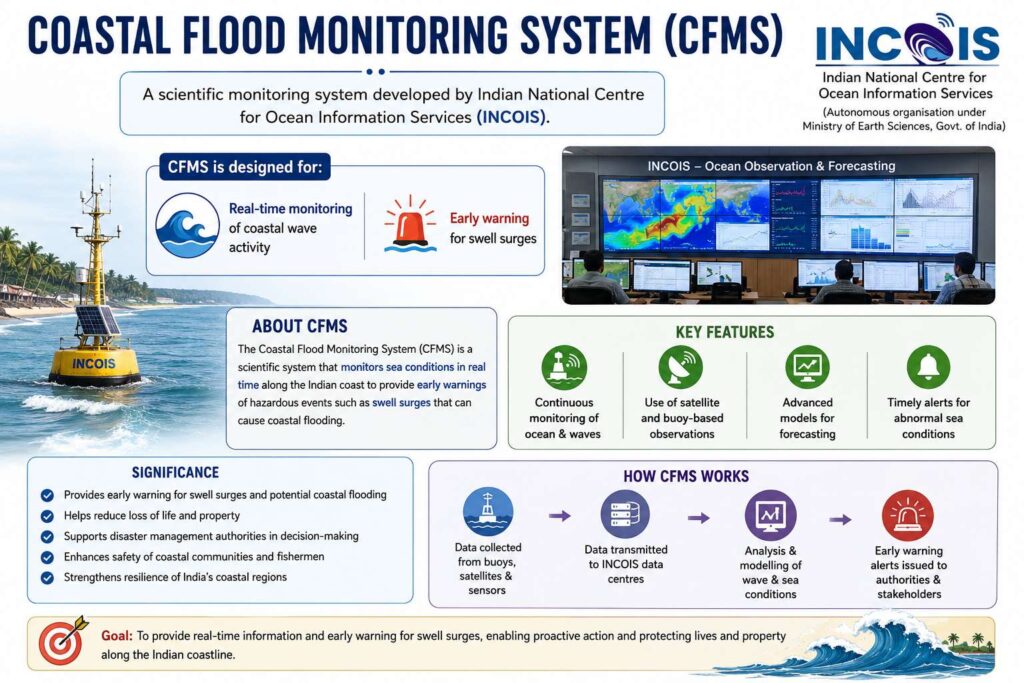
    Indian National Centre for Ocean Information Services (INCOIS) has installed a second Coastal Flood Monitoring System (CFMS) near Kollam Harbour to improve forecasting of ‘Kallakkadal’ or swell surge events along India’s southwest coast.

    What is ‘Kallakkadal’?

    • “Kallakkadal” is a Malayalam term meaning: “Sea that comes stealthily”
    • It refers to:
      • Sudden high-energy swell surges
      • Coastal flooding without local storms or rainfall

    Purpose

    • Improve accuracy of coastal flood forecasts
    • Study nearshore wave transformation
    • Build better early warning systems

    About Coastal Flood Monitoring System (CFMS)

    • A scientific monitoring system developed by Indian National Centre for Ocean Information Services for:
      • Real-time monitoring of coastal wave activity
      • Early warning for swell surges

    Components of CFMS

    • The system integrates:
      • Coastal Automatic Weather Station
      • Four high-frequency pressure sensors
    • Installed at: Shallow depths of 3 to 7 metres

    Why Kollam?

    • Kollam Harbour was selected because:
      • Kerala’s southwest coast frequently experiences swell surges
      • Fishing communities are highly vulnerable
    [2017] At one of the place in India, if you stand on the seashore and watch the sea, ‘you will find that the sea water recedes from the shore line a few kilometers and comes back to the shore, twice a day, and you can actually walk on the seafloor when the water recedes. This unique phenomenon is seen at 
    a. Bhavnagar 
    b. Bheemunipatnam 
    c. Chandipur 
    d. Nagapattinam 
  • [1st April 2026] The Hindu Oped: Counting people is not counting disaster risk

    PYQ Relevance[UPSC 2019] Vulnerability is an essential element for defining disaster impacts and its threat to people. How and in what ways can vulnerability to disasters be characterized? Discuss different types of vulnerability with reference to disasters.Linkage: The PYQ tests core concepts of vulnerability, exposure, and disaster risk assessment, which form the foundation of GS-3 Disaster Management. The article directly critiques flawed vulnerability measurement (income-based proxy), reinforcing the need for multidimensional vulnerability assessment as demanded in the PYQ.

    Mentor’s Comment

    There is a critical flaw in India’s disaster financing architecture, the shift from risk-based assessment to population-based allocation. The issue is in the news due to concerns over the 16th Finance Commission’s disaster risk funding formula, which paradoxically allocates higher funds to States with larger populations rather than those with greater disaster exposure. This marks a sharp departure from earlier approaches and undermines decades of progress in disaster preparedness. The scale of the problem is significant, States like Odisha, with the highest hazard score (12), receive less effective consideration than States like Bihar (224.2) and Uttar Pradesh (413.2) due to population weighting.

    What structural flaw exists in the disaster funding formula?

    1. Multiplicative Risk Formula: Uses Disaster Risk Index (DRI = Hazard × Exposure × Vulnerability), but distorts outcomes due to flawed exposure metrics.
    2. Population-Based Exposure: Defines exposure as total population (scaled 1-25), ignoring actual hazard-prone zones.
    3. Bias Toward Larger States: Ensures States like Uttar Pradesh receive higher weight despite lower hazard intensity.
    4. Departure from Previous Approach: Replaces additive model of 15th Finance Commission, which treated hazard and vulnerability separately.
    5. Outcome Distortion: Rewards demographic size rather than disaster risk, contradicting risk-based allocation principles.

    Why is ‘exposure’ measurement scientifically flawed?

    1. Incorrect Definition: Uses total population instead of hazard-zone population.
    2. IPCC Standard Ignored: Defines exposure as people in hazard-prone areas, not administrative boundaries.
    3. Misleading Comparisons: Inland plateau populations treated equal to cyclone-prone coastal populations.
    4. Example: Odisha’s high-risk coastline equated with safer inland regions in other States.
    5. Result: Artificial inflation of exposure scores for populous but less vulnerable States.

    How does vulnerability measurement misrepresent actual risk?

    1. Income-Based Proxy: Uses per capita NSDP, which measures fiscal capacity, not vulnerability.
    2. Multidimensional Nature Ignored: Overlooks housing quality, health infrastructure, and early warning access.
    3. Kerala Case Study: Despite ₹31,000 crore flood damages (2018), receives low vulnerability score (1.073).
    4. Hidden Inequality: Average income masks intra-state disparities and disaster susceptibility.
    5. Outcome: Underestimates real vulnerability in disaster-prone but relatively richer States.

    Why does the formula penalize disaster-prone States?

    1. Population Bias: Prioritizes demographic size over risk intensity.
    2. Funding Paradox: Odisha (highest hazard score) loses out due to lower population score.
    3. Disproportionate Allocation: Bihar (224.2) and UP (413.2) overshadow Odisha despite lower hazard exposure.
    4. Kerala’s Loss: Loses 0.78 percentage points despite high vulnerability ranking.
    5. Systemic Inequity: Smaller, disaster-prone States receive inadequate fiscal support.

    What are the implications for disaster governance in India?

    1. Misallocation of Resources: Funds diverted away from high-risk zones.
    2. Reduced Preparedness: States with higher hazard exposure face fiscal constraints.
    3. Climate Risk Escalation: Cyclones, floods, and droughts increasing in intensity and frequency.
    4. Regional Inequality: Coastal and northeastern States disproportionately affected.
    5. Policy Credibility Issue: Undermines objective of risk-based disaster financing.

    What reforms are required in disaster risk assessment?

    1. Hazard-Zone Mapping: Measures exposure based on population in disaster-prone areas.
    2. Composite Vulnerability Index: Includes housing, health, agriculture, and infrastructure indicators.
    3. Use of Data Systems: Integrates Building Materials and Technology Promotion Council (BMTPC) Vulnerability Atlas, National Family Health Survey-5 (NFHS-5), Pradhan Mantri Fasal Bima Yojana (PMFBY) database, National Health Mission (NHM) facility surveys, and India Meteorological Department (IMD) monitoring records. 
    4. Institutional Mechanism: Mandates NDMA to publish annual State Disaster Vulnerability Index.
    5. Policy Continuity: Institutionalizes methodology across Finance Commissions. 

    Conclusion

    A population-based approach to disaster funding undermines the principle of risk-sensitive governance. A shift toward hazard-specific exposure mapping and multidimensional vulnerability assessment is essential to ensure equitable and effective disaster resilience in India.