💥Join UPSC 2027,2028 Mentorship (July Batch) + XFactor Notes & Microthemes PDF

GS Paper: GS3-19.Disaster and Disaster Management.

  • Cyclone Montha makes landfall in AP

    Why in the News?

    Cyclone Montha, classified as a severe cyclonic storm, has made landfall near Kakinada (Andhra Pradesh) on October 28.

    Back2Basics: Tropical Cyclones

    • What is it: Large low-pressure systems over warm oceans, marked by rotating winds, heavy rain, and storm surges.
    • Conditions: Form when ocean temps >27°C, with moist rising air releasing latent heat to fuel convection.
    • Rotation: Driven by the Coriolis force – anticlockwise in Northern Hemisphere, clockwise in Southern.
    • Structure: Eye (calm), Eyewall (violent winds/rains), Rainbands (widespread showers).
    • Regional Names: Typhoons (Pacific), Hurricanes (Atlantic/Caribbean), Cyclones (Indian Ocean).
    • Drivers & Frequency: Common in Southeast Asia due to warm Pacific waters, El Niño/La Niña cycles, and climate change.
    • Impacts: Loss of life, property damage, flooding, soil salinisation, displacement, and disease outbreaks.
    • Climate Change Link: Global warming is making tropical cyclones stronger, less predictable, and more frequent, raising risks for coastal populations.

    What is the Landfall of a Cyclone?

    • Overview: A tropical cyclone is said to make landfall when its centre (eye) crosses the coastline from sea to land.
    • Not the Same as a Direct Hit:
      • Landfall = when the eye crosses the coast.
      • Direct hit = when the eyewall (zone of strongest winds) impacts the coast, even if the centre remains offshore.
    • Duration: Landfall usually lasts a few hours, depending on wind speed and storm size.
    • Post-Landfall Behaviour: Cyclones lose intensity rapidly after landfall due to loss of oceanic moisture and increased land friction.

    Behind the Naming of Cyclones:

    • Overview: Cyclones in the North Indian Ocean are named under the World Meteorological Organization (WMO) / United Nations Economic and Social Commission for Asia and the Pacific (ESCAP) Panel on Tropical Cyclones (since 2004).
    • Naming Authority: Regional Specialized Meteorological Centre (RSMC), New Delhi, operated by IMD.
    • 13 Member Countries: Bangladesh, India, Maldives, Myanmar, Oman, Pakistan, Sri Lanka, Thailand, Yemen, Iran, Qatar, Saudi Arabia, and UAE.
    • Submission of names: Each country submits 13 culturally neutral, gender-neutral names, forming a 169-name rotating list.
    • Non-repetition: Names are used sequentially and not repeated after one use.
    • “Montha”: It was suggested by Thailand, meaning “beautiful” or “fragrant flower.”
    • Significance: Naming helps public communication, ensures clarity in warnings, and avoids confusion during multiple simultaneous storms.
    • Current sequence: Shakthi (Sri Lanka) → Montha (Thailand) → Senyar (UAE) → Ditwah (Yemen) → Arnab (Bangladesh) → Murasu (India).
    [UPSC 2020] Consider the following statements:

    1. Jet streams occur in the Northern Hemisphere only.

    2. Only some cyclones develop an eye.

    3. The temperature inside the eye of a cyclone is nearly 10°C lesser than that of the surroundings.

    Which of the statements given above is/are correct?

    (a) 1 only (b) 2 and 3 only (c) 2 only* (d) 1 and 3 only


  • India’s direction for disaster resilience

    Introduction

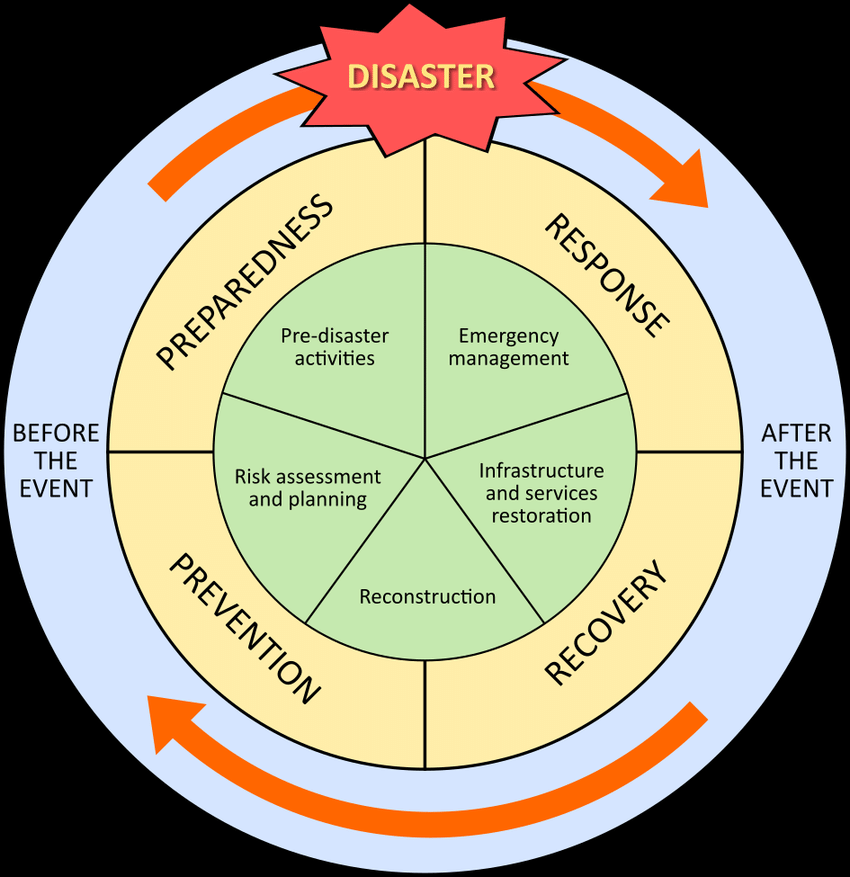
    India’s approach to disaster management has entered a new phase, one that focuses not only on response and recovery but equally on risk reduction, preparedness, and resilience. With climate change intensifying heat waves, floods, and landslides, the country’s policy architecture, led by the Ministry of Home Affairs (MHA) and the National Disaster Management Authority (NDMA), has embraced a multi-hazard, multi-stakeholder, and science-backed model. The guiding compass remains the Prime Minister’s Ten-Point Agenda on Disaster Risk Reduction (2016), now reinforced by major financial and institutional reforms.

    Why in the News

    For the first time, India’s disaster management strategy has been fully integrated into public finance planning, through the 15th Finance Commission’s ₹2.28 lakh crore allocation for disaster risk reduction over five years. This is a paradigm shift: from ad hoc post-disaster relief to structured, science-driven, and nature-based risk mitigation. With new funding for fire safety, glacial risk monitoring, and bioengineering-led landslide prevention, the government’s efforts represent a bold move towards building a climate-resilient India. The initiative is also significant because it establishes clear budget-to-project chains, accountability mechanisms, and cross-institutional linkages, something missing in previous regimes.

    India’s Evolving Disaster Management Framework

    1. Multi-hazard nation: India faces diverse risks, floods, droughts, landslides, heat waves, cyclones, necessitating a multi-faceted approach.
    2. Shift in focus: Earlier systems were relief-centric; now, they integrate prevention, mitigation, capacity building, and sustainable reconstruction.
    3. Institutional leadership: The MHA and NDMA lead both pre- and post-disaster phases, ensuring coordination across States and institutions.
    4. Guiding vision: The Prime Minister’s Ten-Point Agenda (2016) promotes risk-informed investments, community participation, and technology integration.

    How the 15th Finance Commission Redefined Disaster Financing

    • Historic allocation: ₹2.28 lakh crore ($30 billion) allocated over five years, a landmark in linking public finance with disaster resilience.
    • Segmented approach:
      • Preparedness and Capacity Building – 10%
      • Mitigation – 20%
      • Response – 40%
      • Reconstruction – 30%
    • End of debt dependency: Earlier, post-disaster reconstruction relied on multilateral loans; now, domestic fiscal mechanisms fill that gap.
    • Five priority reforms:
      1. Evaluate multi-hazard risks and prioritize them.
      2. Integrate scientific mitigation models into fiscal systems.
      3. Avoid duplication with other schemes.
      4. Enhance Centre-State and institutional synergy.
      5. Ensure light-touch regulation for flexibility and speed.

    Investing in Pre-Disaster Preparedness and Capacity Building

    1. Fire safety modernization: ₹5,000 crore earmarked for upgrading urban and rural fire infrastructure.
    2. Community-based volunteers: Apda Mitra and Yuva Apda Mitra programs train 2.5 lakh volunteers to act as first responders.
    3. Strengthening institutions:
      1. National Institute of Disaster Management (NIDM) given a central role with geo-spatial training labs and action-based research.
      2. 36 streams of disaster management courses were introduced to mainstream DRR down to the panchayat level.
    4. Outcome: Shift from theoretical to practical, localised risk management.

    Nature-Based Solutions and Climate Adaptation

    1. ₹10,000 crore mitigation projects across States emphasize nature-based, long-term solutions.
    2. Bioengineering for landslides: Stabilizing slopes in Himalayan regions using vegetation and soil binding.
    3. Urban flood control: Revitalizing water bodies and green spaces to restore natural drainage.
    4. Glacial lake monitoring: Remote sensing and automated stations for real-time surveillance.
    5. Forest fire prevention: Creating break lines, rejuvenating water bodies, and fuel evacuation corridors.
    6. Brahmaputra beels rejuvenation: Ecological restoration to mitigate monsoon flooding.
    7. Precursor success: National Cyclone Mitigation Programme (2011–22): ₹5,000 crore initiative, drastically reduced coastal vulnerability through shelters, embankments, and early warnings.

    Building Technological and Institutional Resilience

    1. Advanced early warning systems: Multi-hazard platforms with seven-day lead time for cyclones.
    2. Common Alerting Protocol: Delivers region-specific alerts in local languages via multi-media.
    3. Human resource development:
      • Training at NIDM, NDRF Academy, and National Fire Service College for hundreds of officers annually.
      • Mock drills, school safety programmes, and local awareness drives improve community response.
      • Network of 327 universities: Build research and innovation pipelines for disaster science and policy.

    India’s Global Leadership in Disaster Resilience

    1. Coalition for Disaster Resilient Infrastructure (CDRI): India-led global initiative for climate-resilient infrastructure systems.
    2. Active participation: G-20, SCO, BIMSTEC, and IORA platforms for sharing best practices.
    3. Knowledge exchange: India’s experience in nature-based DRR and community-driven risk management now shaping global policy dialogues.

    Conclusion

    India’s journey from disaster relief to disaster resilience marks a tectonic policy evolution. With fiscal integration, scientific innovation, and community participation, the nation is shifting from reactive recovery to proactive risk management. The emerging focus on nature-based, sustainable, and locally-driven mitigation reflects India’s understanding that resilience is not built after a disaster, it is cultivated every day, across every sector.

    PYQ Relevance

    [UPSC 2024] What is disaster resilience? How is it determined? Describe various elements of a resilience framework. Also mention the global targets of Sendai Framework for Disaster Risk Reduction (2015-2030).

    Linkage: This PYQ is directly linked as the article highlights India’s evolving resilience framework under NDMA and the 15th Finance Commission, reflecting Sendai-aligned efforts to mainstream disaster risk reduction into national policy and finance.

  • Cyclone Shakhti forms over Arabian Sea

    Why in the News?

    The India Meteorological Department (IMD) confirmed the formation of Cyclone Shakthi (named by Sri Lanka) over the northeast Arabian Sea.

    About Cyclogenesis in the Arabian Sea:

    • Overview: Cyclogenesis is the formation and intensification of tropical cyclones under favourable oceanic and atmospheric conditions.
    • Seasonality: Most active during pre-monsoon (Apr–Jun) and post-monsoon (Oct–Dec) periods, when sea surface temperatures (SSTs) exceed 27 °C, moist convection intensifies, and the Coriolis effect induces rotation.
    • Formation Process: Warm moist air rises forming low pressure; latent heat of condensation deepens the system; upper-level outflow and low vertical wind shear sustain vertical growth, producing a warm eye with spiral rainbands.
    • Historical Pattern: The Arabian Sea was once less cyclone-prone than the Bay of Bengal due to cooler waters, dry winds, and high wind shear. Limited basin size and monsoon winds restricted cyclone growth.
    • Recent Change: Ocean warming and climate change have sharply increased cyclonic activity, making the region far more active in the last decade.
    • Rapid Intensification Trend: Short-term surges in wind speed (< 24 hrs) are now common, linked to warmer SSTs, Indian Ocean Dipole (IOD) shifts, and monsoon wind variability.
    • Oceanic–Climatic Drivers:
      • Indonesian Throughflow imports warm Pacific waters, raising SSTs.
      • Southern Ocean inflow brings cooler deep water, stabilising lower layers.
      • Dual cyclone seasons arise from monsoon wind reversal unique to the region.
    • Climate Change Impact:
      • IMD data show a 52 % rise in Arabian Sea cyclones in two decades, while Bay of Bengal activity slightly declined.
      • The Indian Ocean is among the fastest-warming oceans, increasing heat-moisture availability, altering global weather, and heightening coastal risks to life and infrastructure.

    Recent Examples:

    • Tauktae (2021) – winds > 185 km/h, heavy damage along Gujarat–Konkan.
    • Biparjoy (2023) – lasted 13 days, fed by SSTs ~31 °C.
    • Tej (2023) – hit Oman & Yemen, showing cross-basin movement.
    • Shakthi (2025) – latest late-season, fast-intensifying cyclone.

    Back2Basics: Tropical Cyclones

    • What is it: Large low-pressure systems over warm oceans, marked by rotating winds, heavy rain, and storm surges.
    • Conditions: Form when ocean temps >27°C, with moist rising air releasing latent heat to fuel convection.
    • Rotation: Driven by the Coriolis force – anticlockwise in Northern Hemisphere, clockwise in Southern.
    • Structure: Eye (calm), Eyewall (violent winds/rains), Rainbands (widespread showers).
    • Regional Names: Typhoons (Pacific), Hurricanes (Atlantic/Caribbean), Cyclones (Indian Ocean).
    • Drivers & Frequency: Common in Southeast Asia due to warm Pacific waters, El Niño/La Niña cycles, and climate change.
    • Impacts: Loss of life, property damage, flooding, soil salinisation, displacement, and disease outbreaks.
    • Climate Change Link: Global warming is making tropical cyclones stronger, less predictable, and more frequent, raising risks for coastal populations.


    [UPSC 2020] Consider the following statements:

    1. Jet streams occur in the Northern Hemisphere only.

    2. Only some cyclones develop an eye.

    3. The temperature inside the eye of a cyclone is nearly 10°C lesser than that of the surroundings.

    Which of the statements given above is/are correct?

    (a) 1 only (b) 2 and 3 only (c) 2 only* (d) 1 and 3 only


  • [25th September 2025] The Hindu Op-ed: Follow the rains, not the calendar to fight floods

    PYQ Relevance

    [UPSC 2016] The frequency of urban floods due to high-intensity rainfall is increasing over the years. Discussing the reasons for urban floods, highlight the mechanisms for preparedness to reduce the risk during such events.

    Linkage: This PYQ is directly linked to the article as both focus on increasing urban floods due to high-intensity, untimely rainfall and the need for better preparedness. It is important for UPSC as it tests understanding of climate change impacts, urban governance, and disaster management, all of which the article highlights through outdated drainage design, rainfall compression, and the need to “follow the rains, not the calendar.

    Mentor’s Comment

    Urban floods are no longer seasonal accidents; they are recurring crises that expose the mismatch between traditional planning calendars and the realities of a changing climate. This article unpacks the failures of outdated urban flood management and suggests a roadmap for building resilient cities. Aspirants must note its direct relevance to GS 1 (urbanisation), GS 2 (governance), GS 3 (disaster management, environment), and GS 4 (ethics in governance).

    Introduction

    Every monsoon, India’s cities brace for floods with desilting of drains, deploying contractors, and activating emergency protocols. Yet, reality unfolds differently, roads submerge, homes flood, and transport grinds to a halt. The core problem lies not only in the intensity and unpredictability of rainfall but also in city systems designed for a climate that no longer exists. Urban resilience now demands shifting from “seasonal schedules” to real-time rainfall preparedness.

    Why in the News?

    This year, northern states like Punjab (all 23 districts), Delhi, and Gurugram witnessed severe floods in September, well beyond the traditional monsoon period. Uttarakhand and Himachal Pradesh saw frequent cloudbursts, while Kolkata faced torrential rains. Such untimely, intense, and regionally widespread flooding marks a sharp departure from past rainfall behaviour. With single floods now causing damages worth ₹8,700 crore, the urgency to rethink urban flood management cannot be overstated.

    Understanding Changing Rainfall Patterns

    1. Shift in Timing: Mumbai recorded 135.4 mm rainfall in May (normally a pre-monsoon month), followed by 161.9 mm the next day. Delhi saw 81 mm fall in a few hours, overwhelming drains.
    2. Rise in Frequency: CEEW analysis shows 64% of tehsils across states like Maharashtra, Tamil Nadu, Gujarat, and Karnataka have seen heavy rainfall days increase by 1–15 days.
    3. Compression of Rainfall: Rainfall that earlier spanned a day is now compressed into hours, intensifying floods.

    Why are Indian Cities Flooding so Frequently?

    1. Outdated Drainage Design: Systems still rely on seasonal averages rather than short-duration, high-intensity rain data.
    2. Unmanaged Waste: Plastic and debris block drains; even after desilting, poor waste collection leads to quick clogging.
    3. Poor Coordination: Storm water, sanitation, and municipal waste departments work in silos, creating gaps in preparedness.
    4. Static Planning: Drainage infrastructure often relies on rainfall data decades old, ignoring evolving IDF (Intensity-Duration-Frequency) curves.

    What Solutions are Proposed?

    1. Sub-daily Rainfall Analysis: Municipalities must adopt rainfall data in smaller time frames (1–3 hours) to plan drainage.
    2. Drainage-Waste Synchronisation: Waste collection and drain cleaning must be coordinated; rainfall alerts should trigger joint drives.
    3. Updating IDF Curves: Curves must be revised every 5–10 years; new drainage should factor in topography and micro-catchments.
    4. Infrastructure Upgradation: Example – BMC’s plan to widen drains to handle 120 mm/hour rainfall and prepare a new drainage master plan.
    5. Separate Sewerage and Stormwater Networks: To prevent overload and improve efficiency.

    Broader Implications for Urban Planning

    1. Disaster Management: Floods are now the leading cause of life and property loss among natural disasters in India.
    2. Economic Impact: Each major flood inflicts damages of nearly ₹8,700 crore.
    3. Climate Resilience: Cities must adapt to “rain already falling” instead of waiting for calendar-based monsoon onset.

    Conclusion

    India is not losing to rain, but to outdated assumptions about rain. The fight against urban floods requires breaking the illusion of a uniform monsoon season. By following the rain, not the calendar, cities can design adaptive infrastructure, improve inter-departmental coordination, and protect citizens’ lives and livelihoods.

    Value Addition

    Case Study: Vijayawada’s Monsoon Response Teams

    • Integrated approach: The city administration created special monsoon response teams that brought together officials from the sanitation, engineering, and planning departments to work in coordination during high-risk rainy periods.
    • Real-time action: Instead of relying on rigid seasonal schedules, these teams responded dynamically to rainfall alerts and forecasts, immediately conducting joint sanitation drives and drain inspections.
    • Drainage & waste sync: Garbage clearance and storm water drain cleaning were aligned, preventing freshly desilted drains from being blocked again by unmanaged waste.
    • Impact: This reduced waterlogging and urban flooding, improved road accessibility, and lessened health risks for residents during monsoons.
    • Learning: Vijayawada shows how inter-departmental coordination, proactive planning, and rainfall-triggered response systems can make cities more resilient to changing monsoon patterns.

    Global Context in Urban Flood Management

    Rotterdam, Netherlands – “Room for the River” approach

    • Idea: Instead of resisting water, the city creates water plazas that double as playgrounds during dry weather and hold excess rainwater during storms.
    • Infrastructure: Underground reservoirs, widened canals, and lowered floodplains to absorb water.
    • Learning: Shows the importance of adaptive urban design that accommodates rainfall variability.

    Copenhagen, Denmark – Cloudburst Management Plan

    • Trigger: After a massive cloudburst in 2011 caused $1 billion in damages.
    • Action: Developed over 300 projects including green roofs, permeable pavements, detention basins, and blue-green corridors that store and channel stormwater.
    • Learning: Proactive planning with a mix of nature-based and engineered solutions.

    New York City, USA – Green Infrastructure Plan

    • Focus: Reduce stormwater runoff that overwhelms combined sewer systems.
    • Measures: Rain gardens, bioswales, green roofs, permeable streets to capture rainfall locally.
    • Learning: Urban flooding is not just a drainage issue but requires land-use and design-based solutions.

    Singapore – ABC Waters Programme (Active, Beautiful, Clean)

    • Approach: Transforms canals, rivers, and drains into multifunctional spaces.
    • Measures: Retention ponds, vegetated swales, rain gardens integrated with urban landscapes.
    • Learning: Integrates aesthetics, ecology, and flood management, showing flood resilience can coexist with urban beauty.

    Tokyo, Japan – Underground Flood Tunnels (G-Cans Project)

    • Infrastructure: World’s largest underground floodwater diversion facility with 6.5 km tunnels and giant silos to store stormwater.
    • Impact: Protects Tokyo’s dense urban areas from typhoon rains and river overflow.
    • Learning: Mega-engineering projects can be effective in high-density megacities with extreme rainfall.


  • Why Punjab keeps flooding

    Introduction

    Punjab, often called the “food bowl of India,” is paradoxically one of the most flood-prone states in the country. Drained by three perennial rivers, the Ravi, Beas, and Sutlej, along with seasonal tributaries and hill streams, Punjab has historically thrived on its fertile floodplains. Yet, the very rivers that make its land abundant also bring recurring devastation. The 2025 floods, among the worst in recent memory, have once again underlined the dual challenge of geography and governance. With 3.8 lakh people affected, 11.7 lakh hectares of farmland destroyed, and 43 lives lost, the floods highlight not just natural vulnerability but also systemic mismanagement.

    Why Punjab’s Floods Are Back in the Spotlight

    Punjab is currently experiencing one of the most destructive floods in decades, with unprecedented rainfall in Himachal Pradesh, J&K, and Punjab itself swelling rivers beyond capacity. What makes this year’s floods significant is the scale: all 23 districts have been declared flood-hit, and the breach of Madhopur barrage gates has worsened devastation. While heavy rains are not new, institutional failures, especially in dam management by the Bhakra Beas Management Board (BBMB), and delayed warnings have amplified the crisis, making the situation worse than previous floods of 1955, 1988, 1993, 2019, and 2023.

    Rivers as Both Boon and Bane

    1. Three perennial rivers – Ravi, Beas, and Sutlej traverse Punjab, carrying immense alluvium and making the state highly fertile.
    2. Seasonal rivers and choes – Rivers like Ghaggar and hill streams add to Punjab’s complex hydrology.
    3. Agricultural abundance – Punjab produces nearly 20% of India’s wheat and 12% of its rice, despite occupying only 1.5% of landmass.
    4. Recurring floods – Heavy monsoons, particularly in upstream catchments (Himachal and J&K), frequently overwhelm dhussi bundhs (earthen embankments), as seen in 1955, 1988, 1993, 2019, 2023, and now 2025.

    Why Do Dams Intensify Flooding

    1. Upstream damsBhakra (Sutlej), Pong (Beas), and Thein/Ranjit Sagar (Ravi) play a central role in regulating river flow.
    2. Rule curve dilemma – The BBMB maintains high reservoir levels in July–August for irrigation and power, leaving little cushion for sudden heavy inflows.
    3. Sudden releases – Emergency releases during extreme rainfall cause flash floods downstream, as seen with Pong dam’s unprecedented 20% higher inflows than 2023.
    4. Governance issue – Punjab feels marginalized in BBMB decisions, especially after 2022 rule changes allowing all-India officers to head the Board.

    Human Factors Worsening the Crisis

    1. Barrage failures – On August 26, two gates of the Madhopur barrage collapsed after Thein dam releases, flooding Pathankot, Gurdaspur, and Amritsar.
    2. Weak embankmentsIllegal mining has eroded dhussi bundhs, reducing their ability to withstand pressure.
    3. Poor coordination – Lack of communication between upstream and downstream departments delayed gate operations.
    4. Neglected desilting – Experts estimate that ₹4,000–5,000 crore investment in desilting and embankment strengthening could prevent far greater losses.

    Larger Governance Failures

    1. BBMB’s narrow mandate – Prioritizes irrigation and power, neglecting flood management.
    2. Delayed warnings – Punjab officials allege sudden releases with little time for evacuation.
    3. Political tensions – Punjab’s Water Resources Minister accused the Centre of ignoring Punjab’s plight.
    4. Environmentalists’ view – Experts stress that flood cushions, transparent decision-making, and scientific dam operations are essential to prevent repeated tragedies.

    Conclusion

    Punjab’s floods are not just a story of heavy rain but of fragile governance structures. Nature may trigger floods, but poor dam management, illegal mining, weak embankments, and lack of timely communication convert them into disasters. Strengthening embankments, enforcing transparent dam operations, and giving Punjab a greater role in BBMB are urgent needs. Unless governance catches up with geography, Punjab will continue to oscillate between abundance and devastation.

    UPSC Relevance

    [UPSC 2024] Flooding in urban areas is an emerging climate-induced disaster. Discuss the causes of this disaster. Mention the features of two such major floods in the last two decades in India. Describe the policies and frameworks in India that aim at tackling such floods.

    Linkage: The Punjab floods of 2025 mirror the challenges of urban floods like Mumbai (2005) and Chennai (2015), where extreme rainfall combined with poor drainage, unplanned construction, and dam mismanagement turned heavy rain into catastrophe. Frameworks like the Disaster Management Act, 2005, the Sendai Framework (2015–30), and National Disaster Management Plan (2019) provide guiding structures, yet governance lapses and weak local preparedness continue to make both rural and urban areas equally vulnerable to flooding.

  • Challenges of Monsoon Variability and Disaster Preparedness

    Introduction

    Heavy rains in August 2025 have wreaked havoc across North India, Himachal Pradesh cut off, Jammu and Kashmir reporting over 40 deaths, Punjab’s farmland submerged, and the Yamuna swelling in the capital. The floods highlight the increasing unpredictability of the southwest monsoon, where rainfall comes in concentrated bursts rather than spread across weeks. Beyond the immediate tragedy, this points to systemic governance challenges, unplanned infrastructure in fragile zones, inadequate early warning systems, and a reactive rather than preventive disaster management model.

    Increasing unpredictability of the monsoon

    1. Erraticism of rainfall: Concentrated bursts replace evenly spread rains, overwhelming slopes, rivers, and cities.
    2. Amplified erosion: Short, intense rain accelerates slope destabilisation in Himalayas.
    3. Recurring phenomenon: Evidence now suggests such rainfall patterns are no longer exceptional but likely regular.

    Fragility of Himalayan ecosystems and their weakening

    1. Deforestation and clearance: Forest cover removal and road-widening continue unchecked.
    2. Slope destabilisation: Lack of slope-safe engineering increases landslide risks.
    3. Shrinking catchments: Reduced buffering capacity heightens chances of slope failure and siltation downstream.

    Insufficiency in disaster preparedness

    1. Early warning gaps: Despite better forecasts, reliable ground-level alerts are absent.
    2. Relief over resilience: Agencies mobilise post-damage; pre-positioned supplies and community drills are missing.
    3. Reactive model: Each disaster treated as unforeseeable, ignoring repeated expert warnings.

    Policy choices aggravating vulnerabilities

    1. Strategic projects: Roads and urban expansion pursued in unstable landscapes.
    2. Poor compensatory afforestation: Quality of replanted forests does not match original ecological value.
    3. Climate-resilient infrastructure lag: Development focus prioritises speed over sustainability.

    Shifts required in disaster governance

    1. Shift to preventive strategies: Focus on reducing vulnerabilities before disasters occur.
    2. Systematic preparedness: Regular drills, community participation, and pre-emptive relief stocks.
    3. Balanced growth: Infrastructure that respects ecological fragility and integrates climate resilience.

    Conclusion

    The 2025 floods across North India are not isolated accidents but part of a pattern of climate-driven extreme weather. Treating each calamity as “unprecedented” delays learning and perpetuates cycles of loss. Building resilience means moving beyond post-disaster relief to preventive strategies: sustainable infrastructure, landslide mitigation, community drills, and early-warning systems. Unless governance shifts from reaction to anticipation, monsoon seasons will continue to leave trails of destruction.

    PYQ Relevance

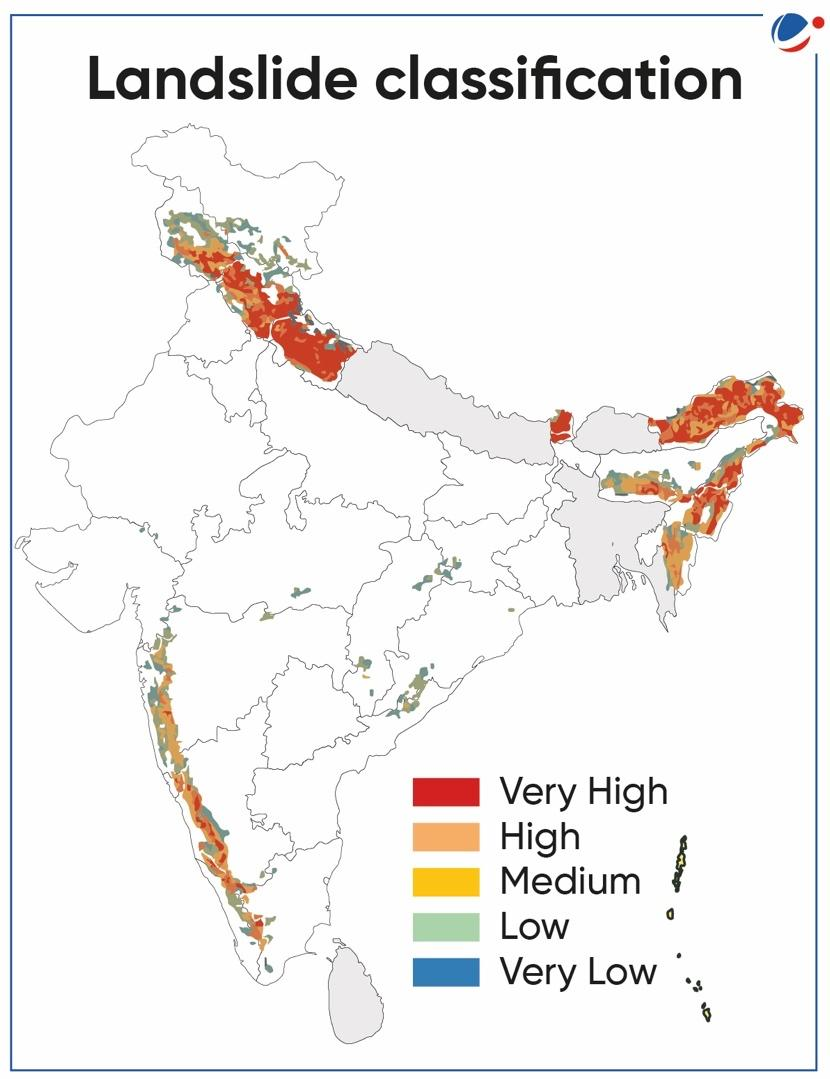
    [UPSC 2019] Disaster preparedness is the first step in any disaster management process. Explain how hazard zonation mapping will help disaster mitigation in the case of landslides.

    Linkage: The 2025 North India floods highlight how slope destabilisation and unchecked construction in Himalayan States amplify landslide risks. Hazard zonation mapping could have guided slope-safe engineering, restricted high-risk land use, and improved early warning. Thus, it directly connects preparedness to mitigation, aligning with the UPSC 2019 question.

  • District Flood Severity Index (DFSI)

    Why in the News?

    Researchers from IIT Delhi and IIT Gandhinagar have developed a District Flood Severity Index (DFSI) to aid flood planning using past data and human impact indicators.

    About the District Flood Severity Index (DFSI):

    • Objective: To provide a comprehensive, data-based assessment of flood severity across Indian districts.
    • Focus: District-level analysis, as districts are the core units for planning and implementation of disaster management in India.
    • Based on long-term data (since 1967): Collected annually by the India Meteorological Department (IMD) on major flood events.
    • Significance: Responds to the lack of an official national index that incorporates human impact, not just flood magnitude.

    Key Parameters Used in DFSI:

    The index incorporates multiple indicators to measure both the scale and impact of flooding:

    1. Mean duration (in days) of flood events per district.
    2. Percentage of district area historically affected by floods.
    3. Total deaths and injuries due to floods.
    4. Population of the district — used to assess per capita impact.
    5. 40-year curated dataset developed at IIT Delhi used for historical flood mapping.

    Key Insights from the Index:

    • Thiruvananthapuram (Kerala): Recorded the highest number of flood events (231), but does not feature in the top 30 most severely impacted districts as per DFSI.
    • Patna (Bihar): Ranked #1 on the severity index due to higher population impact and flood spread.
    • Assam districts like Dhemaji, Kamrup, and Nagaon consistently face high flood frequency (178+ events), but ranking depends on combined indicators.


    [UPSC 2014] What are the benefits of implementing the ‘Integrated Watershed Development Programme’?”

    1. Prevention of soil runoff 2. Linking the country’s perennial rivers with seasonal rivers

    3. Rainwater harvesting and recharge of groundwater table 4. Regeneration of natural vegetation

    Options: (a) 1 and 2 only (b) 2, 3 and 4 only (c) 1, 3 and 4 only* (d) 1, 2, 3 and 4 only


  • [28th July 2025] The Hindu Op-ed: How is India preparing against GLOF events?

    PYQ Relevance:

    [UPSC 2024] What is disaster resilience? How is it determined? Describe various elements of a resilience framework. Also mention the global targets of the Sendai Framework for Disaster Risk Reduction (2015-2030).

    Linkage: The article explicitly states that the NDMA has “markedly accelerated its efforts to manage these increasing risks” and initiated a “proactive shift from mere post-disaster response to risk reduction through its Committee on Disaster Risk Reduction (CoDRR)”. This directly links to the concept of “disaster resilience” and “Disaster Risk Reduction (DRR),” which are central to India’s preparedness strategy for GLOF events.


    Mentor’s Comment:  On July 8, 2025, Nepal experienced a major Glacial Lake Outburst Flood (GLOF), which triggered a flash flood along the Lende River, destroying a China-built friendship bridge and disabling four hydropower plants, cutting off 8% of Nepal’s power supply. This catastrophe highlights the growing threat of GLOFs due to glacial melt from rising temperatures in the Himalayas. The incident has raised concerns over the lack of trans-boundary early warning systems, particularly between China and Nepal. It also drew attention to India’s vulnerability, as the Indian Himalayan Region (IHR) contains 7,500 glacial lakes, many at high risk of GLOF due to climate change, poor monitoring infrastructure, and lack of early warning systems. India’s National Disaster Management Authority (NDMA) has responded by launching a national programme targeting 195 at-risk glacial lakes, focusing on hazard assessment, early warning systems, risk mitigation, and community engagement.

    Today’s editorial analyses the major Glacial Lake Outburst Flood (GLOF) in Himalaya region. This topic is important for GS Paper III (Environment) in the UPSC mains exam.

    _

    Let’s learn!

    Why in the News?

    Recently, Nepal faced a major Glacial Lake Outburst Flood (GLOF), which led to a sudden flash flood along the Lende River.  

    What are GLOFs?

    • GLOFs are sudden floods caused by the breach of natural or man-made dams holding glacial lakes, releasing large volumes of water.
    • Himalayan Spread: The Himalayas across India, Nepal, Bhutan, and Tibet host thousands of glacial lakes, many near international borders. India has 7,500+ glacial lakes, with 200+ deemed potentially dangerous.


    What are their transboundary risks in the Himalayas?

    • Trans-boundary Risk: GLOFs from upstream countries (e.g. China) can impact downstream nations (India, Nepal, Bhutan) without early warning. Eg: The July 2024 Tibetan GLOF damaged Nepal’s Rasuwagadhi hydropower project with no prior alert.
    • Lack of Data Sharing: Minimal real-time data exchange between neighbours hampers early warning and risk management. Eg: Nepal got no warning from China during the 2024 GLOF.

    How has climate change increased GLOF frequency in the IHR?

    • Accelerated Glacier Melting: Rising temperatures cause glacier retreat and formation of unstable glacial lakes. Eg: Milam Glacier, Uttarakhand shows rapid retreat, increasing GLOF risk.
    • Extreme Precipitation: Intense rainfall from climate change can overfill lakes, causing breaches. Eg: Gya GLOF (2014) in Ladakh followed heavy rainfall, damaging infrastructure.
    • Increased Landslides: Thawing permafrost and unstable slopes trigger landslides into lakes, displacing water and causing GLOFs. Eg: 2013 Chorabari Glacier landslide near Kedarnath worsened the flood impact.

    What measures has India taken for GLOF mitigation?

    • Early Warning Systems (EWS): Installed to detect rising water levels and trigger alerts. Eg: EWS at South Lhonak Lake, Sikkim before 2023 GLOF.
    • Satellite Monitoring: ISRO-NRSC use remote sensing to track glacial lakes. Eg: Monitored via Bhuvan portal in Ladakh, Uttarakhand, Himachal Pradesh.
    • Risk Mapping: NMSHE identifies high-risk areas for targeted intervention. Eg: Studies in Kinnaur and Chamoli flagged vulnerable lakes.
    • Engineering Measures: Lake drainage and structural control to prevent overflow. Eg: Work at Tsho Rolpa Lake (Nepal) as a replicable model.
    • Community Preparedness: NDMA and states run drills and awareness programs. Eg: Mock drills in Uttarkashi and Kullu.

    What are the gaps? 

    • Weak Early Warning Systems (EWS): India lacks real-time sensors, automated sirens, and alert mechanisms. Eg: No early alerts during Chamoli disaster (2021).
    • Low Community Preparedness: Most villages in Sikkim and Uttarakhand lack evacuation protocols and disaster training.
    • Poor Transboundary Coordination: Minimal data sharing with China hinders early action in regions like Arunachal Pradesh.
    • Infrastructure Vulnerability: Bridges and dams not designed for GLOFs.
      Eg: Chungthang dam breach (2023) exposed weak infrastructure.
    • Limited Scientific Capacity: Shortage of glaciologists, risk modelers, and ground validation limits NDMA’s effectiveness.

    Way forward: 

    •  Strengthen Early Warning Systems: Deploy real-time sensors, sirens, and automated alerts in high-risk zones.
    • Enhance Transboundary Cooperation: Establish formal data-sharing agreements with China, Nepal, and Bhutan.
    • Build Local Preparedness: Conduct regular community drills, awareness drives, and evacuation planning.
    • Climate-Resilient Infrastructure: Design dams, bridges, and power projects to withstand GLOF surges.
    • Invest in Research & Capacity: Train glaciologists, improve satellite-ground integration, and support Himalayan climate studies.
  • [10th July 2025] The Hindu Op-ed: How can cat bonds plan for a natural disaster?

    PYQ Relevance:

    [UPSC 2024] What is disaster resilience? How is it determined? Describe various elements of a resilience framework. Also mention the global targets of the Sendai Framework for Disaster Risk Reduction (2015-2030).

    Linkage: This PYQ, focusing on “disaster resilience” and “Disaster Risk Reduction (DRR),” provides an excellent framework to discuss how catastrophe bonds (cat bonds) function as a financial planning tool for natural disasters. The article “Catastrophe Bonds: Insuring India’s Future Against Disasters” directly addresses the need for such instruments in India’s disaster management strategy.


    Mentor’s Comment:  Catastrophe bonds (cat bonds) are in the spotlight as India explores innovative disaster risk financing amid rising climate-related calamities. With low disaster insurance penetration, India is considering cat bonds to strengthen post-disaster response, reduce fiscal shocks, and lead a regional South Asian initiative. Global success stories and India’s proactive mitigation funding have revived interest in adopting this financial tool.

    Today’s editorial analyses the Catastrophe bonds (cat bonds). This topic is important for  GS Paper III (Disaster Management) in the UPSC mains exam.

    _

    Let’s learn!

    Why in the News?

    As climate change causes more frequent disasters, countries and insurers are using cat bonds to manage risk. These bonds help raise funds from markets for recovery and rebuilding after disasters.

    What are catastrophe bonds?

    • Catastrophe bonds are risk-linked securities that transfer disaster risk from issuers (usually governments or insurers) to investors. They are triggered when a predefined catastrophic event (like an earthquake, cyclone, or flood) occurs.
    • Eg: The World Bank issued cat bonds for Mexico and Pacific Island countries to cover tropical cyclone and earthquake risks.

    How do they function as instruments for disaster risk financing?

    • Governments (sponsors) pay premiums, and the principal becomes the insured sum; if a disaster hits, investors lose their principal, which goes to recovery. Intermediaries like the World Bank issue the bond, ensuring reliability and reduced counter-party risk.
    • They ensure quicker payouts, reduce dependency on budget allocations, and transfer risk away from insurers to global markets.

    Why is disaster risk insurance penetration low in India?

    • Lack of Awareness and Financial Literacy: Many individuals, especially in rural and hazard-prone areas, are unaware of the importance or availability of disaster insurance. Eg: Farmers vulnerable to floods or droughts often rely on government relief instead of purchasing crop insurance.
    • High Premium Costs and Perceived Low Returns: Insurance premiums are often considered unaffordable or unnecessary, especially when disasters seem unlikely in the short term. Eg: Urban households in seismic zones like Delhi-NCR rarely insure homes against earthquakes.
    • Limited Private Sector Participation and Poor Outreach: The insurance market remains underdeveloped, with few disaster-specific products and limited last-mile delivery mechanisms. Eg: MSMEs in coastal Odisha remain uninsured despite repeated cyclone exposure due to poor insurer penetration.

    How can cat bonds address this gap?

    • Access to Global Capital Markets: Cat bonds transfer disaster risk from governments to global investors, increasing the funding pool for post-disaster recovery. Eg: After Hurricane Maria (2017), Mexico accessed $150 million via a World Bank-backed cat bond, enabling rapid relief.
    • Ensure Quick Payouts for Emergencies: Cat bonds use trigger-based mechanisms (e.g. earthquake magnitude, wind speed) to enable fast disbursement of funds. Eg: In 2021, the Philippines received $52.5 million within weeks after Typhoon Rai, due to pre-agreed cat bond triggers.
    • Reduce Fiscal Pressure on Governments: Pre-disaster financing through cat bonds helps avoid budget shocks and reduce dependency on ad-hoc aid or borrowing. Eg: A cyclone-risk cat bond for Bay of Bengal can pre-finance relief for Odisha and Andhra Pradesh.

    How can India benefit from a regional South Asian cat bond?

    • Shared Risk Pooling for Cost Efficiency: By joining a regional cat bond with countries like Nepal, Bangladesh, and Sri Lanka, India can pool disaster risks, reducing the premium burden and increasing affordability. Eg: The Pacific Catastrophe Risk Insurance Company (PCRIC) pools risk for Pacific island nations, lowering overall costs.
    • Boosts Regional Cooperation and Preparedness: A shared bond encourages joint early warning systems, emergency planning, and data sharing, improving collective disaster readiness. Eg: SAARC Disaster Management Centre can coordinate common triggers and payout parameters across South Asia.
    • Access to Larger and Diverse Capital Markets: A regional bond can attract more global investors by offering diversified risk, improving fund availability post-disaster for quick response and recovery. Eg: The World Bank’s Southeast Asia Disaster Risk Insurance Facility (SEADRIF) supports countries like Laos and Myanmar through pooled financing.

    What are the key risks in designing and implementing cat bonds?

    • Basis Risk (Mismatch Between Trigger and Actual Loss): There’s a risk that the bond may not pay out even when severe losses occur, if the predefined trigger (e.g., earthquake magnitude or rainfall level) is not met, undermining trust and utility.
    • High Setup and Transaction Costs: Cat bonds require specialized modeling, legal structuring, and investor engagement, which may be too complex or expensive for lower-income or disaster-prone regions without external support.

    Why should India diversify its disaster financing amid climate risks?

    • Rising Frequency and Intensity of Disasters: Climate change is increasing the number of extreme weather events like floods, cyclones, and droughts. Sole reliance on budgetary support and relief funds is unsustainable, making diversified financing (like cat bonds, parametric insurance) essential.
    • Reducing Fiscal Burden and Ensuring Faster Relief: A diversified disaster financing system helps minimize delays in post-disaster response and lessens pressure on state and central budgets, allowing for quick payouts and resilient recovery.

    Way forward:

    • Promote Risk-Based Financing Instruments: Encourage the use of catastrophe bonds, parametric insurance, and public-private partnerships to diversify disaster risk funding and ensure timely payouts.
    • Strengthen Institutional Capacity and Data Systems: Develop robust disaster risk assessment tools, improve climate modelling, and integrate early warning systems to design effective and credible financial instruments.
  • India needs a sincere aircraft accident investigation

    Why in the News?

    The tragic aircraft accident in Ahmedabad on June 12, 2025, has once again thrown a spotlight on India’s deeply flawed aviation accident investigation system.

    Why is the AAIB’s independence in question despite being a statutory body?

    • Operational Control by MoCA: Although the AAIB is technically autonomous, it functions under the Ministry of Civil Aviation (MoCA), which also regulates airlines through the Directorate General of Civil Aviation (DGCA). Eg: In the Air India AI171 crash (2025), both the investigation and regulation were under MoCA’s control, raising concerns of bias and lack of transparency.
    • Leadership Appointments by the Same Authority: The MoCA appoints the heads of both the DGCA and the AAIB, undermining the bureau’s credibility as an independent investigative body. Eg: This centralized appointment structure is unlike the railway sector, where investigations are done by the Commissioner of Railway Safety, independent of the Railway Ministry.
    • Suppression of Uncomfortable Findings: Independent reviews and reports exposing deeper faults are often buried or ignored. Eg: The Air Marshal J.K. Seth Committee Report (1997) identified serious aviation safety issues, but it was never implemented because it told inconvenient truths.

    What systemic flaws affect India’s aviation safety framework?

    • Lack of Functional Independence in Investigations: The Aircraft Accident Investigation Bureau (AAIB) operates under the same ministry (MoCA) that regulates the aviation sector, compromising neutrality. Eg: After the Air India AI171 crash in June 2025, concerns were raised that the investigation might not be impartial due to overlapping roles of MoCA and AAIB.
    • Fragmented Oversight and Regulatory Capture: Aviation oversight in India suffers from poor coordination, limited resources, and influence by the very entities it is supposed to regulate. Eg: The J.K. Seth Committee Report (1997) pointed out such flaws, including regulatory capture, yet its recommendations remain largely unimplemented.
    • Reactive Rather Than Preventive Safety Culture: India’s aviation safety system often responds after accidents occur, rather than identifying and mitigating risks in advance.Eg: Multiple helicopter and flying school crashes in 2024–25 were not adequately investigated for systemic lapses, highlighting the absence of a proactive safety mechanism.

    How does MoCA’s control lead to conflict of interest in aviation oversight?

    • MoCA Controls Both Regulation and Investigation: MoCA oversees the Directorate General of Civil Aviation (DGCA) and also controls the Aircraft Accident Investigation Bureau (AAIB), creating an inherent conflict between promoting aviation and investigating its failures. Eg: In the Air India AI171 crash (2025), MoCA was in charge of both regulating the airline and investigating the crash, raising doubts about impartiality.
    • Lack of Independent Appointments: Senior officials in both DGCA and AAIB are appointed by MoCA, making it difficult for these bodies to act independently or challenge government or airline lapses. Eg: The J.K. Seth Committee (1997) warned about lack of independence due to MoCA’s direct control over top appointments, yet no structural change followed.
    • Investigative Findings May Be Influenced or Suppressed: When the regulator and investigator are under the same authority, reports may be watered down or delayed to avoid political or bureaucratic accountability. Eg: The Kozhikode crash (2020) report’s recommendations were not fully implemented, with experts citing MoCA’s influence in diluting critical findings.

    Why is pilot error often blamed in aviation accident reports?

    • Legally Convenient: Blaming the pilot simplifies legal liability and expedites insurance claims, avoiding lengthy investigations or broader accountability. Eg: In many crash reports, including Aurangabad crash (1993), pilot error was highlighted while structural or operational flaws were downplayed.
    • Shields Other Stakeholders: It protects airlines, maintenance agencies, air traffic control, and the regulator from scrutiny or punishment. Eg: In the Air India Express IX611 case (2018), suspected overloading was ignored while responsibility was pushed toward the flight crew.
    • Systemic Culture of Scapegoating: There’s a lack of a genuine no-blame culture in India’s aviation safety framework. Pilots, even posthumously, become convenient scapegoats. Eg: After the Kozhikode crash (2020), the pilot was quickly blamed, although systemic issues like runway design and poor weather protocols were also contributing factors.

    Way forward: 

    • Ensure Structural Independence of Investigative Bodies: Transfer the AAIB and DGCA out of the Ministry of Civil Aviation’s direct control and make them statutory authorities reporting to Parliament. This will eliminate conflict of interest and promote credible, impartial investigations.
    • Promote a No-Blame Safety Culture: Need to amend existing rules to prevent automatic criminal liability for pilots unless gross negligence is proven (e.g., Rule 19(3) of Aircraft Rules, 1937).

    Mains PYQ:

    [UPSC 2018] Describe various measures taken in India for Disaster Risk Reduction (DRR) before and after signing ‘Sendai Framework for DRR (2015-2030)’. How is this framework different from ‘Hyogo Framework for Action, 2005?

    Linkage: The article explicitly frames an aircraft accident as a “wake-up call” and argues that India needs a system that “prevents failures, and not just manages the damage.” It states, “We cannot keep firefighting. We need a system that prevents failures”. This directly relates to the concept of Disaster Risk Reduction (DRR), which emphasises proactive measures and preparedness over reactive response.