International attention is urgently needed to address the worsening mental health crisis among Rohingya refugees in India.
About Rohingya Sufferings
Trauma and Mental Health: Rohingya refugees in Delhi experience severe trauma, including anxiety, dissociative episodes, and depression, often due to past experiences in Myanmar and ongoing re-traumatization from living conditions and violence in India.
Living Conditions: Rohingya refugees live in shanty-like huts prone to accidental and intentionally set fires, leading to constant fear and re-traumatization.
Discrimination and Legal Status: Officially labelled as “illegal immigrants,” Rohingya refugees face severe discrimination in India. They are denied full access to education, healthcare, legal services, and formal employment opportunities.
Detention and Deportation: Fear of arbitrary detention and deportation is widespread, despite many having UNHCR refugee cards. At least 500 Rohingya, including women and children, are detained in centres across India without criminal charges, some for decades.
Civil Society and Funding: Civil society organizations working with Rohingya refugees face funding challenges due to cancelled FCRA licenses. Many support programs have shut down or reduced operations, leaving few UNHCR-supported organizations to cautiously continue their work.
About unsolved Tibetan issue
The Tibetan issue in India is a complex and contentious topic with historical, cultural, and political implications.
Historical Background
Pre-20th Century: Tibet recognized itself as an autonomous nation under Chinese protection, while China claimed formal incorporation into its borders during the Yuan Dynasty.
20th Century: The relationship between Tibet and China became increasingly strained, culminating in the 1950 Chinese invasion of Tibet and the subsequent annexation of the region.
Ongoing Challenges
Tibetan Independence Movement: The Tibetan independence movement continues to push for greater autonomy and recognition of Tibet as a sovereign nation.
Chinese Censorship and Suppression: The Chinese government maintains strict control over information and suppresses any dissent or opposition to its rule in Tibet.
Current Situation
Declining Refugee Numbers: Over the last seven years, the Tibetan refugee community in India has dropped by 44 percent, from around 150,000 in 2011 to 85,000, according to Indian government data.
Economic Uncertainty: Many Tibetans face economic uncertainty due to limited job opportunities and restrictions on property ownership and bank credit.
Lack of Recognition: Tibetans are not officially recognized as refugees in India, instead being designated as “foreigners” under Indian law.
No National Refugee Law: India has no national refugee law, and its policies are not in accordance with international standards.
Way forward:
Implement National Refugee Law: Advocate for the establishment of a comprehensive national refugee law in India that aligns with international standards, ensuring legal recognition, protection, and access to basic rights and services for all refugees, including Rohingya and Tibetans.
Enhance Mental Health Support: Develop and fund specialized mental health programs for refugees, focusing on trauma-informed care. This includes training local healthcare providers, increasing access to mental health services, and creating safe spaces for refugees to receive consistent psychological support.
Mains PYQ:
Q Refugees should not be turned back to the country where they would face persecution or human right violation”. Examine the statement with reference to the ethical dimension being violated by the nation claiming to be democratic with an open society. (UPSC IAS/2021)
The National Human Right Commission (NHRC) issued notice to the Centre over reports from a Amazon company’s warehouse in Haryana’s Manesar.
Employees were allegedly forced to pledge not to take toilet or water breaks until unloading six trucks post 30-minute tea break.
NHRC’s Observations and Actions
NHRC views this as a serious human rights violation, potentially breaching labour laws and Ministry guidelines.
Notice was issued to the Secretary, Union Ministry of Labour and Employment for a detailed report within a week.
About National Human Rights Commission (NHRC)
Details
Establishment
A Statutory Body;
Established under the Protection of Human Rights Act, 1993.
Functions
Inquire into any violation of human rights
Recommend immediate interim relief to victims or their families
Intervene in court proceedings involving human rights violations
Review constitutional and legal safeguards for human rights
Study international instruments on human rights
Promote human rights literacy
Support the efforts of NGOs working in the field of human rights
Powers
Regulate its own procedure
Possess all the powers of a civil court
Proceedings have a judicial character
Chairperson
Must be a former Justice of the Supreme Court or Chief Justice of the Supreme Court
Appointed by the President of India
Members
Four full-time members;
Chairperson: former Supreme Court Justice or Chief Justice;
Other Member: former Judge of the Supreme Court;
Other Member: former Chief Justice of a High Court;
Three Members: with knowledge or experience in human rights, including at least one woman –
Seven ex-officio members: Chairpersons of National Commissions viz., National Commission for Scheduled Castes, National Commission for Scheduled Tribes, National Commission for Women , National Commission for Minorities, National Commission for Backward Classes, National Commission for Protection of Child Rights; and the Chief Commissioner for Persons with Disabilities.
Appointment
Appointed by the President, based on a committee recommendation including the Prime Minister, Speaker of Lok Sabha, Home Minister, Leaders of the Opposition in Lok Sabha and Rajya Sabha, and others
Consultation with the Chief Justice of India for judicial appointments
Removal
Removal by order of the President of India
Consultation with the Supreme Court before removal
Terms of Office
Hold office for a term of three years or until the age of 70
Ineligibility for further government employment after office
Eligible for reappointment
Salaries
Determined by the Central government
Reporting
Submits annual or special reports to the Central government and the concerned State government
Reports laid before the respective legislatures, along with a memorandum of action taken on the recommendations and reasons for non-acceptance of any recommendations
Limitations
The commission is not empowered to inquire into any matter after the expiry of one year from the date on which the act constituting the violation of human rights is alleged to have been committed
Functions are recommendatory in nature, with no power to punish or award relief to violators
Limited role concerning armed forces violations
Government Initiatives for Worker Welfare in India:
Description
Constitutional Framework
Labour falls under the Concurrent List, allowing both Central and State governments to enact laws.
Articles 14, 16, and 39(c) ensure equality and welfare principles.
Judicial Interpretation under Randhir Singh vs Union of India (1982)
Upholds ‘Equal pay for Equal work’ through constitutional articles, promoting fairness in employment.
Legislative Framework
Introduction of 4 labour codes:
Code of Wages, 2019: Standardizes wage payments across sectors.
Industrial Relations Code, 2020: Consolidates laws related to industrial disputes and trade unions.
Social Security Code, 2020: Expands social security benefits coverage for workers.
Occupational Safety, Health and Working Conditions Code, 2020: Ensures safety and welfare standards in workplaces.
“Shramev Jayate” Initiative
Launched in 2014 to maximize benefits for workers through enhanced welfare initiatives.
Maternity Benefit Amendment Act, 2017
Increases paid maternity leave from 12 to 26 weeks, supporting maternal health and childcare.
PYQ:
[2015] “Success of ‘Make in India’ programme depends on the success of ‘Skill India’ programme and radical labour reforms.” Discuss with logical arguments.
[2011] Consider the following:
Right to education.
Right to equal access to public service.
Right to food.
Which of the above is/are Human Right/Rights under “Universal Declaration of Human Rights”?
Q Refugees should not be turned back to the country where they would face persecution or human rights violation”. Examine the statement with reference to the ethical dimension being violated by the nation claiming to be democratic with an open society. (UPSC IAS/2021)
Q How far are India’s internal security challenges linked with border management, particularly in view of the long porous borders with most countries of South Asia and Myanmar? (UPSC IAS/2013)
Mentors comment: India, commemorating World Refugee Day (June 20), boasts a millennia-old legacy of asylum, from ancient Jews and fleeing Zoroastrians to modern refugees like East Bengalis, Tibetans, Sri Lankan Tamils, Nepalis, Afghans, and Rohingyas. Having faced a significant refugee crisis at independence, India empathetically supports refugees, acknowledging their plight and affirming its commitment to aiding their resettlement and recovery.
Let’s learn!
Why in the News?
The global refugee crisis continues to escalate, with over 43.4 million refugees worldwide driven by ongoing conflicts.
About World Refugee Day • After the UN (United Nations) defined refugee rights in 1951, Africa established a day to honour them in 1970. • Later, acknowledging the worldwide refugee crisis, the UN General Assembly took a global approach in 2000, designating June 20th as World Refugee Day. • The Refugee Convention, 1951 defines who is a refugee, their rights, and the legal obligations of states towards them. • This day has become a powerful tool to raise awareness, build support, and celebrate the contributions of refugees everywhere.
India’s Historical Role in Refugee Protection
Long-standing Asylum Tradition: India has a long history of providing asylum, from ancient times with Jewish and Zoroastrian refugees to more recent instances involving East Bengalis, Tibetans, Sri Lankan Tamils, Nepalis, Afghans, and Rohingyas.
Partition Legacy: The partition of India in 1947, which caused one of the largest refugee crises in history, has ingrained a deep awareness of the plight of refugees in the national consciousness.
Issues related to Rohingya Sufferings
Trauma and Mental Health: Rohingya refugees in Delhi experience severe trauma, including anxiety, dissociative episodes, and depression, often due to past experiences in Myanmar and ongoing re-traumatization from living conditions and violence in India.
Living Conditions: Rohingya refugees live in shanty-like huts prone to accidental and intentionally set fires, leading to constant fear and re-traumatization.
Discrimination and Legal Status: Officially labelled as “illegal immigrants,” Rohingya refugees face severe discrimination in India. They are denied full access to education, healthcare, legal services, and formal employment opportunities.
Detention and Deportation: Fear of arbitrary detention and deportation is widespread, despite many having UNHCR refugee cards. At least 500 Rohingya, including women and children, are detained in centres across India without criminal charges, some for decades.
Civil Society and Funding: Civil society organizations working with Rohingya refugees face funding challenges due to cancelled FCRA licenses. Many support programs have shut down or reduced operations, leaving few UNHCR-supported organizations to cautiously continue their work.
About unsolved Tibetan issue
The Tibetan issue in India is a complex and contentious topic with historical, cultural, and political implications.
Ongoing Challenges
Tibetan Independence Movement: The Tibetan independence movement continues to push for greater autonomy and recognition of Tibet as a sovereign nation.
Chinese Censorship and Suppression: The Chinese government maintains strict control over information and suppresses any dissent or opposition to its rule in Tibet.
Current Situationof Tibetans
Declining Refugee Numbers: Over the last seven years, the Tibetan refugee community in India has dropped by 44 percent, from around 150,000 in 2011 to 85,000, according to Indian government data.
Economic Uncertainty: Many Tibetans face economic uncertainty due to limited job opportunities and restrictions on property ownership and bank credit.
Lack of Recognition: Tibetans are not officially recognized as refugees in India, instead being designated as “foreigners” under Indian law.
No National Refugee Law: India has no national refugee law, and its policies are not in accordance with international standards.
IndianMigrants’ Rights in GCC countries: Vulnerabilities of Migrant Workers: Migrant workers in GCC countries face systemic vulnerabilities due to the Kafala system, tying their legal status to employers who control their accommodation, wages, and freedom of movement. Lack of independent legal status and dependency on employers make them susceptible to exploitation, poor living conditions, and arbitrary deportations. Living Conditions and Safety: Many migrants live in crowded and substandard accommodations, which exacerbate risks during emergencies such as fires, as seen in the Mangaf tragedy. Safety standards in workplaces and living spaces often fall short, posing significant risks to migrants’ health and well-being. Legal Protections and Access to Justice: Legal protections for migrant workers vary, with some categories like domestic workers often excluded from labor laws and protections. Limited access to justice and the ability to organise or unionise further restrict their ability to advocate for improved rights and conditions.
Need for Legislation
Lack of Formal Framework: Despite its history, India has not signed the UN Refugee Convention or its 1967 Protocol and lacks a domestic asylum framework.
Private Member’s Bill: In February 2022, a Private Member’s Bill was introduced in the Lok Sabha to establish a comprehensive Refugee and Asylum law, addressing these gaps. This Bill aimed to formalize the recognition and rights of asylum seekers and refugees, in line with international principles such as non-refoulement.
Current Legislative Landscape
General Foreigner-related Laws: Without a dedicated refugee law, refugees in India are subject to various general foreigner-related laws, leading to inconsistent and ad hoc management.
Need for Comprehensive Law: A comprehensive National Asylum Law is needed to provide clear guidelines for asylum seekers, ensure access to essential services, and enable refugees to rebuild their lives.
Judicial Support and International Responsibility
Supreme Court Affirmation: The Supreme Court of India has affirmed the rights of all individuals in India, including refugees, under Articles 14, 20, and 21 of the Constitution.
Landmark Cases: Landmark cases, such as the “National Human Rights Commission vs. the State Of Arunachal Pradesh & Anr” have highlighted the need for proper asylum procedures and protection against forcible eviction.
Framework for Refugee Rights: A formal refugee rights framework would reduce reliance on inconsistent judicial rulings and arbitrary decisions by government officials.
Way Forward
International Cooperation: Addressing the global refugee crisis requires international cooperation, and India must play its part domestically and on the world stage.
Enacting a National Asylum Law: Enacting a National Asylum Law would reinforce India’s commitment to humanitarian values and democratic principles, positioning the country as a leader in refugee protection.
Alignment with Vision of Vishwaguru: Upholding these values aligns with India’s vision of being a Vishwaguru, contributing to global humanitarian efforts and embodying the ideals articulated by leaders like Jawaharlal Nehru.
Why has the 2021 Census been delayed for so long? One plausible explanation is that the Bharatiya Janata Party (BJP) is postponing the Census to expedite the “delimitation” process in preparation for the 2029 Lok Sabha elections.
The 84th Amendment of the Constitution
Delimitation Based on Census: The 84th Amendment specifies that the next delimitation exercise must be based on the first census conducted after 2026.
Timing for Delimitation: If the next census occurs before 2026, delimitation would be delayed until after the subsequent census in the 2030s.
Impact on State Representation: Delimitation aims to adjust the shares of different states in Lok Sabha seats to match their population shares, and ensure similar population sizes across constituencies.
Shift in Seat Balance: The upcoming delimitation is expected to favour northern states with faster population growth since 1973, potentially at the expense of southern states.
About the 106th Amendment
Women’s Reservation: Passed in September 2023, this amendment provides for one-third reservation of seats for women in the Lok Sabha and State Assemblies.
Implementation: The reservation is to come into effect “after an exercise of delimitation is undertaken for this purpose after the relevant figures for the first census taken after [2023] have been published.”
Separate Delimitation for Women: The phrase “for this purpose” suggests that women’s reservation could be implemented through its own delimitation exercise, separate from the broader delimitation mandated by the 84th Amendment.
Interpretation: This allows for the possibility of initiating women’s reservation based on an early census, without waiting for the larger delimitation exercise.
Overall Implications
Impact on the Southern States:
Seat Redistribution: Delimitation is expected to shift more Lok Sabha seats to northern states with higher population growth, potentially reducing the representation of southern states.
Political Backlash: Southern states may react negatively to losing representation, which could lead to increased regional tensions and opposition to the BJP in these areas.
Women’s Reservation:
Implementation Delay: Postponing the census could delay the implementation of the 106th amendment, which mandates one-third reservation for women in the Lok Sabha and State Assemblies.
Separate Delimitation: There is a possibility of initiating women’s reservation through a separate delimitation exercise, independent of the broader delimitation mandated by the 84th Amendment.
Welfare and Entitlements:
Updated Data Needs: Census data are crucial for implementing welfare schemes and ensuring that resources are allocated based on the most recent population figures.
Impact on Beneficiaries: Delaying the census deprives millions of people of updated entitlements, such as food rations under the National Food Security Act, affecting their access to essential services.
Way forward:
Timely Census Completion: Ensure the 2021 Census is conducted promptly to provide accurate data for welfare schemes and fair resource allocation, benefiting millions of citizens who rely on updated population figures for essential services.
Separate Delimitation for Women’s Reservation: Implement women’s reservation through a separate delimitation exercise as allowed by the 106th Amendment, enabling the reservation to take effect without waiting for the broader delimitation mandated by the 84th Amendment.
Mains PYQ:
Q Empowering women is the key to controlling the population growth.” Discuss. (UPSC IAS/2019)
A recent working paper from the World Inequality Lab has sparked renewed debate about the growing divide between the rich and the poor.
Disparities in Consumption Patterns:
Population vs. Consumption Share:Scheduled Tribes (ST): Despite making up 9% of the population, their consumption share is only 7%. Scheduled Castes (SC): Represent 20% of the population but have a consumption share of 16%. Other Backward Classes (OBC): Align more closely with their population percentage, constituting 43% of the population and a 41% consumption share.General Category: Comprises 28% of the population but commands a significantly higher consumption share of 36%.
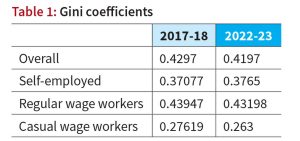
Reduction in Consumption Inequality: The overall Gini coefficient decreased from 0.359 in 2017-18 to 0.309 in 2022-23. Gini coefficients for ST, SC, OBC, and General categories also saw reductions, indicating a slight improvement in the equitable distribution of consumption within these communities.
Economic Disparities Among Social Groups: The bottom 20% decile experienced a decrease in consumption levels for ST, SC, and OBC groups, although marginally. The General category saw a more pronounced decrease in consumption levels among the poorest segment, highlighting a relative decline in consumption among this group.
Concentration of Wealth in Higher Deciles: Consumption has increased for all social groups in the top 20% decile. The General category experienced a significant 10% points surge in consumption between 2017-18 and 2022-23, implying a potential concentration of wealth among high-caste elites and persistent economic disparities.
Efforts to Augment Income Generation Abilities:
Targeted Policies:
Reservation: Affirmative action programs to improve opportunities for SCs, STs, and OBCs.
Rural Development Initiatives: Policies aimed at enhancing infrastructure, education, and healthcare in rural areas.
Direct Benefit Transfers (DBT): Financial aid is directly transferred to beneficiaries to ensure they receive the intended benefits without middlemen.
Focus on Lower Deciles: Emphasis on increasing income generation and consumption abilities, particularly within the lower deciles of SC, ST, and OBC communities—the importance of fostering social harmony and economic stability through equitable income distribution.
Monitoring and Intervention: Continuous monitoring of consumption trends and economic disparities. They are implementing targeted interventions addressing the specific socio-economic challenges faced by different groups to ensure sustained progress towards economic equity.
Way forward:
Strengthen and Expand Affirmative Action Programs: Enhance and rigorously implement affirmative action policies such as reservations in education and employment for SCs, STs, and OBCs. This should include increasing access to quality education, vocational training, and skill development programs to empower these communities economically and socially.
Promote Inclusive Economic Development Initiatives: Implement comprehensive rural development initiatives that focus on improving infrastructure, healthcare, and education in marginalized areas.
Mains PYQ:
Q What are the main factors responsible for gender inequality in India? Discuss the contribution of Savitribai Phule in this regard.(UPSC IAS/2020)
Q. Discuss the role of the Election Commission of India in the light of the evolution of the Model Code of Conduct. (UPSC IAS/2022)
Q. To enhance the quality of democracy in India the Election Commission of India has proposed electoral reforms in 2016. What are the suggested reforms and how far are they significant to make democracy successful? (UPSC IAS/2017)
Mentors Comment: The 2024 general election verdict has various interpretations. Some believe it has expanded the space for dissent and democracy, while others see it as a check on Prime Minister Modi’s perceived authoritarianism. Philosophically, it signifies a civilisational response against the BJP’s Hindutva project, which has polarized Hindus rather than uniting them, proving counterproductive.
Let’s Learn!
Why in the News?
Interpreting the Outcome: The 2024 general election outcome has sparked diverse interpretations, portraying it either as a resurgence of dissent and democracy or as a check on what critics label as Prime Minister Narendra Modi’s authoritarian rule.
Deeper Philosophical Narrative: Beyond surface impacts, the election outcome reflects underlying philosophical shifts in Indian politics.
Philosophical Underpinnings of the Verdict
Resurgence of Civilizational Ethos: The verdict can be interpreted as a revival of India’s civilizational ethos, countering the BJP’s Hindutva agenda.
Polarization within Hindu Society: Hindutva’s attempt to unite Hindus against perceived threats has instead deepened divisions within Hindu communities.
Constitutional Significance
Central Theme of the Election: The Constitution emerged prominently in the election discourse amid concerns over potential amendments that could impact affirmative action for backward castes and tribes.
Critique by RSS and Allies: Historically, the RSS and its allies have critiqued the Constitution, seeking to undermine its provisions despite assertions of commitment to secularism.
The Role of the Constitution
Symbol of Corrective Justice: The Constitution symbolizes corrective justice for historical injustices within Hindu society and stands against efforts to glorify a selective Hindu past that marginalizes minorities.
Hypocrisy of Right-Wing Rhetoric: While proponents claim secularism as inherent to Hindu ethos, their rhetoric often targets and demonizes minorities, undermining their claims of upholding constitutional values.
Political Repercussions
BJP’s Electoral Setback: The BJP’s setback in the 2024 elections signals public rejection of attempts to manipulate the Constitution and exploit anti-minority sentiments.
Ayodhya Defeat: The electoral defeat in Ayodhya, where a Dalit candidate prevailed, underscores voters’ prioritization of social justice over religious symbolism, challenging BJP’s political strategies.
Future Trajectory of Hindutva
Coalition Governance Dynamics: With a coalition government necessitating broader consensus, the focus on amending the Constitution may diminish temporarily.
Vigilance of the Opposition: The Opposition must remain vigilant against future attempts to amend the Constitution for partisan gains, ensuring its resilience against divisive agendas.
Conclusion: The 2024 election marks a pivotal moment where the Constitution emerged as a safeguard against attempts to reshape India’s socio-political fabric. The BJP’s electoral setbacks underscore the enduring significance of constitutional values in upholding inclusive democracy. Upholding social justice and preventing the exploitation of marginalized communities should remain paramount, ensuring unity amidst India’s diversity.
The 18th Lok Sabha will convene its first session very soon. A new Speaker of the House will be elected during this session.
Until the election of the new Speaker, a pro-tem Speaker will be appointed to administer the oath to the new Members of Parliament.
Who is a Pro-tem Speaker?
The Speaker of the Lok Sabha oversees the day-to-day proceedings of the House.
According to Article 94 of the Indian Constitution, the outgoing Speaker continues in office until the first meeting of the new Lok Sabha.
A pro-tem Speaker is appointed temporarily to manage certain duties until the new Speaker is elected.
The Constitution does NOT mention explicitly about the post.
However, the ‘Handbook on the Working of the Ministry of Parliamentary Affairs provides guidelines on the appointment and duties of the Speaker pro-tem.
Functions:
The primary duty of the pro-tem Speaker is to administer oaths to the new MPs, as mandated by Article 99 of the Constitution.
Appointment of the Pro-tem Speaker
When the Speaker’s post is vacant before the new Lok Sabha convenes, the PRESIDENT appoints a Member of the House as the Speaker pro-tem.
The President administers the oath to the Speaker pro-tem at the Rashtrapati Bhawan.
Generally, three other elected members of the Lok Sabha are also appointed by the President to assist in the oath-taking process.
The SENIORMOST members, in terms of years of service, are usually chosen for this role, though there can be exceptions.
Process of Administering Oaths
The Legislative I Section of the Government of India prepares a list of the seniormost Lok Sabha members after the formation of the new government.
This list is submitted to the Minister of Parliamentary Affairs or the Prime Minister, who identifies the Speaker pro-tem and the three other members for oath-taking.
After the Prime Minister’s approval, the consent of the selected members is obtained by the Minister of Parliamentary Affairs, usually over the telephone.
The Minister then submits a note to the President seeking approval for the appointments and the date and time for the swearing-in ceremony.
Upon the President’s approval, the Ministry informs the Speaker pro-tem and the other members about their appointments.
The Speaker pro-tem then administers the oath to the other three members in the Lok Sabha.
PYQ:
[2024] With reference to the Speaker of the Lok Sabha, consider the following statements :
While any resolution for the removal of the Speaker of the Lok Sabha is under consideration
He/She shall not preside.
He/She shall not have the right to speak.
He/She shall not be entitled to vote on the resolution in the first instance.
Which of the statements given above is/are correct?
PM Modi was placed at centre stage for a group photograph at the G-7 Outreach Summit held in Italy.
This marks India’s 11th participation in the G7 Summit and PM Modi’s fifth consecutive attendance.
About G-7 (Group of Seven)
The G7 is an informal bloc of industrialized democracies comprising the United States, Canada, France, Germany, Italy, Japan, and the United Kingdom (UK).
It convenes annually to address global economic governance, international security, and more recently, issues related to artificial intelligence (AI).
Formation and Expansion:
Originally formed as the Group of Six in 1975 by the United States, France, Italy, Japan, the UK, and West Germany, with Canada joining in 1976.
It was formed as a result of the oil crisis to stabilize global economic policies and international relations.
The group’s formation coincided with the challenges of the Cold War era, aiming to address economic concerns such as inflation and recession exacerbated by the OPEC oil embargo.
Key statistics about G7 countries:
Wealth: They control 60% of the global net wealth.
Growth: They drive 46% of the global GDP.
Population: They represent 10% of the world’s population.
Russia’s Joining and Suspension
Russia joined in 1998, transforming it into the G8, aimed at enhancing its international prestige and fostering closer ties with Western nations.
Russia was suspended in 2014 following its annexation of Crimea, leading to ongoing tensions and challenges with both Russia and increasingly, China.
Functioning of the G7
Unlike formal institutions like the United Nations or NATO, the G7 lacks a charter and secretariat.
Its presidency rotates annually (Canada in 2025), responsible for setting the agenda and logistical arrangements for the summit.
Policy initiatives are crafted by ministers and envoys known as Sherpas, who prepare discussions and agreements before the annual gathering.
Non-member countries are occasionally invited to participate in G7 meetings.
Why G7 needs India?
Economic Significance and Democratic Stability: India’s regular participation in G7 meetings highlights its economic importance and stable democratic framework.
Rising Economic Power: With India poised to become the world’s fourth-largest economy, its involvement in global issues is increasingly crucial.
Leadership in the Global South: Modi’s initiatives, such as the Voice of the Global South Summit, have bolstered India’s global standing.
G20 Presidency: India’s recent presidency of the G20 demonstrated its ability to build consensus on contentious global issues.
Neutrality and Strategic Partnerships: India’s neutral stance on Western concerns over China’s actions in the South China Sea and its economic policies enhances its partnership with G7 nations.
Balancing with Russia and the West: As the West confronts Russia over Ukraine, India’s neutral stance positions it as a key ally while maintaining diplomatic balance.
Divergence within G7
Geopolitical Tensions: The G7 nations often face disagreements and tensions over geopolitical matters, such as responses to Russian aggression, conflicts in regions like Ukraine, and strategic alliances with emerging economies.
Economic Policies: Economic policies and trade relations are frequent topics of debate within the G7. Issues include trade tariffs, market regulations, financial stability, and economic cooperation in the face of global economic challenges.
Climate Change: Addressing climate change and achieving environmental sustainability are critical concerns for the G7. Discussions typically focus on climate action commitments, renewable energy investments, and international cooperation on climate policies.
Security and Defense: Security and defence cooperation, including responses to global terrorism, cybersecurity threats, and military alliances, are important agenda items for the G7.
Technology and Innovation: Managing technological advancements, including AI regulation, digital governance, cybersecurity standards, and technological innovation policies, is another area of focus.
Social Issues: Social issues such as gender equality, human rights, immigration policies, and global development aid are also part of the G7 agenda, reflecting broader societal concerns and international commitments.
PYQ:
[2020] In which one of the following groups are all four countries members of G20?
The 46th Antarctic Treaty Consultative Meeting (ATCM-46), held in Kochi, Kerala last month, brought attention to the ongoing debate regarding Antarctic tourism.
Highlights of the 46th Antarctic Treaty Consultative Meeting (ATCM-46) in Kerala
Focus on Developing a Regulatory Framework: ATCM-46 emphasized the need for a comprehensive, flexible, and dynamic framework for regulating tourism and non-governmental activities in Antarctica. A new working group was established to lead this effort over the next year, highlighting a renewed commitment to addressing tourism challenges in the region.
Recognition of Environmental Concerns: The meeting acknowledged the significant environmental impacts of increasing tourism, including disruptions to wildlife, ecosystem damage, and pollution. There was a consensus on the urgency of mitigating these impacts through stronger regulatory measures and enhanced monitoring programs.
India’s Proactive Stance: India played a crucial role in emphasizing the importance of monitoring tourism impacts on Antarctic research, conservation, and the environment. India supported measures against constructing tourism-related structures with significant environmental impacts and showcased its commitment by enacting its own Antarctic Law in 2022 to regulate activities and protect the Antarctic environment.
Gaps in the Regulatory Framework
Lack of Specific Regulations: The current governance framework for Antarctic tourism is fragmented and lacks specific regulations. The Antarctic Treaty (1961) prioritises peaceful use and scientific research, while the Madrid Protocol offers broad environmental guidelines but lacks detailed tourism regulations.
Self-Regulation by IAATO: The International Association of Antarctica Tour Operators (IAATO), a self-regulatory industry body, is primarily responsible for the day-to-day management of tourism. Many believe that IAATO’s guidelines are inadequate to address the growing environmental pressures.
Consensus Rule Limitations: The requirement for unanimous agreement from all consultative parties often slows down decision-making and allows national interests to impede progress. This has resulted in non-binding guidelines rather than comprehensive regulation.
Failed to make consensus on tourism: Discussions on tourism regulation have been ongoing since the 1960s. A proposed tourism annexe in 1991 failed to gain consensus, leading to the current reliance on IAATO’s self-regulation. Despite the increasing frequency of discussions since a 2004 expert meeting, comprehensive regulation has remained elusive.
India’s Stand on Tourism Issues
Emphasis on Monitoring: India has consistently emphasised the importance of monitoring the impacts of tourism on Antarctic research, conservation, and the environment. This was highlighted at ATCM 44 (2022) and reinforced at ATCM-46.
Opposition to Environmental Impact: India supported Resolution 5 (2022), which advised against building tourism-related structures with significant environmental impacts. This stance reflects India’s commitment to minimising the environmental footprint of tourism in Antarctica.
Call for Comprehensive Debate: Between ATCM 44 and ATCM 45, India continued to call for a comprehensive debate on Antarctic tourism, stressing the need for governance action.
Enactment of Antarctic Law: Despite the lack of international consensus, India took proactive steps by enacting its own Antarctic Law in 2022. This law aims to regulate activities and safeguard the Antarctic environment from the impacts of tourism.
Focus on Sustainable Future: At ATCM-46, India advocated for a multi-pronged approach to ensure a sustainable future for Antarctic tourism. This includes strengthening environmental protection, implementing robust monitoring programs, and fostering international cooperation to preserve Antarctica’s pristine wilderness.
Conclusion: Countries need to work together to create a robust international regulatory framework that addresses the unique challenges of Antarctic tourism. This involves building on the efforts initiated at ATCM-46 and ensuring that the newly established working group develops comprehensive, binding regulations that all parties can agree upon and implement.
Mains PYQ:
Q The states of Jammu and Kashmir, Himachal Pradesh and Uttarakhand are reaching the limits of econological carrying capacity due to tourism. Critically evaluate.(UPSC IAS/2015)
Q The size of the cabinet should be as big as governmental work justifies and as big as the Prime Minister can manage as a team. How far is the efficacy of a government then inversely related to the size of the cabinet? Discuss.(UPSC IAS/2014)
Q To what extent, in your view, the Parliament is able to ensure accountability of the executive in India? (UPSC IAS/2021)
Mentor comment: In a parliamentary democracy, the Prime Minister (PM) is the head of government, responsible for running the country and implementing policies. Chosen from the majority party in parliament, the PM leads the executive branch, oversees the cabinet, and represents the government domestically and internationally. The PM must maintain the confidence of the parliament to remain in power.
Why in the News?
On June 7, 2024, Prime Minister Narendra Modi surprised the nation by paying his respects to the Constitution of India at the Alliance meeting.
This move was probably in response to the accusations by the opposition who alleged the threat of ‘changing’ the constitution.
Role of the Prime Minister in a Parliamentary Democracy
Head of the Council of Ministers: The Prime Minister is the head of the Council of Ministers.
Constitutional Mandate: Article 74 of the Constitution mandates that the Prime Minister advises the President in their functions.
Choice of System: B.R. Ambedkar and the framers chose the parliamentary system over the presidential system to ensure greater responsibility of the executive to the Legislature and the electorate.
Row over Immediate Actions
Oath of Office: On June 9, 2024, Mr Modi and his Cabinet Ministers took the oath of office administered by the President of India.
Pre-emptive Financial Sanction: On June 10, the Prime Minister pre-emptively cleared a significant financial sanction of PM-KISAN without the formal allocation of ministerial portfolios, raising questions about the constitutional validity of such actions.
Optics over Procedure
Cabinet Meeting Decisions: The first cabinet meeting, without allocated portfolios, approved significant welfare measures like the Pradhan Mantri Awas Yojana.
Procedural Concerns: Questions arise about the initiation, circulation, and approval process of these decisions, suggesting a focus on optics rather than constitutional procedure.
Extended Tenures: Mr. Modi extended the tenures of key officials without reconstituting the Cabinet Committee, relying on the old Appointments Committee, raising further procedural concerns.
Coalition Dharma and Constitutional Morality
Disregard for Norms: These actions reflect a disregard for coalition principles and constitutional norms.
Dr. Ambedkar’s Emphasis: B.R. Ambedkar emphasized the need for constitutional morality and the cultivation of democratic sentiments, which appear to be lacking in the current scenario.
Article 77: It provides for the President to make rules for government business transactions, ensuring ministerial accountability, which seems undermined by the centralization of power in the PMO.
Current Government’s functioning
Shift in Power: There is a noticeable shift towards an extraordinary accumulation of power in the Prime Minister’s Office, contrary to the principles of collective responsibility.
Business Rules: The Government of India (Allocation of Business) Rules designate business to specific ministries and departments, not the PMO.
Cabinet Secretariat: The Cabinet Secretariat’s role is to provide secretarial assistance, but recent actions suggest a breakdown of this framework.
Role of opposition in parliamentary democracy
Accountability and Oversight: The opposition scrutinizes government actions and policies, ensuring transparency and preventing abuses of power.
Alternative Policies: It offers constructive criticism and proposes alternative solutions to address national issues and improve legislation.
Representation of Diverse Interests: The opposition voices the concerns and interests of various segments of society, ensuring a balanced and inclusive democratic process.
Way forward
Strengthen Institutional Checks: Implement stricter enforcement of constitutional mandates and parliamentary procedures to ensure balanced power distribution and prevent centralization in the PMO.
Enhance Opposition Collaboration: Foster a cooperative environment where the opposition can effectively scrutinize government actions, propose constructive alternatives, and represent diverse societal interests, promoting a more transparent and accountable government.
![[20th June 2024] The Hindu Op-ed: Blueprints beyond borders, for solace and shelter](https://www.civilsdaily.com/wp-content/uploads/2024/06/20-June-1568x882.jpg)
![[19th June 2024] The Hindu Op-ed: The boomerang effect in this general election, and how](https://www.civilsdaily.com/wp-content/uploads/2024/06/19-June-1568x882.jpg)
![[18th June 2024] The Hindu Op-ed: Constitutional respect should not be reduced to optics](https://www.civilsdaily.com/wp-content/uploads/2024/06/18-June-1568x882.jpg)