đŸ’„Join UPSC 2027,2028 Mentorship (July Batch) + XFactor Notes & Microthemes PDF

GS Paper: GS2

  • Finding workable solutions to India-Sri Lanka fisheries issue

    Context

    After a gap of 15 months, the India-Sri Lanka Joint Working Group (JWG) on fisheries held its much-awaited deliberations (in virtual format) on March 25.

    Background of the issue

    • As sections of fishermen from the Palk Bay bordering districts of Tamil Nadu continue to transgress the International Maritime Boundary Line (IMBL), cases of many of them getting arrested and their boats being impounded by the Sri Lankan authorities continue.
    • Apart from poaching in the territorial waters of Sri Lanka, the use of mechanised bottom trawlers is another issue that has become a bone of contention between the fishermen of the two countries; the dispute is not just between the two states.
    • Use of mechanised bottom trawlers: This method of fishing, which was once promoted by the authorities in India, is now seen as being extremely adverse to the marine ecology, and has been acknowledged so by India.
    • The actions of the Tamil Nadu fishermen adversely affect their counterparts in the Northern Province.
    • Reason for transgression: The fishermen of Tamil Nadu experience a genuine problem — the lack of fishing areas consequent to the demarcation of the IMBL in June 1974.
    • If they confine themselves to Indian waters, they find the area available for fishing full of rocks and coral reefs besides being shallow.
    • Under the Tamil Nadu Marine Fishing Regulation Act 1983, mechanised fishing boats can fish only beyond 3 NM from the coast.
    • This explains the trend of the fishermen having to cross the IMBL frequently.

    Way forward

    • Transition to deep-sea fishing: While Indian fishermen can present a road map for their transition to deep sea fishing or alternative methods of fishing, the Sri Lankan side has to take a pragmatic view that the transition cannot happen abruptly.
    • In the meantime, India will have to modify its scheme on deep-sea fishing to accommodate the concerns of its fishermen, especially those from Ramanathapuram district, so that they take to deep-sea fishing without any reservation.
    • Alternative livelihood measures: There is a compelling need for the Central and State governments to implement in Tamil Nadu the Pradhan Mantri Matsya Sampada Yojana in a proactive manner.
    • The scheme, which was flagged off two years ago, covers alternative livelihood measures too including seaweed cultivation, open sea cage cultivation, and sea/ocean ranching.
    • During Mr. Jaishankar’s visit, India had signed a memorandum of understanding with Sri Lanka for the development of fisheries harbours.
    • This can be modified to include a scheme for deep-sea fishing to the fishermen of the North.
    • Joint research on fisheries: . It is a welcome development that the JWG has agreed to have joint research on fisheries, which should be commissioned at the earliest.
    • Institutional mechanism: Simultaneously, the two countries should explore the possibility of establishing a permanent multi-stakeholder institutional mechanism to regulate fishing activity in the region.
    • Using common thread of culture, language and religion: The people of the two countries in general and fisherfolk in particular have common threads of language, culture and religion, all of which can be used purposefully to resolve any dispute.

    Conclusion

    What everyone needs to remember is that the fisheries dispute is not an insurmountable problem. A number of options are available to make the Palk Bay not only free of troubles but also a model for collaborative endeavours in fishing.

    UPSC 2022 countdown has begun! Get your personal guidance plan now! (Click here)

  • India can be the fulcrum of the new global order

    Context

    As Mahatma Gandhi’s nation, India must be a committed and relentless apostle of peace and non-violence, both at home and in the world.

    How the Russia-Ukraine conflict is reshaping the world order

    • Ever since the fall of the Berlin Wall in 1989, a paradigm of free societies, frictionless borders and open economies evolved to be the governing order in many nations.
    • This catalysed freer movement of people, goods, services and capital across the world.
    • India too has benefited enormously from being an active participant in this interconnected world, with a tripling of trade (as share of GDP) in the last three decades and providing vast numbers of jobs.
    • Such tight inter-dependence among nations will lead to fewer conflicts and promote peace, was the established wisdom.
    • The Russia-Ukraine conflict has dismantled this wisdom.
    • Mutually beneficial to mutually harmful: If inter-connectedness and trade among nations were mutually beneficial, then it follows that its disruption and blockade will be mutually harmful.
    • Global Village was built on the foundation of advanced transportation networks, cemented with the U.S. dollar as the reserve currency and fenced by integrated payment systems.
    • Any disruption to this delicate balance runs the risk of plunging the ‘Global Village’ into disequilibrium and derailing the lives of all.

    Trade opportunity for India

    • Trade with other nations should and will always be an integral cornerstone of India’s economic future.
    • A reversal towards isolationism and protectionism will be foolhardy and calamitous for India.
    • As the western bloc of nations looks to reduce dependence on the Russia-China bloc of nations, it presents newer avenues for India to expand trade.
    • It presents a tremendous opportunity for India to become a large producing nation for the world and a global economic powerhouse.
    • However, to capitalise on these opportunities, India needs free access to these markets, an accepted and established global currency to trade in and seamless trade settlements.

    Suggestions for India

    1] Bilateral currency agreements are unsustainable

    • The American dollar has emerged as the global trade currency, bestowing an ‘exorbitant privilege’ on the dollar.
    • But a forced and hurried dismantling of this order and replacing it with rushed bilateral local currency arrangements can prove to be more detrimental for the global economy in the longer run.
    • We had an Indian rupee-Russian rouble agreement in the late 1970s and 1980s, when we mutually agreed on exchange rates for trading purposes.
    • Now, with India’s robust external sector, a flourishing trading relationship with many nations and tremendous potential to expand trade, such bilateral arrangements are unsustainable, unwieldy, and perilous.

    2] Avoid discounted commodity purchases from Russia

    • In the long run, India stands to gain more from unfettered access to the western bloc markets for Indian exports under the established trading order than from discounted commodities purchased under new bilateral currency arrangements that seek to create a new and parallel global trade structure.
    • It entails a prolonged departure from the established order of dollar-based trade settlement or jeopardises established trading relationships with western bloc markets, it can have longer term implications for India’s export potential.

    3] Non-disruptive geo-economic policy

    • India needs not just a non-aligned doctrine for the looming new world order but also a non-disruptive geo-economic policy that seeks to maintain the current global economic equilibrium.
    •  By the dint of its sheer size and scale, India can be both a large producer and a consumer.
    • To best utilise this opportunity, India needs not just cordial relationships with nations on either side of the new divide but also a stable and established global economic environment.

    4] Social harmony is a must

    • Just as it is in India’s best interests to balance the current geo-economic equilibrium, it is also imperative for India to maintain its domestic social equilibrium.
    • Social harmony is the edifice of economic prosperity.
    • Fanning mutual distrust, hate and anger among citizens, causing social disharmony is a shameful slide to perdition.

    Conclusion

    The reshaping and realignment of the world order will be a unique opportunity for India to reassess its foreign policy, economic policy and geo-political strategy and don the mantle of global leadership.

    UPSC 2022 countdown has begun! Get your personal guidance plan now! (Click here)

  • Anti-Defection Law

    Vice-President M. Venkaiah Naidu said that there was a need to amend the anti-defection legislation in the country to plug existing loopholes.

    What did VP notice now?

    • Stating that there was no clarity in the law about the time frame for the action of the House Chairperson or Speaker in anti-defection cases.
    • Some cases are taking six months and some even three years.
    • There are cases that are disposed of after the term is over.

    What is Anti-defection Law?

    • The Anti-Defection Law under the Tenth Schedule of the Constitution punishes MPs/ MLAs for defecting from their party by taking away their membership of the legislature.
    • It gives the Speaker of the legislature the power to decide the outcome of defection proceedings.
    • It was added to the Constitution through the Fifty-Second (Amendment) Act, 1985 when Rajiv Gandhi was PM.
    • The law applies to both Parliament and state assemblies.

    Cases considered under the anti-defection law

    The law covers three scenarios with respect to shifting of political parties by an MP or an MLA.

    (1) Voluntary give-up

    • The first is when a member elected on the ticket of a political party “voluntarily gives up” membership of such a party or votes in the House against the wishes of the party.
    • Such persons lose his seat.

    (2) Independent members

    • When a legislator who has won his or her seat as an independent candidate joins a political party after the election.
    • In both these instances, the legislator loses the seat in the legislature on changing (or joining) a party.

    (3) Nominated MPs

    • In their case, the law gives them six months to join a political party, after being nominated.
    • If they join a party after such time, they stand to lose their seat in the House.

    Powers to disqualification

    • Under the anti-defection law, the power to decide the disqualification of an MP or MLA rests with the presiding officer of the legislature.
    • The law does not specify a time frame in which such a decision has to be made.
    • As a result, Speakers of legislatures have sometimes acted very quickly or have delayed the decision for years — and have been accused of political bias in both situations.

    Significant role of the Speaker/Presiding Officer

    • Pandit Nehru had referred to the Speaker as “the symbol of the nation’s freedom and liberty” and emphasized that Speakers should be men of “outstanding ability and impartiality”.
    • Several judgments on the anti-defection law have been rendered by the Supreme Court.
    • A common factor that shows up in these rulings is the blatant, partisan conduct of speakers in state assemblies.

    Reasons for Speakers’ ambiguous action

    • The Speaker continues to belong to a particular political party.
    • The electoral system and conventions in India have ‘not been developed to ensure protection to the office, there are cogent reasons for Speakers to retain party membership.
    • It would be unrealistic to expect a speaker to completely abjure all party considerations while functioning.
    • There are structural issues regarding the manner of appointment of the Speaker and her tenure in office.

    Way forward

    • Parliament may seriously consider a Constitutional amendment to bring in a permanent Tribunal for dealing with defection cases.
    • It is suggested that a scheme should be brought wherein Speakers should renounce all political affiliations, membership, and activity once they have been elected.
    • We can learn from the UK model. In practice, once elected, the Speaker gives up all-partisan affiliation, as in other Parliaments of British tradition.
    • He/she remains in office until retirement, even though the majority may change and does not express any political views during debates.

    Conclusion

    • Impartiality, fairness, and autonomy in decision-making are the hallmarks of a robust institution.
    • It is the freedom from interference and pressures which provide the necessary atmosphere where one can work with an absolute commitment to the cause of neutrality as a constitutional value.


    UPSC 2022 countdown has begun! Get your personal guidance plan now! (Click here)

  • Anatomy of communal violence in India

    Context

    Communal violence, a complex phenomenon, has been over-simplified to suit a convenient political narrative.

    India’s syncretic traditions and impact of invasions

    • For aeons, India has had syncretic traditions inspired by the Vedic aphorism, “Ekam sad vipra bahudha vadanti” (there is only one truth and learned persons call it by many names).
    •  Because of this underpinning, Indian society has never insisted on uniformity in any facet of life.
    • This equanimity of Indian society was, however, disrupted by invading creeds.
    • The first such incursion came in 712, when Muhammad bin Qasim vanquished Sindh, and as Chach Nama, a contemporary Arab chronicle states, introduced the practice of treating local Hindus as zimmis, forcing them to pay jizya (a poll tax), as a penalty to live by their beliefs.
    • In the 11th century, Mahmud of Ghazni, while receiving the caliphate honours on his accession to the throne, took a vow to wage jihad every year against Indian idolaters.
    • The fact is, ties between the two communities were seldom cordial.
    • There were intermittent skirmishes, wars and occasional short-lived opportunistic alliances.
    • When Pakistan declared itself an Islamic Republic in 1947, it would have been natural for India to identify itself as a Hindu state.
    • It didn’t, and couldn’t have — because of its Hindu ethos of pluralism.
    • India, is, and will always be, catholic, plural, myriad and a vibrant democracy.

    Conclusion

    It’s relevant to recall what Lester Pearson (14th PM of Canada) said: “Misunderstanding arising from ignorance breeds fear, and fear remains the greatest enemy of peace.”

    UPSC 2022 countdown has begun! Get your personal guidance plan now! (Click here)

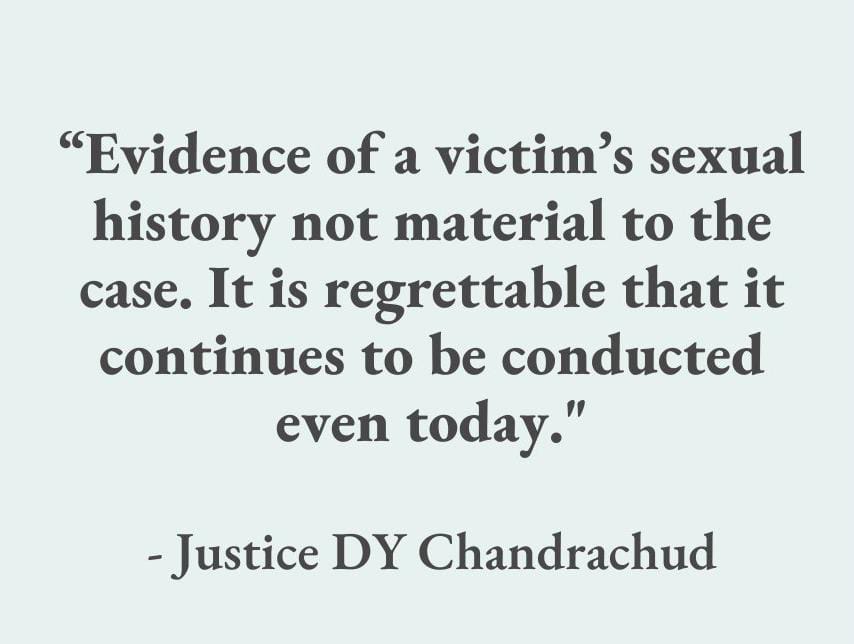
  • Rape laws are being misused today: Justice BN Srikrishna

    Retired Supreme Court judge Justice BN Srikrishna has said that there is a blatant misuse of rape laws in the country.

    What did Justice BN Srikrishna say?

    • Lesser convictions: Statistics show that even after the amendment of rape laws, there have been less number of convictions.
    • Need for objective analysis: It is time that rape cases be looked at in a very objective manner.
    • Authencity of women’s claims needs to be checked: We need to question — is the woman really subjected to cruelty and atrocities? Otherwise, in the general course of things, the accused is presumed to be innocent unless proven guilty should apply.
    • Tilt of such laws is always against the men: However, in rape cases, whatever the woman says is treated as the gospel truth. But that is not the intention of the law. It is not the way to empower women.

    Various laws for the protection of women

    • Various special laws relating to women include:
    1. Protection of Women from Domestic Violence Act, 2005
    2. Dowry Prohibition Act, 1961
    3. Indecent Representation of Women (Prohibition) Act, 1986
    4. Sexual Harassment of Women at Workplace (Prevention, Prohibition and Redressal) Act, 2013
    5. Prohibition of Child Marriage Act, 2006

     Alleged rape cases these days

    • False accusations: Justice BN Srikrishna said that, sometimes some innocent men are being falsely accused of rape and later getting acquitted.
    • Consensual sex is later cried as rape: There are many cases either in a consensual relationship or in co-habitation for a long time, there is a disagreement and the woman cries rape.
    • Tool to preserve honour: There are instances where a secret affair is going on, people get to know of it and in order to come out of the ignominy of it, she cries rape, Justice Srikrishna said.

    Issues with such alleged rape cases

    • Whenever the man is accused of rape, he gets arrested, newspapers carry it on the front page.
    • But when there is an acquittal, it is not carried in the same way. This is terrible.
    • The balance is always tilted in favour of women in such cases.

    Various sexual crimes in India

    • Sexual Abuse/ Molestation/ Rape: Rape is one of the most common crimes in India. According to the National Crime Records Bureau, one woman is raped every 20 minutes in India.
    • Marital Crimes: In India, marital rape is not a criminal offense.  India is one of fifty countries that have not yet outlawed marital rape.
    • Forced Marriage: Girls are vulnerable to being forced into marriage at young ages, suffering from a double vulnerability: both for being a child and for being female.
    • Trafficking and forced prostitution: Human trafficking, especially of girls and women, often leads to forced prostitution and sexual slavery.
    • Online abuse: Women are regularly subject to online rape threats, online harassment, cyber-stalking, blackmail, trolling, slut-shaming and more.
    • Harassment at the workplace: Sexual harassment at workplace, mostly comprising of indecent remarks, unwanted touches, demands for sex, and the dissemination of pornography.

    Various initiative to protect women

    The Government has taken a number of initiatives for the safety of women and girls, which are given below:

    • Nirbhaya Fund for projects for the safety and security of women
    • One-Stop Centre Scheme to provide integrated support and assistance to women affected by violence, both in private and public spaces under one roof
    • Online analytic tool for police called “Investigation Tracking System for Sexual Offences” to monitor and track time-bound investigation in sexual assault cases in accordance with Criminal Law (Amendment) Act 2018.
    • National Database on Sexual Offenders (NDSO) to facilitate investigation and tracking of sexual offenders across the country by law enforcement agencies.

    Way ahead

    • Breaking the cycle of abuse will require concerted collaboration and action between governmental and non-governmental actors including educators, health-care authorities, legislators, the judiciary and the mass media.
    • Gender-based violence, an especially violent crime like rape, is a multifaceted problem.
    • Although the incorporation of stringent laws and stricter punishments are important to deter people from committing such crimes, the solution to this is much more than just promulgation.
    • Education of both men and women will lead to change in attitudes and perceptions.
    • It is a mammoth task. We are just doing bits and pieces. A way ahead is obscure but in our sphere with concrete and pronounced steps.


    UPSC 2022 countdown has begun! Get your personal guidance plan now! (Click here)

  • What is the Five Eyes (FYEY) Alliance?

    The annual Raisina Dialogue in Delhi held this year by National Security Adviser Ajit Doval will host intelligence agency chiefs of several countries.

    What is the conference about?

    • The conference is modelled on the lines of the annual Munich Security Conference and Singapore’s Shangri-La dialogue.
    • It is expected to bring together heads and deputy heads of the top intelligence and security organisations from more than 20 — mostly Western countries and their allies.
    • Intelligence chiefs and deputies from Australia, Germany, Israel, Singapore, Japan and New Zealand are among those expected to attend the conference.
    • The meet is held on the sidelines of the “Five eyes alliance” of the U.S., U.K., Canada, New Zealand and Australia, who coordinate on terrorism and security issues.

    What is the Five Eyes Alliance?

    • The Five Eyes (FVEY) is an intelligence alliance comprising Australia, Canada, New Zealand, the United Kingdom, and the United States.
    • These countries are parties to the multilateral UKUSA Agreement, a treaty for joint cooperation in signals intelligence.
    • The origins of the FVEY can be traced to informal secret meetings during World War II between British and American code-breakers.
    • It was started before the US formally entered the war, followed by the Allies’ 1941 Atlantic Charter that established their vision of the post-war world.

    Back2Basics: Munich Security Conference

    • The Munich Security Conference is an annual conference on international security policy that has been held in Munich, Bavaria, Germany since 1963.
    • It brings together heads of state, diplomats and business leaders from the world’s leading democracies for three days of meetings and presentations.
    • It is the world’s largest gathering of its kind.
    • Over the past four decades the MSC has become the most important independent forum for the exchange of views by international security policy decision-makers.


    UPSC 2022 countdown has begun! Get your personal guidance plan now! (Click here)

  • What is different now in communal violence in India

    Context

    India has a long history of communal violence. Just how similar or different are the recent episodes? And what kind of dangers do they pose to the polity and society?

    What is different this time?

    • Religious processions: It should first be noted that such processions have historically been some of the largest triggers for communal riots.
    • Such processions can be, and have been, intensely political, often morphing from the religious to the communal.
    • Communalism Vs. Religiosity: Communalism in South Asia has always been distinguished from religiosity.
    • Religiosity may be about deeper meanings of life, but communalism is about a coercive assertion of power or a bloody search for retribution, often historically construed and presented.
    • Thus, it is not the coexistence of religious processions and riots that is surprising today.
    • What is different this time? Ram Navami and Hanuman Jayanti are not the principal religious processions touching off riots.
    • Eroding neutrality of state: The second difference that in the past, processions might have caused riots, but the state rarely gave up the principle of neutrality in dealing with them.
    • When a state either explicitly favours a community or looks away when a particular community is hounded, intimidated and attacked, it is no longer a riot, but a pogrom.
    • The rapidly eroding religious neutrality of the government in several states is one of the most alarming political developments.
    • In recent months, there have been spectacles of calls to murder in Dharam Sansads (religious assemblies).
    • Such speech is criminally liable. India’s Constitution prohibits speech that endangers “public order”.
    • In the past, it was invariably hard to find clear evidence of who led the riots.
    • The riot leaders now openly proclaim call for violence.
    • Such leaders are either not punished, or are merely given a slap on the wrist and some of them are even celebrated as heroes and rewarded with high office.
    • New research on vigilantism makes it clear that vigilantism, especially lynchings, cannot flourish unless the state provides impunity to vigilante groups.

    Conclusion

    Even though India has a long history of communal violence the recent episodes of violence are different and pose grave dangers to the polity and society.

    UPSC 2022 countdown has begun! Get your personal guidance plan now! (Click here)

  • NITI Aayog gets a new Vice-Chairman

    The government has appointed Suman K. Bery as the vice-chairman of the NITI Aayog following the resignation of Rajiv Kumar.

    What is NITI Aayog?

    • The NITI Aayog serves as the apex public policy think tank of the GoI.
    • It was established in 2015, by the NDA government, to replace the Planning Commission which followed a top-down model.
    • It advises both the centre and states on social and economic issues.
    • It is neither a constitutional body nor a statutory body but the outcome of an executive resolution. It was not created by the act of parliament.

    Composition of NITI Aayog

    • The Prime Minister of India is the chairperson/chairman of the NITI Aayog.
    • The PM appoints one Vice-Chairperson, who holds the rank of a cabinet minister.
    • It includes the Chief Ministers of all the states and Union territories.
    • It has Regional Councils for looking after contingencies in regional areas. It is convened and chaired by the Prime Minister of India and includes concerned chief ministers and Lt. Governors.
    • The Prime Minister nominates Personalities with skilled knowledge, who are experts in particular domains as special invitees.
    • There are full-time members who hold the rank of ministers.
    • There is a maximum of two Part-time members who are invited from leading organisations, universities, and research centres.
    • The Prime Minister also appoints one Chief Executive Officer (CEO) who holds the rank of a Secretary.

    Aims, Agenda, and Objectives of NITI Aayog

    The purpose with which NITI Aayog was formed in place of the Planning Commission was a far-sighted vision. It was important to boost the development of India in the emerging global scenario. The objectives are:

    • To generate a platform for national development, sectors and strategies with the collaboration of states and centre.
    • To boost the factor of cooperative federalism between the centre and the states. For national development, it is necessary for both wings to work in synergy.
    • To develop such mechanisms which work at the ground root level for progressive growth. A nation develops when its regions and states develop.
    • To work on long term policies and strategies for long-term development. To set up a system for monitoring progress so that it can be used for analysing and improving methods.
    • To provide a platform for resolving inter-departmental issues amicably.
    • To make it a platform where the programmes, strategies, and schemes can be monitored on a day to day basis, and it could be understood which sector needs more resources to develop.
    • To upgrade technological advancements in such a manner that focus can be made on iNITIatives and programmes.
    • To ensure India’s level and ranking at the worldwide level and to make India an actively participating nation.
    • To progress from food security towards nutrition and standardised meals and focus on agricultural production.
    • To make use of more technology to avoid misadventures and corruption in governance.
    • To make the working system more transparent and accountable.

    NITI Aayog – Seven Pillars of Effective Governance

    • NITI Aayog works on principles like Antyodaya (upliftment of poor), inclusion (to include all sections under one head), people participation, and so on.
    • NITI Aayog is a body that follows seven pillars of governance. They are:
    1. To look after pro-people agenda so that the aspirations and desires of no one are compromised.
    2. To respond and work on the needs of citizens.
    3. Make citizens of the nation involve and participate in various streams.
    4. To empower women in all fields, be it social, technical, economic, or other.
    5. To include all sects and classes under one head. To give special attention to marginalised and minority groups.
    6. To provide equal opportunity for the young generation.
    7. To make the working of government more accountable and transparent. It will ensure less chance of corruption and malpractices.


    Also read:

    [Burning Issue] Niti Ayog – A critical Analysis


    UPSC 2022 countdown has begun! Get your personal guidance plan now! (Click here)

  • What laws govern tapping a phone; what are the checks in place?

    A lady IPS officer is facing an FIR in Mumbai for allegedly tapping the phones of a Rajya Sabha MP in Maharashtra.

    How are phones tapped in India?

    • In the era of fixed-line phones, mechanical exchanges would link circuits together to route the audio signal from the call.
    • When exchanges went digital, tapping was done through a computer.
    • Today, when most conversations happen through mobile phones, authorities make a request to the service provider.
    • The service provider is bound by law to record the conversations on the given number and provide these in real time through a connected computer.

    Who can tap phones?

    • The State Police have the powers to tap phones.
    • Ten Central agencies are authorised to do so: Intelligence Bureau, CBI, Enforcement Directorate, Narcotics Control Bureau, Central Board of Direct Taxes, Directorate of Revenue Intelligence, National Investigation Agency, R&AW, Directorate of Signal Intelligence, and the Delhi Police Commissioner.
    • Tapping by any other agency would be considered illegal.

    What laws govern this?

    • Phone tapping in India is governed by The Indian Telegraph Act, 1885.
    • Section 5(2) says that “on the occurrence of any public emergency, or in the interest of the public safety”, phone tapping can be done by the Centre or states.
    • It can be done in the interest of “public safety”, “sovereignty and integrity of India, the security of the State, friendly relations with foreign States or public order or for preventing incitement to the commission of an offence”.
    • There is an exception for the press: “press messages intended to be published in India of correspondents accredited to the Central Government or a State Government shall not be intercepted or detained, unless their transmission has been prohibited under this sub-section”.
    • The competent authority must record reasons for tapping in writing.

    Who authorises phone tapping?

    • Rule 419A of the Indian Telegraph (Amendment) Rules, 2007, says phone tapping orders “shall not be issued except by an order made by the Secretary to the GoI in the Ministry of Home Affairs.
    • It can be authorised by the Secretary to the State Government in-charge of the Home Department in the case of a State Government.
    • The order has to be conveyed to the service provider in writing; only then can the tapping begin.

    What happens in an emergency?

    • In unavoidable circumstances, such an order may be issued by an officer, not below the rank of a Joint Secretary to the GoI, who has been authorised by the Union Home Secretary, or the State Home Secretary.
    • In remote areas or for operational reasons, if it is not feasible to get prior directions, a call can be intercepted with the prior approval of the head or the second senior-most officer of the authorised law enforcement agency at the central level, and by authorised officers, not below the rank of Inspector General of Police, at the state level.
    • The order has to be communicated within three days to the competent authority, who has to approve or disapprove it within seven working days.
    • If the confirmation from the competent authority is not received within the stipulated seven days, such interception shall cease.
    • For example, during the 26/11 attacks in Mumbai, the authorities had no time to follow the complete procedure, and so a mail was sent to the service provider by the Intelligence Bureau.

    What are the checks against misuse?

    • The law is clear that interception must be ordered only if there is no other way of getting the information.
    • The directions for interception remain in force, unless revoked earlier, for a period not exceeding 60 days.
    • They may be renewed, but not beyond a total of 180 days.
    • Any order issued by the competent authority has to contain reasons, and a copy is to be forwarded to a review committee within seven working days.
    • At the Centre, the committee is headed by the Cabinet Secretary with the Law and Telecom Secretaries as members.
    • In states, it is headed by the Chief Secretary with the Law and Home Secretaries as members.
    • The committee is expected to meet at least once in two months to review all interception requests.

    What if misuse occurs?

    • When the Review Committee is of the opinion that the directions are not in accordance with the provisions referred to above it may set aside the directions.
    • It may order for destruction of the copies of the intercepted message or class of messages.
    • Under the rules, records pertaining to such directions shall be destroyed every six months unless these are, or are likely to be, required for functional requirements.
    • Service providers too are required to destroy records pertaining to directions for interception within two months of discontinuance of the interception.

    Is the process transparent?

    • There are multiple provisions aimed at keeping the process transparent.
    • Directions for interception are to specify the name and designation of the officer or the authority to whom the intercepted call is to be disclosed.
    • The directions have to be conveyed to designated officers of the service providers in writing by an officer not below the rank of SP or Additional SP or equivalent.
    • The officer is expected to maintain records with details of the intercepted call.
    • The designated nodal officers of the service providers are supposed to issue acknowledgment letters to the security/law enforcement agency within two hours on receipt of an intimation.
    • They are to forward every 15 days a list of interception authorisations received to the nodal officers of the security and law enforcement agencies for confirmation of authenticity.
    • It makes the service providers responsible for actions of their employees.
    • In case of unauthorised interception, the service provider may be fined or even lose its licence.


    UPSC 2022 countdown has begun! Get your personal guidance plan now! (Click here)

  • India extends duration of $400 mn Currency Swap to SL

    India has extended the duration of a $400 million currency swap facility with Sri Lanka which it had concluded with the island nation in January this year.

    What are Currency Swaps?

    • A currency swap, also known as a cross-currency swap, is an off-balance sheet transaction in which two parties exchange principal and interest in different currencies.
    • Currency swaps are used to obtain foreign currency loans at a better interest rate than could be got by borrowing directly in a foreign market.

    Practice question for mains:

    Q. What are Currency Swaps? Discuss the efficacy of Currency Swap Agreements for enhancing bilateral cooperation in Indian context.

    How does it work?

    • In a swap arrangement, RBI would provide dollars to a Lankan central bank, which, at the same time, provides the equivalent funds in its currency to the RBI, based on the market exchange rate at the time of the transaction.
    • The parties agree to swap back these quantities of their two currencies at a specified date in the future, which could be the next day or even three months later, using the same exchange rate as in the first transaction.
    • These swap operations carry no exchange rate or other market risks, as transaction terms are set in advance.

    Why does one need dollars?

    • FPIs investors look for safer investments but the current global uncertainty over COVID outbreak has led to a shortfall everywhere in the global markets.
    • This has pulled down foreign exchange reserves of many small and developing countries.
    • This means that the government and the RBI cannot lower their guard on the management of the economy and the external account.

    Benefits of currency swap

    • The absence of an exchange rate risk is the major benefit of such a facility.
    • This facility provides the flexibility to use these reserves at any time in order to maintain an appropriate level of balance of payments or short-term liquidity.
    • Swaps agreements between governments also have supplementary objectives like the promotion of bilateral trade, maintaining the value of foreign exchange reserves with the central bank and ensuring financial stability (protecting the health of the banking system).


    UPSC 2022 countdown has begun! Get your personal guidance plan now! (Click here)