Philippe Baptiste, head of the French Space Agency, talked about the joint India-France “TRISHNA Mission.”
TRISHNA Mission:
Details
Overview
A joint Indo-French Earth observation satellite project developed by ISRO and CNES (French Space Agency).
Acronym for “Thermal infraRed Imaging Satellite for High-resolution Natural resource Assessment” (TRISHNA Mission)
Launch Year
Targeted for 2026.
Mission Lifespan
Designed for a 5-year operational life.
Primary Objectives
• Monitor water and energy budgets of the continental biosphere.
• Assess evapotranspiration for efficient water management.
• Improve agricultural water productivity and assist in irrigation water management.
• Provide high-resolution observations of water quality in coastal and inland waters.
• Assess urban heat islands and detect heat anomalies.
Payloads
• Thermal Infrared (TIR) Payload: Provided by CNES, this sensor maps surface temperature and emissivity in high resolution.
• Visible-Near Infrared-Short Wave Infrared (VNIR-SWIR) Payload: Developed by ISRO, this sensor uses seven spectral bands for detailed mapping of surface reflectance.
Orbit and Spatial Resolution
• TRISHNA will operate in a sun-synchronous orbit at an altitude of 761 km.
• Spatial resolution: 57 meters for land and coastal areas, 1 km for ocean and polar regions.
Application and Significance
• Supports water resource management, agriculture, and urban planning through precise data on water stress, crop productivity, and urban heat islands.
• Enhances climate resilience by tracking droughts, evapotranspiration, and permafrost changes.
• Contributes to global environmental initiatives like GEOGLAM and Sustainable Development Goals (SDGs) by providing key agricultural and climate variables.
PYQ:
[2016] Discuss India’s achievements in the field of Space Science and Technology. How the application of this technology helped India in its socio-economic development?
[2010] In the context of space technology, what is “Bhuvan”, recently in the news?
(a) A mini satellite launched by ISRO for promoting the distance education in India
(b) The name given to the next Moon Impact Probe, for Chandrayaan-II
(c) A geoportal of ISRO with 3D imaging capabilities of India
The Union Cabinet approved the expansion of the Chandrayaan-4 mission, Venus Orbiter Mission (Shukrayaan Misison), Gaganyaan, the development of India’s first space station (the Bharatiya Antariksh Station), and NextGen launch vehicles.
About Chandrayaan-4 Mission
Chandrayaan-4 is the fourth mission in India’s Chandrayaan program (2003).
The mission is currently under conceptualisation and expected to launch around 2027.
Aims: To develop technology for a successful moon landing and ensure a safe return to Earth.
The mission will be launched in two phases onboard two LVM3 rockets.
It will collect lunar samples for analysis on Earth.
About Venus Orbiter Mission (VOM)
The VOM, also called Shukrayaan-1, is an upcoming ISRO mission targeting a 2028 launch.
The mission aims to study Venus’ surface, atmosphere, volcanic activity, and solar wind interactions with its ionosphere.
It will have a mission duration of 4 years.
The spacecraft will operate in an elliptical orbit, with distances of 60,000 km at apoapsis and 500 km at periapsis.
Its payload has a capacity of 100 kg, is powered by 500 watts, and will feature Indian and international instruments for comprehensive analysis.
For the mission’s payload and technology, collaborations with NASA, CNES (France), and Russia have been established.
PYQ:
[2016] The Mangalyaan launched by ISRO:
is also called the Mars Orbiter Mission
made India the second country to have a spacecraft orbit the Mars after USA
made India the only country to be successful in making its spacecraft orbit the Mars in its very first attempt
Which of the statements given above is/are correct?
(a) 1 only
(b) 2 and 3 only
(c) 1 and 3 only
(d) 1, 2 and 3
Ammonium Nitrate (AN) imports from Russia have sharply increased affecting domestic fertilizer companies in India.
The import of Ammonium Nitrate is concerning due to increased dependence on foreign supply, price disparity impacting domestic industries, and potential risks to national energy and security.
What is Ammonium Nitrate?
Ammonium Nitrate (NH₄NO₃) is a nitrogen-rich, white, crystalline chemical compound.
It is soluble in water and commonly used in various industries.
Uses:
It is widely used as a fertilizer in agriculture.
It serves as a component for anaesthetic gases and cold packs.
It is also a key ingredient in commercial explosives used for mining and construction.
Ammonium nitrate is classified as an oxidizing substance under Grade 5.1 by the United Nations.
India’s Regulations:
AN is regulated under The Ammonium Nitrate Rules, 2012, and its manufacture or use requires a license.
The Explosives Act, 1884 defines ammonium nitrate as any compound with more than 45% AN by weight.
Storage Restrictions: Storing large quantities of AN in populated areas is illegal in India.
For manufacturing, companies need an industrial license under the Industrial Development and Regulation Act, 1951.
Why is it a Cause of Concern?
Ammonium Nitrate is a primary component in explosive mixtures like ANFO (Ammonium Nitrate Fuel Oil).
Though not explosive on its own, it becomes highly dangerous when mixed with detonators like RDX or TNT.
It has been used in Improvised Explosive Devices (IEDs) by terrorist groups.
Accidents involving AN, like the Beirut port explosion in 2020, have raised serious concerns about its storage and handling.
Its widespread use in fertilizers leads to concerns about environmental impact, especially when mishandled.
Improper storage in populated areas can result in devastating accidents, which is why stringent regulations are in place to control its use, storage, and transport.
PYQ:
[2015] What can be the impact of excessive/inappropriate use of nitrogenous fertilizers in agriculture?
1. Proliferation of nitrogen-fixing microorganisms in soil can occur.
2. Increase in the acidity of soil can take place.
3. Leaching of nitrate to the ground-water can occur.
Select the correct answer using the codes given below:
[2022] Economic growth in the recent past has been led by an increase in labour productivity.” Explain this statement. Suggest the growth pattern that will lead to the creation of more jobs without compromising labour productivity. [2014] While we flaunt India’s demographic dividend, we ignore the dropping rates of employability.” What are we missing while doing so? Where will the jobs that India desperately needs come from? Explain.
Prelims:
[2013] Economic growth in country X will necessarily have to occur if: (a) there is technical progress in the world economy (b) there is population growth in X (c) there is capital formation in X (d) the volume of trade grows in the world economy
Mentor’s Comment: India has become a global economic powerhouse, now ranking as the fifth-largest economy and holding the title of the fastest-growing major economy. A significant factor in this growth is its demographic advantage, with a median age of 28 and 63% of the population being of working age. However, the labour force participation rate in 2022 stood at 55.2%, according to the International Labour Organization (ILO). The report also notes that much of this growth is led by the services sector, which is less labour-intensive, underscoring the importance of fully leveraging the demographic dividend.
_
Let’s learn!
Why in the News?
India is not fully capitalizing on its demographic dividend, former RBI governor Raghuram Rajan stated on April 16, highlighting the need to prioritize the development of human capital and the improvement of skill sets.
Factors behind Service-pushed Growth
Capital and Labour Ratios: The Economic Survey 2023-24 highlighted a declining capital-to-output ratio and an increasing capital-to-labour ratio.
Labour Abundance: Arvind Panagariya, Chairman of the 16th Finance Commission, noted that capital-led economic growth is not ideal for India, which has an abundance of labour.
MSMEs and Labour Laws: Micro, Small, and Medium Enterprises (MSMEs) are hesitant to scale up due to outdated labour laws and compliance burdens.
Labour Codes: The impasse over new labour codes, approved by Parliament but yet to be implemented, sends a negative signal to investors.
Employment in Labour-Intensive Sectors
Agriculture Employment: 45% of the workforce is employed in agriculture, which contributes only 18% of GDP, making it essential to boost manufacturing.
Unorganised Sector: The unorganised and non-agricultural sectors employ 19% of the workforce and need focused attention.
High-Growth Sectors: High-growth sectors such as toys, apparel, tourism, and logistics can provide labour-intensive employment opportunities.
Skilling for Growth: Upgrading skills in these sectors will help workers move up the value chain and access better-paying jobs.
The Importance of Skilling
Workforce Productivity: Skilling is vital for making the workforce productive, with only 4.4% of the workforce aged 15-29 being formally skilled, according to the Economic Survey.
Public-Private Partnerships: Public-private partnerships are crucial for creating a relevant curriculum and offering on-the-job training.
Lifelong Learning: Skilling should be a lifelong process with flexible learning systems, not just a one-time intervention.
New Education Policy (NEP) 2020: The NEP 2020 focuses on foundational and cognitive skills but needs regular review to stay updated.
Impact of AI and Machine Learning
Job Threats and Opportunities: AI and machine learning (ML) pose a threat to low-skill, repetitive jobs but will still require human oversight.
Regulatory Framework: Creating appropriate regulations to govern AI/ML while leveraging its potential is key.
Market Growth: The AI/ML market is expected to grow nearly nine times by 2030, reaching $826.73 billion globally.
Talent Pool: India has the second-largest talent pool in AI/ML, but with a current demand-supply gap of 51%, it presents a significant opportunity for growth.
Way Forward
Sustaining Growth: Reforms are essential to sustain India’s growth trajectory and create new opportunities.
Policy Focus: Finance Minister Nirmala Sitharaman emphasized the need for improving productivity and making markets more efficient in her 2023 Budget speech.
State-Level Reforms: While the central government has improved the ease of doing business, state-level reforms are crucial as states are where most economic activities occur.
Collaboration: Both the Centre and States must collaborate to broaden and deepen reforms for sustained economic growth.
Conclusion:
India’s large, young, and aspirational population presents a unique opportunity. Managing this demographic advantage is more favorable than dealing with the challenges of an aging population.
Although voters voiced concerns about the climate crisis, it was overlooked during the Lok Sabha election campaign.
2023 Climate Targets of Indian Government
Renewable Energy Goals: India aims to achieve 500 GW of non-fossil fuel-based energy capacity by 2030, with a target for 50% of its total energy needs to come from renewable sources.
Emissions Goals: The updated Nationally Determined Contributions (NDC) set a goal to reduce emissions intensity of GDP by 45% compared to 2005 levels by 2030.
Carbon Sink Targets: India plans to create an additional carbon sink of 2.5–3 billion metric tons of CO2 equivalent through enhanced forest and tree cover by 2030.
Net Zero Commitment: Aiming for net zero emissions by 2070, India has committed to significant reductions in projected emissions, including a pledge to reduce one billion tonnes of emissions from now until 2030.
As of late 2023, India has already achieved a cumulative electric power capacity from non-fossil fuel sources at approximately 43.81%, ahead of its initial targets.
Why is addressing the climate crisis an urgent priority for policymakers and the global community?
The Paris Agreement includes a commitment for developed countries to mobilize $100 billion per year by 2020 to support climate action in developing countries. This target was extended until 2025, with new financial goals.
The next five years are crucial for India’s climate action to meet its ambitious 2030 targets, as the Roadmap for 2025 Climate Change Funds are about to end.
India’s heavy dependence on coal, with clean energy contributing only 22% of the electricity mix, underscores the need for an urgent transition.
Immediate attention is required to manage heat stress, improve air quality, handle waste, and enhance energy efficiency.
What specific actions or policies can be implemented?
Enhanced Carbon Markets: Launching the ‘India Carbon Market’ in 2026 aims to help achieve Nationally Determined Contributions (NDCs) and could become the world’s largest emissions trading system by 2030.
Mitigating Pollutants: Focus on reducing CO2 and short-lived superpollutants like methane, black carbon, and hydrofluorocarbons, which have significant short-term warming effects.
Integrating specific treaties into the Paris Agreement, similar to the Montreal Protocol, with a new treaty targeting methane reductions by 2030 would be helpful.
Financial Incentives: Developing financial mechanisms and nuanced carbon trading approaches to encourage faster climate action and effective pollutant management.
What challenges or barriers exist in the implementation of a comprehensive climate crisis agenda?
Governance and Coordination: Need for a Constitutional nodal authority to ensure coordinated climate action across various government levels and stakeholders.
Economic and Social Factors: Rising temperatures and associated crises like unemployment and high living costs contribute to public disengagement from climate issues.
Political and Voter Engagement: The 2024 Lok Sabha election’s lack of focus on climate issues highlights the challenge of integrating climate action into mainstream political agendas and addressing voter concerns.
Way forward:
Create a Constitutional Nodal Authority: Form a central body with the authority to oversee, coordinate, and enforce climate policies across various government levels, ensuring effective and unified action.
Prioritize Climate Issues in Political Platforms: Make climate action a central theme in political campaigns and public discussions to boost awareness, engagement, and support for climate policies and initiatives.
Mains PYQ:
Q ‘Climate change’ is a global problem. How India will be affected by climate change? How Himalayan and coastal states of India will be affected by climate change? (UPSC IAS/2017)
COP29 is set to be hosted by Azerbaijan from November 11 to 22. It has a central focus on finalising a agreement on Climate Finance Action Fund (CFAF) particularly for the post-2025 period.
Proposals by Azerbaijan:
Azerbaijan has included key proposals in the COP29 Action Agenda, such as:
Increasing global energy storage capacity by six times by 2030.
Promoting a global market for green hydrogen.
Ensuring the carbon footprint from digitisation and data centres is kept to a minimum.
About the Climate Finance Action Fund (CFAF):
The CFAF will be capitalised with contributions from fossil fuel producing countries
It will be headquartered with its secretariat in Baku, Azerbaijan.
It will rely on voluntary contributions from fossil-fuel producing countries and companies.
Azerbaijan, a major petroleum economy, will make the first contribution to kickstart the fund.
Fossil-fuel producing countries and companies will have the option to make annual contributions, either as a fixed sum or based on production volumes.
The funds will be divided equally:
50% will go toward climate projects in developing countries.
50% will support developing nations in implementing national climate action plans.
The fund will become operational once it reaches a minimum corpus of $1 billion.
At least 10 countries must commit to being shareholders for the fund to start.
20% of the revenues generated from investments will be deposited in a Rapid Response Funding Facility (2R2F) providing highly concessional and grant-based support.
What did Paris Agreement of 2015 said on Climate Finance?
Under the Paris Agreement (2015), developed countries are obligated to raise at least $100 billion annually to aid developing nations in their fight against climate change.
This amount is expected to increase after 2025.
Negotiations have been slow, and countries are still debating the quantum of finance that industrialised nations should provide.
PYQ:
[2016] With reference to the Agreement at the UNFCCC Meeting in Paris in 2015, which of the following statements is/are correct?
The Agreement was signed by all the member countries of the UN, and it will go into effect in 2017.
It aims to limit the greenhouse gas emissions so that the rise in average global temperature by the end of this century does not exceed 2ºC or even 1.5ºC above pre-industrial levels.
Developed countries acknowledged their historical responsibility in global warming and committed to donate $1000 billion a year from 2020 to help developing countries to cope with climate change.
Select the correct answer using the code given below:
(a) 1 and 3 only
(b) 2 only
(c) 2 and 3 only
(d) 1, 2 and 3
Modern telescopes, both on Earth and in space, expand our understanding of the universe by gathering and focusing light from distant celestial bodies, revealing cosmic secrets.
ModernTelescopes: Everything you need to know
Primary Functions and Features
Purpose
• Telescopes serve as windows into space, revealing distant celestial bodies and helping explore the universe.
• Their primary function is to gather more light than the human eye can, making faint objects visible.
Types
1. Reflecting Telescopes:
• Use mirrors to focus light and create images.
• Most common in large observatories due to the use of parabolic mirrors, which prevent light scattering and offer clear images. 2. Refracting Telescopes:
• Use lenses to bend and focus light (Concave and Convex lenses used)
• Limited by lens size, with a maximum of about 1 meter (e.g., Yerkes Observatory). Large lenses may sag, distorting the image.
Primary purpose
• Telescopes are designed to collect more light than the human eye.
• The light-gathering ability is proportional to the size of the aperture (opening).
• Example: A small 70mm telescope collects 118 times more light than the human eye.
Features of Telescopes
Brightness and Magnitude
• Celestial objects’ brightness is measured in apparent magnitude (lower numbers = brighter).
• Examples: Sun (-26.78), Venus (-4.92), Sirius (-1.46), Andromeda Galaxy (+3.44).
• Small telescopes can detect objects with magnitudes up to +11.2, which are 100 times fainter than what the human eye can see.
Resolution and Detail
• The resolution of a telescope determines how much detail it can show.
• A small telescope can resolve details 1.47 arcseconds apart (40 times more detail than the human eye, which resolves details 60 arcseconds apart).
Why are Telescopes set up on Mountains?
Mountaintop benefits
• High-altitude observatories are set up to reduce atmospheric distortion, which affects image quality (e.g., stars twinkling).
• Space telescopes, like Hubble, are entirely above the atmosphere and provide clear, undistorted images.
Adaptive Optics
• Ground-based telescopes use adaptive optics to correct atmospheric distortions.
• Lasers create artificial stars, and the telescope adjusts its mirrors to reduce twinkling.
About the New Segmented Mirrors
Overcoming Mirror Limitations
• Large mirrors (over 8.5 meters) can sag under their own weight.
• Segmented mirrors solve this by using smaller sections to create larger, effective mirrors (e.g., Extremely Large Telescope (ELT) with a 39.3-meter aperture).
Notable Telescopes
• Large Binocular Telescope (LBT): Two 8.4-meter mirrors, combined aperture of 11.9 meters.
• Extremely Large Telescope (ELT): Under construction in Chile, it will have a 39.3-meter aperture.
• Subaru Telescope (Hawaii): Captured objects with a magnitude of +27.7, 100 million times fainter than what the human eye can see.
PYQ:
[2015] In the context of modern scientific research, consider the following statements about ‘IceCube’, a particle detector located at South Pole, which was recently in the news:
1. It is the world’s largest neutrino detector, encompassing a cubic kilometre of ice.
2. It is a powerful telescope to search for dark matter
3. It is buried deep in the ice.
Which of the statements given above is/are correct?
The Government of India has scrapped the windfall tax on crude oil, which was previously set at ₹1,850 per tonne.
What is Windfall Tax?
Details
Definition
A higher tax levied on companies that earn unexpected and extraordinary profits due to external factors.
Purpose
To capture a portion of excess profits from industries benefiting from global price surges, such as oil.
Imposition in India
Imposed as a Special Additional Excise Duty (SAED) on crude oil production and exports of diesel, petrol, and aviation turbine fuel (ATF).
Dynamic Tax Rate
Revised every 15 days based on international oil prices in the preceding fortnight.
First Imposed
July 1, 2022, during the Russia-Ukraine conflict and post-COVID recovery.
Application
Applies to domestically produced crude oil and exports of diesel, petrol, and ATF.
Reasons for Imposing
Sharp rise in global oil prices due to external factors like the Russia-Ukraine war.
Capture supernormal profits of energy companies for public welfare.
Benefits
Generates revenue for public welfare schemes.
Ensures fair distribution of profits from market volatility.
Stabilizes fuel prices during inflation or supply chain disruptions.
India’s Crude Oil Trade:
India is the 3rd largest oil consumer globally, following the US and China.
The country relies on imports for 85% of its oil needs, with this dependence expected to increase due to declining domestic production.
Russia has become India’s top oil supplier, with imports surging to 1.53 million barrels per day (bpd) in January 2024.
Russia (1st) > Iraq (2nd) > Saudi Arabia (3rd)> UAE (4th) – Crude oil export to India
PYQ:
[2020] The term ‘West Texas Intermediate’, sometimes found in news, refers to a grade of:
(a) Crude oil
(b) Bullion
(c) Rare earth elements
(d) Uranium
[2017] Petroleum refineries are not necessarily located nearer to crude oil producing areas, particularly in many of the developing countries. Explain its implications. (250 words)
Department for Promotion of Industry and Internal Trade (DPIIT), Ministry of Commerce and Industry
Objective
To strengthen India’s startup ecosystem by centralizing resources and facilitating collaboration
Target Audience
Startups, investors, mentors, service providers, and government bodies
Key Features
Networking and Collaboration: Connects startups, investors, and mentors, enabling interaction across sectors.
Centralized Access to Resources: Provides instant access to critical tools, knowledge, and resources for startups, enhancing decision-making and growth.
Personalized BHASKAR IDs: Each stakeholder (startup, investor, mentor) receives a unique ID for tailored interactions and services.
Enhanced Discoverability: Users can easily search and find relevant resources, collaborators, and opportunities using powerful search features.
Access to Funding Opportunities: Facilitates connections between startups and potential investors for funding.
Global Outreach: Supports cross-border collaborations and fosters India’s global presence in the innovation ecosystem.
Impact
Promotes innovation, entrepreneurship, and job creation
Enhances India’s status as a global leader in startups
Growth of the Startup Ecosystem
As of May 2023, India boasts over 99,000 officially recognized startups, making it the third-largest startup ecosystem globally. This growth reflects an increase from 84,012 startups in 2022 and a notable rise from just 452 in 2016.
The ecosystem has also produced 108 unicorns, startups valued at over $1 billion, collectively worth approximately $340.80 billion
PYQ:
[2015] “Success of ‘Make in India’ program depends on the success of ‘Skill India’ programme and radical labour reforms.” Discuss with logical arguments.
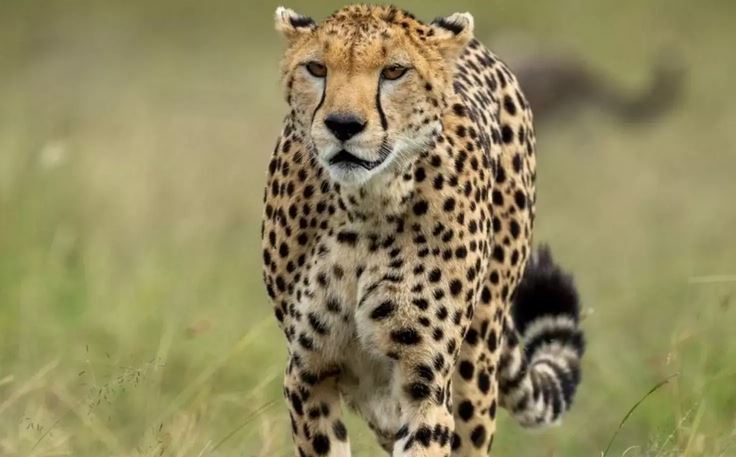
The Cheetah Action Plan (CAP) which aimed to introduce African cheetahs into India’s Open Natural Ecosystems (ONEs), is completing its two years.
About Cheetah:
The cheetah is a fast-running big cat, and there are two types of Cheetahs globally:
African (savannahs, arid mountains, and hilly deserts)
Asiatic (desert and semi-desert areas only in Iran)
Cheetahs live in three main groups: females with cubs, male coalitions, and solitary males. They hunt during the day, preferring dawn and dusk.
The global cheetah population was 6,500 mature individuals (IUCN, 2021).
IUCN Status: Vulnerable (Globally) and Critically Endangered (Asiatic Cheetah)
Cheetah Reintroduction in India:
In India, cheetahs disappeared in the early 1950s due to hunting and the loss of their habitat.
Cheetahs (i.e. Southeast African Cheetah) from Namibia were reintroduced in Kuno National Park(MP) under the Project Cheetah.
This area was deemed a habitat parallel to Maasai Mara (National Park) in Kenya, suitable for cheetahs.
Current Issues:
Despite the initial excitement, all of these cheetahs remain in captivity at Kuno.
Unfortunately, no cheetahs are currently roaming freely in the wild, raising concerns about the success of the reintroduction efforts.
What is Project Cheetah?
Aim: To conserve threatened species and restore ecosystem functions. It is spearheaded by the National Tiger Conservation Authority (NTCA).
The plan involves partnering with other countries to conserve cheetahs, enhancing conservation and eco-tourism in India’s dry forests.
The population should reach Kuno National Park’s capacity in 15 years, needing sustained support.
Sunset Clause: The concept of a sunset clause in the context of Project Cheetah refers to the long-term criteria (at least 30-40 years) for establishing a viable cheetah population in India.
PYQ:
[2012] Consider the following: (2012)
Black-necked crane
Cheetah
Flying squirrel
Snow leopard
Which of the above are naturally found in India?
(a) 1, 2 and 3 only
(b) 1, 3 and 4 only
(c) 2 and 4 only
(d) 1, 2, 3 and 4
![[18th September 2024] The Hindu Op-ed: Demographic advantage, Indian economy’s sweet spot](https://www.civilsdaily.com/wp-content/uploads/2024/09/18-SEP-1568x882.jpg)