💥Join UPSC 2027,2028 Mentorship (July Batch) + XFactor Notes & Microthemes PDF

GS Paper: GS3

  • Cancer Gene Mapping


    A series of new papers in the journal Nature has revealed the most comprehensive gene map ever of the genes causing cancer. It shows departures from normal behaviour i.e. mutations trigger a cascade of genetic misbehaviours that eventually lead to cancer.

    What is Mutation?

    • A mutation is a change that occurs in our DNA sequence, either due to mistakes when the DNA is copied or as the result of environmental factors such as UV light and pollution etc.
    • Structural variations mean deletion, amplification or reorganization of genomic segments that range in size from just a few bases to whole chromosomes.
    • Bases are the structural units of genes.
    • Over a lifetime our DNA can undergo changes or ‘mutations’ in the sequence of bases A, C, G and T.

    Why study cancer?

    • Cancer is known to be a disease of uncontrolled growth.
    • The growth process, like all other physiological processes, has genetic controls so that the growth is self-limiting. When one or more genes malfunction, the growth process can go out of hand.
    • Not just cancer, there are many other diseases with a genetic link in varying degrees.
    • Just a handful of “driver” mutations could explain the occurrence of a large number of cancers, the researchers said, raising hopes of a cancer cure being nearer than ever.

    How big is the cancer burden?

    • Cancer is the second most-frequent cause of death worldwide, killing more than 8 million people every year; incidence of cancer is expected to increase by more than 50% over the coming decades.
    • 1 in 10 Indians will develop cancer during their lifetime, and one in 15 Indians will die of cancer, according to the World Cancer Report by WHO.
    • The Northeastern states, UP, Rajasthan, West Bengal, Haryana, Gujarat, Kerala, Karnataka and Madhya Pradesh account for 44% of the cancer burden in India, says a recent analysis, published in The Lancet.

    Is the genetic link to cancer well established?

    • Yes, it is. One such association, for example, is of breast cancer with the BRCA 1 and BRCA 2 genes; the actress Angelina Jolie, who discovered that she carried the former gene, chose to undergo a preventive double mastectomy.
    • This is personalised therapeutics where, instead of traditional toxic medications like chemotherapy, drugs that specifically target the delinquent genetic mutation are already being used.
    • Such therapy, however, remains very expensive.

    What is the new study that has oncologists around the world excited?

    • It is a major international collaboration called the Pan-Cancer Analysis of Whole Genomes (PCAWG), in which researchers has published a series of papers after analysing some whole-cancer genomes and their matching normal tissues across 38 tumor types.
    • They concluded that on average, cancer genomes contained 4-5 driver mutations when combining coding and non-coding genomic elements.
    • This is the largest genome study ever of primary cancer.
    • Various kinds of cancers required to be studied separately because cancers of different parts of the body often behave very differently from one another; so much so that it is often said that cancer is not one disease but many.

    Breakthrough achievement of the study

    • The mutations identified by the team have been catalogued. Identification and cataloguing of the genes is a very crucial step and has taken science’s understanding of cancer and its genesis ahead by several leaps.
    • The catalogue, which is already available online, allows doctors and researchers from all over the world to look things up, consult and find information about the cancer of a given patient.
    • The study has discovered causes of previously unexplained cancers, pinpointed cancer-causing events and zeroed in on mechanisms of development, opening new vistas of personalized cancer treatment to strike at the root of the problem.
    • When it comes to drug development, however, the gene mapping is but a first step.

    The next step

    • The process of drug development will have to now kick in with pharmaceutical companies first identifying the compound(s) that target these gene mutations and then it being subjected to the rigours of clinical trials to prove its safety and efficacy.
    • That could take anything from a few decades to a few years to cover all the mutations identified.
  • [pib] Regulation of Bio-Medical Waste


    The State Pollution Control Boards (SPCBs) / Pollution Control Committees (PCCs) have recently published the details of State/UT-wise quantum of bio-medical waste generation (during 2016-18) in the country.

    Bio-Medical Waste

    Biomedical waste/hospital waste is any kind of waste containing infectious materials.  It may also include waste associated with the generation of biomedical waste that visually appears to be of medical.

    • Hospital waste refers to all waste, biological or non‐ biological that is discarded and not intended for further use.
    • Bio-medical waste means any waste, which is generated during the diagnosis, treatment or immunization of human beings or animals or in research activities pertaining thereto or in the production or testing of biological and including categories mentioned in Schedule I, of the BMW rules, 2016.

    Who deals with Bio-medical wastes in India?

    • Central Pollution Control Board has been following up with all SPCBs/PCCs to ensure effective management of biomedical waste in States/UTs.

    Collection and disposal

    • The collection and disposal is treated and disposed as per the specified methods of disposal prescribed under Schedule I of the Rules.
    • Bio-medical waste generated from the hospitals shall be treated and disposed by Common Bio-medical Waste Treatment and Disposal Facility.
    • In case there is no common facility in the reach of a healthcare facility, then such healthcare facility should install captive treatment and disposal facility.
    • There are 200 authorized Common Bio-medical Waste Treatment and Disposal Facilities (CBWTFs) in 28 States for environmentally safe disposal of biomedical waste.
    • Remaining 7 States namely Goa, Andaman Nicobar, Arunachal Pradesh, Lakshadweep, Mizoram, Nagaland and Sikkim do not have CBWTFs.

    Categorization

    As informed by CPCB and as per Bio-medical Waste Management Rules, 2016, Bio-medical waste is required to be segregated in 4 color coded waste categories.

    • Common methods of treatment and disposal of bio-medical waste are by incineration/plasma pyrolysis/deep-burial for Yellow Category waste;
    • Autoclaving/microwaving/chemical disinfection for Red Category waste;
    • Sterilization and shredding, disinfection followed by burial in concrete pit/recycling through foundry/encapsulation for White Category sharps waste; and
    • Washing, disinfection followed by recycling for Blue Category glass waste.
  • [pib] SARAS Initiative

    Coal India’s flagship subsidiary NCL (Northern Coalfields Limited) has set up a centre named SARAS.

    SARAS Initiative

    • SARAS stands for Science and Applied Research Alliance and Support.
    • It aims to promote innovation, R&D and skill development along with improving company’s operational efficiency and utilize resources at optimum level.
    • SARAS will help and enable the company in Integration of Innovation and Research for enhancing coal production, productivity, and safety in mines.
    • Besides, the SARAS would also help establish centres of excellence to ensure technical support to R&D along with thrust on quality skill development and employment to local youths in and around company’s operational area.

    About NCL

    • NCL accounts for 15 per cent of India’s coal production and 10 per cent of thermal power generation of the country is met by the coal produced by this Miniratna Company of Govt. of India.
    • The company produces more than 100 million tonnes of coal every year.
    • It has planned to produce 107 million tonnes of coal in the current fiscal.
  • Remdesivir: Under-trail vaccine against Coronavirus

    The Wuhan Institute of Virology at Wuhan, China has filed for a patent on Remdesivir, an antiviral experimental drug from the US which may help treat the novel coronavirus (nCoV-2019).

    Remdesivir

    • It is an experimental drug and has not yet been licensed or approved anywhere globally. It has not been demonstrated to be safe or effective for any use.
    • It is currently being developed for the treatment of Ebola virus infection.
    • Remdesivir and chloroquine effectively inhibit the recently emerged novel coronavirus (2019-nCoV) in vitro.
    • Chloroquine is a “widely used” anti-malarial and autoimmune disease medicine that has recently come to light as a potential antiviral drug.

    Can Remdesivir treat coronavirus?

    • Significantly, Remdesivir has demonstrated in vivo (experimentation using a whole living organism) and in vitro (activity performed in a controlled environment) activity in animal models against viral pathogens that cause MERS and SARS.
    • Even so, the use of the experimental drug has been allowed only as an emergency treatment, which can be administered in the absence of any other approved treatment options.
    • These two diseases are also caused by coronaviruses structurally similar to the nCoV-2019.
    • Additionally, limited clinical data is available from the emergency administration of Remdesivir in patients with Ebola.
    • Even so, it is yet to be seen if Remdesivir and chloroquine can be effective against the novel coronavirus in humans.

    How can the novel coronavirus infection be treated?

    • As of now, there is no known treatment for the novel coronavirus, and an appropriate antiviral drug is required for this.
    • Ideally, a vaccine against the infection can also prove to be effective, but such a development does not seem to be in the offing for at least three-four months.
  • Sharang Artillery Gun


    The Ordnance Factory Board (OFB) has handed over Sharang, the first 130mm M-46 artillery gun upgraded to 155mm to the Indian Army.

    About Sharang

    • Sharang is the 130mm artillery gun ‘up-gunned’ to 155mm, 45 calibre up-gunning based on the Army’s tender.
    • The gun’s range has now gone from 27km to over 36km with the upgrade.
    • It also has more explosive capability and hence and more damage potential.
    • This step will reduce the logistic trail of the Army as it does away with the need to carry 130mm shells and support equipment as the mainstay of the Army’s long range artillery is 155mm guns.

    Other artilleries of Indian Army

    • After close to three decades, the Army inducted its first modern artillery guns system in November 2018.
    • These include M-777 Ultra Light Howitzers (ULH) from the U.S. and K9 Vajra-T self-propelled artillery guns from South Korea.
    • The Army has the older, battle-proven Bofors 155mm guns in service. The 155mm Dhanush towed gun system, developed based on the Bofors guns by OFB, is under induction.
    • In October last year, the Army procured and inducted 155mm Excalibur precision guided ammunition from the U.S. which gives its 155mm artillery guns extended range and also the ability to hit targets with very high accuracy.
  • Listening to the call of the informal

    Context

    Attempt to formalise the informal sector would not necessarily benefit it as two recent papers reveal.

    What do the research papers reveal?

    • The first paper-No strong evidence that formalisation improves business outcomes.
      • Published by the National Bureau of Economic Research, economist Seema Jayachandran argues that there is no strong evidence from studies conducted in many developing countries that formalisation improves business outcomes.
    • The second article-Formalisation an evolutionary process:
      • In the second article, a background paper for the International Labour Organisation (ILO), economist Santosh Mehrotra calls formalisation an evolutionary process.
      • During this evolutionary process small, informal enterprises learn the capabilities required to operate in a more formal, global economy.
      • He says they cannot be forced to formalise.

    The formalisation trap

    • Why does the state want to formalise?
      • Easy monitoring and taxation: The state finds it easier to monitor and to tax the firms that adopt its version of formality.
      • Reduced last-mile cost for banks: Formality can reduce the last-mile costs for banks also.
    • Problem with the imposed formalisation
      • The added cost outweighs benefits: Ms Jayachandran’s study reveals that most of the formalities imposed from above, add to the costs of the firms that outweigh the benefits of inappropriate formalisation.

    How informal sector improves themselves?

    • Association with their peers: Small entrepreneurs gain from forming effective associations with their peers.
    • Mentoring: They also benefit greatly from ‘mentoring’.
    • On job skill development: Skills of small entrepreneurs and their employees are best developed on-the-job.
      • This is because they cannot afford the loss of income by taking time off for training.
    • Soft skills to form associations and manage enterprises, matter as much for the success of the enterprises as ‘hard’ resources of finance and facilities.

    Problems with connecting to global supply chains-

    • There is a desire to connect small firms in India more firmly with global supply chains.
      • Search for lover cost source supply: Mehrotra points out that the primary motivation of multinational companies for expanding their global supply chains is to tap into lower-cost sources of supply.
      • Supply chains compete with each other.
      • When wages and costs increase in their source countries, they look for other lower-cost sources.
      • Informal-the lowest labour cost firms: The lowest labour cost firms at the end of supply chains are generally informal.
      • Thus, the push by the state to formalise firms is countered by the supply chain’s drive to lower its costs.

    Way forward

    • India’s jobs, incomes, and growth challenges necessitate a reorientation of policies towards the informal sector.
    • First-The government and its policy advisers must stop trying to reduce its size.
      • The development of an economy, from agriculture to the production of more complex products in the industry, is a process of learning.
      • Informal enterprises provide the transition space for people who have insufficient skills and assets to join the formal sector.
    • Second-Policymakers must learn to support informal enterprises on their own terms.
      • Merely making it easy for MNCs and large companies to invest will not increase the growth of the economy.
    • Third-Find ways to speed up the process of learning.
      • Policymakers must learn how to speed up the process of learning within informal enterprises by developing their ‘soft’ skills.
      • Large schemes to provide enterprises with hard resources such as money and buildings, which the government finds easier to organise, are necessary but inadequate for the growth of small enterprises.
    • Fourth-Networks and clusters of small enterprises must be strengthened.
      • They improve the efficiency of small firms by enabling sharing of resources.
      • More clout to negotiate: They give them more clout to improve the terms of trade in their favour within supply chains.
      • Reduced last-mile cost: They reduce the ‘last mile costs’ for agencies and providers of finance and other inputs to reach scattered and tiny enterprises.
    • Fifth-The drumbeat for labour reforms must be changed.
      • The laws should be simplified, and their administration improved. And, their thrust should be to improve the conditions of workers.
    • Finally- The social security framework for all citizens must be strengthened.
      • Health insurance and the availability of health services must be improved.
      • And disability benefits and old-age pensions must be enhanced.
      • The purpose of ‘labour reforms’ must be changed to provide safety nets, rather than make the workers’ lives even more precarious with misdirected attempts to increase flexibility.


  • The billion standard

    Context

    India has crossed the target of a billion monthly digital payments. Now, to a billion transactions a day.

    The story of payment revolution and financial inclusion in India

    • Progress on the financial inclusion: India was long a financially excluded nation –only 17 per cent of Indians had a bank account in 2011.
      • 50 more years estimate: The World Bank suggests it would have taken 50 more years for 80 per cent of Indians to get a bank account at the pre-2011 speed.
      • Yet, we reached that milestone in 2018.
      • How? A magical combination of
      • Political will (Jan Dhana Yojana and Aadhaar embedding).
      • A proactive central bank (creating a non-profit market participant entity and levelling the playing field between non-banks and banks).
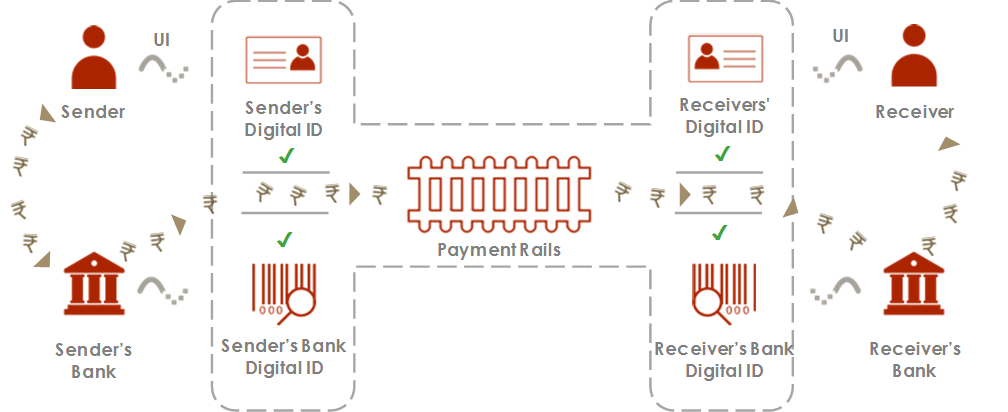
      • And a technology stack with three layers (identity, payments, and data).
    • The rise of UPI
      • The swift rise in use: The digital payment transactions on the Universal Payment Interface (UPI) platform rising from 0.1 million in October 2016 to 1.3 billion in January 2020.
      • Result of working together: This represents the magic of entrepreneurs, nonprofits and policymakers working together.
      • And gives us a new target — a billion transactions a day.
    • India’s Payment revolution
      • What are the components of the payment revolution: India’s payment revolution comes from-
      • A clear vision: Shifting the system from low volume, high value, and high cost to high volume, low value, low cost.
      • A clear strategy: Regulated and unregulated private players innovating on top of public infrastructure.
      • And trade-offs balanced by design: Regulation vs innovation, privacy vs personalisation, and ease-of-use vs fraud prevention.
    • What consumers wanted?
      • Consumers wanted a payment experience that was mobile-first, low-cost, 24/7, instant, convenient, interoperable, fintech friendly, inside banking, and safe.
    • Answers lies in UPI.
      • What did UPI achieve?
      • Interoperability: UPI created interoperability between all sources and recipients of funds -consumers, businesses, fintechs, wallets, 140 member banks.
      • Instant settlement: UPI settles instantly inside the central bank in fiat money -state-issued money declared by the sovereign to be legal tender.
      • Blunted data monopolies: Big tech firms have strong autonomy but weak fiduciary responsibilities over customer data, it was taken care of by UPI.

    5 Policy lessons from the success of UPI

    • First- how the India stack: Interconnected yet independent platforms or open APIs — are a public good that-
      • Lowers costs, spur innovation and blunts the natural digital winner-takes-all.
      • Replication in other areas: Replicating this in education, healthcare, and government services are likely to be a harbinger of large scale multi-domain collaborative innovation.
    • Second-collaboration: Collaboration can create ecosystems that overcome the birth defects of its constituents
      • The execution deficit of government, the trust deficit of private companies, and the scale deficit of nonprofits.
    • Third-policy intervention: Complementary policy interventions are important.
      • Demonetisation and GST are changing the stories that firms and individuals tell themselves around cash and informality.
    • Fourth-human capital and diversity matter: This revolution needed career bureaucrats to partner with academics, tech entrepreneurs, venture capitalists, global giants and private firms.
    • The final lesson-Western model is not needed always: India doesn’t need to be Western or Chinese to be modern. If our policymakers had copied Alipay or US banks, we wouldn’t have leapfrogged their birth defects.

    Way forward

    • Fix the deadline: The central government must deadline digitising all its payments.
    • RBI implement 100+ action items: The RBI must implement the 100-plus action items arising from its own Vision 2021 document and the Nandan Nilekani Committee for Deepening Digital Payments.
    • UPI for inward remittances: RBI must also make UPI and RuPay fit for use in our $70 billion inward remittances that currently come through exploitative financial institutions which don’t have clients but hostages.
    • Replication of UPI in bank credit: The RBI must replicate the core design of UPI — fierce but sustainable private and public competition in bank credit-
      • Our 50 per cent credit-to -GDP ratio is one of the reasons India is poor.
      • China’s 300 per cent is the wrong number, but reaching the OECD average of 100 per cent needs the RBI to do many things-
      • Raising its human capital and technology game in regulation and supervision.
      • Catalysing an ecosystem for lending against the rapidly expanding digital exhaust of small firms and individuals.
      • Issuing more private bank licences, facilitating management changes in old private banks with market caps that signal questions about book value, and shepherding governance and human capital revolution at PSU banks.

    Conclusion

    Converting the collective independence our citizens got in 1947 to individual freedom surely involved universal financial inclusion. The gap between this aspiration and reality was not a lie but a disappointment because our capital got handicapped without labour and our labour got handicapped without capital. Change has begun -the RBI, the finance ministry, and many individuals deserve our gratitude and dues for a billion digital payments a month. We now ask you for a billion digital payments a day.

  • Euthermia: the anomaly of human body temperature


    Euthermia refers to normal body temperature. The thermometer reading of 98.6°F has been a gold standard for a century and a half, ever since a German doctor laid it down as the “normal” body temperature.  A new research has found that body temperatures have, in fact, been declining over the last two centuries.

    Why we follow 98.6°F?

    • In 1851, Carl Reinhold August Wunderlich pioneered the use of the clinical thermometer.
    • It was a rod a foot long, which he would stick under the armpits of patients at the hospital attached with Leipzig University, and then wait for 15 minutes (some accounts say 20 minutes) for the temperature to register.
    • He took over a million measurements of 25,000 patients, and published his findings in a book in 1868, in which he concluded that the average human body temperature is 98.6°F.
    • Most modern scientists feel Wunderlich’s experiments were flawed, and his equipment inaccurate.
    • Another study concluded that the average human body temperature is closer to 98.2°F, and suggested that the 98.6°F benchmark be discarded.

    The body is cooler

    • The Stanford University the researchers confirmed some known trends — body temperature is higher in younger people, in women, in larger bodies and at later times of the day.
    • Additionally, they found that the bodies of men born in the early to mid-1990s is on average 1.06°F cooler than those of men born in the early 1800s.
    • And the body temperature of women born in the early to mid-1990s is on average 0.58°F lower than that of women born in the 1890s.
    • The calculations from the research correspond to a decrease in body temperature of 0.05°F every decade.

    Why there’s decrease in body temperature?

    • The researchers have proposed that the decrease in body temperature is the result of changes in the environment over the past 200 years, which have in turn driven physiological changes.
    • The decrease in average body temperature in the US, they said, could be explained by a reduction in metabolic rate, or the amount of energy being used.
    • The environment that we’re living in has changed, including the temperature in our homes, our contact with microorganisms and the food that we have access to.
    • Actually the human body is changing physiologically.

    So what’s the normal temperature?

    • The strong influences of age, time of day, and genders determine the healthy body temperature.
  • [op-ed snap] Fashioning the framework of a New India

    Context

    As the Indian economy is going through a severe crisis, a major solution to the present economic crisis is to go in for inclusive growth; it also means shared prosperity.

    Where India stands on poverty and how the slowdown is impacting the poor.

    • Bottom 30-40% adversely impacted: The slowing economy has had an adverse impact on the bottom 30%-40% of the population.
      • Absolute poverty on the rise: The incidence of absolute poverty, which has been falling since 1972-73, has increased to 30% (4% jump).
    • 44% population below the multi-dimensional Poverty line: The Human Development Report (2019) has shown, more than 44% of the Indian population is under the multi-dimensional poverty line.
    • Rising inequality: The poorest 50% population at present owns only 4.1% of the national wealth.
      • While the richest 10% of people own 73% of the total wealth in India (Suisse Credit 2019).
    • Rampant malnourishment: India has 15.2% population malnourished (women 15%) as against 9.3% in China.
      • And 50% of the malnourished children in the world are in India.
    • At 112th position on global hunger: India’s global hunger rank has gone up to 112 while Brazil is 18, China is 25 and South Africa, 59.
    • Dismal performance on education: In the field of education as per a UN report (2015), overall literacy in India is 74.04% (more than the 25% are totally illiterate) against 94.3% in South Africa, 96.6% in China and 92.6% in Brazil.
      • Almost 40-45% population is either illiterate or has studied up to standard 4.
    • Poor quality of education: Given the quality of education in India, the overall population is very poorly educated, with the share of ‘educated unemployment’ rising by leaps and bounds.

    What needs to be realised?

    • Focus on domestic demand: It needs to be realised that when exports are declining, the economy will have to depend on domestic demand for growth.
      • It is no more feasible for the top 20-25% population to continue growing without depending on the demand from the bottom 40-45% population.
    • Demand by the bottom 40% a must: There is thus a strong reason now for the economy to increase effective demand of this bottom 40-45% population at least to continue growing-to reach a $5-trillion economy by 2024.

    What is wrong with the growth process?

    • Bottom 40% not getting the fair share of growth: A major reason for the crisis is that the growth process has marginalised the bottom 40-plus% of the population.
      • It is in the sense that they do not get a fair share of the economic growth, and are more or less deprived of productive employment with a decent income.
      • They have not been used as active participants in the growth process. Their potential has not been promoted.
    • Less spending for the poor and its consequences: Though the bottom population depends on the government for basic health and elementary education (and also for access to higher educational opportunities)-
      • The government spends just 4% of GDP on health (against the norm of 4-6% of GDP) and 3% of GDP on education (against the norm of 6-8% of GDP).
      • How this dismal spending affects the poor: As a result of this below norm spending, these people are left hardly literate and sick, with poor nutrition and high morbidity.
      • They are incapable of acquiring any meaningful skills or participating actively when new technology is spreading in the rest of the economy.
    • The sub-optimal use of labour force: This sub-optimal use of the labour force in the economy is not likely to enable India to achieve optimal growth with proper use of the national resources -the labour force.

    Inclusive growth- a solution to the present economic crisis

    • Inclusive growth also includes shared prosperity: Here, inclusive growth does not mean only including all sections of the population in the growth process as producers and beneficiaries; it also means “shared prosperity”.
      • Since India has already committed to sustainable and inclusive growth at the UN General Assembly, India is definitely obliged to implement inclusive growth.
      • This should be our “New India”.
    • What “New India” would involve?
      • Improve the capability and opportunities: To start with, to improve the capabilities of the masses as well as their well-being by expanding productive employment opportunities for them.
      • What expanding productive employment mean? The main steps to expand productive employment for all in the economy should be made up of-
      • A process of inclusion.
      • Expanding the quality of basic health for all.
      • And ensuring quality education to all.
    • How will “New India” help?
      • Which will by itself generate large-scale employment in the government.
      • Having a well-educated and healthy labour force will ensure high employability.
      • Such people will be able to participate actively in the development process.
      • The cycle of more productive employment: Having a well-educated labour force will help start-ups and MSMEs, in turn triggering a cycle of more productive employment in the economy.
      • Global competitiveness increase: This will also improve the global competitiveness of our production units.
      • Labour absorption potential of MGNREGA: Employment guarantee schemes such as the Mahatma Gandhi National Rural Employment Guarantee Act (MGNREGA) will also increase employment.
        • Assets generated under MGNREGA will expand capital formation in the economy, thereby raising the labour-absorbing capacity of the mainstream economy.
      • Why this strategy is advantageous?
        • Such a strategy has multiple advantages:
        • First– it will raise incomes and the well-being of those who need it most urgently.
        • Second– it will raise effective demand rapidly, which is so badly needed in the economy today to raise economic growth.
        • Third– growth will be equitable and sustainable.

    Way forward

    • Finally, how does one raise resources to increase new public investments in the selected sectors?
    • Raise direct taxes: One major strategy is to raise direct taxes, both capital tax and wealth tax.
      • Past growth has failed to reach the poor: Growth led by providing tax cut and extra incentives, but this growth does not much percolate to the poor.
      • Consequently, taxing the rich has to be a major strategy to raise government revenue.
    • Treat public expenditure as an investment: The public expenditure on raising capabilities should be treated as social investment rather than social welfare, policymakers will be willing to spend on this capital formation.
    • Let the fiscal deficit slip: Finally, there was no sound economic reason to control fiscal deficit ratio. Sound macroeconomics never supports this.


  • Defence Bill in Budget


    The Union Budget for 2020-21 has allocated Rs 1,33,825 crore to defence pensions. This is up by 10½ times in a decade and a half, from Rs 12,715 crore in 2005-06.

    The ‘hype’ of defence pension

    • The allocation of Rs 1,33, 826 crore is 4.4% of the total expenditure of the central government or 0.6% of GDP.
    • And of the overall allocation made to the Defence Ministry, 28.4% goes towards pensions.
    • So sharply has the bill for defence pensions gone up that it is now Rs 15,291 crore more than the Defence Ministry’s total capital expenditure, a bulk of which goes towards modernization of the armed forces.
    • It now nearly equals the salaries bill for Defence Ministry. The more the government spends on salaries and pensions, the less it can spend on modernizing the armed forces.
    • To put it in perspective, the government’s spending on education is Rs 99,300 crore and on health is Rs 69,000 crore.
    • To compare it with other sectors, the government’s rural employment scheme MGNREGA has an allocation of only Rs 61,500 crore — 46% of the bill for defence pensions.

    Why the bill is high?

    • As per the Defence Ministry, there are about 26 lakh armed forces pensioners and family pensioners and approximately 55,000 pensioners are added every year.
    • In 2015, the government announced the OROP (One Rank, One Pension) scheme which cost it Rs 8,600 crore.
    • The implementation of the Seventh Pay Commission recommendations in 2017 again increased the defence pensions bill.

    What makes defense pensions distinct?

    • Defence pensions are unique in many ways. Defence personnel retire at a young age and thus continue to get pensions for a longer period of time than their civilian counterparts.
    • The current ratio of military pensioners to serving military personnel is 1.7 to 1, while the ratio of civil pensioners to civil working personnel is 0.56 to 1.
    • This ratio in defence is projected to further change as life expectancy in India goes up and retired personnel live far longer than earlier.
    • All civilian employees in the government who joined service on or after 1 January 2004 do not get an assured pension but come under the ambit of the contributory National Pension Scheme (NPS).
    • That is meant to reduce the pensions bill of the government on the civilian side, but military personnel have been excluded from the ambit of the NPS because of their short service span.

    Where this can lead to

    • With economic growth stalling and competing requirement from development and infrastructure sectors, the government is being hard-pressed for the last rupee in its kitty.
    • The defence services themselves need more funds to modernize themselves but are struggling with budgetary allocations.
    • In such a scenario, attention is likely to come to the fast-rising defence pensions bill.

    Feasible solutions

    • The short-term answer to keep the bill frozen at the same level is to increase the retirement age of serving military personnel and stop the rise in number of pensioners.
    • But at a time when the country is facing unemployment at an all-time high, stopping recruitment for a few years will worsen the situation.
    • The other solution is to send the retired military personnel to paramilitary forces but those forces, too, need to stay young and have not accepted the proposal.
    • That would also pose the problem of recruitment in a time of high unemployment, as in the case of increase in retirement age of military personnel.

    Conclusion

    • The sharply rising defence pensions bill, however, has become a challenge that cannot be ignored any longer.
    • Unless India’s economy grows at a double-digit rate, it will not be possible to furnish this bill and still modernize the armed forces.
    • There are no easy answers to the challenge, and the answer will have to come from the top political leadership.