Why in the News
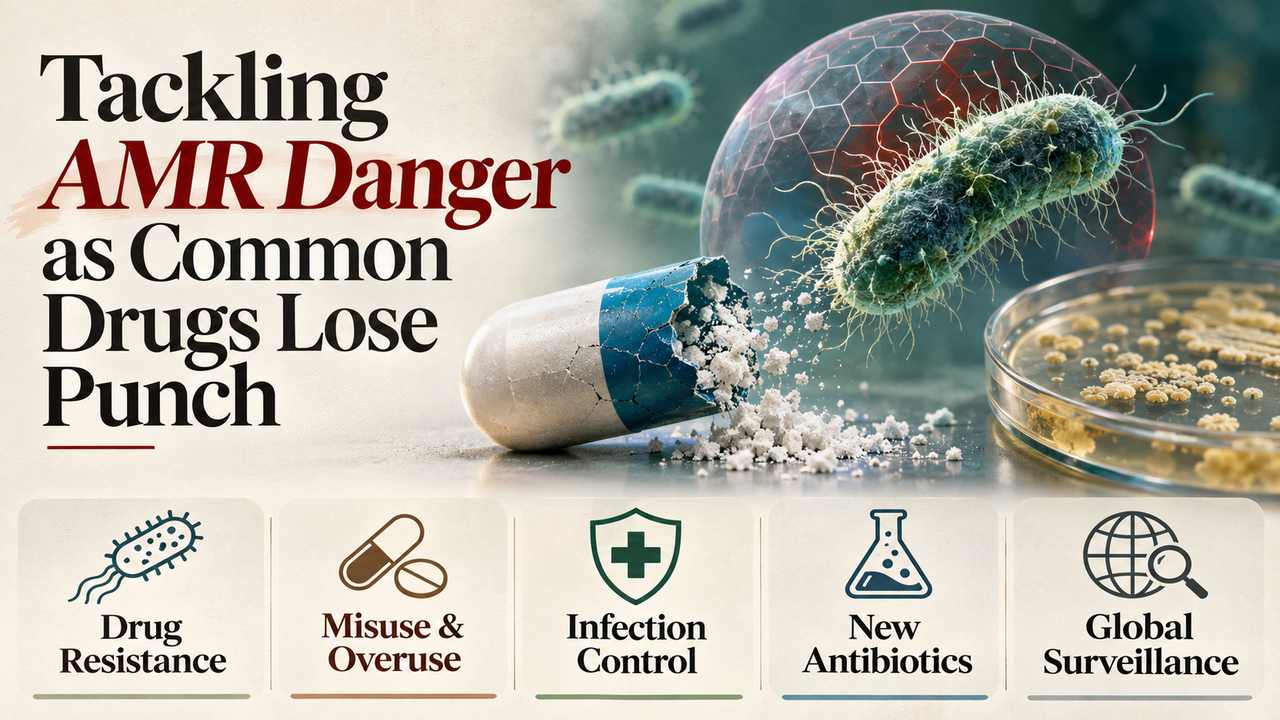
For the first time, a national resistance report from the Indian Council of Medical Research (ICMR) covers secondary-care hospitals, showing that common antibiotics are failing beyond large, specialised hospitals. Its Antimicrobial Resistance Surveillance and Research Network (AMRSN) Annual Report 2025 finds bacteria such as E. coli and Klebsiella pneumoniae no longer responding to drugs doctors have used for years, a threat to critically ill patients and newborns.
What is antimicrobial resistance?
- What it is: Antimicrobial resistance (AMR) is a condition in which microbes evolve to resist the drugs meant to kill them. It works like pests becoming immune to a pesticide sprayed too often.
- Main driver: People take antibiotics for illnesses that do not need them, such as most viral fevers and many diarrhoeal illnesses. This misuse is the main cause.
- Other drivers: Poor infection prevention, such as inadequate handwashing and respiratory hygiene, and the use of antibiotics in animal farming also spread resistance.
- The takeaway: Every unnecessary dose helps resistant bacteria survive, so routine infections are already becoming significantly harder to treat.
What does the AMRSN report find?
- Common bacteria: Several antibiotics show low effectiveness against E. coli and Klebsiella pneumoniae, which cause pneumonia, urinary tract and bloodstream infections.
- Secondary-care hospitals: Data from 34 such hospitals show very high resistance to third-generation cephalosporins, a widely used antibiotic class, even outside large hospitals.
- Carbapenem resistance: Resistance to carbapenems, powerful antibiotics, remains largely a problem of larger, specialised hospitals and of hospital-acquired infections.
- Newborns: Klebsiella pneumoniae is the leading bacterium in newborns with bloodstream infections, and ICMR is still analysing data from neonatal intensive-care units (NICUs).
Why does resistance make treatment harder?
- Last-resort drugs: When first-line and second-line antibiotics fail, doctors turn to third-line antibiotics, which are expensive, may be less effective and carry a higher risk of side effects.
- Local patterns: The same antibiotic may not work equally well everywhere. Antibiograms, records of which antibiotics work against common bacteria in a given hospital, guide better first choices.
- Initial versus confirmed treatment: Doctors often start empirical treatment, a best-guess antibiotic, before tests identify the bacteria. Once laboratory results arrive, the drug should be reviewed and changed if needed.
Challenges
- Weak stewardship in smaller hospitals: District hospitals and smaller facilities often lack infection control and antimicrobial stewardship committees, which oversee how antibiotics are prescribed.
- Slow diagnosis: Without quick tests, doctors start broader or stronger antibiotics than a patient needs.
- Misuse beyond hospitals: Antibiotics taken for viral illness and used in animal farming keep building resistance in the community.
Way Forward
- Compulsory stewardship: Make antimicrobial stewardship programmes compulsory in hospitals, with infection control committees in district hospitals.
- Adult vaccination: Encourage adult vaccination against flu, typhoid and pneumococcal infections to reduce antibiotic demand.
- Rapid diagnostics: Invest in quick diagnostic tests, and reserve drugs for serious infections based on laboratory results.
Conclusion
Resistance to common antibiotics has spread from large hospitals into secondary care, so the problem now sits closer to ordinary patients. What the nationwide neonatal data show, and whether district hospitals set up stewardship committees, are the next things to watch.
Matching Previous Year Question
“[2014, GS3, 12 marks] Can overuse and the availability of antibiotics without doctor’s prescription, the contributors to the emergence of drug-resistant diseases in India? What are the available mechanisms for monitoring and control? Critically discuss the various issues involved.”
