💥UPSC 2026, 2027, 2028 UAP Mentorship (March Batch) + Access XFactor Notes & Microthemes PDF

Search results for: “”

  • [Burning issue] Indian Judiciary: A Call for Reforms

    [Burning issue] Indian Judiciary: A Call for Reforms

    judiciary

    Context

    • Recently, a constitutional jurist and senior advocate to the Supreme Court, Fali S. Nariman, highlighted the need to finetune mechanisms of accountability within the judiciary, especially at the Supreme Court and High Court levels.
    • In this context, this edition of the burning issue will deal with the issue of accountability and other issues which ails the Indian Judiciary and suggest reforms to tackle these issues.

    Indian judiciary: Structure

    • The Judiciary is one of the three organs of the Indian government, and it is responsible for interpreting and applying the law. The Indian judiciary is an independent body that ensures the fair and impartial administration of justice in the country.
    • The judiciary has a hierarchical structure, with the Supreme Court at the top followed by the High Courts, and then the lower courts.
    • The Supreme Court is the highest court of appeals in India. It comprises the Chief Justice and 33 other judges appointed by the President of India. The Supreme Court has original, appellate, and advisory jurisdiction.
    • At the level below the Supreme Court, there are High Courts. They exercise control over a state or a union territory. Each High Court consists of a Chief Justice and such other number of judges as may be determined by Parliament.
    • At the lowest level, Subordinate courts include District Courts, Taluka Courts, Munsifs Magistrates’ Courts, and Village Panchayat Courts etc.

    Judicial Independence

    • For the prosperity and stability of the country, the rule of law is very important. An independent and impartial judiciary can establish a stable rule of law.
    • Independence of the judiciary means, the power of upholding the rule of law, without any fear or external influence, and maintaining effective control over the actions of the government.
    • The independence of the judiciary is part of the basic structure of the Constitution. The legal system does not have any ideology and political interests and is often rendered neutral. 
    • The independence of the judiciary starts with the appointment of judges in the courts. Article 124 to Article 147 deals with the appointment of the Supreme Court judges and, Article 214 to Article 231 deals with the appointment of judges in the High Courts.
    • However, such a high level of independence does not mean non-accountability of the judiciary.

    Judicial Accountability

    • Accountability is the sine qua non of democracy. The judiciary, an essential wing of the State, is also accountable.
    • The term judicial accountability means that the judges are responsible for the decisions they deliver all by themselves. It is the transparency in the decision-making process that helps in bringing accountability. 
    • The judiciary must be accountable to the law, in the sense that the decisions made are in accordance with the law and are not arbitrary. Like other branches of government, it must also be accountable to the general public it serves.

    Issue of Accountability and Transparency in the Indian Judiciary

    The Indian judiciary faces the challenge of lack of accountability at 3 levels-

    (A) Lack of accountability in Judicial appointments:

    • At present, the judges of the Supreme Court and the High Courts are appointed by a collegium system which includes CJI and 4 senior judges of the Supreme Court.
    • Although there have been many debates associated with this method of appointing judges, the collegium system is one where transparency is absent in totality.
    • The minutes of the collegium meetings deciding appointments and transfers of judges are not made public. The office of CJI has only recently been declared a public office.
    • There have been no appointments from the category of distinguished jurists as mentioned under Article 124 of the constitution.
    • It’s a non-constitutional body with no seat in the collegium for any non-judge neither from the executive, the Bar etc. This violates the principle of checks and balances.

    (B) Distribution of Cases- Master of the Roster mechanism:

    • The singular power of the CJI as the Master of the Roster – i.e., the vests exclusive discretion in the Chief Justice to constitute benches and allocate cases.
    • While the CJI’s other powers such as recommending appointments to constitutional courts are shared with other senior judges, the power of Master of the Roster is enjoyed without scrutiny.
    • From the standpoint of judicial independence, the Master of the Roster power makes the CJI’s office a high-stakes one. It makes the CJI the sole point of defence of the Court against executive interference.
    • With the CJI as the sole Master of the Roster, any executive seeking to influence the Supreme Court needs only a pliant CJI. Yet, the Supreme Court has been reluctant to dilute this power.
    • In Asok Pande v. Supreme Court of India (2018), a three-judge bench of the Court held that the Master of the Roster is the CJI’s exclusive power.
    • Thereafter, a two-judge bench in Shanti Bhushan v. Supreme Court of India (2018) rejected the plea that the Master of the Roster should be interpreted as the collegium.

    (C) The In-house Inquiry System:

    • The in-house procedure, crystallised in a 1995 Supreme Court judgment in the C. Ravichandran Iyer case, details the various stages of the investigation into complaints against sitting high court judges.
    • It requires the Chief Justice of India to constitute a three-member panel of Supreme Court judges to enquire into a complaint of misconduct received by the CJI against a sitting judge.
    • The procedure, however, does not expressly provide for a mechanism to constitute a committee when the complaint is against the CJI himself.
    • Controversy erupted when CJI constituted the bench by himself to probe a complaint against himself. The bench consisted of senior most judges of SC who will be CJI in near future. Since the current CJI will recommend the name of the next CJI, this raises the question of conflict of interest.
    • The committee lacked overall representation of all stakeholders of SC e.g bar council, employees etc. It also violates the principle of natural justice.

    Other Issues with the Indian judiciary

    • Large vacancies: When it comes to vacancies, the Supreme Court has three seats vacant (out of 34), High Courts have 380 seats vacant (out of 1,108) and district and subordinate courts have 5,342 vacant seats (out of 24,631). This causes delays in cases solving and denial of justice to citizens.
    • Large pendency of cases: According to an answer in the Rajya Sabha on August 4, the lower courts have around 4.1 crore pending cases while the High Courts have around 60 lakh pending cases. Further, the Supreme Court pendency is around 71,000 cases.
    • Uncle judge syndrome: The Law Commission of India in their 230th Report has mentioned the matter of appointment of ‘Uncle Judges’ in the High Courts, wherein it is said that the Judges, whose kith and kin are practicing in a High Court, should not be appointed in the same High Court. Chief Justice can recommend judges from the Bar to be appointed as the judge of the High Court. In this situation, kith and kin of those appointed as judges and practicing in the High Court are likely. To correct the situation, judicial standards are being prescribed for the judges in the Judicial Standards and Accountability Bill, 2012 which has been passed by Lok Sabha already.
    • Conflict with the executive: there have been rising conflicts between the executive and the judiciary wings over multiple matters such as delays in judicial appointment by the center, Tribunalisation of justice, open criticism of the executive during COVID times etc. this leads to the creation of tensions and mistrust between the two branches.
    • Judicial activism and overreach: “Judicial Activism” refers to the process in which the judiciary steps into the shoes of the legislature and comes up with new rules and regulations, which the legislature ought to have done earlier. Judicial Overreach refers to an extreme form of judicial activism where arbitrary, unreasonable and frequent interventions are made by the judiciary into the legislature’s domain, often to disrupt the balance of powers between the executive, legislature and judiciary. Both issues have led to the creation of friction between the two branches.
    • Post-retirement benefits: there have been several instances where several judges have been appointed to political and executive offices after their retirement. For example, former CJI Ranjan Gogoi was made a Rajya sabha member even before the end of his cooling-off period after retirement. This erodes the trust of people in the judiciary and affects judges neutrality.
    • Corruption in lower courts: Judicial corruption takes two forms: political interference in the judicial process by the legislative or executive branch, and bribery. In 2013, 36% of citizens reported paying a bribe to the judiciary, a sad reality validated by many senior judges themselves. A 2007 survey that disaggregated bribe recipients showed that 59% of respondents paid bribes to lawyers, 5% to judges, and 30% to court officials for speedy and favorable judgments.
    • Increasing Recusal of judges:  Recusal is the “removal of oneself as a judge or policymaker in a particular matter, especially because of a conflict of interest.In the Central Bureau of Investigation case, 3 Judges recused themselves from hearing the case challenging the appointment of M. Nageswara Rao as interim director of the Central Bureau of Investigation. Moreover, In the Ayodhya- Ramjanmabhoomi case, Justice U.U. Lalit recused him from hearing the dispute over land in Ayodhya after being pointed out that the judge had appeared for former Uttar Pradesh Chief Minister Kalyan Singh in a related contest.

    Thus, Reforms are needed

    • Balancing independence and accountability: One of the reasons for having stronger judicial accountability is to strike a balance between judicial accountability and judicial independence. They can be considered to be complementary to each other. Both these concepts aim to bring about judicial courage and judicial integrity is to be enforced together to increase the efficiency of the working of the judicial system.
    • Reform on case management: to reduce the frequency of adjournments and better case listing: A bench of three justices of the Supreme Court, in a judgment delivered in August 2005, had drawn up a fine blueprint on case management, on how to make recent amendments in our procedural laws work on the ground, and how to get more cases moving along: For instance, on three different tracks, fast track, normal track and slow track.
    • Supreme court should directly administer High courts: It is time that the Supreme Court be entrusted with direct responsibility for the functioning of the high courts: Only then can the highest court be an effective apex court, and only then can the Supreme Court be made answerable, as it should be, for judicial governance for the entire country.
    • Public disclosure of income by judges: Judges must make annual financial disclosure statements, not privately to their respective chief justices, but publicly. It is done by justices of the Supreme Court.
    • Removing the disparity between retirement ages of HC and SC judges: High Court judges now retire at 62 and Supreme Court judges at 65.  It is high time that we did away with the disparity between the retirement ages of the High Court and Supreme Court judges.
    • Create a cadre of public service for retired judges: It would be worthwhile reform to create a cadre of public service for retired judges and from this pool make appointments to the constitutional and statutory posts and special assignments. We should have a culture of public service for senior judges, and those who do not fit in such a culture should not be a part of senior ranks.
    • Reform in the process of appointment of Chief Justice of India: It is generally assumed that the senior judge of the Supreme Court should be the Chief Justice of India. The Constitution mandates no such thing. Article 124 merely states that the President will appoint every judge of the Supreme Court, and this includes the Chief Justice, and each of these judges shall hold office until they attain the age of 65 years. There is no good reason why any one particular person should have a vested interest in the top job, and we are better served by eliminating such expectations.
    • Creation of National Judicial Infrastructure Corporation (NJIC): The CJI has pitched to set up a National Judicial Infrastructure Corporation (NJIC) to develop judicial infrastructure in trial courts. Experience shows that budgetary allocation for state judiciary often lapses since there is no independent body to supervise and execute such works. NJIC is expected to fill this vacuum and overcome problems related to infrastructure.
    • Creation of a National Court of Appeal: The National Court Appeal with regional benches in Chennai, Mumbai and Kolkata is meant to act as the final court of justice in dealing with appeals from the decisions of the High Courts and tribunals within their region in civil, criminal, labor and revenue matters. In such a scenario, a much-relieved Supreme Court of India situated in Delhi would only hear matters of constitutional law and public law.
    • Creating All Indian Judiciary Services: It would be a landmark move to create a pan-India Service that would result in a wide pool of qualified and committed judges entering the system.
    • Technology infusion: The ethical and responsible use of AI and ML for the advancement of efficiency-enhancing can be increasingly embedded in legal and judicial processes.
    • Improving Legal education: This should be in alignment with the evolving dynamics of the law and must be propagated in trial and constitutional courts. This will improve the competence of the judicial system.
    • Promote Alternate Dispute Resolution (ADR): ADR mechanisms should be promoted for out-of-court settlements. Primary courts of appeal should be set up.
    • Dispensation in local languages: For making the entire judicial system more understandable to the common man, one way is the use of the local languages in courts.

    International Model: How judiciary in the USA maintain its credibility and accountability?

    • Judicial council act: In the United States, under the Judicial Councils Act, 1980, task of judicial independence has been gladly undertaken by the judges. But regrettably, so far, there is no law in India to guide our judges only “guidelines”. There is a felt need for a law.
    • Judges investigate the judges: The 1980 US Act confers powers on bodies comprised of judges to take such action against a federal judge “as is appropriate, short of removal.”
    • A case study of America: Under this law, some time ago, a committee of fellow judges had investigated complaints against a federal district judge, John McBryde; the Judicial Council reprimanded him and suspended him from hearing new cases for a year.
    • Corruption Investigation Not violating the judicial independence: McBryde challenged the decision. He argued that the 1980 law violated the judicial independence that the US Constitution had guaranteed to life-tenured federal judges, But a US Court of Appeals rejected all these pleas.
    • Oversight of judges is not interference: It accepted the argument of the US Solicitor-General that judicial independence, protected by Article III of the US Constitution, was meant to insulate judges from interference from other branches of government and not from oversight by other judges.

    Steps taken to Improve Judicial functioning

    • Legal: Enactment of the Commercial Courts, Commercial Division and Commercial Appellate Division of High Courts Act 2015 To ensure speedy and fair disposal of ‘commercial disputes, especially those of high value.Also, Draft National Litigation Policy under formulation to make Government a responsible and efficient litigant.
    • Technological: A web portal Legal Information and Management Based System (LIMBS) set up for monitoring of Court Cases of the entire GOI.Also, theeCourts Mission Mode Project has been taken up for universal computerization of district and subordinate courts with an objective of providing designated services to litigants, lawyers and the judiciary. AI-powered SUPACE portal has also been launched.
    • Increased strength and appointments: Appointment of Judges in higher judiciary undertaken. 86 additional Judges made permanent, 51 newly appointed and the appointment of another 170 is being processed. Judges’ sanctioned strength of the High Courts increased from 906 on 01.06.2014 to 1065 as on 27.4.2016.
    • Development of Infrastructure facilities: Department of Justice has been implementing a Centrally Sponsored Scheme for the Development of Infrastructure Facilities for the Judiciary.
    • Promotion of alternate Dispute Resolution Mechanism: through the National Legal Services Authority (NALSA) at the national level and State Legal Services Authorities at the State level.

    Conclusion

    • Judicial challenges need to be tackled at multiple levels, instead of a single-pronged approach of merely looking at appointments or more courts. Judicial independence and Judicial accountability need to be balanced well.
    • It requires coordination and cooperation between the government, the Judiciary, the Bar, and the general public. Each is a stakeholder and is also responsible for ensuring that the system works. 

    “Like old clocks, our judicial institutions need to be oiled, wound up and set to true time” 

  • Elephant in the Room at COP 27- Energy Equity

    COP

    Context

    • 27th Conference of Parties (COP27, beginning November 6, in Egypt) of the United Nations Framework Convention on Climate Change (UNFCCC).

    Realization of climate action: Birth of UNFCCC

    • The idea led to the formation of the United Nations Framework for Climate Change Convention (UNFCCC, also known as ‘The Convention’) in 1992, at the Earth Summit in Rio de Janeiro.
    • The convention divided the countries on the basis of their differing commitments: Annex I and II consisted of industrialized and developed countries and Non-Annex I comprised developing countries.

    COP

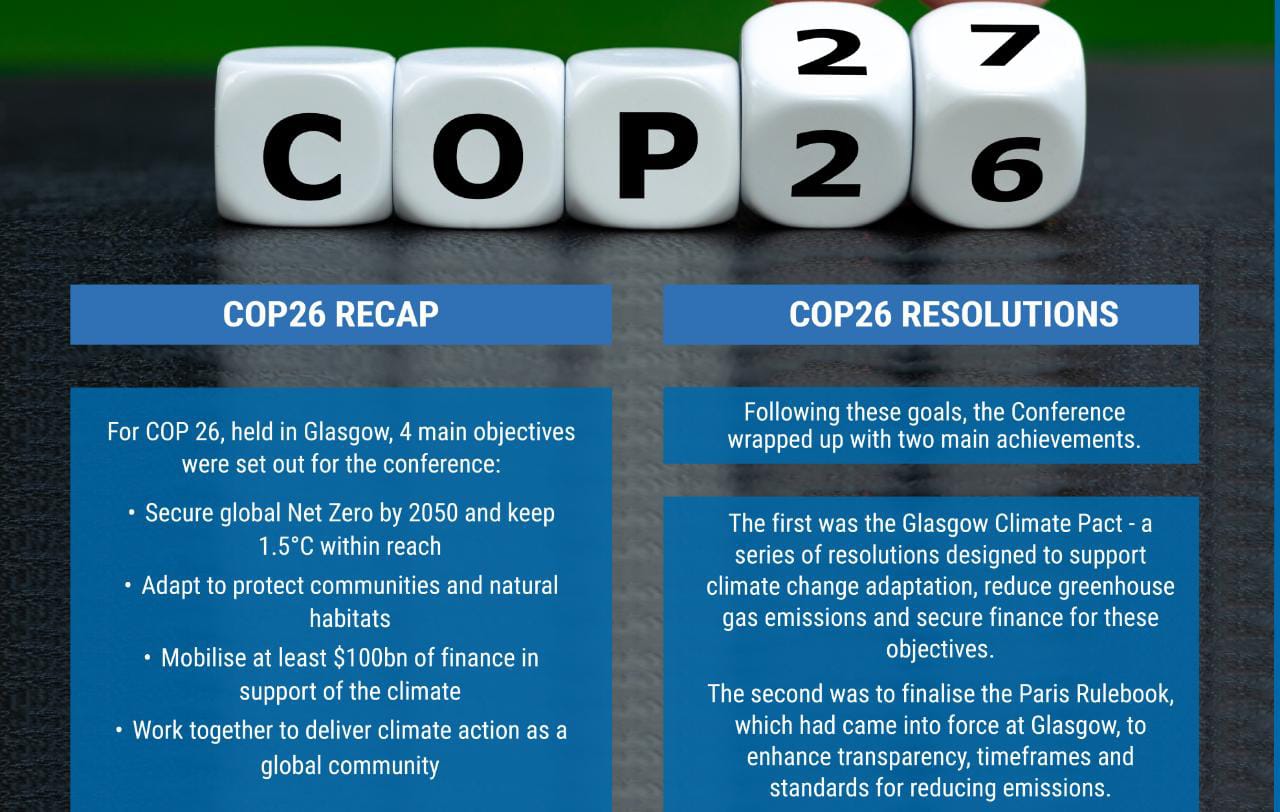
    Summary of COP26

    • Inadequate reduction commitment: In the runup to COP26, last year in Glasgow, several developed countries had declared their intention to reach net zero emissions by 2050. These declarations did not square with the requirements of “keeping 1.5 deg. C alive”.
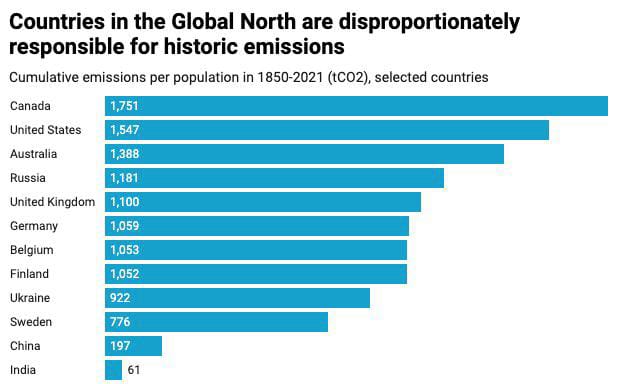
    • Global carbon budget: Four fifths of the global carbon budget to limit warming to 1.5°C (with 50% probability) has already been exhausted. Developed countries are responsible for more than half of these historical CO2 emissions. Nevertheless, there was much celebration of these targets.
    • Politics over phasing out coal: There was also high drama at COP26, with moral grandstanding by many developed country negotiators who invoked the future of their children, because India and other countries understandably balked at the singling out of any one fossil fuel for immediate action.
    • Developed countries didn’t meet the commitment: It is important to recall some of these shenanigans at COP26, as in the last year, it has become clear that developed countries may be unlikely to meet even the inadequate targets they have set, keeping to the trend of the last three decades.

    What is the present energy situation in developing countries?

    • Energy poverty concentrated in the developing countries: Global energy poverty is concentrated in the developing countries. In 2021, 733 million people had no access to electricity and almost 2.6 billion people lacked access to clean fuels and technologies.
    • The average per capita energy: Energy use of the richest 20 countries is 85 times higher than that of the 20 poorest countries. Addressing this stark energy poverty in developing countries is important because there is a strong correlation between energy supply and human development.
    • The average annual per capita electricity: Electricity consumption of sub-Saharan Africa is 487 kilowatt hours (kWh), alongside an infant mortality rate of 73 per 1,000 live births; maternal mortality ratio of 534 per 1,00,000 live births, and per capita GDP of $1,645. On the other hand, the OECD group of countries have a per capita electricity consumption of 7,750 kWh, corresponding to an infant mortality rate of seven, maternal mortality ratio of 18, and per capita GDP of $42,098.
    • Slowdown due to lack of energy: The reality of global inequality was acutely evident during the COVID19 pandemic. Several countries in Africa, Asia and Latin America are facing severe agricultural and industrial slowdowns in the post pandemic period.
    • The lack of reliable energy infrastructure: Infrastructure unavailability has compounded the difficulties and has multidimensional impacts across developmental indicators. In 2022, these inequalities have been aggravated by soaring energy and food prices.
    • Rising cost of living: Several countries face a severe rise in the cost of living and nearly 70 million additional people are estimated to fall below the poverty line of $3.20 per person per day. Poor and vulnerable communities in the energy importing countries of the global South suffer the most. Almost 90 million people in Asia and Africa, who gained access to electricity recently, cannot afford to pay their energy bills.
    • No acknowledgement of problem by developed countries: In this background, COP27 affords a critical moment to acknowledge and address the concerns surrounding energy access and security in developing countries. Unfortunately, these longstanding problems of the global South have been ignored by developed country governments, academia, and civil society. At a time when the language of energy poverty and security is re-entering the northern vocabulary, it is time to call out the hypocrisy of the advice on fossil fuel use given by the north to some of the world’s poorest regions since the Paris Agreement was signed.

    COP

    How developed countries are hypocritic about energy use and commitments?

    • Fossil fuel as primary energy source: In the United States, 81% of primary energy is from fossil fuels. In Europe, fossil fuels constitute 76% of the energy consumption (coal, oil, and natural gas contribute 11%, 31%, and 34% respectively).
    • Negligible efforts for decarbonization: Thirty years after acknowledging the problem of anthropogenic global warming and committing in the UNFCCC, to take the lead in climate change mitigation, the level of decarbonization in the global North has been minuscule.
    • Increasing coal consumption: In July 2022, the European Union (EU) voted to classify the use of natural gas for some uses as “green and sustainable”. Natural gas was responsible for 7.5 billion tonnes of CO2 (i.e., 23% of the total CO2 by the major fossil fuels), in 2020. Additionally, in 2022, even coal consumption in the U.S. and the EU is estimated to increase by 3% and 7%, respectively.
    • Double standard for fossil fuel: These same developed countries argue that green energy constitutes a great business opportunity for developing countries as it has become cheaper. They have used this dubious argument to dismiss differentiation between developed and developing countries and are lobbying for banning the financing of any fossil fuel projects in some of the poorest countries.

    What should be the agenda of developing countries at COP 27?

    • Bring the energy poverty issue: At COP27, the global South must put the question of its energy poverty and the severe global inequalities in energy access squarely at the Centre of all discussions.
    • Achieving SDGs with climate actions: We need to achieve zero hunger, zero malnutrition, zero poverty, and universal wellbeing even as we collectively contribute to ensuring effective climate action.
    • No empty commitments: As the strapline for COP27 (“Together for Implementation”) suggests, we must work together to ensure that these developmental goals are not side-lined, as they were at COP26, in the pursuit of hollow declarations of net zero targets three decades into the future.

    COP

    Conclusion

    • A developing country leadership at COP27 can ensure effective discussions, based on equity and common but differentiated responsibilities and respective capabilities, on the relative responsibilities and sharing of mitigation and adaptation burdens while coping with loss and damage.

    Mains Question

    Q. Describe the energy inequality situation among developed and developing countries. How India can lead the developing countries for negotiations at COP27?

    Click and Get your FREE copy of Current Affairs Micro notes


  • LT-LEDS (Long Term-Low Emission Development Strategy)

    strategy

    India has announced its long-term strategy to transition to a “low emissions” pathway at the United Nations Conference of Parties (COP) ongoing in Sharm el-Sheikh, Egypt.

    What are LT-LED Strategy?

    • The LT-LEDS are qualitative in nature and are a requirement emanating from the 2015 Paris Agreement.
    • Hereby, countries explain how they will transition their economies beyond achieving near-term NDC targets.
    • It signifies their path towards the larger climate objective of cutting emissions by 45% by 2030 and achieve net zero around 2050.

    BACKGROUND

    What is the meaning of Net Zero?

    • A state in which a country’s emissions are compensated by absorption and removal of greenhouse gases (GHGs) from the atmosphere is called Net Zero State; it is also referred to as carbon-neutrality.
    • It is done through natural processes as well as futuristic technologies such as carbon capture and storage.

    Nationally Determined Contributions (NDCs): 

    • To achieve the targets under the agreement, the member countries must submit the targets themselves, which they believe would lead to substantial progress towards reaching the Paris temperature goal.
    • Initially, these targets are called Intended Nationally Determined Contributions (INDCs).
    • They are converted to NDCs when the country ratifies the agreement.

    Key announcements by India

    • Nuclear energy: India is set to expand its nuclear power capacity by at least three-fold in the next decade.
    • Green hydrogen: India aims for becoming an international hub for producing green hydrogen through the National Hydrogen Mission.
    • Ethanol blending: India aspires to maximise the use of electric vehicles, with ethanol blending to reach 20% by 2025 (it is currently 10%) and a “strong shift” to public transport for passenger and freight traffic.
    • Energy efficiency: India will also focus on improving energy efficiency by the Perform, Achieve and Trade (PAT) scheme.
    • Carbon sequestration: India’s forest and tree cover are a net carbon sink absorbing 15% of CO2 emissions in 2016, and it is on track to fulfilling its NDC commitment of 2.5 to 3 billion tonnes of additional carbon sequestration in forest and tree cover by 2030.

    Hurdles in achieving net-zero

    • Huge cost of transition: The transition to low carbon pathway will entail several costs amounting to several trillion dollars. It involves the development of new technologies, new infrastructure, and other transaction costs.
    • No climate finance mechanism: Provision of climate finance by developed countries will play a very significant role and needs to be considerably enhanced.

    Significance of India’s LTS

    • India’s long-term strategy (LTS) follows up on the net zero pledge.
    • It clearly outlines key interventions across sectors that are going to be the focus of India’s efforts.

    Considerations made by India

    India’s approach is based on the following four key considerations that underpin its long-term low-carbon development strategy:

    1. India has contributed little to global warming: its historical contribution to cumulative global GHG emissions being minuscule despite having a share of ~17% of the world’s population.
    2. Huge domestic energy demand: India has significant energy needs for development.
    3. National circumstances: India is committed to pursuing low-carbon strategies for development and is actively pursuing them, as per national circumstances
    4. India needs to build climate resilience: It is the capacity of social, economic and ecosystems to cope with a hazardous event or trend or disturbance.


    (Click) FREE1-to-1 on-call Mentorship by IAS-IPS officers | Discuss doubts, strategy, sources, and more

  • Bali G20 summit

    g20

    Leaders of the G-20 nations gathered at Bali in Indonesia for the 17th summit of the world’s most advanced economies.

    Agenda of this summit

    • The motto for this summit is Recover Together, Recover Stronger.
    • The leaders will engage in discussions over three sessions on-
    1. Food and Energy security
    2. Health Partnership for Global Infrastructure and Investment, and
    3. Digital Transformation

    About G-20

    • Formed in 1999, the G20 is an international forum of the governments and central bank governors from 20 major economies.
    • Collectively, the G20 economies account for around 85 percent of the Gross World Product (GWP), 80 percent of world trade.
    • To tackle the problems or address issues that plague the world, the heads of governments of the G20 nations periodically participate in summits.
    • In addition to it, the group also hosts separate meetings of the finance ministers and foreign ministers.
    • The G20 has no permanent staff of its own and its chairmanship rotates annually between nations divided into regional groupings.

    Aims and objectives

    • The Group was formed with the aim of studying, reviewing, and promoting high-level discussion of policy issues pertaining to the promotion of international financial stability.
    • The forum aims to pre-empt the balance of payments problems and turmoil on financial markets by improved coordination of monetary, fiscal, and financial policies.
    • It seeks to address issues that go beyond the responsibilities of any one organization.

    Members of G20

    • The members of the G20 consist of 19 individual countries plus the European Union (EU).
    • The 19 member countries of the forum are Argentina, Australia, Brazil, Canada, China, France, Germany, India, Indonesia, Italy, Japan, Mexico, Russia, Saudi Arabia, South Africa, South Korea, Turkey, United Kingdom and the United States.
    • The European Union is represented by the European Commission and by the European Central Bank.

    Why was the G-20 created?

    For emerging nations: It was created as an acceptable medium between the more “elitist” G-7 (then the G-8), and the more unwieldy 38-member Organisation for Economic Co-operation and Development (OECD).

    • Increasing representation: Over the past two decades, the global economic balance has shifted, and the G-20 has been seen as a more representative and egalitarian grouping of global leadership.
    • Reducing groupism within: The G-20 was conceived in a more unified, post-Soviet era, when western economies made the rules, China was just on the rise and Russia was still recovering from its breakup.
    • Economic boost for west: It was particularly useful in steering the global economy after the global financing crisis and banking collapse of 2008.
    • Global-south on focus: Significantly, next year the “Troika” of G-20 will be made up of emerging economies for the first time with India, Indonesia and Brazil — an indicator of the shift in the global economic agenda towards the Global South.

    Economic significance of G-20

    • G-20 countries represent 85% of the global GDP.
    • It accounts for 75% of global trade and 66% of the world population.

    What makes this G-20 different from others?

    • War mongers at table: For the world, this is the first G-20 since Russia began the war in Ukraine and the west imposed sanctions on Russia.
    • Hosting a stronger China: This is only the second time Chinese President Xi Jinping has travelled abroad since the COVID pandemic, and the first time since he was re-elected at China’s Party Congress last month.
    • Next chair for India: For India, the importance of the summit of the world’s most advanced economies is that it is India’s turn to host the summit next.

    Bilateral meets on the sidelines

    • All eyes will also be on the bilateral summits happening by the sidelines — including the Biden-Xi summit at a time when U.S.-China tensions are at a high.
    • While neither Delhi nor Beijing have confirmed a Modi-Xi meeting, any interaction between the two leaders will be the first since the military stand-off at the LAC.
    • PM Modi is expected to meet many of the G-20 leaders and others, and will invite them to next year’s summit in India.
    • Among the leaders who are attending for the first time as heads of their countries are UK PM Rishi Sunak.


    (Click) FREE1-to-1 on-call Mentorship by IAS-IPS officers | Discuss doubts, strategy, sources, and more

  • What is the East Asia Summit?

    Vice President Jagdeep Dhankhar addressed the East Asia Summit on the last day of his visit to Cambodia, as the three-day Association of South East Asian Nations (ASEAN) summit concluded.

    East Asia Summit

    • Simply, the EAS is an ASEAN initiative and refers to the annual Meeting of Heads of States/Governments of these countries, where they are able to discuss common concerns and interests.
    • Beginning in 2005, 16 participating countries comprised EAS, with their first meeting in Kuala Lumpur, Malaysia.
    • These members were the 10 ASEAN countries, Australia, China, India, Japan, New Zealand, and the Republic of Korea.
    • ASEAN’s 10 member countries are Brunei, Cambodia, Indonesia, Laos, Malaysia, Myanmar, the Philippines, Singapore, Thailand, and Vietnam.
    • The United States and the Russian Federation joined at the 6th East Asia Summit in 2011.

    Why was it created?

    • Its creation was based on the idea of enhancing cooperation among East Asian countries and those in the neighbouring regions.
    • Six priority areas of cooperation were identified – environment and energy, education, finance, global health issues and pandemic diseases, natural disaster management, and ASEAN Connectivity.

    Topics discussed

    The following issues have been discussed by the countries

    • Chinese claims over the South China Sea
    • United Nations Convention on the Law of the Sea (UNCLOS),
    • Terrorism
    • Actions of North Korea and
    • Conflict situation in Myanmar

    EAS’s links with India

    • This year marks the 30th anniversary of ASEAN-India relations and is being celebrated as the ASEAN-India Friendship Year.
    • In a joint statement, ASEAN-India acknowledged the deep civilizational linkages, maritime connectivity, and cross-cultural exchanges between Southeast Asia and India.
    • All these have grown stronger over the last 30 years, providing a strong foundation for ASEAN-India relations.

    New developments

    • India has announced an additional contribution of USD 5 million to the ASEAN-India science and technology fund.
    • It would enhance cooperation in sectors of public health, renewable energy and smart agriculture.


    (Click) FREE 1-to-1 on-call Mentorship by IAS-IPS officers | Discuss doubts, strategy, sources, and more

  • In news: Exercise ‘Sea Vigil’

    In a related development, the third edition of the ‘pan-India’ coastal defence Exercise ‘Sea Vigil-22’ is scheduled to be held on November 15 and 16.

    Ex- Sea Vigil-22

    • The Exercise was conceptualised in 2018 to validate various measures that have been instituted towards enhancing maritime security since ‘26/11’.
    • The exercise aims to test its preparedness along the entire 7,516.6 km-long-coastline and exclusive economic zone of the country.
    • It aims to comprehensively and holistically validate the efficacy of the measures taken since 26/11.
    • It aims to simultaneously activate the coastal security mechanism across all 13 coastal States and Union Territories.
    • This involves the evaluation of critical areas and processes, including inter-agency coordination, information sharing and technical surveillance.
    • Multi agency audit and identification of gaps, shortfalls and incorporation of lessons learnt into Standard Operating Procedures (SOP) are also the desired outcomes.

    Role of Indian Navy

    • Post 26/11, the Navy was designated as the agency responsible for overall maritime security, including offshore and coastal security.
    • The Coast Guard was designated as the agency responsible for coastal security in territorial waters.
    • A multi-tiered patrol and surveillance mechanism with focus on technical surveillance and augmenting Maritime Domain Awareness through the coastal radar chain was adopted.
    • Progress has been made in real-time information sharing through the National Command Control Communication and Intelligence (NC3I) Network and improving intelligence and operational coordination.

    Significance of the exercise

    • The exercise is a build up towards the major Theatre Level Readiness Operational Exercise (TROPEX), which the Indian Navy conducts every two years.
    • Sea Vigil and TROPEX together will cover the entire spectrum maritime security challenges.

    Progress till now

    • Verification and monitoring of a large number of fishing vessels in India has been greatly eased by the creation of the online ReALCraft (Registration and Licensing of Fishing Craft).
    • The process of installing transponders on sub-20 metre boats commenced with a pilot project in Tamil Nadu for 5,000 vessels is underway.
    • To allay the concerns of fishermen, the transponders with GPS have been modified into a two-way communication system.
    • An Automatic Identification System (AIS) was made compulsory for all vessels above 20 metres after the 2008 terrorist attacks in Mumbai.
    • Trials were conducted in association with the ISRO on one of their communication satellites last year along the coasts of Gujarat and Tamil Nadu.


    (Click) FREE1-to-1 on-call Mentorship by IAS-IPS officers | Discuss doubts, strategy, sources, and more

  • Webinar for Marathi aspirants: Learn the secret of scoring 125+ in UPSC-MPSC 2023 Prelims | By Pravin Garje sir

    Webinar for Marathi aspirants: Learn the secret of scoring 125+ in UPSC-MPSC 2023 Prelims | By Pravin Garje sir

    Book your 15th Nov, from 03.30 pm, the most important Masterclass webinar session for MPSC/UPSC 2023-24 aspirants | Learn the secret of scoring 125+ in UPSC + MPSC Prelims | Post-session important PDFs, videos, and notes will be shared for FREE.

    Hi guys, do you think that sometimes luck comes in pairs? Yes, this time fortune smiles if you are a prepared mind. 

    We all know that MPSC, Maharashtra PSC Pattern, and Syllabus have changed since 2023. And the good news is that you can now kill two birds with one arrow.

    Yes, you can say that both UPSC and MPSC are twins now. 2 Commissions are now two organizations but one heart. So, if you prepare for UPSC, you will be fully prepared for MPSC.

    So if you can score 125 in one, you will easily get 125+ in the other. But the question is ‘HOW’.

    Acknowledging the need to ensure125+ marks in UPSC/MPSC Prelims, CD’s mentor head, Pravin Garje sir is taking up a webinar masterclass to help you learn the secret tips & tricks to score 125+ not only in MPSC but also in UPSC Prelims.


    MPSC has been aligned with UPSC and aspirants preparing for UPSC as well must have an integrated preparation. To bring direction, efficiency, and 360-degree practice in the next months is not only crucial for your preparation but also to fill loopholes, identify the cause of failures, handle your comfort zone, etc. Everything that you do must be under a plan, a strategy. Strategies are nothing but the pillars of success for both UPSC and MPSC.

    This Masterclass is going to be a game changer for you if you are:

    1. A UPSC/MPSC beginner – confused about the syllabus, prioritizing subjects, making timetables & targets, or just getting started.
    2. A working professional or college student who will be attempting UPSC 2023 with a job. Facing a serious time crunch and mismanagement in UPSC preparation.
    3. A veteran or aspirant trying to improve your rank in UPSC 2023 attempt.

    Strategic planning will help you fully uncover your options, set priorities for them, and define the methods to achieve them.


    Key points that will be discussed in the LIVE webinar are:

    1. Common mistakes committed by aspirants– Every failure has regrets later in life, but how you move on from your past adverse choices can make a big difference in your upcoming preparations. So learning how to take ownership of your mistakes will ensure that you learn important actions that will prevent you from repeating those same mistakes again.

    2. Changing pattern of prelims– Whether it is UPSC or MPSC, pattern analysis is far more crucial than reading your book. So, how to identify the top priorities, What to read & what to skip will also be discussed.

    3. Sources and approach for each subject– According to the new pattern and weightage of the subjects, what are the minimum sources you should follow as well as what is the toppers’ approach will also be disclosed.

    4. Importance of Current affairs and its source– Current affairs are an inseparable part of preparation. But, unnecessary current affairs may be a boomerang. So, how to select the topics of the IMP current affairs & what will be the most reliable source?

    5. Techniques to solve prelims MCQs with an example– What are Intelligent Elimination Techniques for MPSC/UPSC Prelims 2023-24.

    6. In prelims, Common sense is primary, knowledge is secondary– 10 smart hacks for MCQ option elimination


    Civildaily’s Mentorship is Acknowledged by The Hindu
  • 14th Nov| Daily Answer Writing Enhancement

    Topics for Today’s questions:

    GS-1            Social empowerment, communalism, regionalism & secularism.

    GS-2          Structure, organization and functioning of the Executive and the Judiciary

    GS-3          Conservation, environmental pollution and degradation, environmental impact assessment.

    GS-4          Emotional intelligence-concepts, and their utilities and application in administration and governance.

    Question 1)


    Q.1 Describe the reasons for the problem of communalism in the country and discuss the suitability of Indian model of secularism in addressing this problem. (10 Marks)


    Question 2)

    Q.2 Judicial governance means that all judges who are constitutionally entrusted with the responsibility of protecting the rights of citizens must also be seen to be persons of rectitude. Discuss. (10 Marks)

    Question 3)

    Q.3 The Methane Alert and Response System (MARS) initiative has been launched with an intention to strengthen the efforts towards tackling methane emissions. Highlighting the working of MARS, comment on its usefulness. (10 Marks)

    Question 4)  

    Q.4 “Emotional intelligence can be the game changer for high performance and personal leadership”. Define emotional intelligence and explain its importance for a public servant in the light of above statement. (10 Marks)


    HOW TO ATTEMPT ANSWERS IN DAILY ANSWER WRITING ENHANCEMENT(AWE)?

    1. Daily 4 questions from General studies 1, 2, 3, and 4 will be provided to you.

    2. A Mentor’s Comment will be available for all answers. This can be used as a guidance tool but we encourage you to write original answers.

    3. You can write your answer on an A4 sheet and scan/click pictures of the same.

    4.  Upload the scanned answer in the comment section of the same question.

    5. Along with the scanned answer, please share your Razor payment ID, so that paid members are given priority.

    6. If you upload the answer on the same day like the answer of 11th  February is uploaded on 11th February then your answer will be checked within 72 hours. Also, reviews will be in the order of submission- First come first serve basis

    7. If you are writing answers late, for example, 11th February is uploaded on 13th February , then these answers will be evaluated as per the mentor’s schedule.

    8. We encourage you to write answers on the same day. However, if you are uploading an answer late then tag the mentor like @Staff so that the mentor is notified about your answer.

    *In case your answer is not reviewed, reply to your answer saying *NOT CHECKED*. 

    1. For the philosophy of AWE and payment: 

  • Countering Chinese monopoly in Electric vehicle market

    Electric vehicle

    Context

    • The start of COP27 in Egypt has renewed the world’s focus on climate change. Electric vehicles (EVs) are key in the global quest to decarbonizing. In India, which also faces serious air pollution issues, the transition to EVs is critical. However, there is a China-size risk in the supply chain for electric vehicles. The recent saber-rattling across the Taiwan Straits ought to be a warning for the world. Given India’s troubled relationship with China, the risk may be even more acute.

    What are Electrical vehicles (EV’s)?

    • Electric vehicles (EV) are a part of the new normal as the global transportation sector undergoes a paradigm shift, with a clear preference towards cleaner and greener vehicles.
    • The electric vehicle is a vehicle that runs on electricity alone. Such a vehicle does not contain an internal combustion engine like the other conventional vehicles. Instead, it employs an electric motor to run the wheels.

    Electric vehicle

    The global status of EVs production and supply chain.

    • 50% of global EV’s production comes from China: EVs themselves, China has a share of around 50 per cent in global production.
    • 25% from Europe: Europe is a distant and stands at second position with 25 per cent.
    • 10% from US: Surprisingly, the US is a small player in the EV supply chain, producing only 10 per cent of vehicles and containing just 7 per cent of battery production capacity.
    • India’s position is still not noteworthy: India does not feature as a player of note.

    What makes China a dominant player in EVs supply chain?

    • Every part of EV concentrated in China: According to a recent report by the International Energy Association, every part of the EV supply chain is highly concentrated, mostly in China.
    • High global mining output of Key minerals, specifically graphite: The first stage of the supply chain is the key minerals required for batteries, namely lithium, nickel, cobalt and graphite, In graphite, China has an 80 per cent share of global mining output.
    • Chinese control over Politically unstable DRC’ Mines of cobalt: In Cobalt, the politically highly unstable Democratic Republic of Congo mines two-thirds of the global supply and Chinese companies control a big share of that country’s mining.
    • China dominates the processing of ore/minerals: Globally, over 60 per cent of lithium processing, over 70 per cent of cobalt processing, 80 per cent of graphite processing and about 40 per cent of nickel processing takes place in China.
    • China’s heavy production of cell components: Other than Japan and south korea, China produces two-thirds of global anodes and three-fourths of cathodes.
    • Same case with the battery cells: China has a 70 per cent share in the production of battery cells.

    The status of Governmental spending’s of energy transition

    • China the biggest spender on energy transition: According to a report by Bloomberg’s New Energy Fund (NEF), in 2021, out of a total global spend of $750 billion in climate-related investments (90 per cent of which went into renewable energy and electric transport), China alone spent $266 billion.
    • US stands at second: The US was a distant second with $114 billion. The major countries of Europe combined would equal the US. In Europe, about 75-80 per cent of the spending is on EVs, which is why it leads the US in this sector.
    • India holds 7th rank but needs a focused approach: India was in 7th place not a bad rank to occupy with $14 billion invested. However, almost 40 per cent of Chinese and US spending was on EVs, while more than 95 per cent of India’s spending is on renewable energy. In India, despite intent, EVs have not received sufficient investment.

    Electric vehicle

    What Strategy India can follow?

    • Accelerating the mechanism of acquiring overseas mines of critical minerals: A recently formed government venture, KABIL, which is a JV between three minerals and metals PSUs, is tasked with the job of identifying and acquiring overseas mines
    • Liberalizing the domestic exploration policies: An alternate option is to liberalize exploration policies domestically, benchmark them with global best practices and invite global investors to find and mine in India.
    • Stitching up the supply alliances: It is important to stitch up supply alliances with countries ex-China, as has been done with Australia. At higher ends of the value chain, from battery cells onwards, there is a need to invest much more in R&D.
    • Making vibrant start up ecosystem and public private partnership: A public-private partnership is vital. The vibrant startup ecosystem must be leveraged because it is more likely to be innovative than legacy firms.

    Electric vehicle

    Do you know The Khanij Bidesh India Limited (KABIL)?

    • A joint venture company namely Khanij Bidesh India Ltd. (KABIL)  set up with the participation of three Central Public Sector Enterprises namely, National aluminium Company Ltd.(NALCO), Hindustan Copper Ltd.(HCL) and Mineral Exploration Company Ltd. (MECL).
    • The objective of constituting KABIL is to ensure a consistent supply of critical and strategic minerals to Indian domestic market. While KABIL would ensure mineral security of the Nation, it would also help in realizing the overall objective of import substitution

    Conclusion

    • The dragon has showed its evil side during the pandemic. China is weaponizing the trade to counter its adversaries. Excessive reliance on China for critical mineral resources is like falling into China’s trap. India and world need to restrain China to have monopoly over Electric Vehicle market.


  • Critical Analysis of EWS Reservation

    EWS

    Context

    • Shortly after the Supreme Court on Monday, 7 November, upheld the validity of the 103rd Constitutional Amendment Act, which introduced 10 percent reservations for Economically Weaker Sections (EWS) in government jobs and educational institutions, Tamil Nadu’s DMK termed the split verdict a ‘setback’ to a century-old fight for social justice.

    What is the idea of reservation?

    • Based on historical injustice: Reservation is intrinsically linked to the historical injustice meted out to Shudras and Dalits.
    • Reservation for egalitarian society: It was during the anti-caste movement that the idea of reservation came up as a way for an egalitarian social order, to ensure fair representation in the socio-political order, and to mitigate and compensate for the inhuman exclusion of humans based on ascriptive status.
    • Equal participation in nation building: Reservation is implemented in politics, education and public employment so that all those in the hierarchy can participate in nation-building on equal terms.
    • Reservation is not a poverty alleviation: R. Ambedkar and E.V. Ramasamy ‘Periyar’ spoke about reservation as a means of providing representation; not as a poverty alleviation programme.

    Reasoning behind granting reservation based on social status

    • Historical benefits to upper caste: Merit is often the mantra used against the idea and implementation of reservation. Historically, Brahmins had the monopoly in offering sacrifice, receiving gifts, becoming priests, spiritual mentorship, and teaching.
    • Monopoly over resources: Vaishyas had the monopoly in wealth-generating professions. These monopolies were rooted in, and buttressed by, the authority of scriptures like the Manusmriti and treatises like the Arthasashtra.
    • Monopoly over the education: The top three Varnas had access to learning. In the colonial era, under the progressive pressures of modernization and democratization, the traditional monopolies based on caste order were diffused into the secular domains of bureaucracy, legal practice, professorship, etc.
    • Upper caste reservation in certain professions: Leaders professing equality, such as Jyotirao Phule, Periyar and Ambedkar, wanted to annihilate the arbitrary reservation for certain professions, being implemented based on fanciful mythical stories.
    • Democratization of employment and education: Essentially, the mission was to ‘de-reserve’ education and employment opportunities from a handful of castes to make them available to the remaining castes which were aspiring to be a part of the newly independent nation.
    • Idea of Merit to oppose the reservation: The merit mantra was very effective at stopping, or at least stalling, the ‘de-reservation’ process. But when the bill for EWS reservation was passed hastily in Parliament in 2019, there was no concern for merit.

    EWS

    How categorization of poor under EWS is unfair?

    • The bar of 8 Lakh is absurd: Individuals from upper caste communities who earn up to ₹8 lakh a year and may own a 1,000-square feet home are being called economically weak.
    • Poverty estimation: In India, more than 30 crore citizens have been classified as being below the poverty line (spending less than ₹32 a day in urban areas and under ₹27 a day in rural areas).
    • Lower caste forms the majority of Poor: Data from India (overall) as well as individual States show that Scheduled Castes (SCs) and Other Backward Classes (OBCs) have a higher share of poor people than upper castes in both urban and rural India.
    • Different income criteria for different community: We now live in a country where a household earning more than ₹75 per day is considered above the poverty line, while an upper caste household earning ₹2,222 a day is considered economically weak. According to the Department of Revenue data, households earning more than ₹10 lakh constitute less than 1% of India’s population.

    EWS

    Credibility of Data for EWS reservation was never questioned

    • Mandal commission data was critically analyzed: In the 1990s, renowned scholars from privileged communities viciously attacked the Mandal Commission claiming that it lacked credible data. In fact, the Mandal Commission report was based on official data curated from the Censuses of 1891 and 1931.
    • No credible data for EWS reservation: Further, B.P. Mandal formulated his concept of ‘backwardness’ by factoring in the social, educational and economic dimensions of different caste communities. But now, neither justification nor credible data has been presented while arguing that 10% reservation must be provided for the upper caste poor.
    • EWS reservation is equating the unequal’s: The Mandal Commission report said, “To equate unequal’s is to perpetuate inequality”. By giving the go-ahead for the EWS quota, Supreme Court has equated unequal’s in the category of affirmative action.
    • More privilege to already privileged community: The EWS quota is unfair because it twists the idea of social justice by bequeathing further privilege to communities who are historically situated to benefit from the oppressive caste system.

    Other criticism of EWS reservation?

    • SC/ST and OBC are outside the EWS reservation: A Dalit or an OBC who does not get a job within this quota still belongs to the EWS, but he is excluded. That is the Constitutional issue, which you have to answer. How have you excluded them, how have you excluded the poor, how have you excluded those who earn only 20,000 a month who do not get jobs amongst the Dalits?
    • Disturbing the basic structure: The government of tinkering with the “basic structure” of the Constitution.
    • Ultimate goal is removal of reservation: Government basically testing the waters and this will pave the way for the removal of caste-based reservation.
    • Opening the lid for further reservation: There is demand that government should raise the existing reservation cap for SC, OBC and minorities in line with their proportion in the population now since a decision has been taken to break the 50 per cent ceiling set by the top court.

    Conclusion

    • It is true that historically reservation is based social inequalities. Despite having the good credentials and marks upper caste or open categories were denied jobs. Justice to upper castes is not the injustice to lower castes. This is against the principal of natural justice. However exclusion of SC/ST and OBC from EWS category is certainly a matter of debate.

    Mains Question

    Q. What is the Ambedkar’s idea of reservation? Critically analyze the EWS reservation upheld by supreme court.

    Click and Get your FREE copy of Current Affairs Micro notes

More posts