India hosted a side event on Digital Health during the 77th World Health Assembly.The event saw participation from Quad countries (Australia, Japan, and the United States of America) and delegates from over 100 countries.
Key Highlights of the 7th WHA:
Transformative Role: India highlighted digital health’s role in ensuring equitable and accessible healthcare services, contributing to Universal Health Coverage and SDG 3.
India’s Advancements: WHA noted India’s success in implementing digital public infrastructure at scale, including Aadhaar for digital identities, Unified Payments Interface (UPI) for financial transactions, and Co-WIN for health service delivery during the pandemic.
Transition to UWIN: Co-WIN is being transformed into UWIN for the National Immunization Programme, facilitating immunization records for millions of newborns and mothers, as well as Anganwadi and school health records.
Ayushman Bharat Digital Mission (ABDM): India highlighted efforts under ABDM to create a robust national digital health ecosystem, with over 618 million Unique Health IDs (ABHA IDs) generated, 268,000 registered health facilities, and 350,000 healthcare professionals enlisted.
National Health Claims Exchange (NHCX): GoI is launching NHCX as part of ABDM to transform the insurance payments ecosystem, enabling real-time settlements with auto adjudication of claims through public-private partnerships leveraging digital public infrastructure.
Q. Explain how the foundations of the modern world were laid by the American and French revolutions. (UPSC IAS/2016)
Q. “Refugees should not be turned back to the country where they would face persecution or human rights violation”. Examine the statement concerning the ethical dimension being violated by the nation claiming to be democratic with an open society. (UPSC IAS/2021)
Prelims: Which one of the following objectives is not embodied in the Preamble to the Constitution of India? (UPSC IAS/2017) (a) Liberty of thought (b) Economic liberty (c) Liberty of expression (d) Liberty of belief
Note4Students:
Prelims: Liberalism; Constitutional Values;
Mains: Liberalism; Democratic System;
Mentor comment: Since all of us are the form of Nature, we all are equal in a moral sense. Thus Liberalism started as a progressive idea. It aimed at giving liberty and protecting people from coercion. Once the capitalist class could establish themselves in power, their revolutionary fervor had gone. From a progressive philosophy, it was limited to the economic doctrine. It came to be dominated by utilitarians. Liberalism came to be criticized as ‘a pig’s philosophy’ because of utilitarians. Liberalism/utilitarianism became the basis of justification for the extreme exploitation of workers. There were protests against such policies. It has led to the growth of left movements. It forced liberals to change. Liberalism has been the longest-surviving ideology because of its flexible nature. Every ideology represents the interest of a particular class. Liberalism is an ideology of the middle classes. (emerging capitalist class). Liberalism is a philosophy of modern times. Liberalism is a by-product of the Renaissance, reformation, and scientific revolution.
Let’s learn.
–
Why in the News?
Indian liberalism faces challenges from both left and right, with criticisms of elitism, individualism, and Western colonialism.
India’s tryst with liberalism began in the 1990s, but it has faced criticism and a decline in support.
The rise of populist and authoritarian leaders has led to a decline in liberal democracy, with only 34 countries maintaining it in 2022.
Attacks by the left and the right
Left Criticisms
Elitism: Liberalism is seen as prioritizing individual interests over collective needs, promoting inequality and corporate interests.
Individualism: The left views individualism as a dangerous doctrine that widens the gap between the haves and have-nots, marginalizes the disadvantaged, and prioritizes corporate interests over social justice.
Contradiction with Egalitarian Democracy: The left argues that the commitment to egalitarian democracy is incompatible with the individualistic market capitalism promoted by liberalism.
Right Criticisms
Emphasis on Individual Freedom: The right sees individual freedom as a Western colonial import that has no connection with traditional Indian values and way of living.
Disconnection from Tradition and Identity: The right argues that liberalism is disconnected from Indian traditions and identity, prioritizing individual freedom over community and social values.
Liberalism is deeply ingrained in Indian society:
Amartya Sen has pointed out, the key values of liberalism like an emphasis on individual liberty, freedom, social justice, and societal harmony, have been deeply ingrained in Indian society since ancient times.
Liberal values can be found in our civilizational traditions and cultural beliefs, with giants such as Raja Ram Mohan Roy, Swami Vivekananda, M.G. Ranade, Gopal Krishna Gokhale, Gurudev Tagore, and B.R. Ambedkar situating their critique of colonial rule within a liberal framework.
Radical liberal thinkers such as Jyotirao Phule and Ambedkar argued that progress could be achieved through better (and more representative) political instruments rooted in liberal ideals.
What are the proposed solutions for making liberalism more inclusive in India?
Indian liberalism needs to evolve to address the challenges it faces, and the time to start this process is now.
Syncretic Liberalism: Engage with tradition and identity in a more comprehensive and sustained manner to address the feelings of marginalization and overlook that have driven populist success.
This involves recognizing the importance of community and tradition in Indian society and incorporating these values into liberal thought.
Economic Reforms: Adopt a more inclusive and socially just approach to markets, balancing free enterprise with social justice through welfare.
This includes ensuring that economic growth benefits all sections of society, not just the privileged few.
Political Reforms: Revive representative institutions to restore public trust in democracy.
This involves decentralizing power, improving representation, and addressing issues of government overreach and surveillance.
Consensus: Develop a basic consensus among liberals to address criticisms and work together effectively.
This involves recognizing the vast areas of agreement among liberals and focusing on these rather than contesting each other’s political commitments
The working paper released by the Economic Advisory Council (EAC) to the Prime Minister makes an erroneous assertion regarding the growth of the Muslim population.
Composition of the Population of various communities highlighted by EAC:
Absolute Increase in Population (1950-2015): Hindu population grew by 701 million. The Muslim population increased by 146 million.
Proportional Changes: The proportion of Hindus in the population fell by 6.64 percentage points (from 84.7% in 1950 to 78.06% in 2015). The proportion of Muslims increased by 4.25 percentage points (from 9.84% in 1950 to 14.09% in 2015).
Despite these changes, the Muslim population remains significantly smaller compared to the Hindu population.
What does the 2011 census say?
The proportion of the Hindu population to the total population in 2011 declined by 0.7 percentage points (PP); the proportion of the Sikh population declined by 0.2 PP and the Buddhist population declined by 0.1 PP during the decade 2001-2011.
The proportion of the Muslim population to the total population has increased by 0.8 PP. There has been no significant change in the proportion of Christians & Jains.
Issue of Misinterpretation and Sensationalism of Data:
Misleading Media Reports: Many media reports and politicians have sensationalized the findings of the EAC-PM working paper inaccurately suggesting that the Muslim population in India is growing rapidly while posing a threat to the Hindu population.
Such interpretations contribute to a divisive political narrative and misinform the public about population issues.
Limitations of the Paper: The working paper itself states that understanding changes in religious demography is a multivariate phenomenon. However, the paper does not contain sufficient evidence to support this claim.
The true story behind this Data::
Influence of Socio-Economic Factors: Population growth is significantly influenced by socio-economic conditions such as education, healthcare, and economic opportunities. Higher fertility rates in a community often reflect lower levels of socio-economic development rather than religious factors.
Policies and Development Indicators: The Muslim community in India has a higher population growth rate primarily because it lags in some of the Population and Marriage policies that affect socio-economic development indicators as compared to the Hindu community.
Need for Exact Data:
Contextual Analysis: Detailed analysis is essential to avoid misinterpretation of demographic changes. Understanding the multi-faceted reasons behind population changes requires considering socio-economic, cultural, and political factors.
Religious Composition: According to the Pew Research Center (2021), the proportion of India’s six largest religious groups has remained relatively stable since Partition.
Fertility Rates: Recent National Family Health Survey (NFHS) rounds indicate significant declines in Muslim fertility rates.
Conclusion: Accurate and comprehensive analysis is necessary to understand population trends and avoid fueling divisive narratives.
Mains PYQ:
Q Demographic Dividend in India will remain only theoretical unless our manpower becomes more educated, aware, skilled, and creative.” What measures have been taken by the government to enhance the capacity of our population to be more productive and employable? (UPSC IAS/2016)
By 2047, over 50% of India’s population will be urban. The AMRUT scheme launched in 2015 and updated in 2021, addresses urban infrastructure needs.
About Atal Mission for Rejuvenation and Urban Transformation -AMRUT:
It is a flagship urban development scheme launched by the Government of India in June 2015.
The mission is being operated as a Central Sponsored Scheme.
Aim: To provide basic urban infrastructure to improve the quality of life in cities and towns.
Objectives:
Ensure that every household has access to a tap with an assured water supply and a sewerage connection.
Increase the green areas in the cities.
Reduce pollution by promoting public transport and constructing facilities for non-motorized transport.
Funding: It is divided among States/UTs in an equitable formula in which 50:50 weightage.
The Mission covers 500 cities including all cities and towns with a population of over one lakh with notified Municipalities.
Revenue Set Aside for the Scheme:
AMRUT 1.0: Total outlay was ₹50,000 crore for five years from FY 2015-16 to FY 2019-20.
AMRUT 2.0: Total outlay is ₹2,99,000 crore, with a central outlay of ₹76,760 crore for five years, starting from October 1, 2021.
Achievements by AMRUT Mission:
Financial Utilization: As of May 19, 2024, a total of ₹83,357 crore has been disbursed under the AMRUT scheme, combining contributions from the Central Government, States, and cities.
Infrastructure Achievements:
Tap Connections: A total of 58,66,237 households have been provided with tap connections, ensuring access to a reliable water supply.
Sewerage Connections: 37,49,467 households have been connected to the sewerage system, improving sanitation and hygiene.
Parks Development: 2,411 parks have been developed, enhancing urban green spaces and recreational areas.
LED Street Lights: 62,78,571 LED street lights have been replaced, contributing to energy efficiency and better urban lighting.
Present Challenges:
Public Health Crisis: Approximately 2,00,000 deaths annually due to inadequate water, sanitation, and hygiene. The disease burden from unsafe water and sanitation in India was 40 times higher per person than in China as of 2016.
Water and Sanitation Issues: Significant untreated wastewater increases vulnerability to diseases. Major reservoirs are at just 40% capacity, threatening water supply for drinking, irrigation, and hydro-electricity.21 major cities are projected to run out of groundwater soon.
Causes for the present shortcomings:
Non-Comprehensive Approach: The scheme adopted a project-oriented rather than a holistic approach, failing to integrate comprehensive urban planning.
For example, cities had no significant participation in the scheme’s design or implementation, reducing its effectiveness.
Secondly, the governance was led by bureaucrats and private interests with little involvement of elected city governments, violating the 74th constitutional amendment.
Inadequate Water Management: The scheme did not adequately factor in local climate, rainfall patterns, or existing infrastructure, leading to inefficient water and sewage management.
Urban planning became dominated by real estate development interests, resulting in the disappearance of water bodies, disrupted stormwater flows, and poor drainage systems.
Continued inadequate water, sanitation, and hygiene contribute to significant public health problems, including high disease burden and mortality rates.
Way Forward:
Comprehensive Approach: Shift from a project-oriented to an extensive urban planning approach that includes all aspects of infrastructure development.
Ensure active participation of city governments and local bodies in planning and implementation to reflect local needs and conditions.
Strengthen the role of local elected representatives in decision-making processes to ensure accountability and community involvement.
Nature-Based Solutions: Incorporate sustainable urban planning, including preserving and restoring water bodies and green spaces.
Integrate climate and rainfall pattern considerations into water and sewage management to enhance efficiency and resilience.
Prioritize water, sanitation, and hygiene infrastructure improvements to reduce disease burden and improve public health outcomes.
Conclusion: The need to take a balanced approach combining holistic urban planning, enhanced city participation, empowerment of local bodies, nature-based solutions, climate-responsive strategies, and a strong public health focus is essential for sustainable urban development.
Mains PYQ:
Q Major cities of India are becoming vulnerable to flood conditions. Discuss. (UPSC IAS/2016)
Q What are ‘Smart Cities’? examine their relevance for urban development in India. Will it increase rural-urban differences? Give arguments for ‘Smart Villages’ in the light of PURA and RURBAN Mission. (UPSC IAS/2016)
Q With a brief background of quality of urban life in India, introduce the objectives and strategy of the ‘Smart City Programme.” (UPSC IAS/2016)
As per Nature Index” India’s scientific prowess is rising but lacks essential research infrastructure. Initiatives like I-STEM aim to bridge this gap by democratizing access to advanced facilities.
The Indian Science Ecosystem:
Growth in Research: India ranks third globally in research output and eleventh in research quality according to the “Nature Index”.
Infrastructure Shortfalls: Despite an increase in the number of universities from 760 in 2014 to 1,113 in 2021, many lack essential resources such as advanced labs, instrumental access, and research literature.
Why is the Open Access Crucial for Self-Reliance in Science?
Open Access (OA) ensures that scientific knowledge is freely available to all, regardless of geographical or financial barriers.
It promotes inclusivity and allows researchers from diverse backgrounds to access the latest research findings, fostering collaboration and innovation.
Initiatives to Address Gaps:
I-STEM: Catalogues all publicly funded research facilities nationwide and makes them available to researchers based on need.
One Nation, One Subscription (ONOS): Proposes a centralized model of subscription to scientific journals to make them universally available to all publicly funded institutions, addressing the high cost of accessing commercial journals.
What is the Optimal Solution?
The optimal solution lies in prioritizing Open Access (OA) initiatives. With a global shift towards OA and increasing mandates from major funding bodies, India should leverage this trend to reduce dependency on costly subscriptions and ensure widespread access to scientific literature.
Major funding bodies and countries are pushing for OA, with the U.S. mandating immediate open accessibility of publicly funded research by 2025.
Challenges with ONOS: The high cost and oligopolistic academic publishing market make negotiation difficult. OA reduces the necessity of a costly unified subscription. ONOS does not ensure long-term access or global accessibility of Indian research.
The Green Open Access: Green Open Access allows authors to deposit a version of their work in a university repository, making it freely accessible globally. Ensures long-term preservation and accessibility of research funded by taxpayer money.
Limitations:
Indian funding agencies have mandated green OA, but it has not been enforced effectively.
Recent issues should catalyze a stronger push for green OA.
Conclusion: India should enhance its journal system, avoiding payment burdens on authors or readers. Utilise digital technology capabilities to create and share low-cost, high-quality scientific publishing infrastructure for the global south.
Mains PYQ:
Q India’s Traditional Knowledge Digital Library (TKDL) which has a database containing formatted information on more than 2 million medicinal formulations is proving a powerful weapon in the country’s fight against erroneous patents. Discuss the pro and cons of making the database available publicly available under open-source licensing. (UPSC IAS/2015)
The Court of Appeals in the Philippines revoked biosafety permits for GM Golden Rice and BT eggplant, citing safety violations and ordering a halt until issues are resolved.
Golden Rice and Bt Eggplant in the Philippines
What is Golden Rice?
Golden Rice is a variety of rice (Oryza sativa) developed through genetic engineering to produce beta-carotene, a precursor of vitamin A, in the edible parts of the rice.
This modification aims to address vitamin A deficiency, particularly in areas where it’s prevalent.
The Philippines approved its commercial production in 2021.
The Philippines became the first country to officially issue a biosafety permit for commercially propagating golden rice in July 2021.
Bt Eggplant: Developed by the University of the Philippines Los Banos (UPLB), Bt eggplant is engineered to resist pests, aiming to enhance farmer productivity and reduce environmental impact.
Development of Golden Rice:
Research for golden rice began as a Rockefeller Foundationinitiative in 1982.
Peter Bramley discovered in the 1990s that a single phytoene desaturase gene (bacterial CrtI) could be used to produce lycopene from phytoene in genetically modified tomato.
Ingo Potrykus of the Swiss Federal Institute of Technology and Peter Beyer of the University of Freiburg published the scientific details of golden rice in 2000 after an eight-year project.
Genetics:
Golden rice incorporates Psy and CrtI genes from daffodils and a soil bacterium into the rice genome to enhance beta-carotene production in the endosperm.
Field Trials and Approvals:
The first field trials of golden rice cultivars were conducted by Louisiana State University Agricultural Center in 2004.
Additional trials were conducted in the Philippines, Taiwan, and Bangladesh.
In 2018, Canada and the United States approved golden rice as safe for consumption.
In 2019, the Philippines approved golden rice for use as human food, animal feed, or for processing.
In the context of India
Currently, there is no cultivation or commercialization of Golden Rice in India. Growing and selling GM brinjal remains banned in India.
Recently, the Supreme Court has also intervened on the issue of stubble burning and paddy cultivation in India esp, Punjab and Haryana states.
India has approved commercial cultivation of only one GM crop, Bt cotton. No GM food crop has ever been approved for commercial cultivation in the country.
We can have some lessons from the Philippines.
Controversyover its Use
Legal challenges emerged in the Philippines in 2023 and 2024, leading to a halt in commercial propagation.
Critics have raised concerns about its safety, environmental impact, and efficacy compared to other interventions like supplements and dietary diversification.
Greenpeace opposes the use of genetically modified organisms in agriculture and opposes the cultivation of golden rice.
Vandana Shiva, an Indian anti-GMO activist, has argued against golden rice, citing potential issues with loss of biodiversity and availability of diverse and nutritionally adequate food.
Golden Rice 2:
In 2005, researchers at Syngenta developed Golden Rice 2, which contains the phytoene synthase (psy) gene from maisecombined with the crtl gene from the original golden rice.
Golden Rice 2 produces significantly higher levels of carotenoids, particularly beta-carotene, compared to the original golden rice.
PYQ:
[2018] With reference to the Genetically Modified mustard (GM mustard) developed in India, consider the following statements:
GM mustard has the genes of a soil bacterium that give the plant the property of pest resistance to a wide variety of pests.
GM mustard has the genes that allow the plant cross-pollination and hybridisation.
GM mustard has been developed jointly by the IARI and Punjab Agricultural University.
Which of the statements given above is/are correct?
(a) 1 and 3 only
(b) 2 only
(c) 2 and 3 only
(d) 1, 2 and 3
[2021] What are the research and developmental achievements in applied biotechnology? How will these achievements help to uplift the poorer sections of the society?
The Reserve Bank of India (RBI) recently introduced three significant initiatives: the PRAVAAH portal, the RBI Retail Direct mobile application, and the FinTech Repository.
These initiatives aim to streamline regulatory processes, empower retail investors, and provide insights into the fintech sector.
1. PRAVAAH Portal:
The PRAVAAH portal (Platform for Regulatory Application, VAlidation, and AutHorisation) serves as a centralised web-based platform for individuals and entities to seek regulatory approvals from the RBI.
Offering features like online application submission and status tracking, the portal covers 60 different application forms across various regulatory departments, ensuring efficiency and transparency in the authorisation process.
2. RBI Retail Direct Mobile App:
The RBI Retail Direct Mobile App provides retail investors with convenient accessto government securities (G-Secs) trading directly from their smartphones.
Accessible on both Android and iOS platforms, the app simplifies transactions in both primary and secondary markets, empowering retail investors to participate more actively in the securities market.
3. FinTech Repository:
The FinTech Repository aims to provide comprehensive data on Indian fintech firms, facilitating better regulatory understanding and policy formulation in the rapidly evolving fintech landscape.
Other initiatives launched:
EmTech Repository: It focuses on RBI-regulated entities’ adoption of emerging technologies like AI, ML, Cloud Computing, and Quantum, providing valuable insights for policymakers and industry stakeholders.
Reserve Bank Innovation Hub (RBIH): Both repositories are managed by the RBIH, underscoring the central bank’s commitment to fostering innovation and collaboration in the financial sector.
PYQ:
[2013] In the context of the Indian economy, ‘Open Market Operations’ refers to:
(a) borrowing by scheduled banks from the RBI
(b) lending by commercial banks to industry and trade
(c) purchase and sale of government securities by the RBI
Prime Minister Narendra Modi announced his plan to visit and meditate at the Vivekananda Rock Memorial in Kanyakumari, Tamil Nadu marking the culmination of the Lok Sabha election campaign.
About Vivekananda Rock:
Vivekananda Rock Memorial is located in Kanyakumari’s Vavathurai beach, Tamil Nadu.
It is situated on a rock island at the southernmost tip of the Indian Peninsula, where the Arabian Sea, the Bay of Bengal, and the Indian Ocean meet.
The memorial consists of two main structures: the Vivekananda Mandapam and the Shripada Mandapam.
Historic Significance of Kanyakumari:
Swami Vivekananda is said to have meditated on this rock for two days in December 1892, as he journeyed across India after his return from the West.
Eknath Ranade, the founder of the Vivekananda Rock Memorial Committee, proposed the idea of constructing a memorial on the rock.
The foundation stone for the memorial was laid on September 1, 1964, by then-President of India, Sarvepalli Radhakrishnan.
The memorial was inaugurated on September 2, 1970, by then-President of India, V. V. Giri.
About Swami Vivekananda
Details
Birth and Death
Narendranath Datta (1862-1902)
Message
Spread Ramakrishna’s message, reconciled it with contemporary Indian society, preached neo-Hinduism
Spiritual Foundation
Based on the spiritual experiences of Ramakrishna, teachings of Upanishads and Gita, examples of Buddha and Jesus
Philosophical Beliefs
Subscribed to Vedanta, believed in fundamental oneness of God, advocated for blending of Hinduism and Islam
Advocacy for Social Action
Emphasised social action, criticised religion’s approval of oppression of the poor, called for secular and spiritual knowledge for upliftment
Balance between Spiritualism and Materialism
Advocated for a healthy balance between spiritualism and materialism, called for a blend of Western materialism and Eastern spiritualism for global happiness
Establishment of Ramakrishna Mission
Founded Ramakrishna Mission in 1897, used it for humanitarian relief and social work, stands for religious and social reform, advocated service as worship, not a proselytizing body
Philosophy of Ramakrishna Mission
Believes in using technology and modern science for mankind’s service, recognizes the utility of image worship, emphasizes Vedanta philosophy as a unifying force for all religions, open to all men regardless of caste or creed
Physical Establishment
Acquired land at Belur in 1898, shifted Ramakrishna Math there.
PYQ:
What does each of the following quotations mean to you?
[2021] Every work has got to pass through hundreds of difficulties before succeeding. Those that persevere will see the light, sooner or later.- Swami Vivekananda.
[2020] Condemn none: if you can stretch out a helping hand, do so. If not, fold your hands, bless your brothers, and let them go their own way. – Swami Vivekananda. (2020)
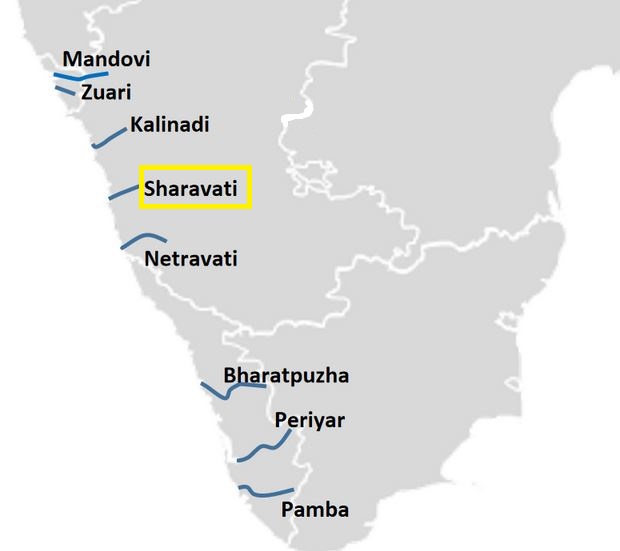
The National Green Tribunal (NGT) has directed the State Environment Impact Assessment Authority (SEIAA) and the mines and geology department to stop any unlawful/illegal sand mining in the Sharavathi River coastal zone.
About National Green Tribunal (NGT)
Description
Establishment
Formed in 2010 under the National Green Tribunal Act as a statutory body.
Objective
To deal with cases related to environmental issues and ensure speedy implementation of decisions.
Responsible for giving many prominent decisions aimed at environmental protection, including addressing air pollution in Delhi and canceling coal block clearances.
Composition
Headquartered in Delhi, chaired by a retired Supreme Court judge
Included Judicial Members and Expert Panel.
Powers
Empowered to decide on questions related to various environmental laws and hear civil cases concerning environmental issues:
The Water (Prevention and Control of Pollution) Act, 1974;
The Water (Prevention and Control of Pollution) Cess Act, 1977;
The Forest (Conservation) Act, 1980;
The Air (Prevention and Control of Pollution) Act, 1981;
The Environment (Protection) Act, 1986;
The Public Liability Insurance Act, 1991;
The Biological Diversity Act, 2002.
Exceptions
Prohibited to hear any issues which are covered under:
The Indian Forest Act, 1927,
The Wildlife (Protection) Act, 1972, and
Any other laws made by States which are related to protection of trees, forests, etc.
Places
Principal bench in Delhi;
Additional benches in Bhopal, Pune, Kolkata, and Chennai.
Governing Principles
Governed by principles of natural justice, not bound by Indian Evidence Act.
Applies principles of sustainable development, precautionary, and polluter pays.
Review and Challenge
NGT orders can be reviewed as per Rule 22 of NGT Rules.
Can be challenged before the Supreme Court within 90 days.
Jurisdiction
Jurisdiction over all civil cases involving a substantial question relating to environment.
Powers vested are the same as in a civil court under the Code of Civil Procedure, 1908.
Decisions are binding.
Disposal of Cases
Disposal of applications or appeals finally within 6 months of filing of the same.
About Sharavathi River
It originates and flows entirely within Karnataka.
It is among the few westward-flowing rivers in the country and a significant part of its basin lies in the Western Ghats.
Origin: The river originates at Ambutheertha in the Thirthahalli taluk.
Legend: According to ancient legend, the god Rama shot an arrow (Ambu) into the ground to quench his wife Sita’s thirst. The water that poured out was named “Thirtha,” hence the river’s name “Sharavati,” with “Shara” meaning arrow.
Geography and Length:
The river stretches about 128 km (80 mi) and joins the Arabian Sea at Honnavar in Uttara Kannada district.
Jog Falls, formed by the Sharavati River, is located approximately 25 km from Siddapura.
Tributaries and Basin:
Major tributaries: Nandihole, Haridravathi, Mavinahole, Hilkunji, Yennehole, Hurlihole, and Nagodihole.
River basin: divided between Uttara Kannada and Shimoga districts.
Pre-Cambrian rocks, including the Dharwar system and peninsular gneiss, dominate the basin.
Soils and Agriculture:
Soils in the basin are predominantly lateritic and tend to be acidic, ranging from clay loamy to loamy.
Four soil orders are found: ultisols, alfisols, inceptisols, and entisols.
Dams:
The Linganamakki Dam, constructed in 1964, spans the Sharavati River, with a catchment area of nearly 1,991.71 km2.
The Gerusoppa Dam, completed in 2002, primarily serves for electricity generation.
Flora and Fauna:
The Sharavati Valley Wildlife Sanctuary declared in 1972, protects diverse ecosystems and endangered species.
The river basin is rich in biodiversity, home to rare species of flora and fauna.
Regulation of Sand Mining in India:
Mines and Minerals Act, 1957
Definition of Sand as a Minor Mineral
Sand is categorized as a minor mineral under section 3(e) of the MMDR Act.
State Governments’ Role
Section 15 empowers state governments to regulate mineral concessions for minor minerals, leading to the formulation of state-specific concession rules.
Control of Illegal Mining
Section 23C places the jurisdiction over controlling illegal mining under the purview of state governments.
Released by the Ministry of Environment, Forest and Climate Change, aims to promote scientific and environmentally friendly sand mining practices.
Recommendations
Emphasizes sustainable sand extraction, monitoring, and district-wise mapping of sand availability.
Sand Mining Framework, 2018
Issued by
Released by the Ministry of Mines, provides states with guidance for policy formulation and combating illegal sand mining.
Recommended Measures
Suggests geo-fencing, GPS-enabled transportation tracking, price control, involvement of women’s self-help groups, and exploration of alternative sand sources.
PYQ:
[2018] Which of the following is/are the possible consequence/s of heavy sand mining in riverbeds?
Decreased salinity in the river
Pollution of groundwater
Lowering of the water-table
Select the correct answer using the code given below:
(a) 1 only
(b) 2 and 3 only
(c) 1 and 3 only
(d) 1, 2 and 3
[2019] With reference to the management of minor minerals in India, consider the following statements :
Sand is a ‘minor mineral’ according to the prevailing law in the country.
State governments have the power to grant mining leases of minor minerals, but the powers regarding the formation of rules related to the grant of minor minerals lie with the Central Government.
State Governments have the power to frame rules to prevent illegal mining of minor minerals.
Which of the statements given above is/are correct?
Begin your UPSC Prep with Mains through Interlinking Notes-Making (using Syllabus, Sources & PYQs) + Answer Writing. Mains Prep Strategy for 2025 with Arvind Sir (Lead, Mains Program).
100% UPSC aspirants know that Mains Prep is important.
Yet 99% will end up only preparing the exam from the Prelims Perspective.
The consequence?
You might as well clear Prelims by your hard work, but till the time you write your first Mains – you will not be ready enough.
This is because we often lack the strong foundational preparation with respect to Mains. Something as basic as Mains Notes, PYQs, and Current Affairs is often missed. Our notes end up being very Prelims-Centric.
But what separates a Ranker is a Mains-Centric approach from the very beginning.
Your Mains preparation could significantly enhance your Prelims performance as well.
This only comes with a forward-thinking mindset.
Animesh, (AIR 2, UAP student), exemplifies this forward-thinking approach. From the very beginning, he focused on building and refining his Mains notes, which not only helped him get an Interview-Proof Mains Marks, it also helped him clear Prelims with a margin.
Read what Animesh Pradhan has to say about his way of preparation:
“I didn’t just clear the exam, but scored 473 marks in my first attempt. It was only possible because I made really exhaustive notes in a manner which were more like UPSC Answers. Having this approach also helped me with Prelims, as I knew almost everything about every topic mentioned in the syllabus.
This was all while I was working full-time at IOCL. My father passed away when I started preparation, and it was my mother who was my support system till my Interview.
I know it can be stressful to manage studies, especially an integrated way to prepare. But here my mentor Ranadheer Sir was very helpful. He helped me with Notes Making, gave me feedback on my answers, & constantly removed my stress by working like a big brother..
With little time that I could gather, I gave my 100% with my notes-making and enrichment through Samachar Manthan, & this was my X-Factor which helped me both in Prelims & Mains.
I have shared my personal notes with the CD Team. I hope they are helpful.“
Here’s what he did
Animesh joined the UAP in February 2022, & within a week of his Samachar Manthan prep, he was attempting answers through his Mains Notes.
Look at the following topic taken from his Notes:
He picked it up from Samachar Manthan:
What we can conclude with the above it
He has covered all dimensions that he could use in his answers.
In the beginning, he mentions a judgment by the Supreme Court related to the topic.
Next, he mentions issues with proper sub-headings.
In the later part, he includes Government Policies and Constitutional Safeguards provided to the Sex workers.
Now look at the answer that he wrote on a similar question asked in the Test Series:
Look at how he mentions the same judgment of the Supreme Court in the answer, mentions issues like what was written in his notes, and also includes Government Interventions from the notes.
He left no dimensions. Anyone can write some dimensions, but to be able to cover more is an altogether different ball game.
Let’s take a look at another example:
Look at the graph mentioned in the notes, showing the increase in the percentage of MPs with criminal charges.
He reproduces the same graph in his answers:
Animesh made his notes so comprehensive that he was able to reproduce the same dimensions, examples and case studies in his answers in the test paper.
Further, his notes were so to the point, that we was able to give his Prelims with confidence.
This is what you must intend to do.
The first step? We need to make impeccable notes. This is a strategy we need to know.
Next, we need to incorporate these notes into our answers effectively.
Both the above objectives are easier to think, but difficult to do. Hence, we have Arvind sir, who has done crafted a perfect strategy for you.
He is coming with a Webinar on 1st June, 7 PM helping with a Strategy to Clear UPSC Mains 2025 in First Attempt.
If you are a serious UPSC Aspirant who doesn’t want to miss out on proven strategies by Rankers, you must register and block your calendar!

![[UPSC Beginners Webinar ’25/26] Mains Ready before Prelims | Clear UPSC in 1 Attempt with Mains Prep](https://www.civilsdaily.com/wp-content/uploads/2024/05/1-1-1568x882.jpg)