Knowledge alone is not enough to clear UPSC Prelims. Elimination techniques alone are not enough to crack this exam. One needs both to clear UPSC Prelims from 2014 onwards. Since UPSC Prelims is the toughest exam out of Interview and Mains with over 9.5 lakh aspirants getting disqualified, it’s always better to think about increasing 20-30 marks with your existing knowledge using elimination techniques.
Why is that with the same syllabus, the same study materials and similar syllabus and similar study materials, most candidates score differently? For some, just a reading of the Spectrum book is enough to answer all the Modern History questions, but for others despite reading the same book they are still confused on the D Day.
If it’s about prelims exam performance, then aspirants fall into either of these four categories. Which category are you in currently?
1) Prelims score 0-40: They need to work on improving their knowledge and learn answering tricks 2) Prelims score 50-70: They have decent knowledge and decent answering tricks. 3) Prelims score 80-100: They have good knowledge but they need to develop answering tricks. 4) Prelims score 120+: They have excellent knowledge and know all the answering tricks.
UPSC 2020 AIR 30 Topper & Civilsdaily Student Divyanshu Chaudhary says how elimination techniques are useful for UPSC Prelims
So, what to do? Clearing Prelims is all about Knowledge + Answering Tricks (Tikdams). And while you are studying hard to improve your knowledge, Ravi sir will help you improve your answering techniques, for absolutely FREE!
Let’s look at a few examples. Ravi sir will explain how you can answer these questions with smart techniques, even if you DON’T know the answer.
A) With reference to ‘fuel cells’ in which hydrogen-rich fuel and oxygen are used to generate electricity, consider the following statements :(UPSC 2016)
If pure hydrogen is used as a fuel, the fuel cell emits heat and water as by-products.
Fuel cells can be used for powering buildings and not for small devices like laptop computers.
Fuel cells produce electricity in the form of Alternating Current (AC).
Which of the statements given above is/are correct?
(a) 1 only
(b) 2 and 3 only
(c) 1 and 3 only
(d) 1, 2 and 3
B) In India, under cyber insurances for individuals, which of the following benefits are generally covered, in addition to payment for the loss of funds and other benefits? (UPSC 2020)
1. Cost of restoration of the computer system in case of malware disrupting access to one’s computer.
2. Cost of a new computer if some miscreant willfully damages it, if proved so.
3. Cost of hiring a specialized consultant to minimize the loss in case of cyber extortion.
4. Cost of defense in the court of law if any third party files a suit.
Select the correct answer using the code given below:
(a) 1, 2, and 4 only
(b) 1,3 and 4 only
(c) 2 and 3 only
C) Regarding the taxation system of Krishna Deva, the ruler of Vijayanagar, consider the following statements: (UPSC 2015)
The tax rate on land was fixed depending on the quality of the land.
Private owners of workshops paid an industries tax.
Which of the statements given above is/are correct?
(a) 1 only
(b) 2 only
(c) Both 1 and 2
(d) Neither 1 nor 2
You can solve these questions with the help of techniques that Ravi sir will teach you in the webinar.
This is your opportunity to learn the tricks that can help you score 120+ in your Prelims. Join Ravi sir for a free webinar and this is what you can learn:
1. 10 Different types of elimination/intelligent guess techniques for hard to verify facts through solving previous year UPSC questions.
2. How to master the Elimination techniques, used by toppers.
3. Ideal strategy for the Last 120 days for UPSC prelims 2022.
4. Which are the tricky topics in the syllabus where one can use elimination techniques? Like for example information technology is a perfect topic where tricky questions can come from.
6.Open Q&A session with Ravi sir
There are limited slots available so we request you to enroll now!
UPSC Civil Services Exam is conducted every year to induct officers into All India Services like IAS, IPS, IFS and IRS. Known for being one of the most rigorous exams in India, over ten lakh candidates vie for 700-900 vacancies every year. These challenges, however, shouldn’t deter you from cracking UPSC-CSE in 2023.
The Holy Trinity of UPSC-CSE Preparation
Before you begin your preparation for the UPSC Exam, you need to ace the Holy Trinity of clearing UPSC-CSE – hard work, strategy and guidance. Most toppers believe in putting 70% of their efforts into self-studies. They then invest 20% of their time in honing their strategy. Finally, about 10% of their preparation goes into seeking guidance from experienced UPSC mentors.
There are three qualifying stages in UPSC-CSE – Prelims, Mains and Interview. The preliminary examination is based on objective questions, the mains examination requires one to write explanatory answers, and the interview is a personality test. With the advent of digital media, you can prepare for all three stages online in an integrated manner.
Develop a deep Knowledge of the syllabus
Realize the extent of your preparation even before you start. It would help if you memorized the entire UPSC syllabus and understood the nature and scope of every sub-topic. You must also know the right books in the market for every subject and the unnecessary ones. Going through the previous year papers will give you a glimpse of the pattern of questions asked under each topic. Sometimes, aspirants are unaware of their strong and weak points. Getting timely assistance from a UPSC mentor is crucial at this point.
Creating a plan with measurable outcomes is critical for this exam. An ideal schedule will have syllabus coverage, revision, and tests for both prelims and mains on a daily basis. It’s important to set weekly and monthly targets to stay on track for an entire year. However, following a topper’s strategy blindly without understanding your pace of learning makes you disoriented in the long run. Every aspirant should have a personalized study plan by a mentor that is tailored to their learning curve. A smart strategy is experimental only at the initial stages while you try to understand your comfort zones. However, after three months or so, it needs to provide stability to your preparation.
Current Affairs is the lifeblood of UPSC preparation. However, there is so much news every day that an average aspirant struggles to keep up. To streamline current affairs preparation, you must connect news events to the topics in your books. Doing so can make it easier for aspirants to recall essential facts and score better in the exam. A mentor can give you an idea and work along with you to track the right news topics for UPSC in the initial peroiod.
Out of 9 papers in GS Mains, two of them will be based on a subject of your choice from the 48 options provided by UPSC-CSE. Before selecting an optional, narrow down the 3-4 based on your educational background. After going through the previous year question papers and the study material, consult with a mentor which could be the most scoring subject amongst the three subjects. The objective is to score above 100 marks out of 250 in your optional papers.
While studying a topic, it’s essential to know what kind of questions would appear in this section from Mains point of view. Any aspirant must practice answering questions on Mains G subjects and Essays. Not just answer-writing, but evaluation and feedback of those answers by a trusted mentor will considerably improve your marks. Getting constructive criticism at the outset will help you implement the best technique to write answers. Having your essays examined will ensure you make a habit of avoiding blunders in the exam hall.
Getting the appropriate advice may save you a lot of time and effort. Why waste time learning by trial-and-error when you can simplify the process with proper guidance through one-on-one UPSC mentorship?
Why Should You Opt for a Free 1-on-1 Mentorship from Civilsdaily Mentor to Understand UPSC than Follow Generic Advice on Youtube?
You have heard the same advice over and over again in many youtube videos by toppers and UPSC coaches — Revise every topic three times, study so-and so books for the exam and practice test series. However is it helping you much?
Jasmine Kaur also felt the same way, before she got in touch with Santosh sir. Despite revising three times and reading the same books like other toppers, she was not able to clear prelims. After Santosh sir’s mentorship, she easily cleared the exam in 2021.
It’s always better to opt for personalised mentorship than generic advice on youtube which can clash with your capacity. And here at Civilsdaily, we provide it absolutely for free!
How does Samanvaya, Free 1-on-1 Mentorship help you clear UPSC 2023 in one shot?
Our philosophy behind MENTORSHIP is to get you out of this Snooze cycle. This ensures that you are the BEST VERSION of yourself in this journey. If you are under the impression that mentorship is weekly calls you attend, then you are mistaken, my friend. Trust us, your mentor will be your ‘FRIEND, PHILOSOPHER AND GUIDE’.
TO EACH THEIR OWN – Every aspirant is different. Their strengths and weaknesses are different. Their time availability is also different. Identifying this is important so you don’t end up making unrealistic targets and lose momentum. Your mentor will make sure you start slow but remain consistent to build your confidence. Making your schedule structured based on our experience of working with 2500+ students is our first priority.
TRACK YOUR PROGRESS – When you see yourself grow, it becomes easier to motivate yourself to push boundaries. Tracking your progress can happen in many ways like mentorship calls or chat sessions or by regular tests. The idea is to ensure that you don’t go off track in your preparation, and even if you do, we have your back.
EVOLUTION – A constant guidance is important to bring consistency to your UPSC preparation. Guidance is not about clearing your doubts or asking you to study when you don’t. It is also about the evolution of your preparation. This is where you and your mentor work as a team. A constant effort to PLAN AND BUILD UP YOUR ABILITY to learn in a faster and more efficient way.RECEIVE PERSONAL GUIDANCE FOR UPSC (REGISTER HERE)
TALK IT OUT – The biggest hurdle in achieving your highest level of consistency is the emotional part. Every now and then, you. surround yourself with negative thoughts, you feel scared and depressed. Instead of resolving these emotional issues, you avoid them as it seems like a waste of your precious time. You have to understand that ignoring emotional troubles does not solve them. What your doing is building an emotional time bomb that may burst a week before your mains or prelims! This is where your MENTOR AS A FRIEND comes in. All our mentors have been through this journey. We understand your fears and anxieties. So, TALK IT OUT.
Don’t let inconsistency keep you away from your dreams.
How has Civilsdaily Mentorship, helped Aspirants become Toppers?
The most difficult challenge faced by EVERY candidate is inconsistency. Be it inconsistency in studies, answer-writing practice, covering the syllabus, or revision, every candidate finds it difficult to cope with. Buthow do successful candidates manage to FIGHT Inconsistency so consistently?
In UPSC 2020, Civilsdaily helped 80+ students secure ranks in their exams. In the top 100, every 3rd ranker was a Civilsdaily student.
A very recent success story would be Vishwa Shah, student of Civilsdaily Mentor, Sukanya Ma’am. Vishwa has cleared the GPSC exam to become the Deputy Superintendent of Police in Gujarat. He has penned a thank-you note yesterday. Heartiest Congratulations to Vishwa!
One of our other Civilsdaily Student, Shubham Nagargojecleared the exams in 2020 to become an IPS Officer. Shubham was gracious enough to let us know how he felt about Civilsdaily Samanvaya Guidance under Parth sir.
To know how all of them cleared the exam with our mentorship, visit the UnherdPodcast.https://www.youtube.com/embed/SJ88ihHyqRg?feature=oembed&enablejsapi=1&origin=https://www.civilsdaily.com
Now that results are announced for UPSC 2021 Prelims, out of 15 out of 25 students of Santhosh Gupta sir have been recommended to Mains. One such student, Rahul expresses his gratitude and extends his appreciation.https://www.youtube.com/embed/JisjYSfTzaM?feature=oembed&enablejsapi=1&origin=https://www.civilsdaily.com
Most of our Mentors like Sudhanshu sir, Sajal sir, Santhosh sir, Pravin sir, Parth Verma sir and Sukanya Ma’am were UPSC aspirants themselves and have attended UPSC Mains more than five times and UPSC Interview more than twice. Hence their mentorship is always a blend of the best test series, comprehensive notes and current affairs knowledge.
All of them dedicate their time weekly to give 1-on-1 mentorship to every student where they discuss last week’s performance and next week’s approach.
Be it Telegram, Whatsapp or Habitiat channels, they are always available and clear student’s doubts in a turnaround time of 24 Hours.
Why Civilsdaily Mentors are the GPS for Your UPSC-CSE Preparation
Remember there is always light at the end of the tunnel and if you want to get out of the tunnel you have to follow the direction of the light! Our mentors’ give you direction which is divided into daily modules. All you have to do is study and complete them on time.
How are Current Civilsdaily Students Gearing up for UPSC-CSE 2022?
Initially, our Civilsdaily student Smriti wasn’t confident about Prelims when she began her preparation. Though she had joined Civilsdaily in 2020, she started studying for UPSC-CSE back in 2019. At that time, Smriti had enrolled in multiple institutes. Though, most of these institutes had promised a personal mentor, she was unable to get in touch with them on a daily basis. Also those mentors never scheduled test-series on a weekly basis. Hence, despite preparing for a year, Smriti had scored only 35 marks out of 200 in her first test series by Civilsdaily.
She then started writing 20-25 test series over the course of UAP 2021 and in her last test, her scores have drastically improved. She now scores in the range of 130-135 marks in prelims’ and 110+ in mains’ papers.
In Smriti’s own words she describes her Samanvaya Mentorship Experience to be —
“Our parents provide us financial and emotional support, friends provide us moral support and the right mentor gives you logistic and logical support for UPSC. There are days when I felt I won’t be able to compete against lakhs of aspirants. That’s when my mentor, Ravi sir reminded me of my improvement and encouraged me that I can crack it with the same consistency. We need someone, who tells us we are performing well especially when we cannot see that ourselves. The mentorship at Civilsdaily helped me become mentally stronger as a person. In other institutes, mentors are allotted only for doubt resolution. But at Civilsdaily, I am getting end-to-end mentorship via value added notes, classes, test series and detailed evaluation.”
Similarly our another Civilsdaily student, Ashishsums up his Samanvaya experience with Civilsdaily mentor,Pravin Sir, “Because of Pravin sir’s support, I am able to understand a topic in lesser time.”
This is how Pravin sir evaluates Ashish’s Mains Test Series every week. After every test series evaluation, Pravin sir schedules a 1 hour call to discuss how Ashish can improve his marks and the sources he can refer for key topics.
It’s Your Turn Get the Free 40 Min Counselling Session By a CD Mentor
Civilsdaily mentors are so dedicated, consistent and focused for your UPSC goal, that you will eventually become focused into turning your dreams to reality.
At the core of Civilsdaily UPSC mentorship, lies the fact that each one of you will have a unique journey while preparing for the exam. Some will get through on the first attempt without much effort while others will take both more time and more effort.
We want to understand you better to help you optimize your journey so you can focus on the right things and not waste time on the wrong ones. We are asking you to tap into the valuable experiences of mentors who underwent the same grind and realize the pitfalls and understand the shortcuts to make it.
GS-1 Important Geophysical phenomena such as earthquakes, Tsunami, Volcanic activity, cyclone. etc., geographical features and their location-changes in critical geographical features (including water-bodies and ice-caps) and in flora and fauna and the effects of such changes.
GS-2 Bilateral, regional and global groupings and agreements involving India and/or affecting India’s interests.
GS-3 Indian Economy
GS-4 Probity in Governance: Concept of public service; Philosophical basis of governance and probity; Information sharing and transparency in government
HOW TO ATTEMPT ANSWERS IN DAILY ANSWER WRITING ENHANCEMENT(AWE)?
Daily 4 questions from General studies 1, 2, 3, and 4 will be provided to you.
A Mentor’s Comment will be available for all answers. This can be used as a guidance tool but we encourage you to write original answers.
You can write your answer on an A4 sheet and scan/click pictures of the same.
Upload the scanned answer in the comment section of the same question.
Along with the scanned answer, please share your Razor payment ID, so that paid members are given priority.
If you upload the answer on the same day like the answer of 11th February is uploaded on 11th February then your answer will be checked within 72 hours. Also, reviews will be in the order of submission- First come first serve basis
If you are writing answers late, for example, 11th February is uploaded on 13th February , then these answers will be evaluated as per the mentor’s schedule.
We encourage you to write answers on the same day. However, if you are uploading an answer late then tag the mentor like @Staff so that the mentor is notified about your answer.
*In case your answer is not reviewed, reply to your answer saying *NOT CHECKED*.
As diplomatic efforts to de-escalate the crisis in Ukraine continue, the time has come for Delhi to devote greater attention to Central Europe, which is at the heart of the contestation between Russia and the West.
Recognising the role of Central Europe in shaping the geopolitics of Europe
Central Europe today has an identity of its own and the political agency to reshape European geopolitics.
It is important to remember that Central Europe is no longer just a piece of territory that Russia and the Western powers can divide into “spheres of influence”.
A grand bargain between Russia and the West will work only if it is acceptable to Central Europe.
Need for diplomatic balancing on Ukraine by India
As war clouds gather over Ukraine, there is much focus on India’s diplomatic balancing act, its unwillingness to publicly caution Russia against invading Ukraine, and above all its reluctance to defend Ukraine’s sovereignty.
This is not the first time that Russia’s approach to Central Europe has put Delhi in a tight corner.
The Soviet invasion of Hungary in 1956, and Czechoslovakia in 1968, exposed an important tension in Indian diplomacy.
In Central Europe, India’s pragmatism in not offending Moscow (an important partner) runs against the utter unacceptability of Putin’s doctrine of “limited sovereignty”, a continuation of the Soviet era policy of saying that the socialist states must subordinate their sovereignty for the sake of the “collective interests of the socialist bloc”.
Factors shaping India’s stand
Tension with China: The prospective Russian invasion of Ukraine comes amidst India’s military tensions with China and Delhi’s continued dependence on Moscow’s military supplies.
It also comes at a time when Delhi is trying to build an international coalition against China’s brazen attacks on the territorial sovereignty of its Asian neighbours.
For the moment, Delhi is in a safe corner by calling for diplomacy in resolving the Ukraine crisis.
But if Russia does invade Ukraine, the pressure on India to rethink its position will mount.
Any such review must eventually lead to an independent appreciation of the geopolitics of Central Europe.
Five factors that must shape India’s perspective on the geopolitics of Central Europe
1] No taker for sphere of influence: Russia’s claim for a broad sphere of influence in the region has no takers in Central Europe.
2]Need for political accommodation: While Russia has legitimate security interests in Central Europe, they can only be realised through political accommodation.
Moscow cannot enforce a sphere of influence against the will of its prospective members.
3] NATO as better option: few Central Europeans buy into the French vision for “European sovereignty” and “strategic autonomy”.
They bet that NATO, led by the US, is a better option than a Europe that is independent of Washington.
They view with even greater distaste the prospects for Russo-German condominium over Central Europe.
4] Resentment against imposition of political value:While they are eager to be part of the Western institutions, Central Europeans resent any attempt by the US and EU to impose political values that run against their traditional cultures.
5] Sub regional institution: Central Europeans are eager to develop sub-regional institutions that can enhance their identity.
The Visegrad Four — Poland, Hungary, Czech Republic, and Slovakia — is one of them.
The so-called “Three Seas Initiative” brings together 12 European states running in a vertical axis from the Baltic Sea in the north to the Adriatic and Black Sea in the south.
Conclusion
Delhi can’t forever view this critical region through the prism of Russia’s conflict with the West. It must come to terms with its growing strategic significance.
The Brihanmumbai Municipal Corporation (BMC) inspected a bungalow owned by a Union Minister for alleged violation of Coastal Regulation Zone (CRZ) norms.
What is the news?
The Union Minister’s bungalow named has been illicitly constructed within 50 metres of the sea in violation of the CRZ rules.
The crackdown assumes significance in the escalating verbal spats between the two political rivals (which were allies for years).
What are CRZ norms?
In India, the CRZ Rules govern human and industrial activity close to the coastline, in order to protect the fragile ecosystems near the sea.
They restrict certain kinds of activities — like large constructions, setting up of new industries, storage or disposal of hazardous material, mining, reclamation and bunding — within a certain distance from the coastline.
After the passing of the Environment Protection Act in 1986, CRZ Rules were first framed in 1991.
After these were found to be restrictive, the Centre notified new Rules in 2011, which also included exemptions for the construction of the Navi Mumbai airport and for projects of the Department of Atomic Energy.
While the CRZ Rules are made by the Union environment ministry, implementation is to be ensured by state governments through their Coastal Zone Management Authorities.
Where do they apply?
In all Rules, the regulation zone has been defined as the area up to 500 m from the high-tide line.
The restrictions depend on criteria such as the population of the area, the ecological sensitivity, the distance from the shore, and whether the area had been designated as a natural park or wildlife zone.
The latest Rules have a no-development zone of 20 m for all islands close to the mainland coast, and for all backwater islands in the mainland.
New Rules under CRZ regulations
The government notified new CRZ Rules with the stated objectives of promoting sustainable development and conserving coastal environments.
For the so-called CRZ-III (Rural) areas, two separate categories have been stipulated.
In the densely populated rural areas (CRZ-IIIA) with a population density of 2,161 per sq km as per the 2011 Census, the no-development zone is now 50 m from the high-tide level, as against the 200 m stipulated earlier.
In the CRZ-IIIB category (rural areas with population density below 2,161 per sq km) continue to have a no-development zone extending up to 200 m from the high-tide line.
The new Rules have a no-development zone of 20 m for all islands close to the mainland coast, and for all backwater islands in the mainland.
The Supreme Court has asked the Union and the State governments to respond to a petition to enforce the fundamental duties of citizens, including patriotism and unity of the nation, through comprehensive, well-defined laws.
What did the plea say?
The plea emphasized- the need to enforce FD arises from a new illegal trend of protest by protesters in the garb of freedom of speech and expression.
This has been increasingly done by way of blocking of road and rail routes in order to compel the government to meet their demands.
What are Fundamental Duties?
The fundamental duties of citizens were added to the constitution by the 42nd Amendment in 1976, upon the recommendations of the Swaran Singh Committee.
It basically imply the moral obligations of all citizens of a country and today, there are 11 fundamental duties in India, which are written in Part IV-A of the Constitution, to promote patriotism and strengthen the unity of India.
The FDs obligate all citizens to respect the national symbols of India, including the constitution, to cherish its heritage, preserve its composite culture and assist in its defence.
They also obligate all Indians to promote the spirit of common brotherhood, protect the environment and public property, develop scientific temper, abjure violence, and strive towards excellence in all spheres of life.
Judicial interpretation of FDs
The Supreme Court has held that FDs are not enforceable in any Court of Law.
It ruled that these fundamental duties can also help the court to decide the constitutionality of a law passed by the legislature.
There is a reference to such duties in international instruments such as the Universal Declaration of Human Rights and International Covenant on Civil and Political Rights, and Article 51A brings the Indian constitution into conformity with these treaties.
Total FDs
Originally ten in number, the fundamental duties were increased to eleven by the 86th Amendment in 2002.
The 10 fundamental duties are as follows:
To oblige with the Indian Constitution and respect the National Anthem and Flag
To cherish and follow the noble ideas that inspired the national struggle for freedom
To protect the integrity, sovereignty, and unity of India
To defend the country and perform national services if and when the country requires
To promote the spirit of harmony and brotherhood amongst all the people of India and renounce any practices that are derogatory to women
To cherish and preserve the rich national heritage of our composite culture
To protect and improve the natural environment including lakes, wildlife, rivers, forests, etc.
To develop scientific temper, humanism, and spirit of inquiry
To safeguard all public property
To strive towards excellence in all genres of individual and collective activities
The 11th fundamental duty which was added to this list is:
To provide opportunities for education to children between 6-14 years of age, and duty as parents to ensure that such opportunities are being awarded to their child. (86th Amendment, 2002)
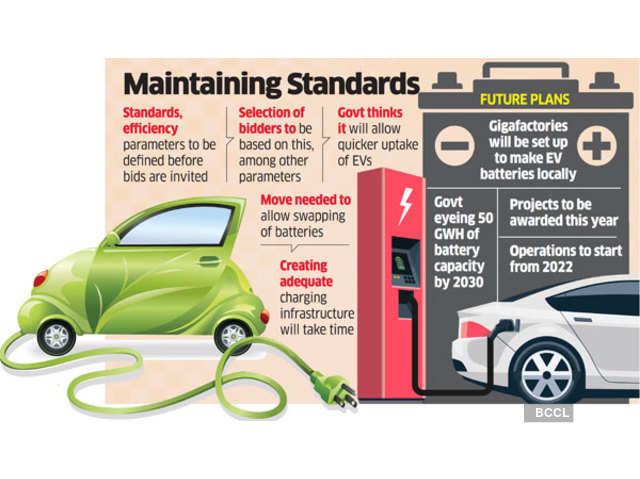
NITI Aayog is holding a consultation on the upcoming electric vehicle (EV) battery swapping policy.
What is BaaS?
Battery-as-a-service (BaaS) is seen as a viable charging alternative.
Manufacturers can sell EVs in two forms: Vehicles with fixed or removable batteries and vehicles with batteries on lease.
If you buy an electric scooter with battery leasing, you do not pay for the cost of the battery—that makes the initial acquisition almost 40% cheaper.
Users can swap drained batteries for a fully charged one at a swap station. The depleted batteries are then charged on or off-site.
The advantages of swapping include low downtimes for commercial fleets, reduced space requirements, and lower upfront costs.
It is also a viable solution for those who don’t have parking spots at home.
What is battery interoperability?
That’s when a battery is compatible across vehicles and chargers, so you can seamlessly swap a battery at any swap station. This can help achieve scale.
However, manufacturer and service providers say there are safety concerns around the ‘one-size-fits-all’ model and caution too much standardization can kill innovation.
Why hasn’t BaaS taken off yet?
There are economic and operational constraints.
Energy service providers offering swapping solutions have to charge 18% goods and services tax (GST) for swapping, compared to 5% GST on the purchase of an EV.
Additionally, the government’s FAME-II incentives are not offered to vehicles sold with BaaS or swap station operators.
While these are economic disadvantages compared to direct charging solutions, the lack of a dense and interoperable battery swap infrastructure has also hindered the roll-out.
Manufacturers, on the other hand, are keen to create proprietary battery and charging systems.
Issues with BaaS
There is a need for standardization of safety specifications as well as the battery.
Swapping in the various permutations and combinations of batteries at a station where they have not been tested for compatibility could lead to safety hazards.
Also, mandating only one type of battery to be eligible for concessions would be disadvantageous to many players.
Who offers BaaS in India?
Bengaluru-based startup Bounce is the first e-two-wheeler maker to sell its scooters with BaaS, and claims to have achieved a million battery swaps.
Others like Ola Electric and Ather have stuck to direct charging solutions, while Hero Electric offers both fixed and removable batteries.
Many makers are working with energy service providers to offer battery swapping.
The global precedent is a mixed bag: Ample, which offers swaps in the US, has found success with commercial fleets, while most personal users charge at home.
Why is Battery Swapping needed?
High Cost of EVs: An EV, by industry standards, is 1.5-2x costlier than IC Engine counterpart and at least half the cost is from the battery pack.
Cost reduction: Many manufacturers are offering batteries separately from a vehicle, reducing the cost. In that case, a fleet owner can buy vehicles without battery and utilize battery swapping.
Range Anxiety: Another major reason stopping people from buying EVs is range anxiety, or in simple terms, the fear of battery getting empty without finding a charging station.
Inadequate charging infrastructure: Unlike petrol pumps, EV charging stations are rare to spot and that further increases the range anxiety exponentially, especially while going on a road trip.
Hazard management: In case of a Swapping Station, one can simply locate a station, go and replace the empty battery with a new one.
The President of India recently took part in the Indian Navy’s 12th Presidential Fleet Review.
What is the President’s Fleet Review?
In simplest terms, it is the country’s President taking stock of the Navy’s capability.
It showcases all types of ships and capabilities the Navy has.
It takes place once under every President, who is the supreme commander of the armed forces.
The President is taken on one of the Naval ships, which is called the President’s Yacht, to look at all the ships docked on one of the Naval ports.
The yacht will be distinguished by the Ashoka Emblem on her side and will fly the President’s Standard on the Mast”.
Importance of Presidential Fleet Review
A fleet review is usually conducted once during the tenure of the President.
So far, 11 Presidential Fleet Reviews have been conducted since Independence, of which two have been International Fleet Reviews, in 2001 and 2016.
In terms of significance, the Navy’s Presidential review is second only to the Republic Day Parade.
The President will be given a 21-gun salute before embarking on the yacht.
Do all naval ships participate?
The idea is to showcase not all the Navy’s ships, but every type of ship — and the kind of capabilities it has at that time.
The review also includes merchant ships as well.
What else happens in the fleet review?
In this most formal of naval ceremonials, each ship dressed in full regalia will salute the President as he passes.
The President will also be reviewing the Indian Naval Air Arm in a display of spectacular fly-past by several helicopters and fixed-wing aircraft.
In the final stage of the review, a mobile column of warships and submarines will steam past the Presidential Yacht.
How many of these reviews have been held?
There have been 11 President’s Fleet Reviews since Independence.
The first was conducted in 1953, under Dr Rajendra Prasad.
The next one was done not by the President but by the then Defence Minister, Y B Chavan, in 1964.
Since then, it has been the President reviewing the fleet.
The longest gap between reviews was of 12 years — between 1989 (President R Venkatraman) and when 2001 (President K R Narayanan).
The last one was done in 2016, under President Pranab Mukherjee.
Significance of the event
It is one of the most important events for the Navy, which is essentially showing its allegiance and commitment to defending the country.
It is a long-standing tradition followed by navies across the world, and according to Navy officials it is a strong bond that links seafarers of the world.
Historically, a Fleet Review is an assembly of ships at a pre-designated place for the purpose of displaying loyalty and allegiance to the Sovereign and the state.
In turn, the Sovereign, by reviewing the ships, reaffirms his faith in the fleet and its ability to defend the nation’s maritime interest.
It is perhaps conceived as a show of naval might. Though it still has the same connotation, assembling of warships without any belligerent intentions is now the norm in modern times.
Given the fact that political input in economic policymaking is becoming dominant as regional and state-level issues assume overriding significance, it’s perhaps time to consider sheltering economics from politics and vice versa.
Continuity in policy
The sudden withdrawal of farm laws last year and the repeal of the land acquisition ordinance in 2015 are two examples of policy backsliding in an otherwise decent record of policy continuity since 1991.
The overall trajectory of tariffs has been downward and average tariffs are now below 10 percent compared to over 400 percent before 1991.
As a favored rule, domestic policy priorities should not be held hostage to external pressures, but they can and ought to be used to push through difficult and desirable domestic reform.
Challenges in achieving high growth
Challenges in reforms: Relying on chance events to drive reform might work in rare circumstances, but not when the aspiration is to become a $10 trillion economy by 2030.
Realizing this target or even coming close to it will require sustained growth of over 15 percent per annum in nominal GDP — that’s no mean task.
The golden period of India’s growth fetched an 8.1 percent increase in real GDP between 2004 and 2009.
Even during this period, the growth story was cut short by the global financial crisis and devilled intermittently by institutional weaknesses.
Failure of institutions: The coal scam and the 2G scam are examples of the inability of institutions to keep pace with rapid growth.
As growth occurs, institutions also require sophistication, knowledge, and some (not complete) protection from political interference.
Need for the fiscal council for budget-making process
The Monetary Policy Committee (MPC) in 2016, replaced RBI’s internal decision-making driven by the central bank governor to include three external experts to strengthen and bring transparency into monetary policy decisions.
This can be extended to other important government functions, such as the budgetary process
Successive finance commissions and the Fiscal Responsibility and Budget Management (FRBM) Review Committee have recommended the creation of a fiscal council that, like the MPC, will bring transparency in the budget-making process.
The idea is simple, moderate the influence of the political agenda and powerful interest groups that could, and often do, capture the process.
Suggestions on policymaking
It is art and science: Policymaking is nothing if not art that invokes science when expedient.
Domain experts should be an integral part of the formulation process.
Implementation, of course, can be left to the executive.
When the TRAI was first set up, it had a healthy combination of domain experts and public policy professionals, resembling a specialized regulatory agency that reflected a serious intent to strengthen capacity.
Importance of domain experts: Instead of going down the chosen path, TRAI has reversed gear and today resembles a government department.
In fact, this is the same affliction with almost all regulatory and policy institutions that are now a feature of India’s increasingly market-based economy.
As more sectors (for example, the Gati Shakti initiative) engage the private sector, lessons from the last quarter-century should not be wasted — domain expertise is conspicuous by its absence in regulatory and policy institutions.
Way forward
Create a cadre of professionals: Commissions tend to be made up of retired civil servants or retired judges.
This is worrying and, therefore, it is vital to create a cadre of professionals with technical expertise for the complex tasks of managing the policy processes.
Distancing politics from the policy: The net needs to be cast wider so that politics and policy are distanced, not completely but certainly more than it is today.
Consider the question “Politicians and economists have a love-hate relationship; they can’t do without each other. In context of this examine the issues with policymaking in India and why role of the domain expert is important in policymaking today?”
Conclusion
India should not be in a situation in which it is in perpetual hostage to vested interests of politics and business.