India introduced the Green Credits Scheme at COP28 in Dubai. PM Modi emphasized that this program goes beyond the commercial nature of carbon credits, offering a broader environmental impact.
What is Green Credits Programme?
Objective: The initiative aims to generate Green Credits through plantation on degraded wasteland.
Inception: Launched in October by the Environment Ministry, it is designed to incentivize various environment-positive actions.
Action Areas: Includes tree plantation, water management, sustainable agriculture, waste management, air pollution reduction, mangrove conservation, ecomark label development, and sustainable building.
Scope beyond Carbon: Unlike existing carbon credit systems, this program extends incentives to actions beyond carbon emission reductions, such as water conservation and soil improvement.
Distinctive Features
Market-Based Approach: The program aims to create a market for trading green credits, similar to carbon credits, where companies can earn credits for environmental actions and trade them.
Development Stage: Methodologies and standards for measuring and verifying such actions are under development, and the market for these credits is yet to be established.
Initial Buyers: It is anticipated that private companies might purchase these green credits to fulfill their Corporate Social Responsibility (CSR) obligations.
Wider Beneficiaries: Unlike carbon markets, which primarily target industries and corporations, the green credit program can benefit individuals and communities as well.
Leading Sugar Producer: Since 2021-22, India has surpassed Brazil to become the world’s leading sugar producer.
Second-Largest Exporter: India also holds the position of the second-largest sugar exporter globally.
Ethanol Biofuel Sector Growth: The expansion of this sector has bolstered the sugar industry and improved the financial health of sugar mills.
Pressmud: A Valuable Byproduct
Pressmud, also known as filter cake or press cake, is an agricultural waste product from sugar production.
It is obtained during the repeated filtration of cane juice before sugar extraction.
Approximately 3-4 percent of press mud is produced per tonne of crushed cane.
Traditionally, pressmud is recycled as manure through composting and supplied to local farmers.
Recognized as a resource for green energy, pressmud can be used to produce biogas through anaerobic digestion, leading to compressed biogas (CBG) creation.
It is beneficial for crops and horticulture due to its richness in micronutrients.
Challenges with Pressmud
Storage Issues: Pressmud undergoes gradual decomposition, complicating long-term storage and increasing production costs.
Price Increase: The recognition of its potential has led to a substantial rise in pressmud prices.
Pressmud as CBG Feedstock: Advantages and Challenges
Supply Chain Simplification: Using pressmud eliminates complexities associated with agricultural residue supply chains.
Quality and Pre-treatment: Unlike municipal solid waste, pressmud’s quality is consistent, and it lacks lignin, reducing pre-treatment costs.
Conversion Efficiency: Pressmud is more efficient and economical as a feedstock for CBG production compared to cattle dung and agricultural residue.
Economic and Competitive Factors: The increasing price of pressmud and competition for its use in fertilizers and bio-composting pose challenges.
Regional Production and Sugar Mills in India
Primary Sugarcane States: Uttar Pradesh and Maharashtra contribute significantly to India’s sugarcane cultivation.
Operational Sugar Mills: As of 2022-23, India had 531 operational sugar mills.
Sugar and Pressmud Production: The total sugar production was 32.74 million tonnes, with approximately 11.4 million tonnes of pressmud.
Potential and Future Steps
CBG Potential: The available pressmud can generate significant quantities of CBG, valued at substantial economic returns.
Required Interventions: To maximize this potential, states need to implement bioenergy policies, control pressmud prices, and establish long-term agreements with sugar mills.
Research and Training: Developing storage technologies for pressmud and conducting training for CBG plant operators are essential.
Back2Basics: Sugarcane By-products
Description
Uses
Bagasse
Fibrous residue left after sugarcane crushing.
– Biofuel for energy production
– Raw material for paper, board, building materials
Molasses
Thick, dark syrup produced during sugar refining.
– Alcohol production (e.g., rum)
– Sweetener in animal feed
– Base for fermentation products
– Ingredient in food products
Vinasse
(Distillery Waste) Liquid waste from ethanol production using molasses.
– Liquid fertilizer
– Biogas production
Carbon Dioxide
Gas produced during fermentation in sugar manufacturing.
– Carbonation in beverages
– Enhancing plant growth in greenhouses
Fly Ash
Ash produced from burning bagasse.
– Material in cement and concrete
– Soil amendment in agriculture
Heat Energy
Thermal energy generated from manufacturing processes.
I’m Aaditya and I have scored 133 in GS IV Ethics, one of the highest. I had understood 1 thing – all other GS papers- GS1, GS2, GS3 require you to prepare 4-5 subjects that have infinite topics under them. And no matter how much you prepare, a lot of it will be outside your control.
Ethics is 1 complete GS paper dedicated to 1 subject!
This is a huge opportunity. It would be the greatest blunder if we didn’t make Ethics our number 1 strength. There’s no point in putting in half-baked efforts.
Ethics can be tricky, but UPSC doesn’t expect Ph.D. level knowledge.
Approach to Ethics can be very challenging. Consider Ethical terms like ethics, morals, values, principles, etc. We use them interchangeably at home in common parlance. At the same time, there is high-end research happening on them, every scholar has a different take, and different definitions.
Instead, focus on technical, bureaucratic understanding with conceptual clarity and practical applicability. My course is designed to help you navigate this terrain efficiently.
We will cover everything essential, skip the unnecessary complexities, and foster the mastery of ethical language. Answer writing practice is key, and this course will kickstart that journey.
Join me on this journey, and together, let’s make Ethics our number one strength! Best of luck to all of you!
Inclusions
12 Theory + 2 Case Studies (+2 buffer lectures if the time limit is exceeded). Live Zoom sessions for 1.30-2hrs each. Ppt will be provided.
My personal Handwritten notes. You can build on top of that.
Ethics 50 Terms + CA examples for quick reference.
DoP&T+UNDP: Competency Dictionary for Civil Services
Aspirants, without conceptual clarity, you are not even in the race. But without attempting tests and working on the feedback, you can never reach the level of Rankers. Dont be lost. Figure out your blind spots and let us help you fine-tune your preparation .
The mentorship package includes 1. 4 sectional tests to be provided along with the course
2. 1 Full-Length Test at the end of the course.
3. 3 Full-Length Tests after prelims.
4. 1:1 post-test analysis calls so you can focus on what needs to be done.
5. Enrichment sessions by Swatantra Sir and team on tests and best practices.
*Separate telegram group for doubts and focused discussion on upcoming tests, pyq, etc.
The Indian state faces a paradox of being too burdensome in bureaucracy yet too small in terms of personnel. The focus should shift from the size of the state to addressing issues of perverse incentives, skill gaps, and institutional constraints for effective governance.
Key Highlights:
Bureaucratic Challenges: Setting up businesses or homes in urban areas in India involves navigating a complex web of licenses, permits, and clearances, reflecting the bureaucratic thicket that hinders efficiency.
State Size Discrepancy: While India has a relatively small number of civil servants per capita and a lower public sector share in employment, it struggles with challenges in providing essential services and infrastructure.
Perverse Incentives: The root cause of governance inefficiency lies in perverse incentives within public institutions, hindering policymakers and officials from making and implementing effective policies.
Need for Delegation: Lessons from countries like Australia and Malaysia suggest that separating policymaking and implementation responsibilities expedites execution and encourages innovations, improving program outcomes.
Technocratic Gap: The lack of technocratic skills at the policymaking level results in substantial outsourcing to consultancy firms, revealing a gap that needs to be addressed for effective governance.
Key Challenges:
Technocratic Skill Deficiency: The Indian bureaucratic system lacks technocratic skills, leading to significant outsourcing of crucial tasks to consultancy firms, highlighting a need for internal capability building.
Policy Failures: Both proponents and critics of a larger state miss the fundamental issue of perverse incentives and skill gaps, contributing to policy failures across various sectors.
Key Phrases:
People-Thin, Process-Thick State:Describes the Indian state as lacking in personnel but burdened with complex processes, emphasizing the need for a shift in focus from size to efficiency.
Perverse Incentives: Highlights the negative motivations within public institutions that hinder sound policymaking and implementation.
Key Quotes for good marks:
“The main problem, however, is the perverse incentives created by public institutions and the skill gap among officials.”
“Both sides to the debate are missing something fundamental.”
Anecdotes:
National Highways Authority of India: The example of the NHAI, where policymaking and execution are separated, showcases the effectiveness of delegation in reducing delays and cost overruns.
Critical Analysis:
Audits and Oversight: The focus on compliance over policy objectives due to narrowly scoped audits by oversight agencies hampers effective decision-making, causing delays and disputes.
Way Forward:
Implementing institutional reforms, such as separating policymaking and implementation, enhancing technocratic skills, and sensitizing oversight agencies to contextual policy decisions, can improve state capability.
India’s foreign policy has evolved, becoming more assertive and nimble. Smart oneliners and proactive diplomacy define its approach, gaining global recognition. Challenges include countering forces threatening India’s integrity, and the focus is on strategic autonomy and assertive engagement on the world stage.
Key Highlights:
Diplomatic Nimbleness: Diplomacy requires swift actions and nimbleness, moving away from decades of numbness and indecision in India’s foreign policy.
Policy Shift in the Last Decade: India’s foreign policy underwent a significant shift in the last decade, marked by assertiveness, smart oneliners, and firm actions.
Global Recognition: India’s articulation on the world stage, including smart oneliners, gained global recognition and forced the world to take notice of its diplomatic stance.
Strategic Autonomy: India’s foreign policy is now characterized by strategic autonomy, resolute responses, and a willingness to take risks.
Jaishankar’s Diplomacy Principles: Foreign Minister S Jaishankar’s straightforward oneliners have become essential principles in bilateral and international diplomacy.
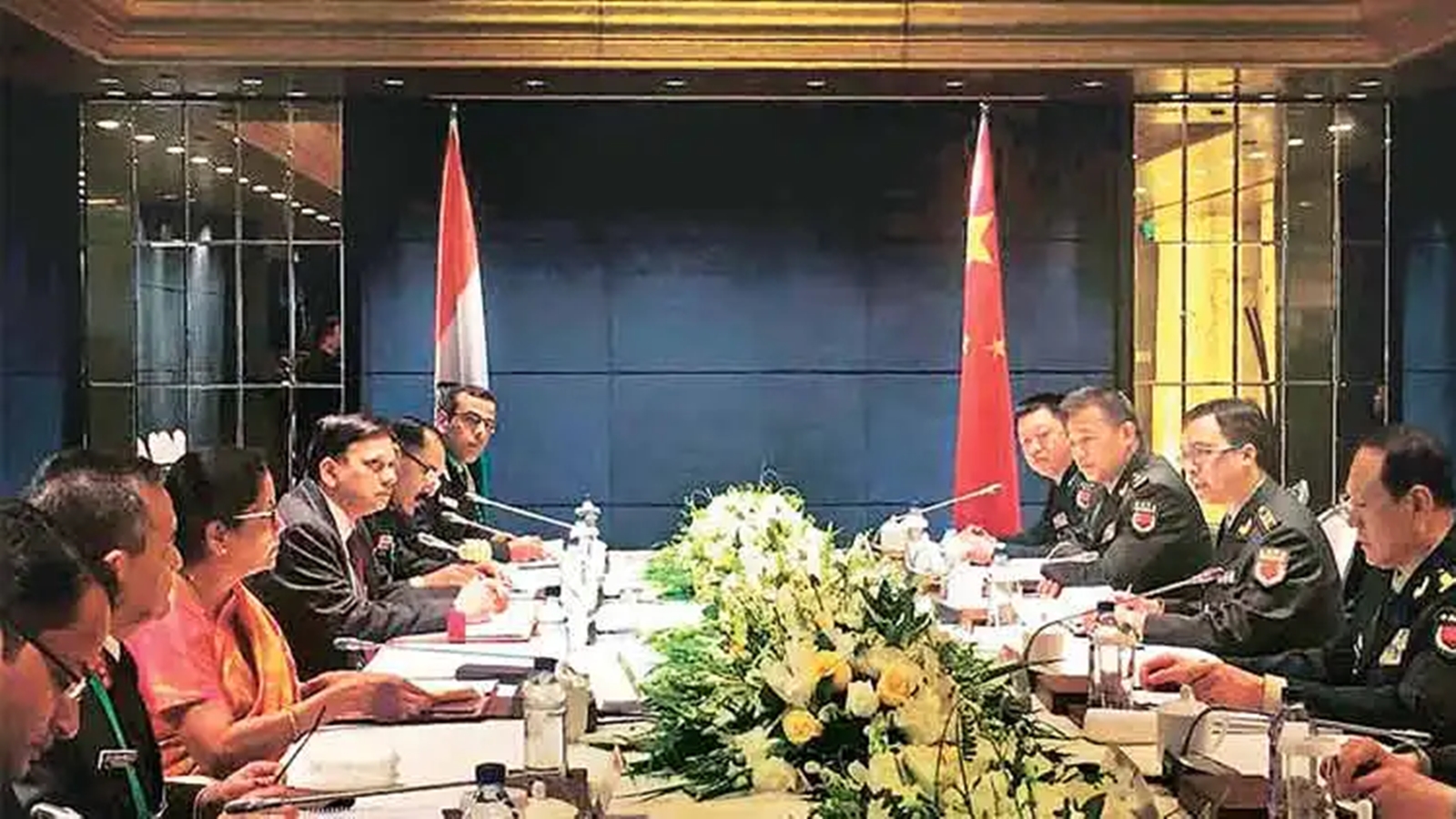
India-China Relations: Jaishankar’s emphasis on “mutual sensitivity, mutual respect, and mutual interest” forms the basis for the new bilateralism between India and China.
Doklam and Eastern Ladakh Standoffs: India’s proactive diplomacy combined with strong ground posturing in Doklam and Eastern Ladakh showcased a policy shift in dealing with such situations.
Response to Canadian Accusations: India’s determined response to Canadian Prime Minister Trudeau’s accusations demonstrated the country’s resolve in the face of baseless allegations.
Expectations from Allies: India, as the world’s largest democracy, expects friendly countries not to allow their territory to be misused by forces threatening its integrity.
Key Challenges:
Misuse of Territory: India faces challenges from forces openly threatening its dismemberment and seeking shelter in other countries, leading to expectations that allies act against such forces.
Key Terms and Phrases:
Smart Oneliners: Brief and impactful statements by leaders shaping important diplomatic principles.
Proactive Diplomacy: Taking initiative in diplomatic efforts to address challenges.
Strategic Autonomy: Ability to make independent decisions in alignment with national interests.
Bilateralism: Development of relationships and cooperation between two countries.
Policy Shift: Significant change in the approach and principles of foreign policy.
Key Quotes:
“Smart oneliners” by leaders, far from being abstruse, turned out to be important policy mantras.
“Today’s era is not of war,” resonated well with world leaders, finding its way into the G-20 declaration in 2022.
Key Statements:
India’s leadership stands shoulder-to-shoulder with leading global powers, making PM Modi and FM Jaishankar influential figures in world diplomacy.
Key Examples and References:
India’s response to Canadian accusations demonstrated its determination and refusal to accept baseless allegations.
Key Facts and Data:
India’s foreign policy marked by strategic autonomy, resolute responses, and a willingness to take risks.
India’s proactive diplomacy in Doklam and Eastern Ladakh showcased a policy shift in dealing with international challenges.
Critical Analysis:
India’s nimble and forthright diplomacy brings a new assertiveness on the world stage.
The shift towards proactive diplomacy and smart oneliners has garnered global recognition and respect.
India’s expectations from allies to act against forces threatening its integrity underline its diplomatic priorities.
Way Forward:
Continue proactive diplomacy and assertive foreign policy to protect national interests.
Collaborate with allies to address challenges posed by forces threatening India’s integrity.
Maintain strategic autonomy while actively engaging with global powers in diplomatic initiatives.
Leverage the influence gained on the world stage to further India’s interests and contribute to global stability.
The Indian growth story remains a beacon of hope. The economy is unlikely to slow down in line with other major economies of the world as the government continues to undertake reforms.
Key Highlights:
Economic Growth: The Indian economy expands by 7.6% in Q2, challenging doubts on post-pandemic macroeconomic resilience.
Manufacturing Surge: The manufacturing sector grows robustly at 13.9%, indicating positive outcomes from policy initiatives and credit stabilization.
The world order is shifting, with the U.S. leading but China rising fast. India needs to navigate complex relations, address internal challenges, and focus on economic and military growth for a strong role globally. Amid global conflicts, balancing alliances is crucial for India’s position in the evolving geopolitical landscape.
Key Highlights:
Global Order Dynamics: Shifting landscape with China’s rise, Russian challenges, and the emergence of middle powers like India.
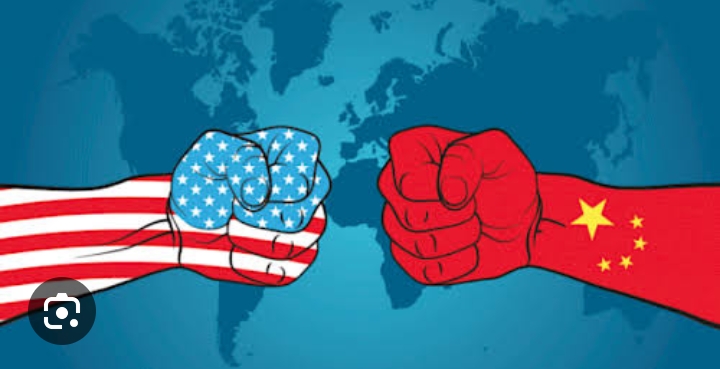
Asymmetric Bipolarity: Viewing the world order as asymmetric bipolarity, where the U.S. remains pre-eminent but China rapidly advances.
China’s Impact: Unprecedented economic and military growth redefines international power dynamics.
Key Challenges:
Russia-China Nexus: The war in Ukraine strengthens Russia-China ties, posing strategic challenges for India.
Global Security Complexities: Conflicts in Eastern Europe and West Asia contribute to a multifaceted global security landscape.
Diplomatic Maneuvering: Navigating complex relations with the U.S., China, and Russia amid evolving global power dynamics.
Key Terms and Phrases:
Asymmetric Bipolarity: Understanding the dynamics of uneven power distribution in the current world order.
People’s Power: The 21st century characterized by unprecedented connectivity, interactions, and global integration.
Military-Industrial Complex: The influence of industries producing destructive weapons on global violence.
Two-Front Dilemma: China’s strategic challenge, facing pressures in the Western Pacific and the Line of Actual Control.
Key Quotes and Anecdotes for extra marks:
“The present world order is in a state of flux, with asymmetric bipolarity as a defining feature.”
“China’s GDP growth from $300 billion in 1990 to $19.3 trillion today is a historic shift in global power dynamics.”
“India must acknowledge China as a long-term competitor, addressing power asymmetry through comprehensive national growth.”
“Global violence is fueled by the military-industrial complex spreading instruments of death and destruction.”
Key Statements and Examples:
Russia’s Pivot: Economic sanctions and the Ukraine conflict drive Russia towards closer ties with China.
India’s Diplomatic Complexities: Balancing trade ties with China and managing strategic challenges with the U.S. and Russia.
China’s Economic Surge: Unprecedented GDP growth influencing global power dynamics and necessitating India’s strategic response.
Key Facts and Data:
China’s GDP Growth: A remarkable shift from $300 billion to $19.3 trillion in the last four decades.
India-China Trade: Standing at $138 billion, showcasing the intricate nature of bilateral relations.
War in Ukraine: Ongoing for the past 20 months, contributing to evolving geopolitical dynamics.
Critical Analysis:
Recognition of Asymmetric Bipolarity: Acknowledging and adapting to the current world order’s uneven power distribution.
Comprehensive National Growth: Emphasizing India’s need to strengthen its comprehensive national power amid power asymmetry with China.
Global Relations Management: Recognizing and addressing challenges in India’s diplomatic strategy amidst evolving global dynamics.
Way Forward:
Internal Strengthening: Addressing internal fault lines, fostering societal cohesiveness, and focusing on comprehensive national growth.
Strategic External Balancing: Balancing relations with the U.S. to maintain China’s two-front dilemma and preserving India’s strategic autonomy.
Advocacy for Global Disarmament: Addressing the root issue of the military-industrial complex, promoting global disarmament for a more peaceful world.
In the last 3 years, a lot of things have changed about UPSC-CSE
Including the Prelims examination
Standard resources and mocks can’t make you feel prepared anymore
Now, Every ranker who qualifies prelims crafts a process for it, painstakingly
Civilsdaily Masterclasses allow you to access the real work from those who have done it before
All rankers built their preparation system. What’s stopping you?
Never start from scratch on your UPSC preparation
Start like a Topper
Read what AIR 3, IAS Uma Harathi has to say about her UPSC experience
“As someone who has navigated the evolving landscape of the UPSC exams, I want to share with you some insights and a practical plan for the next 6 months leading up to your UPSC Prelims 2024.
Over the past few years, the UPSC exam has become more challenging. The lower cut-offs are a clear indicator of this rising difficulty. It’s no longer just about hard work; understanding the pattern and adapting your strategy is key.
During my preparation, I realized that relying solely on conventional methods might not be enough. The preparation needs to be strategic, encompassing a thorough understanding of the syllabus, current affairs, and the ability to think analytically.
This Sunday, I’m conducting a masterclass where I’ll share my strategy, insights, and the personal notes that were crucial in my preparation. It’s a chance for you to learn from my journey and gear up effectively for your own.
Remember, the journey to becoming an IAS officer is as much about perseverance and resilience as it is about intelligence and knowledge.”
Get 6-month Prelims 2024 Blueprint by AIR 3 Uma, IAS for FREE
Go from the ‘hit and trial method’ to a proven process to score in Prelims Paper
It’s 2023. UPSC prelims paper demands more than just covering standard books and mocks.
(Don’t wait—the next masterclass won’t be until Jan 24)
We live in an infinite content and attention-deficit world. If you can’t craft a result-oriented process, and become consistent with exam preparation… you’ll never qualify for it.
This Masterclass is crafted to ensure the following
You don’t just consume books and lectures but apply and test consistently what you have learned.
To equip you with a ranker-verified process to score high in the Prelims Exam
You develop a daily habit of studying to cover the syllabus or attempt and analyze mocks, note-making, revision or improve marks with a consistent approach.
We won’t just tell you WHAT you should study. We’ll teach you WHY you should study it based on timeless UPSC-CSE principles. And you’ll apply everything you learn with support from us and other smart aspirants and toppers.
Register Now!
Attend Prelims Masterclass by AIR 3 Uma, IAS for FREE
First 100 will get scanned PDF UPSC Notes by AIR 3, Uma Harathi
There are countless UPSC-CSE webinars out there. Most are conducted by teachers, ex-aspirants, or toppers who built a large following and explain WHAT they did.
This Masterclass focuses on the WHY and the HOW. You’ll learn the timeless UPSC-CSE principles to become a top 1% rank-worthy aspirant.
Deeply understand yourself and your constraints
The best aspirants and toppers aren’t the ones who know the most about the syllabus & topics. They know the most about… themselves and their constraints.
It’s time to get clear about your way of preparing for the exam, finally. And you’ll build a much-needed process to understand what makes you score high marks in the UPSC Prelims Exam. No more guessing. Lots more results.
Attend Prelims Masterclass by AIR 3 Uma, IAS for FREE
First 100 will get scanned PDF UPSC Notes by AIR 3, Uma Harathi
Masterclass was created by Civilsdaily. We know first-hand how valuable these insights are – They are the bedrock for a successful attempt.
These masterclasses are packed with value. They are conducted in private with a closed community. We rarely open these masterclasses for everyone for free. This time we are keeping it for 300 seats only.
Fee:
Special Access (extra 15 min with Ranker) – Free (only for first 100 registrations, register before 2nd Dec, 7 PM)
Early Access – Rs. 299 (for the next 100 registrations, register before 2nd Dec, 5 PM )
Late Access – Rs. 499 (for last 100 registrations, register 2nd Dec, post 5 PM)
Ready to attend the Masterclass?
Let’s make 2024-25 your best attempt yet. You deserve this.
The Indian Space Research Organisation, following a landmark 2023, will ring in the new year with the launch of the PSLV-C58 X-ray Polarimeter Satellite (XPoSat) mission on January 1, 2024.
About XPoSat Mission
Orbital Details: XPoSat will operate in a Low Earth Orbit at an altitude of about 650 km, with a low inclination of around 6 degrees.
Dual Scientific Payloads: The satellite is equipped with two payloads, enabling comprehensive studies of X-ray sources, including their temporal, spectral, and polarization characteristics.
Mission Goals: XPoSat’s primary objectives include measuring X-ray polarization in the 8-30 keV energy band and conducting long-term studies in the 0.8-15 keV band.
Mission Lifespan: The satellite is expected to be operational for approximately 5 years.
Observation Strategy: Observations by XPoSat will primarily occur during the Earth’s eclipse period to maximize efficiency.
Payloads aboard XPoSat
POLIX – Primary Payload: The Polarimeter Instrument in X-rays (POLIX), developed by Bengaluru’s Raman Research Institute (RRI) with ISRO’s collaboration, is tailored to assess the degree and angle of polarization in medium X-ray energy ranges.
XSPECT – Secondary Payload: The X-ray Spectroscopy and Timing (XSPECT) payload, created by ISRO’s U.R. Rao Satellite Centre (URSC), will gather spectroscopic data in the 0.8-15 keV range.
Significance of XPoSat
Polarization refers to the orientation of light waves. X-rays, a form of electromagnetic radiation, can also be polarized.
Studying it from cosmic sources provides valuable information about the physical conditions and processes occurring in extreme environments, such as around black holes, neutron stars, and supernova remnants.