James Webb Space Telescope(JWST) has identified a rare galaxy, Firefly Sparkle, offering a unique look into early galaxy formation.
AboutGalaxy Firefly Sparkle:
Details
Discovered by NASA’s James Webb Space Telescope (JWST), dating back to 600 million yearsafterBig Bang.
It is one of the earliest low-mass galaxies discovered, providing rare insights into early galaxy formation.
It is named so because its star clusters shine brightly, resembling fireflies in JWST’s images.
It is part of a group of galaxies from the early universe, offering clues about how galaxies like the Milky Way may have formed.
Features of the Galaxy
Mass equal to 10 million suns, making it a relatively low-mass galaxy.
Visible portion spans just 1,000 light-years, much smaller than the Milky Way’s 100,000 light-years.
Contains 10 distinct star clusters, each representing different stages of star formation.
Accompanied by 2 smaller galaxies, Firefly-Best Friend and Firefly-New Best Friend.
Elongated raindrop shape, indicating it is still forming.
Observational Studies by JWST
Used gravitational lensing to magnify the galaxy’s light by 16-26 times, providing detailed observations.
JWST observedvaried stages of star formation, with younger stars appearing blue and older stars red.
It is forming piece by piece, with each star cluster representing a phase of formation.
These observations help refine theories on galaxy formation and star cluster dynamics in the young universe.
PYQ:
[2022] Launched on 25th December, 2021, James Webb Space Telescope has been much in the news since then. What are its unique features which make it superior to its predecessor Space Telescopes? What are the key goals of this mission? What potential benefits does it hold for the human race?
[2012] Which of the following is/are cited by the scientists as evidence/evidences for the continued expansion of universe?
Detection of microwaves in space
Observation of redshift phenomenon in space
Movement of asteroids in space
Occurrence of supernova explosions in space
Select the correct answer using the codes given below:
(a) 1 and 2
(b) 2 only
(c) 1, 3 and 4
(d) None of the above can be cited as evidence
Bharatmala Pariyojana is a comprehensive road development project initiated by the Government of India to improve connectivity and reduce logistics costs across the country.
The total length covered under the scheme is 34,800 km, with an estimated cost of Rs. 5.35 lakh crore.
About Bharatmala Pariyojana
Details
Launched to improve road connectivity, enhance freight/passenger movement, and reduce logistics costs.
First-phase launched in 2017, covering 34,800 km of roads, with an estimated cost of Rs. 5.35 lakh crore.
Long-term goals to be completed in phases over several years.
Key Components:
Economic Corridors & Efficiency: Focus on developing 26,000 km of roads and improving the Golden Quadrilateral and North-South/East-West Corridors.
Inter-State & Feeder Routes: 8,000 km of interstate corridors and 7,500 km feeder routes.
Border & International Roads: 2,000 km of roads for trade and security.
Coastal & Port Connectivity: 2,000 km of roads for better port connectivity.
Green-Field Expressways: New expressways to reduce congestion.
Aims and Objectives
50 national corridors to be constructed, reducing freight traffic congestion and facilitating movement on national highways.
550 districts to be connected nationwide, up from the current 300 districts linked with national highways.
Logistic Performance Index (LPI) to be introduced, helping identify trade and logistics challenges and opportunities.
Expected to increase employment opportunities for people.
Funding and Implementation
Central Road and Infrastructure Fund (CRF): Created under the Central Road Fund Act, 2000, this non-lapsable fund is used for building and upgrading national highways and other infrastructure, funded through cess on petrol and diesel.
Monetization of National Highways: The monetization of existing infrastructure assets is used as a source of funding.
Private Sector Investment: Bharatmala invites participation from the private sector for funding and execution of certain projects.
Additional Budgetary Support: Funds from additional budgetary allocations by the central government also support the project.
Do you know?
Sagarmala Programmeapproved in 2015, focuses on port infrastructure development along the 7,516-km coastline through modernisation, mechanisation, and computerisation.
Parvatmala (National Ropeways Development Programme)announced in Union Budget 2022-23 to improve connectivity in hilly areas, under MORTH.
Implemented in PPP mode as an ecologically sustainable alternative to conventional roads in challenging terrains.
Initial regions: Uttarakhand, Himachal Pradesh, Manipur, Jammu & Kashmir, and North Eastern states.
PYQ:
[2017] With reference to ‘National Investment and Infrastructure Fund’, which of the following statements is/are correct?
It is an organ of NITI Aayog.
It has a corpus of Rs 4,00,000 crore at present.
Select the correct answer using the code given below:
(a) 1 only
(b) 2 only
(c) Both 1 and 2
(d) Neither 1 nor 2
A recent study suggests that the Arctic Ocean may experience its firstice-free day—where sea ice falls below one million square kilometres—by 2030, or even sooner.
Key Highlights of the Study
First Ice-Free Day Prediction: The study predicts that the Arctic Ocean could experience its first ice-free day (less than one million square kilometres of sea ice) by 2030, or even sooner, depending on climatic conditions.
Simulations and Models:
11 different climate models were used to run 366 simulations from 2023 to 2100 to assess the future of Arctic sea ice.
Most simulations predict the ice-free day within 7 to 20 years, with some models suggesting it could happen as early as September 2027.
Conditions for Ice-Free Day: The occurrence of an ice-free day will depend on a combination of unusually warm seasons and stormy weather, which accelerates the melting of the sea ice.
Impact on Sea Ice: Once the first ice-free day occurs, it could be followed by an ice-free period lasting between 11 to 53 days, potentially leading to the first ice-free month.
How does the Arctic Tundra store Carbon?
The Arctic tundra stores carbon primarily through a process where plants absorb carbon dioxide (CO2) from the atmosphere via photosynthesis.
This carbon gets trapped in the soil and organic matter (plants and animals) that accumulate over time.
The cold Arctic climate slows the decomposition of plant and animal remains, meaning that organic materials, including carbon, remain locked in the permafrost.
This permafrost acts as a natural storage system, preventing CO2 from being released back into the atmosphere.
Scientists estimate that the Arctic tundra holds about 1.6 trillion metric tonnes of carbon, which is roughly double the amount of carbon in the Earth’s atmosphere.
Why is the Arctic Tundra emitting more carbon than absorbing it?
Rising temperatures in the Arctic are causing the permafrost to thaw at an accelerated rate.
When permafrost thaws, microbes in the soil become active, breaking down the organic material trapped in the frozen ground, which results in the release of carbon dioxide (CO2) and methane (CH4), two potent greenhouse gases.
The Arctic has been warming at a rate four times faster than the global average.
2024 was the second-warmest year on record for the region, contributing significantly to the thawing of the permafrost.
Wildfires in the Arctic have become more frequent and intense, further accelerating the thawing of permafrost. Wildfire smoke also contributes to the release of greenhouse gases.
Between 2001 and 2020, the combination of rising temperatures and increased wildfires led to the Arctic tundra releasing more carbon than it absorbed, marking a significant shift in its role from a carbon sink to a carbon emitter.
Why does it matter?
Climate Change Acceleration: The loss of sea ice will amplify the Albedo effect, causing the Arctic region to absorb more sunlight and heat, which will accelerate global warming and trigger extreme weather events in mid-latitudes.
Rising Sea Levels: The loss of Arctic ice contributes to sea level rise, with potential long-term impacts on coastal populations and ecosystems, particularly if the Greenland ice sheet melts completely, which could raise sea levels by 6 meters.
Ecosystem and Species Impact: The melting of sea ice will threaten species that rely on the ice for habitat, such as polar bears, walruses, and reindeer, disrupting the Arctic food chain.
Human and Infrastructure Threats: Arctic communities and their infrastructure are at risk as the region warms at four times the global average, threatening the livelihoods of people living in these areas.
Back2Basics: Albedo Effect
It refers to the measure of how much sunlight is reflected by a surface.
It is expressed as a percentage; a surface with a high albedo reflects more sunlight, while a surface with a low albedo absorbs more.
Light-colored surfaces like ice and snow have high albedo, reflecting most of the sunlight, whereas dark surfaces like oceans and forests have low albedo, absorbing more heat.
PYQ:
[2022] Discuss global warming and mention its effects on the global climate. Explain the control measures to bring down the level of greenhouse gases which cause global warming, in the light of the Kyoto Protocol, 1997.
[2012] The increasing amount of carbon dioxide in the air is slowly raising the temperature of the atmosphere because it absorbs:
(a) the water vapour of the air and retains its heat
(b) the ultraviolet part of the solar radiation
(c) all the solar radiations
(d) the infrared part of the solar radiation
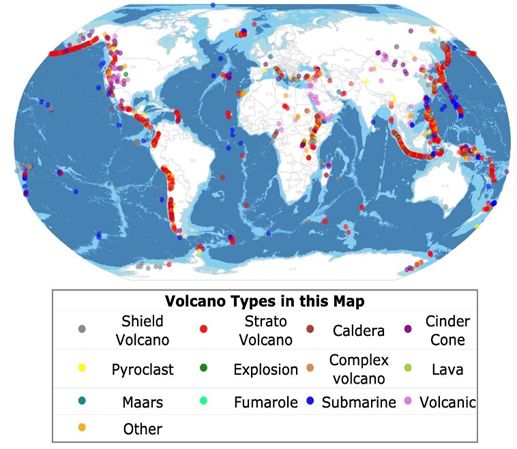
A type of geological event near an opening/vent in the Earth’s surface including volcanic eruptions of lava, ash, hot vapour, gas, and pyroclastic material.
Ash fall
Lahar – Hot or cold mixture of earthen material flowing on the slope of a volcano either during or between volcanic eruptions
Lava Flow
Pyroclastic Flow – Extremely hot gases, ash, and
other materials of more than 1,000 degrees Celsius that rapidly flow down the flank of a volcano (more than 700 km/h) during an eruption.
There are about 1500 potentially active volcanoes worldwide.
Volcanic activities and wildfires affected 6.2 million people and caused nearly 2400 deaths between 1998-2017.
Regions Prone to Volcanic eruptions: Barren island (A&N), Narcondam (Andaman Sea), Deccan trap in Deccan plateau, Baratang (Andaman Island), Dhinodhar hills (Gujarat), Dhosi hills (Aravali mountains), Tosham hills (Haryana).Nodal Ministry: Min. of Earth Sciences (MOES)
Types of Volcanic Eruptions:
Stratovolcanoes: Steep-sided with explosive eruptions. Example: Mount St. Helens.
Shield Volcanoes: Broad and gently sloping with non-explosive eruptions. Example: Mauna Loa.
Cinder Cone Volcanoes: Small, steep-sided with ash and cinder eruptions. Example: Paricutin.
Central or State authorities declare the area as volcanically active based on these parameters:
Volcanic Activity: This includes volcanic eruptions, lava flows, ash emissions, and any other signs of volcanic unrest.
Geological Evidence: The presence of volcanic rocks, craters, calderas, lava domes, or volcanic vents features strong evidence of volcanic origin.
Seismic Activity: Monitoring seismic activity, including volcanic earthquakes and tremors, is crucial.
Gas Emissions: Measuring the composition and quantity of (SO2) or carbon dioxide (CO2), can provide insights into volcanic activity and potential hazards.
Ground Deformation: Detected through techniques like GPS and satellite-based interferometry, can indicate magma movement.
Historical Records: Historical records of past eruptions, including eyewitness accounts, written records, and geological studies, are important for assessing a volcano’s history and potential future behavior.
Remote Sensing: Used to monitor changes in surface temperature, volcanic ash plumes, and ground deformation.
Causes:
Underwater Earthquakes: When tectonic plates at subduction zones converge, they suddenly displace a massive amount of water, generating a tsunami.
Volcanic Eruptions: The expulsion of magma and gas from a volcano can create a sudden and forceful displacement.
Landslides: Landslides from coastal cliffs or mountains, can displace a significant amount of water upon impact, generating a tsunami.
Meteorite Impacts: Although rare, The energy released from such an impact can create powerful waves.
Glacial Calving: When large pieces of ice break off from glaciers and fall into the ocean, they can displace water and generate small tsunamis, known as “glacial tsunamis.”
Fault Zones: Faults that lie beneath the ocean can slip suddenly, displacing seawater and causing a tsunami.
Mitigation:
India had a set of official guidelines primarily related to the Barren Island volcano in the Andaman Sea. These guidelines were primarily managed by the Geological Survey of India (GSI) and the Indian Meteorological Department (IMD).
Monitoring and Early Warning: Continuous monitoring of volcanic activity using seismic instruments, gas analyzers, and satellite technology to detect signs of volcanic unrest.
Hazard Zonation: Establishment of hazard zones based on the type and potential impact.
Evacuation Plans: Development of evacuation plans and routes for nearby communities. Regular drills and training exercises to ensure preparedness.
Public Awareness and Education: Educate local communities about volcanic hazards and safety measures.
Coordination: Coordination between the GSI, IMD, local administration, and disaster management authorities to ensure minimal harm caused.
Emergency Response: Prepositioning of emergency supplies, medical teams, stockpiling food, water, medicines, and setting up emergency shelters.
Tsunamis (Japanese for “harbour wave”), also known as a seismic sea wave, are a series of very large waves with extremely long wavelengths, in the deep ocean, the length from crest to crest may be 100 km and more. When the seafloor abruptly deforms the sudden vertical displacements over large areas disturb the ocean’s surface, displace water, and generate tsunami waves.
Of the nearly 7,500 km long coastline, close to 5,700 km is prone to cyclones and tsunamis.
Andhra Pradesh- Nellore, Prakasam, Guntur. Visakhapatnam, East and West Godavari
Pondicherry
Orissa
Between 1998-2017, tsunamis caused more than 2,50,000 deaths globally, including more than 2,27,000 deaths due to the Indian Ocean tsunami in 2004.
More than 700 million people live in low-lying coastal areas and Small Island Developing States exposed to extreme sea-level events including tsunamis.
Tectonic Tsunamis: Caused by underwater earthquakes, volcanic eruptions, or fault movements along tectonic plate boundaries.
Landslide Tsunamis: Triggered by underwater landslides, which can displace a large volume of water.
Meteorological Tsunamis (Metetsunamis): Generated by atmospheric disturbances such as severe storms, rapid pressure changes, or weather fronts.
Criteria to Declare:
The Indian government, like many other governments around the world, relies on various criteria and systems to detect and declare tsunamis. Key components of the criteria include:
Seismic Activity: A significant earthquake with a magnitude above a certain threshold (usually around 6.5 or higher) can trigger tsunami alerts.
Ocean Buoy Data: Buoy systems are equipped with sensors that can detect changes in sea level. A sudden, abnormal rise in sea level can be indicative of a tsunami wave.
Tide Gauge Readings: Provide real-time data on sea level changes. Unusual, rapid and significant increase in fluctuations in sea level, can be a sign of an approaching tsunami.
Earthquake Location and Depth: Shallow, undersea earthquakes are more likely to cause tsunamis.
Historical Data: Areas with a history of tsunamis are often given higher priority for monitoring and early warning systems.
International Coordination: India is part of the Indian Ocean Tsunami Warning and Mitigation System (IOTWMS), which collaborates with other countries in the region.
Mitigation:
The Ministry of Earth Sciences primarily managed these guidelines through agencies like the Indian National Centre for Ocean Information Services (INCOIS) and the National Disaster Management Authority (NDMA).
Early Warning System: Network of seismometers, tide gauges, and buoy systems helps for the detection of undersea earthquakes and the issuance of timely warnings.
Public Awareness: Educate coastal communities and residents by signage, community drills, and educational materials.
Evacuation Plans: Identify safe evacuation routes and locations for residents in case of a tsunami warning.
Coordination: Ensure coordination amoung NDMA, INCOIS, Indian Meteorological Department (IMD), and local administrations, to ensure a coordinated response in the event of a tsunami.
Building Codes: Enforce building codes and construction standards for more reselience.
Community Preparedness: Encourage community-based disaster management and preparedness initiatives. Local communities should be actively involved in planning and response efforts.
Research and Monitoring: Invest in research to better understand the tsunami hazard in Indian waters.
International Collaboration: Collaborate with neighboring countries and international organizations to share data and expertise related to tsunami warning and response.
It would be best if you continued using a Weather Radio or staying tuned to a Coast Guard emergency frequency station or a local radio or television station for updated emergency information.
Check yourself for injuries and get first aid, if necessary, before helping injured or trapped persons.
Help people who require special assistance—Infants, elderly people,
Use the telephone only for emergency calls. Telephone lines are frequently overwhelmed in disaster situations. They need to be clear for emergency calls to get through.
Wear long pants, a long-sleeved shirt, and sturdy shoes. The most common injury following a disaster is cut feet.
Use battery-powered lanterns or flashlights when examining buildings.
Battery-powered lighting is the safest and easiest to use, and it does not present a fire hazard for the user, occupants, or building. DO NOT USE CANDLES.
Check for gas leaks.
Look for electrical system damage.
Watch for loose plaster, drywall, and ceilings that could fall.
Take pictures of the damage, both of the building and its contents, for insurance claims. Open the windows and doors to help dry the building.
Way Forward
The Indian National Centre for Ocean Information Services (INCOIS) has now developed a system that will be able to predict risk to coastal areas, the height of waves that can hit them, and even pinpoint vulnerable buildings, all in “real-time,” represents a significant improvement in India’s capacity to assess dangers following a tsunami event.
PYQ Relevance: Q) Do you think that Constitution of India does not accept principle of strict separation of powers rather it is based on the principle of ‘checks and balance’? Explain. (UPSC CSE 2019)
Mentor’s Comment: UPSC mains have always focused on major issues like Constitutional Principles (2019) and Basic structure (2014 and 2019) of our Constitution.
The 2024 general elections saw a turnout of approximately 65.79%. While India’s Constitution provides for a strong framework of rights and governance, its effectiveness has been compromised by political interference and corruption. The judiciary’s ability to enforce laws impartially is often challenged by political dynamics, leading to perceptions of selective justice.
Today’s editorial highlights critical concerns regarding recent actions that may undermine the foundational principles enshrined in the Indian Constitution. It talks about the significant in the current political climate, as it addresses issues of governance, civil liberties, and the rule of law. This content can be used to reflect the Constitutional governance issues in India.
_
Let’s learn!
Why in the News?
In the light of a controversial ruling by the Allahabad High Court, debates around Nationalism, Secularism, and Civil liberties are increasingly polarized, which has led to a resurgence of interest in how constitutional principles are being interpreted and applied in contemporary governance.
What are the debates and key issues highlighted recently?
• Freedom of Speech vs. Responsibility: The Allahabad High Court recently upheld a charge against an individual, Owais Khan, for mocking a Hindu deity on social media. ○ The court emphasized that while freedom of speech is a fundamental right in India, it is not absolute. ○ This means that individuals must exercise this freedom with a sense of responsibility, particularly when it comes to respecting the beliefs and sentiments of others.
•Judicial Activism and Accountability: Certain judicial decisions as given below may reflect a departure from constitutional values. 1. Zakia Jafri Case (2022): The Supreme Court dismissed a plea for further investigation into the 2002 Gujarat riots, stating there was no evidence of a larger conspiracy. This ruling was controversial as it was perceived to undermine accountability for state actions during communal violence, raising concerns about the rule of law and justice for victims. 2. Umar Khalid’s Bail Denial: The Delhi High Court denied bail to activist Umar Khalid, citing a prima facie case against him. Critics argue that this decision reflects an overreach of judicial authority and raises questions about the treatment of dissenters in politically sensitive cases.
•Supreme Court on Places of Worship: The Supreme Court recently barred new suits against places of worship, which has implications for ongoing disputes over religious sites.This decision has been viewed as an attempt to maintain communal harmony but also raises concerns about the judiciary’s involvement in sensitive religious matters.
•Controversial Remarks by Judges: Instances like Justice Srishananda’s remarks referring to a Muslim-majority area as “Pakistan” highlight how judicial comments can perpetuate biases and affect public perception of the judiciary’s impartiality. Such statements have prompted calls for clearer guidelines on judicial conduct
•Secularism and Pluralism: The court’s stance on respecting religious sentiments is framed within the broader context of India’s secular fabric. ○ True secularism requires not only tolerance but also an active promotion of fraternity among diverse communities, which seems to be at risk amid rising tensions surrounding religious identities.
•Public Perception and Constitutional Compact: These actions are perceived as mockery of constitutional principles and can erode public confidence in democracy. ○ It calls for a reaffirmation of commitment to the values of justice, liberty, and equality as outlined in the Preamble to the Constitution.
What are the other contemporary challenges facing the Indian Constitution?
Rise of Hindu Nationalism: The ascent of Hindu nationalism poses a significant threat to the secular and pluralistic fabric of India. Policies such as the Citizenship Amendment Act (CAA) and the National Register of Citizens (NRC), have sparked debates about their alignment with constitutional values of equality and secularism.
Erosion of Civil Liberties: There has been rising communal violence, restrictions on freedom of speech, and attacks on media independence, which deviate from the constitutional promise of a democratic society.
Judicial Independence and Institutional Integrity: The independence of the judiciary is under scrutiny as there are fears that political considerations may influence judicial decisions. The weakening of institutional checks and balances threatens the foundational principle of separation of powers, which is crucial for maintaining democratic governance.
Social and Economic Inequalities: The influence of money and muscle power in politics exacerbates persistent social and economic disparities, undermining democratic processes and leading to questions about fair representation. The non-enforceability of Directive Principles of State Policy further complicates efforts to address these disparities effectively.
Federalism and Centralization: Initiatives like “One Nation, One Election” could undermine the autonomy of state governments, affecting local governance and representation. Critics argue that this centralization could dilute regional identities and issues.
What implications do these challenges have for India’s democratic framework?
Erosion of Democratic Norms: As the judiciary grapples with issues like political interference and judicial overreach, there is a risk of eroding democratic norms.
When judicial decisions appear to align with political interests rather than constitutional principles, it undermines the public’s trust in the judiciary as an impartial arbiter of justice.
Threat to Fundamental Rights: Challenges such as restrictions on freedom of speech and assembly can directly impact citizens’ fundamental rights. If the judiciary fails to protect these rights effectively, it may result in a chilling effect on dissent and activism, weakening the democratic fabric that relies on robust public discourse and participation.
Judicial Independence at Risk: The increasing politicization of the judiciary threatens its independence, which is crucial for maintaining checks and balances in governance.
A compromised judiciary may lead to unchecked executive power, resulting in potential abuses and violations of citizens’ rights.
Increased Polarization: The rise of identity politics and communal tensions can exacerbate societal divisions, making it difficult for the judiciary to operate effectively.
When legal interpretations are influenced by political ideologies or communal sentiments, it can lead to verdicts that favor one group over another, undermining the principle of equality before the law.
Impact on Governance and Accountability: Judicial decisions that favor state actions without adequate scrutiny can diminish accountability in governance. This could enable corruption and misuse of power by public officials, further eroding public confidence in democratic institutions.
How has the judiciary responded to perceived threats against constitutional values?
Judicial Review: The Indian judiciary exercises the power of judicial review, allowing it to examine the constitutionality of legislative and executive actions.
This power is enshrined in Articles 13, 32, and 226 of the Constitution, which enable the Supreme Court and High Courts to strike down laws or actions that violate fundamental rights or exceed the authority granted to the legislature or executive.
Minerva Mills v. Union of India (1980): This landmark judgment reaffirmed the supremacy of the Constitution over parliamentary authority, emphasizing that laws infringing on fundamental rights could be invalidated.
Kesavananda Bharati v. State of Kerala (1973): The Supreme Court established the “basic structure” doctrine, asserting that certain fundamental features of the Constitution cannot be altered or destroyed by amendments.
Protection of Fundamental Rights: The judiciary has consistently defended individual rights against state encroachments. The courts have expanded the interpretation of fundamental rights, ensuring they encompass a broader range of protections for citizens.
In cases like Maneka Gandhi v. Union of India (1978), the Supreme Court broadened the scope of Article 21 (right to life and personal liberty), ruling that due process must be followed in any deprivation of life or liberty.
The judiciary has also intervened in cases involving social justice, such as ensuring rights for marginalized communities and addressing issues like sexual harassment through interpretations aligned with international human rights standards.
Upholding Judicial Independence: Judicial independence is seen as crucial for maintaining constitutional integrity. The judiciary has asserted its role as a guardian of the Constitution, often resisting pressures from other branches of government.
Justice Kurian Joseph emphasized that as long as an independent judiciary exists, there is no threat to the Constitution, highlighting the judiciary’s role in safeguarding democratic values and individual rights.
Way Forward:
National Judicial Commission (NJC): Forming an NJC to oversee the appointment of judges can ensure transparency and accountability in judicial appointments, reducing political influence.
Expansion of the e-Courts Project: Enhancing digital infrastructure for courts, including online case filing and AI-assisted case management, can significantly reduce delays and improve access to justice.
Implementing systems like FASTER (Fast and Secured Transmission of Electronic Records) for quick communication of court orders will also expedite processes.
Promoting Legal Literacy: Increasing public awareness about legal rights and judicial processes through educational campaigns can empower citizens to engage more effectively with the legal system.
Amid intense debates between the government and the opposition, the Lok Sabha passed the Railways (Amendment) Bill, in 2024.
What were the significant key features of the bill?
Repeal of the Indian Railway Board Act, 1905: The Bill repeals the 1905 Act, which governed the establishment and powers of the Railway Board. Provisions from the 1905 Act are now incorporated into the Railways Act, of 1989, for a unified legal framework.
It combines the provisions of the 1905 Act and the 1989 Act, reducing legislative redundancy and simplifying governance.
Constitution of the Railway Board: It empowers the central government to determine:
The number of Railway Board members.
Qualifications, experience, and terms of service for the Chairman and members.
Method of appointment for these positions.
Streamlining Legal Provisions: It consolidates provisions for easier administration and reduces the need for cross-referencing between multiple laws.
It enables the central government to prescribe updated qualifications and service terms for Railway Board members, potentially improving leadership quality.
Administrative Integration: It maintains the Railway Board’s central authority while aiming for operational efficiency and uniformity in governance.
It aligns with recommendations for a modernized railway structure, paving the way for potential decentralization and private sector participation.
Development Goals: The Bill is in line with India’s broader infrastructure and economic development objectives, which depend heavily on an efficient railway system.
Why did the Government Bring the Bill?
The government aims to repeal the Indian Railway Board Act of 1905 and integrate its provisions into the Railways Act of 1989, simplifying the legal framework governing Indian Railways and reducing reliance on multiple laws.
The government argues that this integration will enhance the efficiency and development of railways, allowing for better governance and decision-making within the Railway Board.
Since its inception, the Railway Board has operated under the 1905 Act. The new Bill seeks to modernize this structure by aligning it with contemporary governance practices.
What did MPs Say About the Bill?
Support from Government MPs: The ruling party MPs praised the Bill as a significant step towards modernizing and strengthening Indian Railways, asserting that it would enhance the functions and independence of the Railway Board.
Concerns from Opposition MPs: Opposition members argued for an independent Railway Board free from government control and highlighted that the Bill does not address critical issues like:
Concerns About Privatization: The Opposition party is worried that the new Bill could lead to the privatization of Indian Railways, making it less accessible to poorer people.
Loss of Independence: Many Members of Parliament (MPs) are concerned that more government control over appointments to the Railway Board could reduce the independence of Indian Railways.
Restoration of Discounts: Several MPs are calling for the return of fare discounts for senior citizens, journalists, and economically weaker groups, which were stopped during the pandemic.
Calls for Inclusivity: Some MPs raised concerns about representation within the Railway Board, questioning whether marginalized groups would be adequately represented in appointments.
Way forward:
Strengthen Railway Board Autonomy: Establish an independent regulatory framework to ensure the Railway Board operates with greater autonomy, focusing on safety, operational efficiency, and decentralization at zonal and divisional levels.
Inclusive Representation and Expertise: Mandate merit-based appointments to the Railway Board, ensuring adequate representation of marginalized groups (SCs, STs, OBCs, and women) while emphasizing domain expertise for effective governance.
Mains PYQ:
Q The setting up of a Rail Tariff Authority to regulate fares will subject the cash strapped Indian Railways to demand subsidy for obligation to operate non-profitable routes and services. Taking into account the experience in the power sector, discuss if the proposed reform is expected to benefit the consumers, the Indian Railways or the private container operators. (UPSC IAS/2014)
The fall of Bashar al-Assad’s regime in Syria significantly challenges Iran’s regional influence, disrupting Tehran’s efforts to sustain its “Shiite crescent” strategy across the Middle East.
The “Shiite crescent” strategy refers to Iran’s geopolitical ambition to establish a contiguous sphere of influence among Shia-majority regions, extending from Iran through Iraq and Syria to Lebanon, thereby enhancing its regional power.
What are the Bilateral Ties between Iran and Syria?
Strategic Partnership: Since the establishment of the Islamic Republic in 1979, Syria has been Iran’s key ally, facilitating Iranian influence throughout the Levant. This partnership allowed Iran to support Hezbollah in Lebanon and maintain a foothold against Sunni Arab states.
Corridor for Influence: Syria served as a vital corridor for Iranian resources and military support to its proxies, reinforcing Tehran’s “Shiite crescent” strategy aimed at linking Iran with its allies across the region.
Historical Context: The relationship strengthened under Bashar al-Assad, despite being challenged by regional Sunni powers. The Assad regime’s reliance on Iranian support became more pronounced during the Syrian civil war, which began in 2011.
What are the challenges for Tehran?
Loss of Influence: The fall of Assad represents a major setback for Iran, as it loses a critical ally needed to sustain its influence in the region. This diminishes Tehran’s ability to project power through its network of proxies and disrupts its strategic depth in the Levant.
Operational Setbacks: Iran’s military presence in Syria had already been compromised by Israeli operations targeting Hezbollah leaders and other Iranian-affiliated groups. The loss of Assad exacerbates these challenges, leaving Tehran to reassess its military and diplomatic strategies.
Increased Regional Competition: With Assad gone, regional powers like Turkey and Gulf states are likely to vie for influence in Syria, further complicating Iran’s position and diminishing its regional leverage.
What are the Geopolitical implications for the countries in the region?
Power Vacuum: The collapse of Assad creates a power vacuum in which regional players such as Turkey, Iran, and Gulf Cooperation Council (GCC) states will compete to fill, recalibrating their strategies to safeguard national interests.
Increased Tensions: Sunni Arab states may heighten efforts to counter Iranian influence, potentially leading to escalated sectarian tensions and a resurgence of militant groups like ISIS seeking to exploit the instability.
Israel’s Strategic Posture: Israel is expected to adopt a more aggressive stance against Iranian-affiliated groups in Syria and Lebanon, aiming to prevent any reconstitution of Iranian influence along its borders.
Western Involvement: The U.S. and European nations may intensify their involvement through diplomatic channels and interventions to curb Iranian expansion while preventing militant organizations from re-emerging in the region.
What are the steps taken by Indian government?
India-Middle East-Europe Economic Corridor (IMEEC): Launched during India’s G20 presidency, this corridor aims to enhance connectivity and trade between India, the Middle East, and Europe. It seeks to integrate various countries, including the UAE, Saudi Arabia, Jordan, Israel, and European nations, facilitating faster movement of goods and improving maritime security.
Joint Action Plan with Gulf Cooperation Council (GCC): India and the GCC have adopted a Joint Action Plan for 2024-2028, which encompasses cooperation in various sectors such as health, trade, energy, agriculture, and transportation.
Way forward:
Strengthen Diplomatic Ties: Engage with key regional actors like Saudi Arabia, UAE, and Turkey to promote stability in Syria and counterbalance Iranian influence while safeguarding India’s energy and trade interests in the Middle East.
Counter-Terrorism Collaboration: Enhance intelligence-sharing and counter-terrorism cooperation with allies to mitigate the risks of militant groups like ISIS exploiting the instability in Syria.
Support Reconstruction Efforts: Participate in Syria’s post-conflict reconstruction through investments in infrastructure, showcasing India’s soft power and gaining strategic goodwill in the region.
Mains PYQ:
Q In what ways would the ongoing US-Iran Nuclear Pact Controversy affect the national interest of India? How should India respond to its situation? (UPSC IAS/2018)
The Ultimate Assessment Program to ace UPSC CSE. Trusted and Endorsed by AIR 2, Animesh Pradhan (First Attempt, 473 in GS Mains & 133 in Essay).
“ I did my own research and made a conscious call to the Civilsdaily team to enroll in the UAP Mentorship Program. Civilsdaily is the first platform to bring ‘Mentorship Led Prep’ for UPSC CSE. So I knew they must be good at it. I knew I didn’t want any typical or conventional help. I needed something that would help me crack the exam in the minimum number of attempts, A path of least resistance. My mentor Ranadhir Sir ensured that.
UAP Mentorship takes you from a basic to an exceedingly advanced level of preparation in a few months. All of my prep was online and with a job. I opted for UAP because first, I needed accountability & second integrated plan, mock tests and assessments to measure progress. These are the pillars of the UAP program. I didn’t have much time and to make best use of my time I enrolled in UAP mentorship which is a wonderful program. If I could do it, I am sure this program can deliver for you, too.”
– ANIMESH PRADHAN, AIR 2 Working Professional FIRST ATTEMPT, UPSC 2023
Schedule a 1-1 call with Civilsdaily’s Mentorfor focused UPSC Prep
Are you a UPSC CSE 2026 aspirant looking for the right mentorship to guide your preparation? The Civil Services Examination is one of the toughest competitive exams in the country, requiring not just hard work but also strategic preparation and timely guidance. Civilsdaily’s 1.5-Year Mentorship Program is meticulously designed to provide you with all the support, resources, and direction you need to crack this exam with confidence.
What You Need to Crack UPSC-CSE in 1 Attempt
To succeed in UPSC-CSE in a single attempt, it’s essential to have a well-structured, strategic approach. Here’s a breakdown of the key program inclusions that will help you achieve that:
Goal Setting: The Foundation of Preparation Every month, you’ll have a clear timeline of what needs to be covered and by when. This ensures consistent progress, avoids burnout, and keeps you on the right track throughout your preparation.
Assessment-Based Approach A comprehensive strategy that focuses on covering the entire syllabus in the shortest time possible, while still allowing room for multiple revisions. This approach ensures you stay on top of every subject while reinforcing your understanding.
Concise & Comprehensive Notes Access to crisp, ranker-recommended notes on relevant micro themes, based on trends from previous years’ questions (PYQs). These notes will help you focus on high-priority topics without getting overwhelmed.
Practical & Effective Revision Strategy A tailored revision plan focused on one goal: qualifying both Prelims and Mains. This strategy ensures you’re not just learning but retaining information effectively for the exams.
Mastering the Theme & Demand of Mains Questions Understand how to approach Mains questions with the right “Theme-Demand” analysis. Build a ready reference of “Intro-Body-Conclusion” structures for repeated themes, helping you develop muscle memory for answering questions efficiently.
Sharp Feedback from Mentors Consistent, detailed feedback on every mock test you attempt for Prelims and Mains. The goal is to make all your mistakes during the mocks, so you go into the final exam fully prepared and confident.
By mastering these elements, you’ll build the skills, mindset, and preparation necessary to clear UPSC-CSE in one attempt.
Schedule a 1-1 call with Civilsdaily’s Mentorfor focused UPSC Prep
Secondly, Let’s Understand Why Traditional Methods Fall Short
Relying solely on traditional methods attending 1:many classes, reading model answers, and taking a few mock tests-often creates the illusion that this is the core of Prelims and Mains preparation. In reality, these approaches make up only about 10% of a comprehensive strategy. When your goal is to secure a rank in the least number of attempts, the stakes are even higher. Here’s how UAP Mentorship elevates your preparation to the next level:
Personalized Study Plan: Sit down with a mentor to craft a detailed, fortnightly study schedule that covers the syllabus systematically. After each cycle, attempt a mock test to evaluate your progress and identify areas for improvement.
Expert Feedback: Practicing mocks is great, but imagine receiving sharp, actionable feedback from a mentor who has guided toppers like AIR 2, 22, 48, and others. Learn how to gain those crucial extra marks for each question and unlock the X-factor in your preparation.
Mapping Mains Themes: Solving Prelims and Mains PYQs is just the beginning. With UAP, you’ll work with mentors to map the UPSC syllabus onto key Mains themes, using PYQs to prioritize your revision efforts efficiently.
Crafting Concise Notes: Already created your Mains revision notes? Let’s take it further by refining them into concise one-pagers for each theme, complete with updated examples and multiple dimensions for deeper understanding.
Actionable Evaluation: Receiving an evaluated mock test copy is crucial-but what’s next? With UAP, we provide clear, actionable points to work on before you attempt your next mock, ensuring continuous improvement.
If you’re relying on outdated methods, UAP Mentorship might not be for you. But if you’ve tried those approaches and seen their limitations, now’s the time to level up. Apply for UAP Mentorship and experience the difference in your UPSC preparation journey.
What is the Ultimate Assessment Program (UAP)?
UAP is far from your typical course-it’s a complete ecosystem designed to handle every aspect of your UPSC preparation, from refining your strategy to significantly boosting your rank. In 2023, AIR 2 was one of the top ranks produced by UAP, alongside several other rankers. Many of these aspirants cleared the exam in their first attempt, while others succeeded in their final or second-to-last attempts.
These aspirants not only cleared Prelims with ease but also scored 400+ marks in their GS Mains papers. If your goal is to secure a top rank-be it IAS, IPS, or IFS-scoring 400+ in Mains is essential. To make your rank “interview-proof,” you should aim for nothing less than 450+. This is where UAP truly stands out.
UAP cuts through the overwhelming chaos of conventional preparation, bringing intense focus and clarity to your journey. With UAP, you’re not just preparing for an exam-you’re setting yourself up for success. The result? Your name on the final list next year.
Our program goes beyond generic study plans and superficial guidance. We believe that every aspirant is unique, and so are the challenges they face. Our mentorship is focused on providing personalized support that ensures you remain focused, disciplined, and efficient in your preparation.
Three Pillars of UAP
1. Mentorship:
Each student will be assigned a dedicated mentor who will track your progress, understand your strengths and weaknesses, and design a roadmap specific to your needs. Your mentor will provide continuous monitoring, regular check-ins, and feedback, helping you stay on track with your goals. Whether it’s time management, overcoming distractions, or mastering specific subjects, our mentors will be there to guide you.
Year-long Mentorship that’s all encompassing
Ensure you hit your next milestone
Subject strategy, target setting – providing base schedule.
Post test discussion
Phases of Mentorship
One-on-one mentor calls every week to provide the target and planner for the first 2 months. Mentor calls will thereafter be held every 10 days after that.
Weekly Report Card
Macro-strategy & macro targets for every three months
Test-related 1-on-1 detail disucssion.
Philosophy: Every Student Is A Batch
2. Core Programs:
Five Core Programs that are industry standards in themselves:
Samachar Manthan
Prelims Test Series
Mains Test Series
Essay Test Series
Dominate Prelims Crash Course
3. Pre-Acceleration Phase
We combine the knowledge and best practices from all rankers and present the learning in the prep acceleration sessions. This includes
ܳDedicated Monthly CA Test: Focus on Risk-Taking, Logical Problem Solving
Monthly CA Magazines (News, Op-Ed,PIB, Govt. Reports)
ܳDetailed Explainations
ܳAll India Rankings
2. Samachar Manthan:
Civilsdaily is renowned for its Samachar Manthan Program, an intensive current affairs initiative that will ensure you are fully prepared to tackle the dynamic aspects of the UPSC syllabus. With expert analysis, structured explanations, and discussions on major national and international issues, you’ll be equipped to handle both Prelims and Mains questions related to current affairs with confidence.
ܳ Weekly News Analysis (Video + Notes)
ܳ Mains Level Q&A Evaluation To Compliment The Lectures
ܳ Checked Copy Discussion On Phone/In-Person
3. Mains TS
Mock tests are crucial for success, and our test series is designed to simulate the actual exam environment. From day one, you’ll have access to a structured test series, including:
With detailed feedback on every answer you write, ensuring you develop a strong, exam-oriented answer writing style.
Custom Test Plans tailored to your progress, providing just the right amount of challenge to improve performance steadily.
Civilsdaily’s 1.5-Year Mentorship Program for UPSC CSE 2026 is your ticket to success in this prestigious exam. Limited seats are available, ensuring each student gets personalized attention and mentorship. Enroll today to kickstart your journey toward becoming a future civil servant.
Schedule a 1-1 call with Civilsdaily’s Mentorfor focused UPSC Prep
The National Mental Health Programme (NMHP) is a flagship initiative by the Government of India aimed at addressing the growing mental health challenges in the country.
About National Mental Health Programme (NMHP):
Details
Initiated in 1982 and restructured in 2003, the NMHP aims to modernize mental health facilities and upgrade psychiatric wings in medical institutions.
Features and Signficance
The program has 3 components:
1. Treatment of mentally ill
2. Rehabilitation
3. Prevention and promotion of positive mental health.
Aims and Objectives
Prevention and treatment of mental and neurological disorders and their associated disabilities.
Use of mental health technology to improve general health services.
Application of mental health principles in total national development to improve quality of life.
Structural Mandate
The District Mental Health Programme (DMHP), based on the Bellary Model, focuses on community mental health services at the primary healthcare level, spanning 716 districts.
DMHP provides outpatient services, counselling, psycho-social interventions, and support for severe mental disorders.
Priority given to mental morbidity and treatment.
Primary healthcare services at village and sub-center levels.
Services at the Primary Health Center (PHC) and District Hospital levels.
Facilities at Mental Hospitals and Teaching Psychiatric Units.
Back2Basics: The Mental Healthcare Act, 2017
It replaced the Mental Healthcare Act, 1987, which was criticized for failing to recognize the rights of mentally ill individuals.
It ensures the Right to Access to Healthcare and aims to ensure the rights and dignity of those with mental illness.
It decriminalized suicide, stating that attempts are presumed to be under severe stress and shall not be punished.
Indian and Nicaragua has signed an umbrella agreement on Quick Impact Projects (QIPs).
The agreement aims at socio-economic development by implementing QIPs in Nicaragua, which will directly benefit local communities.
About Nicaragua: Quick Facts
Nicaragua is located in Central America, bordered by Honduras to the north, Costa Rica to the south, the Pacific Ocean to the west, and the Caribbean Sea to the east.
The capital of Nicaragua is Managua; official language spoken in Nicaragua is Spanish; currency is the Nicaraguan córdoba (NIO).
Nicaragua operates as a unitary presidential republic.
The country’s economy is primarily based on agriculture, including coffee, bananas, and sugar, along with manufacturing and mining.
Geographical Features:
Nicaragua’s topography is predominantly mountainous in the interior, with lowland plains along its Pacific and Caribbean coasts.
The country is home to over 20 volcanoes, with active ones such as Masaya and San Cristóbal.
The largest lake in Nicaragua is Lake Cocibolca, also known as Lake Nicaragua, which is one of the largest lakes in Latin America.
Nicaragua is also known for its significant rivers, including the San Juan River, which flows into the Caribbean Sea, and the Río Coco, the longest river in Central America.
India- Nicaragua Relations:
Diplomatic relations were established in March 1983, and the Indian Embassy in Panama is concurrently accredited to Nicaragua.
Nicaragua’s embassy in India was closed in 1990, and currently, Nicaragua is represented in India through its Embassy in Tokyo.
What are Quick Impact Projects (QIPs)?
QIPs are initiatives designed to deliver rapid and visible benefits to local communities, especially in areas with critical infrastructure and social development needs.
These projects are often implemented in a short time frame.
They are focused on addressing urgent and immediate issues that can have a significant positive impact on the community.
The term is commonly used by organizations like the UNHCR to describe such initiatives in crisis or displacement situations.
Examples of QIPs may include:
Building roads in remote areas to improve connectivity.
Establishing community centers that serve as hubs for local services.
Improving healthcare facilities with basic medical equipment and services.
Upgrading educational infrastructure by building schools or providing learning materials.
In February 2018, the Centre had launched the initiative to establish 1,50,000 Ayushman Arogya Mandirs (AAMs), formerly known as Ayushman Bharat Health and Wellness Centres (AB-HWCs), by December 2022.
As of 31st July 2024, 1,73,881 Ayushman Arogya Mandirs have been set up and are fully operational, exceeding the original target.
About theAyushman Arogya Mandirs (AAMs):
Details
Launched to provide comprehensive health services covering preventive, promotive, curative, rehabilitative, and palliative care for all age groups.
First AAM was launched in Bijapur, Chhattisgarh on April 18th, 2018.
In FY 2018-19, over 17,000 AAMs were operationalized, surpassing the target of 15,000.
Currently, there are 1.6 lakh such centres across India.
National Health Policy of 2017 envisioned AAMs as the cornerstone of India’s health system.
In 2023, the Union Health Ministry renamed AB-HWCs as Ayushman Arogya Mandirs with the tagline ‘Arogyam Parmam Dhanam’.
Aims and Objectives
To provide universal, free-of-cost, and accessible primary healthcare services to both rural and urban populations.
Features and Significance
Services provided include preventive, promotive, curative, palliative, and rehabilitative care.
AAMs offer a comprehensive 12-package set of services.
Sub-Health Centres (SHC) and Primary Health Centres (PHC) are being transformed to offer broader healthcare services.
Structural Mandate
Implemented via 2 Components:
Comprehensive Primary Health Care: The mission plans to establish 1,50,000 AAMs in rural and urban areas to provide comprehensive primary healthcare services.
Pradhan Mantri Jan Arogya Yojana (PM-JAY): The scheme provides a health insurance cover of Rs. 5 lakh per year to more than 10 crore vulnerable families for secondary and tertiary care.
PYQ:
[2022] With reference to Ayushman Bharat Digital Mission, consider the following statements:
Private and public hospitals must adopt it.
As it aims to achieve universal health coverage, every citizen of India should be part of it ultimately.
It has seamless portability across the country.
Which of the statements given above is/are correct?
The Ministry of Steel unveiled the world’s first Taxonomy of Green Steel, setting a benchmark for decarbonizing the steel industry.
About theGreen Steel Taxonomy:
What is it?
A formal framework introduced by India to define and promote the production of steel with reduced carbon emissions.
It sets clear standards for what constitutes green steel, aiming to help the Indian steel sector transition to low-carbon production methods.
The taxonomy defines greenness percentages based on the steel plant’s carbon emission intensity.
Seeks to ensure that production aligns with India’s goal of net-zero emissions by 2070.
Key Features
Emissions Threshold: Green Steel is defined based on emissions intensity, with steel plants needing to keep emissions below 2.2 tCO2 per tonne of finished steel (tfs) to be classified as green.
Star Rating System:
Five-star: Emission intensity lower than 1.6 t-CO2e/tfs.
Four-star: Emission intensity between 1.6 and 2.0 t-CO2e/tfs.
Three-star: Emission intensity between 2.0 and 2.2 t-CO2e/tfs.
Steel exceeding 2.2 t-CO2e/tfs does not qualify as green steel.
Emissions Scope: Includes Scope 1, Scope 2, and limited Scope 3 emissions, covering production, agglomeration, beneficiation, and emissions from raw materials and intermediates.
Certification: NISST will oversee Measurement, Reporting, and Verification (MRV), issuing greenness certificates and star ratings annually.
Review Period: The thresholds for green ratings will be reviewed every 3 years.
Significance
Environmental Sustainability: Aims to reduce carbon footprint in line with national climate goals.
Market Creation: Promotes innovation in low-carbon steel products.
Global Competitiveness: Ensures Indian steel meets international sustainability standards.
Guidance for Industry: Encourages adoption of greener practices.
Other Key Initiatives
National Mission on Green Steel (NMGS): Policy support, funding, and incentives for low-carbon technologies.
Electrification of Steelmaking: Use of electric arc furnaces (EAF) to reduce reliance on coal.
Hydrogen-based Steelmaking: Exploring hydrogen as a clean fuel.
Carbon Capture and Storage (CCS): Technologies to capture CO2 emissions.
Public Procurement Policies: Promotes green steel use in public infrastructure.
Research and Development: Investments in low-carbon technologies and materials.
PYQ:
[2020] Steel slag can be the material for which of the following
1. Construction of base road
2. Improvement of agricultural soil
3. Production of cement
Select the correct answer using the code given below:
Q) Discuss the impediments India is facing in its pursuit of a permanent seat in the UNSC. (UPSC CSE 2015)
Mentor’s Comment: UPSC Mains have previously ‘India is facing in its pursuit of a permanent seat in the UNSC’ (in 2015).
Pakistan will join the United Nations Security Council (UNSC) as a non-permanent member for a two-year term, starting January 1, 2025. This is Pakistan’s eighth term. Half of the 10 elected members for 2025-26 will be from the Organisation of Islamic Cooperation (OIC). Pakistan, Denmark, Greece, Panama, and Somalia will replace Ecuador, Japan, Malta, Mozambique, and Switzerland.
Today’s editorial underscores the implication of Pakistan as a non-permanent member of the UNSC.
_
Let’s learn!
Why in the News?
On January 1, 2025, Pakistan will begin its eighth term as a non-permanent member of the United Nations Security Council (UNSC) for two years.
Significance of Pakistan’s Election as a Non-Permanent Member of the UNSC
Pakistan’s election as a non-permanent member of the United Nations Security Council (UNSC) for the 2025-2026 term is significant for several reasons:
Representation of OIC: With Pakistan’s entry, half of the elected UNSC members will be from the Organisation of Islamic Cooperation (OIC), highlighting the bloc’s influence within the Council and potentially shaping discussions on issues pertinent to member states, particularly those related to Islamic nations.
Diplomatic Leverage: Pakistan aims to use its position to strengthen ties with the Taliban in Afghanistan, leveraging support from allies like Russia and China for diplomatic rehabilitation efforts. This could reshape regional dynamics and influence international responses to Afghanistan.
Focus on Key Issues: Pakistan intends to prioritize peacekeeping and humanitarian issues, particularly in conflict zones like Gaza and Kashmir, framing its agenda around combating terrorism while attempting to shift scrutiny away from its own challenges related to terrorism.
Pakistan’s Approach to Its Responsibilities in the UNSC
Pakistan is expected to approach its responsibilities in the UNSC with a clear agenda:
Anti-India Initiatives: Historically, Pakistan has utilized its UNSC membership to advocate against India, particularly regarding Kashmir. It is likely to continue this trend by pushing for discussions on Kashmir and presenting claims against India’s actions in the region.
Islamophobia Narrative: Pakistan has previously attempted to introduce Islamophobia into discussions on terrorism, seeking to frame it as a justification for violence. This narrative may resurface during its term, especially with support from OIC countries.
Peacekeeping and Humanitarian Efforts: As a major contributor to UN peacekeeping missions, Pakistan will likely emphasize its role in peacekeeping operations and humanitarian assistance, attempting to position itself as a responsible global actor despite its contentious regional relationships.
Expectations for India
India should prepare for several outcomes as Pakistan assumes its role in the UNSC:
Increased Anti-India Rhetoric: India can expect Pakistan to leverage its UNSC platform for anti-India initiatives, including attempts to highlight alleged human rights violations in Jammu and Kashmir and presenting dossiers against India concerning terrorism.
Limited Multilateral Cooperation: Despite any bilateral engagements that may occur outside the Council, enhanced multilateral cooperation is unlikely. Historical patterns suggest that countries aligned with Pakistan may support anti-India drafts within the UNSC.
Focus on Counter-Terrorism Issues: India should remain vigilant as Pakistan seeks to frame itself as a victim of terrorism while attempting to label India similarly. This could manifest in proposals aimed at listing Indian nationals or organizations under UN sanctions.
Way forward:
Strengthen Diplomatic Engagements: India should enhance its diplomatic outreach to UNSC members, particularly the P5 countries, to counter any anti-India initiatives by Pakistan. Building stronger alliances with like-minded countries can help mitigate any biased resolutions or discussions on Kashmir and terrorism.
Focus on Counter-Narratives and Humanitarian Diplomacy: India should actively engage in countering Pakistan’s use of Islamophobia and terrorism-related narratives. By promoting peacekeeping contributions, humanitarian assistance, and multilateral cooperation
In 2015, Beijing had an annual average Air Quality Index (AQI) of 144, comparable to Delhi’s current average of 155 in 2024. However, Beijing has since achieved a one-third reduction in its pollution levels, with the most notable decline occurring between 2013 and 2017.
Why discuss Beijing in the context of Delhi?
The comparison between Beijing and Delhi is significant due to their shared status as capitals of emerging economies facing severe air pollution challenges.
Similar Pollution Levels: In 2015, Beijing had an average AQI of 144, comparable to Delhi’s current average of 155 for 2024. This similarity highlights the potential for improvement in Delhi, as Beijing has successfully reduced its pollution levels significantly since then.
Common Sources of Pollution: Both cities experience high pollution from similar sources, including vehicular emissions, coal combustion, and industrial activities. The regional contributions to air quality issues are also significant in both cases, particularly during winter months.
Need for Collective Action: Just as Beijing required a coordinated effort across its region to combat pollution, Delhi must engage neighboring areas in a collective strategy to effectively address its air quality crisis.
What did Beijing do and how did it achieve it?
Phased and Strategic Planning: Implemented a 20-year anti-pollution programme in three phases (1998-2017) with local government autonomy and public participation to ensure gradual and sustainable progress.
1998-2008: Initial groundwork.
2009-2012: Strengthening regulations.
2013-2017: Aggressive measures termed the “war against air pollution.
Energy Sector Transition: Shifted from coal to cleaner energy by renovating power plants, eliminating coal boilers, and replacing residential coal heating, reducing major emissions.
Transportation Reforms: Upgraded public transport infrastructure, introduced emission controls in vehicles, and phased out polluting vehicles with subsidies, reducing transportation-based pollutants.
Regional Collaboration and Investment: Partnered with five neighboring provinces for coordinated pollution control and increased financial investment sixfold to implement targeted measures effectively.
Financial Investment: A sixfold increase in investment over four years supported these initiatives, allowing for significant infrastructure improvements and regulatory enforcement.
As a result of these efforts, major pollutants like sulfur dioxide and PM2.5 saw significant reductions (e.g., PM2.5 decreased by 59% between 2013-2017).
What can Delhi learn from the Beijing experience?
Integrated Public Transport System: Establishing an efficient bus-metro system to reduce reliance on private vehicles is essential. Upgrading the bus fleet and enhancing last-mile connectivity can significantly improve public transport accessibility.
Energy Transition: Similar to Beijing’s shift away from coal, Delhi should diversify its energy sources by promoting renewable energy options like solar power while reducing dependence on coal-fired plants.
Regional Coordination: Pollution control efforts should extend beyond city limits to include neighboring regions, fostering collaboration similar to Beijing’s regional initiatives.
Public Advocacy for Clean Air: Encouraging citizen engagement in demanding accountability from the government can build political will for implementing necessary changes.
Political Will and Consistency: Addressing air pollution requires sustained political commitment and a long-term action plan rather than ad hoc measures that fail to tackle root causes.
Way forward:
Strengthen Policy Implementation and Regional Collaboration: Formulate and enforce a comprehensive, long-term pollution control policy with coordinated efforts involving Delhi and its neighboring states to address regional pollution sources effectively.
Promote Sustainable Infrastructure and Public Engagement: Invest in renewable energy, green public transport, and urban planning while fostering public participation and advocacy for clean air to ensure accountability and sustained progress.
Mains PYQ:
Q Mumbai, Delhi and Kolkata are the three Mega cities of the country but the air pollution is much more serious probelm in Delhi as compared to the other two. Why is this so? (UPSC IAS/2015)
The outbreak reported in the first week of December 2024 in the Democratic Republic of Congo, which has already claimed more than 400 lives and is yet to be classified, has sparked concerns that it might be an example of Disease X.
What is Disease X?
Definition: Disease X is a hypothetical term coined by the World Health Organization (WHO) in 2018 to represent an unknown pathogen that could potentially cause a global epidemic or pandemic.
Conceptual Origin: The term was created in the aftermath of the Ebola epidemic (2014-2016) to emphasise the need for preparedness against unpredictable infectious diseases.
Nature of Disease X: It serves as a placeholder for both “known unknowns” (threats we are aware of but do not fully understand) and “unknown unknowns” (threats we are not yet aware of). This acknowledges the likelihood of future pandemics without specifying their characteristics.
Potential Pathogens: Disease X could originate from a variety of sources, including viruses, bacteria, parasites, fungi, helminths, or prions. Historical data indicates that about 70% of emerging infectious diseases have zoonotic origins, meaning they are transmitted from animals to humans.
Emerging Disease Patterns: The emergence of new diseases is often linked to ecological disruptions caused by human activities such as deforestation and urbanisation, which increase contact between humans and wildlife.
Why is it Important to Prepare for Disease X?
Global Health Security: Preparing for Disease X is essential for protecting public health globally. The emergence of new pathogens can lead to widespread illness and mortality, as demonstrated by COVID-19.
Unpredictable Nature of Outbreaks: The unpredictable emergence of infectious diseases necessitates robust surveillance and rapid response systems. Being prepared helps mitigate the impact of unforeseen threats.
Increasing Frequency of Outbreaks: The frequency of novel outbreaks has significantly increased since the mid-20th century due to environmental changes, urbanization, and human encroachment on wildlife habitats.
Economic Impact: Pandemics can have devastating economic consequences, disrupting trade, travel, and healthcare systems. Preparedness can help minimize these impacts.
What should be done to prevent this? ( Way forward)
Advances in Science and Technology: Investments in research, genomic sequencing, artificial intelligence, and public health infrastructure enhance our ability to detect and respond to emerging diseases quickly.
International Cooperation: Global collaboration is crucial for effective outbreak response. Initiatives like the WHO’s priority pathogen list and proposed Pandemic Treaty aim to foster a unified approach to health emergencies.
Equitable Access to Resources: Ensuring equitable access to diagnostics, treatments, and vaccines across all countries is vital for effective pandemic response, particularly in low- and middle-income nations.
Mains PYQ:
Q COVID-19 pandemic has caused unprecedented devastation worldwide. However, technological advancements are being availed readily to win over the crisis. Give an account of how technology was sought to aid the management of the pandemic. (UPSC IAS/2020)
The ongoing debate on simultaneous elections, commonly referred to as One Nation One Election (ONOE), presents a valuable opportunity to highlight a fundamental aspect of local democracy: the need for elections to Urban Local Governments (ULGs).
What is the Significance of Urban Local Government elections?
Decentralized Governance: ULGs are crucial for decentralized self-governance, which is fundamental to democratic functioning at the grassroots level.
Service Delivery: ULGs are responsible for delivering essential civic services such as water, sanitation, public health, and urban planning, which directly affect citizens’ quality of life.
Local Democracy: Regular elections to ULGs ensure democratic legitimacy, enabling citizens to participate in the governance process at the local level and hold local representatives accountable.
Economic and Social Impact: ULGs play a vital role in urban development, economic growth, and social well-being. As cities are responsible for a significant portion of the country’s GDP, well-governed local bodies contribute to national prosperity.
Why is Voter Turnout in Urban Local Elections Typically Lower?
Lack of Awareness: Voter awareness regarding local elections is often lower than that for state or national elections, leading to reduced participation.
Perceived Impact: Many voters feel that the impact of urban local elections is less significant compared to state or national elections, resulting in voter apathy.
Political Disengagement: In many cases, urban residents may feel disconnected from local governance, especially when local issues are not perceived as urgent or when political campaigns do not adequately address them.
Timing and Scheduling Issues: Elections to ULGs may be held at different times or not synchronized with other elections, causing confusion and disengagement.
Voter Fatigue: Frequent elections at different levels may contribute to voter fatigue, lowering participation rates in local elections.
What reforms are necessary to enhance the effectiveness of urban local governments?
Empower State Election Commissions (SECs): Strengthening SECs by granting them autonomy and resources for conducting timely and fair elections is essential. Currently, many SECs lack the authority to carry out ward delimitation effectively, which delays elections.
Regular Elections: Ensuring that ULGs hold regular elections every five years is crucial. The recent acceptance of recommendations by the High-Level Committee (HLC) for synchronizing local body elections with state and national polls is a positive step in this direction.
Decentralization of Powers: The 74th Constitutional Amendment aimed at decentralizing powers to ULGs; however, actual implementation has been inconsistent.
Public Participation: Encouraging greater public involvement in decision-making processes will enhance transparency and accountability within ULGs. This can be achieved through community engagement initiatives and participatory budgeting processes.
Way forward:
Strengthen Institutional Capacity and Autonomy: Empower State Election Commissions (SECs) with the necessary authority and resources to ensure timely and independent elections.
Promote Public Engagement and Accountability: Encourage active public participation through initiatives like community engagement, participatory budgeting, and transparency in governance. This will improve the responsiveness of ULGs to citizen needs and foster stronger local democracy.
Mains PYQ:
Q The strength and sustenance of local institutions in India has shifted from their formative phase of ‘Functions, Functionaries and Funds’to the contemporary stage of ‘Functionality’. Highlightthe critical challenges faced by local institutions in terms of their functionality in recent times. (UPSC IAS/2020)
PYQs are essential for cracking the UPSC exam, as rankers have emphasized for years. But solving them isn’t enough. Analyzing themes from PYQs and breaking them into micro themes is the new, foolproof strategy for securing a rank.
Identifying themes, breaking them into micro themes, and creating notes can be overwhelming for beginners, but mastering this early is crucial. As the exam demands evolve, this technique is essential to stay competitive and succeed.
Aspirants now need to adapt to micro themes in their preparation. Preparing without micro themes is non-negotiable. Identify important micro themes, make detailed notes on them, refine them into one-pagers, revise them multiple times, and write tests—that’s the grind now. Anything less is no longer acceptable to UPSC.
Aaditya Sir, IAS, is hosting a Zoom session for beginners targeting the 2026 and 2027 attempts. He’ll teach the art of creating one-page micro notes using PYQs and share a strategy for 2026 aspirants. Join him on 13th December at 8 PM.
It will be a 45 minute webinar, post which we will open up the floor for all kinds of queries which a beginner must have. No questions are taboo and we’ll be patiently solving all your doubts.
Join us for a Zoom session on 13th Dec 2024 at 8:00 p.m. This session is a must-attend for you If you are attempting UPSC for the first time or have attempted earlier and now preparing for next year, then it is going to be a valuable session for you too.
(Don’t wait—the next webinar won’t be until Jan 25)
These masterclasses are packed with value. They are conducted in private with a closed community. We rarely open these webinars for everyone for free. This time we are keeping it for 300 seats only.
The DAE—Homi Bhabha Chair for Distinguished Scientists/Professors was launched in 2021 by the Department of Atomic Energy (DAE).
About DAE – Homi Bhabha Chair Scheme
Details
Aims and Objectives
To recognize outstanding contributions by scientists, including retired professionals, in atomic energy and related technologies.
Allow retired professionals to continue research aligned with the Department of Atomic Energy (DAE).
Focus on research in sensitive atomic energy technologies, benefiting strategic sectors.
Provisions and Features
Honorarium: Rs. 200,000 per month (capped at last drawn salary).
Contingency Grant: Rs. 76,000 per year for secretarial assistance, telephone bills, etc.
Equipment and Book Allowance: Rs. 1,25,000 for equipment and Rs. 10,000 for books.
Transport Allowance: Fixed monthly transport allowance for those without an official vehicle.
Structural Mandate and Implementation
Eligibility: Open to distinguished scientists, including retirees involved in critical atomic technologies.
Tenure: 1 to 5 years, decided by a Selection Committee.
Implementation: Administered by DAE, providing research support and necessary infrastructure.
Present Challenges
Financial Constraints: Budget limitations can affect the scale of research.
Integration of New Technologies: Adapting to the fast-changing technological landscape poses challenges.
Coordination across Stakeholders: Bureaucratic delays and communication issues can arise.
Who was Homi Bhabha?
Homi Jehangir Bhabha (1909–1966) was a pioneering Indian physicist and the father of India’s nuclear programme.
He founded the Tata Institute of Fundamental Research (TIFR) in 1945 and the Atomic Energy Establishment, Trombay (later Bhabha Atomic Research Centre, BARC) in 1954.
Bhabha formulated India’s three-stage nuclear power programme in the 1950s and emphasized nuclear power for military and energy purposes.
He was the first Indian to receive the Adams Prize in 1942 and served as the President of the UN Conference on Peaceful Uses of Atomic Energy in 1955.
Bhabha activated Apsara, Asia’s first research reactor, at BARC in 1956, and was awarded the Padma Bhushan in 1954.
PYQ:
[2015] Indira Gandhi Peace Prize for Peace, Disarmament and Development for 2014 was given to which of the following?




![[UPSC Webinar] By Aaditya Pandey, IAS | Learn to Make ‘One-Pager’ Notes for UPSC 2026 | Create PYQ-Based Notes Using Microthemes | Join on 13th December at 8 PM](https://d18x2uyjeekruj.cloudfront.net/wp-content/uploads/2024/12/Aaditya-Pandey-Thumb-1568x882.jpg)