Context
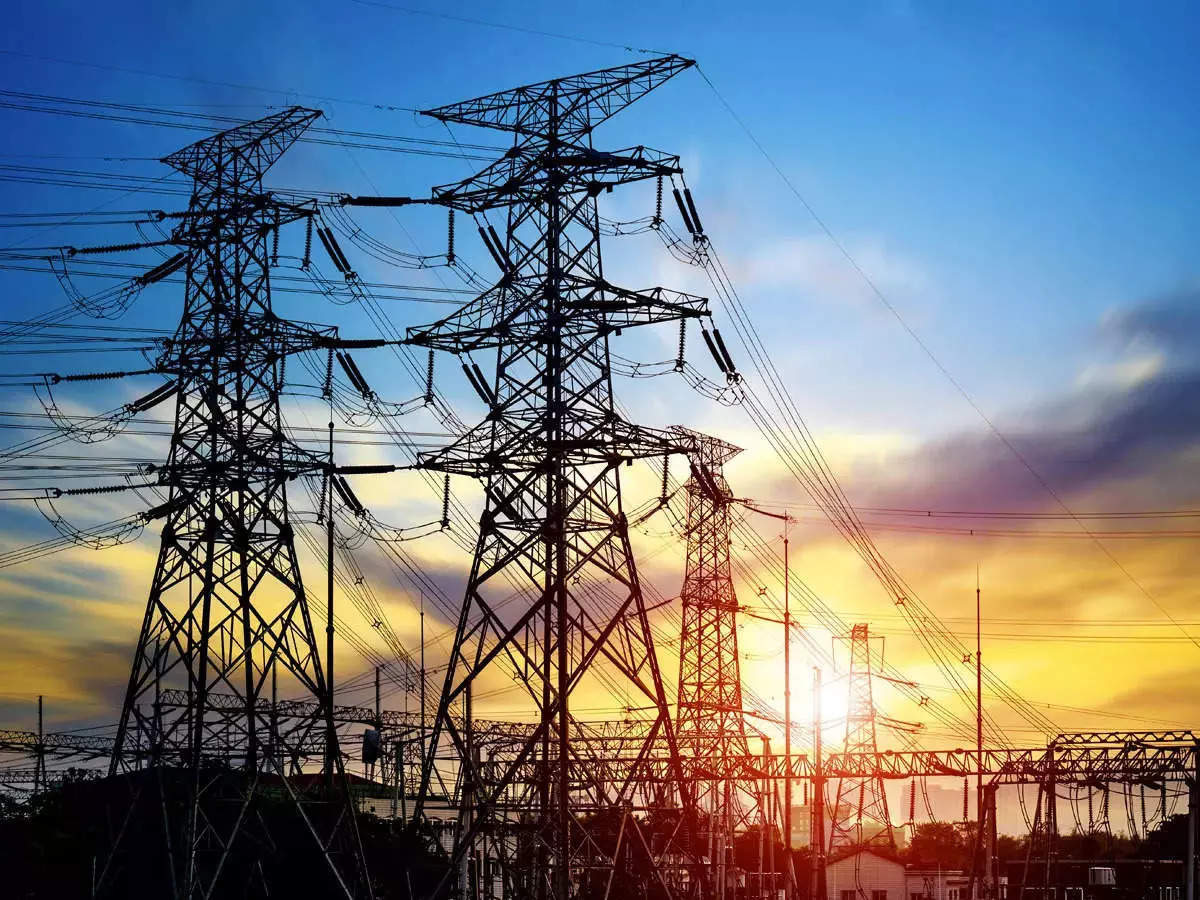
- India is facing one of the worst power crises in its History and the scariest point is that this power crisis is not something that rarely has been haunting almost every year for 10 years now!!
- As a result, businesses all across the country are facing lakhs and even crores of losses due to power shortage!! and at the macro level, the economy of India itself is taking a hit!!
A layman’s analysis
- When we say power crisis you might think maybe India does not have enough energy source!!
- But the fun fact is that India has the 5th largest coal reserve globally with 9.5% of the entire world’s coal reserve right here in our country itself!!
- We have so much coal that with the existing energy demands, these reserves can power India for 111 years!!
- Also the completion of universal household electrification has been a huge achievement.
So the question is:
- Inspite being one of the largest coal reserve why is India facing a power crisis?
- What are the factors that cause this to happen every single year?
Power value chain in India
- The first thing we need to understand is the power value chain in India and how energy actually comes from the coal mines to your laptop.
- This value chain includes four major steps:
- Producers who mine and refine fuels
- Power generation
- Electricity transmission
- Electricity distribution (Discoms)
- The value chain starts with the energy producers who mine and refine fuels that are used in electricity production this includes all types of energy sources like coal gas oil or even nuclear based fuels.
- The fuels are then delivered to the generation facilities where the electricity generator uses the fuel to drive a generator to produce electricity and then to dispatch it to a transmission and distribution system or Discoms.
- This system distributes the electricity to consumer locations through a transmission and distribution grid.
India’s dependency on Coal
- As of September 2021, thermal power comprised 60% of India’s installed capacity in power generation.
- Coal-based power generation, with a capacity of around 210 gigawatts (GW) of the total 396 GW, accounts for about 53% of India’s total power capacity as on March 2022.
- India imports about 20% of its thermal coal requirements.
Why is there a Power Shortage?
- India was recently hit by a power crisis when the daily peak power shortage rose to 10,778 MW and the energy deficit reached 5% at the national level.
- Some states experienced steep deficits of up to 15%.
- Consequently, discoms resorted to load-shedding, resulting in long hours of outage for many households and rationed supply for economic activities.
- Depleting coal supplies at thermal power plants has resulted in this crisis.
(1) Largest share in energy basket
- Coal is the most important and abundant fossil fuel in India. It accounts for 55% of the country’s energy needs.
- Coal demand is driven by the rising population, expanding economy and a quest for improved quality of life.
- Currently, India doesn’t have a feasible replacement of Coal Based Thermal Energy in near future.
(2) Demand for power has soared
- For instance, New Delhi’s peak power demand touched 5,460 megawatts (MW) recently, the highest ever in April’s first fortnight.
- This was due to severe heatwaves all across the nation.
- Several states, including Andhra Pradesh, Madhya Pradesh, Punjab, Haryana, Telangana, and Maharashtra, are facing power outages.
(3) Lack of coal availability in stock
- The coal stock with power generation companies (gencos) is not adequate to meet the rising demand.
- Normally, a power plant must maintain 26 days of coal stock.
- However, at present, several power plants are reporting critical levels of coal stock.
- Data from the Central Electricity Authority (CEA) shows that 97 power plants out of the 173 have critical levels of coal inventory.
- These have an average of 28% of the stock compared to the normal scenario.
Stress on Power plants
- There has been a moderation in coal supply towards certain gencos because of the overdues or delays in the payments.
- As a result, discoms/state governments will either have to absorb the cost burden with increased imported coal-based generation.
- This however has to be passed on the same through tariff hikes which never happened in India.
- Inspite, DISCOMS constrained to offtake power, resulting in load shedding, which has been visible in a few states recently.
Major reason: Underperformance of Coal Sector
- The state power distribution companies (discoms) have also not been able to clear their dues to power generation companies.
- According to the government’s PRAAPTI portal, distribution companies faced financial liability of nearly Rs 1 lakh crore.
- The challenges facing the finances of the distribution companies have only been exacerbated by the COVID-19 crises.
- The impact of the nation-wide lockdown in 2020, which shuttered commercial and industrial enterprises was severe for their finances.
- Revenues from historically subsidizing consumers decreased, even as supply to subsided consumers, agricultural and residential consumers, either increased or remained the same.
- Indian railways owing to no reception of payment from DISCOMS stopped or reduced coal supplies.
Factors attributing to the deteriorating finances
[1] Lack of Cost-reflective Tariffs
- The costs of supplying high-voltage consumers is significantly less than that of supplying to lower voltage consumers
- The complexity of tariff determination is accentuated by the existence of multiplicity of categories in the tariff structures, with numerous subcategories and slabs.
- There is significant variation in this between states.
[2] Distorted Cross-subsidies
- Households and agricultural consumers paying less than the average cost of supply and to make up for this, tariffs for commercial and industrial consumers are higher.
- In developed countries, high voltage industrial consumers have the lowest tariff reflecting lower costs.
- This increases industrial competitiveness by lowering energy costs.
- DISCOMs in states with poor industrialization tend to correspondingly have larger losses.
- Increased domestic consumption due to expanded electrification and rise in per capita incomes and increased agricultural consumption due to increased demand for irrigation have not been matched by a similar growth in subsidizing consumers.
- Consistent losses have meant that distribution companies do not have the financial capacity to invest in necessary capital expenditure, resulting in paying consumers needing to invest on their own in independent sources of power.
[3] Misaligned Political Incentives and Mismanagement
- The govt could have declared the extent to which tariffs would become lower as AT&C losses were brought down.
- Consumers would pay more than necessary to the extent AT&C (Aggregate Technical & Commercial) losses were higher.
- De-metering of agricultural consumption has been another example.
- It is considered to have encouraged ‘a culture of unaccountability in the sector, leading to theft and line losses being hidden within the agricultural category’.
- There are also electricity bills waivers as populist election freebies.
[4] Lack of Regular Tariff Increase
- Another major cause of the high financial losses has been that tariffs do not increase commensurate to increase in costs in many states.
- Since the 1990s, revenue recovered by DISCOMs had been, on average, 30% lower than the cost incurred.
- This resulted in approximately Rs 1.15 lakh crores of costs, which were not recovered through tariffs.
- Due to a variety of reasons, including state government interventions or a lack of preparedness, DISCOMs do not file petitions in a timely manner.
[5] Delays/non-payment of Subsidy Amounts and Dues by States
- The rapid rise in subsidized consumers and increased populist announcements of greater subsidies have meant an increase in the requirement of subsidies from the state governments.
- Delays in release of subsidies, as well as underpayment of committed subsidies impact the ability of DISCOMs in managing operating costs.
- Moreover, since the fraction of the cost structure meant to be covered by subsidy payments has risen.
- Also, government departments often also do not release payments for outstanding dues in a timely manner.
Various policy measures
[1] 2001 Scheme for Repayment of SEB Due
- The first bailout package was intended as a one-time settlement of outstanding dues till September 2001.
- Based on the recommendations of the Committee constituted under Montek Singh Ahluwalia, in May 2002, the government circulated a tripartite agreement between the RBI, Central and State Governments.
- States were to implement reforms such as setting up SERC, metering distribution feeders, and improving revenue realization, in exchange for which 60% of interest/surcharge on delayed payments was waived for participating states
[2] 2012 Financial Restructuring Plan (FRP)
- The states were unable to turn around the fortunes of their electricity boards as required by the financial restructuring plan (FRP) finalized in September 2012.
- This was because of reasons such as low tariff increases, slow progress in reducing losses, higher electricity purchase costs and crippling debt.
- The scheme has been availed by Tamil Nadu, Uttar Pradesh, Rajasthan, Haryana, Jharkhand, Bihar, Andhra Pradesh and Telangana.
- This is the second such bailout for the Indian distribution sector.
- Some states including Uttar Pradesh and Rajasthan have also not converted outstanding state government loans into equity—another requisite.
[3] 2015 Ujwal DISCOMs Assurance Yojana (UDAY)
- The UDAY scheme was introduced with the objective to improve the operational and financial efficiency of state DISCOMs.
- The scheme allowed state governments to take over 75% of outstanding DISCOM debt over two years.
- Incentives offered to participating states included access to additional/priority funding through Central Government schemes such as DDUGJY, IPDS, Power Sector Development Fund (PSDF).
- This however could not alter the situation on the ground.
[4] Atmanirbhar Bharat Abhiyan Package
- This was a part of the package announced to mitigate the impact of the COVID-19 pandemic on the economy.
- It infused liquidity support of Rs 90,000 crore in the form of concessional loans from Power Finance Corporation and Rural Electrification Corporation.
- It provided for rebates by Central Public Sector Gencos to DISCOMs; and relaxation of conditions of existing loans and relief from certain late payments and surcharges were announced.
- The borrowing limits for states were also relaxed, with part of the increased borrowing linked to reforms on power distribution.
[5] Reforms-based Result-Linked Power Distribution Sector
- Launched in July 2021, the RDSS is the latest of many central government grant-based programmes towards electricity distribution network investments.
- It has an outlay of Rs 3 lakh crore for five years.
- Half of the outlay is for better feeder and transformer metering and pre-paid smart consumer metering.
- The remaining half, 60 percent of which will be funded by central government grants, will be spent on power loss reduction and strengthening networks.
- RDSS stipulates universal pre-paid metering but post-paid options may be suitable in many contexts.
What are the recent reforms in Coal Sector?
- Commercial mining of coal is allowed, with 50 blocks to be offered to the private sector.
- Entry norms will be liberalized as it has done away with the regulation requiring power plants to use “washed” coal.
- Coal blocks to be offered to private companies on revenue sharing basis in place of fixed cost.
- Coal gasification/liquefaction to be incentivized through rebate in revenue share.
- Coal bed methane (CBM) extraction rights to be auctioned from Coal India’s coal mines.
Averting the power crisis: A way forward
(1) Ramp-up domestic coal production
- The efforts are being taken to fill the shortage of coal from domestic mines and to do so the government is working closely with coal producing companies to ramp up domestic production of coal.
(2) Reduce demand-supply mismatches
- Load shading is not new to India. Rationing of power supply in rural and semi-urban areas will be the immediate solution for the power distress in industrial areas.
(3) Rationalize the coal imports
- India will need to amplify its imports despite the financial cost. The gap in the coal demand after domestic production has to be filled by the imports from Indonesia and Australia.
(4) Focus on Hydro-power generation and natural gal
- India has the immense potential in the Hydro-power generation and is among the most important sector for generating electricity after thermal power plants. There could be a larger role for natural gas to play, even with global prices currently surging.
(5) Increasing the share of Renewable energy
- Experts advocate a mix of coal and clean sources of energy as a possible long-term solution. It’s not completely possible to transition and it’s never a good strategy to transition 100% to renewables without a backup.
- Long term investment in multiple power sources aside a crisis like the current one can be averted with better planning.
(6) Increased coordination
- There is need for closer coordination between Coal India Limited – the largest supplier of coal in the country and other stakeholders.
- For now, the government is working with state-run enterprises to ramp up production and mining to reduce the gap between supply and demand.
(7) Decentralized power generation
- The main issue is that we are dependent on large, centralized power generation.
- The only way our power sector can absorb shocks better is if large power plants are augmented by decentralized generation sources at village level.
- This can be a template for better resilience to future power crises.
(8) Coal stocking norms
- To avoid such a crisis situation in future, the Ministry of Power has worked out a strategy which includes tweaking the coal stocking norms. If the power plants do not follow them, then there will be a penal provision.
- To overcome the storage issue in the generation of electricity from renewable sources, the government is working on a provision for creating more storage facilities in the grid.
Conclusion
- India can learn a lesson from Europe’s power crisis. While Europe has gas power plants to stand in, India doesn’t have similar options.
- As we move more towards greening our power sources, we need to provision for paying for standby thermal generation to avoid a mega-crisis.
- Adequate liquidity for backup reserve capacity needs to be planned and provisioned for.
- Probably, the present situation is a good opportunity to rethink and fine-tune the energy policy without further delay.
- Bits and pieces reforms will not work anymore, as the chain has to been broken and a complete overhaul is required.
UPSC 2023 countdown has begun! Get your personal guidance plan now! (Click here)