In recent years, maritime East Asia has witnessed escalating power struggles, with China claiming Japan-controlled Senkaku/Diaoyu Islands in the East China Sea, sparking repeated tensions.
What are the current geopolitical tensions in the East and South China Seas?
East China Sea: The main issue revolves around the Senkaku/Diaoyu Islands, claimed by both China and Japan.
Tensions have escalated through incidents like the arrest of a Chinese fishing boat captain and Japan’s nationalization of the islands in 2012. The area also witnesses Chinese Coast Guard incursions.
South China Sea: China’s claims over most of the region, backed by aggressive actions such as the creation of artificial islands and naval exercises, have escalated tensions with Vietnam, the Philippines, Malaysia, Brunei, and Taiwan.
China’s “Nine-Dash Line” claims have been rejected by international tribunals, but Beijing continues to push these claims.
USA Context: The U.S. maintains security alliances with Japan, South Korea, and the Philippines, providing military backing. Joint exercises and increased cooperation between these allies.
The formation of the “Squad” (US, Japan, Australia, and the Philippines) highlights the coordination to counterbalance China’s influence.
How do climate change and environmental factors impact storm patterns in these regions?
Storm Patterns and Rising Seas: The region is highly vulnerable to extreme weather events, including typhoons, which are becoming more intense and frequent due to climate change.
Rising sea levels and changing storm patterns threaten coastal communities, military installations, and infrastructure.
Erosion of Islands: The creation of artificial islands by China is accelerating coastal erosion and destroying coral reefs, which are critical to local marine ecosystems.
What are the implications of military activities by regional powers in the East and South China Seas?
Growing Militarization: China has rapidly expanded its military presence, including the construction of airstrips, ports, and other defense infrastructure.
The Chinese Coast Guard and maritime militias have been active in harassing the vessels of other claimant states, particularly in the South China Sea.
Challenge the US Navy: China’s military activities are seen as part of its broader strategy to challenge U.S. naval supremacy in the Indo-Pacific. This strategy also includes controlling vital sea lanes, undersea cables, and energy reserves.
How are local communities and economies affected?
Economic Disruption: China’s actions in the South China Sea, particularly around disputed fishing areas, have impacted local economies dependent on fishing.
Maritime Trade: The region is home to critical sea lanes through which a significant portion of global trade, including energy supplies, passes. Any conflict or blockade in these waters would have severe global economic ramifications.
Impact on Tourism: The increasing militarization and tension also negatively impact tourism in coastal areas.
Way forward:
Strengthening Maritime Partnerships: India should enhance its strategic maritime partnerships in the Indo-Pacific through forums like the Quad (India, U.S., Japan, and Australia) and ASEAN to ensure a free and open Indo-Pacific.
Economic and Infrastructure Diplomacy: India can leverage initiatives like SAGAR (Security and Growth for All in the Region) and enhance its economic presence by investing in infrastructure, connectivity, and capacity-building projects in Southeast Asian countries.
Mains PYQ:
Q South China Sea has assumed great geopolitical significance in the present context. Comment. (UPSC IAS/2016)
In an effort to promote anime and manga culture in India, the Ministry of Information & Broadcasting has launched the WAVES Anime & Manga Contest (WAM!).
About the WAVES Anime & Manga Contest
The WAM! is an innovative initiative launched by the Ministry of Information & Broadcasting in collaboration with the Media & Entertainment Association of India (MEAI).
The contest is part of Create in India Challenge and is aimed at nurturing local creative talent in anime and manga production.
It provides a unique platform for Indian creators to produce localized versions of Japanese art styles, targeting both domestic and global audiences.
The contest offers marketing support and opportunities for global recognition, helping creators showcase their talent in manga, webtoon, and anime.
WAM! features 3 key categories:
Manga (Japanese style comics): Individual participation for both students and professionals.
Webtoon (Vertical comics for digital mediums): Individual participation for students and professionals.
Anime (Japanese style animation): Team participation (up to 4 members) for students and professionals.
About the Create in India Challenge
The Create in India Challenge aligns with Prime Ministers vision of “Design in India, Design for the World”, emphasizing the development of creative industries in India.
It is part of the broader effort to make India a global hub for design, innovation, and creative production.
It is a precursor to the WAVES Summit, a large-scale event aimed at promoting creativity and technology in media and entertainment.
PYQ:
[2014] Though 100 percent FDI is already allowed in non-news media like a trade publication and general entertainment channel, the government is mulling over the proposal for increased FDI in news media for quite some time. What difference would an increase in FDI make? Critically evaluate the pros and cons.
West Bengal has announced the discontinuation of the iconic 150 year old Kolkata trams, India’s last functioning tram system.
About Kolkata Tram
Introduced in 1873 in Calcutta (now Kolkata), the first trams were horse-drawn and operated along a 3.8 km route between Sealdah and Armenian Ghat Street.
In 1874, horse-drawn trams reached Bombay (now Mumbai), followed by their introduction in Nashik and Patna.
However, their dependency on horse labor made them unsustainable.
Revival and Modernization of Kolkata’s Trams
Lord Ripon revived trams in Calcutta in 1880 by experimenting with steam locomotives.
While the steam-powered trams improved speed, they introduced issues like pollution, which discouraged other states from adopting this technology.
In 1895, Madras (now Chennai) launched the country’s firstelectric tramcars, reducing noise and pollution.
Following this, Calcutta also transitioned to electric-powered trams by 1902, with routes between Esplanade and Kidderpore, and Esplanade and Kalighat.
Significance of Trams
Kolkata’s trams hold historical significance as India’s oldest running tram system, symbolizing the city’s colonial past and cultural identity.
They provide an environmentally friendly and affordable mode of transport, making them relevant even today.
As a symbol of resilience, Kolkata’s trams have survived while other cities phased them out.
They also serve as a unique tourist attraction, offering a nostalgic glimpse of the city.
PYQ:
[2020] Which of the following statements correctly explains the impact of Industrial Revolution on India during the first half of the nineteenth century?
(a) Indian handicrafts were ruined.
(b) Machines were introduced in the Indian textile industry in large numbers.
(c) Railway line were laid in many parts of the country.
(d) Heavy duties were imposed on the import of British manufactures.
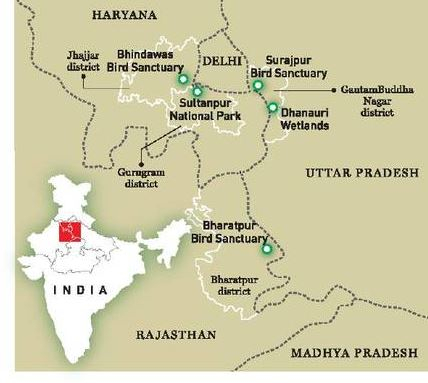
The NGT has ordered the UP government to remove water hyacinth from “Dhanauri wetlands” and questioned its failure to designate the wetland as a Ramsar site.
AboutDhanauri Wetland
Details
Location
Dhanauri village near Dankaur, Uttar Pradesh;
Floodplains of Yamuna.
Key Species
Home to over 120 Sarus Cranes (state bird of Uttar Pradesh) and 217 bird species
Ecological Significance
Important birding and nesting site; recognized as an Important Bird Area by Bird Life International
Bird Population
Hosts over 50,000 waterfowls during migratory seasons (November to March)
Ramsar Criteria
Fulfills 2 Ramsar criteria:
1. Hosts over 1% of biogeographic Sarus Crane population
2. Congregation site for 20,000+ waterfowls
Conservation Status
Documented by BNHS (Bombay Natural History Society); crucial for supporting endangered species
Ramsar Wetlands
The Ramsar Convention, also known as the ‘Convention on Wetlands,’ is an intergovernmental environmental treaty founded by UNESCO in 1971.
It derives its name from the city of Ramsar in Iran, where it was initially signed.
Ramsar sites are wetlands of global significance recognized under this treaty.
The Montreux Record is a register of wetland sites on the brink of ecological changes and in need of close monitoring under the Ramsar Convention.
Ramsar Site Designation Criteria:
Ramsar site designation hinges on several factors:
Representing rare or unique natural wetland types.
Supporting endangered species or threatened ecological communities.
Maintaining biodiversity in specific biogeographic regions.
Offering refuge during adverse conditions.
Regularly accommodating 20,000 or more waterbirds.
Sustaining 1% of a population of a single water-bird species.
Serving as a critical source of food, spawning grounds, nurseries, and migration paths for fish.
Regularly supporting 1% of a population of non-avian wetland-dependent animal species.
September 28th marks 117th birth anniversary of the legendary freedom fighter “Bhagat Singh”.
Who wasBhagat Singh?
Details
Birth
September 28, 1907; Banga, Punjab (now in Pakistan)
Family
Came from a family involved in anticolonial activities; his father Kishan Singh and uncle Ajit Singh were active freedom fighters.
Affiliations
• Hindustan Republican Association (1924)
• Hindustan Socialist Republican Association (1928)
• Naujawan Bharat Sabha (1926)
Revolutionary Actions
• Played a key role in the Lahore Conspiracy Case (1928) by avenging Lala Lajpat Rai’s death and mistakenly killing J.P. Saunders
• Threw a bomb in the Central Legislative Assembly on April 8, 1929, with B.K. Dutt, to protest oppressive British laws.
Ideologies and Principles
• Advocated Marxist and socialist ideologies
• Rejected religion in his essay Why I Am an Atheist
• Emphasized rationalism, equality, and justice.
Arrest and Trial
Arrested in 1929 for throwing a bomb in the Central Legislative Assembly; later rearrested for the Lahore Conspiracy Case (murder of J.P. Saunders).
Jinnah opposed a 1929 Bill allowing trials in absentia, delivering a strong speech in the Central Assembly.
Execution
Hanged on March 23, 1931, along with Sukhdev and Rajguru, in Lahore for his revolutionary activities.
Nehru and Subhash Chandra Bose visited Bhagat Singh in prison.
Literary Works
Bhagat Singh was fluent in Urdu, Punjabi, Hindi, and English, and familiar with Sanskrit.
His jail notebook referenced thinkers like Karl Marx, Thomas Jefferson, Mark Twain, and others, reflecting his intellectual diversity.
At 17, he wrote Vishwa Prem (Universal Love), advocating for universal brotherhood and equality.
He urged the oppressed classes to rebel against the social order and spoke about the philosophy of revolution in his writings, such as What is Revolution? (1929).
In his series What is Anarchism? he described organized religion and the state as forms of mental and physical slavery.
He wrote about the power of love in a 1929 letter to Sukhdev, emphasizing its role in personal and political strength.
PYQ:
[2020] Since the decade of the 1920s, the national movement acquired various ideological strands and thereby expanded its social base. Discuss.
Q). Suppose you are an officer in charge of implementing a social service scheme to provide support to old and destitute women. An old and illiterate woman comes to you to avail the benefits of the scheme. However, she needs documents to show that she fulfils the eligibility criteria. But after meeting her and listening to her you feel that she certainly needs support. Your inquiries also show that she is destitute and living in a pitiable condition. You are in a dilemma as to what to do. Putting her under the scheme without the necessary documents would be a violation of the rules. But denying her the support would be cruel. (UPSC CSE 2016)
Prelims: Who among the following can join the National Pension System (NPS)? (UPSC CSE 2017) (a) Resident Indian citizens only (b) Persons of age from 21 to 55 only (c) All State Government employees joining the services after the date of notification by the respective State Governments (d) All Central Government employees including those of Armed Forces joining the services on or after 1st April, 2004
Mentor’s Comment: There is an ongoing discussion about the need for a stronger welfare system because many countries are moving away from neoliberal policies. This has brought back conversations about government support for people in need. The proposed Unified Pension Scheme (UPS) aims to offer pensions to everyone, but it has been criticized for needing major changes to truly help retirees. These potential reforms are important as they relate to larger social support and financial security trends, making the editorial very relevant right now.
_
Let’s learn!
Why in the News?
The Indian pension system has evolved through various schemes, notably the Old Pension Scheme (OPS), the New Pension Scheme (NPS), and the proposed Unified Pension Scheme (UPS).
There are ongoing discussions about reforming India’s pension framework amidst significant socio-economic changes.
Previous Pension Schemes in India:
Old Pension Scheme (OPS): Implemented before 2004, it guaranteed a defined benefit pension based on the last drawn salary.
The government was solely responsible for pension disbursement and provided stability and protection from financial market risks. It allowed employees to plan their retirements with financial security.
Transition to New Pension Scheme (NPS): Introduced in 2004 replacing the OPS, it shifted from a defined-benefit model to a defined-contribution model.
Both employees and the government contribute to a pension fund invested in financial markets. Pension payouts are linked to market performance, exposing retirees to market volatility.
What are the criticisms faced by the NPS?
It represents a neoliberal shift reducing state involvement in welfare. It leaves retirees vulnerable to economic downturns and market fluctuations.
The market-driven model raises worries about the commercialization of public welfare programs. It highlights the weakening of the state’s social responsibility towards its citizens.
A return to Welfarism
• Global Context: The era of neoliberalism is declining, prompting calls for stronger social safety nets. The 2008 financial crisis highlighted the risks of over-reliance on markets. The COVID-19 pandemic intensified demands for government intervention to protect citizens. • Indian Context: India is experiencing a similar push for state-backed welfare provisions. The proposed Unified Pension Scheme (UPS) aims to provide universal pensions while balancing state involvement and market participation.
About the newly proposed – Unified Pension Scheme (UPS):
• It was introduced by the government in August 2024, replacing the 21-year-old National Pension System (NPS) with a structure closely resembling the Old Pension Scheme (OPS). • The UPS promises government employees a lifelong monthly pension of 50%oftheirlastdrawn pay.In the event of a government employee’s death, the family is assured a pension equivalent to 60% of the employee’s pension. • A minimum pension of ₹10,000 per month is assured for those who complete at least 10 years of central government service. • The scheme is contributory, requiring employees to contribute 10% of their salary. The government is to contribute 18.5% of the salary.
Criticism faced by the Unified Pension Scheme:
Limited access to the Beneficiaries: UPS promises retirement payouts but offers lower returns than the Old Pension Scheme (OPS), which exposes retirees to market risks.
A requirement of 25 years of service for full pension disadvantages the late joiners, and concerns about potential underfunding could lead to pension delays.
Coverage Limitations: Currently, the UPS only covers Union government employees, excluding many public sector workers like teachers.
Need for State Intervention:
Greater state involvement is necessary to protect retirees from market fluctuations.
The UPS should consider safeguards, such as a minimum guaranteed pension similar to the OPS, to enhance its viability as a welfare scheme.
Conclusion: The UPS, if properly restructured, could become an important tool in protecting the financial security of retirees and addressing the shortcomings of the NPS, ensuring that India’s retirees are not left to the mercy of market forces but are supported by a robust welfare system.
Q). ‘China is using its economic relations and positive trade surplus as tools to develop potential military power status in Asia’, In the light of this statement, discuss its impact on India as her neighbor. (UPSC CSE 2017) Q). With respect to the South China Sea, maritime territorial disputes and rising tension affaire the need for safeguarding maritime security to ensure freedom of navigation and every flight throughout the region. In this context, discuss the bilateral issues between India and China. (UPSC CSE 2014) Q). The time has come for India and Japan to build a strong contemporary relationship, one involving global and strategic partnership that will have a great significance for Asia and the world as a whole. Comment. (UPSC CSE 2019) Q). Critically examine the aims and objectives of SCO. What importance does it hold for India? (UPSC CSE 2021)
Mentor’s Comment: China views its strength and diplomacy in critical minerals strategically, emphasizing its dominance and leveraging its resources as a political tool. China controls approximately 60% of global rare earth production and 80% of processing, positioning itself as a critical player in the mineral supply chain. This dominance allows China to exert significant influence over global markets. China perceives U.S.-led initiatives to diversify critical mineral supply chains as a containment strategy.
On August 15, 2024, China announced restrictions on antimony exports effective September 15, citing national security concerns. In today’s editorial, we will observe how China aims to remind the West of its dependency on Chinese minerals, particularly for high-tech applications.
_
Let’s learn!
Why in the News?
On August 15, 2024, China announced it would restrict the export of antimony, a key mineral used in military equipment like missiles and ammunition.
The Chinese government cited national security as the reason for this decision. This follows earlier curbs on gallium and germanium.
China’s Dominance in Critical Minerals
• China is a key player in the critical minerals market, controlling 60% of rare earth production and 80% of processing globally. • China dominates all supply chain segments, including mining, extraction, refining, and processing.
How do these export controls reflect China’s response to geopolitical tensions?
Response to U.S. Actions: China’s recent export controls are seen as retaliatory measures against U.S. restrictions on Chinese technology and trade practices. This reflects a broader geopolitical struggle between the two nations.
Strategic Leverage: By controlling the supply, China is asserting its influence and demonstrating its willingness to use economic tools as leverage in geopolitical conflicts.
Japan Precedent: The 2010 halt of rare earth exports to Japan following a maritime incident illustrates China’s readiness to employ export controls as a means of exerting pressure during diplomatic disputes.
Regional Security Dynamics: China’s export restrictions highlight the vulnerabilities of countries like the U.S., EU, India, and Japan, which rely heavily on Chinese minerals for their defense and technology sectors, prompting these nations to reconsider their supply chain dependencies.
What was the objective behind this move?
Military Assertiveness: Alongside economic measures, China has increased military drills and assertive posturing in the Asia-Pacific region, particularly concerning Taiwan.
This dual approach of economic control and military readiness signals a comprehensive strategy to counter perceived threats from the U.S. and its allies.
Multipolarity Advocacy: China’s actions are part of a broader narrative promoting a multipolar world order that challenges U.S. hegemony.
By using export controls strategically, China aims to reinforce its position as a dominant power in global affairs while advocating for regional cooperation free from external interference.
How China is turning its Foreign Policy Posture?
Future Ambitions: According to China’s Natural Resource Minister Wang Guanghua, China plans to enhance its mineral exploration and capacity over the next five years, signaling ongoing ambitions to consolidate its resource dominance.
Strategic Dependency Reminder: Restricting access to strategic resources is a traditional tactic in statecraft, similar to the U.S. oil embargo against Japan in 1940.
Weaponization of Resources: China has transitioned from politicizing critical minerals to weaponizing them, using export controls as a political tool against the West.
Targeting Dual-Use Applications: Critical minerals used in military applications, such as those needed for submarines and fighter jets, are prioritized in China’s export controls.
Shift from Cooperation to Coercion: The approach has shifted from cooperative strategies to aggressive and coercive tactics, indicating that export restrictions will likely increase as relations with the West deteriorate.
India’s Vulnerability due to dependence on China
Strategic Dependence: India relies heavily on imports of critical minerals like lithium, nickel, cobalt, and copper from China, resulting in high costs.
The U.S. is actively seeking to reduce its dependence on Chinese minerals and is exploring domestic production options.
Call to Action: The situation serves as a wake-up call for Indian policymakers to take proactive measures, such as forming partnerships with allied countries and investing in alternative supply chains to reduce dependency on China.
Conclusion: The ongoing geopolitical tensions suggest that China may continue to leverage its control over critical minerals as a tool for both economic gain and political influence, potentially escalating conflicts with Western powers if tensions persist.
Are you looking for the UPSC Mains 2024 General Studies Paper II? You’ve come to the right place! This page offers a direct download link for the GS Paper II along with expert insights to help you navigate your preparation effectively.
The Importance of General Studies Paper 2
General Studies Paper II, also known as the “Governance, Constitution, Polity, Social Justice and International Relations” paper, carries 250 marks in the UPSC Mains Examination. It tests your knowledge of the Indian polity, governance mechanisms, and the broader socio-political landscape. Mastering this paper requires an in-depth understanding of the Constitution, government policies, and current affairs.
Download UPSC Mains 2024 General Studies Paper 2
Access the official UPSC Mains 2024 GS Paper II by clicking the link below:
Note: The download link provides the complete question paper as presented in the actual examination.
Expert Insights and Analysis Video
To help you decode the complexities of GS Paper II, we have an in-depth analysis video that breaks down each question, discusses core concepts, and offers strategic tips for answer writing.
UPSC Mains 2024 GS Paper II Detailed Analysis
https://youtu.be/r96kkU8WE-A
In this video, our experts delve into the paper’s nuances, providing valuable insights on how to approach each section, tackle challenging questions, and improve your score.
Access All UPSC Mains 2024 Question Papers
Looking for other papers from the UPSC Mains 2024? Access the complete set here:
This comprehensive resource includes the Essay paper, other General Studies papers, Optional subjects, and more, all available for download.
How to Make the Most of GS Paper II
Understand the Syllabus Thoroughly: Be well-versed with the syllabus to ensure no topic is overlooked during preparation.
Focus on Key Areas: Pay special attention to the Indian Constitution, governance issues, and current policies.
Relate to Current Affairs: Integrate contemporary issues with core concepts to present well-rounded answers.
Practice Answer Writing: Regularly write answers to previous years’ questions to refine your expression and structure.
Use Data and Reports: Citing relevant data and reports in your answers can add value and credibility to your arguments.
Review and Revise Regularly: Regular revision is crucial to retaining facts, figures, and concepts.
Topics Covered in GS Paper II
Constitution and Polity: Features, amendments, and functioning of the Indian Constitution; significant provisions and basic structure.
Governance: Important aspects of governance, transparency, accountability, e-governance, and role of civil services.
Social Justice: Welfare schemes, policies for vulnerable sections, mechanisms for the protection of the marginalized.
International Relations: Bilateral, regional, and global groupings and agreements; India’s foreign policy and international organizations.
Tips for Excelling in General Studies Paper II
Stay Updated: Keep track of current events, government policies, and constitutional developments.
Structure Your Answers Well: Begin with an introduction, followed by a logical argument, and conclude with a balanced perspective.
Incorporate Data and Examples: Use statistics, reports, and case studies to substantiate your arguments.
Work on Time Management: Practice completing answers within the stipulated time to ensure you can cover all questions in the exam.
Use Simple Language: Avoid jargon and overly complex sentences. Clarity and precision are key.
Frequently Asked Questions (FAQs)
1. How important is GS Paper II for the overall UPSC ranking?
GS Paper II carries 250 marks and is crucial for a high rank in the Mains Examination. A strong performance in this paper can significantly boost your total score.
2. Can I write answers in bullet points?
While bullet points can be used for clarity, ensure that the flow of your answer is not disrupted. Use paragraphs where detailed explanations are required.
3. How should I incorporate current affairs in my answers?
Link current issues with constitutional provisions, governance mechanisms, or international relations topics to demonstrate a comprehensive understanding.
4. What should be the ideal word limit for each answer?
Typically, 150 to 200 words for shorter answers and around 250 words for longer questions is a good benchmark.
5. How can I improve my performance in GS Paper II?
Regular practice, thorough understanding of concepts, and integrating current affairs with your answers are essential to excel in GS Paper II.
Conclusion
General Studies Paper II is a test of your knowledge and analytical skills across governance, polity, and international relations. By downloading the UPSC Mains 2024 GS Paper II and utilizing our expert analysis, you can refine your preparation strategy and improve your chances of success.
Remember, a disciplined approach, consistent practice, and effective resource utilization are key to excelling in this paper.
Are you preparing for the UPSC Civil Services Examination and looking for the UPSC Mains 2024 General Studies Paper I? You’re in the right place! This page provides a direct download link for the GS Paper I and offers expert insights to help you excel in your preparation.
The Importance of General Studies Paper 1
General Studies Paper I is a crucial component of the UPSC Mains Examination, carrying 250 marks. It assesses a candidate’s understanding of Indian Heritage and Culture, History, Geography of the World and Society. Excelling in this paper requires a comprehensive grasp of diverse subjects and the ability to interlink concepts effectively.
Download UPSC Mains 2024 General Studies Paper 1
Access the official UPSC Mains 2024 GS Paper I by clicking the link below:
Note: The download link provides the complete question paper as presented in the actual examination.
Expert Insights and Analysis Video
To help you navigate the complexities of GS Paper I, we have an in-depth analysis video that breaks down each question, discusses key themes, and offers strategic tips for answer writing.
UPSC Mains 2024 GS Paper I Detailed Analysis
https://youtu.be/AHARZRUtJe4
In this video, our experts delve into the nuances of the paper, providing valuable insights on how to approach each section and maximize your score.
Access All UPSC Mains 2024 Question Papers
Looking for other papers from the UPSC Mains 2024? Access the complete set here:
This comprehensive resource includes the Essay paper, other General Studies papers, Optional subjects, and more, all available for download.
How to Make the Most of GS Paper I
Understand the Syllabus: Familiarize yourself with each topic outlined in the syllabus to ensure comprehensive coverage.
Analyze Previous Years’ Questions: Identify patterns and frequently asked topics to prioritize your preparation.
Incorporate Current Affairs: Relate historical and geographical concepts to contemporary events for enriched answers.
Practice Answer Writing: Regular writing practice enhances articulation and time management skills.
Use Diagrams and Maps: Visual aids can effectively illustrate your points and fetch extra marks.
Review and Revise: Regular revision solidifies your knowledge base and boosts confidence.
Topics Covered in GS Paper 1
Indian Heritage and Culture: Art forms, literature, architecture from ancient to modern times.
History: Modern Indian history, significant events, personalities, and issues; the Freedom Struggle and its various stages.
World History: Events from the 18th century, including industrial revolution, world wars, redrawal of national boundaries.
Society: Salient features of Indian society, diversity, globalization, and social empowerment.
Geography: Physical geography, natural resources distribution, and factors responsible for the location of primary, secondary, and tertiary sector industries.
Tips for Excelling in General Studies Paper 1
Integrate Interdisciplinary Knowledge: Link concepts across history, geography, and culture for a multidimensional answer.
Stay Updated: Regularly read newspapers and journals to incorporate recent developments in your answers.
Practice Diagrams: Neat and labeled diagrams can enhance the quality of your answers in geography.
Time Management: Allocate appropriate time to each question to ensure all are answered satisfactorily.
Balanced Perspectives: Present well-rounded views, especially on societal issues, to showcase analytical depth.
Conclusion
General Studies Paper I is a test of your knowledge breadth and depth across multiple disciplines. By downloading the UPSC Mains 2024 GS Paper I and leveraging our expert analysis, you can refine your preparation strategy and enhance your chances of success.
Remember, consistent effort, strategic planning, and effective utilization of resources are key to excelling in this paper.
Frequently Asked Questions (FAQs)
1. How crucial is GS Paper I for the overall UPSC ranking?
GS Paper I significantly impacts your total score, contributing 250 marks to the Mains Examination. A strong performance can elevate your ranking considerably.
2. Can I write answers in bullet points or paragraphs?
A mix of both is advisable. Use bullet points for clarity and paragraphs for detailed explanations, ensuring a coherent flow.
3. Should I include current events in my answers?
Yes, linking historical and geographical concepts to current events demonstrates analytical ability and a contemporary understanding.
4. Is it necessary to draw diagrams in every geography question?
While not mandatory, diagrams can enhance your answers where applicable and make complex information more accessible.
5. How can I improve my answer-writing skills for GS Paper I?
Regular practice, timed mock tests, and seeking feedback from mentors or peers can significantly improve your writing skills.
Conclusion
General Studies Paper I is a test of your knowledge breadth and depth across multiple disciplines. By downloading the UPSC Mains 2024 GS Paper I and leveraging our expert analysis, you can refine your preparation strategy and enhance your chances of success.
Remember, consistent effort, strategic planning, and effective utilization of resources are key to excelling in this paper.
The record warming of 2023-2024 is offering a clearer view of the impacts of global warming. The range of extreme events experienced globally has spanned from deadly heatwaves to devastating cyclones and floods, as well as droughts and wildfires.
Impact of Warming on Predictability:
Increased Variability: The record warming of 2023-2024 highlights the unpredictability of climate systems under global warming, complicating forecasts for natural phenomena like El Niño, monsoons, and hurricanes.
Natural Variability: Warming may extend the timescale of natural decadal variability, making it harder to distinguish between short-term fluctuations and long-term trends in climate behaviour.
Model Limitations: Despite advances, climate models are imperfect in capturing changes in dominant climate modes due to warming, leading to inconsistencies in predicting events like monsoon trends.
Types of Climate Models to forecast the weather:
General Circulation Models (GCMs): These models simulate the physics of the climate system by representing the interactions between the atmosphere, oceans, land, and ice. They divide the Earth into a three-dimensional grid and calculate climate variables like temperature and humidity in each grid cell.
Earth System Models (ESMs): An advanced subset of GCMs that includes biogeochemical cycles, allowing them to simulate interactions between climate and ecological processes, such as carbon and nitrogen cycles.
Regional Climate Models (RCMs): These focus on smaller geographic areas to provide more detailed climate projections by using outputs from GCMs as inputs for localized simulations.
Integrated Assessment Models (IAMs): These combine climate science with socioeconomic factors to analyze how human activities influence climate change and to project future emissions scenarios.
Challenges in Forecasting Extreme Weather:
Inconsistent Predictions: Predictions for extreme weather events in 2023, such as the monsoon and hurricane seasons, were less accurate, revealing the limitations of current models and observational networks.
Unforeseen Factors: Unanticipated contributions, like the impact of the Hunga Tonga volcano or wildfire-induced CO2 emissions, exacerbated warming in ways models failed to predict, illustrating the unpredictability of new factors.
Censorship Concerns: The rapid response required from social media platforms to act on content flagged as misleading within 36 hours created concerns about censorship and freedom of expression.
Future of Weather Prediction Models:
Need for Model Improvements: There is ongoing work to refine models and incorporate the latest technologies, including AI and machine learning, to improve weather prediction accuracy at hyperlocal scales.
Natural Modes and Uncertainty: The predictability of natural modes (El Niño, La Niña, IOD) may decrease with relentless warming, making future climate forecasts increasingly uncertain.
Short-Term Focus: A shift toward short-term predictions (up to a decade or two) may offer more reliable projections due to the inherent difficulty in predicting long-term scenarios under continuous global warming.
Way forward:
Enhanced Climate Models: Invest in improving climate models with cutting-edge technologies like AI, machine learning, and advanced sensors to increase the accuracy of short-term forecasts and better capture the impact of natural variability under warming.
Localized Early Warning Systems: Develop robust, hyperlocal early warning systems to better prepare for extreme weather events, focusing on disaster management and reducing vulnerabilities in high-risk communities.
September 26 is recognized on the United Nations calendar as the International Day for the Total Elimination of Nuclear Weapons.
What is the current state of global nuclear disarmament efforts?
Treaty on the Prohibition of Nuclear Weapons (TPNW): The TPNW, in force since 2021, is the first legally binding international agreement that comprehensively bans nuclear weapons. As of July 2024, it has 70 states parties and 27 signatories yet to ratify, covering nearly 50% of the world’s states.
Non-Proliferation Treaty (NPT): The NPT, in effect since 1970, remains the foundational treaty aimed at preventing the spread of nuclear weapons and promoting eventual disarmament. However, it has been criticized for its limited focus on actual disarmament.
Persistent Objectors: Nuclear-armed states (such as the U.S., Russia, China, India, and Pakistan) and their allies have consistently opposed the TPNW, refusing to be bound by its provisions.
What are the key obstacles hindering further nuclear disarmament?
Nuclear Deterrence Doctrine: The belief in nuclear deterrence — the idea that possessing nuclear weapons prevents attacks — is a central justification for continued nuclear armament.
Nuclear-Weapon States’ Resistance: The nuclear-armed states, including the U.S., Russia, China, India, and others, continue to view nuclear weapons as essential to their security strategies, despite claims of disarmament commitments under the NPT.
Geopolitical Conflicts: Ongoing geopolitical tensions, such as Russia’s invasion of Ukraine, China’s rising military power, North Korea’s nuclear tests, and Iran’s uranium enrichment, have exacerbated the global nuclear threat, further impeding disarmament efforts.
Lack of Enforcement Mechanisms: The TPNW, while normatively important, lacks robust enforcement mechanisms. It depends on the voluntary commitment of states, and nuclear possessors do not face direct penalties for non-compliance.
What steps can be taken to reinvigorate the nuclear disarmament agenda? (Way forward)
Strengthening International Advocacy: Civil society, former political leaders (including NATO officials), and international organizations should continue advocating for disarmament and urging nuclear-armed states and their allies to reconsider their stance. Public pressure could create the political will for further disarmament steps.
Engagement of Non-Nuclear States: States that are non-nuclear but support the TPNW should work to expand the treaty’s footprint, encouraging more countries to ratify and actively participate in its framework. This could help isolate nuclear possessors diplomatically and morally.
Building Confidence through Arms Control Treaties: Reviving arms control agreements, such as the Comprehensive Test Ban Treaty (CTBT) and the New START treaty, would be important milestones in reducing nuclear risks.
About CTBT:
Complete Ban on Nuclear Testing: The CTBT prohibits all forms of nuclear explosions—whether for military or civilian purposes—across all environments, including underground, atmospheric, and underwater.
Robust Verification Mechanism: The treaty includes an International Monitoring System (IMS) of over 300 monitoring stations worldwide, capable of detecting nuclear tests, as well as provisions for on-site inspections to ensure compliance with the treaty’s terms.
India is not a signatory to the Comprehensive Nuclear-Test-Ban Treaty (CTBT).
Diplomatic Pressure and Dialogue: Encouraging diplomatic dialogue, especially among the major nuclear powers, could help mitigate tensions and create pathways to gradual disarmament. Leaders must explore confidence-building measures, transparency, and mutual reductions in nuclear arsenals.
Are you preparing for the UPSC Civil Services Examination and looking for the UPSC Mains 2024 Essay Paper? You’ve come to the right place! This page provides you with the direct download link for the Essay Paper and offers expert insights to help you excel in your preparation.
Why the Essay Paper Matters
The Essay Paper in the UPSC Mains carries 250 marks, making it a crucial component of your overall score. It’s not just about showcasing your knowledge but also your ability to articulate thoughts, analyze issues critically, and present arguments coherently. A well-crafted essay can significantly boost your rank in the final merit list.
Download UPSC Mains 2024 Essay Paper
Access the official UPSC Mains 2024 Essay Paper by clicking the link below:
Paper Name
Download Link
Essay Paper 2024
Download PDF
Note: The download link provides the complete question paper as presented in the actual examination.
Expert Insights and Analysis Video
Understanding how to approach the essay topics is vital for scoring high marks. To assist you, we have an in-depth analysis video by seasoned educators:
UPSC Mains 2024 Essay Paper Analysis
In this video, our experts dissect each essay topic, discuss potential approaches, and offer valuable tips on structuring your essays effectively.
Link to All UPSC Mains 2024 Question Papers
Looking for other papers from the UPSC Mains 2024? Access the complete set here:
This comprehensive resource includes General Studies papers, Optional subjects, and more, all available for download.
How to Make the Most of the Essay Paper
Review the Topics Carefully: Understand what each essay prompt is asking. Look for keywords and directives.
Brainstorm and Outline: Spend 15-20 minutes planning your essay. Jot down key points, arguments, and examples.
Write Clearly and Concisely: Maintain clarity in your writing. Avoid unnecessary jargon and keep sentences concise.
Present Balanced Views: A good essay presents multiple perspectives before arriving at a well-reasoned conclusion.
Use Relevant Examples: Support your arguments with pertinent examples, data, or quotes.
Proofread Your Work: Allocate time to review your essay for any grammatical errors or inconsistencies.
Tips for Excelling in the UPSC Essay Paper
Stay Updated: Regularly read newspapers, magazines, and journals to stay informed about current affairs and trending topics.
Practice Regularly: Write at least one essay every week on diverse topics to build confidence and improve your writing skills.
Seek Feedback: Have your essays reviewed by mentors or peers to identify areas for improvement.
Work on Time Management: Practice completing essays within the allotted time to simulate exam conditions.
Enhance Vocabulary: A rich vocabulary helps in expressing ideas more effectively, but avoid overcomplicating sentences.
Conclusion
The Essay Paper is a significant opportunity to demonstrate your critical thinking and writing abilities. By accessing the UPSC Mains 2024 Essay Paper and utilizing our expert analysis, you can refine your preparation and enhance your chances of scoring high.
Remember, consistent practice and a strategic approach are key to excelling in the essay paper. Utilize the resources provided, stay disciplined in your preparation, and keep honing your skills.
Frequently Asked Questions (FAQs)
1. Are the essay topics in UPSC predictable?
While UPSC can sometimes include themes from current affairs, the topics are often broad and require a holistic understanding. It’s essential to prepare across a range of subjects.
2. Can I choose to write the essay in Hindi or other regional languages?
Yes, UPSC allows candidates to write the essay in any of the languages listed in the Eighth Schedule of the Indian Constitution.
3. How is the essay paper evaluated?
Examiners assess essays based on content richness, coherence, structure, originality of thought, and language proficiency.
4. Is it advisable to use quotes and anecdotes?
Using relevant quotes and anecdotes can enhance your essay, but they should be accurate and aptly placed.
5. What are common mistakes to avoid in the essay paper?
Avoid deviating from the topic, presenting biased views, overusing complex vocabulary, and neglecting to proofread your essay.
On September 20, the Bombay High Court declared the amended IT Rules, 2021, unconstitutional for empowering the Centre’s Fact Check Unit to flag “fake or misleading” content about the government, citing vagueness.
Justice Atul Sharachchandra Chandurkar delivered the decisive ruling as the tie-breaker judge, following a split verdict by a division bench of Justices G.S. Patel and Neela Gokhale in January 2024.
Why did the Bombay High Court strike down IT Rules, 2021?
Violation of Constitutional Rights: Justice Atul Chandurkar ruled that the amended rules violated Articles 14 (right to equality) and 19 (freedom of speech and expression) of the Constitution. He characterized the terms “fake, false, or misleading” as vague and overbroad, which could lead to arbitrary enforcement by the government.
Censorship Concerns: The court emphasized that the rules amounted to censorship and lacked necessary procedural safeguards. Justice Patel’s earlier opinion highlighted that they effectively made the government a “judge in its own cause,” undermining free speech.
Chilling Effect on Intermediaries: The requirement for social media intermediaries to act on flagged content within 36 hours to retain their legal protections was seen as creating a chilling effect, discouraging platforms from hosting diverse opinions and criticisms of the government.
About Fact Check Unit:
The Fact Check Unit (FCU) under the Press Information Bureau (PIB) of the Government of India was established to combat misinformation and fake news related to government policies and initiatives.
The PIB’s FCU was established in November 2019 and was formally notified as the central government’s fact-checking body under the amended Information Technology (IT) Rules, 2021.
What did the amended rules ask of social media intermediaries?
The amended Rule 3(1)(b)(v) mandated that social media intermediaries must:
Make “reasonable efforts” to prevent users from uploading content flagged by the FCU as misinformation.
Remove such flagged content within 36 hours if they wish to maintain their “safe harbour” protection against liability for third-party content.
Supreme Court’s Intervention
Appointing Justice Chandurkar as a tie-breaker judge to provide a final ruling on the matter after petitions were filed challenging the amended rules.
Initially dismissing applications for an interim stay on the FCU’s establishment but later staying its operation until a final decision was reached regarding the constitutional validity of the rules.
Way forward:
Strengthen Procedural Safeguards: Any fact-checking mechanism should include clear, objective guidelines, and an independent review process to avoid arbitrariness and protect free speech rights under the Constitution.
Promote Transparency and Oversight: Establish a transparent, multi-stakeholder oversight body that includes civil society, legal experts, and technology professionals to ensure fair implementation and avoid misuse of content regulation powers.
India has officially joined the US-led Minerals Security Finance Network (MSFN), a global initiative to strengthen cooperation in securing critical mineral supply chains.
What is the Minerals Security Finance Network (MSFN)?
The MSFN is an initiative emerging from the Minerals Security Partnership (MSP), established by the US in 2022.
It aims to promote cooperation, information exchange, and co-financing among countries.
It brings together development finance institutions (DFIs) and export credit agencies (ECAs) from partner nations to facilitate investments in critical mineral supply chains.
It seeks to meet the increasing global demand for critical minerals and reduce dependence on dominant suppliers like China.
AboutMinerals Security Partnership (MSP):
Details
Established
2022, by the United States
Objective
To ensure a stable, diversified, and secure supply of critical minerals essential for the global clean energy transition.
Members
13 countries and the European Commission, including: United States, Australia, Canada, Estonia, Finland, France, Germany, India, Italy, Japan, Republic of Korea, Norway, Sweden, and the European Union.
Focus Areas
• Securing critical minerals such as lithium, cobalt, nickel, and rare earth elements.
• Reducing dependency on dominant suppliers like China.
• Promoting cooperation between development finance institutions (DFIs) and export credit agencies (ECAs) to finance critical mineral projects.
Significance for India
• India joined in June 2023, aiming to secure minerals for its growing electric vehicle (EV) and electronics sectors.
• India seeks to diversify its supply sources from Argentina, Chile, Australia, and Africa.
Significance of Critical Minerals
Critical minerals are elements essential for the manufacturing of renewable energy technologies, such as electric vehicle (EV) batteries, solar panels, wind turbines, and semiconductors.
Some of the most important critical minerals include:
Lithium: Essential for EV batteries.
Cobalt: Used in batteries and electronics.
Nickel: Key for battery manufacturing.
Rare earth elements (REEs): Used in semiconductors, high-tech electronics, and military applications.
The global demand for these minerals is rapidly rising as countries aim to shift away from fossil fuels to renewable energy sources.
China is currently the world leader in both the mining and processing of many of these critical minerals, creating concerns about the concentration and resilience of supply chains.
Securing a reliable, diversified supply of critical minerals is essential for nations looking to achieve their clean energy goals and ensure economic stability in high-tech sectors.
PYQ:
[2012] Recently, there has been a concern over the short supply of a group of elements called ‘rare earth metals’. Why?
China, which is the largest producer of these elements, has imposed some restrictions on their export.
Other than China, Australia, Canada and Chile, these elements are not found in any country.
Rare earth metals are essential for the manufacture of various kinds of electronic items and there is a growing demand for these elements.
Which of the statements given above is/are correct?
(a) 1 only
(b) 2 and 3 only
(c) 1 and 3 only
(d) 1, 2 and 3
27 sectors including manufacturing, infrastructure, and services
Government as a facilitator, partnering with industries for economic development
Success of the Project
India is now the second-largestmobile phone producer globally.
The PLI Schemes have attracted ₹1.97 lakh crore in investment across 14 key sectors, generating 8 lakh jobs.
The PM GatiShakti initiative has improved logistics and transport connectivity, while India received $667.41 billion in FDI from 2014-2024.
Indigenous projects like INS Vikrant and Vande Bharat Trains have showcased India’s growth in manufacturing.
India improved its Ease of Doing Business ranking, moving from 142nd to 63rd.
Limitations:
The share of manufacturing in GDP has remained flat at 17.3% in 2023-24, the same level as in 2013-14, despite rising briefly to 18.5% in 2021-22.
Employment has declined, with manufacturing’s share in total employment falling from 11.6% in 2013-14 to 10.6% in 2022-23.
India’s share inglobal exports grew from 1% in 2005-06 to 1.6% by 2015-16, but only increased marginally to 1.8% by 2022-23.
Additionally, imports as a share of GDP have risen back to 25% in 2023-24, similar to 27% in 2013-14, after a dip to 21.2% in 2020-21 during the pandemic.
PYQ:
[2017] “Industrial growth rate has lagged behind in the overall growth of Gross-Domestic-Product (GDP) in the post-reform period.” Give reasons. How far are the recent changes in Industrial-Policy capable of increasing the industrial growth rate?
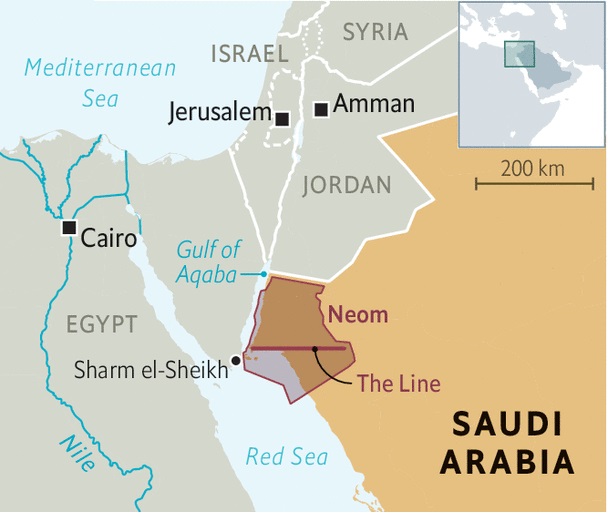
The Wall Street Journal has highlighted controversies surrounding the Neom Megacity Project, a key project of Saudi Arabia and world’s largest construction real-estate project.
AboutNeom Megacity Project:
Details
Location
Northwestern Tabuk Province, Saudi Arabia, along the Red Sea
Launched
2017 by Crown Prince Mohammed bin Salman
Part of Saudi Arabia’s Vision 2030.
Objective
To diversify Saudi Arabia’s economy and reduce its reliance on oil.
Size
26,500 sq km
Initially $500 billion, now estimated at $1.5 trillion
Completion Year
Expected by 2039
Key Projects
The Line: 170-km long linear city for 9 million residents
Oxagon: Octagonal industrial city
Trojena: Mountain resort for 2029 Asian Winter Games
Magna: Luxury coastal city
Sindalah: Luxury island, opening in 2024
Technological Focus
Renewable energy (solar, wind)
AI and robotics
Green hydrogen production
Environmental Goals
Powered by 95% renewable energy
Focus on sustainable development
Controversies surrounding the Project:
Displacement of Indigenous Tribes: The Huwaitat tribe has been forcibly displaced, leading to human rights concerns.
Slow Progress: Construction is behind schedule, with only 1.4 km of The Line expected to be completed by 2030.
Workplace Misconduct: Reports of toxic culture and unethical leadership, including neglect of worker safety.
Surveillance Concerns: Critics worry about the project’s use of real-time monitoring, raising privacy concerns.
Cost Overruns: The project’s budget has ballooned from $500 billion to $1.5 trillion, leading to scaled-down plans.
September 25 marks the 108th birth anniversary of Pandit Deendayal Upadhyaya, one of the most influential thinkers of India’s right-wing movement.
AboutPandit Deendayal Upadhyaya (1916-1968)
Details
Born
• September 25, 1916 in Mathura, Uttar Pradesh
• Antyodaya Diwas is observed on this day since 2014.
Affiliations
Rashtriya Swayamsevak Sangh (RSS), Bharatiya Jana Sangh (BJS)
Political Role
• One of the key leaders of the Bharatiya Jana Sangh (BJS)
• Served as President of BJS
Key Contributions
• Founder of the Integral Humanism philosophy
• Introduced the concept of Antyodaya for the upliftment of the poorest
• Promoted self-reliance (Swadeshi) and decentralization of power
Doctrine of ‘Antyodaya’
• Antyodaya means “upliftment of the last person in society.”
• It focuses on improving the living conditions of the poorest and most marginalized sections of society.
• Upadhyaya believed that true development can only be measured by the welfare of the weakest sections, promoting policies aimed at economic, social, and educational inclusion of these groups.
Legacy
• Antyodaya Anna Yojana and Deendayal Upadhyaya Gram Jyoti Yojana inspired by his ideas
• In 2015, NRLM was renamed Deendayal Antyodaya Yojana-NRLM.
Death
February 11, 1968, under mysterious circumstances in Mughalsarai, Uttar Pradesh
UPSC (Union Public Service Commission) Civils exam is much coveted in India by eligible graduates. It opens doorways to various bureaucrat services like IAS, IPS, IFS, and IRS. However, how many attempts for UPSC are allowed? Is it limited or unlimited? Is there any age relaxation for category-wise students? These are the most sought-after questions by aspirants in India.
Indeed, the UPSC attempt limit exists and depends on the category of a candidate. UPSC attempt limit for the general category is 6 and it is 9 for OBC candidates and unlimited for SC/ST aspirants. Keep reading to learn more about how many attempts for the UPSC India examination.
UPSC General Eligibility Criteria
IAS Exam Age Limit
21 to 32 years
Age Relaxation
Applicable As per category
Educational Qualification for IAS
Graduation (Bachelor’s degree)
Nationality
Indian citizens only
How Many Attempts for UPSC
Category
Age Limit (Years)
Number of Attempts
Age Relaxation (Years)
General
21-32
6
0
OBC/Disabled Defence Services Personnel
21-35
9
3
SC/ST/Ex-Servicemen
21-37
Unlimited up-to-age limit
5
PwBD
21-42
9
10
UPSC Attempts for General
UPSC has set the age limit for general category candidates at 32 with a zero age-relaxation norm. So, the number of UPSC attempts allowed for them is only 6. Moreover, they can’t attempt the UPSC exam after 32 years of age, even if they don’t utilise one of their UPSC maximum attempts. It is advised to utilise the maximum UPSC attempt limit for the general category.
Number of UPSC Attempts for General
IAS Age Limit
6
32
UPSC Attempts for OBC
Based on the general age limit, UPSC maximum attempts are 6 for general-category students. But OBC students have a 3-year age relaxation due to their reservation, which makes the maximum number of UPSC attempts for OBC 9. They can appear for the Civils exam until they’re 35, as opposed to the 32 for general category people. However, the educational qualifications remain the same.
Number of UPSC Attempts for OBC
IAS Age Limit
9
35
UPSC Attempts for SC/ST
How many attempts in UPSC Civils for SC/ST? SC or Scheduled castes always have more reservations about Government-related jobs. The same goes for UPSC. The UPSC maximum attempts for SC candidates stands at 5, thanks to the age relaxation limit of 5 years. The educational qualifications and other eligibility criteria remain the same.
Number of UPSC Attempts for SC/ST
IAS Age Limit
Unlimited till the age limit
37
UPSC Eligibility Criteria: At a Glance
Nationality for IAS Exam:
Must be a citizen of India, a person of Indian origin, or a subject of Nepal, Bhutan, or Tibet settled in India before 1st January 1962.
Education Qualification:
Must have a Graduate Degree from a recognized university.
Age Limit for IAS Exam:
Must be at least 21 years old and not older than 32 years.
J&K Domicile: 32 + 5 years (+3 years for OBC, +5 years for SC/ST). Attempts based on category.
Disabled/Discharged Defence Personnel: 32 + 3 years (+3 years for OBC, +5 years for SC/ST).
Ex-Servicemen Commission Officer: 32 + 5 years (+3 years for OBC, +5 years for SC/ST).
IAS Age Limit 2025 Category-Wise
SC/ST candidates: Age relaxation of up to 5 years.
OBC candidates: Age relaxation of up to 3 years.
Defense personnel disabled in combat with a foreign enemy or in a disturbed area get up to 3 years of age relaxation.
Ex-servicemen, Commissioned Officers, ECO/SSCO: After 5 years of military service, you receive a 5-year age relaxation. This applies if service ends within a year of August 1, 2024, except for discharge due to inefficiency or misconduct, or injury from military service.
ECO/SSCO: If you’ve completed 5 years of military service by August 1, 2024, and your assignment is extended, you still get a 5-year relaxation. The Ministry of Defence will issue a certificate allowing you to apply for civil jobs and leave on 3 months’ notice if selected.
PwBD candidates (deaf-mute, blind, orthopedically handicapped): Relaxation to 10 years of age.
Special Cases for IAS Age Limit
Indian UPSC has mentioned special cases in case of the UPSC age limit for OBC/SC/ST and related candidates.
If you belong to both ST/SC/OBC and another category like ex-servicemen or PwBD (blind, deaf-mute, orthopedically handicapped, etc.), you can receive cumulative age relaxation for both categories.
For age relaxation based on physical disability, you must meet the government’s medical and physical standards for PwBD. A disability certificate from the government or a valid appointing authority is required.
The term “ex-servicemen” refers to individuals defined under the Ex-Servicemen (Re-employment in Civil Services and Posts) Rules, 1979, with any updates.
Can I Crack UPSC Civils in the first Attempt?
While UPSC Civils is one of the toughest exams in India, it is not impossible to clear the UPSC examination in the first attempt. The best way to accomplish that is by starting preparation while you’re pursuing graduation. You should dedicate extra time to prepare for UPSC subjects right from the state of your graduation to internalise the knowledge and make it easy for you. In fact, it works by taking the load off you at the time of writing the examination.
Otherwise, it could be difficult to crack the exam in the first attempt with preparation done at once in a year. But even now, you can make it happen by developing a consistent study schedule, taking guidance from IAS toppers, preferring coaching and sticking religiously to your goal of passing through the exam.
Conclusion
While getting to realise “how many attempts for UPSC” much more clearly, you shouldn’t stop there. It’s imperative to consider the quality of each attempt. Aspirants should view each attempt as an opportunity to refine their approach and knowledge. Developing a strategic study plan, analysing previous years’ question papers, and focusing on core subjects can significantly improve performance. Remember, success in UPSC isn’t just about the number of attempts, but how effectively you utilise each one to grow and learn.
FAQs
What is the UPSC general age limit?
The UPSC age limit for general category students lies between 21-32 years. The minimum age of general candidates appearing for the UPSC examination should be 21 years and a maximum of 32 years.
What is the UPSC attempt limit for the general category?
General category students get to write the UPSC exam a maximum of 6 times within the UPSC age limits of 21-32 years. After that, they can’t write the UPSC exam even if they skip one of their attempts.
What if I cross the UPSC maximum limit?
Once a candidate crosses the maximum limit to attempt the UPSC examination set for their category, it is not possible to apply anymore, even if they don’t utilise one of their eligible attempts. So it is advised to exhaust all of the eligible attempts for the respective category of students.
Is it possible to increase my UPSC exam age limit?
Increasing the UPSC exam age limit isn’t possible for individuals. Age limits are set by the government and apply uniformly. However, some categories like SC/ST and OBC have higher age limits, given their backward status in the constitution of India.
Does my economic background matter in the UPSC exam?
Economic background doesn’t directly impact UPSC exam evaluation. However, it may affect preparation resources. The exam is merit-based, but there are reservation quotas for certain categories. Financial assistance programs exist for eligible candidates.
Q) National Education Policy 2020 conforms with the Sustainable Development Goal-4 (2030). It intends to restructure and reorient the education system in India. Critically examine the statement. (UPSC CSE 2020)
Q) The quality of higher education in India requires major improvement to make it internationally competitive. Do you think that the entry of foreign educational institutions would help improve the quality of technical and higher education in the country? Discuss. (UPSC CSE 2015)
Q) How have digital initiatives in India contributed to the functioning of the education system in the country? Elaborate your answer. (UPSC CSE 2020)
Mentor’s Comment: The National Credit Framework (NCrF), derived from the National Education Policy (NEP) 2020, provides a flexible template for educational institutions to offer a unified accumulation and transfer of credits across multidisciplinary education, including skill education.
However, some remain resistant to the dynamic and forward-looking changes advocated by the NCrF, unwilling to adapt to India’s evolving societal, technological, and educational needs. In today’s editorial we will see how the Indian education system needs to remain relevant and competitive, higher education institutions (HEIs) must revise their curricula to align with the NCrF and bridge skill mismatches.
_
Let’s learn!
Why in the News?
The National Credit Framework (NCrF) represents a significant shift in India’s educational approach, aiming to create a more flexible, integrated, and student-centered learning environment that prepares individuals for the challenges of the 21st century.
What is the National Credit Framework (NCrF)?
• The NCrF is a set of guidelines to be followed by schools, colleges and universities in adopting the credit system. These guidelines are based on the inter-ministerial committee report, the Union Ministry of Education (MoE) unveiled the draft NCrF in 2022. • The primary goal is to help Higher Education Institutions (HEIs) balance vocational training with academic pursuits, thereby playing a crucial role in shaping individual futures and contributing to societal progress. • It brings the entire school education system under the ambit of credits for the first time. Only the National Institute of Open Schooling (NIOS) follows a credit system. The NCrF also covers skill and vocational education.
Features:
• NCrF will allow students to attain NSQF-approved foundational skills developed by industry and be more employable. • The provision of micro-credentials will allow integration of quick educational upgradation/up-skilling.
Significant Impact of National Credit Framework (NCrF)
Credit Earning Opportunities: The National Credit Framework (NCrF) allows students to earn credits through various activities, including classroom teaching, laboratory work (like Atal Tinkering Labs), research projects, sports, arts, and vocational training, provided they undergo assessment.
Broad Educational Scope: Students can accumulate credits from diverse experiences such as internships, apprenticeships, social work, and experiential learning. This flexibility is designed to cater to their academic and career aspirations.
Integration of Vocational Training: It promotes a balanced approach between vocational training and academic pursuits, ensuring that both aspects are interlinked and equally valued in shaping students’ futures.
What are the present issues in implementation?
Resistance to Change: Some educators are resistant to the NCrF, clinging to conventional educational methods. This reluctance challenges adapting to the evolving educational landscape shaped by societal and technological shifts.
Need for Curriculum Revision: To remain relevant and competitive, higher education institutions (HEIs) must revise curricula in alignment with the NCrF. This includes addressing skill mismatches that could hinder students’ career prospects.
How HEIs can work in a modern education environment?
Dual Focus on Knowledge and Skills: HEIs should not only focus on producing knowledge but also equip students with practical skills necessary for emerging job roles and self-employment opportunities. This dual role is achievable through the adoption of the NCrF.
Differences between MERU (Multidisciplinary Education and Research University) Universities and Traditional Universities:
MERU Universities by NEP
Traditional Universities
Multidisciplinary Focus
It emphasizes a multidisciplinary approach to education, integrating various fields of study and promoting interdisciplinary research.
It often operates within rigid academic silos.
Research Orientation
MERUs are designed to serve as centers for advanced research and innovation, aspiring to make India a global hub for research and development.
Traditional universities may have limited research opportunities or focus primarily on undergraduate education.
Flexible Curriculum
The curriculum in MERUs is envisioned to be flexible, allowing students to explore various disciplines and gain credits through diverse activities.
Traditional universities often have a more structured curriculum with less room for interdisciplinary exploration.
Accessibility and Equity
MERUs aim to promote accessibility and equity in education, ensuring that all students have the opportunity to succeed regardless of their background.
Traditional universities may still face challenges related to inclusivity and equal access.
Continuous Adaptation is the Key: (Way Forward)
Support for Reforms: Promoting an inclusive higher education system requires supporting reforms that democratize education and enhance social equity. Continuous adaptation of Higher Education Institutions (HEIs) is essential to avoid stagnation and maintain effectiveness.
NEP 2020 and MERU Concept: The National Education Policy (NEP) 2020 introduces the Multidisciplinary Education and Research University (MERU) model, aiming to cultivate scholars and intellectuals. However, HEIs should also prioritize vocational and skill training to improve student employability.
Practical Skills and Social Mobility: A flexible curriculum, as proposed in the National Credit Framework (NCrF), enables students to acquire practical skills, making higher education a vehicle for social mobility. Resistance to structural changes in education often stems from outdated pedagogical methods that do not address current economic and social realities.
Need for Curriculum Reimagining: To align with modern needs, higher education curricula must integrate flexibility and multidisciplinary approaches, ensuring that institutions prepare students for emerging challenges in the job market.
Conclusion: There is a need to integrate flexibility, multidisciplinary approaches, and skill-based courses to transform India into an economic powerhouse and technological leader. Higher Education Institutions (HEIs) should emphasize both vocational and skill training alongside fundamental research and innovation.
![[27th September 2024] The Hindu Op-ed: An opportunity to rethink India’s pension system](https://www.civilsdaily.com/wp-content/uploads/2024/09/27-SEP-1568x882.jpg)