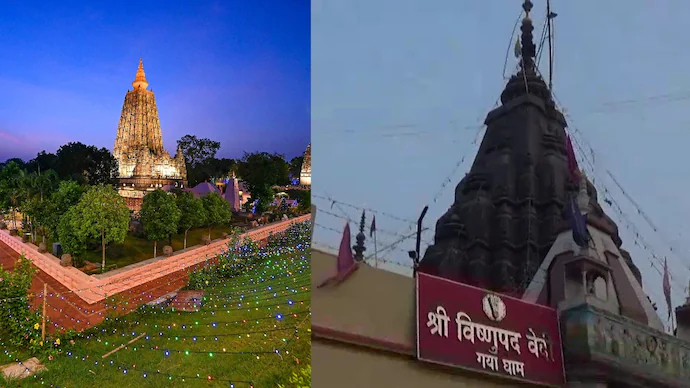
Finance Minister announced during her Union Budget speech that corridor projects will be built for the Vishnupad Temple at Gaya and the Mahabodhi Temple at Bodh Gaya in Bihar.
These will be modelled on the Kashi Vishwanath Temple Corridor, to transform them into world-class pilgrim and tourist destinations.
About the Vishnupad Temple at Gaya
Details
Dedicated to
Lord Vishnu
Significance
Contains a 40 cm long footprint of Lord Vishnu; considered sacred in Hinduism; attracts pilgrims for “Pind Daan” rituals.
Historical Importance
Believed to be over 1000 years old; associated with various legends and historical references in Hindu texts.
Architecture
Built in Shikhara style;
Features intricate carvings and silver-plated flagposts;
Constructed of grey granite blocks.
Built by
Queen Ahilyabai Holkar of Indore in 1787.
Festivals and Rituals
Major site for “Pind Daan” rituals during Pitru Paksha;
Attracts thousands of pilgrims during this period.
Mythology
The footprint is believed to be where Lord Vishnu placed his foot to subdue the demon Gayasur.
Associated River
Located on the banks of the Phalgu River, considered sacred for ritual offerings.
Access and Visitation
Accessible year-round; major pilgrimage site with facilities for devotees.
Recent Developments
Ongoing efforts for preservation and restoration; improved infrastructure for pilgrims.
About the Mahabodhi Temple Complex:
Details
Location
Bodh Gaya, Bihar;
Significance
Marks the location where Buddha attained enlightenment
UNESCO Status
World Heritage Site since 2002
Historical Importance
One of the four holy sites related to Buddha’s life (Enlightenment).
Other holy sites: Lumbini (Birth) in Nepal, Sarnath (First Sermon) in Uttar Pradesh, Kushinagar (Death) in Uttar Pradesh
Original Construction
Built by Mauryan Emperor Ashoka around 260 BCE
Reconstruction
Reconstructed in brick during the late Gupta period (5th or 6th centuries)
Archaeological Finds
Indicates site of veneration since the Mauryan period.
Vajrasana (Diamond Throne): Located within the temple, dated to the third century BCE
Main Temple Structure
Dates from the 6th century CE, incorporates parts from 2nd or 3rd century CE
Architectural Features
Two large shikhara towers, the largest over 55 meters high
Influenced Jain, Hindu, and Buddhist architecture globally
Materials
Made mostly of brick covered with stucco
Bodhi Tree
Direct descendant of the original tree under which Buddha attained enlightenment
Traditional Accounts
Describes 7 weeks Buddha spent meditating after enlightenment at various spots within the complex
Decline and Revival
Declined after Huna invasions and early Islamic invasions.
Revived under the Pala Empire (8th-12th century).
Declined again after 12th century CE invasions by Turk armies.
Clearing Prelims is an opportunity; you should garner every support and help to clear Mains with flying colors. Your Mains attempt should make your preparation interview-proof. Interviews are a 1-day show. You can’t work with the mindset that you have another attempt where you will make up for what you couldn’t cover in this attempt.
The current cohort of Smash includes IPS, IRS rankers in huge numbers. After their 1st copy discussion, they understood they have a lot of room for improvement and a clear path to get to IAS tag.
Few pointers
1)Given the aggressive competition, the structuring of the answer cannot go wrong in any of the 20 questions. There is no room for this kind of error.
2) There has to be value addition, which brings preciseness and authenticity to your answer. Our X-Factor Notes – where recent data facts, and examples are given come in handy.
3) The competition is so intense that most students are going the extra point and quoting more points.
The government plans to roll out U-WIN, an online vaccine management portal for childhood vaccination, across the country.
Similar to CoWIN used during the Covid-19 pandemic, U-WIN aims to digitize and individualize immunization records from birth.
What is U-WIN?
Children up to 6 yearsold and pregnant mothers are registered on U-WIN using government IDs like Aadhaar and their mobile phone numbers.
Records of all 25 shotsgiven to a child and the two given to pregnant mothers are added to the platform.
It’s Working:
The platform generates a color-coded vaccination certificate.
The digital vaccine certificate can be downloaded by parents using their registered mobile numbers, eliminating the need for a physical vaccination booklet.
After each shot is administered and recorded, the date is added to the card, which also shows the due date for the next set of vaccines.
U-WIN sends SMS reminders to parents before their children are due for the next dose.
U-WIN helps locate thenearest vaccination center and book available slots.
Significance:
1) For providing Immunization:
U-WIN’s reminders to parents are likely to improve compliance with vaccination schedules.
The platform ensures portability, allowing children to receive their doses anywhere in the country, particularly benefiting children of migrant workers.
Registration at birth may help reduce the number of “zero dose” children, those who have not received any vaccinations.
2) For Health Workers:
The platform can automatically generate a due list of children in specific areas for health workers.
These data points can be utilized by other government programs and eventually connected through the ABHA (Ayushman Bharat Health Account) ID.
Integration with Existing Systems
U-WIN will link to the government’s existing eVIN platform for inventory management.
eVIN tracks all vaccine vials, from central stores to each vaccination site, monitoring doses used, wasted, and returned, and tracks real-time temperature and humidity using sensors.
U-WIN runs on the same principles and digital infrastructure as CoWIN, making adoption straightforward.
Most vaccinators are familiar with similar platforms, ensuring a smooth transition.
Zero Dose Children
In India, the coverage of the first dose of diphtheria, pertussis, and tetanus (DPT)-containing vaccine is taken as the proxy for zero dose children.
Data from WHO and UNICEF showed that while 93% of children received their first vaccine dose, there were still 1.6 million zero dose children in India in 2023.
The data also showed that 1.6 million children missed their first measles-containing vaccine in 2023, up from 1.1 million the previous year.
This is concerning as in 2022, five states — Bihar, Gujarat, Haryana, Jharkhand, and Maharashtra — reported a rise in the incidence of measles.
PYQ:
[2016] ‘Mission Indradhanush’ launched by the Government of India pertains to:
(a) Immunization of children and pregnant women
(b) Construction of smart cities across the country
(c) India’s own search for the Earth-like planets in outer space
Rogue waves, unusually large waves compared to those before and after them, pose significant threats to ships, coastal and offshore infrastructure, and human lives.
Until now, there has been no method to forecast rogue waves.
What Are Rogue Waves?
Rogue waves are unusually large and unpredictable waves that are much larger than the surrounding waves.
They are often defined as waves that are at least twice the height of the surrounding waves.
Formation:
Rogue waves can form when swells from distant weather systems converge to create a single, amplified wave.
They may also form when ocean currents compress swells, creating strong, high waves.
Features:
Traditionally, rogue waves have been difficult to predict due to their sudden appearance and rare occurrence.
The lack of real-time forecasting methods has made it challenging to mitigate their impact effectively.
What is Sea State?
In oceanography, sea state refers to the condition of the surface of a large body of water at a specific location and time.
The World Meteorological Organization (WMO) sea state code characterizes sea state based on wave height on a scale of 0 (no waves) to 9 (waves over 14 meters).
Characteristics:
Unlike typical waves, rogue waves can appear suddenly and without warning.
They defy the average sea state, making them exceptionally dangerous.
Threats Posed by Rogue Waves:
(1) Shipping
For Ships and Vessels: Rogue waves pose a significant threat to ships and other vessels at sea. Their unexpected and massive size can lead to capsizing or severe damage.
For Offshore Infrastructure: Oil rigs, wind turbines, and other offshore structures can be heavily damaged or destroyed by rogue waves.
(2) Coastal Threats
Coastal Erosion: The sheer force of rogue waves can lead to accelerated coastal erosion, affecting beaches and shorelines.
Flooding: Rogue waves can cause sudden and severe coastal flooding, posing risks to coastal communities and ecosystems.
(3) Human Safety
Loss of Life: Rogue waves have been responsible for numerous fatalities. Between 2011 and 2018, rogue waves killed at least 386 people.
Property Damage: The impact of rogue waves on ships, coastal areas, and offshore structures can result in significant financial losses.
Advancements in Forecasting
University of Maryland mathematicians Thomas Breunung and Balakumar Balachandran have developed an artificial intelligence program capable of forecasting rogue waves.
The AI program was trained using billions of data points collected by a network of 172 ocean buoys.
The researchers analyzed 20-minute long samples recorded by ocean buoys.
PYQ:
[2017] At one of the places in India, if you stand on the seashore and watch the sea, you will find that the sea water recedes from the shore line a few kilometres and comes back to the shore, twice a day, and you can actually walk on the sea floor when the water recedes. This unique phenomenon is seen at:
The Supreme Court has agreed to hear a plea seeking to redefine the constitutional immunity of state Governors.
Article 361 of the Constitution shields the President and Governors from criminal prosecution and judicial scrutiny.
The Supreme Court will interpret whether the immunity includes the registration of an FIR, initiation of a preliminary inquiry, or a magistrate taking cognisance of an offence.
Origins of Governor’s Immunity
The concept of immunity is based on the Latin maxim “rex non potest peccare” (the king can do no wrong), rooted in English legal traditions.
During the Constituent Assembly debates in 1949, member H. V. Kamath questioned whether immunity meant no proceedings could be instituted against the President or Governor during their term or only while they were in office.
The article was adopted without further debate on criminal immunity.
What are immunities under Article 361?
According to Article 361(1), the President or a Governor is not answerable to any court for the exercise of their powers and duties.
Article 361(2) ensures that NO criminal proceedings can be initiated or continued against the President or Governor during their term.
Article 361(3)prohibits the arrest or imprisonment of the President or Governor while they are in office.
Article 361(4) states that civil lawsuits for personal acts against the President or Governor cannot be initiated during their term and can only proceed two months after a written notice is given post-term.
Judicial Interpretations of Article 361:
Dr SC Barat and Anr vs. Hari Vinayak Pataskar Case (1961): Distinguished between the Governor’s official and personal actions. While official actions have complete immunity, civil proceedings for personal acts can proceed with prior notice.
Rameshwar Prasad vs. Union of India Case (2006): The Supreme Court recognized “complete immunity” for constitutional actions under Article 361(1), but allowed judicial review for actions taken with malicious intent.
Vyapam Scam Case (2015): The Madhya Pradesh High Court ruled that Governor Ram Naresh Yadav had absolute protection under Article 361(2), preventing his name from being included in the investigation to avoid undue legal harassment.
State of UP vs. Kalyan Singh Case (2017): The Supreme Court upheld that Kalyan Singh, while serving as Governor of Rajasthan, was immune under Article 361. Legal proceedings related to the Babri Masjid demolition were to resume after his term.
Telangana High Court Judgment (2024): Observed that the Constitution does not explicitly or implicitly bar judicial review of actions taken by a Governor, and stated that Article 361 immunity is personal and does not exclude judicial review.
Case for Revisiting Immunity
The debate on executive immunity is ongoing in other countries as well.
The US Supreme Court recently decided that former President Donald Trump is entitled to “absolute immunity” from criminal prosecution for official acts but not for unofficial or personal acts.
In India, the discussion is viewed within the larger context of the tension between Governors and opposition-ruled state governments.
The Supreme Court has noted instances where Governors acted with political motives.
PYQ:
[2018] Consider the following statements:
No criminal proceedings shall be instituted against the Governor of a State in any court during his term of office.
The emoluments and allowances of the Governor of a State shall not be diminished during his term of office.
Which of the statements given above is/are correct?
(a) 1 only
(b) 2 only
(c) Both 1 and 2
(d) Neither 1 nor 2
[2019] Which one of the following suggested that the Governor should be an eminent person from outside the State and should be a detached figure without intense political links or should not have taken part in politics in the recent past?
(a) First Administrative Reforms Commission (1966)
(b) Rajamannar Committee (1969)
(c) Sarkaria Commission (1983)
(d) National Commission to Review the Working of the Constitution (2000)
India’s economy is projected to grow at 6.5% to 7% in the fiscal year ending March 2025.
The Economic Survey for 2023-24 highlights the need to address inequality and unemployment as policy priorities.
Policy Recommendations by Chief Economic Adviser (CEA)
Regulatory Burdens: CEA V. Anantha Nageswaran advocates for Central and State governments to reduce regulatory burdens on businesses.
Corporate Responsibility: He urges the corporate sector to create productive jobs, emphasizing their responsibility in generating employment.
Various Challenges discussed
(1) Challenges in the IT Sector:
Slowdown in Hiring: The CEA notes a significant slowdown in IT sector hiring over the last two years.
AI and Labor: He encourages the industry to use AI to augment labor rather than replace workers.
(2) Skilling Initiatives
Addressing Inequality: The Economic Survey suggests steps to tackle inequality, improve health, and bridge the education-employment gap.
Skilling Reboot: A reboot of India’s skilling initiatives is proposed to provide the industry with people having the right attitude and skills.
(3) Corporate Sector and Economic Growth
Demand and Employment: The Survey emphasizes the benefits for corporates from higher demand generated by employment and income growth.
Warning against Short-Termism: It warns against “short-termism” which can weaken economic linkages.
(4) State Capacity and Consensus Building:
Enhancing State Capacity: Enhancing state capacity is critical for the strategy to work.
Need for Consensus: The CEA stresses the need for consensus between governments, businesses, and the social sectors for effective transformation.
(5) Land Acquisition and Investment Concerns:
Land Use Norms: While the Survey does not mention land acquisition reform, it highlights the need to deregulate land use norms and consolidate farmland holdings.
Investment Cautions: The Survey cautions about private capital formation being cautious due to fears of cheaper imports, indirectly referencing China.
(6) Foreign Direct Investment (FDI) Challenges:
Attracting FDI: Attracting FDI will be challenging due to higher interest rates and developed countries encouraging domestic investments through subsidies.
Addressing Uncertainties: Despite progress, uncertainties related to transfer pricing, taxes, and import duties need to be addressed.
Structural Reforms
Existing Reforms: Structural reforms such as GST and the Insolvency and Bankruptcy Code are delivering expected results.
Next-Gen Reforms: The Survey calls for “next-gen reforms” that are bottom-up in nature to achieve sustainable, balanced, and inclusive growth.
Strategic Directions for Growth
Six-Pronged Strategy: The Survey outlines a six-pronged strategy for growth, emphasizing private sector investments and a fair share of income for workers.
Focus Areas: Other focus areas include financing the green transition, removing barriers for MSMEs, and implementing intelligent farmer-friendly policies.
Conclusion
Sustained Growth Potential: The economy can grow at over 7% on a sustained basis in the medium term by building on past reforms.
Tripartite Compact: Achieving this growth requires a tripartite compact between the Centre, States, and the private sector.
PYQ:
[2013] Economic growth in country X will necessarily have to occur if:
(a) There is technical progress in the world economy.
(b) There is population growth in X.
(c) There is capital formation in X.
(d) The volume of trade grows in the world economy.
Q1 Though women in post-independent India have excelled in various fields, the social attitude towards women and the feminist movement has been patriarchal.” Apart from women’s education and women empowerment schemes, what interventions can help change this milieu? (UPSC IAS/2021) Q2 Women empowerment in India needs gender budgeting. What are the requirements and status of gender budgeting in the Indian context? (UPSC IAS/2016)
Prelims:
Which of the following gives ‘Global Gender Gap Index’ ranking to the countries of the world? (UPSC IAS/2017) a) World Economic Forum b) UN Human Rights Council c) UN Women d) World Health Organization
Note4Students:
Prelims: Employment and Unemployment Trends;
Mains:Women issues; Gender gap; Inequality;
Mentor comments: The gender gap refers to the disparities between men and women in various aspects of society, including economic, social, political, and cultural dimensions. It encompasses differences in outcomes, opportunities, and treatment based on gender.
As per the Periodic Labour Force Survey (PLFS) by the Ministry of Statistics and Programme Implementation (MoSPI) offers detailed data on employment, unemployment, and labour force participation. The latest PLFS report for 2022-23 shows a 3.3% unemployment rate for males and 2.9% for females. The Centre for Monitoring the Indian Economy (CMIE) noted a rise in the unemployment rate to 8.1% in April 2024. The PLFS also recorded a labour force participation rate (LFPR) increase to 41.4% in June 2024, with improvements for both genders.
Let’s learn —
Why in the News?
The Lokniti-CSDS survey cites job difficulty and inflation as key factors in the Lok Sabha Elections 2024 results. The India Employment Report (IER) 2024 notes unemployment rose to 5.8% by 2019.
Present Employment and Unemployment Trends:
Unemployment Rates: Unemployment in India rose from just above 2% in 2000 and 2012 to 5.8% in 2019, but improved to 4.1% in 2022. Time-related underemployment remains high at 7.5%.
Labour Force Participation Rate (LFPR): LFPR fell from 61.6% in 2000 to 49.8% in 2018 but partially recovered to 55.2% in 2022. Female LFPR, however, saw significant improvement, especially in rural areas, rising from 24.6% in 2018 to 36.6% in 2022.
Gender Disparities and Trends:
Female LFPR vs. Male LFPR: Female LFPR in India remains low compared to the global average of 53.4% (2019) and decreased from 38.9% in 2000 to 23.3% in 2018. However, there was a 12% increase in rural areas from 2018-22, contrasting with the modest rise in male LFPR.
Unpaid Family Labour: Females are more engaged in unpaid family labour (36.5% in 2022) compared to males (9.3%). The gender gap in unpaid family labour is significant, particularly in rural areas (31.4% difference) compared to urban areas (8.1% difference).
Gendered Employment Preferences and Opportunities:
Traditional Occupations: Many women, especially in urban slums, prefer traditional home-based occupations (like bandhani and embroidery) due to their flexibility, despite the lower income.
Barriers to Enterprise Development: Women face challenges in developing their own enterprises due to limited access to capital and restrictive social norms.
Collectivising through self-help groups (SHGs) and federations can offer new skills and market access, as demonstrated by the Kutch Mahila Vikas Sangathan (KMVS).
The importance of market access:
Empowerment through Market Interaction: Access to markets enhances women’s empowerment by enabling them to navigate and circumvent traditional gender norms, increasing their economic independence and decision-making capabilities.
Reduction of Gender Norm Constraints: Market access allows women to bypass restrictive gender norms, such as prohibitions against certain types of labour, by facilitating the use of hired services and technology.
Economic and Family Benefits: Women’s increased participation in income-generating activities contributes to family income and welfare, improving their position within the family and reducing economic vulnerability.
Reduced Migration: Opportunities for women to engage in economic activities close to home reduce migration and dependency on male family members, leading to enhanced family welfare and stability.
Vibrant Water Markets and Agency: In regions with vibrant water markets, women’s ability to influence agricultural input purchases increases, contributing to greater agency and empowerment in decision-making.
Way Forward:
Focus on External Work Participation: Need to Prioritize creating opportunities for women to work outside the home to directly impact their empowerment.
Long-Term Strategy Required: The government shouldImplement long-term strategies to improve the work environment for women, including safety and basic facilities.
Mandate Workplace Facilities: By ensuring public policy mandates the availability of essential facilities (e.g., toilets and crèches) in small- and medium-sized manufacturing or business units.
Improve Female Labor Force Participation (LFPR): Enhancing female LFPR can lead to better overall employment rates and increased family income.
The Karnataka State Employment Bill, 2024, proposing private sector reservations for Kannadigas, is on hold after backlash from business and industry leaders.
What Does the Constitution Say?
Equality of Opportunity (Article 16):
Article 16(1): Guarantees equality of opportunity in public employment and prohibits discrimination based on race, religion, caste, sex, descent, place of birth, or residence.
Article 16(3): Allows Parliament to prescribe residence requirements for public office in a specific state or Union Territory, but this power does not extend to state legislatures.
Freedom of Movement and Residence (Article 19):
Article 19(1)(d): Ensures the freedom of movement throughout India.
Article 19(1)(e): Grants the right to reside and settle in any part of India.
Article 19(1)(g): Protects the right to practice any profession or carry on any occupation, trade, or business.
Legislative Powers (Article 35):
Article 35(a): Designates Parliament as the sole authority to make laws concerning residence requirements for employment or appointments to public offices, thereby restricting state legislatures from enacting such laws.
Why Is the constitutionality of the Karnataka State Employment of local candidates in the Industries, factories and Other Establishments Bill, 2024, being doubted?
Absence of Provision for Private Sector Reservation: The Constitution does not provide for reservation in the private sector, leading to concerns about the legality of such mandates at the state level.
Legislative limits on residential criteria: State Assemblies lack the power to prescribe residential criteria for private sector employment, as such powers are reserved for Parliament under Article 35(a).
Impact on Fundamental Rights:
The Bill may infringe on citizens’ rights under Article 19(1)(d) and (e), restricting their freedom of movement and right to reside or settle in different states.
The quota system might violate Article 19(1)(g), impinging on individuals’ freedom to pursue occupations of their choice.
What Is the Status of Similar Laws in Other States Such as Haryana?
Haryana State Employment of Local Candidates Act, 2020: Mandated 75% reservation in the private sector for jobs with salaries up to ₹30,000. This Act was struck down by the Punjab and Haryana High Court, and the matter is pending before the Supreme Court.
Andhra Pradesh Employment of Local Candidates in Industries/Factories Act, 2019: Proposed 75% reservation for local candidates and allowed a three-year period for training and engagement. This Act has faced legal challenges and has not been zealously implemented by the government.
Jharkhand Definition of Local Persons Bill: Initially faced resistance from the Governor over its constitutionality, especially regarding 100% reservation for locals in certain job categories. The bill was re-enacted in December 2023 despite concerns about its constitutionality.
Way forward:
Inclusive Dialogue: The Karnataka government should engage in comprehensive consultations with all stakeholders, including industry representatives, legal experts, and civil society, to understand their concerns and suggestions.
Impact Analysis: Need to conduct a detailed socio-economic impact assessment of the proposed reservation policy can provide insights into its potential benefits and drawbacks.
Mains PYQ:
Q The reservation of seats for women in the institutions of local self-government has had a limited impact on the patriarchal character of the Indian Political Process.” Comment. (2019)
At least 130 people have died in clashes during student protests over government job quotas in Bangladesh.
Why have students in Bangladesh taken to the streets?
Opposition to Quota System: Students are protesting against the quota system for government jobs, specifically the 30% reserved for freedom fighters and their descendants, which they believe limits merit-based opportunities.
Reversal of Quota Reforms: The protests intensified after the Supreme Court restored the quota system, reversing the previous decision to abolish it. Students demand a more balanced and inclusive quota system.
Why Is the 30% quota for Freedom fighters and their descendants an emotive matter for the Awami League?
Legacy of Sheikh Mujib: The quota system was introduced by Sheikh Mujibur Rahman, and continuing it is seen as fulfilling his legacy and honouring the sacrifices of freedom fighters.
Political Significance: The Awami League views the quota as a means to reinforce support within the bureaucracy and maintain political loyalty, linking it closely to the party’s historical and ideological narrative.
How did the protests turn violent?
The violence escalated when Prime Minister Sheikh Hasina labeled protesters as “razakars” or traitors, which enraged students and led to violent clashes with the police and Rapid Action Battalion (RAB).
The situation deteriorated to the point where the military had to be deployed to control the unrest, further intensifying the violence and confrontation between protesters and authorities.
Have the Quotas Been Misused?
Allegations of Abuse: There have been claims that the quota system has been misused, with reservations extended to party operatives and not just deserving freedom fighters’ descendants.
Dilution and Extension: The quota system, initially meant for freedom fighters and war survivors, has been criticized for being extended to broader categories over time, leading to concerns about fairness and effective utilization.
India’s recent Initiatives – ‘Strengthening Ties and Empowering Governance’
Economic Cooperation: India and Bangladesh agreed to strengthen trade and investment linkages, including the early commencement of negotiations for a Comprehensive Economic Partnership Agreement (CEPA).
Capacity Building for Civil Servants: India has been providing training and capacity-building programs for Bangladeshi civil servants through the National Centre for Good Governance (NCGG).
Development Assistance: India is the largest development partner for Bangladesh, having extended approximately $8 billion in Lines of Credit (LOC) over the past eight years for infrastructure development in sectors such as roads, railways, and shipping.
Way forward:
Balanced Approach: The Bangladesh government should consider a transparent and balanced quota reform that addresses both merit-based and reservation needs.
Monitoring and Accountability: Establishing mechanisms to monitor the implementation of quotas and prevent misuse is crucial.
Recently, the Quad Foreign Ministers’ meeting in Japan highlighted the UNSC’s paralysis, ongoing violations of international law, and the growing influence of China and an axis of Russia, China, North Korea, and Iran.
Present State of the UNSC:
Paralysis and Ineffectiveness: The United Nations Security Council (UNSC) is currently paralyzed, unable to effectively address or resolve significant global conflicts. Efforts to reform the UNSC have stalled, leaving it incapable of adapting to contemporary geopolitical realities.
Impunity in Violations of International Law: International law is being violated with impunity in conflicts such as the Ukraine war and the assault on Gaza by Israel.
The UNSC’s inability to act decisively has contributed to a growing disregard for its authority and mandates.
Role of India in QUAD:
Strategic Partnership: India’s involvement in QUAD enhances its strategic partnerships with the other member nations, allowing for collaborative efforts in maritime security, humanitarian assistance, and disaster relief operations.
Building Indo-In Pacific Policy: One of the primary objectives of QUAD is to mitigate China’s assertive actions in Indo Pacific region.
India is positioned to take on a leadership role in regional security.
Economic Collaboration: The QUAD nations are working towards strengthening economic ties, including infrastructure development at ‘Strait of Malacca’ and alternative financing options for Indo-Pacific countries.
Humanitarian Assistance and Disaster Relief: India has actively engaged in humanitarian efforts, exemplified by its Operation Sanjeevani, which provided medical assistance to several Indo-Pacific nations during the COVID-19 pandemic.
Silverlining on BRICS
Promoting South-South Cooperation: BRICS represents a significant non-Western global initiative in the post-Cold War era. It can bring together major emerging economies from different parts of the world.
Amplifying Voices in Global Governance: The BRICS Population is around 40% of the world so the BRICS nations can amplify their voices in global governance and expand their choices of international partners through this grouping.
Fostering Economic Resilience: Despite the ongoing COVID-19 pandemic, BRICS has emerged as a more effective and efficient institution in fostering economic resilience among its member nations.
Exploring Alternative Financial Mechanisms: BRICS has taken steps to establish alternative financial mechanisms, such as the New Development Bank (NDB) and the Contingent Reserve Arrangement (CRA).
Role BRICS group in G20: The BRICS group has consistently pushed for the inclusion of development issues in the G20 agenda. They argue that the G20 should prioritize the needs of developing countries, particularly in terms of infrastructure investment and social sector support
Promoting Sustainable Development: The BRICS nations have emphasized the importance of responsible financing for green and sustainable development.
Initiatives like the NDB’s focus on sustainable infrastructure projects which would help in achieving of SDG Goal 9.
Conclusion: Need to support and advocate for comprehensive reforms of the UNSC to address its paralysis and enhance its effectiveness. This includes expanding permanent membership to better represent contemporary global dynamics and improving decision-making processes to tackle conflicts with greater agility.
Mains PYQ:
Q Quadrilateral Security Dialogue (Quad) is transforming itself into a trade bloc from a military alliance, in present times Discuss. (2020)
The 2024 World Economic Forum (WEF) report on global gender gaps has ranked India at 129 out of 146 economies, marking a decline of two positions from the previous year.
Key Highlights by WEF Report:
Gender Parity Regression: India’s gender parity levels in educational attainment dipped in the 18th edition of the report, with a score of 0.964, down from a perfect 1.000 in the 17th edition.
This decline is attributed to a 17.2 percentage point gap between men’s and women’s literacy rates, causing India to rank 124th on this indicator.
Data Update and Period Variation: WEF’s Insight and Data Lead, Ricky Li, explained that the regression is due to updated data from UNESCO for the 2022 and 2023 periods, contrasting with the data from 2018, 2021, and 2022 used in the previous edition.
This emphasizes the impact of periodic updates and corresponding periods on the gender parity score.
What do figures from the Unified District Information System for Education and the All India Survey on Higher Education indicate?
Overall Enrolment and Gender Ratio: UDISE+ (2021-22) shows that girls constitute 48% of the school population, with enrolment increasing from 46.8% in preschool/kindergarten to 48.3% in higher secondary education.
Gross Enrolment Ratio (GER) in Higher Education: AISHE (2021-22) reports that the GER for women in higher education is 28.5%, slightly higher than the male GER of 28.3%, indicating a positive trend in female participation in higher education.
Trends in Female Enrolment: Female enrolment has seen a 32% increase since 2014-15, demonstrating significant progress in higher education, despite challenges such as lower enrolment in STEM fields and regional disparities in secondary education access.
Are girls more likely to complete secondary education when they have access to it?
Yes, girls are more likely to complete secondary education when they have access to it. The data from UDISE+ (2021-22) shows that while there is a slight drop in the percentage of girls enrolled in secondary education (47.9%), those who do have access to secondary education are more likely to continue to higher secondary education, where the gender gap narrows again to 48.3%.
This trend indicates that providing access to secondary education facilities helps girls stay in school and complete their education.
What needs to be done to ensure girls and boys, don’t drop out? (Way forward)
Addressing Socio-Cultural Barriers: Raising awareness about social issues such as early marriage, which disproportionately affects girls, is essential. Collaborating with local authorities and community leaders to advocate for girls’ education can help mitigate these challenges
Community Involvement: Engaging parents and the community in the educational process can foster a supportive environment for students. This can include parent workshops, support groups, and regular communication about student progress.
Flexible Learning Options: Offering flexible learning arrangements, such as part-time schooling or distance education, can accommodate students facing economic or personal challenges. This flexibility can help students balance their responsibilities while continuing their education.
Vocational Training and Skill Development: Incorporating vocational training programs into the school curriculum can equip students with practical skills that increase their employability. This can motivate students to stay in school as they see a direct link between education and future job opportunities
Mains PYQ:
Q Can the vicious cycle of gender inequality, poverty and malnutrition be broken through microfinancing of women SHGs? Explain with examples. (2021)
On 22nd July in 1947, the Constituent Assembly of India adopted the National Flag.
PC: The Better India
About the National Flag Day
The Constituent Assembly met in New Delhi at 10 o’clock, chaired by Dr. Rajendra Prasad.
The Assembly had been meeting since December 9, 1946, discussing various subjects.
The Chair announced the first agenda item: “aMotion by Pandit Jawaharlal Nehru about the Flag.”
Jawaharlal Nehru’s Resolution on National Flag
India’s first Prime Minister, Jawaharlal Nehru, moved the Resolution:
The National Flag of India shall be a horizontal tricolour of deep Saffron (Kesari), white, and dark green in equal proportion.
In the centre of the white band, there shall be a navy blue Wheel representing the Charkha.
The design of the Wheel is based on the Chakra from the Sarnath LionCapital of Ashoka.
The diameter of the Wheel approximates the width of the white band.
The ratio of the width to the length of the Flag shall be 2:3.
The motion was adopted unanimously by the Assembly.
Adoption by Popular Acclaim:
Nehru mentioned that the Flag was adopted by popular acclaim and sacrifice over the past decades.
Nehru clarified that the Flag was not meant to be seen in communal terms.
The design was intended to represent the spirit and tradition of India, grown over thousands of years.
Reactions and Support
There were no significant objections to Nehru’s Resolution.
Several members, including Seth Govind Das, V I Muniswami Pillai, Chaudhri Khaliquzzaman, S Radhakrishnan, Saiyid Mohammad Saadulla, Frank R Anthony, and Sarojini Naidu, paid tributes to the Flag and supported the Resolution.
H V Kamath suggested adding a Swastika inside the Chakra to symbolize peace but withdrew the amendment after seeing the Flag’s design.
Dr. P S Deshmukh preferred retaining the original tricolour with the Charkha but did not push his amendment, respecting the House’s preference.
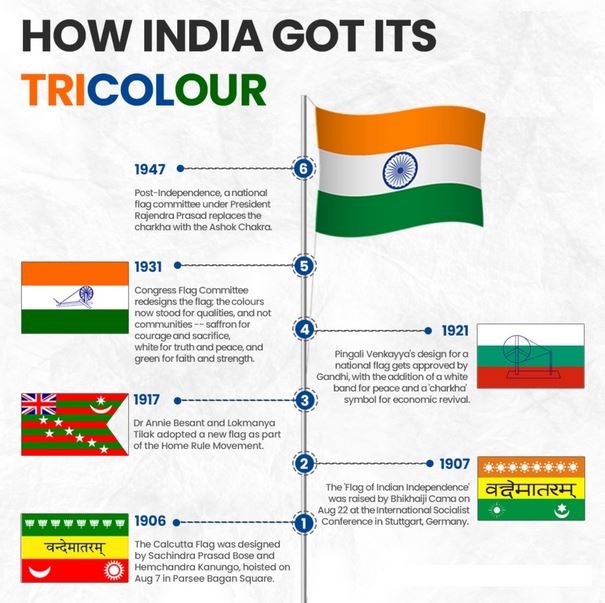
Back2Basics: History of Our National Flag
First Public Display in Kolkata (1906):
The first national flag of India was hoisted on August 7, 1906, in Kolkata at Parsee Bagan Square (Green Park).
The flag had three horizontal stripes of red, yellow, and green, with “Vande Mataram” inscribed in the center.
Symbolism: The red stripe included symbols of the sun and a crescent moon, while the green stripe featured eight half-open lotuses.
The flag is believed to have been designed by freedom activists Sachindra Prasad Bose and Hemchandra Kanungo.
Indian Flag in Germany:
In 1907, Madame Cama and her group of exiled revolutionaries hoisted an Indian flag in Germany.
This event marked the first time the Indian flag was hoisted in a foreign country.
Home Rule Movement Flag:
Dr. Annie Besant and Lokmanya Tilak introduced a new flag in 1917 as part of the Home Rule Movement.
The flag featured alternate red and green horizontal stripes, with seven stars in the Saptarishi configuration.
It included a white crescent and star in one top corner, and the Union Jack in the other.
Version by Pingali Venkayya:
Pingali Venkayya, an Indian freedom fighter, is credited with the design of the modern Indian tricolour.
Venkayya first met Mahatma Gandhi in South Africa during the second Anglo-Boer War (1899-1902).
He conducted extensive research and published a book in 1916 that included possible designs for the Indian flag.
At the All India Congress Committee in Bezwada in 1921, Venkayya proposed a basic flag design to Gandhi, featuring two bands of red and green to represent Hindus and Muslims.
PYQ:
[2014] The national motto of India, ‘Satyameva Jayate’ inscribed below the Emblem of India is taken from
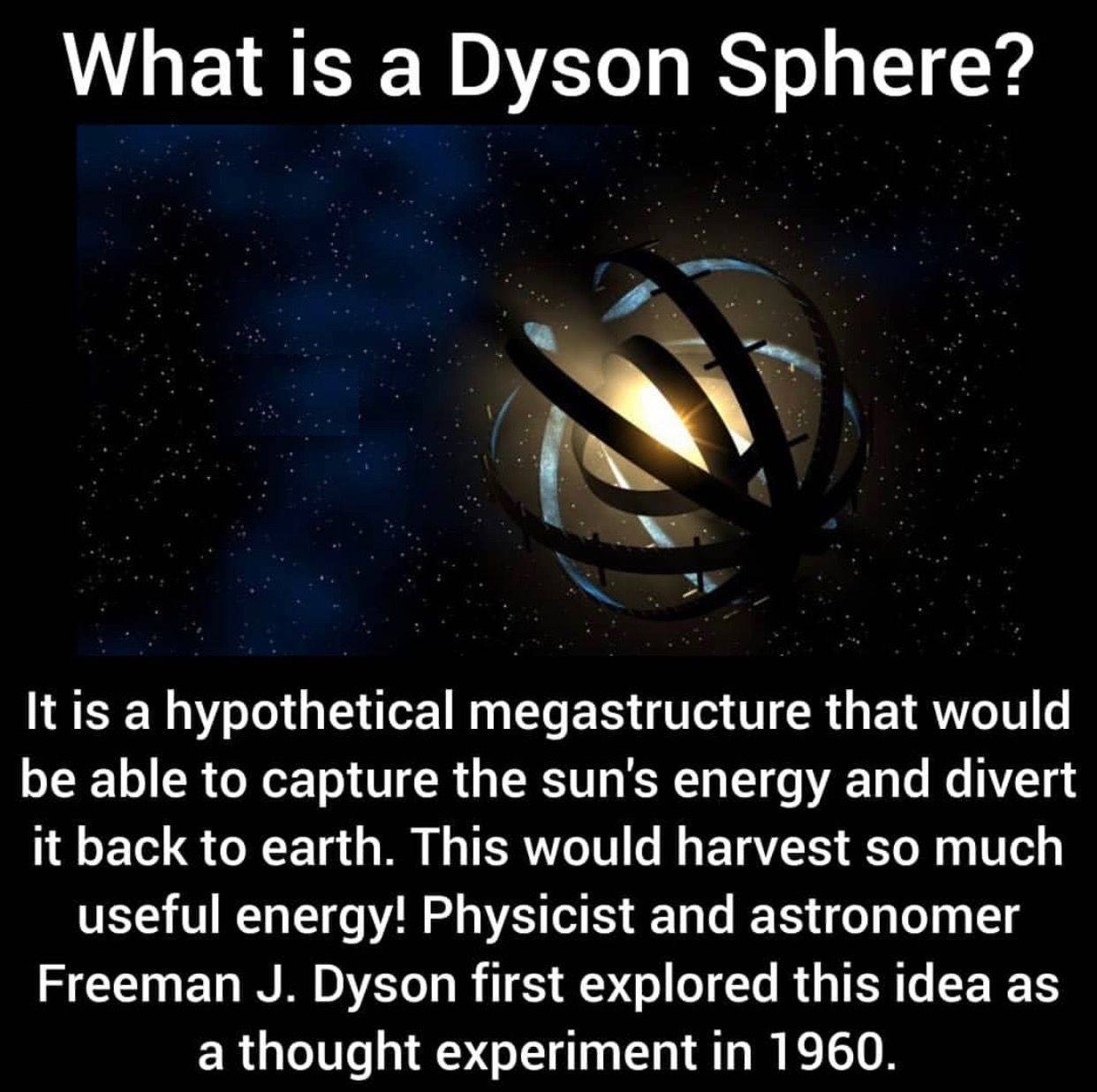
Recently, astronomers have made progress in finding possible candidates as Dyson Sphere, sparking new excitement and debate about extraterrestrial life.
What is a Dyson Sphere?
Imagine you are an astronomer looking for extraterrestrial life and you find a star covered by solar panels. This structure, collecting massive amounts of solar energy, is known as a Dyson sphere.
The concept is named after Freeman Dyson, a theoretical physicist who lived from 1923 to 2020.
Dyson proposed that advanced civilizations would need to harness a star’s energy, constructing a spherical array of solar collectors around it.
He suggested that the heat emitted as infrared radiation could indicate the presence of these massive structures and thus intelligent life.
Who was Freeman Dyson (1923-2020)?
Dyson was a renowned British-American theoretical physicist and mathematician known for his work in quantum electrodynamics, solid-state physics, and astronomy.
Born on December 15, 1923, in England, he made significant contributions to science and technology, including the Dyson Sphere concept—a hypothetical structure that could encompass a star to capture its power output.
He was also a prominent futurist and author, exploring ideas on space travel, extraterrestrial life, and the future of humanity.
Dyson spent much of his career at the Institute for Advanced Study in Princeton and was known for his interdisciplinary approach to science.
PYQ:
[2015] The term ‘Goldilocks Zone’ is often seen in the news in the context of
(a) The limits of habitable zone above the surface of the Earth
(b) Regions inside the Earth-like planets in outer space
(c) Search for the Earth-like planets in outer space
(d) Search for meteorites containing precious metals
The markets regulator, SEBI, has proposed a new asset class designed to offer investment products positioned between mutual funds (MFs) and portfolio management services (PMS).
This new category aims to fill an opportunity gap for investors and offer greater flexibility in portfolio construction.
Note:
PMS provides customized investment solutions to high net-worth individuals (HNIs) with a minimum investment limit of Rs 50 lakh.
MFs, on the other hand, have a much lower minimum investment limit of just Rs 100, managed by a professional fund manager.
About the New Asset Class
The new asset class aims to provide an intermediate option with more flexibility in portfolio construction, helping investors avoid unregistered and unauthorized schemes.
It will have a risk-return profile between MFs and PMS, targeting investors with higher risk tolerance and larger investment amounts than those typical of MFs but lower than PMS.
The current range of investment products includes:
MF schemes: Focused on retail investors,
PMS: For HNIs, and
Alternative investment funds (AIF): For sophisticated investors.
How will investments in the new asset class work?
The new asset class will be introduced under the MF structure with necessary relaxations in prudential norms.
The minimum investment amount is proposed to be Rs 10 lakh per investor within the asset management company (AMC)/MF.
This high threshold is intended to deter retail investors while attracting those with investible funds between Rs 10 lakh and Rs 50 lakh.
Significance of the New Asset Class:
SEBI noted that the gap between investment opportunities in MFs and PMS has led some investors towards unauthorized investment avenues.
The new asset class will help curb the proliferation of unregistered investment products and provide a structured and regulated option for investors.
SEBI emphasized that the new asset class would offer a regulated and structured investment suited to investors looking for opportunities between MFs and PMS.
Investment Strategies:
Like MF schemes, the new asset class will provide options for Systematic Investment Plan (SIP), Systematic Withdrawal Plan (SWP), and Systematic Transfer Plan (STP).
AMCs can offer ‘investment strategies’ under a pooled fund structure with tailored redemption frequencies (daily, weekly, monthly, etc.).
PYQ:
[2021] Indian Government Bond Yields are influenced by which of the following?
Actions of the United States Federal Reserve
Actions of the Reserve Bank of India
Inflation and short-term interest rates
Select the correct answer using the code given below.
(a) 1 and 2 only
(b) 2 only
(c) 3 only
(d) 1, 2 and 3
The Central Pollution Control Board (CPCB) has started a national audit of about 800 plastic-waste recyclers across India.
This action follows the discovery that four firms in Karnataka, Maharashtra, and Gujarat issued nearly 600,000 fake certificates under the Extended Producer Responsibility (EPR) programme.
About Central Pollution Control Board (CPCB): Overview
The Central Pollution Control Board (CPCB) is a statutory organization established in September1974.
It was constituted under the Water (Prevention and Control of Pollution) Act, 1974.
CPCB is also entrusted with powers and functions under the Air (Prevention and Control of Pollution) Act, 1981.
It serves as a technical arm of the Ministry of Environment, Forests, and Climate Change, implementing the provisions of the Environment (Protection) Act, 1986.
Principal Functions:
Water Pollution Control:
Promote the cleanliness of streams and wells in different states by preventing, controlling, and abating water pollution.
Oversee the National Water Quality Monitoring Program to collect, collate, and disseminate technical and statistical data relating to water pollution.
Air Pollution Control:
Improve the quality of air and prevent, control, or abate air pollution in the country.
Conduct air quality monitoring as part of air quality management.
Implement the National Air Monitoring Programme (NAMP) to determine current air quality status and trends, regulate pollution from industries, and provide background air quality data for industrial siting and town planning.
Key Initiatives and Programs:
National Air Monitoring Programme (NAMP): Established to monitor air quality status and trends, and to control and regulate industrial pollution to meet air quality standards.
National Air Quality Index (NAQI): Provides real-time air quality data and trends.
Graded Response Action Plan (GRAP): A set of measures to be taken based on the severity of air pollution levels.
Clean Air Campaign: Initiatives aimed at reducing air pollution through public awareness and actionable measures.
Role in Data Management:
CPCB collects, collates, and disseminates technical and statistical data related to water and air pollution.
Provides necessary data for regulatory and planning purposes, including industrial siting and urban planning.
What is Extended Producer Responsibility (EPR) Programme?
Extended Producer Responsibility (EPR) means the responsibility of a producer for the environmentally sound management of the product until the end of its life.
India had first introduced EPR in 2011 under the:
Plastic Waste (Management and Handling) Rules, 2011
E-Waste Management and Handling Rules, 2011.
The EPR scheme requires businesses using plastic packaging to recycle a certain percentage of the plastic used in the previous two years.
Implementation of EPR:
Registration: Producers must register with the Central Pollution Control Board (CPCB) and submit an EPR plan.
Collection Mechanisms: Producers set up collection centers, return schemes, or partner with authorized recyclers to manage waste.
Documentation: Producers are required to maintain detailed records of waste collected and processed and submit regular reports to the CPCB.
Compliance Audits: The CPCB conducts audits to ensure that producers comply with EPR requirements.
Every tonne of plastic recycled generates a certificate.
According to a CPCB report in May, nearly 3.7 million tonnes of recycled plastic generated certificates.
In 2022-23, about 18,000 companies using plastic packaging were registered with the CPCB, aiming to recycle about 3.3 million tonnes.
Compliance and Targets:
Companies must recycle 70% of the packaging used in the previous two financial years for 2022-23 and 100% for 2023-24. Non-compliance with these targets can result in fines.
EPR certificates are uploaded on a dedicated portal maintained by the CPCB, allowing recyclers and buyers to trade online.
PYQ:
[2019] In India, ‘extended producer responsibility’ was introduced as an important feature in which of the following?
(a) The Bio-medical Waste (Management and Handling) Rules, 1998
(b) The Recycled Plastic (Manufacturing and Usage) Rules, 1999
(c) The e-Waste (Management and Handling) Rules, 2011
(d) The Food Safety and Standard Regulations, 2011
Read what Prayas Sir says about his UPSC Mentorship
Led by a team of experienced and rigorously trained (for the latest UPSC requirements and pattern) Faculties and Mentors, Civilsdaily is the first and only platform to introduce deeply researched UPSC-CSE content and programs led by real-time 1:1 Mentoring.
As a UPSC aspirant, you live in a world populated with infinite sources churning out countless content themes endlessly, adding only short-term value to your preparation, if at all. Giving you false hope that your preparation is moving forward. All this is in the name of FREE preparation content. We chose not to play that game.
Instead, we create only limited content themes and programs every week. But content and program that is original rigorously researched for UPSC requirements by trained faculties and led by Mentors. Just what is actually required to qualify CSE, it’s something we continue to do.
At Civilsdaily, we treat Mentorship as a specialization. Not every Mains or interview candidate can be a mentor. Most such mentors will suggest cosmetic changes and will only help you evolve slowly. It is easy to find comfort in sentences like ‘every topper is different’ and’ they have their own path’. Finding what’s different about you and then figuring out your own path is why Mentorship is essential. We walk the talk by helping you craft your own way of preparation. A method that enhances your probability of qualifying UPSC-CSE in a single attempt. We give you that near-perfect certainty. Delivering this consistently to hundreds of aspirants (now rankers) in the past was challenging. We still stick to it and keep getting better at it with each passing year.
At CD, we understand the science and the art of everything UPSC. If you have a problem, we will sit with you and find a solution. If that doesn’t work, then we try solution 2. Eventually, we will make sure you end up making progress. What’s the point of any content, program, or mentorship without progress? This is precisely why aspirants trust they have the best shot at clearing the exam with Civilsdaily.
We invest a significant amount of time, effort, and energy into creating lectures, notes, and tests, understanding your needs as an aspirant. We take this responsibility seriously because, ultimately, your future depends on it.
The heart of the Civilsdaily platform is the Yearlong Mentorship Program. For years, aspirants have enrolled here because they couldn’t find such depth and passion towards quality content and Mentorship anywhere. Their search inevitably ends at Civilsdaily. Enrollment in these programs and Mentorship also makes us accountable to aspirants for the value they get.
In the past few years, we’ve worked quietly in the background with hundreds of aspirants; many now serve as IAS, IPS, IFS and more. We are very proud of what we’ve achieved.
Join me for a Zoom session on 23rd July 2024 at 7:00 p.m. This session is a must-attend for you If you are attempting UPSC for the first time in 2025 or have attempted earlier and now preparing for next year, then it is going to be a valuable session for you too.
In the session, we will discuss how mentorship works. Why Mentorship is a must when you attempting for the first time.
We will deal with all the aspects for a comprehensive UPSC Preparation.We’ll talk about starting with the basics, and move to advanced level.
See you in orientation session”
Register for orientation session for UPSC 2025 prep
(Don’t wait—the next webinar won’t be until Aug 24)
These masterclasses are packed with value. They are conducted in private with a closed community. We rarely open these webinars for everyone for free. This time we are keeping it for 300 seats only.
Q Besides the welfare schemes, India needs deft management of inflation and unemployment to serve the poor and the underprivileged sections of society. Discuss. (UPSC IAS/2022)
Q “While we flaunt India’s demographic dividend, we ignore the dropping rates of employability.” What are we missing while doing so? Where will the jobs that India desperately needs come from? Explain (UPSC IAS/2014)
Mentor comment: Conflicting reports on unemployment in India highlight significant issues. While the Reserve Bank of India reported the creation of 8 crore jobs over the past few years, the Centre for Monitoring Indian Economy noted a rise in the unemployment rate to 9.2%. The disparity arises from reliance on outdated data, particularly from the unorganised sector, which employs 94% of the workforce. Additionally, economic shocks like demonetisation and the COVID-19 pandemic have altered employment dynamics, complicating accurate assessments and leading to public confusion over the true state of employment.
Let’s learn!
__
Why in the news?
Recently, Prime Minister Modi cited an RBI report claiming 8 crore jobs created in the last 3-4 years, accusing the Opposition of spreading false unemployment narratives.
Conflicting reports and statements related to employment
KLEMS Database
According to the RBI, India added 4.7 crore jobs in FY24, raising total employment to 64.33 crore. This represents a 6% growth in employment compared to the previous year, which was significantly higher than the 3.2% growth reported for FY23.
The period from 2016 to 2024 was marked by several economic shocks, including demonetization, the introduction of the Goods and Services Tax, the Non-Banking Financial Companies crisis, and the COVID-19 pandemic.
SBI’s Counter Report
The State Bank of India (SBI) released a report stating that even when excluding agriculture, 8.9 crore jobs were created in manufacturing and services from FY14 to FY23, and 6.6 crore jobs from FY04 to FY14.
It emphasized that the total labour force in India is approximately 59.7 crore, closely aligning with the 56.8 crore reported in the recent Annual Survey of Unincorporated Sector Enterprises (ASUSE) survey.
CMIE’s Unemployment Data
The Centre for Monitoring the Indian Economy (CMIE) reported a rise in the unemployment rate to 9.2% in June 2024, marking an increase from 7% the previous month.
This contrasts sharply with the optimistic employment figures presented by the RBI and SBI, suggesting a disconnect between reported job creation and actual employment conditions.
Public Sentiment and Ground Reports
Ground reports and public sentiment indicate that unemployment remains a significant issue, particularly for educated youth. High competition for limited job openings is evident, as seen in the 47 lakh applicants for 60,000 constable positions in Uttar Pradesh and 1.25 crore aspirants for railway recruitment exams in 2022. Protests related to employment schemes further highlight the frustrations of job seekers
About KLEMS Database
The Reserve Bank of India (RBI) released the India KLEMS Database on July 7, 2024, which outlines methodologies for measuring productivity and employment across 27 industries in the Indian economy.
It does not independently estimate employment but relies on official data sources, including the Employment and Unemployment Surveys (EUS) by the NSSO and the Periodic Labour Force Survey (PLFS).
The KLEMS data incorporates various economic measures, including Gross Value Added and Labour Quality, covering 27 industries across the Indian economy.
Challenges in KLEMS Database
The Indian labor market is characterized by a significant unorganized sector, which employs approximately 94% of the labor force. This sector is difficult to survey regularly, leading to gaps and outdated data.
The last Census was conducted in 2011, and the Urban Frame Survey (UFS) data is from 2012-2017, resulting in reliance on older data that may not accurately reflect current employment conditions.
The conflicting narratives from various sources, including the Prime Minister’s references to KLEMS data, have led to public confusion regarding the true state of employment in India.
Way forward:
Clear Communication of Data Sources: Government agencies and institutions should clarify how figures from different surveys (e.g., KLEMS, PLFS, ASUSE) relate to one another, and the implications of using outdated data in light of recent economic shocks.
Regular and Comprehensive Surveys: The government should prioritize conducting more frequent and comprehensive surveys, particularly focusing on the unorganized sector, which employs a significant portion of the workforce.
On July 18, CAG Girish Chandra Murmu inaugurated the International Centre for Audit of Local Governance (iCAL) in Rajkot, marking India’s first institute to set global standards for auditing local governance.
How will iCAL work?
iCAL will serve as a platform for policymakers, administrators, and auditors connected with local governments to enhance collaboration and share best practices.
Objective: It aims to improve the independence and effectiveness of local government auditors through training, leadership development, and capacity-building initiatives.
Significance: iCAL will act as a think tank for addressing governance issues at the grassroots level through interactive workshops, knowledge-sharing sessions, and peer exchanges.
How are local bodies audited in India?
India has a three-tier system consisting of the Union government, state governments, and local bodies (both urban and rural).
Local bodies like Panchayats and Urban Local Bodies (ULBs) are audited by various entities:
State-level offices like the Examiner of Local Fund Accounts (ELFA)/Director of Local Fund Accounts (DLFA) audit the utilisation of state funds by local bodies.
CAG conducts audits of all funds at the central and state levels, including those of local bodies. The CAG also advises and supports ELFA/DLFA.
Why was a need felt for it?
Increased Funding and Need for Proper Auditing: With significant funds flowing to local bodies, there is a pressing need for improved auditing practices to ensure proper utilisation and financial management.
Global Practices and Collaboration: There is a need to promote global good practices and institutionalised collaboration among supreme audit institutions (SAIs) to enhance local government audit practices and share best practices.
Addressing Inefficiencies: Concerns have been raised about inefficiencies in local body financial management and reporting, as highlighted by the Reserve Bank of India’s 2022 report. iCAL aims to address these inefficiencies through better auditing practices and capacity building.
Way forward:
Expand Capacity Building and Training Programs: Enhance iCAL’s focus on training and capacity-building for auditors and local government officials.
Foster International Collaboration and Knowledge Sharing: Strengthen partnerships with global audit institutions and engage in knowledge exchange initiatives.
Mains PYQ:
Q In the absence of well – educated and organised local-level government systems, Panchayats and Samitis have remained mainly political institutions and not effective instruments of governance. Critically Discuss. (UPSC IAS/2015)
In 2023, natural disaster losses hit $280 billion, with only $100 billion insured, highlighting a need for innovative insurance solutions amid rising extreme weather events.
Present Method of Disaster Risk Reduction
Indemnity-based Insurance Products: Indemnity-based insurance products require a physical assessment of damage after a disaster to determine the payout amount. For example Health Insurance, Motor Insurance and Travel Insurance.
Challenges:
Verification Issues: When large-scale calamities strike, especially in economically disadvantaged areas, it is difficult to verify losses due to the lack of records and widespread destruction.
Delays in Payouts: The need for physical assessment can cause delays in providing financial assistance to the affected individuals and communities.
Insurance Gap: There is a significant gap in insurance coverage between developed and developing economies, leaving many vulnerable populations without adequate protection.
Changing course and the associated limitations:
Parametric insurance: Payments are made based on predefined parameters of weather events (e.g., rainfall exceeding 100 mm per day for two consecutive days, specific flood levels, wind speed).The payouts are made without the need for physical assessment of losses, enabling quicker disbursements.
Examples:
Disaster-prone Island Countries: Many have adopted parametric insurance for climate adaptation, moving away from risk retention models. For example, Fiji launched its first parametric insurance product in 2021
Morocco received $275 million in parametric insurance after a 6.8 magnitude earthquake, arranged with the help of the World Bank.
India has initiated crop insurance (e.g., Pradhan Mantri Fasal Bima Yojana and the Restructured Weather Based Crop Insurance Scheme).
Associated Limitations
Current Focus: Primarily used for low-frequency, high-impact disasters like earthquakes, cyclones, and hurricanes.
Data and Infrastructure Requirements: There is challenges related to developing and maintaining the necessary infrastructure for data collection and monitoring can be challenging, especially in developing regions.
Affordability and Accessibility issues: It demands high premiums can still be a barrier for economically disadvantaged communities.
Case Study of Nagaland:
Nagaland was the first state in India to buy parametric cover for extreme precipitation in 2021.
Based on lessons learned, it improved the product by fixing an absolute annual premium, duration, and rate online, allowing bidders to compete over lower threshold limits and maximized payouts.
What can be done to ensure effectiveness? (Way Forward)
Precise Thresholds and Robust Monitoring: Establish clear, accurate parameters for insurance triggers and implement reliable monitoring systems to track these parameters effectively.
Transparent Bidding and Experience Sharing: Follow a transparent bidding process for price discovery and facilitate the exchange of best practices and lessons learned between governments.
Widespread Payout Systems and Household Premium Support: Develop comprehensive systems for distributing payouts and promote long-term premium payment by households, leveraging tools like Aadhaar-based payment dissemination.
Mains PYQ:
Q Describe various measures taken in India for Disaster Risk Reduction (DRR) before and after signing ‘Sendai Framework for DRR (2015-2030)’. How is this framework different from ‘Hyogo Framework for Action, 2005’? (UPSC IAS/2018)
Over the past two decades, India’s maize production has more than tripled, emerging as a private sector-driven green revolution success story. Maize has transitioned from being primarily a feed crop to also serving as a fuel crop.
What was the Green Revolution?
Began in 1968 with the introduction of high-yielding variety (HYV) seeds, especially for wheat and rice, developed by agronomist Norman Borlaug
Institutions like CIMMYT (International Maize and Wheat Improvement Center) and IARI (Indian Agricultural Research Institute), led by scientists like Norman Borlaug and M S Swaminathan, played a crucial role.
The Green Revolution is credited to M.S. Swaminathan, known as the “Father of the Indian Green Revolution”, who introduced Borlaug’s wheat varieties and other technologies.
The initiative focused on increasing agricultural productivity through advanced breeding techniques, fertilizers, and irrigation methods.
Wheat production increased from 12 million tons in 1964-65 to 20 million tons in 1970-71.India became self-sufficient in food grain production and a major exporter
Present India’s Maize Production called as a Green Revolution in Maize
Significant Production Increase: Over the last two decades, India’s maize production has surged from 11.5 million tonnes in 1999-2000 to over 35 million tonnes in 2023-24, showcasing a remarkable increase in both yield and output.
Private Sector Leadership: This growth has been largely driven by the private sector, with more than 80% of the maize area planted with high-yielding hybrids developed by private seed companies, indicating a successful private sector-led green revolution.
Diverse Utilization: Maize in India has evolved from being primarily a feed crop for poultry and livestock to also being a vital industrial crop used for starch and ethanol production, reflecting its expanded role in the economy.
On Starch and Ethanol Production
Maize contains 68-72% starch, with significant industrial applications in textiles, paper, pharmaceuticals, food, and beverages.
Maize is emerging as a key feedstock for ethanol production, especially for blending with petrol.
IARI has developed a waxy maize hybrid with high amylopectin content, enhancing its suitability for ethanol production.
The new Pusa Waxy Maize Hybrid-1 has 71-72% starch with 68-70% recoverable, increasing ethanol yield per tonne.
Can India adopt new strategies? (Way forward)
India can adopt new strategies through innovative breeding techniques like the doubled haploid (DH) technology used by CIMMYT.
The DH facility in Karnataka speeds up the development of genetically pure inbred lines, enhancing the efficiency of maize breeding.
IARI’s waxy maize hybrid is ready for field trials and commercial release, potentially boosting ethanol production.
Collaboration between public sector institutions and private seed companies can drive the adoption of high-yielding, disease-resistant maize varieties.
Private sector-bred hybrids account for over 80% of India’s maize area, indicating strong potential for further growth and innovation in maize production.
Mains PYQ:
Q Explain various types of revolutions, that took place in Agriculture after Independence in India. How these revolutions have helped in poverty alleviation and food security in India? (UPSC IAS/2017)



![[22nd July 2024] The Hindu Op-ed: Focus on female employment to counter unemployment](https://www.civilsdaily.com/wp-content/uploads/2024/07/22-july1-1568x882.jpg)
![[Free Orientation Session] On UPSC Mentorship Program 2025 || Join on 23rd July 2024 At 7 PM.](https://www.civilsdaily.com/wp-content/uploads/2024/07/23rd-July-Thumb-1568x882.jpg)

![[20th July 2024] The Hindu Op-ed: Living in denial about unemployment](https://www.civilsdaily.com/wp-content/uploads/2024/07/20-july-1568x882.jpg)
